Adhyaya 13
वेन-पृथु-प्रादुर्भावः, राजधर्मः, पृथिवीदोहनम् (Vena–Pṛthu Episode and the Milking of Earth)
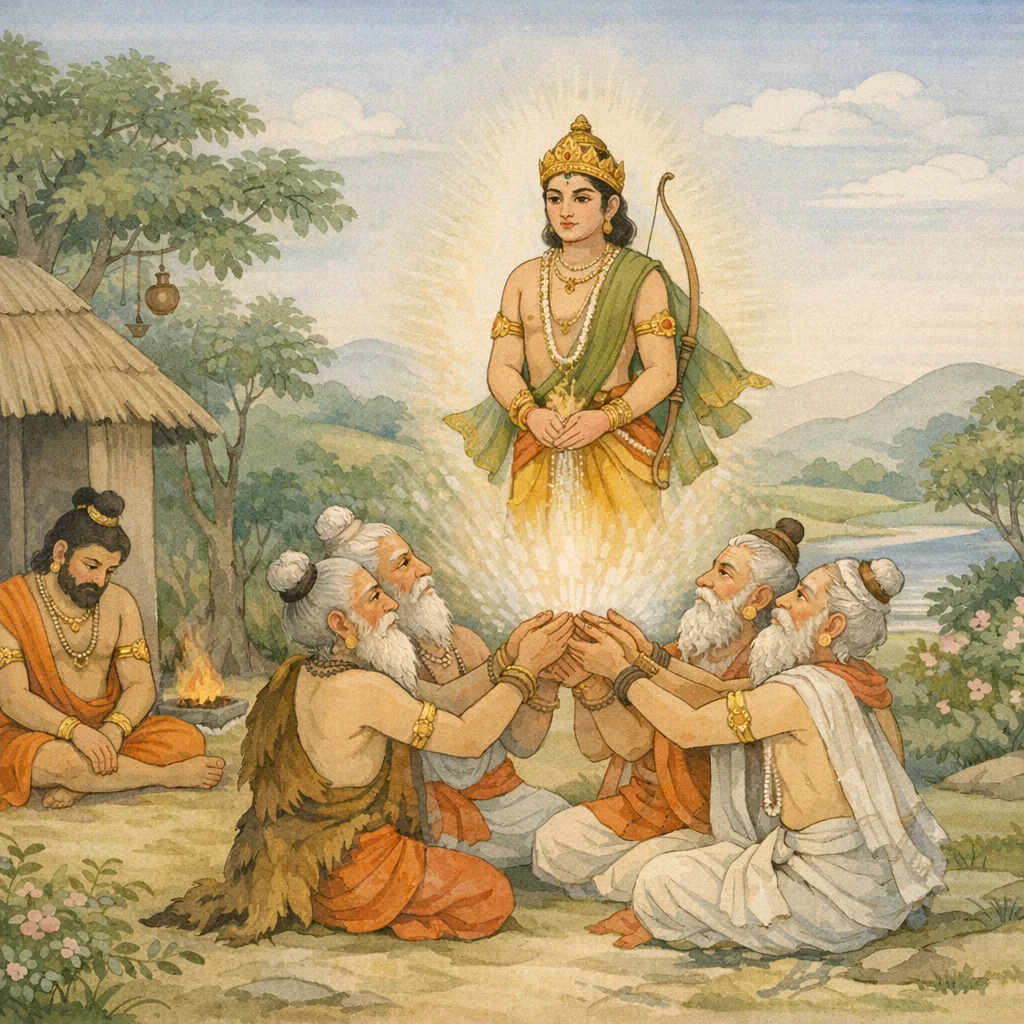
Parāśara continues the royal genealogies from Dhruva’s line to Cākṣuṣa Manu and onward through Kuru’s lineage, reaching Aṅga and his son Vena. Asked why Vena’s hand was churned, Parāśara explains Vena’s inherited wickedness through Sunīthā, daughter of Mṛtyu, his proclamation against yajña, and the sages’ slaying of him for reviling Viṣṇu as the Yajña-Puruṣa. As the realm falls into anarchy, the sages churn Vena’s thigh to produce the Niṣāda as an outlet for sin, then churn his right hand to manifest Pṛthu (Vainya), marked with the cakra as a portion of Viṣṇu. Consecrated by Brahmā and the gods, Pṛthu restores order: he levels the earth, founds settlements, inaugurates agriculture and trade, and “milks” Earth as a cow—taking Svāyambhuva Manu as the calf—to yield grains and herbs for all beings. The śravaṇa-phala is that hearing of Pṛthu’s birth pacifies evil dreams and prevents the fruition of sin.
Shlokas
Verse 1
ध्रुवाच् छिष्टिं च भव्यं च भव्याच् छंभुर् व्यजायत शिष्टेर् आधत्त सुच्छाया पञ्च पुत्रान् अकल्मषान्
From Dhruva were born Chiṣṭi and Bhavya; and from Bhavya was born Śambhu. From Chiṣṭi, by his wife Succhāyā, were born five sons, unstained by sin.
Verse 2
रिपुं रिपुञ्जयं विप्रं वृकलं वृकतेजसम् रिपोर् आधत्त बृहती चाक्षुषं सर्वतेजसम्
From Ripu were born Ripuñjaya, Vipra, Vṛkala, and Vṛkatejas; and from Ripu again came Bṛhatī and Cākṣuṣa, radiant with every kind of splendour.
Verse 3
अजीजनत् पुष्करिण्यां वारुण्यां चाक्षुषो मनुम् प्रजापतेर् आत्मजायां वीरणस्य महात्मनः
From Puṣkariṇī—also known as Vāruṇī—there was born Cākṣuṣa Manu, sprung from the line of Prajāpati’s daughter and the great-souled Vīraṇa.
Verse 4
मनोर् अजायन्त दश नड्वलायां महौजसः कन्यायां तपतां श्रेष्ठ वैराजस्य प्रजापतेः
O best of ascetics, from Manu were born ten mighty sons through Naḍvalā, the daughter of the great Prajāpati Vairāja.
Verse 5
कुरुः पुरुः शतद्युम्नस् तपस्वी सत्यवाञ् छुचिः अग्निष्टुद् अतिरात्रश् च सुद्युम्नश् चेति ते नव अभिमन्युश् च दशमो नड्वलायां महौजसः
From Mahaujasa, through Nadvalā, were born nine sons—Kuru, Puru, Śatadyumna, Tapasvī, Satyavān, Śuci, Agniṣṭut, Atirātra, and Sudyumna; and Abhimanyu was the tenth.
Verse 6
कुरोर् अजनयत् पुत्रान् षड् आग्नेयी महाप्रभान् अङ्गं सुमनसं ख्यातिं क्रतुम् अङ्गिरसं शिबिम्
Agneyī, the illustrious consort of Kuru, bore six sons of great splendor—Aṅga, Sumanas, Khyāti, Kratu, Aṅgirasa, and Śibi; through them Kuru’s royal line unfolded in ordered succession.
Verse 7
अङ्गात् सुनीथापत्यं वै वेनम् एकम् अजायत प्रजार्थम् ऋषयस् तस्य ममन्थुर् दक्षिणं करम्
From Aṅga, through Sunīthā, there was born a single son—Vena. Yet, for the people’s welfare and to restore the order of succession, the sages churned his right hand, drawing forth the power of kingship to re-establish righteous rule.
Verse 8
वेनस्य पाणौ मथिते संबभूव महामुने वैन्यो नाम महीपालो यः पृथुः परिकीर्त्यते
O great sage, when Vena’s hand was churned, there came forth a sovereign protector of the earth—named Vainya—who is celebrated in tradition as King Pṛthu.
Verse 9
येन दुग्धा मही पूर्वं प्रजानां हितकारणात्
He was the one who, in former times, ‘milked’ the Earth herself for the welfare and sustenance of all peoples.
Verse 10
किमर्थं मथितः पाणिर् वेनस्य परमर्षिभिः यत्र जज्ञे महावीर्यः स पृथुर् मुनिसत्तम
O best of sages, for what purpose did the supreme seers churn the hand of Vena, from which was born Pṛthu of mighty valor?
Verse 11
सुनीथा नाम या कन्या मृत्योः प्रथमजाभवत् अङ्गस्य भार्या सा दत्ता तस्यां वेनो व्यजायत
There was a maiden named Sunīthā, the first-born daughter of Mṛtyu. She was given as wife to King Aṅga, and through her Vena was born.
Verse 12
स मातामहदोषेण तेन मृत्योः सुतात्मजः निसर्गाद् एव मैत्रेय दुष्टभावो व्यजायत
O Maitreya, because of the fault inherited from his maternal grandfather, that son born in Mṛtyu’s line came forth from the very beginning with a wicked disposition.
Verse 13
अभिषिक्तो यदा राज्ये स वेनः परमर्षिभिः घोषयाम् आस स तदा पृथिव्यां पृथिवीपतिः
When Vena was consecrated to kingship by the great seers, he, as lord of the earth, caused a proclamation to be made throughout the world.
Verse 14
न यष्टव्यं न होतव्यं न दातव्यं कथंचन भोक्ता यज्ञस्य कस् त्व् अन्यो ह्य् अहं यज्ञपतिः प्रभुः
“No sacrifice is to be performed, no oblation is to be poured into the fire, and no gift is to be given in any way—for who else could be the enjoyer of sacrifice? I alone am the Lord of sacrifice, the sovereign Master.”
Verse 15
ततस् तम् ऋषयः पूर्वं संपूज्य पृथिवीपतिम् ऊचुः सामकलं सम्यङ् मैत्रेय समुपस्थिताः
Then those sages, having first duly honoured the king, lord of the earth, O Maitreya, approached, took their proper seats, and spoke to him in full and fitting measure.
Verse 16
भो भो राजञ् छृणुष्व त्वं यद् वदामस् तव प्रभो राज्यदेहोपकाराय प्रजानां च हितं परम्
O King—yes, O King—listen, O lord, to what we are about to say: it is for the strengthening of your sovereignty and for the highest welfare of your subjects.
Verse 17
दीर्घसत्रेण देवेशं सर्वयज्ञेश्वरं हरिम् पूजयिष्याम भद्रं ते तत्रांशस् ते भविष्यति
By a long, continuous sacrificial session (dīrgha-satra) we shall worship Hari—Lord of the gods, the Sovereign of all sacrifices. Blessings be upon you: in that rite, a share of merit shall also come to you.
Verse 18
यज्ञेन यज्ञपुरुषो विष्णुः संप्रीणितो नृप अस्माभिर् भवतः कामान् सर्वान् एव प्रदास्यति
O King, through this sacrifice Viṣṇu, the Yajña-Puruṣa, has been fully delighted by us; therefore he will indeed grant you every desire you seek.
Verse 19
यज्ञैर् यज्ञेश्वरो येषां राष्ट्रे संपूज्यते हरिः तेषां सर्वेप्सितावाप्तिं ददाति नृप भूभृताम्
O King, where, within a realm, Hari, the Lord of sacrifice, is reverently worshipped through sacrificial rites, to those earth-bearing rulers He grants the attainment of all that they rightly desire.
Verse 20
मत्तः को ऽभ्यधिको ऽन्यो ऽस्ति कश् चाराध्यो ममापरः को ऽयं हरिर् इति ख्यातो यो वै यज्ञेश्वरो मतः
Who could be greater than I? Who, apart from me, is truly worthy of worship? And who is this One famed as “Hari”—the Lord of yajñas—whom the wise know as the sovereign of every sacrifice?
Verse 21
ब्रह्मा जनार्दनः शंभुर् इन्द्रो वायुर् यमो रविः हुतभुग् वरुणो धाता पूषा भूमिर् निशाकरः
He is Brahmā; He is Janārdana; He is Śambhu. He is Indra, Vāyu, Yama, and the Sun. He is Agni who receives the oblations; He is Varuṇa; He is Dhātā and Pūṣan; He is the Earth and the Moon—one Lord abiding as all these powers.
Verse 22
एते चान्ये च ये देवाः शापानुग्रहकारिणः नृपस्यैते शरीरस्थाः सर्वदेवमयो नृपः
These and the other gods as well—empowered to bestow curses and grant blessings—abide within the very body of a king. Therefore the king is constituted of all the gods, a living embodiment of the entire divine order.
Verse 23
एतज् ज्ञात्वा मयाज्ञप्तं यद् यथा क्रियतां तथा न दातव्यं न होतव्यं न यष्टव्यं च भो द्विजाः
Knowing this, do exactly as I have enjoined, in the prescribed manner. O twice-born ones, nothing is to be given, no oblation is to be offered into the fire, and no sacrifice is to be performed if it departs from that command.
Verse 24
भर्तृशुश्रूषणं धर्मो यथा स्त्रीणां परो मतः ममाज्ञापालनं धर्मो भवतां च तथा द्विजाः
Just as faithful service to one’s husband is held to be the highest dharma for women, so too, O twice-born ones, for you dharma is obedience to my command.
Verse 25
देह्य् अनुज्ञां महाराज मा धर्मो यातु संक्षयम् हविषां परिणामो ऽयं यद् एतद् अखिलं जगत्
Grant your permission, O great King—let dharma not fall into decline. For this entire universe is but the matured transformation of the sacrificial oblations (havis).
Verse 26
इति विज्ञाप्यमानो ऽपि स वेनः परमर्षिभिः पापो ददाति नानुज्ञां तदा प्रोक्तः पुनः पुनः
Though repeatedly petitioned and instructed by the great seers, sinful Vena would not grant his consent; again and again the sages addressed him with earnest counsel.
Verse 27
ततस् ते मुनयः सर्वे कोपामर्षसमन्विताः हन्यतां हन्यतां पाप इत्य् ऊचुस् ते परस्परम्
Then all those sages, filled with wrath and indignant resolve, said to one another, “Let the sinner be slain! Let him be slain!”
Verse 28
यो यज्ञपुरुषं विष्णुम् अनादिनिधनं प्रभुम् विनिन्दत्य् अधमाचारो न स योग्यो भुवः पतिः
He who reviles Vishnu—the Yajña-Puruṣa, the Lord without beginning or end—being of degraded conduct, is not fit to be the ruler of the earth.
Verse 29
इत्य् उक्त्वा मन्त्रपूतैस् तैः कुशैर् मुनिगणा नृपम् निजघ्नुर् निहतं पूर्वं भगवन्निन्दनादिना
Having spoken thus, the bands of sages struck down the king with kuśa blades sanctified by mantra; in truth he had already been slain before—by reviling the Lord (Bhagavān), the first cause of his downfall.
Verse 30
ततश् च मुनयो रेणुं ददृशुः सर्वतो द्विज किम् एतद् इति चासन्नं पप्रच्छुस् ते जनं तदा
Then, O twice-born, the sages beheld dust rising on every side. Wondering, “What is this?”, they at that moment questioned the people who were nearby.
Verse 31
आख्यातं च जनैस् तेषां चौरीभूतैर् अराजके राष्ट्रे तु लोकैर् आरब्धं परस्वादानम् आतुरैः
And the people reported that, when the kingdom fell into a kingless condition, the populace—driven by distress—turned thief; and in that lawless realm they began taking what belonged to others.
Verse 32
तेषाम् उदीर्णवेगानां चौराणां मुनिसत्तमाः सुमहान् दृश्यते रेणुः परवित्तापहारिणाम्
O best of sages, as those thieves—plunderers of others’ wealth—rush onward with heightened speed, a vast cloud of dust is seen rising, stirred up by them.
Verse 33
ततः संमन्त्र्य ते सर्वे मुनयस् तस्य भूभृतः ममन्थुर् ऊरुं पुत्रार्थम् अनपत्यस्य यत्नतः
Then, after deliberating together, all those sages—acting for that childless king—earnestly churned his thigh, seeking to bring forth a son.
Verse 34
मथ्यतश् च समुत्तस्थौ तस्योरोः पुरुषः किल दग्धस्थूणाप्रतीकाशः खर्वटास्यो ऽतिह्रस्वकः
And as he was being churned, there arose—so it is said—from his thigh a man: one whose appearance was like a charred pillar, with a distorted face, exceedingly short in stature.
Verse 35
किं करोमीति तान् सर्वान् विप्रान् आह त्वरान्वितः निषीदेति तम् ऊचुस् ते निषादस् तेन सो ऽभवत्
In haste he asked all those brāhmaṇas, “What am I to do?” They replied, “Sit down.” By that very command—‘niṣīda’ (“sit”)—he came to be known as a Niṣāda.
Verse 36
ततस् तत्संभवा जाता विन्ध्यशैलनिवासिनः निषादा मुनिशार्दूल पापकर्मोपलक्षणाः
From that origin were born their descendants—the Niṣādas—dwelling along the Vindhya mountains; and, O tiger among sages, they were marked by sinful conduct as their defining trait.
Verse 37
तेन द्वारेण तत् पापं निष्क्रान्तं तस्य भूपतेः निषादास् ते ततो जाता वेनकल्मषनाशनाः
Through that very outlet, the king’s accumulated sin was expelled. From it there arose the Niṣādas—born then and there—who became the living removal of Vena’s taint.
Verse 38
ततो ऽस्य दक्षिणं हस्तं ममन्थुस् ते द्विजोत्तमाः
Then those foremost among the twice-born sages churned his right hand, to draw forth from that sacred limb the next ordained manifestation in the unfolding of creation.
Verse 39
मथ्यमाने च तत्राभूत् पृथुर् वैन्यः प्रतापवान् दीप्यमानः स्ववपुषा साक्षाद् अग्निर् इव ज्वलन्
And as that body was being churned, there manifested Pṛthu, the mighty son of Vena—radiant with the splendor of his own form, blazing forth like fire itself made visible.
Verse 40
आद्यम् आजगवं नाम खात् पपात ततो धनुः शराश् च दिव्या नभसः कवचं च पपात ह
First, from the sky fell the famed bow called Ājagava; then divine arrows descended from the heavens, and a celestial coat of mail also fell down.
Verse 41
तस्मिञ् जाते तु भूतानि संप्रहृष्टानि सर्वशः
When He came into manifestation, all beings everywhere became filled with joy and delight.
Verse 42
सत्पुत्रेण च जातेन वेनो ऽपि त्रिदिवं ययौ पुन्नाम्नो नरकात् त्रातः स तेन सुमहात्मना
And because a righteous son was born to him, even Vena attained the heavenly worlds. Rescued from the hell called Punnāma, he was delivered by that great-souled son.
Verse 43
तं समुद्राश् च नद्यश् च रत्नान्य् आदाय सर्वशः तोयानि चाभिषेकार्थं सर्वाण्य् एवोपतस्थिरे
Then the oceans and the rivers—from every quarter—came forth to attend him, bearing treasures and sacred waters, all arriving to offer the waters meant for his royal consecration (abhiṣeka).
Verse 44
पितामहश् च भगवान् देवैर् आङ्गिरसैः सह स्थावराणि च भूतानि जङ्गमानि च सर्वशः समागम्य तदा वैन्यम् अभ्यषिञ्चन् नराधिपम्
Then the Blessed Grandsire (Brahmā), together with the gods and the Āṅgirasa sages, convened the whole of existence—both the immobile beings and the moving creatures from every quarter—and in that universal assembly they consecrated Vainya (Pṛthu) as sovereign ruler of men.
Verse 45
हस्ते तु दक्षिणे चक्रं दृष्ट्वा तस्य पितामहः विष्णोर् अंशं पृथुं मत्वा परितोषं परं ययौ
But when his grandfather beheld the discus-mark upon his right hand, he knew Pṛthu to be a portion of Lord Viṣṇu Himself, and his heart rose into the highest contentment.
Verse 46
विष्णुचिह्नं करे चक्रं सर्वेषां चक्रवर्तिनाम् भवत्य् अव्याहतो यस्य प्रभावस् त्रिदशैर् अपि
Upon the hand of every universal monarch appears the discus—Viṣṇu’s own emblem; and the majesty of that sovereign, whose authority is sealed by the Lord’s sign, remains unobstructed—even by the hosts of the thirty-three gods.
Verse 47
महता राजराज्येन पृथुर् वैन्यः प्रतापवान् सो ऽभिषिक्तो महातेजा विधिवद् धर्मकोविदैः
Endowed with a vast and sovereign kingship, the mighty Pṛthu—son of Vena—radiant with great splendor, was duly consecrated according to sacred ordinance by those who were expert in dharma.
Verse 48
पित्रापरञ्जितास् तस्य प्रजास् तेनानुरञ्जिताः अनुरागात् ततस् तस्य नाम राजेत्य् अजायत
His subjects—won over earlier by his father—were in turn delighted by him; and from that mutual affection, his very name came to be ‘Rāja’, the king.
Verse 49
आपस् तस्तम्भिरे चास्य समुद्रम् अभियास्यतः पर्वताश् च ददुर् मार्गं ध्वजभङ्गश् च नाभवत्
As he advanced toward the ocean, the waters themselves stood still for him; the mountains, too, opened a passage—and his royal banner did not break.
Verse 50
अकृष्टपच्या पृथिवी सिद्ध्यन्त्य् अन्नानि चिन्तया सर्वकामदुघा गावः पुटके पुटके मधु
In that age the earth yields grain without ploughing or sowing; by mere thought, food comes into being. Cows become wish-fulfilling, granting every desired good, and in every small vessel there is honey—abundance arising effortlessly, as though nature itself serves dharma.
Verse 51
तस्य वै जातमात्रस्य यज्ञे पैतामहे शुभे सूतः सूत्यां समुत्पन्नः सौत्ये ऽहनि महामतिः
When he had only just been born, during that auspicious ancestral (paitāmaha) sacrifice, the wise one was proclaimed a Sūta—born of a Sūtā mother—on the very day appointed for the Sūta’s office.
Verse 52
तस्मिन्न् एव महायज्ञो जज्ञे प्राज्ञो ऽथ मागधः प्रोक्तौ तदा मुनिवरैस् ताव् उभौ सूतमागधौ
From that very sacrificial rite there arose a great master of sacrifice, wise, and known as the Māgadha. Then the foremost sages proclaimed those two to be the Sūta and the Māgadha, appointing them as the ordained voices of remembrance and praise within the sacred order.
Verse 53
स्तूयताम् एष नृपतिः पृथुर् वैन्यः प्रतापवान् कर्मैतद् अनुरूपं च पात्रं स्तोत्रस्य चाप्य् अयम्
Let this king—Pṛthu, the mighty son of Vena—be praised. This deed is wholly in keeping with his nature, and he himself is a worthy vessel for such a hymn of acclaim.
Verse 54
ततस् ताव् ऊचतुर् विप्रान् सर्वान् एव कृताञ्जली अद्यजातस्य नो कर्म ज्ञायते ऽस्य महीपतेः
Then the two of them, with palms joined in reverence, addressed all the Brahmin sages: “We do not yet know what sacred duty and rite should be performed for this king’s child, born only today.”
Verse 55
गुणा न चास्य ज्ञायन्ते न चास्य प्रथितं यशः स्तोत्रं किमाश्रयं त्व् अस्य कार्यम् अस्माभिर् उच्यताम्
His qualities cannot truly be known in full, nor can His glory be wholly proclaimed. On what foundation, then, should a hymn of praise rest? Tell us what we ought to do in this matter.
Verse 56
करिष्यत्य् एष यत् कर्म चक्रवर्ती महाबलः गुणा भविष्या ये चास्य तैर् अयं स्तूयतां नृपः
Whatever deeds this mighty king shall yet accomplish as a universal sovereign, and whatever virtues will hereafter shine forth in him—by those very qualities let this ruler be praised.
Verse 57
ततः स नृपतिस् तोषं तच् छ्रुत्वा परमं ययौ सद्गुणैः श्लाघ्यताम् एति स्तव्याश् चाभ्यां गुणा मम
Hearing those words, the king was filled with supreme satisfaction. For it is through true virtues that one becomes worthy of praise; and by such virtues my own qualities too are to be celebrated.
Verse 58
तस्माद् यद् अत्र स्तोत्रे मे गुणनिर्वर्णनं त्व् इमौ करिष्येते करिष्यामि तद् एवाहं समाहितः
Therefore, whatever description of Your qualities is to be undertaken here in my hymn—whether by these two (speech and mind) or by me—I shall do only that, with my whole being gathered into steady concentration.
Verse 59
यद् इमौ वर्जनीयं च किंचिद् अत्र वदिष्यतः तद् अहं वर्जयिष्यामीत्य् एवं चक्रे मतिं नृपः
“Whatever these two (speech and mind) may utter here that ought to be avoided, that I shall avoid.” Thus the king settled his mind in restraint and right order.
Verse 60
अथ तौ चक्रतुः स्तोत्रं पृथोर् वैन्यस्य धीमतः भविष्यैः कर्मभिः सम्यक् सुस्वरौ सूतमागधौ
Then the Sūta and the Māgadha, both clear-voiced, composed a hymn of praise for the wise Pṛthu, son of Vena, rightly celebrating him through the noble deeds he was yet to accomplish.
Verse 61
सत्यवाग् दानशीलो ऽयं सत्यसन्धो नरेश्वरः ह्रीमान् मैत्रः क्षमाशीलो विक्रान्तो दुष्टशासनः
This lord of men is a speaker of truth and devoted to giving; steadfast in his pledges, he is modest and gracious, friendly to all, patient in forbearance—yet bold in valor, and a stern chastiser of the wicked.
Verse 62
धर्मज्ञाश् च कृतज्ञाश् च दयावान् प्रियभाषकः मान्यान् मानयिता यज्वा ब्रह्मण्यः साधुवत्सलः
He is a knower of dharma and one who remembers kindness with gratitude; compassionate, and gentle in speech. He honors those who are worthy of honor, performs sacred sacrifices, is devoted to the brahmins, and cherishes the virtuous as a father cherishes his own children.
Verse 63
समः शत्रौ च मित्रे च व्यवहारस्थितौ नृपः
A king, established in the proper conduct of governance and justice, remains even-minded toward both enemy and friend—letting neither hatred nor attachment bend his rule.
Verse 64
सूतेनोक्तान् गुणान् इत्थं स तदा मागधेन च चकार हृदि तादृक् च कर्मणा कृतवान् असौ
Thus, at that time, he took to heart the virtues proclaimed by the Sūta and also by the Magadha; and, having inwardly fashioned himself in accordance with those praises, he performed deeds worthy of that very character.
Verse 65
ततः स पृथिवीपालः पालयन् वसुधाम् इमाम् इयाज विविधैर् यज्ञैर् महद्भिर् भूरिदक्षिणैः
Thereafter the protector of the earth, ruling and safeguarding this very world, performed many kinds of great sacrifices, richly endowed with abundant gifts (dakṣiṇā).
Verse 66
तं प्रजाः पृथिवीनाथम् उपतस्थुः क्षुधार्दिताः ओषधीषु प्रणष्टासु तस्मिन् काले ह्य् अराजके तम् ऊचुस् तेन ताः पृष्टास् तत्रागमनकारणम्
When herbs and plants had vanished and the lawless time without a king had come upon the world, the hunger-stricken people approached the lord of the earth. They spoke to him, and he asked the reason for their coming.
Verse 67
अराजके नृपश्रेष्ठ धरित्र्या सकलौषधीः ग्रस्तास् ततः क्षयं यान्ति प्रजाः सर्वाः प्रजेश्वर
O best of kings, when a realm is without a ruler, the Earth herself seems to swallow up all herbs and medicines; then, O lord of the people, every subject is driven toward decline and ruin.
Verse 68
त्वं नो वृत्तिप्रदो धात्रा प्रजापालो निरूपितः देहि नः क्षुत्परीतानां प्रजानां जीवनौषधीः
The Creator (Dhātā) has appointed you as our giver of sustenance and guardian of the people; therefore grant us, your hunger-afflicted subjects, the life-giving herbs that preserve existence.
Verse 69
ततो ऽथ नृपतिर् दिव्यम् आदायाजगवं धनुः शरांश् च दिव्यान् कुपितः सो ऽन्वधावद् वसुंधराम्
Then the king seized the celestial Ajagava bow and divine arrows; inflamed with wrath, he set off in pursuit of the Earth herself (Vasundharā).
Verse 70
ततो ननाश त्वरिता गौर् भूत्वा तु वसुंधरा सा लोकान् ब्रह्मलोकादीन् संत्रासाद् अगमन् मही
Then Vasundharā, the Earth, seized by fear, hastily vanished; taking the form of a cow, she fled trembling through the worlds, even to Brahmaloka and beyond.
Verse 71
यत्र यत्र ययौ देवी सा तदा भूतधारिणी तत्र तत्र तु सा वैन्यं ददृशे ऽभ्युद्यतायुधम्
Wherever the Goddess, bearer of beings, went, there she beheld Vainya (King Pṛthu) with weapons raised, poised to act for the safeguarding of Dharma.
Verse 72
ततस् तं प्राह वसुधा पृथुं पृथुपराक्रमम् प्रवेपमाना तद्बाणपरित्राणपरायणा
Then Vasudhā, trembling and intent on seeking protection from his arrows, addressed Pṛthu, whose valor was vast and formidable.
Verse 73
स्त्रीवधे त्वं महापापं किं नरेन्द्र न पश्यसि येन मां हन्तुम् अत्यर्थं प्रकरोषि नृपोद्यमम्
O king, do you not see that the slaying of a woman is a great sin? Yet you exert an extreme royal effort, resolved to kill me.
Verse 74
एकस्मिन् यत्र निधनं प्रापिते दुष्टचारिणि बहूनां भवति क्षेमं तस्य पुण्यप्रदो वधः
When death is inflicted upon a single wrongdoer and, by that act, the welfare and safety of many are secured, then such slaying is held to bestow merit, for it upholds the common good.
Verse 75
प्रजानाम् उपकाराय यदि मां त्वं हनिष्यसि आधारः कः प्रजानां ते नृपश्रेष्ठ भविष्यति
If, for the supposed welfare of your subjects, you intend to kill me—then tell me, O best of kings: when I am gone, what support will remain for your people?
Verse 76
त्वां हत्वा वसुधे बाणैर् मच्छासनपराङ्मुखीम् आत्मयोगबलेनेमा धारयिष्याम्य् अहं प्रजाः
O Earth (Vasudhā), having struck you down with my arrows—since you have turned away from my sovereign command—I shall, by the power of my inner Yoga, uphold and sustain these beings, these subjects, myself.
Verse 77
ततः प्रणम्य वसुधा तं भूयः प्राह पार्थिवम् प्रवेपिताङ्गी परमं साध्वसं समुपागता
Then Vasudhā, bowing down once more to that king, spoke again—her limbs trembling, seized by overwhelming fear.
Verse 78
उपायतः समारब्धाः सर्वे सिद्ध्यन्त्य् उपक्रमाः तस्माद् वदाम्य् उपायं ते तं कुरुष्व यदीच्छसि
When undertakings are begun with a proper means, every effort reaches fulfillment. Therefore I shall tell you the means—do it, if you truly wish.
Verse 79
समस्ता या मया जीर्णा नरनाथ महौषधीः यदीच्छसि प्रदास्यामि ताः क्षीरपरिणामिनीः
O lord of men, all those great medicinal herbs that I have already digested—if you so desire, I shall give them to you again, transformed into milk-like essence.
Verse 80
तस्मात् प्रजाहितार्थाय मम धर्मभृतां वर तं तु वत्सं प्रयच्छ त्वं क्षरेयं येन वत्सला
Therefore, O best among the upholders of dharma, for the welfare of the people and to fulfill my purpose, give me that calf, so that this cow, becoming affectionate to her young, may yield her milk.
Verse 81
समां च कुरु सर्वत्र येन क्षीरं समन्ततः वरौषधीबीजभूतं वीर सर्वत्र भावये
Make the earth level everywhere, so that milk may spread on all sides; and, O hero, let the potent herbs—whose very essence is the seed of healing—arise everywhere.
Verse 82
तत उत्सारयाम् आस शैलाञ् छतसहस्रशः धनुष्कोट्या तदा वैन्यस् तेन शैला विवर्धिताः
Then Vainya (King Pṛthu) drove back the mountains in hundreds of thousands, striking and forcing them away with the very tip of his bow; by that mighty ordering, the mountain ranges were set into their proper form and growth.
Verse 83
न हि पूर्वविसर्गे वै विषमे पृथिवीतले प्रविभागः पुराणां वा ग्रामाणां वा तदाभवत्
For in that earlier emanation of creation, when the surface of the earth was still uneven, there existed no demarcation at all—neither of cities nor of villages.
Verse 84
न सस्यानि न गोरक्ष्यं न कृषिर् न वणिक्पथः वैन्यात् प्रभृति मैत्रेय सर्वस्यैतस्य संभवः
There were no crops, no tending of cattle, no agriculture, and no routes of trade. But from Vainya onward, O Maitreya, the very possibility and flourishing of all these came into being—order returning to the world through rightful sovereignty grounded in dharma.
Verse 85
यत्र यत्र समं त्व् अस्या भूमेर् आसीन् नराधिपः तत्र तत्र प्रजानां हि निवासं समरोचयत्
Wherever on this earth the ground was even and level, there the king, lord of men, approved and established dwellings, appointing settled abodes for the people.
Verse 86
आहारः फलमूलानि प्रजानाम् अभवत् तदा कृच्छ्रेण महता सो ऽपि प्रणष्टास्व् ओषधीषु वै
Then the nourishment of beings became only fruits and roots; and when the herbs and plants had perished, even that was obtained with great hardship and dwindled away.
Verse 87
स कल्पयित्वा वत्सं तु मनुं स्वायम्भुवं प्रभुम् स्वे पाणौ पृथिवीनाथो दुदोह पृथिवीं पृथुः सस्यजातानि सर्वाणि प्रजानां हितकाम्यया
Then King Pṛthu, lord of the earth, appointing the venerable Svāyambhuva Manu as the calf, milked the Earth into his own hands, drawing forth every kind of grain and produce for the welfare of all beings.
Verse 88
तेनान्नेन प्रजास् तात वर्तन्ते ऽद्यापि नित्यशः
“By that very food, dear one, all beings continue to subsist—even to this day—unceasingly and ever.”
Verse 89
प्राणप्रदानात् स पृथुर् यस्माद् भूमेर् अभूत् पिता ततस् तु पृथिवीसंज्ञाम् अवापाखिलधारिणी
Because Pṛthu bestowed life and sustenance upon the Earth, he truly became her ‘father’; therefore that all-supporting bearer of beings came to be known by the name Pṛthivī.
Verse 90
ततश् च देवैर् मुनिभिर् दैत्यै रक्षोभिर् अद्रिभिः गन्धर्वैर् उरगैर् यक्षैः पितृभिस् तरुभिस् तथा
Thereupon the gods and the sages—together with the Daityas and the Rākṣasas, the mountains, the Gandharvas, the serpent-beings, the Yakṣas, the Pitṛs, and even the trees—joined as one in that vast, ordered undertaking.
Verse 91
तत् तत् पात्रम् उपादाय तत् तद् दुग्धं मुने पयः वत्सदोग्धृविशेषाश् च तेषां तद्योनयो ऽभवन्
Taking up each its proper vessel, O sage, each drew forth its own milk; and according to their several origins, distinct calves and distinct milkers arose.
Verse 92
सैषा धात्री विधात्री च धारिणी पोषणी तथा सर्वस्य जगतः पृथ्वी विष्णुपादतलोद्भवा
She is the Sustainer and the Ordainer; the Bearer and likewise the Nourisher. This Earth, foundation of the entire world, arose from the sole of Lord Viṣṇu’s feet.
Verse 93
एवंप्रभावः स पृथुः पुत्रो वेनस्य वीर्यवान् जज्ञे महीपतिः पूर्वं राजाभूज् जनरञ्जनात्
Thus endowed with extraordinary power, the valiant Pṛthu—son of Vena—was born as lord of the earth; and because he delighted the people, he was, in ancient times, the first to be called “king.”
Verse 94
य इदं जन्म वैन्यस्य पृथोः संकीर्तयेन् नरः न तस्य दुष्कृतं किंचित् फलदायि प्रजायते
Whoever recites and proclaims this account of the birth of Pṛthu, the son of Vena, finds that no sinful deed of his ripens into fruit; such remembrance purifies the doer.
Verse 95
दुःस्वप्नोपशमं नॄणां शृण्वतां चैतद् उत्तमम् पृथोर् जन्म प्रभावश् च करोति सततं नृणाम्
For those who listen with devotion, this excellent account soothes distressing dreams. The sacred narration of Pṛthu—his birth and mighty influence—unceasingly brings auspiciousness and well-being to all people.
Frequently Asked Questions
Because Vena rejects yajña and denies worship of Hari as Yajña-Puruṣa, undermining the cosmic and social order that sacrifice represents; the text frames this as disqualification for kingship and a self-caused downfall through bhagavad-nindā (reviling the Lord).
The cakra is Viṣṇu’s emblem; its appearance on Pṛthu signifies Viṣṇv-aṁśatva (a portion/empowerment of Viṣṇu), grounding royal authority in divine sanction and portraying righteous kingship as an instrument of Hari’s governance.
It depicts dharmic sovereignty extracting and distributing resources for loka-saṅgraha (welfare of beings), while implying that nature’s fertility is unlocked when order aligns with Viṣṇu-centered dharma; Earth is productive when protected and ‘leveled’ by righteous rule.