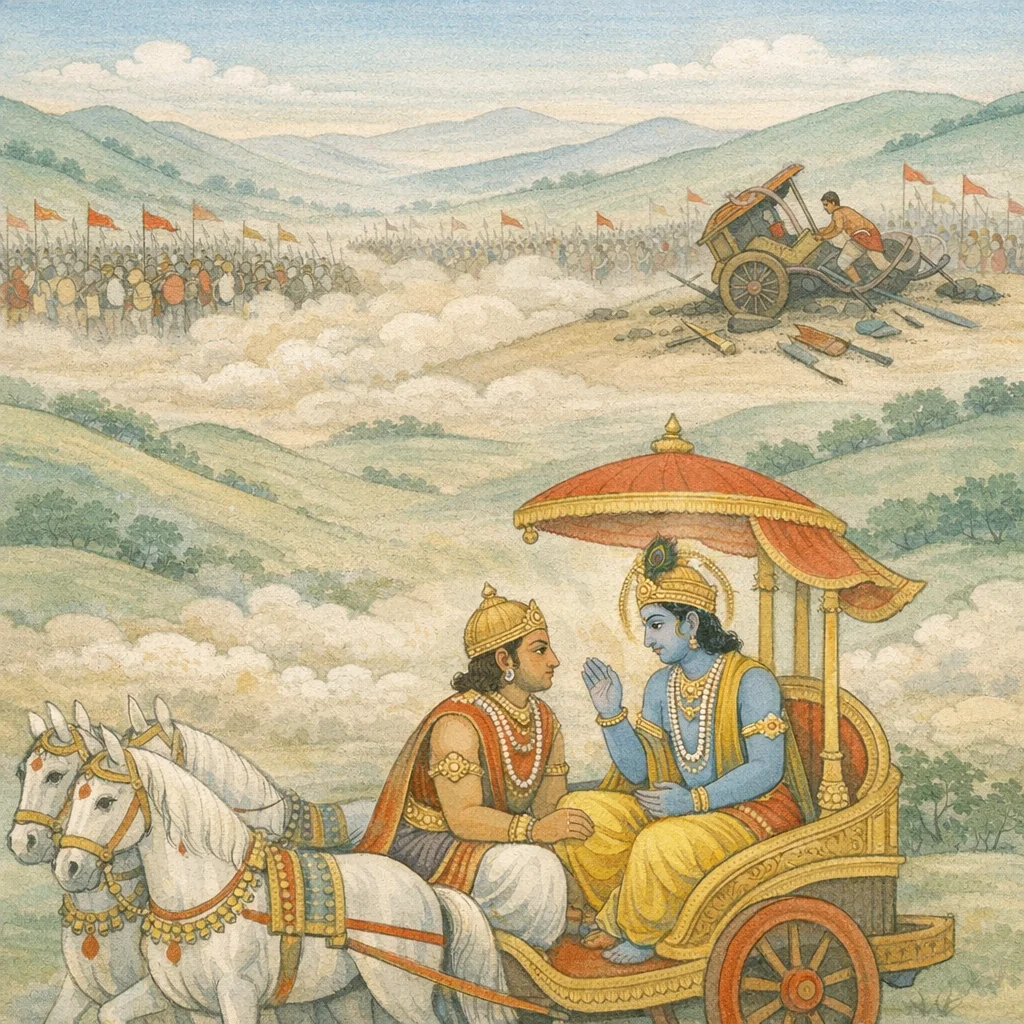
Adhyaya 73
Chapter Arc: संजय धृतराष्ट्र से कहते हैं कि कर्ण-वध के लिए कृतसंकल्प अर्जुन जब आगे बढ़ते हैं, तब भगवान श्रीकृष्ण उन्हें फिर से संबोधित करते हैं—मानो निर्णायक घड़ी से ठीक पहले अंतिम, अचूक स्मरण दिला रहे हों। → कौरव-सेना का घनघोर संमेलन होता है—अक्षौहिणीपति, अस्त्र-विशारद, युद्धोन्मत्त नायक एक साथ जुटते हैं; श्रीकृष्ण अर्जुन को बताते हैं कि ऐसे संहत, दुर्धर्ष समूह को तुम्हारे बिना कोई जीत नहीं सकता। भीष्म और द्रोण के पराक्रम का स्मरण युद्धभूमि पर भय और सम्मान दोनों बढ़ाता है, और अर्जुन पर ‘एकमात्र निर्णायक’ होने का भार चढ़ता जाता है। → रण में थकान और प्रहारजनित श्रम से योद्धा ‘सुविह्वल’ होते हैं; उसी उथल-पुथल के बीच भविष्यवाणी-सा दृश्य उभरता है—राजाओं को कर्ण का रथ से गिरना, रक्त में डूबकर पृथ्वी पर पड़ा होना, और उसके आयुध बिखरे देखना पड़ेगा। यह अध्याय कर्ण-वध की अनिवार्यता को दृश्य-रूप में सामने रखकर चरम पर पहुँचता है। → कृष्ण का उपदेश अर्जुन के संकल्प को धार देता है: यह केवल व्यक्तिगत द्वंद्व नहीं, बल्कि युद्ध के प्रवाह को मोड़ने वाला कर्म है। कौरव-बल की भीषणता के बावजूद पाण्डव-पक्ष के लिए निर्णायक आशा अर्जुन के हाथों में केंद्रित होती है। → कर्ण के पतन का चित्र सामने रखकर कथा अगले क्षण पर रोक दी जाती है—क्या यह दृश्य अभी घटेगा, और किस क्रम में कौरव-वीर टूटेंगे?
Shlokas
Verse 1
ऑपनआक्रा बछ। ज्स:ः:, - मुट्ठी बँधे हुए हाथके मापको रत्नि कहते हैं। त्रिसप्ततितमो< ध्याय: भीष्म और द्रोणके पराक्रमका वर्णन करते हुए अर्जुनके बलकी प्रशंसा करके श्रीकृष्णका कर्ण और दुर्योधनके अन्यायकी याद दिलाकर अर्जुनको कर्णवधके लिये उत्तेजित करना संजय उवाच ततः पुनरमेयात्मा केशवोड्ंर्जुनमब्रवीत् । कृतसंकल्पमायान्तं वधे कर्णस्य भारत
Sañjaya said: Then again Keshava, whose spirit is immeasurable, spoke to Arjuna, O Bharata, seeing him approach with firm resolve for the slaying of Karna.
Verse 2
संजय कहते हैं--भरतनन्दन! तदनन्तर कर्णका वध करनेके लिये कृतसंकल्प होकर जाते हुए अर्जुनसे अप्रमेयस्वरूप भगवान् श्रीकृष्णने पुन: इस प्रकार कहा ।। अद्य सप्तदशाहानि वर्तमानस्यथ भारत । विनाशस्यातिघोरस्य नरवारणवाजिनाम्,'भारत! मनुष्यों, हाथियों और घोड़ोंका जो यह अत्यन्त भयंकर विनाश चल रहा है, इसे आज सत्रह दिन हो गये
Sañjaya said: “O delight of the Bharata line! Thereafter, as Arjuna set out with firm resolve to slay Karna, the Blessed Lord Śrī Kṛṣṇa—whose true nature is immeasurable—again spoke to him in these words: ‘O Bharata, today marks the seventeenth day of this ongoing, exceedingly dreadful destruction of men, elephants, and horses.’”
Verse 3
भूत्वा हि विपुला सेना तावकानां परै: सह | अन्योन्यं समर प्राप्प किंचिच्छेषा विशाम्पते
Sañjaya said: “O lord of the people, your vast army, having met the enemy forces in battle and struck one another, has been reduced to only a small remnant.”
Verse 4
'प्रजानाथ! शत्रुओंके साथ-साथ तुमलोगोंके पास भी विशाल सेना जुट गयी थी; परंतु परस्पर युद्ध करके प्रायः नष्ट हो गयी, अब थोड़ी-सी ही शेष रह गयी है ।। भूत्वा वै कौरवा: पार्थ प्रभूतगजवाजिन: । त्वां वै शत्रुं समासाद्य विनष्टा रणमूर्थनि,'पार्थ! कौरवपक्षके योद्धा बहुसंख्यक हाथी-घोड़ोंसे सम्पन्न थे, परंतु तुम-जैसे वीर शत्रुको पाकर युद्धके मुहानेपर नष्ट हो गये
Sañjaya said: “O Pārtha, the Kauravas had indeed become a mighty host, rich in elephants and horses. Yet, having encountered you as their formidable foe, they were shattered at the very forefront of battle.”
Verse 5
एते ते पृथिवीपाला: सृञ्जयाश्न॒ समागता: । त्वां समासाद्य दुर्धर्ष पाण्डवाश्व व्यवस्थिता:,“तुम शत्रुओंके लिये दुर्जय हो, तुम्हारे ही आश्रयमें रहकर ये तुम्हारे पक्षके भूमिपाल सूंजय और पाण्डव-योद्धा युद्धस्थलमें डटे हुए हैं
Sañjaya said: “Here are those kings—together with the Sṛñjayas—who have assembled. Having taken refuge in you, O unconquerable one, the Pāṇḍavas too stand firm, arrayed for battle.”
Verse 6
पाज्चालै: पाण्डवैर्मत्स्यै: कारूषैश्लेदिभि: सह । त्वया गुप्तैरमित्रघ्नै: कृत: शत्रुगणक्षय:,“तुमसे सुरक्षित हुए इन पाण्डव, पांचाल, मत्स्य, करूष तथा चेदिदेशीय शत्रुनाशक वीरोंने शत्रुसमूहोंका संहार कर डाला है
Sañjaya said: “Protected by you, those enemy-slaying warriors—the Pāṇḍavas along with the Pāñcālas, Matsyas, Kāruṣas, and Cedis—have brought about the destruction of the enemy hosts.”
Verse 7
को हि शक्तो रणे जेतुं कौरवांस्तात संयुगे | अन्यत्र पाण्डवान् युद्धे त्वया गुप्तानू महारथान्,“तात! तुम्हारे द्वारा सुरक्षित पाण्डव महारथियोंको छोड़कर दूसरा कौन नरेश युद्धमें कौरवोंको परास्त कर सकता है
Sañjaya said: “Dear one, who indeed could defeat the Kauravas in battle—except the Pāṇḍava great chariot-warriors, protected by you?”
Verse 8
शक्तरस्त्वं हि रणे जेतुं ससुरासुरमानुषान् । त्रील्लॉकान् समरे युक्तान् कि पुन: कौरवं बलम्,“तुम तो युद्धके लिये तैयार होकर आये हुए देवता, असुर और मनुष्योंसहित तीनों लोकोंको समरभूमिमें जीत सकते हो, फिर कौरव-सेनाकी तो बात ही क्या है?
Sañjaya said: “You are indeed capable, in battle, of conquering the three worlds together with gods, demons, and men, once you have taken your stand in combat. How much more, then, the Kaurava host?”
Verse 9
भगदत्तं च राजानं को<न्य: शक्तस्त्वया विना | जेतुं पुरुषशार्टूल योडपि स्थाद् वासवोपम:,'पुरुषसिंह! कोई इन्द्रके समान भी पराक्रमी क्यों न हो, तुम्हारे सिवा दूसरा कौन वीर राजा भगदत्तको जीत सकता था?
Sañjaya said: “O tiger among men, who else—apart from you—could have been capable of defeating King Bhagadatta, even if that other warrior were as mighty as Vāsava (Indra) himself?”
Verse 10
तथेमां विपुलां सेनां गुप्तां पार्थ त्वयानघ । न शेकुः पार्थिवा: सर्वे चक्षर्भिरपि वीक्षितुम्,“निष्पाप कुन्तीकुमार! तुम जिसकी रक्षा करते हो, उस विशाल सेनाकी ओर सारे राजा आँख उठाकर देख भी नहीं सके हैं
Sañjaya said: “O Pārtha, O sinless one! That vast army, protected by you, could not be so much as looked upon by all the kings—even with their eyes.”
Verse 11
तथैव सतत पार्थ रक्षिताभ्यां त्वया रणे | धृष्टद्युम्नशिखण्डिभ्यां भीष्मद्रोणी निपातिती,'पार्थ! इसी प्रकार रणक्षेत्रमें सदा तुमसे सुरक्षित रहकर ही धृष्टद्युम्म और शिखण्डीने द्रोणाचार्य और भीष्मको मार गिराया है
Sañjaya said: “In the same way, O Pārtha, while being constantly protected by you on the battlefield, Dhṛṣṭadyumna and Śikhaṇḍin brought down Droṇa and Bhīṣma.”
Verse 12
को हि शक्तो रणे पार्थ भारतानां महारथौ । भीष्पद्रोणौ युधा जेतुं शक्रतुल्यपराक्रमौ,“कुन्तीनन्दन! भरतवंशियोंकी सेनाके दो महारथी इन्द्रतुल्य पराक्रमी भीष्म और द्रोणको रणभूमिमें युद्ध करते समय कौन जीत सकता था?
Sañjaya said: “O Pārtha, who among the Bhāratas could, in battle, defeat in combat those two great chariot-warriors—Bhīṣma and Droṇa—whose prowess was equal to Indra’s?”
Verse 13
को हि शान्तनवं भीष्म॑ द्रोणं वैकर्तनं कृपम् द्रौणिं च सौमदत्ति च कृतवर्माणमेव च,“नरव्याप्र! अक्षौहिणी सेनाके अधिपति, वीर, अस्त्रवेत्ता, भयंकर पराक्रमी, संगठित, रणोन्मत्त, तथा कभी पीछे न हटनेवाले भीष्म, द्रोण, कृपाचार्य, वैकर्तन कर्ण, अश्वत्थामा, भूरिश्रवा, कृतवर्मा, जयद्रथ, शल्य तथा राजा दुर्योधन-जैसे समस्त महारथियोंपर इस जगतमें तुम्हारे सिवा, दूसरा कौन पुरुष विजय पा सकता है?
Sañjaya said: “Who indeed could overcome—here in this world—Bhīṣma the son of Śāntanu, Droṇa, Karṇa called Vaikartana (the charioteer’s son), Kṛpa, Aśvatthāman the son of Droṇa, Somadatta’s son (Bhūriśravas), and Kṛtavarman?”
Verse 14
सैन्धवं मद्रराजानं राजानं च सुयोधनम् । वीरान् कृतास्त्रान् समरे सवनिवानिवर्तिन:,“नरव्याप्र! अक्षौहिणी सेनाके अधिपति, वीर, अस्त्रवेत्ता, भयंकर पराक्रमी, संगठित, रणोन्मत्त, तथा कभी पीछे न हटनेवाले भीष्म, द्रोण, कृपाचार्य, वैकर्तन कर्ण, अश्वत्थामा, भूरिश्रवा, कृतवर्मा, जयद्रथ, शल्य तथा राजा दुर्योधन-जैसे समस्त महारथियोंपर इस जगतमें तुम्हारे सिवा, दूसरा कौन पुरुष विजय पा सकता है?
Sañjaya said: “There are Jayadratha of Sindhu, the king of Madra (Śalya), and King Suyodhana (Duryodhana)—heroes, fully trained in weapons, fierce in battle, and never turning back from the fight. Over such great chariot-warriors as Bhīṣma, Droṇa, Kṛpa, Karṇa the son of the Sun, Aśvatthāmā, Bhūriśravā, Kṛtavarmā, Jayadratha, Śalya, and King Duryodhana—who else in this world, other than you, could win victory?”
Verse 15
अक्षौहिणीपतीनुग्रान् संहतान् युद्धदुर्मदान् । त्वामृते पुरुषव्याघ्र जेतुं शक्त: पुमानिह,“नरव्याप्र! अक्षौहिणी सेनाके अधिपति, वीर, अस्त्रवेत्ता, भयंकर पराक्रमी, संगठित, रणोन्मत्त, तथा कभी पीछे न हटनेवाले भीष्म, द्रोण, कृपाचार्य, वैकर्तन कर्ण, अश्वत्थामा, भूरिश्रवा, कृतवर्मा, जयद्रथ, शल्य तथा राजा दुर्योधन-जैसे समस्त महारथियोंपर इस जगतमें तुम्हारे सिवा, दूसरा कौन पुरुष विजय पा सकता है?
Sañjaya said: “O tiger among men, apart from you, what man in this world could have the power to conquer those fierce commanders of akṣauhiṇīs—united together and intoxicated with the arrogance of war?”
Verse 16
श्रेण्यश्व॒ बहुला: क्षीणा: प्रदीर्णाश्वरथद्विपा: । नानाजनपदाश्षोग्रा: क्षत्रियाणाममर्षिणाम्,“अमर्षशील क्षत्रियोंके बहुत-से दल थे, जो बड़े भयंकर और अनेक जनपदोंके निवासी थे, वे सब-के-सब नष्ट हो गये, उनके घोड़े, रथ और हाथी भी धूलमें मिल गये
Sañjaya said: “Many battle-formations of the wrathful Kṣatriyas—fierce warriors drawn from diverse regions—were utterly worn down and destroyed. Their horses, chariots, and elephants too were shattered and reduced to ruin, swallowed up in the dust of the battlefield.”
Verse 17
गोवासदासमीयानां वसातीनां च भारत । प्राच्यानां वाटधानानां भोजानां चाभिमानिनाम्,“भारत! गोवास, दासमीय, वसाति, प्राच्य, वाट्धान और भोजदेशनिवासी अभिमानी वीरोंकी तथा सम्पूर्ण क्षत्रियोंकी सेना, जिसमें उद्ण्ड घोड़ों और उन्मत्त हाथियोंकी संख्या अधिक थी, तुम्हारे और भीमसेनके पास पहुँचकर नष्ट हो गयी
Sañjaya said: O Bhārata, the proud warriors of the Govāsa, Dāsamīya, Vasāti, Prācya, Vāṭadhāna, and Bhoja peoples—indeed, the host of kṣatriyas—advanced toward you and Bhīmasena, but were destroyed.
Verse 18
उदीर्णाश्वगजा सेना सर्वक्षत्रस्य भारत । त्वां समासाद्य निधनं गता भीम॑ च भारत,“भारत! गोवास, दासमीय, वसाति, प्राच्य, वाट्धान और भोजदेशनिवासी अभिमानी वीरोंकी तथा सम्पूर्ण क्षत्रियोंकी सेना, जिसमें उद्ण्ड घोड़ों और उन्मत्त हाथियोंकी संख्या अधिक थी, तुम्हारे और भीमसेनके पास पहुँचकर नष्ट हो गयी
Sañjaya said: O Bhārata, the army of the entire warrior order—abounding in high-spirited horses and mighty elephants—having come up against you and Bhīma, met its destruction.
Verse 19
उग्राश्न भीमकर्माणस्तुषारा यवना: खशा: । दार्वाभिसारा दरदा: शका माठरतड़णा:,न शक्या युधि निर्जेतुं त्ववन्येन परंतप । “उग्रस्वभाव, भीषण पराक्रमी एवं भयंकर कर्म करनेवाले तुषार, यवन, खश, दार्वाभिसार, दरद, शक, माठर, तंगण, आन्ध्र, पुलिन्द, किरात, म्लेच्छ, पर्वतीय तथा समुद्रतटवर्ती योद्धा, जो युद्धकुशल, रोषावेशसे युक्त, बलवान् एवं हाथोंमें डंडे लिये हुए हैं, क्रोधमें भरकर कौरव-सैनिकोंके साथ दुर्योधनकी सहायताके लिये आये हैं; शत्रुओंको संताप देनेवाले वीर! तुम्हारे सिवा दूसरा कोई इन्हें नहीं जीत सकता
Sañjaya said: “The Tuṣāras, Yavanas, Khaśas, Dārvābhisāras, Daradas, Śakas, Māṭharas, and Taṅgaṇas—fierce by nature, formidable in deed, and dreadful in their actions—cannot be conquered in battle by anyone other than you, O scorcher of foes.”
Verse 20
आन्ध्रकाश्च पुलिन्दाश्न किराताश्रोग्रविक्रमा: । म्लेच्छाश्व पर्वतीयाश्व॒ सागरानूपवासिन:
Sañjaya said: “And there were the Āndhras, the Pulindas, and the Kirātas of fierce prowess; also the Mlecchas—men of the mountains—and those who dwell by the sea and in marshy lowlands.”
Verse 21
संरम्भिणो युद्धशौण्डा बलिनो दण्डपाणय: । एते सुयोधनस्यार्थे संरब्धा: कुरुभि: सह
Sañjaya said: “Fierce in onset, proud of their prowess in battle, strong, and bearing weapons in their hands—these men, together with the Kurus, have been roused to action for Suyodhana’s cause.”
Verse 22
धार्तराष्ट्रमुदग्रं हि व्यूढं दृष्टया महद् बलम्
Sañjaya said: Seeing the Dhārtarāṣṭra host drawn up in a fierce and formidable battle-array—an immense force—he reported what followed.
Verse 23
तत् सागरमिवोद्धूतं रजसा संवृतं बलम्
Sañjaya said: That army, churned up like the ocean and veiled in clouds of dust, surged in tumult—an image of war’s moral blindness, where sheer force and confusion momentarily eclipse clear discernment of right conduct.
Verse 24
मगधानामधिपतिर्जयत्सेनो महाबल:
Sañjaya said: “Jayatsena, the mighty lord of the Magadhas, advanced (and prevailed).”
Verse 25
ततो दशसहस््राणि गजानां भीमकर्मणाम्,“तत्पश्चात् भीमसेनने राजा जयत्सेनके भयानक कर्म करनेवाले दस हजार हाथियोंको, जो उन्हें सब ओरसे घेरकर खड़े थे, गदाके आघातसे नष्ट कर दिया। तदनन्तर और भी बहुत-से हाथी तथा सैकड़ों रथ उनके द्वारा बलपूर्वक नष्ट किये गये
Sañjaya said: Then Bhīmasena, by the crushing blows of his mace, destroyed ten thousand elephants of dreadful prowess that had stood surrounding him on every side. Thereafter he forcefully shattered many more elephants and hundreds of chariots as well—an image of overwhelming martial might in the midst of a ruthless battlefield where valor and destruction move together.
Verse 26
जघान गदया भीमस्तस्य राज्ञ: परिच्छदम् | ततो<न्येडभिहता नागा रथाश्ष शतशो बलात्,“तत्पश्चात् भीमसेनने राजा जयत्सेनके भयानक कर्म करनेवाले दस हजार हाथियोंको, जो उन्हें सब ओरसे घेरकर खड़े थे, गदाके आघातसे नष्ट कर दिया। तदनन्तर और भी बहुत-से हाथी तथा सैकड़ों रथ उनके द्वारा बलपूर्वक नष्ट किये गये
Sañjaya said: With his mace Bhīma smashed the royal accoutrements of that king. Then, with sheer force, he struck down other elephants as well, and hundreds of chariots. The scene underscores Bhīma’s overwhelming martial power in the chaos of battle, where the destruction of a king’s insignia and equipment signals the collapse of his immediate protection and prestige amid the relentless violence of war.
Verse 27
तदेव॑ समरे पार्थ वर्तमाने महाभये । भीमसेनं समासाद्य त्वां च पाण्डव कौरवा:
Sañjaya said: “At that very time, O Pārtha, when the battle was raging amid great terror, the Kauravas closed in upon Bhīmasena—and upon you as well, O son of Pāṇḍu.”
Verse 28
तथा सेनामुखे तत्र निहते पार्थ पाण्डवै:
Sañjaya said: “And then, there on the very front of the army, when Pārtha had been struck down by the Pāṇḍavas, …”
Verse 29
स चेदिकाशिपाज्चालान् करूषान् मत्स्यकेकयान्
Sañjaya said: “(He) (addressed/arrayed/struck) the Cedis, the Kāśis, the Pāñcālas, the Karūṣas, the Matsyas, and the Kekayas.”
Verse 30
तस्य चापच्युतैर्बाणै: परदेहविदारणै:
Sañjaya said: “And with his arrows—unerring in their flight and tearing through the bodies of foes—he struck with relentless force.”
Verse 31
हन्याद् रथसहस्राणि एकैकेनैव मुष्टिना
Sañjaya said: “With a single fist alone, he could strike down thousands of chariots.”
Verse 32
गत्या दशम्या ते गत्वा जघ्नुरवाजिरथद्विपान्
Sañjaya said: Advancing in their tenth formation, they pressed forward and struck down the enemy’s horses, chariots, and elephants—disciplined tactical movement turning into swift, comprehensive destruction upon the battlefield.
Verse 33
दिनानि दश भीष्मेण निघ्नता तावकं बलम्
Sañjaya said: For ten days, while Bhīṣma was striking down our men, the Kaurava host was steadily being cut down—showing how even a mighty army can be undone when led into adharma and exposed to the relentless force of a great warrior’s vow-bound duty.
Verse 34
दर्शयित्वा55त्मनो रूप॑ रुद्रोपेन्द्रसमं युधि
Sañjaya said: Having revealed his own form in the midst of battle—equal in might and majesty to Rudra and Indra—he struck awe into the combatants, displaying power beyond ordinary human measure and altering the moral atmosphere of the fight.
Verse 35
विनिधघ्नन् पृथिवीपालांश्वेदिपाज्चालकेकयान्,“मूर्ख दुर्योधन नौकारहित विपत्तिके सागरमें डूब रहा था; अत: भीष्मजी उसका उद्धार करना चाहते थे, उन्होंने चेदि, पांचाल तथा केकयनरेशोंका वध करते हुए, रथ, घोड़ों और रथियोंसे भरी हुई पाण्डवसेनाको भस्म कर डाला
Sañjaya said: ‘Slaying the kings of Cedi, Panchala, and Kekaya, Bhīṣma—wishing to rescue the foolish Duryodhana, like a man drowning in a perilous ocean without a boat—burned down the Pāṇḍava host, packed with chariots, horses, and chariot-warriors.’ The passage casts Bhīṣma’s ferocity as loyal protection of his side, even as it deepens the moral tragedy of kin-slaying in war.
Verse 36
अदहत् पाण्डवीं सेनां रथाश्चवगजसंकुलाम् | मज्जन्तमप्लवे मन्दमुज्जिहीर्ष: सुयोधनम्,“मूर्ख दुर्योधन नौकारहित विपत्तिके सागरमें डूब रहा था; अत: भीष्मजी उसका उद्धार करना चाहते थे, उन्होंने चेदि, पांचाल तथा केकयनरेशोंका वध करते हुए, रथ, घोड़ों और रथियोंसे भरी हुई पाण्डवसेनाको भस्म कर डाला
Sañjaya said: He set the Pāṇḍava host ablaze—crowded with chariots, horses, and elephants—seeking to lift up Suyodhana, who, lacking any means of rescue, was sinking helplessly into calamity. The verse frames the slaughter as desperate protection of one’s leader, even as it deepens the moral darkness of war.
Verse 37
तथा चरन्तं समरे तपन्तमिव भास्करम् | पदातिकोटिसाहस्रा: प्रवरायुधपाणय:
Sañjaya said: Thus moving about in the battle, blazing like the sun, he was surrounded by countless thousands of foot-soldiers, their hands bearing excellent weapons—drawn by the awe of his radiance and the momentum of war.
Verse 38
न शेकु: सृज्जया द्रष्टूं तथैवान्ये महीक्षित: । विचरन्तं तथा तं तु संग्रामे जितकाशिनम्
Sañjaya said: They were not able to look upon him in the Sṛñjaya host; likewise, other kings too could not bear the sight of that warrior as he moved about—one who, in the battle, had conquered the very radiance of others.
Verse 39
सर्वोद्यमेन महता पाण्डवा: समभिद्रवन् । “कोटि सहसख्र पैदल तथा हाथोंमें उत्तम आयुध धारण किये हुए सूंजय-सैनिक और दूसरे नरेश सूर्यदेवके समान ताप देते और समरांगणमें विचरते हुए भीष्मकी ओर आँख उठाकर देखनेमें भी समर्थ न हो सके। उस समय संग्रामभूमिमें विचरते तथा विजयसे उल्लसित होते हुए भीष्मजीपर पाण्डवयोद्धा अपनी सारी शक्ति लगाकर बड़े वेगसे टूट पड़े || ३७-३८ $ ।। स तु विद्राव्य समरे पाण्डवान् सृञज्जयानपि
Sañjaya said: With great exertion the Pāṇḍavas charged forward. Yet even the Sṛñjaya troops and other kings—countless foot-soldiers and elephant-warriors bearing excellent weapons, blazing like the Sun as they moved about the battlefield—could not so much as raise their eyes to look upon Bhīṣma. At that time, the Pāṇḍava fighters, ranging over the field and exulting in the hope of victory, hurled themselves upon Bhīṣma with all their strength and with tremendous speed. But he, having routed in battle the Pāṇḍavas and the Sṛñjayas as well…
Verse 40
तं शिखण्डी समासाद्य त्वया गुप्तो महाव्रतम्
Sañjaya said: “Having confronted Śikhaṇḍī, you kept your great vow concealed.”
Verse 41
जघान पुरुषव्याप्रं शरै: संनतपर्वभि: । स एष पतित: शेते शरतल्पे पितामह:
Sañjaya said: With arrows whose joints were well-shaped and true, he struck down the mighty, lion-like warrior. And now that grandsire lies fallen, resting upon a bed of arrows.
Verse 42
त्वां प्राप्प पुरुषव्याघ्रं वृत्र: प्राप्पेव वासवम् । “अर्जुन! तुमसे सुरक्षित हुए शिखण्डीने महान् व्रतधारी पुरुषसिंह भीष्मजीपर चढ़ाई करके झुकी हुई गाँठवाले बाणोंद्वारा उन्हें मार गिराया, वे ही ये पितामह भीष्म तुम-जैसे पुरुषसिंहको विपक्षमें पाकर धराशायी हो शरशय्यापर सो रहे हैं। ठीक उसी तरह, जैसे वृत्रासुर इन्द्रसे टक्कर लेकर रणशय्यापर सो गया था || ४०-४१ ई ।। द्रोण: पञ्चदिनान्युग्रो विधम्य रिपुवाहिनीम्
Sanjaya said: “O tiger among men, upon encountering you he met his end—just as Vṛtra, when he confronted Vāsava (Indra), was laid low. In this war, the meeting with you becomes the decisive turning-point, like the ancient clash between Indra and Vṛtra.”
Verse 43
कृत्वा व्यूहमभेद्यं च पातयित्वा महारथान् | जयद्रथस्य समरे कृत्वा रक्षां महारथ:
Sañjaya said: “Having formed an impenetrable battle-array, and after striking down great chariot-warriors, the great warrior then established a protective guard for Jayadratha in the fight.”
Verse 44
अन्तकप्रतिमश्नोग्रो रात्रियुद्धेडदहत् प्रजा: । 'तत्पश्चात् उग्रमूर्ति महारथी द्रोणाचार्य पाँच दिनोंतक अभेद्यव्यूहका निर्माण, शत्रुसेनाका विध्वंस, महारथियोंका विनाश तथा समरांगणमें जयद्रथकी रक्षा करनेके अनन्तर रात्रियुद्धमें यमराजके समान प्रजाको दग्ध करने लगे ।। दग्ध्वा योधान् शरैरवीरो भारद्वाज: प्रतापवान्
Sanjaya said: In the night-battle, that fierce warrior—like Antaka (Death) in form—burned down the host. Thereafter, the mighty-formed great chariot-warrior Droṇācārya, having for five days constructed an impenetrable battle-array, shattered the enemy army, destroyed great champions, and protected Jayadratha on the field, then in the night-fight began to scorch the multitude like Yama, the lord of death. Having burned the fighters with his arrows, the valiant and powerful son of Bharadvāja…
Verse 45
यदि वाद्य भवान् युद्धे सूतपुत्रमुखान् रथान्
Sañjaya said: “If, in battle, you (choose to) sound the war-instruments and confront the chariots led by the charioteer’s son (Karna) and his foremost allies…”
Verse 46
नावारयिष्य: संग्रामे न सम द्रोणो व्यनड्क्ष्यत । “उस समय यदि तुम युद्धस्थलमें सूतपुत्र आदि रथियोंको न रोकते तो रणभूमिमें द्रोणाचार्यका नाश नहीं होता ।। भवता तु बल॑ सर्व धार्तराष्ट्रस्य वारितम्
Sanjaya said: “Had you not checked the chariot-warriors—beginning with the Sūta’s son—on the battlefield at that time, Droṇa would not have been destroyed in the war. But by you, the entire strength of the Dhārtarāṣṭras was held back.”
Verse 47
ततो द्रोणो हतो युद्धे पार्षवीन धनंजय । “धनंजय! तुमने दुर्योधनकी सारी सेनाको रोक रखा था; इसीलिये धृष्टद्युम्न संग्राममें द्रोणाचार्यका वध कर सके ।। एवं वा को रणे कुर्यात् त्वदन्य: क्षत्रियो युधि
Sanjaya said: Then Droṇa was slain in battle, O Dhanañjaya. “Dhanañjaya, you had held back the entire army of Duryodhana; therefore Dhṛṣṭadyumna was able, amid the clash of arms, to kill Droṇācārya. Who else, apart from you, could accomplish such a feat in war—what other kṣatriya in battle could do the like?”
Verse 48
निवार्य सेनां महतीं हत्वा शूरांश्व पार्थिवान्
Sanjaya said: Having checked the vast army and slain heroic kings, he pressed on with the battle’s course—an image of war’s grim momentum, where tactical restraint and lethal force stand side by side, heightening the tension between duty in combat and the cost in lives.
Verse 49
आश्चर्य सिन्धुराजस्य वधं जानन्ति पार्थिवा:
Sanjaya said: The kings came to know of the astonishing slaying of the Sindhu ruler—an event that spread through the battlefield as a sign of how swiftly fate and valor can overturn even royal power in war.
Verse 50
त्वां हि प्राप्य रणे क्षत्रमेकाहादिति भारत
Sanjaya said: “For, having encountered you in battle, O Bhārata, the warrior’s duty is fulfilled—even within a single day.”
Verse 51
नश्यमानमहं युक्त मन्येयमिति मे मतिः । “रणभूमिमें तुम्हें पाकर सारा क्षत्रियसमाज एक दिनमें नष्ट हो सकता है, ऐसा कहना मैं युक्तिसंगत मानता हूँ। मेरी तो ऐसी ही धारणा है |। ५० ई ।। सेयं पार्थ चमूर्घोरा धार्तराष्ट्रस्य संयुगे
Sanjaya said: “It seems to me a reasonable judgment that, once you are encountered on the battlefield, the entire body of kṣatriya warriors could be destroyed in a single day. Such is my conviction. And now, O Pārtha, behold this dreadful army of Dhṛtarāṣṭra’s sons drawn up for battle.”
Verse 52
शीर्णप्रवरयोधाद्य हतवाजिरथद्विपा
Sañjaya said: “Now the foremost warriors lay shattered; horses, chariots, and elephants had been slain—so the battlefield stood broken and depleted.”
Verse 53
विध्वस्ता हि रणे पार्थ सेनेयं भीमविक्रम
Sañjaya said: “O Pārtha, this army has indeed been shattered in battle by the mighty prowess of Bhīma.”
Verse 54
आसुरीव पुरा सेना शक्रस्येव पराक्रमै: । “भयंकर पराक्रमी पार्थ! रणभूमिमें विध्वंसको प्राप्त हुई यह कौरव-सेना पूर्वकालमें इन्द्रके पराक्रमसे नष्ट हुई असुरोंकी सेनाके समान प्रतीत होती है ।। ५३ ई ।। तेषां हतावशिष्टास्तु सन्ति पठच महारथा:
Sañjaya said: “O Pārtha of dreadful prowess! This Kaurava host, now brought to ruin upon the battlefield, appears like the army of the Asuras that in ancient times was destroyed by Indra’s might. Of them, however, five great chariot-warriors still remain, surviving amid the slain.”
Verse 55
अश्वत्थामा कृतवर्मा कर्णो मद्राधिप: कृप: । “इन कौरव-सैनिकोंमेंसे अश्वत्थामा, कृतवर्मा, कर्ण, शल्य और कृपाचार्य--ये पाँच प्रमुख महारथी मरनेसे बच गये हैं ।। ५४ $ ।। तांस्त्वमद्य नरव्यात्र हत्वा पजच महारथान्
Sañjaya said: “Aśvatthāmā, Kṛtavarmā, Karṇa, the king of Madra (Śalya), and Kṛpa—these five foremost mahārathas among the Kaurava forces have escaped death.”
Verse 56
साकाशजलपातालां सपर्वतमहावनाम्
Sañjaya said: “(He beheld/caused to tremble) the whole expanse—sky, waters, and the nether regions—together with its mountains and vast forests.”
Verse 57
एतां पुरा विष्णुरिव हत्वा दैतेयदानवान्
Sañjaya said: “Formerly, like Viṣṇu, having slain the Daityas and Dānavas, he accomplished this feat.”
Verse 58
अद्य मोदन्तु पञ्चाला निहतेष्वरिषु त्वया । विष्णुना निहतेष्वेव दानवेयेषु देवता:,“जैसे भगवान् विष्णुके द्वारा दानवोंके मारे जानेपर देवता प्रसन्न होते हैं, उसी प्रकार आज तुम्हारे द्वारा शत्रुओंका संहार हो जानेपर समस्त पांचाल आनन्दित हो उठें
Sañjaya said: “Let the Pāñcālas rejoice today, for you have slain their enemies. Just as the gods exult when Lord Viṣṇu strikes down the Daityas and Dānavas, so too may the Pāñcālas be uplifted now that their foes have been destroyed by you.”
Verse 59
यदि वा द्विपदां श्रेष्ठ द्रोणं मानयतो गुरुम् । अश्वत्थाम्नि कृपा ते$स्ति कृपे वाचार्य गौरवात्,“कमलनयन नरश्रेष्ठ अर्जुन! मनुष्योंमें श्रेष्ठ गुरु द्रोणाचार्यका सम्मान करते हुए तुम्हारे हृदयमें यदि अश्वत्थामाके प्रति दया है अथवा आचार्योचित गौरवके कारण कृपाचार्यके प्रति कृपाभाव है, यदि माता कुन्तीके अत्यन्त पूजनीय बन्धु-बान्धवोंके प्रति आदरका भाव रखते हुए तुम कृतवर्मापर आक्रमण करके उसे यमलोक भेजना नहीं चाहते तथा माता माद्रीके भाई, मद्रदेशीय जनताके अधिपति, राजा शल्यको भी तुम दयावश मारनेकी इच्छा नहीं रखते तो न सही, किंतु पाण्डवोंके प्रति सदा पापबुद्धि रखनेवाले इस अत्यन्त नीच कर्णको तो आज अपने पैने बाणोंसे मार ही डालो
Sañjaya said: “O best of men! If, while honoring Droṇa as your revered teacher, you feel compassion for Aśvatthāman; or if, out of the proper reverence due to a preceptor, you feel tenderness toward Kṛpa—then let that restraint stand.”
Verse 60
अत्यन्तापचितान् बन्धून् मानयन् मातृबान्धवान् | कृतवर्माणमासाद्य न नेष्यसि यमक्षयम्,“कमलनयन नरश्रेष्ठ अर्जुन! मनुष्योंमें श्रेष्ठ गुरु द्रोणाचार्यका सम्मान करते हुए तुम्हारे हृदयमें यदि अश्वत्थामाके प्रति दया है अथवा आचार्योचित गौरवके कारण कृपाचार्यके प्रति कृपाभाव है, यदि माता कुन्तीके अत्यन्त पूजनीय बन्धु-बान्धवोंके प्रति आदरका भाव रखते हुए तुम कृतवर्मापर आक्रमण करके उसे यमलोक भेजना नहीं चाहते तथा माता माद्रीके भाई, मद्रदेशीय जनताके अधिपति, राजा शल्यको भी तुम दयावश मारनेकी इच्छा नहीं रखते तो न सही, किंतु पाण्डवोंके प्रति सदा पापबुद्धि रखनेवाले इस अत्यन्त नीच कर्णको तो आज अपने पैने बाणोंसे मार ही डालो
Sañjaya said: “Honouring the most revered kinsmen—your mother’s relatives—if, after confronting Kṛtavarmā, you will not send him to Yama’s imperishable realm (that is, will not kill him) out of respect and restraint, then so be it.”
Verse 61
भ्रातरं मातुरासाद्य शल्यं मद्रजनाधिपम् | यदि त्वमरविन्दाक्ष दयावान् न जिघांससि,“कमलनयन नरश्रेष्ठ अर्जुन! मनुष्योंमें श्रेष्ठ गुरु द्रोणाचार्यका सम्मान करते हुए तुम्हारे हृदयमें यदि अश्वत्थामाके प्रति दया है अथवा आचार्योचित गौरवके कारण कृपाचार्यके प्रति कृपाभाव है, यदि माता कुन्तीके अत्यन्त पूजनीय बन्धु-बान्धवोंके प्रति आदरका भाव रखते हुए तुम कृतवर्मापर आक्रमण करके उसे यमलोक भेजना नहीं चाहते तथा माता माद्रीके भाई, मद्रदेशीय जनताके अधिपति, राजा शल्यको भी तुम दयावश मारनेकी इच्छा नहीं रखते तो न सही, किंतु पाण्डवोंके प्रति सदा पापबुद्धि रखनेवाले इस अत्यन्त नीच कर्णको तो आज अपने पैने बाणोंसे मार ही डालो
Sañjaya said: “O lotus-eyed one, if, out of compassion, you do not wish to slay Śalya—the king of Madra—who is your mother’s brother and the lord of the Madra realm…”
Verse 62
इमं पापमतिं क्षुद्रमत्यन्तं पाण्डवान् प्रति । कर्णमद्य नरश्रेष्ठ जह्या: सुनिशितै: शरै:,“कमलनयन नरश्रेष्ठ अर्जुन! मनुष्योंमें श्रेष्ठ गुरु द्रोणाचार्यका सम्मान करते हुए तुम्हारे हृदयमें यदि अश्वत्थामाके प्रति दया है अथवा आचार्योचित गौरवके कारण कृपाचार्यके प्रति कृपाभाव है, यदि माता कुन्तीके अत्यन्त पूजनीय बन्धु-बान्धवोंके प्रति आदरका भाव रखते हुए तुम कृतवर्मापर आक्रमण करके उसे यमलोक भेजना नहीं चाहते तथा माता माद्रीके भाई, मद्रदेशीय जनताके अधिपति, राजा शल्यको भी तुम दयावश मारनेकी इच्छा नहीं रखते तो न सही, किंतु पाण्डवोंके प्रति सदा पापबुद्धि रखनेवाले इस अत्यन्त नीच कर्णको तो आज अपने पैने बाणोंसे मार ही डालो
Sañjaya said: “O best of men, today cut down Karṇa with your razor-sharp arrows—this petty-minded man of sinful intent, utterly hostile toward the Pāṇḍavas.”
Verse 63
एतत् ते सुकृतं कर्म नात्र किंचन युज्यते । वयमप्यनुजानीमो नात्र दोषो5स्ति कश्नन,“यह तुम्हारे लिये पुण्य कर्म होगा। इस विषयमें कोई विचार करनेकी आवश्यकता नहीं है। मैं भी तुम्हें इसके लिये आज्ञा देता हूँ, अत: इसमें कोई दोष नहीं है
Sañjaya said: “This will be a meritorious deed for you; there is no need for any further deliberation here. I too grant you permission for it—there is no fault in this.”
Verse 64
दहने यत् सपुत्राया निशि मातुस्तवानघ । द्यूतार्थे यच्च युष्मासु प्रावर्तत सुयोधन:
Sañjaya said: “O sinless one, that outrage which was committed at night against your mother together with her sons, and that which Suyodhana set in motion against you all for the sake of gambling—these deeds…”
Verse 65
कर्णाद्धि मन्यते त्राणं नित्यमेव सुयोधन:
Sañjaya said: “Duryodhana constantly believes that his safety and deliverance depend upon Karṇa alone.”
Verse 66
स्थिरा बुद्धिनरिन्द्रस्य धार्तराष्ट्स्य मानद
Sanjaya said: “O bestower of honor, the resolve of the Dhartarashtra king remained firm.”
Verse 67
कर्णमाश्रित्य कौन्तेय धार्तराष्ट्रेण विग्रह:
Sañjaya said: “O son of Kuntī, the clash of arms was undertaken by the son of Dhṛtarāṣṭra, taking refuge in Karṇa—relying on him as his chief support in the war.”
Verse 68
कर्णो हि भाषते नित्यमहं पार्थान् समागतान्
Sañjaya said: “For Karṇa continually declares, ‘When the Pārthas come together (in battle), I shall face them (and overcome them).’”
Verse 69
वासुदेवं च दाशार्ह विजेष्यामि महारथम् | “कर्ण सदा ही यह कहता रहता है कि “मैं युद्धमें एक साथ आये हुए समस्त कुन्तीपुत्रों तथा वसुदेवनन्दन महारथी श्रीकृष्णको भी जीत लूँगा' ।। ६८ $ ।। प्रोत्साहयन् दुरात्मान धार्त॑राष्ट्र सुदुमीतिम्
Sañjaya said: “And I shall defeat Vāsudeva, the Dāśārha, that great chariot-warrior as well.” Thus, with boastful words, Karṇa kept inflaming the son of Dhṛtarāṣṭra—evil-souled and of perverse resolve—toward ruinous decisions in the war.
Verse 70
समितौ गर्जते कर्णस्तमद्य जहि भारत । 'भारत! अत्यन्त खोटी बुद्धिवाले दुरात्मा दुर्योधनका उत्साह बढ़ाता हुआ कर्ण राजसभामें उपर्युक्त बातें कहकर गर्जता रहता है; इसलिये आज तुम उसे मार डालो ।। ६९ हे || यच्च युष्मासु पापं वै धार्त॑राष्ट्र: प्रयुक्ततान्
Sañjaya said: “In the thick of battle Karṇa keeps roaring; therefore, O Bhārata, slay him today. And whatever sin the son of Dhṛtarāṣṭra has set in motion against you…”
Verse 71
तत्र सर्वत्र दुष्टात्मा कर्ण: पापमतिर्मुखम् । “दुर्योधनने तुमलोगोंके साथ जो-जो पापपूर्ण बर्ताव किया है, उन सबमें पापबुद्धि दुष्टात्मा कर्ण ही प्रधान कारण है ।। यच्च तद् धार्तराष्ट्रस्य क्रूरै: पड़भिर्महारथै:,'सखे! सुभद्राका वीरपुत्र अभिमन्यु साँड़के समान बड़े-बड़े नेत्रोंसे सुशोभित तथा कुरुकुल एवं वृष्णिवंशके यशको बढ़ानेवाला था। उसके कंधे साँड़के कंधोंके समान मांसल थे। वह द्रोणाचार्य, अश्वत्थामा और कृपाचार्य आदि नरश्रेष्ठ वीरोंको पीड़ा दे रहा था। हाथियोंको महावतों और सवारोंसे, महारथियोंको रथोंसे, घोड़ोंको सवारोंसे तथा पैदल सैनिकोंको अस्त्र-शस्त्र एवं जीवनसे वंचित कर रहा था। सेनाओंका विध्वंस और महारथियोंको व्यथित करके वह मनुष्यों, घोड़ों और हाथियोंको यमलोक भेज रहा था। बाणोंद्वारा शत्रुसेनाको दग्ध-सी करके आते हुए सुभद्राकुमारको जो दुर्योधनके छ: क्रूर महारथियोंने मार डाला और उस अवस्थामें मारे गये अभिमन्युको जो मैंने अपनी आँखोंसे देखा, वह सब मेरे अंगोंको दग्ध किये देता है। प्रभो! मैं तुमसे सत्यकी शपथ खाकर कहता हूँ कि उसमें भी दुष्टात्मा कर्णका ही द्रोह काम कर रहा था
Sañjaya said: “In all those matters, Karṇa—evil-souled and of sinful intent—was the foremost instigator. Whatever cruel and unrighteous conduct was carried out there in connection with Dhṛtarāṣṭra’s son, in it Karṇa’s treacherous will was the leading cause.”
Verse 72
इस प्रकार श्रीमह्याभारत कर्णपर्वनें श्रीकृष्ण और अर्जुनका संवादविषयक बहत्तरवाँ अध्याय पूरा हुआ,अपश्यं निहतं वीरं सौभद्रमृषभेक्षणम् । द्रोणद्रौणिकृपान् वीरान् कर्षयन्तं नरर्षभान् 'सखे! सुभद्राका वीरपुत्र अभिमन्यु साँड़के समान बड़े-बड़े नेत्रोंसे सुशोभित तथा कुरुकुल एवं वृष्णिवंशके यशको बढ़ानेवाला था। उसके कंधे साँड़के कंधोंके समान मांसल थे। वह द्रोणाचार्य, अश्वत्थामा और कृपाचार्य आदि नरश्रेष्ठ वीरोंको पीड़ा दे रहा था। हाथियोंको महावतों और सवारोंसे, महारथियोंको रथोंसे, घोड़ोंको सवारोंसे तथा पैदल सैनिकोंको अस्त्र-शस्त्र एवं जीवनसे वंचित कर रहा था। सेनाओंका विध्वंस और महारथियोंको व्यथित करके वह मनुष्यों, घोड़ों और हाथियोंको यमलोक भेज रहा था। बाणोंद्वारा शत्रुसेनाको दग्ध-सी करके आते हुए सुभद्राकुमारको जो दुर्योधनके छ: क्रूर महारथियोंने मार डाला और उस अवस्थामें मारे गये अभिमन्युको जो मैंने अपनी आँखोंसे देखा, वह सब मेरे अंगोंको दग्ध किये देता है। प्रभो! मैं तुमसे सत्यकी शपथ खाकर कहता हूँ कि उसमें भी दुष्टात्मा कर्णका ही द्रोह काम कर रहा था
Vāyu said: “I saw the heroic son of Subhadrā—Abhimanyu, bull-eyed—lying slain, even as he had been harassing and pressing hard those bull-like warriors among men: Droṇa, Droṇa’s son (Aśvatthāmā), and Kṛpa. The sight of that noble youth, who was increasing the glory of the Kuru and Vṛṣṇi lines and yet was cut down amid the press of battle, burns my very limbs; and I swear by truth that even in this outrage the treacherous intent of Karṇa was at work.”
Verse 73
निर्मनुष्यांश्न मातज्रान् विरथांश्व महारथान् | व्यश्वारोहांश्व तुरगान् पत्तीन् व्यायुधजीविन:,'सखे! सुभद्राका वीरपुत्र अभिमन्यु साँड़के समान बड़े-बड़े नेत्रोंसे सुशोभित तथा कुरुकुल एवं वृष्णिवंशके यशको बढ़ानेवाला था। उसके कंधे साँड़के कंधोंके समान मांसल थे। वह द्रोणाचार्य, अश्वत्थामा और कृपाचार्य आदि नरश्रेष्ठ वीरोंको पीड़ा दे रहा था। हाथियोंको महावतों और सवारोंसे, महारथियोंको रथोंसे, घोड़ोंको सवारोंसे तथा पैदल सैनिकोंको अस्त्र-शस्त्र एवं जीवनसे वंचित कर रहा था। सेनाओंका विध्वंस और महारथियोंको व्यथित करके वह मनुष्यों, घोड़ों और हाथियोंको यमलोक भेज रहा था। बाणोंद्वारा शत्रुसेनाको दग्ध-सी करके आते हुए सुभद्राकुमारको जो दुर्योधनके छ: क्रूर महारथियोंने मार डाला और उस अवस्थामें मारे गये अभिमन्युको जो मैंने अपनी आँखोंसे देखा, वह सब मेरे अंगोंको दग्ध किये देता है। प्रभो! मैं तुमसे सत्यकी शपथ खाकर कहता हूँ कि उसमें भी दुष्टात्मा कर्णका ही द्रोह काम कर रहा था इति श्रीमहाभारते कर्णपर्वणि श्रीकृष्णवाक्ये त्रिसप्ततितमो5ध्याय:
Sañjaya said: “He was stripping elephants of their drivers and riders, great chariot-warriors of their chariots, horses of their mounted men, and foot-soldiers of their weapons and very lives. Thus, by shattering the formations and tormenting the foremost fighters, he was sending men, horses, and elephants to the realm of Death.”
Verse 74
कुर्वन्तमृष भस्कन्धं॑ कुरुवृष्णियशस्करम् | विधमन्तमनीकानि व्यथयन्तं महारथान्,'सखे! सुभद्राका वीरपुत्र अभिमन्यु साँड़के समान बड़े-बड़े नेत्रोंसे सुशोभित तथा कुरुकुल एवं वृष्णिवंशके यशको बढ़ानेवाला था। उसके कंधे साँड़के कंधोंके समान मांसल थे। वह द्रोणाचार्य, अश्वत्थामा और कृपाचार्य आदि नरश्रेष्ठ वीरोंको पीड़ा दे रहा था। हाथियोंको महावतों और सवारोंसे, महारथियोंको रथोंसे, घोड़ोंको सवारोंसे तथा पैदल सैनिकोंको अस्त्र-शस्त्र एवं जीवनसे वंचित कर रहा था। सेनाओंका विध्वंस और महारथियोंको व्यथित करके वह मनुष्यों, घोड़ों और हाथियोंको यमलोक भेज रहा था। बाणोंद्वारा शत्रुसेनाको दग्ध-सी करके आते हुए सुभद्राकुमारको जो दुर्योधनके छ: क्रूर महारथियोंने मार डाला और उस अवस्थामें मारे गये अभिमन्युको जो मैंने अपनी आँखोंसे देखा, वह सब मेरे अंगोंको दग्ध किये देता है। प्रभो! मैं तुमसे सत्यकी शपथ खाकर कहता हूँ कि उसमें भी दुष्टात्मा कर्णका ही द्रोह काम कर रहा था
Sañjaya said: “I saw Subhadrā’s heroic son Abhimanyu—broad-shouldered like a bull, a source of glory to the Kurus and the Vṛṣṇis—shattering the enemy formations and afflicting the great chariot-warriors. He was cutting down elephants along with their drivers and riders, striking down charioteers with their chariots, unhorsing horsemen, and depriving foot-soldiers of weapons and life. By destroying the armies and tormenting the foremost warriors, he was sending men, horses, and elephants to the realm of Yama. The sight of that Subhadrā’s son—his foes’ host scorched as if by his arrows—yet slain in that condition by Duryodhana’s six ruthless mahārathas, burns my limbs even now. O King, I swear to you in truth: even in that deed, the treacherous intent of Karṇa was at work.”
Verse 75
मनुष्यवाजिमातड्न् प्रहिण्वन्तं यमक्षयम् । शरै: सौभद्रमायान्तं दहन्तमिव वाहिनीम्,'सखे! सुभद्राका वीरपुत्र अभिमन्यु साँड़के समान बड़े-बड़े नेत्रोंसे सुशोभित तथा कुरुकुल एवं वृष्णिवंशके यशको बढ़ानेवाला था। उसके कंधे साँड़के कंधोंके समान मांसल थे। वह द्रोणाचार्य, अश्वत्थामा और कृपाचार्य आदि नरश्रेष्ठ वीरोंको पीड़ा दे रहा था। हाथियोंको महावतों और सवारोंसे, महारथियोंको रथोंसे, घोड़ोंको सवारोंसे तथा पैदल सैनिकोंको अस्त्र-शस्त्र एवं जीवनसे वंचित कर रहा था। सेनाओंका विध्वंस और महारथियोंको व्यथित करके वह मनुष्यों, घोड़ों और हाथियोंको यमलोक भेज रहा था। बाणोंद्वारा शत्रुसेनाको दग्ध-सी करके आते हुए सुभद्राकुमारको जो दुर्योधनके छ: क्रूर महारथियोंने मार डाला और उस अवस्थामें मारे गये अभिमन्युको जो मैंने अपनी आँखोंसे देखा, वह सब मेरे अंगोंको दग्ध किये देता है। प्रभो! मैं तुमसे सत्यकी शपथ खाकर कहता हूँ कि उसमें भी दुष्टात्मा कर्णका ही द्रोह काम कर रहा था
Sañjaya said: “I saw Saubhadra (Abhimanyu) advancing, as though he were inexhaustible Death itself, hurling men, horses, and elephants toward Yama’s realm. With his arrows he seemed to set the opposing host ablaze, scorching the army as he came.”
Verse 76
तन्मे दहति गात्राणि सखे सत्येन ते शपे | यत् तत्रापि च दुष्टात्मा कर्णोअ्भ्यद्रुह्मत प्रभो,'सखे! सुभद्राका वीरपुत्र अभिमन्यु साँड़के समान बड़े-बड़े नेत्रोंसे सुशोभित तथा कुरुकुल एवं वृष्णिवंशके यशको बढ़ानेवाला था। उसके कंधे साँड़के कंधोंके समान मांसल थे। वह द्रोणाचार्य, अश्वत्थामा और कृपाचार्य आदि नरश्रेष्ठ वीरोंको पीड़ा दे रहा था। हाथियोंको महावतों और सवारोंसे, महारथियोंको रथोंसे, घोड़ोंको सवारोंसे तथा पैदल सैनिकोंको अस्त्र-शस्त्र एवं जीवनसे वंचित कर रहा था। सेनाओंका विध्वंस और महारथियोंको व्यथित करके वह मनुष्यों, घोड़ों और हाथियोंको यमलोक भेज रहा था। बाणोंद्वारा शत्रुसेनाको दग्ध-सी करके आते हुए सुभद्राकुमारको जो दुर्योधनके छ: क्रूर महारथियोंने मार डाला और उस अवस्थामें मारे गये अभिमन्युको जो मैंने अपनी आँखोंसे देखा, वह सब मेरे अंगोंको दग्ध किये देता है। प्रभो! मैं तुमसे सत्यकी शपथ खाकर कहता हूँ कि उसमें भी दुष्टात्मा कर्णका ही द्रोह काम कर रहा था
Sañjaya said: “My friend, it burns my very limbs. I swear to you by truth: even in that deed, O lord, the treacherous intent of Karṇa was at work.”
Verse 77
अशवनुवंश्वाभिमन्यो: कर्ण: स्थातुं रणेडग्रत: । सौभद्रशरनिर्भिन्नो विसंज्ञ: शोणितोक्षित:
Sañjaya said: Karṇa, unable to hold his ground at the forefront of the battle against Abhimanyu, was pierced by the arrows of the son of Subhadrā; he fell senseless, drenched in blood. The scene shows how, in the chaos of war, even the mightiest are brought low by valor and rightful resistance, and how prowess without restraint meets its limit on the battlefield.
Verse 78
“रणभूमिमें अभिमन्युके सामने खड़े होनेकी शक्ति कर्णमें नहीं रह गयी थी। वह सुभद्राकुमारके बाणोंसे छिन्न-भिन्न हो खूनसे लथपथ एवं अचेत हो गया था ।। निःश्वसन् क्रोधसंदीप्तो विमुख: सायकार्दित: । अपयानकृतोत्साहो निराशश्वापि जीविते,“वह क्रोधसे चलकर लंबी साँस खींचता हुआ अभिमन्युके बाणोंसे पीड़ित हो युद्धसे मुँह मोड़ चुका था। अब उसके मनमें भाग जानेका ही उत्साह था। वह जीवनसे निराश हो चुका था
Sañjaya said: Panting heavily and inflamed with anger, Karṇa—wounded and harassed by Abhimanyu’s arrows—turned away from the fight. His spirit now leaned only toward retreat, and he had even lost hope for his own life. The scene shows how, in war, pride and wrath can collapse into despair when confronted by superior valor and relentless skill.
Verse 79
तस्थौ सुविह्वल: संख्ये प्रहारजनितश्रम: । अथ द्रोणस्य समरे तत्कालसदृशं तदा
Sañjaya said: In the thick of battle he stood utterly shaken, exhausted by the fatigue born of repeated blows. Then, in that fight, there occurred an event that seemed like the very arrival of Death at that moment—an ominous turning point in the struggle.
Verse 80
ततश्शकछिन्नायुधं तेन रणे पजच महारथा:
Sañjaya said: Then, on that battlefield, five great chariot-warriors were left with their weapons shattered by him—an image of overwhelming martial force that shows how, in war, prowess can abruptly strip even the mighty of their means of resistance.
Verse 81
तस्मिन् विनिहते वीरे सर्वेषां दुःखमाविशत्
Sañjaya said: When that heroic warrior was slain, grief entered the hearts of all. The verse shows how the fall of a single eminent fighter in war sends a moral and emotional shockwave through both sides, revealing the shared human cost beneath martial glory.
Verse 82
यच्च कर्णोडब्रवीत् कृष्णां सभायां परुषं वच:
And he recalled the harsh words that Karṇa spoke to Kṛṣṇā (Draupadī) in the royal assembly—an act of public humiliation whose moral weight still echoes through the calamities unfolding in the war.
Verse 83
विनष्टा: पाण्डवा: कृष्णे शाश्वतं नरकं गता:
Sañjaya said: “The Pāṇḍavas have been destroyed; because of Kṛṣṇa they have gone to everlasting hell.”
Verse 84
पतिमन्यं पृथुश्रोणि वृणीष्व मृदुभाषिणि । एषा त्वं धृतराष्ट्रस्य दासी भूता निवेशनम्
Sañjaya said: “O broad-hipped lady, O gentle-speaker, choose another husband. For you have now become a maidservant in Dhṛtarāṣṭra’s household.”
Verse 85
प्रविशारालपक्ष्माक्षि न सन्ति पतयस्तव । न पाण्डवा: प्रभवन्ति तव कृष्णे कथठचन
Sañjaya said: “O lady with long eyelashes, do not enter (this place/this course of action). Your protectors are no longer here; and the Pāṇḍavas, O Kṛṣṇā, have no power to help you in any way.”
Verse 86
“कृष्णे! पाण्डव तो नष्ट होकर सदाके लिये नरकमें पड़ गये। पृथुश्रोणि! अब तू दूसरा पति वरण कर ले। मृदुभाषिणि! आजसे तू राजा धुृतराष्ट्रकी दासी हुई; अतः राजमहलमें प्रवेश कर। टेढ़ी बरौनियोंवाली कृष्णे! पाण्डव अब तेरे पति नहीं रहे। वे तुझपर किसी तरह कोई अधिकार नहीं रखते ।। दासभार्या च पाज्चालि स्वयं दासी च शोभने । अद्य दुर्योधनो होक: पृथिव्यां नृपति: स्मृत:,'सुन्दरी पांचालराजकुमारी! अब तू दासोंकी भार्या और स्वयं भी दासी है। आज एकमात्र राजा दुर्योधन समस्त भूमण्डलके स्वामी मान लिये गये हैं
Sañjaya said: “O Kṛṣṇā (Draupadī)! The Pāṇḍavas have been destroyed and have fallen into hell forever. O broad-hipped one, now choose another husband. O gentle-spoken lady, from today you are a maidservant of King Dhṛtarāṣṭra; therefore enter the royal palace. O Kṛṣṇā with arched brows, the Pāṇḍavas are no longer your husbands; they have no claim over you in any way. And you, O beautiful princess of Pañcāla, are now the wife of slaves and yourself a slave; today Duryodhana alone is regarded as king upon the earth.”
Verse 87
सर्वे चास्य महीपाला योगक्षेममुपासते । पश्येदानीं यथा भद्रे विनष्टा: पाण्डवा: समम्
Sañjaya said: “All the kings here attend upon his security and welfare. Now behold, O noble lady, how the Pāṇḍavas have been brought to ruin together.”
Verse 88
व्यक्त षण्ढठतिला होते निरये च निमज्जिता:
Sañjaya said: “They become manifestly degraded and sink into hell.”
Verse 89
प्रेष्यवच्चापि राजानमुपस्थास्यन्ति कौरवम् । “निश्चय ही ये थोथे तिलोंके समान नपुंसक हैं और नरकमें डूब गये हैं। आजसे ये दासोंके समान कौरव-नरेशकी सेवामें उपस्थित होंगे” ।। ८८ $ ।। इत्युक्तवानधर्मज्ञस्तदा परमदुर्मति:
Sañjaya said: “They will now attend upon the Kaurava king as though they were mere servants.” Having spoken thus, that man—ignorant of dharma and of utterly perverse intent—declared his harsh judgment, casting others as fallen and unmanly, and thereby revealed the moral degradation that follows pride and contempt amid the war’s frenzy.
Verse 90
अद्य पापस्य तद् वाक््यं सुवर्णविकृता: शरा:
Sañjaya said: “Today, that sinful man’s utterance—and the arrows fashioned and adorned with gold—(came to bear their grim consequence on the battlefield).”
Verse 91
शमयन्तु शिलाधौतास्त्वयास्ता जीवितच्छिद: । “आज तुम्हारे छोड़े हुए एवं शिलापर स्वच्छ किये हुए सुवर्णनिर्मित प्राणान्तकारी बाण पापी कर्णके उन वचनोंका उत्तर देते हुए उसे सदाके लिये शान्त कर दें |। यानि चान्यानि दुष्टात्मा पापानि कृतवांस्त्वयि
Sañjaya said: “May those life-cutting arrows of yours—golden, sharpened and polished on stone—answer Karṇa’s sinful words and silence him forever. And may they also repay the other wicked sins that that evil-minded man has committed against you.”
Verse 92
गाण्डीवप्रहितान् घोरानद्य गात्रै: स्पृशन् शरान्
Sañjaya said: “Today he feels upon his own limbs the dreadful arrows loosed from Gāṇḍīva.”
Verse 93
सुवर्णपुड्खा नाराचा: शत्रुघ्ना वैद्युतप्रभा:
Sañjaya said: “Golden-feathered nārāca arrows—enemy-slaying and flashing with lightning-like brilliance—were being hurled.”
Verse 94
उग्रास्त्वद्भुजनिर्मुक्ता मर्म भित्त्वा महाशरा:
Sañjaya said: “Fierce, great arrows, released from your arms, have pierced the vital points (marma).”
Verse 95
अद्य हाहाकृता दीना विषण्णास्त्वच्छसर्दिता:
Sañjaya said: “Today they are reduced to cries of ‘Alas!’, wretched and utterly dejected—driven into panic and scattered by your onslaught.”
Verse 96
अद्य शोणितसम्मग्नं शयानं पतितं भुवि
Sañjaya said: “Today he lies fallen upon the earth, sunk in blood.”
Verse 97
हस्तिकक्षो महानस्य भल्लेनोन्मथितस्त्वया । प्रकम्पमान: पततु भूमावाधिरथेर्ध्वज:,“आज हाथीके रस्सेके चिह्नसे युक्त अधिरथपुत्र कर्णका विशाल ध्वज तुम्हारे भलल्लसे कटकर काँपता हुआ इस पृथ्वीपर गिर पड़े
Sañjaya said: “Karna’s great banner—marked with the emblem of the elephant-rope—has been cut down by your sharp arrow. Trembling as it falls, let that standard of the son of Adhiratha drop upon the earth.”
Verse 98
त्वया शरशतैश्कछिन्न॑ रथं हेमवि भूषितम् । हतयोधाश्वमुत्सूज्य भीत: शल्य: पलायताम्,“आज राजा शल्य भी तुम्हारे सैकड़ों बाणोंसे छिन्न-भिन्न उस सुवर्णविभूषित रथको, जिसके रथी और घोड़े मार डाले गये हों, छोड़कर भयभीत हो भाग जाया
Sañjaya said: “Struck and torn apart by your hundreds of arrows, abandoning that gold-adorned chariot—its charioteer and horses slain—Śalya, seized by fear, fled away.”
Verse 99
त्वं चेत् कर्णसुतं पार्थ सूतपुत्रस्य पश्यत: । प्रतिज्ञावारणार्थाय निहनिष्यसि सायकै:,“माननीय पुरुषोंको मान देनेवाले पार्थ! यदि तुम सूतपुत्र कर्णके देखते-देखते अपनी प्रतिज्ञाकी पूर्तिके लिये उसके पुत्र वृषसेनको बाणोंद्वारा मार डालो तो अपने प्रिय पुत्रको मारा गया देख वह दुरात्मा कर्ण द्रोणाचार्य, भीष्म और विदुरजीकी कही हुई बातोंको याद करे
Sañjaya said: “O Pārtha, you who honor the honorable—if, before the very eyes of the charioteer’s son Karṇa, you strike down his son Vṛṣasena with arrows in order to fulfill your vow and remove its obstacle, then that wicked-minded Karṇa, seeing his beloved son slain, will be forced to recall the counsel once spoken by Droṇa, Bhīṣma, and Vidura.”
Verse 100
हतं कर्णस्तु त॑ दृष्टवा प्रियं पुत्रं दुरात्मवान् । स्मरतां द्रोणभीष्माभ्यां वच:ः क्षत्तुश्ष मानद,“माननीय पुरुषोंको मान देनेवाले पार्थ! यदि तुम सूतपुत्र कर्णके देखते-देखते अपनी प्रतिज्ञाकी पूर्तिके लिये उसके पुत्र वृषसेनको बाणोंद्वारा मार डालो तो अपने प्रिय पुत्रको मारा गया देख वह दुरात्मा कर्ण द्रोणाचार्य, भीष्म और विदुरजीकी कही हुई बातोंको याद करे
Sañjaya said: Seeing his beloved son slain, Karṇa—hard-hearted in that moment—recalled the words spoken by Droṇa and Bhīṣma, and also by Vidura, the giver of honor.
Verse 101
ततः सुयोधनो दृष्टवा हतमाधिरथिं त्वया । निराशो जीविते त्वद्य राज्ये चैव भवत्वरि:,“तत्पश्चात् आज तुम्हारे द्वारा अधिरथपुत्र कर्णको मारा गया देख तुम्हारा शत्रु दुर्योधन अपने जीवन और राज्य दोनोंसे निराश हो जाय
Sañjaya said: “Then, seeing that Karṇa—the son of Adhiratha—had been slain by you, let your enemy Suyodhana (Duryodhana) today become utterly hopeless regarding both his life and his kingdom.”
Verse 102
एते द्रवन्ति पठचाला वध्यमाना: शितै: शरै: | कर्णेन भरतश्रेष्ठ पाण्डवानुज्जिहीर्षव:,“भरतश्रेष्ठ! कर्णके तीखे बाणोंकी मार खाते हुए भी ये पांचालवीर पाण्डव-सैनिकोंका उद्धार करनेकी इच्छासे (कर्णकी ओर ही) दौड़े जा रहे हैं
Sañjaya said: “O best of the Bharatas, these Pañcāla warriors—though being cut down by Karṇa’s sharp arrows—are still rushing forward, intent on rescuing the Pāṇḍavas’ troops.”
Verse 103
पज्चालान द्रौपदेयांश्न धृष्टद्युम्मशिखण्डिनौ । धृष्टद्युम्नतनूजांश्व शतानीकं॑ च नाकुलिम्
Sañjaya said: “(He struck down) the Pañcālas, the sons of Draupadī, and also Dhṛṣṭadyumna and Śikhaṇḍin; likewise the sons of Dhṛṣṭadyumna, and Śatānīka, and Nākuli.”
Verse 104
नकुलं सहदेवं॑ च दुर्मुखं जनमेजयम् । सुधर्माणं सात्यकिं च विद्धि कर्णवशं गतान्
Sañjaya said: “Know that Nakula and Sahadeva, as well as Durmukha and Janamejaya, and also Sudharmā and Sātyaki, have fallen under Karṇa’s power.”
Verse 105
“अर्जुन! तुम्हें ज्ञात होना चाहिये कि पांचालयोद्धा, द्रौपदीके पुत्र, धृष्टद्युम्न, शिखण्डी, धृष्टद्युम्नके पुत्रजण, नकुल-कुमार शतानीक, नकुल-सहदेव, दुर्मुख, जनमेजय, सुधर्मा और सात्यकि--ये सब-के-सब कर्णके वशमें पड़ गये हैं ।। अभ्याहतानां कर्णेन पठचालानामसौ रणे | श्रूयते निनदो घोरस्त्वदूबन्धूनां परंतप,'शत्रुओंको संताप देनेवाले अर्जुन! देखो, कर्णके द्वारा घायल हुए तुम्हारे बान्धव पांचालोंका वह घोर आर्तनाद रणभूमिमें स्पष्ट सुनायी दे रहा है
Sañjaya said: “O Arjuna, scorcher of foes, you should know that the Pāñcāla warriors, the sons of Draupadī, Dhṛṣṭadyumna, Śikhaṇḍī, the sons of Dhṛṣṭadyumna, Śatānīka the son of Nakula, and Nakula and Sahadeva, Durmukha, Janamejaya, Sudharmā, and Sātyaki—all of them have fallen under Karṇa’s power. And on the battlefield there is heard the dreadful cry of your kinsmen, the Pāñcālas, struck by Karṇa.”
Verse 106
न त्वेव भीता: पंचाला: कथंचित् स्यु: पराड्मुखा: । न हि मृत्युं महेष्वासा गणयन्ति महारणे,'पांचाल योद्धा किसी तरह भयभीत होकर युद्धसे विमुख नहीं हो सकते। वे महाधनुर्धर वीर महासमरमें मृत्युको कुछ नहीं गिनते हैं
Sañjaya said: “Yet the Pañcālas are not afraid; in no way will they turn their faces away from the fight. Those great bowmen, in the vast clash of battle, do not count death as anything at all.”
Verse 107
य एक: पाण्डवीं सेनां शरौचै: समवेष्टयत् । त॑ं समासाद्य पञ्चाला भीष्म नासन् पराड्मुखा:
Sañjaya said: He who, all alone, hemmed in the Pāṇḍava host with a dense shower of arrows—when the Pāñcālas closed upon him, O Bhīṣma, they did not turn their backs. Before a single formidable warrior they held their ground, showing steadfast courage beneath the moral weight of war.
Verse 108
ते कथं कर्णमासाद्य विद्रवेयुर्महारथा: । “जो सारी पाण्डव-सेनाको अकेले ही अपने बाणसमूहोंद्वारा लपेट लेते थे, उन भीष्मजीका सामना करके भी पांचालयोद्धा कभी युद्धसे मुँह मोड़कर नहीं भागे। वे ही महारथी वीर कर्णको सामने पाकर कैसे भाग सकते हैं? ।। यस्त्वेक: सर्वपज्चालानहन्यहनि नाशयन्,“मित्रवत्सल! जो वीर द्रोणाचार्य प्रतेदिन अकेले ही सम्पूर्ण पांचालोॉंका विनाश करते हुए पांचालोंकी रथसेनामें कालके समान विचरते थे, अस्त्रोंकी आगसे प्रज्वलित होते थे, सम्पूर्ण धनुर्धरोंके गुरु थे और समरांगणमें शत्रुसेनाको दग्ध किये देते थे, अपने बल और पराक्रमसे दुर्धर्ष उन द्रोणाचार्यको भी संग्राममें सामने पाकर वे पांचाल अपने मित्र पाण्डवोंके लिये सदा डटकर युद्ध करते रहे। शत्रुदमन अर्जुन! पांचाल सैनिक युद्धमें सदा शत्रुओंको जीतनेके लिये उद्यत रहते हैं। वे सूतपुत्र कर्णसे भयभीत हो कभी युद्धसे मुँह नहीं मोड़ सकते
Sañjaya said: “How could those great chariot-warriors flee when they come face to face with Karṇa? Even when they confronted Bhīṣma—who, by showers of arrows, seemed to envelop the entire Pāṇḍava host all by himself—the Pāñcālas never turned away from battle. How then would they run upon seeing the heroic Karṇa? And consider this: Droṇa, steadfast in friendship, day after day destroyed the Pāñcālas single-handed, moving through their chariot-forces like Death itself—ablaze with the fire of weapons, preceptor of all archers, scorching enemy ranks on the field, and by strength and valor nearly unassailable. Yet even when they met Droṇa in battle, the Pāñcālas stood firm and fought for their friends, the Pāṇḍavas. O Arjuna, tamer of foes, the Pāñcāla warriors are ever intent on victory; they will not, out of fear of Karṇa, the sūta’s son, ever turn away from the fight.”
Verse 109
कालवच्चरते वीर: पड्चालानां रथव्रजे । तमप्यासाद्य समरे मित्रार्थे मित्रवत्सल,“मित्रवत्सल! जो वीर द्रोणाचार्य प्रतेदिन अकेले ही सम्पूर्ण पांचालोॉंका विनाश करते हुए पांचालोंकी रथसेनामें कालके समान विचरते थे, अस्त्रोंकी आगसे प्रज्वलित होते थे, सम्पूर्ण धनुर्धरोंके गुरु थे और समरांगणमें शत्रुसेनाको दग्ध किये देते थे, अपने बल और पराक्रमसे दुर्धर्ष उन द्रोणाचार्यको भी संग्राममें सामने पाकर वे पांचाल अपने मित्र पाण्डवोंके लिये सदा डटकर युद्ध करते रहे। शत्रुदमन अर्जुन! पांचाल सैनिक युद्धमें सदा शत्रुओंको जीतनेके लिये उद्यत रहते हैं। वे सूतपुत्र कर्णसे भयभीत हो कभी युद्धसे मुँह नहीं मोड़ सकते
Sañjaya said: Like Death itself that hero moved through the chariot-host of the Pāñcālas. Even when they met him face to face in battle, the friend-loving warrior stood firm for the sake of his allies—holding fast to friendship amid the slaughter.
Verse 110
तथा ज्वलन्तमस्त्राग्निं गुरु सर्वधनुष्मताम् । निर्दहन्तं च समरे दुर्धर्ष द्रोणममोजसा,“मित्रवत्सल! जो वीर द्रोणाचार्य प्रतेदिन अकेले ही सम्पूर्ण पांचालोॉंका विनाश करते हुए पांचालोंकी रथसेनामें कालके समान विचरते थे, अस्त्रोंकी आगसे प्रज्वलित होते थे, सम्पूर्ण धनुर्धरोंके गुरु थे और समरांगणमें शत्रुसेनाको दग्ध किये देते थे, अपने बल और पराक्रमसे दुर्धर्ष उन द्रोणाचार्यको भी संग्राममें सामने पाकर वे पांचाल अपने मित्र पाण्डवोंके लिये सदा डटकर युद्ध करते रहे। शत्रुदमन अर्जुन! पांचाल सैनिक युद्धमें सदा शत्रुओंको जीतनेके लिये उद्यत रहते हैं। वे सूतपुत्र कर्णसे भयभीत हो कभी युद्धसे मुँह नहीं मोड़ सकते
Sañjaya said: “Even when Droṇa—ablaze like a fire of missiles, the preceptor of all archers—was scorching the battlefield and burning down the enemy host in combat, invincible through his own might, the Pāñcālas, facing him directly, still stood firm and fought for their allies, the Pāṇḍavas. O Arjuna, subduer of foes, the Pāñcāla warriors remain ever intent on victory in war; they do not turn away from battle out of fear, even of Karṇa, the sūta’s son.”
Verse 111
ते नित्यमुदिता जेतुं मृधे शत्रूनरिंदम । न जात्वाधिरयथेर्भीता: पञ्चाला: स्यु: पराड्मुखा:,“मित्रवत्सल! जो वीर द्रोणाचार्य प्रतेदिन अकेले ही सम्पूर्ण पांचालोॉंका विनाश करते हुए पांचालोंकी रथसेनामें कालके समान विचरते थे, अस्त्रोंकी आगसे प्रज्वलित होते थे, सम्पूर्ण धनुर्धरोंके गुरु थे और समरांगणमें शत्रुसेनाको दग्ध किये देते थे, अपने बल और पराक्रमसे दुर्धर्ष उन द्रोणाचार्यको भी संग्राममें सामने पाकर वे पांचाल अपने मित्र पाण्डवोंके लिये सदा डटकर युद्ध करते रहे। शत्रुदमन अर्जुन! पांचाल सैनिक युद्धमें सदा शत्रुओंको जीतनेके लिये उद्यत रहते हैं। वे सूतपुत्र कर्णसे भयभीत हो कभी युद्धसे मुँह नहीं मोड़ सकते
Sañjaya said: “O tamer of foes, the Pāñcālas are ever roused to conquer their enemies in battle. Never would the Pāñcālas, out of fear of Ādhirathya (Karṇa), turn their faces away from the fight.”
Verse 112
तेषामापततां शूर: पञ्चालानां तरस्विनाम् | आदत्तासूज्शरै: कर्ण: पतज्रानामिवानलः
Sañjaya said: As those mighty Pāñcāla warriors rushed in, the heroic Karṇa, with his arrows, swiftly took away their lives—like a blazing fire consuming moths that fly into it.
Verse 113
“जैसे आग अपने पास आये हुए पतंगोंके प्राण ले लेती है, उसी प्रकार शूरवीर कर्ण बाणोंद्वारा अपने ऊपर आक्रमण करनेवाले वेगशाली पांचालोंके प्राण ले रहा है ।। एते द्रवन्ति पठ्चाला द्राव्यन्ते योधिभिर्धुवम् । कर्णेन भरतश्रेष्ठ पश्य पश्य तथाकृतान्,“भरतश्रेष्ठ! देखो, ये पांचालयोद्धा दौड़ रहे हैं। निश्चय ही कर्ण और दूसरे-दूसरे योद्धा उन्हें दौड़ा रहे हैं। देखो, वे कैसी बुरी अवस्थामें पड़ गये हैं?
Sañjaya said: “As fire takes the lives of moths that fly close to it, so the heroic Karṇa, with his arrows, is taking the lives of the swift Pāñcāla warriors who rush to attack him. Look, O best of the Bharatas—these Pāñcālas are fleeing; surely they are being driven back by Karṇa and the other fighters. Look, look at the plight to which they have been reduced.”
Verse 114
तांस्तथाभिमुखान् वीरान् मित्रार्थे त्यक्तजीवितान् । क्षयं नयति राधेय: पञज्चालाछ्छतशो रणे,“जो अपने मित्रके लिये प्राणोंका मोह छोड़कर शत्रुके सामने खड़े होकर जूझ रहे हैं, उन सैकड़ों पांचालवीरोंको कर्ण रणभूमिमें नष्ट कर रहा है
Sañjaya said: Facing him directly, those heroic Pāñcāla warriors—who, for the sake of their friend, had cast aside attachment even to life—were being driven to destruction on the battlefield by Rādheya (Karna), as he cut them down by the hundreds.
Verse 115
तद् भारत महेष्वासानगाधे मज्जतो<प्लवे । कर्णार्णवे प्लवो भूत्वा पज्चालांस्त्रातुमहसि,“भारत! कर्णरूपी अगाध महासागरमें महाधनुर्थर पांचाल बिना नावके डूब रहे हैं। तुम नौका बनकर उनका उद्धार करो
Sañjaya said: “O Bhārata, the great bowmen of the Pāñcālas are sinking, without any raft, in the unfathomable ocean that is Karṇa. You ought to become their boat and rescue them.”
Verse 116
अस्त्र हि रामात् कर्णेन भार्गवादृषिसत्तमात् । यदुपात्तं महाघोरं तस्य रूपमुदीर्यते,“कर्णने मुनिश्रेष्ठ भूगुनन्दन परशुरामजीसे जो महाघोर अस्त्र प्राप्त किया है, उसीका रूप इस समय प्रकट हो रहा है
Sañjaya said: “That exceedingly dreadful weapon which Karṇa had obtained from Rāma—Paraśurāma, the foremost sage of the Bhṛgu line—now reveals its very form.”
Verse 117
तापन॑ सर्वसैन्यानां घोररूपं सुदारुणम् । समावृत्य महासेनां ज्वलन्तं स्वेन तेजसा,'यह अत्यन्त भयंकर एवं घोर भार्गवास्त्र पाण्डवोंकी विशाल सेनाको आच्छादित करके अपने तेजसे प्रज्वलित हो सम्पूर्ण सैनिकोंको संतप्त कर रहा है
Sañjaya said: “That Bhārgava weapon—most dreadful in form and fiercely destructive—has spread over the vast Pāṇḍava host. Blazing with its own radiance, it scorches the entire army, afflicting all the soldiers with searing heat.”
Verse 118
एते चरन्ति संग्रामे कर्णचापच्युता: शरा: । भ्रमराणामिव वातास्तापयन्ति सम तावकान्,'ये संग्राममें कर्णके धनुषसे छूटे हुए बाण भ्रमरोंके समूहोंकी भाँति चलते और तुम्हारे योद्धाओंको संतप्त करते हैं
Sañjaya said: “These arrows, released from Karṇa’s bow, course through the battlefield like gusts amid swarms of bees, scorching and tormenting your warriors on every side.”
Verse 119
एते द्रवन्ति पञ्चाला दिक्षु सर्वासु भारत । कण््त्रि समरे प्राप्य दुर्निवार्यमनात्मभि:
Sañjaya said: “O Bhārata, the Pāñcālas are fleeing in every direction. Having encountered Karṇa in battle—irresistible and impossible to check—they lose self-command and scatter.”
Verse 120
“भरतनन्दन! जिन्होंने अपने मन और इन्द्रियोंको वशमें नहीं कर रखा है, उनके लिये कर्णके अस्त्रको रोकना अत्यन्त कठिन है। समरांगणमें इसकी चोट खाकर ये पांचाल- सैनिक सम्पूर्ण दिशाओंमें भाग रहे हैं ।। एष भीमो दृढक्रोधो वृतः पार्थ समन्ततः । सृञ्जयैर्योधयन् कर्ण पीड्यते निशितै: शरै:,'पार्थ! दृढ़तापूर्वक क्रोधको धारण करनेवाले ये भीमसेन सब ओरसे सूंजयोंद्वारा घिरकर कर्णके साथ युद्ध करते हुए उसके पैने बाणोंसे पीड़ित हो रहे हैं
Sanjaya said: “O scion of Bharata, for those who have not mastered their mind and senses, it is exceedingly hard to withstand Karna’s weapon. Struck by its force on the battlefield, the Panchala troops are fleeing in every direction. And behold Bhima—unyielding in wrath—surrounded on all sides, while the Sṛñjayas engage Karna in combat; yet Karna is being harried and pained by their sharp arrows.”
Verse 121
पाण्डवान् सृञ्जयांश्चैव पञज्चालांश्वैव भारत । हन्यादुपेक्षित: कर्णो रोगो देहमिवागत:,“भारत! जैसे प्राप्त हुए रोगकी चिकित्सा न की गयी तो वह शरीरको नष्ट कर देता है, उसी प्रकार यदि कर्णकी उपेक्षा की गयी तो वह पाण्डवों, सुंजयों और पांचालोंका भी नाश कर सकता है
Sañjaya said: “O Bhārata, if Karṇa is neglected, he may destroy the Pāṇḍavas, the Sṛñjayas, and the Pañcālas—just as a disease, once it has come upon the body, destroys it when left untreated.”
Verse 122
नानन्यं त्वत्तों हि पश्यामि योध॑ यौधिष्ठछिरे बले । यः समासाद्य राधेयं स्वस्तिमानाव्रजेद् गृहम्,'युधिष्ठिरकी सेनामें मैं तुम्हारे सिवा दूसरे किसी योद्धाको ऐसा नहीं देखता, जो राधापुत्र कर्णका सामना करके कुशलपूर्वक घर लौट सके
Sañjaya said: “In Yudhiṣṭhira’s army I see no warrior other than you who, after confronting Rādheya (Karna), could return home in safety. Such is Karna’s might that meeting him in battle leaves little room for survival—hence my counsel that only the most capable should face him.”
Verse 123
तमद्य निशितैर्बाणैविनिहत्य नरर्षभ । यथाप्रतिज्ञं पार्थ त्वं कृत्वा कीर्तिमवाप्रुहि
Sañjaya said: “O bull among men, strike him down today with your sharp arrows. O Pārtha, by fulfilling your vow as promised, win enduring fame.”
Verse 124
“नरश्रेष्ठ! पार्थ! आज तुम अपनी प्रतिज्ञाके अनुसार तीखे बाणोंसे कर्णका वध करके उज्ज्वल कीर्ति प्राप्त करो ।। त्वं हि शक्तो रणे जेतुं सकर्णानपि कौरवान् | नान्यो युधि युधां श्रेष्ठ सत्यमेतद् ब्रवीमि ते,'योद्धाओंमें श्रेष्ठ केवल तुम्हीं संग्राममें कर्णसहित सम्पूर्ण कौरवोंको जीत सकते हो, दूसरा कोई नहीं। यह मैं तुमसे सत्य कहता हूँ
Sanjaya said: “O best of men, O Partha! Today, in keeping with your vow, slay Karna with your keen arrows and win radiant fame. For you alone are capable, in battle, of conquering the Kauravas even with Karna among them. No other warrior can do so in war, O best of fighters—this I tell you as the truth.”
Verse 125
एतत् कृत्वा महत् कर्म हत्वा कर्ण महारथम् । कृतार्थ: सफल: पार्थ सुखी भव नरोत्तम,“पुरुषोत्तम पार्थ! अतः महारथी कर्णको मारकर यह महान् कार्य सम्पन्न करनेके पश्चात् तुम कृतकृत्य, सफल-मनोरथ एवं सुखी हो जाओ”
Sañjaya said: “Having accomplished this great deed—having slain Karṇa, the foremost chariot-warrior—be fulfilled in purpose, successful in your aim, and at peace, O Pārtha, best of men.”
Verse 213
न शक्या युधि निर्जेतुं त्ववन्येन परंतप । “उग्रस्वभाव, भीषण पराक्रमी एवं भयंकर कर्म करनेवाले तुषार, यवन, खश, दार्वाभिसार, दरद, शक, माठर, तंगण, आन्ध्र, पुलिन्द, किरात, म्लेच्छ, पर्वतीय तथा समुद्रतटवर्ती योद्धा, जो युद्धकुशल, रोषावेशसे युक्त, बलवान् एवं हाथोंमें डंडे लिये हुए हैं, क्रोधमें भरकर कौरव-सैनिकोंके साथ दुर्योधनकी सहायताके लिये आये हैं; शत्रुओंको संताप देनेवाले वीर! तुम्हारे सिवा दूसरा कोई इन्हें नहीं जीत सकता
Sanjaya said: “O scorcher of foes, these warriors cannot be conquered in battle by anyone other than you. Fierce by nature, terrible in prowess, and given to dreadful deeds—Tusharas, Yavanas, Khashas, Darvabhisaras, Daradas, Shakas, Matharas, Tanganas, Andhras, Pulindas, Kiratas, and other Mleccha fighters—mountain-dwellers and men of the seacoast—skilled in war, seized by rage, strong, and bearing clubs in their hands, have come in wrath with the Kaurava troops to aid Duryodhana. O hero who torments enemies, apart from you there is no one who can defeat them.”
Verse 223
यदि त्वं न भवेस्त्राता प्रतीयात् को नु मानव: । “यदि तुम रक्षक न होते तो व्यूहाकारमें खड़ी हुई धृतराष्ट्रपुत्रोंकी प्रचण्ड एवं विशाल सेनाको सामने देखकर कौन मनुष्य उसपर चढ़ाई कर सकता था?
Sanjaya said: “Had you not been their protector, what man could have advanced against them? For who, on seeing the fierce and vast army of Dhṛtarāṣṭra’s sons drawn up in battle-formation, would have dared to charge it?”
Verse 236
विदार्य पाण्डवै: क्रुद्धैस्त्वया गुप्तैरहतं विभो । 'प्रभो! तुमसे सुरक्षित रहकर ही क्रोधभरे पाण्डव योद्धाओंने धूलसे आच्छादित और समुद्रके समान उमड़ी हुई कौरव-सेनाको छित्न-भिन्न करके मार डाला है
Sanjaya said: “O mighty lord, the enraged Pāṇḍava warriors—shielded by you—have torn apart and slain the Kaurava host, which surged like the ocean and was veiled in dust.”
Verse 243
अद्य सप्तैव चाहानि हत: संख्येडभिमन्युना । “अभी सात दिन ही हुए हैं, अभिमन्युने मगधदेशके राजा महाबली जयत्सेनको युद्धमें मार डाला था
Sanjaya said: “It is only seven days ago that Abhimanyu slew him in battle.”
Verse 286
भीष्म: प्रासृजदुग्राणि शरजालानि मारिष । “माननीय कुन्तीनन्दन! पाण्डववीरोंने जब वहाँ सेनाके प्रमुख भागका विनाश कर डाला, तब भीष्मजी भयंकर बाणसमूहोंकी वृष्टि करने लगे
Sanjaya said: “O noble one, Bhishma unleashed fierce nets of arrows. Even after the Pandava heroes had shattered the main body of the army there, Bhishma began to pour down a terrifying shower of shafts.”
Verse 293
शरै: प्रच्छाद्य निधनमनयत् परमास्त्रवित् “वे उत्तम अस्त्रोंके ज्ञाता तो थे ही, उन्होंने पाण्डवपक्षके चेदि, काशी, पांचाल, करूष, मत्स्य और केकयदेशीय योद्धाओंको अपने बाणोंसे आच्छादित करके मौतके मुखमें डाल दिया
Sanjaya said: “The master of supreme weapons showered them with arrows, covering them over and driving them into death—thus he overwhelmed the Pāṇḍava-side warriors of Cedi, Kāśī, Pāñcāla, Karūṣa, Matsya, and Kekaya.”
Verse 303
पूर्णणाकाशमभवद्ू रुक्मपुड्खैरजिद्दागै: । “उनके धनुषसे छूटे हुए बाण शत्रुओंकी कायाको विदीर्ण कर देनेवाले थे, उनमें सोनेके पंख लगे थे और वे लक्ष्यकी ओर सीधे पहुँचते थे। उन बाणोंसे सम्पूर्ण आकाश भर गया
Sañjaya said: The whole sky was filled with arrows—straight-flying shafts with golden feathers—loosed from his bow, able to rend the bodies of enemies. The sight proclaimed the battle’s overwhelming fury, where martial skill and relentless force ruled the field.
Verse 316
लक्ष॑ नरद्विपान् हत्वा समेतान् समहाबलान् | “वे एक-एक मुट्ठी बाणसे ही युद्धस्थलमें एकत्र हुए लाखों महाबली पैदल मनुष्यों और हाथियोंका संहार करके सहस्रों रथियोंको मार सकते थे
Sañjaya said: Having slain a hundred thousand men and elephants gathered together, all of great might, such was the prowess in that battle that with only a handful of arrows they could cut down masses assembled on the field. The verse lays bare the terrifying scale of ruin that unbridled martial power can unleash, where valor readily turns to wholesale slaughter.
Verse 323
हित्वा नवगतीर्दुष्टाः स बाणानाहवे5त्यजत् | 'भीष्मजी युद्धस्थलमें दोषयुक्त आविद्ध आदि नौ गतियोंको छोड़कर केवल दसवीं गतिसे बाण छोड़ते थे। वे बाण पाण्डवपक्षके घोड़ों, रथों और हाथियोंका संहार करने लगे
Sañjaya said: Abandoning the nine flawed modes of missile-flight, he discharged arrows in battle only by the tenth, faultless trajectory. Those shafts then began to cut down the Pāṇḍava side’s horses, chariots, and elephants—showing how technical mastery in war, when joined to wrath, becomes a force of sweeping destruction.
Verse 333
शून्या: कृता रथोपस्था हताश्न गजवाजिन: । “लगातार दस दिनोंतक तुम्हारी सेनाका विनाश करते हुए भीष्मजीने असंख्य रथोंकी बैठकें सूनी कर दीं, बहुत-से हाथी और घोड़े मार डाले
Sañjaya said: “The platforms of many chariots were left empty, and elephants and horses too were slain.” For ten days without pause, as Bhīṣma destroyed your army, he emptied the stands of countless chariots and killed many elephants and steeds.
Verse 343
पाण्डवानामनीकानि प्रगृह्मासौ व्यशातयत् | उन्होंने रणभूमिमें भगवान् रुद्र और विष्णुके समान अपना भयंकर रूप दिखाकर पाण्डव-सेनाओंका बलपूर्वक विनाश कर डाला
Sañjaya said: Seizing the battle-formations of the Pāṇḍavas, he shattered them. On the battlefield he revealed a terrifying aspect—like Rudra and Viṣṇu—and, by sheer force, brought about the destruction of the Pāṇḍava armies, showing how war magnifies both prowess and ruin beyond ordinary human measure.
Verse 393
एक एव रणे भीष्म एकवीरत्वमागत: । “किंतु समरांगणमें भीष्मजी अकेले ही पाण्डवों और सूंजयोंको खदेड़कर युद्धमें अद्वितीय वीरके रूपमें विख्यात हुए
Sañjaya said: In that battle, Bhīṣma alone attained the state of a solitary champion—driving back the Pāṇḍavas and the Sṛñjayas and becoming renowned as an unparalleled hero on the field. The line underscores how extraordinary martial prowess can, in war, momentarily eclipse numbers and alliances, while also hinting at the tragic grandeur of dharma-bound warriors locked in mutual destruction.
Verse 443
धृष्टद्युम्न॑ समासाद्य स गत: परमां गतिम् । 'प्रतापी भरद्वाजनन्दन वीर द्रोणाचार्य अपने बाणोंद्वारा शत्रुयोद्धाओंको दग्ध करके धृष्टद्युम्नसे भिड़कर परमगतिको प्राप्त हो गये
Sañjaya said: Having confronted Dhṛṣṭadyumna, he attained the highest end. The valiant son of Bharadvāja—Droṇācārya—after scorching the enemy warriors with his arrows, engaged Dhṛṣṭadyumna in battle and then passed on to his supreme destiny, marking the close of a life spent in fierce duty and martial discipline.
Verse 473
यादृशं ते कृतं पार्थ जयद्रथवध॑ प्रति । 'पार्थ! जयद्रथका वध करते समय युद्धमें तुमने जैसा पराक्रम किया था, वैसा तुम्हारे सिवा दूसरा कौन क्षत्रिय कर सकता है?
Sañjaya said: “O Pārtha, the prowess you displayed at the time of Jayadratha’s slaying—what other kṣatriya could accomplish such a deed, except you?”
Verse 483
निहतः सैन्धवो राजा त्वयास्त्रबलतेजसा । “तुमने अपने अस्त्रोंके बल और तेजसे शूरवीर राजाओंका वध करके दुर्योधनकी विशाल सेनाको रोककर सिन्धुराज जयद्रथको मार गिराया
Sañjaya said: By the force and brilliance of your weapons, the king of Sindhu—Jayadratha—has been slain by you. The statement underscores how martial prowess, when directed with unwavering resolve, can break even a vast opposing host; yet it also carries the ethical weight of war, where victory is purchased through the fall of renowned rulers.
Verse 493
अनाश्षचर्य हि तत् त्वत्तस्त्वं हि पार्थ महारथ: । 'पार्थ! सब राजा जानते हैं कि सिंधुराज जयद्रथका वध एक आश्वर्यभरी घटना है, किंतु तुमसे ऐसा होना कोई आश्चवर्यकी बात नहीं है; क्योंकि तुम असाधारण महारथी हो
Sañjaya said: “That is not at all surprising when it comes from you. You, O Pārtha, are indeed a great chariot-warrior. Though kings may call the slaying of Jayadratha, lord of Sindhu, a marvel, for one of your extraordinary prowess it is only fitting.”
Verse 516
हतसर्वस्ववीरा हि भीष्मद्रोणौ यदा हतौ । “कुन्तीनन्दन! जब भीष्म और द्रोणाचार्य युद्धमें मार डाले गये, तभीसे मानो दुर्योधनकी इस भयंकर सेनाके सारे वीर मारे गये--इसका सर्वस्व नष्ट हो गया
Sañjaya said: When Bhīṣma and Droṇa were slain, it was as though Duryodhana’s formidable host had already lost all its strength and substance—its very core of heroes was gone, and with it the army’s confidence and sustaining power.
Verse 526
हीना सूर्येन्दुनक्षत्रैद्यौरिवा भाति भारती । “इसके प्रधान-प्रधान योद्धा नष्ट हो गये। घोड़े, रथ और हाथी भी मार डाले गये। अब यह कौरवसेना सूर्य, चन्द्रमा और नक्षत्रोंस रहित आकाशके समान श्रीहीन जान पड़ती है
Sañjaya said: Deprived of its sun, moon, and stars, the sky loses its splendor; so too does the Kaurava host now appear—its foremost warriors destroyed, and its horses, chariots, and elephants slain—stripped of dignity and radiance by the moral and material ruin that follows relentless war.
Verse 553
हतामित्र: प्रयच्छोर्वी राज्ञे सद्बीपपत्तनाम् | “नरव्याप्र! आज इन पाँचों महारथियोंको मारकर तुम शत्रुहीन हो द्वीपों और नगरोंसहित यह सारी पृथ्वी राजा युधिष्ठिरको दे दो
Sañjaya said: “Now that your enemies have been slain, offer this entire earth—together with its islands and cities—to King Yudhiṣṭhira.”
Verse 563
प्राप्रोत्वमितवीर्यश्रीरद्य पार्थो वसुन्धराम् । “अमित पराक्रम और कान्तिसे सम्पन्न कुन्तीकुमार युधिष्ठिर आज आकाश, जल, पाताल, पर्वत और बड़े-बड़े वनोंसहित इस वसुधाको प्राप्त कर लें
Sañjaya said: “Today the son of Pṛthā—endowed with immeasurable prowess and royal splendor—will attain the earth (the kingdom).”
Verse 573
प्रयच्छ मेदिनीं राज्ञे शक्रायैव हरिरयथा । 'जैसे पूर्वकालमें भगवान् विष्णुने दैत्यों और दानवोंको मारकर यह त्रिलोकी इन्द्रको दे दी थी, उसी प्रकार तुम यह पृथ्वी राजा युधिष्ठिरको सौंप दो
Sañjaya said: “Hand over this earth to King Yudhiṣṭhira—just as, in former times, Lord Viṣṇu, having slain the Daityas and Dānavas, bestowed the three worlds upon Indra. In the same way, relinquish sovereignty and restore what is rightful.”
Verse 643
तस्य सर्वस्य दुष्टात्मा कर्णो वै मूलमित्युत । “निष्पाप अर्जुन! रात्रिके समय पुत्रसहित तुम्हारी माता कुन्तीको जला देने और तुम सब लोगोंके साथ जूआ खेलनेके कार्यमें जो दुर्योधनकी प्रवृत्ति हुई थी, उन सब षड़्यन्त्रोंका मूल कारण यह दुष्टात्मा कर्ण ही था
Sanjaya said: “Of all those misdeeds, Karna—of wicked intent—was indeed the root cause.” In the light of dharma, the verse lays the chief moral burden of a chain of conspiracies upon Karna, portraying him not as a mere accomplice but as the driving source behind acts that violated righteousness and struck at the innocent.
Verse 656
ततो मामपि संरब्धो निग्रहीतु प्रचक्रमे । “दुर्योधनको सदासे ही यह विश्वास बना हुआ है कि कर्ण मेरी रक्षा कर लेगा; इसीलिये वह आवेशमें आकर मुझे भी कैद करनेकी तैयारी करने लगा था
Then, inflamed with anger, he even began to move to restrain and seize me—because Duryodhana remained firmly convinced that Karna would protect him, and in that surge of passion he prepared to have me taken into custody as well.
Verse 666
कर्ण: पार्थात् रणे सर्वान् विजेष्यति न संशय: । “मानद! धृतराष्ट्रपुत्र राजा दुर्योधनका यह दृढ़ विचार है कि कर्ण रणभूमिमें कुन्तीके सभी पुत्रोंको निःसंदेह जीत लेगा
Sanjaya said: “There is no doubt—Karna will defeat all the sons of Pritha (Kunti) in battle.” In the moral atmosphere of the war, this is voiced as a confident prediction, revealing how certainty and pride can harden into resolve even as the conflict moves toward catastrophic consequences.
Verse 676
रोचितो भवता सार्थ जानतापि बल तव । “कुन्तीनन्दन! तुम्हारे बलको जानते हुए भी दुर्योधनने कर्णका भरोसा करके ही तुम्हारे साथ युद्ध छेड़ना पसंद किया है
Sanjaya said: “O son of Kunti, even though your strength is well known, Duryodhana has chosen to provoke this war with you, placing his confidence solely in Karna. Knowing your might, he still prefers battle—driven by reliance on an ally rather than by prudent restraint.”
Verse 796
श्रुत्वा कर्णो वच: क्रूरं ततश्नचिच्छेद कार्मुकम् । 'युद्धस्थलमें प्रहारोंक कारण अधिक क्लान्त हो जानेसे वह व्याकुल होकर खड़ा रहा। तदनन्तर समरांगणमें द्रोणाचार्यका समयोचित क्रूर वचन सुनकर कर्णने अभिमन्युके धनुषको काट डाला
Sanjaya said: Hearing those harsh words, Karna then cut the bow. In the press of battle—when the warrior stood distressed from exhaustion caused by repeated blows—Karna, upon hearing Droṇācārya’s timely but cruel exhortation on the battlefield, severed Abhimanyu’s bow, intensifying the unequal and ethically fraught assault.
Verse 806
त॑ चैव निकृतिप्रज्ञा: प्राहरञ्छरवृष्टिभि: । “उसके द्वारा धनुष कट जानेपर रणभूमिमें शेष पाँच महारथी, जो शठतापूर्ण बर्ताव करनेमें प्रवीण थे, बाणोंकी वर्षाद्वारा अभिमन्युको घायल करने लगे
Sañjaya said: And those men, their minds bent on deceit, struck him again and again with showers of arrows. In the moral light of the epic, this shows the collapse of warrior-ethics: not fair combat, but cunning and a collective assault to overpower a lone foe.
Verse 813
प्राहसत् स तु दुष्टात्मा कर्ण: स च सुयोधन: । “उस वीरके इस तरह मारे जानेपर प्रायः सभीको बड़ा दुःख हुआ। केवल दुष्टात्मा कर्ण और दुर्योधन ही जोर-जोरसे हँसे थे
Sañjaya said: Then the wicked-souled Karṇa, and Suyodhana as well, burst into laughter. While nearly everyone was stricken with grief at the fall of that hero, these two alone laughed loudly—revealing a hard-hearted delight in another’s suffering amid the ruin of war.
Verse 826
प्रमुखे पाण्डवेयानां कुरूणां च नृशंसवत् | “इसके सिवा, कर्णने भरी सभामें पाण्डवों और कौरवोंके सामने एक क्रूर मनुष्यकी भाँति द्रौपदीके प्रति इस तरह कठोर वचन कहे थे
Sañjaya said: In the very presence of the Pandavas and the Kurus, Karna—acting like a ruthless man—had earlier spoken harsh, cutting words to Draupadi in the full assembly. The recollection underscores the ethical stain of public humiliation and cruel speech, presented as a grievous wrong that deepens the moral weight of the conflict.
Verse 873
अन्योन्यं समुदीक्षन्ते धार्तराष्ट्रस्य तेजसा । “अन्य सब नरेश इन्हींके योग-क्षेममें लगे हुए हैं। भद्रे! देख, इस समय पाण्डव दुर्योधनके तेजसे एक साथ ही नष्टप्राय होकर एक-दूसरेका मुँह देख रहे हैं
Sañjaya said: “Overpowered by the blazing might of Dhṛtarāṣṭra’s son, they look at one another in helplessness. All the other kings are absorbed in securing his welfare; see, even the Pāṇḍavas now seem nearly undone at once by Duryodhana’s radiance, merely staring at each other’s faces.”
Verse 893
पाप: पापवच: कर्ण: शृण्वतस्तव भारत | “भारत! उस समय अधर्मका ही ज्ञान रखनेवाले परम दुर्बुद्धि पापी कर्णने तुम्हारे सुनते हुए ऐसे-ऐसे पापपूर्ण वचन कहे थे
Sañjaya said: O Bhārata, while you were listening, Karṇa—sinful in conduct and speaking sinful words—uttered many wicked statements, revealing a mind trained in adharma rather than in righteousness.
Verse 913
तान्यद्य जीवितं चास्य शमयन्तु शरास्तव । “दुष्टात्मा कर्णने तुम्हारे प्रति और भी जो-जो पापपूर्ण बर्ताव किये हैं, उन सबको और इसके जीवनको भी आज तुम्हारे बाण नष्ट कर दें
Sañjaya said: “May your arrows today bring to an end both his life and those (evil deeds)—may they quell and wipe out the wicked conduct Karṇa has shown toward you, and may they also end his very life.”
Verse 923
कर्ण: स्मरतु दुष्टात्मा वचन द्रोणभीष्मयो: । “आज दुष्टात्मा कर्ण अपने अंगोंपर गाण्डीव धनुषसे छूटे हुए भयंकर बाणोंकी चोट सहता हुआ द्रोणाचार्य और भीष्मके वचनोंको याद करे
Sañjaya said: “Let the wicked-souled Karṇa now recall the words spoken by Droṇa and Bhīṣma.”
Verse 933
त्वयास्तास्तस्य वर्माणि भित्त्वा पास्यन्ति शोणितम् | “बिजलीकी-सी प्रभा और सोनेके पंख धारण करनेवाले तुम्हारे चलाये हुए शत्रुनाशक नाराच कवच छेदकर कर्णका रक्त पान करेंगे
Sañjaya said: “Those arrows released by you will pierce his armor and drink his blood.”
Verse 943
अद्य कर्ण महावेगा: प्रेषयन्तु यमक्षयम् । “आज तुम्हारे हाथोंसे छूटे हुए महान् वेगशाली, भयंकर एवं विशाल बाण कर्णका मर्मस्थल विदीर्ण करके उसे यमलोक भेज दें
Sañjaya said: “Today, O Karṇa, may those arrows of tremendous speed be released, so that they pierce the vital spot and send him to Yama’s imperishable realm.”
Verse 953
प्रपतन्तं रथात् कर्ण पश्यन्तु वसुधाधिपा: । “आज तुम्हारे बाणोंसे पीड़ित हुए भूमिपाल दीन और विषादयुक्त होकर हाहाकार मचाते हुए कर्णको रथसे नीचे गिरता देखें
Sañjaya said: “Let the kings of the earth behold Karṇa falling from his chariot—struck and tormented by your arrows—while the afflicted rulers, overwhelmed with despair, raise a cry of lamentation.”
Verse 963
अपविद्धायुधं कर्ण दीना: पश्यन्तु बान्धवा: । “आज कर्ण रक्तमें डूबकर पृथ्वीपर पड़ा सो रहा हो और उसके आयुध इधर-उधर फेंके पड़े हों। इस अवस्थामें उसके बन्धु-बान्धव दीन-दुःखी होकर उसे देखें
Sañjaya said: “Let Karṇa’s kinsmen, stricken with grief, behold him lying upon the earth—his weapons cast away—overwhelmed in blood.”
Verse 2736
सवाजिरथमातज्ा मृत्युलोकमितो गता: । 'पाण्डुनन्दन! पार्थ! इस प्रकार महाभयंकर युद्ध आरम्भ होनेपर तुम्हारे और भीमसेनके सामने आकर बहुत-से कौरव-सैनिक घोड़े, रथ और हाथियोंसहित यहाँसे यमलोक पधार गये
Sañjaya said: “O son of Pāṇḍu, O Pārtha! When this exceedingly dreadful battle began, many Kaurava soldiers, coming face to face with you and Bhīmasena, departed from this world to Yama’s realm—along with their horses, chariots, and elephants.”