Adhyaya 17
प्रह्लादचरितम् (हिरण्यकशिपोः स्वर्गापहरणं, प्रह्लादस्य विष्णुभक्तिः, उपदेशः)
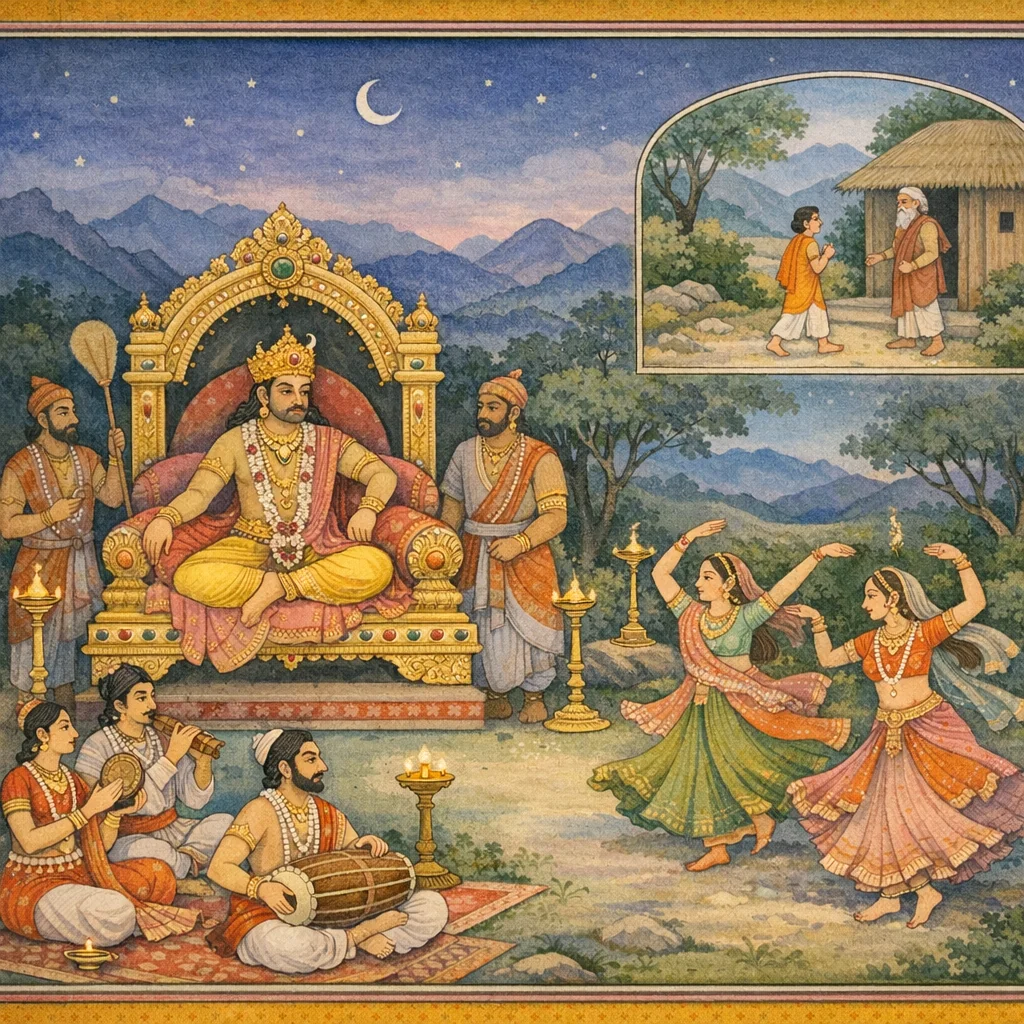
Parāśara begins Prahlāda’s story for Maitreya: empowered by Brahmā’s boon, Hiraṇyakaśipu subjugates the three worlds, usurps cosmic functions and sacrificial enjoyments, and drives the devas to hide on earth. Prahlāda, educated in the guru’s house, is brought before his power-intoxicated father and recites the “essence” of devotion, bowing to Acyuta as without beginning, middle, or end, the cause of all causes. Enraged, Hiraṇyakaśipu interrogates him, while Prahlāda proclaims Viṣṇu as the sovereign dwelling in the heart and the ineffable goal of yogins. Attempts to kill the boy with weapons, serpents, elephants, and fire fail because he is absorbed in Kṛṣṇa/Janārdana. The chapter then turns to instruction on saṁsāra’s suffering, rebirth, the body’s impurity, attachment as the seed of grief, and the urgency of striving for śreyas from childhood. Parāśara concludes with bhakti-practice: constant smaraṇa, maitri, and samatā as worship, and a non-separative vision of the world as Viṣṇu’s expansion.
Shlokas
Verse 1
मैत्रेय श्रूयतां सम्यक् चरितं तस्य धीमतः प्रह्लादस्य सदोदारचरितस्य महात्मनः
O Maitreya, listen attentively and in full: I shall relate the life-story of that wise and great-souled Prahlāda—whose conduct is ever noble and magnanimous.
Verse 2
दितेः पुत्रो महावीर्यो हिरण्यकशिपुः पुरा त्रैलोक्यं वशम् आनिन्ये ब्रह्मणो वरदर्पितः
In ancient times, Diti’s son—Hiraṇyakaśipu, mighty in valor—brought the three worlds under his control, intoxicated with the pride born of a boon granted by Brahmā.
Verse 3
इन्द्रत्वम् अकरोद् दैत्यः स चासीत् सविता स्वयम् वायुर् अग्निर् अपां नाथः सोमश् चासीन् महासुरः
The Daitya assumed the sovereignty of Indra; indeed, he himself became Savitṛ, the impelling Sun. He took on the offices of Vāyu and Agni, became the lord over the waters, and even stood in the place of Soma—thus did that mighty Asura seize the very functions by which the cosmos is sustained.
Verse 4
धनानाम् अधिपः सो ऽभूत् स एवासीत् स्वयं यमः यज्ञभागान् अशेषांस् तु स स्वयं बुभुजे ऽसुरः
That Asura became the lord of riches; he himself took on the role of Yama, the dispenser of punishment. And all the portions meant for the sacrifices—without remainder—were consumed by him alone, as though he were the rightful enjoyer.
Verse 5
देवाः स्वर्गं परित्यज्य तत्त्रासान् मुनिसत्तम विचेरुर् अवनौ सर्वे बिभ्राणा मानुषीं तनुम्
O best of sages, shaken by that terror, the gods abandoned heaven and, concealing their divinity, roamed the earth in human bodies.
Verse 6
जित्वा त्रिभुवनं सर्वं त्रैलोक्यैश्वर्यदर्पितः उद्गीयमानो गन्धर्वैर् बुभुजे विषयान् प्रियान्
Having conquered the three worlds, swollen with pride in sovereignty over the three realms, he—praised in song by the Gandharvas—indulged in the pleasures he loved, enjoying the objects of the senses.
Verse 7
पानासक्तं महात्मानं हिरण्यकशिपुं तदा उपासां चक्रिरे सर्वे सिद्धगन्धर्वपन्नगाः
Then, when the great-souled Hiraṇyakaśipu became addicted to drink, all the Siddhas, Gandharvas, and serpent-beings began to offer him homage and worship.
Verse 8
अवादयञ् जगुश् चान्ये जयशब्दान् अथापरे दैत्येश्वरस्य पुरतश् चक्रुः सिद्धा मुदान्विताः
Some played instruments, others sang, and others cried out shouts of victory. Before the lord of the Daityas, the Siddhas, filled with joy, performed these festive rites.
Verse 9
तत्र प्रनृत्ताप्सरसि स्फाटिकाभ्रमये ऽसुरः पपौ पानं मुदा युक्तः प्रासादे सुमनोहरे
There, in a most enchanting palace gleaming like crystal, amid Apsarases dancing, the Asura—delighted at heart—drank the intoxicating draught with joy.
Verse 10
तस्य पुत्रो महाभागः प्रह्लादो नाम नामतः पपाठ बालपाठ्यानि गुरुगेहं गतो ऽर्भकः
His son was greatly blessed, known by the name Prahlāda. While still a small child, he went to his teacher’s house and studied the lessons meant for boys.
Verse 11
एकदा तु स धर्मात्मा जगाम गुरुणा सह पानासक्तस्य पुरतः पितुर् दैत्यपतेस् तदा
Once, that righteous-hearted one went with his teacher and, at that time, stood before his father—the lord of the Daityas—who was absorbed in drinking.
Verse 12
पादप्रणामावनतं तम् उत्थाप्य पिता सुतम् हिरण्यकशिपुः प्राह प्रह्लादम् अमितौजसम्
Seeing his son bowed in reverent prostration at his feet, the father raised him up; then Hiraṇyakaśipu spoke to Prahlāda, the child of immeasurable inner power.
Verse 13
पठ्यतां भवता वत्स सारभूतं सुभाषितम् कालेनैतावता यत् ते सदोद्युक्तेन शिक्षितम्
Recite, dear child, the well-spoken teaching that is the very essence—whatever, in this time, you have learned through constant and earnest effort.
Verse 14
श्रूयतां तात वक्ष्यामि सारभूतं तवाज्ञया समाहितमना भूत्वा यन् मे चेतस्य् अवस्थितम्
Listen, dear father: at your command I shall speak the very essence. With my mind made steady and collected, I will declare what stands firmly established within my heart and understanding.
Verse 15
अनादिमध्यान्तम् अजम् अवृद्धिक्षयम् अच्युतम् प्रणतो ऽस्म्य् अन्तसंतानं सर्वकारणकारणम्
I bow to the Imperishable Lord Acyuta—without beginning, middle, or end; unborn; beyond increase and decline; unfailing. I prostrate to the innermost continuum within all beings, the Cause of all causes.
Verse 16
एतन् निशम्य दैत्येन्द्रः कोपसंरक्तलोचनः विलोक्य तद्गुरुं प्राह स्फुरिताधरपल्लवः
Hearing this, the lord of the Daityas—his eyes reddened with wrath—looked toward that teacher and spoke, his lips trembling with fury.
Verse 17
ब्रह्मबन्धो किम् एतत् ते विपक्षस्तुतिसंहितम् असारं ग्राहितो बालो माम् अवज्ञाय दुर्मते
O brahmabandhu—Brahmin only in name—what is this you have taken up: a hollow composition stitched together as praise of my opponents? In childish folly you have accepted what is without substance, and, O perverse-minded one, you have done so by scorning me.
Verse 18
दैत्येश्वर न कोपस्य वशम् आगन्तुम् अर्हसि ममोपदेशजनितं नायं वदति ते सुतः
O lord of the Daityas, you should not fall under the sway of anger. Your son does not speak this of his own accord; these words arise from the instruction I have given him.
Verse 19
अनुशिष्टो ऽसि केनेदृग् वत्स प्रह्लाद कथ्यताम् मयोपदिष्टं नेत्य् एष प्रब्रवीति गुरुस् तव
“By whom have you been instructed in this manner, dear Prahlāda? Tell me. For your teacher here declares, ‘This was not taught by me.’”
Verse 20
शास्ता विष्णुर् अशेषस्य जगतो यो हृदि स्थितः तम् ऋते परमात्मानं तात कः केन शास्यते
Vishnu alone is the sovereign of the entire universe, He who abides within the heart. Apart from that Supreme Self, dear one, who could govern whom, and by what authority?
Verse 21
को ऽयं विष्णुः सुदुर्बुद्धे यं ब्रवीषि पुनः पुनः जगताम् ईश्वरस्येह पुरतः प्रसभं मम
“Who is this ‘Vishnu’ of whom you keep speaking again and again, you dull-witted one? Here, right before me, you brazenly proclaim him—while I stand present—as the Lord and sovereign of the worlds!”
Verse 22
न शब्दगोचरं यस्य योगिध्येयं परं पदम् यतो यश् च स्वयं विश्वं स विष्णुः परमेश्वरः
His supreme state is beyond the reach of words, yet it is the highest goal contemplated by yogins; from Him the universe arises, and He Himself is this very universe—He is Vishnu, the Supreme Lord.
Verse 23
परमेश्वरसंज्ञो ऽज्ञ किम् अन्यो मय्य् अवस्थिते तवास्ति मर्तुकामस् त्वं प्रब्रवीषि पुनः पुनः
O ignorant one—while I am present here—what other ‘Supreme Lord’ could there be for you? If you are truly eager to die, why do you keep speaking again and again?
Verse 24
न केवलं तात मम प्रजानां स ब्रह्मभूतो भवतश् च विष्णुः धाता विधाता परमेश्वरश् च प्रसीद कोपं कुरुषे किमर्थम्
O dear one, that Vishnu is not only the Brahman-natured source of my created beings—He is also yours: the Upholder, the Ordainer, the Supreme Lord. Be gracious; why do you fashion anger at all?
Verse 25
प्रविष्टः को ऽस्य हृदयं दुर्बुद्धेर् अतिपापकृत् येनेदृशान्य् असाधूनि वदत्य् आविष्टमानसः
Who has entered the heart of this evil-minded, grievously sinful man, that—his mind as though possessed—he speaks such wicked and unworthy words?
Verse 26
न केवलं मद्धृदयं स विष्णुर् आक्रम्य लोकान् अखिलान् अवस्थितः स मां त्वदादींश् च पितः समस्तान् समस्तचेष्टासु युनक्ति सर्वगः
That Vishnu does not merely pervade my own heart; having over-spread all the worlds, He abides within them all. He—our Father, the all-pervading One—impels me, and you and all others, setting every being into motion in every act.
Verse 27
निष्क्राम्यताम् अयं दुष्टः शास्यतां च गुरोर् गृहे योजितो दुर्मतिः केन विपक्षवितथस्तुतौ
“Let this wicked man be driven out; let him be sent to be disciplined in the house of a preceptor. By whom was this evil-minded one enlisted in the false praise of an enemy faction—this deceitful eulogy that undermines rightful order?”
Verse 28
इत्य् उक्ते स तदा दैत्यैर् नीतो गुरुगृहं पुनः जग्राह विद्याम् अनिशं गुरुशुश्रूषणोद्यतः
When this was said, he was led again by the Daityas to the teacher’s house; and there, ever intent on reverent service to his preceptor, he continually took up the study of sacred knowledge.
Verse 29
काले ऽतीते ऽतिमहति प्रह्लादम् असुरेश्वरः समाहूयाब्रवीद् गाथा काचित् पुत्रक गीयताम्
When a very long time had passed, the lord of the Asuras summoned Prahlāda and said, “My child, let some song—some ancient verse—be sung.”
Verse 30
यतः प्रधानपुरुषौ यतश् चैतच् चराचरम् कारणं सकलस्यास्य स नो विष्णुः प्रसीदतु
From whom proceed Pradhāna (primordial Nature) and Puruṣa (the conscious principle), and from whom arises this entire moving and unmoving universe—He who is the cause of all this: may that Lord Viṣṇu be gracious to us.
Verse 31
दुरात्मा वध्यताम् एष नानेनार्थो ऽस्ति जीवता स्वपक्षहानिकर्तृत्वाद् यः कुलाङ्गारतां गतः
Let this wicked-souled man be put to death—there is no purpose in his living. For by bringing ruin upon his own side, he has become a burning disgrace, a smoldering cinder upon the family line.
Verse 32
इत्य् आज्ञप्तास् ततस् तेन प्रगृहीतमहायुधाः उद्यतास् तस्य नाशाय दैत्याः शतसहस्रशः
Thus commanded by him, the Daityas—hundreds of thousands in number—seized their mighty weapons and rose up, intent upon his destruction.
Verse 33
विष्णुः शस्त्रेषु युष्मासु मयि चासौ यथा स्थितः दैतेयास् तेन सत्येन मा क्रामन्त्व् आयुधानि वः
As Vishnu abides—present within your weapons, within you, and within me—O Daityas, by the power of that very truth, may your weapons not strike, may they not advance against us.
Verse 34
ततस् तैः शतशो दैत्यैः शस्त्रौघैर् आहतो ऽपि सन् नावाप वेदनाम् अल्पाम् अभूच् चैव पुनर् नवः
Then, though struck by torrents of weapons hurled by hundreds of Daityas, he did not feel even the slightest pain; indeed, he became once more as fresh and unwearied as if newly born—his vigor returning unbroken in the midst of assault.
Verse 35
दुर्बुद्धे विनिवर्तस्व वैरिपक्षस्तवाद् अतः अभयं ते प्रयच्छामि मातिमूढमतिर् भव
O misguided one, turn back at once—for from this moment you stand in the camp of the enemy. Yet I grant you safety; do not let a deluded mind drive you onward.
Verse 37
भो भोः सर्पाः दुराचारम् एनम् अत्यन्तदुर्मतिम् विषज्वालाविलैर् वक्त्रैः सद्यो नयत संक्षयम्
“Ho! Ho, you serpents—this man is wicked in conduct and utterly perverse in mind. With your mouths blazing with venom-fire, take him at once to destruction.”
Verse 38
इत्य् उक्तास् तेन ते सर्पाः कुहकास् तक्षकादयः अदंशन्त समस्तेषु गात्रेष्व् अतिविषोल्बणाः
Thus addressed by him, those serpents—deceitful and venom-fierce, led by Takṣaka—bit into all his limbs at once, their poison raging with overwhelming force.
Verse 39
स त्व् आसक्तमतिः कृष्णे दंश्यमानो महोरगैः न विवेदात्मनो गात्रं तत्स्मृत्याह्लादसंस्थितः
But he—his mind utterly absorbed in Kṛṣṇa—though being bitten by great serpents, did not even perceive his own body; for he remained established in the bliss that arises from the remembrance of Him.
Verse 40
दंष्ट्रा विशीर्णा मणयः स्फुटन्ति फणेषु तापो हृदयेषु कम्पः नास्य त्वचः स्वल्पम् अपीह भिन्नं प्रशाधि दैत्येश्वर कर्म चान्यत्
“Its fangs are shattered; the jewels upon its hoods are cracking; heat sears through its coils and a trembling runs through its very heart. Yet not even a little of its skin is split. O lord of the Daityas, restrain yourself—turn to some other deed.”
Verse 41
हे दिग्गजाः संकटदन्तमिश्रा घ्नतैनम् अस्मद्रिपुपक्षभिन्नम् तज्जा विनाशाय भवन्ति तस्य यथारणेः प्रज्वलितो हुताशः
O Diggajas, guardians of the quarters, you whose tusks are dread and perilous—strike down this one who has shattered the wing of our enemy’s host. For the very forces born from him become the instruments of his ruin, as fire kindled from the araṇi-sticks consumes the wood that gave it birth.
Verse 42
ततः स दिग्गजैर् बालो भूभृच्छिखरसंनिभैः पातितो धरणीपृष्ठे विषाणैर् अप्य् अपीड्यत
Then the boy was struck by the Diggajas, vast as mountain peaks; he was hurled onto the earth’s surface and even crushed beneath their tusks.
Verse 43
स्मरतस् तस्य गोविन्दम् इभदन्ताः सहस्रशः शीर्णा वक्षःस्थलं प्राप्य स प्राह पितरं ततः
As he remembered Govinda, countless elephant tusks shattered at once; and when they struck his chest, he then spoke to his father.
Verse 44
दन्ता गजानां कुलिशाग्रनिष्ठुराः शीर्णा यद् एते न बलं ममैतत् महाविपत्पापविनाशनो ऽयं जनार्दनानुस्मरणानुभावः
That the elephants’ tusks—hard and keen as the edge of a vajra—have shattered is not due to any strength of mine. This is the power born of remembering Janārdana: it destroys great calamity and washes away sin.
Verse 45
ज्वाल्यताम् असुरा वह्निर् अपसर्पत दिग्गजाः वायो समेधयाग्निं त्वं दह्यताम् एष पापकृत्
Let the fire blaze against the Asuras! Let the Diggajas withdraw! O Wind, fan and kindle this flame; let this evildoer be burned away.
Verse 46
महाकाष्ठचयच्छन्नम् असुरेन्द्रसुतं ततः प्रज्वाल्य दानवा वह्निं ददहुः स्वामिचोदिताः
Then, at their lord’s command, the Dānavas covered the Asura-king’s son with a vast heap of timber; they kindled the fire and burned him there.
Verse 47
तातैष वह्निः पवनेरितो ऽपि न मां दहत्य् अत्र समन्ततो ऽहम् पश्यामि पद्मास्तरणास्तृतानि शीतानि सर्वाणि दिशां मुखानि
Dear father, though this fire is fanned by the wind, it does not burn me. All around I behold the quarters grown cool, as if each direction were spread with beds of lotus.
Verse 48
अथ दैत्येश्वरं प्रोचुर् भार्गवस्यात्मजा द्विजाः पुरोहिता महात्मानः साम्ना संस्तूय वाग्मिनः
Then the Brahmins, sons of Bhṛgu—priests, great-souled and eloquent—first praised the lord of the Daityas with Sāman hymns and gentle words, and then addressed him.
Verse 49
राजन् नियम्यतां कोपो बाले ऽत्र तनये निजे कोपो देवनिकायेषु तत्र ते सफलो यतः
O King, restrain your anger toward this child—your own son. Turn your wrath upon the host of the gods; for there alone will your effort bear fruit.
Verse 50
तथा तथैनं बालं ते शासितारो वयं नृप यथा विपक्षनाशाय विनीतस् ते भविष्यति
“So be it. O King, we shall discipline and train this boy in that very way, so that—well instructed and self-controlled—he becomes fit to destroy your adversaries.”
Verse 51
बालत्वं सर्वदोषाणां दैत्यराजास्पदं यतः ततो ऽत्र कोपम् अत्यर्थं योक्तुम् अर्हसि नार्भके
For childhood is the very seat where every fault readily takes root, O king of the Daityas; therefore in this matter you should not fasten excessive anger upon a mere child.
Verse 52
न त्यक्ष्यति हरेः पक्षम् अस्माकं वचनाद् यदि ततः कृत्यां वधायास्य करिष्यामो ऽनिवर्तिनीम्
If, even at our command, he will not abandon the side of Hari, then we shall unleash against him a kṛtyā—unerring and returning-not—crafted solely for his destruction.
Verse 53
एवम् अभ्यर्थितस् तैस् तु दैत्यराजः पुरोहितैः दैत्यैर् निष्क्रामयाम् आस पुत्रं पावकसंचयात्
Thus entreated by the priests and by the Daityas themselves, the king of the Daityas caused his son to be brought out from the piled-up blaze of fire.
Verse 54
ततो गुरुगृहे बालः स वसन् बालदानवान् अध्यापयाम् आस मुहुर् उपदेशान्तरे गुरोः
Thereafter, while residing in the teacher’s house, the boy repeatedly instructed the young Dānavas, again and again, during the intervals when the guru’s lessons had ceased.
Verse 55
श्रूयतां परमार्थो मे दैतेया दितिजात्मजाः न चान्यथैतन् मन्तव्यं नात्र लोभादिकारणम्
Hear my highest intent, O Daityas, sons of Diti. Do not construe this otherwise; here there is no motive such as greed or the like.
Verse 56
जन्म बाल्यं ततः सर्वो जन्तुः प्राप्नोति यौवनम् अव्याहतैव भवति ततो ऽनुदिवसं जरा
From birth arises childhood; then every living being attains youth. For a while it seems unharmed, yet from that very point onward, day by day, old age steadily advances.
Verse 57
ततश् च मृत्युम् अभ्येति जन्तुर् दैत्येश्वरात्मजाः प्रत्यक्षं दृश्यते चैतद् अस्माकं भवतां तथा
And then, O sons of the lord of the Daityas, the embodied creature surely goes to death. This is plainly seen—by us, and by you as well—directly before one’s eyes.
Verse 58
मृतस्य च पुनर् जन्म भवत्य् एतच् च नान्यथा आगमो ऽयं तथा तच् च नोपादानं विनोद्भवः
For one who has died, there is indeed birth again—this is so and cannot be otherwise. Such is the authoritative teaching handed down; and likewise, nothing comes into manifestation without a material basis (upādāna).
Verse 59
गर्भवासादि यावत् तु पुनर्जन्मोपपादनम् समस्तावस्थकं तावद् दुःखम् एवावगम्यताम्
From dwelling in the womb onward, up to the securing of yet another birth, know this for certain: in every condition and at every stage of embodied existence, suffering alone prevails.
Verse 60
क्षुत्तृष्णोपशमं तद्वच् शीताद्युपशमं सुखम् मन्यते बालबुद्धित्वाद् दुःखम् एव हि तत् पुनः
Just as the easing of hunger and thirst is taken to be happiness, so too the mere relief from cold and the like is imagined as pleasure. Yet, through childish understanding, that very ‘happiness’ is truly suffering again—only pain paused for a moment, not peace attained.
Verse 61
अत्यन्तस्तिमिताङ्गानां व्यायामेन सुखैषिणाम् भ्रान्तिज्ञानवतां पुंसां प्रहारो ऽपि सुखायते
For those whose limbs have grown utterly inert, who seek pleasure through exertion, and whose understanding is clouded by delusion—even a blow comes to be felt as pleasure.
Verse 62
क्व शरीरम् अशेषाणां श्लेष्मादीनां महाचयः क्व चाङ्गशोभासौरभ्यकमनीयादयो गुणाः
What is this body, after all, but a vast heap of phlegm and the rest—an endless accumulation of impure substances? And where, in truth, are those qualities people imagine in it—radiance of limb, pleasing fragrance, beauty, and the like?
Verse 63
मांसासृक्पूयविण्मूत्रस्नायुमज्जास्थिसंहतौ देहे चेत् प्रीतिमान् मूढो भविता नरके ऽपि सः
If a deluded man takes delight in the body—this mere compact of flesh, blood, pus, feces, urine, sinews, marrow, and bones—then even in hell he will remain the same, bound by folly and attachment.
Verse 64
अग्नेः शीतेन तोयस्य तृषा भक्तस्य च क्षुधा क्रियते सुखकर्तृत्वं तद्विलोमस्य चेतरैः
Cold water becomes a giver of comfort to one scorched by fire; hunger makes food a source of happiness; and so too do other things become causes of pleasure only through their opposites and reversals of condition.
Verse 65
करोति हे दैत्यपुत्रा यावन्मात्रं परिग्रहम् तावन्मात्रं स एवास्य दुःखं चेतसि यच्छति
O sons of the Daitya race—whatever measure of possessions a person gathers, in that very measure he, by his own doing, places sorrow within his heart.
Verse 66
यावतः कुरुते जन्तुः संबन्धान् मनसः प्रियान् तावन्तो ऽस्य निखन्यन्ते हृदये शोकशङ्कवः
So long as a living being forges bonds dear to the mind, so long are those very bonds driven into the heart as stakes of sorrow, fastening it with grief and fear.
Verse 67
यद् यद् गृहे तन् मनसि यत्र तत्रावतिष्ठतः नाशदाहापहरणं कुतस् तत्रैव तिष्ठति
Whatever one keeps in the house, the mind clings to it again and again, settling upon it. How then could ruin, fire, or theft not also alight upon that very object of attachment?
Verse 68
जन्मन्य् अत्र महद् दुःखं म्रियमाणस्य चापि तत् यातनासु यमस्योग्रं गर्भसंक्रमणेषु च
Here there is great suffering at birth, and that same suffering attends one who is dying—terrible are the agonies under Yama’s rule, and grievous too are the passages from womb to womb in repeated embodiment.
Verse 69
गर्भे च सुखलेशो ऽपि भवद्भिर् अनुमीयते यदि तत् कथ्यताम् एवं सर्वं दुःखमयं जगत्
If, as you maintain, even within the womb there is some slight trace of pleasure, then tell me: how is it that this entire world is nevertheless pervaded by suffering?
Verse 70
तद् एतद् अतिदुःखानाम् आस्पदे ऽत्र भवार्णवे भवतां कथ्यते सत्यं विष्णुर् एकः परायणः
In this ocean of becoming, the very abode of intense sorrow, I declare to you the truth: Vishnu alone is the single, final refuge.
Verse 71
मा जानीत वयं बाला देही देहेषु शाश्वतः जरायौवनजन्माद्या धर्मा देहस्य नात्मनः
O child, do not imagine that we are the body, nor that the embodied Self is forever confined within bodies. Birth, youth, and old age are conditions of the body alone, not attributes of the Ātman.
Verse 72
बालो ऽहं तावद् इच्छातो यतिष्ये श्रेयसे युवा युवाहं वार्द्धके प्राप्ते करिष्याम्य् आत्मनो हितम्
“So long as I am a child, I will strive for the good only when I feel like it. When I am a youth, I will pursue what is truly beneficial. And when old age arrives, then I will do what is for my highest welfare.”
Verse 73
वृद्धो ऽहं मम कार्याणि समस्तानि न गोचरे किं करिष्यामि मन्दात्मा समर्थेन न यत् कृतम्
“I am old; all my duties are no longer within my reach. What can I do now—wretched in spirit—when even in my strength I failed to do what ought to have been done?”
Verse 74
एवं दुराशयाक्षिप्तमानसः पुरुषः सदा श्रेयसो ऽभिमुखं याति न कदाचित् पिपासितः
Thus, a person whose mind is continually dragged away by vain hopes never turns toward the Highest Good; like one tormented by thirst, he does not truly set his face toward what can quench it.
Verse 75
बाल्ये क्रीडनकासक्ता यौवने विषयोन्मुखाः अज्ञानयन्त्य् अशक्त्या च वार्द्धकं समुपस्थितम्
In childhood they cling to playthings; in youth they turn toward the objects of sense. Thus, through ignorance—and later through sheer incapacity—they fail to recognize that old age has already arrived.
Verse 76
तस्माद् बाल्ये विवेकात्मा यतेत श्रेयसे सदा बाल्ययौवनवृद्धाद्यैर् देहभावैर् असंयुतः
Therefore, even in childhood, one whose very nature is discernment should ever strive for the highest good, remaining unattached to the body’s changing states—childhood, youth, old age, and the rest.
Verse 77
तद् एतद् वो मयाख्यातं यदि जानीत नानृतम् तद् अस्मत्प्रीतये विष्णुः स्मर्यतां बन्धमुक्तिदः
Thus have I declared this to you. If you know it to be no falsehood, then—for my satisfaction—remember Lord Viṣṇu, the giver of release from bondage.
Verse 78
आयासः स्मरणे को ऽस्य स्मृतो यच्छति शोभनम् पापक्षयश् च भवति स्मरतां तम् अहर्निशम्
What hardship is there in remembering Him? When He is remembered, He bestows what is auspicious; and for those who remember Him day and night, the waning of sin surely comes to pass.
Verse 79
सर्वभूतस्थिते तस्मिन् मतिर् मैत्री दिवानिशम् भवतां जायताम् एवं सर्वक्लेशान् प्रहास्यथ
Fix your mind, day and night, in loving friendliness toward Him who abides within all beings. Thus you will rise beyond every affliction, and the whole mass of sorrows will become a thing to be laughed away.
Verse 80
तापत्रयेणाभिहतं यद् एतद् अखिलं जगत् तदा शोच्येषु भूतेषु द्वेषं प्राज्ञः करोति कः
When this entire universe is smitten by the threefold afflictions, who among the truly wise would nurture hatred toward beings that are themselves objects of compassion?
Verse 81
अथ भद्राणि भूतानि हीनशक्तिर् अहं परम् मुदं तथापि कुर्वीत हानिर् द्वेषफलं यतः
Then, even if my power is diminished, I should still bring the highest joy to all auspicious beings; for loss and ruin arise as the fruit of hatred.
Verse 82
बद्धवैराणि भूतानि द्वेषं कुर्वन्ति चेत् ततः शोच्यान्य् अहो ऽतिमोहेन व्याप्तानीति मनीषिणाम्
When living beings, bound fast in enmities, act in hatred, the wise reflect: “Alas—how pitiable they are, pervaded and overcome by utter delusion.”
Verse 83
एते भिन्नदृशां दैत्या विकल्पाः कथिता मया कृत्वाभ्युपगमं तत्र संक्षेपः श्रूयतां मम
Thus, O Daitya, I have set forth the various alternatives held by those of differing views. Now, having granted them their due place for the sake of discussion, listen to my concise conclusion.
Verse 84
विस्तारः सर्वभूतस्य विष्णोर् विश्वम् इदं जगत् द्रष्टव्यम् आत्मवत् तस्माद् अभेदेन विचक्षणैः
This entire universe—this moving world—is the outspreading manifestation of Vishnu, the indwelling Self of all beings. Therefore, the wise should behold the whole of existence as they behold their own self: with a vision of non-separation and inner unity.
Verse 85
समुत्सृज्यासुरं भावं तस्माद् यूयं यथा वयम् तथा यत्नं करिष्यामो यथा प्राप्स्याम निर्वृतिम्
Therefore, casting away the asuric disposition, you too—just as we do—should strive in the same manner, so that we may attain true peace and final contentment.
Verse 86
नैवाग्निना न चार्केण नेन्दुना न च वायुना पर्जन्यवरुणाभ्यां वा न सिद्धैर् न च राक्षसैः
Neither by fire, nor by the sun, nor by the moon, nor by the wind; neither by rain nor by Varuṇa; neither by the Siddhas nor by the Rākṣasas—by none of these can That be overpowered or undone.
Verse 87
न यक्षैर् न च दैत्येन्द्रैर् नोरगैर् न च किंनरैः न मनुष्यैर् न पशुभिर् दोषैर् नैवात्मसंभवैः
Not by Yakṣas, nor by the lords of the Daityas, nor by the Nāgas, nor by the Kiṃnaras; not by human beings, nor by beasts—nor even by defects arising from one’s own nature—can the Supreme Reality be tainted or overpowered.
Verse 88
ज्वराक्षिरोगातीसारप्लीहगुल्मादिकैस् तथा द्वेषेर्ष्यामत्सराद्यैर् वा रागलोभादिभिः क्षयम्
Through fevers, diseases of the eyes, dysentery, disorders of the spleen, abdominal tumors and the like—and likewise through hatred, jealousy, envy and related vices, or through attachment and greed—one is brought to wasting away and decline.
Verse 89
न चान्यैर् नीयते कैश्चिन् नित्या यात्यन्तनिर्मला ताम् आप्नोत्य् अमले न्यस्य केशवे हृदयं नरः
It is not carried away by any other power; ever-present, it moves on—at last utterly purified. That stainless state is attained by the one who places the heart in Keśava, the Pure.
Verse 90
असारसंसारविवर्तनेषु मा यात तोषं प्रसभं ब्रवीमि सर्वत्र दैत्याः समताम् उपेत समत्वम् आराधनम् अच्युतस्य
In the hollow whirlings and turnings of this insubstantial worldly existence, do not rush into complacent delight—I tell you plainly. Everywhere, O Daityas, abide in even-mindedness; for equanimity itself is the worship of the Imperishable Acyuta.
Verse 91
तस्मिन् प्रसन्ने किम् इहास्त्य् अलभ्यं धर्मार्थकामैर् अलम् अल्पकास् ते समाश्रिताद् ब्रह्मतरोर् अनन्तान् निःसंशयं प्राप्स्यथ वै महत् फलम्
When He is gracious, what in this world could possibly remain unattainable? Enough of chasing the small gains of dharma, artha, and kāma. Having taken refuge in the infinite Brahman-tree itself, you will—without doubt—attain a truly great fruit.
Frequently Asked Questions
It symbolizes a breakdown of delegated cosmic governance (adhikāra) and yajña-order; the narrative reasserts that all functions ultimately depend on Viṣṇu as the sustaining inner ruler, so usurpation cannot overturn the Supreme sovereignty.
It compresses Vedāntic theism into stotra-form: Viṣṇu is unborn, changeless, and the cause of causes; devotion is grounded in metaphysical ultimacy, not merely sectarian allegiance.
By teaching that beings suffer under tāpa-traya, the wise should not hate but cultivate maitri; equanimity (samatā) becomes a direct mode of worship, aligning inner disposition with Viṣṇu’s all-pervasion.