Adhyaya 146: Inquiry into Taraka’s Slaying and the Prelude to Guha (Skanda) Birth: Diti’s Lineage and the Rise of Vajranga
तारकवध-प्रश्नः, गुहजन्म-प्रस्तावना च (वज्राङ्ग-वंशवर्णनम्)
Speaker: Ṛṣis, Sūta, Matsya (Janārdana), Brahmā, Diti, Indra (Śakra/Pākaśāsana), Vajrāṅga, Kaśyapa
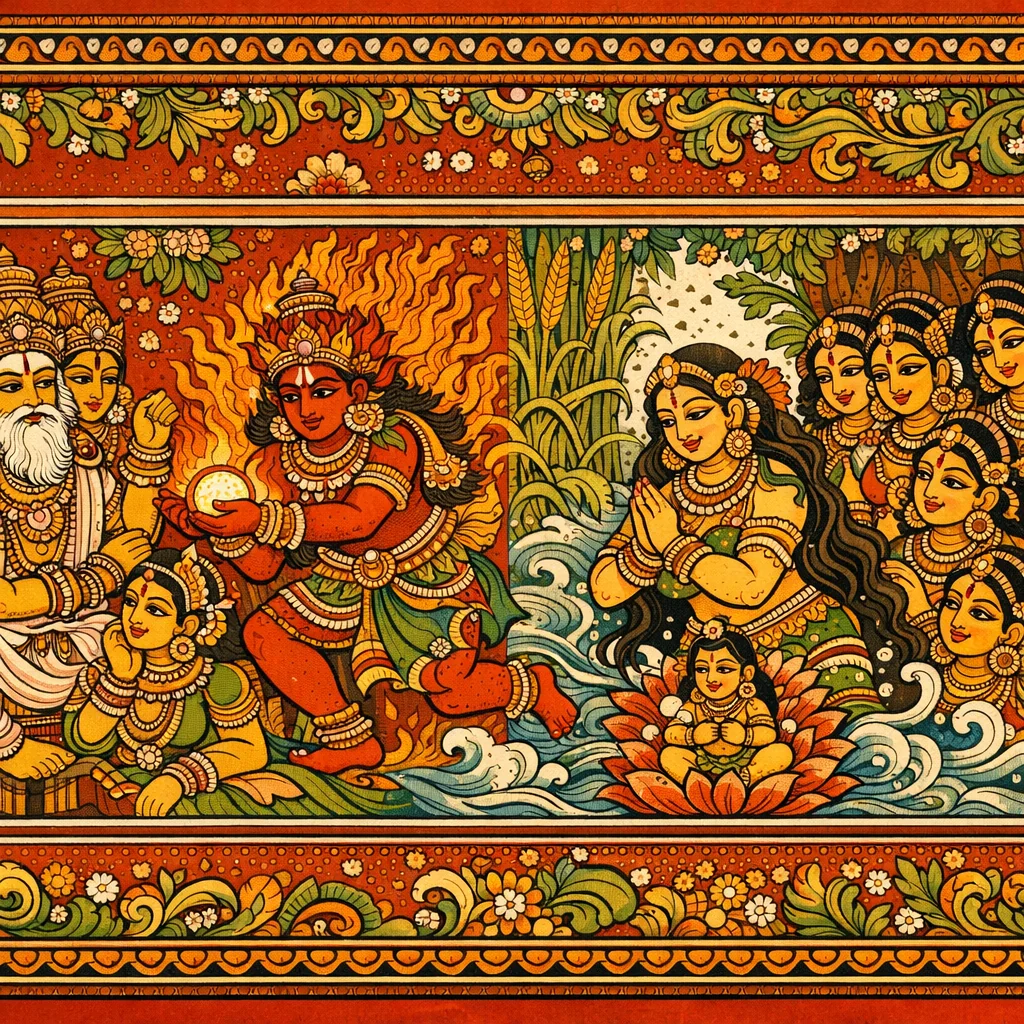
The Ṛṣis ask Sūta when and how Matsya recounted the great slaying of Tāraka, urging a full narration. Sūta places it in the dialogue where Manu questions Matsya about the birth of the six-faced deity Guha (Skanda) in the Śaravana reed-forest. Matsya says the Devas were driven out by Tāraka, son of Vajrāṅga, and that Brahmā foretold Śiva’s child would kill him. He then outlines Guha’s “secret birth”: Śiva’s seed was entrusted to Agni; too potent for the gods to bear, it fell into a river and manifested in the reed-wood, and the seven-day-old child slew Tāraka. The Ṛṣis next demand Vajrāṅga’s lineage and detailed account of Guha’s birth. Sūta answers by describing Dakṣa’s daughters given to Dharma, Kaśyapa, Soma, and others, listing maternal lines—Aditi, Diti, Danu, Vinatā, Kadrū, etc.—and the beings born from them. The narrative narrows to Diti’s sorrow and vow for a son, Indra’s service and later splitting of the embryo into forty-nine winds (the Maruts). Diti seeks again; Kaśyapa promises Vajrāṅga after 10,000 years. Vajrāṅga captures Indra but releases him at Brahmā–Kaśyapa’s command, receives Varāṅgī as wife, performs fierce tapas; Indra troubles Varāṅgī; Brahmā grants boons; and Vajrāṅga then searches for his missing wife, leading into the next episode.
Key Concepts
Shlokas in Adhyaya 146
Verse 1
*ऋषय ऊचुः कथं मत्स्येन कथितस् तारकस्य वधो महान् कस्मिन्काले विनिर्वृत्ता कथेयं सूतनन्दन //
The sages said: “How did Lord Matsya recount the great slaying of Tāraka? At what time did this narrative take place, O son of Sūta?”
Verse 2
त्वन्मुखक्षीरसिन्धूत्था कथेयममृतात्मिका कर्णाभ्यां पिबतां तृप्तिर् अस्माकं न प्रजायते इदं मुने समाख्याहि महाबुद्धे मनोगतम् //
This tale, born from the ocean of milk of your very mouth and of the nature of nectar—though we drink it in through our ears, our satisfaction never arises. Therefore, O sage, O great-minded one, tell us what is in your heart.
Verse 3
*सूत उवाच पृष्टस्तु मनुना देवो मत्स्यरूपी जनार्दनः कथं शरवणे जातो देवः षड्वदनो विभो //
Sūta said: When questioned by Manu, the Lord Janārdana—who had assumed the form of Matsya—was asked: “O mighty one, how was the six-faced god born in the Śaravana (reed-forest)?”
Verse 4
एतत्तु वचनं श्रुत्वा पार्थिवस्यामितौजसः उवाच भगवान्प्रीतो ब्रह्मसूनुर्महामतिम् //
Hearing these words of the king of immeasurable prowess, the Blessed one—Brahmā’s son, the great-souled sage—being pleased, spoke in reply.
Verse 5
*मत्स्य उवाच वज्राङ्गो नाम दैत्यो ऽभूत् तस्य पुत्रस्तु तारकः सुरानुद्वासयामास पुरेभ्यः स महाबलः //
Matsya said: “There was a Daitya named Vajrāṅga. His son was Tāraka—mighty in strength—who drove the Devas out from their cities.”
Verse 6
ततस्ते ब्रह्मणो ऽभ्याशं जग्मुर्भयनिपीडिताः भीतांश्च त्रिदशान्दृष्ट्वा ब्रह्मा तेषामुवाच ह //
Then, tormented by fear, they went near Brahmā. Seeing those thirty gods frightened, Brahmā spoke to them.
Verse 7
संत्यजध्वं भयं देवाः शंकरस्यात्मजः शिशुः तुहिनाचलदौहित्रस् तं हनिष्यति दानवम् //
Abandon your fear, O gods. The child who is Śaṅkara’s son—the grandson of the Snow-Mountain (Himālaya)—will slay that dānava (demon).
Verse 8
ततः काले तु कस्मिंश्चिद् दृष्ट्वा वै शैलजां शिवः स्वरेतो वह्निवदने व्यसृजत्कारणान्तरे //
Then, at a certain time, Śiva—having beheld Śailajā (Pārvatī)—discharged his own seed into the mouth of Fire (Agni), due to another intervening cause.
Verse 9
तत्प्राप्तं वह्निवदने रेतो देवानतर्पयत् विदार्य जठराण्येषाम् अजीर्णं निर्गतं मुने //
O sage, when that seed reached the mouth of Fire, it did not satisfy the gods; tearing open their bellies, it came out undigested.
Verse 10
पतितं तत्सरिद्वरां ततस्तु शरकानने तस्मात्तु स समुद्भूतो गुहो दिनकरप्रभः //
That divine seed/energy fell into the excellent river and then reached a forest of reeds. From it Guha was born, radiant with the splendor of the sun.
Verse 11
स सप्तदिवसो बालो निजघ्ने तारकासुरम् एवं श्रुत्वा ततो वाक्यं तम् ऊचुर् ऋषिसत्तमाः //
That child, only seven days old, slew Tārakāsura. Hearing this account, the foremost sages then addressed him with these words.
Verse 12
*ऋषय ऊचुः अत्याश्चर्यवती रम्या कथेयं पापनाशिनी विस्तरेण हि नो ब्रूहि याथातथ्येन शृण्वताम् //
The sages said: “This tale is exceedingly wondrous and delightful, and it destroys sin. Please tell it to us in full detail, exactly as it happened, as we listen.”
Verse 13
वज्राङ्गो नाम दैत्येन्द्रः कस्य वंशोद्भवः पुरा यस्याभूत्तारकः पुत्रः सुरप्रमथनो बली //
“There was a lord of the Daityas named Vajrāṅga. From which lineage did he arise in former times—he whose son was Tāraka, the mighty one who crushed the hosts of the gods?”
Verse 14
निर्मितः को वधे चाभूत् तस्य दैत्येश्वरस्य तु गुहजन्म तु कार्त्स्न्येन अस्माकं ब्रूहि मानद //
“Who was brought forth (appointed/created) for his destruction, that lord of the Daityas? And tell us in full, O bestower of honor, the complete account of his hidden birth.”
Verse 15
*सूत उवाच मानसो ब्रह्मणः पुत्रो दक्षो नाम प्रजापतिः षष्टिं सो ऽजनयत्कन्या वैरिण्यामेव नः श्रुतम् //
Sūta said: “From the mind of Brahmā was born the son named Dakṣa, the Prajāpati. It is heard by us that he begot sixty daughters upon Vairiṇī.”
Verse 16
ददौ स दश धर्माय कश्यपाय त्रयोदश सप्तविंशतिं सोमाय चतस्रो ऽरिष्टनेमये //
“He allotted ten (daughters) to Dharma, thirteen to Kaśyapa, twenty-seven to Soma, and four to Ariṣṭanemi.”
Verse 17
द्वे वै बाहुकपुत्राय द्वे वै चाङ्गिरसे तथा द्वे कृशाश्वाय विदुषे प्रजापतिसुतः प्रभुः //
The mighty Lord—son of Prajāpati—bestowed two portions (teachings) upon the son of Bāhuka, two likewise upon Aṅgirasa, and two upon the learned Kṛśāśva.
Verse 18
अदितिर्दितिर्दनुर्विश्वा ह्य् अरिष्टा सुरसा तथा सुरभिर्विनता चैव ताम्रा क्रोधवशा इरा //
Aditi, Diti, Danu, Viśvā, Ariṣṭā, Surasā, Surabhi, Vinatā, Tām्रā, Krodhavaśā, and Irā—these are named as the primordial mothers in the lineage.
Verse 19
कद्रूर्मुनिश्च लोकस्य मातरो गोषु मातरः तासां सकाशाल्लोकानां जङ्गमस्थावरात्मनाम् //
Kadrū and the sage (Kaśyapa) are declared to be progenitors of the world; and among cattle, too, there are mother-lines. From those mothers arise the worlds of beings whose nature is both moving and unmoving.
Verse 20
जन्म नानाप्रकाराणां ताभ्यो ऽन्ये देहिनः स्मृताः देवेन्द्रोपेन्द्रपूषाद्याः सर्वे ते दितिजा मताः //
Births are of many kinds; from those origins other embodied beings are also remembered. Indra, Upendra, Pūṣan and the rest—all of them are regarded as born of Diti, the Ditijas.
Verse 21
दितेः सकाशाल्लोकास्तु हिरण्यकशिपादयः दानवाश्च दनोः पुत्रा गावश्च सुरभीसुताः //
From Diti arose lineages such as Hiraṇyakaśipu and others; from Danu were born the Dānavas; and from Surabhī came forth the cattle, the cows.
Verse 22
पक्षिणो विनतापुत्रा गरुडप्रमुखाः स्मृताः नागाः कद्रूसुता ज्ञेयाः शेषाश्चान्ये ऽपि जन्तवः //
Birds are said to be the sons of Vinatā, with Garuḍa foremost among them. The nāgas (serpent-beings) should be known as the offspring of Kadrū; and so too are Śeṣa and other living creatures of that class.
Verse 23
त्रैलोक्यनाथं शक्रं तु सर्वामरगणप्रभुम् हिरण्यकशिपुश्चक्रे जित्वा राज्यं महाबलः //
Having conquered Śakra (Indra)—the lord of the three worlds and the chief of all the hosts of gods—the mighty Hiraṇyakaśipu seized his kingdom.
Verse 24
ततः केनापि कालेन हिरण्यकशिपादयः निहता विष्णुना संख्ये शेषाश्चेन्द्रेण दानवाः //
Then, after some time, Hiraṇyakaśipu and the others were slain by Viṣṇu in battle; and the remaining Dānavas were killed by Indra.
Verse 25
ततो निहतपुत्राभूद् दितिर् वरमयाचत भर्तारं कश्यपं देवं पुत्रमन्यं महाबलम् //
Then Diti, bereft of her son who had been slain, begged a boon from her husband, the divine sage Kaśyapa—asking for another son of great might.
Verse 26
समरे शक्रहन्तारं स तस्या अददात्प्रभुः //
In battle, the Lord bestowed upon her (a son) who would be the slayer of Śakra (Indra).
Verse 27
नियमे वर्त हे देवि सहस्रं शुचिमानसा वर्षाणां लप्स्यसे पुत्रम् इत्युक्ता सा तथाकरोत् //
“Abide, O goddess, in disciplined observance (niyama) with a purified mind for a thousand years; you shall obtain a son.” Thus addressed, she acted accordingly.
Verse 28
वर्तन्त्या नियमे तस्याः सहस्राक्षः समाहितः उपासामाचरत्तस्याः सा चैनमन्वमन्यत //
While she was steadfastly observing that sacred discipline, Sahasrākṣa (Indra), composed and intent, began to attend upon her with reverent service; and she, in turn, accepted him with favor.
Verse 29
दशवत्सरशेषस्य सहस्रस्य तदा दितिः उवाच शक्रं सुप्रीता वरदा तपसि स्थिता //
Then Diti—abiding in austerity and empowered to grant boons—when ten years still remained of that thousand-year observance, spoke to Śakra (Indra) with great satisfaction.
Verse 30
*दितिरुवाच पुत्रोत्तीर्णव्रतां प्रायो विद्धि मां पाकशासन भविष्यति च ते भ्राता तेन सार्धमिमां श्रियम् //
Diti said: “O Pākaśāsana (Indra), know that I have, for the most part, completed the observance undertaken to obtain a son. And your brother, too, will come to be; together with him you shall enjoy this prosperity.”
Verse 31
भुङ्क्ष्व वत्स यथाकामं त्रैलोक्यं हतकण्टकम् इत्युक्त्वा निद्रयाविष्टा चरणाक्रान्तमूर्धजा //
“Enjoy, my child, as you wish—this threefold world is now freed of thorns (all afflictors and obstacles).” Having said this, she fell under the sway of sleep, her hair dishevelled, her head pressed beneath (his) feet.
Verse 32
स्वयं सुष्वापानियता भाविनो ऽर्थस्य गौरवात् तत्तु रन्ध्रं समासाद्य जठरं पाकशासनः //
By its own inherent tendency to flow downward—owing to the heaviness of the matter yet to form—(the substance) reaches that opening; and that aperture is called the “jaṭhara” (belly), the regulator of digestion/“cooking” (pākaśāsanaḥ).
Verse 33
चकार सप्तधा गर्भं कुलिशेन तु देवराट् एकैकं तु पुनः खण्डं चकार मघवा ततः //
Then Indra, the king of the gods, with his thunderbolt (kuliśa), split the embryo into seven parts; thereafter Maghavan (Indra) again cut each part into separate pieces.
Verse 34
सप्तधा सप्तधा कोपात् प्राबुध्यत ततो दितिः विबुध्योवाच मा शक्र घातयेथाः प्रजां मम //
Then Diti awoke in wrath—again and again—and, coming to her senses, she said: “O Śakra (Indra), do not slay my offspring.”
Verse 35
तच्छ्रुत्वा निर्गतः शक्रः स्थित्वा प्राञ्जलिरग्रतः उवाच वाक्यं संत्रस्तो मातुर्वै वदनेरितम् //
Hearing that, Śakra (Indra) came out; standing in front with folded hands (añjali), and alarmed, he spoke the words prompted by his mother’s utterance.
Verse 36
*शक्र उवाच दिवास्वप्नपरा मातः पादाक्रान्तशिरोरुहा सप्तसप्तभिरेवातस् तव गर्भः कृतो मया //
Śakra said: “O mother, you who delight in sleeping by day, whose hair upon the head has been trodden underfoot—by seven times seven (forty-nine) winds alone I have caused conception in your womb.”
Verse 37
एकोनपञ्चाशत्कृता भागा वज्रेण ते सुताः दास्यामि तेषां स्थानानि दिवि दैवतपूजिते //
“Your sons, split by the thunderbolt (Vajra) into forty-nine portions—I shall assign to each of them their respective abodes in heaven, where they will be honored by the gods.”
Verse 38
इत्युक्ता सा तदा देवी सैवमस्त्वित्यभाषत पुनश्च देवी भर्तारम् उवाचासितलोचना //
Thus addressed, the Goddess then replied, “So be it.” And again the dark-eyed Goddess spoke to her husband.
Verse 39
पुत्रं प्रजापते देहि शक्रजेतारमूर्जितम् यो नास्त्रशस्त्रैर्वध्यत्वं गच्छेत्त्रिदिववासिनाम् //
“O Prajāpati, grant me a son—strong and full of might—who can conquer Śakra (Indra), and who would not fall into the state of being slain by the weapons and missiles of the dwellers of heaven.”
Verse 40
इत्युक्तः स तथोवाच तां पत्नीमतिदुःखिताम् दश वर्षसहस्राणि तपः कृत्वा तु लप्स्यसे //
Thus addressed, he then spoke to his wife, who was overwhelmed with sorrow: “After performing austerity (tapas) for ten thousand years, you shall indeed attain your desired goal.”
Verse 41
वज्रासारमयैर् अङ्गैर् अछेद्यैरायसैर् दृढैः वज्राङ्गो नाम पुत्रस्ते भविता पुत्रवत्सले //
“O loving mother of sons, a son named Vajrāṅga will be born to you—his limbs will be as hard as diamond-essence, uncuttable, iron-like, and firmly built.”
Verse 42
सा तु लब्धवरा देवी जगाम तपसे वनम् दश वर्षसहस्राणि सा तपो घोरमाचरत् //
That goddess, having obtained the boon she desired, went to the forest to undertake austerities; for ten thousand years she practiced a fierce and rigorous penance.
Verse 43
तपसो ऽन्ते भगवती जनयामास दुर्जयम् पुत्रमप्रतिकर्माणम् अजेयं वज्रदुश्छिदम् //
At the culmination of her austerities, the revered goddess gave birth to a son who was hard to overpower—one against whom no counteraction could prevail, unconquerable, and as unbreakable as a thunderbolt.
Verse 44
स जातमात्र एवाभूत् सर्वशस्त्रास्त्रपारगः उवाच मातरं भक्त्या मातः किं करवाण्यहम् //
As soon as he was born, he became fully proficient in all weapons and missiles. With devotion he said to his mother, “Mother, what shall I do?”
Verse 45
तमुवाच ततो हृष्टा दितिर्दैत्याधिपं च सा बहवो मे हताः पुत्राः सहस्राक्षेण पुत्रक //
Then Diti, gladdened, spoke to the lord of the Daityas: “Many of my sons have been slain by the thousand‑eyed one (Indra), my child.”
Verse 46
तेषां त्वं प्रतिकर्तुं वै गच्छ शक्रवधाय च बाढमित्येव तामुक्त्वा जगाम त्रिदिवं बली //
“Go now and surely retaliate against them—go forth to slay Śakra (Indra) as well.” Having thus addressed her, Bali replied, “So be it,” and then departed for the heaven of the gods.
Verse 47
बद्ध्वा ततः सहस्राक्षं पाशेनामोघवर्चसा मातुरन्तिकमागच्छद् व्याघ्रः क्षुद्रमृगं यथा //
Then, having bound Sahasrākṣa (Indra) with a noose of unfailing power, he went into his mother’s presence—like a tiger carrying off a small beast.
Verse 48
एतस्मिन्नन्तरे ब्रह्मा कश्यपश्च महातपाः आगतौ तत्र यत्रास्तां मातापुत्रावभीतकौ //
Just then, Brahmā and the great ascetic Kaśyapa arrived at the very place where the mother and her son were staying, both free from fear.
Verse 49
दृष्ट्वा तु तावुवाचेदं ब्रह्मा कश्यप एव च मुञ्चैनं पुत्र देवेन्द्रं किमनेन प्रयोजनम् //
Seeing him, Brahmā and Kaśyapa spoke these words: “Release him, my son, O Devendra—what purpose is served by keeping him bound?”
Verse 50
अपमानो वधः प्रोक्तः पुत्र संभावितस्य च अस्मद्वाक्येन यो मुक्तो विद्धि तं मृतमेव च //
For one who has been acknowledged as a son, dishonor is declared to be the same as death. And whoever is set free only by our word—know him too to be as good as dead.
Verse 51
परस्य गौरवान्मुक्तः शत्रूणां भारमावहेत् जीवन्नेव मृतो वत्स दिवसे दिवसे स तु //
Freed from regard for another’s dignity (that is, acting without respect), a man ends up carrying the burden of enemies. Such a person, dear child, is as good as dead while still alive—day after day.
Verse 52
महतां वशमायाते वैरं नैवास्ति वैरिणि एतच्छ्रुत्वा तु वज्राङ्गः प्रणतो वाक्यमब्रवीत् //
When one comes under the sway of the great, even hostility does not remain in an enemy. Hearing this, Vajrāṅga bowed down and spoke these words.
Verse 53
न मे कृत्यमनेनास्ति मातुराज्ञा कृता मया त्वं सुरासुरनाथो ऽसि मम च प्रपितामहः //
I have no personal purpose to be served by this; I have acted only in obedience to my mother’s command. And you are the lord of both gods and demons—indeed, you are also my great-grandfather.
Verse 54
करिष्ये त्वद्वचो देव एष मुक्तः शतक्रतुः तपसे मे रतिर्देव निर्विघ्नं चैव मे भवेत् //
O Lord, I shall do as You command. Thus is Śatakratu (Indra) released. O Deva, may my delight be in austerity, and may my undertaking indeed be free from obstacles.
Verse 55
त्वत्प्रसादेन भगवन्न् इत्युक्त्वा विरराम सः तस्मिंस्तूष्णीं स्थिते दैत्ये प्रोवाचेदं पितामहः //
Saying, “By your grace, O Blessed Lord,” he fell silent. And when that Daitya stood in quietness, the Grandfather (Brahmā) spoke these words.
Verse 56
*ब्रह्मोवाच तपस्त्वं क्रूरमापन्नो ह्य् अस्मच्छासनसंस्थितः अनया चित्तशुद्ध्या ते पर्याप्तं जन्मनः फलम् //
Brahmā said: “You have undertaken a severe austerity, firmly abiding by my injunction. Through this purification of your mind, the fruit of your birth has been fully accomplished.”
Verse 57
इत्युक्त्वा पद्मजः कन्यां ससर्जायतलोचनाम् तामस्मै प्रददौ देवः पत्न्यर्थं पद्मसम्भवः //
Having spoken thus, Padmaja (Brahmā) created a maiden with long, lotus-like eyes; and the god Padmasambhava, the Lotus-born, gave her to him as a wife.
Verse 58
वराङ्गीति च नामास्याः कृत्वा यातः पितामहः वज्राङ्गो ऽपि तया सार्धं जगाम तपसे वनम् //
Having given her the name “Varāṅgī,” the grandsire departed; and Vajrāṅga too, together with her, went to the forest to undertake austerities (tapas).
Verse 59
ऊर्ध्वबाहुः स दैत्येन्द्रो ऽचरदब्दसहस्रकम् कालं कमलपत्त्राक्षः शुद्धबुद्धिर् महातपाः //
That lord of the Daityas, with arms held aloft, performed severe austerity for a full thousand years; lotus-leaf–eyed, pure in mind and understanding, he was a great ascetic.
Verse 60
तावच्चावाङ्मुखः कालं तावत्पञ्चाग्निमध्यगः निराहारो घोरतपास् तपोराशिरजायत //
For that very span of time he remained with his face turned downward; for that same span he stayed amid the five fires. Fasting from food and practicing dreadful austerity, he became a veritable mass of ascetic power.
Verse 61
ततः सो ऽन्तर्जले चक्रे कालं वर्षसहस्रकम् जलान्तरं प्रविष्टस्य तस्य पत्नी महाव्रता //
Then he spent a period of a thousand years within the waters; and while he had entered the depths, his wife—steadfast in her great vow (mahāvrata)—endured and remained devoted.
Verse 62
तस्यैव तीरे सरसस् तत्प्रीत्या मौनमास्थिता निराहारा तपो घोरं प्रविवेश महाद्युतिः //
On the very bank of that lake, out of devotion to him, the radiant lady undertook the vow of mauna (sacred silence); fasting without food, she entered upon a terrible and austere tapas.
Verse 63
तस्यां तपसि वर्तन्त्याम् इन्द्रश्चक्रे विभीषिकाम् भूत्वा तु मर्कटस्तत्र तदाश्रमपदं महान् //
While she was engaged in austerities, Indra contrived a dreadful disturbance; assuming the form of a monkey there, he raised great turmoil at that hermitage-site.
Verse 64
चक्रे विलोलं निःशेषं तुम्बीघटकरण्डकम् ततस्तु मेघरूषेण कम्पं तस्याकरोन्महान् //
He set everything—gourds, pots, and baskets—tossing restlessly, leaving nothing unmoved; then, with a rage like storm-clouds, he brought about a mighty shaking in that region.
Verse 65
ततो भुजंगरूपेण बद्ध्वा च चरणद्वयम् अपाकर्षत्ततो दूरं भ्रमंस्तस्या महीमिमाम् //
Then, taking the form of a serpent, he bound her two feet; and, circling about, he dragged this earth of hers far away.
Verse 66
तपोबलाढ्या सा तस्य न वध्यत्वं जगाम ह ततो गोमायुरूपेण तस्यादूषयदाश्रमम् //
Endowed with the strength born of tapas, she made him unable to slay her (rendering herself inviolable); then, assuming the form of a jackal, she defiled his hermitage.
Verse 67
ततस्तु मेघरूपेण तस्याः क्लेदयदाश्रमम् भीषिकाभिर् अनेकाभिस् तां क्लिश्यन्पाकशासनः //
Then Pākashāsana (Indra), assuming the form of a cloud, drenched her hermitage; and by many frightful assaults he tormented her, causing her great distress.
Verse 68
विरराम यदा नैवं वज्राङ्गमहिषी तदा शैलस्य दुष्टतां मत्वा शापं दातुं व्यवस्थिता //
When the queen of Vajrāṅga did not cease in this manner, then—judging Śaila to be wicked—she prepared herself to pronounce a curse.
Verse 69
स शापाभिमुखां दृष्ट्वा शैलः पुरुषविग्रहः उवाच तां वरारोहां वराङ्गीं भीरुचेतनः //
Seeing the noble maiden turned toward the curse, Śaila—the mountain who had assumed a human form—spoke to her: the fair-hipped, beautiful-limbed woman whose mind was shaken by fear.
Verse 70
नाहं वराङ्गने दुष्टः सेव्यो ऽहं सर्वदेहिनाम् विभ्रमं तु करोत्येष रुषितः पाकशासनः //
O fair-limbed lady, I am not wicked; I am worthy of service by all embodied beings. It is this Pākaśāsana (Indra) who, when angered, brings about delusion and disorder.
Verse 71
एतस्मिन्नन्तरे जातः कालो वर्षसहस्रिकः तस्मिन्गते तु भगवान् काले कमलसंभवः तुष्टः प्रोवाच वज्राङ्गं तमागम्य जलाश्रयम् //
In the meantime, a span of a thousand years passed. When that time had elapsed, the Blessed Lord—Brahmā, the Lotus-born—being pleased, approached Vajrāṅga at his watery refuge and spoke to him.
Verse 72
*ब्रह्मोवाच ददामि सर्वकामांस्ते उत्तिष्ठ दितिनन्दन एवमुक्तस्तदोत्थाय दैत्येन्द्रस्तपसां निधिः उवाच प्राञ्जलिर्वाक्यं सर्वलोकपितामहम् //
Brahmā said: “I grant you the fulfilment of all desires. Rise, O beloved son of Diti.” Thus addressed, the lord of the Daityas—treasury of accumulated austerities—stood up and, with folded hands, spoke to the Grandfather of all the worlds.
Verse 73
*वज्राङ्ग उवाच आसुरो मास्तु मे भावः सन्तु लोका ममाक्षयाः तपस्येव रतिर् मेऽस्तु शरीरस्यास्तु वर्तनम् //
Vajrāṅga said: “Let no asuric disposition remain in me. Let my worlds (realms gained by merit) be imperishable. Let my delight be only in austerity, and let this body endure merely as a means to sustain that practice.”
Verse 74
एवमस्त्विति तं देवो जगाम स्वकमालयम् वज्राङ्गो ऽपि समाप्ते तु तपसि स्थिरसंयमः //
“So be it,” said the god, and departed to his own abode. Vajrāṅga too—his austerity completed—remained steadfast, firm in self-restraint.
Verse 75
आहारमिच्छन्भार्यां स्वां न ददर्शाश्रमे स्वके क्षुधाविष्टः स शैलस्य गहनं प्रविवेश ह //
Seeking food, he did not see his wife in their hermitage. Overcome by hunger, he entered the mountain’s deep wilderness.
Verse 76
आदातुं फलमूलानि स च तस्मिन्व्यलोकयत् रुदतीं तां प्रियां दीनां तनुप्रच्छादिताननाम् तां विलोक्य स दैत्येन्द्रः प्रोवाच परिसान्त्वयन् //
As he went to gather fruits and roots, he saw there his beloved—wretched and weeping, her face partly covered by her slender garment. Seeing her thus, the lord of the Daityas spoke, seeking to console her.
Verse 77
*वज्राङ्ग उवाच केन ते ऽपकृतं भीरु यमलोकं यियासुना कं वा कामं प्रयच्छामि शीघ्रं मे ब्रूहि भामिनि //
Vajrāṅga said: “O timid one, by whom have you been wronged, that you are setting out for Yama’s world? Or what wish shall I grant you? Tell me quickly, O fair lady.”
Frequently Asked Questions
The chapter teaches that cosmic outcomes (like Tāraka’s defeat) arise from deep causal chains—genealogy, boons, vows, and tapas—rather than isolated battles. Through Diti, Indra, and Vajrāṅga, it emphasizes disciplined observance (niyama), restraint, and mind-purification as forces that shape births, powers, and the restoration of dharmic order.
This adhyaya is primarily Genealogy and Creation-causality: Dakṣa’s daughters, Kaśyapa’s progeny, and the mapping of Devas/Dānavas/nāgas/birds. It also contains Dharma/ethics themes—honor as ‘death’ for the acknowledged son, the proper response to elders (Brahmā/Kaśyapa), and the redirection of asuric aggression into tapas. Vastu/temple architecture is not a focus in this chapter.
It sets the premise that Tāraka (son of Vajrāṅga) oppressed the Devas and that Brahmā declared Śiva’s son would kill him. It then provides the prelude to Guha’s birth (Śiva’s seed via Agni to river to Śaravana) and begins the deeper backstory of Vajrāṅga’s origin and powers, which explains how Tāraka’s lineage and the Devas’ predicament came to be.
No. Adhyaya 146 is not part of the Matsya Purana Vastu/architecture material; it is a mythic-genealogical chapter centered on Deva–Asura conflict, tapas, and lineage accounts leading into the Guha/Skanda narrative.