Adhyaya 5
आत्यन्तिक-लयहेतुः: तापत्रय-विवेचनम् तथा ‘भगवान्/वासुदेव’ शब्दार्थः (Threefold Suffering and the Path to Final Liberation; Meaning of Bhagavān and Vāsudeva)
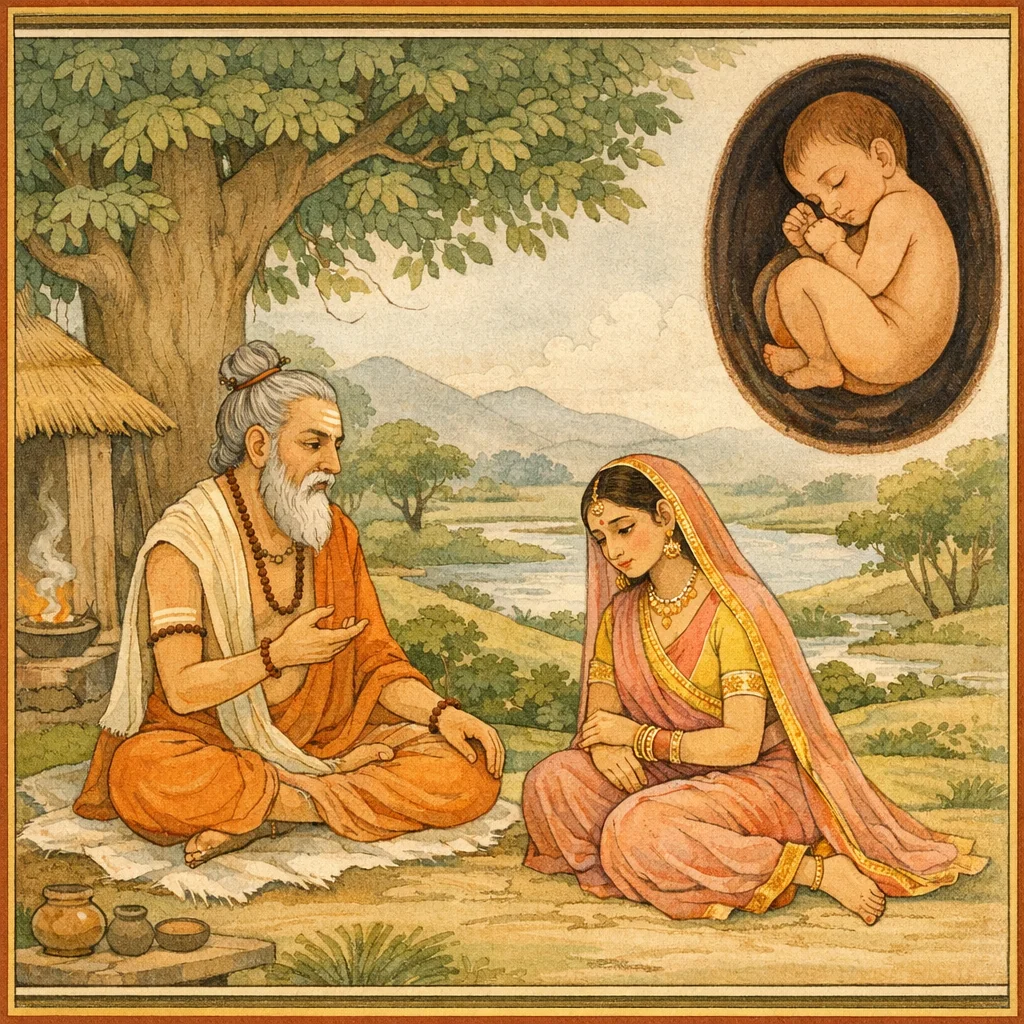
Parāśara explains the threefold afflictions (tāpa-traya—ādhyātmika, ādhibhautika, ādhidaivika) and teaches that the wise, understanding them, cultivate jñāna and vairāgya and attain ātyantika laya or mokṣa—bhagavat-prāpti. He classifies ādhyātmika misery as bodily and mental: diseases and inner torments such as kāma, krodha, bhaya, śoka, īrṣyā, and mātsarya. He then describes suffering caused by other beings and by cosmic forces, and vividly portrays the saṃsāra-cycle—pain in the womb, agony of birth, confusion of infancy, decline of old age, terror of death, and the torments of naraka; even svarga is insecure when merit is exhausted. Liberation alone is the remedy: attaining the Lord. Parāśara distinguishes two knowledges—āgama-based understanding of śabda-brahman and viveka-born realization of para-brahman—and explains the meanings of “Bhagavān” and “Vāsudeva”: Bhagavān is defined by six bhagas (aiśvarya, vīrya, yaśas, śrī, jñāna, vairāgya), and Vāsudeva is the One in whom all beings dwell and who dwells in all.
Shlokas
Verse 1
आध्यात्मिकादि मैत्रेय ज्ञात्वा तापत्रयं बुधः उत्पन्नज्ञानवैराग्यः प्राप्नोत्य् आत्यन्तिकं लयम्
O Maitreya, having understood the threefold affliction—beginning with the inward, spiritual suffering—the wise one, in whom true knowledge and dispassion have arisen, attains the utter, final dissolution: liberation in the Supreme.
Verse 2
आध्यात्मिको वै द्विविधः शारीरो मानसस् तथा शारीरो बहुभिर् भेदैर् भिद्यते श्रूयतां च सः
Truly, the affliction that arises from one’s own self is twofold—bodily and mental. And the bodily kind is further divided into many varieties; hear now of them.
Verse 3
शिरोरोगप्रतिश्यायज्वरशूलभगंदरैः गुल्मार्शःश्वासश्वयथुच्छर्द्यादिभिर् अनेकधा
The embodied being is afflicted in countless ways—by diseases of the head, by catarrh and fever, by stabbing pains and fistula; by abdominal swellings and piles; by breathlessness, edema, vomiting, and many other ailments besides.
Verse 4
तथाक्षिरोगातीसारकुष्ठाङ्गामयसंज्ञकैः भिद्यते देहजस् तापो मानसं श्रोतुम् अर्हसि
Thus, bodily suffering is differentiated into those named as diseases of the eyes, dysentery, leprosy, and ailments of the limbs. Now you should hear about the suffering that is of the mind.
Verse 5
कामक्रोधभयद्वेषलोभमोहविषादजः शोकासूयावमानेर्ष्यामात्सर्यादिभवस् तथा
From desire arise anger, fear, and hatred; from greed come delusion and despair. Likewise are born sorrow, envy, humiliation, jealousy, malice, and other such afflictions—inner forces that bind the mind and drive beings into suffering.
Verse 6
मानसो ऽपि द्विजश्रेष्ठ तापो भवति नैकधा इत्य् एवमादिभिर् भेदैस् तापो ह्य् आध्यात्मिकः स्मृतः
O best of the twice-born, mental suffering too arises in many forms; by such distinctions it is remembered as the ādhyātmika affliction, the misery pertaining to one’s own self.
Verse 7
मृगपक्षिमनुष्याद्यैः पिशाचोरगराक्षसैः सरीसृपाद्यैश् च नृणां जन्यन्ते चाधिभौतिकः
The affliction called adhibhautika arises for human beings through deer and birds, through men and the like, through piśācas, serpents, and rākṣasas, and through reptiles and other such creatures.
Verse 8
शीतोष्णवातवर्षाम्बुवैद्युतादिसमुद्भवः तापो द्विजवरश्रेष्ठ कथ्यते चाधिदैविकः
O best of the twice-born, the suffering that arises from cold and heat, from winds and rains, from floods and lightning, and the like is declared to be the adhidaivika affliction.
Verse 9
गर्भजन्मजराज्ञानमृत्युनारकजं तथा दुःखं सहस्रशो भेदैर् भिद्यते मुनिसत्तम
O best of sages, suffering is split into thousands of varieties—arising from life in the womb, from birth, from old age, from ignorance, from death, and from the pains born of hellish states as well.
Verse 10
सुकुमारतनुर् गर्भे जन्तुर् बहुमलावृते उल्बसंवेष्टितो भुग्नपृष्ठग्रीवास्थिसंहतिः
Within the womb, the living being—of tender, delicate body—lies in a place thickly covered with impurities, wrapped in the fetal membrane, its back and neck bent, its frame a cramped mass of bones.
Verse 11
अत्यम्लकटुतीक्ष्णोष्णलवणैर् मातृभोजनैः अतितापिभिर् अत्यर्थं वर्धमानातिवेदनः
When the mother eats food that is excessively sour, pungent, sharp, hot, or salty—food that burns and inflames—the inner suffering greatly increases, and the growing being is tormented by intense pain.
Verse 12
प्रसारणाकुञ्चनादौ नाङ्गानां प्रभुर् आत्मनः शकृन्मूत्रमहापङ्कशायी सर्वत्रपीडितः
In stretching, contracting, and the like, he is not master of his own limbs; sunk and lying in a vast mire of excrement and urine, he is afflicted and oppressed on every side.
Verse 13
निरुच्छ्वासः सचैतन्यः स्मरञ् जन्मशतान्य् अथ आस्ते गर्भे ऽतिदुःखेन निजकर्मनिबन्धनः
Breathless, yet conscious, remembering hundreds of former births, the being remains within the womb in extreme anguish—bound fast by the fetters of its own deeds.
Verse 14
जायमानः पुरीषासृङ्मूत्रशुक्राविलाननः प्राजापत्येन वातेन पीड्यमानास्थिबन्धनः
At the very moment of birth, the being emerges with its face smeared by filth—stool, blood, urine, and seminal fluid—while the life-wind ordained by Prajāpati drives it forth, wrenching and tormenting the joints and bonds of its bones.
Verse 15
अधोमुखो वै क्रियते प्रबलैः सूतिमारुतैः क्लेशैर् निष्क्रान्तिम् आप्नोति जठरान् मातुर् आतुरः
Driven by the powerful winds of birth and pressed by suffering, the being is turned face-downward; distressed, it gains escape from the mother’s womb.
Verse 16
मूर्च्छाम् अवाप्य महतीं संस्पृष्टो बाह्यवायुना विज्ञानभ्रंशम् आप्नोति जातश् च मुनिसत्तम
When one is struck by a great swoon, and the outward-moving vital air comes into contact (with the body and senses), the clarity of understanding collapses—thus is confusion of consciousness produced, O best of sages.
Verse 17
कण्टकैर् इव तुन्नाङ्गः क्रकचैर् इव दारितः पूतिव्रणान् निपतितो धरण्यां कृमिको यथा
His limbs seemed as though pierced by thorns, his body as though ripped apart by saws—he fell upon the earth like a worm dropping from festering wounds.
Verse 18
कण्डूयने ऽपि चाशक्तः परिवर्ते ऽप्य् अनीश्वरः स्नानपानादिकाहारम् अवाप्नोति परेच्छया
Even to scratch an itch he is powerless; even to turn his body he lacks mastery. Bathing, drinking, and the rest—his very means of sustenance—he obtains only by the will of another. Thus the embodied soul, bound by condition, moves not as sovereign, but as dependent.
Verse 19
अशुचिप्रस्तरे सुप्तः कीटदंशादिभिस् तथा भक्ष्यमाणो ऽपि नैवैषां समर्थो विनिवारणे
As one asleep upon an impure bed—though being bitten by insects and the like, and even while being consumed—still lacks the power to ward them off, so too does the deluded being, sunk in spiritual uncleanliness, remain incapable of resisting the assaults of suffering and vice without awakening to the higher truth upheld by Vishnu.
Verse 20
जन्मदुःखान्य् अनेकानि जन्मनो ऽनन्तराणि च बालभावे यदाप्नोति आधिभौतादिकानि च
Many are the sorrows of birth, and many too are those that arise immediately after one is born; and in the state of infancy one undergoes sufferings of the ‘external’ order (ādhibhautika) and the rest—afflictions that attend embodied life in the world.
Verse 21
अज्ञानतमसाच्छन्नो मूढान्तःकरणो नरः न जानाति कुतः को ऽहं क्वाहं गन्ता किमात्मकः
Veiled by the darkness of ignorance, with the inner faculty bewildered, a man does not know: “From where have I come? Who am I? Where am I? Where am I going? What, in truth, is my real nature?”
Verse 22
केन बन्धेन बद्धो ऽहं कारणं किम् अकारणम् किं कार्यं किम् अकार्यं वा किं वाच्यं किं च नोच्यते
By what fetter am I bound? What is truly a cause, and what is without cause? What should be done, and what should not be done? What is fit to be spoken—and what should not be spoken at all?
Verse 23
को ऽधर्मः कश् च वै धर्मः कस्मिन् वर्ते ऽथवा कथम् किं कर्तव्यम् अकर्तव्यं किं वा किं गुणदोषवत्
What, indeed, is unrighteousness, and what is righteousness? In what should one abide—or by what manner should one live? What ought to be done, what ought not to be done, and what is to be regarded as possessing merit or fault?
Verse 24
एवं पशुसमैर् मूढैर् अज्ञानप्रभवं महत् अवाप्यते नरैर् दुःखं शिश्नोदरपरायणैः
Thus, by men who are deluded—becoming like beasts, and devoted only to the urges of the genitals and the belly—great suffering is incurred, born from ignorance itself.
Verse 25
अज्ञानं तामसो भावः कार्यारम्भाप्रवृत्तयः अज्ञानिनां प्रवर्तन्ते कर्मलोपास् ततो द्विज
Ignorance is the very disposition of tamas. From it arise the impulses that rush into undertaking actions; thus the unknowing are driven into beginnings of works, and from that, O twice-born, follows neglect and falling-away from true duty.
Verse 26
नरकं कर्मणां लोपात् फलम् आहुर् महर्षयः तस्माद् अज्ञानिनां दुःखम् इह चामुत्र चोत्तमम्
The great seers declare that hell is the fruit of abandoning one’s ordained duties. Therefore, for the ignorant, sorrow becomes supreme—here in this world and in the world beyond.
Verse 27
जराजर्जरदेहश् च शिथिलावयवः पुमान् विचलच्छीर्णदशनो वलिस्नायुशिरावृतः
And the man—his body worn down by old age—his limbs grown slack, his teeth loosened and broken, becomes unsteady, covered with wrinkles, sinews, and prominent veins.
Verse 28
दूरप्रणष्टनयनो व्योमान्तर्गततारकः नासाविवरनिर्यातलोमपुञ्जश् चलद्वपुः
His eyes seemed to vanish into the far distance, like a star swallowed by the depths of the sky; from his nostrils issued trembling tufts of hair, and his whole body quivered.
Verse 29
प्रकटीभूतसर्वास्थिर् नतपृष्ठास्थिसंहतिः उत्सन्नजठराग्नित्वाद् अल्पाहारो ऽल्पचेष्टितः
His whole frame became a stark display of bones; his back bent and the bony structure drew tight. With the digestive fire within diminished, he lived on scant food and moved with only the slightest effort.
Verse 30
कृच्छ्राच् चङ्क्रमणोत्थानशयनासनचेष्टितः मन्दीभवच्छ्रोत्रनेत्रः स्रवल्लालाविलाननः
With great difficulty he could walk, rise, lie down, sit, or even make the simplest movements. His ears and eyes grew dull, and his face was disfigured, smeared by saliva that continually dribbled forth.
Verse 31
अनायत्तैः समस्तैश् च करणैर् मरणोन्मुखः तत्क्षणे ऽप्य् अनुभूतानाम् अस्मर्ताखिलवस्तूनाम्
When all his faculties slip beyond his control and he turns toward death, even in that very moment a man loses the power to recall anything at all—even what he himself has experienced.
Verse 32
सकृद् उच्चारिते वाक्ये समुद्भूतमहाश्रमः श्वासकासमहायाससमुद्भूतप्रजागरः
At the mere utterance of a single sentence, overwhelming exhaustion seized him; with heaving breath, cough, and severe strain, a restless, wakeful distress arose within him.
Verse 33
अन्येनोत्थाप्यते ऽन्येन तथा संवेश्यते जरी भृत्यात्मपुत्रदाराणाम् अवमानास्पदीकृतः
An old man, mastered by decrepitude—made an object of contempt even to servants, kin, sons, and wife—is lifted up by one and laid down by another; thus does old age render him dependent, helpless, and dishonoured.
Verse 34
प्रक्षीणाखिलशौचश् च विहाराहारसस्पृहः हास्यः परिजनस्यापि निर्विण्णाशेषबान्धवः
His former purity and observances withered away; he grew greedy for amusements and food. He became a figure of ridicule even to his own household, and he turned indifferent to all his relatives without exception.
Verse 35
अनुभूतम् इवान्यस्मिञ् जन्मन्य् आत्मविचेष्टितम् संस्मरन् यौवने दीर्घं निःश्वसित्य् अतितापितः
In his youth, recalling—as though directly experienced—his own deeds from another birth, he let out a long, heavy sigh, consumed by burning remorse.
Verse 36
एवमादीनि दुःखानि जरायाम् अनुभूय वै मरणे यानि दुःखानि प्राप्नोति शृणु तान्य् अपि
Having truly endured such sufferings in old age, hear also of the pains a being meets at the time of death.
Verse 37
श्लथद्ग्रीवाङ्घ्रिहस्तो ऽथ व्याप्तो वेपथुना नरः मुहुर् ग्लानिः परवशो मुहुर् ज्ञानलवान्वितः
Then the man is seized by trembling; his neck, feet, and hands grow slack. Again and again he falls into exhaustion and helplessness, and again and again a small, clear understanding arises within.
Verse 38
हिरण्यधान्यतनयभार्याभृत्यगृहादिषु एते कथं भविष्यन्तीत्य् अतीवममताकुलः
Overwhelmed by fierce possessiveness for gold, grain, sons, wife, servants, house, and the rest, he is greatly agitated, thinking: “What will become of these?”
Verse 39
मर्मभिद्भिर् महारोगैः क्रकचैर् इव दारुणैः शरैर् इवान्तकस्योग्रैश् छिद्यमानास्थिबन्धनः
Grievous diseases pierce his vital spots, as though cruel saws were rending his body, or as though Death’s fierce arrows struck him, until the very bonds of bone and frame seem cut apart.
Verse 40
विवर्तमानताराक्षिर् हस्तपादं मुहुः क्षिपन् संशुष्यमाणताल्वोष्ठपुटो घुरघुरायते
His pupils roll and whirl; again and again he flings his hands and feet. As his palate and lips grow parched, a hoarse, rattling sound rises from his throat.
Verse 41
निरुद्धकण्ठो दोषौघैर् उदानश्वासपीडितः तापेन महता व्याप्तस् तृषा चार्तस् तथा क्षुधा
His throat is choked by surging humors; oppressed by the upward-moving breath, he is wholly pervaded by fierce burning heat—tormented alike by thirst and by hunger.
Verse 42
क्लेशाद् उत्क्रान्तिम् आप्नोति याम्यकिंकरपीडितः ततश् च यातनादेहं क्लेशेन प्रतिपद्यते
Racked with agony and harried by Yama’s attendants, he departs the body in suffering; and thereafter, still through suffering, he assumes a punishment-body fashioned only for torment.
Verse 43
एतान्य् अन्यानि चोग्राणि दुःखानि मरणे नृणाम् शृणुष्व नरके यानि प्राप्यन्ते पुरुषैर् मृतैः
These—and many other fierce sufferings—befall men at the time of death; now hear of the torments encountered in the hell-realms, reached by men after they have died.
Verse 44
याम्यकिंकरपाशादिग्रहणं दण्डताडनम् यमस्य दर्शनं चोग्रम् उग्रमार्गविलोकनम्
There is the seizing by Yama’s attendants with their nooses and the like; the beating with the rod; the dreadful vision of Yama himself; and the forced beholding of the terrifying paths ahead.
Verse 45
करम्भवालुकावह्नियन्त्रशस्त्रादिभीषणे प्रत्येकं नरके याश् च यातना द्विज दुःसहाः
In each and every hell—terrifying with pits of boiling gruel, scorching sands, raging fires, engines of torment, and sharp weapons—the punishments endured, O twice-born one, are unbearable to bear.
Verse 46
क्रकचैः पाट्यमानानां मूषायां चापि धम्यताम् कुठारैः कृत्यमानानां भूमौ चापि निखन्यताम्
In the hell-realms, some are sawn apart by serrated saws; some are cast into furnaces and blasted by bellows. Some are hewn with axes, and others are buried in the earth—each enduring suffering exactly in accord with the fruit of their own deeds.
Verse 47
शूलेष्व् आरोप्यमाणानां व्याघ्रवक्त्रे प्रवेश्यताम् गृध्रैः संभक्ष्यमाणानां द्वीपिभिश् चोपभुज्यताम्
Some are impaled upon sharp spears; some are thrust into the jaws of tigers. Others are torn and devoured by vultures, and yet others are seized and consumed by leopards—thus, in Naraka, the fruit of one’s own deeds ripens into suffering.
Verse 48
क्वाथ्यतां तैलमध्ये च क्लिद्यतां क्षारकर्दमे उच्चान् निपात्यमानानां क्षिप्यतां क्षेपयन्त्रकैः
“Let them be boiled in the midst of oil; let them be soaked in a mire of caustic alkali. Let those hurled down from on high be struck again—flung by casting-engines—so that their fall becomes yet another torment.”
Verse 49
नरके यानि दुःखानि पापहेतूद्भवानि वै प्राप्यन्ते नारकैर् विप्र तेषां संख्या न विद्यते
O brāhmaṇa, the sufferings endured in hell—born of sinful causes and experienced by the denizens of Naraka—are beyond counting; their number cannot be known.
Verse 50
न केवलं द्विजश्रेष्ठ नरके दुःखपद्धतिः स्वर्गे ऽपि पातभीतस्य क्षयिष्णोर् नास्ति निर्वृतिः
O best of the twice-born, suffering is not found only in hell; even in heaven there is no true peace for one who fears a fall, knowing that his merit is perishable and destined to be exhausted.
Verse 51
पुनश् च गर्भे भवति जायते च पुनर् नरः गर्भे विलीयते भूयो जायमानो ऽस्तम् एति च
Again he enters the womb, and again he is born; again the human being dissolves back into the womb. Repeatedly coming to birth, he again goes to his setting—passing away once more.
Verse 52
जातमात्रश् च म्रियते बालभावे ऽथ यौवने मध्यमं वा वयः प्राप्य वार्द्धके वा ध्रुवा मृतिः
Some perish the very moment they are born; others depart in childhood, or in youth; some, having reached the middle span of life, fall away; and some meet their end in old age. In every case, death is certain.
Verse 53
यावज् जीवति तावच् च दुःखैर् नानाविधैः प्लुतः तन्तुकारणपक्ष्मौघैर् आस्ते कार्पासबीजवत्
So long as a being lives, so long is he flooded by sufferings of many kinds; entangled in dense masses of the subtle causes that spin the threads of bondage, he remains—like a cotton-seed, wrapped in its own fibres.
Verse 54
द्रव्यनाशे तथोत्पत्तौ पालने च तथा नृणाम् भवन्त्य् अनेकदुःखानि तथैवेष्टविपत्तिषु
In the loss of possessions, in their acquisition, and even in the effort of preserving them, human beings meet with countless sorrows; and likewise, when what they hold dear comes to ruin, suffering inevitably follows.
Verse 55
यद् यत् प्रीतिकरं पुंसां वस्तु मैत्रेय जायते तद् एव दुःखवृक्षस्य बीजत्वम् उपगच्छति
Whatever object arises as pleasing to a person, O Maitreya—that very thing becomes the seed of the tree of sorrow.
Verse 56
कलत्रपुत्रमित्रार्थगृहक्षेत्रधनादिकैः क्रियते न तथा भूरि सुखं पुंसां यथासुखम्
Through wife and children, friends and gain, house and land, wealth and the rest—men do not obtain happiness in such abundance as they do through contentment itself.
Verse 57
इति संसारदुःखार्कतापतापितचेतसाम् विमुक्तिपादपच्छायाम् ऋते कुत्र सुखं नृणाम्
Thus, for those whose minds are scorched by the burning heat of saṃsāra—the sun of sorrow—where, indeed, can there be happiness for human beings, apart from the cool shade found at the feet of Liberation?
Verse 58
तद् अस्य त्रिविधस्यापि दुःखजातस्य पण्डितैः गर्भजन्मजराद्येषु स्थानेषु प्रभविष्यतः
Therefore, the wise declare that this entire threefold mass of suffering arises for the embodied being in such stations as conception in the womb, birth, old age, and the rest—those inevitable phases through which worldly existence unfolds.
Verse 59
निरस्तातिशयाह्लादसुखभावैकलक्षणा भेषजं भगवत्प्राप्तिर् एकान्तात्यन्तिकी मता
That attainment of Bhagavān is held to be the one, final, and exclusive remedy—marked by a bliss whose very nature is pure happiness, with all excess and all limiting distinctions cast away.
Verse 60
तस्मात् तत्प्राप्तये यत्नः कर्तव्यः पण्डितैर् नरैः तत्प्राप्तिहेतुर् ज्ञानं च कर्म चोक्तं महामुने
Therefore, for the attainment of That Supreme Reality, wise men must exert themselves. And, O great sage, it has been declared that the causes leading to that attainment are both true knowledge and rightly performed action.
Verse 61
आगमोत्थं विवेकाच् च द्विधा ज्ञानं तथोच्यते शब्दब्रह्मागममयं परं ब्रह्म विवेकजम्
Knowledge is declared to be twofold: that born of the Āgamas and that born of viveka, discerning insight. The Brahman that is “Word”—Shabda-brahman, made of scripture and sacred sound—arises from the Āgamas; but the Supreme Brahman is born of viveka.
Verse 62
अन्धं तम इवाज्ञानं दीपवच् चेन्द्रियोद्भवम् यथा सूर्यस् तथा ज्ञानं यद् विप्रर्षे विवेकजम्
Ignorance is like blind darkness; knowledge arising from the senses is like a lamp. But knowledge born of viveka, O best of sages, is like the sun.
Verse 63
मनुर् अप्य् आह वेदार्थं स्मृत्वा यन् मुनिसत्तम तद् एतच् छ्रूयताम् अत्र संबन्धे गदतो मम
O best of sages, Manu too, recalling the purport of the Vedas, spoke on this matter. Therefore hear here that very teaching, as I set forth its proper connection and meaning.
Verse 64
द्वे ब्रह्मणी वेदितव्ये शब्दब्रह्म परं च यत् शब्दब्रह्मणि निष्णातः परं ब्रह्माधिगच्छति
Two forms of Brahman are to be known: Shabda-brahman, the Brahman of sacred sound, and the Supreme Brahman beyond sound. One who is fully grounded in Shabda-brahman attains realization of the Supreme Brahman.
Verse 65
द्वे विद्ये वेदितव्ये वै इति चाथर्वणी श्रुतिः परया त्व् अक्षरप्राप्तिर् ऋग्वेदादिमयापरा
The Atharvanic revelation declares: “Two kinds of knowledge are indeed to be known.” By the higher knowledge one attains the Imperishable; but the lower knowledge consists of the Ṛgveda and the rest (the Vedas and their auxiliaries).
Verse 66
यत् तद् अव्यक्तम् अजरम् अचिन्त्यम् अजम् अव्ययम् अनिर्देश्यम् अरूपं च पाणिपादाद्यसंयुतम्
That Supreme Reality is unmanifest—unaging, unthinkable, unborn, and imperishable; beyond all description and without form, untouched by embodied conditions, for It is not constituted by hands, feet, and the like.
Verse 67
विभुं सर्वगतं नित्यं भूतयोनिम् अकारणम् व्याप्य् अव्याप्तं यतः सर्वं तं वै पश्यन्ति सूरयः
The wise behold Him—the all-mighty Lord, present everywhere, eternal; the very womb of all beings, Himself without a prior cause: He pervades all, yet is not confined by what He pervades; from Him the whole universe arises and is sustained.
Verse 68
तद् ब्रह्म तत् परं धाम तद् ध्येयं मोक्षकाङ्क्स्।इणाम् श्रुतिवाक्योदितं सूक्ष्मं तद् विष्णोः परमं पदम्
That is Brahman; that is the supreme abode. That alone is the object of contemplation for those who long for liberation—subtle, proclaimed by the utterances of the Śruti. That is the highest station of Lord Viṣṇu.
Verse 69
तद् एव भगवद्वाच्यं स्वरूपं परमात्मनः वाचको भगवच्छब्दस् तस्याद्यस्याक्षयात्मनः
That alone is the very nature of the Supreme Self which the term “Bhagavān” signifies; and the word “Bhagavān” is the express designation of that Primal One, whose essence is imperishable.
Verse 70
एवं निगदितार्थस्य स तत्त्वं तस्य तत्त्वतः ज्ञायते येन तज् ज्ञानं परम् अन्यत् त्रयीमयम्
Thus, the Reality of what has been explained is known in truth by that through which it is known. That knowledge is the Supreme; all other knowledge is merely of the Triad—the Vedas.
Verse 71
अशब्दगोचरस्यापि तस्य वै ब्रह्मणो द्विज पूजायां भगवच्छब्दः क्रियते ह्य् औपचारिकः
O twice-born one, though that Brahman is beyond the reach of words, in worship the name “Bhagavān” is still employed as a reverential, conventional designation.
Verse 72
शुद्धे महाविभूत्याख्ये परे ब्रह्मणि वर्तते मैत्रेय भगवच्छब्दः सर्वकारणकारणे
O Maitreya, the word “Bhagavān” abides in the Supreme Brahman—pure, famed as the Great Sovereign Glory, the Cause of all causes.
Verse 73
संभर्तेति तथा भर्ता भकारो ऽर्थद्वयान्वितः नेता गमयिता स्रष्टा गकारार्थस् तथा मुने
The syllable “bha” bears a twofold sense: the one who sustains and carries all, and the Lord who nourishes and supports. And, O sage, the syllable “ga” likewise signifies the guide and leader, the one who brings beings to their destined end, and the creator.
Verse 74
ऐश्वर्यस्य समग्रस्य वीर्यस्य यशसः श्रियः ज्ञानवैराग्ययोश् चैव षण्णां भग इतीरणा
The term “bhaga” is declared to denote six: perfect sovereignty, heroic potency, renown, auspicious splendor, true knowledge, and dispassion. He in whom these are fully present is spoken of as Bhagavān.
Verse 75
वसन्ति तत्र भूतानि भूतात्मन्य् अखिलात्मनि स च भूतेष्व् अशेषेषु वकारार्थस् ततो ऽव्ययः
All beings dwell in Him—the indwelling Soul of beings, the Soul of all; and He, in turn, abides within every being without remainder. This all-pervading, indwelling sense is the meaning of the syllable “va”; therefore He is the Imperishable (Avyaya).
Verse 76
एवम् एष महाशब्दो भगवान् इति सत्तम परमब्रह्मभूतस्य वासुदेवस्य नान्यगः
O best of the virtuous, the great designation “Bhagavān” belongs to Vāsudeva alone—He who is the very state of the Supreme Brahman—and to none other.
Verse 77
तत्र पूज्यपदार्थोक्तिपरिभाषासमन्वितः शब्दो ऽयं नोपचारेण अन्यत्र ह्य् उपचारतः
In that context, this word—qualified by the rule that it denotes a venerable and worthy referent—is not to be taken in a figurative sense; elsewhere it is applied only by figurative usage.
Verse 78
उत्पत्तिं प्रलयं चैव भूतानाम् आगतिं गतिम् वेत्ति विद्याम् अविद्यां च स वाच्यो भगवान् इति
He who knows creation and dissolution, and the coming and going of beings; who understands both true knowledge and ignorance—He alone is rightly spoken of as Bhagavān, the Supreme Lord.
Verse 79
ज्ञानशक्तिबलैश्वर्यवीर्यतेजांस्य् अशेषतः भगवच्छब्दवाच्यानि विना हेयैर् गुणादिभिः
Complete and without remainder, knowledge, power, strength, sovereignty, heroism, and splendor are what the word “Bhagavān” truly signifies—untainted by any rejectable qualities or defects.
Verse 80
सर्वाणि तत्र भूतानि वसन्ति परमात्मनि भूतेषु च स सर्वात्मा वासुदेवस् ततः स्मृतः
All beings abide within the Supreme Self; and within all beings He abides as the Self of all. Therefore, He is remembered as Vāsudeva.
Verse 81
खाण्डिक्यजनकायाह पृष्टः केशिध्वजः पुरा नामव्याख्याम् अनन्तस्य वासुदेवस्य तत्त्वतः
Long ago, when questioned by Khāṇḍikya Janaka, Keśidhvaja set forth, in accord with truth, the explanation of the divine names of Ananta—Vāsudeva.
Verse 82
भूतेषु वसते सो ऽन्तर् वसन्त्य् अत्र च तानि यत् धाता विधाता जगतां वासुदेवस् ततः प्रभुः
He dwells within all beings, and all beings dwell in Him; He is the supporter and disposer of the worlds. Therefore Vāsudeva is the sovereign Lord.
Verse 83
स सर्वभूतप्रकृतिं विकारं गुणादिदोषांश् च मुने व्यतीतः अतीतसर्वावरणो ऽखिलात्मा तेनास्तृतं यद् भुवनान्तराले
O sage, He transcends the nature of all beings and every modification of it, and is beyond the defects that begin with the guṇas. Passing beyond all veils, He is the Self of all; by Him the whole expanse—within and between the worlds—is pervaded and covered.
Verse 84
समस्तकल्याणगुणात्मको हि स्वशक्तिलेशावृतभूतसर्गः इच्छागृहीताभिमतोरुदेहः संसाधिताशेषजगद्धितो ऽसौ
He is indeed the embodiment of every auspicious excellence. By but a minute fraction of His own power, the whole creation of beings is veiled and set in motion. By mere will He assumes a vast, chosen form and accomplishes, without remainder, the welfare of the entire universe.
Verse 85
तेजोबलैश्वर्यमहावबोध स्ववीर्यशक्त्यादिगुणैकराशिः परः पराणां सकला न यत्र क्लेशादयः सन्ति परावरेशे
He is the gathered treasury of splendour, strength, sovereignty, and vast, all-illuminating awareness—an undivided mass of His own heroism, power, and every auspicious excellence. He is the Supreme of all that is supreme; and in that Lord of both the higher and the lower, there is no place at all for afflictions such as suffering and the rest.
Verse 86
स ईश्वरो व्यष्टिसमष्टिरूपो ऽव्यक्तस्वरूपः प्रकटस्वरूपः सर्वेश्वरः सर्वदृक् सर्ववेत्ता समस्तशक्तिः परमेश्वराख्यः
He is the Lord—appearing as both the individual and the totality; in His own nature unmanifest, yet also revealed in manifest form. He is the Sovereign of all, the all-seeing, the all-knowing; possessor of every power—known as the Supreme Lord.
Verse 87
संज्ञायते येन तद् अस्तदोषं शुद्धं परं निर्मलम् एकरूपम् संदृश्यते वाप्य् अवगम्यते वा तज् ज्ञानम् अज्ञानम् अतो ऽन्यद् उक्तम्
That by which the Supreme—faultless, pure, transcendent, stainless, and of one undivided nature—is truly known, whether directly beheld or inwardly realized: that alone is called knowledge. Whatever is other than this is declared to be ignorance.
Frequently Asked Questions
Ādhyātmika (intrinsic: bodily and mental), ādhibhautika (arising from other beings), and ādhidaivika (arising from cosmic/daivic forces such as weather and lightning). The teaching uses this diagnosis to motivate liberation-seeking.
Because all worldly states—pain, pleasure, hell, and even heaven—remain within impermanence and guṇa-bound causality; only attainment of Bhagavān/Viṣṇu ends the cycle at its root, constituting ātyantika laya (mokṣa).
Bhagavān is defined as the possessor of the six bhagas in fullness—aiśvarya (sovereignty), vīrya (potency), yaśas (renown), śrī (splendor), jñāna (knowledge), and vairāgya (dispassion)—without any defective qualities.