Adhyaya 19
प्रह्लादस्य अव्यभिचारिणी भक्ति, मायाविनाशः, तथा विष्णोः विश्वरूप-स्तुतिः
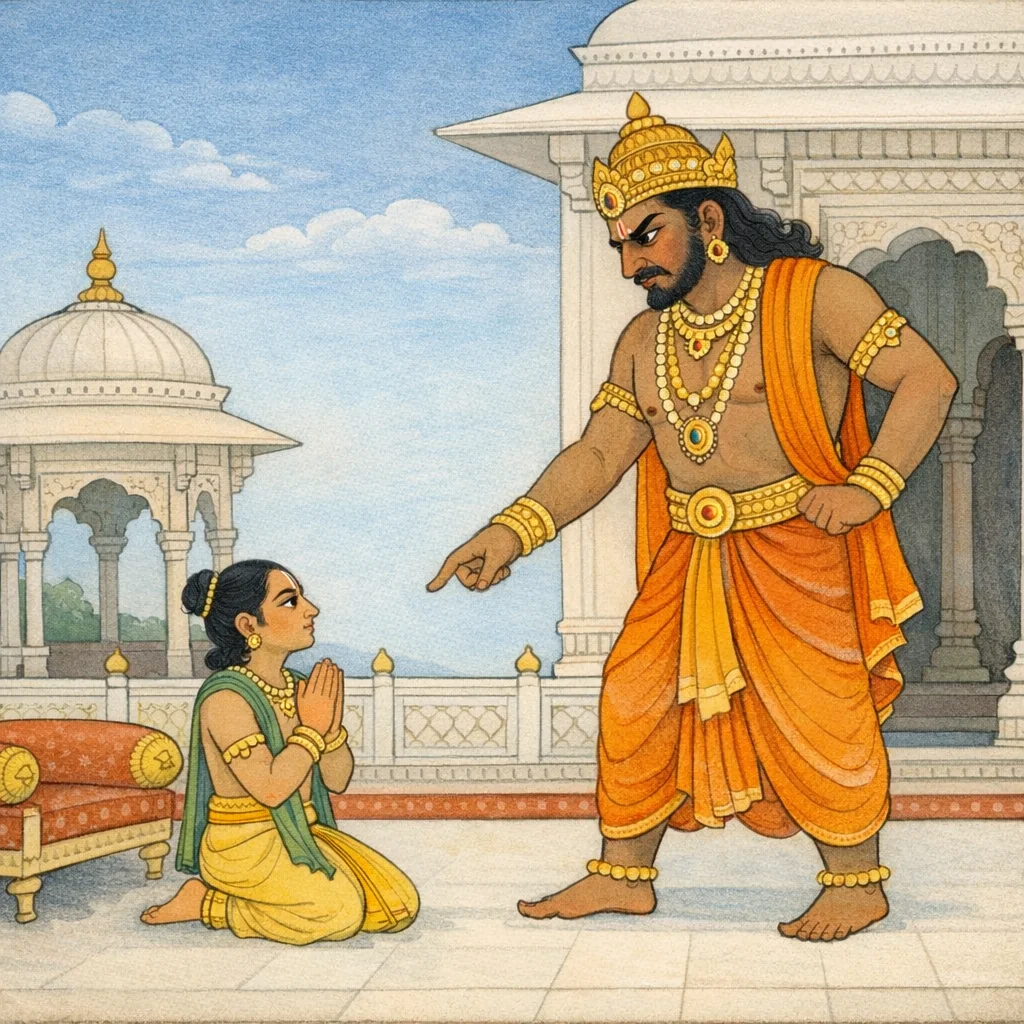
Parashara narrates Hiranyakashipu interrogating Prahlada about his power. Prahlada replies that Acyuta dwelling in the heart is his strength. The king tries to kill him via a fall, Sambara's magic, and drying winds, but Vishnu protects him. Prahlada rejects dualistic statecraft, teaching that since Govinda is in all, there are no enemies. The chapter ends with a hymn to Vishnu as the Universal Form.
Shlokas
Verse 1
हिरण्यकशिपुः श्रुत्वा तां कृत्यां वितथीकृताम् आहूय पुत्रं पप्रच्छ प्रभावस्यास्य कारणम्
Hearing that the sorcerous rite he had commissioned had been rendered futile, Hiraṇyakaśipu summoned his son and questioned him: “What is the cause of this power that has undone it?”
Verse 2
प्रह्लाद सुप्रभावो ऽसि किम् एतत् ते विचेष्टितम् एतन् मन्त्रादिजनितम् उताहो सहजं तव
Prahlāda, you are truly wondrous in power and purity—what is this remarkable conduct of yours? Has it arisen from mantras and disciplined practice, or is it innate within you?
Verse 3
एवं पृष्टस् तदा पित्रा प्रह्लादो ऽसुरबालकः प्रणिपत्य पितुः पादाव् इदं वचनम् अब्रवीत्
Thus questioned by his father, the young asura Prahlāda bowed at his father’s feet and then spoke these words.
Verse 4
न मन्त्रादिकृतस् तात न च नैसर्गिको मम प्रभाव एष सामान्यो यस्य यस्याच्युतो हृदि
Dear father, this power is not wrought by mantras and the like, nor is it merely some natural ability of mine. It is a universal truth: in whomever Acyuta, the Imperishable Lord, abides within the heart, in that one this divine potency shines forth.
Verse 5
अन्येषां यो न पापानि चिन्तयत्य् आत्मनो यथा तस्य पापागमस् तात हेत्वभावान् न विद्यते
He who does not brood over the sins of others as he would over his own, dear father, does not incur sin thereby—for the very cause that brings demerit is absent.
Verse 6
कर्मणा मनसा वाचा परपीडां करोति यः तद् बीजं जन्म फलति प्रभूतं तस्य चाशुभम्
Whoever inflicts pain upon another—by deed, by thought, or by speech—sows a seed that, across births, ripens into abundant bitter fruit for him; and that harvest is truly inauspicious.
Verse 7
सो ऽहं न पापम् इच्छामि न करोमि वदामि वा चिन्तयन् सर्वभूतस्थम् आत्मन्य् अपि च केशवम्
Thus I—ever contemplating Keśava, who abides within all beings and within my own self—neither desire sin, nor commit it, nor even speak of it.
Verse 8
शारीरं मानसं दुःखं दैवं भूतभवं तथा सर्वत्र शुभचित्तस्य तस्य मे जायते कुतः
Bodily suffering, mental anguish, and even afflictions attributed to fate or to beings—how could any of these arise for me, whose mind is auspicious everywhere and in all conditions?
Verse 9
एवं सर्वेषु भूतेषु भक्तिर् अव्यभिचारिणी कर्तव्या पण्डितैर् ज्ञात्वा सर्वभूतमयं हरिम्
Thus, the wise—having understood that Hari pervades and constitutes all beings—should cultivate unwavering devotion toward Him in every creature, without deviation or partiality.
Verse 10
इति श्रुत्वा स दैत्येन्द्रः प्रासादशिखरे स्थितः क्रोधान्धकारितमुखः प्राह दैतेयकिंकरान्
Hearing these words, the lord of the Daityas, standing upon the pinnacle of his palace, his face darkened and blinded by wrath, spoke out to his Daitya attendants.
Verse 11
दुरात्मा क्षिप्यताम् अस्मात् प्रासादाच् छतयोजनात् गिरिपृष्ठे पतत्व् अस्मिञ् शिलाभिन्नाङ्गसंहतिः
“Cast this wicked-souled wretch down from this palace—lofty as a hundred yojanas. Let him fall upon the mountain’s back here, and let the very frame of his body be shattered upon the rocks.”
Verse 12
ततस् तं चिक्षिपुः सर्वे बालं दैतेयकिंकराः पपात सो ऽप्य् अधः क्षिप्तो हृदयेनोद्वहन् हरिम्
Then all the Daitya attendants seized the child and hurled him down. Though cast headlong, he fell bearing Śrī Hari within his heart, whom no violence could dislodge.
Verse 13
पतमानं जगद्धात्री जगद्धातरि केशवे भक्तियुक्तं दधारैनम् उपगम्य च मेदिनी
As Keśava, the Sustainer of the worlds, was falling, Medinī—the Earth who bears the world—came near in devotion and upheld Him.
Verse 14
ततो विलोक्य तं स्वस्थम् अविशीर्णास्थिबन्धनम् हिरण्यकशिपुः प्राह शम्बरं मायिनां वरम्
Then, seeing him still unharmed—his bones and joints unshaken—Hiraṇyakaśipu spoke to Śambara, foremost among the wielders of illusion.
Verse 15
नास्माभिः शक्यते हन्तुम् अयं दुर्वृत्तबालकः मायां वेत्ति भवांस् तस्मान् माययैनं निषूदय
“We cannot slay this ill-natured boy. He understands the ways of māyā; therefore you, who know illusion’s power, destroy him by māyā itself.”
Verse 16
सूदयाम्य् एष दैत्येन्द्र पश्य मायाबलं मम सहस्रम् अत्र मायानां पश्य कोटिशतं तथा
“I will strike him down, O lord of the Daityas—behold the might of my māyā. Here are a thousand of my illusions; and likewise, hundreds of crores besides.”
Verse 17
ततः समसृजन् मायाः प्रह्लादे शम्बरो ऽसुरः विनाशम् इच्छन् दुर्बुद्धिः सर्वत्र समदर्शिनि
Then the asura Śambara, wicked-minded and intent on Prahlāda’s ruin, unleashed manifold māyā-illusions against him—against that equal-seeing seer who beheld the same Lord present everywhere.
Verse 18
समाहितमना भूत्वा शम्बरे ऽपि विमत्सरः मैत्रेय सो ऽपि प्रह्लादः सस्मार मधुसूदनम्
With his mind gathered into perfect composure, and free from envy even toward Śambara, O Maitreya, Prahlāda remembered Madhusūdana (Viṣṇu) within his heart.
Verse 19
ततो भगवता तस्य रक्षार्थं चक्रम् उत्तमम् आजगाम समाज्ञप्तं ज्वालामालि सुदर्शनम्
Then, for his protection, the Supreme Lord dispatched His most excellent discus; obeying the Lord’s command, the flame-wreathed Sudarśana came forth.
Verse 20
तेन मायासहस्रं तच् शम्बरस्याशुगामिना बालस्य रक्षता देहम् एकैकश्येन सूदितम्
Swift in action, Sudarśana—protecting the child—shattered, one after another, the thousand conjurations of Śambara, preserving the boy’s body from harm.
Verse 21
संशोषकं ततो वायुं दैत्येन्द्र इदम् अब्रवीत् शीघ्रम् एष ममादेशाद् दुरात्मा नीयतां क्षयम्
Then the lord of the Daityas addressed the all-drying wind: “Quickly—by my command—drive this wicked one to destruction.”
Verse 22
तथेत्य् उक्त्वाथ सो ऽप्य् एनं विवेश पवनो लघुः शीतो ऽतिरूक्षः शोषाय तद्देहस्यातिदुःसहः
“So be it,” he said—and then the wind too entered him: subtle and swift, cold and exceedingly dry, intent on desiccating that body, and unbearable in its force.
Verse 23
तेनाविष्टं तथात्मानं स बुद्ध्वा दैत्यबालकः हृदयेन महात्मानं दधार धरणीधरम्
Realizing that his very self had been pervaded by Him, the young Daitya prince understood the truth and, within his heart, held fast to that great-souled Lord—the Upholder of the earth.
Verse 24
हृदयस्थस् ततस् तस्य तं वायुम् अतिशोषणम् पपौ जनार्दनः क्रुद्धः स ययौ पवनः क्षयम्
Then Janārdana—abiding within him as the indwelling Lord—grew wrathful and drank up that fiercely desiccating wind. And so the wind itself was brought to exhaustion and ceased.
Verse 25
क्षीणासु सर्वमायासु पवने संक्षयं गते जगाम सो ऽपि भवनं गुरोर् एव महामतिः
When all delusive projections had been exhausted, and the life-breath itself had subsided into stillness, that great-souled one too went to the very dwelling of his guru.
Verse 26
अहन्य् अहन्य् अथाचार्यो नीतिं राज्यफलप्रदाम् ग्राहयाम् आस तं बालं राज्ञाम् उशनसा कृताम्
Then, day after day, the preceptor carefully instructed that young prince in the science of polity—those kingly principles that yield the fruits of righteous rule—set forth for sovereigns by Uśanas.
Verse 27
गृहीतनीतिशास्त्रं तं विनीतं स यदा गुरुः मेने तदैनं तत्पित्रे कथयाम् आस शिक्षितम्
When the teacher perceived that the boy had fully mastered the treatises of nīti, the science of governance, and had become disciplined in conduct, he then informed the boy’s father that his son had been duly trained.
Verse 28
गृहीतनीतिशास्त्रस् ते पुत्रो दैत्यपते कृतः प्रह्लादस् तत्त्वतो वेत्ति भार्गवेण यद् ईरितम्
O lord of the Daityas, your son Prahlāda has been trained in nīti-śāstra; yet, in the deepest truth, he truly understands what the Bhārgava sage has spoken.
Verse 29
मित्रेषु वर्तेत कथम् अरिवर्गेषु भूपतिः प्रह्लाद त्रिषु कालेषु मध्यस्थेषु कथं चरेत्
“O Prahlāda—how should a king conduct himself among friends, and how among the circle of enemies? And how should he deal with those who stand neutral, in all the three divisions of time?”
Verse 30
कथं मन्त्रिष्व् अमात्येषु बाह्येष्व् आभ्यन्तरेषु च चारेषु पौरवर्गेषु शङ्कितेष्व् इतरेषु च
How is a king to proceed regarding his counsellors and ministers—regarding spies both external and internal—and regarding the townsmen, those who are under suspicion, and all others besides?
Verse 31
कृत्याकृत्यविधानं च दुर्गाटविकसाधनम् प्रह्लाद कथ्यतां सम्यक् तथा कण्टकशोधनम्
Explain to me, O Prahlāda, with full clarity the ordinances of what must be done and what must be avoided; also the means of securing and administering forts and wilderness frontiers, and likewise the cleansing away of ‘thorns’—the removal of harmful elements that afflict the realm and disturb the order of dharma.
Verse 32
एतच् चान्यच् च सकलम् अधीतं भवता यथा तथा मे कथ्यतां ज्ञातुं तवेच्छामि मनोगतम्
All this—and whatever else besides—you have studied and understood as it truly is. Therefore, tell it to me exactly so, for I long to know what abides within your mind.
Verse 33
प्रणिपत्य पितुः पादौ ततः प्रश्रयभूषणः प्रह्लादः प्राह दैत्येन्द्रं कृताञ्जलिपुटः स्थितः
Having bowed at his father’s feet, Prahlāda—adorned with humility—stood with palms joined in reverence and addressed the lord of the Daityas.
Verse 34
ममोपदिष्टं सकलं गुरुणा नात्र संशयः गृहीतं च मया किन्तु न सद् एतन् मतं मम
All that my teacher has taught me is beyond doubt; I have indeed received it. Yet even so, it does not seem to me to be the true and final view.
Verse 35
साम चोपप्रदानं च भेददण्डौ तथैव च उपायाः कथिता ह्य् एते मित्रादीनां च साधने
Conciliation (sāma), inducement through gifts or support (upapradāna), sowing division (bheda), and punitive force (daṇḍa)—these are declared to be the recognized expedients for accomplishing one’s aims with allies and the like.
Verse 36
तान् एवाहं न पश्यामि मित्रादींस् तात मा क्रुधः साध्याभावे महाबाहो साधनैः किं प्रयोजनम्
I do not see those allies and the rest at all, dear father—do not be angry. O mighty-armed one, when the very goal is absent, what purpose can any means possibly serve?
Verse 37
सर्वभूतात्मके तात जगन्नाथे जगन्मये परमात्मनि गोविन्दे मित्रामित्रकथा कुतः
O dear one, when Govinda—the Supreme Self, Lord of the universe, the essence pervading the world—abides as the Self of all beings, how can there be any talk of “friend” and “enemy”?.
Verse 38
त्वय्य् अस्ति भगवान् विष्णुर् मयि चान्यत्र चास्ति सः यतस् ततो ऽयं मित्रं मे शत्रुश् चेति पृथक् कुतः
The Blessed Lord Vishnu abides in you; He abides in me; and that very One abides everywhere else as well. If He is present in all, from where can the division arise—“this is my friend” and “that is my enemy”?.
Verse 39
तद् एभिर् अलम् अत्यर्थं दुष्टारम्भोक्तिविस्तरैः अविद्यान्तर्गतैर् यत्नः कर्तव्यस् तात शोभने
Enough—more than enough—of these long-winded speeches that begin in crooked intent and remain enclosed within ignorance. Dear one, direct your effort toward what is truly auspicious and ennobling.
Verse 40
विद्याबुद्धिर् अविद्यायाम् अज्ञानात् तात जायते बालो ऽग्निं किं न खद्योतम् असुरेश्वर मन्यते
Dear one, from ignorance a false notion of “knowledge” can arise even within ignorance itself. O lord of the Asuras, does not a child mistake a fire for a mere glow-worm?
Verse 41
तत् कर्म यन् न बन्धाय सा विद्या या विमुक्तये आयासायापरं कर्म विद्यान्या शिल्पनैपुणम्
That alone is action which does not become bondage; that alone is knowledge which leads to liberation. All other action is merely toil, and all other ‘learning’ is nothing more than skill in crafts.
Verse 42
तद् एतद् अवगम्याहम् असारं साध्यम् उत्तमम् निशामय महाभाग प्रणिपत्य ब्रवीमि यत्
Having understood this, I have discerned what is truly the supreme attainment and what is hollow and without essence. Listen, O greatly fortunate one; bowing down, I shall now declare it to you.
Verse 43
न चिन्तयति को राज्यं को धनं नाभिवाञ्छति तथापि भाव्यम् एवैतद् उभयं प्राप्यते नरैः
Who does not ponder sovereignty, and who does not desire wealth? Yet it is destiny alone that ripens both; by the ordained course, men come to obtain kingdom and riches.
Verse 44
सर्व एव महाभाग महत्त्वं प्रति सोद्यमाः तथापि पुंसां भाग्यानि नोद्यमा भूतिहेतवः
All people, O noble one, strive toward greatness; yet a man’s rise and prosperity are not caused by effort alone—his fortune, the ripening of prior causes, bears the decisive fruit.
Verse 45
जडानाम् अविवेकानाम् अशूराणाम् अपि प्रभो भाग्यभोज्यानि राज्यानि सन्त्य् अनीतिमताम् अपि
O Lord, even the dull-witted, undiscerning, and unheroic may possess kingdoms—realms merely ‘consumed’ by fortune; indeed, sovereignty is found even among the unrighteous.
Verse 46
तस्माद् यतेत पुण्येषु य इच्छेन् महतीं श्रियम् यतितव्यं समत्वे च निर्वाणम् अपि चेच्छता
Therefore, one who seeks great prosperity should strive in meritorious deeds; and one who longs even for liberation must likewise strive for equanimity—steadfast balance of mind in all conditions.
Verse 47
देवा मनुष्याः पशवः पक्षिवृक्षसरीसृपाः रूपम् एतद् अनन्तस्य विष्णोर् भिन्नम् इव स्थितम्
Gods, humans, beasts, birds, trees, and creeping creatures—this whole diversity is indeed the very form of Ananta Vishnu; it appears as though divided, yet in truth remains one.
Verse 48
एतद् विजानता सर्वं जगत् स्थावरजङ्गमम् द्रष्टव्यम् आत्मवद् विष्णुर् यतो ऽयं विश्वरूपधृक्
One who knows this should behold the entire universe—both the immovable and the moving—as one’s own Self; for Vishnu bears the universal form, the cosmic body of all that exists.
Verse 49
एवं ज्ञाते स भगवान् अनादिः परमेश्वरः प्रसीदत्य् अच्युतस् तस्मिन् प्रसन्ने क्लेशसंक्षयः
When He is known in this way, that Blessed Lord—beginningless, the Supreme Ruler, the unfailing Acyuta—becomes gracious; and when He is pleased, afflictions are exhausted and come to an end.
Verse 50
एतच् छ्रुत्वा तु कोपेन समुत्थाय वरासनात् हिरण्यकशिपुः पुत्रं पदा वक्षस्य् अताडयत्
Hearing this, Hiraṇyakaśipu—inflamed with rage—rose from his splendid throne and struck his own son upon the chest with his foot.
Verse 51
उवाच च स कोपेन सामर्षः प्रज्वलन्न् इव निष्पिष्य पाणिना पाणिं हन्तुकामो जगद् यथा
Then, blazing with rage and seething with indignation, he spoke—grinding his fist into his palm—intent on striking, as though he could crush the whole world itself.
Verse 52
हे विप्रचित्ते हे राहो हे बलैष महार्णवे नागपाशैर् दृढं बद्ध्वा क्षिप्यतां मा विलम्बथ
O Vipracitti! O Rāhu! O mighty Balī! Cast them at once into the vast ocean—bind them tightly with serpent-nooses, and do not delay!
Verse 53
अन्यथा सकला लोकास् तथा दैतेयदानवाः अनुयास्यन्ति मूढस्य मतम् अस्य दुरात्मनः
Otherwise, all the worlds—and likewise the Daityas and Dānavas—will end up following the opinion of this deluded, wicked-souled one, taking his crooked resolve as their own.
Verse 54
बहुशो वारितो ऽस्माभिर् अयं पापस् तथाप्य् अरेः स्तुतिं करोति दुष्टानां वध एवोपकारकः
Though we have warned this sinful man again and again, he still persists in praising the enemy. For the wicked, even what is truly helpful comes only in one form: their destruction.
Verse 55
ततस् ते सत्वरा दैत्या बद्ध्वा तं नागबन्धनैः भर्तुर् आज्ञां पुरस्कृत्य चिक्षिपुः सलिलार्णवे
Then those Daityas, moving swiftly, bound him with serpent-like fetters; and, placing their lord’s command foremost, they cast him into the ocean’s waters.
Verse 56
ततश् चचाल चलता प्रह्लादेन महार्णवः उद्वेलो ऽभूत् परं क्षोभम् उपेत्य च समन्ततः
Then the great ocean began to heave; stirred by Prahlāda’s movement, it rose into swelling waves, entering into supreme agitation on every side.
Verse 57
भूर्लोकम् अखिलं दृष्ट्वा प्लाव्यमानं महाम्भसा हिरण्यकशिपुर् दैत्यान् इदम् आह महामुने
O great sage, seeing the entire Bhurloka overwhelmed and being swept by the vast waters, Hiranyakashipu addressed the Daityas with these words.
Verse 58
दैतेयाः सकलैः शैलैर् अत्रैव वरुणालये निश्छिद्रैः सर्वतः सर्वैश् चीयताम् एष दुर्मतिः
Daityas! With every mountain—solid and unbroken—heap them here itself in Varuna’s domain, from every side, all together. Let this evil-minded one be completely walled in and sealed.
Verse 59
नाग्निर् दहति नैवायं शस्त्रैश् छिन्नो न चोरगैः क्षयं नीतो न वातेन न विषेण न कृत्यया
Fire cannot burn him; weapons cannot cut him; serpents cannot bring him to ruin. Neither wind can waste him away, nor poison, nor hostile rites of sorcery—he is not led to destruction by any of these.
Verse 60
न मायाभिर् न चैवोच्चात् पातितो न च दिग्गजैः बालो ऽतिदुष्टचित्तो ऽयं नानेनार्थो ऽस्ति जीवता
He has not been struck down by spells, nor has he been hurled down from a height, nor trampled by the mighty elephants of the quarters. This is but a child—yet his mind is exceedingly wicked; there is no purpose served in letting him live.
Verse 61
तद् एष तोयधाव् अत्र समाक्रान्तो महीधरैः तिष्ठत्व् अब्दसहस्रान्तं प्राणान् हास्यति दुर्मतिः
Let this wicked-minded one remain here, hemmed in on all sides by these mountains, within this rushing course of waters; and when a thousand years are completed, he shall forfeit his very life-breath.
Verse 62
ततो दैत्या दानवाश् च पर्वतैस् तं महोदधौ आक्रम्य चयनं चक्रुर् योजनानि सहस्रशः
Then the Daityas and Dānavas, pressing him down in that vast ocean with mountains, fashioned a bedding for him, stretching for thousands upon thousands of yojanas.
Verse 63
स चितः पर्वतैर् अन्तः समुद्रस्य महामतिः तुष्टावाह्निकवेलायाम् एकाग्रमतिर् अच्युतम्
And that great-souled one, having built a funeral-pyre within the ocean and heaped it about with mountains, at the hour of his daily rite, with mind made one-pointed, offered praise to Acyuta, the Unfailing Lord.
Verse 64
नमस् ते पुण्डरीकाक्ष नमस् ते पुरुषोत्तम नमस् ते सर्वलोकात्मन् नमस् ते तिग्मचक्रिणे
Salutations to You, O Lotus-eyed Lord; salutations to You, O Supreme Person. Salutations to You, the very Self of all worlds; salutations to You who bear the blazing-sharp discus.
Verse 65
नमो ब्रह्मण्यदेवाय गोब्राह्मणहिताय च जगद्धिताय कृष्णाय गोविन्दाय नमो नमः
Salutations again and again to Brahmanya-deva, upholder of sacred order; to Him who seeks the welfare of cows and Brahmins; to Kṛṣṇa, to Govinda, who wills the good of the whole world—I bow in reverence.
Verse 66
ब्रह्मत्वे सृजते विश्वं स्थितौ पालयते पुनः रुद्ररूपाय कल्पान्ते नमस् तुभ्यं त्रिमूर्तये
As Brahmā, You bring forth the universe; in the time of sustaining, You protect it again; and at the end of an aeon, assuming the form of Rudra, You dissolve it. Salutations to You—the One who is the Trimūrti.
Verse 67
देवा यक्षासुराः सिद्धा नागा गन्धर्वकिंनराः पिशाचा राक्षसाश् चैव मनुष्याः पशवस् तथा
Gods, Yakṣas and Asuras, perfected Siddhas; Nāgas, Gandharvas and Kiṃnaras; Piśācas and Rākṣasas—together with human beings and animals—are all arrayed within the single cosmic sovereignty upheld by the Supreme, Viṣṇu.
Verse 68
पक्षिणः स्थावराश् चैव पिपीलिकसरीसृपाः भूम्यापो ऽग्निर् नभो वायुः शब्दः स्पर्शस् तथा रसः
Birds and the unmoving beings; ants and creeping creatures—so too earth, waters, fire, ether, and wind; and sound, touch, and taste: thus are beings and elements with their qualities reckoned, as the manifold world unfolds from the One sovereign Reality.
Verse 69
रूपं गन्धो मनो बुद्धिर् आत्मा कालस् तथा गुणाः एतेषां परमार्थश् च सर्वम् एतत् त्वम् अच्युत
Form and scent, mind and intellect, the self, time, and the qualities—together with the deepest truth that underlies them all: all of this, O Acyuta, is You.
Verse 70
विद्याविद्ये भवान् सत्यम् असत्यं त्वं विषामृते प्रवृत्तं च निवृत्तं च कर्म वेदोदितं भवान्
You are both knowledge and ignorance; you are truth and untruth. You are poison and nectar alike. You are the Veda-proclaimed action that turns outward into worldly engagement, and the action that turns inward into renunciation as well.
Verse 71
समस्तकर्मभोक्ता च कर्मोपकरणानि च त्वम् एव विष्णो सर्वाणि सर्वकर्मफलं च यत्
You alone, O Viṣṇu, are the experiencer of every action; and you alone are also the instruments by which action is done. You are all that exists—and you are likewise the fruit of every deed.
Verse 72
मय्य् अन्यत्र तथाशेषभूतेषु भुवनेषु च तवैव व्याप्तिर् ऐश्वर्यगुणसंसूचिकी प्रभो
O Lord, in me and also elsewhere—in all beings without remainder and throughout all the worlds—there is only Your all-pervading presence; it is the sign that reveals Your sovereign majesty and divine attributes.
Verse 73
त्वां योगिनश् चिन्तयन्ति त्वां यजन्ति च यज्विनः हव्यकव्यभुग् एकस् त्वं पितृदेवस्वरूपधृक्
The yogins contemplate You alone, and the performers of sacrifice worship You alone. You are the single enjoyer of offerings to the Devas and the Pitṛs, bearing within Yourself the very forms of gods and ancestors.
Verse 74
रूपं महत् ते ऽच्युत यत्र विश्वं यतश् च सूक्ष्मं जगद् एतद् ईश रूपाणि सूक्ष्माणि च भूतभेदास् तेष्व् अन्तर् आत्माख्यम् अतीव सूक्ष्मम्
O Acyuta, Your form is vast, for within it the whole universe abides; and from You, O Lord, this entire world—subtle in its essence—arises. Beings appear in gross and subtle forms, yet within them You dwell as the inner Self, the Antaryāmin, most exceedingly subtle.
Verse 75
तस्माच् च सूक्ष्मादिविशेषणानाम् अगोचरे यत् परमार्थरूपम् किम् अप्य् अचिन्त्यं तव रूपम् अस्ति तस्मै नमस् ते पुरुषोत्तमाय
Therefore, beyond the reach of all qualifiers such as “subtle” and the rest, there exists Your form as the very essence of the highest Reality—utterly inconceivable. To that Supreme Person, the Puruṣottama, I bow to You.
Verse 76
सर्वभूतेषु सर्वात्मन् या शक्तिर् अपरा तव गुणाश्रया नमस् तस्यै शाश्वतायै सुरेश्वर
O All-Self present in every being, O Lord of the gods, salutations to Your eternal higher Śakti, which abides within the guṇas and yet upholds them.
Verse 77
यातीतगोचरा वाचां मनसां चाविशेषणा ज्ञानिज्ञानपरिच्छेद्या तां वन्दे चेश्वरीं पराम्
I bow to the Supreme Sovereign Goddess, beyond speech and mind, without limiting attributes, approachable only through the highest knowing that transcends ordinary knowledge.
Verse 78
ॐ नमो वासुदेवाय तस्मै भगवते सदा व्यतिरिक्तं न यस्यास्ति व्यतिरिक्तो ऽखिलस्य यः
Om—salutations to Vāsudeva, the ever-blessed Lord: from whom nothing exists apart, and who yet stands distinct from all that exists.
Verse 79
नमस् तस्मै नमस् तस्मै नमस् तस्मै महात्मने नामरूपं न यस्यैको यो ऽस्तित्वेनोपलभ्यते
Salutations to Him, salutations to Him, salutations to that Great Soul: having no name or form, the One is apprehended only as pure Existence.
Verse 80
यस्यावताररूपाणि समर्चन्ति दिवौकसः अपश्यन्तः परं रूपं नमस् तस्मै महात्मने
Salutations to that Great-Souled Lord whose incarnate forms the dwellers of heaven duly worship; yet, unable to behold His supreme form, they adore only His descents.
Verse 81
यो ऽन्तस् तिष्ठन्न् अशेषस्य पश्यतीशः शुभाशुभम् तं सर्वसाक्षिणं विष्णुं नमस्ये परमेश्वरम्
I bow to Vishnu, the Supreme Lord, the all-witness: abiding within all without remainder, He beholds every being’s good and ill.
Verse 82
नमो ऽस्तु विष्णवे तस्मै यस्याभिन्नम् इदं जगत् ध्येयः स जगताम् आद्यः स प्रसीदतु मे ऽव्ययः
Salutations to that Lord Viṣṇu from whom this whole universe is not separate. He is the primal source of worlds, ever worthy of contemplation; may that imperishable Lord be gracious to me.
Verse 83
यत्रोतम् एतत् प्रोतं च विश्वम् अक्षरसंज्ञके आधारभूतः सर्वस्य स प्रसीदतु मे हरिः
In the Imperishable, known as Akṣara, this entire universe is woven and interwoven. He is the very foundation of all; may that Hari be gracious to me.
Verse 84
ॐ नमो विष्णवे तस्मै नमस् तस्मै पुनः पुनः यत्र सर्वं यतः सर्वं यः सर्वं सर्वतश् च यः
Oṃ—salutations to that Viṣṇu; salutations to Him again and again: in whom all abides, from whom all arises; He who is all, and who is present as all, everywhere.
Verse 85
सर्वगत्वाद् अनन्तस्य स एवाहम् अवस्थितः मत्तः सर्वम् अहं सर्वं मयि सर्वं सनातने
Because the Infinite (Ananta) is all-pervading, I alone stand established as that very Reality. From Me everything proceeds; I am all; and in Me, the Eternal, everything abides.
Verse 86
अहम् एवाक्षयो नित्यः परमात्मात्मसंश्रयः ब्रह्मसंज्ञो ऽहम् एवाग्रे तथान्ते च परः पुमान्
I alone am imperishable and eternal—the Supreme Self, established in My own nature. I alone am known as Brahman: before all beginnings I am, and at the end as well I remain the transcendent Person.
Frequently Asked Questions
He rejects mantra-produced or merely innate power and points to a universal principle: divine steadiness arises for anyone in whose heart Acyuta abides; bhakti and antaryāmin-realization, not occult technique, is the root.
Śambara’s illusions are destroyed sequentially by Sudarśana sent by Bhagavān. The episode teaches that māyā cannot bind one whose antaḥkaraṇa is anchored in Viṣṇu; divine sovereignty (aiśvarya) safeguards the devotee and dissolves delusion.
He relativizes them by elevating the metaphysical goal: when Govinda is the Self of all beings, the very categories of ally/enemy lose ultimate validity; means are secondary to realizing the all-pervading Lord and cultivating auspicious effort toward mokṣa.