Adhyaya 37
यादवक्षयः, बलराम-निर्याणम्, कृष्णस्य उपसंहारः (प्रभासे विनाशः)
Parāśara tells Maitreya that after easing Earth’s burden with Phālguna (Arjuna), Śrī Kṛṣṇa now prepares to conclude His manifest līlā. Asked how Janārdana uses a brāhmaṇa curse as the occasion to withdraw His own clan and relinquish the assumed human body, Parāśara recounts the Sāmba episode: youths mock sages; an iron musala appears, is ground to filings, yet destiny persists—eraka reeds arise and the last iron fragment reaches the hunter Jarā. A divine messenger brings the devas’ request that Kṛṣṇa return; Kṛṣṇa declares that Yādava-kṣaya has begun, will be completed within seven nights, and Dvārakā will be given back to the sea. Portents appear; Kṛṣṇa leads the Yādavas to Prabhāsa for expiation, where intoxication ignites a fated fratricidal slaughter, the eraka reeds becoming thunderbolt-like weapons. After the annihilation, Balarāma departs as Ananta; Kṛṣṇa instructs Dāruka to summon Arjuna and protect the people. Established in yoga, Kṛṣṇa is struck in the foot by Jarā, forgives him, grants him heaven, and finally re-enters the imperishable Brahman pervaded as Vāsudeva, transcending all embodied courses.
Shlokas
Verse 1
एवं दैत्यवधं कृष्णो बलदेवसहायवान् चक्रे दुष्टक्षितीशानां तथैव जगतः कृते
Thus did Kṛṣṇa—supported by Baladeva—carry out the destruction of the daityas; and likewise, for the sake of the world, he also dealt with the wicked kings of the earth.
Verse 2
क्षितेश् च भारं भगवान् फाल्गुनेन समं विभुः अवतारयाम् आस हरिः समस्ताक्षौहिणीवधात्
Hari—the Blessed Lord, the all-pervading Sovereign—together with Phālguna lightened the Earth’s burden by the destruction of the entire host of armies, the akṣauhiṇīs.
Verse 4
उत्सृज्य द्वारकां कृष्णस् त्यक्त्वा मानुष्यम् आत्मभूः सांशो विष्णुमयं स्थानं प्रविवेश पुनर् निजम्
Forsaking Dvārakā, Kṛṣṇa—self-manifest, a divine portion of the Supreme—cast off the human mode and entered once more His own abode, the realm wholly pervaded by Viṣṇu.
Verse 5
स विप्रशापव्याजेन संजह्रे स्वकुलं कथम् कथं च मानुषं देहम् उत्ससर्ज जनार्दनः
How did Janārdana, using the brāhmaṇa’s curse only as a pretext, gather up and withdraw His own clan? And how thereafter did He relinquish the human body He had assumed?
Verse 7
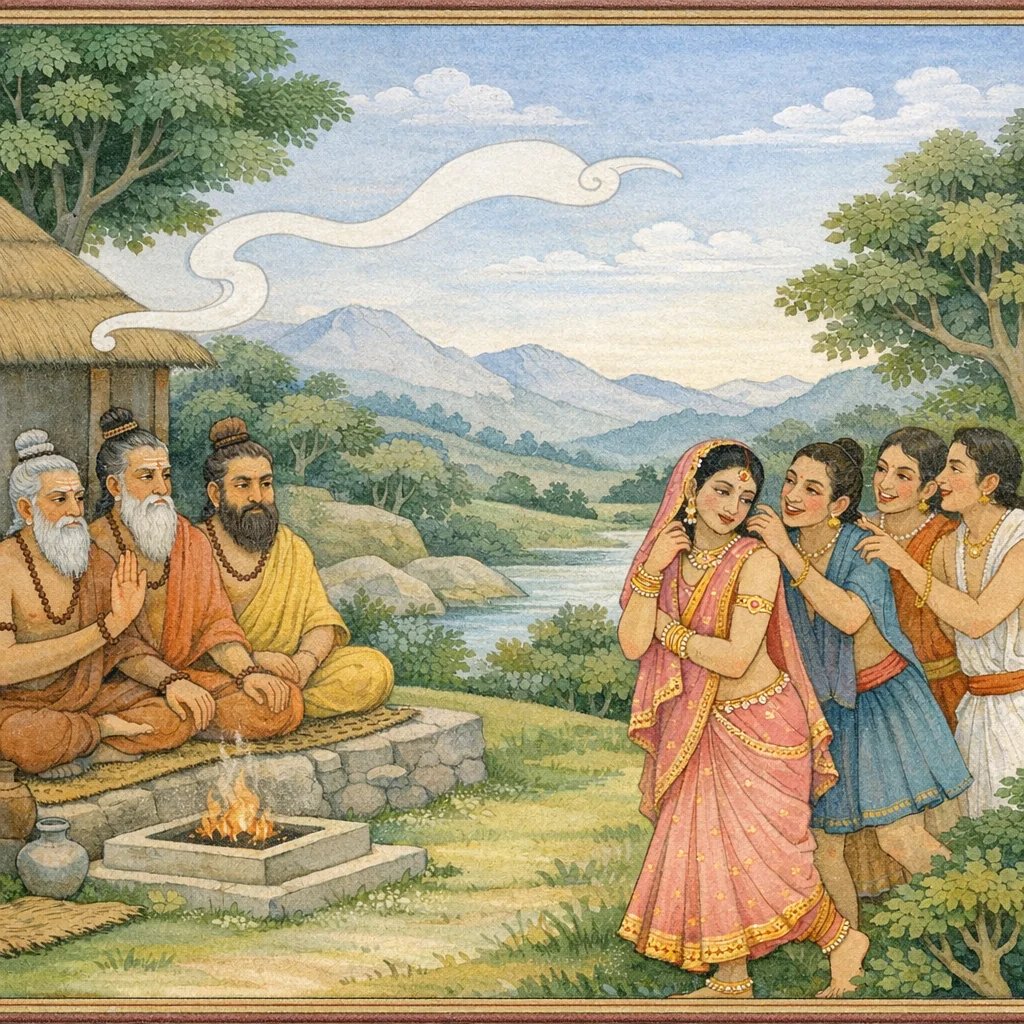
ततस् ते यौवनोन्मत्ता भाविकार्यप्रचोदिताः साम्बं जाम्बवतीपुत्रं भूषयित्वा स्त्रियं यथा
Then those youths—intoxicated with the pride of youth and driven by the unseen impulse of what was to come—adorned Sāmba, the son of Jāmbavatī, as one might dress a woman.
Verse 8
प्रसृतास् तान् मुनीन् ऊचुः प्रणिपातपुरःसरम् इयं स्त्री पुत्रकामस्य बभ्रोः किं जनयिष्यति
Approaching those sages and first making reverent prostration, they said: “This woman belongs to Babhru, who longs for a son—what offspring will she bring forth?”
Verse 10
इत्य् उक्तास् तैः कुमारास् ते आचचक्षुर् यथातथम् उग्रसेनाय मुसलं जज्ञे साम्बस्य चोदरात्
Thus addressed, the youths reported to Ugrasena exactly as it had occurred: from Sāmba’s belly an iron pestle had come forth.
Verse 11
तद् उग्रसेनो मुसलम् अयश्चूर्णम् अकारयत् जज्ञे स चैरकाश् चूर्णः प्रक्षिप्तस् तैर् महोदधौ
Then Ugrasena had that iron pestle ground into filings; those filings became reeds upon the shore, and they were cast into the great ocean.
Verse 12
मुसलस्याथ लोहस्य चूर्णितस्यान्धकैर् द्विज खण्डं चूर्णयितुं शेकुर् नैकं ते तोमराकृति
O Brahmin, though the iron of the pestle had been ground down, the Andhakas could still, again and again, crush the remaining spear‑shaped fragments into pieces.
Verse 13
तद् अप्य् अम्बुनिधौ क्षिप्तं मत्स्यो जग्राह जालिभिः घातितस्योदरात् तस्य लुब्धो जग्राह तं जराः
That too, cast into the ocean, was swallowed by a fish; when the fish was later caught in nets and slain, the hunter Jarā, driven by greed, took it from its belly.
Verse 14
विज्ञातपरमार्थो ऽपि भगवान् मधुसूदनः नैच्छत् तद् अन्यथाकर्तुं विधिना यत् समाहितम्
Though the Blessed Lord Madhusūdana knows the highest truth, He did not wish to make otherwise what vidhi—the law of destiny—had firmly ordained.
Verse 15
देवैश् च प्रहितो दूतः प्रणिपत्याह केशवम् रहस्य् एवम् अहं दूतः प्रहितो भगवन् सुरैः
A messenger sent by the gods bowed down and spoke to Keśava in confidence: “So it is, O Bhagavān; I am the envoy dispatched to You by the Suras.”
Verse 16
वस्वश्विमरुदादित्यरुद्रसाध्यादिभिः सह विज्ञापयति वः शक्रस् तद् इदं श्रूयतां प्रभो
With the Vasus, Aśvins, Maruts, Ādityas, Rudras, Sādhyas, and the other divine hosts, Śakra (Indra) submits a petition to You; therefore, O Lord, please hear this.
Verse 17
भारावतारणार्थाय वर्षाणाम् अधिकं शतम् भगवान् अवतीर्णो ऽत्र त्रिदशैः संप्रसादितः
To relieve the Earth of her crushing burden, after more than a hundred years the Blessed Lord descended here, earnestly propitiated and petitioned by the gods.
Verse 18
दुर्वृत्ता निहता दैत्या भुवो भारो ऽवतारितः त्वया सनाथास् त्रिदशा भवन्तु त्रिदिवे सदा
The wicked Daityas have been slain and the Earth’s burden has been lifted; by Your protection, may the gods ever remain secure in Tridiva, the heavenly realm.
Verse 19
तद् अतीतं जगन्नाथ वर्षाणाम् अधिकं शतम् इदानीं गम्यतां स्वर्गो भवता यदि रोचते
O Jagannātha, more than a hundred years have passed since then; now, if it pleases You, proceed to Svarga, the heavenly realm.
Verse 20
देवैर् विज्ञाप्यते चेदं अथात्रैव रतिस् तव तत् स्थीयतां यथाकालम् आख्येयम् अनुजीविभिः
This matter is being made known by the gods themselves. If your heart’s delight is to remain here, then stay until the proper time, so that those who live by your protection may, in due season, declare what must be declared.
Verse 21
यत् त्वम् आत्थाखिलं दूत वेद्म्य् एतद् अहम् अप्य् उत प्रारब्ध एव हि मया यादवानाम् अपि क्षयः
O messenger, all that you have spoken I already know; by Me indeed this destined destruction of the Yādavas, too, has already been set in motion.
Verse 22
भुवो नाद्यापि भारो ऽयं यादवैर् अनिबर्हितैः अवतार्य करोम्य् एतत् सप्तरात्रेण सत्वरः
Even now, this burden of the Earth has not been removed by the unextinguished Yādavas; I shall swiftly accomplish it—within seven nights—bringing that burden to its end.
Verse 23
यथा गृहीतम् अम्भोधेर् दत्त्वाहं द्वारकाभुवम् यादवान् उपसंहृत्य यास्यामि त्रिदशालयम्
As I once claimed this ground from the ocean and bestowed the land of Dvārakā, so now shall I return Dvārakā’s land to the sea; having gathered the Yādavas back into Myself, I shall depart to the abode of the gods.
Verse 24
मनुष्यदेहम् उत्सृज्य संकर्षणसहायवान् प्राप्त एवास्मि मन्तव्यो देवेन्द्रेण तथा सुरैः
Casting off this human body, supported by Saṅkarṣaṇa, I have indeed attained my destined state; know that Devendra (Indra) and the host of the gods have received and escorted Me.
Verse 25
जरासंधादयो ये ऽन्ये निहता भारहेतवः क्षितेस् तेभ्यः कुमारो ऽपि यदूनां नापचीयते
Jarāsandha and the other rulers—who had become the very cause of the Earth’s oppressive burden—were struck down; yet the youthful scion among the Yādavas did not diminish, for the Lord’s sovereign will to restore dharma still moved through him.
Verse 26
तद् एनं सुमहाभारम् अवतार्य क्षितेर् अहम् यास्याम्य् अमरलोकस्य पालनाय ब्रवीहि तान्
Having caused this immense burden to be brought down from the Earth, I shall depart to safeguard the realm of the immortals. Go—tell them this.
Verse 27
इत्य् उक्तो वासुदेवेन देवदूतः प्रणम्य तम् मैत्रेय दिव्यया गत्या देवराजान्तिकं ययौ
Thus addressed by Vāsudeva, the celestial messenger bowed to Him; and, O Maitreya, moving with divine swiftness, he departed for the presence of the Lord of the gods.
Verse 28
भगवान् अप्य् अथोत्पातान् दिव्यभौमान्तरिक्षगान् ददर्श द्वारकापुर्यां विनाशाय दिवानिशम्
Then the Blessed Lord Himself beheld, in the city of Dvārakā, ominous portents—celestial, terrestrial, and those moving through the mid-space—appearing day and night, foretelling destruction.
Verse 29
तान् दृष्ट्वा यादवान् आह पश्यध्वम् अतिदारुणान् महोत्पाताञ् छमायैषां प्रभासं याम मा चिरम्
Seeing those dreadful signs, he spoke to the Yādavas: “Behold these exceedingly terrible, great portents. To avert their consequence and seek expiation, let us go at once—without delay—to Prabhāsa.”
Verse 30
महाभागवतः प्राह प्रणिपत्योद्धवो हरिम् भगवन् यन् मया कार्यं तद् आज्ञापय साम्प्रतम् मन्ये कुलम् इदं सर्वं भगवान् संहरिष्यति
Then Uddhava—the great devotee—bowed down to Hari and said: “O Bhagavān, command me now what is to be done by me. For I perceive that the Lord is about to withdraw and destroy this entire clan.”
Verse 31
नाशायास्य निमित्तानि कुलस्याच्युत लक्षये
O Acyuta, I discern the omens and the causes that are tending toward the ruin of this lineage.
Verse 32
गच्छ त्वं दिव्यया गत्या मत्प्रसादसमुत्थया बदरीकाश्रमं पुण्यं गन्धमादनपर्वते नरनारायणस्थाने तत्पावितमहीतले
Go forth, then, by that divine passage born of my grace, to the holy Badarīkāśrama upon Mount Gandhamādana—unto the abode of Nara and Nārāyaṇa, that place on earth made sacred by Their presence.
Verse 33
मन्मना मत्प्रसादेन तत्र सिद्धिम् अवाप्स्यसि अहं स्वर्गं गमिष्यामि उपसंहृत्य वै कुलम्
With your mind fixed on me, and through my grace, you shall attain fulfilment there. As for me, having duly concluded the affairs of this lineage, I shall depart to heaven.
Verse 34
द्वारकां च मया त्यक्तां समुद्रः प्लावयिष्यति
And when I have departed from Dvārakā, the ocean itself will rise to flood and engulf the city.
Verse 35
इत्य् उक्तः प्रणिपत्यैनं जगाम स तदोद्धवः नरनारायणस्थानं केशवेनानुमोदितः
Thus instructed, Uddhava bowed down before Him; and, with Keśava’s gracious consent, he departed at once for the sacred abode of Nara and Nārāyaṇa.
Verse 36
ततस् ते यादवाः सर्वे रथान् आरुह्य शीघ्रगान् प्रभासं प्रययुः सार्धं कृष्णरामादिभिर् द्विज
Then all the Yādavas, mounting their swift-moving chariots, set out for Prabhāsa—together with Śrī Kṛṣṇa, Balarāma, and the rest, O twice-born.
Verse 37
प्राप्य प्रभासं प्रयताः स्नातास् ते कुकुरान्धकाः चक्रुस् तत्र मुदा पानं वासुदेवानुमोदिताः
Having reached Prabhāsa, the disciplined Kukuras and Andhakas bathed there according to rite; then, with uplifted hearts, they began to drink in celebration—by Vāsudeva’s own consent.
Verse 38
पिबतां तत्र वै तेषां संघर्षेण परस्परम् अतिवादेन्धनो जज्ञे कलहाग्निः क्षयावहः
As they drank there, jostling one another in mutual friction, the fire of quarrel was born—fed by harsh, excessive speech—and it became a consuming blaze that brought about their ruin.
Verse 39
जघ्नुः परस्परं ते तु शस्त्रैर् दैवबलात्कृताः क्षीणशस्त्राश् च जगृहुः प्रत्यासन्नाम् अथैरकाम्
Driven onward by the force of fate, they struck one another down with their weapons; and when their weapons were spent, they seized what lay close at hand—stalks of eraka reeds—and continued the slaughter.
Verse 40
एरका तु गृहीता तैर् वज्रभूतेव लक्ष्यते तया परस्परं जघ्नुः संप्रहारे सुदारुणे
Seizing the eraka reeds, they beheld them as though turned into vajras, thunderbolts; and with those very reeds they struck one another down in a dreadfully savage melee.
Verse 41
प्रद्युम्नसाम्बप्रमुखाः कृतवर्माथ सात्यकिः अनिरुद्धादयश् चान्ये पृथुर् विपृथुर् एव च
Foremost among them were Pradyumna and Sāmba; and also Kṛtavarmā and Sātyaki; with Aniruddha and others besides—Pṛthu and Vipṛthu as well—heroes of the Yādava line.
Verse 42
चारुवर्मा चारुकश् च तथाक्रूरादयो द्विज एरकारूपिभिर् वज्रैस् ते निजघ्नुः परस्परम्
O brāhmaṇa, Cāruvarmā and Cāruka, and likewise Akrūra and others—taking up vajra-like weapons formed as eraka reeds—struck one another down in mutual slaughter.
Verse 43
निवारयाम् आस हरिर् यादवांस् ते च केशवम् सहायं मेनिरे प्राप्तं ते निजघ्नुः परस्परम्
Hari sought to restrain those Yādavas; yet they, imagining Keśava himself to have come as their ally, continued to strike one another down.
Verse 44
कृष्णो ऽपि कुपितस् तेषाम् एरकामुष्टिम् आददे वधाय सो ऽपि मुसलं मुष्टिर् लोहम् अभूत् तदा
Even Kṛṣṇa, angered with them, seized a fistful of eraka grass to bring about their destruction; and in that very moment, that handful itself became an iron club.
Verse 45
जघान तेन निःशेषान् यादवान् आततायिनः जघ्नुश् च सहसाभ्येत्य तथान्ये वै परस्परम्
With that weapon he struck down, leaving none, the Yādavas who had turned into assailants; and the others too, rushing upon one another in sudden frenzy, slew each other in turn.
Verse 46
ततश् चार्णवमध्येन जैत्रो ऽसौ चक्रिणो रथः पश्यतो दारुकस्याशु हृतो ऽश्वैर् द्विजसत्तम
Then, O best of the twice-born, the victorious chariot of the Discus-bearing Lord was swiftly borne away—drawn by the horses—through the midst of the ocean, even as Dāruka looked on.
Verse 47
चक्रं तथा गदा शार्ङ्गतूणी शङ्खो ऽसिर् एव च प्रदक्षिणं हरिं कृत्वा जग्मुर् आदित्यवर्त्मना
Then the discus and the mace, the Śārṅga-bow with its quiver, the conch, and the sword as well—having reverently circumambulated Hari—departed along the solar path.
Verse 48
क्षणेन नाभवत् कश्चिद् यादवानाम् अघातितः ऋते कृष्णं महाबाहुं दारुकं च महामुने
In but a moment, O great sage, not a single Yādava remained unstruck—save mighty-armed Kṛṣṇa alone, and Dāruka.
Verse 49
चङ्क्रम्यमाणौ तौ रामं वृक्षमूले कृतासनम् ददृशाते मुखाच् चास्य निष्क्रामन्तं महोरगम्
As the two wandered on, they saw Rāma seated at the root of a tree; and from his mouth there emerged a mighty serpent.
Verse 50
निष्क्रम्य स मुखात् तस्य महाभोगो भुजंगमः प्रययाव् अर्णवं सिद्धैः पूज्यमानस् तथोरगैः
Emerging from his mouth, that great-hooded serpent departed for the ocean—honoured and worshipped alike by the Siddhas and by the hosts of nāgas.
Verse 51
ततो ऽर्घम् आदाय तदा जलधिः संमुखं ययौ प्रविवेश च तत्तोयं पूजितः पन्नगोत्तमैः
Then, taking up the arghya-offering, the Ocean advanced to meet him; and as he entered those very waters, the foremost of the Nāgas duly honored and worshiped him.
Verse 52
दृष्ट्वा बलस्य निर्याणं दारुकं प्राह केशवः इदं सर्वं त्वम् आचक्ष्व वसुदेवोग्रसेनयोः
Seeing Balarāma’s departure from the world, Keśava said to Dāruka: “Go—tell all of this, exactly as it has occurred, to Vasudeva and to Ugrasena.”
Verse 53
निर्याणं बलभद्रस्य यादवानां तथा क्षयम् योगे स्थित्वाहम् अप्य् एतत् परित्यक्ष्ये कलेवरम्
“The departure of Balabhadra, and likewise the destruction of the Yādavas, are now at hand. Established in Yoga, I too shall abandon this body.”
Verse 54
वाच्यश् च द्वारकावासी जनः सर्वस् तथाहुकः यथेमां नगरीं सर्वां समुद्रः प्लावयिष्यति
And Ahuka, together with all the people dwelling in Dvārakā, was to be informed: “In this very manner, the ocean will soon inundate this entire city.”
Verse 55
तस्माद् भवद्भिः सज्जैस् तु प्रतीक्ष्यो ह्य् अर्जुनागमः न स्थेयं द्वारकामध्ये निष्क्रान्ते तत्र पाण्डवे
Therefore, all of you remain prepared and await the coming of Arjuna. When that Pāṇḍava has departed from there, you should not remain within the city of Dvārakā.
Verse 56
तेनैव सह गन्तव्यं यत्र याति स कौरवः
You must go along with him alone—wherever that Kaurava goes, there you are to proceed as well.
Verse 57
गत्वा च ब्रूहि कौन्तेयम् अर्जुनं वचनान् मम पालनीयस् त्वया शक्त्या जनो ऽयं मत्परिग्रहः
Go, and convey my words to Arjuna, the son of Kuntī. As far as lies within your power, this people—who are under my protection—must be safeguarded by you.
Verse 58
इत्य् अर्जुनेन सहितो द्वारवत्या भवाञ् जनम् गृहीत्वा यातु वज्रश् च यदुराजो भविष्यति
Thus it was declared: you shall go together with Arjuna, taking with you the people of Dvāravatī; and Vajra shall become the king of the Yadus.
Verse 59
इत्य् उक्तो दारुकः कृष्णं प्रणिपत्य पुनः पुनः प्रदक्षिणं च बहुशः कृत्वा प्रायाद् यथोदितम्
Thus instructed, Dāruka repeatedly bowed down to Śrī Kṛṣṇa; and having circumambulated Him many times in reverence, he departed—exactly as he had been directed.
Verse 60
स गत्वा च तथा चक्रे द्वारकायां तथार्जुनम् आनिनाय महाबुद्धिर् वज्रं चक्रे तथा नृपम्
He went there and accomplished what had to be done; and in Dvārakā the great-minded one brought Arjuna and likewise established Vajra as king.
Verse 61
भगवान् अपि गोविन्दो वासुदेवात्मकं परम् ब्रह्मात्मनि समारोप्य सर्वभूतेष्व् अधारयत्
Even the Blessed Lord Govinda, establishing within the Self the Supreme Brahman whose very essence is Vāsudeva, sustained that Reality as the inner support of all beings.
Verse 62
संमानयन् द्विजवचो दुर्वासा यद् उवाच ह योगयुक्तो ऽभवत् पादं कृत्वा जानुनि सत्तम
Honouring the words of the twice-born, he did exactly as Durvāsā had spoken: the noble one became inwardly composed in yoga, placing one foot upon his knee.
Verse 63
आययौ च जरा नाम स तदा तत्र लुब्धकः मुसलावशेषलोहैकसायकन्यस्ततोमरः
Then there came to that very spot a hunter named Jarā—his spear and single arrow tipped with iron fashioned from the remaining metal of the Musala—drawn onward by fate.
Verse 64
स तत्पादं मृगाकारम् अवेक्ष्याराद् अवस्थितः तले विव्याध तेनैव तोमरेण द्विजोत्तम
Seeing that foot—shaped like a deer’s form—he stood at a distance; and then, O best of the twice-born, he pierced the sole with that very javelin.
Verse 65
गतश् च ददृशे तत्र चतुर्बाहुधरं नरम् प्रणिपत्याह चैवैनं प्रसीदेति पुनः पुनः
Having gone there, he beheld a man bearing four arms. Bowing down in reverence, he addressed him again and again: “Be gracious—show me your favor.”
Verse 66
अजानता कृतम् इदं मया हरिणशङ्कया क्षम्यतां नात्मपापेन दग्धं मां दग्धुम् अर्हसि
“I did this in ignorance, mistaking you for a deer. Forgive me. Already scorched by my own sin, you ought not to burn me further.”
Verse 67
ततस् तं भगवान् आह न ते ऽस्ति भयम् अण्व् अपि गच्छ त्वं मत्प्रसादेन लुब्ध स्वर्गं सुरास्पदम्
Then the Blessed Lord said to him: “Do not fear—there is not even the slightest cause for terror. Go now, O covetous one; by My grace, ascend to heaven, the very abode of the gods.”
Verse 68
विमानम् आगतं सद्यस् तद्वाक्यसमनन्तरम् आरुह्य प्रययौ स्वर्गं लुब्धकस् तत्प्रसादतः
Immediately—no sooner were those words spoken—a celestial vimāna arrived. Mounting it at once, the hunter departed for heaven, carried there solely by the power of that divine grace.
Verse 69
गते तस्मिन् स भगवान् संयोज्यात्मानम् आत्मनि ब्रह्मभूते ऽव्यये ऽचिन्त्ये वासुदेवमये ऽमले
When he had departed, the Blessed Lord—uniting his own self with the Self—entered into that Brahman-state: imperishable, inconceivable, stainless, and wholly pervaded by Vāsudeva.
Verse 70
अजन्मन्य् अजरे ऽनाशिन्य् अप्रमेये ऽखिलात्मनि तत्याज मानुषं देहम् अतीत्य त्रिविधां गतिम्
Established in the Unborn, the Unaging, the Imperishable—immeasurable, the Self of all—he cast off the human body and, transcending the threefold course of embodied existence, passed beyond it.
Frequently Asked Questions
Because the musala’s filings—though ground down—persist as the ‘seed’ of destiny; the text portrays daiva/vidhi operating through ordinary matter. The reeds become vajra-like to show that the Lord’s ordained conclusion can manifest through minimal remnants, emphasizing upasaṃhāra rather than random accident.
Parāśara explicitly frames Kṛṣṇa as fully knowing reality and yet not altering what is ‘set by vidhi,’ using the event to conclude the assumed mānuṣa-deha. The Lord forgives Jarā and grants him heaven, then ‘unites Self with Self’—indicating sovereign withdrawal, not defeat.
Uddhava’s departure preserves bhakti-jñāna continuity: the great devotee is directed to Nara-Nārāyaṇa’s abode, signaling that while the public līlā ends, the dharmic and yogic lineage continues under Viṣṇu’s eternal forms.