राहोर्विमोचनानन्तरं जलन्धरस्य सैन्योद्योगः — Rahu’s Aftermath and Jalandhara’s Mobilization
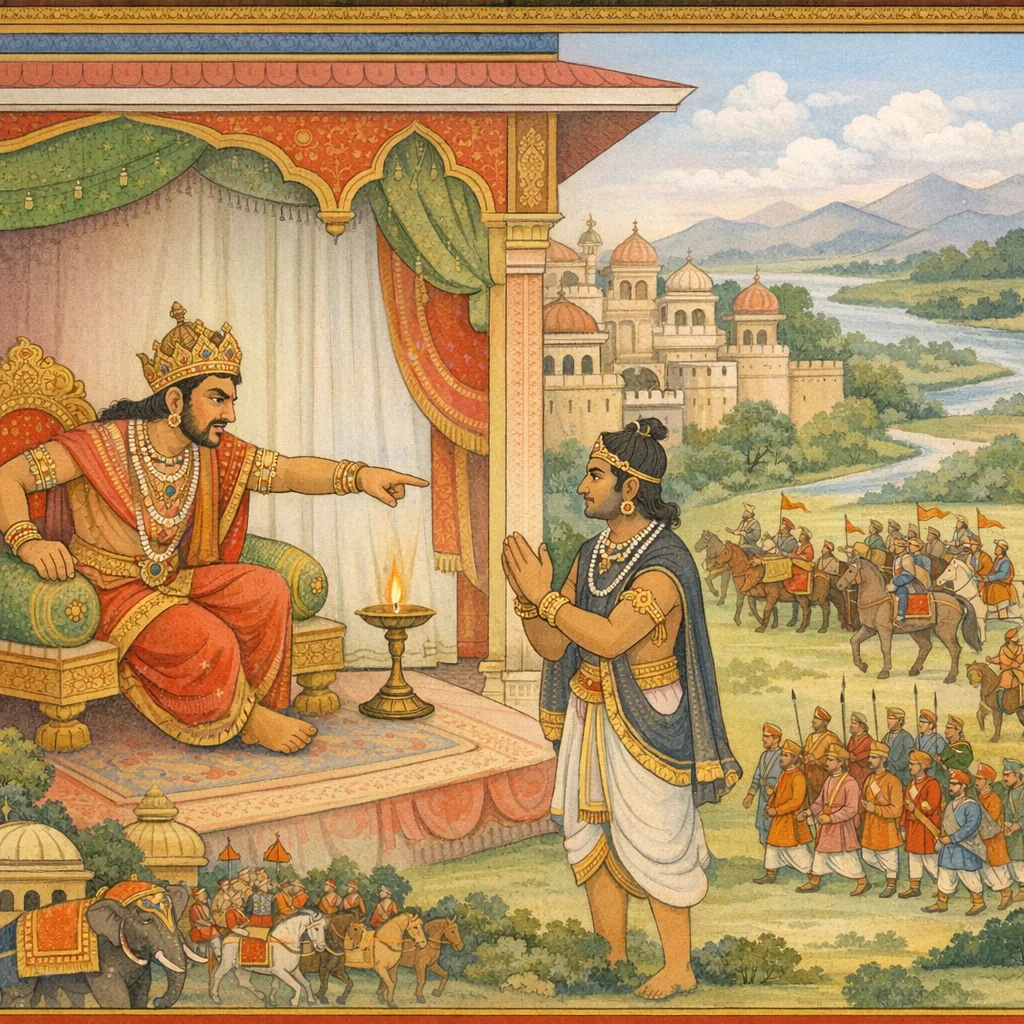
Adhyāya 20 unfolds as a relay of dialogue: Vyāsa asks Sanatkumāra (through Sūta’s narration) what became of Rāhu after the mysterious “Puruṣa” released him, and where he went. Sanatkumāra explains that the place of release came to be known in worldly report as “Varvara,” marking the origin of the name. Rāhu, regaining pride and composure, returns toward Jalandhara’s city and reports the sequence of Īśa’s (Śiva’s) deeds. Hearing this, Jalandhara—mighty son of Sindhu and foremost among the daityas—burns with anger, restraint giving way to wrath. He commands a general mobilization of the asura hosts, naming prominent leaders and clans—Kālanemi, Śumbha-Niśumbha, and groups such as the Kālakas/Kālakeyas, Mauryas, Dhumras, and others—thus mustering for the next phase of conflict.
Shlokas
Verse 1
व्यास उवाच । सनत्कुमार सर्वज्ञ कथा ते श्राविताद्भुता । महाप्रभोश्शंकरस्य यत्र लीला च पावनी
Vyāsa said: “O Sanatkumāra, O all-knowing one, you have narrated to me a wondrous account—one in which the sacred, purifying divine play of the Great Lord Śaṅkara is revealed.”
Verse 2
इदानीं ब्रूहि सुप्रीत्या कृपां कृत्वा ममो परि । राहुर्मुक्तः कुत्र गतः पुरुषेण महामुने
Now, tell me with deep affection—showing compassion toward me, O great sage: where did Rāhu go after being released by that mighty Person?
Verse 3
सूत उवाच । इत्याकर्ण्य वचस्तस्य व्यासस्यामितमेधसः । प्रत्युवाच प्रसन्नात्मा ब्रह्मपुत्रो महामुनिः
Sūta said: Having thus heard the words of Vyāsa, whose intellect was immeasurable, the great sage—the son of Brahmā—serene of heart, replied.
Verse 4
सनत्कुमार उवाच । राहुर्विमुक्तो यस्तेन सोपि तद्वर्वरस्थले । अतस्स वर्वरो भूत इति भूमौ प्रथां गतः
Sanatkumāra said: “He by whom Rāhu was set free also remained in that very place called Varvara. Therefore he came to be known as ‘Varvara-bhūta’, and that name became renowned upon the earth.”
Verse 5
ततः स मन्यमानस्स्वं पुनर्जनिमथानतः । गतगर्वो जगामाथ जलंधरपुरं शनैः
Then, reflecting on his own renewed birth and bowing down, his arrogance dispelled, he went slowly back to the city of Jalandhara.
Verse 6
जलंधराय सोऽभ्येत्य सर्वमीशविचेष्टितम् । कथयामास तद्व्यासाद्व्यास दैत्येश्वराय वै
Approaching Jalandhara, he related in full all that had occurred as the Lord’s (Śiva’s) divine activity—thus, O Vyāsa, did he indeed recount it to the lord of the Dānavas.
Verse 7
सनत्कुमार उवाच । जलंधरस्तु तच्छ्रुत्वा कोपाकुलितविग्रहः । बभूव बलवान्सिन्धुपुत्रो दैत्येन्द्रसत्तमः
Sanatkumāra said: Hearing those words, Jalandhara—the mighty son of the Ocean, the foremost among the lords of the Daityas—became inflamed with anger, and his whole bearing turned turbulent.
Verse 8
ततः कोपपराधीनमानसो दैत्यसत्तमः । उद्योगं सर्वसैन्यानां दैत्यानामादिदेश ह
Then the foremost of the Daityas, his mind overpowered by anger, commanded all the Daitya armies to make ready for battle.
Verse 9
जलंधर उवाच । निर्गच्छंत्वखिला दैत्याः कालनेमिमुखाः खलु । तथा शुंभनिशुम्भाद्या वीरास्स्वबलसंयुताः
Jalandhara said: “Let all the Daityas—led indeed by Kalanemi—march forth. Likewise, let the heroes such as Shumbha and Nishumbha, equipped with their own forces, also advance.”
Verse 10
कोटिर्वीरकुलोत्पन्नाः कंबुवंश्याश्च दौर्हृदाः । कालकाः कालकेयाश्च मौर्या धौम्रास्तथैव च
There were crores of warriors born of heroic lineages—those of the Kambu dynasty, the Daurhṛdas, the Kālakas and the Kālakeyas (sons of the Kālakas), as well as the Mauryas and the Dhaumras too.
Verse 11
इत्याज्ञाप्यासुरपतिस्सिंधुपुत्रो प्रतापवान् । निर्जगामाशु दैत्यानां कोटिभिः परिवारितः
Having thus issued his command, the mighty lord of the Asuras—the valiant son of Sindhu—quickly set forth, surrounded by crores of Daityas.
Verse 12
ततस्तस्याग्रतश्शुक्रो राहुश्छिन्नशिरोऽभवत् । मुकुटश्चापतद्भूमौ वेगात्प्रस्खलितस्तदा
Then, right before him, Śukra and Rāhu were beheaded. In that very moment, their crowns, dislodged by the force of the blow, slipped and fell upon the ground.
Verse 13
व्यराजत नभः पूर्णं प्रावृषीव यथा घनैः । जाता अशकुना भूरि महानिद्रावि सूचकाः
The sky appeared completely filled, like the rainy season when it is packed with clouds. Many ominous birds appeared—portents foretelling a great stupor and darkness (of delusion) before the impending conflict.
Verse 14
तस्योद्योगं तथा दृष्ट्वा गीर्वाणास्ते सवासवाः । अलक्षितास्तदा जग्मुः कैलासं शंकरालयम्
Seeing his preparations for action, those Devas—together with Indra—then departed unnoticed and went to Kailāsa, the abode of Śaṅkara.
Verse 15
तत्र गत्वा शिवं दृष्ट्वा सुप्रणम्य सवासवाः । देवास्सर्वे नतस्कंधाः करौ बद्ध्वा च तुष्टुवुः
Going there and beholding Lord Śiva, all the gods—along with Indra—bowed down with deep reverence. With shoulders bent in humility and hands joined in supplication, they offered hymns of praise to Him.
Verse 16
देवा ऊचुः । देवदेव महादेव करुणाकर शंकर । नमस्तेस्तु महेशान पाहि नश्शरणागतान्
The Devas said: “O God of gods, O Mahādeva, compassionate Śaṅkara—salutations to You, O Maheśāna. Protect us, who have come to You for refuge.”
Verse 17
विह्वला वयमत्युग्रं जलंधरकृतात्प्रभो । उपद्रवात्सदेवेन्द्राः स्थानभ्रष्टाः क्षितिस्थिताः
O Lord, we are utterly shaken by the exceedingly fierce oppression wrought by Jalandhara. Even Indra along with the gods has been driven from his proper station, and we now remain cast down upon the earth.
Verse 18
न जानासि कथं स्वामिन्देवापत्तिमिमां प्रभो । तस्मान्नो रक्षणार्थाय जहि सागरनन्दनम्
O Lord, our master—how can You not know of this calamity that has befallen the gods? Therefore, for our protection, strike down the son of the ocean.
Verse 19
अस्माकं रक्षणार्थाय यत्पूर्वं गरुडध्वजः । नियोजितस्त्वया नाथ न क्षमस्सोऽद्य रक्षितुम्
O Lord, he who bears the banner of Garuḍa—whom you formerly appointed for our protection—today is no longer capable of protecting us.
Verse 20
इति श्रीशिवमहापुराणे द्वितीयायां रुद्रसंहितायां पञ्चमे युद्धखंडे जलंधरवधोपाख्याने सामान्यगणासुरयुद्धवर्णनं नाम विंशोऽध्यायः
Thus, in the Śrī Śiva Mahāpurāṇa—within the Second Book, the Rudra-saṃhitā, in the Fifth section called the Yuddha-khaṇḍa, in the narrative of the slaying of Jalandhara—ends the Twentieth Chapter, entitled “The Description of the Battle between the ordinary Gaṇas and the Asuras.”
Verse 21
अलक्षिता वयं चात्रागताश्शंभो त्वदंतिकम् । स आयाति त्वया कर्त्तुं रणं सिंधुसुतो बली
O Śambhu, we have come here into your presence unseen. The mighty son of Sindhu is drawing near, intent on engaging you in battle.
Verse 22
अतस्स्वामिन्रणे त्वं तमविलंबं जलंधरम् । हंतुमर्हसि सर्वज्ञ पाहि नश्शरणागतान्
Therefore, O Lord, in this battle you should, without delay, slay that Jalandhara. O Omniscient One, protect us who have come to you for refuge.
Verse 23
सनत्कुमार उवाच । इत्युक्त्वा ते सुरास्सर्वे प्रभुं नत्वा सवासवाः । पादौ निरीक्ष्य संतस्थुर्महेशस्य विनम्रकाः
Sanatkumāra said: Having spoken thus, all those Devas—together with Indra—bowed to the Lord. In humility they gazed upon Mahādeva’s feet and stood there in reverent stillness.
Verse 24
सनत्कुमार उवाच । इति देववचः श्रुत्वा प्रहस्य वृषभध्वजः । द्रुतं विष्णुं समाहूय वचनं चेदमब्रवीत्
Sanatkumāra said: Hearing these words of the gods, Vṛṣabhadhvaja (Lord Śiva), smiling, swiftly summoned Viṣṇu and spoke these words.
Verse 25
ईश्वर उवाच । हृषीकेश महाविष्णो देवाश्चात्र समागताः । जलंधरकृतापीडाश्शरणं मेऽतिविह्वलाः
Īśvara said: “O Hṛṣīkeśa, O Mahāviṣṇu! The gods have assembled here, grievously afflicted by Jalandhara’s oppression. In great distress they have come, taking refuge in Me.”
Verse 26
जलंधरः कथं विष्णो संगरे न हत स्त्वया । तद्गृहं चापि यातोऽसि त्यक्त्वा वैकुण्ठमात्मनः
“O Viṣṇu, how is it that Jalandhara was not slain by you in battle? And why did you go to his house as well, abandoning your own Vaikuṇṭha?”
Verse 27
मया नियोजितस्त्वं हि साधुसंरक्षणाय च । निग्रहाय खलानां च स्वतंत्रेण विहारिणा
“I have indeed appointed you for the protection of the virtuous and for the restraint of the wicked—you who move about freely, acting independently.”
Verse 28
सनत्कुमार उवाच । इत्याकर्ण्य महेशस्य वचनं गरुडध्वजः । प्रत्युवाच विनीतात्मा नतकस्साञ्जलिर्हरिः
Sanatkumāra said: Having thus heard the words of Maheśa (Lord Śiva), Hari—he whose banner bears Garuḍa—humbly bowed down, joined his palms in reverence, and then replied with a disciplined and courteous mind.
Verse 29
विष्णुरुवाच । तवांशसंभवत्वाच्च भ्रातृत्वाच्च तथा श्रियः । मया न निहतः संख्ये त्वमेनं जहि दानवम्
Viṣṇu said: “Because you are born of a portion of me, and because you are also the brother of Śrī (Lakṣmī), I have not slain him in battle. You—strike down this dānava.”
Verse 30
महाबलो महावीरो जेयस्सर्वदिवौकसाम् । अन्येषां चापि देवेश सत्यमेतद्ब्रवीम्यहम्
He is immensely strong and a great hero—truly the conqueror of all the dwellers of heaven. And of the others as well, O Lord of the gods; this I declare to you as the truth.
Verse 31
मया कृतो रणस्तेन चिरं देवान्वितेन वै । मदुपायो न प्रवृत्तस्तस्मिन्दानवपुंगवे
I waged war with that mighty one for a long time indeed—he being upheld by the gods. Yet my stratagem did not prevail against that foremost of the Dānavas.
Verse 32
तत्पराक्रमतस्तुष्टो वरं ब्रूहीत्यहं खलु । इति मद्वचनं श्रुत्वा स वव्रे वरमुत्तमम्
Pleased by his valor, I indeed said, “Speak—choose a boon.” Hearing my words, he chose the highest boon.
Verse 33
मद्भगिन्या मया सार्द्धं मद्गेहे ससुरो वस । मदधीनो महाविष्णो इत्यहं तद्गृहं गतः
“Along with my sister, dwell in my house, O father-in-law. Great Viṣṇu is under my authority.” Saying this, I went to his residence.
Verse 34
सनत्कुमार उवाच । इति विष्णोर्वचश्श्रुत्वा शकरस्स महेश्वरः । विहस्योवाच सुप्रीतस्सदयो भक्तवत्सलः
Sanatkumāra said: Having thus heard Viṣṇu’s words, Maheśvara—Śaṅkara, ever compassionate and tender toward His devotees—smiled with delight and then spoke.
Verse 35
महेश्वर उवाच । हे विष्णो सुरवर्य त्वं शृणु मद्वाक्यमादरात् । जलंधरं महादैत्यं हनिष्यामि न संशयः
Maheśvara said: “O Viṣṇu, best among the gods, listen with attention to my words. I shall slay the great demon Jalandhara—of this there is no doubt.”
Verse 36
स्वस्थानं गच्छ निर्भीतो देवा गच्छंत्वपि ध्रुवम् । निर्भया वीतसंदेहा हतं मत्वाऽसुराधिपम्
“Return to your own abode without fear; let the gods also surely return. Be fearless and free from doubt, deeming the lord of the asuras to be slain.”
Verse 37
सनत्कुमार उवाच । इति श्रुत्वा महेशस्य वचनं स रमापतिः । सनिर्जरो जगामाशु स्वस्थानं गतसंशयः
Sanatkumāra said: Having thus heard the words of Maheśa, that Lord—Rāmāpati (Viṣṇu)—together with the immortals quickly went to his own abode, his doubts dispelled. Here Śiva is affirmed as Pati, the clarifier of truth, removing saṃśaya and restoring right understanding for the devas.
Verse 38
एतस्मिन्नंतरे व्यास स दैत्येन्द्रोऽतिविक्रमः । सन्नद्धैरसुरैस्सार्द्धं शैलप्रांतं ययौ बली
Meanwhile, O Vyāsa, that supremely valiant lord of the Daityas, of extraordinary prowess, set out with his fully armed Asuras and went to the mountain’s border region.
Verse 39
कैलासमवरुध्याथ महत्या सेनया युतः । संतस्थौ कालसंकाशः कुर्वन्सिंहरवं महान्
Then, having laid siege to Kailāsa with a vast army, he took his stand—terrible like Kāla (Time, Death) itself—uttering a mighty lion-like roar.
Verse 40
अथ कोलाहलं श्रुत्वा दैत्यनादसमुद्भवम् । चुक्रोधातिमहेशानो महालीलः खलांतकः
Then, hearing the uproar that had arisen from the roaring of the Daityas, the supremely great Lord—Śiva, whose deeds are vast divine sport and who destroys the wicked—became wrathful.
Verse 41
समादिदेश संख्याय स्वगणान्स महाबलान् । नंद्यादिकान्महादेवो महोतिः कौतुकी हरः
Then Mahādeva—Hara, mighty in splendor and stirred with purposeful zeal—commanded his own exceedingly powerful Gaṇas, headed by Nandin, to be arrayed in proper order and numbered ranks.
Verse 42
नन्दीभमुखसेनानीमुखास्सर्वे शिवाज्ञया । गणाश्च समनह्यंत युद्धाया तित्वरान्विताः
By Śiva’s command, all the leaders—headed by Nandin and Bhṛṅgī—together with the Gaṇas, quickly armed themselves and made ready for battle, filled with urgency.
Verse 43
अवतेरुर्गणास्सर्वे कैलासात्क्रोधदुर्मदाः । वल्गतो रणशब्दांश्च महावीरा रणाय हि
All the Gaṇas descended from Kailāsa, fierce with wrath and proud of their might. Those great heroes, leaping forward, raised tumultuous cries of battle, for they were set upon war.
Verse 44
ततस्समभवद्युद्धं कैलासोपत्यकासु वै । प्रमथाधिपदैत्यानां घोरं शस्त्रास्त्रसंकुलम्
Then indeed, in the valleys of Kailāsa, a dreadful battle arose between the chiefs of the Pramathas and the Daityas—an encounter thick on every side with weapons and missiles.
Verse 45
भेरीमृदंगशंखौघैर्निस्वानैर्वीरहर्षणैः । गजाश्वरथशब्दैश्च नादिता भूर्व्यकंपत
Resounding with the hero-stirring blare of bherīs, mṛdaṅgas, and surging conches—and with the tumult of elephants, horses, and chariots—the very earth reverberated and trembled.
Verse 46
शक्तितोमरबाणौघैर्मुसलैः पाशपट्टिशैः । व्यराजत नभः पूर्णं मुक्ताभिरिव संवृतम्
Filled with torrents of śaktis, tomaras, and arrows—along with clubs, nooses, and axes—the sky shone resplendent, as though wholly covered with scattered pearls.
Verse 47
निहतैरिव नागाश्वैः पत्तिभिर्भूर्व्यराजत । वज्राहतैः पर्वतेन्द्रैः पूर्वमासीत्सुसंवृता
The earth shone as though strewn with slain war-elephants, horses, and foot-soldiers; it seemed as if it had once been covered all around with mighty mountains shattered by the vajra.
Verse 48
प्रमथाहतदैत्यौघैर्दैत्याहतगणैस्तथा । वसासृङ्मांसपंकाढ्या भूरगम्याभवत्तदा
Then, with hosts of Dānavas felled by the Pramathas and, likewise, hosts of Śiva’s Gaṇas struck down by the Dānavas, the earth became impassable—thick with the mire of fat, blood, and flesh.
Verse 49
प्रमथाहतदैत्यौघान्भार्गवस्समजीवयत् । युद्धे पुनः पुनश्चैव मृतसंजीवनी बलात्
In the battle, Bhārgava (Śukrācārya) again and again restored to life the hosts of Daityas struck down by the Pramathas, by the power of the Mṛtasaṁjīvanī mantra that revives the dead.
Verse 50
दृष्ट्वा व्याकुलितांस्तांस्तु गणास्सर्वे भयार्दिताः । शशंसुर्देवदेवाय सर्वे शुक्रविचेष्टितम्
Seeing those troops thrown into confusion and stricken with fear, all the Gaṇas reported to the Deva of devas, Lord Śiva, the stratagems and deeds of Śukra.
Verse 51
तच्छ्रुत्वा भगवान्रुद्रश्चकार क्रोधमुल्बणम् । भयंकरोऽतिरौद्रश्च बभूव प्रज्वलन्दिशः
Hearing this, Bhagavān Rudra was seized by fierce, overwhelming wrath. Terrible and exceedingly wrathful, he appeared as though the very quarters blazed around him.
Verse 52
अथ रुद्रमुखात्कृत्या बभूवातीवभीषणा । तालजंघोदरी वक्त्रा स्तनापीडितभूरुहा
Then, from Rudra’s very mouth arose Kṛtyā—exceedingly terrifying—her shanks and belly like the trunk of a palmyra, her face dreadful, and her breasts heavy upon her chest, making her form fearsome.
Verse 53
सा युद्धभूमिं तरसा ससाद मुनिसत्तम । विचचार महाभीमा भक्षयंती महासुरान्
O best of sages, she swiftly rushed onto the battlefield. Terrible in her might, she moved about there, devouring the great demons (asuras).
Verse 54
अथ सा रणमध्ये हि जगाम गतभीर्द्रुतम् । यत्रास्ते संवृतो दैत्यवरेन्द्रैस्स हि भार्गवः
Then she, her fear dispelled, swiftly entered the midst of the battlefield—toward the place where Bhārgava (Śukra) was stationed, surrounded on all sides by the foremost lords among the Daityas.
Verse 55
स्वतेजसा नभो व्याप्य भूमिं कृत्वा च सा मुने । भार्गवं स्वभगे धृत्वा जगामांतर्हिता नभः
O sage, spreading through the sky by her own radiance and making the earth her domain, she took Bhārgava upon her hip and then, becoming invisible, departed into the heavens.
Verse 56
विद्रुतं भार्गवं दृष्ट्वा दैत्यसैन्यगणास्तथा । प्रम्लानवदना युद्धान्निर्जग्मुर्युद्धदुर्मदाः
Seeing Bhārgava in flight, the hosts of the daityas likewise—though formerly intoxicated with the pride of battle—left the battlefield, their faces fallen and their courage withered.
Verse 57
अथोऽभज्यत दैत्यानां सेना गणभयार्दिता । वायुवेगहता यद्वत्प्रकीर्णा तृणसंहतिः
Then the army of the Daityas, tormented by fear of Śiva’s gaṇas, broke apart and scattered—just as a mass of dry grass is dispersed when struck by a swift, forceful wind.
Verse 58
भग्नां गणभयाद्दैत्यसेनां दृष्ट्वातिमर्षिताः । निशुंभशुंभौ सेनान्यौ कालनेमिश्च चुक्रुधुः
Seeing the Daitya host shattered in fear of Śiva’s gaṇas, Niśumbha and Śumbha—their commanders—together with Kālanemi, blazed with exceeding wrath.
Verse 59
त्रयस्ते वरयामासुर्गणसेनां महाबलाः । मुंचंतश्शरवर्षाणि प्रावृषीव बलाहकाः
Those three mighty warriors checked the Gaṇa-army’s advance, pouring forth showers of arrows like monsoon clouds heavy with rain.
Verse 60
ततो दैत्यशरौघास्ते शलभानामिव व्रजाः । रुरुधुः खं दिशस्सर्वा गणसेनामकंपयन्
Then those volleys of the demons’ arrows—like swarms of locusts—filled and blocked the sky in every direction, shaking the army of Śiva’s Gaṇas.
Verse 61
गणाश्शरशतैर्भिन्ना रुधिरासारवर्षिणः । वसंतकिंशुकाभासा न प्राजानन्हि किंचन
Pierced by hundreds of arrows, the Gaṇas poured forth streams of blood. Their bodies took on the hue of the spring kiṃśuka blossoms; yet, absorbed in Śiva’s cause and fearless in battle, they comprehended—and heeded—nothing else at all.
Verse 62
ततः प्रभग्नं स्वबलं विलोक्य नन्द्यादिलंबोदरकार्त्तिकेयाः । त्वरान्विता दैत्यवरान्प्रसह्य निवारयामासुरमर्षणास्ते
Then, seeing their own army shattered, Nandin and the others—Lambodara (Gaṇeśa) and Kārttikeya—swiftly rushed forth. With fierce, unenduring wrath they forcibly checked and held back the foremost of the demons.
Frequently Asked Questions
Rāhu, after being released by a “Puruṣa,” returns to Jalandhara and reports Śiva’s actions; Jalandhara responds by ordering a full daitya mobilization and naming allied leaders and clans.
The chapter reads as a moral-psychological sequence: liberation or release does not automatically end hostility; pride can reassert itself, and anger can convert information (report) into escalation (mobilization), illustrating how inner states drive cosmic conflict.
Śiva is referenced as Īśa/Śaṃkara whose “viceṣṭita” (divine acts) precipitate reactions; the “Puruṣa” functions as a decisive agent in Rāhu’s release, and the asura collectives appear as organized manifestations of oppositional power.