Adhyaya 189
कृतयुगवर्णनम् तथा राजधर्मोपदेशः (Kṛtayuga Description and Instruction on Royal Dharma)
Upa-parva: Mārkaṇḍeya–Yuga-Dharma Upadeśa (Prophecy and Royal Ethics Episode)
This chapter continues Mārkaṇḍeya’s account of cyclical time and social restoration. He describes a future re-establishment of order: the protection of the earth for the twice-born, the performance of a great horse-sacrifice, and the installation of auspicious boundaries (maryādā) said to be primordial in origin. The narrative includes a program of security and pacification—suppression of predatory bands and the placement of emblems and weapons in conquered regions as signs of stabilized rule—culminating in the decline of adharma and the increase of dharma when the Kṛta age is attained. Mārkaṇḍeya outlines markers of societal flourishing: ritual activity, public works, thriving agriculture across seasons, and a varṇa-based division of duties presented as normative for that age. The discourse then pivots to direct counsel: Yudhiṣṭhira is urged to resolve dharma-doubt by aligning himself with dharma, practicing compassion, protecting subjects as one’s own children, honoring ancestors and deities, correcting errors through proper giving, and avoiding contempt toward Brahmins. The frame closes with Yudhiṣṭhira’s assent and the listeners’ astonishment at the purāṇic instruction.
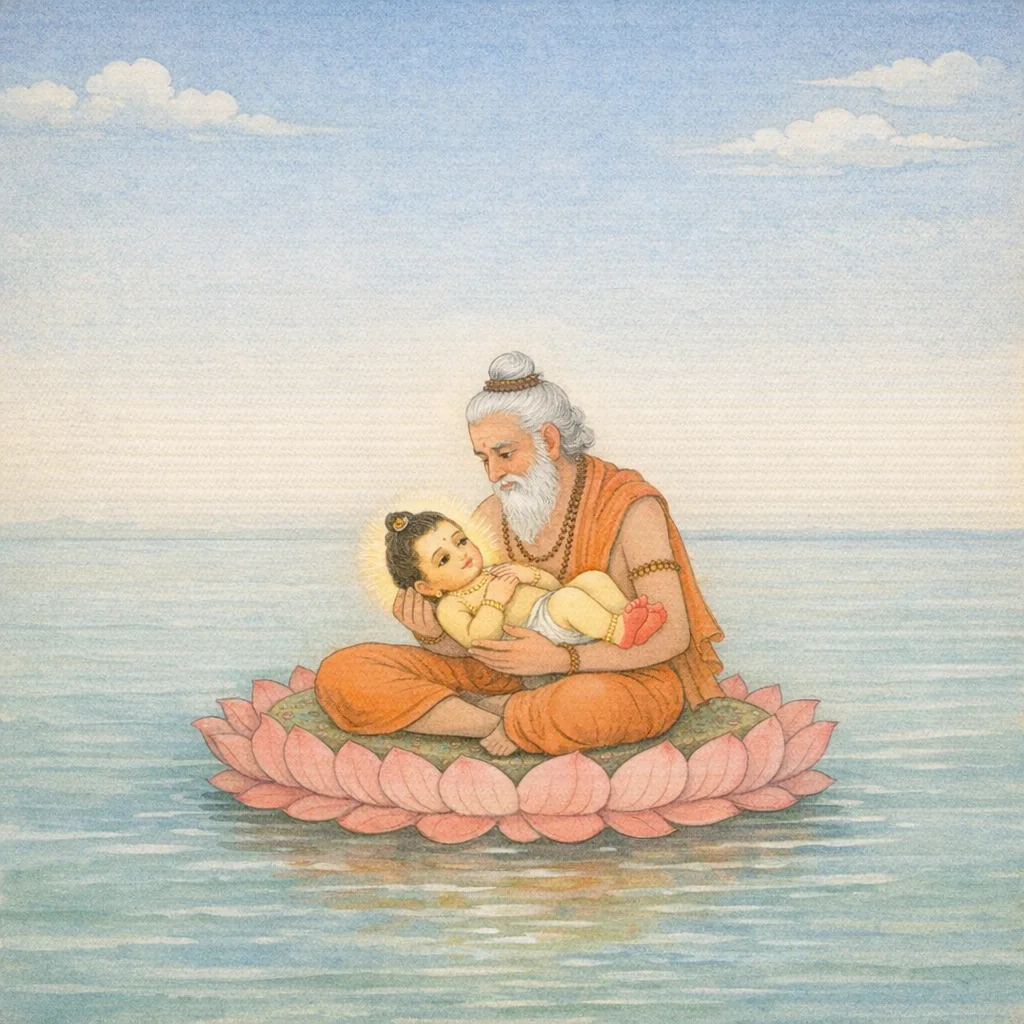
Chapter Arc: युधिष्ठिर के समक्ष महर्षि मार्कण्डेय काल-चक्र का द्वार खोलते हैं—चारों युगों की वर्ष-संख्या, ब्रह्मा के दिन-रात का मान, और वह अद्भुत तथ्य कि प्रलय के महाशून्य में भी एक साक्षी बना रहता है। → वर्णाश्रम-धर्म के ढहने का चित्र उभरता है: कलियुग में क्षत्रिय-वैश्य विकर्म में पड़ते हैं, अल्पायु और स्वल्पबल हो जाते हैं; ब्राह्मण बाह्य वेश से मुनि-सा कपट धारण कर जीविका के लिए अधर्म का सहारा लेते हैं। समाज का ताना-बाना उलटता जाता है और नैतिक दिशा धुँधली पड़ती जाती है। → प्रलय का दृश्य: जब लोक देव-दानव-समेत शून्य हो जाते हैं, तब भी मार्कण्डेय का दीर्घजीवी अस्तित्व बना रहता है—और वे उस परम रहस्य के निकट पहुँचते हैं जहाँ ब्रह्मा के दिन-रात में समस्त विश्व का परिवर्तन होता है। इस विराट विनाश के बीच एक दिव्य बालक का दर्शन होता है—लाल-लाल तलवों और कोमल अँगुलियों वाला—जिसे मार्कण्डेय श्रद्धा से मस्तक पर उठाकर प्रणाम करते हैं। → महर्षि काल-मान (युग, सहस्रयुग, ब्राह्म-अहः) का विधान स्थापित करते हैं और कलियुग के लक्षणों द्वारा यह बोध देते हैं कि धर्म का क्षय भी नियति के चक्र में आता है; फिर भी साक्षी-चेतना और परम सत्ता का संकेत प्रलय में भी बना रहता है। → दिव्य बालक का रहस्य—वह कौन है और प्रलय के पार किस सत्य की ओर संकेत करता है—अगले प्रसंग की ओर कथा को धकेल देता है।
Shlokas
Verse 1
हि >> आय न हुक है 7 अष्टा शीर्त्याधिकशततमोब् ध्याय: चारों युगोंकी वर्ष-संख्या एवं कलियुगके प्रभावका वर्णन, प्रलयकालका दृश्य और मार्कण्डेयजीको ४ (02०8 कुन्दजीके दर्शन, मार्कण्डेयजीका भगवान्के उदरमें प्रवेश कर ब्रह्माण्डदर्शन करना और फिर बाहर निकलकर उनसे वार्तालाप करना वैशम्पायन उवाच ततः स पुनरेवाथ मार्कण्डेयं यशस्विनम् । पप्रच्छ विनयोपेतो धर्मराजो युधिषिर:,वैशम्पायनजी कहते हैं--जनमेजय! तदनन्तर विनयशील धर्मराज युधिष्ठिरने यशस्वी मार्कण्डेय मुनिसे पुनः इस प्रकार प्रश्न किया--
Vaiśampāyana said: Then, once again, King Yudhiṣṭhira—renowned as the upholder of dharma and marked by humility—respectfully questioned the illustrious sage Mārkaṇḍeya.
Verse 2
नैके युगसहस्रान्तास्त्वया दृष्टा महामुने । न चापीह सम: कश्रिदायुष्मान् दृश्यते तव,“महामुने! आपने हजार-हजार युगोंके अन्तमें होनेवाले अनेक महाप्रलयके दृश्य देखे हैं। इस संसारमें आपके समान बड़ी आयुवाला दूसरा कोई पुरुष नहीं दिखायी देता
“O great sage, you have witnessed many mighty dissolutions of the world that come at the close of thousands upon thousands of ages. And in this world none is seen who equals you in longevity.”
Verse 3
वर्जयित्वा महात्मानं ब्रह्माणं परमेषछ्ठिनम् । न ते$स्ति सदृश: ककश्रिदायुषा ब्रह्मवित्तम,ब्रह्मवेत्ताओंमें श्रेष्ठ महर्षे! परमेष्ठी महात्मा ब्रह्माजीको छोड़कर दूसरा कोई आपके समान दीर्घायु नहीं है
“Setting aside the great-souled Brahmā, the Supreme Ordainer (Parameṣṭhin), there is no one equal to you in longevity, O best of knowers of Brahman.”
Verse 4
अनन्तरिक्षे लोके5स्मिन् देवदानववर्जिते । त्वमेव प्रलये विप्र ब्रह्माणमुपतिष्ठसे,ब्रह्म! जब यह संसार देवता, दानव तथा अन्तरिक्ष आदि लोकोंसे शून्य हो जाता है उस प्रलयकालमें केवल आप ही ब्रह्माजीके पास रहकर उनकी उपासना करते हैं
“O brāhmaṇa, when at the time of cosmic dissolution this world—including the mid-region—stands emptied of gods and demons, you alone remain, attending upon Brahmā in reverent service.”
Verse 5
प्रलये चापि निर्वत्ति प्रबुद्धे च पितामहे । त्वमेक: सृज्यमानानि भूतानीह प्रपश्यसि,ब्रह्मर्ष! फिर प्रलयकाल व्यतीत होनेपर जब पितामह ब्रह्मा जागते हैं, तब सम्पूर्ण दिशाओंमें वायुको फैलाकर उसके द्वारा समस्त जलराशिको इधर-उधर छितराकर (सूखे स्थानोंमें) ब्रह्माजीके द्वारा जो जरायुज, अण्डज, स्वेदज और उद्धिज्ज नामक चार प्रकारके प्राणी रचे जाते हैं, उन्हें एकमात्र आप ही (सबसे पहले) अच्छी तरह देख पाते हैं
Vaiśampāyana said: “Even at the time of dissolution, and again when creation resumes—when the Grandsire Brahmā awakens—you alone, O brahmarṣi, behold here the beings as they are being brought forth.”
Verse 6
चतुर्विधानि विप्रर्षे यथावत् परमेछ्िना । वायुभूता दिश: कृत्वा विक्षिप्यापस्ततस्तत:,ब्रह्मर्ष! फिर प्रलयकाल व्यतीत होनेपर जब पितामह ब्रह्मा जागते हैं, तब सम्पूर्ण दिशाओंमें वायुको फैलाकर उसके द्वारा समस्त जलराशिको इधर-उधर छितराकर (सूखे स्थानोंमें) ब्रह्माजीके द्वारा जो जरायुज, अण्डज, स्वेदज और उद्धिज्ज नामक चार प्रकारके प्राणी रचे जाते हैं, उन्हें एकमात्र आप ही (सबसे पहले) अच्छी तरह देख पाते हैं
Vaiśampāyana said: “O best of Brahmin seers, when the Creator (Parameṣṭhin), after the time of dissolution has passed, awakens as Grandfather Brahmā, he spreads the winds through all the directions and, by that wind, scatters the waters here and there, leaving dry spaces. Then he brings forth the four classes of living beings—those born from the womb, from eggs, from moisture/heat, and from sprouting. Of these first creations, you alone are able to behold them clearly at the very beginning.”
Verse 7
त्वया लोकगुरु: साक्षात् सर्वलोकपितामह: । आराधितो द्विजश्रेष्ठ तत्परेण समाधिना,द्विजश्रेष्ठी आपने तत्परतापूर्वक चित्तवृत्तियोंका निरोध करके सम्पूर्ण लोकोंके पितामह साक्षात् लोकगुरु ब्रह्माजीकी आराधना की है। विप्रवर! आपने अनेक बार इस जगत्की प्रारम्भिक सृष्टिको प्रत्यक्ष किया है और घोर तपस्याद्वारा (मरीचि आदि) प्रजापतियोंको भी जीत लिया है
Vaiśaṃpāyana said: “O best of Brahmins, you have worshipped and propitiated Brahmā himself—the manifest Teacher of the worlds and the Grandfather of all beings—by a samādhi wholly intent on Him. Through such single-minded inner restraint you have gained the highest divine favor.”
Verse 8
स्वप्रमाणमथो विप्र त्वया कृतमनेकश: । घोरेणाविश्य तपसा वेधसो निर्जितास्त्वया,द्विजश्रेष्ठी आपने तत्परतापूर्वक चित्तवृत्तियोंका निरोध करके सम्पूर्ण लोकोंके पितामह साक्षात् लोकगुरु ब्रह्माजीकी आराधना की है। विप्रवर! आपने अनेक बार इस जगत्की प्रारम्भिक सृष्टिको प्रत्यक्ष किया है और घोर तपस्याद्वारा (मरीचि आदि) प्रजापतियोंको भी जीत लिया है
Vaiśampāyana said: “O brāhmaṇa, you yourself are the proof of what has been accomplished—again and again—by you. Entering into terrible austerity, you have conquered even the ‘Creator’ powers (the Prajāpatis) through your tapas.”
Verse 9
नारायणाड्कप्रख्यस्त्वं साम्परायेडतिपठ्यसे । भगवाननेकश: कृत्वा त्वया विष्णोश्व विश्वकृत्,आप भगवान् नारायणके समीप रहनेवाले भक्तोंमें सबसे श्रेष्ठ हैं। परलोकमें आपकी महिमाका सर्वत्र गान होता है। आपने पहले स्वेच्छासे प्रकट होनेवाले सर्वव्यापक ब्रह्मकी उपलब्धिके स्थानभूत हृदयकमलकी कर्णिकाका (योगकी कलासे) अलौकिक उद्घाटन कर वैराग्य और अभ्याससे प्राप्त हुई दिव्य दृष्टिद्वारा विश्वरचयिता भगवान्का अनेक बार साक्षात्कार किया है
Vaiśampāyana said: “You are celebrated as one who is like Nārāyaṇa himself, and in the world beyond your glory is recited everywhere. By your own spiritual discipline you have, again and again, beheld the Lord Viṣṇu—the Maker of the universe—having opened (through yogic power) the wondrous inner lotus of the heart, and with the divine vision gained through detachment and sustained practice.”
Verse 10
कर्णिकोद्धरणं दिव्यं ब्रह्यण: कामरूपिण: । रत्नालंकारयोगाशभ्यां दृग्भ्यां दुष्टस्त्वया पुरा,आप भगवान् नारायणके समीप रहनेवाले भक्तोंमें सबसे श्रेष्ठ हैं। परलोकमें आपकी महिमाका सर्वत्र गान होता है। आपने पहले स्वेच्छासे प्रकट होनेवाले सर्वव्यापक ब्रह्मकी उपलब्धिके स्थानभूत हृदयकमलकी कर्णिकाका (योगकी कलासे) अलौकिक उद्घाटन कर वैराग्य और अभ्याससे प्राप्त हुई दिव्य दृष्टिद्वारा विश्वरचयिता भगवान्का अनेक बार साक्षात्कार किया है
Vaiśampāyana said: “Formerly you beheld, with divine vision born of disciplined practice and inner detachment, the wondrous ‘unfolding’ of the heart-lotus’ pericarp—an experience that reveals the all-pervading Brahman who assumes forms at will, the cosmic source adorned with radiant splendor. Thus your devotion and yogic attainment have made you foremost among those who dwell near Nārāyaṇa, and your glory is celebrated in the worlds beyond.”
Verse 11
तस्मात् तवान्तको मृत्युर्जरा वा देहनाशिनी । नत्वां विशति विप्रर्षे प्रसादात् परमेछ्चिन:,इसीलिये सबको मारनेवाली मृत्यु तथा शरीरको जर्जर बना देनेवाली जरा आपका स्पर्श नहीं करती है। ब्रह्मर्ष! इसमें भगवान् परमेष्ठीका कृपाप्रसाद ही कारण है
Therefore, O best of seers among the Brahmins, neither Death—the ender of all—nor old age, which wastes away the body, can touch you. This freedom from decay and mortality arises from the gracious favor of Parameṣṭhī (Brahmā).
Verse 12
यदा नैवं रविनग्निर्न वायुर्न च चन्द्रमा: । नैवान्तरिक्ष नैवोर्वी शेष भवति किंचन,(महाप्रलयके समय) जब सूर्य, अग्नि, वायु, चन्द्रमा, अन्तरिक्ष और पृथ्वी आदिमेंसे कोई भी शेष नहीं रह जाता, समस्त चराचर जगत् उस एकार्णवके जलमें डूबकर अदृश्य हो जाता है, देवता और असुर नष्ट हो जाते हैं तथा बड़े-बड़े नागोंका संहार हो जाता है, उस समय कमल और उत्पलमें निवास तथा शयन करनेवाले सर्वभूतेश्वर अमितात्मा ब्रह्माजीके पास रहकर केवल आप ही उनकी उपासना करते हैं
Vaiśampāyana said: When, at the time of the great dissolution, neither the sun nor fire remains, neither the wind nor even the moon; when neither the mid-space nor the earth is left—nothing at all survives—then all moving and unmoving beings are submerged in the single cosmic ocean and vanish from sight. Gods and asuras perish, and even the mighty nāgas are destroyed. At that time, the Lord of all beings, of immeasurable self, who abides and rests upon the lotus and the water-lily, remains near Brahmā, and you alone continue to worship him.
Verse 13
तस्मिन्नेकार्णवे लोके नष्टे स्थावरजड़मे । नष्टे देवासुरगणे समुत्सन्नमहोरगे,(महाप्रलयके समय) जब सूर्य, अग्नि, वायु, चन्द्रमा, अन्तरिक्ष और पृथ्वी आदिमेंसे कोई भी शेष नहीं रह जाता, समस्त चराचर जगत् उस एकार्णवके जलमें डूबकर अदृश्य हो जाता है, देवता और असुर नष्ट हो जाते हैं तथा बड़े-बड़े नागोंका संहार हो जाता है, उस समय कमल और उत्पलमें निवास तथा शयन करनेवाले सर्वभूतेश्वर अमितात्मा ब्रह्माजीके पास रहकर केवल आप ही उनकी उपासना करते हैं
Vaiśampāyana said: When the world has become a single ocean and all that is fixed and inert has perished—when the hosts of gods and asuras are destroyed and even the mighty serpents are wiped out—then, in that great dissolution, nothing remains of sun, fire, wind, moon, sky, or earth. All moving and unmoving beings sink into that one flood and vanish from sight. At that time, the Lord of all beings, the immeasurable-souled Brahmā, abides; and only the devoted worship of him endures.
Verse 14
शयानममितात्मानं पद्मोत्पलनिकेतनम् | त्वमेक: सर्वभूतेशं ब्रह्माणमुपतिष्ठसि,(महाप्रलयके समय) जब सूर्य, अग्नि, वायु, चन्द्रमा, अन्तरिक्ष और पृथ्वी आदिमेंसे कोई भी शेष नहीं रह जाता, समस्त चराचर जगत् उस एकार्णवके जलमें डूबकर अदृश्य हो जाता है, देवता और असुर नष्ट हो जाते हैं तथा बड़े-बड़े नागोंका संहार हो जाता है, उस समय कमल और उत्पलमें निवास तथा शयन करनेवाले सर्वभूतेश्वर अमितात्मा ब्रह्माजीके पास रहकर केवल आप ही उनकी उपासना करते हैं
Vaiśampāyana said: “At the time of the great dissolution, when sun, fire, wind, moon, the sky, and even the earth no longer remain, and the entire moving and unmoving world sinks into the single cosmic ocean and disappears—when gods and asuras perish and even mighty serpents are destroyed—then, while the Lord of all beings, Brahmā of immeasurable spirit, lies resting in a lotus-and-waterlily abode, you alone remain near him, standing in attendance and worship.”
Verse 15
एतत् प्रत्यक्षत: सर्व पूर्व वृत्तं द्विजोत्तम । तस्मादिच्छाम्यहं श्रोतुं सर्वहेत्वात्मिकां कथाम्,द्विजोत्तम! यह सारा पुरातन इतिहास आपका प्रत्यक्ष देखा हुआ है। इसलिये मैं आपके मुखसे सबके हेतुभूत कालका निरूपण करनेवाली कथा सुनना चाहता हूँ
Vaiśaṃpāyana said: “O best of the twice-born sages, all this ancient account is known to you by direct experience. Therefore I wish to hear from your mouth the narrative that explains the underlying causes—the time and conditions that became the reasons for everything.”
Verse 16
अनुभूतं हि बहुशस्त्वयैकेन द्विजोत्तम | न ते<स्त्यविदितं किंचित् सर्वलोकेषु नित्यदा,विप्रवर! केवल आपने ही अनेक कल्पोंकी श्रेष्ठ रचनाका बहुत बार अनुभव किया है। सम्पूर्ण लोकोंमें कभी कोई ऐसी वस्तु नहीं है, जो आपको ज्ञात न हो'
Vaiśampāyana said: “O best of twice-born, you alone have repeatedly witnessed and experienced much across many ages. There is nothing anywhere in all the worlds—at any time—that remains unknown to you, O foremost of brāhmaṇas.”
Verse 17
मार्कण्डेय उदाच हन्त ते वर्णयिष्यामि नमस्कृत्वा स्वयम्भुवे । पुरुषाय पुराणाय शाश्वतायाव्ययाय च
Mārkaṇḍeya said: “Very well—listen; I shall describe it to you. Having first bowed in reverence to the Self-born Lord, to the Primeval Person—eternal and undecaying—I will begin.”
Verse 18
अव्यक्ताय सुसूक्ष्माय निर्गुणाय गुणात्मने । स एष पुरुषव्याघत्र पीतवासा जनार्दन:
Vaiśampāyana said: “To the Unmanifest, the exceedingly subtle, the attributeless yet the very ground of all attributes—this is that Janārdana, clad in yellow garments, O tiger among men.”
Verse 19
एष कर्ता विकर्ता च भूतात्मा भूतकृत् प्रभु: । अचिन्त्यं महदाश्चर्य पवित्रमिति चोच्यते
Vaiśampāyana said: “He is the doer and also the disposer (who alters and ordains outcomes); the inner Self of all beings, the maker of beings, the sovereign Lord. He is spoken of as inconceivable, supremely wondrous, and purifying.”
Verse 20
मार्कण्डेयजी बोले--राजन! मैं स्वयं प्रकट होनेवाले सनातन, अविनाशी, अव्यक्त, सूक्ष्म, निर्गुण एवं गुणस्वरूप पुराणपुरुषको नमस्कार करके तुम्हें वह कथा अभी सुनाता हूँ। पुरुषसिंह! ये जो हमलोगोंके पास बैठे हुए पीताम्बरधारी भगवान् जनार्दन हैं, ये ही संसारकी सृष्टि और संहार करनेवाले हैं। ये ही भगवान् समस्त प्राणियोंके अन्तर्यामी आत्मा और उनके रचयिता हैं। ये पवित्र, अचिन्त्य एवं महान् आश्वर्यमय तत्त्व कहे जाते हैं ।। १७ -7१९ || अनादिनिधनं भूत॑ विश्वमव्ययमक्षयम् | एष कर्ता न क्रियते कारणं चापि पौरुषे,इनका न आदि है, न अन्त। ये सर्वभूतस्वरूप, अव्यय और अक्षय हैं। ये ही सबके कर्ता हैं, इनका कोई कर्ता नहीं है। पुरुषार्थकी प्राप्तिमें भी ये ही कारण हैं
Vaiśampāyana said: “That Being is without beginning and without end—the universe itself, imperishable and undecaying. He alone is the doer; no other maker makes Him. And even in the attainment of human aims (puruṣārthas), He is the decisive cause.”
Verse 21
यद्येष पुरुषो वेद वेदा अपि न त॑ विदुः । सर्वमाश्नर्यमेवैतन्निवृत्तं राजसत्तम
Vaiśampāyana said: “If this man truly knows (the truth), then even the Vedas do not ‘know’ him—so subtle and beyond ordinary reach is his state. All this is indeed wondrous, O best of kings, for he has turned back from worldly involvement and stands withdrawn (from desire and action).”
Verse 22
चत्वार्याहु: सहस्राणि वर्षाणां तत् कृतं युगम्
Vaiśaṃpāyana said: “They declare that four thousand years constitute that Kṛta Yuga.”
Verse 23
तस्य तावच्छती संध्या संध्यांशक्ष तथाविध: । चार हजार दिव्य वर्षोका एक सत्ययुग बताया गया है, उतने ही सौ वर्ष उसकी संध्या और संध्यांशके होते हैं (इस प्रकार कुल अड़तालीस सौ दिव्य वर्ष सत्ययुगके हैं) ।। २२३ || त्रीणि वर्षसहस्राणि त्रेतायुगमिहोच्यते
Vaiśaṃpāyana said: “The twilight (sandhyā) of that age lasts for a hundred (divine) years, and its concluding twilight (sandhyāṃśa) is of the same measure. Thus, four thousand divine years are declared to constitute one Satya Yuga, with an additional hundred divine years each for its opening and closing junctions—making a total of forty-eight hundred divine years for the Satya Yuga. Thereafter, three thousand divine years are here stated to be the duration of the Tretā Yuga.”
Verse 24
तथा वर्षसहसे द्वे द्वापरं परिमाणत:
Vaiśampāyana said: “Likewise, by measure, the Dvāpara age extends to two thousand years.”
Verse 25
सहस्रमेकं वर्षाणां तत: कलियुगं स्मृतम्,तदनन्तर एक हजार दिव्य वर्ष कलियुगका मान कहा गया है, सौ वर्ष उसकी संध्याके और सौ वर्ष संध्यांशके बताये गये हैं (इस प्रकार कलियुग बारह सौ दिव्य वर्षोंका होता है)। संध्या और संध्यांशका मान बराबर-बराबर ही समझो
Vaiśampāyana said: “After that, the Kali Yuga is remembered as lasting one thousand divine years. Then a hundred years are declared as its twilight (sandhyā), and another hundred as its after-twilight (sandhyāṁśa). Thus the Kali Yuga amounts to twelve hundred divine years in all; understand the measures of the twilight and after-twilight to be equal.”
Verse 26
तस्य वर्षशतं संधि: संध्यांशश्व॒ ततः परम् | संधिसंध्यांशयोस्तुल्यं प्रमाणमुपधारय,तदनन्तर एक हजार दिव्य वर्ष कलियुगका मान कहा गया है, सौ वर्ष उसकी संध्याके और सौ वर्ष संध्यांशके बताये गये हैं (इस प्रकार कलियुग बारह सौ दिव्य वर्षोंका होता है)। संध्या और संध्यांशका मान बराबर-बराबर ही समझो
Vaiśampāyana said: “For that age, the transitional period (sandhi) is a hundred years, and thereafter the concluding transitional portion (sandhyāṁśa) is also a hundred. Understand the measure of the sandhi and the sandhyāṁśa to be equal.”
Verse 27
क्षीणे कलियुगे चैव प्रवर्तेत कृतं युगम् । एषा द्वादशसाहस्त्री युगाख्या परिकीर्तिता,कलियुगके क्षीण हो जानेपर पुनः सत्ययुगका आरम्भ होता है। इस तरह बारह हजार दिव्य वर्षोकी एक चतुर्युगी बतायी गयी है
Vaiśampāyana said: “When the Kali Yuga has run its course and is exhausted, the Kṛta (Satya) Yuga begins again. Thus is proclaimed the cycle of the four ages, known as the ‘twelve-thousand’ (divine-year) yuga.”
Verse 28
एतत् सहस्रपर्यन्तमहो ब्राह्ममुदाह्नतम् । विश्व हि ब्रह्मभवने सर्वत: परिवर्त्तते
Vaiśampāyana said: “Thus has this sublime, Brahma-related account been declared, extending up to a thousand (in measure/number). For indeed the whole universe, within the abode of Brahman, turns and cycles on every side.”
Verse 29
अल्पावशिष्टे तु तदा चुगान्ते भरतर्षभ
Vaiśampāyana said: “But when only a little time remained, at the close of the age, O bull among the Bharatas,”
Verse 30
सहस्रान्ते नरा: सर्वे प्रायशो5नृतवादिन: । यज्ञप्रतिनिधि: पार्थ दानप्रतिनिधिस्तथा
Vaiśampāyana said: “At the close of a thousand years, nearly all men tend to become speakers of untruth. In such a time, O Pārtha, sacrifice itself becomes a mere substitute, and so too does charity become only a substitute.”
Verse 31
व्रतप्रतिनिधिश्वैव तस्मिन् काले प्रवर्तते । भरतश्रेष्ठ सहस्र युगकी समाप्तिमें जब थोड़ा-सा ही समय शेष रह जाता है, उस समय कलियुगके अन्तिम भागमें प्राय: सभी मनुष्य मिथ्यावादी हो जाते हैं। पार्थ! उस समय यज्ञ, दान और व्रतके प्रतिनिधि कर्म चालू हो जाते हैं अर्थात् यज्ञ, दान, तप मुख्य विधिसे न होकर गौण विधिसे नाममात्र होने लगते हैं || २९-३० $ ।। ब्राह्मणा: शूद्रकर्माणस्तथा शूद्रा धनार्जका:
Vaiśampāyana said: “At that time, the mere substitutes of religious observances come into vogue. Brāhmaṇas take up the occupations proper to Śūdras, and Śūdras become intent on the acquisition of wealth—signs of a late-age decline in truthfulness and in the full, principled performance of sacrifice, charity, and austerity.”
Verse 32
निवृत्तयज्ञस्वाध्याया दण्डाजिनविवर्जिता:,(सहस्र चतुर्युगके अन्तिम) कलियुगके अन्तिम भागमें ब्राह्मण यज्ञ, स्वाध्याय, दण्ड और मृगचर्मका त्याग कर देंगे और (भनक्ष्याभक्ष्यका विचार छोड़कर) सब कुछ खाने- पीनेवाले हो जायँगे। तात! ब्राह्मण तो जपसे दूर भागेंगे और शूद्र वैदिक मन्त्रोंके जपमें संलग्न होंगे
Vaiśampāyana said: “In the final portion of the Kali age—at the end of the long cycle of ages—Brahmins will abandon sacrifice and Vedic study; they will give up the staff and the antelope-skin that mark disciplined life. Casting aside discernment about what is fit or unfit to eat, they will become indiscriminate in food and drink. Dear one, Brahmins will flee from japa (sacred recitation), while Śūdras will be engaged in the recitation of Vedic mantras.”
Verse 33
ब्राह्मणा: सर्वभक्षाश्न॒ भविष्यन्ति कलौ युगे । अजपा ब्राह्मणास्तात शूद्रा जपपरायणा:,(सहस्र चतुर्युगके अन्तिम) कलियुगके अन्तिम भागमें ब्राह्मण यज्ञ, स्वाध्याय, दण्ड और मृगचर्मका त्याग कर देंगे और (भनक्ष्याभक्ष्यका विचार छोड़कर) सब कुछ खाने- पीनेवाले हो जायँगे। तात! ब्राह्मण तो जपसे दूर भागेंगे और शूद्र वैदिक मन्त्रोंके जपमें संलग्न होंगे
Vaiśampāyana said: “In the Kali age, brahmins will become indiscriminate eaters, consuming whatever is available. O dear one, brahmins will abandon the discipline of sacred recitation, while śūdras will become devoted to mantra-japa.”
Verse 34
विपरीते तदा लोके पूर्वरूपं क्षयस्य तत् । बहवो म्लेच्छराजान: पृथिव्यां मनुजाधिप,नरेश्वर! इस प्रकार जब लोगोंके विचार और व्यवहार विपरीत हो जाते हैं, तब प्रलयका पूर्वरूप आरम्भ हो जाता है। उस समय इस पृथ्वीपर बहुत-से म्लेच्छ राजा राज्य करने लगते हैं
Vaiśampāyana said: When the world’s outlook and conduct become inverted—when people turn away from right order—that itself is the fore-sign of destruction. At such a time, O lord of men, many mleccha kings come to rule upon the earth.
Verse 35
मृषानुशासिन: पापा मृषावादपरायणा: । आन्ध्रा: शका: पुलिन्दाश्न यवनाश्न नराधिपा:,छलसे शासन करनेवाले, पापी और असत्यवादी आन्ध्र, शक, पुलिन्द, यवन, काम्बोज, बाह्लीक तथा शौर्यसम्पन्न आभीर इस देशके राजा होंगे। नरश्रेष्ठी उस समय कोई ब्राह्मण अपने धर्मके अनुसार जीविका चलानेवाला न होगा
Vaiśampāyana said: “Sinful rulers will arise, governing by deceit and devoted to falsehood. The kings will be Andhras, Śakas, Pulindas, and Yavanas.”
Verse 36
काम्बोजा बाह्लिका: शूरास्तथा5<5भीरा नरोत्तम | न तदा ब्राह्मण: कश्रनित् स्वधर्ममुपजीवति,छलसे शासन करनेवाले, पापी और असत्यवादी आन्ध्र, शक, पुलिन्द, यवन, काम्बोज, बाह्लीक तथा शौर्यसम्पन्न आभीर इस देशके राजा होंगे। नरश्रेष्ठी उस समय कोई ब्राह्मण अपने धर्मके अनुसार जीविका चलानेवाला न होगा
Vaiśampāyana said: “O best of men, in that time the Kāmbojas and Bāhlīkas, and likewise the valiant Ābhīras, will hold power. Then no Brāhmaṇa at all will be able to sustain himself by his own dharma.”
Verse 37
क्षत्रियाश्षापि वैश्याश्ष विकर्मस्था नराधिप । अल्पायुष: स्वल्पबला: स्वल्पवीर्यपराक्रमा:,नरेश्वर! क्षत्रिय और वैश्य भी अपना-अपना धर्म छोड़कर दूसरे वर्णोके कर्म करने लगेंगे। सबकी आयु कम होगी, सबके बल, वीर्य और पराक्रम घट जायँगे
Vaiśampāyana said: “O king, even the Kṣatriyas and the Vaiśyas will abandon their own ordained duties and take up the works of other social orders. As a consequence, people will become short-lived; their strength will diminish, and their vitality and heroic prowess will decline.”
Verse 38
अल्पसाराल्पदेहाश्व॒ तथा सत्याल्पभाषिण: । बहुशून्या जनपदा मृगव्यालावृता दिश:,मनुष्य नाटे कदके होंगे। उनकी शरीरिक शक्ति बहुत कम हो जायगी और उनकी बातोंमें सत्यका अंश बहुत कम होगा। बहुधा सारे जनपद जनशून्य होंगे। सम्पूर्ण दिशाएँ पशुओं और सर्पोसे भरी होंगी। युगान्तकाल उपस्थित होनेपर अधिकांश मनुष्य (अनुभव न होते हुए भी) वृथा ही ब्रह्मज्ञानकी बातें कहेंगे। शूद्र द्विजातियोंको भो (ऐ) कहकर पुकारेंगे और ब्राह्मणलोग शूट्रोंको आर्य अर्थात् आप कहकर सम्बोधन करेंगे
Vaiśampāyana said: “People will become of little substance and of feeble bodies, and they will speak with only a small measure of truth. Many regions will be left largely deserted, and all directions will be overrun by wild beasts and predators.”
Verse 39
युगान्ते समनुप्राप्ते वृथा च ब्रह्मवादिन: । भोवादिनस्तथा शाद्रा ब्राह्मणाश्चार्यवादिन:,मनुष्य नाटे कदके होंगे। उनकी शरीरिक शक्ति बहुत कम हो जायगी और उनकी बातोंमें सत्यका अंश बहुत कम होगा। बहुधा सारे जनपद जनशून्य होंगे। सम्पूर्ण दिशाएँ पशुओं और सर्पोसे भरी होंगी। युगान्तकाल उपस्थित होनेपर अधिकांश मनुष्य (अनुभव न होते हुए भी) वृथा ही ब्रह्मज्ञानकी बातें कहेंगे। शूद्र द्विजातियोंको भो (ऐ) कहकर पुकारेंगे और ब्राह्मणलोग शूट्रोंको आर्य अर्थात् आप कहकर सम्बोधन करेंगे
Vaiśampāyana said: “When the end of the age draws near, many will speak of Brahman in vain—mere talk without realization. Śūdras will address the twice-born with the blunt ‘bho!’ and brāhmaṇas, in turn, will address śūdras with the honorific ‘ārya’ (‘sir’).”
Verse 40
युगान्ते मनुजव्याप्र भवन्ति बहुजन्तवः । न तथा घ्राणयुक्ताश्न सर्वगन्धा विशाम्पते,पुरुषसिंह राजन! युगान्तकालमें बहुतसे जीव-जन्तु उत्पन्न हो जायँगे। सब प्रकारके सुगन्धित पदार्थ नासिकाको उतने गन्धयुक्त नहीं प्रतीत होंगे
Vaiśampāyana said: “At the end of an age (yuga), many kinds of living creatures come into being, and even those endowed with the sense of smell do not perceive fragrances as they truly are. O lord of the people, O lion among men, O king—then all scents lose their full potency.”
Verse 41
रसाश्च मनुजव्यात्र न तथा स्वादुयोगिन: । बहुप्रजा हस्वदेहा: शीलाचारविवर्जिता: । मुखे भगा: स्त्रियो राजन् भविष्यन्ति युगक्षये,नरव्याप्र! इसी प्रकार रसीले पदार्थभी जैसे चाहिये वैसे स्वादिष्ट नहीं होंगे। राजन्! उस समयकी स्त्रियाँ नाटे कदकी और बहुत संतान (बच्चा) पैदा करनेवाली होंगी। उनमें शील और सदाचारका अभाव होगा। युगान्तकालमें स्त्रियाँ मुखसे भगसम्बन्धी यानी व्यभिचारकी ही बातें करनेवाली होंगी। राजन! युगान्त-कालमें हर देशके लोग अन्न बेचनेवाले होंगे। ब्राह्मण वेद बेचनेवाले तथा (प्रायः) स्त्रियाँ वेश्यावृत्तिको अपनानेवाली होंगी-
Vaiśampāyana said: “O tiger among men, even foods and juices will no longer possess the sweetness and wholesome savor they ought to have. At the end of the age, O king, women will be short in stature and bear many children, yet be devoid of modesty and good conduct. In that time of dissolution, women will speak openly and incessantly of sexual matters.”
Verse 42
अट्टशूला जनपदा: शिवशूलाश्षतुष्पथा: । केशशूला: स्त्रियो राजन् भविष्यन्ति युगक्षये,नरव्याप्र! इसी प्रकार रसीले पदार्थभी जैसे चाहिये वैसे स्वादिष्ट नहीं होंगे। राजन्! उस समयकी स्त्रियाँ नाटे कदकी और बहुत संतान (बच्चा) पैदा करनेवाली होंगी। उनमें शील और सदाचारका अभाव होगा। युगान्तकालमें स्त्रियाँ मुखसे भगसम्बन्धी यानी व्यभिचारकी ही बातें करनेवाली होंगी। राजन! युगान्त-कालमें हर देशके लोग अन्न बेचनेवाले होंगे। ब्राह्मण वेद बेचनेवाले तथा (प्रायः) स्त्रियाँ वेश्यावृत्तिको अपनानेवाली होंगी-
Vaiśampāyana said: “At the end of the age, O king—O tiger among men—whole realms will become as though pierced by sharp stakes; even the crossroads will be marked by ominous ‘Śiva-spears’. Women too will be ‘hair-stung’ and afflicted. Such are the grievous signs of the world’s moral collapse at the yuga’s close.”
Verse 43
अल्पक्षीरास्तथा गावो भविष्यन्ति जनाधिप । अल्पपुष्पफलाश्चापि पादपा बहुवायसा:,जनेश्वर! युगान्तकालमें गायोंके थनोंमें बहुत कम दूध होगा। वृक्षपर फल और फूल बहुत कम होंगे और उनपर (अच्छे पक्षियोंकी अपेक्षा) कौए ही अधिक बसेरे लेंगे। भूपाल! ब्राह्मणगलोग (लोभवश) ब्रह्महत्या-जैसे पापोंसे लिप्त और मिथ्यावादी नरेशोंसे ही दान- दक्षिणा लेंगे
Vaiśampāyana said: “O lord of men, in that time the cows will yield only scant milk. The trees too will bear few flowers and fruits, and they will be crowded more by crows than by auspicious birds. Thus, as the age declines, signs of prosperity and purity diminish, and what is base and inauspicious becomes predominant.”
Verse 44
ब्रह्मवध्यानुलिप्तानां तथा मिथ्याभिशंसिनाम् । नृपाणां पृथिवीपाल प्रतिगृह्नन्ति वै द्विजा:,जनेश्वर! युगान्तकालमें गायोंके थनोंमें बहुत कम दूध होगा। वृक्षपर फल और फूल बहुत कम होंगे और उनपर (अच्छे पक्षियोंकी अपेक्षा) कौए ही अधिक बसेरे लेंगे। भूपाल! ब्राह्मणगलोग (लोभवश) ब्रह्महत्या-जैसे पापोंसे लिप्त और मिथ्यावादी नरेशोंसे ही दान- दक्षिणा लेंगे
Vaiśampāyana said: “O protector of the earth, the Brahmins indeed accept gifts from kings who are stained with the taint of brahma-hatyā and who are slanderers, speaking falsely. This is a sign of the moral decline of the age: even those meant to uphold dharma become entangled in greed and compromise, and rulers of impure conduct still find religious sanction through patronage.”
Verse 45
लोभमोहपरीताश्च मिथ्याधर्मध्वजावृता: । भिक्षार्थ पृथिवीपाल चज्चूर्यन्ते द्विजैर्दिश:,राजन! वे ब्राह्मण लोभ और मोहमें फँसकर झूठे धर्मका ढोंग रचनेवाले होंगे, इतना ही नहीं, वे भिक्षाके लिये सारी दिशाओंके लोगोंको पीड़ित करते रहेंगे
Vaiśampāyana said: “O king, brahmins, overcome by greed and delusion and cloaked in the banner of false righteousness, will not merely beg for alms; in the name of seeking alms they will harass and oppress people in every direction.”
Verse 46
करभारभयाद् भीता गृहस्था: परिमोषका: | मुनिच्छञाकृतिच्छन्ना वाणिज्यमुपजीविन:
Vaiśampāyana said: “Frightened by the danger of having to bear heavy burdens, those robbers lived outwardly as householders. Disguised under the appearance of ascetics, they made their livelihood through trade—using respectable roles as a cover for theft.”
Verse 47
अर्थलोभान्नरव्याप्र तथा च ब्रह्म॒चारिण:
Vaiśampāyana said: “Driven by greed for wealth, people become busily engaged in worldly pursuits; likewise, even those who are vowed to celibate discipline (brahmacārins) may be drawn into such restless activity.”
Verse 48
आश्रमेषु वृथाचारा: पानपा गुरुतल्पगा: । इह लौकिकमीहन्ते मांसशोणितवर्धनम्
Vaiśampāyana said: “In hermitages there are those whose conduct is hollow—drinkers and violators of the guru’s bed. Here they pursue merely worldly ends, seeking the increase of flesh and blood.”
Verse 49
नरश्रेष्ठल धनके लोभसे ब्रह्मचारी भी आश्रमोंमें दम्भपूर्ण आचारको अपनायेंगे और मद्यपान करके गुरुपत्नीगमन करेंगे। लोग अपने शरीरके मांस और रक्त बढ़ानेवाले इहलौकिक कर्मांमें ही लगे रहेंगे ।। बहुपाषण्डसंकीर्णा: परान्नगुणवादिन: । आश्रमा मनुजव्यात्र भविष्यन्ति युगक्षये,नरश्रेष्ठ) युगान्तकालमें सभी आश्रम अनेक प्रकारके पाखण्डोंसे व्याप्त और दूसरोंसे मिले हुए भोजनका ही गुणगान करनेवाले होंगे
Vaiśampāyana said: “O tiger among men, at the end of the age the religious orders of life will be overrun by many kinds of heretical show and confusion. People will praise and chase after food obtained from others, and the disciplines of the āśramas will be hollowed out—so that outward marks replace inner restraint and dharma declines into appetite and hypocrisy.”
Verse 50
यर्थर्तुवर्षी भगवान् न तथा पाकशासन: । न चापि सर्वबीजानि सम्यगू रोहन्ति भारत,भगवान् इन्द्र भी ठीक वर्षाऋतुके समय जलकी वर्षा नहीं करेंगे। भारत! भूमिमें बोये हुए सभी बीज ठीकसे नहीं जमेंगे
Vaiśaṃpāyana said: “Just as the blessed Lord sends rain in its proper season, so too must Pākaśāsana (Indra) act in due order. If he does not pour down water at the right time, then, O Bhārata, even seeds sown in the earth will not sprout properly.”
Verse 51
हिंसाभिरामश्न जनस्तथा सम्पद्यते5शुचि: । अधर्मफलमत्यर्थ तदा भवति चानघ,कलियुगमें सब लोग हिंसामें ही सुख माननेवाले तथा अपवित्र रहेंगे। निष्पाप! उस समय अधर्मका फल बहुत अधिक मात्रामें मिलेगा
Vaiśampāyana said: “In the age of Kali, people will take delight in violence and thus become impure in conduct. O sinless one, at that time the consequences of unrighteousness will grow exceedingly great—its fruits will be abundant and overpowering.”
Verse 52
तदा च पृथिवीपाल यो भवेद् धर्मसंयुतः । अल्पायु: स हि मन्तव्यो न हि धर्मो5स्ति कश्नन,भूपाल! उस समय जो भी धर्ममें तत्पर रहेगा, उसकी आयु बहुत थोड़ी देखनेमें आयेगी; क्योंकि उस समय कोई भी धर्म टिक नहीं सकेगा
Vaiśampāyana said: “And then, O king, whoever among rulers remains steadfastly joined to dharma will be regarded as short-lived; for in that time no dharma at all will endure.”
Verse 53
भूयिष्ठं कूटमानैश्व पण्यं विक्रीणते जना: । वणिजकश्न नरव्यात्र बहुमाया भवन्त्युत,लोग बाजारमें झूठे माप-तौल बनाकर बहुत-सा माल बेचते रहेंगे। नरश्रेष्ठीी उस समयके बनिये भी बहुत माया जाननेवाले (धूर्त) होंगे
Vaiśampāyana said: “In that time, people will mostly sell their goods by using false weights and measures. And the merchants too, O best of men, will become full of tricks and deceit—skilled in many forms of fraud.”
Verse 54
धर्मिष्ठा: परिहीयन्ते पापीयान् वर्धते जन: । धर्मस्य बलहानि: स्यादधर्मश्ष बली तथा,धर्मात्मा पुरुष हानि उठाते दीखेंगे और बड़े-बड़े पापी लौकिक दृष्टिसे उन्नतिशील होंगे। धर्मका बल घटेगा और अधर्म बलवान् होगा
Vaiśaṃpāyana said: “Those who are most devoted to dharma come to be diminished and set aside, while people of greater sinfulness prosper and increase. The strength of dharma declines, and adharma, likewise, becomes powerful.”
Verse 55
अल्पायुषो दरिद्राश्न॒ धर्मिष्ठा मानवास्तथा । दीर्घायुष: समृद्धाश्व विधर्माणो युगक्षये,युगान्तकालमें धर्मिष्ठ मानव अल्पायु तथा दरिद्र देखे जायँगे और अधर्मी मनुष्य दीर्घायु तथा समृद्धिशाली देखे जायँगे
Vaiśampāyana said: At the end of the age (yuga), even those steadfast in dharma will be seen as short-lived and poor, while those who act against dharma will be seen as long-lived and prosperous.
Verse 56
नगराणां विहारेषु विधर्माणो युगक्षये । अधर्मिष्ठिरुपायैश्व प्रजा व्यवहरन्त्युत,युगान्तके समय नगरोंके उद्यानोंमें पापी पुरुष अड्डा जमायेंगे और पापपूर्ण उपायोंद्वारा प्रजाके साथ दुर्व्यवहार करेंगे
Vaiśampāyana said: “At the end of the age, in the pleasure-gardens of cities, men who have fallen away from dharma will gather and make their haunts there; and by wholly unrighteous stratagems they will mistreat the people.”
Verse 57
संचयेन तथाल्पेन भवन्त्याब्यमदान्विता: । धनं विश्वासतो न्यस्तं मिथो भूयिष्ठशो नरा:,राजन! थोड़ेसे धनका संग्रह हो जानेपर लोग धनाढ्यताके मदसे उन्मत्त हो उठेंगे। यदि किसीने विश्वास करके अपने धनको धरोहरके रूपमें रख दिया तो अधिकांश पापाचारी और निर्लज मनुष्य उस धरोहरको हड़प लेनेकी चेष्टा करेंगे और उससे साफ कह देंगे कि हमारे यहाँ तुम्हारा कुछ भी नहीं है
Vaiśaṃpāyana said: “O King, even a small accumulation of wealth makes people swell with the intoxication of affluence. And when money is entrusted in confidence as a deposit, most men—acting together—strive to seize it, brazenly denying, ‘You have nothing here.’”
Verse 58
हर्तु व्यवसिता राजन् पापाचारसमन्विता: । नैतदस्तीति मनुजा वर्तन्ते निरपत्रपा:,राजन! थोड़ेसे धनका संग्रह हो जानेपर लोग धनाढ्यताके मदसे उन्मत्त हो उठेंगे। यदि किसीने विश्वास करके अपने धनको धरोहरके रूपमें रख दिया तो अधिकांश पापाचारी और निर्लज मनुष्य उस धरोहरको हड़प लेनेकी चेष्टा करेंगे और उससे साफ कह देंगे कि हमारे यहाँ तुम्हारा कुछ भी नहीं है
Vaiśampāyana said: “O King, once they have resolved to seize it—steeped in sinful conduct—shameless men go so far as to declare, ‘This is not here at all.’ Thus, when a little wealth has been amassed, people become intoxicated with the pride of riches; and if someone, trusting them, deposits his property as a pledge or for safekeeping, many wicked and unblushing men will try to appropriate that deposit and bluntly deny any obligation.”
Verse 59
पुरुषादानि सत्त्वानि पक्षिणो5थ मृगास्तथा । नगराणां विहारेषु चैत्येष्वपि च शेरते,मनुष्यका मांस खानेवाले हिंसक जीव तथा पशु-पक्षी नागरिकोंके बगीचों और देवालयोंमें भी शयन करेंगे
Vaiśampāyana said: Creatures that prey upon men—birds as well as beasts—will lie down even in the pleasure-gardens of cities and in sacred shrines.
Verse 60
सप्तवर्षष्टवर्षाश्च स्त्रियों गर्भधरा नूप । दशद्वादशवर्षाणां पुंसां पुत्र: प्रजायते,राजन! युगान्तकालमें सात-आठ वर्षकी स्त्रियाँ गर्भ धारण करेंगी और दस-बारह वर्षकी अवस्थावाले पुरुषोंके भी पुत्र होंगे
Vaiśampāyana said: “O king, in that age of decline, even girls of seven or eight years will conceive, and even males of ten or twelve years will beget sons.”
Verse 61
भवन्ति षोडशे वर्षे नरा: पलितिनस्तथा । आयु:क्षयो मनुष्याणां क्षिप्रमेव प्रपद्यते,सोलहवें वर्षमें मनुष्योंक बाल पक जायँगे और उनकी आयु शीघ्र ही समाप्त हो जायगी
Vaiśampāyana said: “By the sixteenth year, men will already become grey-haired; and the span of human life will swiftly decline and come to an end.”
Verse 62
क्षीणायुषो महाराज तरुणा वृद्धशीलिन: । तरुणानां च यच्छीलं तद् वृद्धेषु प्रजायते,महाराज! उस समयके तरुणोंकी आयु क्षीण होगी और उनका शील-स्वभाव बूढ़ोंका- सा हो जायगा और तरुणोंका जो शील-स्वभाव होना चाहिये, वह बूढ़ोंमें प्रकट होगा
Vaiśampāyana said: “O great king, in that time the young will be short-lived and will bear the conduct and temperament of the aged; and the conduct that ought to belong to the young will instead arise among the old.”
Verse 63
विपरीतास्तदा नार्यो वज्चयित्वारहत: पतीन् | व्युच्चरन्त्यपि दुःशीला दासै: पशुभिरेव च,उस समयकी विपरीत स्वभाववाली स्त्रियाँ अपने योग्य पतियोंको भी धोखा देकर बुरे शील-स्वभावकी हो जायँगी और सेवकों तथा पशुओंके साथ भी व्यभिचार करेंगी
Vaiśampāyana said: “Then women of perverse nature will deceive even their worthy husbands and fall into evil conduct; and, being of corrupt character, they will stray even with servants and even with beasts.”
Verse 64
वीरपत्न्यस्तथा नार्य: संश्रयन्ति नरान् नृप । भर्तारमपि जीवन्तमन्यान् व्यभिचरन्त्युत,राजन! वीर पुरुषोंकी पत्नियाँ भी परपुरुषोंका आश्रय लेंगी और पतिके जीते हुए भी दूसरोंसे व्यभिचार करेंगी
Vaiśampāyana said: “O king, even the wives of valiant men—women who ought to be protected by honor—will seek the shelter of other men; and, even while their husbands are still alive, they will engage in adultery with others, O ruler.”
Verse 65
तस्मिन् युगसहस्रान्ते सम्प्राप्ते चायुष: क्षये । अनावृष्टिर्महाराज जायते बहुवार्षिकी,महाराज! इस प्रकार आयुको क्षीण करनेवाले सहस्र युगोंके अन्तिम भागकी समाप्ति होनेपर बहुत वर्षोतक वृष्टि बंद हो जाती है
Vaiśampāyana said: “O great king, when the close of a thousand yugas arrives and the span of life runs down toward its end, a prolonged drought arises—rains cease for many years.”
Verse 66
ततस्तान्यल्पसाराणि सत्त्वानि क्षुधितानि वै । प्रलयं यान्ति भूयिष्ठं पृथिव्यां पृथिवीपते,पृथ्वीपते! इससे भूतलके थोड़ी शक्तिवाले अधिकांश प्राणी भूखसे व्याकुल होकर मर जाते हैं
Vaiśampāyana said: “Then, O lord of the earth, those creatures of little strength—indeed, driven by hunger—mostly meet destruction upon the earth.”
Verse 67
ततो दिनकरेदीप्तै: सप्तभिर्मनुजाधिप । पीयते सलिल ॑ सर्व समुद्रेषु सरित्सु च,नरेश्वर! तदनन्तर प्रचण्ड तेजवाले सात सूर्य उदित होकर सरिताओं और समुद्रोंका सारा जल सोख लेते हैं
Vaiśampāyana said: “Then, O lord of men, by the blazing radiance of seven suns, all the water is drunk up—both in the oceans and in the rivers.”
Verse 68
यच्च काष्ठ॑ तृणं चापि शुष्कं चार्द्र च भारत । सर्व तद् भस्मसाद् भूत॑ दृश्यते भरतर्षभ,भरतकुलभूषण! उस समय जो भी तृण-काष्ठ अथवा सूखे-गीले पदार्थ होते हैं, वे सभी भस्मीभूत दिखायी देने लगते हैं
Vaiśampāyana said: “O Bhārata, whatever there is—wood and grass alike, whether dry or moist—everything is seen reduced to ash, O bull among the Bharatas.”
Verse 69
तत: संवर्तको वह्निवायुना सह भारत | लोकमाविशते पूर्वमादित्यैरुपशोषितम्,भारत! इसके बाद '“संवर्तक” नामकी प्रलयकालीन अग्नि वायुके साथ उन सम्पूर्ण लोकोंमें फैल जाती है, जहाँका जल पहले सात सूर्योंद्वारा सोख लिया गया है
Vaiśampāyana said: “Then, O Bhārata, the Saṁvartaka fire—accompanied by the wind—spreads into all the worlds, after their waters have first been dried up by the suns.”
Verse 70
ततः स पृथिवीं भिनत्त्वा प्रविश्य च रसातलम् । देवदानवयक्षाणां भयं जनयते महत्,तत्पश्चात् पृथ्वीका भेदन कर वह अग्नि रसातलतक पहुँच जाती है तथा देवता, दानव और यक्षोंके लिये महान् भय उपस्थित कर देती है
Then it cleaves the earth and enters Rasātala, arousing great fear among the gods, the Dānavas, and the Yakṣas.
Verse 71
निर्दहन् नागलोकं च यच्च किज्चित् क्षिताविह । अधस्तात् पृथिवीपाल सर्व नाशयते क्षणात्,राजन्! वह नागलोकको जलाती हुई इस पृथ्वीके नीचे जो कुछ भी है, उस सबको क्षणभरमें नष्ट कर देती है
Vaiśaṃpāyana said: “O king, scorching the realm of the Nāgas, that fire destroys in an instant everything that exists here upon the earth and also whatever lies beneath it.”
Verse 72
ततो योजनविंशानां सहस्राणि शतानि च । निर्दहत्यशिवो वायु: स च संवर्तकोडनल:,इसके बाद वह अमंगलकारी प्रचण्ड वायु और वह संवर्तक अग्नि बाईस हजार योजन तकके लोगोंको भस्म कर डालती है
Then an inauspicious, violent wind arose, and along with it the Saṁvartaka fire; together they scorched and reduced to ashes beings across a vast expanse—twenty-two thousand yojanas.
Verse 73
सदेवासुरगन्धर्व सयक्षोरगराक्षसम् । ततो दहति दीप्त: स सर्वमेव जगद् विभु:,इस प्रकार सर्वत्र फैली हुई वह प्रज्वलित अग्नि देवता, असुर, गन्धर्व, यक्ष, नाग तथा राक्षसोंसहित सम्पूर्ण विश्वको भस्म कर डालती है
Vaiśampāyana said: Then that blazing, all-pervading fire burns the entire world—together with the gods and asuras, the gandharvas, the yakṣas, the nāgas, and the rākṣasas.
Verse 74
ततो गजकुलप्रख्यास्तडिन्मालाविभूषिता: । उत्तिष्ठन्ति महामेघा नभस्यद्भुतदर्शना:,इसके बाद आकाशमें महान् मेघोंकी घोर घटा घिर आती है, जो अद्भुत दिखायी देता है। उनमेंसे प्रत्येक मेघ-समूह हाथियोंके झुंडकी भाँति विशालकाय और श्यामवर्ण तथा बिजलीकी मालाओंसे विभूषित होता है
Then, in the sky, wondrous to behold, vast storm-clouds rose up—huge like herds of elephants and adorned with garlands of lightning—forming a dark, awe-inspiring mass overhead.
Verse 75
केचिन्नीलोत्पलश्यामा: केचित् कुमुदसंनि भा: । केचित् किज्जल्कसंकाशा: केचित् पीता: पयोधरा:,कुछ बादल नील कमलक समान श्याम और कुछ कुमुद-कुसुमके समान सफेद होते हैं। कुछ जलधरोंकी कान्ति केसरोंके समान दिखायी देती है। कुछ मेघ हल्दीके सदृश पीले और कुछ कारण्डव पक्षीके समान दृष्टिगोचर होते हैं। कोई-कोई कमलदलके समान और कुछ हिंगुल-जैसे जान पड़ते हैं
Vaiśaṃpāyana said: “Some clouds appear dark like blue lotuses; some look white like the kumuda blossom. Some resemble the hue of pollen, while others—those bearers of water—seem yellow.”
Verse 76
केचिद्धारिद्रसंकाशा: कारण्डवनिभास्तथा । केचित् कमलपत्राभा: केचिद्धिड्डुलसप्रभा:,कुछ बादल नील कमलक समान श्याम और कुछ कुमुद-कुसुमके समान सफेद होते हैं। कुछ जलधरोंकी कान्ति केसरोंके समान दिखायी देती है। कुछ मेघ हल्दीके सदृश पीले और कुछ कारण्डव पक्षीके समान दृष्टिगोचर होते हैं। कोई-कोई कमलदलके समान और कुछ हिंगुल-जैसे जान पड़ते हैं
Vaiśaṃpāyana said: “Some were like the color of turmeric; some looked like kāraṇḍava birds. Some shone like lotus leaves, and some had the reddish glow of hiṅgula (vermilion).”
Verse 77
केचित् पुरवराकारा: केचिद् गजकुलोपमा: । केचिदञ्जनसंकाशा: केचिन्मकरसंनिभा:,कुछ श्रेष्ठ नगरोंके समान, कुछ हाथियोंके झुंड-जैसे, कुछ काजलके रंगवाले और कुछ मगरोंकी-सी आकृतिवाले होते हैं
Vaiśaṃpāyana said: “Some appeared like excellent cities in form, some like herds of elephants; some were dark as collyrium, and some resembled crocodiles in shape.”
Verse 78
विद्युन्मालापिनद्धाड: समुत्तिष्ठन्ति वै घना: । घोररूपा महाराज घोरस्वननिनादिता: । ततो जलधरा: सर्वे व्याप्रुवन्ति नभस्तलम्,वे सभी बादल विद्युन्मालाओंसे अलंकृत होकर घिर आते हैं। महाराज! भयंकर गर्जना करनेके कारण उनका स्वरूप बड़ा भयानक जान पढ़ता है। धीरे-धीरे वे सभी जलधर समूचे आकाशमण्डलको ढक लेते हैं
Vaiśaṃpāyana said: “O great king, clouds rise up, wreathed with garlands of lightning. Their appearance is dreadful, made more terrifying by their thunderous roar. Then all those rain-bearing clouds spread out and cover the whole expanse of the sky.”
Verse 79
तैरियं पृथिवी सर्वा सपर्वतवनाकरा । आपूर्यते महाराज सलिलौघपरिप्लुता,महाराज! उनके वर्षा करनेपर पर्वत, वन और खानोंसहित यह सारी पृथ्वी अगाध जलराशिमें ड्ूबकर सब ओरसे भर जाती है
Vaiśaṃpāyana said: “O great king, when they pour down rain, this entire earth—together with its mountains, forests, and mines—becomes flooded by surging masses of water and is filled on every side.”
Verse 80
ततस्ते जलदा घोरा राविण: पुरुषर्षभ । सर्वतः प्लावयन्त्याशु चोदिता: परमेछ्िना,पुरुषरत्न! तदनन्तर विधातासे प्रेरित हो गर्जन-तर्जन करनेवाले वे भयंकर मेघ शीघ्र सब ओर वर्षा करके सबको जलसे आप्लावित कर देते हैं
Then, O bull among men, those dreadful rain-clouds, roaring with thunder—set in motion by the Creator—quickly poured down rain on every side and flooded everything.
Verse 81
वर्षमाणा महत् तोयं पूरयन्तो वसुंधराम् । सुघोरमशिवं रौद्रं नाशयन्ति च पावकम्,महान् जल-समूहकी वर्षा करके वसुन्धराको जलमें डुबोनेवाले वे समस्त मेघ उस अत्यन्त घोर, अमंगलकारी और भयानक अग्निको बुझा देते हैं
Vaiśampāyana said: “Pouring down a vast mass of water and flooding the earth, those clouds extinguish the exceedingly dreadful fire—inauspicious and fierce—bringing its destructive blaze to an end.”
Verse 82
ततो द्वादशवर्षाणि पयोदास्त उपप्लवे । धाराभि: पूरयन्तो वै चोद्यमाना महात्मना,तदनन्तर प्रलयकालके वे पयोधर महात्मा ब्रह्माजीकी प्रेरणा पाकर पृथ्वीको परिपूर्ण करनेके लिये बारह वर्षोतक धारावाहिक वृष्टि करते हैं
Then, at the time of the great inundation, the rain-bearing clouds, urged on by the Great One, poured forth continuous streams for twelve years, filling the earth on every side.
Verse 83
ततः समुद्र: स्वां वेलामतिक्रामति भारत । पर्वताश्च विदीर्यन्ते मही चाप्सु निमज्जति,भारत! तदनन्तर समुद्र अपनी सीमाको लाँघ जाता है, पर्वत फट जाते और पृथ्वी पानीमें डूब जाती है
Vaiśaṃpāyana said: “Then, O Bhārata, the ocean oversteps its own shoreline; the mountains split asunder, and the earth itself sinks into the waters.”
Verse 84
सर्वतः सहसा भ्रान्तास्ते पयोदा नभस्तलम् । संवेष्टयित्वा नश्यन्ति वायुवेगपराहता:,तत्पश्चात् समस्त आकाशको घेरकर सब ओर फैले हुए वे मेघ वायुके प्रचण्ड वेगसे छिन्न-भिन्न होकर सहसा अदृश्य हो जाते हैं
Vaiśampāyana said: “Those clouds, suddenly driven into confusion on every side, envelop the whole expanse of the sky; then, struck and torn apart by the fierce rush of the wind, they swiftly vanish from sight.”
Verse 85
ततस्तं मारुतं घोरं स्वयम्भूमनुजाधिप । आदि: पद्मालयो देव: पीत्वा स्वपिति भारत,नरेश्वरर इसके बाद कमलमें निवास करनेवाले आदिदेव स्वयं ब्रह्माजी उस भयंकर वायुको पीकर सो जाते हैं
Vaiśampāyana said: “Then, O lord of men, that terrible wind was swallowed by the Self-born—the primordial deity who dwells in the lotus. Having drunk it in, Brahmā fell asleep, O Bhārata.”
Verse 86
तस्मिन्नेकार्णवे घोरे नष्टे स्थावरजड्रमे । नष्टे देवासुरगणे यक्षराक्षसवर्जिते,इस प्रकार चराचर प्राणियों, देवताओं तथा असुर आदिके नष्ट हो जानेपर यक्ष, राक्षस, मनुष्य, हिंसक जीव, वृक्ष तथा अन्तरिक्षसे शून्य उस घोर एकार्णवमय जगतमें मैं अकेला ही इधर-उधर मारा-मारा फिरता हूँ
Vaiśampāyana said: “In that dreadful single ocean of dissolution—when the immovable and the moving creation had perished, when the hosts of gods and asuras had vanished, and when even yakṣas and rākṣasas were absent—there remained only that terrifying, empty expanse.”
Verse 87
निर्मनुष्ये महीपाल निःश्वापदमहीरुहे । अनन्तरिक्षे लोके5स्मिन् भ्रमाम्पेकोडहमाहत:,इस प्रकार चराचर प्राणियों, देवताओं तथा असुर आदिके नष्ट हो जानेपर यक्ष, राक्षस, मनुष्य, हिंसक जीव, वृक्ष तथा अन्तरिक्षसे शून्य उस घोर एकार्णवमय जगतमें मैं अकेला ही इधर-उधर मारा-मारा फिरता हूँ
Vaiśampāyana said: “O king, in this world—devoid of human beings, bereft of creatures and trees, and emptied even of the beings of the mid-region—I, stricken and solitary, wander about aimlessly.”
Verse 88
एकार्णवे जले घोरे विचरन् पार्थिवोत्तम | अपश्यन् सर्वभूतानि वैक्लव्यमगमं तत:,नृपश्रेष्ठी एकार्णवके उस भयंकर जलमें विचरते हुए जब मैंने किसी भी प्राणीको नहीं देखा, तब मुझे बड़ी व्याकुलता हुई
Vaiśampāyana said: “O best of kings, as I wandered in the dreadful waters of a single, all-engulfing ocean, and saw no living beings anywhere, I was seized by deep distress and helpless agitation.”
Verse 89
ततः सुदीर्घ गत्वाहं प्लवमानो नराधिप । श्रान्त: क्वचिन्न शरणं लभाम्यहमतन्द्रित:,नरेश्वरर उस समय आलस्यशून्य होकर सुदीर्घकाल-तक तैरता हुआ मैं दूर जाकर बहुत थक गया। परंतु कहीं भी मुझे कोई आश्रय नहीं मिला
Then, O king, though I swam on for a very long distance without slackening, I became utterly exhausted; yet nowhere did I find any refuge or shelter.
Verse 90
ततः कदाचित् पश्यामि तस्मिन् सलिलसंचये । न्यग्रोधं सुमहान्तं वै विशालं पृथिवीपते,राजन्! तदनन्तर एक दिन एकार्णवकी उस अगाध जलराशिमें मैंने एक बहुत विशाल बरगदका वृक्ष देखा
Vaiśaṃpāyana said: “Then, on one occasion, as I looked into that vast gathering of waters, I saw there a very great, broad banyan tree—O lord of the earth, O King.”
Verse 91
शाखायां तस्य वृक्षस्य विस्तीर्णायां नराधिप । पर्यड्के पृथिवीपाल दिव्यास्तरणसंस्तृते,नराधिप! उस वृक्षकी चौड़ी शाखापर एक पलंग था, जिसके ऊपर दिव्य बिछौने बिछे हुए थे। महाराज! उस पलंगपर एक सुन्दर बालक बैठा दिखायी दिया, जिसका मुख कमलके समान कमनीय शोभा धारण करनेवाला तथा चन्द्रमाके समान नेत्रोंको आनन्द देनेवाला था। उसके नेत्र प्रफुल्ल पद्मदलके समान विशाल थे
Vaiśaṃpāyana said: “O king, upon a broad, spreading branch of that tree there was a couch, O protector of the earth, covered with celestial bedding.”
Verse 92
उपविष्टं महाराज पद्मेन्दुसद्शाननम् | फुल्लपद्मविशालाक्षं बालं पश्यामि भारत,नराधिप! उस वृक्षकी चौड़ी शाखापर एक पलंग था, जिसके ऊपर दिव्य बिछौने बिछे हुए थे। महाराज! उस पलंगपर एक सुन्दर बालक बैठा दिखायी दिया, जिसका मुख कमलके समान कमनीय शोभा धारण करनेवाला तथा चन्द्रमाके समान नेत्रोंको आनन्द देनेवाला था। उसके नेत्र प्रफुल्ल पद्मदलके समान विशाल थे
Vaiśaṃpāyana said: “O great king, O Bhārata, I behold a boy seated there—his face lovely like a lotus and the moon, and his eyes wide like fully blossomed lotus-petals.”
Verse 93
ततो मे पृथिवीपाल विस्मय: सुमहानभूत् | कथं त्वयं शिशु: शेते लोके नाशमुपागते,पृथ्वीनाथ! उसे देखकर मुझे बड़ा विस्मय हुआ। मैं सोचने लगा--'सारे संसारके नष्ट हो जानेपर भी यह बालक यहाँ कैसे सो रहा है?”
Then, O king, a very great wonder arose in me. I thought: “How is this child lying here asleep, O lord of the earth, even when the world has come to destruction?”
Verse 94
तपसा चिन्तयंश्वापि तं शिशुं नोपलक्षये । भूतं भव्यं भविष्यं च जानन्नपि नराधिप,नरेश्वर! मैं भूत, भविष्य और वर्तमान तीनों कालोंका ज्ञाता होनेपर भी तपस्यासे भलीभाँति चिन्तन करता (ध्यान लगाता) रहा, तो भी उस शिशुके विषयमें कुछ न जान सका
Vaiśaṃpāyana said: “Even while I engaged in austerity and concentrated contemplation, I could not discern anything about that child. O king, O lord of men—though I am one who knows the past, the present, and the future, still I was unable to arrive at any knowledge concerning him.”
Verse 95
अतसीपुष्पवर्णा भ: श्रीवत्सकृतभूषण: । साक्षाल्लक्ष्म्या इवावास: स तदा प्रतिभाति मे,उसकी अंगकान्ति अलसीके फूलकी भाँति श्याम थी। उसका वक्ष:स्थल श्रीवत्सचिह्नसे विभूषित था। वह उस समय मुझे साक्षात् लक्ष्मीका निवासस्थान-सा प्रतीत होता था
Vaiśampāyana said: “His bodily radiance appeared dark-blue, like the hue of the flax flower. His chest was adorned with the Śrīvatsa mark. At that moment, he seemed to me like the very dwelling-place of Lakṣmī herself.”
Verse 96
ततो मामब्रवीद् बाल: स पद्मनिभलोचन: । श्रीवत्सधारी द्युतिमान् वाक््यं श्रुतिसुखावहम्
Then that radiant boy, lotus-eyed and bearing the mark of Śrīvatsa, addressed me with words that were pleasing to hear—gentle in sound and soothing to the listener.
Verse 97
जानामि त्वां परिश्रान्तं ततो विश्रामकाड्क्षिणम् । मार्कण्डेय इहास्स्व त्वं यावदिच्छसि भार्गव
Vaiśampāyana said: “I know you are weary and therefore longing for rest. O Mārkaṇḍeya, remain here as long as you wish, O Bhārgava.”
Verse 98
मुझे विस्मयमें पड़ा देख कमलके समान नेत्रवाले उस श्रीवत्सधारी कान्तिमान् बालकने मुझसे इस प्रकार श्रवणसुखद वचन कहा--'भृगुवंशी मार्कण्डेय! मैं तुम्हें जानता हूँ। तुम बहुत थक गये हो और विश्राम चाहते हो। तुम्हारी जबतक इच्छा हो यहाँ बैठो ।। अभ्यन्तरं शरीरे मे प्रविश्य मुनिसत्तम । आस्स्व भो विहितो वास: प्रसादस्ते कृतो मया,“'मुनिश्रेष्ठ! मैंने तुमपर कृपा की है। तुम मेरे शरीरके भीतर प्रवेश करके विश्राम करो। वहाँ तुम्हारे रहनेके लिये व्यवस्था की गयी है”
Vaiśampāyana said: Seeing me fallen into astonishment, that radiant boy—lotus-eyed and bearing the mark of Śrīvatsa—spoke to me in words delightful to hear: “O Mārkaṇḍeya of Bhṛgu’s lineage, I know you. You are greatly weary and seek rest. Sit here for as long as you wish. Enter within my body, O best of sages, and repose there. A dwelling has been prepared for you; I have shown you favor.”
Verse 99
ततो बालेन तेनैवमुक्तस्थासीत् तदा मम । निर्वेदो जीविते दीर्घे मनुष्यत्वे च भारत,उस बालकके ऐसा कहनेपर उस समय मुझे अपने दीर्घ-जीवन और मानव-शरीरपर बड़ा खेद और वैराग्य हुआ
Vaiśaṃpāyana said: “Then, when that boy spoke to me in this way, at that moment a deep dispassion arose in me—an intense weariness toward long life and even toward the very condition of being human, O Bhārata.”
Verse 100
ततो बालेन तेनास्यं सहसा विवृतं कृतम् । तस्याहमवशो वकत्रे दैवयोगात् प्रवेशित:,तदनन्तर उस बालकने सहसा अपना मुख खोला और मैं दैवयोगसे परवशकी भाँति उसमें प्रवेश कर गया
Then that child suddenly opened his mouth wide. By a turn of fate, I—powerless, as though compelled—was drawn into his mouth.
Verse 101
ततः प्रविष्टस्तत्कुक्षिं सहसा मनुजाधिप । सराष्ट्रनगराकीर्णा कृत्स्नां पश्यामि मेदिनीम्,राजन! उसमें प्रवेश करते ही मैं सहसा उस बालकके उदरमें जा पहुँचा। वहाँ मुझे समस्त राष्ट्रों और नगरोंसे भरी हुई यह सारी पृथ्वी दिखायी दी
Vaiśampāyana said: “Then, O lord of men, the moment I entered it, I was suddenly within that child’s belly. There I beheld the entire earth—complete in every part—crowded with kingdoms and cities.”
Verse 102
गड्डां शतद्रं सीतां च यमुनामथ कौशिकीम् । चर्मण्वतीं वेत्रवर्ती चन्द्रभागां सरस्वतीम्,नरश्रेष्ठ फिर तो मैं उस महात्मा बालकके उदरमें घूमने लगा। घूमते हुए मैंने वहाँ गंगा, सतलज, सीता, यमुना, कोसी, चम्बल, वेत्रवती, चिनाव, सरस्वती, सिन्धु, व्यास, गोदावरी, वस्वोकसारा, नलिनी, नर्मदा, ताम्रपर्णी, वेणा, शुभदायिनी पुण्यतोया, सुवेणा, कृष्णवेणा, महानदी इरामा, वितस्ता (झेलम), महानदी कावेरी, शोणभद्र, विशल्या तथा किम्पुना--इन सबको तथा इस पृथ्वीपर जो अन्य नदियाँ हैं, उनको भी देखा
Vaiśampāyana said: As I wandered within the belly of that great-souled child, I beheld many sacred rivers—Gaṅgā, Śatadrū, Sītā, Yamunā, Kauśikī, Carmaṇvatī, Vetravatī, Candrabhāgā, and Sarasvatī.
Verse 103
सिन्धुं चैव विपाशां च नदीं गोदावरीमपि । वस्वोकसारां नलिनीं नर्मदां चैव भारत,नरश्रेष्ठ फिर तो मैं उस महात्मा बालकके उदरमें घूमने लगा। घूमते हुए मैंने वहाँ गंगा, सतलज, सीता, यमुना, कोसी, चम्बल, वेत्रवती, चिनाव, सरस्वती, सिन्धु, व्यास, गोदावरी, वस्वोकसारा, नलिनी, नर्मदा, ताम्रपर्णी, वेणा, शुभदायिनी पुण्यतोया, सुवेणा, कृष्णवेणा, महानदी इरामा, वितस्ता (झेलम), महानदी कावेरी, शोणभद्र, विशल्या तथा किम्पुना--इन सबको तथा इस पृथ्वीपर जो अन्य नदियाँ हैं, उनको भी देखा
Vaiśampāyana said: “O Bhārata, I beheld the river Sindhu, and also Vipāśā, and the river Godāvarī; likewise Vasvokasārā, Nalinī, and Narmadā as well.”
Verse 104
नदीं ताम्रां च वेणां च पुण्यतोयां शुभावहाम् । सुवेणां कृष्णवेणां च इरामां च महानदीम्,नरश्रेष्ठ फिर तो मैं उस महात्मा बालकके उदरमें घूमने लगा। घूमते हुए मैंने वहाँ गंगा, सतलज, सीता, यमुना, कोसी, चम्बल, वेत्रवती, चिनाव, सरस्वती, सिन्धु, व्यास, गोदावरी, वस्वोकसारा, नलिनी, नर्मदा, ताम्रपर्णी, वेणा, शुभदायिनी पुण्यतोया, सुवेणा, कृष्णवेणा, महानदी इरामा, वितस्ता (झेलम), महानदी कावेरी, शोणभद्र, विशल्या तथा किम्पुना--इन सबको तथा इस पृथ्वीपर जो अन्य नदियाँ हैं, उनको भी देखा
Vaiśampāyana said: “There I beheld the river Tāmrā, and the Veṇā, and the sacred, auspicious river Puṇyato yā—bringer of good; also Suveṇā and Kṛṣṇaveṇā, and Irāmā, the great river.”
Verse 105
वितस्तां च महाराज कावेरीं च महानदीम् । शोणं च पुरुषव्याप्र विशल्यां किम्पुनामपि,नरश्रेष्ठ फिर तो मैं उस महात्मा बालकके उदरमें घूमने लगा। घूमते हुए मैंने वहाँ गंगा, सतलज, सीता, यमुना, कोसी, चम्बल, वेत्रवती, चिनाव, सरस्वती, सिन्धु, व्यास, गोदावरी, वस्वोकसारा, नलिनी, नर्मदा, ताम्रपर्णी, वेणा, शुभदायिनी पुण्यतोया, सुवेणा, कृष्णवेणा, महानदी इरामा, वितस्ता (झेलम), महानदी कावेरी, शोणभद्र, विशल्या तथा किम्पुना--इन सबको तथा इस पृथ्वीपर जो अन्य नदियाँ हैं, उनको भी देखा
Vaiśampāyana said: “O great king, O tiger among men, I also beheld the river Vitastā, and the Kāverī—mighty among rivers—along with the Śoṇa, Viśalyā, and even the Kimpunā.”
Verse 106
एताश्षान्याश्व नद्यो5हं पृथिव्यां या नरोत्तम । परिक्रामन् प्रपश्यामि तस्य कुक्षौ महात्मन:,नरश्रेष्ठ फिर तो मैं उस महात्मा बालकके उदरमें घूमने लगा। घूमते हुए मैंने वहाँ गंगा, सतलज, सीता, यमुना, कोसी, चम्बल, वेत्रवती, चिनाव, सरस्वती, सिन्धु, व्यास, गोदावरी, वस्वोकसारा, नलिनी, नर्मदा, ताम्रपर्णी, वेणा, शुभदायिनी पुण्यतोया, सुवेणा, कृष्णवेणा, महानदी इरामा, वितस्ता (झेलम), महानदी कावेरी, शोणभद्र, विशल्या तथा किम्पुना--इन सबको तथा इस पृथ्वीपर जो अन्य नदियाँ हैं, उनको भी देखा
Vaiśampāyana said: “O best of men, as I moved about, I beheld within the belly of that great-souled being all these rivers—and also the other rivers that flow upon the earth.”
Verse 107
ततः समुद्र पश्यामि यादोगणनिषेवितम् । रत्नाकरममित्रघ्न पयसो निधिमुत्तमम्,शत्रुसूदन! इसके बाद जलजन्तुओंसे भरे हुए अगाध जलके भण्डार परम उत्तम रत्नाकर समुद्रको भी देखा
Then I beheld the ocean—frequented by multitudes of aquatic beings—an unfathomable and excellent treasury of waters, a mine of jewels. O slayer of foes, O subduer of enemies, thus did I see that supreme sea.
Verse 108
तत्र पश्यामि गगन चन्द्रसूर्यविराजितम् । जाज्वल्यमानं तेजोभि: पावकार्कसमप्रभम्,वहाँ मुझे चन्द्रमा और सूर्यसे सुशोभित आकाशमण्डल दिखायी दिया, जो अनन्त तेजसे प्रज्वलित तथा अग्नि एवं सूर्यके समान देदीप्यमान था
There I beheld the vault of the sky, adorned by the moon and the sun—ablaze with boundless radiance, shining with a brilliance like fire and the sun.
Verse 109
पश्यामि च महीं राजन् काननैरुपशोभिताम् । (सपर्वतवनद्वीपां निमग्नाशतसड्कुलाम् ।) यजन्ते हि तदा राजन् ब्राह्मणा बहुभिर्मखै:,राजन! वहाँकी भूमि विविध काननोंसे सुशोभित, पर्वत, वन और द्वीपोंसे उपलक्षित तथा सैकड़ों सरिताओंसे संयुक्त दिखायी देती थी। ब्राह्मणलोग नाना प्रकारके यज्ञोंद्वारा भगवान् यज्ञपुरुषकी आराधना करते थे
Vaiśampāyana said: “O King, I behold that land adorned with many forests—marked by mountains, woods, and islands, and crowded with hundreds of rivers and streams. In those days, O King, the brāhmaṇas were performing worship through numerous sacrifices, honoring the Lord who is the very person of sacrifice (Yajñapuruṣa).”
Verse 110
क्षत्रियाश्ष प्रवर्तन्ते सर्ववर्णानुरंजनै: । वैश्या: कृषिं यथान्यायं कारयन्ति नराधिप,नरेश्वर! क्षत्रिय राजा सब वर्णोकी प्रजाका अनुरंजन करते--सबको सुखी और प्रसन्न रखते थे। वैश्य न्यायपूर्वक खेतीका काम और व्यापार करते थे
Vaiśampāyana said: “The kṣatriyas carried out their duties by winning the goodwill of all the social orders—keeping everyone content and well-disposed. And the vaiśyas, O king, caused agriculture to be done in accordance with justice and proper rule.”
Verse 111
शुश्रूषायां च निरता द्विजानां वृषलास्तदा । ततः परिपतन् राजंस्तस्य कुक्षौ महात्मन:,शूद्र तीनों द्विजातियोंकी सेवा-शुश्रूषामें लगे रहते थे। राजन! यह सब देखते हुए जब मैं उस महात्मा बालकके उदरमें भ्रमण करता आगे बढ़ा, तब हिमवान्, हेमकूट, निषध, रजतयुक्त श्वेतगिरि, गन्धमादन, मन्दराचल, महागिरि नील, सुवर्णमय पर्वत मेरु, महेन्द्र, उत्तम विन्ध्यगिरि, मलय तथा पारियात्र पर्वत देखे। ये तथा और भी बहुत-से पर्वत मुझे उस बालकके उदरमें दिखायी दिये। वे सब-के-सब नाना प्रकारके रत्नोंसे विभूषित थे। राजन! वहाँ घूमते हुए मैंने सिंह, व्याप्र और वाराह आदि पशु भी देखे
Vaiśaṃpāyana said: “In those days the śūdras were devoted to attending upon and serving the twice-born. Then, O king, as I moved about within the belly of that great-souled one, I beheld many mountains—Himavān, Hemakūṭa, Niṣadha, the silver-white Śvetagiri, Gandhamādana, Mandarācala, the great Nīla mountain, the golden Meru, Mahendra, the lofty Vindhya, Malaya, and Pāriyātra—along with many others, all adorned with diverse gems. Roaming there, I also saw beasts such as lions, tigers, and boars.”
Verse 112
हिमवन्तं च पश्यामि हेमकूटं च पर्वतम् । निषध॑ चापि पश्यामि श्वेतं च रजतान्वितम्,शूद्र तीनों द्विजातियोंकी सेवा-शुश्रूषामें लगे रहते थे। राजन! यह सब देखते हुए जब मैं उस महात्मा बालकके उदरमें भ्रमण करता आगे बढ़ा, तब हिमवान्, हेमकूट, निषध, रजतयुक्त श्वेतगिरि, गन्धमादन, मन्दराचल, महागिरि नील, सुवर्णमय पर्वत मेरु, महेन्द्र, उत्तम विन्ध्यगिरि, मलय तथा पारियात्र पर्वत देखे। ये तथा और भी बहुत-से पर्वत मुझे उस बालकके उदरमें दिखायी दिये। वे सब-के-सब नाना प्रकारके रत्नोंसे विभूषित थे। राजन! वहाँ घूमते हुए मैंने सिंह, व्याप्र और वाराह आदि पशु भी देखे
Vaiśaṃpāyana said: “I behold Himavān, and the mountain Hemakūṭa; I also behold Niṣadha, and Śveta, gleaming with silver.”
Verse 113
पश्यामि च महीपाल पर्वतं गन्धमादनम् । मन्दरं मनुजव्याप्र नीलं चापि महागिरिम्,शूद्र तीनों द्विजातियोंकी सेवा-शुश्रूषामें लगे रहते थे। राजन! यह सब देखते हुए जब मैं उस महात्मा बालकके उदरमें भ्रमण करता आगे बढ़ा, तब हिमवान्, हेमकूट, निषध, रजतयुक्त श्वेतगिरि, गन्धमादन, मन्दराचल, महागिरि नील, सुवर्णमय पर्वत मेरु, महेन्द्र, उत्तम विन्ध्यगिरि, मलय तथा पारियात्र पर्वत देखे। ये तथा और भी बहुत-से पर्वत मुझे उस बालकके उदरमें दिखायी दिये। वे सब-के-सब नाना प्रकारके रत्नोंसे विभूषित थे। राजन! वहाँ घूमते हुए मैंने सिंह, व्याप्र और वाराह आदि पशु भी देखे
Vaiśampāyana said: “O king, I behold the mountain Gandhamādana; and, O tiger among men, I also behold Mandara and the great mountain Nīla.”
Verse 114
पश्यामि च महाराज मेरुं कनकपर्वतम् | महेन्द्र चैव पश्यामि विन्ध्यं च गिरिमुत्तमम्,शूद्र तीनों द्विजातियोंकी सेवा-शुश्रूषामें लगे रहते थे। राजन! यह सब देखते हुए जब मैं उस महात्मा बालकके उदरमें भ्रमण करता आगे बढ़ा, तब हिमवान्, हेमकूट, निषध, रजतयुक्त श्वेतगिरि, गन्धमादन, मन्दराचल, महागिरि नील, सुवर्णमय पर्वत मेरु, महेन्द्र, उत्तम विन्ध्यगिरि, मलय तथा पारियात्र पर्वत देखे। ये तथा और भी बहुत-से पर्वत मुझे उस बालकके उदरमें दिखायी दिये। वे सब-के-सब नाना प्रकारके रत्नोंसे विभूषित थे। राजन! वहाँ घूमते हुए मैंने सिंह, व्याप्र और वाराह आदि पशु भी देखे
Vaiśampāyana said: “O great king, I behold Meru, the golden mountain; I also behold Mahendra, and the Vindhya, the most excellent of mountains.”
Verse 115
मलयं चापि पश्यामि पारियात्र च पर्वतम् | एते चान्ये च बहवो यावन्त: पृथिवीधरा:,शूद्र तीनों द्विजातियोंकी सेवा-शुश्रूषामें लगे रहते थे। राजन! यह सब देखते हुए जब मैं उस महात्मा बालकके उदरमें भ्रमण करता आगे बढ़ा, तब हिमवान्, हेमकूट, निषध, रजतयुक्त श्वेतगिरि, गन्धमादन, मन्दराचल, महागिरि नील, सुवर्णमय पर्वत मेरु, महेन्द्र, उत्तम विन्ध्यगिरि, मलय तथा पारियात्र पर्वत देखे। ये तथा और भी बहुत-से पर्वत मुझे उस बालकके उदरमें दिखायी दिये। वे सब-के-सब नाना प्रकारके रत्नोंसे विभूषित थे। राजन! वहाँ घूमते हुए मैंने सिंह, व्याप्र और वाराह आदि पशु भी देखे
Vaiśampāyana said: “I also behold the Malaya range and the Pāriyātra mountain; and I see many other mountains besides—so many as uphold the earth. As I moved about within the belly of that great-souled child, these mighty ranges appeared to me, all adorned with diverse jewels—revealing how the whole world, with its sacred geographies, can be contained within a single wondrous body, and how the seer’s vision expands through endurance and attentive observation.”
Verse 116
तस्योदरे मया दृष्टा: सर्वे रत्नविभूषिता: । सिंहान् व्याप्रान् वराहांश्न॒ पश्यामि मनुजाधिप,शूद्र तीनों द्विजातियोंकी सेवा-शुश्रूषामें लगे रहते थे। राजन! यह सब देखते हुए जब मैं उस महात्मा बालकके उदरमें भ्रमण करता आगे बढ़ा, तब हिमवान्, हेमकूट, निषध, रजतयुक्त श्वेतगिरि, गन्धमादन, मन्दराचल, महागिरि नील, सुवर्णमय पर्वत मेरु, महेन्द्र, उत्तम विन्ध्यगिरि, मलय तथा पारियात्र पर्वत देखे। ये तथा और भी बहुत-से पर्वत मुझे उस बालकके उदरमें दिखायी दिये। वे सब-के-सब नाना प्रकारके रत्नोंसे विभूषित थे। राजन! वहाँ घूमते हुए मैंने सिंह, व्याप्र और वाराह आदि पशु भी देखे
Vaiśampāyana said: “Within that child’s belly I saw everything adorned with jewels. O lord of men, as I moved about there, I beheld lions, tigers, and boars as well.”
Verse 117
पृथिव्यां यानि चान्यानि सत्त्वानि जगतीपते । तानि सर्वाण्यहं तत्र पश्यन् पर्यचरं तदा,पृथ्वीपते! भूमण्डलमें जितने प्राणी हैं, उन सबको देखते हुए मैं उस समय उस बालकके उदरमें विचरता रहा
Vaiśampāyana said: “O lord of the world, O lord of the earth—while I was there, I beheld all the living beings that exist upon the earth, and, seeing them all, I moved about at that time within the boy’s belly.”
Verse 118
कुक्षौ तस्य नरव्याघ्र प्रविष्ट: संचरन् दिश: । शक्रादींश्वापि पश्यामि कृत्स्नान् देवगणानहम्,नरश्रेष्ठ उस शिशुके उदरमें प्रविष्ट हो सम्पूर्ण दिशाओंमें भ्रमण करते हुए इन्द्र आदि सम्पूर्ण देवताओंके भी दर्शन हुए
Vaiśampāyana said: “O tiger among men, having entered into that child’s belly, I wandered through all the directions. There I beheld even Indra and the rest—indeed the entire host of gods.”
Verse 119
साध्यान् रुद्रांस्तथा5<दित्यान् गुह्मकान् पितरस्तदा । सर्पान् नागान् सुपर्णाश्च वसूनप्यश्चिनावपि,पृथ्वीपते! साध्य, रुद्र, आदित्य, गुह्यक, पितर, सर्प, नाग, सुपर्ण, वसु, अश्विनीकुमार, गन्धर्व, अप्सरा, यक्ष तथा ऋषियोंका भी मैंने दर्शन किया। दैत्य-दानवसमूह, नाग, सिंहिकाके पुत्र (राहु आदि) तथा अन्य देवशत्रुओंको भी देखा। राजन्! इस लोकमें मैंने जो कुछ भी स्थावर-जंगम पदार्थ देखे थे, वे सब मुझे उस महात्माकी कुक्षिमें दृष्टिगोचर हुए। महाराज! मैं प्रतिदिन फलाहार करता और इस सम्पूर्ण जगतमें घूमता रहता
Vaiśampāyana said: “O lord of the earth, I beheld the Sādhyas, the Rudras, and the Ādityas; the Guhyakas and the Pitṛs; serpents and Nāgas; Suparṇas (the great winged ones); the Vasus and even the Aśvin twins. I also saw Gandharvas, Apsarases, Yakṣas, and the Ṛṣis. I beheld hosts of Daityas and Dānavas, the sons of Siṁhikā such as Rāhu, and other enemies of the gods. O king, whatever moving and unmoving beings I had seen in this world—all of them appeared to me within the belly of that great-souled one. And, O great king, I live each day on fruits and continue to wander through this entire world.”
Verse 120
गन्धर्वाप्सरसो यक्षानषींश्वैव महीपते । देत्यदानवसड्घांश्व नागांश्न मनुजाधिप,पृथ्वीपते! साध्य, रुद्र, आदित्य, गुह्यक, पितर, सर्प, नाग, सुपर्ण, वसु, अश्विनीकुमार, गन्धर्व, अप्सरा, यक्ष तथा ऋषियोंका भी मैंने दर्शन किया। दैत्य-दानवसमूह, नाग, सिंहिकाके पुत्र (राहु आदि) तथा अन्य देवशत्रुओंको भी देखा। राजन्! इस लोकमें मैंने जो कुछ भी स्थावर-जंगम पदार्थ देखे थे, वे सब मुझे उस महात्माकी कुक्षिमें दृष्टिगोचर हुए। महाराज! मैं प्रतिदिन फलाहार करता और इस सम्पूर्ण जगतमें घूमता रहता
Vaiśampāyana said: “O king, I beheld Gandharvas and Apsarases, Yakṣas and Ṛṣis; hosts of Daityas and Dānavas; and Nāgas as well, O lord of men. O ruler of the earth, I also saw the Sādhyas, Rudras, Ādityas, the Guhyakas, the Pitṛs; serpents and Nāgas, Suparṇas, the Vasus, and the Aśvinī twins; Gandharvas, Apsarases, Yakṣas, and many others. I saw the assemblies of Daityas and Dānavas, the Nāgas, and the sons of Siṃhikā (such as Rāhu), and other enemies of the gods. O king, whatever moving and unmoving beings and things I had seen in this world—all of that appeared to me within the belly of that great-souled one. And, O great king, I live by eating fruits each day and wander through this entire world.”
Verse 121
सिंहिकातनयांश्वापि ये चान्ये सुरशत्रव: । यच्च किंचिन्मया लोके दृष्टं स्थावरजड्रमम्,पृथ्वीपते! साध्य, रुद्र, आदित्य, गुह्यक, पितर, सर्प, नाग, सुपर्ण, वसु, अश्विनीकुमार, गन्धर्व, अप्सरा, यक्ष तथा ऋषियोंका भी मैंने दर्शन किया। दैत्य-दानवसमूह, नाग, सिंहिकाके पुत्र (राहु आदि) तथा अन्य देवशत्रुओंको भी देखा। राजन्! इस लोकमें मैंने जो कुछ भी स्थावर-जंगम पदार्थ देखे थे, वे सब मुझे उस महात्माकी कुक्षिमें दृष्टिगोचर हुए। महाराज! मैं प्रतिदिन फलाहार करता और इस सम्पूर्ण जगतमें घूमता रहता
Vaiśaṃpāyana said: “I also beheld the sons of Siṃhikā and other enemies of the gods. And whatever I had ever seen in this world—everything, whether fixed or moving—O lord of the earth, all of it became visible to me within the belly of that great-souled being. I saw the Sādhyas, Rudras, Ādityas, the Guhyakas, the Pitṛs, serpents and Nāgas, Suparṇas, the Vasus, the Aśvin twins, Gandharvas, Apsarases, Yakṣas, and Ṛṣis. I saw hosts of Daityas and Dānavas, Nāgas, the sons of Siṃhikā (Rāhu and the like), and other foes of the devas. O king, all that I had perceived as the whole range of existence appeared to me gathered within him. And, O great king, I lived each day on fruits and continued to wander through this entire world.”
Verse 122
सर्व पश्याम्यहं राजंस्तस्य कुक्षौ महात्मन: । चरमाण: फलाहार: कृत्स्नं जगदिदं विभो,पृथ्वीपते! साध्य, रुद्र, आदित्य, गुह्यक, पितर, सर्प, नाग, सुपर्ण, वसु, अश्विनीकुमार, गन्धर्व, अप्सरा, यक्ष तथा ऋषियोंका भी मैंने दर्शन किया। दैत्य-दानवसमूह, नाग, सिंहिकाके पुत्र (राहु आदि) तथा अन्य देवशत्रुओंको भी देखा। राजन्! इस लोकमें मैंने जो कुछ भी स्थावर-जंगम पदार्थ देखे थे, वे सब मुझे उस महात्माकी कुक्षिमें दृष्टिगोचर हुए। महाराज! मैं प्रतिदिन फलाहार करता और इस सम्पूर्ण जगतमें घूमता रहता
Vaiśampāyana said: “O King, I behold everything within the belly of that great-souled one. Living on fruits and wandering about, O mighty lord, O ruler of the earth, I have seen the entire world there.”
Verse 123
अन्तःशरीरे तस्याहं वर्षाणामधिकं शतम् । न च पश्यामि तस्याहं देहस्यान्तं कदाचन,उस बालकके शरीरके भीतर मैं सौ वर्षमे अधिक कालतक घूमता रहा, तो भी कभी उसके शरीरका अन्त नहीं दिखायी दिया
Vaiśampāyana said: “Within that child’s body I wandered for more than a hundred years; yet at no time did I behold the end or limit of his body.”
Verse 124
सततं धावमानश्ष् चिन्तयानो विशाम्पते । (भ्रमंस्तत्र महीपाल यदा वर्षगणान् बहून् ।) आसादयामि नैवान्तं तस्य राजन् महात्मन:,युधिष्ठिर! मैं निरन्तर दौड़ लगाता और चिन्तामें पड़ा रहता था। महाराज! जब बहुत वर्षोतक भ्रमण करनेपर भी उस महात्माके शरीरका अन्त नहीं मिला, तब मैंने मन, वाणी और क्रियाद्वारा उन वरदायक एवं वरेण्य देवताकी ही विधिपूर्वक शरण ली
Vaiśampāyana said: “Ever running about and consumed by anxious thought, O lord of the people, I wandered there for many years, O king. Yet I could not find the end (the final limit) of that great-souled one. Then, O king, I took refuge—duly and with full observance—in that boon-bestowing and most venerable deity, with mind, speech, and deed.”
Verse 125
ततस्तमेव शरणं गतो<5स्मि विधिवत् तदा । वरेण्यं वरदं देव॑ं मनसा कर्मणैव च,युधिष्ठिर! मैं निरन्तर दौड़ लगाता और चिन्तामें पड़ा रहता था। महाराज! जब बहुत वर्षोतक भ्रमण करनेपर भी उस महात्माके शरीरका अन्त नहीं मिला, तब मैंने मन, वाणी और क्रियाद्वारा उन वरदायक एवं वरेण्य देवताकी ही विधिपूर्वक शरण ली
Vaiśampāyana said: “Then, at that time, I duly took refuge in that very deity—worthy of choice and a giver of boons—seeking him with my mind and through my actions as well. O Yudhiṣṭhira, I kept running about incessantly and remained anxious; and when, even after wandering for many years, I could not find the end of that great soul’s body, I surrendered in proper form to that boon-bestowing, most venerable god.”
Verse 126
ततो<5हं सहसा राजन् वायुवेगेन नि:सृतः । महात्मनो मुखात् तस्य विवृतात् पुरुषोत्तम,पुरुषरत्न युधिष्ठिर! उनकी शरण लेते ही मैं वायुके समान वेगसे उक्त महात्मा बालकके खुले हुए मुखकी राहसे सहसा बाहर निकल आया
Then, O King, I was suddenly expelled with the speed of the wind, coming out through the open mouth of that great-souled being. O best of men—O jewel among men, Yudhiṣṭhira—having taken refuge in him, I swiftly emerged in this way.
Verse 127
ततस्तस्यैव शाखायां न्यग्रोधस्य विशाम्पते । आस्ते मनुजशार्दूल कृत्स्नमादाय वै जगत्,नरश्रेष्ठ राजन! बाहर आकर देखा तो उसी बरगदकी शाखापर उसी बाल-वेषसे सम्पूर्ण जगत्को अपने उदरमें लेकर श्रीवत्सचिह्लसे सुशोभित वह अमिततेजस्वी बालक पूर्ववत् बैठा हुआ है
Then, O lord of the people, O tiger among men, I saw that upon the very branch of that nyagrodha, the banyan tree, the boy was seated as before in the same childlike guise, as though he bore the entire world within his belly.
Verse 128
तेनैव बालवेषेण श्रीवत्सकृतलक्षणम् | आसीन तं॑ नरव्याप्र पश्याम्यमिततेजसम्,नरश्रेष्ठ राजन! बाहर आकर देखा तो उसी बरगदकी शाखापर उसी बाल-वेषसे सम्पूर्ण जगत्को अपने उदरमें लेकर श्रीवत्सचिह्लसे सुशोभित वह अमिततेजस्वी बालक पूर्ववत् बैठा हुआ है
Vaiśampāyana said: “O tiger among men, O best of men, O King—when I came out, I saw that very boy again, in the same childlike guise, seated as before upon the branch of that banyan tree. Marked with the auspicious Śrīvatsa sign and blazing with immeasurable splendor, he appeared as one who mysteriously contains the whole world within himself—revealing that the divine can dwell in the simplest form and that human perception is humbled before cosmic reality.”
Verse 129
ततो मामब्रवीद् बाल: स प्रीत: प्रहसन्निव । श्रीवत्सधारी द्युतिमान् पीतवासा महाद्युति:,तब महातेजस्वी पीताम्बरधारी श्रीवत्सभूषित कान्तिमान् उस बालकने प्रसन्न होकर हँसते हुए-से मुझसे कहा--
Then the boy—pleased and seeming to smile—spoke to me. He was radiant, wearing yellow garments, and adorned with the Śrīvatsa mark, shining with great splendor.
Verse 130
अपीदानीं शरीरेडस्मिन् मामके मुनिसत्तम | उषितस्त्व॑ सुविश्रान्तो मार्कण्डेय ब्रवीहि मे,“'मुनिश्रेष्ठ मार्कण्डेय! क्या तुम मेरे इस शरीरमें रहकर विश्राम कर चुके? मुझे बताओ”
Vaiśaṃpāyana said: “O best of sages, Mārkaṇḍeya—have you now dwelt within this body of mine and found full rest? Tell me.”
Verse 131
मुहूर्तादथ मे दृष्टि: प्रादुर्भूता पुनर्नवा । यया निर्मुक्तमात्मानमपश्यं लब्धचेतसम्,फिर दो ही घड़ीमें मुझे एक नवीन दृष्टि प्राप्त हुई, जिससे मैं अपने-आपको मायासे मुक्त और सचेत अनुभव करने लगा
Vaiśampāyana said: After a short while, a fresh clarity of vision arose in me again. Through it I perceived myself as freed from delusion and restored to full awareness—my mind recovered and steady.
Verse 132
तस्य ताम्रतलौ तात चरणौ सुप्रतिषछ्ितौ । सुजातौ मृदुरक्ताभिरड्जुलीभिविराजितौ
Vaiśampāyana said: “O dear one, his feet—copper-hued on the soles—were firmly set. Well-formed and beautiful, they shone with soft, reddish toes.”
Verse 133
दृष्टवा परिमितं तस्य प्रभावममितौजस:,उस अमित तेजस्वी शिशुका अनन्त प्रभाव देखकर मैं यत्नपूर्वक उसके समीप गया और विनीतभावसे हाथ जोड़कर सम्पूर्ण भूतोंके आत्मा उस कमलनयन देवताका दर्शन किया
Seeing the measured yet extraordinary power of that being of boundless energy, and beholding the radiant child of endless splendor, I approached him with deliberate care. With humility I joined my hands in reverence and beheld that lotus-eyed divinity—the inner Self of all creatures—thus honoring the sacred presence with disciplined devotion.
Verse 134
विनयेनाञ्जलिं कृत्वा प्रयत्नेनोपगम्य ह । दृष्टो मया स भूतात्मा देवः कमललोचन:,उस अमित तेजस्वी शिशुका अनन्त प्रभाव देखकर मैं यत्नपूर्वक उसके समीप गया और विनीतभावसे हाथ जोड़कर सम्पूर्ण भूतोंके आत्मा उस कमलनयन देवताका दर्शन किया
With humility I joined my palms, and with deliberate effort approached him. Then I beheld that lotus-eyed deity—the inner Self of all beings—radiant with immeasurable splendor.
Verse 135
तमहं प्राउ्जलिर्भूत्वा नमस्कृत्येदमन्रुवम् । ज्ञातुमिच्छामि देव त्वां मायां चैतां तवोत्तमाम्,फिर हाथ जोड़े नमस्कार करके मैंने उससे इस प्रकार कहा--देव! मैं आपको और आपकी इस उत्तम मायाको जानना चाहता हूँ
With palms joined in reverence, I bowed to him and spoke these words: “O divine one, I wish to understand you—and also this supreme power of illusion (māyā) that belongs to you.”
Verse 136
आस्थयेनानुप्रविष्टो5हं शरीरे भगवंस्तव । दृष्टवानखिलान् सर्वान् समस्तान् जठरे हि ते,'भगवन्! मैंने आपके मुखकी राहसे शरीरमें प्रवेश करके आपके उदरमें समस्त सांसारिक पदार्थोका अवलोकन किया है
Vaiśampāyana said: “O Blessed Lord, entering your body through the path of your mouth, I beheld within your belly the entire world—everything, in its totality, without remainder.”
Verse 137
तव देव शरीरस्था देवदानवराक्षसा: । यक्षगन्धर्वनागाश्न जगत् स्थावरजड्रमम्
Vaiśampāyana said: “Within your divine body abide the gods, the Dānavas, and the Rākṣasas; the Yakṣas, Gandharvas, and Nāgas as well—indeed the whole world, both the immovable and the dull/inert.”
Verse 138
“देव! आपके शरीरमें देवता, दानव, यक्ष, राक्षस, गन्धर्व, नाग तथा समस्त स्थावर- जंगमरूप जगत् विद्यमान है ।। त्वत्प्रसादाच्च मे देव स्मृतिर्न परिहीयते । ट्रुतमन्त:शरीरे ते सततं परिवर्तिन:,'प्रभो! आपकी कृपासे आपके शरीरके भीतर निरन्तर शीघ्र गतिसे घूमते रहनेपर भी मेरी स्मरणशक्ति नष्ट नहीं हुई है
Vaiśaṃpāyana said: “O Lord! Within your very body dwell the gods, the demons, the yakṣas, the rākṣasas, the gandharvas, the nāgas, and indeed the entire universe in all its forms—moving and unmoving. And by your grace, O divine one, my memory has not failed: though I am borne swiftly and continually whirled about within your inner being, O Master, my power of recollection has not been destroyed.”
Verse 139
निर्गतो5हमकामस्तु इच्छया ते महाप्रभो । इच्छामि पुण्डरीकाक्ष ज्ञातुं त्वाहमनिन्दितम्,“महाप्रभो! मैं अपनी अभिलाषा न रहनेपर भी केवल आपकी इच्छासे बाहर निकल आया हूँ। कमलनयन! आप सर्वोत्कृष्ट देवताको मैं जानना चाहता हूँ
Vaiśaṃpāyana said: “O mighty lord, though I had no personal desire to do so, I have come out solely by your will. O lotus-eyed one, I wish to know you—blameless and unsurpassed among the gods.”
Verse 140
इह भूत्वा शिशु: साक्षात् कि भवानवतिष्ठते । पीत्वा जगदिदं सर्वमेतदाख्यातुमहसि,“आप इस सम्पूर्ण जगत्को पी करके यहाँ साक्षात् बालकवेषमें क्यों विराजमान हैं? यह सब बतानेकी कृपा करें
O Lord, having manifested here in visible form as a child, why do you remain so? After drinking up this entire universe, you ought to explain this—pray tell how it can be.
Verse 141
किमर्थ च जगत् सर्व शरीरस्थं तवानघ । कियन्तं च त्वया कालमिह स्थेयमरिंदम,“अनघ! यह सारा संसार आपके शरीरमें किसलिये स्थित है? शत्रुदमन! आप कितने समयतक यहाँ इस रूपमें रहेंगे?
Vaiśampāyana said: “Blameless one, for what purpose does this entire universe abide within your body? And, O subduer of foes, for how long will you remain here in this manifested form?”
Verse 142
एतदिच्छामि देवेश श्रोतु ब्राह्मणकाम्यया । त्वत्त: कमलपत्राक्ष विस्तरेण यथातथम्,'देवेश्वर! कमलनयन! ब्राह्मणमें जो सहज जिज्ञासा होती है, उससे प्रेरित होकर मैं आपसे यह सब बातें यथाविधि विस्तारपूर्वक सुनना चाहता हूँ
Vaiśampāyana said: “O Lord of the gods, lotus-petaled-eyed one—moved by the natural inquisitiveness proper to a brāhmaṇa, I wish to hear all this from you, directly and in full detail, exactly as it truly is.”
Verse 143
महद्धयेतदचिन्त्यं च यदहं दृष्टवान् प्रभो । इत्युक्त: स मया श्रीमान् देवदेवो महाद्युति: । सान्त्वयन् मामिदं वाक्यमुवाच वदतां वर:,'प्रभो! मैंने जो कुछ देखा है, यह अगाध और अचिन्त्य है।” मेरे इस प्रकार पूछनेपर वे वक्ताओंमें श्रेष्ठ महातेजस्वी देवाधिदेव श्रीभगवान् मुझे सान्त्वना देते हुए इस प्रकार बोले
“O Lord, what I have seen is vast and beyond thought.” When I spoke thus, that illustrious God of gods, radiant with great splendor, consoled me and replied with these words—the foremost among speakers.
Verse 187
इस प्रकार श्रीम्याभारत वनपर्वके अन्तर्गत मार्कण्डेयसमास्यापर्वनें मत्स्योपाख्यानविषयक एक सौ सतासीवाँ अध्याय पूरा हुआ
Thus ends the one hundred and eighty-seventh chapter of the Matsya-upākhyāna (the episode concerning King Matsya), within the Markandeya Samasya Parvan of the Vana Parva of the sacred Mahābhārata. This closing colophon marks the completion of the narrated section and frames it as a concluded teaching-episode within the larger Forest Book.
Verse 188
इति श्रीमहाभारते वनपर्वणि मार्कण्डेयसमास्यापर्वणि अष्टाशीत्यधिकशततमो<ध्याय:
Thus ends the one-hundred-and-eighty-eighth chapter of the Vana Parva of the Śrī Mahābhārata, within the section known as the Mārkaṇḍeya-samāsya (the compendium of Mārkaṇḍeya). This is the closing colophon, marking the end of the chapter and placing it within the wider ethical and narrative frame of the Forest Book, where teachings and exempla are gathered to guide conduct amid adversity.
Verse 213
आदितो मनुजव्याप्र कृत्स्नस्य जगत: क्षये । ये अन्तर्यामी आत्मा होनेसे सबको जानते हैं, परंतु इन्हें वेद भी नहीं जानते। नृपशिरोमणे! नरश्रेष्ठ! सम्पूर्ण जगत्का प्रलय होनेके पश्चात् इन आदिभूत परमेश्वरसे ही यह सम्पूर्ण आश्वर्यमय जगत् पुनः उत्पन्न हो जाता है
O tiger among men! The Ātman, the Inner Ruler (Antaryāmin) abiding within all, knows all beings; yet even the Vedas do not know Him. O crest-jewel of kings, O best of men! After the dissolution (pralaya) of the entire world, from that primordial Supreme Lord alone—Ādibhūta Parameśvara—this wondrous universe is born again.
Verse 236
तस्य तावच्छती संध्या संध्यांशश्व॒ ततः: परम् । तीन हजार दिव्य वर्षोका त्रेतायुग बताया जाता है, उसकी संध्या और संध्यांशके भी उतने ही (तीन-तीन) सौ दिव्य वर्ष होते हैं (इस तरह यह युग छत्तीस सौ दिव्य वर्षोंका होता है)
Vaiśaṃpāyana said: The Tretā-yuga is said to last three thousand divine years. Its dawn (sandhyā) and its twilight (sandhyāṃśa) are each of equal measure—three hundred divine years apiece. Thus, together with its transitional periods, that yuga amounts to thirty-six hundred divine years.
Verse 246
तस्यापि द्विशती संध्या संध्यांशश्ष तथाविध: । द्वापरका मान दो हजार दिव्य वर्ष है तथा उतने ही सौ दिव्य वर्ष उसकी संध्या और संध्यांशके हैं (अत: सब मिलकर चौबीस सौ दिव्य वर्ष द्वापरके हैं)
Vaiśampāyana said: For that (Dvāpara-yuga) too, the twilight period (sandhyā) is two hundred divine years, and its concluding twilight portion (sandhyāṃśa) is of the same measure. Thus Dvāpara is understood as lasting two thousand divine years, with an additional two hundred at the beginning and two hundred at the end—making a total of twenty-four hundred divine years.
Verse 283
लोकानां मनुजव्याघ्र प्रलयं त॑ विदुर्बुधा: । नरश्रेष्ठ] एक हजार चतुर्युग बीतनेपर ब्रह्माजीका एक दिन होता है। यह सारा जगत् ब्रह्माके दिनभर ही रहता है (और वह दिन समाप्त होते ही नष्ट हो जाता है।) इसीको विद्वान् पुरुष लोकोंका प्रलय मानते हैं
Vaiśaṃpāyana said: “O tiger among men, the wise know that as the dissolution of the worlds. O best of men, when a thousand cycles of four ages have passed, a single day of Brahmā is completed. This entire universe endures only for the span of Brahmā’s day; when that day ends, it is destroyed. Learned people regard this as the ‘pralaya’—the periodic dissolution of the worlds.”
Verse 316
क्षत्रधर्मेण वाप्यत्र वर्तयन्ति गते युगे । युगकी समाप्तिके समय ब्राह्मण शूद्रोंके कर्म करते हैं और शाद्र वैश्योंकी भाँति धनोपार्जन करने लगते हैं अथवा क्षत्रियोंके कर्मसे जीविका चलाने लगते हैं
Vaiśampāyana said: “And here, when an age has passed and the end of a yuga arrives, people begin to sustain themselves by taking up the duties of the kṣatriya—an omen of collapse and of the mingling of the established social and ethical roles (varṇa-dharma) that ordinarily govern livelihood and conduct.”
Verse 463
मिथ्या च नखरोमाणि धारयन्ति तदा द्विजा: । गृहस्थलोग करके भारसे डरकर लुटेरे बन जायाँगे। ब्राह्मण मुनियों-जैसी कपटपूर्ण आकृति धारण किये वैश्यवृत्तिसे जीविका चलायेंगे और झूठे दिखावेके लिये नख तथा दाढ़ी-मूछ धारण करेंगे
Vaiśampāyana said: “In that age, the twice-born will even keep their nails and hair in a deceitful manner—maintaining outward marks only for show. Overwhelmed by fear of the burdens of household life, people will turn to predatory ways; adopting hypocritical appearances like sages, they will live by mercantile means, and for false display they will grow nails and beard–moustache.”
Verse 1323
प्रयत्नेन मया मूर्ध्ना गृहीत्वा हभिवन्दितौ | तात! तदनन्तर मैंने कोमल और लाल रंगकी अँगुलियोंसे सुशोभित लाल-लाल तलवेवाले उस बालकके सुन्दर एवं सुप्रतिष्ठित चरणोंको प्रयत्नपूर्वक पकड़कर उन्हें अपने मस्तकसे प्रणाम किया
Vaiśampāyana said: “With deliberate care, I took hold of them and bowed. Then, O dear one, I respectfully grasped that child’s beautiful, well-set feet—adorned with soft, reddish toes and glowing red soles—and, placing them upon my head, I offered reverent obeisance.”
Frequently Asked Questions
Yudhiṣṭhira asks how to remain established in dharma while protecting subjects and acting in the world without deviating from svadharma; the response frames doubt itself as a risk to dharmic stability when it becomes excessive suspicion toward sound counsel.
Govern through compassion and protection as if subjects were one’s own children; correct missteps through appropriate giving; honor ancestors and deities; and maintain disciplined respect toward learned authorities, treating dharma as the ruler’s continuous inner alignment in thought, speech, and action.
Yes. The chapter explicitly frames the discourse as conveying past and future knowledge remembered from Vāyu-proclaimed tradition and r̥ṣi-praised purāṇic material, and it closes by noting the audience’s astonishment at the purāṇa-style exposition—signaling its didactic and archival intent.