Adhyaya 202
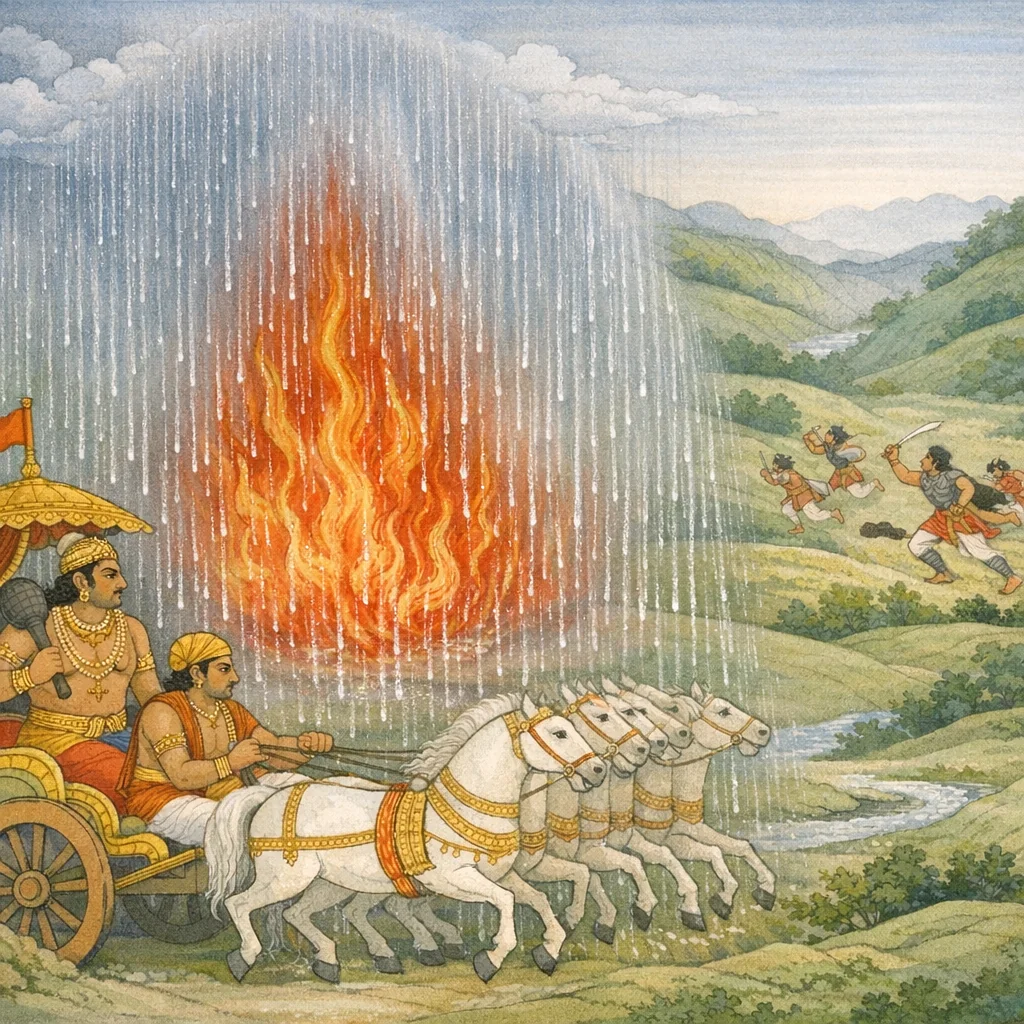
Chapter Arc: संजय राजन् को बताता है कि द्रोणपुत्र अश्वत्थामा के घोर अस्त्र-तेज में भीमसेन घिर गए हैं—और उसी क्षण अर्जुन अपनी फुर्ती से वारुणास्त्र का आवरण रचकर उस अग्नि-सदृश प्रकोप को ढक देता है। → तेज ढक जाने पर भीम का रथ, घोड़े और सारथि सहित अस्त्र-जाल में फँसा हुआ ‘अग्नि में अग्नि’ की तरह दुर्दशा में दिखता है; फिर तेज हटते ही भीम ‘रात के बाद उगे सूर्य’ की भाँति उभरता है और द्रोणपुत्र-वध की आकांक्षा से बाण-वृष्टि बरसाता है। उधर शैनेय (सात्यकि) और अन्य योद्धाओं के बीच धृष्टद्युम्न (आचार्यघाती) को लेकर तनावपूर्ण वचन-विनिमय युद्ध-नीति को और तीखा करता है। → अश्वत्थामा भीम की प्रचण्ड बाण-वर्षा को मेघ-जनित महावृष्टि की तरह सहकर पलटवार करता है; पाण्डव-पक्ष की पंक्तियाँ डगमगाती हैं, धृष्टद्युम्न का रथ छूट जाता है और भीम सहित पांचाल भयभीत होकर दिशाओं में तितर-बितर हो जाते हैं—अश्वत्थामा विजय-उल्लास में शंखनाद करता है। → अश्वत्थामा भागती पाण्डव-वाहिनी को पीछे से बाण बिखेरते हुए वेग से खदेड़ता है; इस अध्याय का निष्कर्ष पाण्डव-पक्ष की तात्कालिक अव्यवस्था और द्रोणपुत्र के उग्र प्रभुत्व की स्थापना में होता है। → अश्वत्थामा का पीछा जारी है—भागती सेना में कौन टिकेगा, कौन कटेगा, और कौन-सा प्रतिरोध अगले क्षण खड़ा होगा?
Shlokas
Verse 1
संजय कहते हैं--राजन्! भीमसेनको उस अस्त्रसे घिरा हुआ देख अर्जुनने उन्हें उसके तेजका निवारण करनेके लिये वारुणास्त्रसे ढक दिया
Sanjaya said: O King, seeing Bhimasena surrounded and pressed by that weapon, Arjuna covered him with the Varuna-weapon in order to check and neutralize its blazing force. The episode highlights the warrior’s duty to protect an ally and the ethical use of countermeasures in battle—restraining destructive power rather than letting it consume the vulnerable.
Verse 2
नालक्षयत तत् कश्रनिद् वारुणास्त्रेण संवृतम् । अर्जुनस्य लघुत्वाच्च संवृतत्वाच्च तेजस:,एक तो अर्जुनने बड़ी फुर्ती की थी, दूसरे भीमसेनपर उस अस्त्रके तेजका आवरण था, इससे कोई भी यह देख न सका कि भीमसेन वारुणास्त्रसे घिरे हुए हैं
Sañjaya said: No one perceived that (Bhīmasena) was enveloped by the Vāruṇa weapon. For Arjuna acted with great swiftness, and the weapon’s blazing power itself formed a covering; therefore the warriors could not see that Bhīma was hemmed in by the Vāruṇāstra.
Verse 3
साश्वसूतरथो भीमो द्रोणपुत्रास्त्रसंवृत: । अग्नावग्निरिव न्यस्तो ज्वालामाली सुदुर्दश:,घोड़े, सारथि और रथसहित भीमसेन द्रोणपुत्रके उस अस्त्रसे ठककर आगके भीतर रखी हुई आगके समान प्रतीत होते थे। वे ज्वालाओंसे इतने घिर गये थे कि उनकी ओर देखना कठिन हो रहा था
Sañjaya said: Bhīma—together with his horses, charioteer, and chariot—was enveloped by the missile of Droṇa’s son. He looked like fire set within fire, wreathed in flames and so hard to behold. The scene underscores the brutal escalation of war, where prowess and resolve are tested against overwhelming, weapon-driven force, and where survival depends as much on steadiness of mind as on martial skill.
Verse 4
यथा रात्रिक्षये राजन् ज्योतींष्यस्तागिरिं प्रति । समापेतुस्तथा बाणा भीमसेनरथं प्रति,राजन! जैसे रात्रि समाप्त होनेके समय सारे ज्योतिर्मय ग्रह-नक्षत्र अस्ताचलकी ओर चले जाते हैं, उसी प्रकार अश्वत्थामाके बाण भीमसेनके रथपर गिरने लगे
Sañjaya said: “O King, just as, at the ending of night, the luminous stars and planets seem to move toward the mountain of setting, so too did Aśvatthāmā’s arrows converge and fall upon Bhīmasena’s chariot.” The simile underscores the relentless, almost cosmic inevitability of the assault within the moral darkness of war.
Verse 5
स हि भीमो रथश्चास्य हया: सूतश्न मारिष | संवृता द्रोणपुत्रेण पावकान्तर्गता&भवन्,माननीय नरेश! भीमसेन तथा उनके रथ, घोड़े और सारथि--ये सभी अभश्वत्थामाके अस्त्रसे आच्छादित हो आगकी लपटोंके भीतर आ गये थे
Sañjaya said: O revered king, Bhīma—together with his chariot, horses, and charioteer—was completely enveloped by the weapon of Droṇa’s son. Covered over by Aśvatthāman’s missile, they seemed to have been driven into the very midst of blazing fire. The scene underscores how, in war, even the mightiest warrior can be suddenly reduced to peril by the unleashed force of astras, raising the ethical tension between martial prowess and the destructive excess of weaponry.
Verse 6
यथा दग्ध्वा जगत् कृत्स्नं समये सचराचरम् । गच्छेद् वल्नलिविंभोरास्यं तथास्त्रं भीममावृणोत्,जैसे प्रलयकालमें संवर्तक अग्नि चराचर प्राणियोंसहित सम्पूर्ण जगत्को भस्म करके परमात्माके मुखमें प्रवेश कर जाती है, उसी प्रकार उस अस्त्रने भीमसेनको चारों ओरसे ढक लिया था
Sañjaya said: “Just as, at the time of dissolution, the all-consuming fire burns the entire world together with all moving and unmoving beings and then enters the mouth of the Supreme, so too that dreadful weapon closed in upon Bhīmasena from every side.” The image underscores the terrifying, impersonal force of astras in war—when unleashed, they can resemble cosmic destruction, overwhelming even the mightiest warrior and raising the ethical weight of their use.
Verse 7
सूर्यमग्नि: प्रविष्ट: स्थाद् यथा चाग्निं दिवाकर: । तथा प्रविष्टं तत् तेजो न प्राज्ञायत पाण्डव:,जैसे सूर्यमें अग्नि और अम्निमें सूर्य प्रविष्ट हुए हों, उसी प्रकार उस अस्त्रका तेज तेजस्वी भीमसेनपर छा गया था; इसलिये पाण्डुपुत्र भीमसेन किसीको दिखायी नहीं पड़ते थे
Verse 8
विकीर्णमस्त्रं तद् दृष्टवा तथा भीमरयथं प्रति । उदीर्यमाणं द्रौणिं च निष्प्रतिद्वन्द्धमाहवे,वह अस्त्र भीमसेनके रथपर छा गया था। युद्धस्थलमें कोई प्रतिद्वन्द्धी योद्धा न होनेसे द्रोणपुत्र अश्वत्थामा प्रबल होता जा रहा था। पाण्डवोंकी सारी सेना हथियार डालकर (भयसे) अचेत हो गयी थी और युधिष्ठिर आदि महारथी युद्धसे विमुख हो गये थे। यह सब देखकर महातेजस्वी अर्जुन और भगवान् श्रीकृष्ण दोनों वीर बड़ी उतावलीके साथ रथसे कूदकर भीमसेनकी ओर दौड़े
Sañjaya said: Seeing that weapon spread out and covering the region toward Bhīma’s chariot, and seeing Droṇa’s son Aśvatthāmā rising in might on the battlefield with no equal opponent before him, the Pāṇḍava host was thrown into panic—many laying down their arms and becoming as if senseless with fear, while great chariot-warriors such as Yudhiṣṭhira turned away from the fight. Witnessing this, the radiant Arjuna and Lord Śrī Kṛṣṇa, both urgent to protect their own, leapt down from their chariot and ran toward Bhīmasena.
Verse 9
सर्वसैन्यं च पाण्डूनां न््यस्तशस्त्रमचेतनम् | युधिष्ठिरपुरोगांश्व विमुखांस्तानू महारथान्,वह अस्त्र भीमसेनके रथपर छा गया था। युद्धस्थलमें कोई प्रतिद्वन्द्धी योद्धा न होनेसे द्रोणपुत्र अश्वत्थामा प्रबल होता जा रहा था। पाण्डवोंकी सारी सेना हथियार डालकर (भयसे) अचेत हो गयी थी और युधिष्ठिर आदि महारथी युद्धसे विमुख हो गये थे। यह सब देखकर महातेजस्वी अर्जुन और भगवान् श्रीकृष्ण दोनों वीर बड़ी उतावलीके साथ रथसे कूदकर भीमसेनकी ओर दौड़े
Sañjaya said: The entire army of the Pāṇḍavas had cast down its weapons and become senseless with fear; and those great chariot-warriors, led by Yudhiṣṭhira, had turned away from the fight. The verse underscores a moment when morale collapses and even eminent leaders recoil—raising the ethical tension between panic-driven withdrawal and the duty to stand firm in a righteous battle.
Verse 10
अर्जुनो वासुदेवश्च त्वरमाणौ महाद्युती । अवलप्लुत्य रथाद् वीरौ भीममाद्रवतां ततः:,वह अस्त्र भीमसेनके रथपर छा गया था। युद्धस्थलमें कोई प्रतिद्वन्द्धी योद्धा न होनेसे द्रोणपुत्र अश्वत्थामा प्रबल होता जा रहा था। पाण्डवोंकी सारी सेना हथियार डालकर (भयसे) अचेत हो गयी थी और युधिष्ठिर आदि महारथी युद्धसे विमुख हो गये थे। यह सब देखकर महातेजस्वी अर्जुन और भगवान् श्रीकृष्ण दोनों वीर बड़ी उतावलीके साथ रथसे कूदकर भीमसेनकी ओर दौड़े
Sañjaya said: Then Arjuna and Vāsudeva—both heroes of great splendor—leapt down from their chariot in haste and ran toward Bhīma. The moment underscores the ethic of comradeship in war: when a foremost ally is endangered and the army falters in fear, the leaders do not remain spectators but move swiftly to protect and restore courage.
Verse 11
ततस्तद् द्रोणपुत्रस्य तेजो5स्त्रबलसम्भवम् । विगाहा[ तौ सुबलिनौ मायया55विशतां तथा,वहाँ पहुँचकर वे दोनों अत्यन्त बलवान वीर द्रोणपुत्रकी अस्त्र-शक्तिसे प्रकट हुई उस आगमें घुसकर मायाद्धारा उसमें प्रविष्ट हो गये
Sañjaya said: Then those two exceedingly powerful warriors plunged into that blazing energy-fire which had arisen from the weapon-might of Droṇa’s son; and, by means of illusion, they entered into it as well—passing through what would otherwise be impassable. The scene underscores how, amid the brutal ethics of war, extraordinary stratagems and māyā are employed to survive and to penetrate an enemy’s overwhelming force.
Verse 12
न्यस्तशस्त्रौ ततस्तौ तु नादहत् सो<स्त्रजोडनल: । वारुणास्त्रप्रयोगाच्च वीर्यवत्वाच्च कृष्णयो:,उन दोनोंने अपने हथियार रख दिये थे, वारुणास्त्रका प्रयोग किया था तथा वे दोनों कृष्ण अधिक शक्तिशाली थे; इसलिये वह अस्त्रजनित अग्नि उन्हें चला न सकी
Sañjaya said: “Then, since the two had laid down their weapons, the fire born of that missile could not burn them. And because they had employed the Varuṇa-weapon, and because those two Kṛṣṇas were men of superior might, the weapon-generated blaze failed to consume them.”
Verse 13
ततश्नकृषतुर्भीम॑ सर्वशस्त्रायुधानि च । नारायणास्त्रशान्त्यर्थ नरनारायणौ बलात्
Sañjaya said: Then, with deliberate restraint, Bhīma set aside all his weapons and implements of war. For the sake of pacifying the Nārāyaṇa missile, the twin sages Nara and Nārāyaṇa, by their irresistible power, brought about its quelling—signaling that in the face of a divinely charged force, humility and higher spiritual authority must prevail over mere martial prowess.
Verse 14
तदनन्तर नर-नारायणस्वरूप अर्जुन और श्रीकृष्णने उस नारायणास्त्रकी शान्तिके लिये भीमसेनको और उनके सम्पूर्ण अस्त्र-शस्त्रोंको बलपूर्वक रथसे नीचे खींचा ।। 74] ॥ १७४ आकृष्यमाण: कौन्तेयो नदत्येव महारवम् | वर्धते चैव तदू घोरें द्रौणेरस्त्रं सुदुर्जयम्,खींचे जाते समय कुन्तीकुमार भीमसेन और भी जोर-जोरसे गर्जना करने लगे। इससे अश्वत्थामाका वह परम दुर्जय घोर अस्त्र और भी बढ़ने लगा
Sañjaya said: Thereafter, Arjuna and Śrī Kṛṣṇa—manifesting the form and resolve of Nara and Nārāyaṇa—forcefully dragged Bhīmasena down from the chariot, along with all his weapons, to pacify the Nārāyaṇāstra. As the son of Kuntī was being pulled away, he roared all the more loudly; and by that defiant outcry, Aśvatthāmā’s dreadful and nearly unconquerable weapon only swelled in power.
Verse 15
तमब्रवीद् वासुदेव: किमिदं पाण्डुनन्दन । वार्यमाणो5पि कौन्तेय यद् युद्धान्न निवर्तसे
Sañjaya said: Vāsudeva addressed him, “What is this, O joy of the Pāṇḍus? O son of Kuntī, even though you are being restrained and urged to desist, why do you not turn back from the battle?” The question presses the ethical tension between counsel meant to avert bloodshed and the warrior’s resolve to stand by his chosen duty in the face of persuasion.
Verse 16
यदि युद्धेन जेया: स्युरिमे कौरवनन्दना: । वयमप्यत्र युध्येम तथा चेमे नरर्षभा:
Sañjaya said: “If these sons of the Kuru line could be victorious by means of battle, then we too should fight here—along with these bull-like men (our foremost warriors).” The statement frames the war as a test of whether victory can truly be secured through sheer combat, while also revealing the resolve of the Kaurava side to commit fully if battle is deemed the deciding instrument.
Verse 17
उस समय भगवान् श्रीकृष्णने उनसे कहा--'पाण्डुनन्दन! कुन्तीकुमार! यह क्या बात है कि तुम मना करनेपर भी युद्धसे निवृत्त नहीं हो रहे हो। यदि ये कौरवनन्दन इस समय युद्धसे ही जीते जा सकते तो हम और ये सभी नरश्रेष्ठ राजा लोग युद्ध ही करते ।। रथेभ्यस्त्ववतीर्णा: सम सर्व एव हि तावका: | तस्मात् त्वमपि कौन्तेय रथात् तूर्णमपाक्रम,“तुम्हारे सभी सैनिक रथसे उतर गये हैं। कुन्तीकुमार! अब तुम भी शीघ्र ही रथसे उतरकर युद्धसे अलग हो जाओ”
At that moment, Bhagavān Śrī Kṛṣṇa addressed him: “O son of Pāṇḍu, O son of Kuntī—what is this, that even after being restrained you still do not withdraw from the fight? If the sons of the Kuru could be conquered at this time by battle alone, then we and all these foremost kings would indeed choose battle. But your troops have all dismounted from their chariots together; therefore, O Kaunteya, you too quickly step down from the chariot and disengage from the combat.”
Verse 18
एवमुक््त्वा तु तं॑ कृष्णो रथाद् भूमिमवर्तयत् । निःश्वसन्तं यथा नागं क्रोधसंरक्तलोचनम्,ऐसा कहकर श्रीकृष्णने क्रोधसे लाल आँखें करके सर्पके समान फुफकारते हुए भीमसेनको रथसे भूमिपर उतार लिया
Sañjaya said: Having spoken thus, Kṛṣṇa made him descend from the chariot to the ground. He was breathing hard like an enraged elephant, his eyes reddened with wrath—an image of anger being checked and brought under control amid the moral strain of war.
Verse 19
यदापकृष्ट: स रथानन्यासितकश्चायुधं भुवि । ततो नारायणान्त्र तत् प्रशान्तं शत्रुतापनम्,जब ये रथसे उतर गये और उनसे अस्त्र-शस्त्रोंको भूमिपर रखवा लिया गया, तब वह शत्रुओंको संताप देनेवाला नारायणास्त्र स्वयं प्रशान्त हो गया
Sañjaya said: When he had withdrawn and the warriors had dismounted from their chariots, laying their weapons down upon the ground, then that Nārāyaṇa-weapon—so fierce in tormenting enemies—became calm of its own accord. The moment of restraint and surrender to a higher ordinance neutralized what force could not.
Verse 20
संजय उवाच तस्मिन् प्रशान्ते विधिना तेन तेजसि दुःसहे । बभूवुर्विमला: सर्वा दिश: प्रदिश एव च,संजय कहते हैं-राजन! उस विधिसे उस दुःसह तेजके शान्त हो जानेपर सारी दिशाएँ और विदिशाएँ निर्मल हो गयीं। शीतल सुखद वायु चलने लगी। पशु-पक्षियोंका आर्तनाद बंद हो गया तथा उस दुर्जय अस्त्रके शान्त होनेपर सारे वाहन भी सुखी हो गये
Sanjaya said: O King, when that unbearable blaze was ritually brought to rest, all the quarters and intermediate directions became clear and pure again. The world’s order seemed to reassert itself as the oppressive force subsided, signaling a momentary restoration of balance amid the violence of war.
Verse 21
प्रववुश्च शिवा वाता: प्रशान्ता मृगपक्षिण: । वाहनानि च ह्ृष्टानि प्रशान्ते<स्त्रे सुदुर्जये,संजय कहते हैं-राजन! उस विधिसे उस दुःसह तेजके शान्त हो जानेपर सारी दिशाएँ और विदिशाएँ निर्मल हो गयीं। शीतल सुखद वायु चलने लगी। पशु-पक्षियोंका आर्तनाद बंद हो गया तथा उस दुर्जय अस्त्रके शान्त होनेपर सारे वाहन भी सुखी हो गये
Sañjaya said: “O King, when that hard-to-endure, invincible weapon was finally pacified, the atmosphere itself turned auspicious. Gentle, cooling winds began to blow; the cries of beasts and birds ceased; and even the mounts and vehicles of the warriors became calm and relieved. Thus, with the quelling of the dreadful astric force, a measure of peace returned to the world around the battlefield.”
Verse 22
व्यपोढे च ततो घोरे तस्मिंस्तेजसि भारत । बभौ भीमो निशापाये धीमान् सूर्य इवोदित:,भारत! उस भयंकर तेजके दूर हो जानेपर बुद्धिमान् भीमसेन रात बीतनेपर उगे हुए सूर्यके समान प्रकाशित होने लगे
Sañjaya said: O Bhārata, when that dreadful blaze of energy had passed away, the wise Bhīma shone forth at the end of the night like the newly risen sun—his presence restoring confidence to his side amid the terrors of war.
Verse 23
हतशेषं बल॑ तत् तु पाण्डवानामतिष्ठत । अस्त्रव्युपरमाद्धुष्टं तव पुत्रजिघांसया,पाण्डवोंकी जो सेना मरनेसे बच गयी थी, वह उस अस्त्रके शान्त हो जानेसे पुनः आपके पुत्रोंका विनाश करनेके लिये हर्षसे खिल उठी
Sañjaya said: The remnant of the Pāṇḍavas’ army—those who had survived the slaughter—stood firm again. When the discharge of weapons subsided, that force, intent on the destruction of your sons, rose up with renewed ardor, driven by the grim resolve to finish the task of war.
Verse 24
व्यवस्थिते बले तस्मिन्नस्त्रे प्रतिहते तथा । दुर्योधनो महाराज द्रोणपुत्रमथाब्रवीत्,महाराज! उस अस्त्रके प्रतिहत और पाण्डव-सेनाके सुव्यवस्थित हो जानेपर दुर्योधनने द्रोणपुत्रसे इस प्रकार कहा--
Sañjaya said: When that army had regained its formation, and when the weapon had likewise been countered, King Duryodhana then addressed Droṇa’s son. The moment marks a shift from the shock of a checked missile to renewed resolve—leadership responding to reversal by seeking counsel and action from a powerful ally.
Verse 25
अश्वत्थामन् पुनः शीघ्रमस्त्रमेतत् प्रयोजय । अवस्थिता हि पज्चाला: पुनरेते जयैषिण:
Sañjaya said: “Aśvatthāman, quickly employ this weapon again. For the Pāñcālas are still standing firm, and they are once more intent on victory.”
Verse 26
'अश्वत्थामन्! तुम पुनः शीघ्र ही इसी शस्त्रका प्रयोग करो; क्योंकि विजयकी अभिलाषा रखनेवाले ये पांचाल सैनिक पुनः युद्धके लिये आकर डट गये हैं' ।। अश्वत्थामा तथोक्तस्तु तव पुत्रेण मारिष । सुदीनमभिनि:श्वस्य राजानमिदमब्रवीत्,मान्यवर! आपके पुत्रके ऐसा कहनेपर अअश्वत्थामाने अत्यन्त दीनभावसे उच्छवास लेकर राजासे इस प्रकार कहा--
Sanjaya said: “Ashvatthaman, quickly employ that weapon again, for these Panchala warriors—eager for victory—have returned and are standing firm for battle once more.” Thus addressed by your son, O revered king, Ashvatthaman, deeply dejected, heaved a heavy sigh and spoke to the king in these words, addressing him with respect.
Verse 27
नैतदावर्तते राजन्नस्त्र द्विनोपपद्यते | आवृतं हि निवर्तेत प्रयोक्तारं न संशय:,“राजन! न तो यह अस्त्र फिर लौटता है और न इसका दुबारा प्रयोग ही हो सकता है। यदि इसका पुन: प्रयोग किया जाय तो यह प्रयोग करनेवालेको ही समाप्त कर देगा, इसमें संशय नहीं है
Sañjaya said: “O King, this weapon does not return once released, nor can it be employed a second time. If one attempts to turn it back or reuse it, it will recoil upon the very one who wields it—of this there is no doubt.”
Verse 28
एष चास्त्रप्रतीघातं वासुदेव: प्रयुक्तवान् अन्यथा विहित: संख्ये वध: शत्रोर्जनाधिप,'जनेश्वर! श्रीकृष्णने इस अस्त्रके निवारणका उपाय बता दिया है और उसका प्रयोग किया है; अन्यथा आज युद्धमें सम्पूर्ण शत्रुओंका वध हो ही गया होता
Sañjaya said: Vāsudeva has applied the countermeasure to repel this weapon. Otherwise, O king, O lord of men, in today’s battle the destruction ordained for the enemy would indeed have been fully accomplished. The moment underscores how strategic restraint and timely intervention can avert total annihilation even when victory seems fated.
Verse 29
पराजयो वा मृत्युर्वा श्रेयान् मृत्युने निर्जय: । विजिताश्चारयो होते शस्त्रोत्स्गान्मृतोपमा:,“पराजय हो या मृत्यु, इनमें मृत्यु ही श्रेष्ठ है, पराजय नहीं। ये सारे शत्रु हार गये थे; हथियार डालकर मुर्देके समान हो गये थे”
Sañjaya said: “Whether it be defeat or death, death is the better choice—never defeat. The enemies, once overcome, had cast away their weapons and stood like the dead.”
Verse 30
दुर्योधन उवाच आचार्यपुत्र यद्येतद् द्विरस्त्रं न प्रयुज्यते । अन्यैर्गुरुध्ना वध्यन्तामस्त्रैरस्त्रविदां वर,दुर्योधन बोला--आचार्यपुत्र! तुम तो सम्पूर्ण अस्त्रवेत्ताओंमें श्रेष्ठ हो। यदि इस अस्त्रका दो बार प्रयोग नहीं हो सकता तो तुम दूसरे ही अस्त्रोंद्वारा इन गुरुघातियोंका वध करो
Duryodhana said: “O son of the preceptor, if this weapon cannot be employed a second time, then—O best among those who know weapons—let these slayers of their teacher be killed with other weapons.”
Verse 31
त्वयि शस्त्राणि दिव्यानि त्र्यम्बके चामितौजसि । इच्छतो न हि ते मुच्येत् संक्रुद्धों हि पुरंदर:,तुममें तथा अमिततेजस्वी भगवान् शंकरमें ही सम्पूर्ण दिव्यास्त्र प्रतिष्ठित हैं। यदि तुम मारना चाहो तो क्रोधमें भरे हुए इन्द्र भी तुमसे बचकर नहीं जा सकते
Duryodhana said: “In you are lodged the celestial weapons, and likewise in Tryambaka (Śiva), the immeasurably mighty. If you wished to slay, even Purandara (Indra), though inflamed with wrath, could not escape you.” The statement is meant to magnify the warrior’s divinely grounded power and to spur decisive action in the war, framing martial success as rooted in divine endowment rather than mere human effort.
Verse 32
धृतराष्ट उवाच तस्मिन्नस्त्रे प्रतिहते द्रोणे चोपधिना हते । तथा दुर्योधनेनोक्तो द्रौणि: किमकरोत् पुन:
Dhṛtarāṣṭra said: “When that weapon had been checked, and Droṇa too had been slain through a stratagem, then—thus addressed by Duryodhana—what did Droṇa’s son (Aśvatthāmā) do next?”
Verse 33
धृतराष्ट्रने पूछा--संजय! द्रोणाचार्य छलपूर्वक मारे गये और नारायणास्त्र भी प्रतिहत हो गया, तब दुर्योधनके वैसा कहनेपर अश्व॒त्थामाने फिर क्या किया? ।॥। दृष्टवा पार्थाश्च संग्रामे युद्धाय समुपस्थितान् । नारायणास्त्रनिर्मुक्तांश्षरत: पृतनामुखे,क्योंकि उसने देख लिया था कि नारायणास्त्रसे छूटे हुए पाण्डव संग्राममें युद्धके लिये उपस्थित हैं और युद्धके मुहानेपर विचर रहे हैं
Dhṛtarāṣṭra said: “Sañjaya, Droṇācārya has been slain through a stratagem, and even the Nārāyaṇa-weapon has been checked. After Duryodhana spoke in that manner, what did Aśvatthāmā do next? For he saw the sons of Pṛthā—freed from the Nārāyaṇa-weapon—standing ready for battle in the fray, moving about at the very front of the army.”
Verse 34
संजय उवाच जानन् पितुः: स निधन सिंहलाड्गूलकेतन: । सक्रोधो भयमुत्सूज्य सो$भिदुद्राव पार्षतम्,संजयने कहा--राजन! अभश्वत्थामाकी ध्वजा-पताकामें सिंहकी पूँछका चिह्न बना हुआ था। उसने पिताके मारे जानेकी घटनाका स्मरण करके कुपित हो भय छोड़कर धृष्टद्युम्नपर धावा किया
Verse 35
अभिद्र॒त्य च विंशत्या क्षुद्रकाणां नरर्षभ । पज्चभिश्चातिवेगेन विव्याध पुरुषर्षभ:,नरश्रेष्ठ। निकट जाकर पुरुषप्रवर अश्रत्थामाने धृष्टद्युम्नको पहले क्षुद्रक नामवाले बीस बाण मारे। फिर अत्यन्त वेगसे पाँच बाणोंका प्रहार करके उन्हें घायल कर दिया
Sañjaya said: Closing in at close range, Aśvatthāmā—foremost among men—first struck Dhṛṣṭadyumna with twenty arrows known as ‘kṣudraka’. Then, with five more shafts loosed at tremendous speed, he pierced him again, wounding him severely. The scene underscores the relentless escalation of violence on the battlefield, where prowess and fury drive action even as the moral weight of slaughter continues to accumulate.
Verse 36
धृष्टद्युम्नस्ततो राजन् ज्वलन्तमिव पावकम् । द्रोणपुत्रं त्रिषष्टया तु राजन् विव्याध पत्रिणाम्
Sañjaya said: Then, O King, Dhṛṣṭadyumna—like a blazing fire—pierced Droṇa’s son with sixty-three feathered arrows. The image underscores the fierce, unrelenting momentum of battle, where valor and resolve drive warriors to decisive, even ruthless, action amid the collapse of restraint.
Verse 37
राजन्! तदनन्तर धृष्टद्युम्नने प्रजलित अग्निके समान तेजस्वी द्रोणपुत्रको तिरसठ बाणोंसे बींध डाला ।। सारथिं चास्य विंशत्या स्वर्णपुड्खै: शिलाशितै: । हयांश्व चतुरो<विध्यच्चतुर्भिनिशितै: शरै:
Sanjaya said: O King, thereafter Dhrishtadyumna—blazing with a fire-like brilliance—pierced the son of Drona with sixty-three arrows. He also struck his charioteer with twenty arrows, their shafts adorned with gold and sharpened on stone; and he wounded the four horses with four keen shafts. In the relentless ethics of battlefield duty, this exchange shows how warriors sought to disable an opponent’s mobility and command without hesitation, treating the chariot-team as a decisive instrument of war.
Verse 38
फिर शानपर चढ़ाकर तेज किये हुए सुवर्णमय पंखवाले बीस बाणोंसे उसके सारथिको और चार तीखे सायकोंसे उसके चारों घोड़ोंको भी घायल कर दिया ।। विद्ध्वा विद्ध्वानदद् द्रौ्णिं कम्पयन्निव मेदिनीम् । आददे सर्वलोकस्य प्राणानिव महारणे,धष्टद्युम्न अश्वत्थामाको बींध-बींधकर पृथ्वीको कँपाते हुए-से गरज रहे थे। मानो उस महासमरमें वे सम्पूर्ण जगतके प्राण ले रहे हों
Then, mounting his whetstone-honed bow, he struck with twenty sharpened arrows whose wings gleamed like gold, wounding the charioteer; and with four keen shafts he also injured the four horses. Having pierced Drauṇi (Aśvatthāmā), the mighty warrior made the earth seem to tremble. In that great battle, Dhṛṣṭadyumna and Aśvatthāmā, rending and rending as though shaking the ground itself, roared like lions—appearing as if they were seizing away the very life-breath of the whole world. The verse heightens the moral weight of war: prowess and fury eclipse restraint, and the battlefield becomes a place where life itself seems to be taken as a collective stake.
Verse 39
पार्षतस्तु बली राजन् कृतास्त्र: कृतनिश्चय: । द्रौणिमेवाभिदुद्राव मृत्युं कृत्वा निवर्तनम्,राजन! बलवान अस्त्रवेत्ता तथा दृढ़ निश्चयवाले धृष्टद्युम्नने मृत्युको ही युद्धसे लौटनेकी अवधि निश्चित करके द्रोणपुत्रपर ही धावा किया
Sañjaya said: O King, the mighty son of Pṛṣata—skilled in the use of weapons and firm in resolve—charged straight at Droṇa’s son, having made death itself the condition for turning back from the fight. The verse underscores a warrior’s grim vow: retreat is renounced, and the encounter is pursued with a fatal, all-or-nothing determination.
Verse 40
ततो बाणमयं वर्ष द्रोणपुत्रस्य मूर्थनि । अवासृजदमेयात्मा पाज्चाल्यो रथिनां वर:,तत्पश्चात् अमेय आत्मबलसे सम्पन्न, रथियोंमें श्रेष्ठ पांचालपुत्र धृष्टद्युम्नने अश्वत्थामाके मस्तकपर बाणोंकी वर्षा आरम्भ कर दी
Sañjaya said: Thereupon the Pāñcāla prince Dhṛṣṭadyumna—of immeasurable spirit and foremost among chariot-warriors—let loose a rain of arrows upon the head of Droṇa’s son (Aśvatthāmā). The scene intensifies the ethical tension of battlefield duty, where prowess and resolve are exercised within the harsh demands of kṣatriya warfare.
Verse 41
त॑ द्रौणि: समरे क्रुद्धं छादयामास पत्रिभि: । विव्याध चैनं दशभि: पितुर्वधमनुस्मरन्,अपने पिताके वधका बारंबार स्मरण करते हुए अश्वत्थामाने भी समरांगणमें कुपित हुए धृष्टद्युम्नको बाणोंद्वारा आच्छादित कर दिया और दस बाणोंसे मारकर उसे गहरी चोट पहुँचायी
Sañjaya said: In the thick of battle, Aśvatthāmā—Drona’s son—remembering again and again the slaying of his father, grew wrathful and covered the enraged Dhṛṣṭadyumna with a shower of arrows; then he pierced him with ten shafts, inflicting a grievous wound. The scene underscores how personal grief and the urge for retribution can intensify violence and eclipse restraint in war.
Verse 42
द्वाभ्यां च सुविसृष्ट भ्यां क्षुराभ्यां ध्वजकार्मुके । छित्त्वा पाड्चालराजस्य द्रौणिरन्यै: समार्दयत्,इसके सिवा, अच्छी तरह छोड़े हुए दो छुरोंसे पांचाल-राजकुमारके ध्वज और धनुषको काटकर अअभ्रृत्थामाने दूसरे बाणोंद्वारा उन्हें भलीभाँति पीड़ित किया
Sañjaya said: With two razor-edged arrows, well released, Droṇa’s son (Aśvatthāmā) cut down the banner and the bow of the Pāñcāla prince; then, with other shafts, he pressed him hard, tormenting him in the fury of battle. The scene underscores how, in war, disabling an opponent’s insignia and weapon becomes a decisive tactic—yet it also reflects the relentless escalation of violence that tests the bounds of kṣatriya-dharma.
Verse 43
व्यश्वसूतरथं चैन द्रौणिश्नलक्रे महाहवे । तस्य चानुचरान् सर्वान् क्रुद्धः प्राद्रावयच्छरै:,इतना ही नहीं, द्रोणपुत्रने उस महायुद्धमें धृष्टद्युम्मको घोड़े, सारथि तथा रथसे भी वंचित कर दिया। साथ ही कुपित हो उनके सारे सेवकोंको भी बाणोंसे मार-मारकर खदेड़ना शुरू किया
Verse 44
ततः प्रदुद्रुवे सैन्यं पजचालानां विशाम्पते । सम्भ्रान्तरूपमार्त च न परस्परमैक्षत,प्रजानाथ! तदनन्तर पांचालोंकी सेना भ्रान्त एवं आर्त होकर भाग चली। उसके सैनिक एक-दूसरेको देखते नहीं थे
Sanjaya said: Thereupon, O lord of the people, the army of the Pāñcālas broke and fled. Confused in appearance and stricken with distress, they could not even look upon one another—so complete was the panic that dissolved their mutual awareness and order.
Verse 45
दृष्टवा तु विमुखान् योधान् धृष्टद्युम्नं च पीडितम् । शैनेयोडचोदयत् तूर्ण रथं दौणिरथं प्रति,योद्धाओंको युद्धसे विमुख और धूृष्टद्युम्नको बाणोंसे पीड़ित देख सात्यकिने तुरंत अपना रथ अभ्रत्थामाके रथकी ओर बढ़ाया
Sañjaya said: Seeing the warriors turning away from the fight and Dhṛṣṭadyumna hard-pressed by arrows, Śaineya (Sātyaki) swiftly urged his chariot forward toward the chariot of Drauṇi (Aśvatthāmā), intent on confronting him and restoring the battle’s resolve.
Verse 46
अष्टभिनिशितैर्बाणैरश्व॒त्थामानमार्दयत् । विंशत्या पुनराहत्य नानारूपैरमर्षण:,उन्होंने आठ पैने बाणोंसे अश्वत्थामाको चोट पहुँचायी। तत्पश्चात् अमर्षमें भरे हुए सात्यकिने भाँति-भाँतिके बीस बाणोंद्वारा द्रोणपुत्रको पुन: घायल करके उसके सारथिको भी बींध डाला और पूर्णरूपसे सावधान हो एक सिद्धहस्त योद्धाकी भाँति उन्होंने चार बाणोंसे उसके चारों घोड़ोंको घायल करके ध्वज और धनुषको भी काट दिया
Sañjaya said: With eight sharp arrows he struck and pained Aśvatthāmā. Then, inflamed with righteous fury, he again assailed him with twenty arrows of varied forms—pressing the attack in the disciplined manner of a master archer, intent on disabling the enemy’s fighting capacity rather than merely boasting of prowess.
Verse 47
विव्याध च तथा सूतं चतुर्भिश्चतुरो हयान् धनुर्ध्वजं च संयत्तश्चिच्छेद कृतहस्तवत्,उन्होंने आठ पैने बाणोंसे अश्वत्थामाको चोट पहुँचायी। तत्पश्चात् अमर्षमें भरे हुए सात्यकिने भाँति-भाँतिके बीस बाणोंद्वारा द्रोणपुत्रको पुन: घायल करके उसके सारथिको भी बींध डाला और पूर्णरूपसे सावधान हो एक सिद्धहस्त योद्धाकी भाँति उन्होंने चार बाणोंसे उसके चारों घोड़ोंको घायल करके ध्वज और धनुषको भी काट दिया
Sanjaya said: He then pierced the charioteer as well, and with four arrows struck the four horses. Fully composed and alert, like a master of weapons, he cut down the bow and the banner. In the ethical texture of the battle, the act shows not mere rage but tactical restraint—disabling the enemy’s mobility and means of attack rather than pursuing indiscriminate slaughter.
Verse 48
स साथ्र व्यधमच्चापि रथं हेमपरिष्कृतम् । ह्दि विव्याध समरे त्रिंशता सायकैर्भुशम्,इसके बाद घोड़ोंसहित उसके सुवर्णभूषित रथको छिल्न-भिन्न कर डाला और समरांगणमें तीस बाणोंसे उसकी छातीमें गहरी चोट पहुँचायी
Sañjaya said: He also shattered that gold-adorned chariot along with its horses, and in the thick of battle he pierced his opponent’s chest with thirty arrows, inflicting a grievous wound. The verse underscores the relentless escalation of martial skill and violence on the battlefield, where prowess is displayed without pause even as the larger moral order (dharma) is strained by the necessities of war.
Verse 49
एवं स पीडितो राजलन्नश्वत्थामा महाबल: । शरजालै: परिवृत:ः कर्तव्यं नान्वपद्यत,राजन! इस प्रकार बाणोंके जालसे घिरकर पीड़ित हुए महाबली अश्वत्थामाको कोई कर्तव्य नहीं सूझता था
Sañjaya said: O King, thus afflicted and hemmed in by a net of arrows, the mighty Aśvatthāmā could not discern what ought to be done. In the press of battle, when one is overwhelmed by force and pain, even a powerful warrior may lose clarity about duty and right action.
Verse 50
एवं गते गुरो: पुत्रे तव पुत्रो महारथ: । कृपकर्णादिश्नि: सार्थ शरै: सात्वतमावृणोत्,गुरुपुत्रकी ऐसी अवस्था हो जानेपर आपके महारथी पुत्र दुर्योधनने कृपाचार्य और कर्ण आदिके साथ आकर सात्यकिको बाणोंसे ढक दिया
Sañjaya said: When the son of the preceptor had been brought to such a plight, your son Duryodhana—the great chariot-warrior—came forward together with Kṛpa, Karṇa, and the others, and covered Sātyaki (the Sātvata hero) with a shower of arrows. The scene underscores how, in the press of war, loyalty to one’s side and the urge to protect a revered leader’s son drive coordinated violence, even as it deepens the moral tragedy of kin and teachers being drawn into relentless combat.
Verse 51
दुर्योधनस्तु विंशत्या कृप: शारद्वतस्त्रिभि: । कृतवर्माथ दशभि: कर्ण: पञ्चाशता शरै:,दुर्योधनने बीस, शरद्वानके पुत्र कृपाचार्यने तीन, कृतवर्माने दस, कर्णने पचास, दुःशासनने सौ तथा वृषसेनने सात पैने बाणोंद्वारा शीघ्र ही सब ओरसे सात्यकिको घायल कर दिया
Sañjaya said: Duryodhana struck (Sātyaki) with twenty arrows; Kṛpa, the son of Śaradvat, with three; Kṛtavarman with ten; and Karṇa with fifty shafts. Thus, assailed from every side by these foremost warriors, Sātyaki was swiftly wounded—an image of the war’s relentless pressure, where valor is tested amid coordinated aggression rather than single combat alone.
Verse 52
दुःशासन: शतेनैव वृषसेनश्न सप्तभि: । सात्यकिं विव्यधुस्तूर्ण समन्तान्निशितै: शरै:,दुर्योधनने बीस, शरद्वानके पुत्र कृपाचार्यने तीन, कृतवर्माने दस, कर्णने पचास, दुःशासनने सौ तथा वृषसेनने सात पैने बाणोंद्वारा शीघ्र ही सब ओरसे सात्यकिको घायल कर दिया
Sañjaya said: Duḥśāsana struck Sātyaki with a full hundred arrows, and Vṛṣasena with seven. Swiftly, from all sides, they pierced him with keen shafts—an image of the war’s ruthless momentum, where valor is tested amid coordinated assault rather than single combat alone.
Verse 53
ततः स सात्यकी राजन् सवनिव महारथान् | विरथान् विमुखांश्वैव क्षणेनैवाकरोन्नूप,राजन्! तब सात्यकिने भी उन सभी महारथियोंको क्षणभरमें रथहीन एवं युद्धसे विमुख कर दिया
Sañjaya said: Then Sātyaki, O king, in a mere moment made those great chariot-warriors as if a forest laid low—stripping them of their chariots and turning them away from the fight. The scene underscores how prowess in war can abruptly unmake pride and momentum, reminding that martial glory is fragile amid the larger currents of fate and duty.
Verse 54
अश्वत्थामा तु सम्प्राप्य चेतनां भरतर्षभ । चिन्तयामास दु:खारतों नि:श्वसंश्ष पुनः पुन:,भरतश्रेष्ठ) उधर अश्वत्थामाको जब चेत हुआ, तब वह दुःखसे आतुर हो बारंबार लंबी साँस खींचता हुआ कुछ देरतक चिन्तामें डूबा रहा
Sañjaya said: O bull among the Bharatas, when Aśvatthāmā regained consciousness, he—overwhelmed by grief—fell into thought for a while, again and again drawing long, heavy breaths. The scene underscores how the shock of war and loss unsettles the mind, and how inner turmoil precedes the choices that follow.
Verse 55
अथो रथान्तरं द्रौणि: समारुह्मु परंतप: । सात्यकिं वारयामास किरन् शरशतान् बहून्,फिर दूसरे रथपर आरूढ़ हो शत्रुतापन अश्व॒त्थामाने कई सौ बाणोंकी वर्षा करके सात्यकिको आगे बढ़नेसे रोक दिया
Sañjaya said: Then Aśvatthāmā, son of Droṇa and a scorcher of foes, mounted another chariot. Showering Sātyaki with hundreds of arrows, he checked his advance—showing how, in the ruthless press of war, tactical obstruction and relentless missile-fire become the immediate means by which warriors seek to control the battlefield’s moral and strategic outcome.
Verse 56
तमापततन्तं सम्प्रेक्ष्य भारद्वाजसुतं रणे । विरथं विमुखं चैव पुनश्चक्रे महारथ:,रणभूमिमें द्रोणपुत्रको अपनी ओर आते देख महारथी सात्यकिने उसे पुनः रथहीन एवं युद्धसे विमुख कर दिया
Sañjaya said: Seeing the son of Bhāradvāja (Aśvatthāmā) rushing toward him on the battlefield, the great chariot-warrior Sātyaki once again rendered him without a chariot and turned away from the fight—an assertion of martial mastery amid the relentless ethics of war, where disabling an opponent’s means of combat becomes a decisive act.
Verse 57
ततस्ते पाण्डवा राजन् दृष्टवा सात्यकिविक्रमम् | शड्खशब्दान् भृशं चक्कुः सिंहनादांश्व नेदिरे,राजन! सात्यकिका यह पराक्रम देख पाण्डव बड़े जोर-जोरसे शंख बजाने और सिंहनाद करने लगे
Sañjaya said: “Then, O King, when the Pāṇḍavas beheld Sātyaki’s prowess, they sounded their conches with great force and raised lion-roars. By this they proclaimed courage, rallied their own ranks, and honored valor shown in the cause of their side.”
Verse 58
एवं त॑ विरथं कृत्वा सात्यकि: सत्यविक्रम: । जघान वृषसेनस्य त्रिसाहस्रान् महारथान्,इस प्रकार उसे रथहीन करके सत्यपराक्रमी सात्यकिने वृषसेनकी सेनाके तीन हजार विशाल रथोंको नष्ट कर दिया
Sañjaya said: Having thus stripped him of his chariot, Sātyaki—whose valor never proved false—then cut down three thousand great chariot-warriors belonging to Vṛṣasena’s force. The verse underscores the brutal momentum of battle: once a fighter is rendered chariotless and vulnerable, the victor’s prowess can rapidly turn into large-scale slaughter, raising the ethical tension between martial duty and the human cost of triumph.
Verse 59
अयुतं दन्तिनां सार्थ कृपस्थ निजघान सः । पज्चायुतानि चाश्वानां शकुनेर्निजघान ह,तदनन्तर कृपाचार्यकी सेनाके पंद्रह हजार हाथियोंका वध कर डाला; इसी तरह शकुनिके पचास हजार घोड़ोंको भी उन्होंने मार गिराया
Sañjaya said: Stationed with Kṛpa’s division, he cut down a full ten thousand elephants in a single mass. Thereafter, he also slew fifty thousand horses belonging to Śakuni. The verse underscores the grim arithmetic of war—where prowess is measured in slaughter—while implicitly inviting reflection on the ethical cost of such victory in a dharma-yuddha that has slid into ruthless annihilation.
Verse 60
ततो द्रौणिमहाराज रथमारुह्य[ वीर्यवान् सात्यकिं प्रतिसंक्रुद्ध: प्रययौ तद्वधेप्सया,महाराज! तब पराक्रमी अश्वत्थामा रथपर आरूढ़ हो सात्यकिपर क्रोध करके उनका वध करनेकी इच्छासे आगे बढ़ा
Sañjaya said: Then, O King, the valiant son of Droṇa (Aśvatthāmā) mounted his chariot and, inflamed with anger against Sātyaki, advanced with the intent to slay him. The verse underscores how wrath in battle sharpens resolve into a single aim—killing—tightening the moral tragedy of kin-slaying and the erosion of restraint (dama) amid war.
Verse 61
पुनस्तमागतं दृष्टवा शैनेयो निशितै: शरै: । अदारयत् क्रूरतरै: पुन: पुनररिंदम,शत्रुदमन नरेश! अश्वत्थामाको फिर आया देख सात्यकिने अत्यन्त क्रूर तीखे बाणोंद्वारा उसे बारंबार विदीर्ण किया
Sañjaya said: O king, subduer of foes and crusher of enemies—seeing him return again, Śaineya (Sātyaki) repeatedly tore him with razor-sharp arrows, even more cruelly. The verse underscores the relentless escalation of violence in battle: return is met with renewed force, and prowess is measured by the capacity to wound without pause.
Verse 62
सो5तिविद्धो महेष्वासो नानालिड्रैरमर्षण: । युयुधानेन वै द्रौणि: प्रहसन् वाक्यमब्रवीत्,जब युयुधानने नाना प्रकारके चिह्लोंवाले बाणोंद्वारा महाधनुर्धर अश्वत्थामाको अत्यन्त घायल कर दिया, तब उसने अमर्षमें भरकर उनसे हँसते हुए कहा--
Sañjaya said: Though pierced severely, the great archer Aśvatthāmā—son of Droṇa—endured no insult. Struck by Yuyudhāna with arrows bearing many distinctive marks, he, filled with wrath, laughed and spoke to him. The scene underscores the warrior code in which pain is met with defiant composure, and anger is expressed through words and renewed challenge rather than retreat.
Verse 63
शैनेयाभ्युपपत्ति ते जानाम्याचार्यघधातिनि । न चैनं त्रास्यसि मया ग्रस्तमात्मानमेव च,'शिनिपौत्र! मैं जानता हूँ, आचार्यघाती धृष्टद्युम्नके प्रति तुम्हारा विशेष सहयोग एवं पक्षपात है; परंतु मेरे चंगुलमें फँसे हुए इस धृष्टद्यम्मको और अपनेको भी तुम बचा नहीं सकोगे
Verse 64
शपे55त्मनाहं शैनेय सत्येन तपसा तथा । अहत्वा सर्वपाज्चालान् यदि शान्तिमहं लभे,'शैनेय! मैं सत्य और तपस्याकी सौगंध खाकर कहता हूँ, सम्पूर्ण पांचालोंका वध किये बिना मुझे कदापि शान्ति नहीं मिलेगी
Sañjaya said: “O Śaineya, I swear upon my very self—by truth and by austerity—that unless I have slain all the Pāñcālas, I shall never attain peace.” The utterance frames vengeance as a self-binding vow, revealing how the ethics of war can be overtaken by grief and retributive resolve, where ‘peace’ is imagined not as reconciliation but as the completion of violent duty.
Verse 65
यद् बल॑ पाण्डवेयानां वृष्णीनामपि यद् बलम् | क्रियतां सर्वमेवेह निहनिष्पयामि सोमकान्,पाण्डवों और वृष्णिवंशियोंके पास जितना भी बल है, वह सब यहीं लगा दो तो भी सोमकोंका संहार कर डालूँगा'
Sañjaya said: “Even if all the strength that the sons of Pāṇḍu possess, and even the strength of the Vṛṣṇis as well, is brought to bear here in full—still I shall utterly destroy the Somakas.” The statement conveys a warrior’s fierce confidence and escalation of hostility, where pride in martial power overrides restraint and foreshadows the ethical ruin that unchecked wrath brings in war.
Verse 66
एवमुक््त्वार्करश्म्याभं सुतीक्षणं तं शरोत्तमम् । व्यसृज्यत् सात्वते द्रौणिर्वज्ञ॑ वृत्रे यथा हरि:,ऐसा कहकर द्रोणकुमार अश्वत्थामाने सात्यकिपर सूर्यकी किरणोंके समान तेजस्वी तथा अत्यन्त तीखा उत्तम बाण छोड़ दिया; मानो इन्द्रने वृत्रासुरपर वज्रका प्रहार किया हो
Sañjaya said: Having spoken thus, Droṇa’s son Aśvatthāmā released at Sātyaki that finest arrow—radiant like the sun’s rays and exceedingly sharp—like Hari (Indra) striking Vṛtra with the thunderbolt. The simile heightens the moral gravity of the moment: a warrior’s wrath is cast in the image of a cosmic, decisive blow, suggesting an escalation where personal combat mirrors mythic violence and the battlefield’s ethics tighten around lethal intent.
Verse 67
स तं निर्भिद्य तेनासत: सायकः सशरावरम् | विवेश वसुधां भिनत्त्वा श्वसन् बिलमिवोरग:,उसका चलाया हुआ वह बाण सात्यकिके शरीरको कवचसहित विदीर्ण करके पृथ्वीको चीरता हुआ उसके भीतर उसी प्रकार घुस गया, जैसे फुफकारता हुआ सर्प बिलमें समा जाता है
Sañjaya said: The arrow, shot by him, pierced Sātyaki—splitting through his armour and body—and then, cleaving the earth, sank into it, like a hissing serpent slipping into its burrow. The image underscores the pitiless momentum of battle, where skill and force drive weapons beyond their human target, and life is treated as something to be cut through rather than protected.
Verse 68
स भिन्नकवच: शूरस्तोत्रार्दित इव द्विप: | विमुच्य सशरं चापं भूरिव्रणपरिस्रव:,कवच छिज्न-भिन्न हो जानेसे शूरवीर सात्यकि अंकुशोंकी मार खाये हुए हाथीके समान व्यथित हो उठे। उनके घावोंसे अधिक रक्त बह रहा था। वे शिथिल एवं खूनसे लथपथ हो धनुष-बाण छोड़कर रथके पिछले भागमें बैठ गये। तब सारथि तुरंत ही उन्हें द्रोणपुत्रके पाससे दूसरे रथीके पास हटा ले गया
Sañjaya said: With his armour shattered, the heroic Sātyaki reeled like an elephant tormented by the goad. Bleeding profusely from many wounds, he let go of his bow along with the arrows, and, slack and drenched in blood, sat down in the rear of his chariot—whereupon his charioteer quickly drew him away from the son of Droṇa toward another warrior. The scene underscores the brutal cost of battle: even the valiant must sometimes withdraw, not from lack of courage, but from the limits of the body amid relentless violence.
Verse 69
सीदन् रुधिरसिक्तश्न रथोपस्थ उपाविशत् | सूतेनापह्वतस्तूर्ण द्रोणपुत्राद रथान्तरम्,कवच छिज्न-भिन्न हो जानेसे शूरवीर सात्यकि अंकुशोंकी मार खाये हुए हाथीके समान व्यथित हो उठे। उनके घावोंसे अधिक रक्त बह रहा था। वे शिथिल एवं खूनसे लथपथ हो धनुष-बाण छोड़कर रथके पिछले भागमें बैठ गये। तब सारथि तुरंत ही उन्हें द्रोणपुत्रके पाससे दूसरे रथीके पास हटा ले गया
Sañjaya said: Exhausted and drenched in blood, he sat down upon the chariot-seat. At the charioteer’s urgent call, he was swiftly driven away from Droṇa’s son toward another chariot—an act of prudent withdrawal amid the press of battle, preserving the warrior’s life when his strength and armor had failed.
Verse 70
अथान्येन सुपुड्खेन शरेणानतपर्वणा । आजलचघान भ्रुवोर्मध्ये धृष्टदुम्नं परंतप:
Sañjaya said: Then, with another arrow—well-feathered and unbroken at the joints—the mighty warrior struck Dhṛṣṭadyumna in the midst of his eyebrows on the battlefield. The scene underscores the relentless precision of war, where prowess and resolve, rather than moral hesitation, drive the combatants onward amid the larger struggle of dharma and destiny.
Verse 71
तदनन्तर शत्रुओंको संताप देनेवाले अश्वत्थामाने सुन्दर पंख एवं झुकी हुई गाँठवाले दूसरे बाणसे धृष्टद्युम्नकी दोनों भौंहोंके बीचमें गहरा आघात किया ।। स पूर्वमतिविद्धश्न भशं पश्चाच्च पीडित: । ससादाथ च पाज्चाल्यो व्यपाश्रयत च ध्वजम्,पांचालराजकुमार धृष्टद्युम्न पहले ही बहुत घायल हो चुका था। फिर पीछे भी अत्यन्त पीड़ित हो वह रथकी बैठकमें धम्मसे बैठ गया और ध्वजापर अपने शरीरको टेक दिया
Sanjaya said: Thereafter Aśvatthāmā—one who brought torment to his foes—struck Dhṛṣṭadyumna with a second arrow, beautifully feathered and firmly jointed, driving it deep between his eyebrows. Already pierced and badly wounded, the Pāñcāla prince was further overwhelmed by pain; he sank heavily onto the chariot-seat and leaned his body against the standard. The scene underscores how, in war, even a renowned commander can be reduced in an instant—reminding the listener of the fragility of embodied power and the relentless momentum of adharma-driven violence.
Verse 72
त॑ं नागमिव सिंहेन दृष्टवा राजन् शरार्दितम् | जवेनाभ्यद्रवज्छूरा: पजच पाण्डवतो रथा:
Sañjaya said: “O King, seeing him—wounded and harried by arrows, like an elephant confronted by a lion—the five heroic chariot-warriors of the Pāṇḍavas rushed upon him with great speed.”
Verse 73
राजन! जैसे सिंह हाथीको सताता है, उसी प्रकार धृष्टद्युम्नको अश्व॒त्थामाके बाणोंसे पीड़ित देखकर पाण्डवपक्षसे पाँच शूरवीर महारथी वेगसे वहाँ आ पहुँचे ।। किरीटी भीमसेन श्र वृद्धक्षत्रश्न पौरव: । युवराजश्च चेदीनां मालवश्व सुदर्शन:,उनके नाम इस प्रकार हैं--किरीटधारी अर्जुन, भीमसेन, पौरव, वृद्धक्षत्र, चेदिदेशके युवराज तथा मालवनरेश सुदर्शन
Sanjaya said: O King, just as a lion harasses an elephant, so too, seeing Dhrishtadyumna being tormented by Ashvatthama’s arrows, five heroic great chariot-warriors from the Pandava side rushed swiftly to that spot. Their names were: Arjuna the diadem-wearer, Bhimasena, Paurava, Vriddhakshatra, the crown prince of the Chedis, and Sudarshana, the king of the Malavas.
Verse 74
एते हाहाकृता: सर्वे प्रगृुहीतशरासना: । वीरं द्रौणायनिं वीरा: सर्वतः पर्यवारयन्
Sañjaya said: All those warriors, crying out in alarm, with bows and arrows readied in their hands, surrounded the heroic son of Droṇa on every side—closing in upon him as the battle’s fury and fear rose together.
Verse 75
इन सब वीरोंने हाहाकार करते हुए हाथमें धनुष लेकर वीर अश्वत्थामाको चारों ओरसे घेर लिया ।। ते विंशतिपदे यत्ता गुरुपुत्रममर्षणम् । पज्चभि: पज्चभिर्बाणैरभ्यघ्नन् सर्वतः समम्,उन सावधान रथियोंने बीसवें पगपर अमर्षशील गुरुपुत्रको पा लिया और सब ओरसे पाँच-पाँच बाणोंद्वारा एक साथ ही उसपर चोट की
Sañjaya said: Those vigilant warriors, having advanced to within twenty paces of the Guru’s son, the fierce and unyielding Aśvatthāmā, struck him all at once from every side—each showering him with five arrows. The scene is one of collective martial resolve: many fighters converge upon a single formidable opponent, illustrating how, in the heat of war, coordinated force is used to check a dangerous combatant, even as the ethical tension of surrounding and overwhelming one man remains implicit in the narrative.
Verse 76
आशीविषाभैविंशत्या पञ्चभिस्तु शितै: शरै: । चिच्छेद युगपद् द्रौणि: पडचविंशतिसायकान्,तब द्रोणकुमारने विषैले सर्पोंके समान पचीस तीखे बाणोंद्वारा एक साथ ही उनके पचीसों बाणोंको काट डाला
Sañjaya said: Then Droṇa’s son (Aśvatthāmā), with twenty-five razor-sharp arrows, cut down in a single instant the opponent’s twenty-five shafts—swiftly neutralizing the attack in the relentless discipline of war, where skill and resolve decide the moment’s outcome.
Verse 77
सप्तभिस्तु शितैर्बाणै: पौरवं द्रौणिरार्दयत् । मालवं त्रिभिरेकेन पार्थ षड़्भिव॑कोदरम्,इसके बाद द्रोणपुत्रने सात तीखे बाणोंसे पौरवको पीड़ित कर दिया। फिर तीन बाणोंसे मालवनरेशको, एकसे अर्जुनको और छ: बाणोंद्वारा भीमसेनको घायल कर दिया
Sañjaya said: With seven razor-sharp arrows, Droṇa’s son (Aśvatthāmā) grievously struck the Paurava warrior. Then, with three arrows he wounded the king of Mālava; with a single arrow he hit Pārtha (Arjuna); and with six arrows he injured Vṛkodara (Bhīma). The verse underscores the relentless momentum of battle, where prowess is displayed through measured, targeted force rather than indiscriminate violence.
Verse 78
ततस्ते विव्यधु: सर्वे द्रौणिं राजन् महारथा: । युगपच्च पृथक् चैव रुक्मपुड्खै: शिलाशितै:,राजन! तत्पश्चात् उन सब महारथियोंने एक साथ और अलग-अलग भी शिलापर तेज किये हुए सुवर्णमय पंखवाले बाणोंद्वारा द्रोणकुमारको घायल करना आरम्भ किया
Sañjaya said: Then, O King, all those great chariot-warriors began to pierce Droṇa’s son—some striking together in a single concerted assault, and others engaging him individually—using arrows whose golden fletching gleamed, their points honed sharp upon stone. The scene underscores the war’s relentless escalation: collective force and personal rivalry converge, and martial excellence is turned toward the single aim of overpowering a formidable foe.
Verse 79
युवराजश्न विंशत्या दौर्णिं विव्याध पत्रिभि: | पार्थश्व पुनरष्टाभिस्तथा सर्वे त्रिभिस्त्रिभि:,चेदिदेशके युवराजने बीस, अर्जुनने आठ तथा अन्य सब लोगोंने तीन-तीन बाणोंद्वारा द्रोणपुत्रको बींध डाला
Sañjaya said: Yuyurāja pierced the son of Droṇa (Aśvatthāmā) with twenty sharp arrows. Arjuna again struck him with eight arrows, and the other warriors too each wounded him with three arrows. The scene underscores the relentless, collective pressure of battle—where prowess is measured in restraint and precision as much as in force, and where the moral weight of violence accumulates through repeated, coordinated assaults.
Verse 80
ततोडर्जुनं पड़भिरथाजघान द्रौणायनिर्दशभिवासुदेवम् । भीम॑ दशार्धिर्युवराजं चतुर्भि- द्वभ्यां द्वाभ्यां मालवं पौरवं च,तदनन्तर द्रोणपुत्रने छः बाणोंसे अर्जुनको, दस बाणोंद्वारा भगवान् श्रीकृष्णको, पाँचसे भीमको, चारसे चेदिदेशके युवराजको तथा दो-दो बाणोंद्वारा क्रमशः मालवनरेश तथा पौरवको घायल कर दिया
Sañjaya said: Then the son of Droṇa struck Arjuna with six arrows, Vāsudeva (Śrī Kṛṣṇa) with ten, Bhīma with five, the prince of Cedi with four, and with two arrows each he wounded the Mālava king and the Paurava. The scene underscores the relentless, impartial mechanics of battle—where even the foremost heroes and Kṛṣṇa’s charioteer-role are met with direct assault—while highlighting the escalating ferocity of Droṇa’s son as the war’s moral order continues to fray under vengeance and duty.
Verse 81
सूतं विद्ध्वा भीमसेनस्य षड्भि- दभ्यां विद्ध्वा कार्मुकं च ध्वजं च । पुन: पार्थ शरवर्षेण विद्ध्वा द्रौणिघोरं सिंहनादं ननाद,इतना ही नहीं, भीमसेनके सारथिको छः: तथा उनके धनुष और ध्वजको दो बाणोंसे बींधकर पुनः बाणोंकी वर्षद्वारा अर्जुनको घायल करके अअभश्वत्थामाने घोर सिंहनाद किया
Sañjaya said: Having struck Bhīmasena’s charioteer with six arrows, and with two more piercing his bow and his banner, Droṇa’s son (Aśvatthāmā) again wounded Pārtha (Arjuna) with a shower of arrows and then let out a terrible lion-roar—an act meant to proclaim dominance and intensify the moral pressure of battle through fear and display.
Verse 82
तस्यास्यतस्तान् निशितान् पीतधारान् द्रौणे: शरान् पृष्ठतश्नाग्रतश्न । धरा वियद् द्यौ: प्रदिशो दिशश्न च्छन्ना बाणैरभवन् घोररूपै:,द्रोणकुमार उन पानीदार धारवाले तीखे बाणोंको आगे और पीछे भी चला रहा था। उसके उन भयानक बाणोंसे पृथिवी, आकाश, अन्तरिक्ष, दिशाएँ और विदिशाएँ भी आच्छादित हो गयी थीं
Sañjaya said: As Droṇa’s son (Aśvatthāmā) kept shooting his sharp, yellow-streaked arrows—both to the front and to the rear—the earth, the sky, the mid-region, and all the directions and intermediate directions became covered over by those dreadful shafts. The scene underscores how martial prowess, when driven by wrath and rivalry, can overwhelm the very order of the battlefield, turning space itself into a veil of violence.
Verse 83
आसजन्नस्य स्वरथं तीव्रतेजा: सुदर्शनस्येन्द्रकेतुप्रकाशौ । भुजौ शिरश्रेन्द्रसमानवीर्य- स्त्रिभि: शरैर्युगपत् संचकर्त,उस युद्धमें इन्द्रके समान पराक्रमी एवं प्रचण्ड तेजस्वी अश्वत्थामाने अपने रथके निकट आये हुए मालवराज सुदर्शनकी इन्द्रध्वजके तुल्य प्रकाशित होनेवाली दोनों भुजाओं तथा मस्तकको तीन बाणोंद्वारा एक साथ ही काट डाला
Sañjaya said: In that battle, Aśvatthāmā—fierce in splendor and equal to Indra in prowess—closed in upon his own chariot and, with three arrows at once, severed King Sudarśana’s two arms, shining like Indra’s banner, and his head. The scene underscores the war’s ruthless momentum, where martial skill is displayed without pause, and the ethical weight of violence falls heavily even upon the valiant.
Verse 84
स पौरवं रथशक्त्या निहत्य छित्त्वा रथं तिलशक्षास्य बाणै: । छित्त्वा च बाहू वरचन्दनाक्तौ भल्लेन कायाच्छिर उच्चकर्त,फिर उसने पौरवको रथशक्तिसे घायल करके अपने बाणोंद्वारा उनके रथके तिलके बराबर-बराबर टुकड़े कर डाले और सुन्दर चन्दनचर्चित उनकी दोनों भुजाओंको काटकर एक भल्लके द्वारा उनके मस्तकको भी धड़से अलग कर दिया
Sañjaya said: Having struck down the Paurava with a spear cast from the chariot, he then shattered his chariot into fragments as small as sesame grains with a storm of arrows. Next, he severed the opponent’s two arms—smeared with fine sandal paste—and with a bhalla arrow he cut off his head from the body. The verse underscores the ruthless finality of battlefield violence, where martial skill is displayed without pause, and life is ended in an instant amid the momentum of war.
Verse 85
युवानमिन्दीवरदामवर्ण चेदिप्रभुं युवराजं॑ प्रसह । बाणैस्त्वरावान् प्रज्वलिताग्निकल्पै- विंदृध्वा प्रादान्मृत्यवे साश्वसूतम्,तत्पश्चात् शीघ्रता करनेवाले अभश्वत्थामाने प्रज्वलित अग्निके समान तेजस्वी बाणोंद्वारा नीलकमलकी मालाके समान कान्तिवाले नवयुवक चेदिदेशीय युवराजको हठपूर्वक घायल करके उन्हें घोड़ों और सारथिसहित मौतके हवाले कर दिया
Sañjaya said: With swift, blazing arrows like kindled fire, Aśvatthāmā violently struck down the youthful heir-prince of Cedi—dark-hued like a garland of blue lotuses—and delivered him to death together with his horses and charioteer. The scene underscores the war’s ruthless momentum: valor is measured in speed and lethality, while the ethical cost is the erasure of a young life and his entire chariot-team in a single, uncompassionate stroke.
Verse 86
मालवं पौरवं चैव युवराजं च चेदिपम् । दृष्टवा समक्ष निहतं द्रोणपुत्रेण पाण्डव:
Sañjaya said: Seeing the Mālava, the Paurava, and the Cedi prince struck down before their very eyes by Droṇa’s son, the Pāṇḍavas were shaken—confronted again with the harsh immediacy of war, where valor and lineage offer no protection when adharma-driven fury finds its mark.
Verse 87
ततः शरशतैस्ती4&णै: संक्रुद्धाशीविषोपमै:
Sañjaya said: Then, with hundreds of sharp arrows—like enraged, venomous serpents—(the combatant) struck, intensifying the ferocity of the battle and the peril faced by those on the field.
Verse 88
छादयामास समरे द्रोणपुत्रं परंतप: । फिर तो शत्रुओंको संताप देनेवाले भीमसेनने क्रोधमें भरे हुए विषधर सर्पोंके समान सैकड़ों तीखे बाणोंद्वारा समरांगणमें द्रोणपुत्र अश्वत्थामाको आच्छादित कर दिया ।। ८७३६ || ततो द्रौणिर्महातेजा: शरवर्ष निहत्य तम्
Sanjaya said: In the thick of battle, Bhimasena—scorcher of his foes—overwhelmed Drona’s son Ashvatthama. Driven by wrath, he covered him on the battlefield with hundreds of razor-sharp arrows, like venomous serpents striking in a frenzy. The scene underscores how anger, once unleashed in war, turns prowess into a storm of violence that eclipses restraint.
Verse 89
ततो भीमो महाबाहुद्रौणेर्युधि महाबल:
Sanjaya said: Then Bhima—mighty-armed and of immense strength—advanced in the battle against Drona’s son, embodying the Pandava resolve to confront formidable power with unwavering courage and disciplined force.
Verse 90
तदपास्य धनुश्कछिन्नं द्रोणपुत्रो महामना:
Sañjaya said: Casting aside that bow, now cut and rendered useless, the high-souled son of Droṇa moved on—unshaken in resolve amid the moral chaos of battle, where even a warrior’s broken weapon becomes a moment of decision rather than defeat.
Verse 91
अन्यत् कार्मुकमादाय भीम॑ विव्याध पत्रिभि: । इसके बाद महामनस्वी द्रोणपुत्रने उस कटे हुए धनुषको फेंककर दूसरा धनुष ले लिया और भीमसेनको अनेक बाण मारे || ९० $ || तौ दौणिभीमौ समरे पराक्रान्तोी महाबलौ
Sañjaya said: Taking up another bow, Droṇa’s son struck Bhīma with many arrows. The scene underscores the relentless momentum of battle—when one weapon is lost, the warrior’s resolve immediately turns to another—showing how prowess and persistence drive the combat onward, even as the moral weight of fratricidal war continues to loom over every exchange.
Verse 92
अवर्षतां शरवर्ष वृष्टिमन्ताविवाम्बुदौ । अश्वत्थामा और भीमसेन दोनों वीर महान् बलवान् एवं पराक्रमी थे। वे समरभूमिमें वर्षा करनेवाले दो बादलोंके समान परस्पर बाणोंकी बौछार करने लगे ।। भीमनामाड्किता बाणा: स्वर्णपुड्खा: शिलाशिता:
Sanjaya said: Ashvatthama and Bhimasena—both heroic, immensely strong, and fierce in prowess—poured forth a rain of arrows, like two rain-laden clouds. On the battlefield they answered each other with unbroken volleys, as if competing in storm and thunder. Arrows marked with Bhima’s name, fitted with golden feathers and sharpened upon stone, flew forth in that clash—an image of war’s relentless skill and the hardening of resolve that accompanies it.
Verse 93
तथैव द्रौणिनिर्मुक्तिर्भीम: संनतपर्वभि:
Sañjaya said: In the same manner, Bhīma too was released (from that peril), as the weapon discharged by Drauṇi was checked and brought down—its force bent and subdued. The narration underscores how, amid the fury of battle, even the most fearsome assaults can be restrained, and a warrior’s survival may hinge not only on strength but on the turning of fate and the countering of violence with control.
Verse 94
अवाकीर्यत स क्षिप्रं शरै: शतसहसत्रश: । इसी तरह अअश्वत्थामाके छोड़े हुए झुकी हुई गाँठवाले लाखों बाणोंसे भीमसेन भी तत्काल ढक गये ।। स च्छाद्यमान: समरे द्रौणिना रणशालिना
Sañjaya said: He was swiftly overwhelmed, as hundreds of thousands of arrows were poured upon him. Thus, on the battlefield, Bhīmasena—being covered over by the arrows released by Droṇa’s son Aśvatthāmā, a master of war—found himself momentarily veiled beneath that relentless missile-storm. The scene underscores the brutal momentum of combat, where prowess is measured not only by strength but by endurance under overwhelming force.
Verse 95
ततो भीमो महाबाहु: कार्तस्वरविभूषितान्
Sañjaya said: Then Bhīma, the mighty-armed warrior, advanced toward those adorned with kārtasvara—golden ornaments—signaling the splendor of armed men even amid the grim duty of battle.
Verse 96
नाराचान् दश सम्प्रैषीद् यमदण्डनिभाडज्छितान् | तदनन्तर महाबाहु भीमसेनने सुवर्णभूषित एवं यमदण्डके समान भयंकर दस तीखे नाराच अश्व॒त्थामापर चलाये ।। ते जत्रुदेशमासाद्य द्रोणपुत्रस्य मारिष
Sañjaya said: Bhīmasena hurled ten nārāca arrows—unerring and dreadful, like the very staff of Yama. Immediately thereafter, the mighty Bhīma, adorned with gold, launched another ten sharp and terrifying nārācas, comparable to Yama’s rod, against Aśvatthāmā. Those missiles, O revered one, struck the collarbone/upper-chest region of Droṇa’s son. In this scene the epic underscores the grim ethic of battlefield duty: warriors answer violence with violence, yet the imagery of Yama’s staff reminds the listener that death is the inescapable moral horizon of war.
Verse 97
सो5तिविद्धो भृशं दौणि: पाण्डवेन महात्मना
Sañjaya said: Struck through and through with great force by the noble Pāṇḍava, Droṇa’s son was grievously wounded—an image of how, in war, even the mighty are brought low when valor meets resolute purpose.
Verse 98
ध्वजयष्टिं समासाद्य न्यमीलयत लोचने । महात्मा पाण्डुपुत्रके बाणोंसे अत्यन्त घायल हुए अश्व॒त्थामाने ध्वजदण्ड थामकर नेत्र बंद कर लिये ।। स मुहूर्तात् पुन: संज्ञां लब्ध्वा द्रौणिनराधिप
Sañjaya said: Reaching for the flagstaff, he closed his eyes. The great-souled Aśvatthāman, grievously wounded by the arrows of the son of Pāṇḍu, held fast to the banner-pole and shut his eyes. After a brief moment, regaining consciousness again, the son of Droṇa—O lord of men—…
Verse 99
दृढे सोडभिहतस्तेन पाण्डवेन महात्मना
Sañjaya said: Struck down by that great-souled Pāṇḍava, he endured the blow with steadfast firmness, remaining unshaken in the midst of battle.
Verse 100
वेगं चक्रे महाबाहुर्भीमसेनरथं प्रति । महामना पाण्डुपुत्रने उसे गहरी चोट पहुँचायी थी। अतः महाबाहु अभश्वत्थामाने भीमसेनके रथपर ही बड़े वेगसे आक्रमण किया ।। ९९ $ ।। तत आकर्णपूर्णानां शराणां तिग्मतेजसाम्
Sanjaya said: The mighty-armed warrior gathered speed and launched a swift assault straight toward Bhimasena’s chariot. In the heat of battle—driven by retaliation and the warrior’s code—his forceful advance signals an intent to strike decisively at a principal foe rather than withdraw or hesitate.
Verse 101
भीमो5पि समरश्लाघी तस्य वीर्यमचिन्तयन्
Sañjaya said: Bhīma too—renowned for his pride in battle—reflected upon that warrior’s prowess, weighing it in his mind amid the unfolding violence of war.
Verse 102
तूर्ण प्रासृजदुग्राणि शरवर्षाणि पाण्डव: । युद्धकी स्पृहा रखनेवाले पाण्डुकुमार भीमसेन भी उसके इस पराक्रमकी कोई परवा न करते हुए तुरंत ही उसपर भयंकर बाणोंकी वर्षा प्रारम्भ कर दी ।। ततो द्रौणिरमहाराज छित्त्वास्य विशिखैर्धनु:
Sañjaya said: The Pāṇḍava, acting with swift resolve, at once unleashed a fierce rain of arrows. Bhīmasena too—eager for battle and undeterred by the opponent’s display of prowess—immediately began to shower him with terrible shafts. Then Droṇa’s son, O great king, cut down his bow with well-aimed arrows.
Verse 103
आजयचघानोरसि क्रुद्ध: पाण्डवं निशितै: शरै: । महाराज! तब अभ्व॒त्थामाने कुपित हो बाणोंद्वारा भीमसेनके धनुषको काटकर उन पाण्डुपुत्रकी छातीमें पैने बाणोंका प्रहार किया || १०२ ई ।। ततोअन्यद् धनुरादाय भीमसेनो हामर्षण:
Sañjaya said: Enraged, he struck the Pāṇḍava on the chest with sharp arrows. O King, then Aśvatthāman, inflamed with anger, cut Bhīmasena’s bow with his shafts and pierced that son of Pāṇḍu in the breast with keen arrows. Thereupon Bhīma, intolerant of insult, took up another bow…
Verse 104
जीमूताविव घ॒र्मान्ति तौ शरौघप्रवर्षिणौ
Sañjaya said: At the close of the hot season, like rain-bearing clouds, those two warriors poured forth a downpour of arrows—an overwhelming storm of missiles that intensified the fury of battle and displayed the relentless resolve of combatants bound to their chosen cause.
Verse 105
अन्योन्यक्रोधताम्राक्षौ छादयामासतुर्युधि । वे दोनों क्रोधमे लाल आँखें करके बरसातके दो बादलोंके समान बाणसमूहोंकी वर्षा करते हुए एक-दूसरेको आच्छादित करने लगे || १०४ $ ।। तलशब्दैस्ततो घोरैस्त्रासयन्ती परस्परम्
Sañjaya said: In the thick of battle, the two—eyes reddened with mutual wrath—began to cover one another over, showering volleys of arrows like two rain-laden storm clouds. The scene underscores how anger, once unleashed, turns combat into a blinding exchange where each seeks not merely to strike but to overwhelm.
Verse 106
अयुध्येतां सुसंरब्धौ कृतप्रतिकृतैषिणौ । फिर ताल ठोंकनेकी भयंकर आवाजसे परस्पर त्रास उत्पन्न करते हुए वे दोनों योद्धा बड़े रोषसे युद्ध करने लगे। दोनों ही एक-दूसरेके प्रहारका प्रतीकार करना चाहते थे | १०५ श् “3 ततो विस्फार्य सुमहच्चापं रुक्मविभूषितम्,तत्पश्चात् सुवर्णभूषित विशाल धनुषको खींचकर निकटसे बाणोंकी वर्षा करते हुए भीमसेनकी ओर अभश्व॒त्थामाने देखा। वह शरद-ऋतुके मध्याह्नकालमें प्रचण्ड किरणोंवाले सूर्यदेवके समान प्रकाशित हो रहा था
Sañjaya said: Inflamed with fierce resolve, the two fought on, each intent on making a fitting counterstroke for the other’s blow. Their clash—marked by intimidating sounds and mutual provocation—shows how, in the heat of war, retaliation becomes the immediate aim, tightening the cycle of violence and eclipsing calmer judgment.
Verse 107
भीम॑ प्रैक्षत स द्रोौणि: शरानस्यन्तमन्तिकात् । शरद्यहर्मध्यगतो दीप्तार्चिरिव भास्कर:,तत्पश्चात् सुवर्णभूषित विशाल धनुषको खींचकर निकटसे बाणोंकी वर्षा करते हुए भीमसेनकी ओर अभश्व॒त्थामाने देखा। वह शरद-ऋतुके मध्याह्नकालमें प्रचण्ड किरणोंवाले सूर्यदेवके समान प्रकाशित हो रहा था
Sañjaya said: Drauṇi (Aśvatthāman) fixed his gaze upon Bhīma, who from close range was shooting volleys of arrows. Aśvatthāman shone like the sun at midday in the autumn season, blazing with fierce rays—an image that underscores the terrifying brilliance of martial prowess when dharma is contested on the battlefield.
Verse 108
आददानस्य विशिखान् संदधानस्य चाशुगान् । विकर्षतो मुज्चतश्न नान्तरं ददृशुर्जना:,वह कब बाण लेता, कब उन्हें धनुषपर रखता, कब प्रत्यंचा खींचता और कब उन्हें छोड़ता था तथा इन कार्योंमें कितना अन्तर पड़ता था, यह सब योद्धालोग देख नहीं पाते थे
Sañjaya said: As he took up the arrows, set the swift shafts to the bow, drew the bowstring, and released them, the warriors could not perceive any interval between these actions. His archery flowed as a single, unbroken motion—so rapid that human sight could not separate the steps.
Verse 109
अलातचक्रप्रतिमं तस्य मण्डलमायुधम् | द्रौणेरासीन्महाराज बाणान् विसृजतस्तदा
Sañjaya said: O King, as Droṇa’s son loosed his arrows, the circular sweep of his weapon appeared like a whirling firebrand—an awe-inspiring, blazing ring. The image underscores how martial prowess, when driven by wrath, can dazzle the eye and yet deepen the ruin of war.
Verse 110
महाराज! बाण छोड़ते समय अभश्वत्थामाका धनुष अलातचक्रके समान मण्डलाकार दिखायी देता था ।। धनुश्च्युता: शरासतस्य शतशो5थ सहसख्रश: । आकाशे प्रत्यदृश्यन्त शलभानामिवायती:,उसके धनुषसे छूटे हुए सैकड़ों और हजारों बाण आकाशमें टिड्डी-दलोंके समान दिखायी देते थे
Sanjaya said: O King, as Aśvatthāman released his arrows, his bow appeared like a blazing firebrand whirled in a circle. From that bow, hundreds—indeed thousands—of arrows shot forth, and in the sky they were seen like swarming flights of locusts. The passage heightens the moral tension of the war: martial brilliance and terrifying efficiency are displayed as instruments of destruction, reminding the listener that prowess, when yoked to wrath, multiplies suffering on the battlefield.
Verse 111
ते तु द्रौणिविनिर्मुक्ता: शरा हेमविभूषिता: । अजस्रमन्वकीर्यन्त घोरा भीमरथं प्रति,अश्वत्थामाके छोड़े हुए सुवर्णभूषित भयंकर बाण भीमसेनके रथपर लगातार गिरने लगे
Sañjaya said: Those dreadful arrows, released by Droṇi (Aśvatthāmā) and adorned with gold, kept raining down without pause upon Bhīma’s chariot. The scene underscores the relentless escalation of violence in war—where martial skill and splendor (golden ornamentation) serve the grim purpose of destruction rather than any righteous end.
Verse 112
तत्राद्भुतमपश्याम भीमसेनस्य विक्रमम् । बलं॑ वीर्य प्रभावं च व्यवसायं च भारत,भारत! वहाँ हमलोगोंने भीमसेनका अद्भुत पराक्रम, बल, वीर्य, प्रभाव और व्यवसाय देखा
Sañjaya said: “There we witnessed the wondrous prowess of Bhīmasena—his might, his manly energy, his commanding influence, and his steadfast resolve, O Bhārata.”
Verse 113
तां स मेघादिवोद्धूतां बाणवृष्टिं समन््ततः । जलवृष्टिं महाघोरां तपान्त इव चिन्तयन्,वर्षाकालमें मेघसे होनेवाली अत्यन्त घोर जलवृष्टिके समान चारों ओरसे होनेवाली अश्वत्थामाकी उस बाण-वर्षापर विचार करते हुए भयंकर पराक्रमी भीमसेनने द्रोणपुत्रके वधकी इच्छा की और वे बरसातके बादलोंके समान बाणोंकी बौछार करने लगे
Sañjaya said: Reflecting on that terrible shower of arrows, driven on like a storm-cloud’s downpour and falling on every side—like a dreadfully violent rain—Bhīmasena, though himself a fearsome hero, conceived the resolve to slay Droṇa’s son; and, like rain-bearing clouds after the monsoon, he began to pour forth volleys of arrows in return.
Verse 114
द्रोणपुत्रवधप्रेप्सुभीमो भीमपराक्रम: । अमुञ्चच्छरवर्षाणि प्रावृषीव बलाहक:,वर्षाकालमें मेघसे होनेवाली अत्यन्त घोर जलवृष्टिके समान चारों ओरसे होनेवाली अश्वत्थामाकी उस बाण-वर्षापर विचार करते हुए भयंकर पराक्रमी भीमसेनने द्रोणपुत्रके वधकी इच्छा की और वे बरसातके बादलोंके समान बाणोंकी बौछार करने लगे
Sañjaya said: Mighty Bhīma, intent on killing Droṇa’s son (Aśvatthāmā), began to unleash showers of arrows—like a rain-cloud in the monsoon—meeting the fierce missile-storm coming from all sides. The verse frames Bhīma’s resolve as a decisive, retaliatory surge within the moral turbulence of war, where personal vengeance and battlefield necessity press against the larger demands of dharma.
Verse 115
तद् रुक्मपृष्ठं भीमस्य धनुर्घोरें महारणे । विकृष्यमाणं विबभौ शक्रचापमिवापरम्,उस महासमरमें सोनेकी पीठवाला भीमसेनका भयंकर धनुष जब खींचा जाता था, तब दूसरे इन्द्रधनुषके समान प्रतीत होता था
Sanjaya said: In that dreadful great battle, Bhima’s bow—gold-backed and fearsome—shone as he drew it, appearing like another rainbow of Indra. The image underscores Bhima’s formidable martial power, presented not as mere violence but as a decisive force within the war’s grim, duty-bound arena.
Verse 116
तस्माच्छरा: प्रादुरासन् शतशो5थ सहस्रश: । संछादयन्त: समरे द्रौणिमाहवशोभिनम्
Sañjaya said: Therefore, arrows appeared in the hundreds and then in the thousands, spreading forth and covering the battlefield—enveloping Droṇa’s son (Aśvatthāmā), who was resplendent in combat. The verse underscores the overwhelming intensity of martial force, where prowess is measured by the capacity to flood the field with weapons, even as the moral weight of such violence hangs over the scene.
Verse 117
रणभूमिमें अधिक शोभा पानेवाले द्रोणकुमार अश्वत्थामाको आच्छादित करते हुए सैकड़ों और हजारों बाण भीमसेनके उस धनुषसे प्रकट हो रहे थे ।। तयोरविसृजतोरेवं शरजालानि मारिष । वायुरप्यन्तरा राजन् नाशवनोत् प्रतिसर्पितुम्ू,माननीय नरेश! इस प्रकार बाणसमूहोंकी वर्षा करते हुए उन दोनोंके बीचसे निकल जानेमें वायु भी असमर्थ हो गयी थी
Sañjaya said: As those two warriors kept releasing dense nets of arrows, O venerable one, the space between them became so choked that even the wind, O King, could not pass through. The scene underscores the terrifying intensity of martial skill in war—where prowess and wrath can turn the battlefield into an almost impassable barrier, eclipsing ordinary limits of nature.
Verse 118
तथा दौणिर्महाराज शरान् हेमविभूषितान् । तैलथधौतानू् प्रसन्नाग्रान् प्राहिणोद् वधकाड्क्षया,महाराज! तदनन्तर अअभ्वत्थामाने भीमसेनके वधकी इच्छासे तेलमें साफ किये हुए स्वच्छ अग्रभागवाले बहुत-से स्वर्णभूषित बाण चलाये
Sañjaya said: “Then, O King, Droṇa’s son (Aśvatthāmā), driven by the desire to kill, discharged arrows adorned with gold—oiled and carefully cleansed, with bright, keen points.” The verse underscores how, in the heat of war, intent (the will to kill) shapes action, and how martial skill and preparation can become instruments of destructive resolve.
Verse 119
तानन्तरिक्षे विशिखैस्त्रिधैकैकमशातयत् । विशेषयन् द्रोणसुतं तिष्ठ तिछेति चाब्रवीत्,परंतु भीमसेनने अपनी विशेषता स्थापित करते हुए अपने बाणोंद्वारा आकाशमें ही उन बाणोंमेंसे प्रत्येकके तीन-तीन टुकड़े कर डाले और द्रोणपुत्रसे कहा--“खड़ा रह, खड़ा रह”
Sañjaya said: Displaying his superior prowess, Bhīmasena shattered each of those arrows in mid-air into three pieces with his own shafts. Then, singling out Droṇa’s son, he called out, “Stand firm—stand firm!” In the ethical atmosphere of the war, the verse highlights the warrior’s duty to confront a formidable opponent openly, asserting valor and resolve rather than retreating.
Verse 120
पुनश्न शरवर्षाणि घोराण्युग्राणि पाण्डव: । व्यसृजद् बलवान क्रुद्धो द्रोणपुत्रवधेप्सया,फिर कुपित हुए पाण्डुपुत्र बलवान् भीमसेनने द्रोणपुत्रके वधकी इच्छासे उसके ऊपर पुनः घोर एवं उग्र बाण-वर्षा प्रारम्भ कर दी
Sañjaya said: Once again the Pāṇḍava—mighty and inflamed with anger—poured forth a dreadful, fierce rain of arrows, driven by the desire to slay Droṇa’s son. The verse frames the battlefield escalation as an act propelled by wrath and a targeted intent, highlighting how personal vengeance intensifies violence within the wider war.
Verse 121
ततो<स्त्रमायया तूर्ण शरवृष्टिं निवार्य ताम् । धनुश्विच्छेद भीमस्य द्रोणपुत्रो महास्त्रवित्
Sañjaya said: Then, by the swift use of weapon-craft and tactical illusion, Droṇa’s son checked that shower of arrows. Having thus warded it off, the great master of missiles cut down Bhīma’s bow—an act that shifts the balance of the duel by disarming rather than merely wounding, and shows how skill in war can neutralize brute force in a moment.
Verse 122
स छिन्नधन्वा बलवान् रथशरक्ति सुदारुणाम्
Sañjaya said: Though his bow had been cut down, the mighty warrior still unleashed a terribly fierce assault from his chariot—an act that underscores the relentless momentum of battle, where valor persists even after a key weapon is lost.
Verse 123
वेगेनाविध्य चिक्षेप द्रोणपुत्ररथं प्रति । धनुष कट जानेपर बलवान भीमसेनने द्रोणपुत्रके रथपर एक भयंकर रथशक्ति बड़े वेगसे घुमाकर फेंकी ।। तामापतन्तीं सहसा महोल्काभां शितै: शरै:
Sañjaya said: With tremendous force Bhīmasena, mighty in strength and skilled in the bow, hurled a dreadful chariot-spear toward the chariot of Droṇa’s son. Spun with great speed, it rushed down like a blazing meteor; and it was met in mid-flight by sharp arrows. The scene underscores the war’s grim intensity: prowess is displayed not for sport but for survival, where each act of violence immediately invites a countermeasure, and the ethical weight of battle lies in restraint, skill, and responsibility amid destruction.
Verse 124
एतस्मिन्नन्तरे भीमो दृढ्मादाय कार्मुकम्
Sañjaya said: In the midst of that unfolding moment, Bhīma firmly took up his bow—signaling an immediate resolve to act within the harsh demands of the battlefield.
Verse 125
ततो द्रौणिमहाराज भीमसेनस्य सारथिम्
Sañjaya said: “Then, O great king, Aśvatthāman (the son of Droṇa) [approached/targeted] the charioteer of Bhīmasena.”
Verse 126
सो5तिविद्धों बलवता द्रोणपुत्रेण सारथि:
Sañjaya said: The charioteer, struck through with great force by Droṇa’s son, was grievously wounded—an image of how, in war, even those who merely guide and serve are not spared by the violence unleashed by the mighty.
Verse 127
ततोडश्वाः प्राद्रवंस्तृर्ण मोहिते रथसारथौ
Sañjaya said: Then the horses bolted away, for the charioteer had become bewildered—his attention drawn aside as if by mere grass—so that the chariot’s control was lost in the turmoil of battle.
Verse 128
त॑ दृष्टवा प्रद्रुतैरश्वैरपकृष्ट रणाजिरात्
Sañjaya said: Seeing him thus—dragged away from the battlefield by horses rushing at full speed—(the warriors understood that) he was being forcibly removed from the very arena of combat, a moment that underscores how swiftly fortune turns in war and how a fighter’s agency can be overwhelmed by the violence of circumstances.
Verse 129
ततः: सर्वे च पठ्चाला भीमसेनश्नू पाण्डव:
Sañjaya said: Then all the Pāñcālas, along with Bhīmasena and the Pāṇḍavas, (moved/acted together). The line signals a collective resolve on the battlefield—an ethical emphasis on solidarity and coordinated duty (svadharma) amid the pressures of war.
Verse 130
तान् प्रभग्नांस्ततो द्रोणि: पृष्ठठो विकिरन् शरान्
Sañjaya said: Then Droṇi, seeing them routed, scattered his arrows from behind, pressing the fleeing warriors and intensifying the panic of retreat. The scene underscores how, in war, a broken formation invites relentless pursuit and how fear can unravel discipline faster than weapons.
Verse 131
ते वध्यमाना: समरे द्रोणपुत्रेण पार्थिवा:,राजन! समरांगणमें द्रोणपुत्रके द्वारा मारे जाते हुए समस्त राजाओंने उसके भयसे भागकर सम्पूर्ण दिशाओंकी शरण ली
Sañjaya said: O King, as the earthly rulers were being cut down in battle by Droṇa’s son, they fled the field in fear of him and sought refuge in every direction. The scene underscores how terror and the collapse of courage can scatter even mighty kings when violence becomes overwhelming.
Verse 132
द्रोणपुत्रभयाद् राजन् दिश: सर्वाश्व भेजिरे,राजन! समरांगणमें द्रोणपुत्रके द्वारा मारे जाते हुए समस्त राजाओंने उसके भयसे भागकर सम्पूर्ण दिशाओंकी शरण ली
Sañjaya said: O King, out of fear of Droṇa’s son, they fled in every direction. On the battlefield, as the kings were being cut down by Droṇa’s son, they sought refuge in all quarters, driven by terror rather than resolve.
Verse 200
इति श्रीमहाभारते द्रोणपर्वणि नारायणास्त्रमोक्षपर्वण्यश्वत्थामपराक्रमे द्विशततमो<ध्याय:
Sañjaya said: Thus, in the Śrī Mahābhārata, within the Droṇa Parva—specifically in the section concerning the discharge of the Nārāyaṇa weapon—this concludes the two-hundredth chapter, describing Aśvatthāman’s fierce exertion in battle. The colophon frames the episode as a moral warning about the catastrophic consequences of unleashing divine weapons in anger and the escalating ethical collapse that follows when restraint is abandoned in war.
Verse 866
भीमसेनो महाबाहु: क्रोधमाहारयत् परम् । मालवनरेश सुदर्शन, पुरुदेशके अधिपति वृद्धक्षत्र तथा चेदिदेशके युवराजको अपनी आँखोंके सामने द्रोणपुत्रके हाथसे मारा गया देख पाण्डुकुमार महाबाहु भीमसेनको बड़ा भारी क्रोध हुआ
Sañjaya said: Mighty-armed Bhīmasena was seized by an extreme wrath. Before his very eyes, Sudarśana, the king of Mālava, Vṛddhakṣatra, the lord of Purudeśa, and the young prince of the Cedi country were slain by Droṇa’s son. Seeing these deaths, the Pāṇḍava Bhīma’s anger surged—an ethical turning point where grief and outrage in war harden into a vow of retaliation.
Verse 883
विव्याध निशितैर्बाणैर्भीमसेनममर्षण: । तब महातेजस्वी अमर्षशील द्रोणकुमारने उस बाणवर्षाको नष्ट करके भीमसेनको पैने बाणोंसे बींध डाला
Sañjaya said: The unenduring (in wrath) warrior pierced Bhīmasena with sharp arrows. In the heat of battle, Droṇa’s son—radiant and fierce in temper—first shattered the oncoming shower of arrows and then struck Bhīma with keen shafts, showing the ruthless efficiency of martial skill when anger governs the field.
Verse 893
क्षुरप्रेण धनुश्छित्त्वा द्रौणिं विव्याध पत्रिणा । यह देख महाबली महाबाहु भीमसेनने युद्धस्थलमें एक क्षुरप्रसे अश्वत्थामाका धनुष काटकर पंखदार बाणसे उसको भी घायल कर दिया
Sañjaya said: Having severed Aśvatthāman’s bow with a razor-headed arrow, Bhīmasena then struck Droṇa’s son again with a feathered shaft. The episode highlights the ruthless precision of battlefield skill—disarming an opponent first, then wounding him—within the grim, duty-bound logic of war.
Verse 923
द्रौणिं संछादयामासुर्घनौधा इव भास्करम् | जैसे मेघोंकी घटाएँ सूर्यको ढक लेती हैं, उसी प्रकार भीमसेनके नामसे अंकित और सानपर चढ़ाकर तेज किये हुए सुनहरी पाँखवाले बाणोंने द्रोणपुत्रकों आच्छादित कर दिया
Sañjaya said: Just as dense masses of clouds veil the sun, so did the arrows—golden-feathered, whetted on the sharpening stone and marked with Bhīmasena’s name—completely cover Droṇa’s son. The image underscores how, in the fury of battle, personal prowess and intent can momentarily eclipse even a famed warrior’s presence, turning the field into a contest of resolve and consequence rather than mere display.
Verse 946
न विव्यथे महाराज तदद्भुतमिवा भवत् । महाराज! संग्राममें शोभा पानेवाले अअश्वत्थामाके द्वारा समरभूमिमें ढके जानेपर भी भीमसेनको तनिक भी व्यथा नहीं हुई, वह अद्भुत-सी बात थी
Sañjaya said: “O King, Bhīmasena did not flinch at all; it was as though something wondrous had occurred. Even when Aśvatthāmā, resplendent in battle, pressed in upon him on the field, Bhīma felt not the slightest distress—an extraordinary sign of his steadfast courage amid the violence of war.”
Verse 963
निर्भिद्य विविशुस्तूर्ण वल्मीकमिव पन्नगा: । माननीय नरेश! जैसे सर्प तुरंत ही बाँबीमें घुस जाते हैं, उसी प्रकार वे बाण द्रोणपुत्रके गलेकी हँसलीको छेदकर भीतर समा गये
Sañjaya said: “Having pierced through, those arrows swiftly entered in—like serpents slipping at once into an anthill. In the same way, they broke through the collarbone region at Droṇa’s son’s throat and disappeared within.” The image underscores the ruthless precision of battle: weapons, once released, move with an almost instinctive inevitability, and the body becomes the immediate field where the consequences of wrath and martial resolve are realized.
Verse 986
क्रोध॑ परममातस्थौ समरे रुधिरोक्षित: । नरेश्वर! दो ही घड़ीमें पुन: सचेत हो खूनसे लथपथ हुए अश्वत्थामाने उस समरांगणमें अत्यन्त क्रोध प्रकट किया
Sañjaya said: O king, drenched in blood on the battlefield, he gave himself over to the utmost fury. The scene underscores how, amid war’s carnage, anger can seize even a warrior’s mind and drive him toward further violence, eclipsing restraint and discernment.
Verse 1003
शतमाशीविषाभानां प्रेषयामास भारत । भारत! उसने धनुषको कानतक खींचकर प्रचण्ड तेजसे युक्त और विषैले सर्पोके समान भयंकर सौ बाण भीमसेनपर चलाये
Sañjaya said: O Bhārata, he loosed a hundred arrows—terrible like venomous serpents—against Bhīmasena. Drawing his bow to the ear, he discharged them with fierce, blazing energy, intensifying the ruthless momentum of the battle.
Verse 1036
विव्याध निशितैर्बाणैद्रौणिं पजचभिराहवे । तब अमर्षमें भरे हुए भीमसेनने दूसरा धनुष लेकर युद्धस्थलमें पाँच पैने बाणोंसे द्रोणपुत्रको घायल कर दिया
Sanjaya said: In the thick of battle, Bhimasena—though burning with restrained fury—took up another bow and struck Drona’s son (Aśvatthāmā) with five sharp arrows. The act reflects the grim discipline of war: anger is present, yet action is channeled into focused martial duty rather than uncontrolled rage.
Verse 1213
शरैश्नैनं सुबहुभि: क्रुद्ध: संख्ये पराभिनत् | तब महान् अस्त्रवेत्ता द्रोणपुत्रने अपने अस्त्रोंकी मायासे तुरंत ही उस बाण-वर्षाका निवारण करके भीमसेनका धनुष काट डाला। साथ ही क्रोधमें भरकर उसने युद्धस्थलमें बहुसंख्यक बाणोंद्वारा इन्हें क्षत-विक्षत कर दिया
Verse 1233
चिच्छेद समरे द्रौणिर्दर्शयन् पाणिलाघवम् । बड़ी भारी उल्काके समान सहसा अपनी ओर आती हुई उस रथशक्तिको अभ्वत्थामाने अपने हाथोंकी फुर्ती दिखाते हुए समरभूमिमें तीखे बाणोंसे काट डाला
Sanjaya said: In the thick of battle, Drona’s son (Aśvatthāman), displaying the swift dexterity of his hands, cut down with sharp arrows the onrushing chariot-spear that was suddenly flying toward him like a massive meteor. The scene underscores the ruthless precision of war, where survival depends on alertness, skill, and immediate counteraction rather than deliberation.
Verse 1243
द्रौणिं विव्याध विशिखै: स्मयमानो वृकोदर: । इसी बीचमें मुसकराते हुए भीमसेनने एक सुदृढ़ धनुष लेकर अनेक बाणोंसे द्रोणपुत्रको बींध डाला
Sañjaya said: Smiling even in the midst of battle, Bhīma—known as Vṛkodara—pierced Droṇa’s son Aśvatthāmā with a shower of arrows. The scene underscores the grim discipline of war: personal emotion is held in check, yet resolve and prowess drive the combat forward.
Verse 1253
ललाटे दारयामास शरेणानतपर्वणा । महाराज! तब अभश्व॒त्थामाने झुकी हुई गाँठवाले बाणसे भीमसेनके सारथिका ललाट छेद दिया
Sañjaya said: “O King, with an arrow whose tip was hardened like iron, he split the charioteer’s forehead. In that moment, under Aśvatthāmā’s assault, Bhīmasena’s charioteer—bent low—was struck through the brow.” The verse underscores the brutal precision of battlefield violence and the moral weight borne by those who direct or enable killing, even when the immediate target is a non-royal combatant such as a charioteer.
Verse 1263
व्यामोहमगमद्ू राजन् रश्मीनुत्सृज्य वाजिनाम् | राजन! बलवान द्रोणपुत्रके द्वारा अत्यन्त घायल किया हुआ सारथि घोड़ोंकी बागडोर छोड़कर मूर्च्छित हो गया
Sañjaya said: O King, the charioteer—grievously wounded by Droṇa’s son—fell into utter stupor; letting go of the reins of the horses, he fainted. The scene underscores how, in war, even the skilled and dutiful can be overwhelmed by violence, and how a warrior’s fate may hinge on the vulnerability of those who serve and sustain the battle’s machinery.
Verse 1273
भीमसेनस्य राजेन्द्र पश्यतां सर्वधन्विनाम् | राजेन्द्र! सारथिके मूर्च्छित हो जानेपर भीमसेनके घोड़े सम्पूर्ण धनुर्धरोंके देखते-देखते तुरंत वहाँसे भाग चले
Sañjaya said: “O king, before the very eyes of all the archers, Bhīmasena’s horses—when the charioteer had fallen unconscious—at once bolted away from that spot.”
Verse 1283
दध्मौ प्रमुदित: शड्खं बृहन्तमपराजित: । भागे हुए घोड़े भीमसेनको समरांगणसे दूर हटा ले गये, यह देखकर विजयी वीर अश्वृत्थामाने अत्यन्त प्रसन्न हो अपना विशाल शंख बजाया
Sañjaya said: Seeing that the fleeing horses had carried Bhīmasena away from the battlefield, the victorious warrior Aśvatthāmā—unconquered and filled with delight—blew his great conch. In the moral atmosphere of the war, the conch-sound marks a surge of confidence and a public declaration of advantage, even as the scene underscores how swiftly fortune turns amid violence and pursuit.
Verse 1293
धृष्टद्युम्नरथं त्यक्त्वा भीता: सम्प्राद्रवन् दिश: । तब पाण्डुपुत्र भीमसेन और समस्त पांचाल भयभीत हो धृष्टद्युम्नका रथ छोड़कर चारों दिशाओंमें भाग गये
Sañjaya said: Stricken with fear, they abandoned Dhṛṣṭadyumna’s chariot and fled in all directions. The scene underscores how, amid the chaos of battle, even renowned warriors can be overwhelmed by terror, and how fear can momentarily eclipse resolve and duty on the field of dharma-yuddha.
Verse 1306
अभ्यवर्तत वेगेन कालयन् पाण्डुवाहिनीम् । उन भागते हुए सैनिकोंपर पीछेसे बाण बिखेरते और पाण्डव-सेनाको खदेड़ते हुए अश्वत्थामाने बड़े वेगसे पीछा किया
Sañjaya said: With great speed he pressed forward, harrying the Pāṇḍava host—showering arrows from behind upon the fleeing soldiers and driving the Pāṇḍava army onward in rout. The scene underscores the ruthless momentum of battle, where pursuit and panic eclipse restraint and compassion.