Adhyaya 140
Dasyu-maryādā and Buddhi-guided Rāja-nīti (दस्युमर्यादा तथा बुद्धिप्रधान-राजनीति)
Upa-parva: Rājadharmānuśāsana Parva (Instruction on Royal Duty)
This chapter opens with Yudhiṣṭhira’s disorientation: he describes the teaching as severe and seemingly incredible, asking whether there exists a boundary-condition (maryādā) regarding the treatment of dās yus (organized lawbreakers) that he should avoid violating. He admits moral fatigue and diminished resolve. Bhīṣma responds that royal instruction is not derived from a single pure source alone; governance requires multi-branch discernment, because Dharma in political life cannot be executed through a single rule. He warns that public understanding of proclaimed Dharma varies, and that some distort learning for livelihood, prestige, or factional superiority—‘stealing the śāstras’ and weaponizing speech. He then turns to applied rāja-nīti: the king must be sharp enough to establish subjects in their duties so society does not become like wolves consuming one another, yet he must avoid extremes of cruelty or leniency. A key normative limit is stated: the fault of killing one who should not be killed is considered equivalent to the fault of not killing one who should be killed; this is presented as the relevant maryādā. The chapter further advises selecting competent, learned ministers and maintaining a disciplined relationship with brāhmaṇas—whose favor is associated with renown and whose anger is portrayed as socially consequential—thus integrating counsel, learning, and enforcement into a single administrative ethic.
Chapter Arc: युधिष्ठिर भीष्म से उलझन भरे स्वर में पूछते हैं—यदि ‘कहीं भी विश्वास उचित नहीं’ तो फिर व्यवहार कैसे चले? अविश्वास की यह नीति बुद्धि को मोह में डाल देती है। → भीष्म राजा ब्रह्मदत्त और पूजनी नामक चिड़िया के संवाद का उदाहरण उठाते हैं। पूजनी अपने बच्चे की दुर्गति देखकर आँसुओं से भर उठती है; कथा बताती है कि शत्रु/हानिकारक प्रवृत्ति वाले लोगों की मीठी बातों और सांत्वना में भी छिपा छल हो सकता है। → नीति-वाक्य तीखे रूप में उभरता है—‘क्षत्रियों (और सर्व-अपकारियों) पर विश्वास न किया जाए; वे अपकृत्य करके भी निरर्थक सांत्वना देते हैं।’ साथ ही यह भी कि जिन्हें बल और शस्त्र नहीं झुका सकते, उन्हें साम (नीति/मनोविज्ञान) से भी वश में किया जा सकता है—जैसे हथिनी हाथी को साध लेती है। → भीष्म अविश्वास को ‘अंध-शंका’ नहीं, ‘सतर्क विवेक’ के रूप में स्थापित करते हैं—राजा को शत्रुता की आग और अपराधजन्य कर्म की प्रकृति समझकर, समय रहते उपाय (दण्ड/नीति/साम) करने चाहिए; वरना वैर की ज्वाला एक पक्ष को दग्ध किए बिना शांत नहीं होती।
Shlokas
Verse 1
अपन का बछ। ] अतडणऑफा<ज एकोनचत्वारिशर्दाधिकशततमो< ध्याय: शत्रुसे सदा सावधान रहनेके विषयमें राजा ब्रद्म॒दत्त और पूजनी चिड़ियाका संवाद युधिछिर उवाच उक्तो मन्त्रो महाबाहों विश्वासो नास्ति शत्रुषु । कथं हि राजा वर्तेत यदि सर्वत्र नाश्वसेत्
Yudhiṣṭhira said: “O mighty-armed one, the counsel has been stated: one should place no trust in enemies. Yet how is a king to conduct himself if he cannot feel secure anywhere?”
Verse 2
युधिष्ठिरने पूछा--महाबाहो! आपने यह सलाह दी है कि शत्रुओंपर विश्वास नहीं करना चाहिये। साथ ही यह कहा है कि कहीं भी विश्वास करना उचित नहीं है, परंतु यदि राजा सर्वत्र अविश्वास ही करे तो किस प्रकार वह राज्यसम्बन्धी व्यवहार चला सकता है? ।। विश्वासाद्धि परं राजन् राज्ञामुत्पद्यते भयम् । कथं हि नाश्वसन् राजा शत्रून् जयति पार्थिव:,राजन! यदि विश्वाससे राजाओंपर महान् भय आता है तो सर्वत्र अविश्वास करनेवाला भूपाल अपने शत्रुओंपर विजय कैसे पा सकता है?
Yudhiṣṭhira said: “O King, it is said that great danger to rulers arises from trust. If so, how can a sovereign who trusts no one at all conduct the business of governance—and how can a king, never placing confidence anywhere, still overcome his enemies?”
Verse 3
एतन्मे संशयं छिन्धि मतिममे सम्प्रमुह्दति । अविश्वासकथामेतामुपश्रुत्य पितामह,पितामह! आपकी यह अविश्वास-कथा सुनकर तो मेरी बुद्धिपर मोह छा गया। कृपया आप मेरे इस संशयका निवारण कीजिये
Yudhiṣṭhira said: “Please cut through this doubt of mine, for my understanding has become bewildered. O Grandfather, having heard this account concerning distrust, my mind is thrown into confusion; kindly resolve my uncertainty.”
Verse 4
भीष्म उवाच शृणुष्व राजन यद् वृत्तं ब्रह्मदत्तनिवेशने । पूजन्या सह संवादं ब्रह्मुदत्तस्य भूपते:
Bhishma said: O king, listen to what happened in the residence of Brahmadatta. I shall relate, O ruler, the dialogue that Brahmadatta held with a venerable lady.
Verse 5
भीष्मजीने कहा--राजन्! राजा ब्रह्मदत्तके घरमें पूजनी चिड़ियाके साथ जो उनका संवाद हुआ था, उसे ही तुम्हारे समाधानके लिये उपस्थित करता हूँ, सुनो ।। काम्पिल्ये ब्रह्म॒दत्तस्य त्वन्तःपुरनिवासिनी । पूजनी नाम शकुनिर्दीर्घकालं सहोषिता,काम्पिल्य नगरमें ब्रह्मदत्त नामके एक राजा राज्य करते थे। उनके अन्तःपुरमें पूजनी नामसे प्रसिद्ध एक चिड़िया निवास करती थी। वह दीर्घकालतक उनके साथ रही थी
Bhishma said: O King, for the sake of resolving your doubt, I shall recount the very dialogue that once took place in Kampilya in the house of King Brahmadatta with a venerable bird named Pūjanī. In that city, within Brahmadatta’s inner palace quarters, lived a bird renowned as Pūjanī, who had dwelt there together with them for a long time.
Verse 6
रुतज्ञा सर्वभूतानां यथा वै जीवजीवक: । सर्वज्ञा सर्वतत्त्वज्ञा तिर्यग्योनिं गतापि सा,वह चिड़िया “जीवजीवक” नामक विशेष पक्षीके समान समस्त प्राणियोंकी बोली समझती थी तथा तिर्यग्योनिमें उत्पन्न होनेपर भी सर्वज्ञ एवं सम्पूर्ण तत्त्वोंकोी जाननेवाली थी
That bird understood the speech of all creatures, like the remarkable bird called Jīvajīvaka. Though born into an animal form, she was all-knowing and fully versed in the principles and inner truths of all things.
Verse 7
अभिप्रजाता सा तत्र पुत्रमेक॑ सुवर्चसम् | समकाल च राज्ञोडपि देव्यां पुत्रो व्यजायत,एक दिन उसने रनिवासमें ही एक बच्चा दिया, जो बड़ा तेजस्वी था; उसी दिन उसके साथ ही राजाकी रानीके गर्भसे भी एक बालक उत्पन्न हुआ
Bhīṣma said: “There she gave birth to a single son, radiant with splendor. And at that very same time, a son was also born to the king from his queen.”
Verse 8
तयोरर्थ कृतज्ञा सा खेचरी पूजनी सदा । समुद्रतीरं सा गत्वा आजहार फलद्धयम्,आकाशमें विचरनेवाली वह कृतज्ञ पूजनी चिड़िया प्रतिदिन समुद्रतटपर जाकर वहाँसे उन दोनों बच्चोंके लिये दो फल ले आया करती थी
Bhīṣma said: Grateful for what had been done for her, that sky-ranging bird—ever worthy of reverence—would go each day to the seashore and bring back two fruits for those two children.
Verse 9
पुष्ट्यर्थ च स्वपुत्रस्य राजपुत्रस्य चैव ह । फलमेकं सुतायादादू राजपुत्राय चापरम्,वह अपने बच्चेकी पुष्टिके लिये एक फल उसे देती तथा राजाके बेटेकी पुष्टिके लिये दूसरा फल उस राजकुमारको अर्पित कर देती थी
Bhīṣma said: Seeking nourishment and well-being for her own child, and likewise for the king’s son, she would give one fruit to her own son and offer another fruit to the prince.
Verse 10
अमृतास्वादसदृशं बलतेजो5भिवर्धनम् | आदायादाय सैवाशु तयो: प्रादात् पुन: पुन:,पूजनीका लाया हुआ वह फल अमृतके समान स्वादिष्ट और बल तथा तेजकी वृद्धि करनेवाला होता था। वह बारंबार उस फलको ला-लाकर शीतघ्रतापूर्वक उन दोनोंको दिया करती थी
Bhīṣma said: “That fruit, delightful in taste like nectar and conducive to the increase of strength and vital radiance, she would quickly bring again and again, and repeatedly present it to those two, with reverent care.”
Verse 11
राजकुमार उस फलको खा-खाकर बड़ा हृष्ट-पुष्ट हो गया। एक दिन धाय उस राजपुत्रको गोदमें लिये घूम रही थी। वह बालक ही तो ठहरा, बाल-स्वभाववश आकर उसने उस चिड़ियाके बच्चेकों देखा और उसके साथ यत्नपूर्वक वह खेलने लगा
Bhīṣma said: The prince, repeatedly eating that fruit, grew strong and exceedingly cheerful. One day his nurse was walking about with the royal child in her lap. Being only a little boy, and driven by the natural impulses of childhood, he came upon some fledglings of a bird and began to play with them carefully.
Verse 12
ददर्श त॑ पक्षिसुतं बाल्यादागत्य बालक: । ततो बाल्याच्च यत्नेन तेनाक्रीडत पक्षिणा,राजकुमार उस फलको खा-खाकर बड़ा हृष्ट-पुष्ट हो गया। एक दिन धाय उस राजपुत्रको गोदमें लिये घूम रही थी। वह बालक ही तो ठहरा, बाल-स्वभाववश आकर उसने उस चिड़ियाके बच्चेकों देखा और उसके साथ यत्नपूर्वक वह खेलने लगा
Bhishma said: The little boy, coming forward in childish curiosity, saw the young bird. Then, moved by the impulses of childhood, he began to play with the bird, making an earnest effort to engage it. The scene shows how innocent play, when joined with care and restraint, becomes a test of one’s growing responsibility toward vulnerable beings.
Verse 13
शून्ये च तमुपादाय पक्षिणं समजातकम् | हत्वा ततः स राजेन्द्र धात्रया हस्तमुपागत:,राजेन्द्र! अपने साथ ही पैदा हुए उस पक्षीको सूने स्थानमें ले जाकर राजकुमारने मार डाला और मारकर वह धायकी गोदमें जा बैठा
Bhishma said: “O king, taking that bird—born at the same time as himself—into a deserted place, the prince killed it. After killing it, he returned and sat in the nurse’s lap.”
Verse 14
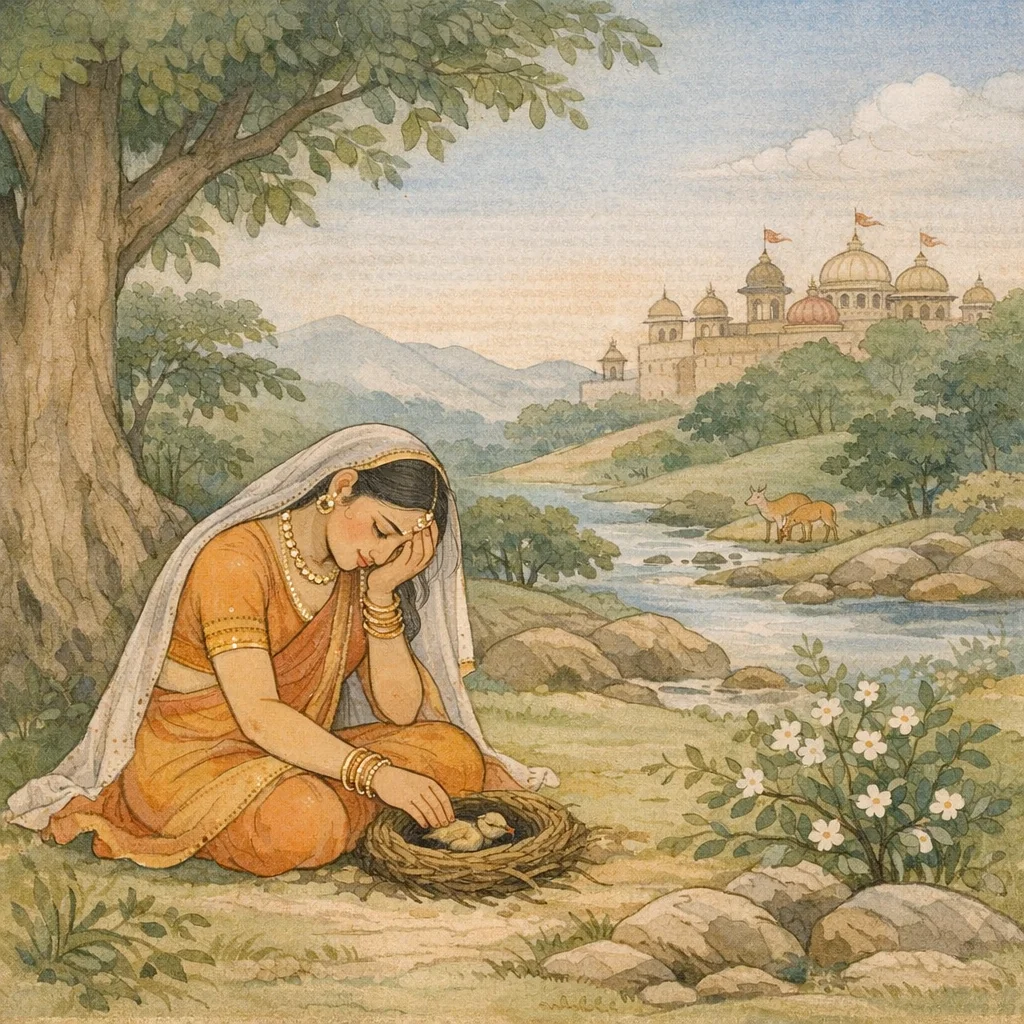
अथ सा पूजनी राजन्नागमत् फलहारिणी । अपश्यन्निहतं पुत्रं तेन बालेन भूतले,राजन! तदनन्तर जब पूजनी फल लेकर लौटी तो उसने देखा कि राजकुमारने उसके बच्चेको मार डाला है और वह धरतीपर पड़ा है
Bhishma said: “Then, O King, Pūjanī returned carrying fruits. On arriving, she saw her son lying on the ground, slain by that boy. The scene underscores the grave breach of dharma in harming the innocent, and the sorrow that follows when power or impulse overrides dharma.”
Verse 15
बाष्पपूर्णमुखी दीना दृष्टवा त॑ं रूदती सुतम् । पूजनी दुःखसंतप्ता रुदती वाक्यमब्रवीत्,अपने बच्चेकी ऐसी दुर्गति देखकर पूजनीके मुखपर आँसुओंकी धारा बह चली और वह दुःखसे संतप्त हो रोती हुई इस प्रकार कहने लगी--
Bhishma said: Seeing her son in such a plight, Pūjanī’s face was flooded with tears. That woman, worthy of honor, poor and scorched by grief, weeping, spoke these words—
Verse 16
क्षत्रिये संगतं नास्ति न प्रीतिर्न च सौहदम् । कारणात् सान्त्वयन्त्येते कृतार्था: संत्यजन्ति च,'क्षत्रियमें संगति निभानेकी भावना नहीं होती। उसमें न प्रेम होता है, न सौहार्द। ये किसी हेतु या स्वार्थसे ही दूसरोंको सान्त्वना देते हैं। जब इनका काम निकल जाता है, तब ये आश्रित व्यक्तिको त्याग देते हैं
Bhishma said: “In a kṣatriya there is no steadfast sense of keeping companionship; there is neither genuine affection nor true goodwill. They offer consolation only for some motive or advantage, and once their purpose is achieved, they abandon the dependent person.”
Verse 17
क्षत्रियेषु न विश्वास: कार्य: सर्वापकारिषु । अपकृत्यापि सतत सान्त्वयन्ति निरर्थकम्
Bhīṣma said: “One should not place trust in kṣatriyas who are bent on harming in every way. Even after committing an injury, they repeatedly offer soothing words—comfort that is ultimately empty and without real purpose.”
Verse 18
"क्षत्रिय सबकी बुराई ही करते हैं। इनपर कभी विश्वास नहीं करना चाहिये। ये दूसरोंका अपकार करके भी सदा उसे व्यर्थ सान्त्वना दिया करते हैं ।। अहमस्य करोम्यद्य सदृशीं वैरयातनाम् | कृतघ्नस्य नृशंसस्य भृशं विश्वासघातिन:,“देखो तो सही, यह राजकुमार कैसा कृतध्न, अत्यन्त क्रूर और विश्वासघाती है! अच्छा, आज मैं इससे इस वैरका बदला लेकर ही रहूँगी
Bhishma said: “Kshatriyas are ever ready to speak ill of others; one should never place trust in them. Even after harming another, they keep offering empty consolations. Today I shall inflict upon him a fitting retaliation for this enmity—upon that ungrateful, ruthless man, a grievous betrayer of trust. ‘Just look at this prince—how ungrateful, how exceedingly cruel, how treacherous! Very well; today I will take revenge for this hostility and not desist.’”
Verse 19
सहसंजातवृद्धस्य तथैव सहभोजिन: । शरणागतस्य च वधस्त्रिविधं होव पातकम्,“जो साथ ही पैदा हुआ और साथ ही पाला-पोसा गया हो, साथ ही भोजन करता हो और शरणमें आकर रहता हो, ऐसे व्यक्तिका वध करनेसे उपर्युक्त तीन प्रकारका पातक लगता है”
Bhishma said: “The killing of one who was born and brought up together with you, who shares your food and fellowship, and who has come to you for refuge—such a killing is declared to be a threefold sin. In ethical terms, it violates the bonds of shared upbringing, shared sustenance, and the sacred duty of protecting a supplicant.”
Verse 20
इत्युक्त्वा चरणाभ्यां तु नेत्रे नूपसुतस्य सा । भित्त्वा स्वस्था तत इदं पूजनी वाक्यमब्रवीत्
Having spoken thus, she struck and broke the eyes of the king’s son with her feet. Then, composed and self-possessed, that venerable woman spoke these words—words worthy of reverent attention—framing the act as a deliberate moral response rather than a moment of uncontrolled rage.
Verse 21
ऐसा कहकर पूजनीने अपने दोनों पंजोंसे राजकुमारकी दोनों आँखें फोड़ डालीं। फोड़कर वह आकाशमें स्थिर हो गयी और इस प्रकार बोली-- ।। इच्छयेह कृतं पापं सद्यस्तं चोपसर्पति । कृत॑ प्रतिकृतं येषां न नश्यति शुभाशुभम्,“इस जगत्में स्वेच्छासे जो पाप किया जाता है, उसका फल तत्काल ही कर्ताको मिल जाता है। जिनके पापका बदला मिल जाता है, उनके पूर्वकृत शुभाशुभ कर्म नष्ट नहीं होते हैं
Bhishma said: “A sin committed here out of one’s own will immediately comes back upon the doer. For those whose wrongdoing is met with a corresponding requital, their previously accumulated deeds—whether auspicious or inauspicious—do not thereby get erased.”
Verse 22
पापं कर्म कृतं किंचिद् यदि तस्मिन् न दृश्यते । नृपते तस्य पुत्रेषु पौत्रेष्वपि च नप्तृषु,“राजन! यदि यहाँ किये हुए पापकर्मका कोई फल कर्ताको मिलता न दिखायी दे तो यह समझना चाहिये कि उसके पुत्रों, पोतों और नातियोंको उसका फल भोगना पड़ेगा”
Bhīṣma said: “O king, if for some sinful deed committed here one sees no immediate consequence befalling the doer, one should understand that its fruit will be borne by his descendants—his sons, grandsons, and even great-grandsons.”
Verse 23
ब्रह्मदत्त: सुतं दृष्टवा पूजन्याहृतलोचनम् । कृते प्रतिकृतं मत्वा पूजनीमिदमब्रवीत्,राजा ब्रह्मदत्तने देखा कि पूजनीने मेरे पुत्रकी आँखें ले लीं, तब उन्होंने यह समझ लिया कि राजकुमारको उसके कुकर्मका ही बदला मिला है। यह सोचकर राजाने रोष त्याग दिया और पूजनीसे इस प्रकार कहा
Bhīṣma said: King Brahmadatta, seeing his son’s eyes taken away by Pujanī, understood it as a fitting return—retribution for the prince’s own wrongdoing. Reflecting thus, the king set aside anger and spoke to Pujanī in these words.
Verse 24
ब्रह्मदत्त उवाच अस्ति वै कृतमस्माभिरस्ति प्रतिकृतं त्वया । उभयं तत् समीभूतं वस पूजनि मा गम:,ब्रह्मदत्त बोले--पूजनी! हमने तेरा अपराध किया था और तूने उसका बदला चुका लिया। अब हम दोनोंका कार्य बराबर हो गया। इसलिये अब यहीं रह। किसी दूसरी जगह न जा
Brahmadatta said: “Indeed, a wrong was done by us, and indeed you have repaid it. Now the two deeds stand balanced. Therefore, O venerable one, stay here; do not go elsewhere.”
Verse 25
पूजन्युवाच सकृत् कृतापराधस्य तत्रैव परिलम्बतः । न तद् बुधाः प्रशंसन्ति श्रेयस्तत्रापसर्पणम्,पूजनी बोली--राजन्! एक बार किसीका अपराध करके फिर वहीं आश्रय लेकर रहे तो विद्वान् पुरुष उसके इस कार्यकी प्रशंसा नहीं करते हैं। वहाँसे भाग जानेमें ही उसका कल्याण है
Pujanī said: “O king, the wise do not praise one who, having committed an offense even once, lingers there in the very same place seeking shelter. His welfare lies in withdrawing from there.”
Verse 26
सान्त्वे प्रयुक्ते सततं कृतवैरे न विश्वसेत् । क्षिप्रं स बध्यते मूढो न हि वैरं प्रशाम्यति,जब किसीसे वैर बँध जाय तो उसकी चिकनी-चुपड़ी बातोंमें आकर कभी विश्वास नहीं करना चाहिये; क्योंकि ऐसा करनेसे वैरकी आग तो बुझती नहीं, वह विश्वास करनेवाला मूर्ख शीघ्र ही मारा जाता है
Brahmadatta said: “Even when conciliatory words are repeatedly employed, one should not place trust in a person with whom enmity has already been firmly established. The fool who trusts too quickly is soon trapped; for enmity does not truly subside merely through soothing speech.”
Verse 27
अन्योन्यकृतवैराणां पुत्रपौत्रं नियच्छति । पुत्रपौत्रविनाशे च परलोक॑ नियच्छति,जो लोग आपसमें वैर बाँध लेते हैं, उनका वह वैरभाव पुत्रों और पौत्रोंतकको पीड़ा देता है। पुत्रों-पौत्रोंका विनाश हो जानेपर परलोकमें भी वह साथ नहीं छोड़ता है
Brahmadatta said: “Enmity forged between people does not end with them; it reaches down to afflict their sons and grandsons. And even when sons and grandsons are destroyed, that hostility still follows on—binding one’s fate in the world beyond.”
Verse 28
सर्वेषां कृतवैराणामविश्वास: सुखोदय: । एकान्ततो न विश्वास: कार्यो विश्वासघातकै:ः,जो लोग आपसमें वैर रखनेवाले हैं, उन सबके लिये सुखकी प्राप्तिका उपाय यही है कि परस्पर विश्वास न करे। विश्वासघाती मनुष्योंका सर्वथा विश्वास तो करना ही नहीं चाहिये
Brahmadatta said: For all who have entered into enmity, the sure means to preserve one’s well-being is to refrain from mutual trust. One should never place complete confidence in those who betray trust, for such misplaced reliance becomes the doorway to harm rather than happiness.
Verse 29
नविश्वसेदविश्वस्ते विश्वस्ते नातिविश्वसेत् विश्वासाद् भयमुत्पन्नमपि मूलं निकृन्तति । काम॑ विश्वासयेदन्यान् परेषां च न विश्वसेत्,जो विश्वासपात्र न हो, उसपर विश्वास न करे। जो विश्वासका पात्र हो, उसपर भी अधिक विश्वास न करे; क्योंकि विश्वाससे उत्पन्न होनेवाला भय विश्वास करनेवालेका मूलोच्छेद कर डालता है। अपने प्रति दूसरोंका विश्वास भले ही उत्पन्न कर ले; किंतु स्वयं दूसरोंका विश्वास न करे
Brahmadatta said: Do not place trust in one who is untrustworthy; and even in one who is trustworthy, do not place excessive trust. For the fear that arises from misplaced trust can cut a person down at the very root. One may, if one wishes, inspire confidence in others toward oneself; but one should not surrender one’s own judgment by trusting others blindly.
Verse 30
माता पिता बान्धवानां वरिष्ठौ भार्या जरा बीजमात्र तु पुत्र: । भ्राता शत्रु: क्लिन्नपाणिवयस्य आत्मा होक: सुखदुःखस्य भोक्ता,माता और पिता स्वाभाविक स्नेह होनेके कारण बान्धवगणोंमें सबसे श्रेष्ठ हैं, पत्नी वीर्यकी नाशक (होनेसे) वृद्धावस्थाका मूर्तिमान् रूप है, पुत्र अपना ही अंश है, भाई (धनमें हिस्सा बँटानेके कारण) शत्रु समझा जाता है और मित्र तभीतक मित्र है, जबतक उसका हाथ गीला रहता है अर्थात् जबतक उसका स्वार्थ सिद्ध होता रहता है; केवल आत्मा ही सुख और दुःखका भोग करनेवाला कहा गया है
Brahmadatta said: “Among one’s relatives, mother and father are the foremost, for their affection is natural. A wife is like embodied old age, for she consumes a man’s vigor; a son is only one’s own seed—one’s very portion. A brother becomes an enemy when wealth must be divided, and a friend remains a friend only so long as his hand stays ‘wet’—so long as his self-interest is being served. In truth, it is the Self alone that is said to experience pleasure and pain.”
Verse 31
अन्योन्यकृतवैराणां न संधिरुपपद्यते । स च हेतुरतिक्रान्तो यदर्थमहमावसम्,जब आपस में वैर हो जाय, तब संधि करना ठीक नहीं होता। मैं अबतक जिस उद्देश्यसे यहाँ रही हूँ, वह तो समाप्त हो गया
Brahmadatta said: “Between those who have made one another enemies, reconciliation is not truly feasible. And the very purpose for which I have remained here has now passed away.”
Verse 32
पूजितस्यार्थमानाभ्यां जन्तो: पूर्वापकारिण: । मनो भवत्यविश्वस्तं कर्म त्रासयतेडबलान्,जो पहलेका अपकार करनेवाला प्राणी है, वह दान और मानसे पूजित हो तो भी उसका मन विश्वस्त नहीं होता। अपना किया हुआ अनुचित कर्म ही दुर्बल प्राणियोंको डराता रहता है
Brahmadatta said: Even when a creature who has previously harmed others is honored with gifts and respect, his mind does not become trusting. It is his own wrongful deed that keeps frightening the weak—haunting him with suspicion and fear of consequence.
Verse 33
पूर्व सम्मानना यत्र पश्चाच्चैव विमानना । जह्यात् तत् सत्त्ववान् स्थान शत्रो: सम्मानितो5पि सन् ।। जहाँ पहले सम्मान मिला हो, वहीं पीछे अपमान होने लगे तो प्रत्येक शक्तिशाली पुरुषको पुनः सम्मान मिलनेपर भी उस स्थानका परित्याग कर देना चाहिये
Brahmadatta said: Where one was formerly honored but later comes to be slighted, a man of strength and self-respect should abandon that place—even if an enemy there offers him honor again.
Verse 34
उषितास्मि तवागारे दीर्घकालं समर्चिता । तदिदं वैरमुत्पन्न॑ सुखमाशु व्रजाम्यहम्,राजन! मैं आपके घरमें बहुत दिनोंतक बड़े आदरके साथ रही हूँ; परंतु अब यह वैर उत्पन्न हो गया; इसलिये मैं बहुत जल्दी यहाँसे सुखपूर्वक चली जाऊँगी
Brahmadatta said: “I have dwelt in your house for a long time, honored and well cared for. But now this enmity has arisen; therefore, O king, I shall depart from here at once, peacefully and without distress.”
Verse 35
ब्रह्मदत्त तवाच यः कृते प्रतिकुर्याद् वै न स तत्रापराध्नुयात् अनृणस्तेन भवति वस पूजनि मा गम:,ब्रह्मदत्तने कहा--पूजनी! जो एक व्यक्तिके अपराध करनेपर बदलेमें स्वयं भी कुछ करे, वह कोई अपराध नहीं करता--अपराधी नहीं माना जाता। इससे तो पहलेका अपराधी ऋणमुक्त हो जाता है; इसलिये तू यहीं रह। कहीं मत जा
Brahmadatta said: “If, in response to an offense already committed, a person retaliates, he is not thereby considered to be committing a fresh offense. By such requital the earlier offender becomes free of his debt (of wrongdoing). Therefore, O venerable one, stay here—do not go elsewhere.”
Verse 36
पूजन्युवाच न कृतस्य तु कर्तुश्न सख्यं संधीयते पुनः । ह्ृदयं तत्र जानाति कर्तुश्विव कृतस्य च,पूजनी बोली--राजन्! जिसका अपकार किया जाता है और जो अपकार करता है, उन दोनोंमें फिर मेल नहीं हो सकता। जो अपराध करता है और जिसपर किया जाता है, उन दोनोंके ही हृदयोंमें वह बात खटकती रहती है
Pūjanī said: “O King, between the one who has been wronged and the one who commits the wrong, friendship cannot truly be restored again. In that matter, the hearts of both—the doer and the sufferer—continue to remember it; the sting of the deed remains within them.”
Verse 37
ब्रह्मदत्त तवाच कृतस्य चैव कर्तुश्न सख्यं संधीयते पुनः । वैरस्योपशमो दृष्ट: पापं नोपाश्लुते पुन:,ब्रह्मदत्तने कहा--पूजनी! बदला ले लेनेपर तो वैर शान्त हो जाता है और अपकार करनेवालेको उस पापका फल भी नहीं भोगना पड़ता; अतः: अपराध करने और सहनेवालेका मेल पुनः हो सकता है
Brahmadatta said: “Between the one who has suffered a wrong and the one who committed it, friendship can indeed be restored again. For it is observed that when retaliation has been carried out, hostility subsides, and the wrongdoer is no longer made to bear the burden of that sin; therefore reconciliation between the offender and the one who endured the offense becomes possible once more.”
Verse 38
पूजन्युवाच नास्ति वैरमतिक्रान्तं सान्त्वितो5स्मीति नाश्वसेत् । विश्वासाद् वध्यते लोके तस्माच्छेयो5प्यदर्शनम्,पूजनी बोली--राजन्! इस प्रकार कभी वैर शान्त नहीं होता है। “शत्रुने मुझे सान्त्वना दी है,' ऐसा समझकर उसपर कभी विश्वास नहीं करना चाहिये। ऐसी अवस्थामें विश्वास करनेसे जगतमें अपने प्राणोंसे भी (कभी-न-कभी) हाथ धोना पड़ता है, इसलिये वहाँ मुँह न दिखाना ही अच्छा है
Pūjanī said: “Hostility is not truly overcome in this way. One should not relax, thinking, ‘I have been appeased by my enemy.’ In this world, people are slain because of misplaced trust; therefore, even keeping out of sight—showing oneself no more—is the safer course.”
Verse 39
तरसा ये न शक्यन्ते शस्त्रै: सुनिशितैरपि । साम्ना ते5पि निगृहान्ते गजा इव करेणुभि:,जो लोग बलपूर्वक तीखे शस्त्रोंसे भी वशमें नहीं किये जा सकते, उन्हें भी मीठी वाणीद्वारा बंदी बना लिया जाता है। जैसे हथिनियोंकी सहायतासे हाथी कैद कर लिये जाते हैं
Brahmadatta said: “Those who cannot be subdued by sheer force—even with keenly sharpened weapons—can still be restrained by conciliation and gentle speech; just as mighty elephants are captured with the help of she-elephants.”
Verse 40
ब्रह्मदत्त उवाच संवासाज्जायते स्नेहो जीवितान्तकरेष्वपि । अन्योन्यस्य च विश्वास: श्वपचेन शुनो यथा
Brahmadatta said: “From living together, affection arises—even among those who could bring about one another’s death. And mutual trust too is born, just as between a dog-eater (śvapaca) and a dog.”
Verse 41
ब्रह्मदत्तने कहा--पूजनी! प्राणोंका नाश करनेवाले भी यदि एक साथ रहने लगें तो उनमें परस्पर स्नेह उत्पन्न हो जाता है और वे एक-दूसरेका विश्वास भी करने लगते हैं; जैसे श्वपच (चाण्डाल) के साथ रहनेसे कुत्तेका उसके प्रति स्नेह और विश्वास हो जाता है ।। अन्योन्यकृतवैराणां संवासान्मृदुतां गतम् । नैव तिष्ठति तद् वैरं पुष्करस्थमिवोदकम्,आपसमें जिनका वैर हो गया है, उनका वह वैर भी एक साथ रहनेसे मृदु हो जाता है, अत: कमल के पत्तेपर जैसे जल नहीं ठहरता है, उसी प्रकार वह वैर भी टिक नहीं पाता है
Brahmadatta said: “Venerable lady, even those who are capable of destroying one another’s lives—if they live together—come to feel mutual affection and begin to trust each other; just as a dog, by dwelling with a śvapaca (a Caṇḍāla), develops affection and confidence toward him. Likewise, the enmity of those who have made each other enemies becomes softened through living together; that hostility does not remain—just as water does not stay upon a lotus leaf.”
Verse 42
पूजन्युवाच वैरं पञ्चसमुत्थानं तच्च बुध्यन्ति पण्डिता: । स्त्रीकृतं वास्तुजं वाग्ज॑ं ससापत्नापराधजम्,पूजनी बोली--राजन्! वैर पाँच कारणोंसे हुआ करता है; इस बातको दिद्दान् पुरुष अच्छी तरह जानते हैं। १. स्त्रीके लिये, २. घर और जमीनके लिये, ३. कठोर वाणीके कारण, ४. जातिगत द्वेषके कारण और ५. किसी समय किये हुए अपराधके कारण
Pūjanī said: “O King, enmity arises from five sources—so the wise clearly understand. It is born (1) from a woman (rivalry over a woman), (2) from house, land, or property, (3) from harsh or wounding speech, (4) from an offense connected with a co-wife (rivalry within a polygynous household), and (5) from a past wrongdoing.”
Verse 43
तत्र दाता न हन्तव्य: क्षत्रियेण विशेषतः । प्रकाशं वाप्रकाशं वा बुद्ध्वा दोषबलाबलम्,इन कारणोंसे भी ऐसे व्यक्तिका वध नहीं करना चाहिये जो दाता हो अर्थात् परोपकारी हो, विशेषत: क्षत्रियनरेशको छिपकर या प्रकटरूपमें ऐसे व्यक्तिपर हाथ नहीं उठाना चाहिये। पहले यह विचार कर लेना चाहिये कि उसका दोष हल्का है या भारी। उसके बाद कोई कदम उठाना चाहिये
Therefore, a benefactor—one who gives and supports others—should not be slain, and this is especially binding upon a kṣatriya. Whether openly or in secret, a ruler should not raise his hand against such a person without first discerning the nature of the fault and weighing its gravity and strength; only after judging whether the wrongdoing is slight or severe should any action be taken.
Verse 44
कृतवैरे न विश्वास: कार्यस्त्विह सुहृद्यपि । छन्न॑ संतिष्ठते वैरं गूढो5ग्निरिव दारुषु,जिसने वैर बाँध लिया हो, ऐसे सुहृदपर भी इस जगतमें विश्वास नहीं करना चाहिये; क्योंकि जैसे लकड़ीके भीतर आग छिपी रहती है, उसी प्रकार उसके हृदयमें वैरभाव छिपा रहता है
One who has bound himself to enmity should not be trusted in this world, even if he is a friend; for as fire lies hidden within wood, so does hostility lie concealed within his heart.
Verse 45
न वित्तेन न पारुष्यैर्न सान्त्वेन न च श्रुतै: । कोपाग्नि: शाम्यते राज॑स्तोयाग्निरिव सागरे,राजन्! जिस प्रकार बडवानल समुद्रमें किसी तरह शान्त नहीं होता, उसी प्रकार क्रोधाग्नि भी न धनसे, न कठोरता दिखानेसे, न मीठे वचनों द्वारा समझाने-बुझानेसे और न शास्त्रज्ञानसे ही शान्त होती है
O King, the fire of anger is not quenched by wealth, nor by harsh measures, nor by gentle conciliation, nor even by learning from sacred teachings. Like the submarine fire that burns within the ocean and is not stilled by its waters, anger too resists ordinary remedies.
Verse 46
न हि वैराग्निरुद्धूत: कर्म चाप्यपराधजम् | शाम्यत्यदग्ध्वा नृपते विना होकतरक्षयात्
For the fire of enmity, once fanned into flame, and the consequences born of wrongdoing do not subside, O king, without first burning through their fuel. They are not quenched except by the exhaustion of their very cause.
Verse 47
नरेश्वर! प्रजजलित हुई वैरकी आग एक पक्षको दग्ध किये बिना नहीं बुझती है और अपराधजनित कर्म भी एक पक्षका संहार किये बिना शान्त नहीं होता है ।। सत्कृतस्यार्थमानाभ्यां तत्र पूर्वापकारिण: । नादेयोअमित्रविश्वास: कर्म त्रासयतेडबलान्,जिसने पहले अपकार किया है, उसका यदि अपकृत व्यक्तिके द्वारा धन और मानसे सत्कार किया जाय तो भी उसे उस शत्रुका विश्वास नहीं करना चाहिये; क्योंकि अपना किया हुआ पापकर्म ही दुर्बलोंको डराता रहता है
Brahmadatta said: “O king, once the fire of enmity has been kindled, it does not die down without burning one side; likewise, action born of wrongdoing does not become quiet without bringing destruction upon one side. Even if the one who previously did harm is later honored with wealth and respect by the injured party, trust in that enemy should not be placed—because a person’s own sinful deed keeps the weak in constant fear.”
Verse 48
नैवापकारे कम्मिंश्चिदहं त्वयि तथा भवान् | उषितास्मि गृहे5हं ते नेदानीं विश्वसाम्पहम्,अबतक तो न मैंने कोई आपका अपकार किया था और न आपने ही मेरी कोई हानि की थी; इसलिये मैं आपके महलमें रहती थी, किंतु अब मैं आपका विश्वास नहीं कर सकती
Brahmadatta said: “Truly, I have done you no harm in any way, nor have you harmed me in that manner. Therefore I lived in your house; but now I can no longer place my trust in you.”
Verse 49
ब्रह्मदत्त तवाच कालेन क्रियते कार्य तथैव विविधा: क्रिया: । कालेनैते प्रवर्तन्ते कः कस्येहापराध्यति
Brahmadatta said: “By Time, what must be done is brought to completion; and likewise, the many kinds of actions arise. It is by Time that these (beings and events) are set in motion—so in this world, who can truly be said to have wronged whom?”
Verse 50
ब्रह्मदत्तने कहा--पूजनी! काल ही समस्त कार्य करता है तथा कालके ही प्रभावसे भाँति-भाँतिकी क्रियाएँ आरम्भ होती हैं। इसमें कौन किसका अपराध करता है? ।। तुल्यं चोभे प्रवर्तेते मरणं जन्म चैव ह | कार्यते चैव कालेन ततन्निमित्तं न जीवति,जन्म और मृत्यु--ये दोनों क्रियाएँ समानरूपसे चलती रहती हैं। और काल ही इन्हें कराता है। इसीलिये प्राणी जीवित नहीं रह पाता
Brahmadatta said: “Venerable lady, Time alone accomplishes all actions, and under the influence of Time the many kinds of activities begin. In such a case, who can be said to offend against whom? Birth and death proceed alike, side by side; Time itself brings them about. Therefore a living being cannot remain alive (indefinitely), for life is not sustained against Time’s ordinance.”
Verse 51
वध्यन्ते युगपत् केचिदेकैकस्य न चापरे । कालो दहति भूतानि सम्प्राप्पाग्निरिवेन्धनम्
Some are struck down all at once, while others are not destroyed one by one. Time consumes living beings the way a fire, once it has reached its fuel, burns it up—impartially and inevitably.
Verse 52
कुछ लोग एक साथ ही मारे जाते हैं; कुछ एक-एक करके मरते हैं और बहुत-से लोग दीर्घकालतक मरते ही नहीं हैं। जैसे आग ईंधनको पाकर उसे जला देती है, उसी प्रकार काल ही समस्त प्राणियोंको दग्ध कर देता है ।। नाहं प्रमाणं नैव त्वमन्योन्यं कारणं शुभे | कालो नित्यमुपादत्ते सुखं दु:ःखं च देहिनाम्,शुभे! एक दूसरेके प्रति किये गये अपराधमें न तो तुम यथार्थ कारण हो और न मैं ही वास्तविक हेतु हूँ। काल ही सदा समस्त देहधारियोंके सुख-दुःखको ग्रहण या उत्पन्न करता है
Brahmadatta said: “Some are slain all at once; some die one by one; and many do not die for a long time. As fire, finding fuel, burns it up, so Time itself consumes all living beings. In the wrongs done between us, neither you are the true cause nor am I. It is Time alone that continually allots and brings about pleasure and pain for embodied creatures.”
Verse 53
एवं वसेह ससस््नेहा यथाकाममहिंसिता । यत् कृतं तत् तु मे क्षान्तं त्वं च वै क्षम पूजनि,पूजनी! मैं तेरी किसी प्रकार हिंसा नहीं करूँगा। तू यहाँ अपनी इच्छा के अनुसार स्नहेपूर्वक निवास कर। तूने जो कुछ किया है, उसे मैंने क्षमा कर दिया और मैंने जो कुछ किया हो, उसे तू भी क्षमा कर दे
Brahmadatta said: “Live here in this way—affectionately and as you wish—without fear of harm. Whatever you have done, I have forgiven. And whatever I may have done, you too should forgive, O worthy of honor.”
Verse 54
पूजन्युवाच यदि काल: प्रमाणं ते न वैरं कस्यचिद् भवेत् । कस्मात् त्वपचितिं यान्ति बान्धवा बान्धवै्हतै:,पूजनी बोली--राजन्! यदि आप कालको ही सब क्रियाओंका कारण मानते हैं, तब तो किसीका किसीके साथ वैर नहीं होना चाहिये; फिर अपने भाई-बन्धुओंके मारे जानेपर उनके सगे-सम्बन्धी बदला क्यों लेते हैं?
Pūjanī said: “O king! If, in your view, Time alone is the decisive authority behind actions, then no one should bear enmity toward anyone. Why, then, do kinsmen seek retribution when their own relatives have been slain by other relatives?”
Verse 55
कस्माद देवासुरा: पूर्वमन्योन्यमभिजघ्निरे । यदि कालेन निर्याणं सुखं दु:खं भवाभवौ,यदि कालसे ही मृत्यु, दुःख-सुख और उन्नति अवनति आदिका सम्पादन होता है, तब पूर्वकालमें देवताओं और असुरों ने क्यों आपसमें युद्ध करके एक दूसरे का वध किया?
Brahmadatta said: “If departure from life, as well as happiness and sorrow, rise and fall—indeed all attainment and loss—are brought about by Time alone, then why did the gods and the asuras in former days strike one another down in battle? What purpose could violence serve if Time is the sole disposer of outcomes?”
Verse 56
भिषजो भैषजं कर्तु कस्मादिच्छन्ति रोगिण: । यदि कालेन पच्यन्ते भेषजै: कि प्रयोजनम्,वैद्यलोग रोगियोंकी दवा करनेकी अभिलाषा क्यों करते हैं? यदि काल ही सबको पका रहा है तो दवाओंका क्या प्रयोजन है?
Brahmadatta said: “Why do physicians desire to administer medicine to the sick? If Time itself is ‘ripening’ (bringing all beings to their destined end), what purpose do medicines serve?”
Verse 57
प्रलाप: सुमहान् कस्मात् क्रियते शोकमूर्च्छितै: । यदि काल: प्रमाणं ते कस्माद् धर्मोडस्ति कर्तृषु,यदि आप कालको ही प्रमाण मानते हैं तो शोकसे मूर्च्छित हुए प्राणी क्यों महान् प्रलाप एवं हाहाकार करते हैं? फिर कर्म करनेवालोंके लिये विधि-निषेधरूपी धर्मके पालनका नियम क्यों रखा गया है?
Brahmadatta said: “Why do those who are faint with grief raise such immense lamentation and cries? If, for you, Time alone is the decisive authority, then why is there any dharma—any rule of what ought and ought not be done—laid down for those who act?”
Verse 58
तव पुत्रो ममापत्यं हतवान् स हतो मया । अनन्तरं त्वयाहं च हन्तव्या हि नराधिप,नरेश्वर! आपके बेटेने मेरे बच्चेकों मार डाला और मैंने भी उसकी आँखोंको नष्ट कर दिया। इसके बाद अब आप मेरा वध कर डालेंगे
Brahmadatta said: “Your son killed my child; therefore I have killed him. After this, O king, it is indeed for you to kill me as well.”
Verse 59
अहं हि पुत्रशोकेन कृतपापा तवात्मजे | यथा त्वया प्रहर्तव्यं तथा तत्त्वं च मे शृणु,जैसे मैं पुत्र शोकसे संतप्त होकर आपके पुत्रके प्रति पापपूर्ण बर्ताव कर बैठी, उसी प्रकार आप भी मुझपर प्रहार कर सकते हैं। यहाँ जो यथार्थ बात है, वह मुझसे सुनिये
Brahmadatta said: “Overwhelmed by grief for my son, I committed a sinful wrong against your child. Therefore, just as you may rightly strike me in return, so too—listen from me to the truth of what has actually happened.”
Verse 60
भक्ष्यार्थ क्रीडनार्थ च नरा वाउछन्ति पक्षिण: । तृतीयो नास्ति संयोगो वधबन्धादृते क्षम:,मनुष्य खाने और खेलनेके लिये ही पक्षियोंकी कामना करते हैं। वध करने या बन्धनमें डालनेके सिवा तीसरे प्रकारका कोई सम्पर्क पक्षियोंके साथ उनका नहीं देखा जाता है
Brahmadatta said: “Men desire birds only for two purposes—food and sport. Apart from killing them or binding them in captivity, no third kind of relationship with birds is generally seen.”
Verse 61
वधबन्धभयादेते मोक्षतन्त्रमुपाश्रिता: । जनीमरण-जं दुःखं प्राहुरवेंदविदो जना:,इस वध और बन्धनके भयसे ही मुमुक्षुलोग मोक्ष-शास्त्रका आश्रय लेकर रहते हैं; क्योंकि वेदवेत्ता पुरुषोंका कहना है कि जन्म और मरणका दुःख असहा होता है
Brahmadatta said: ‘It is from fear of being slain and bound that these people take refuge in the discipline of liberation. For those who truly know the Veda declare that the suffering born of repeated birth and death is unbearable.’
Verse 62
सर्वस्य दयिता: प्राणा: सर्वस्य दयिता: सुता: । दुःखादुद्धिजते सर्व: सर्वस्य सुखमीप्सितम्,सबको अपने प्राण प्रिय होते हैं, सभीको अपने पुत्र प्यारे लगते हैं; सब लोग दुःखसे उद्विग्न हो उठते हैं और सभीको सुखकी प्राप्ति अभीष्ट होती है
Brahmadatta said: “To everyone, their own life-breaths are dear; to everyone, their own sons are dear. All people recoil when faced with suffering, and for everyone the attainment of happiness is what is desired.”
Verse 63
दुःखं जरा ब्रद्य॒दत्त दुःखमर्थविपर्यय: । दुःखं चानिष्टसंवासो दुःखमिष्टवियोजनम्,महाराज ब्रह्मदत्त! दुःखके अनेक रूप हैं। बुढ़ापा दुःख है, धनका नाश दु:ख है, अप्रियजनोंके साथ रहना दुःख है और प्रियजनोंसे बिछुड़ना दुःख है
Brahmadatta said: “Sorrow has many forms. Old age is sorrow; the reversal or loss of one’s wealth is sorrow; dwelling with those one does not like is sorrow; and separation from those one loves is sorrow.”
Verse 64
वधबन्धकृतं दुःखं स्वीकृतं सहजं तथा । दुःखं सुतेन सततं जनान् विपरिवर्तते,वध और बन्धनसे भी सबको दुःख होता है। स्त्रीके कारण और स्वाभाविक रूपसे भी दुःख हुआ करता है तथा पुत्र यदि नष्ट हो जाय या दुष्ट निकल जाय तो उससे भी लोगोंको सदा दु:ख प्राप्त होता रहता है
Suffering wrought by killing and by bondage befalls everyone. There is suffering one takes upon oneself, and suffering that arises naturally as well. And suffering also comes through a son: if a son is lost, or if he turns out wicked, people are continually afflicted.
Verse 65
न दुःखं परदु:खे वै केचिदाहुरबुद्धय: । यो दुःखं नाभिजानाति स जल्पति महाजने,कुछ मूढ़ मनुष्य कहा करते हैं कि पराये दुःखमें दुःख नहीं होता; परंतु वही ऐसी बात श्रेष्ठ पुरुषोंक निकट कहा करता है, जो दुःख के तत्त्वको नहीं जानता
Brahmadatta said: “Some foolish people claim that one need not feel sorrow at another’s sorrow. But such talk is spoken only by one who does not truly understand what suffering is—especially when he speaks before the wise and the good.”
Verse 66
यस्तु शोचति दुःखार्त: स कथं॑ वक्तुमुत्सहेत् । रसज्ञ: सर्वदुःखस्य यथा55त्मनि तथा परे,जो दुःखसे पीड़ित होकर शोक करता है तथा जो अपने और पराये सभीके दुःखका रस जानता है, वह ऐसी बात कैसे कह सकता है?
But one who, stricken by sorrow, laments—how could he dare to speak in such a way? For the person who truly knows the taste and weight of every kind of suffering, whether in himself or in others, cannot lightly utter words that ignore or diminish grief.
Verse 67
यत् कृतं ते मया राजंस्त्वया च मम यत् कृतम् । न तद् वर्षशतै: शक्यं व्यपोहितुमरिंदम,शत्रुदमन नरेश! आपने जो मेरा अपकार किया है तथा मैंने बदलेमें जो कुछ किया है, उसे सैकड़ों वर्षोंमें भी भुलाया नहीं जा सकता
Brahmadatta said: “O King, what I have done to you, and what you have done to me—this mutual injury cannot be erased or forgotten even in hundreds of years, O subduer of foes.”
Verse 68
आवयो: कृतमन्योन्यं पुनः संधिर्न विद्यते । स्मृत्वा स्मृत्वा हि ते पुत्र नवं वैरं भविष्यति,इस प्रकार आपसमें एक दूसरेका अपकार करनेके कारण अब हमारा फिर मेल नहीं हो सकता। अपने पुत्रको याद कर-करके आपका वैर ताजा होता रहेगा
Brahmadatta said: “Between us, after the mutual wrongs we have done one another, there can be no reconciliation again. For, remembering your son again and again, a fresh enmity will keep arising in you.”
Verse 69
वैरमन्तिकमासाद्य य:ः प्रीतिं कर्तुमिच्छति । मृन्मयस्येव भग्नस्य यथा संधिर्न विद्यते,इस प्रकार मरणान्त वैर ठन जानेपर जो प्रेम करना चाहता है, उसका वह प्रेम उसी प्रकार असम्भव है, जैसे मिट्टीका बर्तन एक बार फूट जानेपर फिर नहीं जुटता है
Brahmadatta said: “When enmity has been carried to its final limit—ending only with death—whoever then wishes to establish affection finds it impossible. Such love cannot be restored, just as a clay vessel, once shattered, admits of no true rejoining.”
Verse 70
निश्चय: स्वार्थशास्त्रेषु विश्वासश्वासुखोदय: । उशना चैव गाथे डे प्रह्लादायाब्रवीत् पुरा,विश्वास दुःख देनेवाला है, यही नीतिशास्त्रोंका निश्चय है। प्रचीनकालमें शुक्राचार्यने भी प्रह्नमादसे दो गाथाएँ कही थीं, जो इस प्रकार हैं
Brahmadatta said: “This is the settled conclusion of the treatises on practical policy: trust gives rise to suffering. Long ago, Uśanā (Śukrācārya) also spoke two verses to Prahlāda on this very point.”
Verse 71
ये वैरिण: श्रद्दधते सत्ये सत्येतरेडपि वा । वध्यन्ते श्रद्धधानास्तु मधु शुष्कतृणैर्यथा,जैसे सूखे तिनकोंसे ढके हुए गड्ढेके ऊपर रखे हुए मधुको लेने जानेवाले मनुष्य मारे जाते हैं, उसी प्रकार जो लोग वैरीकी झूठी या सच्ची बातपर विश्वास करते हैं, वे भी बेमौत मरते हैं
Brahmadatta said: “Those who trust an enemy—whether he speaks truth or falsehood—are slain for their trust; like men who go to take honey set upon a pit covered with dry grass, and so meet death.”
Verse 72
न हि वैराणि शाम्यन्ति कुले दुः:खगतानि च । आख्यातारश्व विद्यन्ते कुले वै प्रियते पुमान्,जब किसी कुलमें दुःखदायी वैर बाँध जाता है, तब वह शान्त नहीं होता। उसे याद दिलानेवाले बने ही रहते हैं, इसलिये जबतक कुलमें एक भी पुरुष जीवित रहता है, तबतक वह वैर नहीं मिटता है
Brahmadatta said: Feuds that have taken root in a lineage and have become bound up with its suffering do not easily subside. For there are always people who keep recounting and rekindling them; therefore, as long as even one man of that family remains alive, the enmity is not truly extinguished.
Verse 73
उपगृहा तु वैराणि सान्त्वयन्ति नराधिप । अथीनं प्रतिपिंषन्ति पूर्ण घटमिवाश्मनि,नरेश्वर! दुष्ट प्रकृतिके लोग मनमें वैर रखकर ऊपरसे शत्रुको मधुर वचनोंद्वारा सान्त्वना देते रहते हैं। तदनन्तर अवसर पाकर उसे उसी प्रकार पीस डालते हैं, जैसे कोई पानीसे भरे हुए घड़ेको पत्थरपर पटककर चूर-चूर कर दे
Brahmadatta said: O king, those of wicked disposition conceal their enmities and keep soothing an unsuspecting man with sweet, conciliatory words. Then, when they find the right opportunity, they crush him utterly—just as one shatters a water-filled pot by dashing it upon a stone.
Verse 74
सदा न विश्वसेद् राजन् पापं कृत्वेह कस्यचित् । अपकृत्य परेषां हि विश्वासाद् दुः:खमश्लुते,राजन्! किसीका अपराध करके फिर उसपर कभी विश्वास नहीं करना चाहिये। जो दूसरोंका अपकार करके भी उनपर विश्वास करता है, उसे दुःख भोगना पड़ता है
Brahmadatta said: “O King, one should never place trust again in someone who has committed a sin here. For he who harms others and yet, out of misplaced confidence, trusts them, inevitably comes to taste sorrow.”
Verse 75
ब्रह्मदत्त तवाच नाविश्वासाद विन्दते<र्थानीहते चापि किंचन । भयात् त्वेकतरान्नित्यं मृतकल्पा भवन्ति च,ब्रह्मदत्तने कहा--पूजनी! अविश्वास करनेसे तो मनुष्य संसारमें अपने अभीष्ट पदार्थोंको कभी नहीं प्राप्त कर सकता और न किसी कार्यके लिये कोई चेष्टा ही कर सकता है। यदि मनमें एक पक्षसे सदा भय बना रहे तो मनुष्य मृतकतुल्य हो जायँगे--उनका जीवन ही मिट्टी हो जायगा
Brahmadatta said: “From distrust a person never gains the desired aims in this world, nor does he even undertake any effort toward action. If fear continually settles in the mind on one side (as a fixed apprehension), people become like the dead—life itself is as good as lost.”
Verse 76
पूजन्युवाच यस्येह व्रणिनौ पादौ पद्भ्यां च परिसर्पति । खन््येते तस्य तौ पादौ सुगुप्तमिह धावत:,पूजनीने कहा--राजन्! जिसके दोनों पैरोंमें घाव हो गया हो; फिर भी वह उन पैरोंसे ही चलता रहे तो कितना ही बचा-बचाकर क्यों न चले; यहाँ दौड़ते हुए उन पैरोंमें पुन: घाव होते ही रहेंगे
Pūjanī said: “O King, if a man’s feet are wounded, yet he still keeps moving with those very feet, then—however cautiously he may try to go—while he runs about in this world those feet will be injured again and again.”
Verse 77
नेत्राभ्यां सरुजाभ्यां यः प्रतिवातमुदी क्षते । तस्य वायुरुजात्यर्थ नेत्रयोर्भवति ध्रुवम्,जो मनुष्य अपने रोगी नेत्रोंस हवाकी ओर रुख करके देखता है, उसके उन नेत्रोंमें वायुके कारण अवश्य ही बहुत पीड़ा बढ़ जाती है
Brahmadatta said: “If a man, with eyes already afflicted by pain, looks straight into the oncoming wind, then because of that wind the suffering in his eyes surely increases greatly.”
Verse 78
दुष्ट पन््थानमासाद्य यो मोहादुपपद्यते । आत्मनो बलमज्ञाय तदन्तं तस्य जीवितम्,जो अपनी शक्तिको न समझकर मोहवश दुर्गम मार्गपर चल देता है, उसका जीवन वहीं समाप्त हो जाता है
He who, deluded, sets out upon a wicked and perilous path without understanding his own strength—his life comes to its end there itself.
Verse 79
यस्तु वर्षमविज्ञाय क्षेत्र कर्षति कर्षक: । हीन: पुरुषकारेण सस्य॑ नैवाश्लुते ततः,जो किसान वर्षाके समयका विचार न करके खेत जोतता है, उसका पुरुषार्थ व्यर्थ जाता है; और उस जुताईसे उसको अनाज नहीं मिल पाता
Brahmadatta said: “The farmer who ploughs his field without understanding the proper season of rains finds his effort deficient; from such untimely labour he does not obtain any grain.”
Verse 80
यस्तु तिक्तं कषायं वा स्वादु वा मधुरं हितम् । आहारं कुरुते नित्यं सो5मृतत्वाय कल्पते,जो प्रतिदिन तीता, कसैला, स्वादिष्ट अथवा मधुर, जैसा भी हो, हितकर भोजन करता है, वही अन्न उसके लिये अमृतके समान लाभकारी होता है
Brahmadatta said: “Whoever, day after day, takes as food what is wholesome—whether it tastes bitter, astringent, pleasant, or sweet—such a person is fit for immortality; for that very food becomes like nectar in its benefit to him.”
Verse 81
पथ्य॑ मुक्त्वा तु यो मोहाद् दुष्टमश्नाति भोजनम् | परिणाममविज्ञाय तदन्तं तस्य जीवितम्,परंतु जो परिणामके विचार किये बिना ही मोहवश पथ्य छोड़कर अपथ्य भोजन करता है, उसके जीवनका वहीं अन्त हो जाता है
Brahmadatta said: “If, out of delusion, a person abandons what is wholesome and eats harmful food without considering its consequences, then that very act becomes the limit of his life—his life comes to an end thereby.”
Verse 82
दैवं पुरुषकारश्न स्थितावन्योन्यसंश्रयात् । उदाराणां तु सत्कर्म दैवं क्लीबा उपासते,दैव और पुरुषार्थ दोनों एक-दूसरेके सहारे रहते हैं, परंतु उदार विचारवाले पुरुष सर्वदा शुभ कर्म करते हैं और नपुंसक दैवके भरोसे पड़े रहते हैं
Brahmadatta said: Fate (the divine dispensation) and human effort stand only by leaning upon one another. Yet the noble-minded persist in righteous action, while the weak and unmanly merely worship fate—living on it as an excuse instead of acting well.
Verse 83
कर्म चात्महितं कार्य तीक्ष्णं वा यदि वा मृदु । ग्रस्यते5कर्मशीलस्तु सदानर्थरकिज्चन:,कठोर अथवा कोमल, जो अपने लिये हितकर हो, वह कर्म करते रहना चाहिये। जो कर्मको छोड़ बैठता है, वह निर्धन होकर सदा अनर्थोंका शिकार बना रहता है
Brahmadatta said: One should keep performing action that is beneficial to oneself—whether it must be firm and sharp, or gentle and mild. But the person who is not devoted to work, abandoning action, is swallowed up by misfortune and becomes ever destitute, continually falling prey to harmful outcomes.
Verse 84
तस्मात् सर्व व्यपोहार्थ कार्य एव पराक्रम: । सर्वस्वमपि संत्यज्य कार्यमात्महितं नरैः,अतः काल, दैव और स्वभाव आदि सारे पदार्थोंका भरोसा छोड़कर पराक्रम ही करना चाहिये। मनुष्यको सर्वस्वकी बाजी लगाकर भी अपने हितका साधन ही करना चाहिये
Therefore, setting aside all excuses and evasions, one should rely on effort alone and act with valor. Even at the cost of one’s entire possessions, a person should pursue what truly serves one’s own welfare—rather than placing trust in factors like time, fate, or innate disposition.
Verse 85
विद्या शौर्य च दाक्ष्यं च बल॑ धैर्य च पञजचमम् | मित्राणि सहजान्याहुर्वर्तयन्तीह तैर्बुधा:,विद्या, शूरवीरता, दक्षता, बल और पाँचवाँ धैर्य--ये पाँच मनुष्य के स्वाभाविक मित्र बताये गये हैं। विद्वान् पुरुष इनके द्वारा ही इस जगतमें सारे कार्य करते हैं
Learning, valor, skill, strength, and as the fifth, steadfast endurance—these five are said to be a person’s inborn friends. By their aid the wise accomplish all undertakings in this world.
Verse 86
निवेशनं च कुप्य॑ च क्षेत्र भार्या सुहज्जन: । एतान्युपहितान्याहु: सर्वत्र लभते पुमान्,घर, ताँबा आदि धातु, खेत, स्त्री और सुहृदजन--ये उपमित्र बताये गये हैं। इन्हें मनुष्य सर्वत्र पा सकता है
Brahmadatta said: “A dwelling, movable goods (such as metals and valuables), land, a wife, and well-wishing friends—these are called ‘secondary allies’ (upamitra). A man may obtain such supports in many places.” The ethical point is that these aids, though useful, are replaceable and contingent; therefore one should not mistake them for the highest refuge, nor base one’s conduct solely on them.
Verse 87
सर्वत्र रमते प्राज्ञ: सर्वत्र च विराजते | न विभीषयते कश्रचिद् भीषितो न बिभेति च,विद्वान् पुरुष सर्वत्र आनन्दमें रहता है और सर्वत्र उसकी शोभा होती है। उसे कोई डराता नहीं है और किसीके डरानेपर भी वह डरता नहीं है
Brahmadatta said: The wise person finds contentment everywhere and shines with dignity in every situation. No one can truly intimidate him; and even when threatened, he does not succumb to fear. The ethical point is that inner steadiness born of wisdom makes one fearless and unshakable amid changing circumstances.
Verse 88
नित्य॑ बुद्धिमतो<प्यर्थ: स्वल्पको5पि विवर्धते । दाक्ष्येण कुर्वतः कर्म संयमात् प्रतितिष्ठति,बुद्धिमानके पास थोड़ा-सा धन हो तो वह भी सदा बढ़ता रहता है। वह दक्षतापूर्वक काम करते हुए संयमके द्वारा प्रतिष्ठित होता है
Brahmadatta said: Even a small amount of wealth, when possessed by an intelligent person, steadily increases. By performing one’s work with skill and efficiency, and by self-restraint, a person becomes firmly established—gaining stability, standing, and lasting prosperity.
Verse 89
गृहस्नेहावबद्धानां नराणामल्पमेधसाम् । कुस्त्री खादति मांसानि माघमां सेगवा इव,घरकी आसत्तिमें बँधें हुए मन्दबुद्धि मनुष्योंके मांसोंको कुटिल स्त्री खा जाती है अर्थात् उसे सुखा डालती है, जैसे केकड़ेकी मादाको उसकी संतानें ही नष्ट कर देती हैं
Men of little understanding, bound fast by attachment to the household, are “eaten in their flesh” by a crooked woman—meaning that she drains away their strength and dries up their happiness. It is like the female crab, destroyed by her own offspring.
Verse 90
गृहं क्षेत्राणि मित्राणि स्वदेश इति चापरे । इत्येवमवसीदन्ति नरा बुद्धिविपर्यये,बुद्धिके विपरीत हो जानेसे दूसरे-दूसरे बहुतेरे मनुष्य घर, खेत, मित्र और अपने देश आदिकी चिन्तासे ग्रस्त होकर सदा दुखी बने रहते हैं
Brahmadatta said: ‘Some think only in terms of “my house, my fields, my friends, my homeland.” When the intellect is overturned and distorted, people sink into dejection—oppressed by such possessive concerns and thus remaining continually unhappy.’
Verse 91
उत्पतेत् सहजाद् देशाद् व्याधिदुर्भिक्षपीडितात् | अन्यत्र वस्तुं गच्छेद् वा वसेद् वा नित्यमानित:,अपना जन्मस्थान भी यदि रोग और दुर्भिक्षसे पीडित हो तो आत्मरक्षाके लिये वहाँसे हट जाना या अन्यत्र निवासके लिये चले जाना चाहिये। यदि वहाँ रहना ही हो तो सदा सम्मानित होकर रहे
Brahmadatta said: If one’s native land is afflicted by disease and famine, one should depart from it for the sake of self-preservation, or go elsewhere to reside. If, however, one must remain there, one should live in such a way as to be continually respected—maintaining dignity and social standing even amid hardship.
Verse 92
तस्मादन्यत्र यास्यामि वस्तुं नाहमिहोत्सहे । कृतमेतदनार्य मे तव पुत्रे च पार्थिव,भूपाल! मैंने तुम्हारे पुत्रके साथ दुष्टतापूर्ण बर्ताव किया है, इसलिये मैं अब यहाँ रहनेका साहस नहीं कर सकती, दूसरी जगह चली जाऊँगी
Therefore I shall go elsewhere; I do not have the courage to remain here. O king, I have committed an ignoble wrong against your son, and for that reason I cannot stay.
Verse 93
कुभार्या च कुपुत्रं च कुराजानं कुसौहृदम् । कुसम्बन्धं कुदेशं च दूरत: परिवर्जयेत्,दुष्टा भार्या, दुष्ट पुत्र, कुटिल राजा, दुष्ट मित्र, दूषित सम्बन्ध और दुष्ट देशको दूरसे ही त्याग देना चाहिये
Brahmadatta said: One should keep far away—and renounce from a distance—a wicked wife, a bad son, a corrupt or unjust king, a treacherous friend, a harmful association, and an unwholesome land.
Verse 94
कुपुत्रे नास्ति विश्वास: कुभार्यायां कुतो रति: । कुराज्ये निर्वतिर्नास्ति कुदेशे नास्ति जीविका,कुपुत्रपर कभी विश्वास नहीं हो सकता। दुष्टा भार्यापर प्रेम कैसे हो सकता है? कुटिल राजाके राज्यमें कभी शान्ति नहीं मिल सकती और दुष्ट देशमें जीवन-निर्वाह नहीं हो सकता
In a bad son there is no trust; in a wicked wife, how could love arise? In the realm of an unjust king there is no peace, and in an unwholesome land there is no livelihood.
Verse 95
कुमित्रे संगतिर्नास्ति नित्यमस्थिरसौहदे । अवमान: कुसम्बन्धे भवत्यर्थविपर्यये,कुमित्रका स्नेह कभी स्थिर नहीं रह सकता, इसलिये उसके साथ सदा मेल बना रहे-- यह असम्भव है और जहाँ दूषित सम्बन्ध हो, वहाँ स्वार्थमें अन्तर आनेपर अपमान होने लगता है
With a bad friend, lasting companionship is not possible, for such friendship is ever unstable. And where the relationship itself is tainted, the moment interests turn contrary, disrespect and humiliation inevitably arise.
Verse 96
सा भार्या या प्रियं ब्रूते स पुत्रो यत्र निर्व॒ति: । तम्मित्रं यत्र विश्वास: स देशो यत्र जीव्यते,पत्नी वही अच्छी है, जो प्रिय वचन बोले। पुत्र वही अच्छा है, जिससे सुख मिले। मित्र वही श्रेष्ठ है, जिसपर विश्वास बना रहे और देश भी वही उत्तम है, जहाँ जीविका चल सके
A good wife is she who speaks pleasing words. A good son is one from whom happiness comes. A true friend is one in whom trust endures. And a good land is that in which one can make a living.
Verse 97
यत्र नास्ति बलात्कार: स राजा तीव्रशासन: । भीरेव नास्ति सम्बन्धो दरिद्रं यो बुभूषते,उग्र शासनवाला राजा वही श्रेष्ठ है, जिसके राज्यमें बलात्कार न हो, किसी प्रकारका भय न रहे, जो दरिद्रका पालन करना चाहता हो तथा प्रजाके साथ जिसका पाल्य-पालक सम्बन्ध सदा बना रहे
The finest king is one whose rule is stern, yet in whose realm there is no violent coercion (no rape), no fear of any kind; who desires to sustain the poor, and who ever preserves with his people the enduring bond of protector and protected.
Verse 98
भार्या देशो5थ मित्राणि पुत्रसम्बन्धिबान्धवा: । एते सर्वे गुणवति धर्मनेत्रे महीपतौ,जिस देशका राजा गुणवान् और धर्मपरायण होता है, वहाँ स्त्री, पुत्र, मित्र सम्बन्धी तथा देश सभी उत्तम गुणसे सम्पन्न होते हैं
Brahmadatta said: When the ruler of a land is virtuous and guided by dharma, then the wife, the country, friends, sons, and kinsmen bound by relationship—all these flourish and become endowed with good qualities. The king’s righteousness becomes the moral axis that elevates the character and well-being of the entire social circle and realm.
Verse 99
अधर्मज्ञस्य विलयं प्रजा गच्छन्ति निग्रहात् । राजा मूलं त्रिवर्गस्य स्वप्रमत्तोडनुपालयेत्
When a ruler is ignorant of dharma, his subjects fall into ruin under the pressure of misrule and coercion. Since the king is the very root of the three aims of life (dharma, artha, and kāma), he must not govern in heedlessness; he should protect and administer with vigilant self-control.
Verse 100
जो राजा धर्मको नहीं जानता, उसके अत्याचारसे प्रजाका नाश हो जाता है। राजा ही धर्म, अर्थ और काम--इन तीनोंका मूल है। अतः उसे पूर्ण सावधान रहकर निरन्तर अपनी प्रजाका पालन करना चाहिये ।। बलिषड्भागमुद्धृत्य बलिं समुपयोजयेत् । न रक्षति प्रजा: सम्यग् यः स पार्थिवतस्कर:,जो प्रजाकी आयका छठा भाग कररूपसे ग्रहण करके उसका उपभोग करता है और प्रजाका भलीभाँति पालन नहीं करता, वह तो राजाओंमें चोर है
Brahmadatta said: “When a king does not understand dharma, his oppression brings ruin upon the people. The king is the very root of the three aims—dharma, prosperity (artha), and pleasure (kāma)—therefore he must remain fully vigilant and continually protect and sustain his subjects. If, after taking the sixth share as tax, he consumes it for himself yet does not properly safeguard the people, he is a thief among kings.”
Verse 101
दत्त्वाभयं यः स्वयमेव राजा न तत् प्रमाणं कुरुते<र्थलो भात् । स सर्वलोकादुपलभ्य पाप॑ सो<धर्मबुद्धिर्निरयं प्रयाति,जो प्रजाको अभयदान देकर धनके लोभसे स्वयं ही उसका पालन नहीं करता, वह पापबुद्धि राजा सारे जगत्का पाप बटोरकर नरकमें जाता है
Brahmadatta said: A king who, having himself granted fearlessness (protection) to his subjects, does not uphold that pledge out of greed for wealth—such a ruler gathers the sin of the whole world and, with an unrighteous mind, goes to hell.
Verse 102
दत्त्वाभयं स्वयं राजा प्रमाणं कुरुते यदि । स सर्वसुखकृज्ज्ञेय: प्रजा धर्मेण पालयन्
Brahmadatta said: If a king, having himself granted fearlessness (security) to his people, then makes his own conduct the standard of right, he should be known as a creator of universal welfare—so long as he protects his subjects in accordance with dharma.
Verse 103
जो अभयदान देकर प्रजाका धर्मपूर्वक पालन करते हुए स्वयं ही अपनी प्रतिज्ञाको सत्य प्रमाणित कर देता है, वह राजा सबको सुख देनेवाला समझा जाता है ।। माता पिता गुरु्गोप्ता वल्निवैश्रवणो यम: । सप्त राज्ञो गुणानेतान् मनुराह प्रजापति:,प्रजापति मनुने राजाके सात गुण बताये हैं, और उन्हींके अनुसार उसे माता, पिता, गुरु, रक्षक, अग्नि, कुबेर और यमकी उपमा दी है
Brahmadatta said: The king who grants fearlessness, protects his subjects in accordance with dharma, and by his own conduct proves his vow to be true is regarded as one who bestows happiness on all. Prajāpati Manu has declared these seven qualities of a king, and accordingly compares him to a mother, a father, a teacher, a protector, fire, Kubera (Vaiśravaṇa), and Yama.
Verse 104
पिता हि राजा राष्ट्रस्य प्रजानां यो5नुकम्पन: । तस्मिन् मिथ्याविनीतो हि तिर्यग् गच्छति मानव:,जो राजा प्रजापर सदा कृपा रखता है, वह अपने राष्ट्रके लिये पिताके समान है। उसके प्रति जो मिथ्याभाव प्रदर्शित करता है, वह मनुष्य दूसरे जन्ममें पशु-पक्षीकी योनिमें जाता है
The king who is ever compassionate toward his subjects is like a father to his realm. But the man who shows him a false and deceitful disposition goes, in another birth, to the condition of beasts.
Verse 105
सम्भावयति मातेव दीनमप्युपपद्यते । दहत्यग्निरिवानिष्टान् यमयन्नसतो यम:
Brahmadatta said: “He shows regard like a mother—even to one who is wretched—whenever it is fitting. Yet, like fire, he burns away what is undesirable; and as Yama, he restrains the unrighteous.”
Verse 106
राजा दीन-दुःखियोंकी भी सुधि लेता और सबका पालन करता है, इसलिये वह माताके समान है। अपने और प्रजाके अप्रियजनोंको वह जलाता रहता है; अतः अग्निके समान है और दुष्टोंका दमन करके उन्हें संयममें रखता है; इसलिये यम कहा गया है ।। इष्टेषु विसृजन्नर्थान् कुबेर इव कामद: । गुरुर्धमोपदेशेन गोप्ता च परिपालयन्,प्रियजनोंको खुले हाथ धन लुटाता है और उनकी कामना पूरी करता है, इसलिये कुबेरके समान है। धर्मका उपदेश करनेके कारण गुरु और सबका संरक्षण करनेके कारण रक्षक है
Brahmadatta said: A king keeps mindful watch even over the poor and the afflicted and sustains all; therefore he is like a mother. He burns away what is harmful and displeasing—both in himself and among his subjects; therefore he is like fire. By restraining and punishing the wicked, he keeps them under discipline; therefore he is called Yama. Pouring out wealth among his well-wishers and fulfilling their desires, he is like Kubera, the giver of riches. By teaching dharma he is a guru, and by protecting and maintaining all he is a guardian.
Verse 107
यस्तु रञ्जयते राजा पौरजानपदान् गुणौ: । न तस्य भ्रमते राज्यं स्वयं धर्मानुपालनात्,जो राजा अपने गुणोंसे नगर और जनपदके लोगोंको प्रसन्न रखता है, उसका राज्य कभी डावाँडोल नहीं होता क्योंकि वह स्वयं धर्मका निरन्तर पालन करता रहता है
Brahmadatta said: The king who, by his own virtues, keeps the townsmen and the people of the countryside content—his sovereignty does not waver. For he himself continually upholds dharma, and from that steady self-discipline the realm remains stable.
Verse 108
स्वयं समुपजानन् हि पौरजानपदार्चनम् । स सुखं प्रेक्षते राजा इह लोके परत्र च,जो स्वयं नगर और गाँवोंके लोगोंका सम्मान करना जानता है, वह राजा इहलोक और परलोकमें सर्वत्र सुख-ही-सुख देखता है
Brahmadatta said: The king who, of his own accord, understands and practices the honoring of the townspeople and the inhabitants of the countryside sees happiness everywhere—both in this world and in the next. Respect shown to one’s subjects becomes the foundation of stable rule here and a source of merit beyond.
Verse 109
नित्योद्धिग्ना: प्रजा यस्य करभारप्रपीडिता: । अनर्थवविप्रलुप्पन्ते स गच्छति पराभवम्
Brahmadatta said: “That ruler whose subjects are perpetually anxious, crushed under the burden of taxes, and whose wealth is squandered in purposeless ends—he inevitably goes to ruin.”
Verse 110
जिसकी प्रजा सर्वदा करके भारसे पीड़ित हो नित्य उद्विग्न रहती है और नाना प्रकारके अनर्थ उसे सताते रहते हैं, वह राजा पराभवको प्राप्त होता है ।। प्रजा यस्य विवर्धन्ते सरसीव महोत्पलम् | स सर्वफलभाग राजा स्वर्गलोके महीयते,इसके विपरीत जिसकी प्रजा सरोवरमें कमलोंके समान विकास एवं वृद्धिको प्राप्त होती रहती है, वह सब प्रकारके पुण्यफलोंका भागी होता है और स्वर्गलोकमें भी सम्मान पाता है
Brahmadatta said: The king whose subjects are constantly oppressed by burdens, remain perpetually anxious, and are continually harassed by many kinds of misfortunes, comes to ruin. But the king whose people steadily flourish—like great lotuses blooming in a lake—becomes a sharer in every kind of meritorious reward and is honored even in heaven.
Verse 111
बलिना विग्रहो राजन् न कदाचित् प्रशस्यते । बलिना विग्रहो यस्य कुतो राज्यं कुत: सुखम्,राजन्! बलवानके साथ युद्ध छेड़ना कभी अच्छा नहीं माना जाता। जिसने बलवानके साथ झगड़ा मोल ले लिया, उसके लिये कहाँ राज्य है और कहाँ सुख?
O King, entering into conflict with one who is powerful is never praised. For the man who has taken up a quarrel with the strong—where is sovereignty for him, and where is happiness?
Verse 112
भीष्म उवाच सैवमुक्त्वा शकुनिका ब्रह्मुदत्तं नराधिप । राजानं समनुज्ञाप्य जगामाभीप्सितां दिशम्,भीष्मजी कहते हैं--नरेश्वर! राजा ब्रह्मदत्तसे ऐसा कहकर वह पूजनी चिड़िया उनसे विदा ले अभीष्ट दिशाको चली गयी
Bhishma said: “O king, having spoken thus to King Brahmadatta, that venerable bird took leave of him with due permission and departed in the direction it desired.”
Verse 113
एतत् ते ब्रह्मदत्तस्य पूजन्या सह भाषितम् | मयोक्तं नृपतिश्रेष्ठ किमन्यच्छोतुमिच्छसि,नृपश्रेष्ठ! राजा ब्रह्मदत्तका पूजनी चिड़ियाके साथ जो संवाद हुआ था, यह मैंने तुम्हें सुना दिया। अब और क्या सुनना चाहते हो?
Bhīṣma said: “O best of kings, I have now related to you the conversation that took place between King Brahmadatta and the venerable bird Pūjanyā. What else do you wish to hear?”
Verse 131
ततो<गच्छत् परां वृद्धिं राजपुत्र: फलाशनात् । ततः स धात्र्या कक्षेण उह्मुमानो नृपात्मज:
Then, sustained on a diet of fruits, the prince began to thrive and grow strong. After that, the king’s son—carried close in the nurse’s embrace—was borne along, carefully tended as he advanced in health and stature.
Verse 138
इस प्रकार श्रीमह्याभारत शान्तिपर्वके अन्तर्गत आपद्धर्मपर्वमें चूढ़े और बिलावका संवादविषयक एक सौ अड़तीसवाँ अध्याय पूरा हुआ
Thus ends the one-hundred-and-thirty-eighth chapter of the Āpaddharma section within the Śānti Parva of the Śrī Mahābhārata, whose subject is the dialogue between the mouse and the cat.
Verse 139
इति श्रीमहा भारते शान्तिपर्वणि आपद्धार्मपर्वणि ब्रह्मुदत्तपूजन्यो: संवाद एकोनचत्वारिंशदिधिकशततमो<ध्याय:
Thus, in the Śrī Mahābhārata, within the Śānti Parvan—specifically the Āpaddharma Parvan—ends the dialogue between Brahmadatta and Pūjanyā. This marks the conclusion of the one-hundred-and-forty-ninth chapter.
Frequently Asked Questions
Yudhiṣṭhira’s dilemma is how to enforce order against organized lawbreakers without committing injustice—seeking the boundary (maryādā) that prevents either wrongful harm to the protected or negligent tolerance of harmful actors.
Political Dharma is context-sensitive: a ruler must apply buddhi to balance competing duties—protection and restraint—because a single rigid rule cannot govern complex social realities.
No explicit phalaśruti is stated; the meta-commentary appears as epistemic caution—warnings about distorted learning and misread Dharma—implying that correct governance depends on disciplined interpretation and qualified counsel.