Adhyaya 116
Śaineya’s Breakthrough and Reunion with Arjuna (शैनेयस्य समागमः)
Upa-parva: Jayadratha-vadha-anuyāna (Relief operations and the approach to the Jayadratha objective)
Saṃjaya reports that Sātyaki (Śaineya/Yuyudhāna), acting with urgency for Arjuna’s welfare, advances through congested combat. Trigarta archers initially contain him with chariot barriers and dense arrow volleys, yet Sātyaki defeats a large number of opponents and moves with striking speed across directions, described as almost dance-like mobility amid chariots. Additional groups—Śūrasenas and later Kaliṅgas—attempt to restrain him with sustained missile pressure, but he breaks through and reaches Arjuna. Kṛṣṇa identifies Sātyaki’s approach to Arjuna and praises his loyalty, skill, and the severity of his prior engagements, enumerating the adversaries he has harried. Arjuna, however, responds without elation: he worries about the unknown condition of Yudhiṣṭhira, since Sātyaki was a principal protector. Arjuna further notes the time pressure to neutralize Jayadratha, Sātyaki’s fatigue, and the looming threat posed by Bhūriśravas and others, framing the reunion as strategically complex rather than purely celebratory.
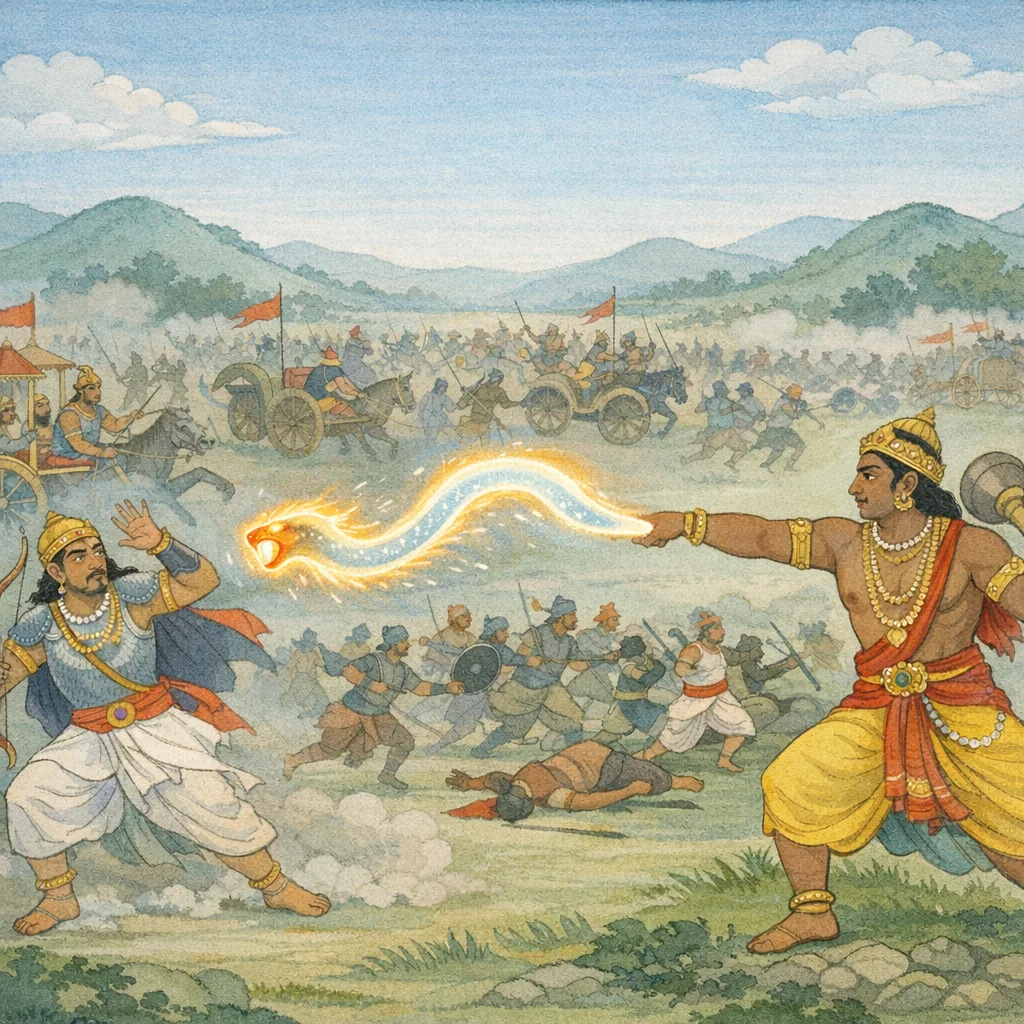
Chapter Arc: धृतराष्ट्र, संजय से युद्धभूमि का हाल पूछते हुए, अपनी ही सेना की ‘सदा पूजित’ और सुगठित व्यवस्था का स्मरण करता है—और उसी स्मरण में भय की दरारें उभर आती हैं। → संजय रणक्षेत्र का दृश्य रखता है: सहस्रों रथ, अश्व और पदाति व्यग्र होकर इधर-उधर धावमान हैं; यह भगदड़ विजय-आशा के क्षय और कौरव-पक्ष के भीतर फैलती निराशा का संकेत बनती है। → भीमसेन अपनी भुजाओं से मुक्त की हुई सर्प-सदृश भयानक शक्ति/शक्ति-आयुध को कृतवर्मा के रथ की ओर फेंकता है; वह दिशाओं को प्रकाशित करती हुई उल्का की तरह आकाश से गिरती प्रतीत होती है और युद्ध का केंद्र एक ही प्रहार पर सिमट आता है। → प्रहार के बाद रणभूमि में क्षणिक ठहराव और पुनर्संयोजन होता है; कौरव-पक्ष अपने योद्धाओं को संभालने का प्रयास करता है, और शिखण्डी को विषण्ण देखकर ‘हार्दिक्य’ (कृतवर्मा) सहित सैनिक उसका सत्कार/संरक्षण करते हैं—मानो मनोबल को वस्त्रों की तरह झाड़-पोंछ कर फिर पहनाना हो। → महाधनुर्धर महारथी (कृतवर्मा/प्रतिद्वन्द्वी) क्रोध में हँसते हुए तीन-तीन बाणों से भीम को गहरी चोट पहुँचाता है—अगला क्षण पूछता है: क्या भीम इस प्रतिघात को और उग्र प्रतिशोध में बदल देगा?
Shlokas
Verse 1
(दाक्षिणात्य अधिक पाठका १ श्लोक मिलाकर कुल ६८ श्लोक हैं) ऑपन-माज बछ। जज: चतुर्दशाधिकशततमो< ध्याय: धृतराष्ट्रका विषादयुक्त वचन, संजयका धृतराष्ट्रको ही दोषी बताना, कृतवर्माका भीमसेन और शिखण्डीके साथ युद्ध तथा पाण्डव-सेनाकी पराजय धृतराष्ट्र रवाच एवं बहुगुणं सैन्यमेवं प्रविचितं बलम् । व्यूढमेवं यथान्यायमेवं बहु च संजय,धृतराष्ट्रने कहा--संजय! मेरी सेना इस प्रकार अनेक गुणोंसे सम्पन्न है और इस तरह अधिक संख्यामें इसका संग्रह किया गया है। पाण्डव-सेनाकी अपेक्षा यह प्रबल भी है। इसकी व्यूह-रचना भी इस प्रकार शास्त्रीय विधिके अनुसार की जाती है और इस तरह बहुत-से योद्धाओंका समूह जुट गया है
Dhṛtarāṣṭra said: “Sañjaya, my army is thus endowed with many advantages, and its strength has been mustered in great numbers. It is more powerful than the Pāṇḍavas’ host. Its battle-array too is being formed in due accordance with the rules of warfare, and in this way a vast company of warriors has been assembled.”
Verse 2
नित्यं पूजितमस्माभिरभिकामं च नः सदा । प्रौढमत्यद्भुताकारं पुरस्ताद् दृष्टविक्रमम्,हमलोगोंने सदा अपनी सेनाका आदर-सत्कार किया है तथा वह हमारे प्रति सदासे ही अनुरक्त भी है। हमारे सैनिक युद्धकी कलामें बढ़े-चढ़े हैं। हमारा सैन्यसमुदाय देखनेमें जान पड़ता है तथा इस सेनामें वे ही लोग चुन-चुनकर रखे गये हैं जिनका पराक्रम ही देख लिया गया है
Sañjaya said: “Our host has ever been honoured by us, and it has always been well-disposed toward us. It is mature in the arts of war, of astonishing formation and appearance, and it is composed of men whose valour has already been witnessed in the forefront.”
Verse 3
नातिवृद्धमबालं च नाकृशं नातिपीवरम् | लघुवृत्तायतप्रायं सारगात्रमनामयम्,इसमें न तो कोई अधिक बूढ़ा है, न बालक है, न अधिक दुबला है और न बहुत ही मोटा है। उनका शरीर हलका, सुडौल तथा प्राय: लंबा है। शरीरका एक-एक अवयव सारवान् (सबल) तथा सभी सैनिक नीरोग एवं स्वस्थ हैं
Sañjaya said: “Among them there is none excessively aged, none a mere child; none is emaciated, and none is overly corpulent. Their bodies are light and well-proportioned, generally tall in build; each limb is firm and substantial, and the warriors are free from disease—sound and fit for the demands of battle.”
Verse 4
आत्तसंनाहसंछन्न॑ बहुशस्त्रपरिच्छदम् । शस्त्रग्रहणविद्यासु बह्मीषु परिनिष्ठितम्,इन सैनिकोंका शरीर बाँधे हुए कवचसे आच्छादित है। इनके पास शस्त्र आदि आवश्यक सामग्रियोंकी बहुतायत है। ये सभी सैनिक शशण्त्रग्रहणसम्बन्धी बहुत-सी विद्याओंमें प्रवीण हैं
Sañjaya said: “They are fully armed and covered with fastened armor; they possess an abundance of weapons and equipment. All these warriors are firmly trained in many disciplines of weapon-handling—an image of a host prepared for relentless battle, where skill and preparedness are marshalled in the service of their chosen cause.”
Verse 5
आरोहे पर्यवस्कन्दे सरणे सान्तरप्लुते । सम्यक्प्रहरणे याने व्यपयाने च कोविदम्,चढ़ने, उतरने, फैलने, कूद-कूदकर चलने, भली-भाँति प्रहार करने, युद्धके लिये जाने और अवसर देखकर पलायन करनेमें भी कुशल हैं
Sañjaya said: He is adept at mounting and dismounting, at leaping down and moving swiftly through difficult ground, at advancing with tactical shifts, at striking accurately in battle, at pressing forward for combat, and also at withdrawing when the moment demands it. In this description, skill is not mere aggression: it includes disciplined control—knowing when to engage and when to retreat—so that force is governed by judgment rather than impulse.
Verse 6
नागेष्वश्वेषु बहुशो रथेषु च परीक्षितम् परीक्ष्य च यथान्यायं वेतनेनोपपादितम्,हाथियों, घोड़ों तथा रथोंपर बैठकर युद्ध करनेकी कलामें सब लोगोंकी परीक्षा ली जा चुकी है और परीक्षा लेनेके पश्चात् उन्हें यथायोग्य वेतन दिया गया है
Sañjaya said: “Many times the men have been tested in the art of fighting from elephants, from horses, and from chariots; and after examining them, they have been duly provided for with wages in accordance with what is just.”
Verse 7
न गोष्ठया नोपकारेण न सम्बन्धनिमित्तत: । नानाहूत॑ नाप्यभूतं मम सैन्यं बभूव ह,हमने किसीको भी गोष्ठीद्वारा बहकाकर, उपकार करके अथवा किसी सम्बन्धके कारण सेनामें भर्ती नहीं किया है। इनमें ऐसा भी कोई नहीं है जिसे बुलाया न गया हो अथवा जिसे बेगारमें पकड़कर लाया गया हो। मेरी सारी सेनाकी यही स्थिति है
Sañjaya said: “Neither by coaxing through social pressure, nor by winning men over with favors, nor on account of family ties did my army come into being. Nor is there anyone among them who was not duly summoned, or who was seized and brought by compulsion. Such is the condition of my entire host.”
Verse 8
कुलीनार्यजनोपेतं तुष्टपुष्टमनुद्धतम् । कृतमानोपचारं च यशस्वि च मनस्वि च
Sanjaya said: “He was accompanied by noble and well-bred people; contented and well-nourished, yet not arrogant. He was one who had duly received honor and courteous attentions, and he was both renowned and high-minded.”
Verse 9
इसमें सभी लोग कुलीन, श्रेष्ठ, हृष्ट-पुष्ट, उद्ण्डताशून्य, पहलेसे सम्मानित, यशस्वी तथा मनस्वी हैं ।। सचिवैश्वापरैर्मुख्यैर्बहुभि: पुण्यकर्मभि: । लोकपालोपमैस्तात पालितं नरसत्तमै:,तात! हमारे मन्त्री तथा अन्य बहुतेरे प्रमुख कार्यकर्ता जो पुण्यात्मा, लोकपालोंके समान पराक्रमी और मजनुष्योंमें श्रेष्ठ हैं, सदा इस सेनाका पालन करते आये हैं
Sañjaya said: “Moreover, all the men there are of noble lineage and eminent standing—cheerful and robust, not lacking in discipline, long held in honor, renowned, and high-minded. And, dear sir, this host has been continually maintained and administered by ministers and many other leading officers—men of meritorious conduct, valorous like the guardians of the worlds, and foremost among men.”
Verse 10
बहुभि: पार्थिवैर्गुप्तमस्मत्प्रियचिकीर्षुभि: । अस्मानभिसृतै: कामात् सबलै: सपदानुगै:
Sañjaya said: Protected by many kings who were eager to do what was pleasing to us, they advanced upon us out of sheer desire—coming with their forces and with their followers close at their heels. The scene underscores how, in war, personal attachment and the urge to gratify one’s own side can drive coordinated aggression, even under the cover of ‘loyal service.’
Verse 11
हमारा प्रिय करनेकी इच्छावाले तथा सेना और अनुचरोंसहित स्वेच्छासे ही हमारे पक्षमें आये हुए बहुत-से भूपालगण भी इसकी रक्षामें तत्पर रहते हैं ।। महोदधिमिवापूर्णमापगाभि: समन्ततः । अपक्षै: पक्षिसंकाशै रथैरश्वैश्व संवृतम्,सम्पूर्ण दिशाओंसे बहकर आयी हुई नदियोंसे परिपूर्ण होनेवाले महासागरके समान हमारी यह सेना अगाध और अपार है। पक्षरहित एवं पक्षियोंके समान तीव्र वेगसे चलनेवाले रथों और घोड़ोंसे यह भरी हुई है
Sañjaya said: Many kings too—eager to do what pleases us—have come of their own free will to our side with their armies and attendants, and they stand ready to protect him. Our host is like the great ocean, filled on every side by rivers flowing in from all directions—deep and boundless. It is crowded with wingless yet bird-like swift chariots and horses, surging with irresistible momentum. In this speech, the moral tone is one of confidence and consolidation of power: loyalty is presented as voluntary and protective, while the vastness of the war-machine is framed as a natural, overwhelming force.
Verse 12
प्रभिन्नकरटैश्वैव द्विरदैरावृतं महत् । यदहन्यत मे सैन्यं किमन्यद् भागधेयत:,गण्डस्थलसे मद बहानेवाले गजराजोंद्वारा आवृत यह मेरी विशाल वाहिनी यदि शत्रुओंद्वारा मारी गयी है तो इसमें भाग्यके सिवा दूसरा क्या कारण हो सकता है?
Sañjaya said: “Though my vast host was ringed about by mighty elephants with streaming temples, if it has been cut down by the enemy, what other cause can there be—apart from destiny?”
Verse 13
योधाक्षय्यजलं भीम॑ वाहनोर्मितरज्धिणम् । क्षेपण्यसिगदाशक्तिशरप्रासझषाकुलम्,संजय! मेरी सेना भयंकर समुद्रके समान जान पड़ती है। योद्धा ही इसके अक्षय जल हैं, वाहन ही इसकी तरंगमालाएँ हैं, क्षेपणीय, खड्ग, गदा, शक्ति, बाण और प्रास आदि अस्त्र-शस्त्र इसमें मछलियोंके समान भरे हुए हैं। ध्वजा और आभूषणोंके समुदाय इसके भीतर रत्नोंके समान संचित हैं। दौड़ते हुए वाहन ही वायुके वेग हैं, जिनसे यह सैन्यसमुद्र कम्पित एवं क्षुब्ध-सा जान पड़ता है। द्रोणाचार्य ही इसकी पातालतक फैली हुई गहराई है। कृतवर्मा इसमें महान् हृदके समान है, जलसंध विशाल ग्राह है और कर्णरूपी चन्द्रमाके उदयसे यह सदा उद्धेलित होता रहता है
Sañjaya said: “O King, my army appears like a dreadful ocean. Its warriors are its inexhaustible waters; its chariots, horses, and other mounts are its rolling waves. It teems with the ‘fish’ of weapons—missiles, swords, maces, spears, arrows, and lances. In this image, the battlefield is not glorified but rendered as a vast, churning force: a moral warning about how war swallows lives in an unending surge, driven by human resolve and the instruments of violence.”
Verse 14
ध्वजभूषणसम्बाधरत्नोपलसुसंचितम् । वाहनैरभिधावद्धिर्वायुवेगविकम्पितम्,संजय! मेरी सेना भयंकर समुद्रके समान जान पड़ती है। योद्धा ही इसके अक्षय जल हैं, वाहन ही इसकी तरंगमालाएँ हैं, क्षेपणीय, खड्ग, गदा, शक्ति, बाण और प्रास आदि अस्त्र-शस्त्र इसमें मछलियोंके समान भरे हुए हैं। ध्वजा और आभूषणोंके समुदाय इसके भीतर रत्नोंके समान संचित हैं। दौड़ते हुए वाहन ही वायुके वेग हैं, जिनसे यह सैन्यसमुद्र कम्पित एवं क्षुब्ध-सा जान पड़ता है। द्रोणाचार्य ही इसकी पातालतक फैली हुई गहराई है। कृतवर्मा इसमें महान् हृदके समान है, जलसंध विशाल ग्राह है और कर्णरूपी चन्द्रमाके उदयसे यह सदा उद्धेलित होता रहता है
Sañjaya said: “It was densely packed with banners and ornaments, and richly heaped with jewels and precious stones. Shaken by the wind’s force, it trembled as swift vehicles rushed forward.”
Verse 15
द्रोणगम्भीरपातालं कृतवर्ममहाह्दम् । जलसंधमटहाग्राहं कर्णचन्द्रोदयोद्धतम्,संजय! मेरी सेना भयंकर समुद्रके समान जान पड़ती है। योद्धा ही इसके अक्षय जल हैं, वाहन ही इसकी तरंगमालाएँ हैं, क्षेपणीय, खड्ग, गदा, शक्ति, बाण और प्रास आदि अस्त्र-शस्त्र इसमें मछलियोंके समान भरे हुए हैं। ध्वजा और आभूषणोंके समुदाय इसके भीतर रत्नोंके समान संचित हैं। दौड़ते हुए वाहन ही वायुके वेग हैं, जिनसे यह सैन्यसमुद्र कम्पित एवं क्षुब्ध-सा जान पड़ता है। द्रोणाचार्य ही इसकी पातालतक फैली हुई गहराई है। कृतवर्मा इसमें महान् हृदके समान है, जलसंध विशाल ग्राह है और कर्णरूपी चन्द्रमाके उदयसे यह सदा उद्धेलित होता रहता है
Sañjaya said: “O King, my army appears like a dreadful ocean. Droṇa is its abyssal depth reaching down to the nether regions; Kṛtavarmā is like a vast lake within it; Jayadratha is its mighty crocodile; and it is continually heaved up and made turbulent by the rising of the moon that is Karṇa.”
Verse 16
गते सैन्यार्णवं भित्त्वा तरसा पाण्डवर्षभे । संजयैकरथेनैव युयुधाने च मामकम्,संजय! ऐसे मेरे सैन्यरूपी महासागरका वेगपूर्वक भेदन करके जब पाण्डवश्रेष्ठ सव्यसाची अर्जुन तथा सात्वतवंशी उदार महारथी युयुधान एकमात्र रथकी सहायतासे इसके भीतर घुस गये, तब मैं अपनी सेनाके शेष रहनेकी आशा नहीं देखता हूं
Sañjaya said: “Having swiftly breached my army—like a vast ocean—and forced their way in, the foremost of the Pāṇḍavas, Savyasācī Arjuna, together with the noble Sātvata hero, the great chariot-warrior Yuyudhāna, advancing as if supported by a single chariot alone—once they have entered our formation, I can no longer see any hope that my remaining forces will endure.”
Verse 17
तत्र शेषं न पश्यामि प्रविष्टे सव्यसाचिनि । सात्वते च रथोदारे मम सैन्यस्य संजय,संजय! ऐसे मेरे सैन्यरूपी महासागरका वेगपूर्वक भेदन करके जब पाण्डवश्रेष्ठ सव्यसाची अर्जुन तथा सात्वतवंशी उदार महारथी युयुधान एकमात्र रथकी सहायतासे इसके भीतर घुस गये, तब मैं अपनी सेनाके शेष रहनेकी आशा नहीं देखता हूं
Sanjaya said: “In this situation, O Saṃjaya, I see no remnant—no surviving remainder—of my army, now that Savyasācin Arjuna has forced his way in, and the noble Sātvata warrior in his splendid chariot has entered as well. Their breakthrough signals not merely tactical loss but the collapse of hope and order in battle, where courage and skill, once unleashed, can overwhelm even a vast host.”
Verse 18
तौ तत्र समतिक्रान्तौ दृष्टवातीव तरस्विनौ । सिन्धुराजं तु सम्प्रेक्ष्य गाण्डीवस्येषुगोचरे,उन दोनों अत्यन्त वेगशाली वीरोंको वहाँ सबका उल्लंघन करके घुसे हुए देख तथा सिन्धुराज जयद्रथको गाण्डीवसे छूटे हुए बाणोंकी सीमामें उपस्थित पाकर कालप्रेरित कौरवोंने वहाँ कौन-सा कार्य किया? उस दारुण संहारके समय, जहाँ मृत्युके सिवा दूसरी कोई गति नहीं थी, किस प्रकार उन्होंने कर्तव्यका निश्चय किया?
Sañjaya said: Seeing those two exceedingly swift heroes there, having broken through all opposition, and observing Jayadratha, king of Sindhu, standing within the range of arrows shot from the Gāṇḍīva, the Kauravas—driven as if by fate—were compelled to decide what must be done. In that dreadful hour of slaughter, where no course remained but death, how did they determine their duty?
Verse 19
कि नु वा कुरव: कृत्यं विदधु: कालचोदिता: । दारुणैकायने काले कथं वा प्रतिपेदिरे,उन दोनों अत्यन्त वेगशाली वीरोंको वहाँ सबका उल्लंघन करके घुसे हुए देख तथा सिन्धुराज जयद्रथको गाण्डीवसे छूटे हुए बाणोंकी सीमामें उपस्थित पाकर कालप्रेरित कौरवोंने वहाँ कौन-सा कार्य किया? उस दारुण संहारके समय, जहाँ मृत्युके सिवा दूसरी कोई गति नहीं थी, किस प्रकार उन्होंने कर्तव्यका निश्चय किया?
Sanjaya said: Driven onward by Time itself, what course of action did the Kurus undertake then? And in that dreadful hour of one-way destruction—when there was no path forward except death—how did they arrive at a resolve about what ought to be done?
Verse 20
ग्रस्तान् हि कौरवान् मन्ये मृत्युना तात संगतान् । विक्रमो5पि रणे तेषां न तथा दृश्यते हि वै,तात! मैं युद्धस्थलमें एकत्र हुए कौरवोंको कालका ग्रास ही मानता हूँ; क्योंकि रणक्षेत्रमें उनका पराक्रम भी पहले-जैसा नहीं दिखायी देता है
Sañjaya said: “Dear sir, I deem the Kauravas gathered on the battlefield to be already seized by Death itself; for even their valor in combat is no longer seen as it once was.”
Verse 21
अक्षतौ संयुगे तत्र प्रविष्टी कृष्णपाण्डवौ । न च वारयिता कश्चित् तयोरस्तीह संजय,संजय! श्रीकृष्ण और अर्जुन बिना कोई क्षति उठाये युद्धस्थलमें मेरी सेनाके भीतर घुस गये; परंतु इसमें कोई भी वीर उन दोनोंको रोकनेवाला न निकला
Sañjaya said: “There, in the thick of battle, Kṛṣṇa and the Pāṇḍava (Arjuna) entered our forces without suffering any harm. And here, O Sañjaya, there was not a single warrior who could stand forth to restrain those two.”
Verse 22
भृताश्न बहवो योधा: परीक्ष्यैव महारथा: । वेतनेन यथायोगं प्रियवादेन चापरे,हमने दूसरे बहुत-से महारथी योद्धाओंकी परीक्षा करके ही उन्हें सेनामें भर्ती किया है और यथायोग्य वेतन देकर तथा प्रिय वचन बोलकर उनका सत्कार किया है
Sañjaya said: “Many warriors—great chariot-fighters—have been taken into service only after being tested; and others have been honoured in due measure by proper wages and by speaking to them with pleasing, respectful words.”
Verse 23
असत्कारभृतस्तात मम सैन्ये न विद्यते । कर्मणा हानुरूपेण लभ्यते भक्तवेतनम्,तात! मेरी सेनामें कोई भी ऐसा नहीं है, जिसे अनादरपूर्वक रखा गया हो। सबको उनके कार्यके अनुरूप ही भोजन और वेतन प्राप्त होता है
Sañjaya said: “Dear one, in my army there is no man who is kept in service with disrespect. Each receives his rations and pay in proportion to his work.”
Verse 24
न चायोधो5भवत् कश्चिन्मम सैन्ये तु संजय । अल्पदानभृतस्तात तथा चाभूतको नर:,तात संजय! मेरी सेनामें ऐसा एक भी योद्धा नहीं रहा होगा जिसे थोड़ा वेतन दिया जाता हो अथवा बिना वेतनके ही रखा गया हो
Sañjaya said: “O Sañjaya, in my army there was not a single warrior who was without pay; nor was there any man maintained on a mere pittance, or kept without wages.”
Verse 25
पूजितो हि यथाशक्त्या दानमानासनैर्मया । तथा पुन्रैश्न मे तात ज्ञातिभिश्न सबान्धवै:,तात! मैंने, मेरे पुत्रोंने तथा कुटुम्बीजनों एवं बन्धु-बान्धवोंने भी सभी सैनिकोंका यथाशक्ति दान, मान और आसन आदि देकर सत्कार किया है
Sañjaya said: “Indeed, to the best of my ability I have shown honor—through gifts, respectful regard, and the offering of seats. Likewise, O dear one, my sons too, together with our kinsmen and all our relatives and friends, have welcomed and honored the warriors in the same manner.”
Verse 26
तेच प्राप्यैव संग्रामे निर्जिता: सव्यसाचिना । शैनेयेन परामृष्टा: किमन्यद् भागधेयत:,तथापि सव्यसाची अर्जुनने संग्रामभूमिमें पहुँचते ही उन सबको पराजित कर दिया है और सात्यकिने भी उन्हें कुचल डाला है। इसे भाग्यके सिवा और क्या कहा जा सकता है?
Sañjaya said: As soon as they reached the battlefield, they were defeated by Savyasācin (Arjuna). And they were also crushed by Śaineya (Sātyaki). What else can this be called, if not the allotment of fate?
Verse 27
रक्ष्यते यश्ष संग्रामे ये च संजय रक्षिण: । एक: साधारण: पन्था रक्ष्यस्य सह रक्षिभि:,संजय! संग्राममें जिसकी रक्षा की जाती है और जो लोग रक्षक हैं, उन रक्षकोंसहित रक्षणीय पुरुषके लिये एकमात्र साधारण मार्ग रह गया है पराजय
Sañjaya said: “O Sañjaya, in battle, for the one who is being protected and for those who serve as his protectors, there remains only a single common course: they must stand or fall together. When the crisis of war closes in, the fate of the guarded and the guardians becomes one—shared responsibility leading to shared defeat if their defense collapses.”
Verse 28
अर्जुन समरे दृष्टवा सैन्धवस्याग्रत: स्थितम् । पुत्रो मम भृशं मूढ: कि कार्य प्रत्यपद्यत,अर्जुनको समरांगणमें सिन्धुराजके सामने खड़ा देख अत्यन्त मोहग्रस्त हुए मेरे पुत्रने कौन-सा कर्तव्य निश्चित किया?
Sañjaya said: Seeing Arjuna standing in the battle directly before the king of Sindhu, my son—utterly bewildered—what course of duty did he resolve upon?
Verse 29
सात्यकिं च रणे दृष्टवा प्रविशन््तम भीतवत् । कि नु दुर्योधन: कृत्यं प्राप्तकालममन्यत,सात्यकिको रफक्षेत्रमें निर्भय-सा प्रवेश करते देख दुर्योधनने उस समयके लिये कौन- सा कर्तव्य उचित माना?
Sañjaya said: Seeing Sātyaki entering the battlefield as if fearless, what duty did Duryodhana judge to be the right course at that critical moment? (The verse highlights a commander’s ethical and strategic discernment—deciding one’s proper action when time is pressing and danger is immediate.)
Verse 30
सर्वशस्त्रातिगौ सेनां प्रविष्टी रथिसत्तमौ । दृष्टवा कां वै धृतिं युद्धे प्रत्यपद्यन्त मामका:,सम्पूर्ण शस्त्रोंकी पहुँचसे परे होकर जब रथियोंमें श्रेष्ठ सात्यकि और अर्जुन मेरी सेनामें प्रविष्ट हो गये, तब उन्हें देखकर मेरे पुत्रोंने युद्धस्थलमें किस प्रकार धैर्य धारण किया?
Sañjaya said: “When the two foremost chariot-warriors, Sātyaki and Arjuna—whose mastery surpassed the reach of all weapons—had entered my army, what steadfastness did my side display on the battlefield upon seeing them?”
Verse 31
दृष्टवा कृष्णं तु दाशार्हमर्जुनार्थे व्यवस्थितम् । शिनीनामृषभं चैव मन्ये शोचन्ति पुत्रका:,मैं समझता हूँ कि अर्जुनके लिये रथपर बैठे हुए दशाहनन्दन भगवान् श्रीकृष्णको तथा शिनिप्रवर सात्यकिको देखकर मेरे पुत्र शोकमग्न हो गये होंगे
Sañjaya said: Seeing Kṛṣṇa, the Dāśārha hero, stationed on the chariot for Arjuna’s sake, and also the bull among the Śinis (Sātyaki), I think my sons have fallen into grief. The sight of Arjuna’s cause being upheld by such allies signals a moral and strategic disadvantage for the Kauravas, stirring fear and sorrow in their ranks.
Verse 32
दृष्टवा सेनां व्यतिक्रान्तां सात्वतेनार्जुनेन च । पलायमानांश्व कुरून् मन्ये शोचन्ति पुत्रका:,सात्यकि और अर्जुनको सेना लाँधकर जाते और कौरव-सैनिकोंको युद्धस्थलसे भागते देखकर मैं समझता हूँ कि मेरे पुत्र शोकमें डूब गये होंगे
Sañjaya said: Seeing the army overleapt and pierced through by Sātyaki and Arjuna, and seeing the Kuru warriors fleeing from the battlefield, I think my sons have sunk into grief. The verse underscores how the collapse of courage and order in war brings not only tactical loss but also moral and emotional ruin—especially for those driven by attachment and ambition.
Verse 33
विद्रुतान् रथिनो दृष्टवा निरुत्साहान् द्विषज्जये । पलायनकृतोत्साहान् मन्ये शोचन्ति पुत्रका:,मेरे मनमें यह बात आती है कि अपने रथियोंको शत्रु-विजयकी ओरसे उत्साहशून्य होकर भागते और भागनेमें ही बहादुरी दिखाते देख मेरे पुत्र शोक कर रहे होंगे
Sañjaya said: Seeing the chariot-warriors fleeing—spiritless for victory over the foe, and showing their ‘valor’ only in the act of running away—I think your sons are grieving. The scene exposes how, when courage is severed from righteous purpose, even martial energy collapses into shame and sorrow.
Verse 34
शून्यान् कृतान् रथोपस्थान् सात्वतेनार्जुनेन च । हतांश्व योधान् संदृश्य मन्ये शोचन्ति पुत्रका:,सात्यकि और अर्जुनने हमारी रथोंकी बैठकें सूनी कर दी हैं और योद्धाओंको मार गिराया है, यह देखकर मैं सोचता हूँ कि मेरे पुत्र बहुत दुःखी हो गये होंगे
Sañjaya said: Seeing that Sātyaki and Arjuna have emptied the chariot-stations—leaving them deserted—and have struck down the warriors and their horses, I judge that your sons must be grieving deeply. The report underscores the moral weight of battlefield loss: not only bodies fall, but confidence, order, and the very ‘seat’ of power in war is shaken.
Verse 35
व्यश्वनागरथान् दृष्टवा तत्र वीरान् सहस्रश: । धावमानान् रणे व्यग्रान् मन््ये शोचन्ति पुत्रका:,सहस्ौरों वीरोंको वहाँ युद्धके मैदानमें घोड़े, रथ और हाथियोंसे रहित एवं उद्विग्न होकर भागते देखकर मैं मानता हूँ कि मेरे पुत्र शोकमग्न हो गये होंगे
Sañjaya said: Seeing there thousands of warriors—bereft of horses, elephants, and chariots—running about in agitation on the battlefield, I judge that your sons have fallen into grief and despair. The scene suggests a collapse of order and morale, where the outward loss of war-gear mirrors an inward loss of confidence and resolve.
Verse 36
महानागान् विद्रवतो दृष्टवार्जुनशराहतान् । पतितान् पततक्चान्यान् मन्ये शोचन्ति पुत्रका:,अर्जुनके बाणोंसे आहत होकर बड़े-बड़े गजराजोंको भागते, गिरते और गिरे हुए देखकर मैं समझता हूँ कि मेरे पुत्र शोक कर रहे होंगे
Sañjaya said: Seeing the great war-elephants—struck by Arjuna’s arrows—fleeing in panic, collapsing, and others already fallen, I judge that your sons are grieving. The sight of their proud strength broken and their forces thrown into disorder signals a moral and psychological defeat amid the violence of battle.
Verse 37
विहीनांश्व॒ कृतानश्चान् विरथांश्व कृतान् नरान् । तत्र सात्यकिपार्थाभ्यां मन्ये शोचन्ति पुत्रका:,सात्यकि और अर्जुनने घोड़ोंको सवारोंसे हीन और मनुष्योंको रथसे वंचित कर दिया है। यह देख-सुनकर मेरे पुत्र शोकमें डूब रहे होंगे
Sañjaya said: “There, Sātyaki and Pārtha (Arjuna) have stripped the horses of their riders and left the warriors without their chariots. Seeing and hearing of this, I think my sons are sinking into grief.”
Verse 38
हयौघान् निहतान् दृष्टवा द्रवमाणांस्ततस्तत: । रणे माधवपार्थाभ्यां मन्ये शोचन्ति पुत्रका:,रणक्षेत्रमें सात्यकि और अर्जुनद्वारा मारे गये तथा इधर-उधर भागते हुए अश्वसमूहोंको देखकर मैं मानता हूँ कि मेरे पुत्र शोकदग्ध हो रहे होंगे
Sañjaya said: Seeing the masses of horses slain and the rest fleeing in all directions on the battlefield—cut down by Mādhava and Pārtha—I think my sons are being consumed by grief. The scene signals the collapse of their confidence: when the very instruments of war (the cavalry) are shattered, the heart of the unrighteous side trembles, and sorrow follows the recognition of inevitable defeat.
Verse 39
पत्तिसंघान् रणे दृष्टवा धावमानांश्व सर्वश: । निराशा विजये सर्वे मन्ये शोचन्ति पुत्रका:,पैदल सिपाहियोंको रणक्षेत्रमें सब ओर भागते देख मैं समझता हूँ, मेरे सभी पुत्र विजयसे निराश हो शोक कर रहे होंगे
Sañjaya said: Seeing the companies of foot-soldiers fleeing in every direction on the battlefield, I think all my sons—having lost hope of victory—are lamenting. The scene signals the moral collapse that follows when confidence in a righteous or attainable outcome is broken amid the chaos of war.
Verse 40
द्रोणस्प समतिक्रान्तावनीकमपराजितौ । क्षणेन दृष्टवा तौ वीरौ मन्ये शोचन्ति पुत्रका:,मेरे मनमें यह बात आती है कि किसीसे पराजित न होनेवाले दोनों वीर अर्जुन और सात्यकिको क्षणभरमें द्रोणाचार्यकी सेनाका उल्लंघन करते देख मेरे पुत्र शोकाकुल हो गये होंगे
Sañjaya said: Seeing those two unconquered heroes—Arjuna and Sātyaki—cross Drona’s battle-array in a mere moment, I think your sons were overcome with grief and dismay. The scene signals a moral and strategic turning point: when steadfast valor and righteous resolve break through even a master’s formation, fear and sorrow arise in those who rely on force without inner steadiness.
Verse 41
सम्मूढो 5स्मि भृशं तात श्रुत्वा कृष्णधनंजयौ । प्रविष्टी मामकं सैन्यं सात्वतेन सहाच्युतौ,तात! अपनी मर्यादासे कभी च्युत न होनेवाले श्रीकृष्ण और अर्जुनके सात्यकिसहित अपनी सेनामें घुसनेका समाचार सुनकर मैं अत्यन्त मोहित हो रहा हूँ
Sañjaya said: “O dear one, I am utterly bewildered on hearing that Kṛṣṇa and Dhanañjaya (Arjuna)—Acyuta, who never falls from his righteous bounds—have entered our army together with Sātyaki.”
Verse 42
तस्मिन् प्रविष्टे पृतनां शिनीनां प्रवरे रथे । भोजानीकं व्यतिक्रान्ते किमकुर्वत कौरवा:,शिनिप्रवर महारथी सात्यकि जब कृतवर्माकी सेनाको लाँचधकर कौरवी सेनामें प्रविष्ट हो गये तब कौरवोंने क्या किया?
Sañjaya said: When Sātyaki—the foremost warrior of the Śinis—had entered the Kaurava host upon his excellent chariot and had broken through the Bhoja battalion, what did the Kauravas do then? The question underscores the moral pressure of the moment: how the Kauravas respond to a righteous, determined assault becomes a test of their resolve, strategy, and adherence (or lack thereof) to the codes of battle.
Verse 43
तथा द्रोणेन समरे निगृहीतेषु पाण्डुषु । कथें युद्धम भूत् तत्र तनन््ममाचक्ष्व संजय,संजय! जब द्रोणाचार्यने समरभूमिमें पूर्वोक्त प्रकारसे पाण्डवोंको रोक दिया, तब वहाँ किस प्रकार युद्ध हुआ? यह सब मुझे बताओ
Sañjaya said: “When Droṇa, in the midst of battle, had checked and subdued the Pāṇḍavas in the manner just described, how did the fighting proceed there afterward? Tell me all of it, O Sañjaya.”
Verse 44
द्रोणो हि बलवान श्रेष्ठ: कृतास्त्रो युद्धदुर्मद: । पज्चालास्ते महेष्वासं प्रत्यविध्यन् कथं रणे
Sañjaya said: “Droṇa is indeed mighty—preeminent, fully trained in the use of weapons, and fierce with the intoxication of battle. How, then, did those Pāñcālas manage to strike back at that great archer in the midst of combat?”
Verse 45
बद्धवैरास्ततो द्रोणे धनंजयजयैषिण: । द्रोणाचार्य अस्त्रविद्यामें निपुण, युद्धमें उन््मत्त होकर लड़नेवाले, बलवान एवं श्रेष्ठ वीर हैं। पांचाल-सैनिकोंने उस समय रणक्षेत्रमें महाधनुर्धर द्रोणको किस प्रकार घायल किया? क्योंकि वे द्रोणाचार्यसे वैर बाँधकर अर्जुनकी विजयकी अभिलाषा रखते थे || ४४ $ ।। भारद्वाजसुतस्तेषु दृढवैरो महारथ:
Sañjaya said: Then, having bound themselves in enmity against Droṇa and longing for Dhanañjaya’s (Arjuna’s) victory, they pressed the attack. Among them stood the son of Bhāradvāja—Droṇa himself—unyielding in hostility and a great chariot-warrior. The passage frames the battle not merely as a clash of arms but as a contest driven by vowed enmity and the desire to secure a righteous strategic outcome: Arjuna’s triumph against a formidable teacher-warrior.
Verse 46
अर्जुनश्वापि यच्चक्रे सिन्धुराजवध॑ प्रति । तन्मे सर्व समाचक्ष्व कुशलो हासि संजय
Dhṛtarāṣṭra said: “And also tell me in full what Arjuna did with the aim of slaying the king of Sindhu. Speak it all to me, Sañjaya—are you well?”
Verse 47
संजय! भरद्वाजके पुत्र महारथी अश्वत्थामा भी पांचालोंसे दृढ़तापूर्वक वैर बाँधे हुए थे। अर्जुनने सिन्धुराज जयद्रथका वध करनेके लिये जो-जो उपाय किया, वह सब मुझसे कहो; क्योंकि तुम कथा कहनेमें कुशल हो ।। संजय उवाच आत्मापराधात् सम्भूतं व्यसनं भरतर्षभ । प्राप्प प्राकृतवद् वीर न त्वं शोचितुमरहसि,संजयने कहा--भरतश्रेष्ठ) यह सारी विपत्ति आपको अपने ही अपराधसे प्राप्त हुई है। वीर! इसे पाकर निम्न कोटिके मनुष्योंकी भाँति शोक न कीजिये
Sanjaya said: “O bull among the Bharatas, this calamity has arisen from your own wrongdoing. Having met with it, O hero, you should not grieve like an ordinary man.”
Verse 48
पुरा यदुच्यसे प्राज्जैः सुहृद्धिर्विदुरादिभि: । मा हार्षी: पाण्डवान् राजन्निति तन्न त्वया श्रुतम्,पहले जब आपके बुद्धिमान् सुहृद् विदुर आदिने आपसे कहा था कि राजन! आप पाण्डवोंके राज्यया अपहरण न कीजिये, तब आपने उनकी यह बात नहीं सुनी थी
Sañjaya said: Formerly, when wise and well-wishing friends—Vidura and others—told you, ‘O King, do not wrong the Pāṇḍavas,’ you did not listen to that counsel. The verse recalls a neglected moral warning: the refusal to heed righteous advice becomes a root cause of the present calamity.
Verse 49
सुहृदां हितकामानां वाक््यं यो न शूणोति ह । स महद् व्यसन प्राप्प शोचते वै यथा भवान्,जो हितैषी सुहृदोंकी बात नहीं सुनता है, वह भारी संकटमें पड़कर आपके ही समान शोक करता है
Sañjaya said: “He who does not listen to the counsel of well-wishing friends—those who seek his good—falls into great calamity and then grieves, just as you do.”
Verse 50
याचितो<सि पुरा राजन् दाशार्हैण शमं प्रति । नच तं लब्धवान् काम॑ त्वत्त: कृष्णो महायशा:,राजन! दशा्हनन्दन भगवान् श्रीकृष्णने पहले आपसे शान्तिके लिये याचना की थी; परंतु आपकी ओरसे उन महायशस्वी श्रीकृष्णकी वह इच्छा पूरी नहीं की गयी
Sañjaya said: O King, in former days you were entreated by Kṛṣṇa of the Dāśārha line to make peace; yet from you that illustrious Kṛṣṇa did not obtain the fulfillment of his wish. The verse underscores the ethical cost of refusing timely conciliation and the grave consequences of disregarding wise counsel offered for the sake of dharma and the common good.
Verse 51
तव निर्गुणतां ज्ञात्वा पक्षपातं सुतेषु च । द्वैधीभावं तथा धर्मे पाण्डवेषु च मत्सरम्,नृपश्रेष्ठ! सम्पूर्ण लोकोंके तत्त्वज्ञ तथा सर्वलोकेश्वर भगवान् श्रीकृष्णने जब यह जान लिया कि आप सर्वथा सदगुणशून्य हैं, अपने पुत्रोंपर पक्षपात रखते हैं, धर्मके विषयमें आपके मनमें दुविधा बनी हुई है, पाण्डवोंके प्रति आपके हृदयमें डाह है, आप उनके प्रति कुटिलतापूर्ण मनसूबे बाँधते रहते हैं और व्यर्थ ही आर्त मनुष्योंके समान बहुत-सी बातें बनाते हैं, तब उन्होंने कौरव-पाण्डवोंके महान् युद्धका आयोजन किया
Sañjaya said: “O best of kings, when the Blessed Lord Śrī Kṛṣṇa—knower of the truth of all worlds and Lord of all—came to understand your lack of virtue, your partiality toward your own sons, your wavering about dharma, and your envy toward the Pāṇḍavas, then he brought about the great war between the Kauravas and the Pāṇḍavas.”
Verse 52
तव जिद्दामभिप्रायं विदित्वा पाण्डवान् प्रति | आर्तप्रलापांश्व बहूनू मनुजाधिपसत्तम,नृपश्रेष्ठ! सम्पूर्ण लोकोंके तत्त्वज्ञ तथा सर्वलोकेश्वर भगवान् श्रीकृष्णने जब यह जान लिया कि आप सर्वथा सदगुणशून्य हैं, अपने पुत्रोंपर पक्षपात रखते हैं, धर्मके विषयमें आपके मनमें दुविधा बनी हुई है, पाण्डवोंके प्रति आपके हृदयमें डाह है, आप उनके प्रति कुटिलतापूर्ण मनसूबे बाँधते रहते हैं और व्यर्थ ही आर्त मनुष्योंके समान बहुत-सी बातें बनाते हैं, तब उन्होंने कौरव-पाण्डवोंके महान् युद्धका आयोजन किया
Sanjaya said: Having understood your fixed intention toward the Pāṇḍavas, O best of kings—your many plaintive, self-pitying utterances—Śrī Kṛṣṇa, the Lord of all worlds and knower of reality for all beings, recognized that you were wholly bereft of noble qualities: partial to your sons, inwardly divided about dharma, burning with envy toward the Pāṇḍavas, continually forming crooked designs against them, and speaking many futile words like a distressed man. Therefore he brought about the great war between the Kauravas and the Pāṇḍavas.
Verse 53
सर्वलोकस्य तत्त्वज्ञ: सर्वलोकेश्वर: प्रभु: वासुदेवस्ततो युद्ध कुरूणामकरोन्महत्,नृपश्रेष्ठ! सम्पूर्ण लोकोंके तत्त्वज्ञ तथा सर्वलोकेश्वर भगवान् श्रीकृष्णने जब यह जान लिया कि आप सर्वथा सदगुणशून्य हैं, अपने पुत्रोंपर पक्षपात रखते हैं, धर्मके विषयमें आपके मनमें दुविधा बनी हुई है, पाण्डवोंके प्रति आपके हृदयमें डाह है, आप उनके प्रति कुटिलतापूर्ण मनसूबे बाँधते रहते हैं और व्यर्थ ही आर्त मनुष्योंके समान बहुत-सी बातें बनाते हैं, तब उन्होंने कौरव-पाण्डवोंके महान् युद्धका आयोजन किया
Sanjaya said: O best of kings, then Vāsudeva—Lord and master of all worlds, knower of the truth of all beings—brought about the great war of the Kurus. (In the narrative frame, this is presented as Krishna, discerning the king’s moral confusion, partiality toward his sons, envy toward the Pāṇḍavas, and crooked intent, allowing the conflict to unfold as the inevitable consequence of adharma.)
Verse 54
आत्मापराधात् सुमहान् प्राप्तस्ते विपुल: क्षय: । नैन॑ दुर्योधने दोष कर्तुमहसि मानद,मानद! अपने ही अपराधसे आपके सामने यह महान् जनसंहार प्राप्त हुआ है। आपको यह सारा दोष दुर्योधनपर नहीं मढ़ना चाहिये
Sañjaya said: “Because of your own fault, a very great and widespread destruction has come upon you. O giver of honor, you should not lay this blame upon Duryodhana.”
Verse 55
न हि ते सुकृतं किंचिदादौ मध्ये च भारत । दृश्यते पृष्ठतश्चैव त्वन्मूलो हि पराजय:,भारत! मुझे तो आगे, पीछे या बीचमें आपका कोई भी शुभ कर्म नहीं दिखायी देता। इस पराजयकी जड़ आप ही हैं
Sañjaya said: “O Bhārata, I see no meritorious deed of yours—neither at the beginning, nor in the middle, nor at the end. Indeed, this defeat has its very root in you.”
Verse 56
तस्मादवस्थितो भूत्वा ज्ञात्वा लोकस्य निर्णयम् । शृणु युद्ध यथावृत्तं घोरं देवासुरोपमम्,इसलिये स्थिर होकर और लोकके नियत स्वभावको जानकर देवासुर-संग्रामके समान भयंकर इस कौरव-पाण्डव-युद्धका यथार्थ वृत्तान्त सुनिये
Therefore, steady yourself; having understood the settled course of the world, listen to the true account of this war as it unfolded—terrible, like the battle between gods and demons. In this framing, Sanjaya urges a composed, realistic hearing of events whose moral weight and violence exceed ordinary human measure.
Verse 57
प्रविष्टे तव सैन्यं तु शैनेये सत्यविक्रमे । भीमसेनमुखा: पार्था: प्रतीयुर्वाहिनीं तव,जब सत्यपराक्रमी सात्यकि कौरव-सेनामें प्रविष्ट हो गये, तब भीमसेन आदि कुन्तीकुमारोंन आपकी विशाल वाहिनीपर आक्रमण किया
Sañjaya said: When Sātyaki, the son of Śini, whose prowess never fails, had entered your army, the Pāṇḍavas—led by Bhīmasena—advanced to strike your great host. The scene underscores how, once a bold breach is made in battle, duty-bound allies respond without hesitation, meeting force with force in the grim momentum of war.
Verse 58
आगच्छतस्तान् सहसा क्रुद्धरूपान् सहानुगान् । दधारैको रणे पाण्डून् कृतवर्मा महारथ:,सेवकोंसहित कुपित होकर सहसा आक्रमण करनेवाले उन पाण्डववीरोंको रणक्षेत्रमें एकमात्र महारथी कृतवर्माने रोका
Sañjaya said: As those Pāṇḍava warriors—fierce with sudden wrath and advancing together with their followers—rushed forward, the great chariot-warrior Kṛtavarmā alone held them back on the battlefield. The verse highlights how, amid the moral chaos of war, individual prowess and resolve can momentarily restrain a larger force, even when anger drives the combatants.
Verse 59
यथोद्वृत्तं वारयते वेला वै सलिलार्णवम् | पाण्डुसैन्यं तथा संख्ये हार्दिक्य: समवारयत्,जैसे उद्वेलित हुए महासागरको किनारेकी भूमि आगे बढ़नेसे रोकती है, उसी प्रकार युद्धस्थलमें कृतवर्माने पाण्डव-सेनाको रोक दिया
Sañjaya said: Just as the shoreline holds back the ocean’s waters when they surge and swell, so in that battle Kṛtavarman (Hārdikya) checked the advance of the Pāṇḍava host. The simile underscores how a single steadfast defender, by discipline and resolve, can restrain even a vast and impetuous force amid the moral turbulence of war.
Verse 60
तत्राद्भुतमपश्याम हार्दिक्यस्य पराक्रमम् । यदेनं सहिता: पार्था नातिचक्रमुराहवे,वहाँ हमने कृतवर्माका अद्भुत पराक्रम देखा। सारे पाण्डव एक साथ मिलकर भी समरांगणमें उसे लाँधच न सके
There we witnessed the astonishing prowess of Hārdikya (Kṛtavarman): even when the Pārthas (the sons of Pāṇḍu) stood united, they could not overstep him in the battle. The line underscores how, amid the moral chaos of war, sheer martial excellence can momentarily check even a righteous coalition—reminding the listener that victory is not guaranteed by numbers alone, but also by discipline, skill, and resolve.
Verse 61
ततो भीमस्टत्रिभिर्विंद्ध्वा कृतवर्माणमाशुगै: । शड्खं दध्मौ महाबाहुर्हर्षयन् सर्वपाण्डवान्,तदनन्तर महाबाहु भीमने तीन बाणोंद्वारा कृतवर्माको घायल करके समस्त पाण्डवोंका हर्ष बढ़ाते हुए शंख बजाया
Sañjaya said: Then mighty-armed Bhīma, having pierced Kṛtavarmā with three swift arrows, blew his conch—raising the spirits of all the Pāṇḍavas. In the midst of battle, the act signals both tactical success and the moral-psychological duty of sustaining one’s side through courage and resolve.
Verse 62
सहदेवस्तु विंशत्या धर्मराजश्न पञ्चभि: । शतेन नकुलश्नापि हार्दिक्यं समविध्यत,सहदेवने बीस, धर्मराजने पाँच और नकुलने सौ बाणोंसे कृतवर्माको बींध डाला
Sañjaya said: Sahadeva struck Kṛtavarmā (Hārdikya) with twenty arrows; King Yudhiṣṭhira with five; and Nakula too pierced him with a hundred. Thus, in the fierce press of battle, the Pāṇḍavas answered aggression with measured yet overwhelming force, intent on checking a formidable warrior rather than indulging in needless cruelty.
Verse 63
द्रौपदेयास्त्रिसप्तत्या सप्तभिश्न घटोत्कच: । धृष्टद्युम्नस्त्रिभिश्वापि कृतवर्माणमार्दयत्,द्रौपदीके पुत्रोंने तिहत्तर, घटोत्कचने सात और धृष्टद्युम्नने तीन बाणोंद्वारा उसे गहरी चोट पहुँचायी
Sañjaya said: The sons of Draupadī struck Kṛtavarmā with seventy-three arrows; Ghaṭotkaca pierced him with seven more; and Dhṛṣṭadyumna, with three arrows, further battered him—an intense, coordinated assault amid the moral chaos of war, where valor and duty are pursued through relentless violence.
Verse 64
विराटो द्रुपदश्चैव याज्ञसेनिश्व पञ्चभि: । शिखण्डी चैव हार्दिक्यं विद्ूध्वा पजचभिराशुगै:
Sañjaya said: Virāṭa and Drupada, and Yājñaseni as well—having struck Hārdikya with five swift arrows—were joined by Śikhaṇḍī too. In the press of battle, the allied kings and warriors focus their force on a single foe, showing the grim wartime ethic of coordinated assault rather than solitary heroics.
Verse 65
पुनर्विव्याध विंशत्या सायकानां हसन्निव | विराट, ट्रुपद और उनके पुत्र धृष्टद्युम्नने पाँच-पाँच बाणोंसे उसको घायल किया। फिर शिखण्डीने पहले पाँच बाणोंद्वारा चोट करके फिर हँसते हुए ही बीस बाणोंसे कृतवर्माको बींध डाला || ६४ ई || कृतवर्मा ततो राजन् सर्वतस्तान् महारथान्,राजन्! उस समय कृतवर्माने चारों ओर बाण चलाकर उन महारथियोंमेंसे प्रत्येकको पाँच बाणोंद्वारा बींध डाला और भीमसेनको सात बाणोंसे घायल कर दिया। फिर तत्काल ही उनके धनुष और ध्वजको काटकर रथसे पृथ्वीपर गिरा दिया
Sañjaya said: Then, as though laughing, he again pierced (his foe) with twenty arrows. O King, thereafter Kṛtavarmā, shooting shafts in every direction, struck each of those great chariot-warriors with five arrows, and wounded Bhīmasena with seven. Immediately he cut down their bows and standards and caused them to fall from their chariots onto the earth—an episode that displays the ruthless efficiency of battlefield skill, where prowess is used not merely to wound but to disarm and humiliate, intensifying the moral pressure of war upon all combatants.
Verse 66
एकैकं पज्चभिर्विद्ध्वा भीमं॑ विव्याध सप्तभि: । धनुर्ध्वजं चास्य तथा रथाद् भूमावपातयत्,राजन्! उस समय कृतवर्माने चारों ओर बाण चलाकर उन महारथियोंमेंसे प्रत्येकको पाँच बाणोंद्वारा बींध डाला और भीमसेनको सात बाणोंसे घायल कर दिया। फिर तत्काल ही उनके धनुष और ध्वजको काटकर रथसे पृथ्वीपर गिरा दिया
Sañjaya said: Having pierced each of those great chariot-warriors with five arrows, Kṛtavarman struck Bhīmasena with seven. Then, O King, he swiftly cut down Bhīma’s bow and his banner as well, causing them to fall from the chariot onto the earth. The episode underscores the ruthless precision of battlefield skill, where disabling an opponent’s weapons and insignia becomes a decisive—though ethically stark—means of gaining advantage in war.
Verse 67
अथैनं छिन्नधन्वानं त्वरमाणो महारथ: । आजपघानोरसि क्रुद्ध: सप्तत्या निशितै: शरै:,भीमसेनका धनुष कट जानेपर महारथी कृतवर्माने कुपित हो बड़ी उतावलीके साथ सत्तर पैने बाणोंद्वारा उनकी छातीमें गहरा आघात किया
Sanjaya said: Then the great chariot-warrior, acting in haste and anger, struck him—now deprived of his bow—on the chest with seventy razor-sharp arrows. The scene underscores how, in the fury of battle, a fighter presses advantage over a disarmed opponent, revealing the moral strain that war places upon restraint and righteous conduct.
Verse 68
स गाढविद्धो बलवान हार्दिक्यस्य शरोत्तमै: । चचाल रथमध्यस्थ: क्षितिकम्पे यथाचल:,कृतवमकि श्रेष्ठ बाणोंद्वारा अत्यन्त घायल हुए बलवान् भीमसेन रथके भीतर बैठे हुए ही भूकम्पके समय हिलनेवाले पर्वतके समान काँपने लगे
Sañjaya said: Though mighty, Bhīmasena—pierced deeply by the finest arrows of Hārdikya—began to tremble while still seated within his chariot, like a mountain quivering during an earthquake. The verse underscores how, in war, even great strength is vulnerable before skill and relentless force, reminding the listener of the fragility of embodied power amid adharma-driven violence.
Verse 69
भीमसेनं तथा दृष्टवा धर्मराजपुरोगमा: । विसृजन्त: शरान् राजन् कृतवर्माणमार्दयन्,राजन! भीमसेनको वैसी अवस्थामें देखकर धर्मराज आदि महारथियोंने बाणोंकी वर्षा करके कृतवर्माको बड़ी पीड़ा दी
Sañjaya said: Seeing Bhīmasena in that condition, the great warriors led by Dharmarāja (Yudhiṣṭhira), O King, poured forth volleys of arrows and grievously afflicted Kṛtavarmā. The scene underscores a dharmic impulse in war: the leaders rally to protect a vulnerable ally and to restrain an aggressor through decisive, collective action.
Verse 70
त॑ं तथा कोष्ठकीकृत्य रथवंशेन मारिष । विव्यधु: सायकै्ईश्टा रक्षार्थ मारुतेर्मुधे,माननीय नरेश! हर्षमें भरे हुए पाण्डव-सैनिक भीमसेनकी रक्षाके लिये अपने रथसमूहद्वारा कृतवर्माको कोष्ठबद्ध-सा करके उसे युद्धसस््थलमें अपने बाणोंका निशाना बनाने लगे
Sanjaya said: “O revered one, having thus hemmed him in as though confined within a chamber by a barrier of chariots, the Pandava warriors—intent on protecting Bhimasena, the son of the Wind-god—pierced him in the thick of battle with their chosen arrows.”
Verse 71
प्रतिलभ्य तत: संज्ञां भीमसेनो महाबल: । शक्ति जग्राह समरे हेमदण्डामयस्मयीम्,इसी बीचमें महाबली भीमसेनने सचेत होकर समरांगणमें सुवर्णमय दण्डसे विभूषित एक लोहेकी शक्ति हाथमें ले ली
Sañjaya said: Then, regaining consciousness, the mighty Bhīmasena, in the thick of battle, seized a śakti-weapon made of iron and adorned with a golden shaft. The moment underscores Bhīma’s resilience and unwavering resolve in righteous combat—recovering composure and taking up arms not out of cruelty, but as a disciplined response to the demands of war and duty.
Verse 72
चिक्षेप च रथात् तूर्ण कृतवर्मरथं प्रति । सा भीमभुजनिर्मुक्ता निर्मुक्तोरगसंनिभा
Sañjaya said: From his chariot he swiftly hurled it toward Kṛtavarman’s chariot. Released by Bhīma’s mighty arm, it shot forth like a serpent just cast off from its slough—an image of relentless, war-driven resolve where personal prowess becomes a decisive moral force on the battlefield.
Verse 73
तामापतन्तीं सहसा युगान्ताग्निसमप्रभाम्
Sañjaya said: “She came hurtling down all at once, blazing with a radiance like the fire that rises at the end of an age.” The line heightens the battlefield’s moral gravity by likening a sudden, overwhelming onrush to cosmic dissolution—an image that underscores how war, when unrestrained, can resemble the collapse of order itself.
Verse 74
द्वाभ्यां शराभ्यां हार्दिक्यो निजघान द्विधा तदा । उस समय अपने ऊपर आती हुई प्रलयकालकी अग्निके समान उस शक्तिको सहसा दो बाण मारकर कृतवर्माने उसके दो टुकड़े कर दिये | ७३ $ ।। सा छिन्ना पतिता भूमौ शक्ति: कनकभूषणा
Sañjaya said: Then Hārdikya (Kṛtavarman) struck it with two arrows and split it in two. That golden-ornamented śakti, severed, fell to the ground—its deadly force checked in the midst of battle by swift, skillful resistance.
Verse 75
शक्ति विनिहतां दृष्टवा भीमश्लुक्रोध वै भूशम्,अपनी शक्तिको कटी हुई देख भीमसेनको बड़ा क्रोध हुआ। उन्होंने बड़ी भारी टंकारध्वनि करनेवाले दूसरे वेगशाली धनुषको हाथमें लेकर समरांगणमें कुपित हो कृतवर्माका सामना किया
Sanjaya said: Seeing his spear struck down, Bhimasena was seized by a fierce and swelling wrath. When he beheld his own weapon cut down, he took up another swift bow that rang with a great twang, and—burning with anger—advanced on the battlefield to confront Kritavarman. The moment underscores how, amid war’s chaos, a warrior’s resolve can harden into rage, testing the boundaries of self-control and righteous conduct.
Verse 76
ततोअन्यद् धनुरादाय वेगवत् सुमहास्वनम् । भीमसेनो रणे क्रुद्धो हार्दिक्यं समवारयत्,अपनी शक्तिको कटी हुई देख भीमसेनको बड़ा क्रोध हुआ। उन्होंने बड़ी भारी टंकारध्वनि करनेवाले दूसरे वेगशाली धनुषको हाथमें लेकर समरांगणमें कुपित हो कृतवर्माका सामना किया
Sanjaya said: Then Bhimasena, taking up another bow—swift in action and resonant with a mighty twang—became enraged on the battlefield and confronted (checked) Hārdikya, Kṛtavarman. The scene underscores how, in the press of war, wounded pride and perceived injury can ignite wrath, driving a warrior to immediate retaliation even as the larger duty of battle continues.
Verse 77
अथैनं पञ्चभिर्बाणैराजघान स्तनान्तरे । भीमो भीमबलो राजंस्तव दुर्मन्त्रितेन च,राजन्! आपकी ही कुमन्त्रणासे वहाँ भयंकर बलशाली भीमसेनने कृतवर्माकी छातीमें पाँच बाण मारे
Sañjaya said: Then Bhīma—mighty in terrible strength—struck him in the chest with five arrows. O King, this too has come about through your own ill counsel, as the war’s violence turns back upon those led by misguided advice.
Verse 78
भोजतस्तु क्षतसर्वाजड्रो भीमसेनेन मारिष | रक्ताशोक इवोत्फुल्लो व्यभ्राजत रणाजिरे,माननीय नरेश! भीमसेनने उन बाणोंद्वारा कृतवर्माके सम्पूर्ण अंगोंको क्षत-विक्षत कर दिया। वह रणांगणमें खूनसे लथपथ हो खिले हुए लाल फूलोंवाले अशोकवृक्षके समान सुशोभित होने लगा
Sanjaya said: O venerable king, Kṛtavarmā of the Bhoja line, his whole body torn and wounded by Bhīmasena, shone on the battlefield—blood-soaked yet striking—like a red aśoka tree in full bloom. The image underscores the grim splendor of war: valor and suffering appear together, and beauty itself becomes an unsettling metaphor when dharma is pursued through violence.
Verse 79
ततः क्रुद्धस्त्रिभिर्बाणैर्भीमसेनं हसन्निव । अभिहत्य दृढं युद्धे तान् सर्वान् प्रत्यविध्यत
Sañjaya said: Then, enraged, he struck Bhīmasena with three arrows, as though laughing in contempt. Having thus dealt a firm blow in the thick of battle, he in turn pierced all of them in response—answering attack with attack amid the relentless ethics of war.
Verse 80
तेडपि त॑ प्रत्यविध्यन्त सप्तभि: सप्तभि: शरै:,तब उन महारथियोंने भी कृतवर्माको सात-सात बाण मारे। उस समय क्रोधमें भरे हुए महारथी कृतवर्माने हँसते हुए ही समरांगणमें एक क्षुरप्रद्वारा शिखण्डीका धनुष काट डाला
Sanjaya said: They too struck him in return, each with seven arrows. Then Kṛtavarmā, a great chariot-warrior, filled with anger yet seeming to laugh, cut down Śikhaṇḍin’s bow on the battlefield with a single razor-headed shaft. The episode underscores how, amid the fury of war, prowess and tactical skill are displayed even as wrath drives men to disable an opponent’s means of fighting rather than merely to wound.
Verse 81
शिखण्डिनस्ततः: क्रुद्धः क्षुरप्रेण महारथ: । धनुश्रिच्छेद समरे प्रहसन्निव सात्वत:,तब उन महारथियोंने भी कृतवर्माको सात-सात बाण मारे। उस समय क्रोधमें भरे हुए महारथी कृतवर्माने हँसते हुए ही समरांगणमें एक क्षुरप्रद्वारा शिखण्डीका धनुष काट डाला
Sañjaya said: Then the mighty warrior Kṛtavarmā, inflamed with anger, smiling as if in derision amid the battle, severed Śikhaṇḍin’s bow with a razor-edged arrow. The act underscores the ruthless skill of war, where mastery over weapons is used to disarm an opponent and shift the balance of combat, regardless of personal feeling or moral hesitation in the moment.
Verse 82
शिखण्डी तु ततः क्रुद्धश्छिन्ने धनुषि सत्वर: | असिं जग्राह समरे शतचन्द्रं च भास्वरम्,धनुष कट जानेपर शिखण्डीने तुरंत ही कुपित हो उस युद्धस्थलमें सौ चन्द्रमाओंके चिह्से युक्त चमकीली ढाल और तलवार हाथमें ले ली
Sañjaya said: Then Śikhaṇḍī, enraged when his bow was cut, swiftly seized his sword in the midst of battle, along with a shining shield marked with a hundred moon-emblems. The scene underscores how, in the relentless ethics of war, a warrior adapts instantly when a weapon is lost—anger and resolve driving him to continue the fight rather than withdraw.
Verse 83
भ्रामयित्वा महच्चर्म चामीकरविभूषितम् । तमसिं प्रेषयामास कृतवर्मरथं प्रति,उसने स्वर्णभूषित विशाल ढालको घुमाकर कृतवर्मके रथपर वह तलवार दे मारी
Sañjaya said: Having whirled a great shield adorned with gold, he hurled his sword toward Kṛtavarman’s chariot. The scene underscores the relentless momentum of battle, where skill and aggression drive action, and ethical restraint is eclipsed by the immediate demands of combat.
Verse 84
स तस्य सशरं चापं छित्त्वा राजन् महानसि: । अभ्यगाद् धरणीं राजंश्ष्युतं ज्योतिरिवाम्बरात्,राजन! वह महान् खड्ग कृतवर्माके बाणसहित धनुषको काटकर आकाशशसे टूटे हुए तारेके समान धरतीमें समा गया
Sañjaya said: “O King, that great sword cut down his bow together with the arrows. Then it fell to the earth, O King, like a star slipping from the sky.” The image underscores the swift, irreversible collapse of a warrior’s immediate power once his weapon is destroyed amid the ruthless momentum of battle.
Verse 85
एतस्मिन्नेव काले तु त्वरमाणं महारथा: । विव्यधु: सायकैर्गाढं कृतवर्माणमाहवे,इसी समय पाण्डव महारथियोंने युद्धमें जल्दी-जल्दी हाथ चलानेवाले कृतवर्माको अपने बाणोंद्वारा भारी चोट पहुँचायी
Sañjaya said: At that very moment, the Pāṇḍava great chariot-warriors, seeing Kṛtavarmā pressing the fight with swift, relentless action, struck him hard in the battle with volleys of arrows. The scene underscores the harsh reciprocity of war: speed and aggression invite an equally forceful response, as each side seeks to check the other’s momentum on the field.
Verse 86
अथान्यद् धनुरादाय त्यक्त्वा तच्च महद् धनु: । विशीर्ण भरतश्रेष्ठ: हार्दिक्य: परवीरहा,भरतश्रेष्ठ। तदनन्तर शत्रुवीरोंका संहार करनेवाले कृतवर्माने टूटे हुए उस विशाल धनुषको त्यागकर दूसरा धनुष हाथमें ले लिया और युद्धमें पाण्डवोंको तीन-तीन बाण मारकर घायल कर दिया। साथ ही शिखण्डीको भी तीन और पाँच बाणोंसे बींध डाला
Sanjaya said: Then, O best of the Bharatas, Hārdikya (Kṛtavarmā), slayer of enemy-heroes, casting aside that great bow when it had been shattered, took up another bow. In the continuing press of battle he struck the Pāṇḍava warriors with volleys of arrows, and he also pierced Śikhaṇḍin with multiple shafts—an image of relentless martial resolve, where skill and ferocity eclipse any pause for pity amid the ethics of war.
Verse 87
विव्याध पाण्डवान् युद्धे त्रिभिस्त्रिभिरजिद्वागै: । शिखण्डिनं च विव्याध त्रिभि: पठचभिरेव च,भरतश्रेष्ठ। तदनन्तर शत्रुवीरोंका संहार करनेवाले कृतवर्माने टूटे हुए उस विशाल धनुषको त्यागकर दूसरा धनुष हाथमें ले लिया और युद्धमें पाण्डवोंको तीन-तीन बाण मारकर घायल कर दिया। साथ ही शिखण्डीको भी तीन और पाँच बाणोंसे बींध डाला
Sañjaya said: In the battle, Kṛtavarmā pierced the Pāṇḍavas with arrows—three at a time—unfaltering in combat. He also struck Śikhaṇḍin with three and then with five arrows, O best of the Bharatas. The scene underscores the relentless mechanics of war: prowess and resolve drive the action, while the ethical weight lies in the larger conflict where skill is employed in service of one’s chosen side.
Verse 88
धनुरन्यत् समादाय शिखण्डी तु महायशा: । अवारयन् कूर्मनखैराशुगै्दिकात्मजम्,तत्पश्चात् महायशस्वी शिखण्डीने भी दूसरा धनुष लेकर कछुओंके नखोंके समान धारवाले बाणोंद्वारा कृतवर्माका सामना किया
Sañjaya said: Then the illustrious Śikhaṇḍī, taking up another bow, checked Dikātmaja (Kṛtavarmā) with swift arrows whose points were sharp like a tortoise’s claws. In the thick of battle, this depicts the warrior’s resolve and tactical adaptability—meeting force with disciplined counterforce rather than yielding ground.
Verse 89
ततः क्रुद्धो रणे राजन् हृदिकस्यात्मसम्भव: । अभिदुद्राव वेगेन याज्ञसेनिं महारथम्,राजन! जैसे सिंह हाथीपर आक्रमण करता है, उसी प्रकार उस रणक्षेत्रमें कुपित हुए शूरवीर कृतवर्माने समरांगणमें महात्मा भीष्मकी मृत्युका कारण बने हुए महारथी शिखण्डीपर अपने बलका प्रदर्शन करते हुए बड़े वेगसे धावा किया
Sañjaya said: Then, O King, Kṛtavarmā—Hṛdika’s own son—enraged in the battle, charged with great speed at the mighty chariot-warrior Śikhaṇḍin (the son of Drupada), who had been the instrumental cause of Bhīṣma’s fall. The verse underscores how wrath and vengeance drive warriors to single out pivotal agents in the war’s moral and strategic turning points.
Verse 90
भीष्मस्य समरे राजन मृत्योहेतुं महात्मन: । विदर्शयन् बल॑ शूर: शार्टूल इव कुज्जरम्,राजन! जैसे सिंह हाथीपर आक्रमण करता है, उसी प्रकार उस रणक्षेत्रमें कुपित हुए शूरवीर कृतवर्माने समरांगणमें महात्मा भीष्मकी मृत्युका कारण बने हुए महारथी शिखण्डीपर अपने बलका प्रदर्शन करते हुए बड़े वेगसे धावा किया
Sañjaya said: O King, in that battle the valiant Kṛtavarman—displaying his might—charged with great speed at Śikhaṇḍin, the very instrument of death for the noble Bhīṣma, like a tiger springing upon an elephant. The scene underscores how, amid the fury of war, warriors deliberately target the perceived cause of a revered elder’s fall, intensifying the cycle of retaliation on the battlefield.
Verse 91
तौ दिशां गजसंकाशौ ज्वलिताविव पावकौ । समापेततुरन्योन्यं शरसड्घैररिंदमौ,प्रज्वलित अग्नियोंके समान तेजस्वी तथा शत्रुओंका दमन करनेवाले वे दोनों वीर अपने बाणसमूहोंद्वारा दो दिग्गजोंके समान एक-दूसरेपर टूट पड़े
Sañjaya said: Those two heroes—vast as the elephants that guard the quarters and blazing like fire—rushed upon one another. Each, a crusher of foes, assailed the other with dense volleys of arrows, their encounter flaring into a fierce contest where valor and wrath eclipsed restraint amid the duties of war.
Verse 92
विधुन्वानौ धनुःश्रेष्ठे संदथधानौ च सायकान् | विसृजन्तो च शतशो गभस्तीनिव भास्वरौ
Sañjaya said: Shaking their excellent bows and swiftly fitting arrows to the string, the two radiant warriors released volleys by the hundreds—like blazing rays streaming forth. The verse highlights the disciplined, relentless mechanics of battle: skill and speed harnessed for destruction, reminding the listener that martial brilliance, when driven by enmity, becomes a dazzling yet perilous force.
Verse 93
जैसे दो सूर्य पृथक्ू-पृथक् अपनी किरणोंका विस्तार करते हों, उसी प्रकार वे दोनों वीर अपने श्रेष्ठ धनुष हिलाते और उनपर सैकड़ों बाणोंका संधान करके छोड़ते थे ।। तापयन्तौ शरैस्ती&णैरन्योन्यं तौ महारथौ | युगान्तप्रतिमौ वीरौ रेजतुर्भास्कराविव,अपने पैने बाणोंद्वारा एक-दूसरेको संताप देते हुए वे दोनों महारथी वीर प्रलयकालके दो सूर्योके समान शोभा पा रहे थे
Sanjaya said: As though two suns, each apart from the other, were spreading out their rays, so those two heroes shook their excellent bows and, having fixed hundreds of arrows upon them, released them. Scorching one another with sharp shafts, the two great chariot-warriors shone like a pair of suns at the end of an age—terrible in splendor, where martial prowess eclipses restraint and the battlefield becomes a furnace of fate.
Verse 94
कृतवर्मा च समरे याज्ञसेनिं महारथम् | विद्ध्वेषुभिस्त्रिसप्तत्या पुनर्विव्याध सप्तभि:,कृतवर्माने समरांगणमें महारथी शिखण्डीको पहले तिहत्तर बाणोंसे घायल करके फिर सात बाणोंसे क्षत-विक्षत कर दिया
Sañjaya said: In the thick of battle, Kṛtavarmā struck the great chariot-warrior Śikhaṇḍin (the son of Drupada, called Yājñaseni) with seventy-three arrows; and then, once more, he pierced him with seven additional shafts. The verse underscores the relentless, escalating violence of the war—where prowess is measured in repeated wounding—while reminding the listener that even renowned heroes are reduced to targets amid the momentum of vengeance and duty-bound combat.
Verse 95
स गाढविद्धो व्यथितो रथोपस्थ उपाविशत् | विसृज्य सशरं चापं मूर्च्छयाभिपरिप्लुत:,उन बाणोंकी गहरी चोट खाकर शिखण्डी व्यथित एवं मूर्च्छित हो धनुष-बाण त्यागकर रथकी बैठकमें बैठ गया
Sañjaya said: Struck deeply by the arrows, Śikhaṇḍī, pained and overwhelmed by faintness, let go of his bow along with the arrows and sank down upon the seat of his chariot. The verse underscores the stark bodily cost of battle and the way even a determined warrior can be brought low by the immediate consequences of violence.
Verse 96
तं॑ विषण्णं रणे दृष्टवा तावका: पुरुषर्षभ । हार्दिक्यं पूजयामासुर्वासांस्यादुधुवुश्च ह,नरश्रेष्ठ! रणक्षेत्रमें शिखण्डीको विषादग्रस्त देख आपके सैनिक कृतवर्माकी प्रशंसा करने और वस्त्र हिलाने लगे
Sañjaya said: Seeing him dejected on the battlefield, O bull among men, your warriors began to honor Hārdikya (Kṛtavarman) and, in their excitement, waved their garments. The scene reflects how armies seek reassurance and rally around a capable leader when morale falters amid the pressures of war.
Verse 97
शिखण्डिनं तथा ज्ञात्वा हार्दिक्यदशरपीडितम् । अपोवाह रणाद यन्ता त्वरमाणो महारथम्,महारथी शिखण्डीको कृतवर्माके बाणोंसे पीड़ित जान सारथि बड़ी उतावलीके साथ उसे रणभूमिसे बाहर ले गया
Sañjaya said: Recognizing that Śikhaṇḍin had been sorely afflicted by the volleys of Kṛtavarman (the son of Hṛdīka), the charioteer, in great haste, drove that great warrior away from the battlefield. In the harsh ethics of war, this moment underscores a pragmatic duty: preserving a fighter’s life and strength when he is overwhelmed, even amid the relentless demands of combat.
Verse 98
सादितं तु रथोपस्थे दृष्टवा पार्था: शिखण्डिनम् । परिवव्रू रथैस्तूर्ण कृतवर्माणमाहवे,कुन्तीकुमारोंने शिखण्डीको रथके पिछले भागमें बेसुध होकर बैठा देख तुरंत ही कृतवर्माको रणभूमिमें अपने रथोंद्वारा चारों ओरसे घेर लिया
Sañjaya said: Seeing Śikhaṇḍin seated in a fainted, disabled state upon the rear of the chariot, the sons of Pṛthā (the Pāṇḍavas) swiftly surrounded Kṛtavarman on the battlefield with their chariots. The moment underscores how, amid the chaos of war, warriors seize tactical openings—yet the scene also hints at the ethical tension of combat, where advantage is pursued even as comrades fall into helplessness.
Verse 99
तत्राद्भुतं परं चक्रे कृतवर्मा महारथ: । यदेक: समरे पार्थान् वारयामास सानुगान्,वहाँ महारथी कृतवर्माने अत्यन्त अद्भुत पराक्रम प्रकट किया। उसने अकेले होनेपर भी सेवकोंसहित समस्त पाण्डवोंका समरभूमिमें सामना किया
There, the great chariot-warrior Kṛtavarmā performed a supremely astonishing feat: though alone, he held back the Pāṇḍavas in battle, even as they advanced with their attendants and supporting troops. The verse highlights the awe inspired by individual martial prowess amid the larger ethical tension of a fratricidal war.
Verse 100
पार्थान् जित्वाजयच्चेदीन् पज्चालान् सृञ्जयानपि । केकयांश्व महावीर्यान् कृतवर्मा महारथ:,महारथी कृतवर्माने पाण्डवोंको जीतकर चेदिदेशीय सैनिकोंको परास्त किया, फिर पांचालों, सूंजयों और महापराक्रमी केकयोंको भी हरा दिया
Sañjaya said: Having overcome the sons of Pṛthā (the Pāṇḍavas), the great chariot-warrior Kṛtavarmā then routed the Cedis; and he also defeated the Pāñcālas, the Sṛñjayas, and the mighty Kekayas. The passage underscores the relentless momentum of battle, where prowess and strategy drive outcomes even as the wider moral tragedy of kin-slaying continues to unfold.
Verse 101
ते वध्यमाना: समरे हार्दिक्येन सम पाण्डवा: | इतश्रैतश्न धावन्तो नैव चक्रुर्धुतिं रणे,समरांगणमें कृतवर्मके बाणोंकी मार खाकर पाण्डव-सैनिक इधर-उधर भागने लगे। वे रणभूमिमें कहीं भी स्थिर न हो सके
Sañjaya said: Struck down in the battle by Hārdikya (Kṛtavarman), the Pāṇḍava troops ran in all directions. Under the rain of his arrows they could not hold their ground or keep their resolve on the field—an image of how fear and confusion can momentarily eclipse discipline even in a righteous cause.
Verse 102
जित्वा पाण्डुसुतान् युद्धे भीमसेनपुरोगमान् । हार्दिक्य: समरे$तिष्ठद् विधूम इव पावक:,युद्धमें भीमसेन आदि पाण्डवोंको जीतकर कृतवर्मा उस रणक्षेत्रमें धूमरहित अग्निके समान शोभा पाता हुआ खड़ा था
Sañjaya said: Having defeated the sons of Pāṇḍu in battle—those led in the forefront by Bhīmasena—Kṛtavarman, the son of Hṛdīka, stood firm on that battlefield, resplendent like a smokeless fire. The image underscores the fierce clarity of martial prowess: after overpowering his foes, he appears purified of hesitation and fully intent on the violent duty of war, even as the epic’s moral tension remains—victory in combat does not automatically resolve the deeper questions of dharma and righteous conduct.
Verse 103
ते द्राव्यमाणा: समरे हार्दिक्येन महारथा: । विमुखा: समपद्यन्त शरवृष्टिभिरार्दिता:,समरांगणमें कृतवर्माके द्वारा खदेड़े गये और उसकी बाण-वर्षसे पीड़ित हुए पूर्वोक्त सभी महारथियोंने युद्धसे मुँह मोड़ लिया
Sañjaya said: Driven back in the battle by Hārdikya (Kṛtavarman), those great chariot-warriors—tormented by his shower of arrows—turned away from the fight and fell into retreat. The scene underscores how, in war, even renowned heroes may be forced to withdraw when overpowered, and how prowess can abruptly shift the moral and strategic balance on the field.
Verse 114
इति श्रीमहा भारते द्रोणपर्वणि जयद्रथवधपर्वणि सात्यकिप्रवेशे कृतवर्मपराक्रमे चतुर्दशाधिकशततमो<ध्याय:
Thus, in the revered Mahābhārata, within the Droṇa Parva—under the section concerning the slaying of Jayadratha—this concludes the one-hundred-and-fourteenth chapter, describing Sātyaki’s entry into the battle and the valorous exploits of Kṛtavarman. The colophon frames the episode as a moral and strategic turning point in the war, where resolve, loyalty, and martial duty are tested amid escalating violence.
Verse 723
कृतवर्माणमभित: प्रजज्वाल सुदारुणा | और शीघ्र ही उसे अपने रथसे कृतवर्मके रथपर चला दिया। भीमसेनके हाथोंसे छूटी हुई, केंचुलसे निकले हुए सर्पके समान वह भयंकर शक्ति कृतवर्मके समीप जाकर प्रज्वलित हो उठी
Sañjaya said: A terribly fierce, blazing missile flared up all around Kṛtavarmā. Hurled from Bhīmasena’s hand and swiftly driven from his chariot toward Kṛtavarmā’s chariot, it blazed near him like a dreadful serpent slipping out of its slough—an image that underscores how, in war, wrath once released becomes hard to restrain and threatens to consume its target without discrimination.
Verse 743
द्योतयन्ती दिशो राजन् महोल्केव नभश्च्युता । राजन! सम्पूर्ण दिशाओंको प्रकाशित करती हुई वह सुवर्णभूषित शक्ति कटकर आकाशशसे गिरी हुई बड़ी भारी उल्काके समान पृथ्वीपर गिर पड़ी
Sañjaya said: “O King, lighting up all the directions, that power—adorned with golden ornaments—fell to the earth like a great meteor that has broken loose and dropped from the sky.” The image underscores the ominous, dharma-shaking intensity of the war: even radiant, ‘heavenly’ forces descend violently, signaling irreversible loss and the collapse of protective strength.
Verse 796
त्रिभिस्त्रिभिर्महेष्वासो यतमानान् महारथान् । तदनन्तर उस महाथधनुर्धरने क्रोधमें भरकर हँसते हुए ही तीन बाणोंद्वारा भीमसेनको गहरी चोट पहुँचाकर युद्धमें विजयके लिये प्रयत्न करनेवाले उन सभी महारथियोंको तीन- तीन बाणोंसे बींध डाला
Sañjaya said: The great archer, intent on victory, struck Bhīmasena hard with three arrows—laughing even as wrath filled him. Immediately thereafter, he pierced each of those mighty chariot-warriors who were striving in the battle, three arrows apiece, seeking to secure triumph amid the relentless ethics of war where prowess and resolve decide the moment.
Frequently Asked Questions
Arjuna confronts competing duties: pursuing the urgent Jayadratha objective while ensuring Yudhiṣṭhira’s protection; Sātyaki’s arrival signals success in reinforcement but also implies potential exposure of the king to Droṇa’s capture strategy.
Excellence in action and loyalty do not dissolve ethical complexity: even a successful relief operation must be evaluated against systemic risk, uncertainty, and the hierarchy of obligations within a dharmic polity.
No explicit phalaśruti is presented in this unit; the chapter functions as embedded strategic-ethical commentary through dialogue (Kṛṣṇa’s framing and Arjuna’s assessment) rather than as a standalone didactic closure.