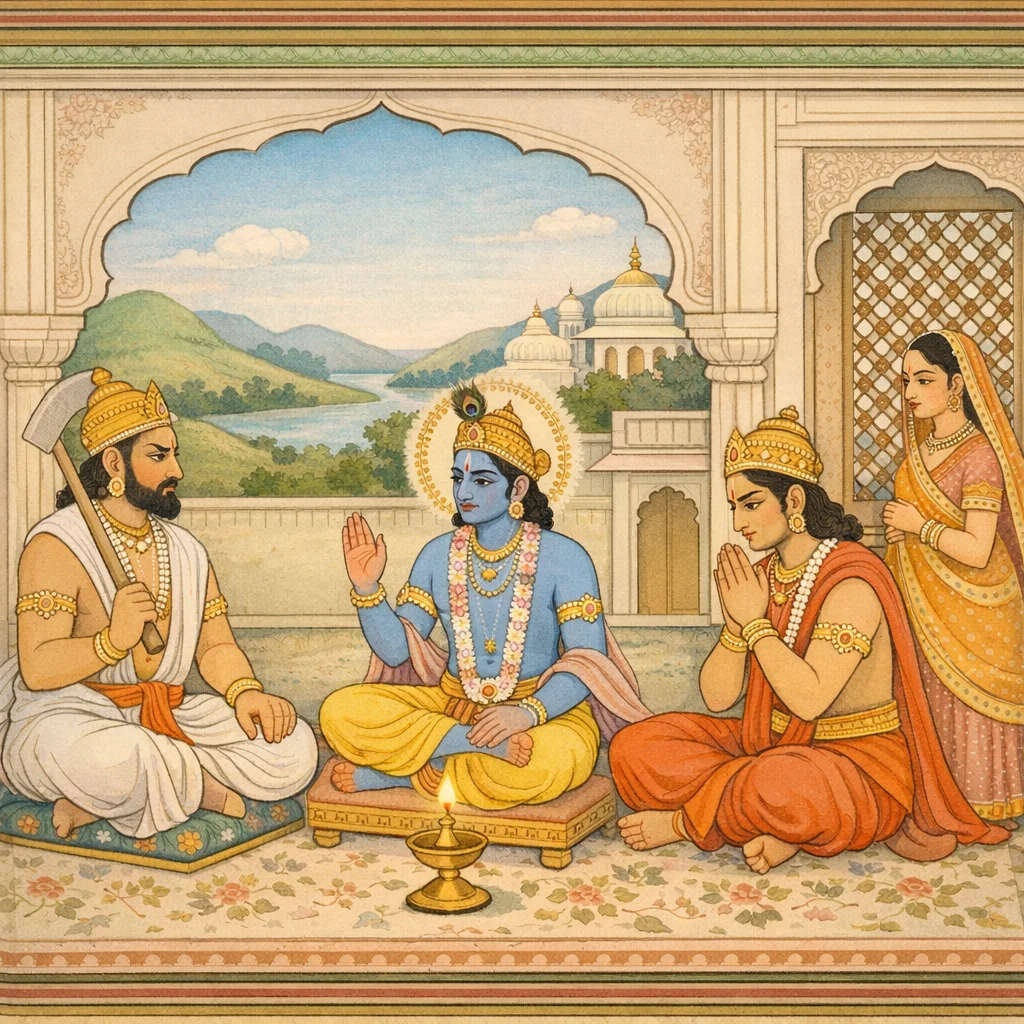
Adhyaya 220
Śārṅgakānāṃ Avināśaḥ (Why the Śārṅga Birds Were Spared) | शार्ङ्गकानामविनाशः
Upa-parva: Khāṇḍava-dāha (Episode within Ādi Parva)
Janamejaya asks why Agni did not burn the Śārṅga birds during the Khāṇḍava conflagration, noting that other exceptions (e.g., Aśvasena, Maya) have already been explained. Vaiśaṃpāyana replies with a causal narrative: the sage Mandapāla, exemplary in austerity and discipline, reaches the ancestral realm yet finds his earned worlds 'covered' (unavailable). He inquires and is told by the gods that humans are born with debts, discharged through rites, brahmacarya, and especially progeny; lacking offspring obstructs fruition of merit. Seeking swift and abundant progeny, Mandapāla assumes a bird-form (Śārṅga) and approaches Jaritā, begetting four sons. He later departs toward another mate (Lapitā), while Jaritā remains in the Khāṇḍava forest, protecting the egg-born young. When Agni approaches to burn the forest, Mandapāla recognizes the danger and offers an extended stuti to Agni, identifying him as cosmic mediator and sacrificial mouth. Pleased, Agni offers a boon; Mandapāla requests the release/sparing of his sons even as Agni proceeds with the burning, and Agni assents and ignites the forest.
Chapter Arc: द्वारका में अर्जुन–सुभद्रा-विवाह के बाद यदुवंश के भीतर उठी शंकाएँ और मान-अपमान की चर्चा—क्या पाण्डव ने सात्वतों का अपमान किया, या उन्हें उचित सम्मान दिया? → कुल-गौरव और धन-लोभ की आशंकाएँ सामने आती हैं—कुछ लोग मानते हैं कि पाण्डव स्वयंवर को ‘अनाधृष्य’ (अजेय/अस्पर्श्य) समझते हैं और सात्वतों को अर्थलुब्ध नहीं मानते; इसी बीच बलराम का क्रोध और कुल-प्रतिष्ठा का प्रश्न वातावरण को तीखा बनाता है। → कृष्ण की नीति और वाणी से यह निर्णायक बिंदु आता है कि अर्जुन ने कुल का अपमान नहीं किया; उलटे, उचित सम्मान और मर्यादा का पालन हुआ—और इसी आधार पर बलराम के क्रोध का शमन तथा विवाह की स्वीकृति का मार्ग खुलता है। → विवाह को सामाजिक-धार्मिक मान्यता मिलती है; दहेज/उपहारों का प्रवाह ‘समुद्र में नदी-प्रवाह’ की तरह वर्णित होता है, और अर्जुन का इन्द्रप्रस्थ लौटना तथा यदुओं का स्नेह-सम्बन्ध स्थिर होता है। → इन्द्रप्रस्थ में नववधू के आगमन और द्रौपदी द्वारा स्वागत/आशीर्वाद की ओर कथा बढ़ती है (अगले प्रसंग में गृहस्थ-धर्म और सह-धर्मिणी संबंधों की नई परीक्षा)।
Shlokas
Verse 1
अपना बछ। अर: (हरणाहरणपर्व) विशत्यधिकद्धिशततमो< ध्याय: द्वारकामें अर्जुन और सुभद्राका विवाह, अर्जुनके इन्द्रप्रस्थ पहुँचनेपर श्रीकृष्ण आदिका दहेज लेकर वहाँ जाना, द्रौपदीके पुत्र एवं अभिमन्युके जन्म, संस्कार और शिक्षा वैशम्पायन उवाच उक्तवन्तो यथा वीर्यमसकृत् सर्ववृष्णय: । ततोअब्रवीद् वासुदेवो वाक्य धर्मार्थसंयुतम्,वैशम्पायनजी कहते हैं--जनमेजय! उस समय सभी वृष्णिवंशियोंने अपने-अपने पराक्रमके अनुसार अर्जुनसे बदला लेनेकी बात बार-बार दुहरायी। तब भगवान् वासुदेव यह धर्म और अर्थसे युक्त वचन बोले--
Vaiśampāyana said: “O Janamejaya, at that time all the Vṛṣṇis repeatedly spoke—each according to his own prowess—of taking vengeance upon Arjuna. Then Vāsudeva addressed them with words aligned with dharma and prudent statecraft.”
Verse 2
/ || ॥7 आओ नावमानं कुलस्यास्य गुडाकेश: प्रयुक्तवान् | सम्मानो< भ्यधिकस्तेन प्रयुक्तोडयं न संशय:,“निद्राविजयी अर्जुनने इस कुलका अपमान नहीं किया है। अपितु ऐसा करके उन्होंने इस कुलके प्रति अधिक सम्मानका भाव ही प्रकट किया है, इसमें संशय नहीं है
Vaiśampāyana said: “Guḍākeśa (Arjuna) has not brought dishonor upon this lineage. Rather, by what he has done, he has shown an even greater regard for the family’s honor—of this there is no doubt.”
Verse 3
अर्थलुब्धान् न व: पार्थो मन्यते सात्वतान् सदा । स्वयंवरमनाधृष्यं मन्यते चापि पाण्डव:,'पाण्डुपुत्र अर्जुन यह जानते हैं कि सात्वतवंशके लोग सदासे ही धनके लोभी नहीं हैं, अतः धन देकर कन्या नहीं ली जा सकती। साथ ही पाण्डुपुत्र अर्जुनको यह भी मालूम है कि स्वयंवरमें कनन््याके मिल जानेका पूर्ण निश्चय नहीं रहता, अतः वह भी अग्राह्म ही है
Vaiśampāyana said: Pārtha (Arjuna) does not regard you Sātvatas as people who are always greedy for wealth; therefore he does not think a maiden can be obtained by payment. And the son of Pāṇḍu also considers a svayaṃvara to be unreliable—since success there is not assured—hence he deems that course, too, unfit to be relied upon.
Verse 4
प्रदानमपि कन्याया: पशुवत् को<नुमन्यते । विक्रयं चाप्यपत्यस्य कः कुर्यात् पुरुषो भुवि,“भला, कौन ऐसा वीर पुरुष होगा, जो पशुकी तरह पराक्रमशून्य होकर कन्यादानकी प्रतीक्षामें बैठा रहेगा एवं इस पृथ्वीपर कौन ऐसा अधम पुरुष होगा, जो धन लेकर अपनी संतानको बेचेगा
Who would approve the giving away of a maiden as though she were cattle? And who on this earth would sell his own offspring for wealth?
Verse 5
एतान् दोषांस्तु कौन्तेयो दृष्टवानिति मे मतिः । अतः: प्रसहा हृतवान् कन्यां धर्मेण पाण्डव:,'मेरा विश्वास है कि कुन्तीकुमारने इन सभी दोषोंकी ओर दृष्टिपात किया है; इसीलिये उन्होंने क्षत्रिय-धर्मके अनुसार बलपूर्वक कनन््याका अपहरण किया है
Vaiśampāyana said: “In my judgment, the son of Kuntī had clearly perceived these faults. Therefore, acting in accordance with kṣatriya-dharma, the Pāṇḍava carried off the maiden by force.”
Verse 6
उचितश्लैव सम्बन्ध: सुभद्रां च यशस्विनीम् । एष चापीदृशः पार्थ: प्रसह् हृतवानिति,“मेरी समझमें यह सम्बन्ध बहुत उचित है। सुभद्रा यशस्विनी है और ये कुन्तीपुत्र अर्जुन भी ऐसे ही यशस्वी हैं; अतः इन्होंने सुभद्राका बलपूर्वक हरण किया है
Vaiśampāyana said: “This alliance is indeed fitting. Subhadrā is renowned, and this son of Kuntī—Arjuna—possesses the same renown. Therefore he has carried Subhadrā away by force.”
Verse 7
भरतस्यान्वये जात॑ शान्तनोक्ष यशस्विन: । कुन्तिभोजात्मजापुत्रं को बुभूषेत नार्जुनम्,“महाराज भरत तथा महायशस्वी शान्तनुके कुलमें जिनका जन्म हुआ है, जो कुन्तिभोजकुमारी कुन्तीके पुत्र हैं, ऐसे वीरवर अर्जुनको कौन अपना सम्बन्धी बनाना न चाहेगा?
Vaiśampāyana said: “Who would not wish to claim as a kinsman Arjuna—born in the lineage of Bharata and of the illustrious Śāntanu, and the son of Kuntī, the daughter of Kuntībhoja?”
Verse 8
न च पश्यामि य: पार्थ विजयेत रणे बलात् | वर्जयित्वा विरूपाक्षं भगनेत्रहरं हरम्
Vaiśampāyana said: “And, O Pārtha, I do not see anyone who could defeat him by sheer force in battle—except Hara, the three-eyed Lord, the remover of Bhaga’s eye.”
Verse 9
स च नाम रथस्तादृड्मदीयास्ते च वाजिन:,न्यवर्तयत संहृष्टा ममैषा परमा मति: । “इस समय अर्जुनके पास मेरा सुप्रसिद्ध रथ है, मेरे ही अद्भुत घोड़े हैं और स्वयं अर्जुन शीघ्रता-पूर्वक अस्त्र-शस्त्र चलानेवाले योद्धा हैं। ऐसी दशामें अर्जुनकी समानता कौन कर सकता है? आपलोग प्रसन्नताके साथ दौड़े जाइये और बड़ी सान्त्वनासे धनंजयको लौटा लाइये। मेरी तो यही परम सम्मति है
Vaiśaṃpāyana said: “That renowned chariot is indeed mine, and those splendid horses are mine as well. Therefore, turn back with glad hearts. This is my firm and highest judgment.”
Verse 10
योद्धा पार्थश्व शीघ्रास्त्र: को नु तेन समो भवेत् | तमभिद्रुत्य सान्त्वेन परमेण धनंजयम्
Vaiśampāyana said: “A warrior, swift in the use of weapons and standing beside Pārtha—who could possibly be his equal? Therefore, rushing up to Dhanañjaya, they sought to win him over with the highest conciliatory words.”
Verse 11
यदि निर्जित्य व: पार्थों बलाद् गच्छेत् स्वकं पुरम्
Vaiśaṃpāyana said: “If Pārtha, having subdued you, were to go by force to his own city…”
Verse 12
तच्छुत्वा वासुदेवस्य तथा चक्रुर्जनाधिप,जनमेजय! वासुदेवका यह वचन सुनकर यादवोंने वैसा ही किया
Vaiśampāyana said: “O king Janamejaya, having heard the words of Vāsudeva, the Yādavas acted exactly as he directed—showing prompt obedience to rightful counsel and disciplined execution of a leader’s command.”
Verse 13
निवत्तश्नार्जुनस्तत्र विवाहं कृतवान् प्रभु: । उषित्वा तत्र कौन्तेय: संवत्सरपरा: क्षपा:,शक्तिशाली अर्जुन द्वारकामें लौट आये। वहाँ उन्होंने सुभद्रासे विवाह किया और एक सालसे कुछ अधिक दिनतक वे वहीं रहे
Vaiśampāyana said: Having returned there, the mighty Arjuna solemnized a marriage. The son of Kuntī then stayed in that place for nights amounting to a year and a little more—signaling a settled, socially sanctioned union and a period of domestic stability after his return.
Verse 14
विहृत्य च यथाकामं पूजितो वृष्णिनन्दनै: । पुष्करे तु ततः शेषं काल वर्तितवान् प्रभु:,द्वारकामें इच्छानुसार विहार करके वृष्णिवंशियोंद्वारा पूजित होकर अर्जुन वहाँसे पुष्करतीर्थमें चले गये और वनवासका शेष समय वहीं व्यतीत किया
Vaiśampāyana said: Having enjoyed himself as he wished, and having been honoured by the descendants of Vṛṣṇi, the noble one then went to Puṣkara and spent there the remainder of his allotted time (of exile).
Verse 15
पूर्णे तु द्वादशे वर्षे खाण्डवप्रस्थमागत: । (ववन्दे धौम्यमासाद्य मातरं च धनंजय: ।। बारहवाँ वर्ष पूर्ण होनेपर वे खाण्डवप्रस्थमें आये। उन्होंने धौम्यजीके पास जाकर उनको तथा माता कुन्तीको प्रणाम किया। स्पृष्टवा च चरणौ राज्ञों भीमस्य च धनंजय: । यमाभ्यां वन्दितो हृष्ट: सस्वजे तौ ननन्द च ।।) अभिगम्य च राजानं नियमेन समाहित:
Vaiśampāyana said: When the twelve years were completed, Dhanañjaya (Arjuna) came to Khāṇḍavaprastha. Approaching Dhaumya, he bowed to him and also to his mother Kuntī. Touching the feet of the king and of Bhīma, Arjuna—honoured by the twins—was delighted; he embraced them and rejoiced. Then, having approached the king with disciplined self-control, he stood composed according to proper observance.
Verse 16
अभ्यर्च्य ब्राह्म॒णान् पार्थो द्रौपदीमभिजग्मिवान् | इसके बाद राजा युधिष्ठिर और भीमके चरण छुये। तदनन्तर नकुल और सहदेवने आकर अर्जुनको प्रणाम किया। अर्जुनने भी हर्षमें भरकर उन दोनोंको हृदयसे लगा लिया और उनसे मिलकर बड़ी प्रसन्नताका अनुभव किया। फिर वहाँ राजासे मिलकर नियमपूर्वक एकाग्रचित्त हो उन्होंने ब्राह्मणोंका पूजन किया। तत्पश्चात् वे द्रौषपदीके समीप गये ।। १५३ || त॑ द्रौपदी प्रत्युवाच प्रणयात् कुरुनन्दनम्,द्रौपदीने प्रणणकोपवश कुरुनन्दन अर्जुनसे कहा--'कुन्तीकुमार! यहाँ क्यों आये हो, वहीं जाओ, जहाँ वह सात्वतवंशकी कन्या सुभद्रा है। सच है, बोझको कितना ही कसकर बाँधा गया हो, जब उसे दूसरी बार बाँधते हैं, तब पहला बन्धन ढीला पड़ जाता है (यही हालत मेरे प्रति तुम्हारे प्रेमबन्धनकी है)
Vaiśampāyana said: Having duly honored the brāhmaṇas, Pārtha (Arjuna) went to Draupadī. In the surrounding narrative, the brothers exchange respectful salutations and embraces, and Arjuna—composed and attentive to rule—performs worship of the brāhmaṇas before approaching Draupadī. Draupadī, however, speaks from wounded affection and jealousy, directing him toward Subhadrā and implying that love, like a binding, loosens when one tries to bind again—an ethical tension between marital fidelity, duty, and personal desire.
Verse 17
तत्रैव गच्छ कौन्तेय यत्र सा सात्वतात्मजा । सुबद्धस्यापि भारस्य पूर्वबन्ध: श्लथायते,द्रौपदीने प्रणणकोपवश कुरुनन्दन अर्जुनसे कहा--'कुन्तीकुमार! यहाँ क्यों आये हो, वहीं जाओ, जहाँ वह सात्वतवंशकी कन्या सुभद्रा है। सच है, बोझको कितना ही कसकर बाँधा गया हो, जब उसे दूसरी बार बाँधते हैं, तब पहला बन्धन ढीला पड़ जाता है (यही हालत मेरे प्रति तुम्हारे प्रेमबन्धनकी है)
Vaiśampāyana said: “Go from here, O son of Kuntī, to the very place where Subhadrā, the daughter of the Sātvata line, is. Even a load that has been tightly bound becomes loosened at its earlier knot when it is tied again—so too, when a new attachment is formed, the former bond tends to slacken.”
Verse 18
तथा बहुविध॑ कृष्णां विलपन्ती धनंजय: । सान्त्वयामास भूयश्न क्षमयामास चासकृत्,इस तरह नाना प्रकारकी बातें कहकर कृष्णा विलाप करने लगी। तब धनंजयने उसे पूर्ण सान्त्वना दी और अपने अपराधके लिये उससे बार-बार क्षमा माँगी
As Kṛṣṇā (Draupadī) lamented in many ways, Dhanañjaya (Arjuna) repeatedly consoled her and again and again begged her forgiveness for his fault. The scene upholds an ethical ideal: even a mighty warrior must acknowledge wrongdoing, comfort the afflicted, and seek reconciliation through humility rather than pride.
Verse 19
सुभद्रां त्वरमाणश्न रक्तकौशेयवासिनीम् । पार्थ: प्रस्थापयामास कृत्वा गोपालिकावपु:,इसके बाद अर्जुनने लाल रेशमी साड़ी पहनकर आयी हुई अनिन््द्यसुन्दरी सुभद्राका ग्वालिनका-सा वेश बनाकर उसे बड़ी उतावलीके साथ महलमें भेजा
Vaiśampāyana said: Arjuna, seeing Subhadrā dressed in red silk and in haste, sent her on ahead after disguising her in the guise of a cowherd woman. The episode shows a strategic use of disguise and speed to avoid obstruction and public confrontation, seeking to accomplish their aim with the least harm and social turmoil.
Verse 20
साधिकं तेन रूपेण शोभमाना यशस्विनी । भवन श्रेष्ठमासाद्य वीरपत्नी वराजड़्नना,वीरपत्नी, वरांगना एवं यशस्विनी सुभद्रा उस वेशमें और अधिक शोभा पाने लगी। उसकी आँखें विशाल और कुछ-कुछ लाल थीं। उस यशस्विनीने सुन्दर राजभवनके भीतर जाकर राजमाता कुन्तीके चरणोंमें प्रणाम किया। कुन्ती उस सर्वांगसुन्दरी पुत्र-वधूको हृदयसे लगाकर उसका मस्तक सूँघने लगी
Vaiśampāyana said: In that very attire, the illustrious lady shone with even greater beauty. Reaching the finest of palaces, that noble woman—the wife of a hero—entered within and bowed at the feet of Queen-mother Kuntī. Kuntī embraced her with heartfelt affection and, in a gesture of maternal blessing, smelled her head—welcoming her as a daughter-in-law with tenderness and propriety.
Verse 21
वबन््दे पृथुताम्राक्षी पृथां भद्रा यशस्विनी । तां कुन्ती चारुसर्वाज्जीमुपाजिप्रत मूर्थनि,वीरपत्नी, वरांगना एवं यशस्विनी सुभद्रा उस वेशमें और अधिक शोभा पाने लगी। उसकी आँखें विशाल और कुछ-कुछ लाल थीं। उस यशस्विनीने सुन्दर राजभवनके भीतर जाकर राजमाता कुन्तीके चरणोंमें प्रणाम किया। कुन्ती उस सर्वांगसुन्दरी पुत्र-वधूको हृदयसे लगाकर उसका मस्तक सूँघने लगी
Vaiśampāyana said: “I bow to that illustrious and auspicious lady—Pṛthā (Kuntī)—whose eyes were wide and tinged with redness.” The beautiful, well-proportioned bride approached Queen Kuntī and bowed her head at her feet. In the narrative, the scene highlights dharmic etiquette for a new daughter-in-law: reverence toward elders, modest conduct within the royal household, and affectionate acceptance by the family matriarch—an ideal of kinship, respect, and domestic harmony.
Verse 22
सुभद्राका कुन्ती और द्रौपदीकी सेवामें उपस्थित होना प्रीत्या परमया युक्ता आशीर्भिय्युज्जतातुलाम् । ततो$भिगम्य त्वरिता पूर्णेन्दुसद्शानना
Vaiśaṃpāyana said: Subhadrā, devotedly attending upon Kuntī and Draupadī in service, was filled with the highest affection and offered incomparable blessings. Then, hastening forward, she approached them—her face radiant like the full moon—signaling respectful humility and the ethical ideal of honoring elders and co-wives through sincere service.
Verse 23
प्रत्युत्थाय तदा कृष्णा स्वसारं माधवस्य च,उस समय द्रौपदी तुरंत उठकर खड़ी हो गयी और श्रीकृष्णकी बहिन सुभद्राको हृदयसे लगाकर बड़ी प्रसन्नतासे बोली--“बहिन! तुम्हारे पति शत्रुरहित हों।” सुभद्राने भी आनन्दमग्न होकर कहा--“बहिन! ऐसा ही हो”
Then Draupadī at once rose to her feet. Embracing Subhadrā—Mādhava (Kṛṣṇa)’s sister—close to her heart, she spoke with great joy: “Sister, may your husband be free from enemies.” Subhadrā too, filled with delight, replied: “So may it be.”
Verse 24
परिष्वज्यावदत् प्रीत्या निः:सपत्नो<स्तु ते पति: । तथैव मुदिता भद्रा तामुवाचैवमस्त्विति,उस समय द्रौपदी तुरंत उठकर खड़ी हो गयी और श्रीकृष्णकी बहिन सुभद्राको हृदयसे लगाकर बड़ी प्रसन्नतासे बोली--“बहिन! तुम्हारे पति शत्रुरहित हों।” सुभद्राने भी आनन्दमग्न होकर कहा--“बहिन! ऐसा ही हो”
Embracing her with affection, Draupadī spoke joyfully to Subhadrā: “Sister, may your husband be free of rivals.” Subhadrā too, delighted, replied to her, “Sister, so be it.”
Verse 25
ततस्ते हृष्टमनस: पाण्डवेया महारथा: । कुन्ती च परमप्रीता बभूव जनमेजय,जनमेजय! तत्पश्चात् महारथी पाण्डव मन-ही-मन हर्षविभोर हो उठे और कुन्तीदेवी भी बहुत प्रसन्न हुईं। कमलनयन भगवान् श्रीकृष्णने जब यह सुना कि पाण्डवश्रेष्ठ अर्जुन अपने उत्तम नगर इन्द्रप्रस्थ पहुँच गये हैं, तब वे शुद्धात्मा श्रीकृष्ण एवं बलराम तथा वृष्णि और अन्धकवंशके प्रधान-प्रधान वीर महारथियोंके साथ वहाँ आये
Then the great chariot-warriors among the sons of Pāṇḍu became joyful at heart; and Kuntī too was filled with the highest delight, O Janamejaya.
Verse 26
श्र॒ुत्वा तु पुण्डरीकाक्ष: सम्प्राप्तं स्वं पुरोत्तमम् । अर्जुन पाण्डवश्रेष्ठमिन्द्रप्रस्थगतं तदा,जनमेजय! तत्पश्चात् महारथी पाण्डव मन-ही-मन हर्षविभोर हो उठे और कुन्तीदेवी भी बहुत प्रसन्न हुईं। कमलनयन भगवान् श्रीकृष्णने जब यह सुना कि पाण्डवश्रेष्ठ अर्जुन अपने उत्तम नगर इन्द्रप्रस्थ पहुँच गये हैं, तब वे शुद्धात्मा श्रीकृष्ण एवं बलराम तथा वृष्णि और अन्धकवंशके प्रधान-प्रधान वीर महारथियोंके साथ वहाँ आये
Vaiśampāyana said: O Janamejaya, when the lotus-eyed Lord (Kṛṣṇa) heard that Arjuna—the foremost of the Pāṇḍavas—had reached Indraprastha, his own excellent city, he then set out to go there.
Verse 27
आजगाम विशुद्धात्मा सह रामेण केशव: । वृष्ण्यन्धकमहामात्रै: सह वीरैर्महारथै:,जनमेजय! तत्पश्चात् महारथी पाण्डव मन-ही-मन हर्षविभोर हो उठे और कुन्तीदेवी भी बहुत प्रसन्न हुईं। कमलनयन भगवान् श्रीकृष्णने जब यह सुना कि पाण्डवश्रेष्ठ अर्जुन अपने उत्तम नगर इन्द्रप्रस्थ पहुँच गये हैं, तब वे शुद्धात्मा श्रीकृष्ण एवं बलराम तथा वृष्णि और अन्धकवंशके प्रधान-प्रधान वीर महारथियोंके साथ वहाँ आये
Vaiśampāyana said: Then Keśava (Kṛṣṇa), whose inner self was pure, arrived together with Rāma (Balarāma), accompanied by the chief ministers and leading men of the Vṛṣṇis and Andhakas—heroes and great chariot-warriors, O Janamejaya.
Verse 28
भ्रातृभिश्न कुमारैश्व योधैश्व बहुभिव॒त: । सैन्येन महता शौरिरभिगुप्त: परंतप:,शत्रुओंको संताप देनेवाले श्रीकृष्ण भाइयों, पुत्रों और बहुतेरे योद्धाओंके साथ घिरे हुए तथा विशाल सेनासे सुरक्षित होकर इन्द्रप्रस्थमें पधारे
Vaiśampāyana said: Śauri (Śrī Kṛṣṇa), the scorcher of foes, arrived at Indraprastha surrounded by his brothers, sons, and many warriors, and protected by a vast army. The scene underscores rightful strength used as guardianship—power organized not for wanton aggression but to secure allies and uphold order in a tense political landscape.
Verse 29
तत्र दानपतिर्धीमानाजगाम महायशा: । अक्ूरो वृष्णिवीराणां सेनापतिररिंदम:,उस समय वहाँ वृष्णिवीरोंके सेनापति शत्रुदमन महायशस्वी और परम बुद्धिमान् दानपति अक्रूरजी भी आये थे
Then, to that place came Akrūra as well—renowned and highly intelligent, famed as a lord of generosity—serving as the commander of the Vṛṣṇi heroes, a subduer of foes. The narration highlights the arrival of a virtuous and capable leader whose qualities of wisdom and liberality support righteous order and disciplined conduct among warriors.
Verse 30
अनाधूृष्टिमहातेजा उद्धवश्च महायशा: । साक्षाद् बृहस्पते: शिष्यो महाबुद्धिर्महामना:,इनके सिवा महातेजस्वी अनाधृष्टि तथा साक्षात् बृहस्पतिके शिष्य परम बुद्धिमान् महामनस्वी एवं परम यशस्वी उद्धव भी आये थे
Vaiśampāyana said: “There also came Anādhṛṣṭi, a man of great splendor, and Uddhava, renowned for his eminent fame—Uddhava being in truth a direct disciple of Bṛhaspati, endowed with vast intelligence and a lofty, noble mind.” The verse highlights that those present were not merely numerous, but included figures of proven learning and moral stature, suggesting that counsel and conduct in this gathering were supported by wisdom and reputable character.
Verse 31
सत्यक: सात्यकिश्वैव कृतवर्मा च सात्वत: । प्रद्युम्नश्वैव साम्बश्न निशठ: शड्कुरेव च,सत्यक, सात्यकि, सात्वतवंशी कृतवर्मा, प्रद्युम्मन, साम्ब, निशठ, शंकु, पराक्रमी चारुदेष्ण, झिल्ली, विपृथु, महाबाहु सारण तथा दिद्वानोंमें श्रेष्ठ गद--ये तथा और दूसरे भी बहुत-से वृष्णि, भोज और अन्धकवंशके लोग दहेजकी बहुत-सी सामग्री लेकर खाण्डवप्रस्थमें आये थे
Vaiśampāyana said: Satyaka, Sātyaki, and Kṛtavarmā of the Sātvata line; and also Pradyumna, Sāmba, Niśaṭha, and Śaṅku—these prominent Vṛṣṇi-Andhaka heroes arrived as part of the wedding party, bearing abundant gifts and dowry-articles to Khāṇḍavaprastha. The passage underscores the social ethic of honoring alliances through generous giving and the public affirmation of kinship and duty.
Verse 32
चारुदेष्णश्न विक्रान्तो झिल्ली विपृथुरेव च । सारणश्न महाबाहुर्गदश्न विदुषां वर:,सत्यक, सात्यकि, सात्वतवंशी कृतवर्मा, प्रद्युम्मन, साम्ब, निशठ, शंकु, पराक्रमी चारुदेष्ण, झिल्ली, विपृथु, महाबाहु सारण तथा दिद्वानोंमें श्रेष्ठ गद--ये तथा और दूसरे भी बहुत-से वृष्णि, भोज और अन्धकवंशके लोग दहेजकी बहुत-सी सामग्री लेकर खाण्डवप्रस्थमें आये थे
Vaiśampāyana said: The valiant Cārudeṣṇa, as well as Jhillī and Vipṛthu; and Sāraṇa of mighty arms; and Gada, foremost among the wise—these, along with many other men of the Vṛṣṇi, Bhoja, and Andhaka lineages, arrived at Khāṇḍavaprastha bearing abundant bridal gifts. The passage underscores the social ethic of honoring marital alliance through generous, public offerings and the gathering of kin in support of a dharmic union.
Verse 33
एते चान्ये च बहवो वृष्णिभोजान्धकास्तथा । आजम्मु: खाण्डवप्रस्थमादाय हरणं बहु,सत्यक, सात्यकि, सात्वतवंशी कृतवर्मा, प्रद्युम्मन, साम्ब, निशठ, शंकु, पराक्रमी चारुदेष्ण, झिल्ली, विपृथु, महाबाहु सारण तथा दिद्वानोंमें श्रेष्ठ गद--ये तथा और दूसरे भी बहुत-से वृष्णि, भोज और अन्धकवंशके लोग दहेजकी बहुत-सी सामग्री लेकर खाण्डवप्रस्थमें आये थे
Vaiśampāyana said: Many others too—men of the Vṛṣṇi, Bhoja, and Andhaka lineages—arrived at Khāṇḍavaprastha, bringing abundant bridal gifts and valuables. The scene is framed by the ethics of kinship and alliance: a public, generous transfer of wealth proclaims a marriage sanctioned by society, strengthens bonds between houses, and affirms dharma through orderly, witnessed custom rather than coercion.
Verse 34
ततो युधिष्छिरो राजा श्रुत्वा माधवमागतम् । प्रतिग्रहार्थ कृष्णस्य यमौ प्रास्थापयत् तदा,महाराज युधिष्ठिरने भगवान् श्रीकृष्णका आगमन सुनकर उन्हें आदरपूर्वक लिवा लानेके लिये नकुल और सहदेवको भेजा
Then King Yudhiṣṭhira, hearing that Mādhava (Śrī Kṛṣṇa) had arrived, at once dispatched the twin brothers, Nakula and Sahadeva, to go forth and receive Kṛṣṇa with due honor. The episode underscores the dharmic duty of a righteous king to welcome a revered guest—especially one regarded as divine—with respect, hospitality, and proper protocol.
Verse 35
ताभ्यां प्रतिगृहीतं तु वृष्णिचक्रं महर्द्धिमत् विवेश खाण्डवप्रस्थं पताकाध्वजशोभितम्,उन दोनोंके द्वारा स्वागतपूर्वक लाये हुए वृष्णि-वंशियोंके उस परम समृद्धिशाली समुदायने खाण्डवप्रस्थमें प्रवेश किया। उस समय ध्वजा-पताकाओंसे सजाया हुआ वह नगर सुशोभित हो रहा था
Vaiśampāyana said: Welcomed and received by those two, the exceedingly prosperous host of the Vṛṣṇis entered Khāṇḍavaprastha. The city at that time shone splendidly, adorned with banners and standards—an outward sign of honor, alliance, and orderly civic celebration.
Verse 36
सम्मृष्टसिक्तपन्थान पुष्पप्रकरशोभितम् । चन्दनस्य रसै: शीतै: पुण्यगन्धर्निषेवितम्,नगरकी सड़कें झाड़-बुहारकर साफ की गयी थीं। उनके ऊपर जलका छिड़काव किया गया था। स्थान-स्थानपर फूलोंके गजरोंसे नगरकी सजावट की गयी थी। शीतल चन्दन, रस तथा अन्य पवित्र सुगन्धित पदार्थोकी सुवास सब ओर छा रही थी
Vaiśampāyana said: The city’s roads had been swept clean and sprinkled with water. They were adorned in many places with heaps and garlands of flowers, and the cool essence of sandalwood—together with other sacred, fragrant substances—pervaded the area with an auspicious scent, marking a ceremonially purified and welcoming atmosphere.
Verse 37
दह्तागुरुणा चैव देशे देशे सुगन्धिना । हृष्टपुष्टजनाकीर्ण वणिग्भिरुपशोभितम्,जगह-जगह जलते हुए अगुरुकी सुगन्ध फैल रही थी, सारा नगर हृष्ट-पुष्ट मनुष्योंसे भरा था। कितने ही व्यापारी उसकी शोभा बढ़ा रहे थे
Vaiśampāyana said: “In every quarter the air was fragrant with the scent of burning aguru (aloeswood). The city was crowded with cheerful, well-nourished people, and its splendor was further enhanced by the presence of many merchants.”
Verse 38
प्रतिपेदे महाबाहुः सह रामेण केशव: । वृष्ण्यन्धकैस्तथा भोजै: समेत: पुरुषोत्तम:,महाबाहु पुरुषोत्तम श्रीकृष्णने बलरामजी तथा वृष्णि, अन्धक एवं भोजवंशी वीरोंके साथ नगरमें प्रवेश किया
Vaiśampāyana said: The mighty-armed Keśava—Puruṣottama Śrī Kṛṣṇa—entered the city with Rāma (Balarāma), accompanied by the heroes of the Vṛṣṇi, Andhaka, and Bhoja clans. The scene proclaims rightful leadership and kin-bound solidarity: the righteous protector arrives not alone, but upheld by his people and elders, embodying order, unity, and responsible power.
Verse 39
सम्पूज्यमान: पौरैश्व ब्राह्मणैश्व सहस्रश: | विवेश भवन राज्ञ: पुरन्दरगृहोपमम्,पुरवासी मनुष्यों तथा सहसों ब्राह्मणोंद्वारा सम्मानित हो उन्होंने राजभवनके भीतर प्रवेश किया। वह घर इन्द्रभवनकी शोभाको भी तिरस्कृत कर रहा था
Vaiśampāyana said: Honoured again and again by the townspeople and by thousands of brāhmaṇas, he entered the king’s palace—splendid like the mansion of Purandara (Indra). The scene upholds a social-ethical ideal: public reverence and brahminical esteem bestow legitimacy and auspiciousness upon royal space and upon the one received there.
Verse 40
युधिष्ठिरस्तु रामेण समागच्छद् यथाविधि । मूर्घ्नि केशवमाप्राय बाहुभ्यां परिषस्वजे,युधिष्ठिरजी बलरामजीके साथ विधिपूर्वक मिले और श्रीकृष्णका मस्तक सूँघकर उन्हें दोनों भुजाओंमें कस लिया
Vaiśampāyana said: Yudhiṣṭhira met Balarāma in the proper, prescribed manner. Then, smelling Keśava’s head in affectionate reverence, he clasped him tightly in both arms—an embrace that signaled reconciliation, respect for elders, and the restoration of familial harmony in accordance with dharma.
Verse 41
त॑ प्रीयमाणो गोविन्दो विनयेनाभिपूजयन् । भीमं च पुरुषव्यात्रं विधिवत् प्रत्यपूजयत्,भगवान् श्रीकृष्णने प्रसन्न होकर विनीतभावसे युधिष्ठिरका सम्मान किया। नरश्रेष्ठ भीमसेनका भी उन्होंने विधिवत् पूजन किया
Vaiśampāyana said: Pleased at heart, Govinda (Śrī Kṛṣṇa) honored Yudhiṣṭhira with humble courtesy. He also duly offered formal respect to Bhīmasena, the tiger among men—showing that true greatness expresses itself through disciplined, proper reverence toward the worthy.
Verse 42
तांश् वृष्ण्यन्धकश्रेष्ठान् कुन्तीपुत्रो युधिष्ठिर: । प्रतिजग्राह सत्कारैर्यथाविधि यथागतम्,कुन्तीनन्दन युधिष्ठिरने वृष्णि और अन्धकवंशके श्रेष्ठ पुरुषोंका विधिपूर्वक यथायोग्य स्वागत-सत्कार किया
Vaiśampāyana said: Kuntī’s son Yudhiṣṭhira received those foremost men of the Vṛṣṇis and Andhakas, honoring them with due courtesies—according to proper custom and in a manner fitting to their arrival. The scene affirms the king’s commitment to dharma through respectful hospitality and right conduct toward eminent guests and allies.
Verse 43
गुरुवत् पूजयामास कांश्रित् कांश्चिद् ववस्यवत् | कांश्रचिदभ्यवदत् प्रेम्णा कैश्चिदप्पभिवादित:,कुछ लोगोंका उन्होंने गुरुकी भाँति पूजन किया, कितनोंको समवयस्क मित्रोंकी भाँति गलेसे लगाया, कुछ लोगोंसे प्रेमपूर्वक वार्तालाप किया और कुछ लोगोंने उन्हींको प्रणाम किया
Vaiśampāyana said: He honored some as one would revere a teacher; some he embraced like friends of the same age; with some he spoke affectionately; and by some he was respectfully saluted.
Verse 44
तेषां ददौ हृषीकेशो जन्यार्थे धनमुत्तमम् | हरणं वै सुभद्राया ज्ञातिदेयं महायशा:,महायशस्वी भगवान् श्रीकृष्णने वधू तथा वरपक्षके लोगोंके लिये उत्तम धन अर्पित किया। वरके कुट॒म्बीजनोंको देनेयोग्य दहेज पहले नहीं दिया गया था, उसीकी पूर्ति उन्होंने इस समय की
Then Hṛṣīkeśa (Kṛṣṇa) bestowed excellent wealth for the sake of those present—the gifts properly due to Subhadrā’s kin; the greatly renowned one thus fulfilled what ought to be given to the bride’s relatives.
Verse 45
रथानां काञज्चनाड़ानां किड॒ुकिणीजालमालिनाम् । चतुर्युजामुपेतानां सूतैे: कुशलशिक्षितै:,किंकिणी और झालरोंसे सुशोभित सुवर्णखबचित एक हजार रथ जिनमेंसे प्रत्येकमें चार-चार घोड़े जुते हुए थे और प्रत्येकमें पूर्ण शिक्षित चतुर सारथि बैठा हुआ था, श्रीमान् कृष्णने समर्पित किये तथा मथुरामण्डलकी पवित्र तेजवाली दस हजार दुधारू गौएँ दीं
Vaiśampāyana said: Krishna presented a thousand chariots—adorned with golden fittings and garlands of bells and tinkling ornaments—each yoked with four horses and attended by expertly trained charioteers. He also gave ten thousand milch-cows from the sacred, radiant region of Mathurā.
Verse 46
सहसं्रं प्रददौ कृष्णो गवामयुतमेव च । श्रीमान् माथुरदेश्यानां दोग्भ्रीणां पुण्यवर्चसाम्,किंकिणी और झालरोंसे सुशोभित सुवर्णखबचित एक हजार रथ जिनमेंसे प्रत्येकमें चार-चार घोड़े जुते हुए थे और प्रत्येकमें पूर्ण शिक्षित चतुर सारथि बैठा हुआ था, श्रीमान् कृष्णने समर्पित किये तथा मथुरामण्डलकी पवित्र तेजवाली दस हजार दुधारू गौएँ दीं
Vaiśaṃpāyana said: The illustrious Kṛṣṇa bestowed a thousand gifts and also ten thousand cows—milk-yielding cattle of the Mathurā region, radiant with sanctity.
Verse 47
वडवानां च शुद्धानां चन्द्रांशुसमवर्चसाम् । ददौ जनार्दन: प्रीत्या सहस्नं हेमभूषितम्,चन्द्रमाके समान श्वेत कान्तिवाली विशुद्ध जातिकी एक हजार सुवर्णभूषित घोड़ियाँ भी जनार्दनने प्रेमपूर्वक भेंट कीं
Vaiśampāyana said: Out of affection, Janārdana presented a thousand pure mares, radiant like moonbeams, each adorned with gold.
Verse 48
तथैवाश्वतरीणां च दान्तानां वातरंहसाम् | शतान्यञ्जनकेशीनां श्वेतानां पऊडच पञ्च च,इसी प्रकार पाँच सौ काले अयालवाली और पाँच सौ सफेद रंगवाली खच्चरियाँ समर्पित कीं, जो सभी वशमें की हुई तथा वायुके समान वेगवाली थीं
Vaiśampāyana said: Likewise, five hundred she-mules with manes dark as collyrium and five hundred white ones were presented—each well-trained and swift as the wind.
Verse 49
स्नानपानोत्सवे चैव प्रयुक्त वयसान्वितम् । स्त्रीणां सहस्रं गौरीणां सुवेषाणां सुवर्चसाम्,स्नान, पान और उत्सवमें जिनका उपयोग किया गया था, जो वय:प्राप्त थीं, जिनके वेष सुन्दर और कान्ति मनोहर थी, जिन्होंने सोनेके सौ-सौ मणियोंकी कण्ठियाँ पहन रखी थीं, जिनके शरीरमें रोमावलियाँ नहीं प्रकट हुई थीं, जो वस्त्राभूषणोंसे अलंकृत तथा सेवाके काममें पूर्ण दक्ष थीं, ऐसी एक हजार गौरवर्णा कन्याएँ भी कमलनयन भगवान् श्रीकृष्णने भेंट कीं
Vaiśampāyana said: And he also presented a thousand fair-complexioned young women—of mature age—who had been employed in bathing, drinking-feasts, and festive occasions, adorned with fine attire and radiant in appearance.
Verse 50
सुवर्णशतकण्ठीनामरोमाणां स्वलंकृताम् । परिचर्यासु दक्षाणां प्रददौ पुष्करेक्षण:,स्नान, पान और उत्सवमें जिनका उपयोग किया गया था, जो वय:प्राप्त थीं, जिनके वेष सुन्दर और कान्ति मनोहर थी, जिन्होंने सोनेके सौ-सौ मणियोंकी कण्ठियाँ पहन रखी थीं, जिनके शरीरमें रोमावलियाँ नहीं प्रकट हुई थीं, जो वस्त्राभूषणोंसे अलंकृत तथा सेवाके काममें पूर्ण दक्ष थीं, ऐसी एक हजार गौरवर्णा कन्याएँ भी कमलनयन भगवान् श्रीकृष्णने भेंट कीं
Vaiśampāyana said: Puṣkarekṣaṇa, the lotus-eyed one, bestowed maidens adorned with necklaces of a hundred gold beads, smooth-limbed and finely decorated, skilled in the duties of attendance and service—fit for bathing, drinking, and festive occasions.
Verse 51
पृष्ठ्यानामपि चाश्वानां बाह्नलिकानां जनार्दन: । ददौ शतसहस्राख्यं कन्याधनमनुत्तमम्,जनार्दनने उत्तम दहेजके रूपमें बाह्नीकदेशके एक लाख घोड़े दिये, जो पीठपर सवारी ढोनेवाले थे
Vaiśaṃpāyana said: Janārdana bestowed, as an unsurpassed bridal gift, a dowry reckoned at a hundred thousand—horses from the Bāhlīka land, fit for bearing riders upon their backs.
Verse 52
कृताकृतस्य मुख्यस्थ कनकस्याग्निवर्चस: । मनुष्यभारान् दाशाहों ददौ दश जनार्दन:,दशा्हवंशके रत्न भगवान् श्रीकृष्णने अग्निके समान देदीप्यमान कृत्रिम सुवर्ण (मोहर) और अकृत्रिम विशुद्ध सुवर्णके (डले) दस भार उपहारमें दिये
Vaiśampāyana said: Janārdana (Śrī Kṛṣṇa) presented ten bhāras of gold—both worked (minted) and unworked (pure bullion), radiant like fire.
Verse 53
गजानां तु प्रभिन्नानां त्रिधा प्रस्रवतां मदम् | गिरिकूटनिकाशानां समरेष्वनिवर्तिनाम्,जिन्हें साहसका काम प्रिय है और जो हाथमें हल धारण करते हैं, उन बलरामने प्रसन्न होकर इस नूतन सम्बन्धका आदर करते हुए अर्जुनको पाणिग्रहणके दहेजके रूपमें एक हजार मतवाले हाथी भेंट किये, जो तीन अंगोंसे मदकी धारा बहानेवाले थे। वे हाथी युद्धमें कभी पीछे नहीं हटते थे और देखनेमें पर्वतशिखरके समान जान पड़ते थे। उनके मस्तकोंपर सुन्दर वेषरचना की गयी थी। उन सबके पार्श्वभागमें मजबूत घण्टे लटक रहे थे तथा गलेमें सोनेके हार शोभा दे रहे थे। वे सभी हाथी बड़े सुन्दर लगते थे और उन सबके साथ महावत थे
Vaiśampāyana said: “He presented elephants in rut—mighty beasts from whose temples the must flowed in three streams—huge as mountain-peaks and never turning back in battle.” In the narrative context, this gift serves as a formal, honor-laden bride-gift, publicly affirming the new alliance and the giver’s resolve to uphold the bond through strength, prestige, and protection.
Verse 54
क्लृप्तानां पटुघण्टानां चारूणां हेममालिनाम् | हस्त्यारोहैरुपेतानां सहस्नं साहसप्रिय:,जिन्हें साहसका काम प्रिय है और जो हाथमें हल धारण करते हैं, उन बलरामने प्रसन्न होकर इस नूतन सम्बन्धका आदर करते हुए अर्जुनको पाणिग्रहणके दहेजके रूपमें एक हजार मतवाले हाथी भेंट किये, जो तीन अंगोंसे मदकी धारा बहानेवाले थे। वे हाथी युद्धमें कभी पीछे नहीं हटते थे और देखनेमें पर्वतशिखरके समान जान पड़ते थे। उनके मस्तकोंपर सुन्दर वेषरचना की गयी थी। उन सबके पार्श्वभागमें मजबूत घण्टे लटक रहे थे तथा गलेमें सोनेके हार शोभा दे रहे थे। वे सभी हाथी बड़े सुन्दर लगते थे और उन सबके साथ महावत थे
Vaiśampāyana said: Delighting in bold deeds, he presented a thousand splendid elephants as a bride-gift in honor of this new alliance—elephants outfitted with strong, well-fixed bells, adorned with golden garlands, and attended by skilled riders. The gift publicly affirmed the bond between families and displayed royal generosity, where wealth and power are offered not for mere show but to seal relationship, duty, and mutual respect.
Verse 55
राम: पाणिग्रहणिकं ददौ पार्थाय लाड्नली | प्रीयमाणो हलधर: सम्बन्धं प्रतिमानयन्,जिन्हें साहसका काम प्रिय है और जो हाथमें हल धारण करते हैं, उन बलरामने प्रसन्न होकर इस नूतन सम्बन्धका आदर करते हुए अर्जुनको पाणिग्रहणके दहेजके रूपमें एक हजार मतवाले हाथी भेंट किये, जो तीन अंगोंसे मदकी धारा बहानेवाले थे। वे हाथी युद्धमें कभी पीछे नहीं हटते थे और देखनेमें पर्वतशिखरके समान जान पड़ते थे। उनके मस्तकोंपर सुन्दर वेषरचना की गयी थी। उन सबके पार्श्वभागमें मजबूत घण्टे लटक रहे थे तथा गलेमें सोनेके हार शोभा दे रहे थे। वे सभी हाथी बड़े सुन्दर लगते थे और उन सबके साथ महावत थे
Vaiśampāyana said: Pleased at heart, Rāma (Balarāma), the wielder of the plough, honored this newly formed kinship and bestowed upon Pārtha (Arjuna) the pāṇigrahaṇika—marriage-gifts—namely a thousand rutting elephants, streaming ichor, steadfast in battle and mountain-like in appearance, adorned with fine trappings, bells at their flanks, and golden necklaces, each attended by its mahout.
Verse 56
स महाधनरत्नौघो वस्त्रकम्बलफेनवान् । महागजमहाग्राह: पताकाशैवलाकुल:,जैसे नदियोंके जलका महान प्रवाह समुद्रमें मिलता है, उसी प्रकार वह महान् धन और रत्नोंका भारी प्रवाह, जिसमें वस्त्र और कम्बल फेनके समान जान पड़ते थे, बड़े-बड़े हाथी महान ग्राहोंका भ्रम उत्पन्न करते थे और जहाँ ध्वजा-पताकाएँ सेवारका काम कर रही थीं, पाण्डवरूपी महासागरमें जा मिला। यद्यपि पाण्डव-समुद्र पहलेसे ही परिपूर्ण था तथापि इस महान् धनप्रवाहने उसे और भी पूर्णतर बना दिया। यही कारण था कि वह पाण्डव- महासागर शत्रुओंके लिये शोकदायक प्रतीत होने लगा
Vaiśampāyana said: That mighty torrent of wealth and jewels—where garments and blankets looked like foam, great elephants seemed like huge crocodiles, and banners and pennants were like masses of river-weed—flowed into the ocean-like Pāṇḍavas, just as a great river-current merges into the sea. Though the Pāṇḍava-sea was already full, this influx made it fuller still, and thus it appeared a source of grief to their enemies.
Verse 57
पाण्डुसागरमाविद्ध: प्रविवेश महाधन: । पूर्णमापूरयंस्तेषां द्विषच्छोकावहो 5भवत्,जैसे नदियोंके जलका महान प्रवाह समुद्रमें मिलता है, उसी प्रकार वह महान् धन और रत्नोंका भारी प्रवाह, जिसमें वस्त्र और कम्बल फेनके समान जान पड़ते थे, बड़े-बड़े हाथी महान ग्राहोंका भ्रम उत्पन्न करते थे और जहाँ ध्वजा-पताकाएँ सेवारका काम कर रही थीं, पाण्डवरूपी महासागरमें जा मिला। यद्यपि पाण्डव-समुद्र पहलेसे ही परिपूर्ण था तथापि इस महान् धनप्रवाहने उसे और भी पूर्णतर बना दिया। यही कारण था कि वह पाण्डव- महासागर शत्रुओंके लिये शोकदायक प्रतीत होने लगा
Vaiśampāyana said: A vast stream of wealth, as though hurled into the ocean of the Pāṇḍavas, entered it and made it overflow. Though that ocean was already full, this mighty influx of riches filled it still further; therefore it appeared as a source of grief to their enemies. The image suggests that prosperity, when aligned with rightful power, strengthens the righteous and becomes a deterrent—and a sorrow—to hostile forces.
Verse 58
प्रतिजग्राह तत् सर्व धर्मराजो युधिष्ठिर: । पूजयामास तांश्वैव वृष्ण्यन्धकमहारथान्,धर्मराज युधिष्ठिरने वह सारा धन ग्रहण किया और वृष्णि तथा अन्धकवंशके उन सभी महारथियोंका भलीभाँति आदर-सत्कार किया
Vaiśampāyana said: Dharmarāja Yudhiṣṭhira accepted all that wealth and duly honored the great chariot-warriors of the Vṛṣṇi and Andhaka clans.
Verse 59
ते समेता महात्मान: कुरुवृष्ण्यन्धकोत्तमा: । विजहुरमरावासे नरा: सुकृतिनो यथा,जैसे पुण्यात्मा मनुष्य देवलोकमें सुख भोगते हैं, उसी प्रकार कुरु, वृष्णि और अन्धकवंशके वे श्रेष्ठ महात्मा पुरुष एकत्र होकर इच्छानुसार विहार करने लगे
Vaiśampāyana said: Those great-souled leaders—foremost among the Kurus, Vṛṣṇis, and Andhakas—gathered together and began to sport and move about at will in that celestial abode, as virtuous men enjoy happiness in the world of the gods by the power of their merit.
Verse 60
तत्र तत्र महानादैरुत्कृष्टतलनादितै: । यथायोगं यथाप्रीति विजहु: कुरुवृष्णय:,वे कौरव और वृष्णिवंशके वीर जहाँ-तहाँ वीणाकी उत्तम ध्वनिके साथ गाते-बजाते और संगीतका आनन्द लेते हुए यथावसर अपनी-अपनी रुचिके अनुसार विहार करने लगे
Vaiśampāyana said: Here and there, amid loud acclamations and the resonant beat of excellent rhythm, the heroes of the Kurus and the Vṛṣṇis took their leisure—singing and playing music—each in due course and according to his own delight.
Verse 61
एवमुत्तमवीर्यस्तिे विहृत्य दिवसान् बहून् । पूजिता: कुरुभिर्जग्मु: पुनर्द्धारवर्ती प्रति,इस प्रकार वे उत्तम पराक्रमी यदुवंशी बहुत दिनोंतक इन्द्रप्रस्थमें विहार करते हुए कौरवोंसे सम्मानित हो फिर द्वारका चले गये
Thus, those heroes of excellent prowess, having spent many days in pleasant sojourn and having been duly honored by the Kurus, set out once again for Dvāravatī.
Verse 62
राम॑ पुरस्कृत्य ययुर्वष्ण्यन्धकमहारथा: । रत्नान्यादाय शुभ्राणि दत्तानि कुरुसत्तमै:,वृष्णि और अन्धकवंशके महारथी कुरुप्रवर पाण्डवोंके दिये हुए उज्ज्वल रत्नोंकी भेंट ले बलरामजीको आगे करके चले गये
Vaiśampāyana said: Placing Balarāma at their head, the great chariot-warriors of the Vṛṣṇi and Andhaka clans set out, carrying with them the bright jewels bestowed by the foremost of the Kurus.
Verse 63
वासुदेवस्तु पार्थेन तत्रैव सह भारत । उवास नगरे रम्ये शक्रप्रस्थे महात्मना,जनमेजय! परंतु भगवान् वासुदेव महात्मा अर्जुनके साथ रमणीय इन्द्रप्रस्थमें ही ठहर गये
Vaiśaṃpāyana said: O descendant of Bharata, O Janamejaya—Vāsudeva remained there itself with Pārtha (Arjuna), dwelling in the delightful city of Śakraprastha (Indraprastha).
Verse 64
व्यचरद् यमुनातीरे मृगयां स महायशा: । मृगान् विध्यन् वराहांश्व रेमे सार्थ किरीटिना,महायशस्वी श्रीकृष्ण अर्जुनके साथ शिकार खेलते और जंगली वराहों तथा हिंख्र पशुओंका वध करते हुए यमुनाजीके तटपर विचरते थे। इस प्रकार वे किरीटधारी अर्जुनके साथ विहार करते थे
The greatly renowned Śrī Kṛṣṇa ranged along the banks of the Yamunā with Arjuna, delighting in the hunt—striking down wild beasts and boars—and thus sported with the diadem-wearing Pārtha.
Verse 65
ततः सुभद्रा सौभद्रंं केशवस्य प्रिया स्वसा । जयन्तमिव पौलोमी ख्यातिमन्तमजीजनत्,तदनन्तर कुछ कालके पश्चात् श्रीकृष्णकी प्यारी बहिन सुभद्राने यशस्वी सौभद्रको जन्म दिया; ठीक वैसे ही, जैसे शचीने जयन्तको उत्पन्न किया था
Then, after some time, Subhadrā—beloved sister of Keśava (Kṛṣṇa)—gave birth to the renowned Saubhadra (Abhimanyu), illustrious like Jayanta born of Paulomī (Śacī).
Verse 66
दीर्घबाहुं महोरस्क॑ वृषभाक्षमरिंदमम् । सुभद्रा सुषुवे वीरमभिमन्युं नरर्षभम्,सुभद्राने वीरवर नरश्रेष्ठ अभिमन्युको उत्पन्न किया, जिसकी बड़ी-बड़ी बाँहें, विशाल वक्ष:स्थल और बैलोंके समान विशाल नेत्र थे। वह शत्रुओंका दमन करनेवाला था
Vaiśaṃpāyana said: Subhadrā gave birth to the heroic Abhimanyu—long-armed, broad-chested, with eyes like a bull’s, a crusher of foes, and a foremost among men.
Verse 67
अभिश्च मन्युमांश्नैव ततस्तमरिमर्दनम् । अभिमन्युमिति प्राहुरार्जुनिं पुरुषर्षभम्,वह अभि ([निर्भय) एवं मन्युमान् (क्रुद्ध होकर लड़नेवाला) था, इसीलिये पुरुषोतम अर्जुनकुमारको 'अभिमन्यु' कहते हैं
And because he was both “abhi”—fearless—and “manyumān”—full of battle-fury—that crusher of enemies, the bull among men, Arjuna’s son, came to be known as “Abhimanyu”.
Verse 68
स सात्वत्यामतिरथ: सम्बभूव धनंजयात् | मखे निर्मथनेनेव शमीगर्भाद्धुताशन:,जैसे यज्ञमें मन्थन करनेपर शमीके गर्भसे उत्पन्न अश्वत्थसे अग्नि प्रकट होती है, उसी प्रकार अर्जुनके द्वारा सुभद्राके गर्भसे उस अतिरथी वीरका प्रादुर्भाव हुआ था
Vaiśampāyana said: From Sātvatī (Subhadrā), by Dhanañjaya (Arjuna), there was born an atiratha—an exceptionally mighty warrior. As in a sacrifice fire is brought forth by churning from within the womb of śamī-wood, so did that hero manifest from Subhadrā’s womb through Arjuna—an auspicious birth, charged with ritual power and destined for great deeds.
Verse 69
यस्मिज्जाते महातेजा: कुन्तीपुत्रो युधिष्ठिर: अयुतं गा द्विजातिभ्य: प्रादान्निष्कांश्व भारत,भारत! उसके जन्म लेनेपर महातेजस्वी कुन्तीपुत्र युधिष्ठिरने ब्राह्मगोंको दस हजार गौएँ तथा बहुत-सी स्वर्णमुद्राएँ दानमें दीं
Vaiśaṃpāyana said: When the radiant Kuntī’s son Yudhiṣṭhira was born, O Bhārata, he bestowed upon the twice-born (brāhmaṇas) ten thousand cows and also many niṣkas (gold pieces). Thus was the prince’s birth at once marked by generosity and dharmic kingship.
Verse 70
दयितो वासुदेवस्य बाल्यात् प्रभूति चाभवत् | पितृणामिव सर्वेषां प्रजानामिव चन्द्रमा:,जैसे समस्त पितरों और प्रजाओंको चन्द्रमा प्रिय लगते हैं, उसी प्रकार अभिमन्यु बचपनसे ही भगवान् श्रीकृष्णका अत्यन्त प्रिय हो गया था
Vaiśampāyana said: From his very childhood, he became exceedingly dear to Vāsudeva (Śrī Kṛṣṇa). As the moon is beloved to all the Pitṛs and to all beings, so too was Abhimanyu cherished—an affection grounded in protection and auspicious regard, not mere attachment.
Verse 71
जन्मप्रभृति कृष्णश्व चक्रे तस्य क्रिया: शुभा: । स चापि ववृधे बाल: शुक्लपक्षे यथा शशी,श्रीकृष्णने जन्मसे ही उसके लालन-पालनकी सुन्दर व्यवस्थाएँ की थीं। बालक अभिमन्यु शुक्लपक्षके चन्द्रमाकी भाँति दिनोंदिन बढ़ने लगा
Vaiśampāyana said: From the time of his birth, Kṛṣṇaśva arranged auspicious rites and proper care for the child. And the boy, nurtured thus, grew day by day—like the moon waxing in the bright fortnight.
Verse 72
चतुष्पादं दशविध॑ धर्नुर्वेदमरिंदम: । अर्जुनाद् वेद वेदज्ञ: सकल॑ दिव्यमानुषम्,उस शत्रुदमन बालकने वेदोंका ज्ञान प्राप्त करके अपने पिता अर्जुनसे चार पदों* और दशविधः अंगोंसे युक्त दिव्य एवं मानुषः सब प्रकारके थनुर्वेदका ज्ञान प्राप्त कर लिया
Vaiśampāyana said: The foe-subduer, learned in sacred knowledge, acquired from Arjuna the Dhanurveda—the science of archery—complete in its fourfold divisions and tenfold components, embracing every form of weapon-lore, both divine and human.
Verse 73
विज्ञानेष्वपि चास्त्राणां सौष्ठवे च महाबल: । क्रियास्वपि च सर्वासु विशेषानभ्यशिक्षयत्,अस्त्रोंके विज्ञान, सौष्ठव (प्रयोगपटुता) तथा सम्पूर्ण क्रियाओंमें भी महाबली अर्जुनने उसे विशेष शिक्षा दी थी
Vaiśampāyana said: Though he already possessed knowledge of weapons, the mighty one further trained him to excellence in their proper application; and in every practical discipline as well, he instructed him in the finer distinctions—so that skill would be joined to right execution, not merely to learning.
Verse 74
आगमगमे च प्रयोगे च चक्रे तुल्यमिवात्मना । तुतोष पुत्र सौभद्रं प्रेक्षमाणो धनंजय:,धनंजयने अभिमन्युको (अस्त्र-शस्त्रोंक) आगम और प्रयोगमें अपने समान बना दिया था। वे सुभद्राकुमारको देखकर बहुत संतुष्ट रहते थे
Vaiśampāyana said: In the study of the āgamas and in practical application as well, Dhanañjaya (Arjuna) trained Subhadrā’s son so thoroughly that he became, as it were, equal to Arjuna himself. Watching the boy Abhimanyu, Arjuna remained deeply pleased—an image of a teacher’s duty fulfilled and a father’s joy in a worthy heir to skill and responsibility.
Verse 75
सर्वसंहननोपेतं सर्वलक्षणलक्षितम् | दुर्धर्षमृषभस्कन्ध॑ व्यात्ताननमिवोरगम्,वह दूसरोंको तिरस्कृत करनेवाले समस्त सदगुणोंसे सम्पन्न, सभी उत्तम लक्षणोंसे सुशोभित एवं दुर्धर्ष था। उसके कंधे वृषभके समान हृष्ट-पुष्ट थे तथा मुँह बाये हुए सर्पकी भाँति वह शत्रुओंको भयानक प्रतीत होता था
Vaiśampāyana said: He was endowed with a perfectly compact and powerful build, marked by every auspicious sign, and was difficult for others to assail or overcome. With shoulders broad and firm like a bull’s, and with a face like a serpent with its jaws spread, he appeared terrifying to his enemies—one who would brook no contempt and who carried the stamp of many noble qualities.
Verse 76
सिंहदर्प महेष्वासं मत्तमातड्रविक्रमम् । मेघदुन्दुभिनिर्घोष॑ पूर्णचन्द्रनिभाननम्,उसमें सिंहके समान गर्व तथा मतवाले गजराजकी भाँति पराक्रम था। वह महाधनुर्धर वीर अपने गम्भीर स्वरसे मेघ और दुन्दुभिकी ध्वनिको लजा देता था। उसका मुख पूर्ण चन्द्रमाके समान मनमें आह्लाद उत्पन्न करता था
Vaiśampāyana said: He was a great archer, proud as a lion and mighty in valor like an intoxicated lordly elephant. His deep voice put to shame the rumbling of clouds and the beat of kettledrums, and his face—like the full moon—brought gladness to the mind. The passage highlights the idealized heroic portrait: strength disciplined through martial skill, and a presence that inspires confidence and delight in those who behold him.
Verse 77
कृष्णस्य सदृशं शौर्ये वीर्ये रूपे तथा55कृतौ । ददर्श पुत्र॑ बीभत्सुर्मघवानिव त॑ यथा,वह शूरता, पराक्रम, रूप तथा आकृति--सभी बातोंमें श्रीकृष्णके समान ही जान पड़ता था। अर्जुन अपने उस पुत्रको वैसी ही प्रसन्नतासे देखते थे, जैसे इन्द्र उन्हें देखा करते थे
Vaiśampāyana said: Bībhatsu (Arjuna) beheld his son and found him like Kṛṣṇa himself—in valor, strength, beauty, and even in form and bearing. He looked upon that heroic child with the same delighted approval with which Maghavān (Indra) is said to look upon him.
Verse 78
पाज्चाल्यपि तु पञ्चभ्य: पतिभ्य: शुभलक्षणा । लेभे पञ्च सुतान् वीराउश्रेष्ठानू पज्चाचलानिव,शुभलक्षणा पांचालीने भी अपने पाँचों पतियोंसे पाँच श्रेष्ठ पुत्रोंकोी प्राप्त किया। वे सब- के-सब वीर और पर्वतके समान अविचल थे
Vaiśampāyana said: Draupadī of Pāñcāla, marked with auspicious signs, likewise bore five sons by her five husbands. Those sons were heroic and excellent—steadfast and formidable like the Upapāñcāla mountains—signifying the sanctioned continuity of the Pāṇḍavas’ line and the social-ethical legitimacy of their unusual marriage within the epic’s dharma.
Verse 79
युधिष्ठिरात् प्रतिविन्ध्यं सुतसोम॑ वृकोदरात् । अर्जुनाच्छुतकर्माणं शतानीकं च नाकुलिम्,युधिष्ठिरसे प्रतिविन्ध्य, भीमसेनसे सुतसोम, अर्जुनसे श्रुतकर्मा, नकुलसे शतानीक और सहदेवसे श्रुतसेन उत्पन्न हुए थे। इन पाँच वीर महारथी पुत्रोंको पांचाली (द्रौपदी)-ने उसी प्रकार जन्म दिया, जैसे अदितिने बारह आदित्योंको
Vaiśampāyana said: From Yudhiṣṭhira was born Prativindhya; from Vṛkodara (Bhīma), Sutasoma; from Arjuna, Śrutakarmā; and from Nakula, Śatānīka. Thus Pāñcālī (Draupadī) bore these five heroic sons—mighty chariot-warriors—just as Aditi once gave birth to the twelve Ādityas.
Verse 80
सहदेवाच्छुतसेनमेतान् पठच महारथान् । पाज्चाली सुषुवे वीरानादित्यानदितिर्यथा,युधिष्ठिरसे प्रतिविन्ध्य, भीमसेनसे सुतसोम, अर्जुनसे श्रुतकर्मा, नकुलसे शतानीक और सहदेवसे श्रुतसेन उत्पन्न हुए थे। इन पाँच वीर महारथी पुत्रोंको पांचाली (द्रौपदी)-ने उसी प्रकार जन्म दिया, जैसे अदितिने बारह आदित्योंको
Vaiśampāyana said: From Sahadeva was born Śrutasena. Pāñcālī (Draupadī) gave birth to these heroic sons—mighty warriors—just as Aditi gave birth to the Ādityas. Prativindhya was Yudhiṣṭhira’s son; Sutasoma, Bhīmasena’s; Śrutakarmā, Arjuna’s; Śatānīka, Nakula’s; and Śrutasena, Sahadeva’s.
Verse 81
शास्त्रत: प्रतिविन्ध्यं तमूचुर्विप्रा युधिष्ठिरम् । परप्रहरणज्ञाने प्रतिविन्ध्यो भवत्वयम्,ब्राह्मणोंने युधिष्ठिससे उनके पुत्रका नाम शास्त्रके अनुसार प्रतिविन्ध्य बताया। उनका उद्देश्य यह था कि यह प्रहारजनित वेदनाके ज्ञानमें विन्ध्यपर्वतके समान हो। (इसे शत्रुओंके प्रहारसे तनिक भी पीड़ा न हो)
Vaiśampāyana said: The Brahmin sages, following the injunctions of the śāstras, told Yudhiṣṭhira that the boy’s name should be Prativindhya. By this they intended that, in knowing and enduring the pain caused by others’ blows, he might be like the Vindhya mountain—unshaken and untroubled even when struck by enemies.
Verse 82
सुते सोमसहस्रे तु सोमार्कसमतेजसम् । सुतसोमं महेष्वासं सुषुवे भीमसेनत:,भीमसेनके सहस्र सोमयाग करनेके पश्चात् द्रौपदीने उनसे सोम और सूर्यके समान तेजस्वी महान् धनुर्थर पुत्रको उत्पन्न किया था, इसलिये उसका नाम सुतसोम रखा गया
Vaiśampāyana said: As though a thousand Soma-sacrifices (Soma-yajña) had been fulfilled, Draupadī bore to Bhīmasena a mighty archer named Sutasoma, radiant like Soma and the Sun. The verse frames the child’s naming and renown through sacrificial merit and luminous virtue, binding lineage to dharmic prestige.
Verse 83
अपि सर्वेषु लोकेषु सेन्द्ररुद्रेषु मारिष । आर्य! इन्द्रलोक एवं रुद्रलोकसहित सम्पूर्ण लोकोंमें भगदेवताके नेत्रोंका नाश करनेवाले विकराल नेत्रोंवाले भगवान् रुद्रको छोड़कर दूसरे किसीको मैं ऐसा नहीं देखता, जो संग्राममें बलपूर्वक पार्थको परास्त कर सके,श्रुतं कर्म महत् कृत्वा निवृत्तेन किरीटिना । जात: पुत्रस्तथेत्येवं श्रुतकर्मा ततो&भवत् किरीटधारी अर्जुनने महान् एवं विख्यात कर्म करनेके पश्चात् लौटकर द्रौपदीसे पुत्र उत्पन्न किया था, इसलिये उनके पुत्रका नाम श्रुतकर्मा हुआ
Vaiśampāyana said: “O noble one, even among all the worlds—those of Indra and Rudra included—I see no one who could forcibly defeat Pārtha (Arjuna) in battle, except the awe-inspiring Lord Rudra, the terrible-eyed destroyer of Bhaga’s eyes. After the diadem-wearing Arjuna had performed a great and renowned deed and then returned, a son was born to him from Draupadī; therefore that son came to be known as Śrutakarmā (‘he whose deed was heard of’).”
Verse 84
शतानीकस्य राजर्षे: कौरव्यस्य महात्मन: । चक्रे पुत्र सनामानं नकुल: कीर्तिवर्धनम्,कौरवकुलके महामना राजर्षि शतानीकके नामपर नकुलने अपने कीर्तिवर्धक पुत्रका नाम शतानीक रख दिया
Vaiśampāyana said: Nakula, wishing to enhance his own renown, bestowed upon his son the same name—Śatānīka—after the great-souled royal sage Śatānīka of the Kaurava line.
Verse 85
ततस्त्वजीजनत् कृष्णा नक्षत्रे वल्निदेवते सहदेवात् सुतं तस्माच्छुतसेनेति यं विदु:,तदनन्तर कृष्णाने सहदेवसे अग्निदेवतासम्बन्धी कृत्तिका नक्षत्रमें एक पुत्र उत्पन्न किया, इसलिये उसका नाम श्रुतसेन रखा गया (श्रुतसेन अग्निका ही नामान्तर है)
Then Kṛṣṇā (Draupadī) bore a son to Sahadeva under the asterism Kṛttikā, whose presiding deity is Agni. Therefore he came to be known as Śrutasena—understood as a name associated with Agni.
Verse 86
एकवर्षनन्तरास्त्वेते द्रौपदेया यशस्विन: । अन्वजायन्त राजेन्द्र परस्परहितैषिण:,राजेन्द्र! ये यशस्वी द्रौपदीकुमार एक-एक वर्षके अन्तरसे उत्पन्न हुए थे और एक- दूसरेका हित चाहनेवाले थे
Vaiśampāyana said: “O best of kings, these illustrious sons of Draupadī were born at intervals of one year, each after the other, and they were devoted to one another’s welfare.”
Verse 87
जातकर्माण्यानुपूर्व्याच्चूडोपनयनानि च । चकार विधिवद् धौम्यस्तेषां भरतसत्तम,भरतश्रेष्ठ! पुरोहित धौम्यने क्रमश: उन सभी बालकोंके जातकर्म, चूड़ाकरण और उपनयन आदि संस्कार विधिपूर्वक सम्पन्न किये
Vaiśampāyana said: Then, in due sequence, Dhaumya—the family priest—performed for those boys, in accordance with prescribed rites, the sacraments beginning with the birth-ritual (jātakarma) and including the tonsure (cūḍākaraṇa) and the initiation with the sacred thread (upanayana), O best of the Bharatas.
Verse 88
कृत्वा च वेदाध्ययनं ततः सुचरितव्रता: । जगृहु: सर्वमिष्वस्त्रमर्जुनाद दिव्यमानुषम्,पूर्णरूपसे ब्रह्मचर्य व्रबरका पालन करनेवाले उन बालकोंने धौम्य मुनिसे वेदाध्ययन करनेके पश्चात् अर्जुनसे सम्पूर्ण दिव्य एवं मानुष थनुर्वेदका ज्ञान प्राप्त किया
Vaiśampāyana said: After completing their study of the Vedas, those youths—steadfast in well-kept vows and disciplined conduct—received from Arjuna the entire science of archery, embracing both divine and human weapons. It shows that martial mastery rests upon learning, self-restraint, and righteous observance.
Verse 89
दिव्यगर्भोपमै: पुन्रै्व्यूढोरस्कैर्महारथै: । अन्वितो राजशार्दूल पाण्डवा मुदमाप्नुवन्,राजेश्वर! देवपुत्रोंके समान चौड़ी छातीवाले महारथी पुत्रोंसे संयुक्त हो पाण्डव बड़े प्रसन्न हुए
Vaiśampāyana said: O tiger among kings, O lord of kings—endowed with sons like divine offspring, broad-chested and mighty chariot-warriors, the Pāṇḍavas were filled with joy. It teaches that strength and prosperity, grounded in rightful lineage and disciplined valor, become a blessing for all rather than mere pride.
Verse 106
न्यवर्तयत संहृष्टा ममैषा परमा मति: । “इस समय अर्जुनके पास मेरा सुप्रसिद्ध रथ है, मेरे ही अद्भुत घोड़े हैं और स्वयं अर्जुन शीघ्रता-पूर्वक अस्त्र-शस्त्र चलानेवाले योद्धा हैं। ऐसी दशामें अर्जुनकी समानता कौन कर सकता है? आपलोग प्रसन्नताके साथ दौड़े जाइये और बड़ी सान्त्वनासे धनंजयको लौटा लाइये। मेरी तो यही परम सम्मति है
Vaiśampāyana said: Rejoicing, they turned back. This is my firm and highest judgment: “At this moment Arjuna has my renowned chariot, my own extraordinary horses, and Arjuna himself is a warrior swift in the use of weapons. In such a condition, who could equal Arjuna? Go forth gladly, and with great reassurance bring Dhanañjaya back. This indeed is my supreme counsel.”
Verse 116
प्रणश्येद् वो यश: सद्यो न तु सान्त्वे पराजय: । “यदि अर्जुन आपलोगोंको बलपूर्वक हराकर अपने नगरमें चले गये, तब तो आपलोगोंका सारा यश तत्काल ही नष्ट हो जायगा और सान्त्वनापूर्वक उन्हें ले आनेमें अपनी पराजय नहीं है'
Vaiśampāyana said: “Your fame would be ruined at once, but there is no disgrace in yielding through conciliation. If Arjuna were to defeat you by force and return to his city, your honor would immediately be destroyed; whereas bringing him back through gentle persuasion is not a defeat.”
Verse 219
इस प्रकार श्रीमह्या भारत आदिपर्वके अन्तर्गत सुभद्राहरणपर्वमें बलदेवक्रोधविषयक दो सौ उन्नीसवाँ अध्याय पूरा हुआ
Thus, in the revered Mahābhārata, within the Ādi Parva, in the section concerning the abduction of Subhadrā, the two-hundred-and-nineteenth chapter—dealing with Balarāma’s anger—comes to an end. The closing formula marks the completion of a narrative unit, reminding that powerful emotion, even in the righteous, must be restrained for harmony in family and polity.
Verse 220
इति श्रीमहा भारते आदिपर्वणि हरणाहरणपर्वणि विंशत्यधिकद्धिशततमो< ध्याय: ।। २२० || इस प्रकार श्रीमहाभारत आदिपरववके अन्तर्गत हरणाहरणपर्वमें दो सौ बीसवाँ अध्याय पूरा हुआ
Thus, in the Śrī Mahābhārata, within the Ādi Parva, in the section called Haraṇāharaṇa Parva, the two-hundred-and-twentieth chapter concludes. (This is a colophon marking the end of the chapter in the Gītā Press edition.)
Verse 223
वनन््दे द्रौपदी भद्रा प्रेष्याहमिति चाब्रवीत् । और उसने बड़ी प्रसन्नताके साथ उस अनुपम वधूको अनेक आशीर्वाद दिये। तदनन्तर पूर्ण चन्द्रमाके सदूश मनोहर मुखवाली सुभद्राने तुरंत जाकर महारानी द्रौपदीके चरण छूए और कहा--'देवि! मैं आपकी दासी हूँ”
Vaiśampāyana said: “(Subhadrā) bowed to Draupadī and declared, ‘I am your attendant.’ Then, with great joy, she offered many blessings to that incomparable bride. Thereafter Subhadrā—whose face was charming like the full moon—went at once, touched Queen Draupadī’s feet, and said, ‘Goddess, I am your servant.’”
Frequently Asked Questions
Mandapāla confronts a conflict between ascetic achievement and incomplete social duty: despite austerity, his merit is obstructed due to lack of progeny, forcing a decision to fulfill lineage obligations while later safeguarding dependent offspring during a public-scale event.
The chapter teaches that dharma is composite: personal discipline and ritual merit are evaluated alongside relational obligations (ṛṇa), and ethical action includes responsibility toward dependents; spiritual attainment is framed as requiring duty-completeness rather than single-aim practice.
No explicit phalaśruti is stated here; the meta-commentary functions narratively by explaining causation—Agni’s sparing is grounded in stuti, consent, and prior obligations—positioning the episode as an etiological account within the Khāṇḍava-dāha arc.