ब्राह्मणीस्वर्गतिवर्णनम् (Brāhmaṇī-Svargati-Varṇana: Account of a Brāhmaṇa Woman’s Ascent to Heaven)
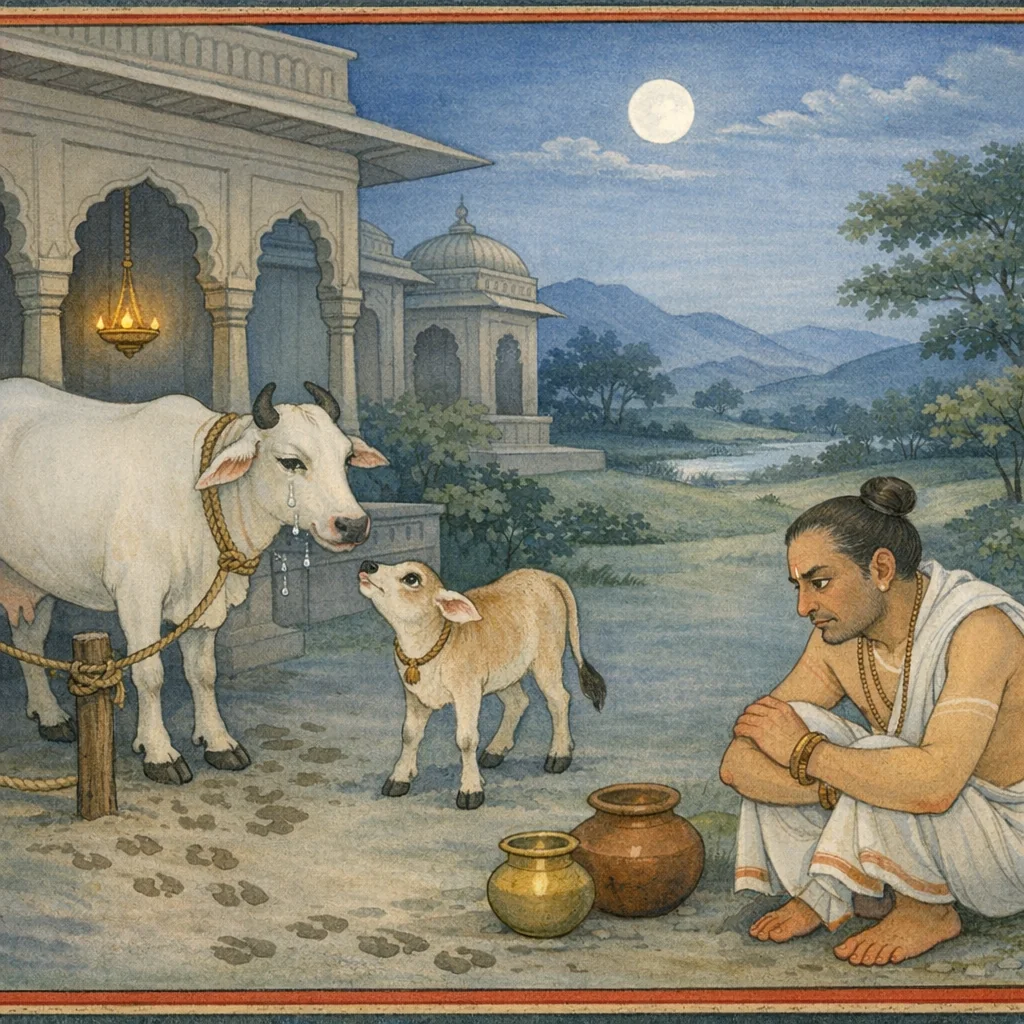
Set within the Nandikeśvara-liṅga-māhātmya, Sūta narrates an exemplum from a brāhmaṇa household. At night a cow is tied in the courtyard; desiring milk, the brāhmaṇa calls the calf and, in trying to bind it and overcome its resistance, slips into wrath (krodha) and harsh action, revealing the peril of anger even amid ritual duties. The cow weeps, the calf asks the reason, and a didactic dialogue arises that turns the incident into moral insight. The Purāṇic teaching links conduct, intention, and consequence: ordinary acts involving the sacred cow become spiritually weighty, and compassion and restraint are implied as conditions for auspiciousness. The colophon names the chapter “Brāhmaṇīsvargati-varṇana,” indicating a culmination in salvific reward—attainment of heaven—connected to Śaiva sacred potency under the Nandikeśvara-liṅga frame.
Shlokas
Verse 1
सूत उवाच । गौश्चैकाप्यभवत्तत्र ह्यंगणे बंधिता शुभा । तदैव ब्राह्मणो रात्रावाजगाम बहिर्गतः
Sūta said: “There, in the courtyard, a single auspicious cow was tied. Just then, during the night, a brāhmaṇa came back from outside.”
Verse 2
स उवाच प्रियां स्वीयां दृष्ट्वा गामंगणे स्थिताम् । अदुग्धां खेदनिर्विण्णो दोग्धुकामो मुनीश्वराः
Seeing his beloved cow standing in the courtyard, still unmilked, the great sage—wearied and distressed—spoke, desiring to milk her.
Verse 3
गौः प्रिये नैव दुग्धा ते सेत्युक्ता वत्समानयत् । दोहनार्थं समाहूय स्त्रियं शीघ्रतरं तदा
The cow said, “Beloved, I have not been milked.” Having said this, she brought her calf. Then, for the purpose of milking, she quickly called the woman.
Verse 4
वत्सं कीले स्वयं बद्धुं यत्नं चैवाकरोत्तदा । ब्राह्मणस्स गृहस्वामी मुनयो दुग्धलालसः
Then that householder brāhmaṇa himself made an effort to tie the calf to a peg, while the sages—eager for milk—looked on, intent upon receiving what was needed for their rite and hospitality.
Verse 5
वत्सोपि कर्षमाणश्च पादे वै पादपीडनम् । चकार ब्राह्मणश्चैव कष्टं प्राप्तश्च सुव्रताः
Even the calf, while tugging, pressed upon his foot; and the brāhmaṇa too suffered pain. Thus the man of good vows encountered hardship.
Verse 6
इति श्रीशिवमहापुराणे चतुर्थ्यां कोटिरुद्रसंहितायां नंदिकेश्वरलिंगमाहात्म्यवर्णने ब्राह्मणीस्वर्गतिवर्णनं नाम षष्ठोऽध्यायः
Thus, in the Śrī Śiva Mahāpurāṇa, in the Fourth Book, the Koṭirudrasaṃhitā—within the narration of the greatness of the Nandikeśvara Liṅga—ends the sixth chapter, entitled “The Description of the Brahmin Woman’s Attainment of Heaven.”
Verse 7
वत्सोपि पीडितस्तेन श्रांतश्चैवाभवत्तदा । दुग्धा गौर्मोचितो वत्सो न क्रोधेन द्विजन्मना
Even the calf, tormented by him, became exhausted at that time. The cow had been milked and the calf released, yet the twice-born (brahmin) did not let go of his anger.
Verse 8
गौर्दोग्धुं महत्प्रीत्या रोदनं चाकरोत्तदा । दृष्ट्वा च रोदनं तस्या वत्सो वाक्यमथाब्रवीत्
Then the cow, with great affection and longing to be milked, began to weep. Seeing her tears, the calf spoke these words.
Verse 9
वत्स उवाच । कथं च रुद्यते मातः किन्ते दुःखमुपस्थितम् । तन्निवेदय मे प्रीत्या तच्छ्रुत्वा गौरवोचत
Vatsa said: “Mother, why do you weep? What sorrow has come upon you? Tell me with affection.” Hearing this, Gaurī spoke.
Verse 10
श्रूयतां पुत्र मे दुःखं वक्तुं शक्नोम्यहं न हि । दुष्टेन ताडितत्वं च तेन दुःखं ममाप्यभूत्
Listen, my son, to my sorrow; truly I cannot speak it in full. I was struck by a wicked one, and because of that, grief has arisen within me as well.
Verse 11
सूत उवाच । स्वमातुर्वचनं श्रुत्वा स वत्सः प्रत्यबोधयत् । प्रत्युवाच स्वजननीं प्रारब्धपरिनिष्ठितः
Sūta said: Hearing his mother’s words, that son (Vatsa) understood their import. Steadfast in prārabdha—the destiny already set in motion—he replied to his own mother.
Verse 12
किं कर्त्तव्यं क्व गंतव्यं कर्मबद्धा वयं यतः । कृतं चैव यथापूर्वं भुज्यते च तथाधुना
“What, then, should we do, and where should we go, since we are bound by karma? Whatever was done formerly is indeed being experienced now in the same manner.”
Verse 13
हसता क्रियते कर्म रुदता परिभुज्यते । दुःखदाता न कोप्यस्ति सुखदाता न कश्चन
Actions are performed even while one laughs, and their fruits are inevitably experienced even while one weeps. No one else is truly the giver of sorrow, and no one else the giver of happiness—these arise from one’s own karma under the unfailing ordinance of Mahādeva (Śiva).
Verse 14
सुखदुःखे परो दत्त इत्येषा कुमतिर्मता । अहं चापि करोम्यत्र मिथ्याज्ञानं तदोच्यते
To think, “Another bestows my pleasure and pain,” is deemed a misguided notion; and to think here, “I too am the doer,”—that is what is called false knowledge (mithyā-jñāna).
Verse 15
स्वकर्मणा भवेद्दुखं सुखं तेनैव कर्मणा । तस्माच्च पूज्यते कर्म सर्वं कर्मणि संस्थितम
By one’s own actions arise sorrow, and by those very actions arise happiness. Therefore karma is to be revered, for everything stands established upon karma.
Verse 16
त्वं चैवाहं च जननी इमे जीवादयश्च ये । ते सर्वे कर्मणा बद्धा न शोच्याः कर्हिचित्त्वया
You and I, and mother, and all these beings beginning with the individual souls—every one of them is bound by karma. Therefore, they should never be lamented by you at any time.
Verse 17
सूत उवाच । एवं श्रुत्वा स्वपुत्रस्य वचनं ज्ञानगर्भितम् । पुत्रशोकान्विता दीना सा च गौरब्रवीदिदम्
Sūta said: Having thus heard her own son’s words—filled with spiritual discernment—Gaurī, afflicted by grief for her child and overcome with sorrow, spoke these words.
Verse 18
गौरुवाच । वत्स सर्वं विजानामि कर्माधीनाः प्रजा इति । तथापि मायया ग्रस्ता दुःखं प्राप्नोम्यहं पुनः
Gaurī said: “Dear child, I know everything—that embodied beings are bound by their own karma. Yet even so, seized by Māyā, I again come to sorrow.”
Verse 19
रोदनं च कृतं भूरि दुःखशान्तिर्भवेन्नहि । इत्येतद्वचनं श्रुत्वा प्रसूं वत्सोऽब्रवीदिदम्
“Even if one weeps greatly, sorrow is not truly stilled.” Hearing these words, the son spoke to his mother as follows.
Verse 20
वत्स उवाच । यद्येवं च विजानामि पुनश्च रुदनं कुतः । कृत्वा च साध्यते किञ्चित्तस्माद्दुःखं त्यजाधुना
Vatsa said: “If I understand it thus, then why should there be weeping again? By doing something, some remedy can indeed be accomplished; therefore, abandon sorrow now.”
Verse 21
सूत उवाच । एवं पुत्रवचः श्रुत्वा तन्माता दुःखसंयुता । निःश्वस्याति तदा धेनुर्वत्सं वचनमब्रवीत्
Sūta said: Having thus heard her son’s words, his mother—overcome with sorrow—sighed deeply. Then the cow spoke these words to her calf.
Verse 22
गौरुवाच । मम दुःखं तदा गच्छेद्यथा दुखं तथाविधम् । भवेद्धि ब्राह्मणस्यापि सत्यमेतद्ब्रवीम्यहम्
Gaurī said: “Then my sorrow would depart—just as that very kind of sorrow should be removed. Indeed, even for a brāhmaṇa such suffering can arise; this is the truth I declare.”
Verse 23
प्रातश्चैव मया पुत्र शृंगाभ्यां हि हनिष्यते । हतस्य जीवितं सद्यो यास्यत्यस्य न संशयः
At dawn, my son, he will indeed be struck down by me with my two horns. And the life of the one who is slain will depart at once—of this there is no doubt.
Verse 24
वत्स उवाच । प्रथमं यत्कृतं कर्म तत्फलं भुज्यतेऽधुना । अस्याश्च ब्रह्महत्याया मातः किं फलमाप्स्यसे
Vatsa said: “The fruit of whatever action was done first is being experienced now. And, Mother—what result will you obtain from this act of brahma-hatyā (the killing of a brāhmaṇa)?”
Verse 25
समाभ्यां पुण्यपापाभ्यां भवेज्जन्म च भारते । तयोः क्षये च भोगेन मातर्मुक्तिरवाप्यते
O Bhārata, embodiment arises from an equal mixture of merit and demerit. And when both are exhausted through the experiencing of their fruits, O Mother, liberation (mukti) is attained.
Verse 26
कदापि कर्मणो नाशः कदा भोगः प्रजायते । तस्माच्च पुनरेवं त्वं कर्म मा कर्तुमुद्यता
Action (karma) never perishes; sooner or later its fruit is surely experienced as pleasure or pain. Therefore, do not again become eager to perform such binding karma.
Verse 27
अहं कुतस्ते पुत्रोद्य त्वं माता कुत एव च । वृथाभिमानः पुत्रत्वे मातृत्वे च विचार्य्यताम्
“How am I your son at all? And how are you my mother? Let this vain pride of ‘sonhood’ and ‘motherhood’ be examined and set aside.”
Verse 28
क्व माता क्व पिता विद्धि क्व स्वामी क्व कलत्रकम् । न कोऽपि कस्य चास्तीह सर्वेपि स्वकृतं भुजः
Know well: where are mother and father, where is husband, and where is wife? Here, no one truly belongs to anyone; all beings merely experience the results of their own deeds.
Verse 29
एवं ज्ञात्वा त्वया मातर्दुःखं त्याज्यं सुयत्नतः । सुभगाचरणं कार्यं परलोकसुखेप्सया
Therefore, having understood this, O Mother, you should abandon sorrow with great effort. Seeking the happiness of the next world, you should adopt auspicious conduct and right practice.
Verse 30
गौरुवाच । एवं जानाम्यहं पुत्र माया मां न जहात्यसौ । त्वद्दुःखेन सुदुःखं मे तस्मै दास्ये तदेव हि
Gaurī said: “Thus do I understand, my son—this Māyā does not abandon me. Your sorrow makes me deeply sorrowful; therefore, to him I shall indeed give that very response/boon accordingly.”
Verse 31
पुनश्च ब्रह्महत्याया नाशो यत्र भवेदिह । तत्स्थलं च मया दृष्टं हत्या मे हि गमिष्यति
“Moreover, I have seen here the sacred place where the sin of brahma-hatyā (the slaying of a brāhmaṇa) is destroyed. To that very place this brahma-hatyā will indeed depart from me.”
Verse 32
सूत उवाच । इत्येतद्वचनं श्रुत्वा स्वमातुर्गोर्द्विजोत्तमाः । मौनत्वं स्वीकृतं तत्र वत्सेनोक्तं न किञ्चन
Sūta said: O best of the twice-born, having heard those words about his own mother, the cow, the calf there accepted silence and spoke nothing at all.
Verse 33
तयोस्तदद्भुतं वृत्तं श्रुत्वा पान्थो द्विजस्तदा । हृदा विचारयामास विस्मितो हि मुनीश्वराः
Hearing that wondrous episode concerning those two, the Brahmin traveler then reflected upon it within his heart; indeed, the lordly sage was struck with amazement.
Verse 34
इदमत्यद्भुतं वृत्तं दृष्ट्वा प्रातर्मया खलु । गंतव्यं पुनरेवातो गंतव्यं तत्स्थलं पुनः
“Having seen this most astonishing event in the morning, indeed, I must go again; therefore I must return once more to that very place.”
Verse 35
सूत उवाच । विचार्येति हृदा विप्रः स द्विजाः सेवकेन च । सुष्वाप तत्र जननीभक्तः परमविस्मितः
Sūta said: Having thus reflected in his heart, that brāhmaṇa—together with the other twice-born and the attendant—fell asleep there, utterly astonished, devoted in reverence to his mother.
Verse 36
प्रातःकाले तदा जाते गृहस्वामी समुत्थितः । बोधयामास तं पान्थं वचनं चेदमब्रवीत्
When morning came, the master of the house rose, awakened that traveller, and then spoke these words to him.
Verse 37
द्विज उवाच । स्वपिषि त्वं किमर्थं हि प्रातःकालो भवत्यलम् । स्वयात्रां कुरु तं देशं गमनेच्छा च यत्र ह
The Brahmin said: “Why are you sleeping when it is already morning? Rise and set forth on your own pilgrimage. Go to that land for which your heart truly longs to depart.”
Verse 38
तेनोक्तं श्रूयताम्ब्रह्मञ्च्छरीरे सेवकस्य मे । वर्तते हि व्यथा स्थित्वा मुहूर्तं गम्यते ततः
Then he said: “O Brahmā, please listen. In the body of my attendant there is indeed a pain; after remaining for a moment, he departs from there.”
Verse 39
सूत उवाच । इत्येवं च मिषं कृत्वा सुष्वाप पुरुषस्तदा । तद्वृत्तमखिलं ज्ञातुमद्भुतं विस्मयावहम्
Sūta said: Thus, having contrived a pretext, the man then lay down to sleep—wishing to learn the entire course of events, wondrous indeed and causing great astonishment.
Verse 40
दोहनस्य तदा काले ब्राह्मणः स्वसुतं प्रति । उवाच गंतुकामश्च कार्यार्थं कुत्रचिच्च सः
Then, at the time of milking, that brāhmaṇa, wishing to go somewhere for some necessary task, spoke to his own son.
Verse 41
पितोवाच । मया तु गम्यते पुत्र कार्यार्थं कुत्रचित्पुनः । धेनुर्दोह्या त्वया वत्स सावधानादियं निजा
The father said: “My son, I must go again somewhere for some necessary work. Dear child, carefully milk this cow—she is our own.”
Verse 42
सूत उवाच । इत्युक्त्वा ब्राह्मणवरस्स जगाम च कुत्रचित् । पुत्रः समुत्थितस्तत्र वत्सं च मुक्तवांस्तदा
Sūta said: Having spoken thus, that excellent brāhmaṇa went away to some place. Then the son rose up there and, at that very time, released the calf.
Verse 43
माता च तस्य दोहार्थमाजगाम स्वयन्तदा । द्विजपुत्रस्तदा वत्सं खिन्नं कीलेन ताडितम्
Just then, his mother came of her own accord to milk the cow. At that time the brāhmaṇa’s son, seeing the calf weakened, struck it with a peg.
Verse 44
बंधनार्थं हि गोः पार्श्वमनयद्दुग्धलालसः । पुनर्गौश्च तदा क्रुद्धा शृंगेनाताडयच्च तम्
Craving her milk, he drew near the cow’s side to bind her. But the cow, angered then, struck him again with her horn.
Verse 45
पपात मूर्च्छां संप्राप्य सोपि मर्मणि ताडितः । लोकाश्च मिलितास्तत्र गवा बालो विहिंसितः
Struck at a vital spot, he too fell down, overcome by fainting. The people gathered there, and the boy was harmed by the cow.
Verse 46
जलं जलं वदन्तस्ते पित्राद्या यत्र संस्थिताः । यत्नश्च क्रियते यावत्तावद्बालो मृतस्तदा
There, where the Pitṛs and other ancestral beings were stationed, they kept crying, “Water! Water!” And while efforts were still being made, the boy, in that very interval, died.
Verse 47
मृते च बालके तत्र हाहाकारो महानभूत् । तन्माता दुःखिता ह्यासीद्रुरोद च पुनः पुनः
When the child died there, a great cry of lamentation arose. His mother, stricken with grief, wept again and again.
Verse 48
किं करोमि क्व गच्छामि को मे दुःखं व्यपोहति । रुदित्वेति तदा गां च ताडयित्वा व्यमोचयत्
“What shall I do? Where shall I go? Who will remove my sorrow?”—weeping thus, he then struck the cow and drove her away.
Verse 49
श्वेतवर्णा तदा सा गौर्द्रुतं श्यामा व्यदृश्यत । अहो च दृश्यतां लोकाश्चुक्रुशुश्च परस्परम्
Then that cow, which had been white in color, suddenly appeared dark. “Ah! Just look!”—the people cried out to one another in astonishment.
Verse 50
ब्राह्मणश्च तदा पान्र्थौ दृष्ट्वाश्चर्यं विनिर्गतः । यत्र गौश्च गतस्तत्र तामनु ब्राह्मणो गतः
Then the brāhmaṇa, travelling along the road, came out on seeing the wondrous event. Wherever the cow went, the brāhmaṇa followed after her.
Verse 51
ऊर्ध्वपुच्छं तदा कृत्वा शीघ्रं गौर्नर्मदां प्रति । आगत्य नन्दिकस्यास्य समीपे नर्मदाजले
Then, raising her tail high, the cow swiftly went toward the Narmadā. Reaching the waters of the Narmadā, she drew near to Nandikeśvara (Nandi) and remained beside him there.
Verse 52
संनिमज्य त्रिवारं तु श्वेतत्वं च गता हि सा । यथागतं गता सा च ब्राह्मणो विस्मयं गतः
Having immersed herself three times, she indeed became white and radiant, as though purified. Then she returned just as she had come, and the brāhmaṇa was filled with astonishment.
Verse 53
अहो धन्यतमं तीर्थं ब्रह्महत्यानिवारणम् । स्वयं ममज्ज तत्रासौ ब्राह्मणस्सेवकस्तथा
“Ah! Most blessed is this tīrtha, this sacred ford—an expiation that removes even the sin of brahmin-slaying. There, that brāhmaṇa’s servant himself also bathed by immersion.”
Verse 54
निमज्ज्य हि गतौ तौ च प्रशंसन्तौ नदी च ताम् । मार्गे च मिलिता काचित्सुन्दरी भूषणान्विता
After bathing by immersion, the two went on their way, praising that river. On the road they met a certain beautiful woman, adorned with ornaments.
Verse 55
तयोक्तं तं च भोः पांथ कुतो यासि सुविस्मितः । सत्यं ब्रूहि च्छलं त्यक्त्वा विप्रवर्य ममाग्रतः
Addressing him, she said: “O traveller, where do you go, so greatly bewildered? O best among brāhmaṇas, casting aside all deceit, speak the truth before me.”
Verse 56
सूत उवाच । एवं वचस्तदा श्रुत्वा द्विजेनोक्तं यथातथम् । पुनश्चायं द्विजस्तत्र स्त्रियोक्तः स्थीयतां त्वया
Sūta said: Having heard those words, the brāhmaṇa replied exactly as the matter truly was. Then, at that very place, the woman addressed the brāhmaṇa again: “You should remain here.”
Verse 57
तयोक्तं च समाकर्ण्य स्थितस्य ब्राह्मणस्ततः । प्रत्युवाच विनीतात्मा कथ्यते किं वदेति च
Hearing what the two had spoken, the brāhmaṇa who stood there—humble in spirit—replied: “What is being said? What is it you mean to declare?”
Verse 58
सा चाह पुनरेवात्र त्वया दृष्टं स्थलं च यत् । तत्राधुना क्षिपास्थीनि मातुः किं गम्यतेऽन्यतः
She said again: “This very place has been shown to you, and you have seen it. Now cast the Mother’s bones here—why should we go anywhere else?”
Verse 59
तव माता पान्थवर्य्य साक्षाद्दिव्यमयं वरम् । देहं धृत्वा द्रुतं साक्षाच्छंभोर्यास्यति सद्गतिम्
O noble traveller, your mother—at once assuming a blessed body, truly divine—will swiftly attain the auspicious supreme state through Śambhu Himself.
Verse 60
वैशाखे चैव संप्राप्ते सप्तम्याश्च दिने शुभे । सितेपक्षे सदा गंगा ह्यायाति द्विजसत्तम
O best of brāhmaṇas, when the month of Vaiśākha arrives, on the auspicious seventh lunar day in the bright fortnight, the Gaṅgā invariably comes forth.
Verse 61
अद्यैव सप्तमी या सा गंगारूपास्ति तत्र वै । इत्युक्त्वान्तर्दधे देवी सा गंगा मुनिसत्तमाः
“That very one who is the Saptamī is indeed present there in the form of Gaṅgā.” Having said this, that Goddess—Gaṅgā—vanished from sight, O best of sages.
Verse 62
निवृत्तश्च द्विजः सोपि मात्रस्थ्यर्द्धं स्ववस्त्रतः । क्षिपेद्यावत्तत्र तीर्थे तावच्चित्रमभूत्तदा
That brāhmaṇa too, having returned, began to cast into that sacred ford as much as he could—taking it from his own cloth, a mere small measure. And for as long as he kept casting it into that tīrtha, just so long did a wondrous miracle occur there.
Verse 63
दिव्यदेहत्वमापन्ना स्वमाता च व्यदृश्यत । धन्योसि कृतकृत्योसि पवित्रं च कुलं त्वया
Then his own mother appeared, having attained a divine body, and she said: “Blessed are you; your life’s purpose is fulfilled. Through you, this lineage too has been made pure.”
Verse 64
धनं धान्यं तथा चायुर्वंशो वै वर्द्धतां तव । इत्याशिषं मुहुर्दत्त्वा स्वपुत्राय दिवं गता
“May your wealth and grain ever increase; may your lifespan and lineage truly flourish.” Repeating this blessing again and again to her own son, she departed to the heavenly realm.
Verse 65
तत्र भुक्त्वा सुखं भूरि चिरकालं महोत्तमम् । शंकरस्य प्रसादेन गता सा ह्युत्तमां गतिम्
There she enjoyed abundant, supremely excellent happiness for a long time; and by Śaṅkara’s grace, she indeed attained the highest state—liberation.
Verse 66
ब्राह्मणश्च सुतस्तस्याः क्षिप्त्वास्थीनि पुनस्ततः । प्रसन्नमानसोऽभूत्स शुद्धात्मा स्वगृहं गतः
Then that brāhmaṇa, the son of that woman, once again performed the proper rite with the bones. His mind grew serene; purified within, he returned to his own home.
Frequently Asked Questions
A didactic household narrative: a brāhmaṇa’s attempt to milk a cow leads to conflict with the calf and a moment of anger, after which the cow’s lament and the calf’s questioning frame the moral-theological point that everyday actions—especially involving sacred animals—carry karmic weight within the Nandikeśvara-liṅga māhātmya context.
The cow and calf function as moral-ritual symbols: gauḥ signifies auspiciousness and sanctity, the calf embodies dependency and innocence, and the act of milking represents extraction of sustenance that must be governed by dharmic restraint. The narrative uses rodana (weeping) and krodha (anger) to mark the boundary between ritually legitimate action and ethically corrosive impulse.
No anthropomorphic manifestation is foregrounded in the sampled verses; the chapter is embedded in the Nandikeśvara-liṅga-māhātmya frame (per the colophon), indicating Śiva’s presence primarily through the liṅga as the sacral axis that contextualizes merit, expiation, and the promised svarga-gati outcome.