Adhyaya 39
Arjuna’s Himalayan Departure and the Commencement of Severe Tapas (Janamejaya’s Inquiry; Sages Approach Śiva)
Upa-parva: Kirātārjunīya / Arjuna’s Tapas for Divine Weapons (Śiva–Indra Anugraha Arc)
The chapter opens with Janamejaya requesting a detailed account of how Arjuna (Pārtha, Dhanaṃjaya), renowned for unwearied action, entered a remote, humanless forest and what he accomplished there, including how Śiva (Sthāṇu/Tryambaka) and Indra (Devarāja/Śakra) were satisfied. Vaiśaṃpāyana agrees to narrate the extraordinary divine encounter sequence and frames Arjuna’s mission as undertaken by Yudhiṣṭhira’s directive. Arjuna departs northward toward Himavat carrying a divine bow and sword for the sake of accomplishing the objective. The narrative describes the forest’s beauty and liminal grandeur—flowers, birds, rivers—contrasting with its human absence, then shifts to Arjuna’s progressive austerities: first subsisting on fruits, then reducing intake by temporal intervals, then consuming fallen leaves, and finally becoming ‘air-fed’ while standing in a severe posture. His ascetic intensity draws cosmic notice (celestial sounds, flower-rain imagery), prompting sages to report to Śiva that Arjuna’s tapas is distressing the worlds. Śiva responds that he understands Arjuna’s inner intention, notes the absence of selfish desire for heaven, sovereignty, or lifespan, and promises to grant what Arjuna seeks; the sages return to their hermitages, setting the stage for the forthcoming encounter and bestowal narrative.
Chapter Arc: तपस्वी महात्माओं के चले जाने के बाद एकांत वन में अर्जुन का तप-तेज और लक्ष्य—दिव्यास्त्र-प्राप्ति—एक नई परीक्षा को आमंत्रित करता है; तभी एक अद्भुत किरात-वेषधारी पुरुष का आगमन होता है। → किरात (वास्तव में भगवान शंकर) और अर्जुन के बीच शिकार/अधिकार और वीर-गौरव का टकराव बढ़ता है। दोनों अपने-अपने धनुष उठाते हैं, विषधर-समान बाण सजाते हैं, और गांडीव की टंकार से वन-गिरि गूँज उठते हैं। अर्जुन उस तेजस्वी पुरुष से प्रश्न करता है—‘तुम कौन हो, इस शून्य वन में स्त्रियों से घिरे क्यों विचरते हो?’—और संवाद धीरे-धीरे द्वंद्व में बदल जाता है। → अर्जुन और किरात का घोर युद्ध—तेज, वीर्य और कौशल की चरम सीमा—ऐसा कि स्वयं शंकर कहते हैं: ‘आज तुम्हारा तेज और पराक्रम मेरे समान सिद्ध हुआ।’ यह क्षण अर्जुन के तप की सिद्धि और अहं की परीक्षा—दोनों का शिखर है। → अर्जुन को बोध होता है कि यह साधारण किरात नहीं; वह महादेव हैं। वह साहसवश हुए अपराध के लिए क्षमा माँगता है, शरणागति करता है और स्तुति करता है। प्रसन्न भगवान हर अर्जुन को आलिंगन देकर सांत्वना देते हैं—यह स्वीकारोक्ति कि अर्जुन योग्य है और उसका तप फलित हुआ। → महादेव की प्रसन्नता के बाद अर्जुन के लिए दिव्यास्त्र-प्राप्ति का द्वार खुलता है—अब कौन-सा वर/अस्त्र मिलेगा और आगे देव-लोक की यात्रा कैसे घटेगी?
Shlokas
Verse 1
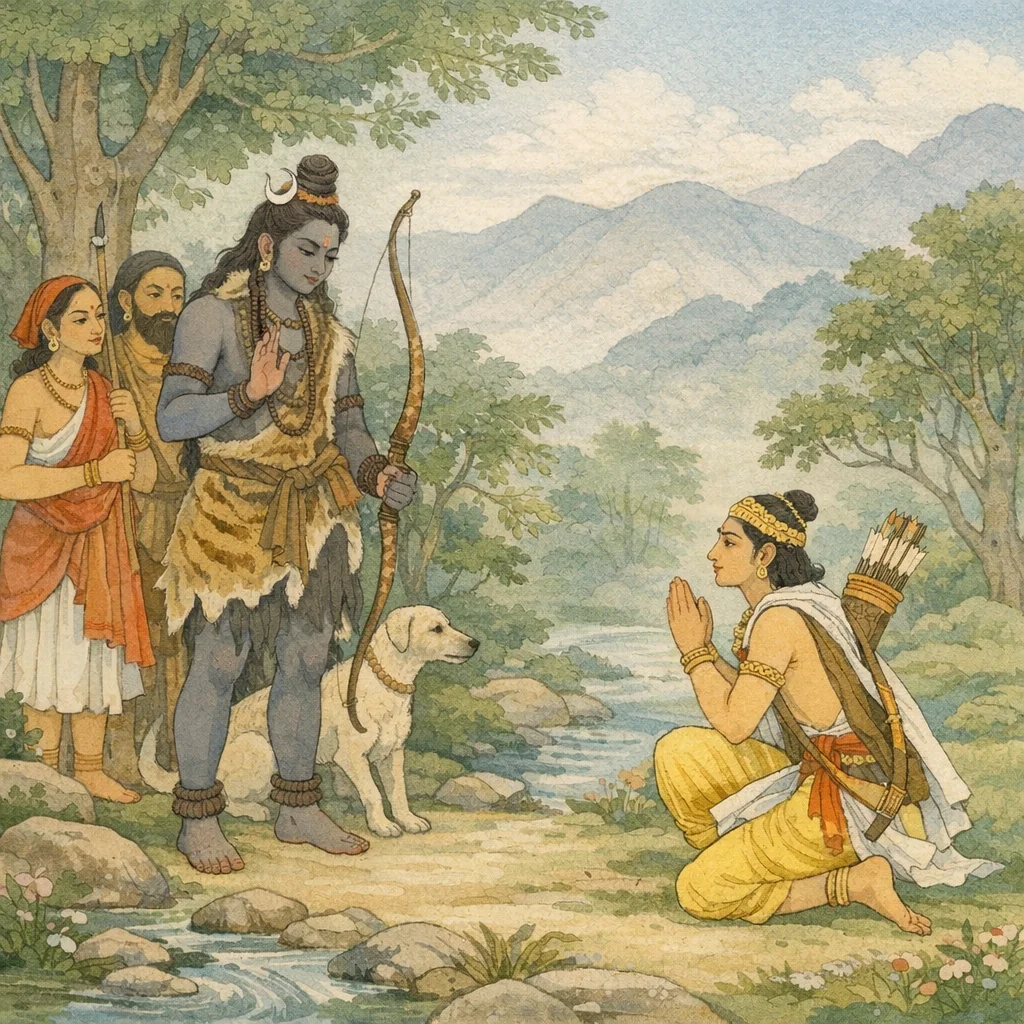
अपना स२ (0 अवज असल एकोनचत्वारिशोड ध्याय: भगवान् शंकर और अर्जुनका युद्ध, अर्जुनपर उनका प्रसन्न होना एवं अर्जुनके द्वारा भगवान् शंकरकी स्तुति वैशम्पायन उवाच गतेषु तेषु सर्वेषु तपस्विषु महात्मसु । पिनाकपाणिभर्भगवान् सर्वपापहरो हर:,वैशम्पायनजी कहते हैं--जनमेजय! उन सब तपस्वी महात्माओंके चले जानेपर सर्वपापहारी, पिनाक-पाणि, भगवान् शंकर किरातवेष धारण करके सुवर्णमय वृक्षके सदृश दिव्य कान्तिसे उद्धासित होने लगे। उनका शरीर दूसरे मेरुपर्वतके समान दीप्तिमान् और विशाल था
Vaiśampāyana said: When all those great-souled ascetics had departed, the Blessed Lord Hara—Pināka in hand, the remover of all sin—(now intent on testing Arjuna) came forth, assuming the guise of a Kirāta. His divine radiance blazed like a golden tree, and his body appeared vast and brilliant, like another Mount Meru.
Verse 2
कैरातं वेषमास्थाय काठ्चनद्रुमसंनिभम् । विभ्राजमानो विपुलो गिरिमेंरुरिवापर:,वैशम्पायनजी कहते हैं--जनमेजय! उन सब तपस्वी महात्माओंके चले जानेपर सर्वपापहारी, पिनाक-पाणि, भगवान् शंकर किरातवेष धारण करके सुवर्णमय वृक्षके सदृश दिव्य कान्तिसे उद्धासित होने लगे। उनका शरीर दूसरे मेरुपर्वतके समान दीप्तिमान् और विशाल था
Vaiśampāyana said: After those ascetic great-souled sages had departed, the sin-destroying Lord Śaṅkara, bearer of the Pināka bow, assumed the guise of a Kirāta (mountain hunter). Radiant with a divine splendor like a golden tree, he shone forth—vast and blazing, like another Mount Meru. The scene underscores that the divine may adopt humble, even rustic forms to test, guide, and uphold dharma while remaining supremely majestic.
Verse 3
श्रीमद् धनुरुपादाय शरांश्चवाशीविषोपमान् । निष्पपात महावेगो दहनो देहवानिव,वे एक शोभायमान धनुष और सर्पोके समान विषाक्त बाण लेकर बड़े वेगसे चले। मानो साक्षात् अग्निदेव ही देह धारण करके निकले हों
Vaiśampāyana said: Taking up his splendid bow and arrows as venomous as deadly serpents, he sprang forth with tremendous speed—like Fire itself, embodied, rushing into action. The verse heightens the moral tension of the episode: power and martial readiness are portrayed as awe-inspiring forces that, when unleashed, can burn away restraint and bring swift consequences.
Verse 4
देव्या सहोमया श्रीमान् समानव्रतवेषया । नानावेषधरै्ष्टेर्भूतिरनुगतस्तदा,उनके साथ भगवती उमा भी थीं, जिनका व्रत और वेष भी उन्हींके समान था। अनेक प्रकारके वेष धारण किये भूतगण भी प्रसन्नतापूर्वक उनके पीछे हो लिये थे। इस प्रकार किरातवेषमें छिपे हुए श्रीमान् शिव सहसों स्त्रियोंसे घिरकर बड़ी शोभा पा रहे थे। भरतवंशी राजन! उस समय वह प्रदेश उन सबके चलने-फिरनेसे अत्यन्त सुशोभित हो रहा था
Vaiśampāyana said: The illustrious Lord, accompanied by the goddess Umā—whose observance and attire matched his—moved on then, followed gladly by hosts of bhūtas wearing many different disguises. Thus Śiva, concealed in the guise of a Kirāta, appeared splendid, surrounded by numerous women; and, O descendant of Bharata, that region became exceedingly beautiful with the movement of that entire retinue.
Verse 5
किरातवेषसंच्छन्न: स्त्रीभिश्वापि सहस्रश: । अशोभत तदा राजन् स देशोडतीव भारत,उनके साथ भगवती उमा भी थीं, जिनका व्रत और वेष भी उन्हींके समान था। अनेक प्रकारके वेष धारण किये भूतगण भी प्रसन्नतापूर्वक उनके पीछे हो लिये थे। इस प्रकार किरातवेषमें छिपे हुए श्रीमान् शिव सहसों स्त्रियोंसे घिरकर बड़ी शोभा पा रहे थे। भरतवंशी राजन! उस समय वह प्रदेश उन सबके चलने-फिरनेसे अत्यन्त सुशोभित हो रहा था
Vaiśampāyana said: “O king, at that time the illustrious Lord (Śiva), concealed in the guise of a Kirāta, shone forth—surrounded by thousands of women. And, O descendant of Bharata, that whole region became exceedingly beautiful with the movement and presence of that retinue.”
Verse 6
क्षणेन तद् वनं सर्व नि:शब्दम भवत् तदा । नाद: प्रस्रवणानां च पक्षिणां चाप्युपारमत्,एक ही क्षणमें वह सारा वन शब्दरहित हो गया। झरनों और पक्षियोंतककी आवाज बंद हो गयी
Vaiśampāyana said: In a single moment, that entire forest fell into utter silence. The murmur of the springs ceased, and even the calls of the birds came to a stop—an ominous stillness settling over the scene, as if nature itself were struck by sudden fear or foreboding.
Verse 7
स संनिकर्षमागम्य पार्थस्याक्लिष्टकर्मण: । मूक नाम दनो: पुत्र ददर्शाद्भुतदर्शनम्,अनायास ही महान पराक्रम करनेवाले कुन्तीपुत्र अर्जुके निकट आकर भगवान् शंकरने अद्भुत दीखनेवाले मूक नामक अद्भुत दानवको देखा, जो सूअरका रूप धारण करके अत्यन्त तेजस्वी अर्जुनको मार डालनेका उपाय सोच रहा था; उस समय अर्जुनने गाण्डीव धनुष और विषैले सर्पोके समान भयंकर बाण हाथ-में ले धनुषपर प्रत्यंचा चढ़ाकर उसकी टंकारसे दिशाओंको प्रतिध्वनित करके कहा--
Vaiśampāyana said: Drawing near to Pārtha (Arjuna), whose deeds are never wearisome, Śaṅkara beheld the wondrously fearsome being—Mūka, the son of Danu. Having assumed the form of a boar, he was devising a means to strike down the radiant Arjuna.
Verse 8
वाराहं रूपमास्थाय तर्कयन्तमिवार्जुनम् । हन्तुं परं दीप्पमानं तमुवाचाथ फाल्गुन:,अनायास ही महान पराक्रम करनेवाले कुन्तीपुत्र अर्जुके निकट आकर भगवान् शंकरने अद्भुत दीखनेवाले मूक नामक अद्भुत दानवको देखा, जो सूअरका रूप धारण करके अत्यन्त तेजस्वी अर्जुनको मार डालनेका उपाय सोच रहा था; उस समय अर्जुनने गाण्डीव धनुष और विषैले सर्पोके समान भयंकर बाण हाथ-में ले धनुषपर प्रत्यंचा चढ़ाकर उसकी टंकारसे दिशाओंको प्रतिध्वनित करके कहा--
Vaiśampāyana said: Assuming the form of a boar, that being—blazing with fierce energy—seemed to be plotting how to strike down Arjuna. Then Phālguna (Arjuna) addressed him, confronting the threat directly.
Verse 9
गाण्डीवं धनुरादाय शरांश्वाशीविषोपमान् | सज्यं धनुर्वरं कृत्वा ज्याघोषेण निनादयन्,अनायास ही महान पराक्रम करनेवाले कुन्तीपुत्र अर्जुके निकट आकर भगवान् शंकरने अद्भुत दीखनेवाले मूक नामक अद्भुत दानवको देखा, जो सूअरका रूप धारण करके अत्यन्त तेजस्वी अर्जुनको मार डालनेका उपाय सोच रहा था; उस समय अर्जुनने गाण्डीव धनुष और विषैले सर्पोके समान भयंकर बाण हाथ-में ले धनुषपर प्रत्यंचा चढ़ाकर उसकी टंकारसे दिशाओंको प्रतिध्वनित करके कहा--
Vaiśaṃpāyana said: Taking up the Gāṇḍīva bow and arrows as dreadful as venomous serpents, Arjuna strung that excellent bow and, with the thunder of its bowstring, made the quarters resound—signaling his readiness to meet danger with disciplined valor rather than fear or haste.
Verse 10
यन्मां प्रार्थयसे हन्तुमनागसमिहागतम् । तस्मात् त्वां पूर्वमेवाहं नेताद्य यमसादनम्,“अरे! तू यहाँ आये हुए मुझ निरपराधको मारनेकी घातमें लगा है, इसीलिये मैं आज पहले ही तुझे यमलोक भेज दूँगा”
“Since you are seeking to kill me—though I am innocent and have come here without hostility—therefore I shall send you first, this very day, to the abode of Yama.”
Verse 11
दृष्टवा तं॑ प्रहरिष्यन्तं फाल्गुनं दृढ्धन्विनम् । किरातरूपी सहसा वारयामास शड्कर:,सुदृढ़ धनुषवाले अर्जुनको प्रहारके लिये उद्यत देख किरातरूपधारी भगवान् शंकरने उन्हें सहसा रोका
Vaiśampāyana said: Seeing Phālguna (Arjuna), the firm-bowed archer, poised to strike, Śaṅkara—having assumed the form of a Kirāta—suddenly restrained him.
Verse 12
मयैष प्रार्थित: पूर्वमिन्द्रकीलसमप्रभ: । अनादृत्य च तद् वाक्यं प्रजहाराथ फाल्गुन:,और कहा--*इन्द्रकील पर्वतके समान कान्तिवाले इस सूअरको पहलेसे ही मैंने अपना लक्ष्य बना रखा है, अतः तुम न मारो।' परंतु अर्जुनने किरातके वचनकी अवहेलना करके उसपर प्रहार कर ही दिया
He said: “This boar, radiant like Mount Indrakīla, I claimed beforehand as my quarry; therefore do not slay it.” Yet Phālguna (Arjuna), disregarding the Kirāta’s words, struck it all the same.
Verse 13
किरातश्न सम॑ तस्मिन्नेकलक्ष्ये महाद्युति: । प्रमुमोचाशनिप्रख्यं शरमग्निशिखोपमम्,साथ ही महातेजस्वी किरातने भी उसी एकमात्र लक्ष्ययर बिजली और अग्निशिखाके समान तेजस्वी बाण छोड़ा
Vaiśampāyana said: Then the radiant Kirāta, aiming at that same single target, released an arrow—like a thunderbolt in force and like a flame’s crest in brilliance.
Verse 14
तौ मुक्तौ सायकौ ताभ्यां सम॑ तत्र निपेततुः । मूकस्य गात्रे विस्तीर्णे शैलसंहनने तदा,उन दोनोंके छोड़े हुए वे दोनों बाण एक ही साथ मूक दानवके पर्वत-सदृश विशाल शरीरमें लगे
Vaiśampāyana said: The two arrows released by those two warriors fell there at the very same moment, striking the demon Mūka upon his broad body—massive and rock-like in its build.
Verse 15
यथाशनेविंनिर्घोषो वज्रस्येव च पर्वते । तथा तयो: संनिपात: शरयोरभवत् तदा,जैसे पर्वतपर बिजलीकी गड़गड़ाहट और वज्रपातका भयंकर शब्द होता है, उसी प्रकार उन दोनों बाणोंके आघातका शब्द हुआ
Vaiśampāyana said: “As the thunderous roar of lightning and the crashing blow of the thunderbolt resound upon a mountain, so, at that moment, a dreadful sound arose from the collision of the two warriors’ arrows.”
Verse 16
स विद्धो बहुभिर्बाणैर्दीप्तास्यै: पन्नगैरिव । ममार राक्षसं रूप॑ भूय: कृत्वा विभीषणम्,इस प्रकार प्रज्वलित मुखवाले सर्पोके समान अनेक बाणोंसे घायल होकर वह दानव फिर अपने भयानक राक्षसरूपको प्रकट करते हुए मर गया
Vaiśampāyana said: “Struck by many arrows, like a serpent with a blazing mouth, the demon—once again assuming a dreadful rākṣasa-form—fell down and died.”
Verse 17
स ददर्श ततो जिष्णु: पुरुषं काउचनप्रभम् । किरातवेषसंच्छन्नं सत्रीसहायममित्रहा,इसी समय शत्रुनाशक अर्जुनने सुवर्णके समान कान्तिमान् एक तेजस्वी पुरुषको देखा, जो स्त्रियोंक साथ आकर अपनेको किरातवेषमें छिपाये हुए थे। तब कुन्तीकुमारने प्रसन्नचित्त होकर हँसते हुए-से कहा--“आप कौन हैं जो इस सूने वनमें स्त्रियोंसे घिरे हुए घूम रहे हैं?
Then Jiṣṇu (Arjuna), the slayer of foes, beheld a radiant man shining like gold, who had concealed himself in the guise of a Kirāta and was accompanied by women. Seeing this strange sight in the lonely forest, Arjuna—pleased at heart—spoke with a smile, questioning who he was to wander there surrounded by women.
Verse 18
तमब्रवीत् प्रीतमना: कौन्तेय: प्रहसन्निव । को भवानटते शून्ये वने स्त्रीगणसंवृत:,इसी समय शत्रुनाशक अर्जुनने सुवर्णके समान कान्तिमान् एक तेजस्वी पुरुषको देखा, जो स्त्रियोंक साथ आकर अपनेको किरातवेषमें छिपाये हुए थे। तब कुन्तीकुमारने प्रसन्नचित्त होकर हँसते हुए-से कहा--“आप कौन हैं जो इस सूने वनमें स्त्रियोंसे घिरे हुए घूम रहे हैं?
Then the son of Kuntī, pleased at heart and as if smiling, addressed him: “Who are you, wandering in this lonely forest, surrounded by a company of women?”
Verse 19
न त्वमस्मिन् वने घोरे बिभेषि कनकप्रभ । किमर्थ च त्वया विद्धो वराहो मत्परिग्रह:,'सुवर्णके समान दीप्तिमान् पुरुष! क्या आपको इस भयानक वनमें भय नहीं लगता? यह सूअर तो मेरा लक्ष्य था, आपने क्यों उसपर बाण मारा?
Vaiśampāyana said: “O golden-radiant one, are you not afraid in this dreadful forest? And for what reason did you shoot that boar—an animal that was already my quarry and under my claim?”
Verse 20
मयाभिपन्नः पूर्व हि राक्षमो5यमिहागत: । कामात् परिभवाद् वापि न मे जीवन् विमोक्ष्यसे,“यह राक्षस पहले यहीं मेरे पास आया था और मैंने इसे काबूमें कर लिया था। आपने किसी कामनासे इस शूकरको मारा हो या मेरा तिरस्कार करनेके लिये। किसी दशामें भी मैं आपको जीवित नहीं छोडूँगा
Vaiśampāyana said: “This rākṣasa came here earlier, and I had already overpowered him. Whether you killed this boar out of desire or to insult me, in any case I will not let you go alive.”
Verse 21
न होष मृगयाधर्मो यस्त्वयाद्य कृतो मयि । तेन त्वां भ्रंशयिष्यामि जीवितात् पर्वताश्रयम्,“यह मृगयाका धर्म नहीं है, जो आज आपने मेरे साथ किया है। आप पर्वतके निवासी हैं तो भी उस अपराधके कारण मैं आपको जीवनसे वंचित कर दूँगा”
“This is not the proper code of the hunt—the conduct you have shown toward me today. For that offense, even though you dwell in the mountains, I will cast you down from life itself.”
Verse 22
इत्युक्त: पाण्डवेयेन किरात: प्रहसन्निव । उवाच श्लक्ष्णया वाचा पाण्डवं सव्यसाचिनम्,पाण्डुनन्दन अर्जुनके इस प्रकार कहनेपर किरात-वेषधारी भगवान् शंकर जोर-जोरसे हँस पड़े और सव्यसाची पाण्डवसे मधुर वाणीमें बोले--
Vaiśaṃpāyana said: Thus addressed by the son of Pāṇḍu, the Kirāta—smiling as though in amusement—spoke to the Pāṇḍava Arjuna, famed as Savyasācin, in gentle and polished words.
Verse 23
न मत्कृते त्वया वीर भी: कार्या वनमन्तिकात् । इयं भूमि: सदास्माकमुचिता वसतां वने,“वीर! तुम हमारे लिये वनके निकट आनेके कारण भय न करो। हम तो वनवासी हैं, अतः हमारे लिये इस भूमिपर विचरना सदा उचित ही है
Vaiśampāyana said: “O hero, do not be afraid on our account because you have come near the forest. We are dwellers of the woods; for us, moving about on this land is always fitting and proper.”
Verse 24
त्वया तु दुष्कर: कस्मादिह वास: प्ररोचित: । वयं तु बहुसत्त्वेडस्मिन् निवसामस्तपोधन,'किंतु तुमने यहाँका दुष्कर निवास कैसे पसंद किया? तपोधन! हम तो अनेक प्रकारके जीव-जन्तुओंसे भरे हुए इस वनमें सदा ही रहते हैं
Vaiśampāyana said: “But why did you choose this difficult dwelling here? O rich in austerity, we, for our part, live continually in this forest that is crowded with many kinds of living creatures.”
Verse 25
भवांस्तु कृष्णवर्त्माभ: सुकुमार: सुखोचित: । कथं शून्यमिमं देशमेकाकी विचरिष्यति,“तुम्हारे अंगोंकी प्रभा प्रजजलित अग्निके समान जान पड़ती है। तुम सुकुमार हो और सुख भोगनेके योग्य प्रतीत होते हो। इस निर्जन प्रदेशमें किसलिये अकेले विचर रहे हो?”
Vaiśampāyana said: “You appear radiant, like a dark-hued path of light, and your limbs seem to glow as if kindled by fire. You are delicate and seem fit for comfort and ease. How will you wander alone in this deserted region—and for what reason are you roaming here by yourself?”
Verse 26
अजुन उवाच गाण्डीवमाश्रयं कृत्वा नाराचां श्वाग्निसंनिभान् । निवसामि महारण्ये द्वितीय इव पावकि:,अर्जुनने कहा--मैं गाण्डीव धनुष और अग्निके समान तेजस्वी बाणोंका आश्रय लेकर इस महान् वनमें द्वितीय कार्तिकेयकी भाँति (निर्भय) निवास करता हूँ
Arjuna said: “Taking refuge in the Gāṇḍīva bow, and relying on arrows that blaze like the fire of a dog-star, I dwell in this vast forest—fearless and formidable, like a second Fire itself.”
Verse 27
एष चापि मया जसन्तुर्मगरूपं समाश्रित: । राक्षसो निहतो घोरो हन्तुं मामिह चागत:,यह प्राणी हिंसक पशुका रूप धारण करके मुझे ही मारनेके लिये यहाँ आया था, अतः इस भयंकर राक्षसको मैंने मार गिराया है
Arjuna said: “This fearsome rākṣasa, Jasantu by name, had assumed the form of a crocodile and came here intending to kill me. Therefore I have struck down and slain that dreadful being.”
Verse 28
किरयात उवाच मयैष धन्वनिर्मुक्तैस्ताडित: पूर्वमेव हि । बाणैरभिहत: शेते नीतश्न॒ यमसादनम्,किरातरूपधारी शिव बोले--मैंने अपने धनुषद्वारा छोड़े हुए बाणोंसे पहले ही इसे घायल कर दिया था। मेरे ही बाणोंकी चोट खाकर यह सदाके लिये सो रहा है और यमलोकमें पहुँच गया
The Kirāta said: “Indeed, I had already struck this one earlier with arrows released from my bow. Wounded by my arrows, he now lies still—carried away to the abode of Yama.”
Verse 29
ममैष लक्ष्यभूतो हि मम पूर्वपरिग्रह: । ममैव च प्रहारेण जीविताद् व्यपरोपित:,मैंने ही पहले इसे अपने बाणोंका निशाना बनाया, अतः तुमसे पहले इसपर मेरा अधिकार स्थापित हो चुका था। मेरे ही तीव्र प्रहारसे इस दानवको अपने प्राणोंसे हाथ धोना पड़ा है
“This one was first marked as my target; therefore the prior claim over him is mine. And it is by my very blow that he has been stripped of life.”
Verse 30
दोषान् स्वान् नार्हसे<न्यस्मै वक्तुं स््वबलदर्पित: । अवलिप्तो$सि मन्दात्मन् न मे जीवन विमोक्ष्यसे,मन्दबुद्धे! तुम अपने बलके घमंडमें आकर अपने दोष दूसरेपर नहीं मढ़ सकते। तुम्हें अपनी शक्तिपर बड़ा गर्व है; अत: अब तुम मेरे हाथसे जीवित नहीं बच सकते
“You have no right to lay your own faults upon another, intoxicated as you are with pride in your strength. You are arrogant and mean-spirited; therefore you will not escape me alive, O dull-witted one.”
Verse 31
स्थिरो भवस्व मोक्ष्यामि सायकानशनीनिव । घटस्व परया शक््त्या मुज्च त्वमपि सायकान्,धैर्यपूर्वक सामने खड़े रहो, मैं वज़के समान भयानक बाण छोड़ूँगा। तुम भी अपनी पूरी शक्ति लगाकर मुझे जीतनेका प्रयास करो। मेरे ऊपर अपने बाण छोड़ो
The Kirāta said: “Stand firm. I shall release arrows like thunderbolts. Strive with your utmost power to overcome me; you too, loose your shafts against me.”
Verse 32
तस्य तद् वचन श्रुत्वा किरातस्यार्जुनस्तदा । रोषमाहारयामास ताडयामास चेषुभि:,किरातकी वह बात सुनकर उस समय अर्जुनको बड़ा क्रोध हुआ। उन्होंने बाणोंसे उसपर प्रहार आरम्भ किया
Hearing those words spoken by the Kirāta, Arjuna at once became inflamed with anger. He gathered his wrath within and began to strike the hunter with volleys of arrows.
Verse 33
ततो हृष्टेन मनसा प्रतिजग्राह सायकान् | भूयो भूय इति प्राह मन्दमन्देत्युवाच ह
Then, with a delighted heart, he accepted the arrows. Again and again he said, “More, more,” and he also kept saying, “Gently, gently.”
Verse 34
प्रहरस्व शरानेतान् नाराचान् मर्मभेदिन: । तब किरातने प्रसन्नचित्तसे अर्जुनके छोड़े हुए सभी बाणोंको पकड़ लिया और कहा --“ओ मूर्ख! और बाण मार और बाण मार, इन मर्मभेदी नाराचोंका प्रहार कर' || ३३ $ || इत्युक्तो बाणवर्ष स मुमोच सहसार्जुन:,उसके ऐसा कहनेपर अर्जुनने सहसा बाणोंकी झड़ी लगा दी
The Kirāta said: “Strike! Shoot these arrows—these nārācas that pierce the vital points.” At his words, Arjuna suddenly unleashed a shower of arrows.
Verse 35
ततस्तौ तत्र संरब्धौ राजमानौ मुहुर्मुहुः । शरैराशीविषाकारैस्ततक्षाते परस्परम्,तदनन्तर वे दोनों क्रोधमें भरकर बारंबार सर्पाकार बाणोंद्वारा एक-दूसरेको घायल करने लगे। उस समय उन दोनोंकी बड़ी शोभा होने लगी
Then, there on the field, the two—now inflamed with anger—again and again shone with fierce splendor as they wounded one another with arrows shaped like venomous serpents. The scene displayed a grim radiance: prowess and wrath intertwined, each answering injury with injury.
Verse 36
ततोडअर्जुन: शरवर्ष किराते समवासृजत् | तत् प्रसन्नेन मनसा प्रतिजग्राह शड्कर:,तत्पश्चात् अर्जुनने किरातपर बाणोंकी वर्षा प्रारम्भ की; परंतु भगवान् शंकरने प्रसन्नचित्तसे उन सब बाणोंको ग्रहण कर लिया
Then Arjuna unleashed a dense shower of arrows upon the Kirāta. Śaṅkara (Śiva), however, with a serene and pleased mind, received them all—showing that the Lord is not overcome by force, and that the devotee’s valor is ultimately tested and guided by divine grace rather than mere aggression.
Verse 37
मुहूर्त शरवर्ष तत् प्रतिगृह्ा पिनाकधृक् । अक्षतेन शरीरेण तस्थौ गिरिरिवाचल:,पिनाकथधारी शिव दो ही घड़ीमें सारी बाण-वर्षाको अपनेमें लीन करके पर्वतकी भाँति अविचल भावसे खड़े रहे। उनके शरीरपर तनिक भी चोट या क्षति नहीं पहुँची थी
For a brief while, the wielder of Pināka absorbed that entire shower of arrows into himself. With his body remaining wholly uninjured, he stood unmoved—steady like a mountain—displaying invincible composure and mastery amid violence.
Verse 38
स दृष्टवा बाणवर्ष तु मोघीभूतं धनंजय: । परम विस्मयं चक्रे साधु साध्विति चाब्रवीत्,अपनी की हुई सारी बाण-वर्षा व्यर्थ हुई देख धनंजयको बड़ा आश्चर्य हुआ। वे किरातको साधुवाद देने लगे और बोले--
Seeing that his shower of arrows had proved futile, Dhanañjaya (Arjuna) was struck with profound astonishment. He praised the Kirāta, repeatedly exclaiming, “Well done! Well done!”—acknowledging the other’s superior skill and the ethical propriety of honoring excellence even in confrontation.
Verse 39
अहो<यं सुकुमाराज़ो हिमवच्छिखराश्रय: । गाण्डीवमुक्तान् नाराचान प्रतिगृह्नात्यविह्लल:,“अहो! हिमालयके शिखरपर निवास करनेवाले इस किरातके अंग तो बड़े सुकुमार हैं, तो भी यह गाण्डीव धनुषसे छूटे हुए बाणोंको ग्रहण कर लेता है और तनिक भी व्याकुल नहीं होता इति श्रीमहाभारते वनपर्वणि कैरातपर्वणि महादेवस्तवे एकोनचत्वारिंशो5ध्याय: ।। ३९ || इस प्रकार श्रीमह्याभारत वनपव्वके अन्तर्गत कैरातपर्वमें महादेवजीकी स्वुतिसे सम्बन्ध रखनेवाला उनतालीसवाँ अध्याय पूरा हुआ
“Ah! Though this Kirāta who dwells upon the peaks of the Himālaya has a body that appears delicate, he catches the sharp arrows released from the Gāṇḍīva without the least agitation.”
Verse 40
को<यं देवो भवेत् साक्षाद् रुद्रो यक्ष: सुरोडसुर: । विद्यते हि गिरिश्रेष्ठे त्रिदशानां समागम:,“यह कौन है? साक्षात् भगवान् रुद्रदेव, यक्ष, देवता अथवा असुर तो नहीं है। इस श्रेष्ठ पर्वतपर देवताओंका आना-जाना होता रहता है
The Kirāta said: “Who is this being? Could he be the Lord Rudra himself in person—perhaps a Yakṣa, a god, or even an Asura? For on this best of mountains there is indeed frequent gathering and passage of the Thirty-three gods.”
Verse 41
न हि मद्बाणजालानामुत्सृष्टानां सहस्रश: । शक्तो<न्य: सहितुं वेगमृते देवं पिनाकिनम्,“मैंने सहस्नों बार जिन बाण-समूहोंकी वृष्टि की है, उनका वेग पिनाकधारी भगवान् शंकरके सिवा दूसरा कोई नहीं सह सकता
“Indeed, of the countless volleys of arrows I have released again and again, no one else has the power to endure their force—none except the divine Lord who bears the Pināka (Śiva).”
Verse 42
देवो वा यदि वा यक्षो रुद्रादन्यो व्यवस्थित: । अहमेनं शरैस्तीक्ष्णैनयामि यमसादनम्,“यदि यह रुद्रदेवसे भिन्न व्यक्ति है तो यह देवता हो या यक्ष--मैं इसे तीखे बाणोंसे मारकर अभी यमलोक भेजता हूँ
“If he is someone other than Rudra—whether a god or a yakṣa—I will strike him down with sharp arrows and send him at once to Yama’s abode.”
Verse 43
ततो हृष्टमना जिष्णु्नाराचान् मर्मभेदिन: । व्यसृजच्छतथा राजन् मयूखानिव भास्कर:,राजन! यह सोचकर प्रसन्नचित्त अर्जुनने सहस्रों किरणोंको फैलानेवाले भगवान् भास्करकी भाँति सैकड़ों मर्मभेदी नाराचोंका प्रहार किया
Then Arjuna, his mind uplifted with joy and resolve—O King—released piercing nārāca arrows that struck vital points, just as the Sun spreads forth its rays in countless beams.
Verse 44
तान् प्रसन्नेन मनसा भगवॉल्लोकभावन: । शूलपाणि: प्रत्यगृह्नाच्छिलावर्षमिवाचल:,परंतु त्रिशूलधारी भूतभावन भगवान् भवने हर्षभरे हृदयसे उन सब नाराचोंको उसी प्रकार आत्मसात् कर लिया, जैसे पर्वत पत्थरोंकी वर्षाको
With a serene and gracious mind, the Blessed Lord—benefactor of the worlds—Śūlapāṇi (the trident-bearer) received and absorbed those missiles without disturbance, just as a mountain takes in a shower of stones.
Verse 45
क्षणेन क्षीणबाणो<थ संवृत्त: फाल्गुनस्तदा | भीश्वैनमाविशत् तीव्रा तं दृष्टवा शरसंक्षयम्,उस समय एक ही क्षणमें अर्जुनके सारे बाण समाप्त हो चले। उन बाणोंका इस प्रकार विनाश देखकर उनके मनमें बड़ा भय समा गया
In a single moment, Phālguna (Arjuna) found his stock of arrows exhausted. Seeing this sudden depletion of missiles, a sharp fear seized him—an inner shock at the prospect of being left weaponless in the midst of danger.
Verse 46
चिन्तयामास जिष्णुस्तु भगवन्तं हुताशनम् । पुरस्तादक्षयौ दत्तौ तूणौ येनास्थ खाण्डवे,विजयी अर्जुनने उस समय भगवान् अग्निदेवका चिन्तन किया, जिन्होंने खाण्डववनमें प्रत्यक्ष दर्शन देकर उन्हें दो अक्षय तूणीर प्रदान किये थे
Then Jiṣṇu (Arjuna) reflected upon the blessed Fire-god, who had formerly appeared before him in the Khāṇḍava forest and bestowed upon him two inexhaustible quivers. The remembrance underscores gratitude and reverence toward divine aid received in the past, and it frames Arjuna’s present resolve as grounded in duty supported by sacred benefaction rather than mere personal prowess.
Verse 47
कि नु मोक्ष्यामि धनुषा यन्मे बाणा: क्षयं गता: । अयं च पुरुष: को5पि बाणान् ग्रसति सर्वश:,वे मन-ही-मन सोचने लगे, “मेरे सारे बाण नष्ट हो गये, अब मैं धनुषसे क्या चलाऊँगा। यह कोई अदभुत पुरुष है, जो मेरे सारे बाणोंको खाये जा रहा है। अच्छा, अब मैं शूलके अग्रभागसे घायल किये जानेवाले हाथीकी भाँति इसे धनुषकी कोटि (नोक)-से मारकर दण्डधारी यमराजके लोकमें पहुँचा देता हूँ”
The Kirāta said: “What can I now discharge from my bow, when my arrows have been exhausted? And this man—whoever he is—seems to be swallowing up all my arrows entirely.” (In context, the hunter, frustrated by the futility of his attack, turns from ordinary missile-combat toward a harsher, close-quarters intent, revealing how anger and pride can push one from measured contest into destructive resolve.)
Verse 48
हत्वा चैनं धनुष्कोट्या शूलाग्रेणेव कुज्जरम् । नयामि दण्डधारस्य यमस्य सदन प्रति,वे मन-ही-मन सोचने लगे, “मेरे सारे बाण नष्ट हो गये, अब मैं धनुषसे क्या चलाऊँगा। यह कोई अदभुत पुरुष है, जो मेरे सारे बाणोंको खाये जा रहा है। अच्छा, अब मैं शूलके अग्रभागसे घायल किये जानेवाले हाथीकी भाँति इसे धनुषकी कोटि (नोक)-से मारकर दण्डधारी यमराजके लोकमें पहुँचा देता हूँ”
Kīrāta said: “Having struck and slain him with the tip of my bow—like an elephant wounded by the point of a spear—I shall send him to the abode of Yama, the wielder of the staff.” The utterance conveys the hunter’s fierce resolve to end the encounter decisively, framing death as a moral consequence administered under Yama’s authority rather than as mere personal vengeance.
Verse 49
प्रगृह्या थ धनुष्कोट्या ज्यापाशेनावकृष्य च | मुष्टिभिश्चापि हतवान् वज्रकल्पैर्महाद्युति:,ऐसा विचारकर महातेजस्वी अर्जुनने किरातको अपने धनुषकी कोटिसे पकड़कर उसकी प्रत्यंचामें उसके शरीरको फँसाकर खींचा और वज्रके समान दुः:सह मुष्टिप्रहारसे पीड़ित करना प्रारम्भ किया
Having seized him by the tip of his bow and, with the bowstring like a noose, dragged him close, the radiant hero began to strike him with fists as hard as thunderbolts. The scene underscores Arjuna’s fierce resolve and disciplined prowess in combat, even as the encounter tests the boundaries between righteous force and uncontrolled anger.
Verse 50
सम्प्रयुद्धों धनुष्कोट्या कौन्तेय: परवीरहा । तदप्यस्य धर्नुर्दिव्यं जग्राह गिरिगोचर:,शत्रु-वीरोंका संहार करनेवाले कुन्तीकुमार अर्जुनने जब धनुषकी कोटिसे प्रहार किया, तब उस पर्वतीय किरातने अर्जुनके उस दिव्य धनुषको भी अपनेमें लीन कर लिया
Locked in close combat, Arjuna—the son of Kuntī, famed as a slayer of enemy champions—struck with the very tip of his bow. Yet the mountain-roaming Kirāta seized even Arjuna’s divine bow, as if absorbing it into his own grasp.
Verse 51
ततोड्डर्जुनो ग्रस्तधनु: खड्गपाणिरतिष्ठत । युद्धस्यान्तम भी प्सन् वै वेगेनाभिजगाम तम्,तदनन्तर धनुषके ग्रस्त हो जानेपर अर्जुन हाथमें तलवार लेकर खड़े हो गये और युद्धका अन्त कर देनेकी इच्छासे वेगपूर्वक उसपर आक्रमण किया
Then Arjuna, his bow having been seized, stood firm with a sword in hand. Wishing to bring the combat to its conclusion, he rushed at him with swift force—resolute in battle and intent on ending the encounter decisively.
Verse 52
तस्य मूर्थ्नि शितं खड्गमसक्तं पर्वतेष्वपि | मुमोच भुजवीर्येण विक्रम्प कुरुनन्दन:,उनकी वह तलवार पर्वतोंपर भी कुण्ठित नहीं होती थी। कुरुनन्दन अर्जुनने अपने भुजाओंकी पूरी शक्ति लगाकर किरातके मस्तकपर उस तीक्ष्ण धारवाली तलवारसे वार किया
The Kuru prince, Arjuna, gathering the full force of his arms, sprang forward and brought down his keen-edged sword upon the Kirāta’s head—a blade so sharp that it would not lose its edge even against mountains.
Verse 53
तस्य मूर्धानमासाद्य पफालासिवरो हि सः । ततो वृक्ष: शिलाभिश्न योधयामास फाल्गुन:,परंतु उसके मस्तकसे टकराते ही वह उत्तम तलवार टूक-टूक हो गयी। तब अर्जुनने वृक्षों और शिलाओंसे युद्ध करना आरम्भ किया
When the blade struck his head, that excellent sword shattered into pieces. Then Arjuna (Phālguna), undaunted, began to fight on—hurling trees and rocks—showing steadfast courage and adaptability when a chosen weapon fails.
Verse 54
तदा वृक्षान् महाकाय: प्रत्यगृह्नादथो शिला: । किरातरूपी भगवांस्तत: पार्थो महाबल:,तब विशालकाय किरातरूपी भगवान् शंकरने उन वृक्षों और शिलाओंको भी ग्रहण कर लिया। यह देखकर महाबली कुन्तीकुमार अपने वज़तुल्य मुक््कोंसे दुर्धर्ष किरात-सदृश रूपवाले भगवान् शिवपर प्रहार करने लगे। उस समय क्रोधके आवेशसे अर्जुनके मुखसे धूम प्रकट हो रहा था
Then the mighty, huge-bodied one seized the trees and even the rocks. The Blessed Lord, assuming the form of a Kirāta (mountain-hunter), thus took them up; seeing this, the great-armed Pārtha (Arjuna), overcome by wrath, began to strike at Lord Śiva in that formidable Kirāta-like guise with blows of his heavy fists. In that moment, smoke seemed to rise from Arjuna’s face in the heat of his anger.
Verse 55
मुष्टिभि्वज्ञसंकाशैर्धूममुत्पादयन् मुखे । प्रजहार दुराधर्षे किरातसमरूपिणि,तब विशालकाय किरातरूपी भगवान् शंकरने उन वृक्षों और शिलाओंको भी ग्रहण कर लिया। यह देखकर महाबली कुन्तीकुमार अपने वज़तुल्य मुक््कोंसे दुर्धर्ष किरात-सदृश रूपवाले भगवान् शिवपर प्रहार करने लगे। उस समय क्रोधके आवेशसे अर्जुनके मुखसे धूम प्रकट हो रहा था
Seeing even the trees and rocks seized and made futile, Arjuna—the mighty son of Kuntī—struck at the invincible Lord who had assumed the form of a Kirāta, with fists like thunderbolts. In the heat of wrath, smoke rose from his mouth as he pressed the attack, testing not only strength but the discipline and resolve that uphold righteous power.
Verse 56
ततः शक्राशनिसमैर्मुष्टिभिर्भुशदारुणै: । किरातरूपी भगवानर्दयामास फाल्गुनम्,तदनन्तर किरातरूपी भगवान् शिव भी अत्यन्त दारुण और इन्द्रके वज़के समान दुःसह मुक्कोंसे मारकर अर्जुनको पीड़ा देने लगे
Then the Blessed Lord, in the form of a Kirāta, began to strike Phālguna (Arjuna) with fists as crushing and unbearable as Indra’s thunderbolt. In that fierce ordeal, Arjuna was made to endure pain and humiliation, that his pride might be broken and his fitness for divine grace and higher weapons tested and refined.
Verse 57
ततश्नट्चटाशब्द: सुघोर: समपद्यत । पाण्डवस्य च मुष्टीनां किरातस्य च युध्यत:,फिर तो घमासान युद्धमें लगे हुए पाण्डुनन्दन अर्जुन तथा किरातरूपी शिवके मुक्कोंका एक-दूसरेके शरीरपर प्रहार होनेसे बड़ा भयंकर “चट-चट” शब्द होने लगा
Then, as the Pāṇḍava (Arjuna) and the Kirāta (Śiva in hunter-form) fought at close quarters, a terribly fierce “chat-chat” sound arose from the impact of their clenched fists striking one another’s bodies—signaling the intensity of the contest and the testing of the hero’s resolve.
Verse 58
सुमुहूर्त तु तद् युद्धमभभवल्लोमहर्षणम् | भुजप्रहारसंयुक्तं वृत्रवासवयोरिव,वृत्रासुर और इन्द्रके समान उन दोनोंका वह रोमांचकारी बाहुयुद्ध दो घड़ीतक चलता रहा
For a short while, that combat became thrilling and hair-raising—an exchange of powerful blows with their arms—resembling the famed struggle between Vṛtra and Vāsava (Indra). The comparison underscores the intensity of valor and endurance in close combat, and hints at the cosmic scale and moral weight epic battles can evoke through mythic memory.
Verse 59
जघानाथ ततो जिष्णु: किरातमुरसा बली । पाण्डवं च विचेष्ट॑ तं किरातो5प्यहनद् बली,तत्पश्चात् बलवान् वीर अर्जुनने अपनी छातीसे किरातको बड़े जोरसे मारा, तब महाबली किरातने भी विपरीत चेष्टा करनेवाले पाण्डुनन्दन अर्जुन॒पर आघात किया
Then the mighty Jiṣṇu (Arjuna) struck the Kirāta hard upon the chest. And the powerful Kirāta, in turn, struck back at that Pāṇḍava who was striving and counter-moving—thus the contest intensified, each meeting force with force in steadfast resolve.
Verse 60
तयोर्भुजविनिष्पेषात् संघर्षणोरसोस्तथा । समजायत गात्रेषु पावको5ड्रारधूमवान्,उन दोनोंकी भुजाओंके टकराने और वक्षःस्थलोंके संघर्षसे उनके अंगोंमें धूम और चिनगारियोंके साथ आग प्रकट हो जाती थी
From the crushing impact of their arms and the grinding clash of their chests, a fire seemed to flare up upon their bodies—accompanied by smoke and glowing embers—so fierce was the force of their combat.
Verse 61
तत एनं महादेव: पीड्य गात्रै: सुपीडितम् । तेजसा व्यक्रमद् रोषाच्चेतस्तस्य विमोहयन्,तदनन्तर! महादेवजीने अपने अंगोंसे दबाकर अर्जुनको अच्छी तरह पीड़ा दी और उनके चित्तको मूर्च्छित-सा करते हुए उन्होंने तेज तथा रोषसे उनके ऊपर अपना पराक्रम प्रकट किया
Then Mahādeva pressed him down with his limbs, crushing him severely. Overwhelming Arjuna’s mind into a swoon-like stupor, the great god displayed his might through blazing energy and fierce wrath.
Verse 62
ततो<5भिपीडितैगरत्रि: पिण्डीकृत इवाबभौ । फाल्गुनो गात्रसंरुद्धो देवदेवेन भारत,भारत! तदनन्तर देवाधिदेव महादेवजीके अंगोंसे अवरुद्ध हो अर्जुन अपने पीड़ित अवयवोंके साथ मिट्टीके लोंदे-से दिखायी देने लगे
Then, with his limbs sorely pressed and constrained, Phālguna (Arjuna) appeared as if compacted into a lump. His body was held fast by the Lord of gods (Mahādeva), O Bhārata.
Verse 63
निरुच्छवासो5 भवच्चैव संनिरुद्धों महात्मना । पपात भूम्यां निश्चेष्टो गतसत्त्व इवाभवत्,महात्मा भगवान् शंकरके द्वारा भलीभाँति नियन्त्रित हो जानेके कारण अर्जुनकी श्वासक्रिया बंद हो गयी। वे निष्प्राणकी भाँति चेष्टाहीन होकर पृथ्वीपर गिर पड़े
So completely restrained by that great-souled one, he became bereft of breath. He fell to the ground, motionless, appearing as though his vital force had departed.
Verse 64
स मुहूर्त तथा भूत्वा सचेता: पुनरुत्थितः । रुधिरेणाप्लुताड़स्तु पाण्डवो भृशदु:खित:,दो घड़ीतक उसी अवस्थामें पड़े रहनेके पश्चात् जब अर्जुनको चेत हुआ, तब वे उठकर खड़े हो गये। उस समय उनका सारा शरीर खूनसे लथपथ हो रहा था और वे बहुत दुःखी हो गये थे
After lying in that condition for a short while, Arjuna regained consciousness and rose to his feet. His whole body was drenched in blood, and the Pāṇḍava was overwhelmed with intense sorrow.
Verse 65
शरण्यं शरणं गत्वा भगवन्तं पिनाकिनम् | मृण्मयं स्थण्डिलं कृत्वा माल्येनापूजयद् भवम्,तब वे शरणागतवत्सल पिनाकधारी भगवान् शिवकी शरणमें गये और मिट्टीकी वेदी बनाकर उसीपर पार्थिव शिवकी स्थापना करके पुष्पमालाके द्वारा उनका पूजन किया
Seeking refuge in the true Refuge, he approached the blessed Pinākin (Śiva). Fashioning a simple earthen altar, he worshipped Bhava with a garland—showing that sincere devotion and humble offerings, made in a spirit of surrender, are accepted by the compassionate Lord who protects those who take refuge.
Verse 66
तच्च माल्यं तदा पार्थ: किरातशिरसि स्थितम् | अपश्यत् पाण्डवश्रेष्ठो हर्षेण प्रकृतिं गत:,कुन्तीकुमारने जो माला पार्थिव शिवपर चढ़ायी थी, वह उन्हें किरातके मस्तकपर पड़ी दिखायी दी। यह देखकर पाण्डवश्रेष्ठ अर्जुन हर्षसे उललसित हो अपने आपेमें आ गये
Then Pārtha (Arjuna) saw that very garland—earlier offered to Śiva—resting upon the Kirāta’s head. At the sight, the best of the Pāṇḍavas was filled with joy and regained his composure, recognizing the divine sign behind the hunter’s guise.
Verse 67
पपात पादयोस्तस्य ततः प्रीतो5भवद् भव: । उवाच चैनं वचसा मेघगम्भीरगीर्हर: । जातविस्मयमालोक्य तप:ःक्षीणाड्रसंहतिम्,और किरातरूपी भगवान् शंकरके चरणोंमें गिर पड़े। उस समय तपस्याके कारण उनके समस्त अवयव क्षीण हो रहे थे और वे महान् आश्चर्यमें पड़ गये थे, उन्हें इस अवस्थामें देखकर सर्वपापहारी भगवान् भव उनपर बहुत प्रसन्न हुए और मेघके समान गम्भीर वाणीमें बोले
He fell at his feet; then Bhava (Śiva) became pleased. And Hara, whose voice was deep like thunderclouds, addressed him in words—having seen him struck with wonder and his body worn down and emaciated by austerity.
Verse 68
भव उवाच भो भो: फाल्गुन तुष्टोडस्मि कर्मणाप्रतिमेन ते । शौर्येणानेन धृत्या च क्षत्रियो नास्ति ते सम:,भगवान् शिवने कहा--फाल्गुन! मैं तुम्हारे इस अनुपम पराक्रम, शौर्य और धैर्यसे बहुत संतुष्ट हूँ। तुम्हारे समान दूसरा कोई क्षत्रिय नहीं है
Bhava (Śiva) said: “O Phālguna, I am greatly pleased with you for this matchless deed of yours. By such valor and steadfast courage, there is no kṣatriya equal to you.”
Verse 69
सम॑ तेजश्न वीर्य च ममाद्य तव चानघ । प्रीतस्तेडहं महाबाहो पश्य मां भरतर्षभ,अनघ! तुम्हारा तेज और पराक्रम आज मेरे समान सिद्ध हुआ है। महाबाहु भरतश्रेष्ठ! मैं तुमपर बहुत प्रसन्न हूँ। मेरी ओर देखो
Bhava said: “O sinless one, today your radiance and valor have become equal to mine. O mighty-armed bull among the Bharatas, I am greatly pleased with you—look upon me.”
Verse 70
ददामि ते विशालाक्ष चक्षु: पूर्वऋषिर्भवान् । विजेष्यसि रणे शत्रूनपि सर्वान् दिवौकस:,विशाललोचन! मैं तुम्हें दिव्य दृष्टि देता हूँ। तुम पहलेके “नर” नामक ऋषि हो। तुम युद्धमें अपने शत्रुओंपर, वे चाहे सम्पूर्ण देवता ही क्यों न हों, विजय पाओगे
Bhava said: “O wide-eyed one, I grant you divine sight. You are in truth the ancient seer known as Nara. In battle you will conquer your enemies—even if they be all the dwellers of heaven.”
Verse 71
प्रीत्या च ते5हं दास्यामि यदस्त्रमनिवारितम् । त्वं हि शक्तो मदीयं तदस्त्रं धारयितुं क्षणात्,मैं तुम्हारे प्रेमवश तुम्हें अपना पाशुपतास्त्र दूँगा, जिसकी गतिको कोई रोक नहीं सकता। तुम क्षणभरमें मेरे उस अस्त्रको धारण करनेमें समर्थ हो जाओगे
Moved by affection for you, I shall grant you that irresistible weapon. For you are capable—indeed, in a moment—of bearing and wielding that weapon of mine. The gift is not merely power, but a trust: only one with proven discipline and worthiness may receive what cannot be checked once released.
Verse 72
वैशम्पायन उवाच ततो देव महादेवं गिरिशं शूलपाणिनम् | ददर्श फाल्गुनस्तत्र सह देव्या महाद्युतिम्,वैशम्पायनजी कहते हैं-जनमेजय! तदनन्तर अर्जुनने शूलपाणि महातेजस्वी महादेवजीका देवी पार्वती-सहित दर्शन किया
Vaiśampāyana said: Then Arjuna (Phālguna) beheld there the great god Mahādeva—Lord of the mountains, bearer of the trident—radiant with great splendor, together with the Goddess (Pārvatī). The scene frames Arjuna’s quest as one grounded in reverence and disciplined devotion: divine power is approached not by force or entitlement, but through humility and right conduct, and the vision signals the moral legitimacy of his undertaking.
Verse 73
स जानुभ्यां महीं गत्वा शिरसा प्रणिपत्य च । प्रसादयामास हरं पार्थ: परपुरंजय:,शत्रुओंकी राजधानीपर विजय पानेवाले कुन्तीकुमारने उनके आगे पृथ्वीपर घुटने टेक दिये और सिरसे प्रणाम करके शिवजीको प्रसन्न किया
Then Pārtha—renowned as the conqueror of hostile strongholds—went down upon his knees to the earth and, bowing his head in full prostration, sought to win the grace of Hara (Śiva). The scene underscores that even the mightiest warrior turns to humility and disciplined devotion when seeking righteous power and divine sanction.
Verse 74
अजुन उवाच कपर्दिन् सर्वदेवेश भगनेत्रनिपातन । देवदेव महादेव नीलग्रीव जटाधर,अर्जुन बोले--जटाजूटधारी सर्वदेवेश्वर देवदेव महादेव! आप भगदेवताके नेत्रोंका विनाश करनेवाले हैं। आपकी ग्रीवामें नील चिह्न शोभा पा रहा है। आप अपने मस्तकपर सुन्दर जटा धारण करते हैं
Arjuna said: “O Kāpardin, Lord of all the gods, you who struck down the eye of Bhaga! O God of gods, Great God—blue-throated, bearer of matted locks—” Thus Arjuna begins his reverent address, praising Śiva’s awe-inspiring deeds and ascetic majesty, framing his approach in humility and devotion before seeking divine aid.
Verse 75
कारणानां च परम॑ जाने त्वां त्रयम्बकं विभुम् | देवानां च गतिं देव त्वत्प्रसूतमिदं जगत्,प्रभो! मैं आपको समस्त कारणोंमें सर्वश्रेष्ठ कारण मानता हूँ। आप नत्रिनेत्रधारी तथा सर्वव्यापी हैं। सम्पूर्ण देवताओंके आश्रय हैं। देव! यह सम्पूर्ण जगत् आपसे ही उत्पन्न हुआ है
O Lord! I know you as the supreme Cause among all causes—Tryambaka, the Three-eyed One, the all-pervading Mighty. You are the refuge of the gods. O Deva, O Prabhu, this entire world has arisen from you.
Verse 76
अजेयस्त्वं त्रिभिलोंकै: सदेवासुरमानुषै: । शिवाय विष्णुरूपाय विष्णवे शिवरूपिणे,देवता, असुर और मनुष्योंसहित तीनों लोक भी आपको पराजित नहीं कर सकते। आप ही विष्णुरूप शिव तथा शिवस्वरूप विष्णु हैं, आपको नमस्कार है
You are unconquerable—even the three worlds, together with gods, asuras, and humans, cannot defeat you. Salutations to you, who are Śiva in the form of Viṣṇu and Viṣṇu in the form of Śiva.
Verse 77
दक्षयज्ञविनाशाय हरिरुद्राय वै नमः । ललाटाक्षाय शर्वाय मीढुषे शूलपाणये,दक्षयज्ञका विनाश करनेवाले हरिहररूप आप भगवान्को नमस्कार है। आपके ललाटमें तृतीय नेत्र शोभा पाता है। आप जगत्का संहारक होनेके कारण शर्व कहलाते हैं। भक्तोंकी अभीष्ट कामनाओंकी वर्षा करनेके कारण आपका नाम मीढ्वान् (वर्षणशील) है। अपने हाथमें त्रिशूल धारण करनेवाले आपको नमस्कार है
Salutations indeed to that Hari-Rudra who brought about the destruction of Dakṣa’s sacrifice. Homage to the Lord whose third eye shines upon the forehead; to Śarva, the dissolver of the worlds; to Mīḍhuṣa, the one who rains down the boons desired by devotees; and to the trident-bearer.
Verse 78
पिनाकगोपष्जरे सूर्याय मंगल्याय च वेधसे । प्रसादये त्वां भगवन् सर्वभूतमहेश्वर,पिनाकरक्षक, सूर्यस्वरूप, मंगलकारक और सृष्टिकर्ता आप परमेश्वरको नमस्कार है। भगवन! सर्वभूत-महेश्वर! मैं आपको प्रसन्न करना चाहता हूँ
Salutations to you—guardian of the Pināka, radiant as the Sun, auspicious in power, and the cosmic Ordainer. O Blessed Lord, Great Lord of all beings, I seek to please you and win your grace.
Verse 79
गणेशं जगत: शम्भुं लोककारणकारणम् | प्रधानपुरुषातीतं परं सूक्ष्मतरं हरम्,आप भूतगणोंके स्वामी, सम्पूर्ण जगत्का कल्याण करनेवाले तथा जगत्के कारणके भी कारण हैं। प्रकृति और पुरुष दोनोंसे परे अत्यन्त सूक्ष्मस्वरूप तथा भक्तोंके पापोंको हरनेवाले हैं
I bow to Śambhu, the Lord of all beings, the beneficent ruler of the universe—He who is the cause even of the world’s causes. Transcending both Prakṛti (primordial nature) and Puruṣa (the conscious principle), He is the Supreme, subtler than the subtlest, and the remover of devotees’ sins.
Verse 80
व्यतिक्रमं मे भगवन् क्षन्तुमहसि शंकर । भगवन् दर्शनाकाडुक्षी प्राप्तोडस्मीम॑ं महागिरिम्,कल्याणकारी भगवन्! मेरा अपराध क्षमा कीजिये। भगवन्! मैं आपहीके दर्शनकी इच्छा लेकर इस महान् पर्वतपर आया हूँ
Arjuna said: “O Blessed Lord Śaṅkara, please forgive my transgression. O Lord, longing for your divine vision, I have come to this great mountain.”
Verse 81
दयितं तव देवेश तापसालयमुत्तमम् | प्रसादये त्वां भगवन् सर्वलोकनमस्कृतम्,देवेश्वरर यह शैल-शिखर तपस्वियोंका उत्तम आश्रय तथा आपका प्रिय निवासस्थान है। प्रभो! सम्पूर्ण जगत् आपके चरणोंमें वन्दना करता है। मैं आपसे यह प्रार्थना करता हूँ कि आप मुझपर प्रसन्न हों
“O Lord of the gods, this mountain peak is the finest hermitage of the ascetics and also your beloved dwelling. Lord, the whole world bows at your feet. I pray that you be pleased with me.”
Verse 82
न मे स्थादपराधो5यं महादेवातिसाहसात् | कृतो मयायमज्ञानाद विमर्दो यस्त्वया सह | शरणं प्रतिपन्नाय तत् क्षमस्वाद्य शंकर
Arjuna said: “Let this not stand as an offense on my part—this reckless overboldness toward Mahādeva. Out of ignorance I have caused this clash with you. Now that I have come seeking refuge, forgive it today, O Śaṅkara.”
Verse 83
महादेव! अत्यन्त साहसवश मैंने जो आपके साथ यह युद्ध किया है, इसमें मेरा अपराध नहीं है। यह अनजानमें मुझसे बन गया है। शंकर! मैं अब आपकी शरणमें आया हूँ। आप मेरी उस धृष्टताको क्षमा करें ।। वैशम्पायन उवाच तमुवाच महातेजा: प्रहस्य वृषभध्वज: । प्रगृह्म रुचिरं बाहुं क्षान्तमित्येव फाल्गुनम्,वैशम्पायनजीने कहा--जनमेजय! तब महातेजस्वी भगवान् वृषभध्वजने अर्जुनका सुन्दर हाथ पकड़कर उनसे हँसते हुए कहा--“मैंने तुम्हारा अपराध पहलेसे ही क्षमा कर दिया”
Arjuna said: “Mahādeva! In sheer rashness I fought with you; it is not an offense born of intent—this happened through ignorance. O Śaṅkara, I have now come seeking your refuge; forgive that insolence.” Vaiśampāyana said: Then the mighty, radiant Lord—Śiva, whose banner bears the bull—smiled and, taking hold of Arjuna’s beautiful arm, said to Phālguna, “I have already forgiven you.”
Verse 84
परिष्वज्य च बाहुभ्यां प्रीतात्मा भगवान् हर: । पुन: पार्थ सान्त्वपूर्वमुवाच वृषभध्वज:,फिर उन्हें दोनों भुजाओंसे खींचकर हृदयसे लगाया और प्रसन्नचित्त हो वृषके चिह्नसे अंकितध्वजा धारण करनेवाले भगवान् रुद्रने पुनः कुन्तीकुमारको सान्त्वना देते हुए कहा
Then the Blessed Hara—Rudra—his heart pleased, embraced Arjuna with both arms and drew him close to his chest. And the Lord whose banner bears the bull spoke again to Kuntī’s son, gently consoling him.
Frequently Asked Questions
The chapter implicitly balances the pursuit of extraordinary martial capability with the requirement of ethical legitimacy: power is sought for a defined duty-bound objective, yet must be acquired through restraint and divine sanction rather than personal ambition.
The text presents disciplined perseverance and diminishing attachment as prerequisites for higher capability: resolve is demonstrated through graduated self-limitation, indicating that inner governance precedes effective outer action.
No explicit phalaśruti formula appears here; instead, the chapter provides meta-validation through Śiva’s statement that he knows Arjuna’s intention and will grant the desired end, functioning as narrative authorization for the spiritual efficacy of the tapas.