Adhyaya 140
Hiḍimba’s Approach and Hiḍimbā’s Warning to Bhīmasena (हिडिम्बागमनम् / हिडिम्बा-भयवचनम्)
Upa-parva: Hiḍimbā-Upākhyāna (Hiḍimba Episode) — within Ādi Parva
Vaiśaṃpāyana describes Hiḍimba, the rākṣasa lord, descending from a tree and advancing toward the Pāṇḍavas with a frightening, storm-like appearance (red eyes, great strength, prominent fangs). Seeing him rush in, Hiḍimbā—alarmed—addresses Bhīmasena, identifying the attacker as a wrathful man-eater and instructing Bhīma to act for the group’s safety. She proposes an aerial escape by carrying Bhīma (and then all) through the sky, urging him to awaken his sleeping brothers and mother. Bhīma reassures her that no adversary can prevail while he stands, asserting his bodily prowess and promising to defeat the rākṣasa before her eyes; he cautions her not to underestimate him as merely human. Hiḍimbā responds that she does not slight him and notes that the rākṣasa has already seen the Pāṇḍavas among humans. The rākṣasa overhears their exchange, observes Hiḍimbā’s humanlike beauty and adornment, suspects her attraction to a man, and becomes enraged. He rebukes her as disloyal and dishonoring to rākṣasa lineage, threatens to kill both her and those she supports, and then lunges at her. Bhīma, witnessing the attack, challenges the rākṣasa to stand and face him, signaling the imminent onset of direct combat.
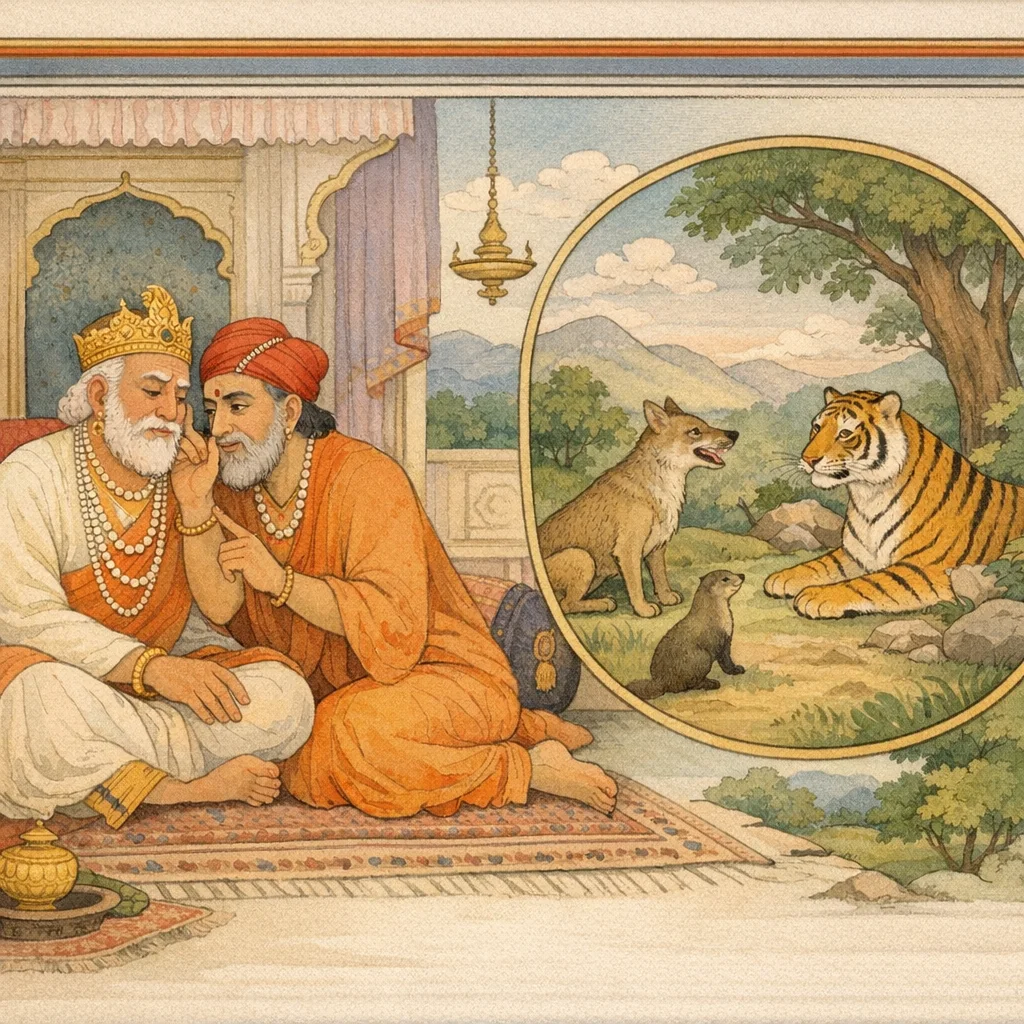
Chapter Arc: हस्तिनापुर के अंधे सम्राट धृतराष्ट्र अपने अंतःकरण की जलन और भय को छिपा नहीं पाते—पाण्डवों की बढ़ती प्रतिष्ठा उन्हें रात-दिन चुभती है। वे राजनीति-शास्त्र के मर्मज्ञ कणिक को बुलाकर पूछते हैं: ‘संधि और विग्रह में मेरे लिए निश्चय क्या हो?’ → कणिक ‘दण्ड’ की नीति को प्रधान बनाकर राजधर्म का कठोर पाठ पढ़ाता है—जो राजा सदा दण्ड के लिए उद्यत रहता है, उससे प्रजा भयभीत रहती है; इसलिए कार्य दण्ड से साधे जाएँ। वह उपदेश को सीधा आदेश नहीं बनाता, बल्कि नीति-कथा के रूप में विष-बुझी बुद्धि का मार्ग दिखाता है—जैसे क्षुर/नाराच जैसे तीक्ष्ण अस्त्र छिपकर प्राण हर लेते हैं, वैसे ही छिपी हुई चालें शत्रु को काटती हैं। → कणिक जम्बुक (गीदड़) की प्राचीन कथा सुनाकर ‘स्वार्थपण्डित’ शृगाल की युक्ति को चरम पर ले जाता है—कथा में छल, अवसरवाद और ‘प्रतिच्छन्न लोमहारी’ जैसी छिपी हिंसा का बिंब उभरता है; बाघ/बलवान पात्र को ‘आँखें खुलने’ का क्षण आता है, और नीति का नुकीला निष्कर्ष सामने रख दिया जाता है: शक्ति के साथ कपट-रणनीति जोड़कर ही विरोधी को साधो। → धृतराष्ट्र को वह ‘निश्चिततम’ कारण और उपाय दिखा देता है—संधि का मुखौटा रखकर भी भीतर-भीतर विग्रह की तैयारी, दण्ड-नीति, और शत्रु के भीतर फूट/भय पैदा करने की युक्ति। अध्याय का अंत किसी युद्ध-घोष से नहीं, बल्कि राजसभा में बोए गए संदेह और कठोर नीति के बीज से होता है। → धृतराष्ट्र कणिक की बात ‘करिष्ये वचनं तव’ कहकर स्वीकारने की ओर झुकते हैं—अब प्रश्न यह रह जाता है कि यह नीति पाण्डवों के विरुद्ध किस रूप में क्रियान्वित होगी।
Shlokas
Verse 1
(री [०८ ४० [/० '/० . क्षुर उस बाणको कहते हैं, जिसके बगलमें तेज धार होती है, जैसे नाईका छूरा। . नाराच सीधे बाणको कहते हैं, जिसका अग्रभाग तीखा होता है। . भलल उस बाणको कहते हैं, जिसकी नोकका पिछला भाग चौड़ा और नोकदार होता है। . विपाठ नामक बाणकी आकृति खनतीकी भाँति होती है। यह दूसरे बाणोंसे बड़ा होता है। . उपर्युक्त बाणोंमें क्षुर और नाराच सीधा है, भल्ल टेढ़ा है और विपाठ विशाल है। एकोनचत्वारिशर्दाधिकशततमो< ध्याय: कणिकका धृतराष्ट्रको कूटनीतिका उपदेश वैशम्पायन उवाच श्रुत्वा पाण्डुसुतान् वीरान् बलोद्रिक्तानू महौजस: । धृतराष्ट्रो महीपालश्चिन्तामगमदातुर:,वैशम्पायनजी कहते हैं--जनमेजय! पाण्डुके वीर पुत्रोंको महान् तेजस्वी और बलमें बढ़े-चढ़े सुनकर महाराज धूृतराष्ट्र व्याकुल हो बड़ी चिन्तामें पड़ गये
Vaiśampāyana said: Hearing that the heroic sons of Pāṇḍu had grown exceedingly powerful and were possessed of great energy, King Dhṛtarāṣṭra, the ruler of the earth, became distressed and fell into anxious thought. The verse frames a moral tension: the rise of rightful strength in others awakens fear and political insecurity in the one who clings to power, setting the stage for choices that test dharma.
Verse 2
तत आहूय मन्त्रज्ञ राजशाल्त्रार्थवित्तमम् कणिकं मन्त्रिणां श्रेष्ठ धृतराष्ट्रो डब्रवीदू वच:,तब उन्होंने राजनीति और अर्थ-शास्त्रके पण्डित तथा उत्तम मन्त्रके ज्ञाता मन्त्रिप्रवर कणिकको बुलाकर इस प्रकार कहा
Then Dhṛtarāṣṭra summoned Kaṇika—foremost among his ministers, a knower of counsel, and highly learned in statecraft and political economy—and addressed him with these words. The scene frames a king seeking guidance through policy and strategy, hinting at the ethical tension between prudent governance and self-interested counsel.
Verse 3
ध्ृतराष्ट्र उवाच उत्सिक्ता: पाण्डवा नित्य॑ तेभ्योडसूये द्विजोत्तम । तत्र मे निश्चिततमं संधिविग्रहकारणम् । कणिक त्वं ममाचक्ष्व करिष्ये वचनं तव,धृतराष्ट्र बोले--द्विजश्रेष्ठ) पाण्डवोंकी दिनोंदिन उन्नति और सर्वत्र ख्याति हो रही है। इस कारण मैं उनसे डाह रखने लगा हूँ। कणिक! तुम भलीभाँति निश्चय करके बतलाओ, मुझे उनके साथ संधि करनी चाहिये या विग्रह? मैं तुम्हारी बात मानूँगा
Dhṛtarāṣṭra said: “O best of Brahmins, the Pāṇḍavas are steadily rising in power and reputation; because of that I have begun to envy them. Therefore, tell me with firm certainty what should be the decisive ground for my choice—should I make peace with them, or should I enter into hostility? Kaṇika, declare it to me; I will act according to your counsel.”
Verse 4
वैशम्पायन उवाच स प्रसन्नमनास्तेन परिपृष्टो द्विजोत्तम: । उवाच वचन तीक्ष्णं राजशास्त्रार्थदर्शनम्,वैशम्पायनजी कहते हैं--राजन्! राजा धृतराष्ट्रके इस प्रकार पूछनेपर विप्रवर कणिक मन-ही-मन बहुत प्रसन्न हुए तथा राजनीतिके सिद्धान्तका परिचय देनेवाली तीखी बात कहने लगे--
Vaiśampāyana said: When the best of the twice-born (the Brahmin) was thus questioned by him, he became inwardly pleased and began to speak sharp, incisive words—words that revealed the meaning and practical principles of political science. The scene frames counsel not as gentle consolation but as hard-edged instruction in statecraft, where ethical tension often arises between expediency and righteousness.
Verse 5
शृणु राजन्निदं तत्र प्रोच्यमानं मयानघ । न मे5 भ्यसूया कर्तव्या श्र॒ुत्वैतत् कुरुसत्तम,“निष्पाप नरेश! इस विषयमें मेरी कही हुई ये बातें सुनिये। कुरुवंशशिरोमणे! इसे सुनकर आप मेरे प्रति दोष-दृष्टि न कीजियेगा
Vaiśampāyana said: “O King, O sinless one, listen to what I am about to relate in this matter. O best of the Kurus, having heard it, you should not look upon me with fault-finding or suspicion.”
Verse 6
नित्यमुद्यतदण्ड: स्यान्नित्यं विवृतपौरुष: । अच्छिद्रश्छिद्रदर्शी स्थात् परेषां विवरानुग:,'राजाको सर्वदा दण्ड देनेके लिये उद्यत रहना चाहिये और सदा ही पुरुषार्थ प्रकट करना चाहिये। राजा अपना छिद्र--अपनी दुर्बलता प्रकट न होने दे; परंतु दूसरोंके छिद्र या दुर्बलतापर सदा ही दृष्टि रखे और यदि शत्रुओंकी निर्बलताका पता चल जाय तो उनपर आक्रमण कर दे
Vaiśampāyana said: A king should always be ready to wield punishment and should constantly display resolute manliness and initiative. He should keep his own vulnerabilities from being exposed, yet remain keen to detect the weaknesses of others; and once an enemy’s weak point is discovered, he should press into that opening and strike.
Verse 7
नित्यमुद्यतदण्डाद्धि भृशमुद्धिजते जन: । तस्मात् सर्वाणि कार्याणि दण्डेनैव विधारयेत्,“जो सदा दण्ड देनेके लिये उद्यत रहता है, उससे प्रजाजन बहुत डरते हैं; इसलिये सब कार्य दण्डके द्वारा ही सिद्ध करे
Vaiśampāyana said: People are greatly alarmed by one who is always poised to punish with the rod of authority. Therefore, one should ensure that all affairs are regulated and brought to completion through the instrument of punishment—i.e., through firm governance and enforceable discipline.
Verse 8
नास्यच्छिद्रं पर: पश्येच्छिटद्रेण परमन्वियात् । गूहेत् कूर्म इवाड्रानि रक्षेद् विवरमात्मन:,“राजाको इतनी सावधानी रखनी चाहिये, जिससे शत्रु उसकी कमजोरी न देख सके और यदि शत्रुकी कमजोरी प्रकट हो जाय तो उसपर अवश्य चढ़ाई करे। जैसे कछुआ अपने अंगोंकी रक्षा करता है, उसी प्रकार राजा अपने सब अंगों (राजा, अमात्य, राष्ट्र, दुर्ग, कोष, बल और सुहृद)-की रक्षा करे और अपनी कमजोरीको छिपाये रखे। यदि कोई कार्य शुरू कर दे तो उसे पूरा किये बिना कभी न छोड़े; क्योंकि शरीरमें गड़ा हुआ काँटा यदि आधा टूटकर भीतर रह जाय तो वह बहुत दिनोंतक मवाद देता रहता है
Vaiśampāyana said: “Let no enemy perceive a flaw in him; but if a flaw is found in the enemy, let him press the advantage. Let him conceal his vulnerable points, like a tortoise drawing in its limbs, and protect his own weak spots.”
Verse 9
नासम्यक्कृतकारी स्यादुपक्रम्प कदाचन । कण्टको हापि दुश्छिन्न आसत्रावं जनयेच्चिरम्,“राजाको इतनी सावधानी रखनी चाहिये, जिससे शत्रु उसकी कमजोरी न देख सके और यदि शत्रुकी कमजोरी प्रकट हो जाय तो उसपर अवश्य चढ़ाई करे। जैसे कछुआ अपने अंगोंकी रक्षा करता है, उसी प्रकार राजा अपने सब अंगों (राजा, अमात्य, राष्ट्र, दुर्ग, कोष, बल और सुहृद)-की रक्षा करे और अपनी कमजोरीको छिपाये रखे। यदि कोई कार्य शुरू कर दे तो उसे पूरा किये बिना कभी न छोड़े; क्योंकि शरीरमें गड़ा हुआ काँटा यदि आधा टूटकर भीतर रह जाय तो वह बहुत दिनोंतक मवाद देता रहता है
Vaiśampāyana said: A man should never begin an undertaking and then fail to carry it through properly. For even a thorn, if broken off badly and left embedded, keeps producing discharge for a long time. In the same way, a ruler must conceal his own vulnerabilities from enemies, protect every limb of the state as a tortoise guards its limbs, and—when an enemy’s weakness becomes manifest—act decisively; but once an action is begun, it should not be abandoned half-done, lest it become a lingering source of harm.
Verse 10
वधमेव प्रशंसन्ति शत्रूणामपकारिणाम् । सुविदीर्ण सुविक्रान्तं सुयुद्धं सुपलायितम्,“अपना अनिष्ट करनेवाले शत्रुओंका वध कर दिया जाय, इसीकी नीतिज्ञ पुरुष प्रशंसा करते हैं। अत्यन्त पराक्रमी शत्रुको भी आपत्तिमें पड़ा देख उसे सुगमतापूर्वक नष्ट कर दे। इसी प्रकार जो अच्छी तरह युद्ध करनेवाला शत्रु है, उसे भी आपत्तिकालमें ही अनायास ही मार भगाये। आपत्तिके समय शत्रुका संहार अवश्य ही करे। उस समय उसके सम्बन्ध या सौहार्द आदिका विचार कदापि न करे। तात! शत्रु दुर्बल हो, तो भी किसी प्रकार उसकी उपेक्षा न करे
Vaiśaṃpāyana said: “The wise commend only one course against enemies who have done harm—slay them. When a foe, however mighty and valiant, is found in distress and exposed, one should destroy him with ease. Likewise, even an enemy skilled in battle should, in a time of calamity, be struck down or driven into flight without hesitation. In crisis, the enemy’s destruction is to be carried out; considerations of kinship or friendship are not to be entertained then. And even if the enemy appears weak, one should not neglect him in any way.”
Verse 11
आपपसद्यापदि काले च कुर्वीत न विचारयेत् । नावज्ञेयो रिपुस्तात दुर्बलोडपि कथंचन,“अपना अनिष्ट करनेवाले शत्रुओंका वध कर दिया जाय, इसीकी नीतिज्ञ पुरुष प्रशंसा करते हैं। अत्यन्त पराक्रमी शत्रुको भी आपत्तिमें पड़ा देख उसे सुगमतापूर्वक नष्ट कर दे। इसी प्रकार जो अच्छी तरह युद्ध करनेवाला शत्रु है, उसे भी आपत्तिकालमें ही अनायास ही मार भगाये। आपत्तिके समय शत्रुका संहार अवश्य ही करे। उस समय उसके सम्बन्ध या सौहार्द आदिका विचार कदापि न करे। तात! शत्रु दुर्बल हो, तो भी किसी प्रकार उसकी उपेक्षा न करे
Vaiśampāyana said: “One should act at once when calamity strikes, without hesitation. In times of danger, the enemy must not be disregarded, dear one—even if he appears weak. For the wise commend the slaying of foes who seek one’s ruin; and when a powerful or battle-skilled enemy is seen fallen into adversity, he should be destroyed easily then and there. In such a crisis, one should not weigh considerations of relationship or friendship; the destruction of the enemy is to be carried out without delay.”
Verse 12
अल्पोडप्यनिनिर्वनं कृत्स्नं दहत्याश्रयसंश्रयात् । अन्ध: स्यादन्धवेलायां बाधिययमपि चाश्रयेत्,“क्योंकि जैसे थोड़ी-तसी भी आग ईंधनका सहारा मिल जानेपर समूचे वनको जला देती है, उसी प्रकार छोटा शत्रु भी दुर्ग आदि प्रबल आश्रयका सहारा लेकर विनाशकारी बन जाता है। अंधा बननेका अवसर आनेपर अंधा बन जाय--अर्थात् अपनी असमर्थताके समय शत्रुके दोषोंको न देखे। उस समय सब ओरसे धिक््कार और निन्दा मिलनेपर भी उसे अनसुनी कर दे अर्थात् उसकी ओरसे कान बंद करके बहरा बन जाय
Vaiśampāyana said: “Even a small fire, once it finds support in fuel, can burn an entire forest. In the same way, even a minor enemy, when backed by a strong refuge such as a fort or powerful allies, becomes capable of destruction. Therefore, when the time comes that one must ‘be blind,’ let him be blind—do not look for the enemy’s faults when one is powerless to act. And even if reproach and condemnation come from all sides, let him also take up ‘deafness’—close his ears and endure.”
Verse 13
कुर्यात् तृणमयं चापं शयीत मृगशायिकाम् । सान्त्वादिभिरुपायैस्तु हन्याच्छत्रुं वशे स्थितम्,“ऐसे समयमें अपने धनुषको तिनकेके समान बना दे अर्थात् शत्रुकी दृष्टिमें सर्वथा दीन- हीन एवं असमर्थ बन जाय; परंतु व्याधकी भाँति सोये--अर्थात् जैसे व्याध झूठे ही नींदका बहाना करके सो जाता है और जब मृग विश्वस्त होकर आसपास चरने लगते हैं, तब उठकर उन्हें बाणोंसे घायल कर देता है, उसी प्रकार शत्रुको मारनेका अवसर देखते हुए ही अपने स्वरूप और मनोभावको छिपाकर असमर्थ पुरुषोंका-सा व्यवहार करे। इस प्रकार कपटपूर्ण बर्तावसे वशमें आये हुए शत्रुको साम आदि उपायोंसे विश्वास उत्पन्न करके मार डाले”
Vaiśaṃpāyana said: “At such a time one should make one’s bow as if it were made of grass—appearing utterly weak and incapable in the enemy’s eyes—and lie down like a hunter lying in wait for deer. Concealing one’s true strength and intention, one should behave like a powerless man; then, once the foe has been brought under control, one should win his confidence through conciliation and related stratagems and strike him down.”
Verse 14
दया न तस्मिन् कर्तव्या शरणागत इत्युत । निरुद्धिग्नो हि भवति नहताज्जायते भयम्,“यह मेरी शरणमें आया है, यह सोचकर उसके प्रति दया नहीं दिखानी चाहिये। शत्रुको मार देनेसे ही राजा निर्भय हो सकता है। यदि शत्रु मारा नहीं गया तो उससे सदा ही भय बना रहता है
Vaiśampāyana said: “One should not show compassion to him merely on the plea, ‘He has come seeking refuge.’ A king becomes truly secure only when the enemy is decisively struck down; if the foe is not slain, fear is born again and continues to haunt him.”
Verse 15
हन्यादमित्रं दानेन तथा पूर्वापकारिणम् । हन्यात् त्रीन् पज्च सप्तेति परपक्षस्यथ सर्वश:,“जो सहज शत्रु है, उसे मुँहमाँगी वस्तु देकर--दानके द्वारा विश्वास उत्पन्न करके मार डाले। इसी प्रकार जो पहलेका अपकारी शत्रु हो और पीछे सेवक बन गया हो, उसे भी जीवित न छोड़े। शत्रुपक्षके त्रिवर्ग;, पंचवर्गग और सप्तवर्गकाः सर्वथा नाश कर डाले
Vaiśampāyana said: “One should destroy a natural enemy by means of gifts—by giving what is desired and thereby creating trust, and then striking him down. Likewise, one should not spare an enemy who had harmed one earlier, even if he later becomes a dependent or servant. In the same way, one should utterly annihilate the enemy’s groupings—those of three, five, and seven—leaving no remnant.”
Verse 16
मूलमेवादितश्कछिन्द्यात् परपक्षस्य नित्यश: । ततः सहायांस्तत्पक्षान् सर्वाश्ष॒ तदनन्तरम्,“पहले तो सदा शत्रुपक्षके मूलका ही उच्छेद कर डाले। तत्पश्चात् उसके सहायकों और शत्रुपक्षसे सम्बन्ध रखनेवाले सभी लोगोंका संहार कर दे
Vaiśampāyana said: “From the very outset, one should relentlessly cut off the enemy faction at its root. Thereafter, one should eliminate its supporters and all those aligned with that side.”
Verse 17
छिन्नमूले हाधिष्ठाने सर्वे तज्जीविनो हता: । कथं नु शाखास्तिष्ठेरंश्छिन्नमूले वनस्पतौ,“यदि मूल आधार नष्ट हो जाय तो उसके आश्रयसे जीवन धारण करनेवाले सभी शत्रु स्वतः नष्ट हो जाते हैं। यदि वृक्षकी जड़ काट दी जाय तो उसकी शाखाएँ कैसे रह सकती हैं?
Vaiśaṃpāyana said: “Alas—when the root and the very base are cut away, all who live depending upon it are destroyed. How, indeed, could the branches remain standing when the root of a tree has been severed?”
Verse 18
एकाग्र: स्यादविवृतो नित्यं विवरदर्शक: । राजन् नित्यं सपत्नेषु नित्योद्धिग्न: समाचरेत्,“राजा सदा शत्रुकी गतिविधिको जाननेके लिये एकाग्र रहे। अपने राज्यके सभी अंगोंको गुप्त रखे। राजन! सदा अपने शत्रुओंकी कमजोरीपर दृष्टि रखे और उनसे सदा सतर्क (सावधान) रहे
Vaiśampāyana said: “O king, be single-minded and never lay yourself open; be ever one who spies out the smallest breach. Among rivals, conduct yourself in constant vigilance, always on guard.”
Verse 19
अग्न्याधानेन यज्ञेन काषायेण जटाजिनै: । लोकान् विश्वासयित्वैव ततो लुम्पेद् यथा वृक:,“अग्निहोत्र और यज्ञ करके, गेरुए वस्त्र, जटा और मृगचर्म धारण करके पहले लोगोंमें विश्वास उत्पन्न करे; फिर अवसर देखकर भेड़ियेकी भाँति शत्रुओंपर टूट पड़े और उन्हें नष्ट कर दे
Vaiśampāyana said: “By establishing the sacred fire and performing sacrifices, by wearing ochre robes, matted locks, and animal skins, first win the trust of the people; then, when the moment is ripe, fall upon the enemies like a wolf—plunder and destroy them.”
Verse 20
अड्कुशं शौचमित्याहुरर्थानामुपधारणे । आनाम्य फलितां शाखां पक्वं पक्वं॑ प्रशातयेत्,'कार्यसिद्धिके लिये शौच-सदाचार आदिका पालन एक प्रकारका अंकुश (लोगोंको आकृष्ट करनेका साधन) बताया गया है। फलोंसे लदी हुई वृक्षकी शाखाको अपनी ओर कुछ झुकाकर ही मनुष्य उसके पके-पके फलको तोड़े
They say that purity—clean conduct and self-restraint—is like a goad for securing and sustaining one’s aims and resources. Just as a man bends toward himself a branch heavy with fruit and then plucks the ripe fruits one by one, so disciplined good conduct draws success within reach and allows it to be gained properly.
Verse 21
फलार्थो5यं समारम्भो लोके पुंसां विपश्चिताम् । वहेदमित्र॑ स्कन्धेन यावत् कालस्य पर्यय:,“लोकमें विद्वान् पुरुषोंका यह सारा आयोजन ही अभीष्ट फलकी सिद्धिके लिये होता है। जबतक समय बदलकर अपने अनुकूल न हो जाय, तबतक शत्रुको कंधेपर बिठाकर ढोना पड़े, तो ढोये भी
In this world, every undertaking and arrangement made by the wise is for the attainment of the desired fruit. So long as time has not yet turned in one’s favor, even if one must seat the enemy upon one’s shoulder and carry him, one should carry him.
Verse 22
ततः प्रत्यागते काले भिन्द्याद् घटमिवाश्मनि । अमित्रो न विमोक्तव्य: कृपणं बह्नपि ब्रुवन्
Then, when the proper time has come, one should shatter him as one would break an earthen pot upon a stone. An enemy is not to be released, even if he speaks many pitiable, supplicating words—because mercy shown at the wrong place and time endangers one’s own side and undermines prudent duty.
Verse 23
कृपा न तस्मिन् कर्तव्या हन्यादेवापकारिणम् | हन्यादमित्रं सान्त्वेन तथा दानेन वा पुन:
‘One should show no misplaced pity toward such a person; the wrongdoer must be struck down. An enemy, too, should be overcome—whether by conciliation or, again, by gifts.’
Verse 24
तथैव भेददण्डाभ्यां सर्वोपायै: प्रशातयेत् । “परंतु जब अपने अनुकूल समय आ जाय, तब उसे उसी प्रकार नष्ट कर दे, जैसे घड़ेको पत्थरपर पटककर फोड़ डालते हैं। शत्रु बहुत दीनतापूर्ण वचन बोले, तो भी उसे जीवित नहीं छोड़ना चाहिये। उसपर दया नहीं करनी चाहिये। अपकारी शत्रुको मार ही डालना चाहिये। साम अथवा दान तथा भेद एवं दण्ड सभी उपायोंद्वारा शत्रुकी मार डाले-- उसे मिटा दे” || २२-२३ ह ।। धृतराष्टर उवाच कथं सानन््त्वेन दानेन भेदैर्दण्डेन वा पुन:
“In the same way, one should subdue (the enemy) by every available stratagem—by sowing dissension and by punishment. Dhṛtarāṣṭra said: ‘But how, again, is it to be done—by conciliation, by gifts, by creating divisions, or by force?’”
Verse 25
अमित्र: शक््यते हन्तुं तन्मे ब्रूहि यथातथम् । धृतराष्ट्रने पूछा--कणिक! साम, दान, भेद अथवा दण्डके द्वारा शत्रुका नाश कैसे 28:44 श््् कमा काणिक उवाच शृणु राजन् यथावृत्तं वने निवसत: पुरा
“An enemy can indeed be slain—tell me, then, exactly how it is to be done, in truth and in proper order.” Kaṇika continued: “Listen, O King, to what happened long ago, when I was living in the forest.”
Verse 26
अथ वक्षित् कृतप्रज्ञ: शृगाल: स्वार्थपण्डित:
Then the jackal—self-possessed and shrewd, a “wise man” only in the service of his own advantage—spoke.
Verse 27
सखिभिन््यवसत् सार्ध व्याप्राखुवृकब भ्ुभि: । तेडपश्यन् विपिने तस्मिन् बलिनं मृगयूथपम्
Kāṇika said: “Along with his companions he took up residence there, amid tigers, fierce beasts, and wolves. In that very forest they then caught sight of a powerful leader of a herd of deer.”
Verse 28
अशक्ता ग्रहणे तस्य ततो मन्त्रममन्त्रयन् । एक वनमें कोई बड़ा बुद्धिमान् और स्वार्थ साधनेमें कुशल गीदड़ अपने चार मित्रों-- बाघ, चूहा, भेड़िया और नेवलेके साथ निवास करता था। एक दिन उन सबने हरिणोंके एक सरदारको देखा, जो बड़ा बलवान् था। वे सब उसे पकड़नेमें सफल न हो सके, अतः सबने मिलकर यह सलाह की ।। २६-२७ $ ।। जम्बुक उवाच असकृद् यतितो होष हन्तुं व्यात्र वने त्वया,गीदड़ने कहा--भाई बाघ! तुमने वनमें इस हरिणको मारनेके लिये कई बार यत्न किया, परंतु यह बड़े वेगसे दौड़नेवाला, जवान और बुद्धिमान् है, इसलिये पकड़में नहीं आता। मेरी राय है कि जब यह हरिण सो रहा हो, उस समय यह चूहा इसके दोनों पैरोंको काट खाये। (फिर कटे हुए पैरोंसे यह उतना तेज नहीं दौड़ सकता।) उस अवस्थामें बाघ उसे पकड़ ले; फिर तो हम सब लोग प्रसन्नचित्त होकर उसे खायँगे
Unable to seize him, they took counsel together. Jambuka said: “O tiger, again and again you have tried in this forest to kill that stag, yet you have not succeeded. He is swift, in his prime, and clever, and so he does not fall into your grasp. My counsel is this: when the deer is asleep, let the mouse gnaw through both of his legs. Once his legs are cut, he will not be able to run with the same speed; then you can seize him. After that, all of us will eat him with satisfaction.”
Verse 29
युवा वै जवसम्पन्नो बुद्धिशाली न शक््यते । मूषिको5स्य शयानस्य चरणौ भक्षयत्वयम्,गीदड़ने कहा--भाई बाघ! तुमने वनमें इस हरिणको मारनेके लिये कई बार यत्न किया, परंतु यह बड़े वेगसे दौड़नेवाला, जवान और बुद्धिमान् है, इसलिये पकड़में नहीं आता। मेरी राय है कि जब यह हरिण सो रहा हो, उस समय यह चूहा इसके दोनों पैरोंको काट खाये। (फिर कटे हुए पैरोंसे यह उतना तेज नहीं दौड़ सकता।) उस अवस्थामें बाघ उसे पकड़ ले; फिर तो हम सब लोग प्रसन्नचित्त होकर उसे खायँगे
The jackal said: “This deer is young, swift, and intelligent, so it cannot be caught. My counsel is this: while it lies asleep, let this mouse gnaw away its two feet. Once its legs are injured, it will not be able to run with the same speed; then the tiger can seize it. After that, all of us will eat it with satisfied hearts.”
Verse 30
यथैनं भक्षितै: पादैर्व्याप्रो गृह्नातु वै ततः । ततो वै भक्षयिष्याम: सर्वे मुदितमानसा:,गीदड़ने कहा--भाई बाघ! तुमने वनमें इस हरिणको मारनेके लिये कई बार यत्न किया, परंतु यह बड़े वेगसे दौड़नेवाला, जवान और बुद्धिमान् है, इसलिये पकड़में नहीं आता। मेरी राय है कि जब यह हरिण सो रहा हो, उस समय यह चूहा इसके दोनों पैरोंको काट खाये। (फिर कटे हुए पैरोंसे यह उतना तेज नहीं दौड़ सकता।) उस अवस्थामें बाघ उसे पकड़ ले; फिर तो हम सब लोग प्रसन्नचित्त होकर उसे खायँगे
The jackal said: “Let the tiger seize him only after his feet have been gnawed away. Then, with his speed broken, we shall all eat him, our minds delighted.”
Verse 31
जम्बुकस्य तु तद् वाक््यं तथा चक्रुः समाहिता: । मूषिकाभक्षितै: पादैर्मुगं व्याप्रोडवधीत् तदा,गीदड़की वह बात सुनकर सबने सावधान होकर वैसा ही किया। चूहेके द्वारा काटे हुए पैरोंसे लड़खड़ाते हुए मृगको बाघने तत्काल ही मार डाला
Heeding Jambuka’s words, they all acted with alert attention. Then, as the deer staggered with its feet gnawed by mice, the tiger promptly killed it.
Verse 32
दृष्टवैवाचेष्टमानं तु भूमौ मृगकलेवरम् । स्नात्वा55गच्छत भद्रं वो रक्षामीत्याह जम्बुक:,पृथ्वीपर हरिणके शरीरको निनश्रेष्ट पड़ा देख गीदड़ने कहा--“आपलोगोंका भला हो। स्नान करके आइये। तबतक मैं इसकी रखवाली करता हूँ”
Seeing the carcass of a deer lying on the ground, the jackal said, “Go and bathe—may good befall you. Until then, I will keep watch over it.”
Verse 33
शृगालवचनात् ते5पि गता: सर्वे नदीं ततः । स चिन्तापरमो भूत्वा तस्थौ तत्रैव जम्बुक:,गीदड़के कहनेसे वे (बाघ आदि) सब साथी नदीमें (नहानेके लिये) चले गये। इधर वह गीदड़ किसी चिन्तामें निमग्न होकर वहीं खड़ा रहा
At the jackal’s words, all of them too went from there to the river. But the jackal, becoming wholly absorbed in anxious thought, remained standing right there.
Verse 34
अथाजगाम पूर्व तु स्नात्वा व्याप्रो महाबल: । ददर्श जम्बुकं॑ चैव चिन्ताकुलितमानसम्,इतनेमें ही महाबली बाघ स्नान करके सबसे पहले वहाँ लौट आया। आनेपर उसने देखा, गीदड़का चित्त चिन्तासे व्याकुल हो रहा है
Just then, the mighty tiger returned first after bathing. On arriving, he saw the jackal as well—his mind agitated and overwhelmed by anxious thoughts.
Verse 35
व्याप्र उवाच कि शोचसि महाप्राज्ञ त्वं नो बुद्धिमतां वर: । अशित्वा पिशितान्यद्य विहरिष्यामहे वयम्,तब बाघने पूछा--महामते! क्यों सोचमें पड़े हो? हमलोगोंमें तुम्हीं सबसे बड़े बुद्धिमान हो। आज इस हरिणका मांस खाकर हमलोग मौजसे घूमें-फिरेंगे
The tiger said: “Why do you grieve, O great-minded one? Among us you are the best of the intelligent. Today, after eating this flesh, we shall roam about in enjoyment.”
Verse 36
जम्बुक उवाच शृणु मे त्वं महाबाहो यद् वाक््यं मूषिको<ब्रवीत् | धिग् बल॑ मृगराजस्य मयाद्यायं मृगो हतः,गीदड़ बोला--महाबाहो! चूहेने (तुम्हारे विषयमें) जो बात कही है, उसे तुम मुझसे सुनो। वह कहता था, “मृगोंके राजा बाघके बलको धिक्कार है! आज इस मृगको तो मैंने मारा है
The jackal said: “Hear me, O mighty-armed one, as to what the mouse said (about you). It declared: ‘Shame on the strength of the king of beasts—the tiger! Today it is I who have slain this prey.’”
Verse 37
मद्बाहुबलमाश्रित्य तृप्तिमद्य गमिष्यति । गर्जमानस्य तस्यैवमतो भक्ष्यं न रोचये,“मेरे बाहुबलका आश्रय लेकर आज वह अपनी भूख बुझायेगा।” उसने इस प्रकार गरज-गरजकर (घमंडभरी) बातें कहीं हैं, अतः उसकी सहायतासे प्राप्त हुए इस भोजनको ग्रहण करना मुझे अच्छा नहीं लगता
“Relying on the strength of my arms, today he will satisfy his hunger.” Since he has roared out such boastful words, I do not find it right to accept this food that would come through his help—food tainted by pride.
Verse 38
व्याप्र उवाच ब्रवीति यदि स होवं काले हास्मिन् प्रबोधित: । स्वबाहुबलमाश्रित्य हनिष्ये5हं वनेचरान्,तमागतमभिप्रेत्य शृगालो<प्यब्रवीद् वच: । बाघने कहा--यदि वह ऐसी बात कहता है, तब तो उसने इस समय मेरी आँखें खोल दीं--मुझे सचेत कर दिया। आजसे मैं अपने ही बाहुबलके भरोसे वन-जन्तुओंका वध किया करूँगा और उन्हींका मांस खाऊँगा। यों कहकर बाघ वनमें चला गया। इसी समय चूहा भी (नहा-धोकर) वहाँ आ पहुँचा। उसे आया देख गीदड़ने कहा
The tiger said: “If he truly speaks so, then at this moment he has opened my eyes—he has awakened me. From today, relying on the strength of my own arms, I shall kill the creatures of the forest and eat their flesh.” Having spoken thus, the tiger went into the woods. Just then the mouse also arrived (after bathing and cleansing). Seeing it come, the jackal too spoke.
Verse 39
खादिष्ये तत्र मांसानि इत्युक्त्वा प्रस्थितो वनम् । एतस्मिन्नेव काले तु मूषिको5प्याजगाम ह
Saying, “There I shall eat flesh,” Vyāghra set out for the forest. Just at that very time, a mouse also happened to arrive.
Verse 40
जम्बुक उवाच शृणु मूषिक भद्रें ते नकुलो यदिहाब्रवीत्,गीदड़ बोला--चूहा भाई! तुम्हारा भला हो। नेवलेने यहाँ जो बात कही है, उसे सुन लो
Jambuka said: “Listen, O Mouse—may good befall you. Hear what Nakula, the mongoose, has said here.”
Verse 41
मृगमांसं न खादेयं गरमेतन्न रोचते । मूषिकं भक्षयिष्यामि तद् भवाननुमन्यताम्,वह कह रहा था कि “बाघके काटनेसे इस हरिणका मांस जहरीला हो गया है, मैं तो इसे खाऊँगा नहीं; क्योंकि यह मुझे पसंद नहीं है। यदि तुम्हारी अनुमति हो तो मैं चूहेको ही खा लूँ”
Jambuka said: “I should not eat this deer’s flesh; it is poisoned and does not appeal to me. With your consent, I will eat the mouse instead.”
Verse 42
तच्छुत्वा मूषिको वाक्य संत्रस्त: प्रगतो बिलम् । ततः स्नात्वा स वै तत्र आजगाम वृको नृप,यह बात सुनकर चूहा अत्यन्त भयभीत होकर बिलमें घुस गया। राजन! तत्पश्चात् भेड़िया भी स्नान करके वहाँ आ पहुँचा
Hearing those words, the mouse, seized with fear, hurried into its burrow. Then, O king, the wolf too bathed and came there afterward.
Verse 43
तमागतमिदं वाक्यमब्रवीज्जम्बुकस्तदा | मृगराजो हि संक्रुद्धो न ते साधु भविष्यति
Then Jambuka spoke to the one who had come: “For the lord of beasts, when enraged, will not bring you any good.”
Verse 44
सकतल्नत्रस्त्विहायाति कुरुष्व यदनन्तरम् | एवं संचोदितस्तेन जम्बुकेन तदा वृक:
“Terrified by the cart, he has run away from here. Do now whatever should be done next.” Thus urged on by the jackal, the wolf then prepared to act.
Verse 45
ततो<वलुम्पनं कृत्वा प्रयात: पिशिताशन: । एतस्मिन्नेव काले तु नकुलो5प्याजगाम ह
Then, having seized its prey and made off with it, the flesh-eating creature departed. At that very time, Nakula too arrived there—setting the stage for the next encounter and the consequences bound to deed and timing.
Verse 46
उसके आनेपर गीदड़ने इस प्रकार कहा--'भेड़िया भाई! आज बाघ तुमपर बहुत नाराज हो गया है, अतः तुम्हारी खैर नहीं; वह अभी बाघिनको साथ लेकर यहाँ आ रहा है। इसलिये अब तुम्हें जो उचित जान पड़े, वह करो।” गीदड़के इस प्रकार कहनेपर कच्चा मांस खानेवाला वह भेड़िया दुम दबाकर भाग गया। इतनेमें ही नेवला भी आ पहुँचा ।। ४३ -४५ || तमुवाच महाराज नकुलं जम्बुको वने । स्वबाहुबलमाश्रित्य निर्जितास्तेडन्यतो गता:
Jambuka said: “O great king Nakula, in the forest those who relied only on the strength of their own arms were defeated and fled elsewhere.” The line sets forth a moral contrast: mere physical force, when met by superior strategy or rightful power, collapses, and the defeated abandon the field.
Verse 47
नकुल उवाच मृगराजो वृकश्चैव बुद्धिमानपि मूषिक:,नेवलेने कहा--जब बाघ, भेड़िया और बुद्धिमान् चूहा--ये सभी वीर तुमसे परास्त हो गये, तब तो तुम वीरशिरोमणि हो। मैं भी तुम्हारे साथ युद्ध नहीं कर सकता। यों कहकर नेवला भी चला गया
Nakula said: “When the tiger, the wolf, and even the clever mouse—each famed for prowess or cunning—have all been defeated by you, then you are truly the crest-jewel among heroes. I too cannot fight with you.” Having spoken thus, the mongoose also departed. The passage underscores a practical ethic: recognizing overwhelming strength and withdrawing from a futile contest is not cowardice but discernment.
Verse 48
निर्जिता यत् त्वया वीरास्तस्माद् वीरतरो भवान् | न त्वयाप्युत्सहे योद्धुमित्युक्त्वा सो5प्युपागमत्,नेवलेने कहा--जब बाघ, भेड़िया और बुद्धिमान् चूहा--ये सभी वीर तुमसे परास्त हो गये, तब तो तुम वीरशिरोमणि हो। मैं भी तुम्हारे साथ युद्ध नहीं कर सकता। यों कहकर नेवला भी चला गया
Nakula said: “Since those heroes have been defeated by you, you are therefore the greater hero. Even I do not have the courage to fight with you.” Having spoken thus, he too departed. The passage underscores how mere victory can breed exaggerated praise and fear, prompting even capable persons to withdraw rather than test the truth through righteous contest.
Verse 49
कणिक उवाच एवं तेषु प्रयातेषु जम्बुको हृष्टमानस: । खादति सम तदा मांसमेक: सन् मन्त्रनिश्चयात्,कणिक कहते हैं--इस प्रकार उन सबके चले जानेपर अपनी युक्तिमें सफल हो जानेके कारण गीदड़का हृदय हर्षसे खिल उठा। तब उसने अकेले ही वह मांस खाया
Kaṇika said: “When all of them had gone away, the jackal’s heart swelled with delight, for his stratagem had succeeded. Then, being alone and having resolved upon his plan, he ate the meat.”
Verse 50
एवं समाचरन्नित्यं सुखमेधेत भूपति: । भयेन भेदयेद् भीरुं शूरमज्जलिकर्मणा,राजन! ऐसा ही आचरण करनेवाला राजा सदा सुखसे रहता और उन्नतिको प्राप्त होता है। डरपोकको भय दिखाकर फोड़ ले तथा जो अपनेसे शूरवीर हो, उसे हाथ जोड़कर वशमें करे
Kaṇika said: “A king who consistently acts in this manner lives in comfort and steadily prospers. Let him split the timid by displaying fear, and bring under control one who is more heroic than himself by the act of joined hands (i.e., by humble conciliation).”
Verse 51
लुब्धमर्थप्रदानेन सम॑ न्यूनं तथौजसा । एवं ते कथितं राजज्शृणु चाप्यपरं तथा,लोभीको धन देकर तथा बराबर और कमजोरको पराक्रमसे वशमें करे। राजन्! इस प्रकार आपसे नीतियुक्त बर्तावका वर्णन किया गया। अब दूसरी बातें सुनिये
Kanika said: “Win over the greedy by granting them wealth; bring those who are your equals under control through conciliation; and subdue the weaker by the display of force. O King, thus I have described to you a policy-driven mode of conduct. Now listen further to what else I have to say.”
Verse 52
पुत्र: सखा वा भ्राता वा पिता वा यदि वा गुरु: । रिपुस्थानेषु वर्तन्तो हन्तव्या भूतिमिच्छता,पुत्र, मित्र, भाई, पिता अथवा गुरु--कोई भी क्यों न हो, जो शत्रुके स्थानपर आ जायाँ --शत्रुवत् बर्ताव करने लगें, तो उन्हें वैभव चाहनेवाला राजा अवश्य मार डाले
Kaṇika said: “Whether it be one’s son, friend, brother, father, or even one’s teacher—if they come to stand in the position of an enemy and behave as an enemy, then a king who seeks prosperity and power must put them to death.”
Verse 53
शपथेनाप्यरिं हन्यादर्थदानेन वा पुनः । विषेण मायया वापि नोपेक्षेत कथंचन । उभौ चेत् संशयोपेतौ श्रद्धावांस्तत्र वर्द्धते,सौगंध खाकर, धन अथवा जहर देकर या धोखेसे भी शत्रुको मार डाले। किसी तरह भी उसकी उपेक्षा न करे। यदि दोनों राजा समानरूपसे विजयके लिये यत्नशील हों और उनकी जीत संदेहास्पद जान पड़ती हो तो उनमें भी जो मेरे इस नीतिपूर्ण कथनपर श्रद्धा- विश्वास रखता है, वही उन्नतिको प्राप्त होता है
Kaṇika said: “Even by an oath (used as a stratagem), or again by giving wealth, one should strike down the enemy; by poison or by deception as well—one should never neglect the enemy in any way. If two kings are equally engaged in striving for victory and the outcome appears uncertain, then the one who has faith in this policy-driven counsel is the one who gains advantage and rises.”
Verse 54
गुरोरप्यवलिप्तस्य कार्याकार्यमजानतः । उत्पथप्रतिपन्नस्य न्याय्यं भवति शासनम्,यदि गुरु भी घमंडमें भरकर कर्तव्य और अकर्तव्यको न जानता हो तथा बुरे मार्गपर चलता हो तो उसे भी दण्ड देना उचित माना जाता है
Even a teacher, if swollen with pride, ignorant of what ought and ought not to be done, and having strayed onto a wrongful path, may rightly be subjected to discipline and punishment.
Verse 55
क्रुद्धो5प्यक्रुद्धसूप: स्यात् स्मितपूर्वाभिभाषिता । न चाप्यन्यमपथध्वंसेत् कदाचित् कोपसंयुत:,मनमें क्रोध भरा हो, तो भी ऊपरसे क्रोधशून्य बना रहे और मुसकराकर बातचीत करे। कभी क्रोधमें आकर किसी दूसरेका तिरस्कार न करे। भारत! शत्रुपर प्रहार करनेसे पहले और प्रहार करते समय भी उससे मीठे वचन ही बोले। शत्रुको मारकर भी उसके प्रति दया दिखाये, उसके लिये शोक करे तथा रोये और आँसू बहाये
Kaṇika advises that even when anger rises within, one should outwardly appear free from anger and speak first with a smile. Even if seized by wrath, one must never, at any time, ruin another person’s standing by pushing them onto a wrongful path or by harshly discrediting them. The counsel is a strategy of controlled speech and concealed emotion: maintain a pleasant exterior, restrain retaliatory words, and avoid actions that publicly degrade others—especially in contexts of rivalry and political conflict.
Verse 56
प्रहरिष्यन् प्रियं ब्रूयात् प्रहरन्नपि भारत । प्रहृत्य च कृपायीत शोचेत च रुदेत च,मनमें क्रोध भरा हो, तो भी ऊपरसे क्रोधशून्य बना रहे और मुसकराकर बातचीत करे। कभी क्रोधमें आकर किसी दूसरेका तिरस्कार न करे। भारत! शत्रुपर प्रहार करनेसे पहले और प्रहार करते समय भी उससे मीठे वचन ही बोले। शत्रुको मारकर भी उसके प्रति दया दिखाये, उसके लिये शोक करे तथा रोये और आँसू बहाये
Kaṇika said: “O Bhārata, even when one is about to strike, and even while striking, one should speak only pleasing words. And after striking down the foe, one should still display compassion—lament for him and even weep. Thus, outward gentleness is to be maintained even in acts of harsh policy, so that one’s purpose is achieved without openly revealing hostility.”
Verse 57
आश्चासयेच्चापि परं सान्त्वधर्मार्थिवृत्तिभि: । अथास्य प्रहरेत् काले यदा विचलिते पथि,शत्रुकोी समझा-बुझाकर, धर्म बताकर, धन देकर और सद्व्यवहार करके आश्वासन दे --अपने प्रति उसके मनमें विश्वास उत्पन्न करे; फिर समय आनेपर ज्यों ही वह मार्गसे विचलित हो, त्यों ही उसपर प्रहार करे
Kāṇika said: “One should first reassure the other with conciliatory words, with appeals to dharma, with offers of wealth, and with the show of proper conduct—thus creating trust in his mind. Then, when the time is ripe, the moment he strays from his course, one should strike him.”
Verse 58
अपि घोरापराधस्य धर्ममश्रित्य तिष्ठत: । स हि प्रच्छाद्यते दोष: शैलो मेघैरिवासितै:,धर्मके आचरणका ढोंग करनेसे घोर अपराध करनेवालेका दोष भी उसी प्रकार ढक जाता है, जैसे पर्वत काले मेघोंकी घटासे ढक जाता है
Even in the case of one who has committed a dreadful offense, if he stands taking refuge in dharma, his fault becomes concealed—just as a mountain is hidden by masses of dark clouds. In Kanika’s counsel, the outward posture of righteousness is presented as a means by which even grave wrongdoing can be covered from public view.
Verse 59
यः स्यादनुप्राप्तवधस्तस्यागारं प्रदीपयेत् अधनान् नास्तिकांश्लौरान् विषये स्वे न वासयेत्,जिसे शीघ्र ही मार डालनेकी इच्छा हो, उसके घरमें आग लगा दे। धनहीनों, नास्तिकों और चोरोंको अपने राज्यमें न रहने दे
Kaṇika said: “If there is someone whose death you wish to bring about without delay, set fire to his house. And within your own realm, do not allow the destitute, the irreligious, and thieves to reside.”
Verse 60
प्रत्युत्थानासनाद्येन सम्प्रदानेन केनचित् । प्रतिविश्रब्धघाती स्यात् ती3्षणदंष्टो निमग्नक:,(शत्रुके) आनेपर उठकर अगवानी करे, आसन और भोजन दे और कोई प्रिय वस्तु भेंट करे। ऐसे बर्तावोंसे अपने प्रति जिसका पूर्ण विश्वास हो गया हो, उसे भी (अपने लाभके लिये) मारनेमें संकोच न करे। सर्पकी भाँति तीखे दाँतोंसे काटे, जिससे शत्रु फिर उठकर बैठ न सके
Kaṇika says: By rising to greet, offering a seat, and giving gifts or some courteous favor, one may win another’s confidence. When the enemy has thus become fully trusting, one should not hesitate—if it serves one’s advantage—to strike him down. Like a serpent with sharp fangs, bite so that the foe cannot rise again.
Verse 61
अशड्कितेभ्य: शड्केत शड्कितेभ्यश्व सर्वश: । अशड्क््याद् भयमुत्पन्नममपि मूलं निकृन्तति,जिनसे भय प्राप्त होनेका संदेह न हो, उनसे भी सशंक (चौकन्ना) ही रहे और जिनसे भयकी आशंका हो, उनकी ओरसे तो सब प्रकारसे सावधान रहे ही। जिनसे भयकी शंका नहीं है, ऐसे लोगोंसे यदि भय उत्पन्न होता है तो वह मूलोच्छेद कर डालता है
Kaṇika said: “Be wary even of those from whom no danger is suspected; and of those who are suspected, be vigilant in every way. For danger arising from the unsuspected cuts a man down at the root.”
Verse 62
नविश्वसेदविश्वस्ते विश्वस्ते नातिविश्वसेत् । विश्वासाद् भयमुत्पन्नं मूलान्यपि निकृन्तति,जो विश्वासपात्र नहीं है, उसपर कभी विश्वास न करे; परंतु जो विश्वासपात्र है, उसपर भी अति विश्वास न करे; क्योंकि अति विश्वाससे उत्पन्न होनेवाला भय राजाकी जड़मूलका भी नाश कर डालता है
Kaṇika said: One should never place trust in a person who is not trustworthy; and even in one who is trustworthy, one should not place excessive trust. For the danger that arises from overconfidence can cut down even the very roots of a king’s power.
Verse 63
चार: सुविहित: कार्य आत्मनश्न परस्य वा | पाषण्डांस्तापसादीं श्र परराष्ट्रेषु योजयेत्,भलीभाँति जाँच-परखकर अपने तथा शत्रुके राज्यमें गुप्तचर रखे। शत्रुके राज्यमें ऐसे गुप्तचरोंको नियुक्त करे, जो पाखण्ड-वेशधारी अथवा तपस्वी आदि हों
Kāṇika said: “One should establish a well-organized network of spies—both within one’s own realm and within the enemy’s. In the enemy’s country, one should deploy agents disguised as heretics, ascetics, and the like.”
Verse 64
उद्यानेषु विहारेषु देवतायतनेषु च । पानागारेषु रथ्यासु सर्वतीर्थेषु चाप्पथ,उद्यान, घूमने-फिरनेके स्थान, देवालय, मद्यपानके अड्डे, गली या सड़क, सम्पूर्ण तीर्थस्थान, चौराहे, कुएँ, पर्वत, वन, नदी तथा जहाँ मनुष्योंकी भीड़ इकट्ठी होती हो, उन सभी स्थानोंमें अपने गुप्तचरोंको घुमाता रहे
Kaṇika said: “Keep your secret agents moving everywhere—through pleasure-gardens and places of recreation, in temples, in drinking-houses, along the streets, and at all sacred bathing-places as well. Let them observe where people gather, what they say, and what they intend.”
Verse 65
चत्वरेषु च कूपेषु पर्वतेषु वनेषु च । समवायेषु सर्वेषु सरित्सु च विचारयेत्,उद्यान, घूमने-फिरनेके स्थान, देवालय, मद्यपानके अड्डे, गली या सड़क, सम्पूर्ण तीर्थस्थान, चौराहे, कुएँ, पर्वत, वन, नदी तथा जहाँ मनुष्योंकी भीड़ इकट्ठी होती हो, उन सभी स्थानोंमें अपने गुप्तचरोंको घुमाता रहे
Kaṇika said: “He should keep his secret agents moving about—at crossroads and wells, in mountains and forests, at every kind of public gathering, and along rivers—so that information is continually gathered from all places where people pass, meet, or assemble.”
Verse 66
वाचा भृशं विनीत: स्याद् हृदयेन तथा क्षुर: । स्मितपूर्वाभिभाषी स्यात् सृष्टो रौद्राय कर्मणे,राजा बातचीतमें अत्यन्त विनयशील हो, परंतु हृदय छूरेके समान तीखा बनाये रखे। अत्यन्त भयानक कर्म करनेके लिये उद्यत हो तो भी मुसकराकर ही वार्तालाप करे
Kaṇika said: “A king should be exceedingly courteous in speech, yet keep his heart as sharp as a razor. Even when set upon dreadful deeds, he should converse with a smile.”
Verse 67
अज्जलि: शपथ: सान्त्वं शिरसा पादवन्दनम् | आशाकरणमित्येवं कर्तव्यं भूतिमिच्छता,अवसर देखकर हाथ जोड़ना, शपथ खाना, आश्वासन देना, पैरोंपर मस्तक रखकर प्रणाम करना और आशा बँधाना--ये सब एऐश्वर्य-प्राप्तिकी इच्छावाले राजाके कर्तव्य हैं
Kaṇika said: “One who seeks prosperity and sovereign success must act thus: at the right moment join the palms in supplication, swear oaths, offer soothing assurances, bow with the head at another’s feet, and kindle hope. These are the expedients a king intent on gaining power should employ.”
Verse 68
सुपुष्पित: स्थादफल: फलवान् स्याद् दुरारुह: । आम: स्यात् पक््वसंकाशो न च जीर्येत कहिचित्,नीतिज्ञ राजा ऐसे वृक्षके समान रहे, जिसमें फ़ूल तो खूब लगे हों परंतु फल न हों (वह बातोंसे लोगोंको फलकी आशा दिलाये, उसकी पूर्ति न करे)। फल लगनेपर भी उसपर चढ़ना अत्यन्त कठिन हो (लोगोंकी स्वार्थसिद्धिमें वह विघ्न डाले या विलम्ब करे)। वह रहे तो कच्चा, पर दीखे पकेके समान (अर्थात् स्वार्थ-साथकोंकी दुराशाको पूर्ण न होने दे)। कभी स्वयं जीर्ण न हो (तात्पर्य यह कि अपना धन खर्च करके शत्रुओंका पोषण करते हुए अपने-आपको निर्धन न बना दे)
Kaṇika said: “Let the king be like a tree that is richly flowered yet fruitless—promising benefit in words but not actually granting it. Even if it bears fruit, let it be very hard to climb—so that seekers of advantage are obstructed or delayed. Let it be unripe yet appear ripe—so that the hopes of the self-interested are not truly fulfilled. And let it never wither—meaning, he should not impoverish himself by spending his own wealth to nourish enemies.”
Verse 69
त्रिवर्गे त्रेविधा पीडा हुनुबन्धस्तथैव च । अनुबन्धा: शुभा ज्ञेया: पीडास्तु परिवर्जयेत्,धर्म, अर्थ और काम--इन त्रिविध पुरुषार्थोंके सेवनमें तीन प्रकारकी बाधा--अड़चन उपस्थित होती है-। उसी प्रकार उनके तीन ही प्रकारके फल होते हैं। (धर्मका फल है अर्थ एवं काम अर्थात् भोगकी प्राप्ति, अर्थका फल है धर्मका सेवन एवं भोगकी प्राप्ति और काम अर्थात् भोगका फल है--इन्द्रियतृप्ति।। इन (तीनों प्रकारके) फलोंको शुभ (वरणीय) जानना चाहिये; परंतु (उक्त तीनों प्रकारकी) बाधाओंसे यत्नपूर्वक बचना चाहिये। (त्रिविध पुरुषार्थोका सेवन इस प्रकार करना चाहिये कि तीनों एक-दूसरेके बाधक न हों अर्थात् जीवनमें तीनोंका सामंजस्य ही सुखदायक है।)
Kaṇika said: “In the pursuit of the three aims of life—dharma, artha, and kāma—there arise three kinds of afflictions and also a corresponding chain of consequences. The consequences should be understood as auspicious and worth choosing, but the afflictions should be carefully avoided.”
Verse 70
धर्म विचरत: पीडा सापि द्वाभ्यां नियच्छति । अर्थ चाप्यर्थलुब्धस्य काम चातिप्रवर्तिन:,धर्मका अनुष्ठान करनेवाले धर्मात्मा पुरुषके धर्ममें काम और अर्थ--इन दोनोंके द्वारा प्राप्त होनेवाली पीड़ा बाधा पहुँचाती है। इसी प्रकार अर्थलोभीके अर्थमें और अत्यन्त भोगासक्तके काममें भी शेष दो वर्गोद्वारा प्राप्त होनेवाली पीड़ा बाधा उपस्थित करती है
Kanika said: Even for one who walks the path of dharma, suffering arises and is checked—indeed obstructed—by the other two aims, artha and kāma. Likewise, for the man greedy for wealth, his pursuit of artha is hindered by the pains born of dharma and kāma; and for the one excessively given to enjoyment, his pursuit of kāma is hindered by the pains born of dharma and artha. Thus each human aim, when pursued in isolation or excess, becomes a source of friction and restraint through the pressure of the remaining aims.
Verse 71
अगर्वितात्मा युक्तश्न सान्त्वयुक्तो5नसूयिता । अवेक्षितार्थ: शुद्धात्मा मन्त्रयीत द्विजैः सह,राजा अपने हृदयसे अहंकारको निकाल दे। चित्तको एकाग्र रखे। सबसे मधुर बोले। दूसरोंके दोष प्रकाशित न करे। सब विषयोंपर दृष्टि रखे और शुद्धचित्त हो द्विजोंके साथ बैठकर मन्त्रणा करे
Kaṇika said: A king should cast out pride from his heart, keep his mind disciplined and focused, speak with gentle conciliation, and refrain from fault-finding. Keeping a watchful eye on all affairs and maintaining inner purity, he should deliberate in counsel together with learned brāhmaṇas.
Verse 72
कर्मणा येन केनैव मृदुना दारुणेन च । उद्धरेद् दीनमात्मानं समर्थो धर्ममाचरेत्,राजा यदि संकटमें हो तो कोमल या भयंकर--जिस किसी भी कर्मके द्वारा उस दुरवस्थासे अपना उद्धार करे; फिर समर्थ होनेपर धर्मका आचरण करे
Kāṇika said: By whatever action—gentle or even harsh—a king who has fallen into distress should rescue his own weakened condition. Once he has regained strength and stability, he should then practice dharma.
Verse 73
न संशयमनारुहा नरो भद्राणि पश्यति । संशयं पुनरारुह्य यदि जीवति पश्यति,कष्ट सहे बिना मनुष्य कल्याणका दर्शन नहीं करता। प्राण-संकटमें पड़कर यदि वह पुनः जीवित रह जाता है तो अपना भला देखता है
A man does not come to see what is truly beneficial unless he first climbs into doubt and peril. But if, having entered that danger, he survives and returns, then he recognizes his own good.
Verse 74
यस्य बुद्धि: परिभवेत् तमतीतेन सान्त्वयेत् । अनागतेन दुर्बुद्धिं प्रत्युत्पन्नेन पण्डितम्,जिसकी बुद्धि संकटमें पड़कर शोकाभिभूत हो जाय, उसे भूतकालकी बातें (राजा नल तथा श्रीरामचन्द्रजी आदिके जीवनका वृत्तान्त) सुनाकर सान्त्वना दे। जिसकी बुद्धि अच्छी नहीं है, उसे भविष्यमें लाभकी आशा दिलाकर तथा विद्वान् पुरुषको तत्काल ही धन आदि देकर शान्त करे
Kaṇika said: “When a person’s judgment collapses and he is overwhelmed, one should console him by recalling what has already happened—by narrating past examples and precedents. A foolish man should be steadied by holding out hope of future gain, while a wise man should be pacified at once by timely, tangible support (such as wealth and resources).”
Verse 75
योडरिणा सह संधाय शयीत कृतकृत्यवत् । स वृक्षाग्रे यथा सुप्त: पतितः प्रतिबुध्यते,जैसे वृक्षेके ऊपरकी शाखापर सोया हुआ पुरुष जब गिरता है, तब होशमें आता है उसी प्रकार जो अपने शत्रुके साथ संधि करके कृतकृत्यकी भाँति सोता (निश्चिन्त हो जाता) है, वह शत्रुसे धोखा खानेपर सचेत होता है
He who makes a pact with an enemy and then lies down as though his task were finished—carefree and self-satisfied—awakens only after he has been deceived, like a man asleep on the top of a tree who comes to his senses only when he falls.
Verse 76
मन्त्रसंवरणे यत्न: सदा कार्योडनसूयता । आकारमभिरक्षेत चारेणाप्यनुपालित:,राजाको चाहिये कि वह दूसरोंके दोष प्रकाशित न करके अपनी गुप्त मन्त्रणाको सदा छिपाये रखनेकी चेष्टा करे। दूसरोंके गुप्तचरोंसे तो अपने आकारतकको (क्रोध और हर्ष आदिको सूचित करनेवाली चेष्टातकको) गुप्त रखे; परंतु अपने गुप्तचरसे भी सदा अपनी गुप्त मन्त्रणाकी रक्षा करे
Kaṇika said: A king should always strive, without envy or spite, to keep his counsel and deliberations concealed. He should guard even his outward expressions—those gestures that reveal anger or joy—so that they are not read by spies; and he should continually protect his secret policy even from his own agents.
Verse 77
नाच्छित्त्वा परमर्माणि नाकृत्वा कर्म दारुणम् । नाहत्वा मत्स्यघातीव प्राप्रोति महतीं श्रियम्,राजा मछलीमारोंकी भाँति दूसरोंके मर्म विदीर्ण किये बिना, अत्यन्त क्रूर कर्म किये बिना तथा बहुतोंके प्राण लिये बिना बड़ी भारी सम्पत्ति नहीं पाता
Kaṇika said: A king does not attain great prosperity unless he has pierced others at their most vulnerable points, committed harsh and ruthless deeds, and—like a fisherman who kills fish—taken many lives.
Verse 78
कर्शित व्याधितं क्लिन्नमपानीयमघासकम् | परिविश्वस्तमन्दं च प्रहर्तव्यमरेबलम्,जब शत्रुकी सेना दुर्बल, रोगग्रस्त, जल या कीचड़में फँसी, भूख-प्याससे पीड़ित और सब ओरसे विश्वस्त होकर निश्रेष्ट पड़ी हो, उस समय उसपर प्रहार करना चाहिये
Kaṇika advises a hard, opportunistic policy: when an enemy force is worn down, sick, bogged in water or mud, afflicted by hunger and thirst, and lying careless and sluggish in overconfidence, then it should be struck—when it has become powerless.
Verse 79
नार्थिको<र्थिनमभ्येति कृतार्थे नास्ति संगतम् । तस्मात् सर्वाणि साध्यानि सावशेषाणि कारयेत्,धनवान् मनुष्य किसी धनीके पास नहीं जाता। जिसके सब काम पूरे हो चुके हैं, वह किसीके साथ मैत्री निभानेकी चेष्टा नहीं करता; अतः अपनेद्वारा सिद्ध होनेवाले दूसरोंके कार्य ही अधूरे रख दे (जिससे अपने कार्यके लिये उनका आना-जाना बना रहे)
Kāṇika said: “A man who has no need does not approach one who is in need; and when a person’s aims are already fulfilled, there is no lasting association. Therefore, one should have all tasks carried out in such a way that something remains unfinished—so that others continue to have cause to come and go, and dependence and connection are maintained.”
Verse 80
संग्रहे विग्रहे चैव यत्न: कार्योडनसूयता । उत्साहश्चापि यत्नेन कर्तव्यो भूतिमिच्छता,ऐश्वर्यकी इच्छा रखनेवाले राजाको दूसरोंके दोष न बताकर सदा आवश्यक सामग्रीके संग्रह और शत्रुओंके साथ विग्रह (युद्ध) करनेका प्रयत्न करते रहना चाहिये; साथ ही यत्नपूर्वक अपने उत्साहको बनाये रखना चाहिये
Kaṇika said: “A king who seeks prosperity and sovereign power should, without fault-finding or envy toward others, constantly apply himself to two disciplines: the careful accumulation and management of necessary resources, and the readiness to confront enemies through decisive conflict when required. Along with this, he must deliberately sustain his own spirit and initiative, for success depends on maintained resolve.”
Verse 81
नास्य कृत्यानि बुध्येरन् मित्राणि रिपवस्तथा । आरब्धान्येव पश्येरन् सुपर्यवसितान्यपि,मित्र और शत्रु--किसीको भी यह पता न चले कि राजा कब क्या करना चाहता है। कार्यके आरम्भ अथवा समाप्त हो जानेपर ही (सब) लोग उसे देखें
Kaṇika said: “Let neither friends nor enemies discern his intended actions. Let them see his undertakings only when they have already begun—and even those only when they have been brought to a successful conclusion.”
Verse 82
भीतवत् संविधातव्यं यावद् भयमनागतम् । आगतं तु भयं दृष्टवा प्रहर्तव्यमभीतवत्,जबतक अपने ऊपर भय आया न हो, तबतक डरे हुएकी भाँति उसको टालनेका प्रयत्न करना चाहिये; परंतु जब भयको सामने आया देखे, तब निडर होकर शत्रुपर प्रहार करना चाहिये
Kaṇika said: “So long as danger has not yet arrived, one should act as though afraid—taking precautions and working to avert it. But when the danger is seen to have come, then one should strike the enemy without fear.”
Verse 83
दण्डेनोपनतं शत्रुमनुगृह्नाति यो नर: । स मृत्युमुपगृह्नीयाद् गर्भमश्वतरी यथा,जो मनुष्य दण्डके द्वारा वशमें किये हुए शत्रुपर दया करता है, वह मौतको ही अपनाता है--ठीक उसी तरह जैसे खच्चरी गर्भके रूपमें अपनी मृत्युको ही उदरमें धारण करती है
Kaṇika said: “A man who shows mercy to an enemy already brought under control by punishment is, in effect, embracing his own death—just as a mule, by carrying a foal in its womb, is said to carry death within.”
Verse 84
अनागतं हि बुध्येत यच्च कार्य पुर: स्थितम् । नतु बुद्धिक्षयात् किंचिदतिक्रामेत् प्रयोजनम्,जो कार्य भविष्यमें करना हो, उसपर बुद्धिसे विचार करे और विचारनेके पश्चात् तदनुकूल व्यवस्था करे। इसी प्रकार जो कार्य सामने उपस्थित हो, उसे भी बुद्धिसे विचारकर ही करे। बुद्धिसे निश्चय किये बिना किसी भी कार्य या उद्देश्यका परित्याग न करे
One should use discernment to foresee what lies ahead and to reflect on the task that is yet to be done. Likewise, even when a duty stands immediately before one, it should be undertaken only after thoughtful consideration. Through a lapse or weakening of judgment, one should not abandon or let slip any necessary aim or purpose.
Verse 85
उत्साहश्चापि यत्नेन कर्तव्यो भूतिमिच्छता । विभज्य देशकालौ च दैवं धर्मादयस्त्रय: । नै:श्रेयसौ तु तौ ज्ञेयौ देशकालाविति स्थिति:,ऐश्वर्यकी इच्छा रखनेवाले राजाको देश और कालका विभाग करके ही यत्नपूर्वक उत्साह एवं उद्यम करना चाहिये। इसी प्रकार देश-कालके विभाग-पूर्वक ही प्रारब्धकर्म तथा धर्म, अर्थ और कामका सेवन करना चाहिये। देश और कालको ही मंगलके प्रधान हेतु समझना चाहिये। यही नीतिशास्त्रका सिद्धान्त है
Kaṇika said: “One who seeks prosperity must, with deliberate effort, cultivate resolve and enterprise—always after discerning the proper place and time. In the same way, one should engage with destiny (what is allotted) and with the three aims—dharma, artha, and kāma—only by weighing place and time. Indeed, place and time are to be understood as the chief determinants of success and well-being; such is the settled conclusion of political and ethical teaching.”
Verse 86
तालवत कुरुते मूलं बाल: शत्रुरुपेक्षित: । गहने<ग्निरिवोत्सृष्ट: क्षिप्रं संजायते महान्,छोटे शत्रुकी भी उपेक्षा कर दी जाय, तो वह ताड़के वृक्षकी भाँति जड़ जमा लेता है और घने वनमें छोड़ी हुई आगकी भाँति शीघ्र ही महान् विनाशकारी बन जाता है
Kāṇika said: “A neglected enemy, though small at first, takes root like a palmyra tree. Like a fire let loose in a dense forest, he quickly grows into a great and devastating force.”
Verse 87
अग्निं स्तोकमिवात्मानं संधुक्षयति यो नर: । स वर्धमानो ग्रसते महान्तमपि संचयम्,जो मनुष्य थोड़ी-सी अग्निकी भाँति अपने-आपको (सहायक सामग्रियोंद्वारा धीरे-धीरे) प्रज्वलित या समृद्ध करता रहता है, वह एक दिन बहुत बड़ा होकर शत्रुरूपी ईंधनकी बहुत बड़ी राशिको भी अपना ग्रास बना लेता है
Just as a small fire is steadily kindled, the man who gradually builds up his own strength and resources grows in time to consume even a vast accumulation—overpowering great stores of an enemy as fuel is devoured by flame. The counsel urges patient, incremental self-augmentation until one becomes capable of overwhelming far greater power.
Verse 88
आशां कालववतीं कुर्यात् कालं विघ्नेन योजयेत् । विघ्नं निमित्ततो ब्रूयान्निमित्तं वापि हेतुत:,यदि किसीको किसी बातकी आशा दे तो उसे शीघ्र पूरी न करके दीर्घकालतक लटकाये रखे। जब उसे पूर्ण करनेका समय आये, तब उसमें कोई विघ्न डाल दे और इस प्रकार समयकी अवधिको बढ़ा दे। उस विघ्नके पड़नेमें कोई उपयुक्त कारण बता दे और उस कारणको भी युक्तियोंसे सिद्ध कर दे
Kaṇika advises a policy of calculated delay: if you give someone hope of receiving something, do not fulfill it quickly—keep it pending for a long time. When the time comes to deliver, introduce an obstacle so that the deadline is extended again. Then explain that obstacle by citing a plausible pretext, and further justify that pretext with arguments.
Verse 89
क्षुरो भूत्वा हरेत् प्राणानू निशित: कालसाधन: । प्रतिच्छन्नो लोमहारी द्विषतां परिकर्तन:,लोहेका बना हुआ छूरा शानपर चढ़ाकर तेज किया जाता है और चमड़ेके सम्पुटमें छिपाकर रखा जाता है तो वह समय आनेपर (सिर आदि अंगोंके समस्त) बालोंको काट देता है। उसी प्रकार राजा अनुकूल अवसरकी अपेक्षा रखकर अपने मनोभावको छिपाये हुए अनुकूल साधनोंका संग्रह करता रहे और छूरेकी तरह तीक्ष्ण या निर्दय होकर शत्रुओंके प्राण ले ले--उनका मूलोच्छेद कर डाले
“A razor, once honed to a keen edge as an instrument fit for the right moment, and kept concealed in its leather sheath, will in due time shave away the hair. In the same way, a king should conceal his inner intention, quietly gather the means suited to the occasion, and—when the time is ripe—become razor-like in sharpness and ruthlessness, taking the lives of enemies and cutting them off at the root.”
Verse 90
पाण्डवेषु यथान्यायमन्येषु च कुरूद्वह | वर्तमानो न मज्जेस्त्वं तथा कृत्यं समाचर,कुरुश्रेष्ठी! आप भी इसी नीतिका अनुसरण करके पाण्डवों तथा दूसरे लोगोंके साथ यथोचित बर्ताव करते रहें। परंतु ऐसा कार्य करें, जिससे स्वयं संकटके समुद्रमें डूब न जाय॑ँ। आप समस्त कल्याणकारी साधनोंसे सम्पन्न और सबसे श्रेष्ठ हैं, यही सबका निश्चय है; अतः नरेश्वर! आप पाण्डुके पुत्रोंसे अपनी रक्षा कीजिये
Kaṇika said: “O bull among the Kurus, conduct yourself toward the Pāṇḍavas—and toward others as well—in a manner that accords with propriety and justice. Yet act so that, even while you remain engaged in affairs, you do not sink into a sea of danger. Since you are held to be endowed with every means of welfare and foremost among men, O king, safeguard yourself with respect to the sons of Pāṇḍu.”
Verse 91
सर्वकल्याणसम्पन्नो विशिष्ट इति निश्चय: । तस्मात् त्वं पाण्डुपुत्रेभ्यो रक्षात्मानं नराधिप,कुरुश्रेष्ठी! आप भी इसी नीतिका अनुसरण करके पाण्डवों तथा दूसरे लोगोंके साथ यथोचित बर्ताव करते रहें। परंतु ऐसा कार्य करें, जिससे स्वयं संकटके समुद्रमें डूब न जाय॑ँ। आप समस्त कल्याणकारी साधनोंसे सम्पन्न और सबसे श्रेष्ठ हैं, यही सबका निश्चय है; अतः नरेश्वर! आप पाण्डुके पुत्रोंसे अपनी रक्षा कीजिये
Kaṇika said: “It is firmly held that you are endowed with every auspicious advantage and are pre-eminent. Therefore, O king—best of the Kurus—protect yourself from the sons of Pāṇḍu.”
Verse 92
भ्रातृव्या बलिनो यस्मात् पाण्डुपुत्रा नराधिप । पश्चात्तापो यथा न स्यात् तथा नीतिर्विधीयताम्,राजन! आपके भतीजे पाण्डव बहुत बलवान् हैं; अतः ऐसी नीति काममें लाइये, जिससे आगे चलकर आपको पछताना न पड़े
Kaṇika said: “O king, since the sons of Pāṇḍu are powerful rivals, adopt such a policy that you will not have to repent later.”
Verse 93
वैशम्पायन उवाच एवमुकत्वा सम्प्रतस्थे कणिक: स्वगृहं ततः । धृतराष्ट्रोडपि कौरव्य: शोकार्त: समपद्यत,वैशम्पायनजी कहते हैं--राजन्! यों कहकर कणिक अपने घरको चले गये। इधर कुरुवंशी धृतराष्ट्र शोकसे व्याकुल हो गये
Vaiśampāyana said: “Having spoken thus, Kaṇika then set out for his own house. Meanwhile Dhṛtarāṣṭra too, the Kuru prince, became overwhelmed with grief.”
Verse 139
इति श्रीमहाभारते आदिपर्वणि सम्भवपर्वणि कणिकवाक्ये एकोनचत्वारिंशदिधिकशततमो<ध्याय:
Thus, in the Śrī Mahābhārata, within the Ādi Parva—specifically the Sambhava Parva—ends the chapter entitled “Kaṇika’s Counsel,” being the one hundred and thirty-ninth chapter.
Verse 256
जम्बुकस्य महाराज नीतिशास्त्रार्थदर्शिन: । कणिकने कहा--महाराज! इस विषयमें नीतिशास्त्रके तत््वको जाननेवाले एक वनवासी गीदड़का प्राचीन वृत्तान्त सुनाता हूँ, सुनिये
Kaṇika said: “O great king, listen. In this matter I shall recount an ancient tale about a forest-dwelling jackal—one who understood the true purport of political and ethical counsel—so that its lesson in statecraft and conduct may be grasped.”
Verse 393
तमागतमभिप्रेत्य शृगालो<प्यब्रवीद् वच: । बाघने कहा--यदि वह ऐसी बात कहता है, तब तो उसने इस समय मेरी आँखें खोल दीं--मुझे सचेत कर दिया। आजसे मैं अपने ही बाहुबलके भरोसे वन-जन्तुओंका वध किया करूँगा और उन्हींका मांस खाऊँगा। यों कहकर बाघ वनमें चला गया। इसी समय चूहा भी (नहा-धोकर) वहाँ आ पहुँचा। उसे आया देख गीदड़ने कहा
Seeing him arrive and understanding his intention, the jackal too spoke these words. (The narrative continues: the tiger, taking the earlier counsel as an awakening, resolves to rely on his own strength to hunt forest animals and live on their flesh; he departs into the woods. At that very moment the mouse arrives, and the jackal addresses him.)
Verse 463
मम दत्त्वा नियुद्ध॑ त्वं भुड्क्ष्व मांसं यथेप्सितम् महाराज! उस नेवलेसे गीदड़ने वनमें इस प्रकार कहा--'ओ नेवले! मैंने अपने बाहुबलका आश्रय ले उन सबको परास्त कर दिया है। वे हार मानकर अन्यत्र चले गये। यदि तुझमें हिम्मत हो तो पहले मुझसे लड़ ले; फिर इच्छानुसार मांस खाना'
Jambuka said: “First grant me a fair fight—engage me in combat. Then, if you prevail, eat the flesh as you desire.”
Frequently Asked Questions
Whether to prioritize immediate evacuation (Hiḍimbā’s proposed flight) or to neutralize the threat through confrontation (Bhīma’s choice), balancing protective duty with risk to dependents in an emergency setting.
Dharma in crisis is enacted through timely protection and clarity of responsibility: deterrence, courage, and safeguarding the vulnerable are treated as legitimate responses when predatory violence violates social order.
No explicit phalaśruti appears in this adhyāya; its function is narrative-causal—establishing motives, alignments, and the ethical framing that leads into the ensuing confrontation.