Adhyaya 11
ध्रुवस्य निर्वेदः — मन्त्रोपदेशः (ॐ नमो वासुदेवाय) तथा विष्ण्वाराधनविधिः
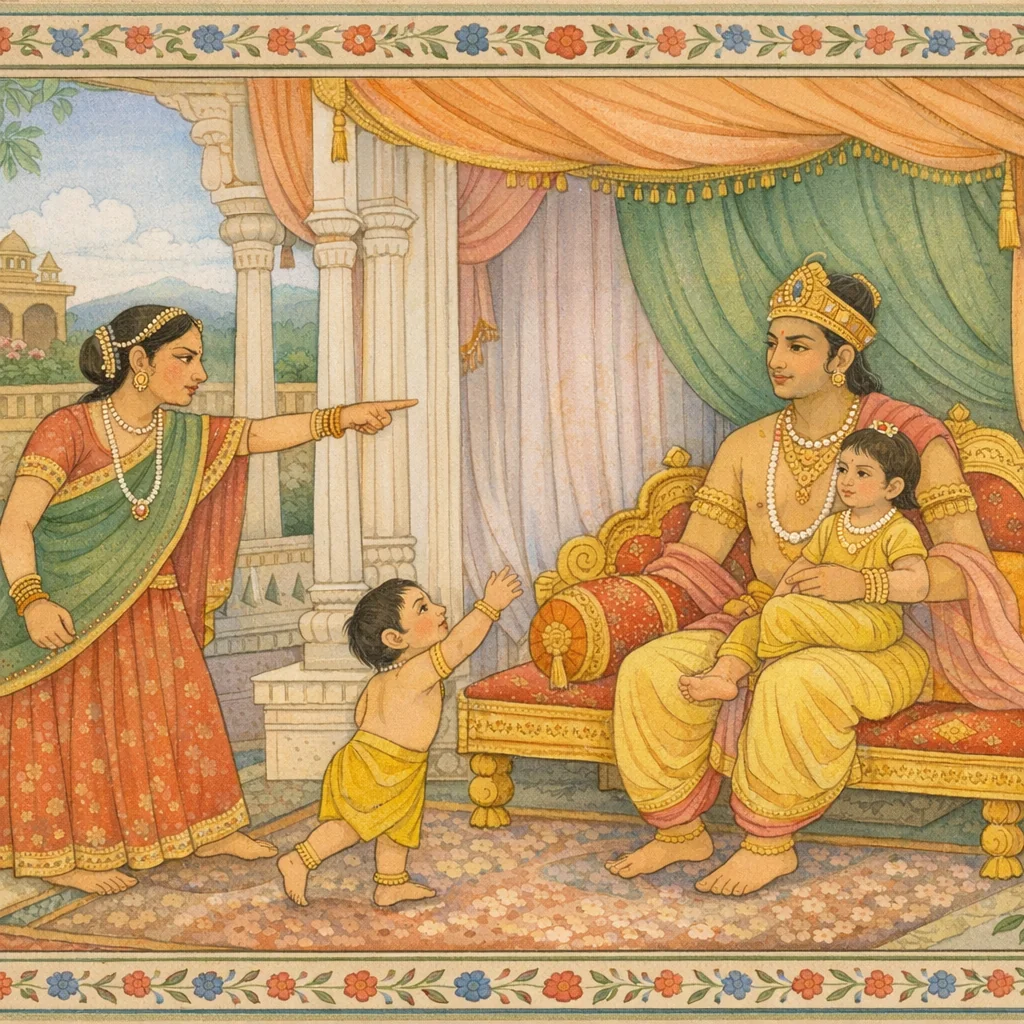
Parāśara tells Maitreya of the household strain in Uttānapāda’s palace: Surucī’s proud words wound the child Dhruva, and Sunīti reads the insult through karma, teaching that royal fortune rests on puṇya. Dhruva’s kṣātra-tejas hardens into nirveda and a firm resolve to gain a station even his father has not attained. Leaving the city, he humbly approaches seven ṛṣis and declares his aim. The sages turn his ambition from craving for kingship toward the supreme pada through Govinda’s worship. Within the narrative lies a guru-like instruction: withdraw the mind from outer objects, fix it on Viṣṇu as jagad-dhāman, and perform japa. The mantra “oṁ namo vāsudevāya,” proven by Svāyambhuva Manu, is upheld as the sure means—through mantra, samādhi, and Viṣṇu’s grace—to the highest, imperishable state.
Shlokas
Verse 1
प्रियव्रतोत्तानपादौ मनोः स्वायम्भुवस्य तु द्वौ पुत्रौ सुमहावीर्यौ धर्मज्ञौ कथितौ तव
I have already spoken to you of the two sons of Svāyambhuva Manu—Priyavrata and Uttānapāda—both of great heroism and well-versed in dharma.
Verse 2
तयोर् उत्तानपादस्य सुरुच्याम् उत्तमः सुतः अभीष्टायाम् अभूद् ब्रह्मन् पितुर् अत्यन्तवल्लभः
O brāhmaṇa, among Uttānapāda’s queens, Suruci bore a son named Uttama; born of the favored wife, he became exceedingly dear to his father.
Verse 3
सुनीतिर् नाम या राज्ञस् तस्याभून् महिषी द्विज स नातिप्रीतिमांस् तस्यां तस्याश् चाभूद् ध्रुवः सुतः
O brāhmaṇa, the king had a queen named Sunīti, yet he was not greatly attached to her. From her was born a son—Dhruva.
Verse 4
राजासनस्थितस्याङ्कं पितुर् भ्रातरम् आश्रितम् दृष्ट्वोत्तमं ध्रुवश् चक्रे तम् आरोढुं मनोरथम्
Seeing Uttama seated upon the royal throne and resting in his father’s lap, Dhruva’s heart kindled a single, burning resolve—to ascend that very seat of sovereignty.
Verse 5
प्रत्यक्षं भूपतिस् तस्याः सुरुच्या नाभ्यनन्दत प्रणयेनागतं पुत्रम् उत्सङ्गारोहणोत्सुकम्
Right before Suruci’s eyes, the king did not welcome his son, though the child had come in affection, eager to climb onto his father’s lap.
Verse 6
सपत्नी तनयं दृष्ट्वा तम् अङ्कारोहणोत्सुकम् स्वपुत्रं च तथारूढं सुरुचिर् वाक्यम् अब्रवीत्
Seeing the son of her co-wife eager to climb onto the lap, and seeing her own son already seated there, Suruci spoke these words.
Verse 7
क्रियते किं वृथा वत्स महान् एष मनोरथः अन्यस्त्रीगर्भजातेन असंभूय ममोदरे उत्तमोत्तमम् अप्राप्यम् अविवेको ऽभिवाञ्छसि
My child, why do you cherish this great desire in vain? You were not conceived in my womb, but born of another woman; yet, lacking discernment, you yearn for the highest station—one not attainable by such a claim.
Verse 8
सत्यं सुतस् त्वम् अप्य् अस्य किन्तु न त्वं मया धृतः
It is true—you too are his son; yet you were not begotten by me.
Verse 9
एतद् राजासनं सर्वभूभृत्संश्रयकेतनम् योग्यं ममैव पुत्रस्य किम् आत्मा क्लिश्यते त्वया
This royal throne—refuge and abiding seat for all the earth’s rulers—rightly belongs to my own son. Why, then, do you torment your heart with doubt and distress?
Verse 10
उच्चैर् मनोरथस् ते ऽयं मत्पुत्रस्येव किं वृथा सुनीत्याम् आत्मनो जन्म किं त्वया नावगम्यते
Your ambition has risen too high—vainly, as though you were my own son. Have you not understood your birth from Sunīti and what it truly implies?
Verse 11
उत्सृज्य पितरं बालस् तच् छ्रुत्वा मातृभाषितम् जगाम कुपितो मातुर् निजाया द्विज मन्दिरम्
Hearing those words spoken by his mother, the boy left his father behind; angered, he went to the dwelling of the brāhmaṇa—his own mother’s house.
Verse 12
तं दृष्ट्वा कुपितं पुत्रम् ईषत्प्रस्फुरिताधरम् सुनीतिर् अङ्कम् आरोप्य मैत्रेयैतद् अभाषत
Seeing her son inflamed with anger—his lips quivering slightly—Sunīti lifted him onto her lap and, O Maitreya, spoke to him these words.
Verse 13
वत्स कः कोपहेतुस् ते कश् च त्वां नाभिनन्दति को ऽवजानाति पितरं तव यस् ते ऽपराध्यति
My child, what is the cause of your anger? Who is there that does not rejoice in you? Who would dare slight your father—who could commit an offence against you?
Verse 14
इत्य् उक्तः सकलं मात्रे कथयाम् आस तद् यथा सुरुचिः प्राह भूपालप्रत्यक्षम् अतिगर्विता
Thus addressed, he told his mother everything—exactly as Suruci, swollen with pride, had spoken openly in the very presence of the king.
Verse 15
निःश्वस्य सेति कथिते तस्मिन् पुत्रेण दुर्मनाः श्वासक्षामेक्षणा दीना सुनीतिर् वाक्यम् अब्रवीत्
When her son, heavy-hearted, had spoken those words with a sigh, Sunīti—worn by grief, her gaze weakened by laboured breathing—spoke to him.
Verse 16
सुरुचिः सत्यम् आहेदं स्वल्पभाग्यो ऽसि पुत्रक न हि पुण्यवतां वत्स सपत्नैर् एवम् उच्यते
Suruci spoke the blunt truth: “My child, you are of little fortune. For, dear boy, those who possess merit are not spoken to in this way by a rival wife.”
Verse 17
नोद्वेगस् तात कर्तव्यः कृतं यद् भवता पुरा तत् को ऽपहर्तुं शक्नोति दातुं कश् चाकृतं त्वया
Be not distressed, dear one. What you have already done in the past—who can take that away? And what you have not done—who can possibly bestow it upon you?
Verse 18
राजासनं तथा छत्रं वराश्वा वरवारणाः यस्य पुण्यानि तस्यैव मत्वैतच् छाम्य पुत्रक
The royal throne and the parasol of sovereignty, the finest horses and the best elephants—know these to be truly his whose merit has won them. Understanding this, my son, I set aside my anger and grow calm.
Verse 19
अन्यजन्मकृतैः पुण्यैः सुरुच्यां सुरुचिर् नृपः भार्येति प्रोच्यते चान्या मद्विधा पुण्यवर्जिता
By merits wrought in former births, the king—ever fond of Surucī—acknowledges her alone as ‘wife’; while another, like me, bereft of such merit, is spoken of as though she were merely ‘the other.’
Verse 20
पुण्योपचयसंपन्नस् तस्याः पुत्रस् तथोत्तमः मम पुत्रस् तथा जातः स्वल्पपुण्यो ध्रुवो भवान्
Her son, richly endowed with accumulated merit, was indeed excellent; but you, Dhruva—born as my son—have come into this birth with only a small store of merit.
Verse 21
तथापि दुःखं न भवान् कर्तुम् अर्हति पुत्रक यस्य यावत् स तेनैव स्वेन तुष्यति बुद्धिमान्
Even so, my child, you ought not to give way to sorrow—for as long as the wise are content with what is truly their own, by that alone they remain satisfied.
Verse 22
यदि चेद् दुःखम् अत्यर्थं सुरुच्या वचनात् तव तत् पुण्योपचये यत्नं कुरु सर्वफलप्रदे
If Suruci’s words have caused you overwhelming sorrow, then strive to accumulate merit—for merit is the giver of every fruit (every desired outcome).
Verse 23
सुशीलो भव धर्मात्मा मैत्रः प्राणिहिते रतः निम्नं यथापः प्रवणाः पात्रम् आयान्ति संपदः
Be of noble conduct, righteous at heart, friendly, and devoted to the welfare of all beings. As waters naturally flow to low ground, so prosperities of themselves come to the worthy vessel.
Verse 24
अम्ब यत् त्वम् इदं प्राह प्रशमाय वचो मम नैतद् दुर्वचसा भिन्ने हृदये मम तिष्ठति
Mother, the words you have just spoken were meant to soothe me; yet they do not abide in my heart—harsh speech has split my heart asunder.
Verse 25
सो ऽहं तथा यतिष्यामि यथा सर्वोत्तमोत्तमम् स्थानं प्राप्स्याम्य् अशेषाणां जगताम् अभिपूजितम्
Therefore I shall strive in that very way, until I attain the most excellent of all stations—honoured and revered by every world without remainder.
Verse 26
सुरुचिर् दयिता राज्ञस् तस्या जातो ऽस्मि नोदरात् प्रभावं पश्य मे ऽम्ब त्वं धृतस्यापि तवोदरे
“Suruci is the king’s beloved; I was not born from her womb. Look, mother, upon my hard fate—though you carried me within your own body.”
Verse 27
उत्तमः स मम भ्राता यो गर्भेण धृतस् तया स राजासनम् आप्नोतु पित्रा दत्तं तथास्तु तत्
“Uttama is my brother—he whom she bore within her womb. Let him attain the royal throne bestowed by our father; so be it, let it stand established.”
Verse 28
नान्यदत्तम् अभीप्स्यामि स्थानम् अम्ब स्वकर्मणा इच्छामि तद् अहं स्थानं यन् न प्राप पिता मम
Mother, I do not desire a station merely bestowed by another. By my own striving I seek that state—a rank even my father has not attained.
Verse 29
निर्जगाम गृहान् मातुर् इत्य् उक्त्वा मातरं ध्रुवः पुराच् च निर्गम्य ततस् तद्बाह्योपवनं ययौ
Having spoken thus to his mother, Dhruva left the house. Departing the city, he went to the grove outside it—his heart fixed on the path to the Supreme Lord, Acyuta, the unfailing refuge of all worlds.
Verse 30
स ददर्श मुनींस् तत्र सप्त पूर्वागतान् ध्रुवः कृष्णाजिनोत्तरीयेषु विष्टरेषु समास्थितान्
There Dhruva beheld seven sages who had arrived before him, seated in tranquil composure upon their spread seats, clad in upper garments of black antelope-skin.
Verse 31
स राजपुत्रस् तान् सर्वान् प्रणिपत्याभ्यभाषत प्रश्रयावनतः सम्यग् अभिवादनपूर्वकम्
That prince bowed down to them all; with humility, and after first offering proper salutations, he addressed them with due reverence.
Verse 32
उत्तानपादतनयं मां निबोधत सत्तमाः जातं सुनीत्यां निर्वेदाद् युष्माकं प्राप्तम् अन्तिकम्
O best among the virtuous, know me: I am the son of King Uttānapāda, born of Sunīti. Driven by dispassion and firm resolve, I have come near you, seeking your refuge and guidance.
Verse 33
चतुःपञ्चाब्दसंभूतो बालस् त्वं नृपनन्दन निर्वेदकारणं किंचित् तव नाद्यापि विद्यते
O prince, delight of the king, you are but a child of four or five years; even now there is in you no true cause for dispassion, no ground for weariness of the world.
Verse 34
न चिन्त्यं भवतः किंचिद् ध्रियते भूपतिः पिता न चैवेष्टवियोगादि तव पश्याम बालक
There is nothing for you to worry about; your father the king stands firm. And, child, I see for you no calamity such as separation from what you love, or the like.
Verse 35
शरीरे न च ते व्याधिर् अस्माभिर् उपलक्ष्यते निर्वेदः किंनिमित्तस् ते कथ्यतां यदि विद्यते
We perceive no illness in your body. What, then, is the cause of this weariness and dispassion? If there is a reason, tell it to us.
Verse 36
ततः स कथयाम् आस सुरुच्या यद् उदाहृतम् तन् निशम्य ततः प्रोचुर् मुनयस् ते परस्परम्
Then he related all that Surucī had spoken. Hearing those words, the sages began to speak among themselves, reflecting upon their meaning.
Verse 37
अहो क्षात्रं परं तेजो बालस्यापि यद् अक्षमा सपत्न्या मातुर् उक्तस्य हृदयान् नापसर्पति
Ah, how supreme is the fiery majesty of the kṣatriya spirit: even in a mere child it does not retreat from the heart when struck by the harsh words of a rival mother.
Verse 38
भो भोः क्षत्रियदायाद निर्वेदाद् यत् त्वयाधुना कर्तुं व्यवसितं तन् नः कथ्यतां यदि रोचते
Ho! Ho, heir of the Kṣatriyas—if, out of dispassion, you have now resolved upon some course of action, then tell it to us, if it pleases you.
Verse 39
यच् च कार्यं तवास्माभिः साहाय्यम् अमितद्युते तद् उच्यतां विवक्षुस् त्वम् अस्माभिर् उपलक्ष्यसे
And whatever task you would have accomplished through our aid, O you of boundless splendor—declare it. We perceive that you have come here wishing to speak your purpose.
Verse 40
नाहम् अर्थम् अभीप्सामि न राज्यं द्विजसत्तमाः तत् स्थानम् एकम् इच्छामि भुक्तं नान्येन यत् पुरा
I do not seek wealth, nor do I desire kingship, O best of the twice-born sages. I ask only for that single place which, in former times, has not been enjoyed by any other.
Verse 41
एतन् मे क्रियतां सम्यक् कथ्यतां प्राप्यते यथा स्थानम् अग्र्यं समस्तेभ्यः स्थानेभ्यो मुनिसत्तमाः
Let this be done for me with full clarity—tell me precisely how that supreme station, the foremost of all abodes, is attained, O best of sages.
Verse 42
अनाराधितगोविन्दैर् नरैः स्थानं नृपात्मज न हि संप्राप्यते श्रेष्ठं तस्माद् आराधयाच्युतम्
O prince, men who have not worshipped Govinda do not attain the highest station; therefore, worship Acyuta—for He alone is the unfailing refuge and the supreme goal.
Verse 43
परः पराणां पुरुषो यस्य तुष्टो जनार्दनः स प्राप्नोत्य् अक्षयं स्थानम् एतत् सत्यं मयोदितम्
He with whom Janārdana—the Supreme Person beyond all the exalted—is pleased, attains the imperishable abode. This is the truth as I have declared.
Verse 44
यस्यान्तः सर्वम् एवेदम् अच्युतस्याव्ययात्मनः तम् आराधय गोविन्दं स्थानम् अग्र्यं यदीच्छसि
Within Acyuta, the imperishable Self, this entire universe abides; therefore worship Govinda, if you desire the highest state.
Verse 45
परं ब्रह्म परं धाम यो ऽसौ ब्रह्म तथा परम् तम् आराध्य हरिं याति मुक्तिम् अप्य् अतिदुर्लभाम्
He is the Supreme Brahman, the highest abode—Brahman, and yet transcending even that. By worshipping that Hari one attains liberation, though it is exceedingly difficult to obtain.
Verse 46
यो यज्ञपुरुषो यज्ञे योगे यः परमः पुमान् तस्मिंस् तुष्टे यद् अप्राप्यं किं तद् अस्ति जनार्दने
He is the very Person of sacrifice in every sacrifice, and the supreme Person within yoga; when that Janārdana is pleased, what can remain unattainable?
Verse 47
ऐन्द्रम् इन्द्रः परं स्थानं यम् आराध्य जगत्पतिम् प्राप यज्ञपतिं विष्णुं तम् आराधय सुव्रत
By worshipping the Lord of the universe—Viṣṇu, the Master of sacrifice—Indra attained the supreme station called Aindra. Therefore, O steadfast-vowed one, worship Him.
Verse 48
प्राप्नोष्य् आराधिते विष्णौ मनसा यद् यद् इच्छसि त्रैलोक्यान्तर्गतं स्थानं किम् उ वत्सोत्तमोत्तमम्
When Viṣṇu is truly worshipped, by the very power of your intention you will obtain whatever you desire. O best of beloved children, what place within the three worlds could be beyond your reach?
Verse 49
आराध्यः कथितो देवो भवद्भिः प्रणतस्य मे मया तत्परितोषाय यज् जप्तव्यं तद् उच्यताम्
You have declared to me—who bows in reverence—the God who is truly worthy of worship. Now, to delight and satisfy Him, please tell me what sacred formula should be recited.
Verse 50
यथा चाराधनं तस्य मया कार्यं महात्मनः प्रसादसुमुखास् तन् मे कथयन्तु महर्षयः
May the great sages—whose faces are gracious with kindness—tell me how I should perform the worship of that Great-Souled Lord, and in what manner His adoration ought to be undertaken by me.
Verse 51
राजपुत्र यथा विष्णोर् आराधनपरैर् नरैः कार्यम् आराधनं तन् नो यथावच् छ्रोतुम् अर्हसि
O prince, you should now hear from us, in the proper and complete manner, how the worship of Lord Viṣṇu is to be performed by those whose whole intent is devoted to His adoration.
Verse 52
बाह्यार्थाद् अखिलाच् चित्तं त्याजयेत् प्रथमं नरः तस्मिन्न् एव जगद्धाम्नि ततः कुर्वीत निश्चलम्
First, one should withdraw the mind entirely from all outward objects; then, in that very Abode which is the resting-place of the universe, one should make it steady and unmoving.
Verse 53
एवम् एकाग्रचित्तेन तन्मयेन धृतात्मना जप्तव्यं यन् निबोधैतत् तन् नः पार्थिवनन्दन
Thus, with the mind made one-pointed, wholly absorbed in That Supreme Reality, and the self held steady in discipline—O delight of kings, understand what is to be recited as japa.
Verse 54
हिरण्यगर्भपुरुषप्रधानव्यक्तरूपिणे ॐ नमो वासुदेवाय शुद्धज्ञानस्वभाविने
Om—salutations to Vāsudeva, who bears as His own forms Hiraṇyagarbha, the cosmic Puruṣa, Pradhāna, and the manifest universe; whose very essence is stainless, self-luminous knowledge.
Verse 55
एतज् जजाप भगवान् जप्यं स्वायम्भुवो मनुः पितामहस् तव पुरा तस्य तुष्टो जनार्दनः
This very sacred formula—fit to be recited as japa—was formerly repeated by the blessed Svāyambhuva Manu, your own forefather. Pleased by that devotion, Janārdana (Lord Viṣṇu) became satisfied with him.
Verse 56
ददौ यथाभिलषिताम् ऋद्धिं त्रैलोक्यदुर्लभाम् तथा त्वम् अपि गोविन्दं तोषयैतत् सदा जपन्
He granted the longed-for prosperity—an eminence rare even across the three worlds. In the same way, you too should delight Govinda, continually chanting this sacred utterance without cease.
Frequently Asked Questions
In the Purāṇic karmic framework, social favor, prosperity, and royal privilege are read as fruits of prior puṇya. Sunīti uses this doctrine to explain Surucī’s dominance and to redirect Dhruva from resentment toward merit-producing dharma and, ultimately, Viṣṇu-bhakti as the highest and most transformative puṇya.
The mantra is “ॐ नमो वासुदेवाय.” It salutes Vāsudeva as the all-encompassing reality who bears as modes the cosmic principles (Hiraṇyagarbha, Puruṣa, Pradhāna, Vyakta), affirming Viṣṇu as both immanent ground and transcendent Lord—thus aligning japa with Jagat-kāraṇa theology.