Adhyaya 138: The Battle for Tripura: Portents, Siege of the Gates, and the Slaying of Tāraka
त्रिपुरयुद्धवर्णनम् (तारकवधश्च)
Speaker: Sūta
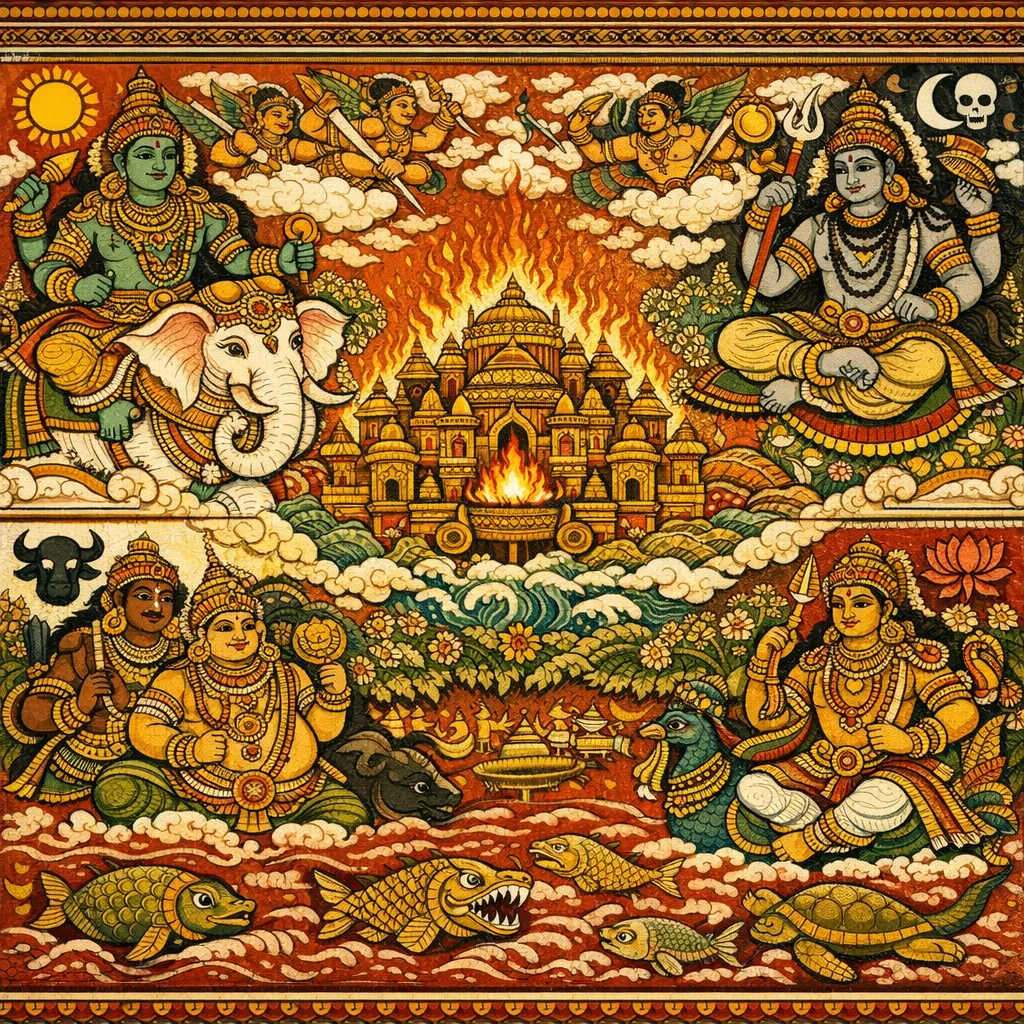
Sūta continues the Tripura episode: Indra and the Lokapālas muster their forces, the gods advance to martial music, and the Asuras panic at the thought of Śiva’s coming. A savage mêlée breaks out amid apocalyptic portents; even the ocean becomes a second battlefield as sea-creatures assail the fallen and fight among themselves. The siege is set by quarters—Indra at the eastern gate, Skanda taking a gate, Yama and Kubera holding the western gate in check, and Rudra blocking the southern gate. The Pramathas rip up houses and hurl them into the sea, highlighting both the city’s splendor and its dread. Tāraka attempts maneuvers but is restrained by Śiva’s might; Śiva takes aim, and a mythic aetiology is told from his stamping. Nandin pens Tāraka in near Rudra and kills him with an axe; the Gaṇas rejoice. Then Māyā addresses Vidyunmālī, vows swift action, and together they strike down Śiva’s gaṇas, while the gods acclaim and honor Bhava.
Key Concepts
Shlokas in Adhyaya 138
Verse 1
*सूत उवाच मघवा तु निहन्तुं तानसुरानमरेश्वरः लोकपाला ययुः सर्वे गणपालाश्च सर्वशः //
Sūta said: Maghavā (Indra), the lord of the immortals, set out to slay those Asuras; and all the Lokapālas (guardians of the worlds), along with the leaders of their attendant hosts, went forth on every side.
Verse 2
ईश्वरा मोदिताः सर्व उत्पेतुश्चाम्बरे तदा खगतास्तु विरेजुस्ते पक्षवन्त इवाचलाः //
Then all the divine lords, filled with joy, rose up into the sky; and those beings moving through the air shone forth—like mountains endowed with wings.
Verse 3
प्रययुस्तत्पुरं हन्तुं शरीरमिव व्याधयः शङ्खाडम्बरनिर्घोषैः पणवान्पटहानपि नादयन्तः पुरो देवा दृष्टास्त्रिपुरवासिभिः //
The gods advanced to destroy that city, like diseases assailing a body; and with the thunderous blare of conches and loud instruments—sounding drums and kettledrums—they were seen in the vanguard by the inhabitants of Tripura.
Verse 4
हरः प्राप्त इतीवोक्त्वा बलिनस्ते महासुराः आजग्मुः परमं क्षोभम् अत्ययेष्विव सागराः //
Saying, as it were, “Hara (Śiva) has arrived!”, those mighty great Asuras were seized by extreme agitation—like the oceans when the time of upheaval has come.
Verse 5
सुरतूर्यरवं श्रुत्वा दानवा भीमदर्शनाः निनेदुर्वादयन्तश्च नानावाद्यान्यनेकशः //
Hearing the thunderous blare of the gods’ trumpets, the Dānavas—terrifying in appearance—roared back, loudly striking and sounding many kinds of musical instruments in great number.
Verse 6
भूयोदीरितवीर्यास्ते परस्परकृतागसः पूर्वदेवाश्च देवाश्च सूदयन्तः परस्परम् //
Their prowess flared up again; having wronged one another, the former gods and the (present) gods began to slay each other in mutual combat.
Verse 7
आक्रोशे ऽपि समप्रख्ये तेषां देहनिकृन्तनम् प्रवृत्तं युद्धमतुलं प्रहारकृतनिःस्वनम् //
Even amid their cries—each matching the other in fury—there began among them an unequalled battle: bodies hewn down, resounding with the din born of blows.
Verse 8
निष्पतन्त इवादित्याः प्रज्वलन्त इवाग्नयः शंसन्त इव नागेन्द्रा भ्रमन्त एव पक्षिणः गिरीन्द्रा इव कम्पन्तो गर्जन्त इव तोयदाः //
The suns seemed to burst forth and race about; the fires appeared to blaze up fiercely. The lordly serpents seemed to cry out as ominous portents; the birds wheeled in confusion. The great mountains trembled as if shaken, and the rain-bearing clouds roared as though proclaiming catastrophe.
Verse 9
जृम्भन्त इव शार्दूलाः गर्जन्त इव तोयदाः प्रवृद्धोर्मितरंगौघाः क्षुभ्यन्त इव सागराः //
Tigers seemed to yawn wide; rain-clouds seemed to roar; and the oceans—swollen with surging waves and rushing billows—seemed to heave and churn in agitation.
Verse 10
प्रमथाश्च महाशूरा दानवाश्च महाबलाः युयुधुर्निश्चला भूत्वा वज्रा इव महाचलैः //
The Pramathas—great heroes—and the Dānavas—mighty in strength—fought on, standing firm and unshaken, like the vajra striking against great mountains.
Verse 11
कार्मुकाणां विकृष्टानां बभूवुर्दारुणा रवाः कालानुगानां मेघानां यथा वियति वायुना //
As the bows were drawn back, dreadful sounds arose—like the thunderous rumbling of storm-clouds driven across the sky by the wind at the destined time.
Verse 12
आहुश्च युद्धे मा भैषीः क्व यास्यसि मृतो ह्यसि प्रहराशु स्थितो ऽस्म्यत्र एहि दर्शय पौरुषम् //
And they said in battle: “Do not be afraid! Where will you go? You are as good as dead. Strike quickly—I am standing right here. Come, show your manly valor!”
Verse 13
गृहाण छिन्द्धि भिन्द्धीति खाद मारय दारय इत्यन्योन्यम् अनूच्चार्य प्रययुर्यमसादनम् //
Shouting to one another, “Seize him! Cut him! Split him! Devour him! Kill him! Tear him apart!”, they cried out in turn and went on to Yama’s abode.
Verse 14
खड्गापवर्जिताः केचित् केचिच्छिन्नाः परश्वधैः केचिन्मुद्गरचूर्णाश्च केचिद्बाहुभिराहताः //
Some were deprived of their swords; some were hewn down by axes; some were crushed to powder by maces; and some were struck down by blows of the arm.
Verse 15
पट्टिशैः सूदिताः केचित् केचिच्छूलविदारिताः दानवाः शरपुष्पाभाः सवना इव पर्वताः निपतन्त्यर्णवजले भीमनक्रतिमिङ्गिले //
Some Dānavas were cut down by broad-bladed spears, and some were ripped open by tridents. Looking like heaps of arrow-flowers, they fell—like mountains collapsing—into the ocean waters, a dreadful realm teeming with crocodiles and timiṅgila sea-monsters.
Verse 16
व्यसुभिः सुनिबद्धाङ्गैः पतमानैः सुरेतरैः संबभूवार्णवे शब्दः सजलाम्बुदनिस्वनः //
From the bodies of the non-gods—lifeless, their limbs tightly bound and falling—there arose in the ocean a roar like that of rain-laden thunderclouds.
Verse 17
तेन शब्देन मकरा नक्रास्तिमितिमिङ्गिलाः मत्ता लोहितगन्धेन क्षोभयन्तो महार्णवम् //
Roused by that roar, the makaras, crocodiles, and the great sea-creatures—timingilas—became frenzied from the scent of blood and churned the vast ocean into turmoil.
Verse 18
परस्परेण कलहं कुर्वाणा भीममूर्तयः भ्रमन्ते भक्षयन्तश्च दानवानां च लोहितम् //
Taking on terrifying forms, they wander about fighting among themselves, devouring one another—and even drinking the blood of the Dānavas.
Verse 19
सरथान् सायुधान् साश्वान् सवस्त्राभरणावृतान् जग्रसुस्तिमयो दैत्यान् द्रावयन्तो जलेचरान् //
The timi (mighty sea-creatures) seized the Daityas—along with their chariots, weapons, horses, and with their garments and ornaments still upon them—while driving the other water-dwelling beings into flight.
Verse 20
मृधं यथासुराणां च प्रमथानां प्रवर्तते अम्बरे ऽम्भसि च तथा युद्धं चक्रुर्जलेचराः //
Just as a pitched battle breaks out between the Asuras and the Pramathas, so too the water-dwelling beings waged war—both in the sky and in the waters.
Verse 21
यथा भ्रमन्ति प्रमथाः सदैत्यास् तथा भ्रमन्ते तिमयः सनक्राः यथैव छिन्दन्ति परस्परं तु तथैव क्रन्दन्ति विभिन्नदेहाः //
Just as the Pramathas, together with the Daityas, whirl about in frenzy, so too do the great fishes and crocodiles churn and roam. And just as they cut and tear one another, so do their bodies, split apart, cry out in anguish.
Verse 22
व्रणाननैर् अङ्गरसं स्रवद्भिः सुरासुरैर्नक्रतिमिङ्गिलैश्च कृतो मुहूर्तेन समुद्रदेशः सरक्ततोयः समुदीर्णतोयः //
In but a single muhūrta, the ocean-region became a scene of upheaval—its waters churned and swollen, reddened with blood—filled with gods and asuras whose wounded mouths streamed bodily fluid, and with creatures like crocodiles and the timiṅgila sea-monsters.
Verse 23
पूर्वं महाम्भोधरपर्वताभं द्वारं महान्तं त्रिपुरस्य शक्रः निपीड्य तस्थौ महता बलेन युक्तो ऽमराणां महता बलेन //
Then Śakra (Indra), first, pressed hard upon the great eastern gate of Tripura—vast as a mountain laden with rain-clouds—and stood firm there, endowed with mighty strength, supported by the immense power of the gods.
Verse 24
तथोत्तरं सो ऽन्तरजो हरस्य बालार्कजाम्बूनदतुल्यवर्णः स्कन्दः पुरद्वारमथारुरोह वृद्धो ऽस्तशृङ्गं प्रपतन्निवार्कः //
Thereafter, Skanda—Hara’s son, whose hue was like refined Jāmbūnada-gold and the young rising sun—mounted the city gate. He appeared like the aged sun, descending upon the western mountain peak at sunset.
Verse 25
यमश्च वित्ताधिपतिश्च देवो दण्डान्वितः पाशवरायुधश्च देवारिणस्तस्य पुरस्य द्वारं ताभ्यां तु तत्पश्चिमतो निरुद्धम् //
Yama and the divine Lord of wealth (Kubera) stand equipped with the rod of punishment (daṇḍa) and the noose (pāśa) as their weapons; by those two, the western gate of that enemy-subduing city is secured and held in check.
Verse 26
दक्षारिरुद्रस्तपनायुताभः स भास्वता देवरथेन देवः तद्दक्षिणद्वारमरेः पुरस्य रुद्ध्वावतस्थौ भगवांस्त्रिनेत्रः //
Rudra—foe of Dakṣa—shone with the brilliance of ten thousand suns. That radiant god, mounted on the chariot of the gods, blocked the southern gate of the enemy’s city and stood firm there—the Blessed Three-Eyed Lord.
Verse 27
तुङ्गानि वेश्मानि सगोपुराणि स्वर्णानि कैलासशशिप्रभाणि प्रह्लादरूपाः प्रमथावरुद्धा ज्योतींषि मेघा इव चाश्मवर्षाः //
Lofty mansions rose up, complete with gopuras (towered gateways), golden in hue, shining like Mount Kailāsa and the moon. Delighting the heart in their very form, they were thronged with Pramathas; and their lights appeared like clouds, as though raining down stones.
Verse 28
उत्पात्य चोत्पाट्य गृहाणि तेषां सशैलमालासमवेदिकानि प्रक्षिप्य प्रक्षिप्य समुद्रमध्ये कालाम्बुदाभाः प्रमथा विनेदुः //
Tearing up and wrenching out their houses—together with rocky ridges and raised platforms (altars/terraces)—the black-cloud-hued Pramathas repeatedly hurled them into the midst of the ocean, roaring aloud.
Verse 29
रक्तानि चाशेषवनैर्युतानि साशोकखण्डानि सकोकिलानि गृहाणि हे नाथ पितः सुतेति भ्रातेति कान्तेति प्रियेति चापि उत्पाट्यमानेषु गृहेषु नार्यस् त्व् अनार्यशब्दान्विविधान्प्रचक्रुः //
Houses—red-stained, hemmed in by forests on every side, with groves of aśoka and the calls of cuckoos—were being torn up; and the women raised many uncouth cries: “O lord! O father! O son! O brother! O beloved! O dear one!”
Verse 30
कलत्रपुत्रक्षयप्राणनाशे तस्मिन्पुरे युद्धमतिप्रवृत्ते महासुराः सागरतुल्यवेगा गणेश्वराः कोपवृताः प्रतीयुः //
When, in that city, the battle had become fiercely engaged—bringing destruction of wives and sons and the loss of life—the great asuras, swift as the ocean’s surge, the lords of their troops, enveloped in wrath, advanced.
Verse 31
परश्वधैस्तत्र शिलोपलैश्च त्रिशूलवज्रोत्तमकम्पनैश्च शरीरसद्मक्षपणं सुघोरं युद्धं प्रवृत्तं दृढवैरबद्धम् //
There, with battle-axes and with stones and boulders, and with tridents and thunderbolt-like weapons that shook even the finest warriors, a most dreadful battle broke out—destroying the abodes of bodies (i.e., lives)—driven on by firmly bound enmity.
Verse 32
अन्योन्यमुद्दिश्य विमर्दतां च प्रधावतां चैव विनिघ्नतां च शब्दो बभूवामरदानवानां युगान्तकालेष्विव सागराणाम् //
As they aimed at one another—crashing together, charging forward, and striking down—the tumultuous roar of the gods and the Dānavas arose, like the thundering of the oceans at the end of an age (yugānta).
Verse 33
व्रणैरजस्रं क्षतजं वमन्तः कोपोपरक्ता बहुधा नदन्तः गणेश्वरास्ते ऽसुरपुंगवाश्च युध्यन्ति शब्दं च महदुद्गिरन्तः //
Vomiting forth blood endlessly from their wounds, their eyes and faces reddened with rage, roaring in many ways, those captains of the hordes and the foremost of the Asuras fought on—uttering a tremendous din.
Verse 34
मार्गाः पुरे लोहितकर्दमालाः स्वर्णेष्टकास्फाटिकभिन्नचित्राः कृता मुहूर्तेन सुखेन गन्तुं छिन्नोत्तमाङ्गाङ्घ्रिकराः करालाः //
In that city, the roads were laid with red-tinted clay and mud, inlaid with patterns of golden bricks and crystal-like stones. They were so well made that one could travel comfortably in a mere moment; yet they looked fearsome, as though strewn with severed heads, feet, and hands.
Verse 35
कोपावृताक्षः स तु तारकाख्यः संख्ये सवृक्षः सगिरिर्निलीनः तस्मिन्क्षणे द्वारवरं रिरक्षो रुद्धं भवेनाद्भुतविक्रमेण //
Then Tāraka, his eyes veiled by rage, hid himself in the battle—together with trees and a mountain; but at that very moment the splendid gateway he sought to seize was miraculously blocked by Bhava (Śiva) through his wondrous prowess.
Verse 36
स तत्र प्राकारागतांश्च भूताञ् छातन् महानद्भुतवीर्यसत्त्वः चचार चाप्तेन्द्रियगर्वदृप्तः पुराद्विनिष्क्रम्य ररास घोरम् //
There, that mighty one—endowed with astonishing strength and valor—struck down the beings who had come up to the ramparts. Then, intoxicated with the pride of his well-trained senses and prowess, he roamed about; and, emerging from the city, he let out a terrifying roar.
Verse 37
ततः स दैत्योत्तमपर्वताभो यथाञ्जसा नाग इवाभिमत्तः निवारितो रुद्ररथं जिघृक्षुर् यथार्णवः सर्पति चातिवेलः //
Then that foremost Daitya—mountain-like in stature—rushed straight on like a maddened elephant; intent on seizing Rudra’s chariot, he was checked, as the ocean is held back even when it surges beyond its proper shore.
Verse 38
शेषः सुधन्वा गिरिशश्च देवश् चतुर्मुखो यः स त्रिलोचनश्च ते तारकाख्याभिगता गताजौ क्षोभं यथा वायुवशात्समुद्राः //
Śeṣa, Sudhanvā, Girīśa (Śiva), the god Caturmukha (Brahmā), and the three-eyed lord (Trilocana)—when they went forth to meet the one named Tāraka in battle—were thrown into agitation, like oceans churned by the force of the wind.
Verse 39
शेषो गिरीशः सपितामहेशश् चोत्क्षुभ्यमाणः स रथे ऽम्बरस्थः बिभेद संधीषु बलाभिपन्नः कूजन्निनादांश्च करोति घोरान् //
Śeṣa—together with Girīśa (Śiva) and the Great Lord associated with the Pitāmaha (Brahmā)—rose into fierce agitation. Stationed in a chariot moving through the sky, and driven on by force, he smashed through the enemy ranks at their joints and openings, while uttering dreadful, roaring cries.
Verse 40
एकं तु ऋग्वेदतुरंगमस्य पृष्ठे पदं न्यस्य वृषस्य चैकम् तस्थौ भवः सोद्यतबाणचापः पुरस्य तत्सङ्गसमीक्षमाणः //
Placing one foot upon the back of the horse that was the Ṛgveda, and the other upon the Bull (his mount), Bhava (Śiva) stood there with bow and arrow raised, intently watching the fortified city and its assembled host.
Verse 41
तदा भवपदन्यासाद् धयस्य वृषभस्य च पेतुः स्तनाश्च दन्ताश्च पीडिताभ्यां त्रिशूलिना //
Then, from Bhava’s (Śiva’s) stamping of his foot, the horse and the bull were so crushed by the trident-bearer that their udders and their teeth fell out.
Verse 42
ततःप्रभृति चाश्वानां स्तना दन्ता गवां तथा मूढाः समभवंस्तेन चादृश्यत्वमुपागताः //
From that time onward, mares came to have udders and cows came to have teeth; those beings fell into bewilderment, and therefore passed into invisibility.
Verse 43
तारकाख्यस्तु भीमाक्षो रौद्ररक्तान्तरेक्षणः रुद्रान्तिके सुसंरुद्धो नन्दिना कुलनन्दिना //
Then the one named Tāraka—terrible-eyed, with fierce eyes reddened like blood—was tightly hemmed in near Rudra by Nandin, the joy of his lineage.
Verse 44
परश्वधेन तीक्ष्णेन स नन्दी दानवेश्वरम् तक्षयामास वै तक्षा चन्दनं गन्धदो यथा //
Then Nandī, with a keen-edged axe, hewed down the lord of the Dānavas, just as a skilled carpenter cuts fragrant sandalwood.
Verse 45
परश्वधहतः शूरः शैलादिः शरभो यथा दुद्राव खड्गं निष्कृष्य तारकाख्यो गणेश्वरम् //
Struck by an axe, the hero Śailādi—like a śarabha—charged forward; drawing his sword, he rushed at the Gaṇa-lord named Tāraka.
Verse 46
यज्ञोपवीतम् आदाय चिछेद च ननाद च ततः सिंहरवो घोरः शङ्खशब्दश्च भैरवः गणेश्वरैः कृतस्तत्र तारकाख्ये निषूदिते //
Seizing the sacred thread (yajñopavīta), he tore it away and roared. Then, when the one called Tāraka had been slain, a dreadful lion-like roar and a fearsome conch-blast arose there, raised by the hosts of the Gaṇeśvaras.
Verse 47
प्रमथारसितं श्रुत्वा वादित्रस्वनमेव च पार्श्वस्थः सुमहापार्श्वं विद्युन्मालिं मयो ऽब्रवीत् //
Hearing the laughter and clamor of the Pramathas, and also the sound of musical instruments, Maya—standing nearby—spoke to Vidyunmālī, the mighty broad-sided one.
Verse 48
बहुवदनवतां किमेष शब्दो नदतां श्रूयते भिन्नसागराभः वद वचनं तडिन्मालिन् किं किम् एतद्गणपाला युयुधुर्ययुर्गजेन्द्राः //
“What is this roar that is being heard—like the bellowing of many mouths, like the sound of a sea being split? Speak, O lightning-garlanded one—what is this? Are the troop-guardians engaged in combat? Have the lordly elephants surged forth?”
Verse 49
इति मयवचनाङ्कुशार्दितस्तं तडिन्माली रविरिवांशुमाली रणशिरसि समागतः सुराणां निजगादेदम् अरिंदमो ऽतिहर्षात् //
Thus, goaded by my words—like a steed urged on by a goad—the lightning-garlanded, radiant one, like the sun encircled by its rays, came to the head of the battlefield where the gods had assembled; and that crusher of foes spoke these words in great delight.
Verse 50
यमवरुणमहेन्द्ररुद्रवीर्यस् तव यशसो निधिर्धीर तारकाख्यः सकलसमरशीर्षपर्वतेन्द्रो युद्ध्वा यस्तपति हि तारको गणेन्द्रैः //
Endowed with the prowess of Yama, Varuṇa, Mahendra (Indra), and Rudra, the steadfast one named Tāraka became a very treasury of your fame. Like a mountain-lord standing at the head of every battlefield, that Tāraka, having fought, scorches his foes indeed—together with the chiefs of the Gaṇas.
Verse 51
मृदितम् उपनिशम्य तारकाख्यं रविदीप्तानलभीषणायताक्षम् हृषितसकलनेत्रलोमसत्त्वाः प्रमथास्तोयमुचो यथा नदन्ति //
Hearing that Tāraka had been crushed—he whose long, terrible eyes were like a blazing fire lit by the sun—the Pramathas, those bristling, many‑eyed beings, exulted and roared like thunderclouds.
Verse 52
इति सुहृदो वचनं निशम्य तत् त्वं तडिमालेः स मयः सुवर्णमाली रणशिरस्य् असिताञ्जनाचलाभो जगदे वाक्यमिदं नवेन्दुमालिम् //
Thus hearing the words of his well-wishing friend, that hero—Maya, wearing a golden garland, radiant like a dark mountain of collyrium—spoke these words on the battlefield to Taḍimālī, whose garland was like the new moon.
Verse 53
विद्युन्मालिन्न नः कालः साधितुं ह्यवहेलया करोमि विक्रमेणैतत् पुरं व्यसनवर्जितम् //
O Vidyunmālin, we have no time to accomplish this through negligence; by my own prowess I shall make this city free from calamities and misfortunes.
Verse 54
विद्युन्माली ततः क्रुद्धो मयश्च त्रिपुरेश्वरः गणाञ्जघ्नुस्तु द्राघिष्ठाः सहितास्तैर्महासुरैः //
Then Vidyunmālī, enraged, and Maya—the lord of Tripura—together with those mighty asuras, struck down Śiva’s gaṇas, the long-armed warriors of far-reaching might.
Verse 55
येन येन ततो विद्युन् माली याति मयश्च सः तेन तेन पुरं शून्यं प्रमथैः प्रहृतैः कृतम् //
Wherever Vidyunmālī went, with Maya beside him, in that very direction the city was left deserted, smitten by the Pramathas.
Verse 56
अथ यमवरुणमृदङ्गघोषैः पणवडिण्डिमज्यास्वनप्रघोषैः सकरतलपुटैश्च सिंहनादैर् भवमभिपूज्य तदा सुरा अवतस्थुः //
Then, amid the booming of drums, the resounding clamour of paṇavas and ḍiṇḍimas, and the twang of stringed instruments—together with clapping of hands and lion-like cries of acclaim—the gods worshipped Bhava (Śiva); having thus honoured him, they stood assembled there.
Verse 57
सम्पूज्यमानो दितिजैर्महात्मभिः सहस्ररश्मिप्रतिमौजसैर् विभुः अभिष्टुतः सत्यरतैस् तपोधनैर् यथास्तशृङ्गाभिगतो दिवाकरः //
That all-powerful Lord, duly worshiped by the great-souled Daityas whose splendor rivaled the thousand-rayed Sun, and praised in hymns by truth-loving ascetics rich in tapas, shone forth like the Sun as it reaches the western mountain at dusk.
Frequently Asked Questions
The chapter teaches that cosmic order (dharma) is restored through coordinated divine action under Śiva’s supremacy. The Lokapālas’ directional siege of Tripura models governance and protection of the quarters, while the fall of Tāraka shows how adharma-driven power collapses when confronted by disciplined, divinely aligned force.
This adhyāya is primarily Dharma and mythic warfare (Deva–Asura conflict) within the Tripura cycle. It is not a Vāstu-śāstra or genealogy chapter, though it contains aetiological lore (explaining animal traits and invisibility) and a symbolic ‘city under siege’ motif rather than architectural prescriptions.
Nandin (Nandī), described as the joy of his lineage, hems Tāraka in near Rudra and hews him down with a keen-edged axe, likened to a carpenter cutting fragrant sandalwood.
It presents an aetiology: when Śiva stamps, the Ṛgveda-horse and the Bull are crushed so that udders and teeth fall out; from that event onward, mares are said to have udders and cows to have teeth, and the beings become bewildered and thus attain invisibility.