Adhyaya 228
योग–सांख्यसमन्वयः, रथोपमा, व्यक्त–अव्यक्तविवेकः (Yoga–Sāṃkhya Synthesis, Chariot Allegory, and the Vyakta–Avyakta Distinction)
Upa-parva: Mokṣa-dharma (Liberation Teachings) — Yoga–Sāṃkhya Instruction Unit
Vyāsa outlines a liberation-oriented discipline in which the wise ‘cross’ the difficult ocean of aging and death by discernment, while the undiscerning cannot guide even themselves (1–2). The practitioner is described as defect-cutting, fear-free regarding gain/loss, and intent on restraining speech and mind through buddhi and knowledge for inner peace (3–7). A detailed chariot allegory maps dharma, modesty, method, prāṇa/apāna, the senses, and wisdom as structural components, with knowledge as charioteer and the kṣetrajña as the presiding knower; the ‘divine chariot’ is said to shine in Brahmaloka when aligned with renunciation and meditation (8–12). The chapter then sketches graded dhāraṇā and subtle experiential ‘forms’ (smoke, water-like, fire-like, whitened subtlety) as the mind proceeds through elemental and cognitive layers toward the unmanifest (13–20). It notes resultant capacities and their constraints, then explicitly states that Yoga and Sāṃkhya share 25 tattvas while differing in emphasis; it defines vyakta by four marks (birth, growth, decay, death) and avyakta as the reverse, and discusses ‘two selves’ in doctrinal terms (21–32). The concluding ethical phenotype of the realized sāṃkhya/yogin is non-possessive, non-egoic, free of doubt and dualities, truthful and non-hostile, responding to provocation with friendliness, restraining the triad of speech-action-mind, and approaching Brahman through equanimity (33–38).
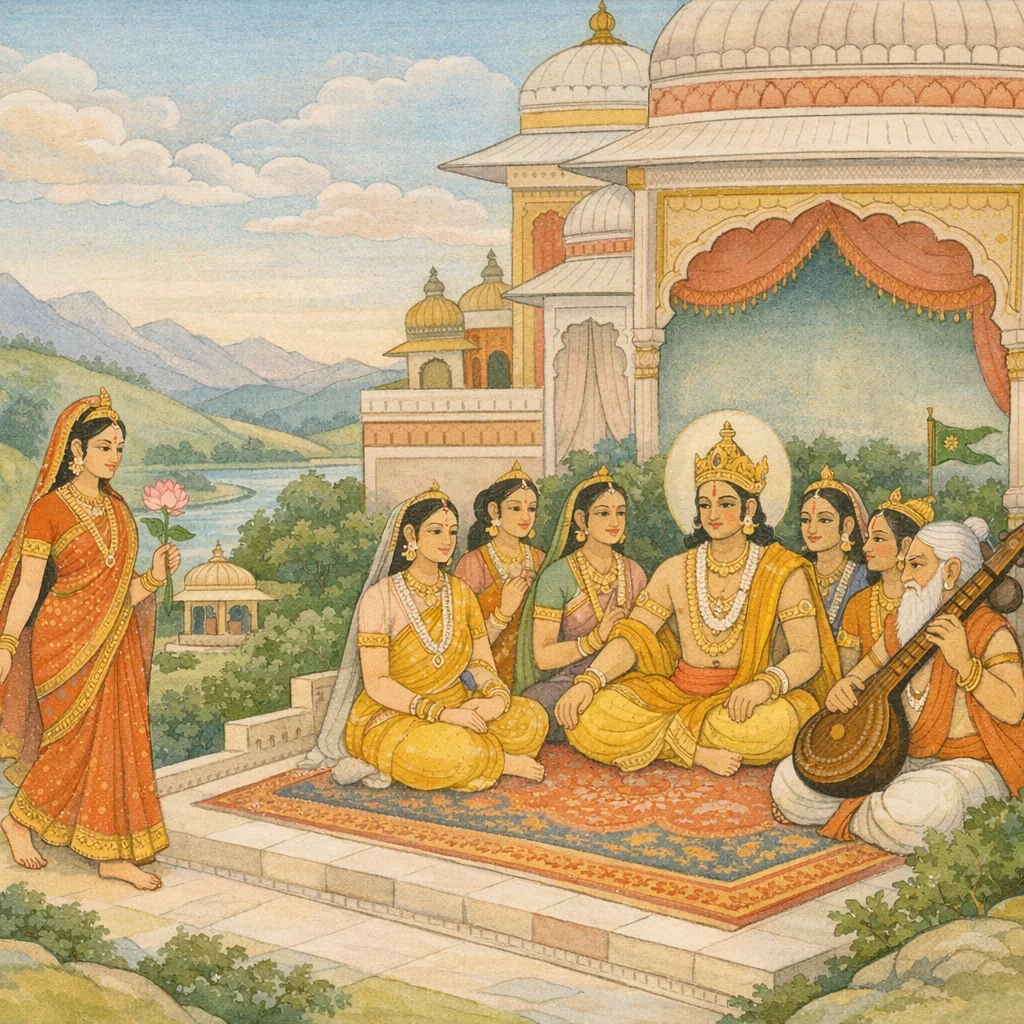
Chapter Arc: भीष्म युधिष्ठिर से कहते हैं कि मनुष्य के उत्थान-पतन के पूर्वलक्षण सबसे पहले उसके मन में प्रकट होते हैं—जैसे आनेवाली ऋद्धि या विनाश की आहट भीतर ही सुनाई देती है। → उदाहरण के रूप में दैत्यों का वर्णन आता है: वे बाह्य आडंबर (विशेष स्नान, चंदन, अलंकार) और तप-उपवास का प्रदर्शन करते थे, पर सभा में वृद्ध-सज्जनों की बातों पर हँसते, ईर्ष्या करते और गुणहीनता से धर्म-विपरीत आचरण अपनाते गए। इस आंतरिक पतन के साथ ही लक्ष्मी का मन उनसे हटने लगता है। → लक्ष्मी इन्द्र से स्पष्ट कह देती हैं कि दानवों ने जब धर्म-विरुद्ध आचरण अपना लिया है, तब वे अब दानवों में नहीं रहेंगी; वे असुरों को त्यागकर देवताओं के पास आती हैं और बताती हैं कि जहाँ वे रहेंगी वहाँ सात देवियाँ और आठवीं ‘जया’ भी निवास करेगी—अर्थात समृद्धि के साथ विजय-शक्ति भी धर्मनिष्ठ आश्रय में टिकती है। → लक्ष्मी और सहदेवियाँ त्रिदशों (देवताओं) में निवास का व्रत लेती हैं—उनकी अंतरात्मा धर्म में प्रतिष्ठित है। नारद और इन्द्र लक्ष्मी की प्रसन्नता हेतु स्तुति/आदर करते हैं; संदेश स्थिर होता है कि लक्ष्मी का निवास बाह्य वेश में नहीं, धर्मनिष्ठ अंतःकरण में है।
Shlokas
Verse 1
भीकम (2 अमान अष्टाविशर्त्याधिकद्विशततमो< ध्याय: दैत्योंको त्यागकर इन्द्रके पास लक्ष्मीदेवीका आना तथा किन सदगुणोंके होनेपर लक्ष्मी आती हैं और 2225: 0 [ होनेपर वे त्यागकर चली जाती हैं, इस बातको विस्तारपूर्वक बताना युधिछिर उवाच पूर्वरूपाणि मे राजन् पुरुषस्यथ भविष्यत: । पराभविष्यतश्चैव तन्मे ब्रूहि पितामह,युधिष्ठिरने पूछा--राजन्! पितामह! जिस पुरुषका उत्थान या पतन होनेवाला होता है, उसके पूर्व लक्षण कैसे होते हैं? यह मुझे बताइये
Yudhiṣṭhira said: “O King, O grandsire! Tell me the fore-signs by which one may know that a man is about to rise to prosperity, and also the fore-signs by which one may know that he is about to fall into defeat. Explain this to me.”
Verse 2
भीष्म उवाच मन एव मनुष्यस्य पूर्वरूपाणि शंसति । भविष्यतश्न भद्रें ते तथैव न भविष्यत:
Bhishma said: “The mind alone foretells a man’s prior signs and indications. And as for what is yet to come—may it be well with you—it does not necessarily come to pass in the very way the mind imagines.”
Verse 3
भीष्मजीने कहा--युधिष्ठिर! तुम्हारा कल्याण हो। जिस मनुष्यका उत्थान या पतन होनेको होता है, उसका मन ही उसके पूर्व लक्षणोंको प्रकट कर देता है ।। अत्राप्युदाहरन्तीममितिहासं पुरातनम् । श्रिया शक्रस्य संवादं त॑ निबोध युधिछ्िर,इस विषयमें लक्ष्मीके साथ जो इन्द्रका संवाद हुआ था, उस प्राचीन इतिहासका उदाहरण यहाँ दिया जाता है। युधिष्ठिर! तुम ध्यान देकर उसे सुनो
Bhishma said: “Yudhishthira, may you be blessed. When a person is destined to rise or to fall, it is the mind itself that first reveals the signs of what is to come. In this matter, an ancient precedent is cited: the dialogue between Shri (Lakshmi) and Shakra (Indra). Listen to it attentively, Yudhishthira.”
Verse 4
महतस्तपसो ्युष्ट्या पश्यँल्लोकौ परावरौ । सामान्यमृषिभिर्गत्वा ब्रह्मलोकनिवासिभि:,एक समयकी बात है, महातपस्वी एवं पापरहित नारदजी अपनी इच्छाके अनुसार तीनों लोकोंमें विचरण करते थे। वे अपनी बड़ी भारी तपस्याके प्रभावसे ऊँचे और नीचे दोनों प्रकारके लोकोंको देख सकते थे तथा ब्रह्मलोक-निवासी ऋषियोंके समान होकर ब्रह्माजीकी ही भाँति अमित दीप्ति और ओजसे प्रकाशित हो रहे थे
Bhishma said: “Having performed great austerity, he beheld both the higher and the lower worlds. Moving about on equal footing with the sages who dwell in Brahmaloka, he ranged as he wished—his purity and ascetic power granting him vision across the three worlds.”
Verse 5
ब्रह्मेवामितदीप्तौजा: शान्तपाप्मा महातपा: । विचचार यथाकामं त्रिषु लोकेषु नारद:,एक समयकी बात है, महातपस्वी एवं पापरहित नारदजी अपनी इच्छाके अनुसार तीनों लोकोंमें विचरण करते थे। वे अपनी बड़ी भारी तपस्याके प्रभावसे ऊँचे और नीचे दोनों प्रकारके लोकोंको देख सकते थे तथा ब्रह्मलोक-निवासी ऋषियोंके समान होकर ब्रह्माजीकी ही भाँति अमित दीप्ति और ओजसे प्रकाशित हो रहे थे
Bhīṣma said: Nārada—of great austerity, with sin stilled and purified—moved about at will through the three worlds. Radiant with immeasurable splendor and spiritual vigor, he shone like Brahmā himself, free to witness the higher and lower realms by the power of his tapas.
Verse 6
कदाचित् प्रातरुत्थाय पिस्पक्षु:ः सलिल॑ं शुचि । ध्रुवद्वारभवां गड्ां जगामावततार च,एक दिन वे प्रात:काल उठकर पवित्र जलमें स्नान करनेकी इच्छासे ध्रुवद्वारसे प्रवाहित हुई गंगाजीके तटपर गये और उसके भीतर उतरे
Bhishma said: Once, rising early in the morning, he wished to bathe in pure water. He went to the bank of the Gaṅgā that flows from Dhruvadvāra and then descended into it to bathe—an act reflecting the disciplined, purificatory conduct expected in a life ordered by dharma.
Verse 7
सहस्ननयनशक्षापि वज्री शम्बरपाकहा । तस्या देवर्षिजुष्टायास्तीरमभ्याजगाम ह,इसी समय शम्बरासुर और पाक नामक दैत्यका वध करनेवाले वज्रधारी सहस्रलोचन इन्द्र भी देवर्षियोंद्वारा सेवित गंगाजीके उसी तटपर आये
Bhīṣma said: Indra—thousand-eyed, also known as Śakra, the wielder of the thunderbolt, and the slayer of the demons Śambara and Pāka—then came to that very bank of the Gaṅgā, a place frequented and revered by divine seers.
Verse 8
तावाप्लुत्य यतात्मानौ कृतजप्यौ समासत: । नद्या: पुलिनमासाद्य सूक्ष्मकाज्चनवालुकम्,फिर उन दोनोंने गंगाजीमें गोते लगाकर मनको एकाग्र करके संक्षेपसे गायत्रीजपका कार्य पूर्ण किया। इसके बाद सूक्ष्म सुवर्णमयी बालुकासे भरे हुए सुन्दर गंगातटपर आकर वे दोनों बैठ गये और पुण्यात्मा पुरुषों, देवर्षियों तथा महर्षियोंके मुखसे सुनी हुई कथाएँ कहने-सुनने लगे
Bhishma said: Having bathed (by plunging) in the river, the two—self-controlled and with their prescribed recitation completed in brief—came to the riverbank, fine with golden-like sand. There they sat and began to tell and hear sacred accounts as they had learned from the mouths of virtuous men, divine seers, and great sages—thus grounding their conduct in purity, restraint, and the authority of transmitted wisdom.
Verse 9
पुण्यकर्मभिराख्याता देवर्षिकथिता: कथा: । चक्रतुस्तो तथा55सीनौ महर्षिकथितास्तथा,फिर उन दोनोंने गंगाजीमें गोते लगाकर मनको एकाग्र करके संक्षेपसे गायत्रीजपका कार्य पूर्ण किया। इसके बाद सूक्ष्म सुवर्णमयी बालुकासे भरे हुए सुन्दर गंगातटपर आकर वे दोनों बैठ गये और पुण्यात्मा पुरुषों, देवर्षियों तथा महर्षियोंके मुखसे सुनी हुई कथाएँ कहने-सुनने लगे
Bhishma said: Seated there, the two of them began to recount and listen to sacred narratives—stories connected with meritorious deeds, as taught by divine seers and great sages. Thus, after completing their purificatory observances, they settled into the uplifting exchange of tradition that strengthens dharma and refines the mind.
Verse 10
पूर्ववृत्तव्यपेतानि कथयन्तौ समाहितौ । अथ भास्करसमुद्यन्तं रश्मिजालपुरस्कृतम्
Bhīṣma said: Absorbed and composed, the two continued their discourse, leaving aside matters of the past. Then the Sun, rising and preceded by a net of spreading rays, came into view—marking a new moment in their reflective exchange.
Verse 11
अभिततस्तूदयन्तं तमर्कमर्कमिवापरम्,उदित होते हुए सूर्यके पास ही आकाशमें उन्हें द्वितीय सूर्यके समान एक दिव्य ज्योति दिखायी दी, जो प्रज्वलित अग्निशिखाके समान प्रकाशित हो रही थी। भारत! वह ज्योति क्रमश: उन दोनोंके समीप आती दिखायी दी
Bhishma said: As they pressed on toward that sun, they beheld in the sky, close to the rising orb itself, a divine radiance—like a second sun—shining like the crest of a blazing flame. O Bharata, that light then appeared to draw nearer and nearer to the two of them.
Verse 12
आकाशे ददृशे ज्योतिरुद्यतार्चि:समप्रभम् । तयो: समीप त॑ प्राप्तं॑ प्रत्यदुश्यत भारत,उदित होते हुए सूर्यके पास ही आकाशमें उन्हें द्वितीय सूर्यके समान एक दिव्य ज्योति दिखायी दी, जो प्रज्वलित अग्निशिखाके समान प्रकाशित हो रही थी। भारत! वह ज्योति क्रमश: उन दोनोंके समीप आती दिखायी दी
Bhīṣma said: In the sky there appeared a radiant light, blazing with a brilliance like a rising flame. O Bhārata, it was seen drawing near to those two, as though a second sun had come close to the newly risen sun—an awe-inspiring, divine splendor approaching them step by step.
Verse 13
तत् सुपर्णार्कचरितमास्थितं वैष्णवं पदम् । भाभिरप्रतिमं भाति त्रैलोक्यमवभासयत्
Bhīṣma said: “That supreme state—Vaishnava in nature—was attained, famed in the deeds of Garuḍa and radiant like the sun. With incomparable splendor it shines, illuminating the three worlds.”
Verse 14
वह प्रभापुञज्ज भगवान् विष्णुका एक विमान था, जो अपनी दिव्य प्रभासे तीनों लोकोंको प्रकाशित करता हुआ अनुपम जान पड़ता था। सूर्य और गरुड़ जिस आकाशशभमार्गसे चलते हैं, उसीपर वह भी चल रहा था ।। तत्राभिरूपशोभाभिर प्सरोभि: पुरस्कृताम् । बृहतीमंशुमत्प्रख्यां बृहद्धानोरिवार्चिषम्,उस विमानमें उन दोनोंने कमलदलपर विराजमान साक्षात् लक्ष्मीदेवीको देखा, जो पद्माके नामसे प्रसिद्ध हैं। उन्हें बहुत-सी परम शोभामयी सुन्दरी अप्सराएँ आगे किये खड़ी थीं। लक्ष्मीदेवीकी आकृति विशाल थी। वे अंशुमाली सूर्यके समान तेजस्विनी थीं और प्रज्वलित अग्निकी ज्वालाके समान जाज्वल्यमान हो रही थीं। उनके आभूषण नक्षत्रोंके समान चमक रहे थे। मोती-जैसे रत्नोंके हार उनके कण्ठदेशकी शोभा बढ़ा रहे थे
Bhishma said: There appeared a single celestial aerial car belonging to the Blessed Lord Vishnu—an incomparable mass of radiance that, by its divine splendor, seemed to illumine the three worlds. It moved along the very bright path of the sky on which the Sun and Garuda travel. Within that chariot the two beheld Lakshmi herself—Padma by name—seated upon a lotus-petal, preceded and attended by many exquisitely beautiful apsaras. Vast in presence, she shone like the sun crowned with rays, blazing like a tongue of fire. Her ornaments glittered like stars, and necklaces of pearl-like gems enhanced the beauty of her throat and chest.
Verse 15
नक्षत्रकल्पाभरणां तां मौक्तिकसमस्रजम् । श्रियं ददृशतु: पद्मां साक्षात् पदच्मदलस्थिताम्,उस विमानमें उन दोनोंने कमलदलपर विराजमान साक्षात् लक्ष्मीदेवीको देखा, जो पद्माके नामसे प्रसिद्ध हैं। उन्हें बहुत-सी परम शोभामयी सुन्दरी अप्सराएँ आगे किये खड़ी थीं। लक्ष्मीदेवीकी आकृति विशाल थी। वे अंशुमाली सूर्यके समान तेजस्विनी थीं और प्रज्वलित अग्निकी ज्वालाके समान जाज्वल्यमान हो रही थीं। उनके आभूषण नक्षत्रोंके समान चमक रहे थे। मोती-जैसे रत्नोंके हार उनके कण्ठदेशकी शोभा बढ़ा रहे थे
Bhishma said: “There, the two beheld Śrī herself—Padmā, Lakṣmī in visible form—seated upon a lotus-petal. Her ornaments shone like the stars, and pearl-like gem necklaces enhanced the beauty of her throat.”
Verse 16
सावरुह्य विमानाग्रादड़नानामनुत्तमा । अभ्यागच्छत् त्रिलोकेशं देवर्षि चापि नारदम्,अड्रनाओंमें परम उत्तम लक्ष्मीदेवी उस विमानके अग्रभागसे उतरकर त्रिभुवनपति इन्द्र और देवर्षि नारदके पास आयीं
Bhishma said: Then the supremely excellent Goddess—foremost among the Aḍanās—alighted from the front of her celestial chariot and approached Indra, lord of the three worlds, and also the divine seer Nārada.
Verse 17
नारदानुगत: साक्षान्मघवांस्तामुपागमत् । कृताञ्जलिपुटो देवीं निवेद्यात्मानमात्मना,आगे-आगे नारदजी और उनके पीछे साक्षात् इन्द्रदेव हाथ जोड़े हुए देवीकी ओर बढ़े। उन्होंने स्वयं ही देवीको आत्मसमर्पण करके उनकी अनुपम पूजा की। राजन! तत्पश्चात् सर्वज्ञ देवराजने लक्ष्मीदेवीसे इस प्रकार कहा
Bhishma said: With Nārada going before him, Maghavān—Indra himself—approached the Goddess. With hands joined in reverence, he surrendered his very self and worshipped her incomparable majesty. Then the all-knowing king of the gods addressed Śrī (Lakṣmī) in these words.
Verse 18
चक्रे चानुपमां पूजां तस्याश्वापि स सर्ववित् । देवराज: श्रियं राजन् वाक््यं चेदमुवाच ह,आगे-आगे नारदजी और उनके पीछे साक्षात् इन्द्रदेव हाथ जोड़े हुए देवीकी ओर बढ़े। उन्होंने स्वयं ही देवीको आत्मसमर्पण करके उनकी अनुपम पूजा की। राजन! तत्पश्चात् सर्वज्ञ देवराजने लक्ष्मीदेवीसे इस प्रकार कहा
Bhishma said: The all-knowing Lord of the gods (Indra) performed an incomparable act of worship to her; and then, O King, he addressed Śrī (Lakṣmī) with these words.
Verse 19
शक्र उवाच का त्वं केन च कार्येण सम्प्राप्ता चारुहासिनि । कुतश्चागम्यते सुभ्रु गन्तव्यं क्व च ते शुभे,इन्द्र बोले--चारुहासिनि! तुम कौन हो? और किस कार्यसे यहाँ आयी हो? सुन्दर भौंहोंवाली देवि! तुम्हारा शुभागमन कहाँसे हुआ है? और शुभे! तुम्हें जाना कहाँ है?
Śakra (Indra) said: “O fair-smiling lady, who are you, and for what purpose have you come here? O woman of beautiful brows, from where have you arrived on this auspicious coming, and, O auspicious one, where are you bound to go?”
Verse 20
श्रीझ्वाच पुण्येषु त्रिषु लोकेषु सर्वे स्थावरजड्रमा: । ममात्मभावमिच्छन्तो यतन्ते परमात्मना,लक्ष्मीने कहा--इन्द्र! तीनों पुण्यमय लोकोंके समस्त चराचर प्राणी मुझे प्राप्त करनेकी इच्छासे परम उत्साहपूर्वक प्रयत्न करते रहते हैं
Śrī (Lakṣmī) replied: “O Indra, in the three meritorious worlds, all beings—both immobile and mobile—strive with the utmost inner resolve, desiring to attain my very state (my presence and favor).”
Verse 21
साहं वै पड़कजे जाता सूर्यरश्मिविबोधिते । भूत्यर्थ सर्वभूतानां पद्मा श्री: पच्ममालिनी,मैं समस्त प्राणियोंको ऐश्वर्य प्रदान करनेके लिये सूर्यकी किरणोंके तापसे खिले हुए कमलनमें प्रकट हुई हूँ। मेरा नाम पद्मा, श्री और पद्ममालिनी है
Śakra said: “I indeed arose in a lotus, awakened as it opened under the sun’s rays. For the prosperity and well-being of all beings I manifested; my names are Padmā, Śrī, and Padmamālinī.”
Verse 22
अहं लक्ष्मीरहं भूति: श्रीक्षाहं बलसूदन । अहं श्रद्धा च मेधा च संनतिर्विजिति: स्थिति:,बलसूदन! मैं ही लक्ष्मी हूँ। मैं ही भूति हूँ और मैं ही श्री हूँ। मैं श्रद्धा, मेधा, संनति, विजिति, स्थिति, धृति, सिद्धि, कान्ति, समृद्धि, स्वाहा, स्वधा, संस्तुति, नियति और स्मृति हूँ
“O Balasūdana, I am Lakṣmī; I am Bhūti; I am Śrī. I am Śraddhā and Medhā; I am Sannati, Vijiti, and Sthiti.”
Verse 23
अहं धृतिरहं सिद्धिरहं त्विड् भूतिरेव च । अहं स्वाहा स्वथधा चैव संस्तुतिर्नियति: स्मृति:,बलसूदन! मैं ही लक्ष्मी हूँ। मैं ही भूति हूँ और मैं ही श्री हूँ। मैं श्रद्धा, मेधा, संनति, विजिति, स्थिति, धृति, सिद्धि, कान्ति, समृद्धि, स्वाहा, स्वधा, संस्तुति, नियति और स्मृति हूँ
“O Balasūdana, I am Dhṛti; I am Siddhi; I am Kānti (radiance), and also Bhūti. I am Svāhā and Svadhā; I am Saṃstuti, Niyati, and Smṛti.”
Verse 24
राज्ञां विजयमानानां सेनाग्रेषु ध्वजेषु च । निवासे धर्मशीलानां विषयेषु पुरेषु च,युद्धमें विजय पानेवाले राजाओंकी सेनाओंके अग्रभागमें फहरानेवाले ध्वजाओंपर और स्वभावसे ही धर्माचरण करनेवाले श्रेष्ठ पुरुषोंके निवासस्थानमें, उनके राज्य और नगरोंमें भी मैं सदा निवास करती हूँ
Śakra said: “I ever abide among kings who are victorious—upon the banners that fly at the very front of their armies; and I also dwell in the abodes of those whose nature is righteous, in their realms and in their cities.”
Verse 25
जितकाशिनि शूरे च संग्रामेष्वनिवर्तिनि । निवसामि मनुष्येन्द्रे सदैव बलसूदन,देवर्षि एवं देवराजको भगवती लक्ष्मीका दर्शन बलसूदन! संग्रामसे पीछे न हटनेवाले तथा विजयसे सुशोभित होनेवाले शूरवीर नरेशके शरीरमें भी मैं सदा ही मौजूद रहती हूँ
Śakra (Indra) said: “O Balasūdana, I ever dwell within that king among men who is radiant with victory, who is truly heroic, and who does not turn back in battles.”
Verse 26
धर्मनित्ये महाबुद्धौ ब्रह्मण्ये सत्यवादिनि । प्रश्निते दानशीले च सदैव निवसाम्यहम्,नित्य धर्माचरण करनेवाले, परम बुद्धिमान, ब्राह्मणभक्त, सत्यवादी, विनयी तथा दानशील पुरुषमें भी मैं सदा ही निवास करती हूँ
Śakra said: “In one who is ever steadfast in dharma—of great intelligence, devoted to Brahmins and sacred learning, truthful in speech, humble when questioned, and generous in giving—I always dwell.”
Verse 27
असुरेष्ववसं पूर्व सत्यधर्मनिबन्धना । विपरीतांस्तु तान् बुद्ध्वा त्वयि वासमरोचयम्,सत्य और धर्मसे बँधकर पहले मैं असुरोंके यहाँ रहती थी। अब उन्हें धर्मके विपरीत देखकर मैंने तुम्हारे यहाँ रहना पसंद किया है
Bound formerly by truth and dharma, I once dwelt among the Asuras. But having recognized that they had turned contrary to dharma, I chose instead to reside with you.
Verse 28
शक्र उवाच कथंवृत्तेषु दैत्येषु त्वमवात्सीर्वरानने । दृष्टत्वा च किमिहागास्त्वं हित्वा दैतेयदानवान्,इन्द्रने कहा--सुमुखि! दैत्योंका आचरण पहले कैसा था? जिससे तुम उनके पास रहती थी और अब क्या देखा है, जो उन दैत्यों और दानवोंको छोड़कर यहाँ चली आयी हो?
Śakra said: “O fair-faced one, what was the conduct of the Daityas like in former times, such that you lived among them? And what have you now seen, that you have abandoned those Daiteyas and Dānavas and come here?”
Verse 29
श्रीर्वाच स्वधर्ममनुतिष्ठ त्सु धैर्यादवलितेषु च । स्वर्गमार्गाभिरामेषु सत्त्वेषु निरता हाहम्,लक्ष्मीने कहा--इन्द्र! जो अपने धर्मका पालन करते, धैर्यसे कभी विचलित नहीं होते और स्वर्गप्राप्तिके साधनोंमें सानन्द लगे रहते हैं, उन प्राणियोंके भीतर मैं सदा निवास करती हूँ
Śrī (Lakṣmī) said: “Practice your own dharma; and among those who are not shaken from steadfastness and who joyfully apply themselves to the delightful means that lead to heaven, I remain continually present within such beings.”
Verse 30
दानाध्ययनयज्ञेज्यापितृदैवतपूजनम् । गुरूणामतिथीनां च तेषां सत्यमवर्तत,पहले दैत्यलोग दान, अध्ययन और यज्ञ-यागमें संलग्न रहते थे। देवता, गुरु, पितर और अतिथियोंकी पूजा करते थे। उनके यहाँ सत्यका भी पालन होता था
Śakra said: “Among them, the practice of giving, the study of sacred knowledge, and the performance of sacrifices was established. They worshipped the gods and the ancestors, and they honored their teachers and guests; and truthfulness prevailed in their conduct.”
Verse 31
सुसम्मृष्टगृहा श्वासन् जितस्त्रीका हुताग्नय: । गुरुशुश्रूषका दान्ता ब्रह्म॒ुण्या: सत्यवादिन:,वे अपना घर-द्वार झाड़-बुहारकर साफ रखते थे। अपनी स्त्रीके मनको प्यारसे जीत लेते थे। प्रतिदिन अग्निहोत्र करते थे। वे गुरुसेवी, जितेन्द्रिय, ब्राह्मणभक्त तथा सत्यवादी थे
Śakra said: “They kept their homes well swept and orderly; they won the hearts of their wives through affection; they maintained the sacred fires and performed the daily Agnihotra. They were devoted attendants upon their teachers, self-controlled, reverent toward Brahmins, and steadfast speakers of truth.”
Verse 32
श्रद्धधाना जितक्रोधा दानशीलानसूयव: । भृतपुत्रा भूतामात्या भृतदारा हानीर्षव:,उनमें श्रद्धा थी। वे क्रोधको जीत चुके थे। वे दानी थे। दूसरोंके गुणोंमें दोषदृष्टि नहीं रखते थे और ईर्ष्यारहित थे। वे स्त्री, पुत्र और मन्त्री आदिका भरण-पोषण करते थे
Śakra said: “They were people of faith and trust, having conquered anger. They were generous, free from fault-finding and envy. They maintained and supported their dependents—wives, sons, and ministers—thus embodying a householder’s dharma grounded in self-control, charity, and goodwill toward others.”
Verse 33
अमर्षेण न चान्योन्यं स्पृहयन्ते कदाचन । न च जातूपतप्यन्ति धीरा: परसमृद्धिभि:,अमर्षवश कभी एक-दूसरेके प्रति लाग-डाँट नहीं रखते थे। सभी धीर स्वभावके थे। दूसरोंकी समृद्धियोंसे उनके मनमें कभी संताप नहीं होता था
Śakra said: “Out of resentment they never begrudged one another at any time; and the steadfast, self-possessed do not ever burn with distress at the prosperity of others.”
Verse 34
दातार: संगृहीतार आर्या: करुणवेदिन: । महाप्रसादा ऋजवो दृढ्भक्ता जितेन्द्रिया:,वे दान देते, कर आदिके द्वारा धन-संग्रह करते तथा आर्य-जनोचित आचार-विचारसे रहते थे। वे दया करना जानते थे। वे दूसरोंपर महान् अनुग्रह करनेवाले थे। वे सभी सरल स्वभावके और दृढ़तापूर्वक भक्ति रखनेवाले थे। उन सबने अपनी इन्द्रियोॉंपर विजय पायी थी
Śakra said: “They were givers, yet also careful gatherers and stewards of wealth. They lived by the conduct befitting the noble, were sensitive to compassion, and were great in gracious favor toward others. Straightforward in nature, firm in devotion, and victorious over their senses, they embodied disciplined generosity and ethical restraint.”
Verse 35
संतुष्टभृत्यसचिवा: कृतज्ञा: प्रियवादिन: । यथार्हमानार्थकरा ह्वलीनिषेवा यतव्रता:,वे अपने भृत्यों और मन्त्रियोंको संतुष्ट रखते थे। कृतज्ञ और मधुरभाषी थे। सबका समुचित रूपसे सम्मान करते, सबको धन देते, लज्जाका सेवन करते और व्रत एवं नियमोंका पालन करते थे
Śakra said: “They kept their servants and ministers content; they were grateful and spoke pleasantly. They honored each person as was fitting, caused no harm or loss, cultivated modesty, and observed vows and disciplined restraints.”
Verse 36
नित्य॑ पर्वसु सुस्नाता: स्वनुलिप्ता: स्वलंकृता: । उपवासतप:शीला: प्रतीता ब्रह्मवादिन:
Śakra said: “They are ever well-bathed on sacred occasions, anointed with unguents and properly adorned. They are devoted to fasting and austerity, steadfast in disciplined conduct, and are recognized as expounders of Brahman (true spiritual wisdom).”
Verse 37
सदा ही पर्वोपर विशेष स्नान करते, अपने अंगोंमें चन्दन लगाते और सुन्दर अलंकार धारण करते थे। स्वभावसे ही उपवास और तपमें लगे रहते थे। सबके विश्वासपात्र थे और वेदोंका स्वाध्याय किया करते थे ।। नैनानभ्युदियात् सूर्यो न चाप्यासन् प्रगेशया: । रात्रौ दधि च सक्तूंश्व नित्यमेव व्यवर्जयन्,दैत्य कभी प्रात:काल सोये नहीं रहते थे। उनके सोते समय सूर्य नहीं उगते थे; अर्थात् वे सूर्योदयसे पहले ही जाग उठते थे। वे रातमें कभी दही और सत्तू नहीं खाते थे
Śakra said: “They were never found asleep at daybreak; the sun did not rise upon them while they still lay in bed—meaning they always awoke before sunrise. And at night they consistently abstained from curd and roasted grain-flour (sattu).”
Verse 38
कल्यं घृतं चान्ववेक्षन् प्रयता ब्रह्मवादिन: । मड़ल्यान्यपि चापश्यन् ब्राह्मणांश्वाप्पपूजयन्,वे मन और इन्द्रियोंको संयममें रखते, सबेरे उठकर घीका दर्शन करते, वेदोंका पाठ करते, अन्य मांगलिक वस्तुओंको देखते और ब्राह्मणोंकी पूजा करते थे
Śakra said: “Those disciplined expounders of Brahman, having restrained their mind and senses, would rise at dawn, take auspicious sight of clarified butter, recite the Vedas, look upon other auspicious objects, and honor the Brāhmaṇas. Thus, by beginning the day with purity, right observance, and reverence, they upheld dharma and strengthened the moral order.”
Verse 39
सदा हि वदतां धर्म सदा चाप्रतिगृह्नताम् । अर्ध च रात्र्या: स्वपतां दिवा चास्वपतां तथा,सदा धर्मकी ही चर्चामें लगे रहते और प्रतिग्रहसे दूर रहते थे। रातके आधे भागमें ही सोते थे और दिनमें नहीं सोते थे
Śakra said: “Indeed, they were ever engaged in speaking of dharma and steadfastly refrained from accepting gifts or inducements. They slept only for half the night, and likewise did not sleep during the day.”
Verse 40
कृपणानाथवृद्धानां दुर्बलातुरयोषिताम् । दयां च संविभागं च नित्यमेवान्वचमोदताम्,कृपण, अनाथ, वृद्ध, दुर्बल, रोगी और स्त्रियोंपर दया करते तथा उनके लिये अन्न और वस्त्र बाँटते थे। इस कार्यका वे सदा अनुमोदन किया करते थे
Śakra said: “They continually showed compassion to the destitute, the helpless, the aged, the weak, the sick, and to women; and they regularly approved and encouraged the practice of sharing—distributing food and clothing for their support.”
Verse 41
त्रस्तं विषण्णमुद्धिग्नं भयात॑ व्याधितं कृशम् । ह्ृतस्वं व्यसनार्त च नित्यमाश्चवासयन्ति ते,त्रस्त, विषादग्रस्त, उद्विग्न, भयभीत, व्याधिग्रस्त, दुर्बल और पीड़ितको तथा जिसका सर्वस्व लुट गया हो, उस मनुष्यको वे सदा ढाढ़स बँँधाया करते थे
Śakra said: “Those noble ones continually give reassurance and restore courage to a person who is terrified, despondent, agitated, sick from fear, emaciated, whose possessions have been taken away, and who is afflicted by calamity.”
Verse 42
धर्ममेवान्ववर्तन्त न हिंसन्ति परस्परम् । अनुकूलाश्न कार्येषु गुरुवृद्धोपसेविन:,वे धर्मका ही आचरण करते थे। एक-दूसरेकी हिंसा नहीं करते थे। सब कार्योंमें परस्पर अनुकूल रहते और गुरुजनों तथा बड़े-बूढ़ोंकी सेवामें दत्तचित्त थे
Śakra said: “They followed dharma alone. They did not harm one another. In all undertakings they remained mutually accommodating, and they were devoted to serving their teachers and elders.”
Verse 43
पितृन् देवातिथींश्वैव यथावत् ते5भ्यपूजयन् । अवशेषाणि चाश्नन्ति नित्यं सत्यतपोधृता:,पितरों, देवताओं और अतिथियोंकी विधिवत् पूजा करते थे तथा उन्हें अर्पण करनेके पश्चात् बचे हुए अन्नको ही प्रसादरूपमें पाते थे। वे सभी सत्यवादी और तपस्वी थे
Śakra said: “They duly honored the Pitṛs (ancestral spirits), the gods, and their guests in the proper manner; and only after making those offerings did they partake of what remained, receiving it as consecrated food. Steadfast in truth and austerity, they lived by disciplined restraint and reverence—placing duty and hospitality before personal consumption.”
Verse 44
नैके5श्रन्ति सुसम्पन्नं न गच्छन्ति परस्त्रियम् । सर्वभूतेष्ववर्तन्त यथा55त्मनि दयां प्रति,वे अकेले बढ़िया भोजन नहीं करते थे। पहले दूसरोंको देकर पीछे अपने उपभोगमें लाते थे। परायी स्त्रीसे कभी संसर्ग नहीं रखते थे। सब प्राणियोंको अपने ही समान समझकर उनपर दया रखते थे
Śakra said: “They did not eat fine food alone; first they gave to others, and only afterward did they partake. They never consorted with another man’s wife. Regarding all beings as they regarded themselves, they showed compassion to every creature.”
Verse 45
नैवाकाशे न पशुषु वियोनौ च न पर्वसु । इन्द्रियस्य विसर्ग ते रोचयन्ति कदाचन,वे आकाशमें, पशुओंमें, विपरीत योनिमें तथा पर्वके अवसरोंपर वीर्यत्याग करना कदापि अच्छा नहीं मानते थे
Śakra said: “Never—in the open sky, nor among animals, nor in an improper or contrary womb, nor on festival or sacred occasions—did they ever approve the discharge of the senses (i.e., the emission of semen).”
Verse 46
नित्यं दानं तथा दाक्ष्यमार्जवं चैव नित्यदा । उत्साहो5थानहंकार: परमं सौहृदं क्षमा,प्रभो! नित्य दान, चतुरता, सरलता, उत्साह, अहंकारशून्यता, परम सौहार्द, क्षमा, सत्य, दान, तप, शौच, करुणा, कोमल वचन, मित्रोंसे द्रोह न करनेका भाव--ये सभी सदगुण उनमें सदा मौजूद रहते थे
Śakra said: “O lord, constant generosity, practical competence, and unwavering straightforwardness; likewise steady energy, freedom from ego, the highest friendliness, and forbearance—these virtues were always present in them.”
Verse 47
सत्यं दानं तप: शौचं कारुण्यं वागनिष्ठरा । मित्रेषु चानभिद्रोह: सर्व तेष्वभवत् प्रभो,प्रभो! नित्य दान, चतुरता, सरलता, उत्साह, अहंकारशून्यता, परम सौहार्द, क्षमा, सत्य, दान, तप, शौच, करुणा, कोमल वचन, मित्रोंसे द्रोह न करनेका भाव--ये सभी सदगुण उनमें सदा मौजूद रहते थे
Śakra said: “Truth, generosity, austerity (tapas), purity, compassion, gentle speech, and the resolve not to betray one’s friends—all these were found in them, O lord.”
Verse 48
निद्रा तन्द्रीरसम्प्रीतिरसूयाथानवेक्षिता । अरतिश्न विषादश्न स्पृहा चाप्यविशन्न तान्,निद्रा, तन्दा (आलस्य), अप्रसन्नता, दोषदृष्टि, अविवेक, अप्रीति, विषाद और कामना आदि दोष उनके भीतर प्रवेश नहीं कर पाते थे
Śakra said: “Sleep, lethargy, lack of gladness, envy, fault-finding and unreflective judgment, as well as restlessness, dejection, and craving—none of these defects could enter into them.”
Verse 49
साहमेवंगुणेष्वेव दानवेष्ववसं पुरा । प्रजासर्गमुपादाय नैकं युगविपर्ययम्,इस प्रकार उत्तम गुणोंवाले दानवोंके पास सृष्टिकालसे लेकर अबतक मैं अनेक युगोंसे रहती आयी हूँ
Śakra said: “I once dwelt among the Dānavas who possessed such excellent qualities. From the very beginning of creation, I have remained there through many successive turns of the ages.”
Verse 50
ततः कालविपयसि तेषां गुणविपर्ययात् । अपश्यं निर्गतं धर्म कामक्रोधवशात्मनाम्,किंतु समयके उलट-फेरसे उनके गुणोंमें विपरीतता आ गयी। मैंने देखा, दैत्योंमें धर्म नहीं रह गया है। वे काम और क्रोधके वशीभूत हो गये हैं
Śakra said: “Then, when time turned adverse and their qualities became perverted, I saw that dharma had departed from them. Overpowered by desire and anger, they no longer remained governed by righteousness.”
Verse 51
सभासदां च वृद्धानां सतां कथयतां कथा: । प्राहसन्नभ्यसूयंश्न सर्ववृद्धान् गुणावरा:,जब बड़े-बूढ़े लोग उस सभामें बैठकर कोई बात कहते हैं, तब गुणहीन दैत्य उनमें दोष निकालते हुए उन सब वृद्ध पुरुषोंकी हँसी उड़ाया करते हैं
When the elders and the virtuous members of the assembly sit and speak, the meritless Asuras laugh in scorn, fault-finding, and make mockery of all the aged.
Verse 52
युवानश्न समासीना वृद्धानपि गतान् सतः । नाभ्युत्थानाभिवादाभ्यां यथापूर्वमपूजयन्,ऊँचे आसनोंपर बैठे हुए नवयुवक दैत्य बड़े-बूढ़ोंके आ जानेपर भी पहलेकी भाँति न तो उठकर खड़े होते हैं और न प्रणाम करके ही उनका आदर-सत्कार करते हैं
The young Asuras sit upon lofty seats; even when elders and virtuous seniors arrive, they honor them no longer as before—neither rising to receive them nor offering respectful salutations.
Verse 53
वर्तयत्येव पितरि पुत्र: प्रभवते तथा । अमित्रभृत्यतां प्राप्प ख्यापयन्त्यनपत्रपा:,बापके रहते ही बेटा मालिक बन बैठता है। वे शत्रुओंके सेवक बनकर अपने उस कर्मको निर्लज्जतापूर्वक दूसरोंके सामने कहते हैं
Even while the father still lives and rules, the son begins to assert mastery as though he were the lord. And having fallen into the condition of serving enemies, the shameless openly proclaim that disgraceful conduct before others.
Verse 54
तथा धर्मादपेतेन कर्मणा गह्ितेन ये । महतः प्राप्तुवन्त्यर्थास्तिषां तत्राभवत् स्पृहा,धर्मके विपरीत निन्दित कर्मद्वारा जिन्हें महान् धन प्राप्त हो गया है, उनकी उसी प्रकार धनोपार्जन करनेकी अभिलाषा बढ़ गयी है
Those who obtain great wealth through deeds that have fallen away from dharma—acts that are censured—develop an intensified craving for that very manner of gain. Having won much by unrighteous means, their desire to win more by the same condemned path only grows.
Verse 55
उच्चैश्लाभ्यवदन् रात्रौ नीचैस्तत्राग्निरज्वलत् | पुत्रा: पितृनत्यचरन् नार्यश्चात्यचरन् पतीन्,दैत्य रातमें जोर-जोरसे हल्ला मचाते हैं और उनके यहाँ अग्निहोत्रकी आग मन्दगतिसे जलने लगी है। पुत्रोंने पिताओंपर और स्त्रियोंने पतियोंपर अत्याचार आरम्भ कर दिया है
At night they boast and shout loudly, while in their homes the sacred fire burns only faintly. Sons have begun to oppress their fathers, and wives have begun to oppress their husbands.
Verse 56
मातरं पितरं वृद्धमाचार्यमतिर्थि गुरुम् । गुरुत्वान्नाभ्यनन्दन्त कुमारान् नानवपालयन्,दैत्य और दानव गुरुत्व होते हुए भी माता-पिता, वृद्ध पुरुष, आचार्य, अतिथि और गुरुजनोंका अभिनन्दन नहीं करते हैं। संतानोंके लालन-पालनपर भी ध्यान नहीं देते हैं
Śakra said: “Though they claim for themselves the rank of ‘elders’ and ‘superiors’, the Daityas and Dānavas do not honor mother or father, aged seniors, teacher, guest, or spiritual preceptors; nor do they duly nurture and protect their children.”
Verse 57
भिक्षां बलिमदत्त्वा च स्वयमन्नानि भुछ्जते | अनिष्ट्वाडसंविभज्याथ पितृदेवातिथीन् गुरून्,देवताओं, पितरों, गुरुजनों तथा अतिथियोंका यजन-पूजन और उन्हें अन्नदान किये बिना, भिक्षादान और बलिवैश्वदेव-कर्मका सम्पादन किये बिना ही दैत्यलोग स्वयं भोजन कर लेते हैं
“Without giving alms or offering the bali (the Vaiśvadeva rite), and without first worshiping and feeding the gods, the ancestors, the teachers, and the guests, the Daityas simply eat for themselves.”
Verse 58
न शौचमनुरुद्धयन्त तेषां सूदजनास्तथा । मनसा कर्मणा वाचा भक्ष्यमासीदनावृतम्,दैत्य तथा उनके रसोइये मन, वाणी और क्रियाद्वारा शौचाचारका पालन नहीं करते हैं। उनका भोजन बिना ढके ही छोड़ दिया जाता है
Śakra said: “Nor did their cooks observe purity and cleanliness as prescribed. In thought, deed, and speech they were careless of śauca, and their food would be left uncovered.”
Verse 59
विप्रकीर्णानि धान्यानि काकमूषिकभोजनम् । अपावृतं पयो5तिष्ठदुच्छिष्टा श्वास्पृशन् घृतम्,उनके घरोंमें अनाजके दाने बिखरे रहते हैं और उन्हें कौए तथा चूहे खाते हैं। वे दूधको बिना ढके छोड़ देते हैं और घीको जूठे हाथोंसे छू देते हैं
Śakra said: “In their houses the grains lie scattered, becoming food for crows and mice. They leave milk uncovered, and they touch ghee (ghṛta) with hands unclean from eating.”
Verse 60
कुद्दालं दात्रपिटकं प्रकीर्ण कांस्यभाजनम् | द्रव्योपकरणं सर्व नान्ववैक्षत् कुटुम्बिनी,दैत्योंकी गृहस्वामिनियाँ घरमें इधर-उधर बिखरे हुए कुदाल, दराँती (या हँसुआ), पिटारी, काँसेके बर्तन तथा अन्य सब द्रव्यों और सामानोंकी देख-भाल नहीं करती हैं
Śakra said: “The housewife did not look after the household goods at all—spade, sickle, basket, scattered bronze vessels, and the rest of the family’s implements and possessions—lying about here and there.”
Verse 61
प्राकारागारविध्वंसान्न सम ते प्रतिकुर्वते । नाद्रियन्ते पशून् बद्ध्वा यवसेनोदकेन च,उनके गाँवों और नगरोंकी चहारदिवारी तथा घर गिर जाते हैं; परंतु वे उसकी मरम्मत नहीं कराते हैं। दैत्यलोग पशुओंको घरमें बाँध देते हैं, किंतु चारा और पानी देकर उनकी सेवा नहीं करते हैं
The walls around their villages and towns, and even their houses, fall into ruin; yet they do not have them repaired. The Dānavas tie up their cattle indoors, but do not tend them with fodder or water.
Verse 62
बालानां प्रेक्षमाणानां स्वयं भक्ष्यमभक्षयन् | तथा भृत्यजनं सर्वमसंतर्प्प च दानवा:,छोटे बच्चे आशा लगाये देखते रहते हैं और दानवलोग खानेकी चीजें स्वयं खा लेते हैं। सेवकों तथा अन्य सब कुट॒म्बीजनोंको भूखे छोड़कर अपने खा लेते हैं
While little children look on with hope, the Dānavas consume the food themselves. Likewise, leaving the whole body of servants and dependents unsatisfied and hungry, they eat only for their own sake.
Verse 63
पायसं कूृसरं मांसमपूपानथ शष्कुली: । अपाचयम्नात्मनोडर्थे वृथा मांसान्यभक्षयन्,खीर, खिचड़ी, मांस, पूछा और पूरी आदि भोजन वे सिर्फ अपने खानेके लिये बनवाते हैं तथा वे व्यर्थ ही मांस खाया करते हैं
They have sweet rice, porridge, meat, cakes, and fried pastries cooked only for their own consumption; and, without any higher purpose, they eat meat in vain.
Verse 64
उत्सूर्यशायिनश्वासन् सर्वे चासन् प्रगेनिशा: । अवर्तन् कलहाश्षात्र दिवारात्र गृहे गृहे,अब वे सूर्योदय होनेतक सोने लगे हैं। प्रातः:कालको भी रात ही समझते हैं। उनके घर- घरमें दिन-रात कलह मचा रहता है
They now lie down only after sunrise; for them even the early morning is treated as night. In their households, day and night alike, quarrels keep arising in every home.
Verse 65
अनार्य क्षार्यमासीन पर्युपासन्न तत्र ह । आश्रमस्थान् विधर्मस्था: प्राद्धिषन्त परस्परम्,दानवोंके यहाँ अनार्य वहाँ बैठे हुए आर्य पुरुषकी सेवामें उपस्थित नहीं होते हैं। अधर्मपरायण दैत्य आश्चवमवासी महात्माओंसे तथा आपसमें भी द्वेष रखते हैं
There, the uncultured (anārya) would not attend upon the noble man (ārya) seated before them. Those who had fallen away from dharma, even while dwelling in hermitages (āśramas), bore hostility—toward the great-souled ascetics and even toward one another.
Verse 66
संकराश्षाभ्यवर्तन्त न च शौचमवर्तत । ये च वेदविदो विप्रा विस्पष्टमनचश्न ये
Śakra said: “Confusions and intermixtures arose on every side, yet purity and disciplined cleanliness did not prevail. Even those brahmins who were knowers of the Veda—who ought to have lived with clear restraint—did not maintain the evident standards of conduct.”
Verse 67
हारमाभरणं वेषं गतं स्थितमवेक्षितम्
Śakra said: “I have observed the necklace, the ornaments, and the attire—how they go and how they remain; how they are worn and how they are set aside.”
Verse 68
असेवन्त भुजिष्या वै दुर्जनाचरितं विधिम् | वहाँकी दासियाँ सुन्दर हार एवं अन्य आभूषण पहनकर मनोहर वेष धारण करतीं और दुराचारिणी स्त्रियोंकी भाँति चलती-फिरती, खड़ी होती और कटाक्ष करती हैं। साथ ही वे उस कुकृत्यको अपनाती हैं, जिसका आचरण दुराचारीजन करते हैं ।। ६७ इ ।। स्त्रिय: पुरुषवेषेण पुंस: स्त्रीवेषधारिण:
Śakra said: “Indeed, the dependents and servants there adopt the rule of conduct practiced by the wicked. Women assume men’s dress, and men put on women’s attire; adorned with garlands and ornaments, they move about, stand, and cast sidelong glances in the manner of immoral people. Thus they take up the very misdeed that depraved persons make their habit.”
Verse 69
क्रीडारतिविहारेषु परां मुदमवाप्नुवन् । क्रीडा, रति और विहारके अवसरोंपर वहाँकी स्त्रियाँ पुरुषवेष धारण करके और पुरुष स्त्रियोंका वेष बनाकर एक-दूसरेसे मिलते और बड़े आनन्दका अनुभव करते हैं ।। ६८ ई ।। प्रभवद्धि: पुरा दायानहेंभ्य: प्रतिपादितान्
Śakra said: “In times of play, love, and recreation, they attain the highest delight. On such occasions, the women there assume men’s attire, and the men take on women’s dress; meeting one another in this way, they experience great joy.”
Verse 70
नाभ्यवर्तन्त नास्तिक्याद् वर्तन्त: सम्भवेष्वपि | कितने ही दानव पूर्वकालमें अपने पूर्वजोंद्वारा सुयोग्य ब्राह्मणोंको दानके रूपमें दी हुई जागीरें नास्तिकताके कारण उनके पास रहने नहीं देते हैं यद्यपि वे अन्य सम्भव उपायोंसे जीवन-निर्वाह कर सकते हैं तथापि उस दिये हुए दानको छीन लेते हैं ।। ६९ $ ।। मित्रेणाभ्यर्थितं मित्रमर्थसंशयिते क्वचित्
Śakra says: “Because of unbelief, they do not allow the rightful holders to remain in possession, even though they themselves could subsist by other feasible means. Thus, in former times many Dānavas, driven by irreligion, would seize back the landed endowments that their forefathers had properly granted to worthy Brāhmaṇas as gifts.”
Verse 72
अधीयतेडव्रता: केचिद् वृथा व्रतमथापरे,कुछ लोग ब्रह्मचर्य-व्रतका पालन किये बिना ही वेदोंका स्वाध्याय करते हैं, कुछ लोग व्यर्थ (अवैदिक) व्रतका आचरण करते हैं
Śakra said: “Some people recite and study the Vedas without undertaking the discipline of proper vows (such as brahmacarya); others, on the contrary, engage in vows that are futile—practices lacking Vedic grounding. Thus, learning without self-restraint and austerity without right guidance both miss the true path of dharma.”
Verse 73
परस्वादानरुचयों विपणव्यवहारिण:,अशुश्रूषुर्गुरो: शिष्य: कश्चिच्छिष्यसखो गुरु: । शिष्य गुरुकी सेवा करना नहीं चाहता। कोई-कोई गुरु भी ऐसा है जो शिष्योंको दोस्त बनाकर रखता है ।। पिता चैव जनित्री च श्रान्तौ वृत्तोत्सवाविव
Śakra said: “Some, having no taste for higher (nobler) aims, live by petty trade and bargaining. A certain disciple will not render service to his teacher; and in some cases a teacher, instead of maintaining the proper discipline, keeps the pupils as mere friends. Likewise, father and mother, worn out, appear as though their life’s duties and celebrations have come to an end.”
Verse 74
तत्र वेदविद: प्राज्ञा गाम्भीयें सागरोपमा:
There, the wise—those who truly know the Vedas—are profound in understanding, comparable in depth to the ocean.
Verse 75
प्रातः प्रातश्न सुप्रश्न॑ कल्पन॑ प्रेषणक्रिया:
Śakra said: “At dawn, one should put questions again and again—well-formed, auspicious questions—and then proceed to thoughtful planning and the proper execution of what must be done.”
Verse 76
श्वश्रूश्वशुरयोरग्रे वधू: प्रेष्यानशासत
Śakra said: “In the very presence of her mother-in-law and father-in-law, the young bride would direct and command the household servants.”
Verse 77
प्रयत्नेनापि चारक्षच्चित्तं पुत्रस्य वै पिता
Śakra said: Even with earnest effort, the father could not safeguard or steady his son’s mind—showing how a parent’s care has limits when inner resolve and self-control are lacking.
Verse 78
व्यभजच्चापि संरम्भाद् दुःखवासं तथावसत् | पिता विशेष प्रयत्नपूर्वक पुत्रका मन रखते हैं। वे उनके क्रोधसे डरकर सारा धन पुत्रोंकोी बाँट देते हैं और स्वयं बड़े कष्टसे जीवन बिताते हैं || ७७ $ ।। अग्निदाहेन चोरैरवा राजभिर्वा हृतं धनम्
Śakra said: “Out of fear of their sons’ anger, fathers—after making special efforts for their children—often divide and hand over all their wealth, and then themselves live in hardship. And that wealth may also be lost—burned up by fire, stolen by thieves, or seized by kings.”
Verse 79
कृतघ्ना नास्तिका: पापा गुरुदाराभिमर्शिन:
Śakra said: “Those who are ungrateful, who deny sacred truth, who are sinful, and who violate the sanctity of the teacher’s wife—such people stand condemned by ethical law.”
Verse 80
तेष्वेवमादीनाचारानाचरत्सु विपर्यये
When those people, though instructed in such principles of right conduct and the like, act in the opposite manner—abandoning proper practice and turning toward its reversal—
Verse 81
तन्मां स्वयमनुप्राप्तामभिनन्द शचीपते
“Welcome me—who have come here of my own accord, O lord of Śacī.” In this address, Śakra (Indra) urges a respectful reception, underscoring the dharmic ethic that an arriving guest, especially one who comes personally and without coercion, should be honored with due courtesy.
Verse 82
यत्राहं तत्र मत्कान्ता मद्विशिष्टा मदर्पणा:
Śakra said: “Wherever I am, there are my beloved—those devoted to me, marked by their loyalty to me, and wholly offered to me.”
Verse 83
आशा श्रद्धा धृति: शान्तिर्विजिति: संनति: क्षमा
Śakra said: Hope, faith (śraddhā), steadfastness, inner peace, self-mastery, humility, and forgiveness—these are the virtues that steady a person’s conduct and uphold dharma amid life’s trials.
Verse 84
अष्टमी वृत्तिरेतासां पुरोगा पाकशासन । पाकशासन! उन देवियोंके नाम इस प्रकार हैं--आशा, श्रद्धा, धृति, शान्ति, विजिति, संनति, क्षमा और आठवीं वृत्ति (जया)। ये आठवीं देवी उन सातोंकी अग्रगामिनी हैं ।। ८३ ई || ताश्नाहं चासुरांस्त्यक्त्वा युष्मद्धिषयमागता:
Śakra (Indra) said: “O Pākaśāsana! The eighth among these is Vṛtti, who goes before the rest. O Pākaśāsana, the names of these goddesses are: Hope (Āśā), Faith (Śraddhā), Steadfastness (Dhṛti), Peace (Śānti), Victory/Conquest (Vijiti), Humble Reverence (Saṃnati), Forbearance (Kṣamā), and as the eighth, Vṛtti—also called Jayā (Triumph). This eighth goddess leads the other seven. Having abandoned the asuric way, they have come into your sphere.”
Verse 85
इत्युक्तवचनां देवीं प्रीत्यर्थ च ननन्दतु:
Having thus addressed the goddess with fitting words, the two parties rejoiced, seeking to please her—signaling respectful assent and the ethical importance of honoring the divine through courteous speech.
Verse 86
ततो5नलसखो वायु: प्रववौ देववर्त्मसु
Then Vāyu, the Wind—companion of Agni—began to blow along the pathways of the gods, signaling a divinely ordered movement in the unfolding event.
Verse 87
इष्टगन्ध: सुखस्पर्श: सर्वेन्द्रियसुखावह: । उस समय देवमार्गोंपर मनोरम गन्ध और सुखद स्पर्शसे युक्त तथा सम्पूर्ण इन्द्रियोंको आनन्द प्रदान करनेवाले वायुदेव, जो अग्निदेवताके मित्र हैं, मन्दगतिसे बहने लगे |। ८६६ || शुचौ वाभ्यर्थिते देशे त्रिदशा: प्रायश: स्थिता:,उस परम पवित्र एवं मनोवाडञ्छित प्रदेशमें राजलक्ष्मीसहित इन्द्रदेवका दर्शन करनेके लिये प्रायः सभी देवता उपस्थित हो गये
Śakra (Indra) said: “A breeze, bearing a delightful fragrance and a pleasant touch—bringing joy to all the senses—began to flow gently. Then, in that supremely pure and much-desired region, nearly all the gods assembled, wishing to behold Indra together with royal Fortune (Śrī).”
Verse 88
लक्ष्मीसहितमासीनं मघवन्तं दिदृक्षव:,उस परम पवित्र एवं मनोवाडञ्छित प्रदेशमें राजलक्ष्मीसहित इन्द्रदेवका दर्शन करनेके लिये प्रायः सभी देवता उपस्थित हो गये
Śakra said: Wishing to behold Maghavan (Indra) seated together with Lakṣmī, nearly all the gods assembled in that supremely pure and heart-desired place, seeking the vision of Indra accompanied by royal fortune.
Verse 89
ततो दिवं प्राप्प सहस्रलोचन: श्रियोपपन्न: सुहृदा महर्षिणा । रथेन हर्यश्वयुजा सुर्षभ: सद: सुराणामभिसत्कृतो ययौ,तत्पश्चात् सहसनेत्रधारी सुरश्रेष्ठ इन्द्र लक्ष्मीदेवी तथा अपने सुहृद् महर्षि नारदके साथ हरे रंगके घोड़ोंसे जुते हुए रथपर बैठकर स्वर्गलोककी राजधानी अमरावतीमें आये और देवताओंसे सत्कृत हो उनकी सभामें गये
Then Indra, the thousand-eyed lord, having attained heaven and endowed with splendor, accompanied by his friendly great sage, proceeded in a chariot yoked with green horses. Honored by the gods, the bull among the celestials entered their assembly.
Verse 90
अशथेड़िितं वज्रधरस्य नारद: श्रियश्व देव्या मनसा विचारयन् | श्रियै शशंसामरदृष्टपौरुष: शिवेन तत्रागमनं महर्षिभि:,उस समय अमरोंके पौरुषको प्रत्यक्ष देखनेवाले देवर्षि नारदजीने अन्य महर्षियोंके साथ मिलकर वज्धारी इन्द्र और लक्ष्मीदेवीके संकेतपर मन-ही-मन विचार करके वहाँ लक्ष्मीजीके शुभागमनकी प्रशंसा की और उनका पदार्पण सम्पूर्ण लोकोंके लिये मंगलकारी बताया
Nārada, without any deceit, reflected inwardly—guided by the intention of Vajradhara (Indra) and the goddess Śrī (Lakṣmī). Having directly witnessed the valor of the gods, he praised Śrī’s auspicious arrival there, declaring that her coming, together with the great ṛṣis, would be a blessing for all the worlds.
Verse 91
ततोअमृतं द्यौ: प्रववर्ष भास्वती पितामहस्यायतने स्वयम्भुव: । अनाहता दुन्दुभयो5थ नेदिरे तथा प्रसन्नाश्ष दिशश्चकाशिरे,तदनन्तर निर्मल एवं प्रकाशपूर्ण आकाशमण्डल स्वयम्भू ब्रह्माजीके भवनमें अमृतकी वर्षा करने लगा। देवताओंकी दुन्दुभियाँ बिना बजाये ही बज उठीं तथा सम्पूर्ण दिशाएँ स्वच्छ एवं प्रकाशित दिखायी देने लगीं
Then the radiant heaven rained down nectar in the abode of the Self-born Brahmā, the Grandsire. Drums resounded without being struck, and all the directions appeared serene, clear, and luminous.
Verse 92
यर्थर्तु सस्येषु ववर्ष वासवो न धर्ममार्गाद् विचचाल कश्नन । अनेकरत्नाकरभूषणा च भू: सुघोषघोषा भूवनौकसां जये,लक्ष्मीजीके स्वर्गमें पधारनेपर इन्द्रदेव ऋतुके अनुसार संसारमें लगी हुई खेतीको सींचनेके लिये समयपर वर्षा करने लगे। कोई भी धर्मके मार्गसे विचलित नहीं होता था तथा अनेक समुद्रोंसे विभूषित हुई पृथ्वी उन समुद्रोंकी गर्जनाके रूपमें त्रिभुवनवासियोंकी विजयके लिये मानो सुन्दर जयघोष करने लगी
Śakra (Indra) said: “Then Vāsava (Indra) sent timely rains upon the crops in accordance with the seasons. No one swerved from the path of dharma. And the earth—adorned with many jewel-bearing oceans—seemed, through the deep roar of those seas, to raise a splendid cry of victory for the welfare of the dwellers of the three worlds.”
Verse 93
क्रियाभिरामा मनुजा मनस्विनो बभु: शुभे पुण्यकृतां पथि स्थिता: । नरामरा: किन्नरयक्षराक्षसा: समृद्धिमन्त: सुमनस्विनो5भवन्,उस समय मनस्वी मानव पुण्यवानोंके मंगलमय पथपर स्थित हो सत्कर्मोंसे परम सुन्दर शोभा पाने लगे तथा देवता, किन्नर, यक्ष, राक्षस और मनुष्य समृद्धिशाली एवं उदारचेता हो गये
Śakra said: Through noble deeds, high-minded people became radiant and admirable, standing firm upon the auspicious path trodden by the meritorious. Humans and gods alike—together with Kinnaras, Yakṣas, and Rākṣasas—grew prosperous and became generous and well-disposed in heart.
Verse 94
न जात्वकाले कुसुमं कुत: फलं पपात वृक्षात् पवनेरितादपि | रसप्रदा: कामदुघाश्न धेनवो न दारुणा वाग् विचचार कस्यचित्,उन दिनों अकाल मृत्युकी तो बात ही क्या है, प्रचण्ड पवनके वेगपूर्वक हिलानेसे भी किसी वृक्षसे असमयमें फ़ूलतक नहीं गिरता था; फिर फल कहाँसे गिरेगा? सभी धेनुएँ दुग्ध आदि रस देती थीं। वे इच्छानुसार दुग्ध दिया करती थीं। किसीके मुखसे कभी कोई कठोर वचन नहीं निकलता था
Śakra said: “In those days there was no question of untimely death. Even when driven and shaken by fierce winds, no flower ever fell from a tree out of season—how then could any fruit fall? The cows were givers of nourishing juices (milk and the like), true wish-fulfilling cows, yielding milk at will. From no one’s mouth did a harsh or cruel word ever arise.”
Verse 95
इमां सपर्या सह सर्वकामदै: श्रियश्व शक्रप्रमुखैश्न दैवतै: । पठन्ति ये विप्रसद:समागता: समृद्धकामा: श्रियमाप्नुवन्ति ते,सम्पूर्ण कामनाओंको देनेवाले इन्द्र आदि देवताओंद्वारा की हुई लक्ष्मीजीकी इस पूजा- अर्चाके प्रसंगको जो लोग ब्राह्मणोंकी सभामें आकर पढ़ते हैं, उनकी सारी कामनाएँ सम्पन्न होती हैं और वे लक्ष्मी भी प्राप्त कर लेते हैं
Śakra said: Those who, having come to the assembly of Brahmins, recite this account of the worship offered to Śrī (Lakṣmī)—a rite performed by the gods headed by Indra and capable of granting every desired good—find their wishes fulfilled and attain prosperity itself.
Verse 96
त्वया कुरूणां वर यत् प्रचोदितं भवाभवस्येह परं निदर्शनम् । तदद्य सर्व परिकीर्तितं मया परीक्ष्य तत्त्वं परिगन्तुमरहसि,कुरुश्रेष्ठ युधिष्ठिर! तुमने जो अभ्युदय-पराभवका लक्षण पूछा था, वह सब मैंने आज यह उत्तम दृष्टान्त देकर बता दिया। तुम्हें स्वयं सोच-विचारकर उसकी यथार्थताका निश्चय करना चाहिये
Śakra said: “O best of the Kurus, the supreme illustration of rise and fall in this world that you asked to be explained has today been fully set forth by me. Now, O foremost of the Kurus, Yudhiṣṭhira, you should examine it for yourself and arrive at a firm understanding of the truth.”
Verse 103
पूर्णमण्डलमालोक्य तावुत्थायोपतस्थतु: । दोनों एकाग्रचित्त होकर प्राचीन वृत्तान्तोंकी चर्चा कर ही रहे थे कि किरणजालसे मण्डित भगवान् भास्करका उदय हुआ। सूर्यदेवका सम्पूर्ण मण्डल देख उन दोनोंने खड़े होकर उनका उपस्थान किया
Bhīṣma said: Seeing the sun’s full orb rise, those two at once stood up and reverently attended upon him—pausing their focused discussion of ancient accounts to honor the radiant Lord Bhāskara. The scene underscores disciplined conduct: even amid serious discourse, one should uphold timely reverence and proper observance.
Verse 227
इस प्रकार श्रीमहाभारत शान्तिपर्वके अन्तर्गत मोक्षधर्मपर्वमें बलि-वासवसंवादविषयक दो सौ सत्ताईसवाँ अध्याय पूरा हुआ
Thus ends the two-hundred-and-twenty-seventh chapter of the Mokṣadharma section within the Śānti Parva of the Śrī Mahābhārata, dealing with the dialogue between Bali and Vāsava (Indra). It marks the formal conclusion of that discourse as part of Bhīṣma’s instruction on liberation-oriented dharma.
Verse 228
इति श्रीमहाभारते शान्तिपर्वणि मोक्षधर्मपर्वणि श्री-वासवसंवादो नाम अष्टाविंशत्यधिकद्धिशततमो<ध्याय:
Thus, in the Śrī Mahābhārata, within the Śānti Parva—specifically in the Mokṣa-dharma section—ends the chapter entitled “The Dialogue with Śrī Vāsava (Indra),” being the two-hundred and twenty-eighth chapter.
Verse 666
निरन्तरविशेषास्ते बहुमानावमानयो: । अब उनके यहाँ वर्णसंकर संतानें होने लगी हैं। किसीमें पवित्रता नहीं रह गयी है। जो वेदोंके विद्वान ब्राह्मण हैं और जो स्पष्ट ही वेदकी एक ऋचा भी नहीं जानते हैं, उन दोनोंमें वे दैत्यलोग कोई अन्तर या विशेषता नहीं समझते हैं और न उनका मान या अपमान करनेमें ही कोई अन्तर रखते हैं
Śakra said: “Among them, there remains no steady sense of distinction in matters of honoring and dishonoring. In their society, mixed and confused progeny has begun to arise; purity is no longer preserved. Those Daityas perceive no difference between a Brāhmaṇa who is learned in the Vedas and one who does not even know a single ṛc from the Veda; accordingly, they make no meaningful distinction in offering respect or in showing contempt.”
Verse 706
वालकोट्यग्रमात्रेण स्वार्थेनाघध्नत तद् वसु । कहीं धनके विषयमें संशय उपस्थित होनेपर अर्थात् यह धन न्यायतः मेरा है या दूसरेका, यह प्रश्न खड़ा होनेपर यदि उस धनका अधिकारी व्यक्ति अपने किसी मित्रसे प्रार्थना करता है कि वह पंचायतद्वारा इस मामलेको निपटा दे तो वह मित्र अपने बालकी नोकके बराबर स्वार्थके लिये भी उसकी उस सम्पत्तिको चौपट कर देता है
Śakra said: For the sake of a self-interest as tiny as the tip of a hair, people commit sin by ruining that wealth. When doubt arises about property—whether it rightfully belongs to oneself or to another—and the rightful claimant asks a friend to have the matter settled by a council, that very friend, for a trifling personal gain, can wreck the claimant’s estate. The teaching condemns petty greed that corrupts judgment and destroys trust in lawful dispute-resolution.
Verse 713
अदृश्यन्तार्यवर्णेषु शूद्राक्षापि तपोधना: । दानवोंके यहाँ जो व्यापारी हैं, वे सदा दूसरोंका धन ठग लेनेका ही विचार रखते हैं तथा ब्राह्मण, क्षत्रिय और वैश्योंमें शूद्र भी मिलकर तपोधन बन बैठे हैं
Śakra said: “Among the so‑called noble classes, even those marked as Śūdras are seen to have become ‘rich in austerity’—people of genuine ascetic merit. Thus, outward social labels do not reliably indicate inner virtue; true worth is shown by discipline and conduct rather than by birth or appearance.”
Verse 733
अप्रभुत्वे स्थितौ वृद्धावन्नं प्रार्थयत: सुतान् । जब पिता और माता उत्सवशून्यकी भाँति थक जाते हैं, तब घरमें उनकी कोई प्रभुता नहीं रह जाती। वे दोनों बूढ़े दम्पति बेटोंसे अन्नकी भीख माँगते हैं
Śakra said: “When aged parents fall into a state of powerlessness, they must beg their own sons for food. Thus, when father and mother grow weary and neglected, their authority in the household disappears, and the old couple is reduced to pleading for mere sustenance.”
Verse 746
कृष्यादिष्वभवन् सक्ता मूर्खा: श्राद्धान्यभुज्जत । वहाँ जो वेदवेत्ता ज्ञानी तथा गम्भीरतामें समुद्रके समान पुरुष हैं, वे तो खेती आदि कार्योमें संलग्न हो गये हैं और मूर्खलोग श्राद्धान्न खाते फिरते हैं
Śakra said: “Those who ought to be learned—versed in the Vedas, wise, and deep as the ocean in gravity—have become absorbed in farming and similar worldly occupations, while the foolish roam about living off the food offered in śrāddha rites.”
Verse 753
शिष्यानप्रहितास्तेषामकुर्वन् गुरव: स्वयम् । गुरुलोग प्रतिदिन प्रातः:काल जाकर शिष्योंसे पूछते हैं कि आपकी रात सुखसे बीती है न? इसके सिवा वे उन शिष्योंके वस्त्र आदि ठीकसे पहनाते और उनकी वेश-भूषा सँवारते हैं तथा उनकी ओरसे कोई प्रेरणा न होनेपर भी स्वयं ही उनके संदेशवाहक दूत आदिका कार्य करते हैं
Śakra said: “Even without being asked by their pupils, the teachers themselves take up their pupils’ needs. Each day, early in the morning, the community of gurus goes to the students and asks, ‘Did you pass the night in comfort?’ Beyond this, they ensure the pupils’ garments and other necessities are properly arranged, they set their appearance in order, and—without any prompting—they even perform on their behalf the work of messengers and envoys. Thus, the teacher’s duty is shown as active, compassionate guardianship rather than mere instruction.”
Verse 766
अन्वशासच्च भर्तरें समाहूयाभिजल्पति । सास-ससुरके सामने ही बहू सेवकोंपर शासन करने लगी है। वह पतिको भी आदेश देती है और सबके सामने पतिको बुलाकर उससे बात करती है
Śakra said: “She even issues commands to her husband and, calling him over, speaks to him in a familiar, overbearing way. In the very presence of her mother-in-law and father-in-law, the daughter-in-law begins to rule over the household servants. She gives orders even to her husband and, before everyone, summons him and talks to him.”
Verse 783
दृष्टवा द्वेषात् प्राहसन्त सुहृत्सम्भाविता हापि | जिन्हें हितेषी और मित्र समझा जाता था, वे ही लोग जब अपने सम्बन्धीके धनको आग लगने, चोरी हो जाने अथवा राजाके द्वारा छिन जानेसे नष्ट हुआ देखते हैं, तब द्वेषवश उसकी हँसी उड़ाते हैं
Śakra said: Even those regarded as well-wishers and friends, when they see a kinsman’s wealth destroyed—by fire, by theft, or by seizure at the king’s hands—mock him out of malice. This verse lays bare how envy can corrupt social bonds and turn supposed friendship into cruelty at the moment of another’s loss.
Verse 796
अभक्ष्यभक्षणरता निर्मर्यादा हतत्विष: । दैत्यगण कृतघ्न, नास्तिक, पापाचारी तथा गुरुपत्नीगामी हो गये हैं। जो चीज नहीं खानी चाहिये, वे भी खाते और धर्मकी मर्यादा तोड़कर मनमाने आचरण करते हैं। इसीलिये वे कान्तिहीन हो गये हैं
Śakra said: “The hosts of Dānavas have become addicted to eating what ought not to be eaten. They have cast off all restraint and, by transgressing the bounds of dharma, act as they please; therefore their splendor has faded. They have turned into the ungrateful, the unbelieving, and habitual doers of sin—even going so far as to violate the sanctity of the teacher’s wife.”
Verse 803
नाहं देवेन्द्र वत्स्यामि दानवेष्विति मे मति: । देवेन्द्र! जबसे इन दैत्योंने ये धर्मके विपरीत आचरण अपनाये हैं, तबसे मैंने यह निश्चय कर लिया है कि अब इन दानवोंके घरमें नहीं रहूँगी
She declared: “O Devendra, lord of the gods! Since these Dānavas have taken up conduct opposed to dharma, I have resolved that I will no longer dwell in the house of the Dānavas.”
Verse 816
त्वयार्चितां मां देवेश पुरो धास्यन्ति देवता: । शचीपते! देवेश्वर! इसीलिये मैं स्वयं तुम्हारे यहाँ आयी हूँ। तुम मेरा अभिनन्दन करो। तुमसे पूजित होनेपर मुझे अन्य देवता भी अपने सम्मुख स्थापित (एवं सम्मानित) करेंगे
Śakra (Indra) said: “O Lord of the gods, when you honor me, the other deities will place me in the foremost position. O consort of Śacī, O divine sovereign—therefore I have come here to you in person. Receive me with due welcome. Once I am worshipped by you, the other gods too will set me before them and honor me.”
Verse 826
सप्त देव्यो जयाष्टम्यो वासमेष्यन्ति तेडष्टधा । जहाँ मैं रहूँगी, वहाँ सात देवियाँ और निवास करेंगी, उन सबके आगे आठवीं जया देवी भी रहेंगी। ये आठों देवियाँ मुझे बहुत प्रिय हैं, मुझसे भी श्रेष्ठ हैं और मुझे आत्मसमर्पण कर चुकी हैं
Śakra said: “Seven goddesses will come to dwell, and in this way they will be eight in number. Wherever I abide, there too those seven goddesses will reside; and before them all, the eighth—Goddess Jayā—will also remain. These eight goddesses are exceedingly dear to me; they are even superior to me, and they have surrendered themselves wholly to me.”
Verse 853
नारदश्नात्र देवर्षिव॑त्रहन्ता च वासव: । (भीष्मजी कहते हैं--) लक्ष्मीदेवीके इस प्रकार कहनेपर देवर्षि नारद तथा वृत्रहन्ता इन्द्रने उनकी प्रसन्नताके लिये उनका अभिनन्दन किया
Śakra (Indra) said: “Here, the divine seer Nārada and Vāsava, the slayer of Vṛtra, offered their respectful praise to Lakṣmī, seeking to please her after she had spoken in this manner.”
Verse 8436
त्रिदशेषु निवत्स्यामो धर्मनिष्ठान्तरात्मसु । वे देवियाँ और मैं सब-के-सब उन असुरोंको त्यागकर तुम्हारे राज्यमें आयी हैं। देवताओंकी अन्तरात्मा धर्ममें निष्ठा रखनेवाली है; इसलिये अब हमलोग इन्हींके यहाँ निवास करेंगी
Śakra said: “We shall dwell among the gods, whose inner selves are steadfastly established in dharma. Therefore, having abandoned those asuras, we—together with the goddesses—have come into your realm; let us now reside here among those whose conscience is anchored in righteousness.”
Frequently Asked Questions
How to regulate speech, mind, and action so that knowledge (jñāna) becomes operative as restraint, enabling equanimity and disengagement from reactive emotions and object-dependence.
They are presented as compatible: both accept a 25-tattva framework, while Yoga stresses disciplined integration (practice and control) and Sāṃkhya stresses analytic withdrawal and discrimination from objects.
Yes in doctrinal form: sustained practice—even inquiry oriented toward the highest—enables crossing the ‘ocean’ of aging and death and is said to transcend mere verbal learning (śabda-brahman), culminating in approach to Brahman through non-duality and equanimity.