त्रिपुरदीक्षाविधानम् — Tripura Dīkṣā: Prescriptive Procedure (Chapter on the Ordinance of Initiation)
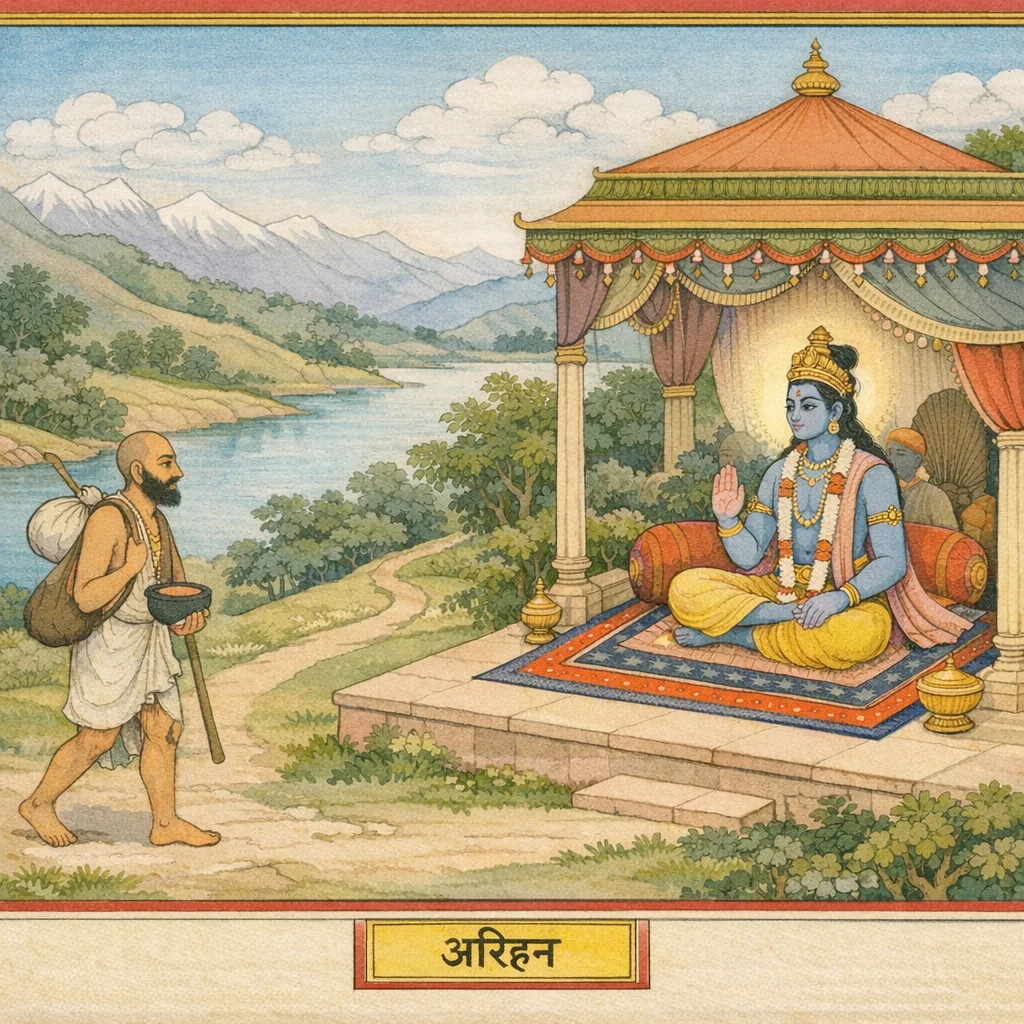
Within the Sanatkumāra–Pārāśarya dialogue, this chapter presents a deliberate divine countermeasure meant to obstruct or test dharma‑oriented activity connected with the Tripura episode. Sanatkumāra relates that Viṣṇu (Acyuta), from his own essence, emanates/creates a single puruṣa made of māyā to cause dharmavighna—hindrance to dharma. The being bears ascetic yet inauspicious signs—shaven head, faded garments, a vessel and a bundle—and repeatedly utters “dharma” in a wavering voice, an ironic reversal pointing to deceptive religiosity. Approaching and bowing to Viṣṇu, it asks for instruction: whom to worship, what acts to perform, what names to bear, and where to dwell. Viṣṇu clarifies its origin and function: born from Viṣṇu’s body and appointed to Viṣṇu’s work, it will be regarded as worthy of worship; he assigns the name Arihan, declares other names inauspicious, and promises to describe the proper abode later. Overall, the chapter functions as a prescriptive‑etiological unit, explaining the origin, naming, and ritual‑social placement of an agent within the Tripura framework, while embedding teachings on māyā, delegated authority, and dharma’s vulnerability to counterfeit forms.
Shlokas
Verse 1
सनत्कुमार उवाच । असृजच्च महातेजाः पुरुषं स्वात्मसंभवम् । एकं मायामयं तेषां धर्मविघ्नार्थमच्युतः
Sanatkumāra said: The imperishable Lord, radiant with great splendor, brought forth from His own being a single person—made of Māyā—so as to place an obstacle before their righteous dharmic undertaking.
Verse 2
मुंडिनं म्लानवस्त्रं च गुंफिपात्रसमन्वितम् । दधानं पुंजिकां हस्ते चालयंतं पदेपदे
He saw a shaven-headed man, clad in faded garments, carrying a stitched bowl; holding a small bundle in his hand, he kept moving it at every step.
Verse 3
वस्त्रयुक्तं तथा हस्तं क्षीयमाणं मुखे सदा । धर्मेति व्याहरंतं हि वाचा विक्लवया मुनिम्
They saw the sage with his hand still holding his cloth, his face continually wasting away; and with a trembling, faltering voice he kept uttering only the word “Dharma.”
Verse 4
इति श्रीशिवमहापुराणे द्वितीयायां रुद्रसंहितायां पञ्चमे युद्धखण्डे सनत्कुमारपाराशर्य संवादे त्रिपुरदीक्षाविधानं नाम चतुर्थोऽध्यायः
Thus ends the Fourth Chapter, titled “The Procedure of Dīkṣā for (the conquest of) Tripura,” in the Fifth Section, the Yuddha-khaṇḍa, of the second compilation (Rudra-saṃhitā) of the Śrī Śiva Mahāpurāṇa, in the dialogue between Sanatkumāra and Pārāśarya.
Verse 5
अरिहन्नच्युतं पूज्यं किं करोमि तदादिश । कानि नामानि मे देव स्थानं वापि वद प्रभो
O adorable Lord, slayer of foes and infallible One—tell me what I should do. O Deva, declare to me Your names, and also the sacred place where You are to be worshipped, O Master.
Verse 6
इत्येवं भगवान्विष्णुः श्रुत्वा तस्य शुभं वचः । प्रसन्नमानसो भूत्वा वचनं चेदमब्रवीत्
Thus, having heard his auspicious words, Lord Viṣṇu—his mind serene and pleased—spoke these words in reply.
Verse 7
विष्णुरुवाच । यदर्थं निर्मितोऽसि त्वं निबोध कथयामि ते । मदंगज महाप्राज्ञ मद्रूपस्त्वं न संशयः
Viṣṇu said: Understand—I shall tell you the purpose for which you have been brought forth. O offspring of my own being, greatly wise one, you are indeed of my form; of this there is no doubt.
Verse 8
ममांगाच्च समुत्पन्नो मत्कार्यं कर्तुमर्हसि । मदीयस्त्वं सदा पूज्यो भविष्यति न संशयः
Born from My own body, you are worthy to accomplish My purpose. You are Mine; therefore you shall always be worshipped—of this there is no doubt.
Verse 9
अरिहन्नाम ते स्यात्तु ह्यन्यानि न शुभानि च । स्थानं वक्ष्यामि ते पश्चाच्छृणु प्रस्तुतमादरात्
Your name shall be “Arihan”; other names will not be auspicious. Later I shall tell you the proper place—now listen attentively and with reverence to what is being set forth.
Verse 10
मायिन्मायामयं शास्त्रं तत्षोडशसहस्रकम् । श्रौतस्मार्तविरुद्धं च वर्णाश्रम विवर्जितम्
O deluder, that treatise is made of mere Māyā—sixteen thousand verses in extent. It stands opposed to the Śrauta and Smārta ordinances (Vedic and Dharmaśāstra), and it is devoid of the discipline of varṇa and āśrama.
Verse 11
अपभ्रंशमयं शास्त्रं कर्मवादमयं तथा । रचयेति प्रयत्नेन तद्विस्तारो भविष्यति
“Compose a treatise filled with corrupt, debased speech, and likewise saturated with the doctrine that exalts mere ritual action; do it with effort—then its influence will surely spread widely.”
Verse 12
ददामि तव निर्माणे सामर्थ्यं तद्भविष्यति । माया च विविधा शीघ्रं त्वदधीना भविष्यति
“I grant you the power to create; it shall indeed come to be. And manifold Māyā too shall quickly come under your control.”
Verse 13
तच्छ्रुत्वा वचनं तस्य हरेश्च परमात्मनः । नमस्कृत्य प्रत्युवाच स मायी तं जनार्दनम्
Hearing those words of Hari—the Supreme Self—the wielder of māyā bowed in reverence and then replied to Janārdana (Viṣṇu).
Verse 14
मुण्ड्युवाच । यत्कर्तव्यं मया देव द्रुतमादिश तत्प्रभो । त्वदाज्ञयाखिलं कर्म सफलश्च भविष्यति
Muṇḍī said: “O Deva, O Lord, quickly command me what I must do, O Prabhu. By Your very order, every action becomes fruitful and attains its intended result.”
Verse 15
सनत्कुमार उवाच । इत्युक्त्वा पाठयामास शास्त्रं मायामयं तथा । इहैव स्वर्गनरकप्रत्ययो नान्यथा पुनः
Sanatkumāra said: Having spoken thus, he then taught a scripture itself woven of Māyā. Truly, the experience of heaven and hell is determined right here, in this very life; it is not otherwise thereafter.
Verse 16
तमुवाच पुनर्विष्णुः स्मृत्वा शिवपदांबुजम् । मोहनीया इमे दैत्याः सर्वे त्रिपुरवासिनः
Then Lord Viṣṇu spoke again, remembering the lotus-feet of Śiva: “All these Daityas who dwell in Tripura are to be deluded by Māyā.”
Verse 17
कार्यास्ते दीक्षिता नूनं पाठनीयाः प्रयत्नतः । मदाज्ञया न दोषस्ते भविष्यति महामते
“Surely, O great-minded wise one, those who are duly initiated (dīkṣā) should recite these teachings with earnest effort. By my command, no fault or demerit will arise for you.”
Verse 18
धर्मास्तत्र प्रकाशन्ते श्रौतस्मार्त्ता न संशयः । अनया विद्यया सर्वे स्फोटनीया ध्रुवं यते
There, the principles of dharma shine forth—those taught in the Śruti and those preserved in the Smṛti—without any doubt. By this sacred vidyā, all bondages and obscurations are surely to be shattered, O ascetic.
Verse 19
गंतुमर्हसि नाशार्थं मुण्डिंस्त्रिपुरवासिनाम् । तमोधर्मं संप्रकाश्य नाशयस्व पुरत्रयम्
“You should go forth for the purpose of destruction—(to strike down) the Muṇḍins who dwell in Tripura. Having fully revealed their tamasic way of conduct, destroy the three cities.”
Verse 20
ततश्चैव पुनर्गत्वा मरुस्थल्यां त्वया विभो । स्थातव्यं च स्वधर्मेण कलिर्यावत्समा व्रजेत्
“Then, O mighty one, having gone back again to the desert, you should remain there, abiding in your own ordained duty, until the age of Kali has run its course.”
Verse 21
प्रवृत्ते तु युगे तस्मिन्स्वीयो धर्मः प्रकाश्यताम् । शिष्यैश्च प्रतिशिष्यैश्च वर्तनीयस्त्वया पुनः
When that age has come into full motion, let your own sacred discipline be made manifest again. And you, together with your disciples and their disciples, must once more live by it and uphold it.
Verse 22
मदाज्ञया भवद्धर्मो विस्तारं यास्यति ध्रुवम् । मदनुज्ञापरो नित्यं गतिं प्राप्स्यसि मामकीम्
“By My command, your righteous path (dharma) will surely spread and flourish. Ever devoted to My permission and ordinance, you shall attain My own state—the supreme destination that belongs to Me.”
Verse 23
एवमाज्ञा तदा दत्ता विष्णुना प्रभविष्णुना । शासनाद्देवदेवस्य हृदा त्वंतर्दधे हरिः
Thus that command was issued by Viṣṇu, the all-powerful Sustainer. And by the ordinance of the God of gods (Śiva), Hari concealed himself within your heart.
Verse 24
ततस्स मुंडी परिपालयन्हरेराज्ञां तथा निर्मितवांश्च शिष्यान् । यथास्वरूपं चतुरस्तदानीं मायामयं शास्त्रमपाठयत्स्वयम्
Thereafter Muṇḍī, abiding by Hari’s command, safeguarded that charge and also fashioned disciples. Then, skilful and true to his own nature, he himself taught them a treatise wrought of Māyā—fit for that time—so that the play of the manifested world might proceed in due order.
Verse 25
यथा स्वयं तथा ते च चत्वारो मुंडिनः शुभाः । नमस्कृत्य स्थितास्तत्र हरये परमात्मने
Just as he himself did, so too those four auspicious shaven-headed ones bowed in reverence and stood there before Hari, the Supreme Self.
Verse 26
हरिश्चापि मुनेस्तत्र चतुरस्तांस्तदा स्वयम् । उवाच परमप्रीतश्शिवाज्ञापरिपालकः
Thereupon, in that place, Hari (Viṣṇu) personally addressed those four sages. Overflowing with joy, he spoke as one devoted to upholding the command of Śiva.
Verse 27
यथा गुरुस्तथा यूयं भविष्यथ मदाज्ञया । धन्याः स्थ सद्गतिमिह संप्राप्स्यथ न संशयः
By my command, you shall become like your Guru. Truly blessed are you; here itself you will attain the noble state—the true spiritual destiny—of this there is no doubt.
Verse 28
चत्वारो मुंडिनस्तेऽथ धर्मं पाषंडमाश्रिताः । हस्ते पात्रं दधानाश्च तुंडवस्त्रस्य धारकाः
Then there were four shaven-headed men who had taken refuge in a heretical guise of “dharma.” They carried bowls in their hands and wore a cloth covering over the mouth.
Verse 29
मलिनान्येव वासांसि धारयंतो ह्यभाषिणः । धर्मो लाभः परं तत्त्वं वदंतस्त्वतिहर्षतः
Wearing only soiled garments and speaking little, they exultantly proclaimed: “Dharma alone is the true gain; it is the supreme Reality.”
Verse 30
मार्जनीं ध्रियमाणाश्च वस्त्रखंडविनिर्मिताम् । शनैः शनैश्चलन्तो हि जीवहिंसाभयाद्ध्रुवम्
Holding a broom made from torn pieces of cloth, they moved very slowly indeed—certainly out of fear of harming living beings.
Verse 31
ते सर्वे च तदा देवं भगवंतं मुदान्विताः । नमस्कृत्य पुनस्तत्र मुने तस्थुस्तदग्रतः
Then all of them, filled with joy, bowed again to that Divine Lord. Having offered their reverent salutations, they remained there, standing before the sage.
Verse 32
हरिणा च तदा हस्ते धृत्वा च गुरवेर्पिताः । अभ्यधायि च सुप्रीत्या तन्नामापि विशेषतः
Then Hari took them in his hand and offered them to his guru. With great joy, he reverently uttered their names as well—clearly, fully, and in every detail.
Verse 33
यथा त्वं च तथैवैते मदीया वै न संशयः । आदिरूपं च तन्नाम पूज्यत्वात्पूज्य उच्यते
“Just as you are, so indeed are these as well—truly they are Mine; there is no doubt. Their name is ‘Ādirūpa’ (the Primordial Form), and because they are worthy of worship, they are called ‘Pūjya’ (the Worshipful).”
Verse 34
ऋषिर्यतिस्तथा कीर्यौपाध्याय इति स्वयम् । इमान्यपि तु नामानि प्रसिद्धानि भवंतु वः
“He himself is indeed known as ‘Ṛṣi’, ‘Yati’, ‘Kīr’, and ‘Upādhyāya’. Let these names also become well-known among you.”
Verse 35
ममापि च भवद्भिश्च नाम ग्राह्यं शुभं पुनः । अरिहन्निति तन्नामध्येयं पापप्रणाशनम्
“You too should again accept an auspicious name for me. ‘Arihan’—thus is that name; it is to be contemplated and recited, for it destroys sins.”
Verse 36
भवद्भिश्चैव कर्तव्यं कार्यं लोकसुखावहम् । लोकानुकूलं चरतां भविष्यत्युत्तमा गतिः
Therefore, you too should perform deeds that bring well-being to the world. For those who conduct themselves in harmony with the people and the order of the world, the highest destiny—liberation under Śiva’s grace—will surely arise.
Verse 37
सनत्कुमार उवाच । ततः प्रणम्य तं मायी शिष्ययुक्तस्स्वयं तदा । जगाम त्रिपुरं सद्यः शिवेच्छाकारिणं मुमा
Sanatkumāra said: Then that wielder of māyā, accompanied by his disciple, bowed to him; and at once he himself went to Tripura—acting in accordance with Śiva’s will.
Verse 38
प्रविश्य तत्पुरं तूर्णं विष्णुना नोदितो वशी । महामायाविना तेन ऋषिर्मायां तदाकरोत्
Entering that city at once, the powerful sage—urged on by Viṣṇu—then employed illusion. Being a great wielder of Mahāmāyā, he cast that māyā at that very time.
Verse 39
नगरोपवने कृत्वा शिष्यैर्युक्तः स्थितितदा । मायां प्रवर्तयामास मायिनामपि मोहिनीम्
Then, having stationed himself in a garden near the city, accompanied by his disciples, he set in motion a deluding power of māyā—so enchanting that it could bewilder even those who themselves wield illusion.
Verse 40
शिवार्चनप्रभावेण तन्माया सहसा मुने । त्रिपुरे न चचालाशु निर्विण्णोभूत्तदा यतिः
O sage, by the power born of Śiva’s worship, that delusive power suddenly failed; and in Tripura it could not stir at all. Then the ascetic became swiftly dispassionate (free from fascination).
Verse 41
अथ विष्णुं स सस्मार तुष्टाव च हृदा बहु । नष्टोत्साहो विचेतस्को हृदयेन विदूयता
Then he remembered Lord Viṣṇu and praised Him deeply from the heart. His enthusiasm had collapsed; he was bewildered in mind, and inwardly he burned with grief.
Verse 42
तत्स्मृतस्त्वरितं विष्णुस्सस्मार शंकरं हृदि । प्राप्याज्ञां मनसा तस्य स्मृतवान्नारदं द्रुतम्
Thus reminded, Viṣṇu at once inwardly remembered Śaṅkara within his heart. Having mentally received Śiva’s command, he quickly recalled Nārada.
Verse 43
स्मृतमात्रेण विष्णोश्च नारदस्समुपस्थितः । नत्वा स्तुत्वा पुरस्तस्य स्थितोभूत्सांजलिस्तदा
The very moment Viṣṇu merely remembered him, Nārada appeared at once. Then, bowing and offering praise before Viṣṇu, he stood there with folded hands.
Verse 44
अथ तं नारदं प्राह विष्णुर्मुनिमतां वरः । लोकोपकारनिरतो देवकार्यकरस्सदा
Then Lord Viṣṇu—foremost in wisdom among the sages—addressed Nārada, ever intent on the welfare of the worlds and always engaged in accomplishing the work of the gods.
Verse 45
शिवाज्ञयोच्यते तात गच्छ त्वं त्रिपुरं द्रुतम् । ऋषिस्तत्र गतः शिष्यैर्मोहार्थं तत्सुवासिनाम्
“Dear one, by Śiva’s command I tell you: go quickly to Tripura. A sage has gone there with his disciples, intending to bewilder the inhabitants of that city.”
Verse 46
सनत्कुमार उवाच । इत्याकर्ण्य वचस्तस्य नारदो मुनिसत्तमः । गतस्तत्र द्रुतं यत्र स ऋषिर्मायिनां वरः
Sanatkumāra said: Hearing those words, Nārada—the best of sages—quickly went to the place where that seer, the foremost among wielders of māyā, was present.
Verse 47
नारदोऽपि तथा मायी नियोगान्मायिनः प्रभोः । प्रविश्य तत्पुरं तेन मायिना सह दीक्षितः
So too Nārada, by the command of that Lord who is the master of māyā, became a wielder of māyā and entered that city; and together with that magician he was duly initiated (dīkṣā).
Verse 48
ततश्च नारदो गत्वा त्रिपुराधीशसन्निधौ । क्षेमप्रश्नादिकं कृत्वा राज्ञे सर्वं न्यवेदयत्
Then Nārada went into the presence of the lord of Tripura. After offering courteous enquiries about his welfare and the like, he reported everything in full to the king.
Verse 49
नारद उवाच कश्चित्समागतश्चात्र यतिर्धर्मपरायणः । सर्वविद्याप्रकृष्टो हि वेदविद्यापरान्वितः
Nārada said: “Here a certain yati, a renunciate devoted wholly to dharma, has arrived. Indeed, he excels in every branch of knowledge, and is especially endowed with the sacred learning of the Vedas.”
Verse 50
दृष्ट्वा च बहवो धर्मा नैतेन सदृशाः पुनः । वयं सुदीक्षिताश्चात्र दृष्ट्वा धर्मं सनातनम्
Having observed many paths of dharma, none is truly equal to this one. Here we have been well initiated, for we have beheld the eternal dharma—aligned with Śiva, the Lord who grants liberation (mokṣa).
Verse 51
तवेच्छा यदि वर्तेत तद्धर्मे दैत्यसत्तम । तद्धर्मस्य महाराज ग्राह्या दीक्षा त्वया पुनः
If your will truly inclines toward that dharma, O best of the Daityas, then—O great king—you should once again accept dīkṣā, the proper initiation, into that very dharma.
Verse 52
सनत्कुमार उवाच । तदीयं स वचः श्रुत्वा महदर्थसुगर्भितम् । विस्मितो हृदि दैत्येशो जगौ तत्र विमोहितः
Sanatkumāra said: Hearing those words, heavy with profound meaning, the lord of the demons was astonished within his heart; and, bewildered on that very spot, he spoke.
Verse 53
नारदो दीक्षितो यस्माद्वयं दीक्षामवाप्नुमः । इत्येवं च विदित्वा वै जगाम स्वयमेव ह
“Since Nārada has received dīkṣā, we too have obtained initiation.” Knowing it to be so, he then departed of his own accord.
Verse 54
तद्रूपं च तदा दृष्ट्वा मोहितो मायया तथा । उवाच वचनं तस्मै नमस्कृत्य महात्मने
Seeing that very form then, he was deluded by Māyā. Bowing in reverence to that great-souled one, he spoke words to him.
Verse 55
त्रिपुराधिप उवाच । दीक्षा देया त्वया मह्यं निर्मलाशय भो ऋषे । अहं शिष्यो भविष्यामि सत्यं सत्यं न संशयः
The Lord of Tripura said: “O sage of pure intent, bestow dīkṣā upon me. I shall become your disciple—true, true; there is no doubt.”
Verse 56
इत्येवं तु वचः श्रुत्वा दैत्यराजस्य निर्मलम् । प्रत्युवाच सुयत्नेन ऋषिस्स च सनातनः
Having thus heard the pure and straightforward words of the king of the Daityas, that eternal sage replied with careful deliberation.
Verse 57
मदीया करणीया स्याद्यद्याज्ञा दैत्यसत्तम । तदा देया मया दीक्षा नान्यथा कोटियत्नतः
O best of the Daityas, if my command is carried out, then—and only then—shall I grant you dīkṣā (sacred initiation); otherwise, not even with ten million efforts.
Verse 58
इत्येवं तु वचः श्रुत्वा राजा मायामयोऽभवत् । उवाच वचनं शीघ्रं यतिं तं हि कृतांजलिः
Thus, having heard those words, the king was inwardly stirred by māyā (bewilderment of mind). Then, with palms joined in reverence, he quickly spoke to that ascetic.
Verse 59
दैत्य उवाच । यथाज्ञां दास्यसि त्वं च तत्तथैव न चान्यथा । त्वदाज्ञां नोल्लंघयिष्ये सत्यं सत्यं न संशयः
The Daitya said: “Whatever command you give, exactly so—and not otherwise—shall it be. I will not transgress your order. This is truth, truth; there is no doubt.”
Verse 60
सनत्कुमार उवाच । इत्याकर्ण्य वचस्तस्य त्रिपुराधीशितुस्तदा । दूरीकृत्य मुखाद्वस्त्रमुवाच ऋषिसत्तमः
Sanatkumāra said: Having thus heard the words of that lord of Tripura, the best of sages removed the cloth from his face and spoke.
Verse 61
दीक्षां गृह्णीष्व दैत्येन्द्र सर्वधर्मोत्तमोत्तमाम् । ददौ दीक्षाविधानेन प्राप्स्यसि त्वं कृतार्थताम्
O lord of the Daityas, accept this dīkṣā—the most excellent of all dharmas. When it is bestowed upon you according to the proper rite of initiation, you will attain true fulfillment and the accomplishment of your life’s purpose.
Verse 62
सनत्कुमार उवाच । इत्युक्त्वा स तु मायावी दैत्यराजाय सत्वरम् । ददौ दीक्षां स्वधर्मोक्तां तस्मै विधिविधानतः
Sanatkumāra said: Having spoken thus, that master of māyā swiftly bestowed upon the king of the Dānavas the dīkṣā prescribed by his own tradition, performing it for him in full accordance with the proper ritual ordinances.
Verse 63
दैत्यराजे दीक्षिते च तस्मिन्ससहजे मुने । सर्वे च दीक्षिता जातास्तत्र त्रिपुरवासिनः
When the king of the Daityas had been duly initiated by the sage Sahaja, all the inhabitants of Tripura thereupon also became initiated.
Verse 64
मुनेः शिष्यैः प्रशिष्यैश्च व्याप्तमासीद्द्रुतं तदा । महामायाविनस्तत्तु त्रिपुरं सकलं मुने
Then, O sage, in a short time all of Tripura was filled and overrun by the sage’s disciples and grand-disciples—great wielders of Mahā-Māyā—spreading everywhere through the three cities.
Frequently Asked Questions
Viṣṇu emanates a māyā-constituted puruṣa from himself to function as a dharma-impediment within the Tripura-related narrative frame, then names him Arihan and assigns his role.
The chapter encodes how māyā can simulate dharmic signs (e.g., repeating “dharma”) while functioning as vighna; it distinguishes authentic dharma from its instrumental or counterfeit deployment.
A delegated manifestation from Viṣṇu (svātmasaṃbhava, māyāmaya puruṣa) is highlighted, emphasizing role-based divinity, naming, and the conferral of worship-status as part of cosmic strategy.