Adhyaya 351
अध्याय ३५१ — उञ्छवृत्ति-व्रतसिद्धेः मानुषस्य परमगतिः (Sūrya–Nāga Dialogue on the Perfected Gleaner-Ascetic)
Upa-parva: Mokṣadharma (Liberation-Discourse) — Ascetic Attainment and the Limits of Supernatural Taxonomies
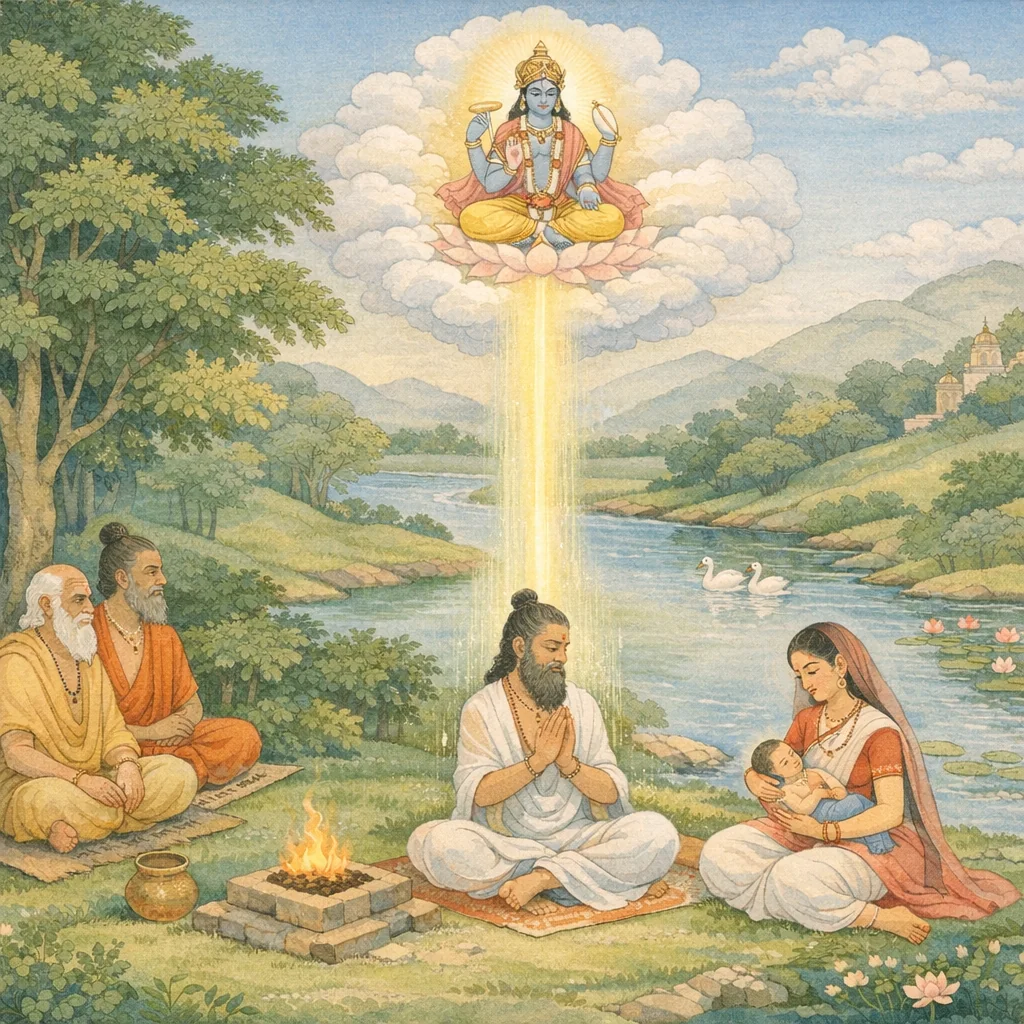
This chapter is structured as a brief dialogic clarification. Sūrya identifies an extraordinary figure as neither deity nor non-human class (deva/asura/pannaga), but a muni who has attained success through the uñchavṛtti vow—subsisting by gleaning—thereby reaching heaven. Sūrya catalogs the ascetic’s regulated modes of sustenance (roots and fruits, fallen leaves, water-only, and even air-only), emphasizing concentration (samāhita) and disciplined restraint. He further attributes the attainment to the recitation/praise of ṛc-verses and sustained effort aimed at the “gate of heaven,” framing ascent as the consequence of spiritual labor rather than birth-category. The ascetic is described as free from acquisitive desire, steady in gleaning and simple eating, and committed to the welfare of all beings. Sūrya concludes with a general principle: devas, gandharvas, asuras, and pannagas do not obstruct beings who have reached the highest course. The Nāga responds with astonishment that a perfected human body can attain siddha-status and “move with the Sun” in circumambulation of the earth, underscoring the chapter’s theme that human discipline can culminate in supra-ordinary destiny.
Chapter Arc: जनमेजय का जिज्ञासु प्रश्न उठता है—क्या विविध धर्म-मार्ग एक ही लक्ष्य की ओर ले जाते हैं या भिन्न-भिन्न निष्ठाओं में बँटे हैं? → वैशम्पायन उत्तर को एक विराट पूर्वकथा में खोलते हैं: सृष्टि-आरम्भ में नारायण के अंश से सरस्वती-पुत्र अपान्तरतमा का प्राकट्य, और फिर उसी तेज का पराशर-सत्यवती से कृष्णद्वैपायन व्यास के रूप में अवतरण। जनमेजय व्यास के ‘नारायण-सुत’ होने की पूर्वघोषणा को स्मरण कर पुष्टि चाहता है। → दैवी वाणी/वरदान-क्रम में व्यास के भविष्य-कार्य का निर्णायक उद्घोष: वे नाना प्रकार के धर्मों के प्रवर्तक, ज्ञानदाता और तपोयुक्त रहेंगे; भूत-वर्तमान-भविष्य का संशय तप से नष्ट होगा; युग-युगान्तरों को देखेंगे; और कलियुग के आगमन पर भी वेद-विभाग करेंगे—यह सब नारायण-योजना के अंतर्गत। → वैशम्पायन व्यास के ‘पूर्व सम्भव’ (पूर्वजन्म/पूर्वप्राकट्य) को समेटकर बताते हैं कि यह गुरु व्यास की निर्मल बुद्धि और लोक-हितकारी अवतार-भूमिका का कारण है—धर्म-ज्ञान की स्थापना और युग-धर्म के अनुसार व्यवस्था। → अवतार-योजना का अगला संकेत—मधुसूदन का पृथ्वी-रक्षा हेतु अवतरण और आगे वंशजों में परस्पर-विनाशकारी फूट का विधान—आने वाले प्रसंगों की ओर कथा को धकेल देता है।
Shlokas
Verse 1
अपना बछ। अर: 2 एकोनपज्चाशर्दाधिकत्रिशततमो< ध्याय: व्यासजीका सृष्टिके प्रारम्भमें भगवान् नारायणके अंशसे सरस्वतीपुत्र अपान्तरतमाके रूपमें जन्म होनेकी और उनके प्रभावकी कथा जनमेजय उवाच सांख्यं योग: पाउचरात्र वेदारण्यकमेव च । ज्ञानान्येतानि ब्रद्मर्षे लोकेषु प्रचरन्ति ह,जनमेजयने पूछा--ब्रह्मर्ष! सांख्य, योग, पाउ्चरात्र और वेदोंके आरण्यकभाग--ये चार प्रकारके ज्ञान सम्पूर्ण लोकोंमें प्रचलित हैं
Janamejaya said: “O brahmarṣi, throughout the worlds these forms of sacred knowledge are in circulation—Sāṅkhya, Yoga, the Pāñcarātra tradition, and the Āraṇyaka portion of the Vedas.”
Verse 2
किमेतान्येकनिष्ठानि पृथड्निष्ठानि वा मुने । प्रत्रूहि वै मया पृष्ट: प्रवृत्ति च यथाक्रमम्,मुने! क्या ये सब एक ही लक्ष्यका बोध करानेवाले हैं अथवा पृथक्-पृथक् लक्ष्यके प्रतिपादक हैं? मेरे इस प्रश्नचका आप यथावत् उत्तर दें और प्रवृत्तिका भी क्रमश: वर्णन करें
O sage! Do all these teachings point to a single aim, or do they set forth different aims? Answer me as I have asked, and also describe in due order the course of pravṛtti—the path of action and practice.
Verse 3
वैशग्पायन उवाच जज्ञे बहुज्ञं परमत्युदारं यं द्वीपमध्ये सुतमात्मयोगात् । पराशरात् सत्यवती महर्षि तस्मै नमो5ज्ञानतमोनुदाय,वैशम्पायनजीने कहा--राजन्! देवी सत्यवतीने यमुनातटवर्ती द्वीपमें पराशर मुनिसे अपने शरीरका संयोग करके जिन बहुज्ञ और अत्यन्त उदार महर्षिको पुत्ररूपसे उत्पन्न किया था, अज्ञानरूपी अन्धकारको दूर करनेवाले ज्ञानसूर्यस्वरूप उन गुरुदेव व्यासजीको मेरा नमस्कार है
Vaiśampāyana said: I bow to that great sage Vyāsa—supremely generous and possessed of vast knowledge—whom Satyavatī, by uniting her body through yogic self-control, bore as a son on an island in the river, from the sage Parāśara. To him, the dispeller of the darkness of ignorance, my reverence.
Verse 4
पितामहाद् यं प्रवदन्ति षष्ठं महर्षिमार्षेयवि भूतियुक्तम् । नारायणस्यांशजमेक पुत्र द्ैपायनं वेद महानिधानम्,ब्रह्माजीके आदिपुरुष जो नारायण हैं, उनके स्वरूपभूत जिन महर्षिको पूर्वपुरुष नारायणसे छठी पीढ़ीमें- उत्पन्न बताते हैं, जो ऋषियोंके सम्पूर्ण ऐश्वर्यसे सम्पन्न हैं, नारायणके अंशसे उत्पन्न हैं, अपने पिताके एक ही पुत्र हैं और द्वीपमें उत्पन्न होनेके कारण द्वैपायन कहलाते हैं, उन वेदके महान् भण्डाररूप व्यासजीको मैं प्रणाम करता हूँ
Vaiśampāyana said: I bow to Vyāsa—Dvaipāyana, the great treasury of the Vedas—whom they describe as the sixth in descent from the Primeval Grandfather; a great seer endowed with the full splendor of the ṛṣis; born as an emanation of Nārāyaṇa, the sole son of his father, and called “Dvaipāyana” because he was born on an island.
Verse 5
तमादिकालेषु महाविभूति- नरियणो ब्रह्ममहानिधानम् | ससर्ज पुत्रार्थमुदारतेजा व्यासं महात्मानमजं पुराणम्,प्राचीनकालमें उदार तेजस्वी, महान् वैभवसम्पन्न भगवान् नारायणने वैदिक ज्ञानकी महानिधिरूप महात्मा अजन्मा और पुराणपुरुष व्यासजीको अपने पुत्ररूपसे उत्पन्न किया था
Vaiśampāyana said: In the earliest ages, the glorious Lord Nārāyaṇa—himself the great treasury of Vedic knowledge—brought forth, for the sake of a son, the noble-splendored Vyāsa: the great-souled one, unborn and primeval.
Verse 6
जनमेजय उवाच त्वयैव कथित पूर्व सम्भवे द्विजसत्तम | वसिष्ठस्य सुतः शक्ति: शक्तिपुत्र: पराशर:,जनमेजयने कहा--द्विजश्रेष्ठस आपहीने पहले आदिपर्वकी कथा सुनाते समय यह कहा था कि वसिष्ठके पुत्र शक्ति, शक्तिके पुत्र पराशर और पराशरके पुत्र मुनिवर श्रीकृष्णद्वैपायन व्यास हैं और अब पुन: आप इन्हें नारायणका पुत्र बतला रहे हैं
Janamejaya said: O best of Brahmins, when you recounted the earlier origins, you yourself declared that Śakti was the son of Vasiṣṭha, and that Parāśara was the son of Śakti. Yet now you speak of them as offspring of Nārāyaṇa. How is this to be understood?
Verse 7
पराशरस्य दायाद: कृष्णद्वैपायनो मुनि: । भूयो नारायणसुतं त्वमेवैनं प्रभाषसे,जनमेजयने कहा--द्विजश्रेष्ठस आपहीने पहले आदिपर्वकी कथा सुनाते समय यह कहा था कि वसिष्ठके पुत्र शक्ति, शक्तिके पुत्र पराशर और पराशरके पुत्र मुनिवर श्रीकृष्णद्वैपायन व्यास हैं और अब पुन: आप इन्हें नारायणका पुत्र बतला रहे हैं
Janamejaya said: “The sage Kṛṣṇadvaipāyana (Vyāsa) is the heir and descendant of Parāśara. Yet now you again describe him as the son of Nārāyaṇa. How is this to be understood?”
Verse 8
किमतः: पूर्वजं जन्म व्यासस्यामिततेजस: । कथयस्वोत्तममते जन्म नारायणोद्धवम्,श्रेष्ठ बुद्धिवाले मुनीश्वर! क्या अमिततेजस्वी व्यासजीका इससे पहले भी कोई जन्म हुआ था? नारायणसे व्यासजीका जन्म कब और कैसे हुआ? यह बतानेकी कृपा करें
Janamejaya said: “Did the mighty-splendored Vyāsa have an earlier birth before this one? O best of minds, please tell me—when and in what manner did Vyāsa’s birth arise from Nārāyaṇa? O foremost sage, endowed with excellent intellect, kindly explain.”
Verse 9
वैशम्पायन उवाच वेदार्थान् वेत्तुकामस्य धर्मिष्ठस्य तपोनिधे: । गुरोमें ज्ञाननिष्ठस्य हिमवत्पाद आसत:,वैशम्पायनजीने कहा--राजन्! मेरे धर्मिष्ठ गुरु वेदव्यास तपस्याकी निधि और ज्ञाननिष्ठ हैं। पहले वे वेदोंके अर्थका वास्तविक ज्ञान प्राप्त करनेकी इच्छासे हिमालयके एक शिखरपर रहते थे। ये महाभारत नामक इतिहासकी रचना करके तपस्या करते-करते थक गये थे। उन दिनों इन बुद्धिमान् गुरुकी सेवामें तत्पर हम पाँच शिष्य उनके साथ रहते थे। सुमन्तु, जैमिनि, दृढ़तापूर्वक उत्तम धर्मका पालन करनेवाले पैल, चौथा मैं और पाँचवें व्यासपुत्र शुकदेव थे
Vaiśampāyana said: “O King, my guru—most righteous, a treasury of austerity, and steadfast in knowledge—once dwelt at the foot of the Himālaya, desiring to know the true purport of the Vedas.”
Verse 10
कृत्वा भारतमाख्यानं तपःश्रान्तस्य धीमत: । शुश्रूषां तत्परा राजन् कृतवन्तो वयं तदा,वैशम्पायनजीने कहा--राजन्! मेरे धर्मिष्ठ गुरु वेदव्यास तपस्याकी निधि और ज्ञाननिष्ठ हैं। पहले वे वेदोंके अर्थका वास्तविक ज्ञान प्राप्त करनेकी इच्छासे हिमालयके एक शिखरपर रहते थे। ये महाभारत नामक इतिहासकी रचना करके तपस्या करते-करते थक गये थे। उन दिनों इन बुद्धिमान् गुरुकी सेवामें तत्पर हम पाँच शिष्य उनके साथ रहते थे। सुमन्तु, जैमिनि, दृढ़तापूर्वक उत्तम धर्मका पालन करनेवाले पैल, चौथा मैं और पाँचवें व्यासपुत्र शुकदेव थे
Vaiśampāyana said: “O King, after the wise sage—wearied by austerities—had composed the great narrative of the Bhārata, we at that time devoted ourselves wholly to serving him.”
Verse 11
सुमन्तुर्जैमिनिश्वैव पैलश्व सुदृढव्रतः । अहं चतुर्थ: शिष्यो वै शुकोव्यासात्मजस्तथा,वैशम्पायनजीने कहा--राजन्! मेरे धर्मिष्ठ गुरु वेदव्यास तपस्याकी निधि और ज्ञाननिष्ठ हैं। पहले वे वेदोंके अर्थका वास्तविक ज्ञान प्राप्त करनेकी इच्छासे हिमालयके एक शिखरपर रहते थे। ये महाभारत नामक इतिहासकी रचना करके तपस्या करते-करते थक गये थे। उन दिनों इन बुद्धिमान् गुरुकी सेवामें तत्पर हम पाँच शिष्य उनके साथ रहते थे। सुमन्तु, जैमिनि, दृढ़तापूर्वक उत्तम धर्मका पालन करनेवाले पैल, चौथा मैं और पाँचवें व्यासपुत्र शुकदेव थे
Vaiśampāyana said: “Sumantu, Jaimini, and Paila—firm in their vows—and I as the fourth disciple, and also Śuka, the son of Vyāsa: these were the pupils who attended the sage.”
Verse 12
एशि: परिवृतो व्यास: शिष्यै: पञ्चभिरुत्तमै: । शुशुभे हिमवत्पादे भूतैर्भूतपतिर्यथा,इन पाँच उत्तम शिष्योंसे घिरे हुए व्यासजी हिमालयके शिखरपर भूतोंसे परिवेष्टित भूतनाथ भगवान् शिवके समान शोभा पाते थे
Vaiśaṃpāyana said: Surrounded by his five excellent disciples, the sage Vyāsa shone on the slopes of the Himālaya—like Lord Śiva, master of beings, encircled by his attendant spirits.
Verse 13
वेदानावर्तयन् साड्रान् भारतार्थाश्व सर्वश: । तमेकमनसं दान्तं युक्ता वयमुपास्महे,वहाँ व्यासजी अंगोंसहित सब वेदों तथा महाभारतके अर्थोंकी आवृत्ति करते और हम सब शिष्योंको पढ़ाते थे एवं हम सब लोग सदा उद्यत रहकर उन एकाग्रचित्त एवं जितेन्द्रिय गुरुकी सेवा करते थे
Vaiśampāyana said: “Reciting and repeatedly reviewing the Vedas together with their ancillary disciplines, and also expounding in every way the meanings of the Mahābhārata, Vyāsa would teach us disciples. Ever attentive and disciplined, we continually served that teacher—single-minded in concentration, self-controlled, and steadfast in spiritual discipline.”
Verse 14
कथान्तरे5थ कम्मिंश्षित् पृष्टोडस्माभिद्धिजोत्तम: | वेदार्थान् भारतार्थाश्व॒ जन्म नारायणात् तथा,एक दिन किसी बातचीतके प्रसंगमें हमलोगोंने द्विजश्रेष्ठ व्यासजीसे वेदों और महाभारतका अर्थ तथा भगवान् नारायणसे उनके जन्म होनेका वृत्तान्त पूछा
Vaiśampāyana said: On one occasion, in the course of conversation, we questioned the best of the twice-born—Vyāsa—about the meanings of the Vedas and of the Mahābhārata, and also about the account of his birth from Nārāyaṇa.
Verse 15
स पूर्वमुक्त्वा वेदार्थान् भारतार्थाश्व तत्त्ववित् । नारायणादिदं जन्म व्याहर्तुमुपचक्रमे,तत्त्वज्ञानी व्यासजीने पहले हमें वेदों और महाभारतका अर्थ बताया। उसके बाद भगवान् नारायणसे अपने जन्मका वृत्तान्त इस प्रकार बताना आरम्भ किया--
Vaiśampāyana said: Having first explained the purport of the Vedas and also the meaning of the Mahābhārata, the knower of truth then began to relate the account of his own birth, tracing it back to Nārāyaṇa.
Verse 16
शृणुध्वमाख्यानवरमिदमार्षेयमुत्तमम् । आदिकालोडद्धवं विप्रास्तपसाधिगतं मया,“विप्रगण! ऋषिसम्बन्धी यह उत्तम आख्यान सुनो। प्राचीन कालका यह वृत्तान्त मैंने तपस्याके द्वारा जाना है
Vaiśampāyana said: “Listen, O brahmins, to this excellent and preeminent sacred narrative. It is a tale borne from the earliest age, and I have come to know it through the power of austerity.”
Verse 17
प्राप्ते प्रजाविसग्े वै सप्तमे पद्मसम्भवे । नारायणो महायोगी शुभाशुभविवर्जित:,“जब सातवें कल्पके आरम्भमें सातवीं बार ब्रह्माजीके कमलसे जन्म-ग्रहण करनेका अवसर आया, तब शुभ और अशुभसे रहित अमिततेजस्वी महायोगी भगवान् नारायणने सबसे पहले अपने नाभिकमलसे ब्रह्माजीको उत्पन्न किया। जब ब्रह्माजी प्रकट हो गये, तब उनसे भगवानने यह बात कही--
Vaiśampāyana said: When the time arrived for the creation of beings—at the seventh manifestation of the Lotus-born (Brahmā)—the great yogin Nārāyaṇa, free from both auspicious and inauspicious (merit and demerit), brought forth Brahmā first from the lotus of his navel. After Brahmā appeared, the Lord addressed him further.
Verse 18
ससूजे नाभित: पूर्व ब्रह्माणममितप्रभ: । ततः स प्रादुरभवदथैनं वाक्यमब्रवीत्,“जब सातवें कल्पके आरम्भमें सातवीं बार ब्रह्माजीके कमलसे जन्म-ग्रहण करनेका अवसर आया, तब शुभ और अशुभसे रहित अमिततेजस्वी महायोगी भगवान् नारायणने सबसे पहले अपने नाभिकमलसे ब्रह्माजीको उत्पन्न किया। जब ब्रह्माजी प्रकट हो गये, तब उनसे भगवानने यह बात कही--
Vaiśampāyana said: The immeasurably radiant Lord first brought forth Brahmā from the lotus at His navel. When Brahmā had manifested, the Lord addressed him with these words—setting in motion the ordered work of creation at the opening of the cycle.
Verse 19
मम त्वं नाभितो जात: प्रजासर्गकर: प्रभु: । सृज प्रजास्त्वं विविधा ब्रह्मन् सजडपण्डिता:,“ब्रह्मन्! तुम मेरी नाभिसे प्रजावर्गकी सृष्टि करनेके लिये उत्पन्न हुए हो और इस कार्यमें समर्थ हो; अत: जड-चेतनसहित नाना प्रकारकी प्रजाओंकी सृष्टि करो”
Vaiśampāyana said: “You have been born from my navel, O Brahman, as the capable lord appointed to bring forth the creation of beings. Therefore create the many kinds of creatures—both insentient and sentient, the dull and the wise—so that the world may be duly populated and ordered.”
Verse 20
स एवमुक्तो विमुखश्चिन्ताव्याकुलमानस: । प्रणम्य वरदं देवमुवाच हरिमी श्वरम्,“भगवान्के इस प्रकार आदेश देनेपर ब्रह्माजीका मन चिन्तासे व्याकुल हो उठा। वे सृष्टिकार्यसे विमुख हो वरदायक देवता सर्वेश्वर श्रीहरिको प्रणाम करके इस प्रकार बोले --
Vaiśampāyana said: Thus addressed, Brahmā’s mind became agitated with anxious thought. Turning away from the work of creation, he bowed to the boon-giving Lord—Hari, the Supreme Ruler—and spoke.
Verse 21
का शक्तिर्मम देवेश प्रजा: सत्रष्ठु नमो<स्तु ते । अप्रज्ञावानहं देव विधत्स्व यदनन्तरम्,“देवेश्वर! मुझमें प्रजाकी सृष्टि करनेकी क्या शक्ति है? आपको नमस्कार है। देव! मैं सृष्टिविषयक बुद्धिसे सर्वथा रहित हँ--यह जानकर अब आपको जो उचित जान पड़े, वह कीजिये”
Vaiśampāyana said: “O Lord of the gods, what power do I have to create living beings? Salutations to you. O God, I am wholly without the wisdom required for creation; knowing this, do now whatever you deem proper as the next step.”
Verse 22
स एवमुक्तो भगवान् भूत्वाथान्तर्हितस्तत: । चिन्तयामास देवेशो बुद्धि बुद्धिमतां वर:,“ब्रह्माजीके ऐसा कहनेपर बुद्धिमानोंमें श्रेष्ठ देवेश्वर भगवान् विष्णुने अदृश्य होकर बुद्धिका चिन्तन किया
Vaiśampāyana said: Thus addressed, the Blessed Lord—having become invisible—then reflected deeply. That Lord of the gods, the foremost among the wise, turned his mind to discerning the right course, weighing what would uphold order and welfare.
Verse 23
स्वरूपिणी ततो बुद्धिरुपतस्थे हरिं प्रभुम् । योगेन चैनां निर्योग: स्वयं नियुयुजे तदा,“उनके चिन्तन करते ही मूर्तिमती बुद्धि उन सामर्थ्यशाली श्रीहरिकी सेवामें उपस्थित हो गयी। तदनन्तर जिनपर दूसरोंका वश नहीं चलता, उन भगवान् नारायणने स्वयं ही उस बुद्धिको उस समय योगशक्तिसे सम्पन्न कर दिया
Vaiśampāyana said: As soon as he contemplated, the embodied Intelligence (Buddhi) came and stood in attendance upon Hari, the Lord. Then Nārāyaṇa—who is beyond the control of others—of his own accord, at that very time, endowed that Buddhi with yogic power, fitting her for divine union and service.
Verse 24
स तामैश्वर्ययोगस्थां बुद्धि गतिमतीं सतीम् । उवाच वचन देवो बुद्धि वै प्रभुरव्यय:,“अविनाशी प्रभु नारायणदेवने ऐश्वर्ययोगमें स्थित हुई उस सती-साध्वी प्रगतिशील बुद्धिसे कहा--
Vaiśampāyana said: Then the imperishable Lord—Nārāyaṇa, the sovereign—addressed that virtuous, discerning Buddhi who was established in the yoga of divine sovereignty, speaking words that frame right understanding as the basis of righteous conduct.
Verse 25
ब्रह्माणं प्रविशस्वेति लोकसृष्ट्यर्थसिद्धये । ततस्तमीश्वरादिष्टा बुद्धि: क्षिप्रं विवेश सा
“Enter into Brahmā,” the Lord said, “so that the purpose of creating the worlds may be fulfilled.” Thereupon that intellect, commanded by the Supreme Lord, swiftly entered into him.
Verse 26
“तुम संसारकी सृष्टिरूप अभीष्ट कार्यकी सिद्धिके लिये ब्रह्माजीके भीतर प्रवेश करो।' ईश्वरका यह आदेश पाकर बुद्धि शीघ्र ही ब्रह्माजीमें प्रवेश कर गयी ।। अथीनं बुद्धिसंयुक्त पुनः: स ददृशे हरि: । भूयश्चैव वच: प्राह सृजेमा विविधा: प्रजा:,“जब ब्रह्माजी सृष्टिविषयक बुद्धिसे संयुक्त हो गये, तब श्रीहरिने पुन: उनकी ओर स्नेहपूर्ण दृष्टिसे देखा और फिर इस प्रकार कहा--“अब तुम इन नाना प्रकारकी प्रजाओंकी सृष्टि करो”
Vaiśampāyana said: “For the fulfillment of the desired task—creation in the cycle of worldly existence—enter into Brahmā.” Receiving this command of the Lord, Intelligence swiftly entered Brahmā. Then, when Brahmā became endowed with the power of intelligence regarding creation, Hari looked upon him again with gracious regard and spoke once more: “Now create the many and diverse kinds of beings.”
Verse 27
बाढमित्येव कृत्वासौ यथा55ज्ञां शिरसा हरे: । एवमुक्त्वा स भगवांस्तत्रैवान्तरधीयत,“तब “बहुत अच्छा” कहकर उन्होंने श्रीहरिकी आज्ञा शिरोधार्य की। इस प्रकार उन्हें सृष्टिका आदेश देकर भगवान् वहीं अन्तर्धान हो गये
Saying, “So be it,” he accepted Hari’s command with bowed head. Having thus spoken and entrusted him with the ordinance of creation, the Blessed Lord then vanished from that very place—signaling that divine instruction must be received with humility and carried out as sacred duty.
Verse 28
प्राप चैनं मुहूर्तेन संस्थान देवसंज्ञितम् । तां चैव प्रकृतिं प्राप्प एकीभावगतो5भवत्,“वे एक ही मुहूर्तमें अपने देवधाममें जा पहुँचे और अपनी प्रकृतिको प्राप्त हो उसके साथ एकीभूत हो गये
Vaiśampāyana said: In but a single moment he reached that abode known as the divine realm; and, having attained his own primal nature, he became one with it—his individual condition dissolving into the source from which it arose.
Verse 29
अथास्य बुद्धिरभवत् पुनरन्या तदा किल । सृष्टा: प्रजा इमा: सर्वा ब्रह्मणा परमेष्ठिना,“तदनन्तर कुछ कालके बाद भगवानके मनमें फिर दूसरा विचार उठा। वे सोचने लगे, परमेष्ठी ब्रह्माने इन समस्त प्रजाओंकी सृष्टि तो कर दी
Vaiśaṃpāyana said: After some time, a different thought arose in his mind. He reflected, “All these creatures have indeed been created by Brahmā, the Supreme Ordainer.”
Verse 30
दैत्यदानवगन्धर्वरक्षोगणसमाकुला । जाता हीयं॑ वसुमती भाराक्रान्ता तपस्विनी
Vaiśaṃpāyana said: “This Earth, the bountiful Vasumatī, has become crowded with hosts of Daityas, Dānavas, Gandharvas, and bands of Rākṣasas. Burdened by their weight, that austere, long-suffering one is oppressed.”
Verse 31
“किंतु दैत्य, दानव, गन्धर्व और राक्षसोंसे व्याप्त हुई यह तपस्विनी पृथ्वी भारसे पीड़ित हो गयी है ।। बहवो बलिन: पृथ्व्यां दैत्यदानवराक्षसा: । भविष्यन्ति तपोयुक्ता वरान् प्राप्स्यन्ति चोत्तमान्,“इस पृथ्वीपर बहुत-से ऐसे बलवान् दैत्य, दानव और राक्षस होंगे, जो तपस्यामें प्रवृत्त हो उत्तमोत्तम वर प्राप्त करेंगे
Vaiśampāyana said: “But this ascetic Earth, pervaded by Daityas, Dānavas, Gandharvas, and Rākṣasas, will become oppressed by the weight of their presence. Many powerful Daityas, Dānavas, and Rākṣasas will arise upon the earth; devoted to austerities, they will obtain the highest boons.”
Verse 32
अवश्यमेव तै: सर्वर्वरदानेन दर्पिति: । बाधितव्या: सुरगणा ऋषयश्न तपोधना:,“वरदानसे घमंडमें आकर वे समस्त दानव निश्चय ही देवसमूहों तथा तपोधन ऋषियोंको बाधा पहुँचायेंगे
Vaiśampāyana said: “Surely, intoxicated by the boon they have all received, those Dānavas will inevitably harass the hosts of gods and also the ascetic seers rich in spiritual power.”
Verse 33
तत्र न्याय्यमिदं कर्तु भारावतरणं मया । अथ नानासमुद्धूतैर्वसुधायां यथाक्रमम्,“अत: अब मुझे पृथ्वीपर क्रमश: नाना अवतार धारण करके इसके भारको उतारना उचित होगा
“Therefore, it is proper for me to act in this way—to bring about the removal of the earth’s burden. Hence, in due order, I shall take on various incarnations and, by the forces thus raised up, lighten the load of the world.”
Verse 34
निग्रहेण च पापानां साधूनां प्रग्रहेण च । इयं तपस्विनी सत्या धारयिष्यति मेदिनी,'पापियोंको दण्ड देने और साधु पुरुषोंपर अनुग्रह करनेसे यह तपस्विनी सत्यस्वरूपा पृथ्वी बलसे टिकी रह सकेगी
Vaiśampāyana said: “By restraining and punishing the wicked, and by showing favor and protection to the virtuous, this earth—an ascetic, the very embodiment of truth—will be able to sustain herself.”
Verse 35
मया होषा हि प्रियते पातालस्थेन भोगिना । मया धृता धारयति जगद् विश्व॑ं चराचरम्,“मैं पातालमें शेषनागके रूपसे रहकर इस पृथ्वीको धारण करता हूँ और मेरेद्वारा धारित होकर यह सम्पूर्ण चराचर जगत्को धारण करती है
Vaiśampāyana said: “I, abiding in Pātāla in the form of the serpent Śeṣa, uphold this Earth. Supported by me, she in turn bears the entire universe—everything moving and unmoving.”
Verse 36
तस्मात् पृथ्व्या: परित्राणं करिष्ये सम्भवं गत: । एवं स चिन्तयित्वा तु भगवान् मधुसूदन:,एभिम्मया निहन्तव्या दुर्विनीता: सुरारय: । “इसलिये मैं अवतार लेकर इस पृथ्वीकी रक्षा अवश्य करूँगा। ऐसा सोच-विचारकर भगवान् मधुसूदनने जगत्के लिये अवतार ग्रहण करनेके निमित्त अपने अनेक रूपोंकी सृष्टि की अर्थात् वाराह, नरसिंह, वामन एवं मनुष्यरूपोंका स्मरण किया। उन्होंने यह निश्चय किया था कि मुझे इन अवतारोंद्वारा उद्दण्ड दैत्योंका वध करना है
“Therefore, having taken birth (as an incarnation), I shall surely protect the earth.” Thinking thus, the Blessed Lord Madhusūdana resolved that, through these manifestations, the unruly enemies of the gods must be slain.
Verse 37
रूपाण्यनेकान्यसृजत् प्रादुर्भावे भवाय स: । वाराहं नारसिंहं च वामनं मानुषं तथा
Vaiśampāyana said: For the welfare of the world, at the time of manifestation, He assumed many forms—such as the Boar, the Man-Lion, the Dwarf, and likewise the human form—each appearing as needed to uphold order and protect beings.
Verse 38
अथ भूयो जगत्स््रष्टा भो:शब्देनानुनादयन्,“तदनन्तर जगत्स्रष्टा श्रीहरिने “भो:” शब्दसे सम्पूर्ण दिशाओंको प्रतिध्वनित करते हुए सरस्वती (वाणी) का उच्चारण किया। इससे वहाँ सारस्वतका आविर्भाव हुआ। सरस्वती या वाणीसे उत्पन्न हुए उस शक्तिशाली पुत्रका नाम “अपान्तरतमा” हुआ
Then again the Creator of the worlds, making the syllable “bhoḥ” resound so that it echoed through all directions, uttered Sarasvatī—speech itself. From that utterance there arose the manifestation of a Sārasvata being. The mighty son born of Sarasvatī, that is, of divine speech, came to be known by the name Apāntaratamā.
Verse 39
सरस्वतीमुच्चचार तत्र सारस्वतो5भवत् | अपान्तरतमा नाम सुतो वाक्सम्भव: प्रभु:,“तदनन्तर जगत्स्रष्टा श्रीहरिने “भो:” शब्दसे सम्पूर्ण दिशाओंको प्रतिध्वनित करते हुए सरस्वती (वाणी) का उच्चारण किया। इससे वहाँ सारस्वतका आविर्भाव हुआ। सरस्वती या वाणीसे उत्पन्न हुए उस शक्तिशाली पुत्रका नाम “अपान्तरतमा” हुआ
Vaiśampāyana said: Thereupon he uttered the name of Sarasvatī (Speech), and from that utterance there manifested Sārasvata. The mighty son born of Vāk (Speech) was named Apāntaratamā. The passage frames creation as arising from sacred sound and highlights the ethical idea that right speech (vāk) is a generative, authoritative power that brings order and lineage into the world.
Verse 40
भूतभव्यभविष्यज्ञ: सत्यवादी दृढव्रत: । तमुवाच नत मूर्ध्ना देवानामादिरव्यय:,“वे अपान्तरतमा भूत, वर्तमान और भविष्यके ज्ञाता, सत्यवादी तथा दृढ़तापूर्वक व्रतका पालन करनेवाले थे। मस्तक झुकाकर खड़े हुए उस पुत्रसे देवताओंके आदिकारण अविनाशी श्रीहरिने कहा--
Vaiśampāyana said: He was a knower of the past, the future that has become present, and what is yet to come; a speaker of truth and steadfast in his vows. Then the imperishable Lord Hari, the primal source of the gods, addressed that son who stood with his head bowed in reverence.
Verse 41
वेदाख्याने श्रुति: कार्या त्वया मतिमतां वर । तस्मात् कुरु यथा5ज्ञप्तं ममैतद् वचन मुने,'बुद्धिमानोंमें श्रेष्ठ मुने! तुम्हें वेदोंकी व्याख्याके लिये ऋकू, साम, यजुष् आदि श्रुतियोंका पृथक्-पृथक् संग्रह करना चाहिये। अतः तुम मेरी आज्ञाके अनुसार कार्य करो। मुझे तुमसे इतना ही कहना है”
Vaiśampāyana said: “O best among the wise, for the purpose of explaining the Veda you should compile and arrange the revealed texts (śruti)—Ṛk, Sāman, Yajus, and the rest—each separately. Therefore, carry out the work exactly as I have instructed, O sage. This is my directive to you.”
Verse 42
तेन भिन्नास्तदा वेदा मनो: स्वायम्भुवेडन्तरे । ततस्तुतोष भगवान् हरिस्तेनास्य कर्मणा
Vaiśampāyana said: By that act, the Vedas became divided in the Manvantara of Manu Svāyambhuva. Thereupon the Blessed Lord Hari was pleased with him because of that deed.
Verse 43
तपसा च सुतप्तेन यमेन नियमेन च । मन्वन्तरेषु पुत्रत्वमेवमेव प्रवर्तक:
Vaiśampāyana said: By austerity well-performed, and by the disciplines of restraint (yama) and observance (niyama), one repeatedly attains the state of sonship across successive Manvantaras—thus does this causal principle continue to operate in the same way again and again.
Verse 44
“अपान्तरतमाने स्वायम्भुव मन्वन्तरमें भगवान्की आज्ञाके अनुसार वेदोंका विभाग किया। उनके इस कर्मसे तथा उनके द्वारा की हुई उत्तम तपस्या, यम और नियमसे भी भगवान् श्रीहरि बहुत संतुष्ट हुए और बोले--“बेटा! तुम सभी मन्वन्तरोंमें इसी प्रकार धर्मके प्रवर्तक होओगे” ।। भविष्यस्यचलो ब्रद्चान्नप्रधृष्यश्च नित्यश: । पुनस्तिष्ये च सम्प्राप्ते कुरवो नाम भारता:
Vaiśampāyana said: In the Svāyambhuva Manvantara, Apāntaratamas, acting under the Lord’s command, arranged the Vedas into divisions. Pleased by this service, and by his excellent austerity together with self-restraint and disciplined observances, Lord Śrī Hari spoke: “My child, in every Manvantara you shall likewise become a promoter of dharma.” Moreover, he will remain steadfast and unshaken in the future; and when the Tisya age arrives again, the Bhāratas will be known by the name ‘Kuravas.’
Verse 45
भविष्यन्ति महात्मानो राजान: प्रथिता भुवि । “ब्रह्मन! तुम सदा ही अविचल एवं अजेय बने रहोगे। फिर द्वापर और कलियुगकी संधिका समय आनेपर भरतवंभशमें कुरुवंशी क्षत्रिय होंगे। वे महामनस्वी राजा समस्त भूमण्डलमें विख्यात होंगे ।। तेषां त्वत्त: प्रसूतानां कुलभेदो भविष्यति
Vaiśampāyana said: In times to come, great-souled kings will arise, renowned across the earth. O Brahmin, you will remain ever steadfast and unconquerable. And when the junction of the Dvāpara and Kali ages arrives, in the Bharata lineage there will be Kuru-line Kṣatriyas. Those high-minded kings will become famous throughout the whole circle of the earth. Yet among those born from you, a division of the family line will occur.
Verse 46
तत्राप्यनेकधा वेदान् भेत्स्यसे तपसान्वित:
Vaiśampāyana said: “Even there, endowed with austerity, you will be able to discern the Vedas in many distinct ways.”
Verse 47
धर्माणां विविधानां च कर्ता ज्ञानकरस्तथा | भविष्यसि तपोयुक्तो न च रागाद् विमोक्ष्यसे,“तुम नाना प्रकारके धर्मोंके प्रवर्तक, ज्ञानदाता और तपस्वी होओगे, परंतु रागसे सर्वथा मुक्त नहीं रहोगे
Vaiśampāyana said: “You will become an initiator of many kinds of dharma, and a giver of knowledge as well. Endowed with austerity, you will live as an ascetic; yet you will not be completely released from attachment (rāga).”
Verse 48
वीतरागश्न पुत्रस्ते परमात्मा भविष्यति । महेश्वरप्रसादेन नैतद् वचनमन्यथा,“तुम्हारा पुत्र भगवान् महेश्वरकी कृपासे वीतराग होकर परमात्मस्वरूप हो जायगा। मेरी यह बात टल नहीं सकती
Vaiśampāyana said: “Your son, freed from all attachment and passion, will become established in the state of the Supreme Self. By the grace of Maheśvara, this statement will not turn out otherwise.”
Verse 49
यं मानसं वै प्रवदन्ति विप्रा: पितामहस्योत्तमबुद्धियुक्तम् । वसिष्ठमग्य्रं च तपोनिधानं यस्यातिसूर्य व्यतिरिच्यते भा:,जिन्हें ब्राह्मणलोग ब्रह्माजीका मानसपुत्र कहते ऐं, जो उत्तम बुद्धिसे युक्त, तपस्याकी निधि एवं सर्वश्रेष्ठ वसिष्ठ मुनिके नामसे प्रसिद्ध हैं और जिनका तेज भगवान् सूर्यसे भी बढ़कर प्रकाशित होता है, उन्हीं ब्रह्मर्षि वसिष्ठके वंशमें पराशर नामवाले महान् प्रभावशाली महर्षि होंगे। वे वैदिक ज्ञानके भण्डार, मुनियोंमें श्रेष्ठ महान् तपस्वी एवं तपस्याके आवासस्थान होंगे। वे ही पराशर मुनि उस समय तुम्हारे पिता होंगे
Vaiśampāyana said: “The Brahmins declare him to be a mind-born son of the Grandsire (Brahmā)—endowed with the highest intelligence—Vasiṣṭha, foremost among sages, a very treasury of austerity, whose radiance surpasses even that of the sun. In the lineage of that Brahmarṣi Vasiṣṭha there will be the great and mighty seer named Parāśara—an abundant store of Vedic knowledge, the best among ascetics, as though an abode of tapas itself. At that time, that very Parāśara will be your father.”
Verse 50
तस्यान्वये चापि ततो महर्षि: पराशरो नाम महाप्रभाव: । पिता स ते वेदनिधिववरिष्ठो महातपा वै तपसो निवास:,जिन्हें ब्राह्मणलोग ब्रह्माजीका मानसपुत्र कहते ऐं, जो उत्तम बुद्धिसे युक्त, तपस्याकी निधि एवं सर्वश्रेष्ठ वसिष्ठ मुनिके नामसे प्रसिद्ध हैं और जिनका तेज भगवान् सूर्यसे भी बढ़कर प्रकाशित होता है, उन्हीं ब्रह्मर्षि वसिष्ठके वंशमें पराशर नामवाले महान् प्रभावशाली महर्षि होंगे। वे वैदिक ज्ञानके भण्डार, मुनियोंमें श्रेष्ठ महान् तपस्वी एवं तपस्याके आवासस्थान होंगे। वे ही पराशर मुनि उस समय तुम्हारे पिता होंगे
Vaiśampāyana said: “And in that very lineage thereafter there will arise a great seer named Parāśara, endowed with mighty spiritual power. He will be your father—an inexhaustible treasury of Vedic knowledge, foremost among ascetics, and as it were the very abode of austerity.”
Verse 51
कानीनगर्भ: पितृकन्यकायां तस्मादृषेस्त्वं भविता च पुत्र:,उन्हीं ऋषिसे तुम पिताके घरमें रहनेवाली एक कुमारी कन्याके पुत्ररूपसे जन्म लोगे और कानीनगर्भ (कन्याकी संतान) कहलाओगे
Vaiśampāyana said: “You will be born as the son of that sage, from a maiden daughter who remains in her father’s house; therefore you will be known as a kānīna-garbha—one conceived by an unmarried girl.”
Verse 52
भूतभव्यभविष्याणां छिन्नसर्वार्थसंशय: । ये हृतिक्रान्तका: पूर्व सहस्रयुगपर्यया:,“भूत, वर्तमान और भविष्यके सभी विषयोंमें तुम्हारा संशय नष्ट हो जायगा। पहले जो सहस्न-युगोंके कल्प व्यतीत हो चुके हैं, उन सबको मेरी आज्ञासे तुम देख सकोगे और तपोबलसे सम्पन्न बने रहोगे। भविष्यमें होनेवाले अनेक कल्प भी तुम्हें दृष्टिगोचर होंगे
Vaiśampāyana said: “Your doubt regarding all matters—past, present, and future—will be completely cut away. Those former revolutions of time, spanning thousands of yugas, that have already passed, you will be able to behold by my command; and, endowed with the power of austerity, you will also perceive many cycles of creation that are yet to come.”
Verse 53
तांश्व सर्वान् मयोदिष्टान् द्रक्ष्य्से तपसान्वित: । पुनर्द्क्ष्सि चानेकसहस्रयुगपर्ययान्,“भूत, वर्तमान और भविष्यके सभी विषयोंमें तुम्हारा संशय नष्ट हो जायगा। पहले जो सहस्न-युगोंके कल्प व्यतीत हो चुके हैं, उन सबको मेरी आज्ञासे तुम देख सकोगे और तपोबलसे सम्पन्न बने रहोगे। भविष्यमें होनेवाले अनेक कल्प भी तुम्हें दृष्टिगोचर होंगे
Vaiśampāyana said: “Endowed with ascetic power, you will behold all those matters that I have indicated. You will also see the revolutions of many thousands of yugas again—so that your doubt regarding all things past, present, and future will be dispelled, and the vast cycles of time, both already elapsed and yet to come, will become directly evident to you.”
Verse 54
अनादिनिधनं लोके चक्रहस्तं च मां मुने । अनुध्यानान्मम मुने नैतद् वचनमन्यथा,“मुने! तुम निरन्तर मेरा चिन्तन करनेसे जगत्में मुझ अनादि और अनन्त परमेश्वरको चक्र हाथमें लिये देखोगे। मेरी यह बात कभी मिथ्या नहीं होगी
Vaiśaṃpāyana said: “O sage, by steadily meditating on me, you will behold me in this world as the beginningless and endless Lord, bearing the discus in my hand. This statement of mine, O sage, will never prove otherwise (will never be false).”
Verse 55
भविष्यति महासत्त्व ख्यातिश्नाप्पतुला तव । शनैश्वरः सूर्यपुत्रो भविष्यति मनुर्महान्,“महान् शक्तिशाली मुनीश्वर! जगत्में तुम्हारी अनुपम ख्याति होगी। वत्स! जब सूर्यपुत्र शनैश्वर मन्वन्तरके प्रवर्तक हो महामनुके पदपर प्रतिष्ठित होंगे, उस मन्वन्तरमें तुम्हीं मेरे कृपाप्रसादसे मन्वादि गणोंमें प्रधान होओगे। इसमें संशय नहीं है
Vaiśampāyana said: “O great-souled one, your fame will be incomparable in the world. In time, Śanaiścara—the son of the Sun—will become the great Manu, the inaugurator of a Manvantara. In that Manvantara, by my grace, you will be established as foremost among the leaders beginning with Manu; of this there is no doubt.”
Verse 56
तस्मिन्मन्वन्तरे चैव मन्वादिगणपूर्वक: । त्वमेव भविता वत्स मत्प्रसादान्न संशय:,“महान् शक्तिशाली मुनीश्वर! जगत्में तुम्हारी अनुपम ख्याति होगी। वत्स! जब सूर्यपुत्र शनैश्वर मन्वन्तरके प्रवर्तक हो महामनुके पदपर प्रतिष्ठित होंगे, उस मन्वन्तरमें तुम्हीं मेरे कृपाप्रसादसे मन्वादि गणोंमें प्रधान होओगे। इसमें संशय नहीं है
Vaiśampāyana said: “In that Manvantara as well—at the head of the groups beginning with Manu—you alone, dear child, will come to be (the foremost), by my favor; of this there is no doubt.”
Verse 57
यक्किंचिद् विद्यते लोके सर्व तन्मद्विचेष्टितम् । अन्यो हान्यं चिन्तयति स्वच्छन्दं विद्धाम्यहम्,“संसारमें जो कुछ हो रहा है, वह सब मेरी ही चेष्टाका फल है। दूसरे लोग दूसरी-दूसरी बातें सोचते रहते हैं, परंतु मैं स्वतन्त्रतापूर्वक अपनी इच्छाके अनुसार कार्य करता हूँ!
“Whatever exists in this world—all of it is the fruit of my own striving. Others entertain this thought and that, but I know: I act in freedom, according to my own will.”
Verse 58
एवं सारस्वतमृषिमपान्तरतमं तथा । उक्त्वा वचनमीशान: साधयस्वेत्यथाब्रवीत्,“सरस्वती-पुत्र अपान्तरतम मुनिसे ऐसा कहकर भगवान् उन्हें विदा करते हुए बोले --'जाओ, अपना काम करो”
Vaiśampāyana said: Having thus addressed the sage Apāntaratamas, the son of Sarasvatī, the Lord dismissed him with these words: “Go—accomplish your task.”
Verse 59
सो<हं तस्य प्रसादेन देवस्य हरिमेधस: । अपान्तरतमा नाम ततो जातो<७ज्ञया हरे: । पुनश्च जातो विख्यातो वसिष्ठकुलनन्दन:,“इस प्रकार मैं भगवान् विष्णुके कृपा-प्रसादसे पहले अपान्तरतमा नामसे उत्पन्न हुआ था और अब उन्हीं श्रीहरिकी आज्ञासे पुनः वसिष्ठकुलनन्दन व्यासके नामसे उत्पन्न होकर प्रसिद्धिको प्राप्त हुआ हूँ
Vaiśampāyana said: “By the gracious favor of that divine Lord of unfailing wisdom (Hari), I was formerly born under the name Apāntaratamā. And now, by the command of that same Śrī Hari, I have been born again—renowned as Vyāsa, the delight of Vasiṣṭha’s lineage.”
Verse 60
तदेतत् कथितं जन्म मया पूर्वकमात्मन: । नारायणप्रसादेन तथा नारायणांशजम्,“नारायणकी कृपासे और उन्हींके अंशसे जो पहले मेरा जन्म हुआ था, उसका यह वत्तान्त मैंने तुम सब लोगोंसे कहा है
Vaiśampāyana said: “Thus I have recounted to you the earlier account of my own birth—how it came about through the grace of Nārāyaṇa, and how it was born of Nārāyaṇa’s own portion.”
Verse 61
मया हि सुमहत् तप्तं तप: परमदारुणम् | पुरा मतिमतां श्रेष्ठा: परमेण समाधिना,“बुद्धिमानोंमें श्रेष्ठ शिष्यगण! पूर्वकालमें मैंने उत्तम समाधिके द्वारा अत्यन्त कठोर एवं बड़ी भारी तपस्या की थी
Vaiśampāyana said: “In former times I undertook an immense austerity—supremely harsh and exceedingly difficult—sustained by the highest concentration of meditation.”
Verse 62
एतद् व: कथितं सर्व यन्मां पृच्छत पुत्रका: । पूर्वजन्म भविष्यं च भक्तानां स्नेहतो मया,'पुत्रो! तुमलोग मुझसे जो कुछ पूछते थे, वह सब मैंने तुम्हें कह सुनाया। तुम गुरुभक्त शिष्योंके स्नेहवश ही मैंने यह अपने पूर्वजन्म और भविष्यका वृत्तान्त तुम्हें बताया है!
“My sons, all that you asked of me I have told you in full. Out of affection for disciples devoted to their teacher, I have related to you the account of my former birth and of what is yet to come.”
Verse 63
वैशम्पायन उवाच एष ते कथित: पूर्व सम्भवो<स्मद्गुरोर्न॒प । व्यासस्याक्लिष्टमनसो यथा पृष्ट: पुनः शूणु,वैशम्पायनजी कहते हैं--नरेश्वर! तुमने जैसा मुझसे प्रश्न किया था, उसके अनुसार मैंने पहले क्लेशरहित चित्तवाले अपने गुरु व्यासजीके जन्मका वृत्तान्त कहा है। अब दूसरी बातें सुनो
Vaiśampāyana said: “O king, as you asked, I have already related the earlier account of the birth and origin of our teacher Vyāsa, whose mind was free from distress. Now listen further as I continue with the next matters.”
Verse 64
सांख्यं योग: पाउचरात्र वेदा: पाशुपतं तथा । ज्ञानान्येतानि राजर्षे विद्धि नानामतानि वै
Vaiśampāyana said: “Sāṅkhya, Yoga, the teachings of the Pāñcarātra, and likewise the Pāśupata doctrine—know, O royal sage, that these are all forms of spiritual knowledge, indeed presented as diverse viewpoints.”
Verse 65
राजर्षे! सांख्य, योग, पाउचरात्र, वेद और पाशुपत-शास्त्र--इन ज्ञानोंको तुम नाना प्रकारके मत समझो ।। सांख्यस्य वक्ता कपिल: परमर्षि: स उच्यते । हिरण्यगर्भो योगस्य वेत्ता नान्य: पुरातन:,सांख्यशास्त्रके वक्ता कपिल हैं। वे परम ऋषि कहलाते हैं। योगशास्त्रके पुरातन ज्ञाता हिरण्यगर्भ ब्रह्माजी ही हैं, दूसरा नहीं
Vaiśampāyana said: “O royal sage, do not regard Sāṅkhya, Yoga, the Pāñcarātra, the Veda, and the Pāśupata teaching as mutually different ‘opinions’ in their essence. Kapila is declared the supreme seer who taught Sāṅkhya; and Hiraṇyagarbha—Brahmā himself—is the ancient knower of Yoga, none other.”
Verse 66
अपान्तरतमाश्रैव वेदाचार्य: स उच्यते । प्राचीनगर्भ तमृषिं प्रवदनन््तीह केचन
Vaiśampāyana said: “Having taken refuge in Apāntarata, he is spoken of as a teacher of the Veda. Some here also describe that sage as ‘Prācīna-garbha’—one of ancient origin—thereby affirming his venerable antiquity and authority in sacred tradition.”
Verse 67
मुनिवर अपान्तरतमा वेदोंके आचार्य बताये जाते हैं। यहाँ कुछ लोग उन महर्षिको प्राचीनगर्भ कहते हैं ।। उमापतिर्भूतपति: श्रीकण्ठो ब्रह्मण: सुतः । उक्तवानिदमव्यग्रो ज्ञानं पाशुपतं शिव:
Vaiśampāyana said: The sage Apāntaratamā is spoken of in the Vedic tradition as a foremost teacher; some here even call those ancient seers “Prācīna-garbha.” Śiva—lord of Umā, master of beings, the blue-throated one, and in this account said to be Brahmā’s son—calm and unagitated, taught this Pāśupata knowledge.
Verse 68
ब्रह्माजीके पुत्र भूतनाथ श्रीकण्ठ उमापति भगवान् शिवने शान्तचित्त होकर पाशुपतज्ञानका उपदेश किया है ।। पाउचरात्रस्य कृत्स्नस्य वेत्ता तु भगवान् स्वयम् । सर्वेषु च नृपश्रेष्ठ ज्ञानेष्वेतेषु दृश्यते,नृपश्रेष्ठ! सम्पूर्ण पाउचरात्रके ज्ञाता तो साक्षात् भगवान् नारायण ही हैं। यदि वेदशास्त्र और अनुभवके अनुसार विचार किया जाय तो इन सभी ज्ञानोंमें इनके परम तात्पर्यरूपसे भगवान् नारायण ही स्थित दिखायी देते हैं। प्रजानाथ! जो अज्ञानमें डूबे हुए हैं, वे लोग भगवान् श्रीहरिको इस रूपमें नहीं जानते हैं
Vaiśampāyana said: “O best of kings, the Blessed Lord Śiva—spoken of as Brahmā’s son, as Umāpati, Bhūtanātha, and Śrīkaṇṭha—taught the Pāśupata knowledge with a tranquil mind. And, O foremost ruler, the complete knower of the entire Pañcarātra is Lord Nārāyaṇa Himself. When weighed by the Vedas, the śāstras, and experience, it is seen that in all these knowledges the highest purport ultimately points to Nārāyaṇa. O lord of the people, those sunk in ignorance do not recognize Śrī Hari in this true, culminating form.”
Verse 69
यथागमं यथाज्ञानं निष्ठा नारायण: प्रभु: । न चैनमेवं जानन्ति तमोभूता विशाम्पते,नृपश्रेष्ठ! सम्पूर्ण पाउचरात्रके ज्ञाता तो साक्षात् भगवान् नारायण ही हैं। यदि वेदशास्त्र और अनुभवके अनुसार विचार किया जाय तो इन सभी ज्ञानोंमें इनके परम तात्पर्यरूपसे भगवान् नारायण ही स्थित दिखायी देते हैं। प्रजानाथ! जो अज्ञानमें डूबे हुए हैं, वे लोग भगवान् श्रीहरिको इस रूपमें नहीं जानते हैं
Vaiśampāyana said: “In accordance with scripture and with true knowledge, the final ground and sure refuge is the Lord Nārāyaṇa. Yet those engulfed in darkness (ignorance), O lord of the people, O best of kings, do not recognize Him in this way.”
Verse 70
तमेव शास्त्रकर्तार: प्रवदन्ति मनीषिण: । निष्ठां नारायणमृषिं नान्यो5स्तीति वचो मम,शास्त्रके रचयिता ज्ञानीजन उन नारायण ऋषिको ही समस्त शास्त्रोंका परम लक्ष्य बताते हैं; दूसरा कोई उनके समान नहीं है--यह मेरा कथन है
Vaiśampāyana said: The wise, the composers of the śāstras, declare Him alone to be the true author of the scriptures. The final ground and highest aim is the sage Nārāyaṇa; there is none other equal to Him—this is my statement.
Verse 71
निःसंशयेषु सर्वेषु नित्यं वसति वै हरि: । ससंशयान् हेतुबलान् नाध्यावसति माधव:,ज्ञानके बलसे जिनके संशयका निवारण हो गया है, उन सबके भीतर सदा श्रीहरि निवास करते हैं; परंतु कुतर्कके बलसे जो संशयमें पड़े हुए हैं, उनके भीतर भगवान् माधवका निवास नहीं है
Vaiśampāyana said: In all those whose doubts have been completely dispelled, Hari ever dwells within. But Mādhava does not abide in those who remain entangled in doubt, propped up by mere argumentative reasoning.
Verse 72
पाउचरात्रविदो ये तु यथाक्रमपरा नृप । एकान्तभावोपगतास्ते हरिं प्रविशन्ति वै,नरेश्वर! जो पाउच्रात्रके ज्ञाता हैं और उसमें बताये हुए क्रमके अनुसार सेवापरायण हो अनन्यभावसे भगवान्की शरणमें प्राप्त हैं, वे उन भगवान् श्रीहरिमें ही प्रवेश करते हैं राजन! सांख्य और योग--ये दो सनातन शास्त्र तथा सम्पूर्ण वेद सर्वथा यही कहते हैं और समस्त ऋषियोंने भी यही बताया है कि यह पुरातन विश्व भगवान् नारायण ही हैं
Vaiśampāyana said: “O king, those who truly know the Pāñcarātra teaching and, in the prescribed order, remain devoted to its disciplines—having taken refuge in single-minded devotion—indeed enter into Hari. The ethical point is that liberation is not claimed through mere learning, but through disciplined practice joined to exclusive surrender to the Lord.”
Verse 73
सांख्यं च योगं च सनातने द्वे वेदाश्न सर्वे नेखिलेन राजन् | सर्वे: समस्तैर्ऋषिभिर्निरुक्तो नारायणो विश्वमिदं पुराणम्
Vaiśampāyana said: “O King, Sāṅkhya and Yoga are the two eternal paths; all the Vedas, in their entirety, partake of them. And by all the sages together it has been declared: Nārāyaṇa is this whole ancient universe itself.”
Verse 74
शुभाशुभं कर्म समीरितं यत् प्रवर्ततेि सर्वलोकेषु किज्चित् । तस्मादृषेस्तद्धवतीति विद्याद् दिव्यन्तरिक्षे भुवि चाप्सु चेति,स्वर्ग, अन्तरिक्ष, भूतल और जल--इन सभी स्थानोंमें और सम्पूर्ण लोकोंमें जो कुछ भी शुभाशुभ कर्म होता बताया गया है, वह सब नारायणकी सत्तासे ही हो रहा है--ऐसा जानना चाहिये
Vaiśampāyana said: “Whatever action—good or evil—is spoken of as occurring anywhere throughout all the worlds, one should understand that it proceeds from the sustaining presence of that supreme principle (Nārāyaṇa). This is so in heaven, in the mid-region, on earth, and in the waters as well.”
Verse 349
इति श्रीमहाभारते शान्तिपर्वणि मोक्षधर्मपर्वणि द्वैपायनोत्पत्तौ एकोनपजञ्चाशदधिकत्रिशततमो<ध्याय:
Thus, in the Śrī Mahābhārata, within the Śānti Parva and its Mokṣa-dharma section, concludes the chapter on the birth/origin of Dvaipāyana (Vyāsa)—the 349th chapter.
Verse 373
एभिम्मया निहन्तव्या दुर्विनीता: सुरारय: । “इसलिये मैं अवतार लेकर इस पृथ्वीकी रक्षा अवश्य करूँगा। ऐसा सोच-विचारकर भगवान् मधुसूदनने जगत्के लिये अवतार ग्रहण करनेके निमित्त अपने अनेक रूपोंकी सृष्टि की अर्थात् वाराह, नरसिंह, वामन एवं मनुष्यरूपोंका स्मरण किया। उन्होंने यह निश्चय किया था कि मुझे इन अवतारोंद्वारा उद्दण्ड दैत्योंका वध करना है
“By these (means/forms) I must strike down the ill-disciplined enemies of the gods.” In this context, the narration explains that, reflecting on the protection of the earth, the Lord resolves to assume incarnations for the welfare of the world—calling to mind forms such as the Boar, Man-Lion, Dwarf, and human manifestations—so that arrogant demonic forces may be restrained and dharma safeguarded.
Verse 453
परस्परविनाशार्थ त्वामृते द्विजसत्तम । द्विजश्रेष्ठ उनमेंसे जो लोग तुम्हारी संतानोंके वंशज होंगे, उनमें परस्पर विनाशके लिये फूट हो जायगी। तुम्हारे सहयोगके बिना उनमें विग्रह होगा
Vaiśampāyana said: “O best of Brahmins, without you there will arise a rift among those who will be the descendants of your children, and that division will be for mutual destruction. Deprived of your guiding support, they will fall into conflict.”
Verse 463
कृष्णे युगे च सम्प्राप्ते कृष्णवर्णो भविष्यसि । “उस समय भी तुम तपोबलसे सम्पन्न हो वेदोंक अनेक विभाग करोगे। उस समय कलियुग आ जानेपर तुम्हारे शरीरका वर्ण काला होगा
Vaiśampāyana said: “When the dark age (Kali) arrives, you too will become dark in complexion. Yet, endowed with ascetic power, you will divide the Vedas into many branches and continue your sacred mission of upholding the scriptures.”
Frequently Asked Questions
Whether the extraordinary being should be classified as a deva/asura/pannaga; Sūrya resolves this by identifying him as a human muni perfected through vow-based discipline and ethical restraint.
That minimal dependence, regulated consumption, composure, and consistent commitment to sarvabhūtahita—paired with sustained spiritual effort—are presented as valid means toward the highest attainment.
Yes: it states that devas, gandharvas, asuras, and pannagas do not prevail over (i.e., cannot obstruct) beings who have already reached the highest course (paramā gati), implying the supremacy of realized attainment over external categories.