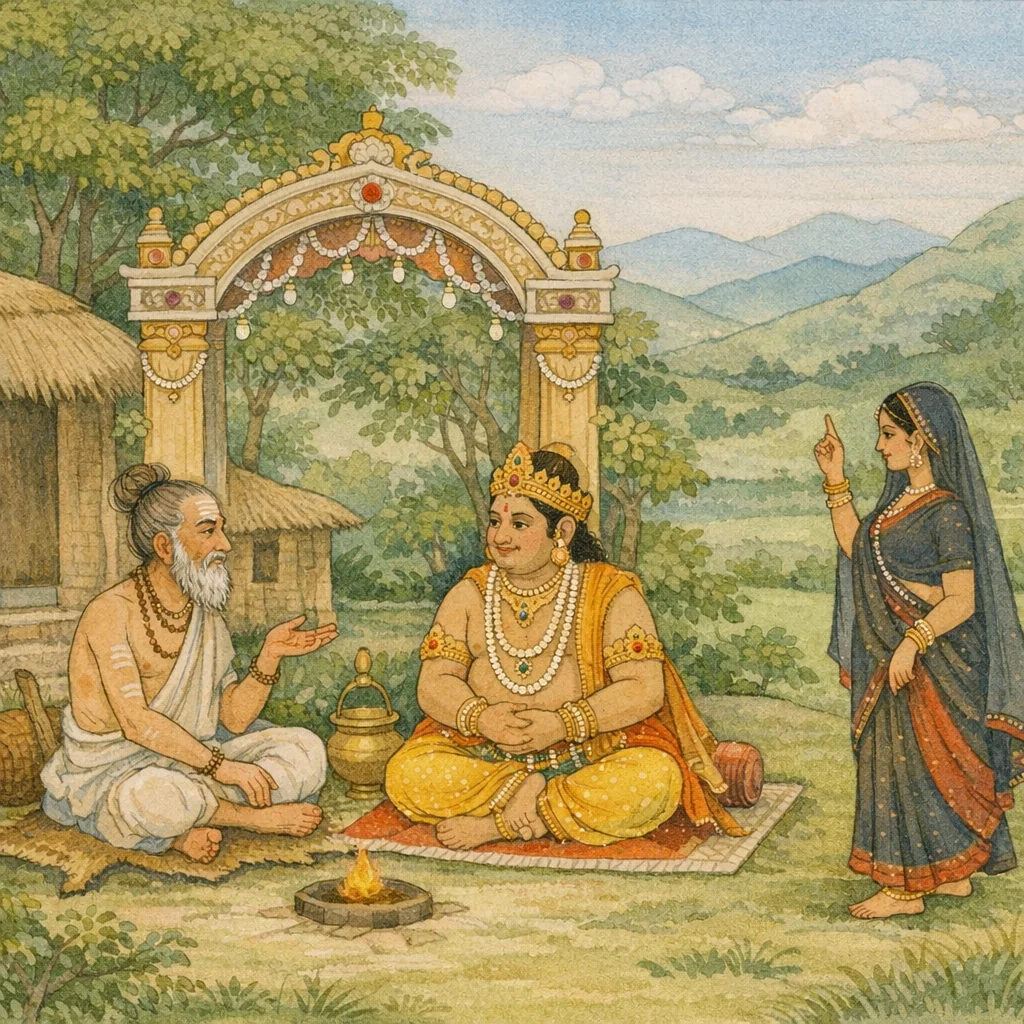
Adhyaya 21
Aṣṭāvakra–Strī-saṃvāda: Dhṛti, hospitality, and a dispute on autonomy
Upa-parva: Strī-dharma–Saṃyama (Episode on self-restraint and contested autonomy)
Bhīṣma narrates that a woman, having addressed a brāhmaṇa-sage, brings divine oil and bathing cloth and, with the muni’s permission, anoints his limbs. The sage proceeds to a bathing hall and is bathed carefully with proper observances; the comfort is such that the night passes without his notice. On rising he sees the sun and, perplexed, asks what to do; she offers food described as nectar-like, after which the day passes to evening. She then urges him to sleep on a prepared divine bed. Aṣṭāvakra refuses sexual involvement with another’s spouse, instructing her to retire. She asserts independence and denies any “dharma-deception” in him; Aṣṭāvakra responds with a normative claim that women lack independence, citing guardianship by father, husband, and sons. The woman counters that she is a maiden observing brahmacarya and asks him not to doubt her. Aṣṭāvakra reflects on the anomaly—her earlier aged appearance versus present maidenly form—and resolves to maintain restraint through dhṛti, treating the situation as a test or impediment to be understood without yielding.
Chapter Arc: अष्टावक्र मुनि वदान्य ऋषि के कथन से उत्तर दिशा की ओर प्रस्थान करते हैं; मार्ग में कुबेर का दिव्य स्वागत और उत्तर-दिशा की रहस्यमयी स्त्री-रूपधारिणी शक्तियों का संकेत कथा को कौतूहल से भर देता है। → कुबेर के यक्ष-गन्धर्व-किन्नरों सहित वैभवपूर्ण आश्रम-परिसर में ‘सहधर्म’ की परिभाषा पर प्रश्न उठता है—महर्षियों द्वारा पूर्वोक्त स्त्री-पुरुष सहधर्म की बात और उसके ‘देश-काल’ के अनुसार बदलते अर्थ को लेकर अष्टावक्र के मन में गहरा संदेह पैदा होता है। → स्त्री-रूपधारिणी सत्ता अष्टावक्र से कहती है कि ‘देश और काल के अनुसार’ वे सत्य को अनुभव करेंगे; आगे चलकर अष्टावक्र स्पष्ट घोषणा करते हैं कि वे पर-स्त्री-संसर्ग नहीं कर सकते—धर्मशास्त्रों के अनुसार यह दूषित है—और इसी कसौटी पर ‘सहधर्म’ की परीक्षा निर्णायक रूप लेती है। → अष्टावक्र स्त्रियों को अपने-अपने घर लौट जाने का निर्देश देते हैं और केवल एक (ज्ञानवती/प्रशान्त/उचित) स्त्री को रहने देते हैं; रात्रि-विश्राम की व्यवस्था होती है, संवाद शान्त होता है, और मुनि धर्म-सीमा को अक्षुण्ण रखते हुए स्थिति को संयम में बाँध देते हैं। → ‘देश-काल’ के अनुसार अनुभव कराने का वचन बना रहता है—अगले प्रसंग में यह परीक्षा किस रूप में आगे बढ़ेगी, यह अनिश्चित रहकर जिज्ञासा जगाता है।
Shlokas
Verse 1
अत एकोनविशो< ध्याय: अष्टावक्र मुनिका वदान्य ऋषिके कहनेसे उत्तर दिशाकी ओर प्रस्थान, मार्गमें कुबेरके द्वारा उनका स्वागत तथा स्त्रीरूपधारिणी उत्तरदिशाके साथ उनका संवाद युधिछिर उवाच यदिदं सहधर्मेति प्रोच्यते भरतर्षभ । पाणिग्रहणकाले तु स्त्रीणामेतत् कथं स्मृतम्,युधिष्ठिरने पूछा--भरतश्रेष्ठ! जो यह स्त्रियोंक लिये विवाहकालमें सहधर्मकी बात कही जाती है, वह किस प्रकार बतायी गयी है?
Yudhiṣṭhira said: “O bull among the Bharatas, when, at the time of marriage, it is said of a woman, ‘she is a partner in dharma (sahadharma),’ how is this principle to be understood, and on what basis is it taught?”
Verse 2
आर्ष एष भवेद् धर्म: प्राजापत्यो5थवा55सुर: । यदेतत् सहधर्मेति पूर्वमुक्ते महर्षिभि:,महर्षियोंने पूर्वकालमें जो यह स्त्री-पुरुषोंके सहधर्मकी बात कही है, यह आर्ष धर्म है या प्राजापत्य धर्म; अथवा आसुर धर्म है?
Yudhiṣṭhira said: “This rule of dharma—described earlier by the great seers as the ‘shared duty’ (sahadharma) of woman and man—what kind of dharma is it? Is it the Ṛṣi-sanctioned (ārṣa) form, or the Prajāpati-ordained (prājāpatya) form, or is it the āsura form?”
Verse 3
संदेह: सुमहानेष विरुद्ध इति मे मतिः । इह यः सहधर्मों वै प्रेत्यायं विहितः क्व नु
Yudhiṣṭhira said: “This is a very great doubt, and to me it seems self-contradictory. The duty called ‘saha-dharma’ that is prescribed here in this world—where, indeed, is it ordained for the state after death?”
Verse 4
मेरे मनमें यह महान् संदेह पैदा हो गया है। मैं तो ऐसा समझता हूँ कि यह सहधर्मका कथन विरुद्ध है। यहाँ जो सहधर्म है, वह मृत्युके पश्चात् कहाँ रहता है? ।। स्वर्गो मृतानां भवति सहधर्म: पितामह । पूर्वमेकस्तु म्रियते क्व चैकस्तिष्ठते वद,पितामह! जबकि मरे हुए मनुष्योंका स्वर्गवास हो जाता है एवं पति और पत्नीमेंसे एककी पहले मृत्यु हो जाती है, तब एक व्यक्तिमें सहधर्म कहाँ रहता है? यह बताइये
Yudhiṣṭhira said: “A great doubt has arisen in my mind. I think this teaching about ‘shared dharma’ is inconsistent. If ‘shared dharma’ is what binds husband and wife, where does it remain after death? O Pitāmaha, the dead are said to attain heaven—yet if one spouse dies earlier, where does that ‘joint duty’ abide then? Tell me: when the departed go to heaven and one of the pair dies first, in whom does the shared dharma reside?”
Verse 5
नानाधर्मफलोपेता नानाकर्मनिवासिता: । नानानिरयनिष्ठान्ता मानुषा बहवो यदा,जब बहुत-से मनुष्य नाना प्रकारके धर्मफलसे संयुक्त होते हैं, नाना प्रकारके कर्मवश विभिन्न स्थानोंमें निवास करते हैं और शुभाशुभ कर्मोके फल-स्वरूप स्वर्ग-नरक आदि नाना अवस्थाओंमें पड़ते हैं, तब वे सहधर्मका निर्वाह किस प्रकार कर सकते हैं?
Yudhiṣṭhira said: “When many human beings are associated with diverse fruits of dharma, are made to dwell in different conditions by their varied actions, and come to rest in many destinies—such as heaven and hell—arising from auspicious and inauspicious deeds, how can they possibly sustain and fulfill a shared dharma together?”
Verse 6
अनृताः स्त्रिय इत्येवं सूत्रकारो व्यवस्यति । यदानृताः स्त्रियस्तात सहधर्म: कुतः स्मृत:,धर्मसूत्रकार यह निश्चितरूपसे कहते हैं कि स्त्रियाँ असत्यपरायण होती हैं। तात! जब स्त्रियाँ असत्यवादिनी ही हैं तब उन्हें साथ रखकर सहधर्मका अनुष्ठान कैसे किया जा सकता है?
The composer of the Dharma-sūtras declares: “Women are untruthful.” O son! If women are indeed given to falsehood, whence is “saha-dharma”—the shared duty—remembered at all? And how can one perform the conjoint dharma while keeping them at one’s side?
Verse 7
अनृताः स्त्रिय इत्येवं वेदेष्वपि हि पठ्यते । धर्मो<यं पूर्विका संज्ञा उपचार: क्रियाविधि:,वेदोंमें भी यह बात पढ़ी गयी है कि स्त्रियाँ असत्यभाषिणी होती हैं, ऐसी दशामें उनका वह असत्य भी सहधर्मके अन्तर्गत आ सकता है, किंतु असत्य कभी धर्म नहीं हो सकता; अतः दाम्पत्यधर्मको जो सहधर्म कहा गया है, यह उसकी गौण संज्ञा है। वे पति-पत्नी साथ रहकर जो भी कार्य करते हैं, उसीको उपचारत: धर्म नाम दे दिया गया है
Yudhiṣṭhira said: “Indeed, even in the Vedas it is read in this manner: ‘Women are untruthful.’ In such a situation, that untruth of theirs may be treated, by convention, as falling within the sphere of ‘shared duty’ (saha-dharma) in marriage; yet untruth can never truly be dharma. Therefore, calling the marital duty ‘saha-dharma’ is only a secondary, figurative designation. Whatever acts husband and wife perform together according to prescribed conduct are, by convention, spoken of as ‘dharma.’”
Verse 8
गद्दरं प्रतिभात्येतन्मम चिन्तयतो5निशम् | निः:संदेहमिदं सर्व पितामह यथाश्रुति,पितामह! मैं ज्यों-ज्यों इस विषयपर विचार करता हूँ, त्यों-त्यों यह बात मुझे अत्यन्त दुर्बोध प्रतीत होती है। अत: आपने इस विषयमें जो कुछ श्रुतिका विधान हो, उसके अनुसार यह सब समझाइये जिससे मेरा संदेह दूर हो जाय
Yudhiṣṭhira said: “As I reflect on this matter again and again, it appears to me exceedingly deep and hard to grasp. Therefore, O Grandfather, explain all of it to me without any doubt, in accordance with what is taught in the śruti, so that my uncertainty may be dispelled.”
Verse 9
यदैतद् यादृशं चैतद् यथा चैतत् प्रवर्तितम् । निखिलेन महाप्राज्ञ भवानेतद् ब्रवीतु मे,महामते! यह सहधर्म जबसे प्रचलित हुआ, जिस रूपमें सामने आया और जिस प्रकार इसकी प्रवृत्ति हुई, ये सारी बातें आप मुझे बताइये
Yudhiṣṭhira said: “O greatly wise one, please tell me in full—what this practice is like, in what form it first appeared, and in what manner it came to be set in motion and established. Explain it to me completely, O man of profound understanding.”
Verse 10
भीष्म उवाच अत्राप्युदाहरन्तीममितिहासं पुरातनम् । अष्टावक्रस्य संवादं दिशया सह भारत,भीष्मजीने कहा--भरतनन्दन! इस विषयमें अष्टावक्र मुनिका उत्तर दिशाकी अधिष्ठात्रीदेवीके साथ जो संवाद हुआ था, उसी प्राचीन इतिहासका उदाहरण दिया जाता है
Bhishma said: “Here too, O Bharata, an ancient precedent is cited—namely, the dialogue of the sage Ashtavakra with the presiding goddess of the northern direction. By recalling this old account, the point about right conduct is illustrated through an authoritative example.”
Verse 11
निर्वेष्टकामस्तु पुरा अष्टावक्रो महातपा: । ऋषेरथ वदान्यस्य वत्रे कन्यां महात्मन:,पूर्वकालकी बात है, महातपस्वी अष्टावक्र विवाह करना चाहते थे, उन्होंने इसके लिये महात्मा वदान्य ऋषिसे उनकी कन्या माँगी
Bhishma said: In ancient times, the great ascetic Aṣṭāvakra, wishing to marry, sought the daughter of the noble and generous sage Vadānya. Thus the tale begins, showing how even austerity may turn toward the householder’s duty, and how marriage is pursued through rightful request and consent within dharma.
Verse 12
सुप्रभां नाम वै नाम्ना रूपेणाप्रतिमां भुवि | गुणप्रभावशीलेन चारित्रेण च शोभनाम्,उस कन्याका नाम था सुप्रभा। इस पृथ्वीपर उसके रूपकी कहीं तुलना नहीं थी। गुण, प्रभाव, शील और चरित्र सभी दृष्टियोंसे वह परम सुन्दर थी
Bhishma said: “There was a maiden named Suprabhā. In beauty she was without equal on this earth; and by her virtues—her influence, her good disposition, and her conduct—she was radiant and admirable.”
Verse 13
सा तस्य दृष्टवैव मनो जहार शुभलोचना । वनराजी यथा चित्रा वसन्ते कुसुमाचिता,जैसे वसंतऋतुमें सुन्दर फूलोंसे सजी हुई विचित्र वनश्रेणी मनुष्यके मनको लुभा लेती है, उसी प्रकार उस शुभलोचना मुनिकुमारीने दर्शनमात्रसे अष्टावक्रका मन चुरा लिया था
Bhishma said: The fair-eyed maiden stole his heart the moment he saw her. As a variegated forest-grove, adorned with blossoms in spring, irresistibly delights the mind, so did she, by mere sight, captivate Aṣṭāvakra’s mind.
Verse 14
ऋषिस्तमाह देया मे सुता तुभ्यं हि तच्छृणु । (अनन्यस्त्रीजन: प्राज्ञो हाप्रवासी प्रियंवद: । सुरूप: सम्मतो वीर: शीलवान् भोगभुक्छवि: ।। दारानुमतयज्ञश्न सुनक्षत्रामथोद्वहेत् । स्वभर्त्रा स््वजनोपेत इह प्रेत्य च मोदते ।।) गच्छ तावद् दिशं पुण्यामुत्तरां द्रक्ष्य्से ततः,वदान्य ऋषिने अष्टावक्रके माँगनेपर इस प्रकार उत्तर दिया--“विप्रवर! जिसके दूसरी कोई स्त्री न हो, जो परदेशमें न रहता हो, विद्वान, प्रिय वचन बोलनेवाला, लोकसम्मानित, वीर, सुशील, भोग भोगनेमें समर्थ, कान्तिमान् और सुन्दर पुरुष हो, उसीके साथ मुझे अपनी पुत्रीका विवाह करना है। जो स्त्रीकी अनुमतिसे यज्ञ करता और उत्तम नक्षत्रवाली कन्याको व्याहता है, वह पुरुष अपनी पत्नीके साथ तथा पत्नी अपने पतिके साथ रहकर दोनों ही इहलोक और परलोकमें आनन्द भोगते हैं। मैं तुम्हें अपनी कन्या अवश्य दे दूँगा, परंतु पहले एक बात सुनो, यहाँसे परम पवित्र उत्तर दिशाकी ओर चले जाओ। वहाँ तुम्हें उसका दर्शन होगा”
Bhishma said: The sage told him, “I will give you my daughter—listen well. I wish to marry her only to a wise man who has no other woman, does not live away from home, speaks pleasing words, is handsome, honored by society, heroic, well-conducted, able to enjoy lawful pleasures, and radiant. He who performs sacrifices with his wife’s consent and weds a maiden under an auspicious constellation—such a husband with his wife, and the wife with her husband, rejoice in this world and after death. I will indeed give you my daughter; but first hear this: go now toward the supremely holy northern direction; there you will behold him.”
Verse 15
अष्टावक्र उवाच किं द्रष्टव्यं मया तत्र वक्तुमहति मे भवान् | तथेदानीं मया कार्य यथा वक्ष्यति मां भवान्,अष्टावक्रने पूछा--महर्षे! उत्तर दिशामें जाकर मुझे किसका दर्शन करना होगा? आप यह बतानेकी कृपा करें तथा उस समय मुझे क्या और किस प्रकार करना चाहिये, यह भी आप ही बतायेंगे
Aṣṭāvakra said: “What is it that I must behold there? Be pleased to tell me. And now, what should I do, and in what manner? As you instruct me, so shall I act.”
Verse 16
वदान्य उवाच धनदं समतिक्रम्य हिमवन्तं च पर्वतम् । रुद्रस्यायतनं दृष्टवा सिद्धचारणसेवितम्,वदान्यने कहा--वत्स! तुम कुबेरकी अलकापुरीको लाँधकर जब हिमालय पर्वतको भी लाँघ जाओगे तब तुम्हें सिद्धों और चारणोंसे सेवित रुद्रके निवासस्थान कैलास पर्वतका दर्शन होगा
Vādānya said: “My child! When you have passed beyond Kubera’s city of Alakā and crossed over the Himavān mountain (the Himalayas) as well, then you shall behold Mount Kailāsa—the abode of Rudra—served by Siddhas and Cāraṇas.”
Verse 17
संहृष्टे: पार्षदैर्जुष्ट नृत्यद्भिविविधाननै: | दिव्याड्ररागै: पैशाचैरन्यैर्नानाविधै: प्रभो:,वहाँ नाना प्रकारके मुखवाले भाँति-भाँतिके दिव्य अंगराग लगाये अनेकानेक पिशाच तथा अन्य भूत-वैताल आदि भगवान् शिवके पार्षदगण हर्ष और उल्लासमें भरकर नाच रहे होंगे
There, Śiva’s attendants—countless piśācas and other bhūtas and vetālas—bearing faces of many kinds and anointed with diverse divine unguents, dance in rapture, filled with joy and exultation.
Verse 18
पाणितालसुतालै श्व शम्पातालै: समैस्तथा । सम्प्रहृष्टे: प्रनृत्यद्भि: शर्वस्तत्र निषेव्यते,वे करताल और सुन्दर ताल बजाकर शम्पा ताल देते हुए समभावसे हर्षविभोर हो जोर-जोरसे नृत्य करते हुए वहाँ भगवान् शंकरकी सेवा करते हैं
With hand-claps (karatāla) and well-measured rhythms, and with the lively beat of the śampā-tāla as well, they—balanced in their bearing yet overflowing with joy—dance vigorously. In that very place, Śarva (Lord Śiva) is attended upon and worshipfully served.
Verse 19
इष्टं किल गिरौ स्थान तद्दिव्यमिति शुश्रुम । नित्यं संनिहितो देवस्तथा ते पार्षदा: स्मृता:,इति श्रीमहाभारते अनुशासनपर्वणि दानधर्मपर्वणि अष्टावक्रदिक्संवादे एकोनविंशो5 ध्याय: इस प्रकार श्रीमहाभारत अनुशासनपर्वके अन्तर्गत दानधर्मपर्वमें अष्ावक्र और उत्तर दिशाका संवादविषयक उत्नीसवाँ अध्याय पूरा हुआ
“We have indeed heard that upon the mountain there is a cherished spot—truly a divine place. There the deity is said to be ever-present, and his attendants are likewise remembered as abiding there.”
Verse 20
उस पर्वतका वह दिव्य स्थान भगवान् शंकरको बहुत प्रिय है। यह बात हमारे सुननेमें आयी है। वहाँ महादेवजी तथा उनके पार्षद नित्य निवास करते हैं ।। तत्र देव्या तपस्तप्तं शड्करार्थ सुदुश्चरम् अतस्तदिष्ट॑ देवस्य तथोमाया इति श्रुति:,वहाँ देवी पार्वतीने भगवान् शंकरकी प्राप्तिके लिये अत्यन्त दुष्कर तपस्या की थी, इसीलिये वह स्थान भगवान् शिव और पार्वतीको अधिक प्रिय है, ऐसा सुना जाता है
That radiant spot upon the mountain is exceedingly dear to Lord Śaṅkara—so we have heard. There Mahādeva dwells continually together with his attendants. For it was there that the Goddess Pārvatī performed an extremely arduous austerity to attain Śaṅkara; therefore, tradition says, that place is especially beloved to the Lord and to Umā as well.
Verse 21
पूर्वे तत्र महापाश्वे देवस्योत्तरतस्तथा । ऋतव: कालरात्रिश्व ये दिव्या ये च मानुषा:,महादेवजीके पूर्व तथा उत्तर भागमें महापार्श्व नामक पर्वत है, जहाँ ऋतु, कालरात्रि तथा दिव्य और मानुषभाव सब-के-सब मूर्तिमान् होकर महादेवजीकी उपासना करते हैं। उस स्थानको लाँघकर तुम आगे बढ़ते ही चले जाना
To the east stands the great mountain called Mahāpārśva, and likewise to the north of the Lord. There the Seasons and Kālarātri—both in their divine and human manifestations—stand embodied and worship Mahādeva. Having crossed that sacred region, you should continue onward without stopping.
Verse 22
देवं चोपासते सर्वे रूपिण: किल तत्र ह | तदतिक्रम्य भवन त्वया यातव्यमेव हि,महादेवजीके पूर्व तथा उत्तर भागमें महापार्श्व नामक पर्वत है, जहाँ ऋतु, कालरात्रि तथा दिव्य और मानुषभाव सब-के-सब मूर्तिमान् होकर महादेवजीकी उपासना करते हैं। उस स्थानको लाँघकर तुम आगे बढ़ते ही चले जाना
There, indeed, all embodied beings worship the Divine. Having passed beyond that place, you must continue onward without stopping.
Verse 23
ततो नील वनोद्देशं द्रक्ष्यसे मेघसंनिभम् । रमणीयं मनोग्राहि तत्र वै द्रक्ष्यसे स्त्रियम्,तदनन्तर तुम्हें मेघोंकी घटाके समान नीला एक वन्य प्रदेश दिखायी देगा। वह बड़ा ही मनोरम और रमणीय है। उस वनमें तुम एक स्त्रीको देखोगे जो तपस्विनी, महान् सौभाग्यवती, वृद्धा और दीक्षापरायण है। तुम यत्नपूर्वक वहाँ उसका दर्शन और पूजन करना
Then you will see a tract of forest, dark-blue like a mass of clouds—beautiful and captivating to the mind. There, indeed, you will behold a woman. After that, you should carefully go to her, take her darśana, and honor her with reverent worship.
Verse 24
तपस्विनीं महाभागां वृद्धां दीक्षामनुछिताम् । द्रष्टव्या सा त्वया तत्र सम्पूज्या चैव यत्नतः,तदनन्तर तुम्हें मेघोंकी घटाके समान नीला एक वन्य प्रदेश दिखायी देगा। वह बड़ा ही मनोरम और रमणीय है। उस वनमें तुम एक स्त्रीको देखोगे जो तपस्विनी, महान् सौभाग्यवती, वृद्धा और दीक्षापरायण है। तुम यत्नपूर्वक वहाँ उसका दर्शन और पूजन करना
There you should seek the sight of that ascetic woman—highly fortunate, aged, and steadfast in her consecrated vows. Having met her, you must honor and worship her with careful effort.
Verse 25
तां दृष्टवा विनिवृत्तस्त्वं ततः पार्णिं ग्रहीष्यसि । यद्येष समय: सर्व: साध्यतां तत्र गम्यताम्,उसे देखकर लौटनेपर ही तुम मेरी पुत्रीका पाणिग्रहण कर सकोगे। यदि यह सारी शर्त स्वीकार हो तो इसे पूरी करनेमें लग जाओ और अभी वहाँकी यात्रा आरम्भ कर दो
“Only after you have seen her and then returned may you take my daughter’s hand in marriage. If you accept this entire condition, then set about fulfilling it and begin the journey there at once.”
Verse 26
अष्टावक्र उवाच तथास्तु साधयिष्यामि तत्र यास्याम्यसंशयम् । यत्र त्वं वदसे साधो भवान् भवतु सत्यवाक्,अष्टावक्र बोले--ऐसा ही होगा, मैं यह शर्त पूरी करूँगा। श्रेष्ठ पुरुष! आप जहाँ कहते हैं वहाँ अवश्य जाऊँगा। आपकी वाणी सत्य हो
Aṣṭāvakra said: “So be it. I shall fulfill it; without doubt I will go there—where you, O good sir, direct me. May your speech prove true.”
Verse 27
भीष्म उवाच ततो5गच्छत् स भगवानुत्तरामुत्तरां दिशम् हिमवन्तं गिरिश्रेष्ठ सिद्धा्चारणसेवितम्,भीष्मजी कहते हैं--राजन्! तदनन्तर भगवान् अष्टावक्र उत्तरोत्तर दिशाकी ओर चल दिये। सिद्धों और चारणोंसे सेवित गिरिश्रेष्ठ महापर्वत हिमालयपर पहुँचकर वे श्रेष्ठ द्विज धर्मसे शोभा पानेवाली पुण्यमयी बाहुदा नदीके तटपर गये
Bhishma said: “Then that venerable sage set forth, moving ever further toward the northern quarters. He reached the Himalaya, the foremost of mountains, frequented and revered by Siddhas and Charanas.”
Verse 28
स गत्वा द्विजशार्दूलो हिमवन्तं महागिरिम् । अभ्यगच्छन्नदीं पुण्यां बाहुदां धर्मशालिनीम्,भीष्मजी कहते हैं--राजन्! तदनन्तर भगवान् अष्टावक्र उत्तरोत्तर दिशाकी ओर चल दिये। सिद्धों और चारणोंसे सेवित गिरिश्रेष्ठ महापर्वत हिमालयपर पहुँचकर वे श्रेष्ठ द्विज धर्मसे शोभा पानेवाली पुण्यमयी बाहुदा नदीके तटपर गये
Bhishma said: “O King, thereafter that tiger among Brahmins went to the great mountain Himavat. Reaching that foremost of mountains, he approached the sacred river Bāhudā, renowned for its association with dharma.”
Verse 29
अशोके विमले तीर्थे स्नात्वा वै तर्प्प देवता: । तत्र वासाय शयने कौशे सुखमुवास ह,वहाँ निर्मल अशोक तीर्थमें स्नान करके देवताओंका तर्पण करनेके पश्चात् उन्होंने कुशकी चटाईपर सुखपूर्वक निवास किया
Bhishma said: Having bathed in the spotless sacred ford called Aśoka and duly offered libations (tarpaṇa) to the gods, he then stayed there comfortably, resting on a bed made of kuśa grass.
Verse 30
ततो रात्र्यां व्यतीतायां प्रातरुत्थाय स द्विज: । स्नात्वा प्रादुश्चकाराग्निं स्तुत्वा चैनं प्रधानत:,तदनन्तर रात बीतनेपर वे द्विज प्रातःकाल उठे और उन्होंने स्नान करके अग्निदेवको प्रज्वलित किया। फिर मुख्य-मुख्य वैदिक मन्त्रोंसे अग्निदेवकी स्तुति करके “रुद्राणी रुद्र' नामक तीर्थमें गये और वहाँ सरोवरके तटपर कुछ कालतक विश्राम करते रहे। विश्रामके पश्चात् उठकर वे कैलासकी ओर चल दिये
When the night had passed, the brahmin rose at dawn. After bathing, he kindled the sacred fire (Agni) and offered it foremost praise with the principal Vedic hymns—showing the disciplined rhythm of a dharmic life in which purity, worship, and right conduct precede every further undertaking.
Verse 31
रुद्राणीं रुद्रमासाद्य हदे तत्र समाश्वसत् । विश्रान्तश्न समुत्थाय कैलासमभितो ययौ,तदनन्तर रात बीतनेपर वे द्विज प्रातःकाल उठे और उन्होंने स्नान करके अग्निदेवको प्रज्वलित किया। फिर मुख्य-मुख्य वैदिक मन्त्रोंसे अग्निदेवकी स्तुति करके “रुद्राणी रुद्र' नामक तीर्थमें गये और वहाँ सरोवरके तटपर कुछ कालतक विश्राम करते रहे। विश्रामके पश्चात् उठकर वे कैलासकी ओर चल दिये
Bhīṣma said: Having reached the sacred spot called Rudrāṇī–Rudra, he rested there by the lake and regained composure. After resting, he rose and proceeded toward Kailāsa.
Verse 32
सो<पश्यत् काञ्चनद्वारं दीप्यमानमिव श्रिया । मन्दाकिनीं च नलिनीं धनदस्य महात्मन:,कुछ दूर जानेपर उन्होंने कुबेरकी अलकापुरीका सुवर्णमय द्वार देखा, जो दिव्य दीप्तिसे देदीप्यमान हो रहा था। वहीं महात्मा कुबेरकी कमलपुष्पोंसे सुशोभित एक बावड़ी देखी, जो गंगाजीके जलसे परिपूर्ण होनेके कारण मन्दाकिनी नामसे विख्यात थी
Bhīṣma said: He then beheld, a little farther on, the golden gate of the great-souled Dhanada (Kubera), shining as though with the very radiance of prosperity. He also saw Mandākinī—Kubera’s lotus-adorned tank—filled with sacred waters, renowned for its purity and splendor.
Verse 33
अथ ते राक्षसा: सर्वे येडभिरक्षन्ति पद्मिनीम् प्रत्युत्थिता भगवन्तं मणिभद्रपुरोगमा:
Then all those rākṣasas who were guarding Padminī rose up in respectful attention to the revered one, with Maṇibhadra at their head.
Verse 34
वहाँ जो उस पद्मपूर्ण पुष्करिणीकी रक्षा कर रहे थे, वे सब मणिभद्र आदि राक्षस भगवान् अष्टावक्रको देखकर उनके स्वागतके लिये उठकर खड़े हो गये ।। स तानू प्रत्यर्चयामास राक्षसान् भीमविक्रमान् । निवेदयत मां क्षिप्रं धनदायेति चाब्रवीत्,मुनिने भी उन भयंकर पराक्रमी राक्षसोंके प्रति सम्मान प्रकट किया और कहा --“आपलोग शीघ्र ही धनपति कुबेरको मेरे आगमनकी सूचना दे दें”
Seeing the formidable rākṣasas—such as Maṇibhadra—who were guarding the lotus-filled lake, the sage Aṣṭāvakra was honored by them as they rose to welcome him. He, in turn, respectfully acknowledged those fearsome guardians and said, “Inform the Lord of Wealth, Kubera, at once of my arrival.”
Verse 35
ते राक्षसास्तथा राजन् भगवन्तमथान्रुवन् । असौ वैश्रवणो राजा स्वयमायाति तेडन्तिकम्,राजन! वे राक्षस वैसा करके भगवान् अष्टावक्रसे बोले--'प्रभो! राजा कुबेर स्वयं ही आपके निकट पधार रहे हैं
Bhishma said: “O king, those Rakshasas then addressed the venerable sage and said: ‘That king Vaiśravaṇa (Kubera) himself is coming to you.’”
Verse 36
विदितो भगवानस्य कार्यमागमनस्य यत् । पश्यैनं त्वं महाभागं ज्वलन्तमिव तेजसा,“आपका आगमन और इस आगमनका जो उद्देश्य है, वह सब कुछ कुबेरको पहलेसे ही ज्ञात है। देखिये, ये महाभाग धनाध्यक्ष अपने तेजसे प्रकाशित होते हुए आ रहे हैं'
Bhīṣma said: “Kubera, the Lord of wealth, already knows the purpose of your coming. Look—this illustrious Kubera, treasurer of the gods, is drawing near, blazing as though aflame with his own radiance.”
Verse 37
ततो वैश्रवणो<भ्येत्य अष्टावक्रमनिन्दितम् । विधिवत्कुशल पृष्टवा ततो ब्रह्मर्षिमब्रवीत्,तदनन्तर विश्रववाके पुत्र कुबेरने निकट आकर निन्दारहित ब्रह्मर्षि अष्टावक्रसे विधिपूर्वक कुशल-समाचार पूछते हुए कहा--
Then Vaiśravaṇa (Kubera) approached the blameless sage Aṣṭāvakra. After inquiring in due form about his welfare, he addressed that brahmarṣi.
Verse 38
सुखं प्राप्तो भवान् कच्चित् कि वा मत्तश्चिकीर्षति । ब्रृहि सर्व करिष्यामि यन्मां वक्ष्यसि वै द्विज,“ब्रह्म! आप सुखपूर्वक यहाँ आये हैं न? बताइये मुझसे किस कार्यकी सिद्धि चाहते हैं? आप मुझसे जो-जो कहेंगे, वह सब पूर्ण करूँगा
“Have you arrived here in comfort and well-being? What purpose do you wish to accomplish through me? Tell me—whatever you ask of me, O twice-born one, I shall carry out in full.”
Verse 39
भवन प्रविश त्वं मे यथाकामं द्विजोत्तम । सत्कृतः कृतकार्यश्व भवान् यास्यत्यविघ्नतः:,द्विजश्रेष्ठ] आप इच्छानुसार मेरे भवनमें प्रवेश कीजिये और यहाँका सत्कार ग्रहण करके कृतकृत्य हो यहाँसे निर्विघ्न यात्रा कीजियेगा
“O best of brāhmaṇas, enter my dwelling as you please. Accept the hospitality offered here; having accomplished your purpose, you shall depart from here without any hindrance.”
Verse 40
प्राविशद् भवन स्वं वै गृहीत्वा तं द्विजोत्तमम् । आसन स्वं ददौ चैव पाद्यमर्घ्य तथैव च,ऐसा कहकर कुबेरने विप्रवर अष्टावक्रको साथ लेकर अपने भवनमें प्रवेश किया और उन्हें पाद्य, अर््ध तथा अपना आसन दिया
Bhīṣma said: Having taken that foremost of Brahmins with him, Kubera entered his own palace. There he honored the sage by offering him his own seat, along with water for washing the feet and the arghya offering—thus observing the proper duties of hospitality and reverence toward a worthy guest.
Verse 41
अथोपविष्टयोस्तत्र मणिभद्रपुरोगमा: । निषेदुस्तत्र कौबेरा यक्षगन्धर्वकिन्नरा:,जब कुबेर और अष्टावक्र दोनों वहाँ आरामसे बैठ गये तब कुबेरके सेवक मणिभद्र आदि यक्ष, गन्धर्व और किन्नर भी नीचे बैठ गये
Bhishma said: When Kubera and Aṣṭāvakra had seated themselves there at ease, Kubera’s attendants—led by Maṇibhadra—namely the Yakṣas, Gandharvas, and Kinnaras, also sat down nearby.
Verse 42
ततस्तेषां निषण्णानां धनदो वाक्यमब्रवीत् । भवच्छन्दं समाज्ञाय नृत्येरन्नप्सरोगणा:,उन सबके बैठ जानेपर कुबेरने कहा--“आपकी इच्छा हो तो उसे जानकर यहाँ अप्सराएँ नृत्य करें; क्योंकि आपका आतिथ्य सत्कार और सेवा करना हमलोगोंका परम कर्तव्य है।' तब मुनिने मधुर वाणीमें कहा, “तथास्तु--ऐसा ही हो”
Bhīṣma said: When they had all taken their seats, Dhanada (Kubera) spoke: “Understanding your wish, let the companies of Apsarases dance here, if it pleases you—for to honor, receive, and serve you as a guest is our highest duty.” Then the sage, in gentle words, replied, “So be it—let it be as you say.”
Verse 43
आतिथ्यं परम॑ कार्य शुश्रूषा भवतस्तथा । संवर्ततामित्युवाच मुनिर्मधुरया गिरा,उन सबके बैठ जानेपर कुबेरने कहा--“आपकी इच्छा हो तो उसे जानकर यहाँ अप्सराएँ नृत्य करें; क्योंकि आपका आतिथ्य सत्कार और सेवा करना हमलोगोंका परम कर्तव्य है।' तब मुनिने मधुर वाणीमें कहा, “तथास्तु--ऐसा ही हो”
Bhishma said: In a sweet voice the sage replied, “Hospitality is a supreme duty, and so is attentive service to you. So be it—let it be done.”
Verse 44
अथोरवरा मिश्रकेशी रम्भा चैवोर्वशी तथा । अलम्बुषा घृताची च चित्रा चित्राड़दा रुचि:,तदनन्तर उर्वरा, मिश्रकेशी, रम्भा, उर्वशी, अलम्बुषा, घृताची, चित्रा, चित्रांगदा, रुचि, मनोहरा, सुकेशी, सुमुखी, हासिनी, प्रभा, विद्युता, प्रशमी, दान्ता, विद्योता और रति-ये तथा और भी बहुत-सी शुभलक्षणा अप्सराएँ नृत्य करने लगीं और गन्धर्वगण नाना प्रकारके बाजे बजाने लगे
Bhishma said: “Then there appeared Urvarā, Miśrakeśī, Rambhā, and also Urvaśī; Alambuṣā and Ghṛtācī; Citrā, Citrāṅgadā, and Ruci.”
Verse 45
मनोहरा सुकेशी च सुमुखी हासिनी प्रभा । विद्युता प्रशमी दान्ता विद्योता रतिरेवच,तदनन्तर उर्वरा, मिश्रकेशी, रम्भा, उर्वशी, अलम्बुषा, घृताची, चित्रा, चित्रांगदा, रुचि, मनोहरा, सुकेशी, सुमुखी, हासिनी, प्रभा, विद्युता, प्रशमी, दान्ता, विद्योता और रति-ये तथा और भी बहुत-सी शुभलक्षणा अप्सराएँ नृत्य करने लगीं और गन्धर्वगण नाना प्रकारके बाजे बजाने लगे
Bhishma said: “Manoharā, Sukeśī, Sumukhī, Hāsinī, Prabhā, Vidyutā, Praśamī, Dāntā, Vidyotā, and Rati—these and many other auspiciously marked apsarases began to dance, while the gandharvas played many kinds of musical instruments.”
Verse 46
एताश्षान्याश्न वै वह्नयः प्रनृत्ताप्सरस: शुभा: । अवादयंश्न गन्धर्वा वाद्यानि विविधानि च,तदनन्तर उर्वरा, मिश्रकेशी, रम्भा, उर्वशी, अलम्बुषा, घृताची, चित्रा, चित्रांगदा, रुचि, मनोहरा, सुकेशी, सुमुखी, हासिनी, प्रभा, विद्युता, प्रशमी, दान्ता, विद्योता और रति-ये तथा और भी बहुत-सी शुभलक्षणा अप्सराएँ नृत्य करने लगीं और गन्धर्वगण नाना प्रकारके बाजे बजाने लगे
Bhishma said: “Then many other auspicious Apsarases—radiant like flames—began to dance, and the Gandharvas played instruments of many kinds. After that, Urvarā, Miśrakeśī, Rambhā, Urvaśī, Alambuṣā, Ghṛtācī, Citrā, Citrāṅgadā, Ruci, Manoharā, Sukeśī, Sumukhī, Hāsinī, Prabhā, Vidyutā, Praśamī, Dāntā, Vidyotā, and Rati—along with many more Apsarases marked by auspicious signs—took up the dance, while the Gandharva hosts continued their varied music.”
Verse 47
अथ प्रवृत्ते गान्धर्वे दिव्ये ऋषिरुपाविशत् । दिव्यं संवत्सरं तत्रारमतैष महातपा:,वह दिव्य नृत्य-गीत आरम्भ होनेपर महातपस्वी ऋषि अष्टावक्र भी दर्शक-मण्डलीमें आ बैठे और वे देवताओंके वर्षसे एक वर्षतक इसी आमोद-प्रमोदमें रमते रहे
Bhīṣma said: “When the celestial Gandharva performance began, the sage took his seat among the spectators. That great ascetic delighted there for a full divine year, absorbed in the heavenly music and dance—showing how even a disciplined seer may, without attachment, partake of refined joy when it is orderly and auspicious.”
Verse 48
ततो वैश्रवणो राजा भगवन्तमुवाच ह । साग्र: संवत्सरो जातो विप्रेह तव पश्यत:,तब राजा वैश्रवण (कुबेर)-ने भगवान् अष्टावक्रसे कहा--“विप्रवर! यहाँ नृत्य देखते हुए आपका एक वर्षसे कुछ अधिक समय व्यतीत हो गया है
Then King Vaiśravaṇa (Kubera) addressed the venerable sage: “O brāhmaṇa, while you have been watching here, a full year—and a little more—has passed.”
Verse 49
हार्योयं विषयो ब्रह्मन् गान्धर्वो नाम नामतः । छन््दतो वर्ततां विप्र यथा वदति वा भवान्,“ब्रह्मन! यह नृत्य-गीतका विषय जिसे “गान्धर्व” नाम दिया गया है बड़ा मनोहारी है; अतः यदि आपकी इच्छा हो तो यह आयोजन कुछ दिन और इसी तरह चलता रहे अथवा विप्रवर! आप जैसी आज्ञा दें वैसा किया जाय
Bhishma said: “O Brahmin, this subject—song and dance—known by the name ‘Gāndharva’ is truly delightful. Therefore, if you wish, let this performance continue for some more days in the same manner; or, O best of Brahmins, let it be done exactly as you command.”
Verse 50
अतिथि: पूजनीयस्त्वमिदं च भवतो गृहम् । सर्वमाज्ञाप्पतामाशु परवन्तो वयं त्वयि
Bhishma said: “You are an honored guest, and this house is yours. Command whatever you wish at once; we are wholly at your disposal.”
Verse 51
“आप मेरे पूजनीय अतिथि हैं। यह घर आपका ही है। आप निस्संकोच भावसे शीघ्र ही सभी कार्योके लिये हमें आज्ञा दें। हम आपके वशवर्ती किंकर हैं” ।। अथ वैश्रवण् प्रीतो भगवान् प्रत्यभाषत । अर्चितोडस्मि यथान्यायं गमिष्यामि धनेश्वर,तब अत्यन्त प्रसन्न हुए भगवान् अष्टावक्रने कुबेरसे कहा--“धनेश्वर! आपने यथोचित रूपसे मेरा सत्कार किया है। अब आज्ञा दें, मैं यहाँसे जाऊँगा
Bhishma said: “You are my venerable guest. This house is truly yours. Without hesitation, quickly command us in all matters. We are your obedient servants.” Then Vaishravana (Kubera), pleased, replied: “I have been honored according to proper custom, O Lord of wealth; I shall depart.” Thereupon the revered Ashtavakra, greatly delighted, said to Kubera: “O Lord of riches, you have received me with fitting respect. Now grant me leave; I will go from here.”
Verse 52
प्रीतो5स्मि सदृशं चैव तव सर्व धनाधिप । तव प्रसादाद् भगवन् महर्षेश्न महात्मन:,“धनाधिप! मैं बहुत प्रसन्न हूँ। आपकी सारी बातें आपके अनुरूप ही हैं। भगवन्! अब मैं आपकी कृपासे उन महात्मा महर्षि वदान्यकी आज्ञाके अनुसार आगे जाऊँगा। आप अभ्युदयशील एवं समृद्धिशाली हों।! इतना कहकर भगवान् अष्टावक्र उत्तर दिशाकी ओर मुँह करके चल दिये
Bhīṣma said: “I am pleased, O lord of wealth. All that you have said is wholly in keeping with your own noble nature. By your gracious favor, O venerable one—O great-souled lord among sages—I shall now proceed further in accordance with the command of that generous great ṛṣi. May you ever advance in welfare and prosperity.” Having spoken thus, the revered Aṣṭāvakra turned his face toward the northern quarter and departed.
Verse 53
नियोगादद्य यास्यामि वृद्धिमानृद्धिमान् भव । अथ निष्क्रम्य भगवान् प्रययावुत्तरामुख:,“धनाधिप! मैं बहुत प्रसन्न हूँ। आपकी सारी बातें आपके अनुरूप ही हैं। भगवन्! अब मैं आपकी कृपासे उन महात्मा महर्षि वदान्यकी आज्ञाके अनुसार आगे जाऊँगा। आप अभ्युदयशील एवं समृद्धिशाली हों।! इतना कहकर भगवान् अष्टावक्र उत्तर दिशाकी ओर मुँह करके चल दिये
Bhishma said: “By the command given to me, I shall depart today. May you be ever advancing and prosperous.” Having spoken thus, the venerable one went out and set forth facing north—signaling respectful compliance with the sage’s injunction and a dignified, dharma-aligned departure.
Verse 54
कैलासं मन्दरं हैमं॑ सर्वाननुचचार ह । एवं समूचे कैलास, मन्दराचल और हिमालयपर विचरण करने लगे || ५३ $ || तानतीत्य महाशैलान् कैरातं स्थानमुत्तमम्,उन बड़े-बड़े पर्वतोंको लाँचकर यतचित्त हो उन्होंने किरातवेषधारी महादेवजीके उत्तम स्थानकी परिक्रमा की और उसे मस्तक झुकाकर प्रणाम किया। फिर नीचे पृथ्वीपर उतरकर वे उस स्थानके माहात्म्यसे तत्काल पवित्रात्मा हो गये
Bhishma said: They ranged over Kailāsa, Mandara, and the golden, snow-bright mountains. Thus they wandered across the whole of Kailāsa, Mandara, and the Himālaya. Passing beyond those great peaks, with minds restrained, they circumambulated the excellent Kirāta-abode of Mahādeva—Śiva in the guise of a hunter—and bowed their heads in reverence. Then, descending again to the earth, by the sanctifying power of that holy place’s greatness they became purified at once.
Verse 55
प्रदक्षिणं तथा चक्रे प्रयतः शिरसा नतः । धरणीमवतीर्याथ पूतात्मासौ तदाभवत्,उन बड़े-बड़े पर्वतोंको लाँचकर यतचित्त हो उन्होंने किरातवेषधारी महादेवजीके उत्तम स्थानकी परिक्रमा की और उसे मस्तक झुकाकर प्रणाम किया। फिर नीचे पृथ्वीपर उतरकर वे उस स्थानके माहात्म्यसे तत्काल पवित्रात्मा हो गये
Bhishma said: With disciplined mind and reverent composure, he circumambulated that sacred spot, bowing his head in homage. Then, descending to the earth, he became purified in spirit at once through the sanctifying power and glory of that place—showing how humility, worship, and contact with a holy locus are held to cleanse and steady the inner self.
Verse 56
सतं प्रदक्षिणं कृत्वा त्रि: शैलं चोत्तरामुख: । समेन भूमिभागेन ययौ प्रीतिपुरस्कृत:,तीन बार उस पर्वतकी परिक्रमा करके वे उत्तराभिमुख हो समतल भूमिसे प्रसन्नतापूर्वक आगे बढ़े
Bhishma said: Having respectfully circumambulated the mountain three times, he then proceeded onward facing north, moving over level ground, his steps guided by gladness and reverent purpose.
Verse 57
ततो<परं वनोद्देशं रमणीयमपश्यत । सर्वर्तुभिर्मूलफलै: पक्षिभिश्च॒ समन्वितै:
Bhishma said: Thereafter he beheld another delightful tract of forest, richly furnished with roots and fruits in every season and enlivened by birds—an inviting refuge that suggests the quiet support nature offers to those pursuing restraint and right conduct.
Verse 58
तत्राश्रमपद्द दिव्यं ददर्श भगवानथ,वहाँ भगवान् अष्टावक्रने एक दिव्य आश्रम देखा। उस आश्रमके चारों ओर नाना प्रकारके सुवर्णमय एवं रत्नभूषित पर्वत शोभा पा रहे थे। वहाँकी मणिमयी भूमिपर कई सुन्दर बावड़ियाँ बनी थीं
Bhishma said: Then the venerable sage beheld a wondrous hermitage-site. Around that ashram rose many mountains gleaming with gold and adorned with jewels; on its gem-like ground were fashioned many beautiful stepwells. The scene underscores the sanctity and prosperity that attend a righteous, spiritually charged dwelling-place, where nature and wealth appear harmonized under dharma rather than seized through violence.
Verse 59
शैलांश्व विविधाकारान् काज्चनान् रत्नभूषितान् | मणिभूमौ निविष्टाश्च पुष्करिण्यस्तथैव च,वहाँ भगवान् अष्टावक्रने एक दिव्य आश्रम देखा। उस आश्रमके चारों ओर नाना प्रकारके सुवर्णमय एवं रत्नभूषित पर्वत शोभा पा रहे थे। वहाँकी मणिमयी भूमिपर कई सुन्दर बावड़ियाँ बनी थीं
Bhishma said: “There were mountains of many shapes, golden in hue and adorned with jewels. And upon the gem-like ground there were also lotus-ponds (and water-reservoirs) set in place.” The verse paints an otherworldly, sanctified landscape—suggesting that the setting itself reflects purity, merit, and the auspicious power associated with a divine hermitage.
Verse 60
अन्यान्यपि सुरम्याणि पश्यत: सुबहून्यथ । भृशं तस्य मनो रेमे महर्षेभावितात्मन:
As he continued to behold many other exceedingly delightful sights, the mind of that great sage—whose inner self was refined and disciplined—rejoiced profoundly. The verse underscores how a purified, well-trained consciousness responds to beauty and auspiciousness without agitation, finding serene joy rather than restless craving.
Verse 61
इनके सिवा और भी बहुत-से सुरम्य दृश्य वहाँ दिखायी देते थे। उन सबको देखते हुए उन भावितात्मा महर्षिका मन वहाँ विशेष आनन्दका अनुभव करने लगा ।। स तत्र काजउ्चनं दिव्यं सर्वरत्नमयं गृहम् | ददर्शादूभुतसंकाशं धनदस्य गृहाद् वरम्,महर्षिने उस प्रदेशमें एक दिव्य सुवर्णमय भवन देखा, जिसमें सब प्रकारके रत्न जड़े गये थे। वह मनोहर गृह कुबेरके राजभवनसे भी सुन्दर, श्रेष्ठ एवं अदभुत था
Bhishma said: There he beheld a celestial mansion of gold, inlaid with every kind of jewel. Radiant with wondrous splendor, it surpassed even the palace of Dhanada (Kubera). The sight of such divine excellence drew the contemplative maharishi’s mind toward a refined joy—showing how inner merit and disciplined vision can recognize higher order and auspiciousness without sinking into mere greed.
Verse 62
महान्तो यत्र विविधा मणिकाञउ्चनपर्वता: । विमानानि च रम्याणि रत्नानि विविधानि च,वहाँ भाँति-भाँतिके मणिमय और सुवर्णमय विशाल पर्वत शोभा पाते थे। अनेकानेक सुरम्य विमान तथा नाना प्रकारके रत्न दृष्टिगोचर होते थे
Bhishma said: “There, great mountains of many kinds—made of gems and of gold—shone splendidly. Beautiful celestial chariots (vimānas) were seen, and jewels of diverse varieties appeared everywhere.”
Verse 63
मन्दारपुष्पै: संकीर्णा तथा मन्दाकिनीं नदीम् | स्वयंप्रभाश्चव मणयो वजैर्भूमिश्व भूषिता,उस प्रदेशमें मन्दाकिनी नदी प्रवाहित होती थी, जिसके स्रोतमें मन्दारके पुष्प बह रहे थे। वहाँ स्वयं प्रकाशित होनेवाली मणियाँ अपनी अद्भुत छटा बिखेर रही थीं। वहाँकी भूमि हीरोंसे जड़ी गयी थी
Bhishma said: “In that region flowed the river Mandākinī, its waters strewn with fallen mandāra blossoms. There, self-luminous gems cast their wondrous radiance, and even the very ground was adorned with diamonds.”
Verse 64
नानाविधैश्व भवनैर्विचित्रमणितोरणै: । मुक्ताजालविनिक्षिप्तैमणिरत्नविभूषितै:,उस आश्रमके चारों ओर विचित्र मणिमय तोरणोंसे सुशोभित, मोतीकी झालरोंसे अलंकृत तथा मणि एवं रत्नोंसे विभूषित सुन्दर भवन शोभा पा रहे थे। वे मनको मोह लेनेवाले तथा दृष्टिको बरबस अपनी ओर आकृष्ट कर लेनेवाले थे। उन मंगलमय भवनोंसे घिरा और ऋषि-मुनियोंसे भरा हुआ वह आश्रम बड़ा मनोहर जान पड़ता था
Bhīṣma said: “All around that hermitage stood many kinds of beautiful dwellings, adorned with wondrous gateways set with gems, hung with net-like strings of pearls, and embellished with precious jewels and gems. Those auspicious buildings captivated the mind and irresistibly drew the eye. Encircled by such blessed structures and filled with ṛṣis and munis, the āśrama appeared exceedingly delightful.”
Verse 65
मनोदृष्टिहरै रम्यै: सर्वतः संवृतं शुभै: । ऋषिभिश्चावृतं तत्र आश्रमं तं मनोहरम्,उस आश्रमके चारों ओर विचित्र मणिमय तोरणोंसे सुशोभित, मोतीकी झालरोंसे अलंकृत तथा मणि एवं रत्नोंसे विभूषित सुन्दर भवन शोभा पा रहे थे। वे मनको मोह लेनेवाले तथा दृष्टिको बरबस अपनी ओर आकृष्ट कर लेनेवाले थे। उन मंगलमय भवनोंसे घिरा और ऋषि-मुनियोंसे भरा हुआ वह आश्रम बड़ा मनोहर जान पड़ता था
Bhishma said: “That delightful hermitage was enclosed on every side by auspicious, charming structures that captivated both mind and sight. Filled with sages as well, the ashram there appeared exceedingly beautiful and enchanting.”
Verse 66
ततस्तस्या भवच्चिन्ता कुत्र वासो भवेदिति । अथ द्वारं समभितो गत्वा स्थित्वा ततो<ब्रवीत्,वहाँ पहुँचकर अष्टावक्रके मनमें यह चिन्ता हुई कि अब कहाँ ठहरा जाय। यह विचार उठते ही वे प्रमुख द्वारके समीप गये और खड़े होकर बोले--
Then a concern arose in his mind: “Where should I stay now?” As soon as this thought occurred, he went up to the main gateway, stood there, and spoke—marking a moment of practical discernment and restraint before taking further action.
Verse 67
अतिथिं समनुप्राप्तमभिजानन्तु येजत्र वै । अथ कन्या: परिवृता गृहात् तस्माद् विनिर्गता:,“इस घरमें जो लोग रहते हों, उन्हें यह विदित होना चाहिये कि मैं एक अतिथि यहाँ आया हूँ।” उनके इस प्रकार कहते ही उस घरसे एक साथ सात कन्याएँ निकलीं। वे सब- की-सब भिन्न-भिन्न रूपवाली तथा बड़ी मनोहर थीं। विभो! अष्टावक्र मुनि उनमेंसे जिस- जिस कनन््याकी ओर देखते, वही-वही उनका मन हर लेती थी
Bhishma said: “Let the worthy people of this house recognize that an atithi (a guest who arrives unannounced) has come here.” As he spoke thus, seven maidens came out together from that house. Each was of a distinct beauty and exceedingly charming. O mighty one, whichever maiden the sage Aṣṭāvakra looked toward, that very one would captivate his mind—highlighting both the power of sensory attraction and the ethical demand that a householder properly acknowledge and honor an unexpected guest.
Verse 68
नानारूपा: सप्त विभो कन्या: सर्वा मनोहरा: । यां यामपश्यत् कनन््यां वै सा सा तस्य मनो5हरत्,“इस घरमें जो लोग रहते हों, उन्हें यह विदित होना चाहिये कि मैं एक अतिथि यहाँ आया हूँ।” उनके इस प्रकार कहते ही उस घरसे एक साथ सात कन्याएँ निकलीं। वे सब- की-सब भिन्न-भिन्न रूपवाली तथा बड़ी मनोहर थीं। विभो! अष्टावक्र मुनि उनमेंसे जिस- जिस कनन््याकी ओर देखते, वही-वही उनका मन हर लेती थी
Bhishma said: “O mighty one, seven maidens came forth, each of a different appearance, all captivating. Whichever maiden the sage Aṣṭāvakra looked upon, that very one would steal his heart.” The passage underscores the testing power of sense-objects and the ethical need for vigilance and self-mastery, even for one pursuing a disciplined life.
Verse 69
न च शक्तो वारयितुं मनो5स्याथावसीदति । ततो धृति: समुत्पन्ना तस्य विप्रस्यथ धीमत:,वे अपने मनको रोक नहीं पाते थे। बलपूर्वक रोकनेपर उनका मन शिथिल होता जाता था। तदनन्तर उन बुद्धिमान् ब्राह्मणके हृदयमें किसी तरह धैर्य उत्पन्न हुआ
Bhishma said: He was unable to restrain his own mind; and when he tried to check it by force, his mind only grew slack and despondent. Then, somehow, steadfastness arose within the heart of that wise Brahmin—marking a turn from inner collapse toward self-governed resolve.
Verse 70
अथ तं प्रमदाः प्राहुर्भगवान् प्रविशत्विति । स च तासां सुरूपाणां तस्यैव भवनस्य हि
Then the women said to him, “Let the venerable one enter.” And he, in the company of those beautiful women, indeed entered that very residence. The episode underscores how outward honor and alluring company can become instruments that draw a person into a particular setting—often a prelude to a moral test of restraint and discernment.
Verse 71
तत्रापश्यज्जरायुक्तामरजो<म्बरधारिणीम्
There he saw her—marked by old age—yet wearing spotless garments.
Verse 72
स्वस्तीति तेन चैवोक्ता सा स्त्री प्रत्यवदत् तदा
Bhīṣma addressed her with the auspicious greeting “svasti,” and that woman replied in return.
Verse 73
सअद्टावक्र उवाच सर्वा: स्वानालयान् यान्तु एका मामुपतिष्ठतु
Aṣṭāvakra said: “Let everyone return to their own dwellings; let one person remain here and attend upon me.”
Verse 74
ततः प्रदक्षिणीकृत्य कन्यास्तास्तमृषिं तदा
Then those maidens respectfully circumambulated that sage, honoring him in accordance with proper conduct.
Verse 75
अथ तां संविशन् प्राह शयने भास्वरे तदा
Then, as he lay down upon the radiant couch, he spoke to her.
Verse 76
संलापात् तेन विप्रेण तथा सा तत्र भाषिता
Through conversation with that brahmin, she too spoke there in the same manner—responding in kind within the dialogue, as the exchange unfolded.
Verse 77
अथ सा वेपमानाड्ी निमित्तं शीतजं तदा,थोड़ी ही देरमें वह सरदी लगनेका बहाना करके थरथर काँपती हुई आयी और महर्षिकी शय्यापर आरूढ़ हो गयी। पास आनेपर भगवान् अष्टावक्रने “आइये, स्वागत है' ऐसा कहकर उसके प्रति सम्मान प्रदर्शित किया
Then she, trembling, used the pretext of a chill as her excuse. Soon she came shivering, mounted the sage’s couch, and on her approach the venerable Aṣṭāvakra—addressing her with “Come, welcome”—showed her due courtesy.
Verse 78
व्यपदिश्य महर्षेवँ शयनं व्यवरोहत । स्वागतेनागतां तां तु भगवानभ्यभाषत,थोड़ी ही देरमें वह सरदी लगनेका बहाना करके थरथर काँपती हुई आयी और महर्षिकी शय्यापर आरूढ़ हो गयी। पास आनेपर भगवान् अष्टावक्रने “आइये, स्वागत है' ऐसा कहकर उसके प्रति सम्मान प्रदर्शित किया
Using the great sage as her pretext, she climbed onto the bed. And to her who had come, the venerable Aṣṭāvakra spoke, greeting her with words of welcome.
Verse 79
सोपागूहद् भुजाभ्यां तु ऋषिं प्रीत्या नरर्षभ । निर्विकारमृषिं चापि काष्ठकुड्योपमं तदा,नरश्रेष्ठस उसने प्रेमपूर्वक दोनों भुजाओंसे ऋषिका आलिंगन कर लिया तो भी उसने देखा, ऋषि अष्टावक्र सूखे काठ और दीवारके समान विकारशून्य हैं
O bull among men, she embraced the sage with both arms out of affection; yet even then she perceived the sage to be utterly unchanged—like dry wood or a wall, free from any outward reaction.
Verse 80
दुःखिता प्रेक्ष्य संजल्पमकार्षीदृषिणा सह । ब्रह्मन्नकामतो<न्यास्ति स्त्रीणां पुरुषतो धृति:
Seeing her in distress, she spoke in consultation with the sage: “O Brahmin, for women there is no steadfastness that is independent of a man’s will; their resolve is compelled by the man.”
Verse 81
कामेन मोहिता चाहं त्वां भजन्तीं भजस्व माम् | प्रह्द्ो भव विप्रर्षे समागच्छ मया सह
Overcome by desire, I too am deluded. Since you are devoted to me, be devoted to me in return. O brahmin-seer, be joyful and come together with me.
Verse 82
उनकी ऐसी स्थिति देख वह बहुत दुखी हो गयी और मुनिसे इस प्रकार बोली --“ब्रह्मन! पुरुषको अपने समीप पाकर उसके काम-व्यवहारको छोड़कर और किसी बातसे स्त्रीको धैर्य नहीं रहता। मैं कामसे मोहित होकर आपकी सेवामें आयी हूँ। आप मुझे स्वीकार कीजिये। ब्रह्मर्ष! आप प्रसन्न हों और मेरे साथ समागम करें ।। उपगूह च मां विप्र कामार्ताहं भृशं त्वयि । एतद्धि तव धर्मात्मंस्तपस: पूज्यते फलम्,“विप्रवर! आप मेरा आलिंगन कीजिये। मैं आपके प्रति अत्यन्त कामातुर हूँ। धर्मात्मन्! यही आपकी तपस्याका प्रशस्त फल है
Seeing his condition, she became deeply distressed and addressed the sage: “O brāhmaṇa, when a woman has a man near her, she cannot keep her composure about anything else, setting aside his conduct and dealings. Deluded by desire, I have come to serve you—accept me. O brahmarṣi, be pleased and unite with me. Embrace me, O best of brāhmaṇas; I am intensely afflicted by passion for you. O righteous one, this indeed is said to be the venerable ‘fruit’ of your austerities.”
Verse 83
प्रार्थितं दर्शनादेव भजमानां भजस्व माम् | मम चेदं धनं सर्व यच्चान्यदपि पश्यसि,“मैं आपको देखते ही आपके प्रति अनुरक्त हो गयी हूँ; अतः आप मुझ सेविकाको अपनाइये। मेरा यह सारा धन तथा और जो कुछ आप देख रहे हैं, उस सबके तथा मेरे भी आप ही स्वामी हैं--इसमें संशय नहीं है। आप मेरे साथ रमण कीजिये। मैं आपकी समस्त कामनाएँ पूर्ण करूँगी
“From the very moment I saw you, I have been drawn to you and have come to you as a devoted supplicant; therefore accept me who seeks you. All this wealth of mine, and whatever else you see here, belongs to you alone—indeed, I too am yours without doubt. Be with me in love; I will fulfill all your desires.”
Verse 84
प्रभुस्त्वं भव सर्वत्र मयि चैव न संशय: । सर्वान् कामान् विधास्यामि रमस्व सहितो मया,“मैं आपको देखते ही आपके प्रति अनुरक्त हो गयी हूँ; अतः आप मुझ सेविकाको अपनाइये। मेरा यह सारा धन तथा और जो कुछ आप देख रहे हैं, उस सबके तथा मेरे भी आप ही स्वामी हैं--इसमें संशय नहीं है। आप मेरे साथ रमण कीजिये। मैं आपकी समस्त कामनाएँ पूर्ण करूँगी
Aṣṭāvakra said: “Be the master in every way—of all that is here, and of me as well; have no doubt of it. Stay and take your pleasure with me. I will fulfill all your desires.”
Verse 85
रमणीये वने विप्र सर्वकामफलप्रदे । त्वद्वशाहं भविष्यामि रंस्यसे च मया सह,“ब्रह्मन्! सम्पूर्ण मनोवाज्छित फलको देनेवाले इस रमणीय वनमें मैं आपके अधीन होकर रहूँगी। आप मेरे साथ रमण कीजिये
Aṣṭāvakra said: “O brāhmaṇa, in this delightful forest that grants the fruits of every desire, I shall remain under your authority. Take your pleasure together with me.”
Verse 86
सर्वान् कामानुपाश्रीमो ये दिव्या ये च मानुषा: । नात: परं हि नारीणां विद्यते च कदाचन
Aṣṭāvakra said: “We seek and take refuge in the fulfillment of all desires—whether heavenly or human. Indeed, for women there is nothing beyond this; at no time is anything higher found.”
Verse 87
यथा पुरुषसंसर्ग: परमेतद्धि न: फलम् । “हमलोग यहाँ दिव्य और मनुष्यलोक-सम्बन्धी सम्पूर्ण भोगोंका उपभोग करेंगे। स्त्रियोंके लिये पुरुषसंसर्ग जितना प्रिय है, उससे बढ़कर दूसरा कोई फल कदापि प्रिय नहीं होता। यही हमारे लिये सर्वोत्तम फल है ।। आत्मच्छन्देन वर्तन्ते नायों मन्मथचोदिता:
Ashtavakra said: “For us, the highest ‘fruit’ is association with men. Here we shall enjoy every pleasure—both divine and those connected with the human world. For women, nothing is ever dearer as a reward than union with a man; no other result can surpass it in desirability. This alone is our supreme gain. Women act according to their own inclination, driven by the impulse of desire.”
Verse 88
न च दहान्ति गच्छन्त्य: सुतप्तैरपि पांसुभि: । “कामसे प्रेरित हुई नारियाँ सदा अपनी इच्छाके अनुसार बर्ताव करती हैं। कामसे संतप्त होनेपर वे तपी हुई धूलमें भी चलती हैं; परंतु इससे उनके पैर नहीं जलते हैं” || ८७ >॥ अष्टावक्र उवाच परदारानहं भद्रे न गच्छेयं कथंचन
“And as they go, they are not burned, even by dust heated to a fierce glow. When impelled by desire, women ever act according to their own will; though scorched by passion’s heat, they walk upon burning dust, yet their feet do not burn.”
Verse 89
भद्रे निर्वेष्टकामं मां विद्धि सत्येन वै शपे
O noble lady, know me to be one whose desires are unentangled and free; by truth itself I swear this to you.
Verse 90
विषयेष्वनभिशज्ञो5हं धर्मार्थ किल संतति: । एवं लोकान् गमिष्यामि पुत्रैरिति न संशय:
Aṣṭāvakra said: “I am not one who is skilled in, or entangled with, sense-objects; rather, my ‘offspring’ is said to be dharma and artha. Thus I shall attain the higher worlds—through ‘sons’ of this kind—of this there is no doubt.”
Verse 91
भद्रे धर्म विजानीहि ज्ञात्वा चोपरमस्व ह । भद्रे! मैं सत्यकी सौगन्ध खाकर कहता हूँ कि एक मनोनीत मुनिकुमारीके साथ विवाह करना चाहता हूँ। तुम इसे ठीक समझो। मैं विषयोंसे अनभिज्ञ हूँ। केवल धर्मके लिये संतानकी प्राप्ति मुझे अभीष्ट है; अतः यही मेरे विवाहका उद्देश्य है। ऐसा होनेपर मैं पुत्रोंद्वारा अभीष्ट लोकोंमें जाऊँगा। इसमें संशय नहीं है। भद्रे! तुम धर्मको समझो और उसे समझकर इस स्वेच्छाचारसे निवृत्त हो जाओ ।। ८९-९० $ ।। रूयुवाच नानिलोडउग्निर्न वरुणो न चान्ये त्रिदशा द्विज
Aṣṭāvakra said: “O gentle lady, understand what dharma truly is; and once you have understood it, desist from this self-willed course.”
Verse 92
प्रिया: स्त्रीणां यथा कामो रतिशीला हि योषित: । सहस्रे किल नारीणां प्राप्पेतेका कदाचन
Aṣṭāvakra said: “Just as desire is dear to women, and women are by nature inclined to love and intimacy, so too—among thousands of women—one is sometimes found who is truly attained (as a rare, exceptional companion).”
Verse 93
तथा शतसहस्रेषु यदि काचित् पतिव्रता । स्त्री बोली--ब्रह्मन! वायु, अग्नि, वरुण तथा अन्य देवता भी स्त्रियोंको वैसे प्रिय नहीं हैं, जैसा उन्हें काम प्रिय लगता है; क्योंकि स्त्रियाँ स्वभावत: रतिकी इच्छुक होती हैं। सहस्रों नारियोंमें कभी कोई एक ऐसी स्त्री मिलती है जो रतिलोलुप न हो तथा लाखों स्त्रियोंमें शायद ही कोई एक पतिव्रता मिल सके ।। ९१-९२ $ ।। नैता जानन्ति पितरं न कुलं न च मातरम्
Aṣṭāvakra says: “Among hundreds of thousands, if there is even one truly devoted wife, she is rare indeed.” A woman replies: “O brāhmaṇa, even Vāyu, Agni, Varuṇa, and the other gods are not as dear to women as desire itself is; for women, by nature, seek sexual pleasure. Among thousands of women, one may scarcely be found who is not driven by lust; and among hundreds of thousands, perhaps only one may be found who is faithful to her husband.” (The passage continues:) “Such women do not recognize father, lineage, or even mother…”
Verse 94
न भ्रातृनू न च भर्तारें न च पुत्रान् न देवरान् । लीलायन्त्य: कुलं घ्नन्ति कूलानीव सरिद्वरा: । दोषान् सर्वाश्न मत्वा55शु प्रजापतिरभाषत
“They spare neither brothers nor husbands, neither sons nor brothers-in-law. Sporting as it were, they destroy a family—just as a mighty river erodes its banks. Recognizing these faults in full, Prajāpati spoke at once.”
Verse 95
ये स्त्रियाँ न पिताको जानती हैं न माताको, न कुलको समझती हैं न भाइयोंको। पति, पुत्र तथा देवरोंकी भी ये परवाह नहीं करती हैं। अपने लिये रतिकी इच्छा रखकर ये समस्त कुलकी मर्यादाका नाश कर डालती हैं, ठीक उसी तरह जैसे बड़ी-बड़ी नदियाँ अपने तटोंको ही तोड़-फोड़ देती हैं। इन सब दोषोंको समझकर ही प्रजापतिने स्त्रियोंके विषयमें उपर्युक्त बातें कही हैं ।। भीष्म उवाच ततः स ऋषिरेकाग्रस्तां स्त्रियं प्रत्यभाषत । आस्यतां रुचितश्छन्द: कि च कार्य ब्रवीहि मे,भीष्मजी कहते हैं--राजन! तब ऋषिने एकाग्रचित्त होकर उस स्त्रीसे कहा--“चुप रहो। मनमें भोगकी रुचि होनेपर स्वेच्छाचार होता है। मेरी रुचि नहीं है, अतः मुझसे यह काम नहीं हो सकता। इसके अतिरिक्त यदि मुझसे कोई काम हो तो बताओ'
Bhishma said: Then the sage, with a mind firmly collected, addressed the woman: “Be silent. When one’s mind is inclined toward pleasure, one acts by mere whim. I have no such inclination; therefore this act cannot be done by me. If there is any other task you want from me, tell me.”
Verse 96
सा स्त्री प्रोवाच भगवन् द्रक्ष्य्से देशकालत: । वस तावन्महाभाग कृतकृत्यो भविष्यसि,उस स्त्रीने कहा--“भगवन्! महाभाग! देश और कालके अनुसार आपको अनुभव हो जायगा। आप यहाँ रहिये, कृतकृत्य हो जाइयेगा”
That woman said, “O revered sir, O noble one: in due course, according to the place and the time, you will come to know it for yourself. Stay here for now; you will become one whose purpose has been fulfilled.”
Verse 97
ब्रह्मर्षिस्तामथोवाच स तथेति युधिष्छिर । वत्स्येडहं यावदुत्साहो भवत्या नात्र संशय:,युधिष्ठिर! तब ब्रह्मर्षिनी उससे कहा--“ठीक है, जबतक मेरे मनमें यहाँ रहनेका उत्साह होगा तबतक आपके साथ रहूँगा, इसमें संशय नहीं है”
Bhīṣma said: Then the Brahmarṣi said to her, “So be it.” O Yudhiṣṭhira, “I shall dwell here with you for as long as the resolve and enthusiasm to remain endures in me; of this there is no doubt.”
Verse 98
अथर्षिरभिसप्प्रेक्ष्य स्त्रियं तां जरयार्दिताम् । चिन्तां परमिकां भेजे संतप्त इव चाभवत्,इसके बाद ऋषि उस स्त्रीको जरावस्थासे पीड़ित देख बड़ी चिन्तामें पड़ गये और संतप्त-से हो उठे
Bhīṣma said: Then the sage, seeing that woman worn down by old age, was seized by profound concern, and he appeared as though inwardly scorched by distress.
Verse 99
यद् यदज्ूं हि सो5पश्यत् तस्या विप्रर्षभस्तदा । नारमत् तत्र तत्रास्य दृष्टी रूपविरागिता,विप्रवर अष्टावक्र उसका जो-जो अंग देखते थे वहाँ-वहाँ उनकी दृष्टि रमती नहीं थी, अपितु उसके रूपसे विरक्त हो उठती थी
Bhīṣma said: “Whatever limb of hers that bull among brāhmaṇas beheld at that time, his gaze found no delight there; rather, his sight turned away in dispassion from her outward beauty.”
Verse 100
देवतेयं गृहस्यास्य शापात् कि नु विरूपिता । अस्याश्न कारण वेत्तुं न युक्ते सहसा मया,वे सोचने लगे “यह नारी तो इस घरकी अधिष्ठात्री देवी है। फिर इसे इतना कुरूप किसने बना दिया? इसकी कुरूपताका कारण क्या है? इसे किसीका शाप तो नहीं लग गया। इसकी कुरूपताका कारण जाननेके लिये सहसा चेष्टा करना मेरे लिये उचित नहीं है!
Bhīṣma said: “This woman is the presiding deity of this household. Why, then, has she been made so disfigured—has some curse fallen upon her? Yet it is not proper for me to rush at once into probing the cause of her ugliness.”
Verse 101
इति चिन्ताविविक्तस्य तमर्थ ज्ञातुमिच्छत: । व्यगच्छत् तदहः:शेषं मनसा व्याकुलेन तु
Thus, as he sat apart, absorbed in anxious reflection and longing to understand that matter, the remainder of that day passed away—his mind still unsettled.
Verse 102
इस प्रकार व्याकुल चित्तसे एकान्तमें बैठकर चिन्ता करते और उसकी कुरूपताका कारण जाननेकी इच्छा रखते हुए महर्षिका वह सारा दिन बीत चला ।। अथ सा स्त्री तथोवाच भगवन् पश्य वै रवे: । रूप॑ संध्याभ्रसंरक्ते किमुपस्थाप्यतां तव,तब उस स्त्रीने कहा--“भगवन्! देखिये, सूर्यका रूप संध्याकी लालीसे लाल हो गया है। इस समय आपके लिये कौन-सी वस्तु प्रस्तुत की जाय?”
Then the woman spoke again: “Revered sir, look—the sun’s appearance has turned red with the twilight clouds. At this hour, what shall be brought and presented for you?”
Verse 103
स उवाच ततत्तां स्त्री स्नानोदकमिहानय । उपासिष्ये ततः संध्यां वाग्यतो नियतेन्द्रिय:,तब ऋषिने उस स्त्रीसे कहा--'मेरे नहानेके लिये यहाँ जल ले आओ। स्नानके पश्चात् मैं मौन होकर इन्द्रियसंयमपूर्वक संध्योपासना करूँगा”
He said to the woman, “Bring here the water for my bath. After bathing, I shall perform the twilight worship (sandhyā) in silence, with my speech restrained and my senses disciplined.”
Verse 573
रमणीयैर्वनोद्देशैस्तत्र तत्र विभूषितम् । आगे जानेपर उन्हें एक दूसरी रमणीय वनस्थली दिखायी दी, जो सभी ऋतुओंके फल- मूलों, पक्षिसमूहों और मनोरम वनप्रान्तोंसे जहाँ-तहाँ शोभासम्पन्न हो रही थी
It was adorned here and there with delightful stretches of forest.
Verse 706
कौतूहलं समाविष्ट: प्रविवेश गृहं द्विज: । तत्पश्चात् वे सातों तरुणी स्त्रियाँ बोलीं--/भगवन्! आप घरके भीतर प्रवेश करें।' ऋषिके मनमें उन सुन्दरियोंके तथा उस घरके विषयमें कौतूहल पैदा हो गया था; अतः उन्होंने उस घरमें प्रवेश किया
Overcome with curiosity, the brahmin entered the house. Then the seven young women said, “Revered sir, please come inside.” The sage’s mind had been stirred with wonder about those beautiful women and about the house itself; therefore he went in.
Verse 713
वृद्धां पर्यककमासीनां सर्वाभरणभूषिताम् । वहाँ उन्होंने एक जराजीर्ण वृद्धा स्त्रीको देखा, जो निर्मल वस्त्र धारण किये समस्त आभूषणोंसे विभूषित हो पलँगपर बैठी हुई थी
Bhishma said: “There he saw an aged, time-worn old woman, seated upon a bed, wearing spotless garments and adorned with every kind of ornament.” The scene underscores the contrast between bodily decay and outward adornment, inviting reflection on dignity, perception, and the ethical duty to look beyond appearances.
Verse 723
प्रत्युत्थाय च त॑ं विप्रमास्यतामित्युवाच ह । अष्टावक्रने 'स्वस्ति” कहकर उसे आशीर्वाद दिया। वह स्त्री उनके स्वागतके लिये पलँगसे उठकर खड़ी हो गयी और इस प्रकार बोली--“विप्रवर! बैठिये”
Bhishma said: Rising to receive the brahmin, she spoke with reverence, “Please be seated.” Aṣṭāvakra, uttering “svasti” (“may it be well”), bestowed his blessing upon her. The woman stood up from the couch to honor him and, with due hospitality, invited the foremost of brahmins to sit. The passage highlights the ethical duty of respectful reception of a guest and the auspicious exchange of blessing and welcome.
Verse 733
प्रज्ञाता या प्रशान्ता या शेषा गच्छन्तु च्छन्दत: । अष्टावक्रने कहा--'सारी स्त्रियाँ अपने-अपने घरको चली जायाँ। केवल एक ही मेरे पास रह जाय। जो ज्ञानवती तथा मन और इन्द्रियोंको शान्त रखनेवाली हो, उसीको यहाँ रहना चाहिये। शेष स्त्रियाँ अपनी इच्छाके अनुसार जा सकती हैं”
Aṣṭāvakra said: “Let all the women return to their respective homes. Let only one remain with me—the one who is truly discerning and inwardly calm, who keeps her mind and senses under control. The rest may depart as they wish.” The statement frames worthiness not by status or appearance but by self-mastery and wisdom, presenting restraint and clarity as the ethical qualifications for proximity to a teacher.
Verse 746
निश्चक्रमुर्गृहात् तस्मात् सा वृद्धाथ व्यतिष्ठत । तदनन्तर वे सब कनन््याएँ उस समय ऋषिकी परिक्रमा करके उस घरसे निकल गयीं। केवल वह वृद्धा ही वहाँ ठहरी रही
Then they all departed from that house; but the old woman remained there, standing her ground. In the narrative frame, the younger maidens complete the respectful rite of circumambulating the sage and leave, while the elder stays behind—suggesting steadfastness, responsibility, or a deliberate intention to speak or serve when others withdraw.
Verse 756
त्वयापि सुप्यतां भद्ने रजनी ह्ूतिवर्तते । तत्पश्चात् उज्ज्वल एवं प्रकाशमान शय्यापर सोते हुए ऋषिने उस वृद्धासे कहा--“भद्रे! अब तुम भी सो जाओ। रात अधिक बीत चली है'
Aṣṭāvakra said, “O gentle lady, you too should sleep; the night is indeed passing away.” After this, the sage, lying upon a bright and shining bed, addressed the elderly woman: “Dear one, now you also go to sleep; much of the night has already gone by.”
Verse 763
द्वितीये शयने दिव्ये संविवेश महाप्रभे । बातचीतके प्रसड़में उस ब्राह्मणके ऐसा कहनेपर वह भी दूसरे अत्यन्त प्रकाशमान दिव्य पलँगपर सो रही
Then, in that splendid setting, he lay down upon a second, radiant, divine couch—an image of honor and hospitality, showing how a guest is to be received with dignity and care.
Verse 886
दूषितं धर्मशास्त्रजै: परदाराभिमर्शनम् | अष्टावक्र बोले--भद्रे! मैं परायी स्त्रीके साथ किसी तरह संसर्ग नहीं कर सकता; क्योंकि धर्मशास्त्रके विद्वानोंने परस्त्रीसमागमकी निन््दा की है
Aṣṭāvakra said: “Association with another man’s wife is condemned by those learned in the Dharmaśāstras; therefore I cannot, in any manner, engage in such intercourse.”
Frequently Asked Questions
A situation of intimate hospitality (massage, bathing, bed-preparation) becomes a test of propriety: whether the sage will permit sexual engagement, and how dharma is argued when one party asserts autonomy while the other invokes restrictive social norms.
The chapter models dhṛti as a practiced capacity: comfort, time-disorientation, and persuasion do not negate ethical agency; restraint is portrayed as a deliberate method for preventing harm and preserving vowed conduct.
No explicit phalaśruti is stated in the provided verses; the chapter functions instead as an exemplum within Bhīṣma’s instruction, where interpretive weight lies in the dialogue’s normative claims and the sage’s maintained restraint.