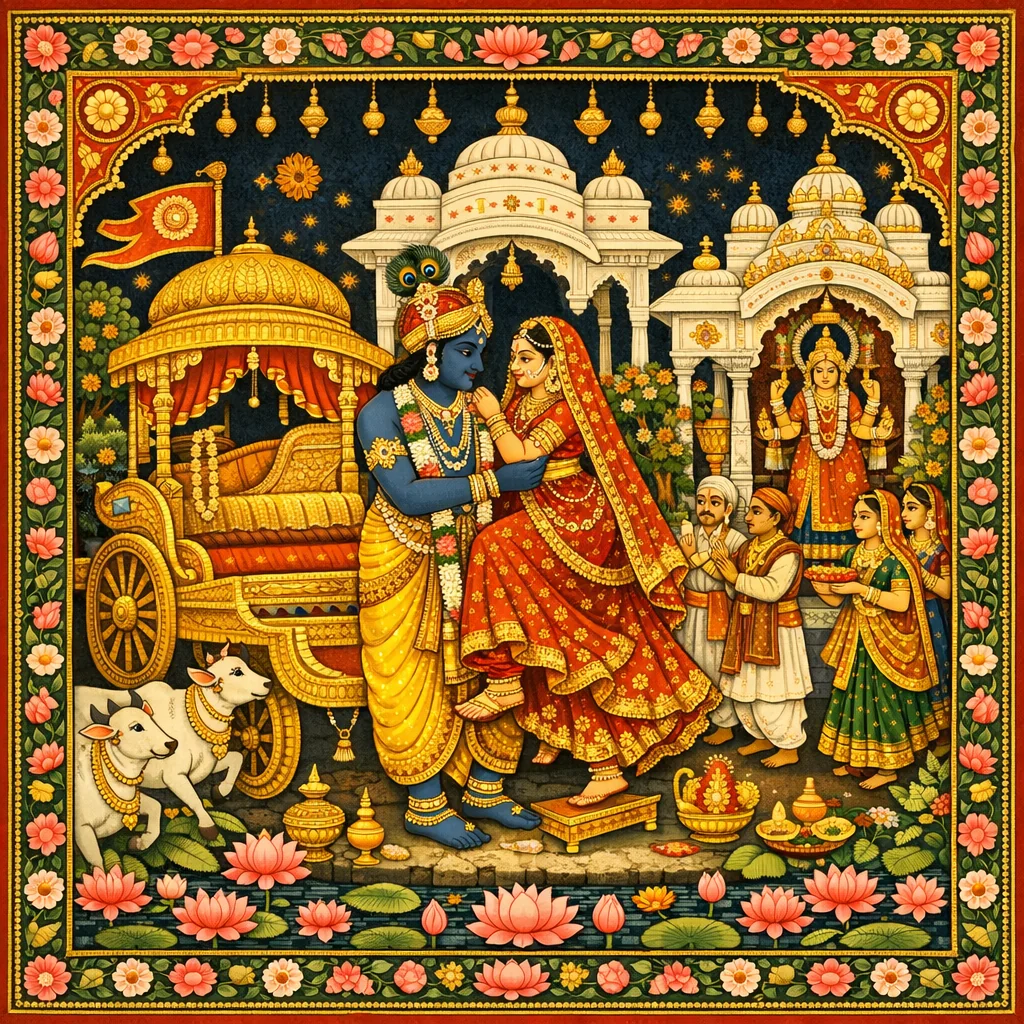
Adhyaya 53
Kṛṣṇa Arrives at Kuṇḍina and Abducts Rukmiṇī (Rukmiṇī-haraṇa Prelude)
After receiving Rukmiṇī’s secret appeal through her brāhmaṇa messenger, Śrī Kṛṣṇa reveals His own deep attachment to her and resolves to stop the politically arranged marriage to Śiśupāla, urged on by Rukmī’s envy. Knowing the auspicious time, He departs at once with the brāhmaṇa and reaches Vidarbha overnight. In Kuṇḍina, Bhīṣmaka prepares grand wedding rites, while Damaghoṣa and allied kings—Jarāsandha, Śālva, Dantavakra and others—gather with armies, expecting war if Kṛṣṇa “steals” the bride. Hearing of the danger, Balarāma follows with Yadu forces. Rukmiṇī, anxious at the messenger’s delay, fears divine disfavor, then sees auspicious omens and learns Kṛṣṇa has arrived. The city rejoices, and she goes to Ambikā’s temple to pray for Kṛṣṇa as her husband. Returning in procession and seen by the kings, she is seized at the decisive moment by Kṛṣṇa, placed on His chariot, and carried off like a lion withdrawing from jackals—setting the stage for the pursuit and battle of the next chapter.
Shlokas
Verse 1
श्रीशुक उवाच वैदर्भ्या: स तु सन्देशं निशम्य यदुनन्दन: । प्रगृह्य पाणिना पाणिं प्रहसन्निदमब्रवीत् ॥ १ ॥
Śukadeva Gosvāmī said: Hearing the confidential message of Princess Vaidarbhī, Lord Yadunandana took the brāhmaṇa’s hand in His own and, smiling, spoke as follows.
Verse 2
श्रीभगवानुवाच तथाहमपि तच्चित्तो निद्रां च न लभे निशि । वेदाहं रुक्मिणा द्वेषान्ममोद्वाहो निवारित: ॥ २ ॥
The Supreme Lord said: As Rukmiṇī’s mind is fixed upon Me, so My mind is fixed upon her. At night I cannot even sleep. I know that Rukmī, out of envy, has forbidden our marriage.
Verse 3
तामानयिष्य उन्मथ्य राजन्यापसदान् मृधे । मत्परामनवद्याङ्गीमेधसोऽग्निशिखामिव ॥ ३ ॥
She has surrendered herself to Me alone, and her beauty is flawless. I will bring her here after crushing those worthless kings in battle, just as one draws a blazing flame out from firewood.
Verse 4
श्रीशुक उवाच उद्वाहर्क्षं च विज्ञाय रुक्मिण्या मधुसूदन: । रथ: संयुज्यतामाशु दारुकेत्याह सारथिम् ॥ ४ ॥
Śukadeva Gosvāmī said: Lord Madhusūdana understood the exact lunar moment for Rukmiṇī’s wedding. Therefore He told His charioteer, “Dāruka, prepare My chariot at once.”
Verse 5
स चाश्वै: शैब्यसुग्रीवमेघपुष्पबलाहकै: । युक्तं रथमुपानीय तस्थौ प्राञ्जलिरग्रत: ॥ ५ ॥
Dāruka brought the Lord’s chariot, yoked with the horses named Śaibya, Sugrīva, Meghapuṣpa, and Balāhaka. Then, with palms joined, he stood before Śrī Kṛṣṇa.
Verse 6
आरुह्य स्यन्दनं शौरिर्द्विजमारोप्य तूर्णगै: । आनर्तादेकरात्रेण विदर्भानगमद्धयै: ॥ ६ ॥
Lord Śauri mounted His chariot and had the brāhmaṇa ride with Him. Then His swift horses carried them from Ānarta to Vidarbha in a single night.
Verse 7
राजा स कुण्डिनपति: पुत्रस्नेहवशानुग: । शिशुपालाय स्वां कन्यां दास्यन् कर्माण्यकारयत् ॥ ७ ॥
King Bhīṣmaka, lord of Kuṇḍina, swayed by affection for his son, was about to give his daughter to Śiśupāla. He arranged all the required preparations.
Verse 8
पुरं सम्मृष्टसंसिक्तमार्गरथ्याचतुष्पथम् । चित्रध्वजपताकाभिस्तोरणै: समलङ्कृतम् ॥ ८ ॥ स्रग्गन्धमाल्याभरणैर्विरजोऽम्बरभूषितै: । जुष्टं स्त्रीपुरुषै: श्रीमद्गृहैरगुरुधूपितै: ॥ ९ ॥
The city’s main avenues, market roads, and crossroads were thoroughly swept and sprinkled with water, and it was adorned with toranas and with multicolored flags and banners. Men and women, dressed in spotless garments and anointed with fragrant sandalwood, wore necklaces, flower garlands, and jeweled ornaments, while their opulent homes were filled with the aroma of aguru incense.
Verse 9
पुरं सम्मृष्टसंसिक्तमार्गरथ्याचतुष्पथम् । चित्रध्वजपताकाभिस्तोरणै: समलङ्कृतम् ॥ ८ ॥ स्रग्गन्धमाल्याभरणैर्विरजोऽम्बरभूषितै: । जुष्टं स्त्रीपुरुषै: श्रीमद्गृहैरगुरुधूपितै: ॥ ९ ॥
The king had the city’s main avenues, market roads and crossroads thoroughly swept and sprinkled with water, and he adorned the city with festive archways and multicolored banners. The men and women, dressed in spotless garments and anointed with fragrant sandalwood, wore necklaces, flower garlands and jeweled ornaments, while their opulent homes were filled with the aroma of aguru incense.
Verse 10
पितृन् देवान् समभ्यर्च्य विप्रांश्च विधिवन्नृप । भोजयित्वा यथान्यायं वाचयामास मङ्गलम् ॥ १० ॥
O King, according to the prescribed rites, Mahārāja Bhīṣmaka worshiped the forefathers, the devas and the brāhmaṇas, and properly fed them all. Then he had the traditional auspicious mantras chanted for the bride’s well-being.
Verse 11
सुस्नातां सुदतीं कन्यां कृतकौतुकमङ्गलाम् । आहतांशुकयुग्मेन भूषितां भूषणोत्तमै: ॥ ११ ॥
The bride cleaned her teeth and bathed, then put on the auspicious wedding necklace. After that she was dressed in brand-new upper and lower garments and adorned with the finest jeweled ornaments.
Verse 12
चक्रु: सामर्ग्यजुर्मन्त्रैर्वध्वा रक्षां द्विजोत्तमा: । पुरोहितोऽथर्वविद्वै जुहाव ग्रहशान्तये ॥ १२ ॥
The foremost brāhmaṇas chanted mantras from the Ṛg, Sāma and Yajur Vedas to protect the bride, and then the priest learned in the Atharva Veda offered oblations in the fire to pacify the ruling planets.
Verse 13
हिरण्यरूप्यवासांसि तिलांश्च गुडमिश्रितान् । प्रादाद् धेनूश्च विप्रेभ्यो राजा विधिविदां वर: ॥ १३ ॥
Expert in the regulative rites, the king rewarded the brāhmaṇas with gold, silver, clothing, cows, and sesame seeds mixed with raw sugar (guḍa).
Verse 14
एवं चेदिपती राजा दमघोष: सुताय वै । कारयामास मन्त्रज्ञै: सर्वमभ्युदयोचितम् ॥ १४ ॥
Thus King Damaghoṣa, lord of Cedi, engaged brāhmaṇas expert in sacred mantras to perform all auspicious rites befitting his son’s prosperity.
Verse 15
मदच्युद्भिर्गजानीकै: स्यन्दनैर्हेममालिभि: । पत्त्यश्वसङ्कुलै: सैन्यै: परीत: कुण्डिनं ययौ ॥ १५ ॥
King Damaghoṣa traveled to Kuṇḍina, surrounded by armies of elephants exuding mada, chariots hung with golden chains, and throngs of cavalry and infantry.
Verse 16
तं वै विदर्भाधिपति: समभ्येत्याभिपूज्य च । निवेशयामास मुदा कल्पितान्यनिवेशने ॥ १६ ॥
Bhīṣmaka, lord of Vidarbha, came out to meet King Damaghoṣa, honored him with due respect, and then joyfully settled him in a residence specially prepared for the occasion.
Verse 17
तत्र शाल्वो जरासन्धो दन्तवक्रो विदूरथ: । आजग्मुश्चैद्यपक्षीया: पौण्ड्रकाद्या: सहस्रश: ॥ १७ ॥
There arrived Śālva, Jarāsandha, Dantavakra and Vidūratha, and also Śiśupāla’s supporters—Pauṇḍraka and thousands of other kings.
Verse 18
कृष्णरामद्विषो यत्ता: कन्यां चैद्याय साधितुम् । यद्यागत्य हरेत् कृष्णो रामाद्यैर्यदुभिर्वृत: ॥ १८ ॥ योत्स्याम: संहतास्तेन इति निश्चितमानसा: । आजग्मुर्भूभुज: सर्वे समग्रबलवाहना: ॥ १९ ॥
To secure the bride for Śiśupāla, the kings who envied Kṛṣṇa and Balarāma resolved among themselves: “If Kṛṣṇa comes with Balarāma and the other Yadus to carry off the bride, we shall unite and fight Him.” Thus they came to the wedding with their full armies and all military conveyances.
Verse 19
कृष्णरामद्विषो यत्ता: कन्यां चैद्याय साधितुम् । यद्यागत्य हरेत् कृष्णो रामाद्यैर्यदुभिर्वृत: ॥ १८ ॥ योत्स्याम: संहतास्तेन इति निश्चितमानसा: । आजग्मुर्भूभुज: सर्वे समग्रबलवाहना: ॥ १९ ॥
The kings who envied Kṛṣṇa and Balarāma resolved to secure the maiden for Śiśupāla. They agreed, “If Kṛṣṇa comes here with Balarāma and the Yadus and carries off the bride, we shall unite and fight Him.” Thus all those rulers arrived at the wedding with their armies complete and every kind of martial conveyance.
Verse 20
श्रुत्वैतद् भगवान् रामो विपक्षीयनृपोद्यमम् । कृष्णं चैकं गतं हर्तुं कन्यां कलहशङ्कित: ॥ २० ॥ बलेन महता सार्धं भ्रातृस्नेहपरिप्लुत: । त्वरित: कुण्डिनं प्रागाद् गजाश्वरथपत्तिभि: ॥ २१ ॥
Hearing of the hostile kings’ preparations, and learning that Kṛṣṇa had gone alone to carry off the bride, Lord Balarāma feared a clash. Overflowing with love for His brother, He hurried to Kuṇḍina with a mighty force of infantry and warriors on elephants, horses, and chariots.
Verse 21
श्रुत्वैतद् भगवान् रामो विपक्षीयनृपोद्यमम् । कृष्णं चैकं गतं हर्तुं कन्यां कलहशङ्कित: ॥ २० ॥ बलेन महता सार्धं भ्रातृस्नेहपरिप्लुत: । त्वरित: कुण्डिनं प्रागाद् गजाश्वरथपत्तिभि: ॥ २१ ॥
Hearing of the hostile kings’ preparations, and learning that Kṛṣṇa had gone alone to carry off the bride, Lord Balarāma feared a clash. Overflowing with love for His brother, He hurried to Kuṇḍina with a mighty force of infantry and warriors on elephants, horses, and chariots.
Verse 22
भीष्मकन्या वरारोहा काङ्क्षन्त्यागमनं हरे: । प्रत्यापत्तिमपश्यन्ती द्विजस्याचिन्तयत्तदा ॥ २२ ॥
Bhīṣmaka’s lovely daughter, Rukmiṇī, longed for the arrival of Hari, Śrī Kṛṣṇa. But when she did not see the brāhmaṇa messenger return, she began to think within her heart as follows.
Verse 23
अहो त्रियामान्तरित उद्वाहो मेऽल्पराधस: । नागच्छत्यरविन्दाक्षो नाहं वेद्म्यत्र कारणम् । सोऽपि नावर्ततेऽद्यापि मत्सन्देशहरो द्विज: ॥ २३ ॥
Alas! When the night ends, my wedding will begin—how little merit is mine! The lotus-eyed Kṛṣṇa does not come; I do not know the reason. And the brāhmaṇa who carried my message has not yet returned.
Verse 24
अपि मय्यनवद्यात्मा दृष्ट्वा किञ्चिज्जुगुप्सितम् । मत्पाणिग्रहणे नूनं नायाति हि कृतोद्यम: ॥ २४ ॥
Perhaps the faultless Lord Śrī Hari, even while preparing to come here, saw something contemptible in me; therefore He has not come to take my hand in marriage.
Verse 25
दुर्भगाया न मे धाता नानुकूलो महेश्वर: । देवी वा विमुखी गौरी रुद्राणी गिरिजा सती ॥ २५ ॥
I am utterly unfortunate: neither the Creator is favorable to me, nor is the great Lord Śiva. Or perhaps the Goddess, Śiva’s consort—known as Gaurī, Rudrāṇī, Girijā, and Satī—has turned against me.
Verse 26
एवं चिन्तयती बाला गोविन्दहृतमानसा । न्यमीलयत कालज्ञा नेत्रे चाश्रुकलाकुले ॥ २६ ॥
As she thought in this way, the young maiden whose heart had been stolen by Govinda, knowing there was still time, closed her tear-filled eyes.
Verse 27
एवं वध्वा: प्रतीक्षन्त्या गोविन्दागमनं नृप । वाम ऊरुर्भुजो नेत्रमस्फुरन् प्रियभाषिण: ॥ २७ ॥
O King, as the bride awaited Govinda’s arrival, her left thigh, arm, and eye twitched—an auspicious sign that something desired would occur.
Verse 28
अथ कृष्णविनिर्दिष्ट: स एव द्विजसत्तम: । अन्त:पुरचरीं देवीं राजपुत्रीं ददर्श ह ॥ २८ ॥
Just then, the purest of learned brāhmaṇas, acting on Kṛṣṇa’s instruction, went to see the divine princess Rukmiṇī within the inner chambers of the palace.
Verse 29
सा तं प्रहृष्टवदनमव्यग्रात्मगतिं सती । आलक्ष्य लक्षणाभिज्ञा समपृच्छच्छुचिस्मिता ॥ २९ ॥
Seeing the brāhmaṇa’s joyful face and tranquil bearing, saintly Rukmiṇī, skilled in reading such signs, questioned him with a pure smile.
Verse 30
तस्या आवेदयत् प्राप्तं शशंस यदुनन्दनम् । उक्तं च सत्यवचनमात्मोपनयनं प्रति ॥ ३० ॥
The brāhmaṇa informed her that Lord Yadunandana, Śrī Kṛṣṇa, had arrived, and he conveyed the Lord’s truthful promise to marry her.
Verse 31
तमागतं समाज्ञाय वैदर्भी हृष्टमानसा । न पश्यन्ती ब्राह्मणाय प्रियमन्यन्ननाम सा ॥ ३१ ॥
Overjoyed to learn of Kṛṣṇa’s arrival, Princess Vaidarbhī, finding nothing suitable to offer the brāhmaṇa, simply bowed down to him.
Verse 32
प्राप्तौ श्रुत्वा स्वदुहितुरुद्वाहप्रेक्षणोत्सुकौ । अभ्ययात्तूर्यघोषेण रामकृष्णौ समर्हणै: ॥ ३२ ॥
Hearing that Balarāma and Kṛṣṇa had arrived and were eager to witness his daughter’s wedding, the king went out to greet Them with abundant offerings as music resounded.
Verse 33
मधुपर्कमुपानीय वासांसि विरजांसि स: । उपायनान्यभीष्टानि विधिवत् समपूजयत् ॥ ३३ ॥
Presenting madhu-parka, spotless new garments, and other cherished gifts, he worshiped Them properly according to the prescribed rites.
Verse 34
तयोर्निवेशनं श्रीमदुपाकल्प्य महामति: । ससैन्ययो: सानुगयोरातिथ्यं विदधे यथा ॥ ३४ ॥
The generous King Bhīṣmaka arranged splendid lodgings for the two Lords, along with Their army and attendants, and thus offered Them proper hospitality.
Verse 35
एवं राज्ञां समेतानां यथावीर्यं यथावय: । यथाबलं यथावित्तं सर्वै: कामै: समर्हयत् ॥ ३५ ॥
Thus Bhīṣmaka honored the assembled kings with all desirable gifts, according to each one’s power, age, strength, and wealth.
Verse 36
कृष्णमागतमाकर्ण्य विदर्भपुरवासिन: । आगत्य नेत्राञ्जलिभि: पपुस्तन्मुखपङ्कजम् ॥ ३६ ॥
Hearing that Lord Kṛṣṇa had arrived, the people of Vidarbha-pura all came for His darśana, and with the cupped palms of their eyes they drank the honey of His lotus face.
Verse 37
अस्यैव भार्या भवितुं रुक्मिण्यर्हति नापरा । असावप्यनवद्यात्मा भैष्म्या: समुचित: पति: ॥ ३७ ॥
The townspeople said: “Only Rukmiṇī deserves to become His wife, none other; and He Himself, flawless in beauty, is the only fitting husband for Princess Bhaiṣmī.”
Verse 38
किञ्चित्सुचरितं यन्नस्तेन तुष्टस्त्रिलोककृत् । अनुगृह्णातु गृह्णातु वैदर्भ्या: पाणिमच्युत: ॥ ३८ ॥
May whatever small pious deeds we have done please Acyuta, the creator of the three worlds, and may He show His mercy by taking the hand of Vaidarbhī.
Verse 39
एवं प्रेमकलाबद्धा वदन्ति स्म पुरौकस: । कन्या चान्त:पुरात् प्रागाद् भटैर्गुप्ताम्बिकालयम् ॥ ३९ ॥
Bound by the swelling tide of love, the townspeople spoke in this way. Then the bride, guarded by soldiers, left the inner palace to visit the temple of Ambikā.
Verse 40
पद्भ्यां विनिर्ययौ द्रष्टुं भवान्या: पादपल्लवम् । सा चानुध्यायती सम्यङ्मुकुन्दचरणाम्बुजम् ॥ ४० ॥ यतवाङ्मातृभि: सार्धं सखीभि: परिवारिता । गुप्ता राजभटै: शूरै: सन्नद्धैरुद्यतायुधै: । मृदङ्गशङ्खपणवास्तूर्यभेर्यश्च जघ्निरे ॥ ४१ ॥
Rukmiṇī quietly went out on foot to behold the lotus feet of the goddess Bhavānī. Yet her mind was wholly absorbed in the lotus feet of Mukunda, Śrī Kṛṣṇa.
Verse 41
पद्भ्यां विनिर्ययौ द्रष्टुं भवान्या: पादपल्लवम् । सा चानुध्यायती सम्यङ्मुकुन्दचरणाम्बुजम् ॥ ४० ॥ यतवाङ्मातृभि: सार्धं सखीभि: परिवारिता । गुप्ता राजभटै: शूरै: सन्नद्धैरुद्यतायुधै: । मृदङ्गशङ्खपणवास्तूर्यभेर्यश्च जघ्निरे ॥ ४१ ॥
Silent, she proceeded surrounded by her mothers and girlfriends. The king’s valiant soldiers, fully armed with weapons raised and ready, guarded her, while mṛdaṅgas, conchshells, paṇavas, horns and war-drums resounded.
Verse 42
नानोपहारबलिभिर्वारमुख्या: सहस्रश: । स्रग्गन्धवस्त्राभरणैर्द्विजपत्न्य: स्वलङ्कृता: ॥ ४२ ॥ गायन्त्यश्च स्तुवन्तश्च गायका वाद्यवादका: । परिवार्य वधूं जग्मु: सूतमागधवन्दिन: ॥ ४३ ॥
Behind the bride followed thousands of prominent ladies bearing various offerings and gifts. Along with them came well-adorned brāhmaṇas’ wives, carrying garlands, fragrances, garments, and ornaments to present.
Verse 43
नानोपहारबलिभिर्वारमुख्या: सहस्रश: । स्रग्गन्धवस्त्राभरणैर्द्विजपत्न्य: स्वलङ्कृता: ॥ ४२ ॥ गायन्त्यश्च स्तुवन्तश्च गायका वाद्यवादका: । परिवार्य वधूं जग्मु: सूतमागधवन्दिन: ॥ ४३ ॥
Singers went along singing and offering praises, and musicians played their instruments. Sūtas, māgadhas, and heralds surrounded the bride and proceeded with her.
Verse 44
आसाद्य देवीसदनं धौतपादकराम्बुजा । उपस्पृश्य शुचि: शान्ता प्रविवेशाम्बिकान्तिकम् ॥ ४४ ॥
Reaching the goddess’s temple, Rukmiṇī first washed her lotuslike feet and hands and then sipped water for purification. Thus sanctified and serene, she entered the presence of Mother Ambikā.
Verse 45
तां वै प्रवयसो बालां विधिज्ञा विप्रयोषित: । भवानीं वन्दयांचक्रुर्भवपत्नीं भवान्विताम् ॥ ४५ ॥
The elder brāhmaṇa wives, skilled in ritual law, guided the young Rukmiṇī to bow to Bhavānī, the consort of Lord Bhava, who appeared together with her husband.
Verse 46
नमस्ये त्वाम्बिकेऽभीक्ष्णं स्वसन्तानयुतां शिवाम् । भूयात् पतिर्मे भगवान् कृष्णस्तदनुमोदताम् ॥ ४६ ॥
[Rukmiṇī prayed:] O Mother Ambikā, auspicious consort of Lord Śiva, I bow to you again and again, together with your children. May Lord Kṛṣṇa become my husband; please graciously approve this boon.
Verse 47
अद्भिर्गन्धाक्षतैर्धूपैर्वास:स्रङ्माल्यभूषणै: । नानोपहारबलिभि: प्रदीपावलिभि: पृथक् ॥ ४७ ॥ विप्रस्त्रिय: पतिमतीस्तथा तै: समपूजयत् । लवणापूपताम्बूलकण्ठसूत्रफलेक्षुभि: ॥ ४८ ॥
Rukmiṇī worshiped the goddess with water, fragrances, whole grains (akṣata), incense, garments, flower garlands, necklaces and ornaments, with various prescribed gifts and offerings, and with rows of lamps. The married brāhmaṇa women likewise worshiped at the same time with the same items, also offering savories, apūpa cakes, prepared tāmbūla, sacred threads, fruits, and sugarcane juice.
Verse 48
अद्भिर्गन्धाक्षतैर्धूपैर्वास:स्रङ्माल्यभूषणै: । नानोपहारबलिभि: प्रदीपावलिभि: पृथक् ॥ ४७ ॥ विप्रस्त्रिय: पतिमतीस्तथा तै: समपूजयत् । लवणापूपताम्बूलकण्ठसूत्रफलेक्षुभि: ॥ ४८ ॥
Rukmiṇī worshiped the goddess with water, fragrances, whole grains (akṣata), incense, garments, flower garlands, necklaces and ornaments, with various prescribed gifts and offerings, and with rows of lamps. The married brāhmaṇa women likewise worshiped at the same time with the same items, also offering savories, apūpa cakes, prepared tāmbūla, sacred threads, fruits, and sugarcane juice.
Verse 49
तस्यै स्त्रियस्ता: प्रददु: शेषां युयुजुराशिष: । ताभ्यो देव्यै नमश्चक्रे शेषां च जगृहे वधू: ॥ ४९ ॥
The women gave the bride the remnants of the offerings and bestowed their blessings. The bride bowed to the Goddess and to them, and accepted those remnants as prasāda.
Verse 50
मुनिव्रतमथ त्यक्त्वा निश्चक्रामाम्बिकागृहात् । प्रगृह्य पाणिना भृत्यां रत्नमुद्रोपशोभिना ॥ ५० ॥
The princess then set aside her vow of silence and came out of Ambikā’s temple, holding a maidservant by the hand adorned with a jeweled ring.
Verse 51
तां देवमायामिव धीरमोहिनीं सुमध्यमां कुण्डलमण्डिताननाम् । श्यामां नितम्बार्पितरत्नमेखलां व्यञ्जत्स्तनीं कुन्तलशङ्कितेक्षणाम् । शुचिस्मितां बिम्बफलाधरद्युति- शोणायमानद्विजकुन्दकुड्मलाम् ॥ ५१ ॥ पदा चलन्तीं कलहंसगामिनीं सिञ्जत्कलानूपुरधामशोभिना । विलोक्य वीरा मुमुहु: समागता यशस्विनस्तत्कृतहृच्छयार्दिता: ॥ ५२ ॥ यां वीक्ष्य ते नृपतयस्तदुदारहास- व्रीदावलोकहृतचेतस उज्झितास्त्रा: । पेतु: क्षितौ गजरथाश्वगता विमूढा यात्राच्छलेन हरयेऽर्पयतीं स्वशोभाम् ॥ ५३ ॥ सैवं शनैश्चलयती चलपद्मकोशौ प्राप्तिं तदा भगवत: प्रसमीक्षमाणा । उत्सार्य वामकरजैरलकानपाङ्गै: प्राप्तान् ह्रियैक्षत नृपान् ददृशेऽच्युतं च ॥ ५४ ॥ तां राजकन्यां रथमारुरुक्षतीं जहार कृष्णो द्विषतां समीक्षताम् ॥ ५५ ॥
Rukmiṇī appeared like the Lord’s own divine māyā, enchanting even the sober. Her waist was slender, her face adorned with earrings, her dark complexion radiant; a jewel-studded belt graced her hips, her breasts were just budding, and her eyes seemed wary of the encroaching locks of hair. She smiled with pure sweetness—jasmine-bud teeth reflecting the glow of her bimba-red lips.
Verse 52
तां देवमायामिव धीरमोहिनीं सुमध्यमां कुण्डलमण्डिताननाम् । श्यामां नितम्बार्पितरत्नमेखलां व्यञ्जत्स्तनीं कुन्तलशङ्कितेक्षणाम् । शुचिस्मितां बिम्बफलाधरद्युति- शोणायमानद्विजकुन्दकुड्मलाम् ॥ ५१ ॥ पदा चलन्तीं कलहंसगामिनीं सिञ्जत्कलानूपुरधामशोभिना । विलोक्य वीरा मुमुहु: समागता यशस्विनस्तत्कृतहृच्छयार्दिता: ॥ ५२ ॥ यां वीक्ष्य ते नृपतयस्तदुदारहास- व्रीदावलोकहृतचेतस उज्झितास्त्रा: । पेतु: क्षितौ गजरथाश्वगता विमूढा यात्राच्छलेन हरयेऽर्पयतीं स्वशोभाम् ॥ ५३ ॥ सैवं शनैश्चलयती चलपद्मकोशौ प्राप्तिं तदा भगवत: प्रसमीक्षमाणा । उत्सार्य वामकरजैरलकानपाङ्गै: प्राप्तान् ह्रियैक्षत नृपान् ददृशेऽच्युतं च ॥ ५४ ॥ तां राजकन्यां रथमारुरुक्षतीं जहार कृष्णो द्विषतां समीक्षताम् ॥ ५५ ॥
She moved with the gait of a royal swan, and the radiance of her sweetly tinkling anklebells adorned her feet. Seeing her, the renowned heroes assembled there were bewildered, their hearts torn by desire.
Verse 53
तां देवमायामिव धीरमोहिनीं सुमध्यमां कुण्डलमण्डिताननाम् । श्यामां नितम्बार्पितरत्नमेखलां व्यञ्जत्स्तनीं कुन्तलशङ्कितेक्षणाम् । शुचिस्मितां बिम्बफलाधरद्युति- शोणायमानद्विजकुन्दकुड्मलाम् ॥ ५१ ॥ पदा चलन्तीं कलहंसगामिनीं सिञ्जत्कलानूपुरधामशोभिना । विलोक्य वीरा मुमुहु: समागता यशस्विनस्तत्कृतहृच्छयार्दिता: ॥ ५२ ॥ यां वीक्ष्य ते नृपतयस्तदुदारहास- व्रीदावलोकहृतचेतस उज्झितास्त्रा: । पेतु: क्षितौ गजरथाश्वगता विमूढा यात्राच्छलेन हरयेऽर्पयतीं स्वशोभाम् ॥ ५३ ॥ सैवं शनैश्चलयती चलपद्मकोशौ प्राप्तिं तदा भगवत: प्रसमीक्षमाणा । उत्सार्य वामकरजैरलकानपाङ्गै: प्राप्तान् ह्रियैक्षत नृपान् ददृशेऽच्युतं च ॥ ५४ ॥ तां राजकन्यां रथमारुरुक्षतीं जहार कृष्णो द्विषतां समीक्षताम् ॥ ५५ ॥
When the kings beheld her broad smile and shy glance, their hearts were stolen away; they dropped their weapons, became stupefied, and fell to the ground from elephants, chariots, and horses. Under the pretext of the procession, she offered her beauty only to Śrī Hari—Kṛṣṇa.
Verse 54
तां देवमायामिव धीरमोहिनीं सुमध्यमां कुण्डलमण्डिताननाम् । श्यामां नितम्बार्पितरत्नमेखलां व्यञ्जत्स्तनीं कुन्तलशङ्कितेक्षणाम् । शुचिस्मितां बिम्बफलाधरद्युति- शोणायमानद्विजकुन्दकुड्मलाम् ॥ ५१ ॥ पदा चलन्तीं कलहंसगामिनीं सिञ्जत्कलानूपुरधामशोभिना । विलोक्य वीरा मुमुहु: समागता यशस्विनस्तत्कृतहृच्छयार्दिता: ॥ ५२ ॥ यां वीक्ष्य ते नृपतयस्तदुदारहास- व्रीदावलोकहृतचेतस उज्झितास्त्रा: । पेतु: क्षितौ गजरथाश्वगता विमूढा यात्राच्छलेन हरयेऽर्पयतीं स्वशोभाम् ॥ ५३ ॥ सैवं शनैश्चलयती चलपद्मकोशौ प्राप्तिं तदा भगवत: प्रसमीक्षमाणा । उत्सार्य वामकरजैरलकानपाङ्गै: प्राप्तान् ह्रियैक्षत नृपान् ददृशेऽच्युतं च ॥ ५४ ॥ तां राजकन्यां रथमारुरुक्षतीं जहार कृष्णो द्विषतां समीक्षताम् ॥ ५५ ॥
Rukmiṇī appeared like the Lord’s own divine māyā, enchanting even the sober. The kings beheld her maiden beauty—slender waist, face adorned with earrings, śyāma complexion, jeweled girdle upon her hips, budding breasts, and eyes wary of her falling locks. Her pure, sweet smile revealed jasmine-bud teeth shining in the glow of bimba-red lips. She moved with the gait of a royal swan, her tinkling anklets casting splendor on her feet. Slowly she advanced her lotus feet, awaiting the Supreme Lord; with the nails of her left hand she brushed aside her hair, glanced shyly at the kings from the corners of her eyes, and then saw Acyuta. As His enemies looked on, Śrī Kṛṣṇa seized the princess, eager to mount His chariot.
Verse 55
तां देवमायामिव धीरमोहिनीं सुमध्यमां कुण्डलमण्डिताननाम् । श्यामां नितम्बार्पितरत्नमेखलां व्यञ्जत्स्तनीं कुन्तलशङ्कितेक्षणाम् । शुचिस्मितां बिम्बफलाधरद्युति- शोणायमानद्विजकुन्दकुड्मलाम् ॥ ५१ ॥ पदा चलन्तीं कलहंसगामिनीं सिञ्जत्कलानूपुरधामशोभिना । विलोक्य वीरा मुमुहु: समागता यशस्विनस्तत्कृतहृच्छयार्दिता: ॥ ५२ ॥ यां वीक्ष्य ते नृपतयस्तदुदारहास- व्रीदावलोकहृतचेतस उज्झितास्त्रा: । पेतु: क्षितौ गजरथाश्वगता विमूढा यात्राच्छलेन हरयेऽर्पयतीं स्वशोभाम् ॥ ५३ ॥ सैवं शनैश्चलयती चलपद्मकोशौ प्राप्तिं तदा भगवत: प्रसमीक्षमाणा । उत्सार्य वामकरजैरलकानपाङ्गै: प्राप्तान् ह्रियैक्षत नृपान् ददृशेऽच्युतं च ॥ ५४ ॥ तां राजकन्यां रथमारुरुक्षतीं जहार कृष्णो द्विषतां समीक्षताम् ॥ ५५ ॥
As His enemies watched, Śrī Kṛṣṇa—Acyuta Hari—at once seized Princess Rukmiṇī as she was about to mount the chariot, as though the Bhagavān Himself had stepped forward to protect His devotee.
Verse 56
रथं समारोप्य सुपर्णलक्षणं राजन्यचक्रं परिभूय माधव: । ततो ययौ रामपुरोगम: शनै: शृगालमध्यादिव भागहृद्धरि: ॥ ५६ ॥
Placing the princess upon His chariot, whose banner bore the emblem of Garuḍa, Lord Mādhava drove back the ring of kings. With Balarāma leading, He withdrew slowly—like a lion carrying off its prey from the midst of jackals.
Verse 57
तं मानिन: स्वाभिभवं यश:क्षयं परे जरासन्धमुखा न सेहिरे । अहो धिगस्मान् यश आत्तधन्वनां गोपैर्हृतं केशरिणां मृगैरिव ॥ ५७ ॥
The proud kings, hostile to the Lord and led by Jarāsandha, could not bear this humiliation and loss of fame. They cried, “Alas, shame upon us! Though we are mighty archers, mere gopas have stolen our honor—just as small beasts might steal the glory of lions!”
Frequently Asked Questions
Within the Purāṇic-kṣatriya framework, this resembles the rākṣasa form of marriage (forcible taking in the presence of rival kings), which is treated as culturally intelligible for warrior society. The Bhāgavata emphasizes not coercion of the bride but protection of her freely chosen surrender: Rukmiṇī explicitly selects Kṛṣṇa, sends a messenger, and prays for Him. Kṛṣṇa’s act counters adharma rooted in envy and political manipulation, while honoring her consent and exclusive devotion.
Rukmiṇī approaches Ambikā as a venerable devī within Vedic dharma, seeking auspicious facilitation, yet her petition is explicitly centered on Kṛṣṇa as the supreme goal. In Bhāgavata theology, subordinate deities can be respected as empowered within the Lord’s governance, while the devotee’s ultimate refuge (āśraya) remains Bhagavān; thus the prayer functions as culturally orthodox worship aligned to single-pointed bhakti.
Śiśupāla is the intended groom; his supporters include Jarāsandha, Śālva, Dantavakra, Vidūratha, Pauṇḍraka and other kings. Their stated motivation is to prevent Kṛṣṇa from taking the bride, but the narrative frames the deeper cause as envy (asūyā) of Kṛṣṇa and Balarāma, converting a wedding alliance into a coalition of adharma.