Adhyaya 65
Sudeva Identifies Damayantī in Cedi (सुदेवेन दमयन्ती-परिचयः)
Upa-parva: Nalopākhyāna (The Tale of Nala and Damayantī)
Bṛhadaśva narrates that after Nala loses his kingdom and departs with Damayantī, King Bhīma—seeking news of the couple—dispatches brāhmaṇas in all directions, providing substantial resources and promising escalating rewards: a thousand cattle and an agrahāra-like village for one who can bring reliable information, and lesser rewards for partial verification. The envoys search towns and provinces. One brāhmaṇa, Sudeva, arrives in the pleasant city of Cedi and observes Damayantī within the royal residence during an auspicious rite, standing with Sunandā. He recognizes her through distinctive features despite her diminished condition, deploying a diagnostic rhetoric of comparison: her former radiance versus present hardship, using layered similes (moon eclipsed, lotus pond disturbed, lotus-stalk drawn from mud) to articulate suffering, fidelity, and the ethical weight of separation. Resolving to comfort her, Sudeva approaches and identifies himself as a trusted friend of her brother, sent by Bhīma. He conveys the welfare of her father, mother, brothers, and children, noting their distress on her account. Damayantī recognizes Sudeva, questions him in detail, and weeps. Sunandā reports the situation to the queen mother, who comes, summons Sudeva, and interrogates him regarding Damayantī’s identity, circumstances, and how she came to be there. Sudeva, seated respectfully, begins a factual account of Damayantī’s story ‘as it happened,’ initiating formal verification within the Cedi court.
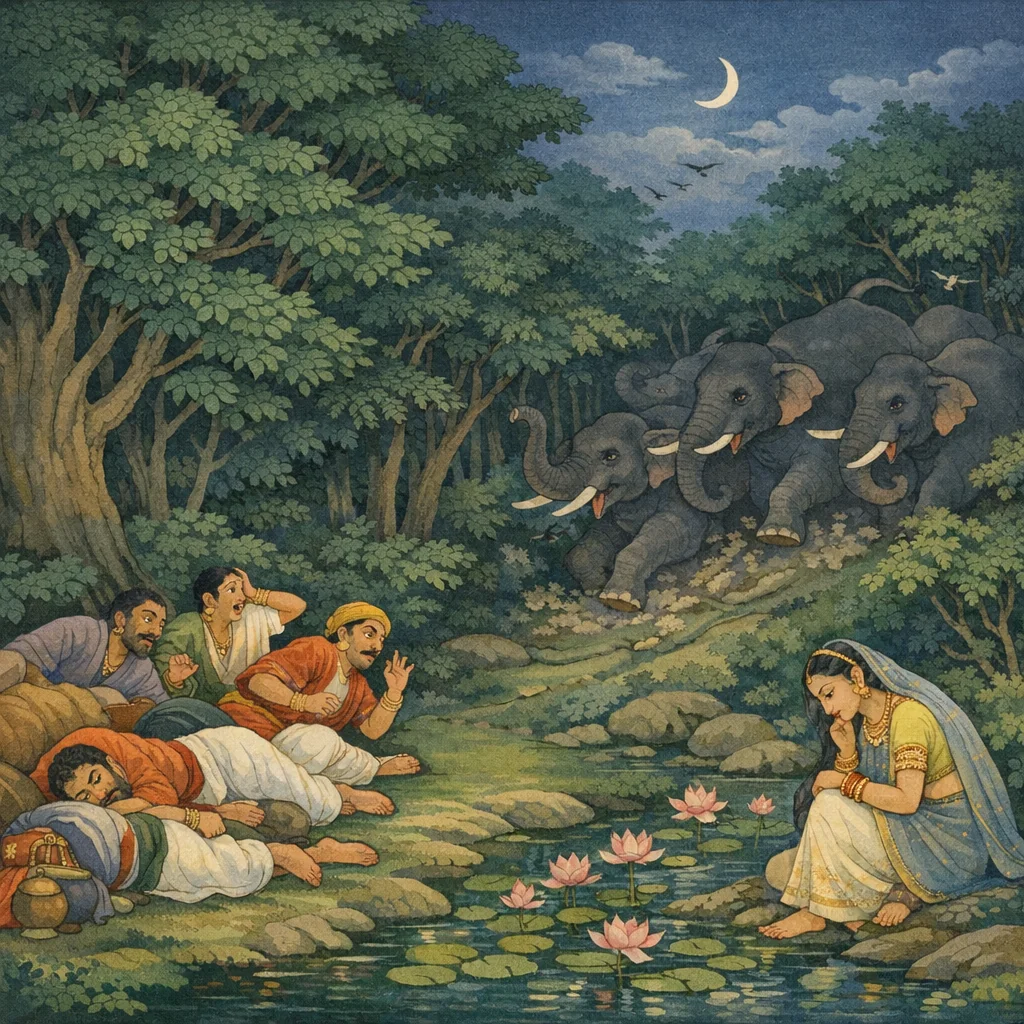
Chapter Arc: बृहदश्व कथन आरम्भ करते हैं: घोर, विशाल वन में भटकते व्यापारियों का दल एक रमणीय सरोवर-प्रदेश देख आश्रय और लाभ की आशा करता है—पर उसी शान्ति के भीतर विनाश की छाया छिपी है। → व्यापारी दल ‘सर्वतोभद्र’ तडाग के निकट घास-ईंधन, पुष्प-फल और पक्षियों से भरे सुन्दर स्थल पर पड़ाव डालता है। अर्धरात्रि में, जब सब थके-हारे सो रहे होते हैं और वन निःशब्द-स्तिमित है, तभी जंगली हाथियों का यूथ अचानक समीप आ पहुँचता है; अँधेरे में भगदड़, चीख-पुकार और रत्न-धन की लूट-सी अफरातफरी फैलती है। → हाथियों के यूथ द्वारा सार्थ का सर्वनाश—रात्रि के सन्नाटे को चीरता आर्तनाद, कुचले जाते लोग, बिखरता धन (‘रत्नराशि…’), और जीवित बचे लोगों की असहाय दौड़। इसी के साथ दमयन्ती का भीतर का विस्फोट: वह अपने दीर्घ दुःख को ‘मन्दभाग्य’ कहकर स्वीकारती है और पूछती है कि बिना पाप के यह दैवकृत विपत्ति क्यों—‘न हि दैवकृतं किंचिन्नराणामिह विद्यते…’। → विनाश के बाद जो थोड़े लोग बचते हैं, वे वेद-पारंगत ब्राह्मणों के साथ किसी नृपश्रेष्ठ (चेदिराज) की ओर प्रस्थान करते हैं। दमयन्ती भी उनके साथ पहुँचती है और चेदिराज के भवन में सुनन्दा आदि के द्वारा सम्मानित होकर, आवश्यक व्यवस्थाओं के साथ, भय-रहित निवास करती है—दुःख के बीच एक अस्थायी शरण। → दमयन्ती को आश्रय तो मिलता है, पर नल-वियोग और दैव-प्रश्न अनुत्तरित रहते हैं—क्या यह विश्राम उसके पुनर्मिलन का द्वार बनेगा या नई परीक्षा का?
Shlokas
Verse 1
हि न () हि २ 7 पजञज्चषष्टितमो< ध्याय: जंगली हाथियोंद्वारा व्यापारियोंके दलका सर्वनाश तथा दुःखित दमयन्तीका चेदिराजके भवनमें सुखपूर्वक निवास बृहदश्चव उवाच सा तच्छुत्वानवद्याज्ञी सार्थवाहवचस्तदा । जगाम सह तेनैव सार्थेन पतिलालसा,बृहदश्व मुनि कहते हैं--राजन! दलके संचालककी वह बात सुनकर निर्दोष एवं सुन्दर अंगोंवाली दमयन्ती पतिदेवके दर्शनके लिये उत्सुक हो व्यापारियोंके उस दलके साथ ही यात्रा करने लगी
Bṛhadaśva said: O King, having heard the words of the caravan-leader, the blameless and discerning Damayantī—longing to see her husband—set out at once, traveling together with that very company of merchants. The verse highlights steadfast marital devotion and purposeful resolve amid uncertainty on the road.
Verse 2
अथ काले बहुतिथे वने महति दारुणे । तडागं सर्वतोभद्रंं पच्मसौगन्धिकं महत्,तदनन्तर बहुत समयके बाद एक भयंकर विशाल वनमें पहुँचकर उन व्यापारियोंने एक महान् सरोवर देखा, जिसका नाम था, पद्मसौगन्धिक। वह सब ओरसे कल्याणप्रद जान पड़ता था। उस रमणीय सरोवरके पास घास और ईंधनकी अधिकता थी, फूल और फल भी वहाँ प्रचुर मात्रामें उपलब्ध होते थे। उस तालाबपर बहुत-से पक्षी निवास करते थे
Bṛhadaśva said: After a long time, having come into a vast and formidable forest, those merchants beheld a great lake called Padma-saugandhika. It appeared auspicious on every side—an inviting refuge in the wilderness, rich in the resources needed for life and travel.
Verse 3
ददृशुर्वणिजो रम्यं प्रभूतयवसेन्धनम् । बहुपुष्पफलोपेतं नानापक्षिनिषेवितम्,तदनन्तर बहुत समयके बाद एक भयंकर विशाल वनमें पहुँचकर उन व्यापारियोंने एक महान् सरोवर देखा, जिसका नाम था, पद्मसौगन्धिक। वह सब ओरसे कल्याणप्रद जान पड़ता था। उस रमणीय सरोवरके पास घास और ईंधनकी अधिकता थी, फूल और फल भी वहाँ प्रचुर मात्रामें उपलब्ध होते थे। उस तालाबपर बहुत-से पक्षी निवास करते थे
Bṛhadaśva said: The merchants beheld a delightful spot, rich in grass and fuel-wood, abundant with flowers and fruits, and frequented by many kinds of birds. After a long time, having reached a vast and dreadful forest, they came upon a great lake named Padmasaugandhika, which appeared auspicious and beneficial on every side—an image of providential refuge amid hardship.
Verse 4
निर्मलस्वादुसलिलं मनोहारि सुशीतलम् । सुपरिश्रान्तवाहास्ते निवेशाय मनो दधु:,सरोवरका जल स्वच्छ और स्वादु था, वह देखनेमें बड़ा ही मनोहर और अत्यन्त शीतल था। व्यापारियोंके वाहन बहुत थक गये थे। इसलिये उन्होंने वहीं पड़ाव डालनेका निश्चय किया
Bṛhadaśva said: “The water of that lake was clear and sweet, delightful to behold and exceedingly cool. Since the merchants’ beasts of burden were utterly worn out, they resolved in their minds to make camp there.”
Verse 5
सम्मते सार्थवाहस्य विविशुर्वनमुत्तमम् । उवास सार्थ: सुमहान् वेलामासाद्य पश्चिमाम्,समूहके अधिपतिसे अनुमति लेकर सब लोगोंने उस उत्तम वनमें प्रवेश किया और वह महान् जनसमुदाय सरोवरके पश्चिम तटपर ठहर गया
Bṛhadaśva said: With the caravan-leader’s consent, they entered that excellent forest. Reaching the western bank, the great caravan halted there. The scene underscores orderly conduct and respect for rightful authority even in travel and uncertainty—collective action guided by permission and leadership rather than impulse.
Verse 6
अथार्धरात्रसमये नि:शब्दस्तिमिते तदा । सुप्ते सार्थे परिश्रान्ते हस्तियूथमुपागमत्,तत्पश्चात् आधी रातके समय जब कहींसे भी कोई शब्द सुनायी नहीं देता था और उस दलके सभी लोग थककर सो गये थे, उस समय गजराजोंके मदकी धारासे मलिन जलवाली पहाड़ी नदीमें पानी पीनेके लिये (जंगली) हाथियोंका एक झुंड आ निकला। उस झुंडने व्यापारियोंके सोये हुए दलको और उसके साथ आये हुए बहुत-से हाथियोंको भी देखा
Then, at the time of midnight—when everything was silent and still—after the caravan had fallen asleep, exhausted, a herd of elephants came up. They had come to drink at a mountain river whose waters were muddied by the streaming ichor of the great tuskers; and the herd noticed the merchants’ sleeping company, along with many elephants that had come with it.
Verse 7
पानीयार्थ गिरिनदीं मदप्रस्रवणाविलाम् । अथापश्यत सरर्थ तं॑ सार्थजान् सुबहून् गजान्,तत्पश्चात् आधी रातके समय जब कहींसे भी कोई शब्द सुनायी नहीं देता था और उस दलके सभी लोग थककर सो गये थे, उस समय गजराजोंके मदकी धारासे मलिन जलवाली पहाड़ी नदीमें पानी पीनेके लिये (जंगली) हाथियोंका एक झुंड आ निकला। उस झुंडने व्यापारियोंके सोये हुए दलको और उसके साथ आये हुए बहुत-से हाथियोंको भी देखा
Bṛhadaśva said: Seeking water, a herd of wild elephants came to a mountain river whose stream was muddied by the oozing rut-fluid. Then they saw that caravan—its merchants and, along with them, many elephants as well. The scene underscores how, when vigilance lapses and beings act only from fatigue or instinct, unintended harm can arise in the shared pursuit of basic needs like water.
Verse 8
ते तान् ग्राम्यगजान् दृष्टवा सर्वे वनगजास्तदा । समाद्रवन्त वेगेन जिघांसन्तो मदोत्कटा:,तब वनमें रहनेवाले उन सभी मदोन्मत्त गजोंने उन ग्रामीण हाथियोंको देखकर उन्हें मार डालनेकी इच्छासे उनपर वेगपूर्वक आक्रमण किया
Bṛhadaśva said: Then all those forest elephants, swollen with rut, saw the village elephants and charged at them at full speed, driven by the desire to kill. The scene underscores how unchecked intoxication and aggression (mada) can turn strength into blind violence, disrupting order and safety.
Verse 9
तेषामापततां वेग: करिणां दुःसहो5भवत् | नगाग्रादिव शीर्णानां शुद्रणां पततां क्षितौ,पर्ववकी चोटीसे टूटकर पृथ्वीपर गिरनेवाले बड़े-बड़े शिखरोंके समान उन आक्रमणकारी जंगली हाथियोंका वेग (उस यात्रीदलके लिये) अत्यन्त दुःसह था
Bṛhadaśva said: The onrushing momentum of those elephants became unbearable for the party, like great mountain-peaks that have broken off and come crashing down upon the earth. The image underscores how sudden, overwhelming force can render even the prepared helpless, urging prudence and restraint in the face of uncontrolled power.
Verse 10
स्पन्दतामपि नागानां मार्गा नष्टा वनोद्धवा: । मार्ग संरुध्य संसुप्तं पद्मिन्या: सार्थमुत्तमम्,ग्रामीण हाथियोंपर आक्रमण करनेकी चेष्टावाले उन वनवासी गजराजोंके वन्य मार्ग अवरुद्ध हो गये थे। सरोवरके तटपर व्यापारियोंका महान् समुदाय उनका मार्ग रोककर सो रहा था
Verse 11
ते त॑ ममर्दु: सहसा चेष्टमानं महीतले । हाहाकारं प्रमुड्चन्त: सार्थिका: शरणार्थिन:,उन हाथियोंने सहसा पहुँचकर समूचे दलको कुचल दिया। कितने ही मनुष्य धरतीपर पड़े-पड़े छटपटा रहे थे। उस दलके कितने ही पुरुष हाहाकार करते हुए बचावकी जगह खोजते हुए जंगलके पौधोंके समूहमें भाग गये। बहुत-से मनुष्य तो नींदके मारे अन्धे हो रहे थे। हाथियोंने किन्हींको दाँतोंसे, किन्हींको सूड़ोंसे और कितनोंको पैरोंसे घायल कर दिया
Bṛhadaśva said: “Those elephants suddenly trampled him as he struggled upon the ground. The caravan-men, crying out in terror and seeking refuge, raised a great wail.”
Verse 12
वनगुल्मांश्व धावन्तो निद्रान्धा बहवो5भवन् | केचिद् दत्तै: करै: केचित् केचित् पद्धयां हता गजै:,उन हाथियोंने सहसा पहुँचकर समूचे दलको कुचल दिया। कितने ही मनुष्य धरतीपर पड़े-पड़े छटपटा रहे थे। उस दलके कितने ही पुरुष हाहाकार करते हुए बचावकी जगह खोजते हुए जंगलके पौधोंके समूहमें भाग गये। बहुत-से मनुष्य तो नींदके मारे अन्धे हो रहे थे। हाथियोंने किन्हींको दाँतोंसे, किन्हींको सूड़ोंसे और कितनोंको पैरोंसे घायल कर दिया
Bṛhadaśva said: Many, blinded by sleep, ran into the thickets of the forest. The elephants struck down some with their tusks, some with their trunks, and some by trampling with their feet—crushing the whole troop in sudden onrush. Men lay writhing on the ground, while others cried out in panic and fled, searching for any place of safety amid the jungle growth. The scene underscores how negligence and unpreparedness can turn a moment into calamity, and how fear scatters a community when discipline and vigilance fail.
Verse 13
निहतोष्टाश्वबहुला: पदातिजनसंकुला: । भयादाधावमानाश्ष् परस्परहतास्तदा,उनके बहुत-से ऊँट और घोड़े मारे गये और उस समुदायमें बहुत-से पैदल लोग भी थे। वे सब लोग उस समय भयसे चारों ओर भागते हुए एक-दूसरेसे टकराकर चोट खा जाते थे। घोर आर्तनाद करते हुए सभी लोग धरतीपर गिरने लगे। कुछ लोग बड़े वेगसे वृक्षोंपर चढ़ते हुए नीचेकी विषम भूमियोंपर गिर पड़ते थे
Bṛhadaśva said: Many camels and horses were slain, and the host was crowded with foot-soldiers. Stricken by fear, they fled in all directions; in the crush they struck one another and were wounded, and thus, in that panic, they fell as if slain by each other. The scene portrays how terror and disorder, once unleashed, make people instruments of harm to their own side, turning a rout into self-destruction.
Verse 14
घोरान् नादान् विमुञ्चन्तो निपेतुर्धरणीतले । वृक्षेष्वारुह्मु संरब्धा: पतिता विषमेषु च,उनके बहुत-से ऊँट और घोड़े मारे गये और उस समुदायमें बहुत-से पैदल लोग भी थे। वे सब लोग उस समय भयसे चारों ओर भागते हुए एक-दूसरेसे टकराकर चोट खा जाते थे। घोर आर्तनाद करते हुए सभी लोग धरतीपर गिरने लगे। कुछ लोग बड़े वेगसे वृक्षोंपर चढ़ते हुए नीचेकी विषम भूमियोंपर गिर पड़ते थे
Uttering dreadful cries, they fell upon the ground. In frantic haste some climbed up into the trees, only to tumble down again onto uneven, treacherous terrain—an image of panic overwhelming order and self-control.
Verse 15
एवं प्रकारैर्बहुभिर्देवेनाक्रम्य हस्तिभि: । राजन् विनिहतं सर्व समृद्ध सार्थमण्डलम्,राजन्! इस प्रकार दैववश बहुतेरे जंगली हाथियोंने आक्रमण करके (प्रायः) उस सम्पूर्ण समृद्धिशाली व्यापारियोंके समुदायको नष्ट कर दिया
Bṛhadaśva said: “O King, in many such ways, by the force of fate, wild elephants attacked; and thus the entire prosperous caravan-company of merchants was destroyed.”
Verse 16
आराव: सुमहांश्चासीत् त्रलोक्यभयकारक: । एषो<ग्निरुत्थित: कष्टस्त्रायध्वं धावताधुना
Bṛhadaśva said: “A tremendous roar arose, striking fear into the three worlds. A dreadful fire has flared up—save yourselves; run at once!”
Verse 17
सामान्यमेतद् द्रविणं न मिथ्यावचनं मम,तीसरा कहता था--'भाई! इस धनपर सबका समान अधिकार है, मेरी यह बात झूठी नहीं है”
Bṛhadaśva said, “This wealth is common (meant for all), and my statement is not false.” The line underscores an ethical claim: material possessions are not to be treated as exclusively one’s own when others have a rightful share, and truthfulness must accompany one’s dealings over wealth.
Verse 18
एवमेवाभिभाषणन्तो विद्रवन्ति भयात् तदा । पुनरेवाभिधास्यामि चिन्तयध्वं सुकातरा:,कोई कहता--'ऐ कायरो! मैं फिर तुमसे बात करूँगा, अभी अपनी रक्षाकी चिन्ता करो।' इस तरहकी बातें करते हुए सब लोग भयसे भाग रहे थे
Thus, while exchanging such words, they fled in fear at that moment. ‘I will speak to you again,’ (one would say); ‘for now, you timid ones, think only of your own protection.’ The scene underscores how panic and self-preservation can overtake resolve, and how harsh speech often accompanies fear-driven flight.
Verse 19
तस्मिंस्तथा वर्तमाने दारुणे जनसंक्षये । दमयन्ती च बुबुधे भयसंत्रस्तमानसा,इस प्रकार जब वहाँ भयानक नरसंहार हो रहा था, उसी समय दमयन्ती भी जाग उठी। उसका हृदय भयसे संत्रस्त हो उठा
While that dreadful slaughter of people was unfolding there in that manner, Damayantī too awoke; her mind and heart were shaken and overwhelmed by fear. The verse underscores how violence and mass calamity disturb even the innocent, awakening them to peril and moral urgency.
Verse 20
अपश्यद् वैशसं तत्र सर्वलोकभयंकरम् । अदृष्टपूर्व तद् दृष्टवा बाला पद्मनिभेक्षणा,वहाँ उसने वह महासंहार अपनी आँखों देखा, जो सब लोगोंके लिये भयंकर था। उसने ऐसी दुर्घटना पहले कभी नहीं देखी थी। यह सब देखकर वह कमलनयनी बाला भयसे व्याकुल हो उठी। उसको कहींसे कोई सान्त्वना नहीं मिल रही थी। वह इस प्रकार स्तब्ध हो रही थी, मानो धरतीसे सट गयी हो। तदनन्तर वह किसी प्रकार उठकर खड़ी हुई। दलके जो लोग उस संकटसे मुक्त हो आघातसे बचे हुए थे, वे सब एकत्र हो कहने लगे कि “यह हमारे किस कर्मका फल है? निश्चय ही हमने महायशस्वी मणिभद्रका पूजन नहीं किया है। इसी प्रकार हमने श्रीमान् यक्षराज कुबेरकी भी पूजा नहीं की है अथवा विघ्नकर्ता विनायकोंकी भी पहले पूजा नहीं कर ली थी। अथवा हमने पहले जो-जो शकुन देखे थे, उसका यह विपरीत फल है। यदि हमारे ग्रह विपरीत न होते तो और किस हेतुसे यह संकट हमारे ऊपर कैसे आ सकता था?”
Bṛhadaśva said: There she beheld a scene of slaughter—terrifying to all beings. Having never seen such a calamity before, the lotus-eyed young girl, on witnessing it, was shaken with fear. The passage underscores how sudden violence overwhelms the mind and how, in the wake of disaster, people often search for moral or ritual causes to explain what has occurred.
Verse 21
वहाँ उसने वह महासंहार अपनी आँखों देखा, जो सब लोगोंके लिये भयंकर था। उसने ऐसी दुर्घटना पहले कभी नहीं देखी थी। यह सब देखकर वह कमलनयनी बाला भयसे व्याकुल हो उठी। उसको कहींसे कोई सान्त्वना नहीं मिल रही थी। वह इस प्रकार स्तब्ध हो रही थी, मानो धरतीसे सट गयी हो। तदनन्तर वह किसी प्रकार उठकर खड़ी हुई। दलके जो लोग उस संकटसे मुक्त हो आघातसे बचे हुए थे, वे सब एकत्र हो कहने लगे कि “यह हमारे किस कर्मका फल है? निश्चय ही हमने महायशस्वी मणिभद्रका पूजन नहीं किया है। इसी प्रकार हमने श्रीमान् यक्षराज कुबेरकी भी पूजा नहीं की है अथवा विघ्नकर्ता विनायकोंकी भी पहले पूजा नहीं कर ली थी। अथवा हमने पहले जो-जो शकुन देखे थे, उसका यह विपरीत फल है। यदि हमारे ग्रह विपरीत न होते तो और किस हेतुसे यह संकट हमारे ऊपर कैसे आ सकता था?”
There she witnessed with her own eyes a great slaughter, terrifying to all. Never before had she seen such a calamity. Seeing everything, the lotus-eyed young girl was shaken with fear. From nowhere did she find any consolation. She stood stunned, as though pressed down to the earth. Then, somehow, she rose and stood up. Those members of the party who had escaped that danger and survived the blows gathered together and said: “What deed of ours has borne this fruit? Surely we did not worship the illustrious Maṇibhadra. Likewise we did not worship Kubera, the splendid king of the Yakṣas; nor did we first propitiate the Vināyakas who cause obstacles. Or else this is the perverse outcome of the omens we saw earlier. If our planets were not adverse, for what other reason could such a disaster have fallen upon us?”
Verse 22
तेडब्रुवन् सहिता: सर्वे कस्येदं कर्मण: फलम् । नूनं न पूजितो<स्माभिमणिभद्रो महायशा:,वहाँ उसने वह महासंहार अपनी आँखों देखा, जो सब लोगोंके लिये भयंकर था। उसने ऐसी दुर्घटना पहले कभी नहीं देखी थी। यह सब देखकर वह कमलनयनी बाला भयसे व्याकुल हो उठी। उसको कहींसे कोई सान्त्वना नहीं मिल रही थी। वह इस प्रकार स्तब्ध हो रही थी, मानो धरतीसे सट गयी हो। तदनन्तर वह किसी प्रकार उठकर खड़ी हुई। दलके जो लोग उस संकटसे मुक्त हो आघातसे बचे हुए थे, वे सब एकत्र हो कहने लगे कि “यह हमारे किस कर्मका फल है? निश्चय ही हमने महायशस्वी मणिभद्रका पूजन नहीं किया है। इसी प्रकार हमने श्रीमान् यक्षराज कुबेरकी भी पूजा नहीं की है अथवा विघ्नकर्ता विनायकोंकी भी पहले पूजा नहीं कर ली थी। अथवा हमने पहले जो-जो शकुन देखे थे, उसका यह विपरीत फल है। यदि हमारे ग्रह विपरीत न होते तो और किस हेतुसे यह संकट हमारे ऊपर कैसे आ सकता था?”
All of them, gathered together, said: “Of what deed of ours is this the result? Surely we have failed to worship the illustrious Maṇibhadra.” In their fear and confusion after witnessing a dreadful calamity, they interpret the disaster as the moral consequence of neglected reverence toward powerful divine beings, seeking a cause in ritual omission and adverse fate rather than in human agency alone.
Verse 23
संसक्तवदनाश्चासा उत्तस्थौ भयविद्धला । ये तु तत्र विनिर्मुक्ता: सार्थात् केचिदविक्षता:,तथा यक्षाधिप: श्रीमान् न वै वैश्रवण: प्रभु: । न पूजा विघ्नकर्तृणामथवा प्रथमं कृता वहाँ उसने वह महासंहार अपनी आँखों देखा, जो सब लोगोंके लिये भयंकर था। उसने ऐसी दुर्घटना पहले कभी नहीं देखी थी। यह सब देखकर वह कमलनयनी बाला भयसे व्याकुल हो उठी। उसको कहींसे कोई सान्त्वना नहीं मिल रही थी। वह इस प्रकार स्तब्ध हो रही थी, मानो धरतीसे सट गयी हो। तदनन्तर वह किसी प्रकार उठकर खड़ी हुई। दलके जो लोग उस संकटसे मुक्त हो आघातसे बचे हुए थे, वे सब एकत्र हो कहने लगे कि “यह हमारे किस कर्मका फल है? निश्चय ही हमने महायशस्वी मणिभद्रका पूजन नहीं किया है। इसी प्रकार हमने श्रीमान् यक्षराज कुबेरकी भी पूजा नहीं की है अथवा विघ्नकर्ता विनायकोंकी भी पहले पूजा नहीं कर ली थी। अथवा हमने पहले जो-जो शकुन देखे थे, उसका यह विपरीत फल है। यदि हमारे ग्रह विपरीत न होते तो और किस हेतुसे यह संकट हमारे ऊपर कैसे आ सकता था?”
Bṛhadaśva said: She rose, her face tense and fixed, pierced by fear and trembling. Those among the caravan who had been released there and who, by chance, remained uninjured, gathered together and reflected: “Surely we did not duly honor the illustrious lord of the Yakṣas—Vaiśravaṇa (Kubera). Nor did we first perform worship of the obstacle-making powers (the Vināyakas).” In their distress they interpret the calamity as the moral consequence of neglected reverence and ritual propriety, seeking an ethical cause for sudden misfortune.
Verse 24
शकुनानां फलं वाथ विपरीतमिदं ध्रुवम् । ग्रहा न विपरीतास्तु किमन्यदिदमागतम्,वहाँ उसने वह महासंहार अपनी आँखों देखा, जो सब लोगोंके लिये भयंकर था। उसने ऐसी दुर्घटना पहले कभी नहीं देखी थी। यह सब देखकर वह कमलनयनी बाला भयसे व्याकुल हो उठी। उसको कहींसे कोई सान्त्वना नहीं मिल रही थी। वह इस प्रकार स्तब्ध हो रही थी, मानो धरतीसे सट गयी हो। तदनन्तर वह किसी प्रकार उठकर खड़ी हुई। दलके जो लोग उस संकटसे मुक्त हो आघातसे बचे हुए थे, वे सब एकत्र हो कहने लगे कि “यह हमारे किस कर्मका फल है? निश्चय ही हमने महायशस्वी मणिभद्रका पूजन नहीं किया है। इसी प्रकार हमने श्रीमान् यक्षराज कुबेरकी भी पूजा नहीं की है अथवा विघ्नकर्ता विनायकोंकी भी पहले पूजा नहीं कर ली थी। अथवा हमने पहले जो-जो शकुन देखे थे, उसका यह विपरीत फल है। यदि हमारे ग्रह विपरीत न होते तो और किस हेतुसे यह संकट हमारे ऊपर कैसे आ सकता था?”
Bṛhadaśva said: “Surely this is the contrary outcome of the omens we observed. If the planets are not adverse, then what else could have brought this calamity upon us?” The speech reflects a frightened attempt to explain sudden disaster by appealing to signs, fate, and neglected rites—seeking a moral cause behind suffering when no clear human cause is visible.
Verse 25
अपरे त्वब्लुवन् दीना ज्ञातिद्रव्यविनाकृता: । यासावद्य महासार्थ नारी हरुन्मत्तदर्शना,दूसरे लोग जो अपने कुटुम्बीजनों और धनके विनाशसे दीन हो रहे थे, वे इस प्रकार कहने लगे--“आज हमारे विशाल जनसमूहके साथ वह जो उन्मत्त-जैसी दिखायी देनेवाली नारी आ गयी थी, वह विकराल आकारवाली राक्षसी थी तो भी अलौकिक सुन्दर रूप धारण करके हमारे दलमें घुस गयी थी। उसीने पहलेसे ही यह अत्यन्त भयंकर माया फैला रखी थी
Then others, reduced to misery by the loss of their kinsmen and wealth, began to speak: “Today, within our great caravan, that woman who appeared as if mad came among us. Though she was a fearsome rākṣasī, she assumed an otherworldly beautiful form and slipped into our company. It was she who had already spread this exceedingly dreadful illusion.”
Verse 26
प्रविष्टा विकृताकारा कृत्वा रूपममानुषम् । तयेयं विहिता पूर्व माया परमदारुणा,दूसरे लोग जो अपने कुटुम्बीजनों और धनके विनाशसे दीन हो रहे थे, वे इस प्रकार कहने लगे--“आज हमारे विशाल जनसमूहके साथ वह जो उन्मत्त-जैसी दिखायी देनेवाली नारी आ गयी थी, वह विकराल आकारवाली राक्षसी थी तो भी अलौकिक सुन्दर रूप धारण करके हमारे दलमें घुस गयी थी। उसीने पहलेसे ही यह अत्यन्त भयंकर माया फैला रखी थी
Bṛhadaśva said: “Having entered among us—though her true form was distorted and inhuman—she assumed an unearthly guise. It was she who had already set in motion this exceedingly dreadful illusion.”
Verse 27
राक्षसी वा ध्रुवं यक्षी पिशाची वा भयंकरी । तस्या: सर्वमिदं पापं नात्र कार्या विचारणा
Bṛhadaśva said: “She is surely a rākṣasī, or a yakṣī, or a fearsome piśācī. All this wrongdoing belongs to her—there is no need for further deliberation here.”
Verse 28
पश्यामो यदि तां पापां सार्थघ्नीं नैकदु:खदाम् । लोष्टभि: पांसुभिश्चैव तृणै: काष्ठैश्न मुष्टिभि:
“If we happen to see that wicked woman—who has destroyed a caravan and brought suffering to many—then with clods of earth, with dust, with grass, with sticks, and with our fists (we shall deal with her).”
Verse 29
अवश्यमेव हन्याम: सार्थस्य किल कृत्यकाम् | “निश्चय ही वह राक्षसी, यक्षी अथवा भयंकर पिशाची थी--इसमें विचार करनेकी कोई आवश्यकता नहीं कि यह सारा पापपूर्ण कृत्य उसीका किया हुआ है। उसने हमें अनेक प्रकारका दुःख दिया और प्राय: सारे दलका विनाश कर डाला। वह पापिनी समूचे सार्थके लिये अवश्य ही कृत्या बनकर आयी थी। यदि हम उसे देख लेंगे तो ढेलोंसे, धूल और तिनकोंसे, लकड़ियों और मुक्कोंसे भी अवश्य मार डालेंगे || २७-२८ $ ।। दमयन्ती तु तच्छुत्वा वाक््यं तेषां सुदारुणम्,“उनका वह अत्यन्त भयंकर वचन सुनकर दमयन्ती लज्जासे गड़ गयी और भयसे व्याकुल हो उठी। उनके पापपूर्ण संकल्पके संघटित होनेकी आशंका करके वह उसी ओर भाग गयी, जहाँ घना जंगल था। वहाँ जाकर अपनी इस परिस्थितिपर विचार करके वह विलाप करने लगी--
Bṛhadaśva said: “We will certainly kill her—she has clearly come as a deadly ‘kṛtyā’ against this caravan. There is no need to deliberate: she must be a rākṣasī, a yakṣī, or some terrifying piśācī, for this entire sinful deed has been done by her. She has caused us suffering in many ways and has almost destroyed the whole company. If we catch sight of her, we will surely strike her down—even with clods of earth, dust and straw, sticks, and our fists.” Hearing their extremely cruel words, Damayantī sank with shame and was shaken with fear. Suspecting that their sinful resolve might be carried out, she fled toward the dense forest. Reaching it, she reflected on her plight and began to lament.
Verse 30
ह्वीता भीता च संविग्ना प्राद्रवद् यत्र काननम् । आशड्कमाना तत्पापमात्मानं पर्यदेवयत्,“उनका वह अत्यन्त भयंकर वचन सुनकर दमयन्ती लज्जासे गड़ गयी और भयसे व्याकुल हो उठी। उनके पापपूर्ण संकल्पके संघटित होनेकी आशंका करके वह उसी ओर भाग गयी, जहाँ घना जंगल था। वहाँ जाकर अपनी इस परिस्थितिपर विचार करके वह विलाप करने लगी--
Bṛhadaśva said: Shamed, frightened, and deeply agitated, she ran toward the forest. Suspecting that his sinful intent might be carried out, she lamented over her own plight—grieving at the danger that arises when one is pursued by unrighteous desire and left without protection.
Verse 31
अहो ममोपरि विधे: संरम्भो दारुणो महान् । नानुबध्नाति कुशलं कस्येदं कर्मण: फलम्,“अहो! मुझपर विधाताका अत्यन्त भयानक और महान् कोप है, जिससे मुझे कहीं भी कुशल-क्षेमकी प्राप्ति नहीं होती। न जाने, यह हमारे किस कर्मका फल है?
Alas, how fierce and overwhelming is the Creator’s wrath upon me! Nowhere does well-being or security attend me. Of what deed is this the consequence?
Verse 32
न स्मराम्यशुभं किंचित् कृतं कस्यचिदण्वपि । कर्मणा मनसा वाचा कस्येदं कर्मण: फलम्,“मैंने मन, वाणी और क्रियाद्वारा कभी किसीका थोड़ा-सा भी अमंगल किया हो, इसकी याद नहीं आती, फिर यह मेरे किस कर्मका फल मिल रहा है?
Bṛhadaśva said: “I do not recall having done even the slightest harm to anyone—by deed, by mind, or by speech. Then whose action is this result of karma that is coming to me?”
Verse 33
नूनं जन्मान्तरकृतं पापमापतितं महत् | अपक्रिमामिमां कष्टामापदं प्राप्तवत्यहम्,“निश्चय ही यह मेरे दूसरे जन्मोंके किये हुए पापका महान् फल प्राप्त हुआ है, जिससे मैं इस अनन्त कष्टमें पड़ गयी हूँ
Surely a great sin committed in some former birth has now come down upon me. It is the fruit of that wrongdoing that I have fallen into this grievous calamity, an unending misery.
Verse 34
भर्त्राज्यापहरणं स्वजनाच्च पराजय: । भर्त्रां सह वियोगश्व तनयाभ्यां च विच्युति:,“मेरे स्वामीके राज्यका अपहरण हुआ, उन्हें आत्मीयजनसे ही पराजित होना पड़ा, मेरा अपने पतिदेवसे वियोग हुआ और अपनी संतानोंके दर्शनसे भी वंचित हो गयी हूँ
Bṛhadaśva said: “My husband’s kingdom was seized away; he was defeated by his own kinsmen. I have been separated from my lord, and I have been cut off even from the sight and company of my two sons.”
Verse 35
निर्नाथता वने वासो बहुव्यालनिषेविते । “इतना ही नहीं, असंख्य सर्प आदि जन्तुओंसे भरे हुए इस वनमें मुझे अनाथकी-सी दशामें रहना पड़ता है” ।। अथापरेद्यु: सम्प्राप्ते हतशिष्टा जनास्तदा,तदनन्तर दूसरा दिन प्रारम्भ होनेपर मरनेसे बचे हुए लोग उस स्थानसे निकलकर उस विकट संहारके लिये शोक करने लगे। राजन्! कोई भाईके लिये दुःखी था, कोई पिताके लिये; किसीको पुत्रका शोक था और किसीको मित्रका
Bṛhadaśva said: 'Bereft of any protector, I must dwell in the forest—haunted and frequented by many fierce creatures.' The line underscores the ethical pathos of abandonment: exile is not merely a change of place but a stripping away of social shelter, leaving one exposed to fear, hardship, and the consequences of fate.
Verse 36
देशात् तस्माद् विनिष्क्रम्प शोचन्ते वैशसं कृतम् भ्रातरं पितरं पुत्रं सखायं च नराधिप,तदनन्तर दूसरा दिन प्रारम्भ होनेपर मरनेसे बचे हुए लोग उस स्थानसे निकलकर उस विकट संहारके लिये शोक करने लगे। राजन्! कोई भाईके लिये दुःखी था, कोई पिताके लिये; किसीको पुत्रका शोक था और किसीको मित्रका
Bṛhadaśva said: When they had come out from that place, the survivors lamented the dreadful slaughter that had been done. O king, some grieved for a brother, some for a father; some mourned a son, and others a friend.
Verse 37
अशोचत् तत्र वैदर्भी कि नु मे दुष्कृतं कृतम् । योऊपि मे निर्जने5रण्ये सम्प्राप्तोडयं जनार्णव:,विदर्भराजकुमारी दमयन्ती भी इसके लिये शोक करने लगी कि “मैंने कौन-सा पाप किया है, जिससे इस निर्जन वनमें मुझे जो यह समुद्रके समान जनसमुदाय प्राप्त हो गया था, वह भी मेरे ही दुर्भाग्यसे हाथियोंके झुंडद्वारा मारा गया। निश्चय ही मुझे अभी दीर्घकालतक दुःख-ही-दुःख भोगना है
There, the princess of Vidarbha lamented: “What wrongdoing have I done? Even this sea-like multitude of people that had come to me in this lonely forest has, by my ill fortune, been destroyed by a herd of elephants. Surely I must still endure sorrow for a long time.”
Verse 38
स हतो हस्तियूथेन मन्दभाग्यान्ममैव तत् | प्राप्तव्यं सुचिरं दु:खं नूनमद्यापि वै मया,विदर्भराजकुमारी दमयन्ती भी इसके लिये शोक करने लगी कि “मैंने कौन-सा पाप किया है, जिससे इस निर्जन वनमें मुझे जो यह समुद्रके समान जनसमुदाय प्राप्त हो गया था, वह भी मेरे ही दुर्भाग्यसे हाथियोंके झुंडद्वारा मारा गया। निश्चय ही मुझे अभी दीर्घकालतक दुःख-ही-दुःख भोगना है
Bṛhadaśva said: “That (company and support) has been destroyed by a herd of elephants—through my own ill fortune. Surely, even now, a long season of suffering is still to be endured by me.” In the narrative, Damayantī laments that whatever brief refuge or ‘ocean-like’ gathering of people she had found in the wilderness has been wiped away by fate, and she reads this as the moral consequence of her own misfortune, bracing herself for continued hardship.
Verse 39
नाप्राप्तकालो ग्रियते श्रुतं वृद्धानुशासनम् । या नाहमद्य मृदिता हस्तियूथेन दु:खिता,“जिसकी मृत्युका समय नहीं आया है, वह इच्छा होते हुए भी मर नहीं सकता। वृद्ध पुरुषोंका यह जो उपदेश मैंने सुन रखा है, यह ठीक ही जान पड़ता है, तभी तो आज मैं दुःखित होनेपर भी हाथियोंके झुंडसे कुचलकर मर न सकी
Bṛhadaśva said: “One whose destined time has not yet arrived cannot die, even if he longs for death. The instruction of the elders that I had heard seems indeed true—for though I am afflicted and in misery today, I could not be crushed to death by the herd of elephants.”
Verse 40
न हादैवकृतं किंचिन्नराणामिह विद्यते | न च मे बालभावे5पि किंचित् पापकृतं कृतम्
Bṛhadaśva said: “Here, among human beings, nothing at all is done solely by fate. And as for me, even in my childhood I did not commit any sinful deed whatsoever.”
Verse 41
मन्ये स्वयंवरकृते लोकपाला: समागता:,“मैं समझती हूँ, स्वयंवरके लिये जो लोकपाल देवगण पधारे थे, नलके कारण मैंने उनका तिरस्कार कर दिया था। अवश्य उन्हीं देवताओंके प्रभावसे आज मुझे वियोगका कष्ट प्राप्त हुआ है।” इस प्रकार दुःखसे आतुर हुई सुन्दरी पतिव्रता दमयन्तीने उस समय अनेक प्रकारसे विलाप एवं प्रलाप किये
Bṛhadaśva said: “I think the guardian deities of the worlds had come for the svayaṃvara; yet, because of Nala, I slighted them. Surely, by the power of those very gods, I have now been made to suffer the pain of separation.” Thus, tormented by grief, the beautiful and faithful Damayantī at that time lamented and bewailed in many ways.
Verse 42
प्रत्याख्याता मया तत्र नलस्यार्थाय देवता: । नूनं तेषां प्रभावेण वियोगं प्राप्तवत्यहम्,“मैं समझती हूँ, स्वयंवरके लिये जो लोकपाल देवगण पधारे थे, नलके कारण मैंने उनका तिरस्कार कर दिया था। अवश्य उन्हीं देवताओंके प्रभावसे आज मुझे वियोगका कष्ट प्राप्त हुआ है।” इस प्रकार दुःखसे आतुर हुई सुन्दरी पतिव्रता दमयन्तीने उस समय अनेक प्रकारसे विलाप एवं प्रलाप किये
Bṛhadaśva said: “There, for Nala’s sake, I rejected the gods who had come. Surely, by the power of those deities, I have now fallen into the misery of separation.” Thus, tormented by grief, the beautiful and faithful Damayantī lamented and cried out in many ways at that time.
Verse 43
एवमादीनि दु:खार्ता सा विलप्य वराड़ना । प्रलापानि तदा तानि दमयन्ती पतिव्रता,“मैं समझती हूँ, स्वयंवरके लिये जो लोकपाल देवगण पधारे थे, नलके कारण मैंने उनका तिरस्कार कर दिया था। अवश्य उन्हीं देवताओंके प्रभावसे आज मुझे वियोगका कष्ट प्राप्त हुआ है।” इस प्रकार दुःखसे आतुर हुई सुन्दरी पतिव्रता दमयन्तीने उस समय अनेक प्रकारसे विलाप एवं प्रलाप किये
Afflicted by sorrow, that noble lady Damayantī—steadfast in wifely fidelity—lamented in many ways. She voiced anguished cries such as: “I believe that, at the svayaṃvara, I slighted the guardian deities of the worlds who had come there, because of Nala. Surely, by the power of those very gods, I have now been made to suffer the pain of separation.” Thus, overwhelmed by grief, the virtuous Damayantī poured forth varied lamentations at that time.
Verse 44
हतशेषै: सह तदा ब्राह्माणैवेंदपारगै: । अगच्छदू राजशार्दूल चन्द्रलेखेव शारदी,नृपश्रेष्ठी तदनन्तर मरनेसे बचे हुए वेदोंके पारंगत दिद्वान् ब्राह्मणोंके साथ यात्रा करती हुई शरत्कालके चन्द्रमाकी कलाके समान वह सुन्दरी युवती थोड़े ही समयमें संध्या होते- होते सत्यदर्शी चेदिराज सुबाहुकी राजधानीमें जा पहुँची
Then, accompanied by the surviving Brahmins who were masters of the Vedas, she set out—O tiger among kings—like the bright crescent of the autumn moon. Before long, as evening approached, that beautiful young woman reached the capital of the Cedi king Subāhu, a ruler famed for discerning truth. The verse underscores how, after calamity, the learned and the virtuous become a refuge and guidance for the vulnerable, and how rightful protection is sought under a just king.
Verse 45
गच्छन्ती साचिरादू् बाला पुरमासादयन्महत् | सायाद्वे चेदिराजस्य सुबाहो: सत्यदर्शिन:,नृपश्रेष्ठी तदनन्तर मरनेसे बचे हुए वेदोंके पारंगत दिद्वान् ब्राह्मणोंके साथ यात्रा करती हुई शरत्कालके चन्द्रमाकी कलाके समान वह सुन्दरी युवती थोड़े ही समयमें संध्या होते- होते सत्यदर्शी चेदिराज सुबाहुकी राजधानीमें जा पहुँची
Bṛhadaśva said: After a time, the young maiden, traveling onward and approaching a great city, reached—by evening—the capital of Subāhu, the Cedi king renowned for truthful vision. She journeyed in the company of learned brāhmaṇas, masters of the Vedas, and her beauty was likened to a digit of the autumn moon—suggesting purity, restraint, and auspiciousness amid the uncertainties of travel.
Verse 46
अथ बल्त्रार्थसंवीता प्रविवेश पुरोत्तमम् । त॑ विह्लां कृशां दीनां मुक्तकेशीममार्जिताम्,शरीरमें आधी साड़ीको लपेटे हुए ही उसने उस उत्तम नगरमें प्रवेश किया। वह विह्नल, दीन और दुर्बल हो रही थी। उसके सिरके बाल खुले हुए थे। उसने स्नान नहीं किया था
Then, driven by the need for strength and support, she entered that excellent city. She appeared shaken and bewildered, emaciated and wretched; her hair hung loose, and she was unwashed—an outward sign of inner distress and the collapse of ordinary decorum under suffering.
Verse 47
उन्मत्तामिव गच्छन्तीं ददृूश: पुरवासिन: । प्रविशन्तीं तु तां दृष्टवा चेदिराजपुरीं तदा,पुरवासियोंने उसे उन्मत्ताकी भाँति जाते देखा। चेदिनरेशकी राजधानीमें उसे प्रवेश करते देख उस समय बहुत-से ग्रामीण बालक कौतूहलवश उसके साथ हो लिये थे। उनसे घिरी हुई दमयन्ती राजमहलके समीप गयी
Bṛhadaśva said: The townspeople saw her walking as if she were mad. And when they saw her entering the city of the Cedi king, many village boys, moved by curiosity, began to follow her. Surrounded by them, Damayantī went up near the royal palace—her outward disarray reflecting the inner ordeal of a virtuous woman enduring misfortune without abandoning propriety.
Verse 48
अनुजममुस्तत्र बाला ग्रामिपुत्रा: कुतूहलात् । सा तैः परिवृतागच्छत् समीपं राजवेश्मन:,पुरवासियोंने उसे उन्मत्ताकी भाँति जाते देखा। चेदिनरेशकी राजधानीमें उसे प्रवेश करते देख उस समय बहुत-से ग्रामीण बालक कौतूहलवश उसके साथ हो लिये थे। उनसे घिरी हुई दमयन्ती राजमहलके समीप गयी
Bṛhadaśva said: Out of sheer curiosity, many village boys followed along behind her. Surrounded by them, Damayantī—seen by the townspeople as if she were deranged—went on and drew near to the royal palace in the city of the king of Cedi. The scene underscores how public misunderstanding can compound a virtuous person’s suffering, even as steadfastness carries one toward rightful refuge.
Verse 49
तां प्रासादगतापश्यद् राजमाता जनैर्व॑ताम् धात्रीमुवाच गच्छैनामानयेह ममान्तिकम्,उस समय राजमाताने उसे महलपरसे देखा। वह जनसाधारणसे घिरी हुई थी। राजमाताने धायसे कहा--“जाओ, इस युवतीको मेरे पास ले आओ
From the palace, the queen-mother noticed the young woman, surrounded by common people. She then instructed her nurse, “Go—bring this girl here to me at once.”
Verse 50
जनेन क्लिश्यते बाला दुःखिता शरणार्थिनी । तादग् रूप॑ च पश्यामि विद्योतयति मे गृहम्,“इसे लोग तंग कर रहे हैं। यह दु:खिनी युवती कोई आश्रय चाहती है। मुझे इसका रूप ऐसा दिखायी देता है, जो मेरे घरको प्रकाशित कर देगा
Bṛhadāśva said: “This young woman is being harassed by people; she is distressed and seeks refuge. And I perceive in her such a radiance of form that it will illuminate my household.”
Verse 51
उन्मत्तवेषा कल्याणी श्रीरिवायतलोचना । सा जन वारयित्वा त॑ं प्रासादतलमुत्तमम्,“इसका वेष तो उन्मत्तके समान है, परंतु यह विशाल नेत्रोंवाली युवती कल्याणमयी लक्ष्मीके समान जान पड़ती है।” धाय उन सब लोगोंको हटाकर उसे उत्तम राजमहलकी अट्टालिकापर चढ़ा ले आयी। राजन! तत्पश्चात् विस्मित होकर राजमाताने दमयन्तीसे पूछा --अहो! तुम इस प्रकार दुःखसे दबी होनेपर भी इतना सुन्दर रूप कैसे धारण करती हो?
Bṛhadaśva said: “Though her attire looked like that of a madwoman, this auspicious young woman, with long, wide eyes, appeared like Śrī (Lakṣmī) herself.” Having pushed the people aside, the nurse led her up to the finest terrace of the royal palace. Then the queen-mother, astonished, asked Damayantī: “Alas! Though you are crushed by suffering in this way, how do you still bear such beauty?”
Verse 52
आरोप्य विस्मिता राजन् दमयन्तीमपृच्छत । एवमप्यसुखाविष्टा बिभर्षि परमं वपु:,“इसका वेष तो उन्मत्तके समान है, परंतु यह विशाल नेत्रोंवाली युवती कल्याणमयी लक्ष्मीके समान जान पड़ती है।” धाय उन सब लोगोंको हटाकर उसे उत्तम राजमहलकी अट्टालिकापर चढ़ा ले आयी। राजन! तत्पश्चात् विस्मित होकर राजमाताने दमयन्तीसे पूछा --अहो! तुम इस प्रकार दुःखसे दबी होनेपर भी इतना सुन्दर रूप कैसे धारण करती हो?
Bṛhadaśva said: Having lifted her up, the queen-mother, astonished, questioned Damayantī: “O king, though you are overwhelmed by suffering, how do you still bear such supreme beauty?” The onlookers, noting that her dress appeared like that of one deranged yet her large eyes and youthful presence shone like auspicious Lakṣmī, were moved; and the nurse drove the crowd away and brought her up to the lofty terrace of the royal palace. The scene underscores a moral contrast: outward neglect and hardship do not necessarily extinguish inner dignity, virtue, and innate radiance.
Verse 53
भासि विद्युदिवा भ्रेषु शंस मे कासि कस्य वा । नहि ते मानुषं रूपं भूषणैरपि वर्जितम्
Bṛhadaśva said: “You shine like lightning among the clouds. Tell me—who are you, and whose are you? For even without ornaments, your form does not seem human.”
Verse 54
असहाया नरेभ्यश्षु नोद्धिजस्यमरप्रभे । “मेघमालामें प्रकाशित होनेवाली बिजलीकी भाँति तुम इस दुःखमें भी कैसी तेजस्विनी दिखायी देती हो। मुझसे बताओ, तुम कौन हो? किसकी स्त्री हो? यद्यपि तुम्हारे शरीरपर कोई आभूषण नहीं है तो भी तुम्हारा यह रूप मानव-जगत्का नहीं जान पड़ता। देवताकी- सी दिव्य कान्ति धारण करनेवाली वत्से! तुम असहाय-अवस्थामें होकर भी लोगोंसे डरती क्यों नहीं हो?' ।। तच्छुत्वा वचन तस्या भेमी वचनमत्रवीत्,उसकी वह बात सुनकर भीमकुमारीने कहा--
Bṛhad-aśva said: “O radiant one, why do you not fear people even though you are without protection? Like lightning flashing amid a mass of clouds, you appear strangely brilliant even in this sorrow. Tell me—who are you, and whose wife are you? Though you wear no ornaments, your beauty does not seem of the human world. Dear girl, bearing a divine luster like that of a goddess, how is it that, though alone, you are not afraid of men?” Hearing his words, the maiden Bhīmī replied.
Verse 55
मानुषीं मां विजानीहि भर्तारं समनुव्रताम् सैरन्ध्रीजातिसम्पन्नां भुजिष्यां कामवासिनीम्
Bṛhadaśva said: “Know me to be a human woman—one who follows her husband in faithful conduct. I am of the class of a sairandhrī (a maid skilled in women’s service), a dependent servant-girl, living at another’s pleasure.”
Verse 56
“माताजी! आप मुझे मानव-कन्या ही समझिये। मैं अपने पतिके चरणोंमें अनुराग रखनेवाली एक नारी हूँ। मेरी अन्तःपुरमें काम करनेवाली सैरन्ध्री जाति है। मैं सेविका हूँ और जहाँ इच्छा होती है, वहीं रहती हूँ ।। फलमूलाशनामेकां यत्रसायंप्रतिश्रयाम् । असंख्येयगुणो भर्ता मां च नित्यमनुव्रत:,“मैं अकेली हूँ, फल-मूल खाकर जीवन-निर्वाह करती हूँ और जहाँ साँझ होती है, वहीं टिक जाती हूँ। मेरे स्वामीमें असंख्य गुण हैं, उनका मेरे प्रति सदा अत्यन्त अनुराग है
‘Mother, please regard me as nothing more than a human maiden. I am a woman devoted in love to my husband’s feet. In my inner apartments there are attendants of the Sairandhrī class who perform the household work. I myself live as a servant, staying wherever I choose. Alone, I sustain myself on fruits and roots, and wherever evening finds me, there I take shelter for the night. My lord possesses countless virtues, and he is ever steadfastly devoted to me.’
Verse 57
भक्ताहमपि तं॑ वीरं छायेवानुगता पथि । तस्य दैवात् प्रसज्रो5भूदतिमात्र सुदेवने,'जैसे छाया राह चलनेवाले पथिकके पीछे-पीछे चलती है, उसी प्रकार मैं भी अपने वीर पतिदेवमें भक्तिभाव रखकर सदा उन्हींका अनुसरण करती हूँ। दुर्भाग्यवश एक दिन मेरे पतिदेव जूआ खेलनेमें अत्यन्त आसक्त हो गये
Bṛhadaśvā said: “I too was devoted to that heroic man, following him always—just as a shadow follows a traveler along the road. But by the turn of fate, my husband became excessively addicted to gambling.”
Verse 58
द्यूते स निर्जितश्वैव वनमेक उपेयिवान् | तमेकवसन वीरमुन्मत्तमिव विद्धलम्,“और उसीमें अपना सब कुछ हारकर वे अकेले ही वनकी ओर चल दिये। एक वस्त्र धारण किये उन्मत्त और विह्नल हुए अपने वीर स्वामीको सान्त्वना देती हुई मैं भी उनके साथ वनमें चली आयी। एक दिनकी बात है, मेरे वीर स्वामी किसी कारणवश वनमें गये
Bṛhadaśva said: “Defeated in the game of dice, he indeed went alone toward the forest. Seeing that heroic lord of mine wearing only a single garment—dazed and as if maddened—I too followed him into the forest, seeking to console him.”
Verse 59
आश्वासयन्ती भर्तारमहमप्यगमं वनम् | स कदाचिद् वने वीर: कस्मिंश्वित् कारणान्तरे,“और उसीमें अपना सब कुछ हारकर वे अकेले ही वनकी ओर चल दिये। एक वस्त्र धारण किये उन्मत्त और विह्नल हुए अपने वीर स्वामीको सान्त्वना देती हुई मैं भी उनके साथ वनमें चली आयी। एक दिनकी बात है, मेरे वीर स्वामी किसी कारणवश वनमें गये
Bṛhadaśva said: “While consoling my husband, I too went to the forest. Once, my heroic lord, for some particular reason, went into the forest.”
Verse 60
क्षुत्परीतस्तु विमनास्तदप्येकं व्यसर्जयत् । तमेकवसना नग्नमुन्मत्तवदचेतसम्
Bṛhadaśva said: Overcome by hunger and sunk in dejection, he let even that single garment go. Thus he became naked, with only one cloth (now cast off), and wandered like a madman, bereft of clear awareness—showing how calamity can strip a person not only of possessions but also of dignity and self-command.
Verse 61
अनुव्रजन्ती बहुला न स्वपामि निशास्तदा | ततो बहुतिथे काले सुप्तामुत्सृज्य मां क्वचित्
When she followed after me again and again, I could not sleep at night. Then, after a long time had passed, she would at some point abandon me while I lay asleep.
Verse 62
वाससोडर्थ परिच्छिद्य त्यक्तवान् मामनागसम् । त॑ मार्गमाणा भर्तारें दहमाना दिवानिशम्
Having cut my garment in half, he abandoned me though I was blameless. Thereafter, as I searched for my husband, I was consumed by anguish day and night—burning inwardly with grief and longing.
Verse 63
“उस समय वे भूखसे पीड़ित और अनमने हो रहे थे। अतः उन्होंने अपने उस एक वस्त्रको भी कहीं वनमें ही छोड़ दिया। मेरे शरीरपर भी एक ही वस्त्र था। वे नग्न, उन्मत्त- जैसे और अचेत हो रहे थे। उसी दशामें सदा उनका अनुसरण करती हुई अनेक रात्रियोंतक कभी सो न सकी। तदनन्तर बहुत समयके पश्चात् एक दिन जब मैं सो गयी थी, उन्होंने मेरी आधी साड़ी फाड़ ली और मुझ निरपराधिनी पत्नीको वहीं छोड़कर वे कहीं चल दिये। मैं दिन-रात वियोगाग्निमें जलती हुई निरन्तर उन्हीं पतिदेवको दढूँढ़ती फिरती हूँ || ६०-- ६२ ।। साहं कमलगर्भाभमपश्यन्ती हृदि प्रियम् । न विन्दाम्यमरप्रख्य॑ प्रियं प्राणेश्वरं प्रभुम्,“मेरे प्रियतमकी कान्ति कमलके भीतरी भागके समान है। वे देवताओंके समान तेजस्वी, मेरे प्राणोंके स्वामी और शक्तिशाली हैं। बहुत खोजनेपर भी मैं अपने प्रियको न तो देख सकी हूँ और न उनका पता ही पा रही हूँ
I—unable to behold within my heart that beloved one whose radiance is like the inner core of a lotus—cannot find him. My dear husband, godlike in splendor, the lord of my very life and a powerful master, remains undiscovered despite my searching.
Verse 64
तामश्रुपरिपूर्णाक्षी विलपन्तीं तथा बहु । राजमाताब्रवीदार्ता भैमीमार्तस्वरां स्वयम्,भीमकुमारी दमयन्तीके नेत्रोंमें आँसू भरे हुए थे एवं वह आर्तस्वरसे बहुत विलाप कर रही थी। राजमाता स्वयं भी उसके दुःखसे दुःखी हो बोली--“कल्याणि! तुम मेरे पास रहो। तुमपर मेरा बहुत प्रेम है। भद्रे! मेरे सेवक तुम्हारे पतिकी खोज करेंगे
Bṛhadaśva said: Seeing Damayantī, the princess of Bhīma, her eyes brimming with tears and lamenting loudly in a voice of distress, the queen-mother—herself pained by that sorrow—spoke to her. The scene underscores compassionate duty: an elder in the household responds to a suffering woman not with blame but with protection, affection, and practical resolve to search for her husband.
Verse 65
वसस्व मयि कल्याणि प्रीतिमें परमा त्वयि । मृगयिष्यन्ति ते भद्रे भर्तारं पुरुषा मम,भीमकुमारी दमयन्तीके नेत्रोंमें आँसू भरे हुए थे एवं वह आर्तस्वरसे बहुत विलाप कर रही थी। राजमाता स्वयं भी उसके दुःखसे दुःखी हो बोली--“कल्याणि! तुम मेरे पास रहो। तुमपर मेरा बहुत प्रेम है। भद्रे! मेरे सेवक तुम्हारे पतिकी खोज करेंगे इति श्रीमहाभारते वनपर्वणि नलोपाख्यानपर्वणि दमयन्तीचेदिराजगृहवासे पज्चषष्टितमो<5 ध्याय: इस प्रकार श्रीमहाभारत वनपर्वके अन्तर्गत नलोपाख्यानपर्वमें दमयन्तीका चेदिराजके भवनमें निवासविषयक पैंयठवाँ अध्याय पूरा हुआ
Bṛhadaśva said: “Auspicious lady, stay with me; my affection for you is supreme. Gentle one, my men will search for your husband.” Thus the queen-mother, herself pained by Damayantī’s grief, offers shelter and practical help—an ethical response grounded in compassion, protection of the distressed, and steadfast concern for marital fidelity.
Verse 66
अपि वा स्वयमागच्छेत् परिधावन्नितस्ततः । इहैव वसती भठद्रे भर्तारमुपलप्स्यसे,“अथवा यह भी सम्भव है, वे इधर-उधर भटकते हुए स्वयं ही इधर आ निकलें। भद्रे! तुम यहीं रहकर अपने पतिको प्राप्त कर लोगी”
Bṛhadaśva said: “Or it may happen that he himself, wandering here and there, will come to this very place. O gentle lady, by staying right here you will regain your husband.” The counsel emphasizes steadiness and prudent patience: rather than being driven by fear into restless searching, one should hold to a safe course and trust that rightful reunion can occur without abandoning one’s proper station.
Verse 67
राजमातुर्वच: श्रुत्वा दमयन्ती वचो<ब्रवीत् । समयेनोत्सहे वस्तुं त्वयि वीरप्रजायिनि,राजमाताकी यह बात सुनकर दमयन्तीने कहा--“वीरमात:! मैं एक नियमके साथ आपके यहाँ रह सकती हूँ
Hearing the words of the king’s mother, Damayantī replied: “O mother of heroes, I am willing to stay with you, but only under a stipulated condition.”
Verse 68
उच्छिष्ट नैव भुज्जीयां न कुर्या पादधावनम् | न चाहं पुरुषानन्यान् प्रभाषेयं कथंचन,“मैं किसीका जूठा नहीं खाऊँगी, किसीके पैर नहीं धोऊँगी और किसी भी दूसरे पुरुषसे किसी तरह भी वार्तालाप नहीं करूँगी
Bṛhadaśva said: “I will not eat what is left over by another; I will not wash anyone’s feet; and I will not, in any manner whatsoever, converse with any other man.” In context, this is a vow of strict personal boundaries and ritual propriety, expressing a resolve to preserve chastity, dignity, and self-restraint amid vulnerable circumstances.
Verse 69
प्रार्थयेद् यदि मां कश्चिद् दण्ड्यस्ते स पुमान् भवेत् | वध्यश्न तेडसकृन्मन्द इति मे वब्रतमाहितम्,“यदि कोई पुरुष मुझे प्राप्त करना चाहे तो वह आपके द्वारा दण्डनीय हो और बार-बार ऐसे अपराध करनेवाले मूढ़को आप प्राणदण्ड भी दें, यही मेरा निश्चित व्रत है
Verse 70
भर्तुरन्वेषणार्थ तु पश्येयं ब्राह्मणानहम् । यद्येवमिह वत्स्यामि त्वत्सकाशे न संशय:
Bṛhadaśva said: “For the purpose of searching for my husband, I would like to meet the brāhmaṇas. If that is so, then I shall stay here near you—of that there is no doubt.”
Verse 71
“मैं अपने पतिकी खोजके लिये केवल ब्राह्मणोंसे मिल सकती हूँ। यदि यहाँ ऐसी व्यवस्था हो सके तो निश्चय ही आपके निकट निवास करूँगी। इसमें संशय नहीं है ।। अतोडन्यथा न मे वासो वर्तते हृदये क्वचित् । तां प्रहवशेन मनसा राजमातेदमब्रवीत्,“यदि इसके विपरीत कोई बात हो तो कहीं भी रहनेका मेरे मनमें संकल्प नहीं हो सकता।' यह सुनकर राजमाता प्रसन्नचित्त होकर उससे बोली--
Bṛhadaśva said: “To search for my husband I can associate only with Brahmins. If such an arrangement can be made here, then I will certainly live near you—there is no doubt of it. Otherwise, my heart will not consent to live anywhere at all.” Hearing this, the queen-mother, her mind delighted, replied: “If anything contrary to this were to happen, then I too would have no resolve to stay anywhere.” Thus, with a pleased heart, the queen-mother spoke to her.
Verse 72
सर्वमेतत् करिष्यामि दिष्ट्या ते व्रतमीदृशम् । एवमुक्क्त्वा ततो भैमीं राजमाता विशाम्पते,“बेटी! मैं यह सब करूँगी। सौभाग्यकी बात है कि तुम्हारा व्रत ऐसा उत्तम है।” राजा युधिष्ठि! दमयन्तीसे ऐसा कहकर राजमाता अपनी पुत्री सुनन्दासे बोली--“सुनन्दे! इस सैरन्ध्रीको तुम देवीस्वरूपा समझो
“I will do all this. It is indeed fortunate that your vow is of such an excellent kind.” Having spoken thus to Bhīmī (Damayantī), the king’s mother then addressed her own daughter Sunandā: “Sunandā, regard this Sairandhrī as divine in form.”
Verse 73
उवाचेदं दुहितरं सुनन्दां नाम भारत | सैरन्ध्रीमभिजानीष्व सुनन्दे देवरूपिणीम्,“बेटी! मैं यह सब करूँगी। सौभाग्यकी बात है कि तुम्हारा व्रत ऐसा उत्तम है।” राजा युधिष्ठि! दमयन्तीसे ऐसा कहकर राजमाता अपनी पुत्री सुनन्दासे बोली--“सुनन्दे! इस सैरन्ध्रीको तुम देवीस्वरूपा समझो
Bṛhadaśva said: “O Bhārata, she spoke these words to her daughter named Sunandā: ‘Sunandā, recognize this woman as a sairandhrī (a lady-in-waiting). Regard her as one of divine form.’”
Verse 74
वयसा तुल्यतां प्राप्ता सखी तव भवत्वियम् | एतया सह मोदस्व निरुद्धिग्नमना: सदा,“यह अवस्थामें तुम्हारे समान है, अतः तुम्हारी सखी होकर रहे। तुम इसके साथ सदा प्रसन्नचित्त एवं आनन्दमग्न रहो”
Bṛhadaśva said: “She has reached an age equal to yours; therefore let her remain as your companion and friend. Live with her in gladness—ever keeping your mind free from distress and constraint.”
Verse 75
ततः परमसंदहृष्टा सुनन्दा गृहमागमत् | दमयन्तीमुपादाय सखीभि: परिवारिता,तब सखियोंसे घिरी हुई सुनन्दा अत्यन्त हर्षोल्लासमें भरकर दमयन्तीको साथ ले अपने भवनमें आयी
Then Sunandā, filled with the highest delight, returned to her residence. Surrounded by her companions, she brought Damayantī along with her—an action that advances the careful, discreet handling of Damayantī’s situation and underscores the protective role of trusted attendants in moments of crisis and transition.
Verse 76
स तत्र पूज्यमाना वै दमयन्ती व्यनन्दत । सर्वकामै: सुविहितैर्निरुद्वेशावसत् तदा,सुनन्दा दमयन्तीके इच्छानुसार सब प्रकारकी व्यवस्था करके उसे बड़े आदर-सत्कारके साथ रखने लगी। इससे दमयन्तीको बड़ी प्रसन्नता हुई और वह वहाँ उद्वेगरहित हो रहने लगी
There, being duly honored, Damayantī felt great joy. With every comfort thoughtfully arranged for her, she then lived in that place free from anxiety and disturbance—receiving respectful care and finding calm in her circumstances.
Verse 403
कर्मणा मनसा वाचा यदिदं दुःखमागतम् । “मनुष्योंको इस जगतमें कोई भी सुख या दुःख ऐसा नहीं मिलता, जो विधाताका दिया हुआ न हो। मैंने बचपनमें भी मन, वाणी अथवा क्रियाद्वारा ऐसा पाप नहीं किया है, जिससे मुझे यह दुःख प्राप्त होता
Bṛhadaśva said: “This sorrow that has come upon me—whether through deed, thought, or speech—(I reflect upon its cause). In this world, no human being receives any happiness or suffering that is not allotted by the Disposer; and I have not, even from childhood, committed such sin by mind, word, or action as would deserve this grief.”
Verse 1636
रत्नराशिविंशीर्णो<यं गृह्नी ध्वं कि प्रधावत । उस समय वहाँ तीनों लोकोंको भयमें डालनेवाला महान् आर्तनाद एवं चीत्कार हो रहा था। कोई कहता--'अरे! इधर बड़े जोरकी आग प्रज्वलित हो उठी है। यह भारी संकट आ गया (अब) दौड़ो और बचाओ।' दूसरा कहता--“अरे! ये ढेर-के-ढेर रत्न बिखरे पड़े हैं, इन्हें सँभालकर रखो। इधर-उधर भागते क्यों हो?”
Bṛhadaśva said: “Here, a heap of jewels has been scattered—gather them up! Why are you running about?” At that moment, a mighty wail and tumult, terrifying to the three worlds, arose. One cried, “Alas! A fierce fire has flared up here—this is a grave calamity! Run and save (what you can)!” Another cried, “Look—piles of jewels lie strewn about; secure them! Why flee here and there?” The scene exposes how, in panic and disaster, people are pulled between urgent duty (rescuing from danger) and the lure of wealth, revealing the ethical tension between preservation of life and attachment to possessions.
Frequently Asked Questions
The chapter frames a dilemma of disclosure and verification: how to identify and report a vulnerable royal woman in a foreign court without causing reputational harm, while still fulfilling the duty to reunite separated spouses and inform kin.
Ethical perception is portrayed as disciplined attention: one must look beyond altered external conditions to recognize enduring identity and duty, and then respond with compassion, factual reporting, and socially legitimate procedures.
No explicit phalaśruti appears in this passage; the meta-function is narrative-architectural—establishing credible recognition and institutional inquiry as prerequisites for lawful restoration and reunion.