Adhyaya 84
Kurukṣetra Pilgrimage: Sages Praise Kṛṣṇa; Vasudeva Inquires on Karma; Viṣṇu-yajña Performed
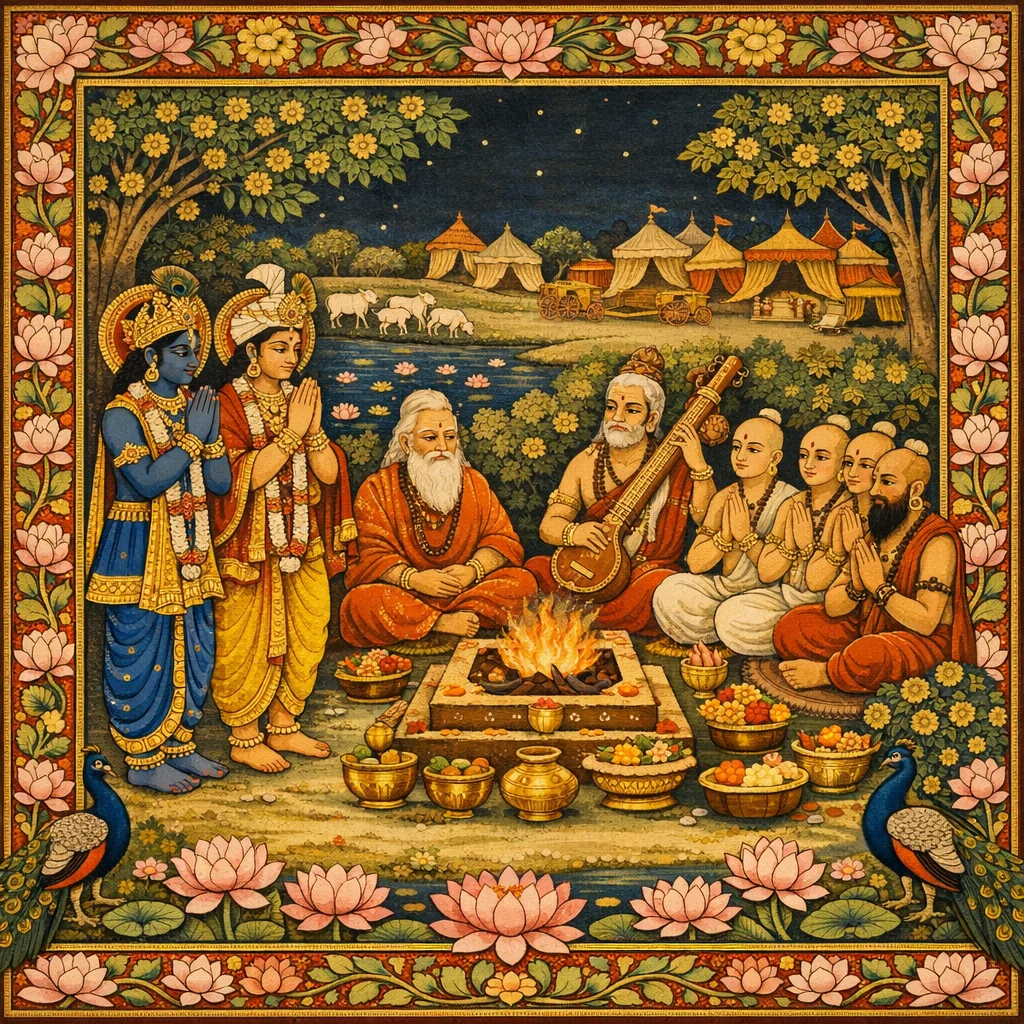
At Kurukṣetra, the royal ladies and Kṛṣṇa’s companions from Vraja marvel at the Dvārakā queens’ intense prema for Kṛṣṇa. As men and women speak separately, many mahāṛṣis arrive—Vyāsa, Nārada, Paraśurāma and the Kumāras among them—and Kṛṣṇa and Balarāma, with the Pāṇḍavas and gathered kings, rise to honor them. Kṛṣṇa teaches that tīrthas and Deities purify only gradually, whereas realized sādhus purify at once, warning against bodily identification and “tīrtha-buddhi” without sādhu-sevā. Astonished by His humility, the sages glorify His Yoga-māyā and His protection of varṇāśrama and Vedic truth. After they depart, Vasudeva asks how karma can be counteracted by further action; the answer establishes Viṣṇu-centered yajña as the scriptural path for householders, along with charity, study, and repaying the three debts (to devas, ṛṣis, and pitṛs). Vasudeva then performs grand sacrifices at Kurukṣetra, honors all beings with gifts and feasting, and the relatives part in affectionate separation. The chapter bridges the pilgrimage reunion’s emotional climax to the Vṛṣṇis’ return to Dvārakā as the season changes.
Shlokas
Verse 1
श्रीशुक उवाच श्रुत्वा पृथा सुबलपुत्र्यथ याज्ञसेनी माधव्यथ क्षितिपपत्न्य उत स्वगोप्य: । कृष्णेऽखिलात्मनि हरौ प्रणयानुबन्धं सर्वा विसिस्म्युरलमश्रुकलाकुलाक्ष्य: ॥ १ ॥
Śrī Śukadeva Gosvāmī said: Hearing of the queens’ profound bond of love for Lord Kṛṣṇa—Hari, the Soul of all beings—Pṛthā, Gāndhārī, Draupadī, Subhadrā, the wives of other kings, and the gopīs were all struck with wonder, their eyes brimming with tears.
Verse 2
इति सम्भाषमाणासु स्त्रीभि: स्त्रीषु नृभिर्नृषु । आययुर्मुनयस्तत्र कृष्णरामदिदृक्षया ॥ २ ॥ द्वैपायनो नारदश्च च्यवनो देवलोऽसित: । विश्वामित्र: शतानन्दो भरद्वाजोऽथ गौतम: ॥ ३ ॥ राम: सशिष्यो भगवान् वसिष्ठो गालवो भृगु: । पुलस्त्य: कश्यपोऽत्रिश्च मार्कण्डेयो बृहस्पति: ॥ ४ ॥ द्वितस्त्रितश्चैकतश्च ब्रह्मपुत्रास्तथाङ्गिरा: । अगस्त्यो याज्ञवल्क्यश्च वामदेवादयोऽपरे ॥ ५ ॥
As the women spoke among themselves and the men among themselves, many great sages arrived there, eager to behold Lord Kṛṣṇa and Lord Balarāma—Dvaipāyana, Nārada, Cyavana, Devala, Asita, Viśvāmitra, Śatānanda, Bharadvāja, and Gautama.
Verse 3
इति सम्भाषमाणासु स्त्रीभि: स्त्रीषु नृभिर्नृषु । आययुर्मुनयस्तत्र कृष्णरामदिदृक्षया ॥ २ ॥ द्वैपायनो नारदश्च च्यवनो देवलोऽसित: । विश्वामित्र: शतानन्दो भरद्वाजोऽथ गौतम: ॥ ३ ॥ राम: सशिष्यो भगवान् वसिष्ठो गालवो भृगु: । पुलस्त्य: कश्यपोऽत्रिश्च मार्कण्डेयो बृहस्पति: ॥ ४ ॥ द्वितस्त्रितश्चैकतश्च ब्रह्मपुत्रास्तथाङ्गिरा: । अगस्त्यो याज्ञवल्क्यश्च वामदेवादयोऽपरे ॥ ५ ॥
Among those sages were Lord Paraśurāma with his disciples, along with Vasiṣṭha, Gālava, Bhṛgu, Pulastya, Kaśyapa, Atri, Mārkaṇḍeya, and Bṛhaspati.
Verse 4
इति सम्भाषमाणासु स्त्रीभि: स्त्रीषु नृभिर्नृषु । आययुर्मुनयस्तत्र कृष्णरामदिदृक्षया ॥ २ ॥ द्वैपायनो नारदश्च च्यवनो देवलोऽसित: । विश्वामित्र: शतानन्दो भरद्वाजोऽथ गौतम: ॥ ३ ॥ राम: सशिष्यो भगवान् वसिष्ठो गालवो भृगु: । पुलस्त्य: कश्यपोऽत्रिश्च मार्कण्डेयो बृहस्पति: ॥ ४ ॥ द्वितस्त्रितश्चैकतश्च ब्रह्मपुत्रास्तथाङ्गिरा: । अगस्त्यो याज्ञवल्क्यश्च वामदेवादयोऽपरे ॥ ५ ॥
They also included Dvita, Trita, Ekata, the four Kumāras—sons of Brahmā—and Aṅgirā as well.
Verse 5
इति सम्भाषमाणासु स्त्रीभि: स्त्रीषु नृभिर्नृषु । आययुर्मुनयस्तत्र कृष्णरामदिदृक्षया ॥ २ ॥ द्वैपायनो नारदश्च च्यवनो देवलोऽसित: । विश्वामित्र: शतानन्दो भरद्वाजोऽथ गौतम: ॥ ३ ॥ राम: सशिष्यो भगवान् वसिष्ठो गालवो भृगु: । पुलस्त्य: कश्यपोऽत्रिश्च मार्कण्डेयो बृहस्पति: ॥ ४ ॥ द्वितस्त्रितश्चैकतश्च ब्रह्मपुत्रास्तथाङ्गिरा: । अगस्त्यो याज्ञवल्क्यश्च वामदेवादयोऽपरे ॥ ५ ॥
Agastya, Yājñavalkya, Vāmadeva, and other sages also came there, filled with longing to see Lord Kṛṣṇa and Lord Balarāma.
Verse 6
तान् दृष्ट्वा सहसोत्थाय प्रागासीना नृपादय: । पाण्डवा: कृष्णरामौ च प्रणेमुर्विश्ववन्दितान् ॥ ६ ॥
Seeing the sages approach, the kings and other honored men who had been seated rose at once; the Pāṇḍavas, Kṛṣṇa, and Balarāma also stood. Then all bowed down to those sages, revered throughout the universe.
Verse 7
तानानर्चुर्यथा सर्वे सहरामोऽच्युतोऽर्चयत् । स्वागतासनपाद्यार्घ्यमाल्यधूपानुलेपनै: ॥ ७ ॥
Then everyone honored them properly; Acyuta Kṛṣṇa, together with Balarāma, worshiped the sages by offering greetings, seats, water for washing the feet, arghya, flower garlands, incense, and sandalwood paste.
Verse 8
उवाच सुखमासीनान् भगवान् धर्मगुप्तनु: । सदसस्तस्य महतो यतवाचोऽनुशृण्वत: ॥ ८ ॥
When the sages were comfortably seated, Bhagavān Kṛṣṇa—whose transcendental body safeguards dharma—addressed them in the midst of that great assembly. Everyone listened in silent, rapt attention.
Verse 9
श्रीभगवानुवाच अहो वयं जन्मभृतो लब्धं कार्त्स्न्येन तत्फलम् । देवानामपि दुष्प्रापं यद् योगेश्वरदर्शनम् ॥ ९ ॥
The Supreme Lord said: Ah, our lives are truly fulfilled; we have obtained in full the ultimate fruit of existence—the darśana of the great masters of yoga, which even the devas rarely attain.
Verse 10
किं स्वल्पतपसां नृणामर्चायां देवचक्षुषाम् । दर्शनस्पर्शनप्रश्नप्रह्वपादार्चनादिकम् ॥ १० ॥
How is it that people like us, of little austerity, who recognize God only in the temple’s Arca form, can now see you, touch you, inquire from you, bow down to you, worship your feet, and serve you in other ways?
Verse 11
न ह्यम्मयानि तीर्थानि न देवा मृच्छिलामया: । ते पुनन्त्युरुकालेन दर्शनादेव साधव: ॥ ११ ॥
Mere bodies of water are not the true tīrthas, nor are images of earth and stone the real worshipable deities. They purify only after a long time, but saintly sādhus purify at once, simply by being seen.
Verse 12
नाग्निर्न सूर्यो न च चन्द्रतारका न भूर्जलं खं श्वसनोऽथ वाङ्मन: । उपासिता भेदकृतो हरन्त्यघं विपश्चितो घ्नन्ति मुहूर्तसेवया ॥ १२ ॥
Neither the gods of fire, the sun, the moon and stars, nor those presiding over earth, water, ether, air, speech and mind truly remove the sins of worshipers who see in duality. But wise sages destroy one’s sins by even a few moments of respectful service.
Verse 13
यस्यात्मबुद्धि: कुणपे त्रिधातुके स्वधी: कलत्रादिषु भौम इज्यधी: । यत्तीर्थबुद्धि: सलिले न कर्हिचि- ज्जनेष्वभिज्ञेषु स एव गोखर: ॥ १३ ॥
One who identifies the self with the inert body made of mucus, bile and air; who takes wife and family as permanently “mine”; who deems an earthen image or the land of birth worshipable; who sees a tīrtha as merely its water—yet never associates with, honors, worships, or even visits those wise in spiritual truth—such a person is no better than a cow or an ass.
Verse 14
श्रीशुक उवाच निशम्येत्थं भगवत: कृष्णस्याकुण्ठमेधस: । वचो दुरन्वयं विप्रास्तूष्णीमासन् भ्रमद्धिय: ॥ १४ ॥
Śukadeva Gosvāmī said: Hearing such profound, hard-to-fathom words from Lord Kṛṣṇa, whose wisdom is unlimited, the learned brāhmaṇas fell silent, their minds bewildered.
Verse 15
चिरं विमृश्य मुनय ईश्वरस्येशितव्यताम् । जनसङ्ग्रह इत्यूचु: स्मयन्तस्तं जगद्गुरुम् ॥ १५ ॥
For some time the sages pondered the Supreme Lord’s behavior, which seemed like that of a subordinate being. They concluded He was acting for jana-saṅgraha—to instruct and uplift the people. Smiling, they then spoke to Him, the spiritual master of the universe.
Verse 16
श्रीमुनय ऊचु: यन्मायया तत्त्वविदुत्तमा वयं विमोहिता विश्वसृजामधीश्वरा: । यदीशितव्यायति गूढ ईहया अहो विचित्रं भगवद्विचेष्टितम् ॥ १६ ॥
The great sages said: O Lord, by Your māyā even we—the foremost knowers of truth and leaders among the creators of the universe—have been utterly bewildered. Ah, how wondrous are the deeds of Bhagavān: You veil Yourself with humanlike acts and pretend to be subject to a higher control.
Verse 17
अनीह एतद् बहुधैक आत्मना सृजत्यवत्यत्ति न बध्यते यथा । भौमैर्हि भूमिर्बहुनामरूपिणी अहो विभूम्नश्चरितं विडम्बनम् ॥ १७ ॥
Indeed, the humanlike pastimes of the Almighty are only a pretense. Effortlessly, He alone brings forth from His own Self this variegated creation, sustains it, and then swallows it again, yet never becomes bound—just as the element earth assumes many names and forms in its transformations. Ah, how wondrous is the Vibhū’s playful conduct!
Verse 18
अथापि काले स्वजनाभिगुप्तये बिभर्षि सत्त्वं खलनिग्रहाय च । स्वलीलया वेदपथं सनातनं वर्णाश्रमात्मा पुरुष: परो भवान् ॥ १८ ॥
Nonetheless, at the proper times You assume the pure mode of sattva to protect Your devotees and restrain the wicked. Thus You—the Soul of the varṇāśrama order, the Supreme Puruṣa—uphold the eternal path of the Vedas through Your own blissful lila.
Verse 19
ब्रह्म ते हृदयं शुक्लं तप:स्वाध्यायसंयमै: । यत्रोपलब्धं सद् व्यक्तमव्यक्तं च तत: परम् ॥ १९ ॥
The Vedas are Your spotless heart, and by austerity, sacred study (svādhyāya), and self-control one perceives within them the manifest, the unmanifest, and the pure existence that transcends both.
Verse 20
तस्माद् ब्रह्मकुलं ब्रह्मन् शास्त्रयोनेस्त्वमात्मन: । सभाजयसि सद्धाम तद् ब्रह्मण्याग्रणीर्भवान् ॥ २० ॥
Therefore, O Supreme Brahman, You honor the brāhmaṇa community, for they are the perfect means to realize You as the Ātman through the śāstric evidence born of the Vedas. For that very reason, You are the foremost worshiper of the brāhmaṇas.
Verse 21
अद्य नो जन्मसाफल्यं विद्यायास्तपसो दृश: । त्वया सङ्गम्य सद्गत्या यदन्त: श्रेयसां पर: ॥ २१ ॥
Today our birth, learning, austerity and vision have all become fulfilled, for we have attained Your association—You are the supreme goal of the saintly and the highest blessing within.
Verse 22
नमस्तस्मै भगवते कृष्णायाकुण्ठमेधसे । स्वयोगमाययाच्छन्नमहिम्ने परमात्मने ॥ २२ ॥
Obeisances to Bhagavān Śrī Kṛṣṇa, the infinitely intelligent Paramātmā, who veils His own greatness by His mystic Yoga-māyā.
Verse 23
न यं विदन्त्यमी भूपा एकारामाश्च वृष्णय: । मायाजवनिकाच्छन्नमात्मानं कालमीश्वरम् ॥ २३ ॥
Neither these kings nor even the Vṛṣṇis, who relish intimate association with You, know You as the Soul of all existence, the power of Time, and the supreme controller, for You are hidden from them by the curtain of Māyā.
Verse 24
यथा शयान: पुरुष आत्मानं गुणतत्त्वदृक् । नाममात्रेन्द्रियाभातं न वेद रहितं परम् ॥ २४ ॥ एवं त्वा नाममात्रेषु विषयेष्विन्द्रियेहया । मायया विभ्रमच्चित्तो न वेद स्मृत्युपप्लवात् ॥ २५ ॥
As a sleeping person, absorbed in mere names and forms, forgets his true waking identity beyond the dream, so the mind bewildered by Māyā—driven by the senses—perceives only the names and forms of objects; memory is overwhelmed, and one cannot know You.
Verse 25
यथा शयान: पुरुष आत्मानं गुणतत्त्वदृक् । नाममात्रेन्द्रियाभातं न वेद रहितं परम् ॥ २४ ॥ एवं त्वा नाममात्रेषु विषयेष्विन्द्रियेहया । मायया विभ्रमच्चित्तो न वेद स्मृत्युपप्लवात् ॥ २५ ॥
As one asleep clings to mere names and forms and fails to know the true self beyond the dream, so the mind bewildered by Māyā, dragged by the senses, perceives only the names and forms of objects; with memory disturbed, one cannot know You.
Verse 26
तस्याद्य ते ददृशिमाङ्घ्रिमघौघमर्ष- तीर्थास्पदं हृदि कृतं सुविपक्वयोगै: । उत्सिक्तभक्त्युपहताशयजीवकोशा आपुर्भवद्गतिमथानुगृहाण भक्तान् ॥ २६ ॥
Today we have directly seen Your feet, the source of the sacred Gaṅgā, the holy tīrtha that washes away torrents of sin. Perfected yogīs can only meditate on those feet within the heart; but those who serve You with wholehearted bhakti and thus conquer the soul’s covering—the material mind—attain You as the final destination. Therefore, please show mercy to us, Your devotees.
Verse 27
श्रीशुक उवाच इत्यनुज्ञाप्य दाशार्हं धृतराष्ट्रं युधिष्ठिरम् । राजर्षे स्वाश्रमान् गन्तुं मुनयो दधिरे मन: ॥ २७ ॥
Śukadeva Gosvāmī said: O wise king, having spoken thus, the sages took leave of Lord Dāśārha, Dhṛtarāṣṭra, and Yudhiṣṭhira, and set their minds on returning to their respective āśramas.
Verse 28
तद् वीक्ष्य तानुपव्रज्य वसुदेवो महायशा: । प्रणम्य चोपसङ्गृह्य बभाषेदं सुयन्त्रित: ॥ २८ ॥
Seeing that they were about to depart, the renowned Vasudeva approached the sages. After bowing down and touching their feet, he addressed them with carefully chosen words.
Verse 29
श्रीवसुदेव उवाच नमो व: सर्वदेवेभ्य ऋषय: श्रोतुमर्हथ । कर्मणा कर्मनिर्हारो यथा स्यान्नस्तदुच्यताम् ॥ २९ ॥
Śrī Vasudeva said: O sages, abode of all the devas, I offer you my obeisances. Please hear me and tell us how the reactions of one’s karma may be counteracted by further action.
Verse 30
श्रीनारद उवाच नातिचित्रमिदं विप्रा वसुदेवो बुभुत्सया । कृष्णं मत्वार्भकं यन्न: पृच्छति श्रेय आत्मन: ॥ ३० ॥
Śrī Nārada Muni said: O brāhmaṇas, it is not so astonishing that, eager to know, Vasudeva asks us about his ultimate welfare, for he considers Kṛṣṇa to be merely a young boy.
Verse 31
सन्निकर्षोऽत्र मर्त्यानामनादरणकारणम् । गाङ्गं हित्वा यथान्याम्भस्तत्रत्यो याति शुद्धये ॥ ३१ ॥
In this world, excessive familiarity becomes a cause of disrespect. Thus even one dwelling on the banks of the Gaṅgā may go to other waters seeking purification.
Verse 32
यस्यानुभूति: कालेन लयोत्पत्त्यादिनास्य वै । स्वतोऽन्यस्माच्च गुणतो न कुतश्चन रिष्यति ॥ ३२ ॥ तं क्लेशकर्मपरिपाकगुणप्रवाहै- रव्याहतानुभवमीश्वरमद्वितीयम् । प्राणादिभि: स्वविभवैरुपगूढमन्यो मन्येत सूर्यमिव मेघहिमोपरागै: ॥ ३३ ॥
The Supreme Lord’s awareness is never disturbed by time, by the universe’s creation and dissolution, or by any change of qualities—whether arising from within or from without.
Verse 33
यस्यानुभूति: कालेन लयोत्पत्त्यादिनास्य वै । स्वतोऽन्यस्माच्च गुणतो न कुतश्चन रिष्यति ॥ ३२ ॥ तं क्लेशकर्मपरिपाकगुणप्रवाहै- रव्याहतानुभवमीश्वरमद्वितीयम् । प्राणादिभि: स्वविभवैरुपगूढमन्यो मन्येत सूर्यमिव मेघहिमोपरागै: ॥ ३३ ॥
The one Supreme Lord, without a second, is never touched by distress, by the ripening of karma, or by the flow of the modes of nature; yet ordinary people imagine Him covered by prāṇa and other elements born of His own power, as if the sun were veiled by clouds, snow, or an eclipse.
Verse 34
अथोचुर्मुनयो राजन्नाभाष्यानकदुन्दुभिम् । सर्वेषां शृण्वतां राज्ञां तथैवाच्युतरामयो: ॥ ३४ ॥
O King, the sages then spoke again, addressing Vasudeva, known as Ānakadundubhi, while all the kings—along with Lord Acyuta and Lord Rāma—listened.
Verse 35
कर्मणा कर्मनिर्हार एष साधु निरूपित: । यच्छ्रद्धया यजेद् विष्णुं सर्वयज्ञेश्वरं मखै: ॥ ३५ ॥
It is firmly concluded that karma is counteracted by righteous action: with sincere faith one should perform Vedic sacrifices to worship Viṣṇu, the Lord of all sacrifices.
Verse 36
चित्तस्योपशमोऽयं वै कविभि: शास्त्रचक्षुषा । दर्शित: सुगमो योगो धर्मश्चात्ममुदावह: ॥ ३६ ॥
Sages who see with the eye of scripture have shown that this is the easiest yoga for pacifying the restless mind and attaining liberation, a sacred duty that brings joy to the heart.
Verse 37
अयं स्वस्त्ययन: पन्था द्विजातेर्गृहमेधिन: । यच्छ्रद्धयाप्तवित्तेन शुक्लेनेज्येत पूरुष: ॥ ३७ ॥
This is the most auspicious path for a dvija householder: with faith, selflessly worship Purushottama, the Supreme Lord, using pure wealth honestly obtained.
Verse 38
वित्तैषणां यज्ञदानैर्गृहैर्दारसुतैषणाम् । आत्मलोकैषणां देव कालेन विसृजेद्बुध: । ग्रामे त्यक्तैषणा: सर्वे ययुर्धीरास्तपोवनम् ॥ ३८ ॥
An intelligent person should learn to renounce the craving for wealth through sacrifice and charity, the craving for wife and children by living through family life, and—O saintly Vasudeva—the craving for higher worlds by observing the workings of time. Thus self-controlled sages, having abandoned attachment to household life, go to the forest to perform austerities.
Verse 39
ऋणैस्त्रिभिर्द्विजो जातो देवर्षिपितृणां प्रभो । यज्ञाध्ययनपुत्रैस्तान्यनिस्तीर्य त्यजन् पतेत् ॥ ३९ ॥
Dear Prabhu, a dvija is born with three debts—to the demigods, the sages, and the forefathers. If he leaves his body without repaying them through sacrifice, scriptural study, and begetting children, he falls into a hellish condition.
Verse 40
त्वं त्वद्य मुक्तो द्वाभ्यां वै ऋषिपित्रोर्महामते । यज्ञैर्देवर्णमुन्मुच्य निर्ऋणोऽशरणो भव ॥ ४० ॥
But you, O great-minded one, are already free from two debts—to the sages and to the forefathers. Now discharge your debt to the demigods by performing Vedic sacrifices; thus become wholly debtless and renounce all material shelter.
Verse 41
वसुदेव भवान् नूनं भक्त्या परमया हरिम् । जगतामीश्वरं प्रार्च: स यद् वां पुत्रतां गत: ॥ ४१ ॥
O Vasudeva, without doubt you and your wife have worshiped Lord Śrī Hari, the master of all worlds, with supreme devotion; therefore He has accepted the role of your son.
Verse 42
श्रीशुक उवाच इति तद्वचनं श्रुत्वा वसुदेवो महामना: । तानृषीनृत्विजो वव्रे मूर्ध्नानम्य प्रसाद्य च ॥ ४२ ॥
Śukadeva Gosvāmī said: Hearing the sages’ words, the magnanimous Vasudeva bowed his head to the ground, honored them with praise, and requested them to serve as his priests.
Verse 43
त एनमृषयो राजन् वृता धर्मेण धार्मिकम् । तस्मिन्नयाजयन् क्षेत्रे मखैरुत्तमकल्पकै: ॥ ४३ ॥
Thus, O King, requested by him in accordance with dharma, the sages engaged the pious Vasudeva in performing fire sacrifices at holy Kurukṣetra, with strict principles and the finest ritual arrangements.
Verse 44
तद्दीक्षायां प्रवृत्तायां वृष्णय: पुष्करस्रज: । स्नाता: सुवाससो राजन् राजान: सुष्ठ्वलङ्कृता: ॥ ४४ ॥ तन्महिष्यश्च मुदिता निष्ककण्ठ्य: सुवासस: । दीक्षाशालामुपाजग्मुरालिप्ता वस्तुपाणय: ॥ ४५ ॥
When Mahārāja Vasudeva was about to begin the sacrificial initiation, O King, the Vṛṣṇis came to the initiation pavilion after bathing, dressed in fine garments and lotus garlands. Other kings arrived richly adorned, and their joyful queens too—wearing jeweled lockets, fine clothes, anointed with sandalwood paste, and carrying auspicious items for worship.
Verse 45
तद्दीक्षायां प्रवृत्तायां वृष्णय: पुष्करस्रज: । स्नाता: सुवाससो राजन् राजान: सुष्ठ्वलङ्कृता: ॥ ४४ ॥ तन्महिष्यश्च मुदिता निष्ककण्ठ्य: सुवासस: । दीक्षाशालामुपाजग्मुरालिप्ता वस्तुपाणय: ॥ ४५ ॥
The joyful queens also came to the initiation pavilion, wearing jeweled necklaces and fine garments, anointed with sandalwood paste, and carrying auspicious items for worship.
Verse 46
नेदुर्मृदङ्गपटहशङ्खभेर्यानकादय: । ननृतुर्नटनर्तक्यस्तुष्टुवु: सूतमागधा: । जगु: सुकण्ठ्यो गन्धर्व्य: सङ्गीतं सहभर्तृका: ॥ ४६ ॥
Mṛdaṅgas, paṭahas, conchshells, bherīs, ānakas and other instruments resounded. Male and female dancers performed, and the sūtas and māgadhas recited praises. Sweet-voiced Gandharvīs sang music, accompanied by their husbands.
Verse 47
तमभ्यषिञ्चन् विधिवदक्तमभ्यक्तमृत्विज: । पत्नीभिरष्टादशभि: सोमराजमिवोडुभि: ॥ ४७ ॥
After Vasudeva’s eyes were adorned with black cosmetic and his body anointed with fresh butter, the priests, following scriptural rule, initiated him by sprinkling sacred water upon him and his eighteen wives. Encircled by those wives, he shone like the regal moon surrounded by stars.
Verse 48
ताभिर्दुकूलवलयैर्हारनूपुरकुण्डलै: । स्वलङ्कृताभिर्विबभौ दीक्षितोऽजिनसंवृत: ॥ ४८ ॥
His wives wore silk garments and were adorned with bangles, necklaces, ankle bells and earrings. Initiated along with them, Vasudeva, his body wrapped in a deerskin, shone with splendid radiance.
Verse 49
तस्यर्त्विजो महाराज रत्नकौशेयवासस: । ससदस्या विरेजुस्ते यथा वृत्रहणोऽध्वरे ॥ ४९ ॥
My dear Mahārāja Parīkṣit, Vasudeva’s priests and the officiating members of the assembly, dressed in silk garments and jeweled ornaments, were so effulgent that they seemed to be standing in the sacrificial arena of Indra, the slayer of Vṛtra.
Verse 50
तदा रामश्च कृष्णश्च स्वै: स्वैर्बन्धुभिरन्वितौ । रेजतु: स्वसुतैर्दारैर्जीवेशौ स्वविभूतिभि: ॥ ५० ॥
At that time Balarāma and Kṛṣṇa, the Lords of all living beings, shone forth in great majesty, accompanied by Their respective sons, wives and other family members—expansions of Their own divine opulences.
Verse 51
ईजेऽनुयज्ञं विधिना अग्निहोत्रादिलक्षणै: । प्राकृतैर्वैकृतैर्यज्ञैर्द्रव्यज्ञानक्रियेश्वरम् ॥ ५१ ॥
Following the proper Vedic regulations, performing both primary and secondary sacrifices such as the agnihotra, Vasudeva worshiped Bhagavān, the Lord of yajña, master of all offerings, mantras, knowledge, and sacred rites.
Verse 52
अथर्त्विग्भ्योऽददात् काले यथाम्नातं स दक्षिणा: । स्वलङ्कृतेभ्योऽलङ्कृत्य गोभूकन्या महाधना: ॥ ५२ ॥
Then, at the proper time and as enjoined in scripture, Vasudeva rewarded the ṛtviks with dakṣiṇā—adorning those already adorned with precious ornaments and granting great gifts of cows, land, and marriageable maidens.
Verse 53
पत्नीसंयाजावभृथ्यैश्चरित्वा ते महर्षय: । सस्नू रामह्रदे विप्रा यजमानपुर:सरा: ॥ ५३ ॥
After duly overseeing the patnī-saṁyāja and avabhṛthya rites, the great brāhmaṇa sages, led by the yajamāna Vasudeva, bathed in Lord Paraśurāma’s Rāma-hrada lake.
Verse 54
स्नातोऽलङ्कारवासांसि वन्दिभ्योऽदात्तथा स्त्रिय: । तत: स्वलङ्कृतो वर्णानाश्वभ्योऽन्नेन पूजयत् ॥ ५४ ॥
After his sacred bath, Vasudeva and his wives gave the jewelry and garments they were wearing to the vandi reciters. Then, dressed anew and adorned, he honored all people—down to the dogs—by feeding everyone.
Verse 55
बन्धून् सदारान् ससुतान् पारिबर्हेण भूयसा । विदर्भकोशलकुरून् काशिकेकयसृञ्जयान् ॥ ५५ ॥ सदस्यर्त्विक्सुरगणान् नृभूतपितृचारणान् । श्रीनिकेतमनुज्ञाप्य शंसन्त: प्रययु: क्रतुम् ॥ ५६ ॥
With lavish gifts Vasudeva honored his relatives—together with their wives and children—and the royalty of Vidarbha, Kosala, Kuru, Kāśī, Kekaya, and Sṛñjaya, as well as the assembly members, the ṛtviks, the witnessing devas, humans, spirits, forefathers, and Cāraṇas. Then, having received permission from Lord Kṛṣṇa, the abode of Śrī, all the guests departed, chanting the glories of Vasudeva’s sacrifice.
Verse 56
बन्धून् सदारान् ससुतान् पारिबर्हेण भूयसा । विदर्भकोशलकुरून् काशिकेकयसृञ्जयान् ॥ ५५ ॥ सदस्यर्त्विक्सुरगणान् नृभूतपितृचारणान् । श्रीनिकेतमनुज्ञाप्य शंसन्त: प्रययु: क्रतुम् ॥ ५६ ॥
With abundant gifts he honored his relatives—together with their wives and children—and the royal guests from Vidarbha, Kosala, Kuru, Kāśī, Kekaya and Sṛñjaya. He also worshiped the members of the assembly, the officiating priests, the witnessing demigods, humans, spirits, forefathers and Cāraṇas; then, having received permission from Lord Śrī Kṛṣṇa, the abode of Lakṣmī, all the guests departed for their own lands, chanting the glories of Vasudeva’s sacrifice.
Verse 57
धृतराष्ट्रोऽनुज: पार्था भीष्मो द्रोण: पृथा यमौ । नारदो भगवान् व्यास: सुहृत्सम्बन्धिबान्धवा: ॥ ५७ ॥ बन्धून् परिष्वज्य यदून् सौहृदाक्लिन्नचेतस: । ययुर्विरहकृच्छ्रेण स्वदेशांश्चापरे जना: ॥ ५८ ॥
Dhṛtarāṣṭra and his younger brother Vidura, Pṛthā and her sons the Pāṇḍavas, Bhīṣma, Droṇa, the twins Nakula and Sahadeva, Nārada, and Bhagavān Vedavyāsa—friends, family, and kin—all embraced the Yadus, their hearts melting with affection. Then, slowed by the anguish of separation, they and the other guests departed for their own kingdoms.
Verse 58
धृतराष्ट्रोऽनुज: पार्था भीष्मो द्रोण: पृथा यमौ । नारदो भगवान् व्यास: सुहृत्सम्बन्धिबान्धवा: ॥ ५७ ॥ बन्धून् परिष्वज्य यदून् सौहृदाक्लिन्नचेतस: । ययुर्विरहकृच्छ्रेण स्वदेशांश्चापरे जना: ॥ ५८ ॥
Dhṛtarāṣṭra and his younger brother Vidura, Pṛthā and her sons the Pāṇḍavas, Bhīṣma, Droṇa, the twins Nakula and Sahadeva, Nārada, and Bhagavān Vedavyāsa—friends, family, and kin—all embraced the Yadus, their hearts melting with affection. Then, slowed by the anguish of separation, they and the other guests departed for their own kingdoms.
Verse 59
नन्दस्तु सह गोपालैर्बृहत्या पूजयार्चित: । कृष्णरामोग्रसेनाद्यैर्न्यवात्सीद् बन्धुवत्सल: ॥ ५९ ॥
Nanda Mahārāja, affectionate to his relatives, stayed a little longer there with his cowherd men. During his stay, Śrī Kṛṣṇa, Balarāma, Ugrasena and the others honored him with especially opulent worship and reception.
Verse 60
वसुदेवोऽञ्जसोत्तीर्य मनोरथमहार्णवम् । सुहृद् वृत: प्रीतमना नन्दमाह करे स्पृशन् ॥ ६० ॥
Having so easily crossed the vast ocean of his long-cherished desire, Vasudeva felt fully satisfied. Surrounded by many well-wishers, he touched Nanda’s hand and spoke to him as follows.
Verse 61
श्रीवसुदेव उवाच भ्रातरीशकृत: पाशो नृणां य: स्नेहसंज्ञित: । तं दुस्त्यजमहं मन्ये शूराणामपि योगिनाम् ॥ ६१ ॥
Śrī Vasudeva said: My dear brother, God Himself has tied the knot called affection, which tightly binds human beings. It seems to me that even great heroes and mystics find it very difficult to free themselves from it.
Verse 62
अस्मास्वप्रतिकल्पेयं यत् कृताज्ञेषु सत्तमै: । मैत्र्यर्पिताफला चापि न निवर्तेत कर्हिचित् ॥ ६२ ॥
Indeed, the Supreme Lord must have created the bonds of affection, for such exalted saints as you have never stopped showing matchless friendship toward us ingrates, although it has never been properly reciprocated.
Verse 63
प्रागकल्पाच्च कुशलं भ्रातर्वो नाचराम हि । अधुना श्रीमदान्धाक्षा न पश्याम: पुर: सत: ॥ ६३ ॥
Previously, dear brother, we did nothing to benefit you because we were unable to, yet even now that you are present before us, our eyes are so blinded by the intoxication of material good fortune that we continue to ignore you.
Verse 64
मा राज्यश्रीरभूत् पुंस: श्रेयस्कामस्य मानद । स्वजनानुत बन्धून् वा न पश्यति ययान्धदृक् ॥ ६४ ॥
O most respectful one, may a person who wants the highest benefit in life never gain kingly opulence, for it leaves him blind to the needs of his own family and friends.
Verse 65
श्रीशुक उवाच एवं सौहृदशैथिल्यचित्त आनकदुन्दुभि: । रुरोद तत्कृतां मैत्रीं स्मरन्नश्रुविलोचन: ॥ ६५ ॥
Śrī Śukadeva Gosvāmī said: His heart softened by feelings of intimate sympathy, Vasudeva wept. His eyes brimmed with tears as he remembered the friendship Nanda had shown him.
Verse 66
नन्दस्तु सख्यु: प्रियकृत् प्रेम्णा गोविन्दरामयो: । अद्य श्व इति मासांस्त्रीन् यदुभिर्मानितोऽवसत् ॥ ६६ ॥
Nanda, too, was filled with affection for his friend Vasudeva. Out of love for Govinda and Balarāma he kept saying, “I will leave today” and “I will leave tomorrow,” yet, honored by all the Yadus, he stayed on for three more months.
Verse 67
तत: कामै: पूर्यमाण: सव्रज: सहबान्धव: । परार्ध्याभरणक्षौमनानानर्घ्यपरिच्छदै: ॥ ६७ ॥ वसुदेवोग्रसेनाभ्यां कृष्णोद्धवबलादिभि: । दत्तमादाय पारिबर्हं यापितो यदुभिर्ययौ ॥ ६८ ॥
Then Nanda Mahārāja, together with all the people of Vraja and his relatives, had his wishes fulfilled. Vasudeva, Ugrasena, Śrī Kṛṣṇa, Uddhava, Balarāma and others presented him with precious ornaments, fine cloth and many priceless household furnishings. Nanda accepted these gifts and took his leave; escorted by the Yadus, he departed with his family and the residents of Vraja.
Verse 68
तत: कामै: पूर्यमाण: सव्रज: सहबान्धव: । परार्ध्याभरणक्षौमनानानर्घ्यपरिच्छदै: ॥ ६७ ॥ वसुदेवोग्रसेनाभ्यां कृष्णोद्धवबलादिभि: । दत्तमादाय पारिबर्हं यापितो यदुभिर्ययौ ॥ ६८ ॥
Then Nanda Mahārāja, together with all the people of Vraja and his relatives, had his wishes fulfilled. Vasudeva, Ugrasena, Śrī Kṛṣṇa, Uddhava, Balarāma and others presented him with precious ornaments, fine cloth and many priceless household furnishings. Nanda accepted these gifts and took his leave; escorted by the Yadus, he departed with his family and the residents of Vraja.
Verse 69
नन्दो गोपाश्च गोप्यश्च गोविन्दचरणाम्बुजे । मन: क्षिप्तं पुनर्हर्तुमनीशा मथुरां ययु: ॥ ६९ ॥
Nanda, the cowherd men and the cowherd women, having placed their minds at Govinda’s lotus feet, could not draw them back; thus they returned to Mathurā.
Verse 70
बन्धुषु प्रतियातेषु वृष्णय: कृष्णदेवता: । वीक्ष्य प्रावृषमासन्नाद् ययुर्द्वारवतीं पुन: ॥ ७० ॥
When their relatives had departed and they saw the rainy season approaching, the Vṛṣṇis—whose only Lord was Kṛṣṇa—returned once more to Dvārakā.
Verse 71
जनेभ्य: कथयां चक्रुर्यदुदेवमहोत्सवम् । यदासीत्तीर्थयात्रायां सुहृत्सन्दर्शनादिकम् ॥ ७१ ॥
They told the city’s people of the grand sacrificial festival performed by Vasudeva, lord of the Yadus, and of all that had occurred on the pilgrimage to the holy tīrthas—especially the meeting and darśana of their beloved friends and kin.
Frequently Asked Questions
Kṛṣṇa teaches that sacred waters and stone/earth Deities purify over time when approached with gradual purification, but a realized sādhu—fixed in spiritual truth—immediately awakens remembrance of God and destroys sin when respectfully served. The point is not to diminish tīrtha or arcana, but to assert that their perfection is sādhu-saṅga and living transmission of tattva through humility, inquiry, and service.
It critiques ahaṅkāra and misidentification: seeing the self as the body, treating family as permanent possession, worshiping land/birth or mere water as ultimate, while neglecting association with the wise. The strong metaphor underscores that without sādhu-sevā and tattva-jñāna, human life fails in its distinct purpose—self-realization and devotion to the Supreme.
The sages conclude that karma is neutralized when action is performed as yajña for Viṣṇu—regulated Vedic sacrifice and duty done with faith, without selfish fruit. Such yajñārtha-karma purifies the mind, supports dharma for householders, and gradually leads toward liberation and bhakti by transforming obligation into worship.
A twice-born householder is described as indebted to (1) the devas (supported by sacrifice), (2) the ṛṣis (repaid by study and preserving knowledge), and (3) the pitṛs (repaid by responsible progeny and ancestral rites). The teaching frames gṛhastha life as stewardship within cosmic reciprocity, meant to culminate in detachment and eventual renunciation rather than endless acquisition.
They explain that Yoga-māyā covers Kṛṣṇa’s full identity even from intimates, enabling humanlike līlā. Just as a dreamer forgets waking identity, conditioned perception clings to nāma-rūpa; thus only by grace, devotion, and purified consciousness can one recognize Kṛṣṇa as Time, the inner controller, and the Soul of all beings.