त्रिपुरमोहनम् (Tripuramohana — “The Delusion/Enchanting of Tripura”)
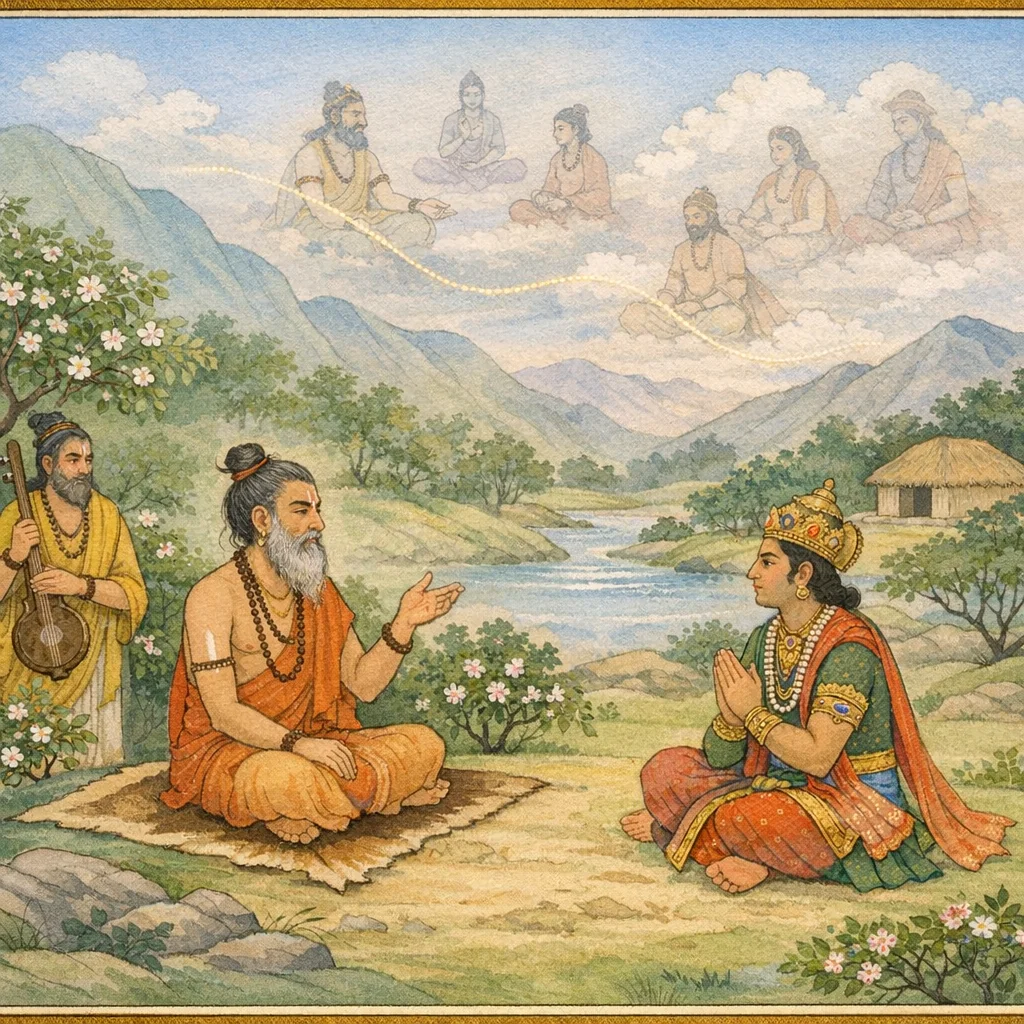
Adhyāya 5 begins with Vyāsa asking what happened after the daitya-king received dīkṣā and was deluded by a māyā-wielding ascetic. Sanatkumāra recounts the post-initiation discourse: the ascetic Arihann, surrounded by disciples and accompanied by figures such as Nārada, teaches the daitya ruler a doctrine presented as “Vedānta-sāra,” the supreme secret. It asserts that saṃsāra is beginningless and self-operating, without any ultimate agent–action duality; it arises and dissolves of itself. From Brahmā down to a blade of grass, and even in the bondage of embodiment, the ātman alone is the single lord—no second controller exists. The chapter stresses the perishability and time-bound dissolution of all bodies (from gods to insects) and highlights the shared conditions of embodied life: food, sleep, fear, and sexual impulse are common to all; even the satisfaction after fasting is alike. Within the Tripura narrative, this “non-dual” counsel functions as māyā, unsettling daitya confidence and reframing agency, thereby preparing the ground for Śiva’s larger strategy in the Tripura episode.
Shlokas
Verse 1
व्यास उवाच । दैत्यराजे दीक्षिते च मायिना तेन मोहिते । किमुवाच तदा मायी किं चकार स दैत्यपः
Vyāsa said: When the king of the Daityas had received initiation and was thereby deluded by that master of Māyā, what did the wielder of illusion say then, and what did the Daitya-lord do?
Verse 2
सनत्कुमार उवाच । दीक्षां दत्त्वा यतिस्तस्मा अरिहन्नारदादिभिः । शिष्यैस्सेवितपादाब्जो दैत्यराजानमब्रवीत्
Sanatkumāra said: Having bestowed dīkṣā (initiation) upon him, that ascetic—whose lotus-feet were attended by disciples such as Arihan and Nārada—then addressed the king of the Dānavas.
Verse 3
अरिहन्नुवाच । शृणु दैत्यपते वाक्यं मम सञ्ज्ञानगर्भितम् । वेदान्तसारसर्वस्वं रहस्यं परमोत्तमम्
Arihan said: “Listen, O lord of the Daityas, to my words—laden with true discernment. They are the very essence and total purport of Vedānta, a supreme and most excellent secret teaching.”
Verse 4
अनादिसिद्धस्संसारः कर्तृकर्मविवर्जितः । स्वयं प्रादुर्भवत्येव स्वयमेव विलीयते
This cycle of worldly existence (saṃsāra) is beginningless and self‑established, devoid of any independent doer and deed. Of its own accord it arises, and of itself it dissolves again—while the Supreme Lord, Mahādeva (Śiva), remains the ever‑present ground of all.
Verse 5
इति श्रीशिवमहापुराणे द्वितीयायां रुद्रसंहितायां पंचमे युद्धखंडे त्रिपुरमोहनं नाम पञ्चमोऽध्यायः
Thus, in the Śrī Śiva Mahāpurāṇa—within the Second Book, the Rudra-saṃhitā, in the fifth section called the Yuddha-khaṇḍa—ends the fifth chapter entitled “Tripuramohana,” recounting how Tripura was cast into delusion by Śiva’s divine strategy.
Verse 6
यद्ब्रह्मविष्णुरुद्राख्यास्तदाख्या देहिनामिमाः । आख्यायथास्मदादीनामरिहन्नादिरुच्यते
Those very designations—Brahmā, Viṣṇu, and Rudra—are merely names assumed by embodied beings. But when speaking of the primordial ones beginning with us, He is called the beginningless “Arihan,” the slayer of enemies.
Verse 7
देहो यथास्मदादीनां स्वकालेन विलीयते । ब्रह्मादि मशकांतानां स्वकालाल्लीयते तथा
Just as the bodies of beings like us dissolve when their allotted time is complete, so too do the bodies of all—from Brahmā down to the tiniest gnat—dissolve when their destined time arrives.
Verse 8
विचार्यमाणे देहेऽस्मिन्न किंचिदधिकं क्वचित् । आहारो मैथुनं निद्रा भयं सर्वत्र यत्समम्
When this body is examined with discernment, nothing superior is found in it anywhere. Food, sexual union, sleep, and fear—these are seen to be the same everywhere among all embodied beings.
Verse 9
निराहारपरीमाणं प्राप्य सर्वो हि देहभृत् । सदृशीमेव संतृप्तिं प्राप्नुयान्नाधिकेतराम्
Having understood the proper measure even in abstaining from food, every embodied being should attain only fitting contentment—never an excessive one.
Verse 10
यथा वितृषिताः स्याम पीत्वा पेयं मुदा वयम् । तृषितास्तु तथान्येपि न विशेषोऽल्पकोधिकः
Just as we, having joyfully drunk the drink, become free from thirst, so too are the others thirsty; in this there is no true difference between us—whether small or great.
Verse 11
संतु नार्यः सहस्राणि रूपलावण्यभूमयः । परं निधुवने काले ह्यैकेवेहोपयुज्यते
Though there be thousands of women, abounding in beauty and charm, yet at the time of amorous union, here only one alone is truly engaged as the partner.
Verse 12
अश्वाः परश्शतास्संतु संत्वेनेकैप्यनेकधा । अधिरोहे तथाप्येको न द्वितीयस्तथात्मनः
Let there be hundreds of horses—indeed, though they be many in countless ways—yet for mounting, one alone is chosen; likewise, for one’s own Self (Ātman), there is no second.
Verse 13
पर्यंकशायिनां स्वापे सुखं यदुपजायते । तदेव सौख्यं निद्राभिर्भूतभूशायिनामपि
The comfort that arises in sleep for those who lie upon a couch—by that very same sleep, a like comfort is experienced even by beings who lie upon the bare ground.
Verse 14
यथैव मरणाद्भीतिरस्मदादिवपुष्मताम् । ब्रह्मादिकीटकांतानां तथा मरणतो भयम्
Just as fear of death exists among embodied beings like ourselves, so too—from Brahmā down to the tiniest insect—there is fear arising from death.
Verse 15
सर्वे तनुभृतस्तुल्या यदि बुद्ध्या विचार्य्यते । इदं निश्चित्य केनापि नो हिंस्यः कोऽपि कुत्रचित्
If one reflects with clear discernment, all embodied beings are essentially alike. Having firmly understood this, no one should be harmed by anyone, anywhere.
Verse 16
धर्मो जीवदयातुल्यो न क्वापि जगतीतले । तस्मात्सर्वप्रयत्नेन कार्या जीवदया नृभिः
On the face of this world, no form of dharma is equal to compassion toward living beings. Therefore, by every possible effort, people should practice kindness and mercy to all creatures.
Verse 17
एकस्मिन्रक्षिते जीवे त्रैलोक्यं रक्षितं भवेत् । घातिते घातितं तद्वत्तस्माद्रक्षेन्न घातयेत्
When even a single life is protected, it is as though the three worlds are protected. When a life is slain, it is as though the three worlds are slain. Therefore one should protect life and never cause killing.
Verse 18
अहिंसा परमो धर्मः पापमात्मप्रपीडनम् । अपराधीनता मुक्तिस्स्वर्गोऽभिलषिताशनम्
Non-violence is the highest dharma; to torment one’s own self is sin. Freedom from wrongdoing is liberation, and heaven is the enjoyment of desired food and pleasures.
Verse 19
पूर्वसूरिभिरित्युक्तं सत्प्रमाणतया ध्रुवम् । तस्मान्न हिंसा कर्त्तव्यो नरैर्नरकभीरुभिः
This has been declared by the ancient seers as a certain truth, firmly established by valid authority. Therefore, men who fear hell should never commit violence.
Verse 20
न हिंसासदृशं पापं त्रैलोक्ये सचराचरे । हिंसको नरकं गच्छेत्स्वर्गं गच्छेदहिंसकः
In all the three worlds—among beings that move and those that do not—there is no sin equal to violence. The violent person goes to hell, while the non-violent person attains heaven.
Verse 21
संति दानान्यनेकानि किं तैस्तुच्छफलप्रदैः । अभीतिसदृशं दानं परमेकमपीह न
There are many kinds of gifts (dāna), but what use are those that yield only paltry results? Here, there is not even a single gift equal to the supreme charity of granting fearlessness—freedom from terror and insecurity.
Verse 22
इह चत्वारि दानानि प्रोक्तानि परमर्षिभिः । विचार्य नानाशास्त्राणि शर्मणेऽत्र परत्र च
Here, four kinds of charitable gifts have been declared by the supreme sages. After examining the many scriptures, they are taught as the means to peace and well-being both in this world and in the next.
Verse 23
भीतेभ्यश्चाभयं देयं व्याधितेभ्यस्तथोषधम् । देया विद्यार्थिनां विद्या देयमन्नं क्षुधातुरे
Fearful beings should be granted reassurance and protection; the sick should be given medicine. To those who seek learning, knowledge should be imparted; and to one afflicted by hunger, food should be given. Thus compassion expressed as timely aid becomes a righteous offering, aligned with Shiva’s dharma.
Verse 24
यानि यानीह दानानि बहुमुन्युदितानि च । जीवाभयप्रदानस्य कलां नार्हंति षोडशीम्
Whatever gifts are enjoined here by many sages—none of those charities equals even a sixteenth part of the merit gained by granting abhayā, fearlessness and protection, to living beings.
Verse 26
अर्थानुपार्ज्य बहुशो द्वादशायतनानि वै । परितः परिपूज्यानि किमन्यैरिह पूजितैः
Having gathered resources again and again, one should worship, all around with full reverence, the twelve sacred abodes of Śiva. Once these have been duly revered, what need is there here for any other worship?
Verse 27
पंचकर्मेन्द्रियग्रामाः पंच बुद्धींद्रियाणि च । मनो बुद्धिरिह प्रोक्तं द्वादशायतनं शुभम्
The five groups of organs of action, the five organs of perception, and here also the mind and the intellect—these are declared to be the auspicious twelve āyatanas, the bases of experience.
Verse 28
इहैव स्वर्गनरकौ प्राणिनां नान्यतः क्वचित् । सुखं स्वर्गः समाख्याता दुःखं नरकमेव हि
For embodied beings, heaven and hell are experienced right here in this very life, and not elsewhere at any time. Happiness is called ‘heaven’, while suffering alone is truly ‘hell’.
Verse 29
सुखेषु भुज्यमानेषु यत्स्याद्देहविसर्जनम् । अयमेव परो मोक्षो विज्ञेयस्तत्त्वचिंतकैः
When, even while worldly pleasures are being experienced, there arises the relinquishing of identification with the body—this alone is the highest liberation, to be understood by those who contemplate the true principles (tattva).
Verse 30
वासनासहिते क्लेशसमुच्छेदे सति ध्रुवम् । अज्ञानो परमो मोक्षो विज्ञेयस्तत्त्वचिंतकैः
When the entire mass of afflictions is decisively cut off—along with the latent impressions (vāsanās)—then, indeed, what is to be known by the contemplators of truth is this: the highest liberation is the cessation of ignorance.
Verse 31
प्रामाणिकी श्रुतिरियं प्रोच्यते वेदवादिभिः । न हिंस्यात्सर्वभूतानि नान्या हिंसा प्रवर्तिका
This is an authoritative teaching of Śruti, as proclaimed by the expositors of the Veda: one should not injure any being at all, for no other impulse toward violence is to be encouraged.
Verse 32
अग्निष्टोमीयमिति या भ्रामिका साऽसतामिह । न सा प्रमाणं ज्ञातॄणां पश्वालंभनकारिका
The notion here that “this rite is agniṣṭomīya” is a delusion fit only for the untrue-minded. For discerning knowers it is no valid authority—nor a cause that can sanction the slaughter of animals.
Verse 33
वृक्षांश्छित्वा पशून्हत्वा कृत्वा रुधिरकर्दमम् । दग्ध्वा वह्नौ तिलाज्यादि चित्रं स्वर्गोऽभिलष्यते
Having cut down trees, slain animals, and made the ground a mire of blood—then burning in the fire sesame, ghee, and other offerings—one strangely longs for heaven as the goal.
Verse 34
इत्येवं स्वमतं प्रोच्य यतिस्त्रिपुरनायकम् । श्रावयित्वाखिलान् पौरानुवाच पुनरादरात्
Having thus stated his own considered view to the Lord of Tripura, the ascetic then made all the townspeople listen, and once again spoke with reverent earnestness.
Verse 35
दृष्टार्थप्रत्ययकरान्देहसौख्यैकसाधकान् । बौद्धागम विनिर्दिष्टान्धर्मान्वेदपरांस्ततः
They promoted doctrines taught in the Buddhist tradition—doctrines that yield conviction only in what is immediately seen and aim solely at bodily comfort—thus turning away from the Veda, the highest authority for dharma and liberation.
Verse 36
आनंदं ब्रह्मणो रूपं श्रुत्यैवं यन्निगद्यते । तत्तथैव ह मंतव्यं मिथ्या नानात्वकल्पना
The Śruti declares that the very nature (form) of Brahman is bliss (Ānanda). This must be understood exactly so; all imagined constructions of multiplicity are false.
Verse 37
यावत्स्वस्थमिदं वर्ष्म यावन्नेन्द्रियविक्लवः । यावज्जरा च दूरेऽस्ति तावत्सौख्यं प्रसाधयेत्
So long as this body remains healthy, so long as the senses are not impaired, and so long as old age is still far away—until then one should diligently cultivate well-being and true happiness through right living and dharma.
Verse 38
अस्वास्थ्येन्द्रियवैकल्ये वार्द्धके तु कुतस्सुखम् । शरीरमपि दातव्यमर्थिभ्योऽतस्सुखेप्सुभिः
When there is ill health, impairment of the senses, and old age, where can happiness be found? Therefore, those who truly seek lasting well-being should even offer their very body in service to those in need.
Verse 39
याचमानमनोवृत्तिप्रीणने यस्य नो जनिः । तेन भूर्भारवत्येषा समुद्रागद्रुमैर्न हि
He in whom no impulse arises to gratify the mind’s craving, beggarly tendency—because of him alone this Earth becomes truly burdened, not because of her oceans, mountains, and trees.
Verse 40
सत्वरं गत्वरो देहः संचयास्सपरिक्षयाः । इति विज्ञाय विज्ञाता देहसौख्यं प्रसाधयेत्
Knowing that the body swiftly hastens toward decay and that all accumulations are inevitably subject to loss, the wise—having understood this truth—should rightly regulate bodily well-being, using it as a support for dharma and the worship of Lord Śiva.
Verse 41
श्ववाय सकृमीणां च प्रातर्भोज्यमिदं वपुः । भस्मांतं तच्छरीरं च वेदे सत्यं प्रपठ्यते
This body, in the morning, is food for dogs and for worms. That body ends in ashes; this truth is indeed proclaimed in the Veda.
Verse 42
मुधा जातिविकषोयं लोकेषु परिकल्प्यते । मानुष्ये सति सामान्ये कोऽधर्मः कोऽथ चोत्तमः
In the worlds, this notion of “difference by caste” is imagined in vain. When humanity itself is the common ground, what is truly adharma, and what indeed is called superior?
Verse 43
ब्रह्मादिसृष्टिरेषेति प्रोच्यते वृद्धपूरुषैः । तस्य जातौ सुतौ दक्षमरीची चेति विश्रुतौ
This is called the “creation beginning with Brahmā,” as declared by the ancient sages. From him were born two sons renowned by name—Dakṣa and Marīci.
Verse 44
मारीचेन कश्यपेन दक्षकन्यास्सुलोचनाः । धर्मेण किल मार्गेण परिणीतास्त्रयोदश
Kaśyapa, son of Marīci, abiding by the righteous ordinance of dharma, duly wedded thirteen fair‑eyed daughters of Dakṣa.
Verse 45
अपीदानींतनैर्मर्त्यैरल्पबुद्धिपराक्रमैः । अपि गम्यस्त्वगम्योऽयं विचारः क्रियते मुधा
Even mortals of this present age—small in understanding and prowess—idly debate whether this is knowable or unknowable; inquiry without true insight is in vain.
Verse 46
मुखबाहूरुसञ्जातं चातुर्वर्ण्य सहोदितम् । कल्पनेयं कृता पूर्वैर्न घटेत विचारतः
“The fourfold order, said to have arisen together from mouth, arms, thighs, and feet, is but an imagined construct fashioned by the ancients; upon careful inquiry, it does not truly stand.”
Verse 47
एकस्यां च तनौ जाता एकस्माद्यदि वा क्वचित् । चत्वारस्तनयास्तत्किं भिन्नवर्णत्वमाप्नुयुः
If, in some instance, four sons are born from the same body and from the same source, how could they then come to possess different varṇas or outward hues?
Verse 48
वर्णावर्णविभागोऽयं तस्मान्न प्रतिभासते । अतो भेदो न मंतव्यो मानुष्ये केनचित्क्वचित्
Therefore, this division into “varṇa” and “non‑varṇa” does not truly shine forth as an ultimate reality. Hence, no one should ever imagine or impose any difference among human beings anywhere.
Verse 49
सनत्कुमार उवाच । इत्थमाभाष्य दैत्येशं पौरांश्च स यतिर्मुने । सशिष्यो वेदधर्माश्च नाशयामास चादरात्
Sanatkumāra said: “O sage, having thus addressed the lord of the Daityas and the citizens as well, that ascetic—together with his disciples—then zealously caused the Vedic duties and observances to be destroyed.”
Verse 50
स्त्रीधर्मं खंडयामास पातिव्रत्यपरं महत् । जितेन्द्रियत्वं सर्वेषां पुरुषाणां तथैव सः
He shattered the great dharma of the wife, founded upon pātivratya—devoted fidelity; and likewise he broke the self-mastery, the restraint of the senses, of all men.
Verse 51
देवधर्मान्विशेषेण श्राद्धधर्मांस्तथैव च । मखधर्मान्व्रतादींश्च तीर्थश्राद्धं विशेषतः
“(He taught) in particular the dharmic duties pertaining to the Devas, and likewise the rites of śrāddha; the rules of sacrifice (makha), and vows (vrata) and related observances—especially the performance of śrāddha at sacred tīrthas.”
Verse 52
शिवपूजां विशेषेण लिंगाराधनपूर्विकाम् । विष्णुसूर्यगणेशादिपूजनं विधिपूर्वकम्
One should worship Śiva in a special manner, beginning with devoted adoration of the Liṅga; and then, in proper order, one should also worship Viṣṇu, Sūrya, Gaṇeśa, and the other deities according to the prescribed rite.
Verse 53
स्नानदानादिकं सर्वं पर्वकालं विशेषतः । खंडयामास स यतिर्मायी मायाविनां वरः
That ascetic—endowed with māyā, foremost among illusionists—disrupted and shattered all observances such as ritual bathing and charitable giving, especially those performed at sacred festival times.
Verse 54
किं बहूक्तेन विप्रेन्द्र त्रिपुरे तेन मायिना । वेदधर्माश्च ये केचित्ते सर्वे दूरतः कृताः
What need is there to say much, O best of brāhmaṇas? In Tripura, by that wielder of illusion, all the ordinances of Vedic dharma—whatever they were—were driven far away and cast aside.
Verse 55
पतिधर्माश्रयाः सर्वा मोहितास्त्रिपुरांगनाः । भर्तृशुश्रूषणवतीं विजहुर्मतिमुत्तमाम्
All the women of Tripurā—though once established in the dharma of fidelity to their husbands—were overcome by delusion, and they cast away that most noble disposition: devoted service to their lords.
Verse 56
अभ्यस्याकर्षणीं विद्यां वशीकृत्यमयीमपि । पुरुषास्सफलीचक्रुः परदारेषु मोहिताः
Having practiced the spell of attraction and even the art of subjugation, those men—deluded by desire for others’ wives—made that occult knowledge ‘successful’ in worldly terms, yet it drew them ever deeper into bondage.
Verse 57
अंतःपुरचरा नार्यस्तथा राजकुमारकाः । पौराः पुरांगनाश्चापि सर्वे तैश्च विमोहिताः
The women who moved about within the inner palace, the young princes as well, and even the townspeople along with the city’s women—all of them were deluded and thrown into bewilderment by them.
Verse 58
एवं पौरेषु सर्वेषु निजधर्मेषु सर्वथा । पराङ्मुखेषु जातेषु प्रोल्ललास वृषेतरः
Thus, when all the citizens in every way turned away from their own righteous duties (dharma), Vṛṣetara exulted greatly.
Verse 59
माया च देवदेवस्य विष्णोस्तस्याज्ञया प्रभो । अलक्ष्मीश्च स्वयं तस्य नियोगात्त्रिपुरं गता
O Lord, by the command of that Deva-of-devas, Viṣṇu, Māyā too went to Tripura; and Alakṣmī herself, appointed by him, likewise entered Tripura.
Verse 60
या लक्ष्मीस्तपसा तेषां लब्धा देवेश्वरादरात् । बहिर्गता परित्यज्य नियोगाद्ब्रह्मणः प्रभोः
That prosperity (Lakṣmī) which they had gained through austerity—by the gracious favor of the Lord of the gods—went away from them, abandoning them, O Lord, due to the command of Brahmā.
Verse 61
बुद्धिमोहं तथाभूतं विष्णो र्मायाविनिर्मितम् । तेषां दत्त्वा क्षणादेव कृतार्थोऽभूत्स नारदः
That very delusion of understanding—fashioned by Viṣṇu’s māyā—Nārada bestowed upon them; and in an instant, Nārada became fulfilled in his purpose.
Verse 62
नारदोपि तथारूपो यथा मायी तथैव सः । तथापि विकृतो नाभूत्परमेशादनुग्रहात्
Nārada too assumed that very appearance, just as the wielder of māyā did. Yet he was not distorted or deluded, for it was by the grace of the Supreme Lord (Parameśvara).
Verse 63
आसीत्कुंठितसामर्थ्यो दैत्यराजोऽपि भो मुने । भ्रातृभ्यां सहितस्तत्र मयेन च शिवेच्छया
O sage, by Śiva’s own will even the king of the Daityas found his power blunted; there he stood together with his brothers, and with Maya as well, in accordance with Śiva’s intention.
Frequently Asked Questions
The chapter situates the Tripura arc by describing the daitya-king’s initiation (dīkṣā) by a māyāvin ascetic and the ensuing instruction that functions to ‘delude/enchant’ (mohana) the daityas.
It reframes agency and sovereignty: by asserting beginningless saṃsāra and the ātman as the sole lord, it undercuts egoic/daitya control and serves as māyā—an instrument within Śiva’s strategy rather than a neutral metaphysical lecture.
The text ranges from Brahmā and other gods down to grass and insects, emphasizing that all bodies dissolve in time and share the same embodied imperatives (food, sleep, fear, sex).