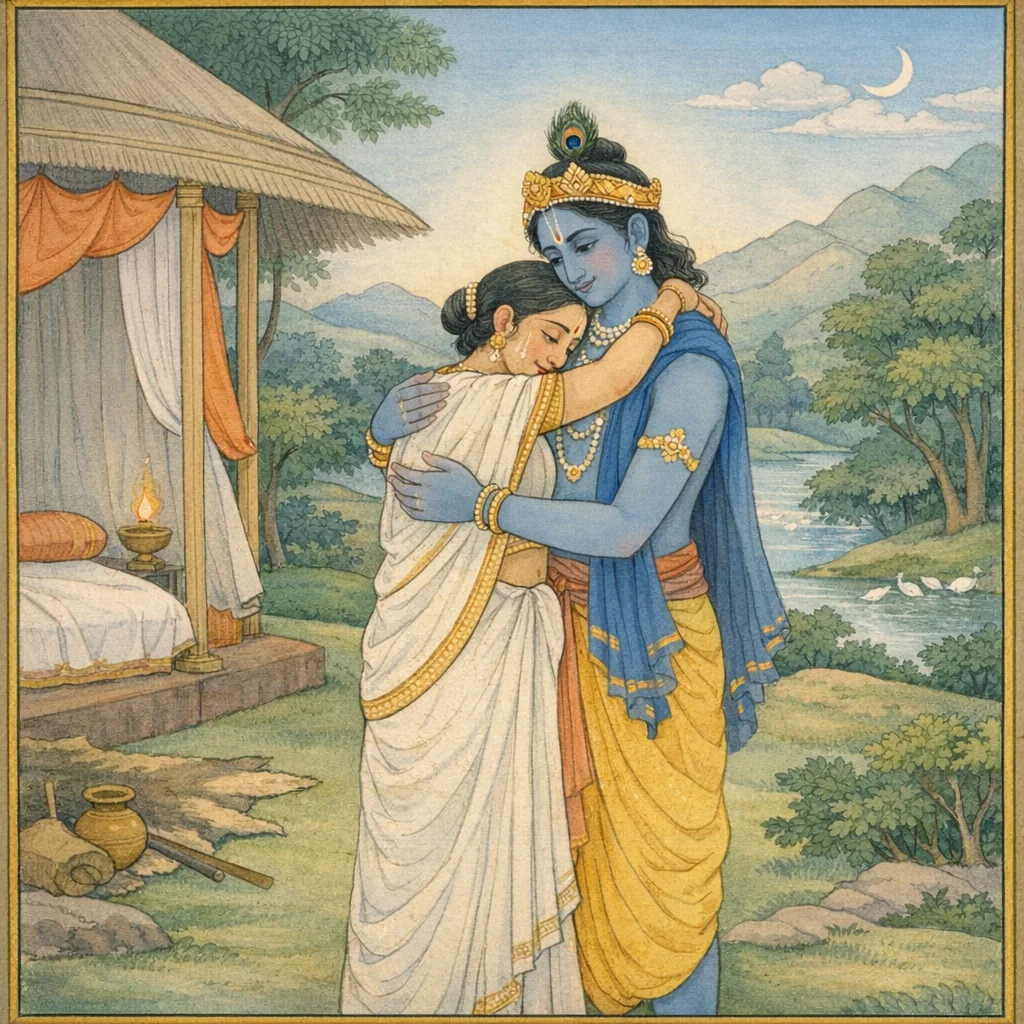
Adhyaya 89
Kṛṣṇa at Duryodhana’s House: Refusal of Hospitality and Departure to Vidura (कृष्णस्य धार्तराष्ट्रनिवेशनगमनम्)
Upa-parva: Kṛṣṇa-dūta (Embassy of Kṛṣṇa) Episode
Vaiśaṃpāyana narrates Kṛṣṇa’s formal approach to Duryodhana’s residence after taking leave of Pṛthā (Kuntī). Kṛṣṇa passes successive guarded thresholds, ascends a splendid palace, and encounters Duryodhana seated amid Kuru elites and allied kings, including Duḥśāsana, Karṇa, and Śakuni. Duryodhana rises with ministers to honor Kṛṣṇa; Kṛṣṇa is seated on an ornate couch and offered madhuparka and other provisions. Duryodhana invites him to dine, but Kṛṣṇa declines, stating that envoys accept enjoyment and honors only after accomplishing their purpose; he will accept proper honor when his diplomatic task is complete. When questioned, Kṛṣṇa clarifies that he does not refuse from desire, anger, hatred, gain, or greed; rather, hospitality is appropriate only within goodwill or genuine distress, and he identifies Duryodhana’s ungrounded hostility toward the virtuous Pāṇḍavas as ethically incoherent. Kṛṣṇa asserts solidarity with dharma-aligned Pāṇḍavas and critiques envy and uncontrolled passions as causes of instability. Declaring the offered food unfit (as associated with hostile intent), he exits the palace and proceeds to Vidura’s home, where elders (Droṇa, Kṛpa, Bhīṣma, Bāhlika) and Kurus again offer residences and gifts; Kṛṣṇa courteously declines, and Vidura provides sincere hospitality, after which Kṛṣṇa partakes and honors learned brāhmaṇas with gifts.
Chapter Arc: श्रीकृष्ण पाण्डव-शिविर में कुन्ती के समीप आते हैं; सूर्य-सम तेजस्वी गोविन्द को देखकर कुन्ती वर्षों के शोक को रोक नहीं पाती और पुत्र-स्मरण में विलाप करती है। → कुन्ती कृष्ण को कण्ठ से लगाकर अपने बिछुड़े दिनों, सभा-अपमान और युद्ध के अनिवार्य होते जाने की पीड़ा उँडेलती है—वह बताती है कि पुत्रों को सामने न देखना ही उसके लिए असह्य है, और समय आने पर जीवन तक त्यागने का विधान है तो फिर धर्मयुद्ध से पीछे हटना कैसे उचित होगा। → कुन्ती कृष्ण के सामने अपना अंतिम भरोसा रखती है—‘तुम ही नाथ हो, तुम ही आश्रय’; वह कृष्ण को कुरु-पाण्डव और समस्त लोक-व्यवस्था की गति मानकर निवेदन करती है कि जो-जो पाण्डवों के लिए पथ्य और धर्मसम्मत हो, वही निर्णय कृष्ण करें। → कुन्ती कृष्ण के विवेक और नीति पर पूर्ण समर्पण करती है; कृष्ण के आश्वासन से उसका विलाप संयत होता है और वह युद्ध-पूर्व नीति-प्रयासों को कृष्ण के हाथों सौंप देती है। → कृष्ण अब कुन्ती के शोक और धर्म-आग्रह को हृदय में रखकर आगे की कूटनीति/दूतकार्य की दिशा तय करने को अग्रसर होते हैं।
Shlokas
Verse 1
अफ--रू- >> नवतितमो< ध्याय: श्रीकृष्णका कुन्तीके समीप जाना एवं युधिष्ठिरका कुशल- समाचार पूछकर 53 ६8 :खोंका स्मरण करके विलाप करती हुई कुन्तीको आश्वासन देना वैशम्पायन उवाच अथोपगम्य विदुरमपराह्ने जनार्दन: । पितृष्वसारं स पृथामभ्यगच्छदरिंदम:,वैशम्पायनजी कहते हैं--राजन्! शत्रुदमन श्रीकृष्ण विदुरजीसे मिलनेके पश्चात् तीसरे पहरमें अपनी बुआ कुन्तीदेवीके पास गये
Vaiśampāyana said: Then, after meeting Vidura in the afternoon, Janārdana (Kṛṣṇa)—the subduer of foes—went to his paternal aunt Pṛthā (Kuntī).
Verse 2
सा दृष्टवा कृष्णमायान्तं प्रसन्नादित्यवर्चसम् । कण्ठे गृहीत्वा प्राक्रोशत् स्मरन््ती तनयान् पृथा,निर्मल सूर्यके समान तेजस्वी श्रीकृष्णको आते देख कुन्तीदेवी उनके गले लग गयीं और अपने पुत्रोंको याद करके फ़ूट-फ़ूटकर रोने लगीं
Seeing Kṛṣṇa approaching—radiant like the clear, auspicious sun—Pṛthā (Kuntī) clasped him by the neck and cried out aloud, breaking into tears as she remembered her sons.
Verse 3
तेषां सत्त्ववतां मध्ये गोविन्द सहचारिणम् । चिरस्य दृष्टवा वार्ष्णेयं बाष्पमाहारयत् पृथा,अपने उन शक्तिशाली पुत्रोंके बीचमें रहकर उनके साथ विचरनेवाले वृष्णिकुलनन्दन गोविन्दको दीर्घकालके पश्चात् देखकर कुन्तीदेवी आँसुओंकी वर्षा करने लगीं
Seeing, after a long time, Govinda—the scion of the Vṛṣṇi line—who had long moved among her valiant sons as their companion, Pṛthā (Kuntī) shed tears in a flowing rain.
Verse 4
साब्रवीत् कृष्णमासीनं कृतातिथ्यं युधां पतिम् । बाष्पगद्गदपूर्णेन मुखेन परिशुष्यता,उन्होंने योद्धाओंके स्वामी श्रीकृष्णका अतिथि-सत्कार किया। जब वे आतिथ्य ग्रहण करके आसनपर विराजमान हुए, तब सूखे मुँह और अश्रुगदगद कण्ठसे कुन्तीदेवी इस प्रकार बोलीं--
She honored Kṛṣṇa, lord of warriors, with due hospitality. When he had accepted the welcome and taken his seat, Kuntī, her mouth parched and her voice choked with tears, spoke thus—
Verse 5
ये ते बाल्यात् प्रभृत्येव गुरुशुश्रूषणे रता: । परस्परस्य सुहृद: सम्मता: समचेतस: । निकृत्या भ्रेशिता राज्याज्जना्हा निर्जनं गता:,“वत्स! मेरे पुत्र पाण्डव, जो बाल्यकालसे ही गुरुजनोंकी सेवा-शुश्रूषामें तत्पर रहते, परस्पर स्नेह रखते, सर्वत्र सम्मान पाते और मनमें सबके प्रति समानभाव रखते थे, शत्रुओंकी शठताके शिकार होकर राज्यसे हाथ धो बैठे और जनसमुदायमें रहनेयोग्य होकर भी निर्जन वनमें चले गये
Vaiśaṃpāyana said: “Those sons of yours—the Pāṇḍavas—who from childhood onward were devoted to serving and attending upon their elders and teachers; who were mutually affectionate friends; who were esteemed by all; and whose minds were even and impartial toward everyone—were nevertheless, through the deceit of their enemies, driven out of their kingdom and went to a lonely wilderness, though they were fit to live among the people.”
Verse 6
विनीतक्रो धहर्षश्न ब्रह्माण्या: सत्यवादिन: । त्यक्त्वा प्रियसुखे पार्था रूवतीमपहाय माम्,'मेरे बेटे हर्ष और क्रोधको जीत चुके थे। वे ब्राह्मणोंका हित-साधन करनेवाले तथा सत्यवादी थे; तथापि (शत्रुओंके अन्यायसे विवश हो) प्रियजन एवं सुखभोगसे मुँह मोड़ मुझे रोती-बिलखती छोड़कर वे वनकी ओर चल दिये
Vaiśampāyana said: “The Pārthas had mastered anger and elation; they were devoted to the welfare of the brāhmaṇas and were steadfast speakers of truth. Yet, compelled by the injustice of their enemies, they turned away from beloved comforts and pleasures and, leaving me behind weeping, set out toward the forest.”
Verse 7
अहार्षुश्न वनं॑ यान्त: समूलं हृदयं मम | अतदर्हा महात्मान: कथ॑ं केशव पाण्डवा:,“केशव! वन जाते समय महात्मा पाण्डव मेरे हृदयको जड़-मूलसहित खींचकर अपने साथ ले गये। वे वनवासके योग्य कदापि नहीं थे। फिर उन्हें यह कष्ट कैसे प्राप्त हुआ?
“As those great-souled Pāṇḍavas set out for the forest, they seemed to carry away my very heart, torn out by the roots. They were never fit for such a fate; O Keśava, how did such suffering come to befall the Pāṇḍavas?”
Verse 8
ऊषुर्महावने तात सिंहव्याप्रगजाकुले । बाला विहीना: पित्रा ते मया सततलालिता:
Vaiśampāyana said: “Dear one, they lived in a vast forest, thronged with lions, tigers, and elephants. Those children, deprived of their father, were continually cherished and cared for by me.”
Verse 9
अपश्यन्तश्न॒ पितरौ कथमूषुर्महावने । “तात! वे बचपनमें ही पिताके प्यारसे वंचित हो गये थे। मैंने ही सदा उनका लालन- पालन किया। मेरे पुत्र सिंह, व्याप्र और हाथियोंसे भरे हुए उस विशाल वनमें कैसे रहे होंगे? माता-पिताको न देखते हुए उन्होंने उस महान् वनमें किस प्रकार निवास किया होगा? ।। शड्खदुन्दुभिनिर्धोषिमदज्जै्वेणुनिस्चनै:
Vaiśampāyana said: “Not seeing their father and mother, how could they have lived in that great forest? ‘Dear one! From childhood they were deprived of a father’s affection; I alone always nurtured and protected them. How could my sons have endured that vast wilderness, crowded with lions, tigers, and elephants? Without the sight of their parents, how could they have made their dwelling in that mighty forest?’—and the forest resounded with the din of conches and kettledrums, with the blare of trumpets, and with the whistling of flutes.”
Verse 10
ये सम वारणशब्देन हयानां ह्ेषितेन च
Those who, amid the tumult, were stirred by the trumpeting of elephants and the neighing of horses—sounds that signal the gathering force and intent of armies—moved in response to the rising momentum toward conflict.
Verse 11
रथनेमिनिनादैश्व व्यबोध्यन्त तदा गृहे । शड्खभेरीनिनादेन वेणुवीणानुनादिना
Vaiśampāyana said: Then, within the household, people were roused and made alert by the rumbling sounds of chariot-wheels—along with the blare of conches and kettledrums, and the continuing resonance of flutes and vīṇās. The scene conveys a public stirring in which martial readiness and ceremonial music merge, signaling a decisive movement toward action.
Verse 12
पुण्याहघोषमिश्रेण पूज्यमाना द्विजातिभि: । वस्त्रै रत्नैरलंकारै: पूजयन्तो द्विजन्मन:
Vaiśampāyana said: Amid the auspicious cries of benediction, they were being honored by the twice-born. Those Brahmin-born men, in turn, offered worship and honor with garments, jewels, and ornaments—marking the occasion with ritually proper celebration and social reverence.
Verse 13
गीर्भिमिड्रलयुक्ताभित्रद्वयिणानां महात्मनाम् | अर्चितिरचनाहैं श्व स्तुवद्धिरभिनन्दिता:
Vaiśaṃpāyana said: Those great-souled ones were greeted and honored with well-composed praises—uttered in elevated, auspicious speech—so that the assembled eulogists expressed their approval and reverence. The scene underscores the cultural ethic of honoring virtue and eminence through truthful, fitting words.
Verse 14
प्रासादाग्रेष्वबो ध्यन्त राइकवाजिनशायिन: । क़रूरं च निनदं श्रुत्वा श्वापदानां महावने
Vaiśampāyana said: Those who were sleeping on the upper terraces of the palaces were roused from sleep when they heard, in the great forest, the harsh, ominous cries of wild beasts. The scene conveys an atmosphere of foreboding and unrest, as even the protected and privileged are disturbed by signs of danger arising from the wilderness beyond human order.
Verse 15
न स्मोपयान्ति निद्रां ते न तदर्हा जनार्दन । “जब वे अपनी राजधानीमें ऊँची अट्टालिकाओंके भीतर रंकुमृगके चर्मसे बने हुए बिछौनोंसे युक्त सुकोमल शय्याओंपर शयन करते थे, उन दिनों हाथियोंके चिग्घाड़ने, घोड़ोंके हिनहिनाने तथा रथके पहियोंके घर्घरानेसे उनकी निद्रा टूटती थी। शंख और भेरीकी तुमुल ध्वनि तथा वेणु और वीणाके मधुर स्वरसे उन्हें जगाया जाता था। साथ ही ब्राह्मणलोग पुण्याहवाचनके पवित्र घोषसे उनका समादर करते थे। वे महात्मा ब्राह्मणोंके मंगलमय आशीर्वाद सुनकर उठते थे। पूजित और पूजनीय पुरुष भी उनके गुण गा-गाकर अभिनन्दन किया करते थे एवं उठकर वे रत्नों, वस्त्रों एवं अलंकारोंके द्वारा ब्राह्मणोंकी पूजा करते थे। जनार्दन! वे ही पाण्डव उस विशाल वनमें हिंसक जन्तुओंके क्रूरतापूर्ण शब्द सुनकर अच्छी तरह नींद भी नहीं ले पाते रहे होंगे, यद्यपि इस दुरवस्थाके योग्य वे कभी नहीं थे || १०--१४ ह ।। भेरीमृदड़निनदैः शड्खवैणवनिस्वनै:
Vaiśampāyana said: “O Janārdana, sleep does not come to them; they are not fit for such a plight. Those very Pāṇḍavas—once awakened in their capital by the clamour of elephants, the neighing of horses, the rumbling of chariot-wheels, and by the thunder of conches and kettledrums, together with the sweet notes of flute and vīṇā, while Brahmins honoured them with auspicious recitations and blessings—now, in the vast forest, must lie wakeful, disturbed by the harsh cries of fierce beasts. Their present misery stands in stark contrast to the dignity they once deserved.”
Verse 16
सत्रीणां गीतनिनादैश्व मधुरैर्मधुसूदन । वन्दिमागधसूतैश्न स्तुवद्धिबोधिता: कथम्
Vaiśampāyana said: “O Madhusūdana, how were they awakened—stirred from rest—by the sweet resonance of women’s songs, and by the praises sung by the bards, Māgadhas, and sūtas?”
Verse 17
महावनेष्वबोध्यन्त श्वापदानां रुतेन च | “मधुसूदन! जो भेरी एवं मृदंगके नादसे, शंख एवं वेणुकी ध्वनिसे तथा स्त्रियोंके गीतोंके मधुर शब्द तथा सूत, मागध एवं वन्दीजनोंद्वारा की हुई स्तुति सुनकर जागते थे, वे ही बड़े-बड़े जंगलोंमें हिंसक जन्तुओंके कठोर शब्द सुनकर किस प्रकार नींद तोड़ते रहे होंगे? ।। ह्वीमान् सत्यधृतिर्दान्तो भूतानामनुकम्पिता,“श्रीकृष्ण! जो लज्जाशील, सत्यको धारण करनेवाले, जितेन्द्रिय तथा सब प्राणियोंपर दया करनेवाले हैं; जो काम (राग) एवं द्वेषको वशमें करके सत्पुरुषोंके मार्गकका अनुसरण करते हैं; जो अम्बरीष, मान्धाता, ययाति, नहुष, भरत, दिलीप एवं उशीनरपुत्र शिबि आदि प्राचीन राजर्षियोंके सदाचारपालनरूप धारण करनेमें कठिन धर्मकी धुरीको धारण करते हैं; जिनमें शील और सदाचारकी सम्पत्ति भरी हुई है, जो धर्मज्ञ, सत्यप्रतिज्ञ और सर्वगुणसम्पन्न होनेके कारण इस भूमण्डलके ही नहीं, तीनों लोकोंके भी राजा हो सकते हैं; जिनका मन सदा धर्ममें ही लगा रहता है, जो धर्मशास्त्रज्ञान और सदाचार सभी दृष्टियोंसे समस्त कौरवोंमें सबसे श्रेष्ठ हैं; जिनकी अंगकान्ति शुद्ध जाम्बूनद सुवर्णके समान गौर है, जो देखनेमें सभीको प्रिय लगते हैं; वे महाबाहु अजातशत्रु युधिष्ठिर इस समय कैसे हैं?
Vaiśampāyana said: In the great forests they were awakened by the cries of wild beasts. “Madhusūdana, those who used to rise at the sound of kettledrums and mṛdaṅgas, at the resonance of conches and flutes, at the sweet songs of women, and at the praises sung by sūtas, māgadhas, and bards—how must they now be breaking their sleep in vast woods, hearing instead the harsh calls of fierce animals? O Śrī Kṛṣṇa, how is Yudhiṣṭhira now—he who is modest, steadfast in truth, self-controlled, and compassionate to all beings; who has mastered desire and hatred and follows the path of the good; who bears the difficult yoke of dharma by maintaining the noble conduct of ancient royal seers such as Ambarīṣa, Māndhātṛ, Yayāti, Nahuṣa, Bharata, Dilīpa, and Śibi the son of Uśīnara; in whom character and good conduct are abundant; who is a knower of dharma, true to his vows, and complete in virtues—fit to rule not only the earth but the three worlds; whose mind is ever set on righteousness; who is foremost among the Kauravas in knowledge of dharmaśāstra and in exemplary conduct; whose bodily radiance is fair like pure Jāmbūnada gold and whose appearance is pleasing to all—how fares that mighty-armed, enemyless Yudhiṣṭhira at this time?”
Verse 18
कामद्वेषौ वशे कृत्वा सतां वत्मनिवर्तते | अम्बरीषस्य मान्धातुर्ययातेर्नहुषस्य च,“श्रीकृष्ण! जो लज्जाशील, सत्यको धारण करनेवाले, जितेन्द्रिय तथा सब प्राणियोंपर दया करनेवाले हैं; जो काम (राग) एवं द्वेषको वशमें करके सत्पुरुषोंके मार्गकका अनुसरण करते हैं; जो अम्बरीष, मान्धाता, ययाति, नहुष, भरत, दिलीप एवं उशीनरपुत्र शिबि आदि प्राचीन राजर्षियोंके सदाचारपालनरूप धारण करनेमें कठिन धर्मकी धुरीको धारण करते हैं; जिनमें शील और सदाचारकी सम्पत्ति भरी हुई है, जो धर्मज्ञ, सत्यप्रतिज्ञ और सर्वगुणसम्पन्न होनेके कारण इस भूमण्डलके ही नहीं, तीनों लोकोंके भी राजा हो सकते हैं; जिनका मन सदा धर्ममें ही लगा रहता है, जो धर्मशास्त्रज्ञान और सदाचार सभी दृष्टियोंसे समस्त कौरवोंमें सबसे श्रेष्ठ हैं; जिनकी अंगकान्ति शुद्ध जाम्बूनद सुवर्णके समान गौर है, जो देखनेमें सभीको प्रिय लगते हैं; वे महाबाहु अजातशत्रु युधिष्ठिर इस समय कैसे हैं?
Vaiśampāyana said: “Having brought desire and hatred under control, he proceeds on the path followed by the virtuous—like Ambarīṣa, Māndhātṛ, Yayāti, and Nahuṣa.”
Verse 19
भरतस्य दिलीपस्य शिबेरौशीनरस्य च । राजर्षीणां पुराणानां धुरं धत्ते दुरुद्वञग्यामू,“श्रीकृष्ण! जो लज्जाशील, सत्यको धारण करनेवाले, जितेन्द्रिय तथा सब प्राणियोंपर दया करनेवाले हैं; जो काम (राग) एवं द्वेषको वशमें करके सत्पुरुषोंके मार्गकका अनुसरण करते हैं; जो अम्बरीष, मान्धाता, ययाति, नहुष, भरत, दिलीप एवं उशीनरपुत्र शिबि आदि प्राचीन राजर्षियोंके सदाचारपालनरूप धारण करनेमें कठिन धर्मकी धुरीको धारण करते हैं; जिनमें शील और सदाचारकी सम्पत्ति भरी हुई है, जो धर्मज्ञ, सत्यप्रतिज्ञ और सर्वगुणसम्पन्न होनेके कारण इस भूमण्डलके ही नहीं, तीनों लोकोंके भी राजा हो सकते हैं; जिनका मन सदा धर्ममें ही लगा रहता है, जो धर्मशास्त्रज्ञान और सदाचार सभी दृष्टियोंसे समस्त कौरवोंमें सबसे श्रेष्ठ हैं; जिनकी अंगकान्ति शुद्ध जाम्बूनद सुवर्णके समान गौर है, जो देखनेमें सभीको प्रिय लगते हैं; वे महाबाहु अजातशत्रु युधिष्ठिर इस समय कैसे हैं?
Vaiśaṃpāyana said: “He upholds the hard-to-bear yoke of dharma—the ancient royal code of conduct—of the old rājarṣis such as Bharata, Dilīpa, and Śibi the son of Uśīnara.”
Verse 20
शीलवृत्तोपसम्पन्नो धर्मज्ञ: सत्यसंगर: । राजा सर्वगुणोपेतस्त्रैलेक्यस्यापि यो भवेत्,“श्रीकृष्ण! जो लज्जाशील, सत्यको धारण करनेवाले, जितेन्द्रिय तथा सब प्राणियोंपर दया करनेवाले हैं; जो काम (राग) एवं द्वेषको वशमें करके सत्पुरुषोंके मार्गकका अनुसरण करते हैं; जो अम्बरीष, मान्धाता, ययाति, नहुष, भरत, दिलीप एवं उशीनरपुत्र शिबि आदि प्राचीन राजर्षियोंके सदाचारपालनरूप धारण करनेमें कठिन धर्मकी धुरीको धारण करते हैं; जिनमें शील और सदाचारकी सम्पत्ति भरी हुई है, जो धर्मज्ञ, सत्यप्रतिज्ञ और सर्वगुणसम्पन्न होनेके कारण इस भूमण्डलके ही नहीं, तीनों लोकोंके भी राजा हो सकते हैं; जिनका मन सदा धर्ममें ही लगा रहता है, जो धर्मशास्त्रज्ञान और सदाचार सभी दृष्टियोंसे समस्त कौरवोंमें सबसे श्रेष्ठ हैं; जिनकी अंगकान्ति शुद्ध जाम्बूनद सुवर्णके समान गौर है, जो देखनेमें सभीको प्रिय लगते हैं; वे महाबाहु अजातशत्रु युधिष्ठिर इस समय कैसे हैं?
Vaiśampāyana said: “Endowed with good character and right conduct, knowing dharma, and steadfast in truth—such a king, possessed of every virtue, would be fit to rule not only this earth but even the three worlds.”
Verse 21
अजातशश्न्रुर्थर्मात्मा शुद्धजाम्बूनदप्रभ: । श्रेष्ठ: कुरुषु सर्वेषु धर्मत: श्रुतवृत्तत: | प्रियदर्शो दीर्घभुज: कथं कृष्ण युधिषछ्िर:,“श्रीकृष्ण! जो लज्जाशील, सत्यको धारण करनेवाले, जितेन्द्रिय तथा सब प्राणियोंपर दया करनेवाले हैं; जो काम (राग) एवं द्वेषको वशमें करके सत्पुरुषोंके मार्गकका अनुसरण करते हैं; जो अम्बरीष, मान्धाता, ययाति, नहुष, भरत, दिलीप एवं उशीनरपुत्र शिबि आदि प्राचीन राजर्षियोंके सदाचारपालनरूप धारण करनेमें कठिन धर्मकी धुरीको धारण करते हैं; जिनमें शील और सदाचारकी सम्पत्ति भरी हुई है, जो धर्मज्ञ, सत्यप्रतिज्ञ और सर्वगुणसम्पन्न होनेके कारण इस भूमण्डलके ही नहीं, तीनों लोकोंके भी राजा हो सकते हैं; जिनका मन सदा धर्ममें ही लगा रहता है, जो धर्मशास्त्रज्ञान और सदाचार सभी दृष्टियोंसे समस्त कौरवोंमें सबसे श्रेष्ठ हैं; जिनकी अंगकान्ति शुद्ध जाम्बूनद सुवर्णके समान गौर है, जो देखनेमें सभीको प्रिय लगते हैं; वे महाबाहु अजातशत्रु युधिष्ठिर इस समय कैसे हैं?
Vaiśampāyana said: “How is Yudhiṣṭhira now, O Kṛṣṇa—he who is called Ajātaśatru, whose very nature is dharma; whose radiance is like pure Jāmbūnada gold; who is foremost among all the Kurus in righteousness, learning, and conduct; who is pleasing to behold; and who is long-armed (mighty)?”
Verse 22
यः स नागायुतप्राणो वातरंहा महाबल: । सामर्ष: पाण्डवो नित्यं प्रियो भ्रातु: प्रियंकर:,“मधुसूदन! जो पाण्डुनन्दन महाबली भीम दस हजार हाथियोंके समान शक्तिशाली है, जिसका वेग वायुके समान है, जो असहिष्णु होते हुए भी अपने भाईको सदा ही प्रिय है और भाइयोंका प्रिय करनेमें ही लगा रहता है, जिसने भाई-बन्धुओंसहित कीचकका विनाश किया है, जिस शूरवीरके हाथसे क्रोधवश नामक राक्षसोंका, हिडिम्बासुर तथा बकका भी संहार हुआ है, जो पराक्रममें इन्द्र, बलमें वायुदेव तथा क्रोधमें महेश्वरके समान है, जो प्रहार करनेवाले योद्धाओंमें सर्वश्रेष्ठ एवं भयंकर है, शत्रुओंको संताप देनेवाला जो पाण्डुपुत्र भीम अपने भीतर क्रोध, बल और अमर्षको रखते हुए भी मनको काबूमें रखकर सदा भाईकी आज्ञाके अधीन रहता है, जो स्वभावत:ः अमर्षशील है, जिसमें तेजकी राशि संचित है, जो महात्मा, सर्वश्रेष्ठ, अमिततेजस्वी तथा देखनेमें भी भयंकर है, वृष्णिनन्दन जनार्दन! उस मेरे द्वितीय पुत्र भीमसेनका समाचार बताओ। इस समय परिघके समान सुदृढ़ भुजाओंवाला मेरा मँझला पुत्र पाण्डुकुमार भीमसेन कैसे है?
Vaiśampāyana said: “That Pāṇḍava—Bhīma—whose life-force is likened to ten thousand elephants, whose rush is like the wind, and who, though naturally fierce and quick to indignation, is ever dear to his brother and intent on doing what pleases him—tell me news of him. How is Bhīmasena now, my second son, the Pāṇḍu prince with arms firm like iron bars?”
Verse 23
कीचकस्य तु सज्ञातेर्यों हनता मधुसूदन । शूर: क्रोधवशानां च हिडिम्बस्य बकस्य च,“मधुसूदन! जो पाण्डुनन्दन महाबली भीम दस हजार हाथियोंके समान शक्तिशाली है, जिसका वेग वायुके समान है, जो असहिष्णु होते हुए भी अपने भाईको सदा ही प्रिय है और भाइयोंका प्रिय करनेमें ही लगा रहता है, जिसने भाई-बन्धुओंसहित कीचकका विनाश किया है, जिस शूरवीरके हाथसे क्रोधवश नामक राक्षसोंका, हिडिम्बासुर तथा बकका भी संहार हुआ है, जो पराक्रममें इन्द्र, बलमें वायुदेव तथा क्रोधमें महेश्वरके समान है, जो प्रहार करनेवाले योद्धाओंमें सर्वश्रेष्ठ एवं भयंकर है, शत्रुओंको संताप देनेवाला जो पाण्डुपुत्र भीम अपने भीतर क्रोध, बल और अमर्षको रखते हुए भी मनको काबूमें रखकर सदा भाईकी आज्ञाके अधीन रहता है, जो स्वभावत:ः अमर्षशील है, जिसमें तेजकी राशि संचित है, जो महात्मा, सर्वश्रेष्ठ, अमिततेजस्वी तथा देखनेमें भी भयंकर है, वृष्णिनन्दन जनार्दन! उस मेरे द्वितीय पुत्र भीमसेनका समाचार बताओ। इस समय परिघके समान सुदृढ़ भुजाओंवाला मेरा मँझला पुत्र पाण्डुकुमार भीमसेन कैसे है?
Vaiśampāyana said: “O Madhusūdana, tell me of that hero—Bhīma, the slayer of Kīcaka when his identity became known, and the destroyer as well of the wrath-driven rākṣasas, of Hiḍimba, and of Baka. How is that second son of mine now?”
Verse 24
पराक्रमे शक्रसमो मातरिश्व॒समो बले । महेश्वरसम: क्रोधे भीम: प्रहरतां वर:,“मधुसूदन! जो पाण्डुनन्दन महाबली भीम दस हजार हाथियोंके समान शक्तिशाली है, जिसका वेग वायुके समान है, जो असहिष्णु होते हुए भी अपने भाईको सदा ही प्रिय है और भाइयोंका प्रिय करनेमें ही लगा रहता है, जिसने भाई-बन्धुओंसहित कीचकका विनाश किया है, जिस शूरवीरके हाथसे क्रोधवश नामक राक्षसोंका, हिडिम्बासुर तथा बकका भी संहार हुआ है, जो पराक्रममें इन्द्र, बलमें वायुदेव तथा क्रोधमें महेश्वरके समान है, जो प्रहार करनेवाले योद्धाओंमें सर्वश्रेष्ठ एवं भयंकर है, शत्रुओंको संताप देनेवाला जो पाण्डुपुत्र भीम अपने भीतर क्रोध, बल और अमर्षको रखते हुए भी मनको काबूमें रखकर सदा भाईकी आज्ञाके अधीन रहता है, जो स्वभावत:ः अमर्षशील है, जिसमें तेजकी राशि संचित है, जो महात्मा, सर्वश्रेष्ठ, अमिततेजस्वी तथा देखनेमें भी भयंकर है, वृष्णिनन्दन जनार्दन! उस मेरे द्वितीय पुत्र भीमसेनका समाचार बताओ। इस समय परिघके समान सुदृढ़ भुजाओंवाला मेरा मँझला पुत्र पाण्डुकुमार भीमसेन कैसे है?
Vaiśampāyana said: “In prowess he is equal to Śakra (Indra), in strength equal to Mātariśvan (Vāyu), and in wrath equal to Maheśvara (Śiva). Bhīma is the foremost among those who strike.”
Verse 25
क्रोधं बलममर्ष च यो निधाय परंतप: । जितात्मा पाण्डवोअमर्षी भ्रातुस्तिष्ठति शासने,“मधुसूदन! जो पाण्डुनन्दन महाबली भीम दस हजार हाथियोंके समान शक्तिशाली है, जिसका वेग वायुके समान है, जो असहिष्णु होते हुए भी अपने भाईको सदा ही प्रिय है और भाइयोंका प्रिय करनेमें ही लगा रहता है, जिसने भाई-बन्धुओंसहित कीचकका विनाश किया है, जिस शूरवीरके हाथसे क्रोधवश नामक राक्षसोंका, हिडिम्बासुर तथा बकका भी संहार हुआ है, जो पराक्रममें इन्द्र, बलमें वायुदेव तथा क्रोधमें महेश्वरके समान है, जो प्रहार करनेवाले योद्धाओंमें सर्वश्रेष्ठ एवं भयंकर है, शत्रुओंको संताप देनेवाला जो पाण्डुपुत्र भीम अपने भीतर क्रोध, बल और अमर्षको रखते हुए भी मनको काबूमें रखकर सदा भाईकी आज्ञाके अधीन रहता है, जो स्वभावत:ः अमर्षशील है, जिसमें तेजकी राशि संचित है, जो महात्मा, सर्वश्रेष्ठ, अमिततेजस्वी तथा देखनेमें भी भयंकर है, वृष्णिनन्दन जनार्दन! उस मेरे द्वितीय पुत्र भीमसेनका समाचार बताओ। इस समय परिघके समान सुदृढ़ भुजाओंवाला मेरा मँझला पुत्र पाण्डुकुमार भीमसेन कैसे है?
Vaiśampāyana said: “That Pāṇḍava, a scorcher of foes, though naturally intolerant and fierce, restrains his wrath, strength, and indignation within himself. Self-controlled, he stands firmly under his brother’s command.”
Verse 26
तेजोराशिं महात्मानं वरिष्ठममितौजसम् | भीम॑ प्रदर्शनेनापि भीमसेनं जनार्दन,“मधुसूदन! जो पाण्डुनन्दन महाबली भीम दस हजार हाथियोंके समान शक्तिशाली है, जिसका वेग वायुके समान है, जो असहिष्णु होते हुए भी अपने भाईको सदा ही प्रिय है और भाइयोंका प्रिय करनेमें ही लगा रहता है, जिसने भाई-बन्धुओंसहित कीचकका विनाश किया है, जिस शूरवीरके हाथसे क्रोधवश नामक राक्षसोंका, हिडिम्बासुर तथा बकका भी संहार हुआ है, जो पराक्रममें इन्द्र, बलमें वायुदेव तथा क्रोधमें महेश्वरके समान है, जो प्रहार करनेवाले योद्धाओंमें सर्वश्रेष्ठ एवं भयंकर है, शत्रुओंको संताप देनेवाला जो पाण्डुपुत्र भीम अपने भीतर क्रोध, बल और अमर्षको रखते हुए भी मनको काबूमें रखकर सदा भाईकी आज्ञाके अधीन रहता है, जो स्वभावत:ः अमर्षशील है, जिसमें तेजकी राशि संचित है, जो महात्मा, सर्वश्रेष्ठ, अमिततेजस्वी तथा देखनेमें भी भयंकर है, वृष्णिनन्दन जनार्दन! उस मेरे द्वितीय पुत्र भीमसेनका समाचार बताओ। इस समय परिघके समान सुदृढ़ भुजाओंवाला मेरा मँझला पुत्र पाण्डुकुमार भीमसेन कैसे है?
Vaiśampāyana said: “O Janārdana, Bhīmasena is a mighty mass of splendor—great-souled, foremost among warriors, and of immeasurable energy—so formidable that even his very appearance inspires fear. Tell me of that Bhīma.”
Verse 27
त॑ ममाचक्ष्व वा्ष्णेय कथमद्य वृकोदर: । आस्ते परिघबाहु: स मध्यम: पाण्डवो बली,“मधुसूदन! जो पाण्डुनन्दन महाबली भीम दस हजार हाथियोंके समान शक्तिशाली है, जिसका वेग वायुके समान है, जो असहिष्णु होते हुए भी अपने भाईको सदा ही प्रिय है और भाइयोंका प्रिय करनेमें ही लगा रहता है, जिसने भाई-बन्धुओंसहित कीचकका विनाश किया है, जिस शूरवीरके हाथसे क्रोधवश नामक राक्षसोंका, हिडिम्बासुर तथा बकका भी संहार हुआ है, जो पराक्रममें इन्द्र, बलमें वायुदेव तथा क्रोधमें महेश्वरके समान है, जो प्रहार करनेवाले योद्धाओंमें सर्वश्रेष्ठ एवं भयंकर है, शत्रुओंको संताप देनेवाला जो पाण्डुपुत्र भीम अपने भीतर क्रोध, बल और अमर्षको रखते हुए भी मनको काबूमें रखकर सदा भाईकी आज्ञाके अधीन रहता है, जो स्वभावत:ः अमर्षशील है, जिसमें तेजकी राशि संचित है, जो महात्मा, सर्वश्रेष्ठ, अमिततेजस्वी तथा देखनेमें भी भयंकर है, वृष्णिनन्दन जनार्दन! उस मेरे द्वितीय पुत्र भीमसेनका समाचार बताओ। इस समय परिघके समान सुदृढ़ भुजाओंवाला मेरा मँझला पुत्र पाण्डुकुमार भीमसेन कैसे है?
Vaiśampāyana said: “O Vārṣṇeya (Kṛṣṇa), tell me—how is Vṛkodara today? How does that mighty Pāṇḍava, the middle brother, he whose arms are like iron clubs, fare at present?”
Verse 28
अर्जुनेनार्जुनो यः स कृष्ण बाहुसहस्रिणा । द्विबाहुः स्पर्धते नित्यमतीतेनापि केशव,“श्रीकृष्ण! जो अर्जुन दो भुजाओंसे युक्त होकर भी सदा प्राचीनकालके सहस्र भुजाधारी कार्तवीर्य अर्जुनके साथ स्पर्धा रखता है; केशव! जो एक ही वेगसे पाँच सौ बाण चलाता है, जो पाण्डव अर्जुन धर्नुर्विद्यामें राजा कार्तवीर्यके समान ही समझा जाता है, जिसका तेज सूर्यके समान है, जो इन्द्रियसंयममें महर्षियोंके, क्षमामें पृथ्वीके और पराक्रममें देवराज इन्द्रके समान है; मधुसूदन! कौरवोंका यह विशाल साम्राज्य, जो सम्पूर्ण राजाओंमें प्रख्यात एवं प्रकाशित हो रहा है, जिसे अर्जुनने ही अपने पराक्रमसे बढ़ाया है; समस्त पाण्डव जिसके बाहुबलका भरोसा रखते हैं; जो सम्पूर्ण रथियोंमें श्रेष्ठ तथा सत्यपराक्रमी है, संग्राममें जिसके सम्मुख जाकर कोई जीवित नहीं लौटता है, अच्युत! जो सम्पूर्ण भूतोंको जीतनेमें समर्थ, विजयशील एवं अजेय है तथा जैसे देवताओंके आश्रय इन्द्र हैं, उसी प्रकार जो समस्त पाण्डवोंका अवलम्ब है, वह तुम्हारा भाई और मित्र अर्जुन इस समय कैसे है?
Vaiśampāyana said: “O Kṛṣṇa, that Arjuna—though possessing only two arms—who ever vies in fame and prowess even with the ancient, thousand-armed Arjuna (Kārtavīrya); how is your brother and friend Arjuna now?”
Verse 29
क्षिपत्येकेन वेगेन पजच बाणशतानि य: । इष्वस्त्रे सदृशो राज्ञ: कार्तवीर्यस्य पाण्डव:,“श्रीकृष्ण! जो अर्जुन दो भुजाओंसे युक्त होकर भी सदा प्राचीनकालके सहस्र भुजाधारी कार्तवीर्य अर्जुनके साथ स्पर्धा रखता है; केशव! जो एक ही वेगसे पाँच सौ बाण चलाता है, जो पाण्डव अर्जुन धर्नुर्विद्यामें राजा कार्तवीर्यके समान ही समझा जाता है, जिसका तेज सूर्यके समान है, जो इन्द्रियसंयममें महर्षियोंके, क्षमामें पृथ्वीके और पराक्रममें देवराज इन्द्रके समान है; मधुसूदन! कौरवोंका यह विशाल साम्राज्य, जो सम्पूर्ण राजाओंमें प्रख्यात एवं प्रकाशित हो रहा है, जिसे अर्जुनने ही अपने पराक्रमसे बढ़ाया है; समस्त पाण्डव जिसके बाहुबलका भरोसा रखते हैं; जो सम्पूर्ण रथियोंमें श्रेष्ठ तथा सत्यपराक्रमी है, संग्राममें जिसके सम्मुख जाकर कोई जीवित नहीं लौटता है, अच्युत! जो सम्पूर्ण भूतोंको जीतनेमें समर्थ, विजयशील एवं अजेय है तथा जैसे देवताओंके आश्रय इन्द्र हैं, उसी प्रकार जो समस्त पाण्डवोंका अवलम्ब है, वह तुम्हारा भाई और मित्र अर्जुन इस समय कैसे है?
Vaiśampāyana said: “That Pāṇḍava who, with a single burst of speed, can discharge five hundred arrows; who in the science of missiles and archery is held equal to King Kārtavīrya—how is Arjuna, your brother and friend, at this time?”
Verse 30
तेजसा5<दित्यसदृशो महर्षिसदृशो दमे । क्षमया पृथिवीतुल्यो महेन्द्रसमविक्रम:,“श्रीकृष्ण! जो अर्जुन दो भुजाओंसे युक्त होकर भी सदा प्राचीनकालके सहस्र भुजाधारी कार्तवीर्य अर्जुनके साथ स्पर्धा रखता है; केशव! जो एक ही वेगसे पाँच सौ बाण चलाता है, जो पाण्डव अर्जुन धर्नुर्विद्यामें राजा कार्तवीर्यके समान ही समझा जाता है, जिसका तेज सूर्यके समान है, जो इन्द्रियसंयममें महर्षियोंके, क्षमामें पृथ्वीके और पराक्रममें देवराज इन्द्रके समान है; मधुसूदन! कौरवोंका यह विशाल साम्राज्य, जो सम्पूर्ण राजाओंमें प्रख्यात एवं प्रकाशित हो रहा है, जिसे अर्जुनने ही अपने पराक्रमसे बढ़ाया है; समस्त पाण्डव जिसके बाहुबलका भरोसा रखते हैं; जो सम्पूर्ण रथियोंमें श्रेष्ठ तथा सत्यपराक्रमी है, संग्राममें जिसके सम्मुख जाकर कोई जीवित नहीं लौटता है, अच्युत! जो सम्पूर्ण भूतोंको जीतनेमें समर्थ, विजयशील एवं अजेय है तथा जैसे देवताओंके आश्रय इन्द्र हैं, उसी प्रकार जो समस्त पाण्डवोंका अवलम्ब है, वह तुम्हारा भाई और मित्र अर्जुन इस समय कैसे है?
Vaiśaṃpāyana said: “He is like the Sun in radiance; in self-restraint he is like the great seers; in forbearance he is like the Earth; and in valor he matches Mahendra (Indra).”
Verse 31
आधिराज्यं महद् दीप्तं प्रथितं मधुसूदन । आहतं येन वीर्येण कुरूणां सर्वराजसु,“श्रीकृष्ण! जो अर्जुन दो भुजाओंसे युक्त होकर भी सदा प्राचीनकालके सहस्र भुजाधारी कार्तवीर्य अर्जुनके साथ स्पर्धा रखता है; केशव! जो एक ही वेगसे पाँच सौ बाण चलाता है, जो पाण्डव अर्जुन धर्नुर्विद्यामें राजा कार्तवीर्यके समान ही समझा जाता है, जिसका तेज सूर्यके समान है, जो इन्द्रियसंयममें महर्षियोंके, क्षमामें पृथ्वीके और पराक्रममें देवराज इन्द्रके समान है; मधुसूदन! कौरवोंका यह विशाल साम्राज्य, जो सम्पूर्ण राजाओंमें प्रख्यात एवं प्रकाशित हो रहा है, जिसे अर्जुनने ही अपने पराक्रमसे बढ़ाया है; समस्त पाण्डव जिसके बाहुबलका भरोसा रखते हैं; जो सम्पूर्ण रथियोंमें श्रेष्ठ तथा सत्यपराक्रमी है, संग्राममें जिसके सम्मुख जाकर कोई जीवित नहीं लौटता है, अच्युत! जो सम्पूर्ण भूतोंको जीतनेमें समर्थ, विजयशील एवं अजेय है तथा जैसे देवताओंके आश्रय इन्द्र हैं, उसी प्रकार जो समस्त पाण्डवोंका अवलम्ब है, वह तुम्हारा भाई और मित्र अर्जुन इस समय कैसे है?
Vaiśampāyana said: “O Madhusūdana, this vast and radiant imperial dominion of the Kurus—renowned among all kings—has been won and made illustrious by the very prowess of Arjuna. He is the pillar on whom all the Pāṇḍavas rely, a foremost chariot-warrior, truly valiant, before whom none goes into battle and returns alive; victorious, unconquerable, capable of subduing all beings, and the Pāṇḍavas’ support as Indra is the refuge of the gods. How is that Arjuna—your brother and friend—now?”
Verse 32
यस्य बाहुबलं सर्वे पाण्डवा: पर्युपासते । स सर्वरथिनां श्रेष्ठ; पाण्डव: सत्यविक्रम:,“श्रीकृष्ण! जो अर्जुन दो भुजाओंसे युक्त होकर भी सदा प्राचीनकालके सहस्र भुजाधारी कार्तवीर्य अर्जुनके साथ स्पर्धा रखता है; केशव! जो एक ही वेगसे पाँच सौ बाण चलाता है, जो पाण्डव अर्जुन धर्नुर्विद्यामें राजा कार्तवीर्यके समान ही समझा जाता है, जिसका तेज सूर्यके समान है, जो इन्द्रियसंयममें महर्षियोंके, क्षमामें पृथ्वीके और पराक्रममें देवराज इन्द्रके समान है; मधुसूदन! कौरवोंका यह विशाल साम्राज्य, जो सम्पूर्ण राजाओंमें प्रख्यात एवं प्रकाशित हो रहा है, जिसे अर्जुनने ही अपने पराक्रमसे बढ़ाया है; समस्त पाण्डव जिसके बाहुबलका भरोसा रखते हैं; जो सम्पूर्ण रथियोंमें श्रेष्ठ तथा सत्यपराक्रमी है, संग्राममें जिसके सम्मुख जाकर कोई जीवित नहीं लौटता है, अच्युत! जो सम्पूर्ण भूतोंको जीतनेमें समर्थ, विजयशील एवं अजेय है तथा जैसे देवताओंके आश्रय इन्द्र हैं, उसी प्रकार जो समस्त पाण्डवोंका अवलम्ब है, वह तुम्हारा भाई और मित्र अर्जुन इस समय कैसे है?
Vaiśampāyana said: “He on whose arm-strength all the Pāṇḍavas rely and to whom they look for protection—he, the Pāṇḍava of unfailing valor, is the foremost among all chariot-warriors.”
Verse 33
य॑ं गत्वाभिमुख: संख्ये न जीवन कश्रिदाव्रजेत् यो जेता सर्वभूतानामजेयो जिष्णुरच्युत,“श्रीकृष्ण! जो अर्जुन दो भुजाओंसे युक्त होकर भी सदा प्राचीनकालके सहस्र भुजाधारी कार्तवीर्य अर्जुनके साथ स्पर्धा रखता है; केशव! जो एक ही वेगसे पाँच सौ बाण चलाता है, जो पाण्डव अर्जुन धर्नुर्विद्यामें राजा कार्तवीर्यके समान ही समझा जाता है, जिसका तेज सूर्यके समान है, जो इन्द्रियसंयममें महर्षियोंके, क्षमामें पृथ्वीके और पराक्रममें देवराज इन्द्रके समान है; मधुसूदन! कौरवोंका यह विशाल साम्राज्य, जो सम्पूर्ण राजाओंमें प्रख्यात एवं प्रकाशित हो रहा है, जिसे अर्जुनने ही अपने पराक्रमसे बढ़ाया है; समस्त पाण्डव जिसके बाहुबलका भरोसा रखते हैं; जो सम्पूर्ण रथियोंमें श्रेष्ठ तथा सत्यपराक्रमी है, संग्राममें जिसके सम्मुख जाकर कोई जीवित नहीं लौटता है, अच्युत! जो सम्पूर्ण भूतोंको जीतनेमें समर्थ, विजयशील एवं अजेय है तथा जैसे देवताओंके आश्रय इन्द्र हैं, उसी प्रकार जो समस्त पाण्डवोंका अवलम्ब है, वह तुम्हारा भाई और मित्र अर्जुन इस समय कैसे है?
Vaiśampāyana said: “O Acyuta—he before whom, once faced in battle, no one returns alive; he who is a conqueror of all beings, invincible and ever-victorious—how is that Arjuna now? O Śrī Kṛṣṇa, though he has but two arms, he ever measures himself against the ancient thousand-armed Kārtavīrya Arjuna. O Keśava, with a single surge of speed he releases five hundred arrows. This Pāṇḍava Arjuna is regarded in archery as equal to King Kārtavīrya; his brilliance is like the sun. In restraint of the senses he is like the great seers; in forbearance, like the earth; in valor, like Indra, king of the gods. O Madhusūdana, this vast Kaurava empire—renowned and resplendent among all kings—was expanded by Arjuna’s own prowess. All the Pāṇḍavas rely upon the strength of his arms. He is the foremost of chariot-warriors, truly mighty; and as Indra is the refuge of the gods, so he is the support of all the Pāṇḍavas. How fares that brother and friend of yours, Arjuna, at this time?”
Verse 34
यो<5पाश्रय: पाण्डवानां देवानामिव वासव: । स ते भ्राता सखा चैव कथमद्य धनंजय:,“श्रीकृष्ण! जो अर्जुन दो भुजाओंसे युक्त होकर भी सदा प्राचीनकालके सहस्र भुजाधारी कार्तवीर्य अर्जुनके साथ स्पर्धा रखता है; केशव! जो एक ही वेगसे पाँच सौ बाण चलाता है, जो पाण्डव अर्जुन धर्नुर्विद्यामें राजा कार्तवीर्यके समान ही समझा जाता है, जिसका तेज सूर्यके समान है, जो इन्द्रियसंयममें महर्षियोंके, क्षमामें पृथ्वीके और पराक्रममें देवराज इन्द्रके समान है; मधुसूदन! कौरवोंका यह विशाल साम्राज्य, जो सम्पूर्ण राजाओंमें प्रख्यात एवं प्रकाशित हो रहा है, जिसे अर्जुनने ही अपने पराक्रमसे बढ़ाया है; समस्त पाण्डव जिसके बाहुबलका भरोसा रखते हैं; जो सम्पूर्ण रथियोंमें श्रेष्ठ तथा सत्यपराक्रमी है, संग्राममें जिसके सम्मुख जाकर कोई जीवित नहीं लौटता है, अच्युत! जो सम्पूर्ण भूतोंको जीतनेमें समर्थ, विजयशील एवं अजेय है तथा जैसे देवताओंके आश्रय इन्द्र हैं, उसी प्रकार जो समस्त पाण्डवोंका अवलम्ब है, वह तुम्हारा भाई और मित्र अर्जुन इस समय कैसे है?
Vaiśaṃpāyana said: “He who is the refuge of the Pāṇḍavas, as Vāsava (Indra) is the refuge of the gods—he, your brother and also your friend, Dhanaṃjaya (Arjuna): how is he today?”
Verse 35
दयावान् सर्वभूतेषु हीनिषेवो महास्त्रवित् । मृदुश्च सुकुमारश्न धार्मिकश्च प्रियश्ष मे,“मधुसूदन श्रीकृष्ण! जो समस्त प्राणियोंके प्रति दयालु, लज्जाशील, महान् अस्त्रवेत्ता, कोमल, सुकुमार, धार्मिक तथा मुझे विशेष प्रिय है; जो महाधनुर्धर शूरवीर सहदेव रणभूमिमें शोभा पानेवाला, सभी भाइयोंका सेवक, धर्म और अर्थके विवेचनमें कुशल तथा युवावस्थासे युक्त है; कल्याणकारी आचारवाले जिस महात्मा सहदेवके आचार-व्यवहारकी सभी भाई प्रशंसा करते हैं, जो बड़े भाईके प्रति अनुरक्त, युद्धोंका नेता और मेरी सेवामें तत्पर रहनेवाला है; उस माद्रीकुमार वीर सहदेवका समाचार मुझे बताऔ
Vaiśampāyana said: “He is compassionate toward all beings, modest and self-effacing, a great knower of weapons; gentle and delicate in disposition, righteous in conduct, and especially dear to me. O Madhusūdana Kṛṣṇa, tell me the news of that heroic Sahadeva, the son of Mādrī—an eminent archer who shines on the battlefield, who serves all his brothers, who is skilled in discerning dharma and artha, and who is in the vigor of youth. His wholesome conduct is praised by all his brothers; he is devoted to his elder brother, a leader in wars, and ever intent on serving me. Tell me about him.”
Verse 36
सहदेवो महेष्वास: शूर: समितिशो भन: । भ्रातृणां कृष्ण शुश्रूषुर्धर्मार्थकुशलो युवा,“मधुसूदन श्रीकृष्ण! जो समस्त प्राणियोंके प्रति दयालु, लज्जाशील, महान् अस्त्रवेत्ता, कोमल, सुकुमार, धार्मिक तथा मुझे विशेष प्रिय है; जो महाधनुर्धर शूरवीर सहदेव रणभूमिमें शोभा पानेवाला, सभी भाइयोंका सेवक, धर्म और अर्थके विवेचनमें कुशल तथा युवावस्थासे युक्त है; कल्याणकारी आचारवाले जिस महात्मा सहदेवके आचार-व्यवहारकी सभी भाई प्रशंसा करते हैं, जो बड़े भाईके प्रति अनुरक्त, युद्धोंका नेता और मेरी सेवामें तत्पर रहनेवाला है; उस माद्रीकुमार वीर सहदेवका समाचार मुझे बताऔ
Vaiśampāyana said: “Sahadeva is a great archer, a hero who shines in the clash of armies. O Kṛṣṇa, he is devoted to serving his brothers, and though still young he is skilled in discerning dharma and artha.”
Verse 37
सदैव सहदेवस्य भ्रातरो मधुसूदन । वृत्तं कल्याणवृत्तस्य पूजयन्ति महात्मन:,“मधुसूदन श्रीकृष्ण! जो समस्त प्राणियोंके प्रति दयालु, लज्जाशील, महान् अस्त्रवेत्ता, कोमल, सुकुमार, धार्मिक तथा मुझे विशेष प्रिय है; जो महाधनुर्धर शूरवीर सहदेव रणभूमिमें शोभा पानेवाला, सभी भाइयोंका सेवक, धर्म और अर्थके विवेचनमें कुशल तथा युवावस्थासे युक्त है; कल्याणकारी आचारवाले जिस महात्मा सहदेवके आचार-व्यवहारकी सभी भाई प्रशंसा करते हैं, जो बड़े भाईके प्रति अनुरक्त, युद्धोंका नेता और मेरी सेवामें तत्पर रहनेवाला है; उस माद्रीकुमार वीर सहदेवका समाचार मुझे बताऔ
Vaiśaṃpāyana said: “O Madhusūdana, the brothers of Sahadeva continually honor and revere the conduct of that great-souled man, whose way of life is auspicious and exemplary.”
Verse 38
ज्येष्ठोपचायिनं वीरं सहदेवं युधां पतिम् | शुश्रूषुं मम वार्ष्णेय माद्रीपुत्र प्रचक्ष्य मे,“मधुसूदन श्रीकृष्ण! जो समस्त प्राणियोंके प्रति दयालु, लज्जाशील, महान् अस्त्रवेत्ता, कोमल, सुकुमार, धार्मिक तथा मुझे विशेष प्रिय है; जो महाधनुर्धर शूरवीर सहदेव रणभूमिमें शोभा पानेवाला, सभी भाइयोंका सेवक, धर्म और अर्थके विवेचनमें कुशल तथा युवावस्थासे युक्त है; कल्याणकारी आचारवाले जिस महात्मा सहदेवके आचार-व्यवहारकी सभी भाई प्रशंसा करते हैं, जो बड़े भाईके प्रति अनुरक्त, युद्धोंका नेता और मेरी सेवामें तत्पर रहनेवाला है; उस माद्रीकुमार वीर सहदेवका समाचार मुझे बताऔ
Vaiśampāyana said: “O Vārṣṇeya (Kṛṣṇa), tell me of the Mādrī-born hero Sahadeva—valiant lord of battles—who honors his elders and is ever eager to serve me.”
Verse 39
सुकुमारो युवा शूरो दर्शनीयश्व पाण्डव: । भ्रातृणां चैव सर्वेषां प्रिय: प्राणो बहिश्चरः,“श्रीकृष्ण! जो सुकुमार, युवक, शौर्यसम्पन्न तथा दर्शनीय है, जो सभी भाइयोंके बाहर विचरनेवाला प्रिय प्राणस्वरूप है, जिसमें युद्धकी विचित्र कला शोभा पाती है, वह महान् धनुर्धर, महाबली एवं मुझसे पला हुआ मेरा पुत्र पाण्डुनन्द्न नकुल सकुशल तो है न?
Vaiśaṃpāyana said: “O Śrī Kṛṣṇa, is that Pāṇḍava—tender in years yet youthful and heroic, pleasing to behold, the beloved life-breath of all his brothers, ever moving about outside—safe and well?”
Verse 40
चित्रयोधी च नकुलो महेष्वासो महाबल: । कच्चित् सकुशली कृष्ण वत्सो मम सुखैधित:,“श्रीकृष्ण! जो सुकुमार, युवक, शौर्यसम्पन्न तथा दर्शनीय है, जो सभी भाइयोंके बाहर विचरनेवाला प्रिय प्राणस्वरूप है, जिसमें युद्धकी विचित्र कला शोभा पाती है, वह महान् धनुर्धर, महाबली एवं मुझसे पला हुआ मेरा पुत्र पाण्डुनन्द्न नकुल सकुशल तो है न?
Vaiśampāyana said: “And Nakula—skilled in the wondrous arts of battle, a great archer and a man of mighty strength—O Kṛṣṇa, is my dear child well? Has he grown and thrived in happiness under my care?”
Verse 41
सुखोचितमदु:खार्ह सुकुमारं महारथम् । अपि जातु महाबाहो पश्येयं नकुलं पुनः,“महाबाहो! क्या मैं सुख-भोगके योग्य, दुःख भोगनेके अयोग्य एवं सुकुमार महारथी नकुलको फिर कभी देख सकूँगी?
“O mighty-armed one, will I ever again behold Nakula—so delicately nurtured, fit for comfort and not for suffering, and yet a great chariot-warrior?”
Verse 42
पक्ष्मसम्पातजे काले नकुलेन विनाकृता । न लभामि धृतिं वीर साद्य जीवामि पश्य माम्,“वीर! आँखोंकी पलकें गिरनेमें जितना समय लगता है, उतनी देर भी नकुलसे अलग रहनेपर मैं धैर्य खो बैठती थी; परंतु अब इतने दिनोंसे उसे न देखकर भी जी रही हूँ। देखो, मैं कितनी निर्मम हूँ
“O hero, once, if I was without Nakula even for the time it takes the eyelids to fall, I would lose my composure; yet now, though I have not seen him for so many days, I still live. Behold—how hard and pitiless I have become.”
Verse 43
सर्व: पुत्रै: प्रियतरा द्रौपदी मे जनार्दन । कुलीना रूपसम्पन्ना सर्वे: समुदिता गुणै:ः,'जनार्दन! ट्रुपदकुमारी कृष्णा मुझे अपने सभी पुत्रोंसे अधिक प्रिय है। वह कुलीन, अनुपम सुन्दरी तथा समस्त सदगुणोंसे सम्पन्न है
Vaiśampāyana said: “O Janārdana, Draupadī is dearer to me than all my sons. Born of a noble line, endowed with beauty, and complete in every virtue.”
Verse 44
पुत्रलोकात् पतिलोकं वृण्वाना सत्यवादिनी । प्रियान् पुत्रान् परित्यज्य पाण्डवाननुरुध्यते,'पुत्रलोकसे पतिलोकको श्रेष्ठ समझकर उसका वरण करनेवाली सत्यवादिनी द्रौपदी अपने प्यारे पुत्रोंको भी त्यागकर पाण्डवोंका अनुसरण करती है
Vaiśampāyana said: “Truthful Draupadī, choosing the world of her husband as higher than the world of her sons, abandons even her beloved children and steadfastly follows the Pāṇḍavas.”
Verse 45
महाभिजनसम्पन्ना सर्वकामै: सुपूजिता । ईश्वरी सर्वकल्याणी द्रौपदी कथमच्युत,“अच्युत! मैंने सब प्रकारकी वस्तुएँ देकर जिसका समादर किया है, वह परम उत्तम कुलमें उत्पन्न हुई सर्वकल्याणी महारानी द्रौपदी इन दिनों कैसी दशामें है?
Vaiśampāyana said: “O Acyuta, how is Draupadī now—she who was born in the most excellent lineage, endowed with the greatness of a noble house, honored with every desirable offering, a queenly lady, and auspicious in every way?”
Verse 46
पतिभि: पड्चभि: शूरैरग्निकल्पै: प्रहारिभि: । उपपन्ना महेष्वासैद्रौपदी दुःखभागिनी,“हाय! जो महाथनुर्थधर, शूरवीर, युद्धकुशल तथा अग्नितुल्य तेजस्वी पाँच पतियोंसे युक्त है, वह द्रपदकुमारी कृष्णा भी दुःखभागिनी हो गयी
Vaiśampāyana said: “Alas! Draupadī—Drupada’s daughter—though she was joined to five heroic husbands, mighty archers, fierce in battle and blazing like fire in their prowess, nevertheless became a sharer in sorrow.”
Verse 47
चतुर्दशमिदं वर्ष यन्नापश्यमरिंदम । पुत्रादिभि: परिद्यूनां द्रौपदी सत्यवादिनीम्,“शत्रुदमन! यह चौदहवाँ वर्ष बीत रहा है। इतने दिनोंसे मैंने पुत्रोंके बिछोहसे संतप्त हुई सत्यवादिनी द्रौपदीको नहीं देखा है
Vaiśampāyana said: “O subduer of foes, this is now the fourteenth year, and all this time I have not seen Draupadī, the truth-speaking lady, who has been worn down by separation from her sons and loved ones.”
Verse 48
न नून॑ कर्मभि: पुण्यैरश्ुते पुरुष: सुखम् । द्रौपदी चेत् तथावृत्ता नाश्नुते सुखमव्ययम्,“यदि वैसे सदाचार और सत्कर्मोंसे युक्त ट्रुपदकुमारी अक्षय सुख नहीं पा रही है, तब तो निश्चय ही यह कहना पड़ेगा कि मनुष्य पुण्यकर्मोंसे सुख नहीं पाता है
Vaiśampāyana said: “Surely a man does not obtain happiness through meritorious deeds. For if Draupadī—whose conduct is of such a kind—does not attain imperishable happiness, then one must conclude that virtue and good works do not, in fact, yield happiness.”
Verse 49
न प्रियो मम कृष्णाया बीभत्सुर्न युधिष्ठिर: । भीमसेनो यमौ वापि यदपश्यं सभागताम्
Vaiśampāyana said: “At that moment, neither Bībhatsu (Arjuna) nor Yudhiṣṭhira—nor Bhīmasena, nor even the twin brothers—was dear to my Kṛṣṇā (Draupadī), for I had seen her brought into the assembly.”
Verse 50
स्त्रीधर्मिणीं द्रौपदीं यच्छवशुराणां समीपगाम्,“क्रोध और लोभके वशीभूत हुए दुष्ट दुर्योधनने रजस्वलावस्थामें एकवस्त्रधारिणी द्रौपदीको सभामें बुलवाया और उसे श्वशुरजनोंके समीप खड़ी कर दिया। उस समय सभी कौरवोंने उसे देखा था
Vaiśampāyana said: Overpowered by anger and greed, the wicked Duryodhana summoned Draupadī—who was in her menstrual period and clad in a single garment—into the royal assembly and made her stand near her elders by marriage (her fathers-in-law). At that time, all the Kauravas looked upon her. The passage underscores a grave ethical violation: the public humiliation of a woman, especially in a vulnerable state, as an act of power and cruelty that deepens the moral collapse leading toward war.
Verse 51
आनायितामनार्येण क्रोधलोभानुवर्तिना । सर्वे प्रैक्षनत्त कुरव एकवस्त्रां सभागताम्,“क्रोध और लोभके वशीभूत हुए दुष्ट दुर्योधनने रजस्वलावस्थामें एकवस्त्रधारिणी द्रौपदीको सभामें बुलवाया और उसे श्वशुरजनोंके समीप खड़ी कर दिया। उस समय सभी कौरवोंने उसे देखा था
Brought in by an ignoble man who followed anger and greed, all the Kurus gazed upon Draupadī as she entered the assembly clad in a single garment.
Verse 52
तत्रैव धृतराष्ट्रश्न महाराजश्न बाह्विक:ः । कृपश्न सोमदत्तश्न निर्विण्णा: कुरवस्तथा
There itself, Dhṛtarāṣṭra, the great king Bāhlīka, Kṛpa, and Somadatta—indeed the Kurus as well—became disheartened and weary. The narrative underscores a moral atmosphere of exhaustion and inner collapse, as elders and leaders feel the weight of impending conflict and the consequences of choices that have strained dharma.
Verse 53
“वहीं राजा धृतराष्ट्र, महाराज बाह्लीक, कृपाचार्य, सोमदत्त तथा अन्यान्य कौरव खेदमें भरे हुए बैठे थे ।। तस्यां संसदि सर्वेषां क्षत्तारं पूजयाम्यहम् । वृत्तेन हि भवत्यायों न धनेन न विद्यया,“मैं तो उस कौरवसभामें सबसे अधिक आदर विदुरजीको देती हूँ, (जिन्होंने द्रौपदीके प्रति किये जानेवाले अन्यायका प्रकटरूपमें विरोध किया था।) मनुष्य अपने सदाचारसे ही श्रेष्ठ होता है, धन और विद्यासे नहीं
Vaiśampāyana said: There, King Dhṛtarāṣṭra, the great king Bāhlīka, Kṛpācārya, Somadatta, and other Kauravas sat weighed down with distress. In that assembly, I honor the chamberlain Vidura above all, for a person becomes truly noble through upright conduct—never through wealth, nor through learning alone.
Verse 54
तस्य कृष्ण महाबुद्धेर्गम्भीरस्य महात्मन: । क्षत्तु: शीलमलंकारो लोकानू् विष्टभ्य तिष्ठति,“श्रीकृष्ण! परम बुद्धिमान् गम्भीरस्वभाव महात्मा विदुरका शील ही आभूषण है, जो सम्पूर्ण लोकोंको व्याप्त (विख्यात) करके स्थित है!
Vaiśampāyana said: “O Kṛṣṇa, the conduct of that great-souled Vidura—of profound nature and exceptional intelligence—is itself his ornament; it stands firm, pervading and supporting the worlds, renowned everywhere.”
Verse 55
वैशम्पायन उवाच सा शोकार्ता च हृष्टा च दृष्टवा गोविन्दमागतम् | नानाविधानि दु:खानि सर्वाण्येवान्वकीर्तयत्,वैशम्पायनजी कहते हैं--जनमेजय! श्रीकृष्णको आया हुआ देख कुन्तीदेवी शोकातुर तथा आनन्दित हो अपने ऊपर आये हुए नाना प्रकारके सम्पूर्ण दुःखोंका पुनः वर्णन करने लगीं--
Vaiśampāyana said: Seeing Govinda arrive, Kuntī—at once stricken with grief and yet uplifted with joy—began again to recount all the many kinds of suffering that had befallen her.
Verse 56
पूर्वराचरितं यत् तत् कुराजभिररिंदम । अक्षद्यूतं मृगवध: कच्चिदेषां सुखावहम्,शत्रुदमन श्रीकृष्ण! पहलेके दुष्ट राजाओंने जो जूआ और शिकारकी परिपाटी चला दी है, वह क्या इन सबके लिये सुखावह सिद्ध हुई है? (अपितु कदापि नहीं।)
“O subduer of foes, O Śrī Kṛṣṇa, the practices set long ago by wicked kings—gambling with dice and the slaughter of the hunt—have they ever truly brought happiness to these people? (Indeed, never.)”
Verse 57
तन्मां दहति यत् कृष्णा सभायां कुरुसंनिधौ । धार्तराष्ट्रै: परिक्लिष्टा यथा न कुशलं तथा,'सभामें कौरवोंके समीप धृतराष्ट्रके पुत्रोंने द्रोपदीको जो ऐसा कष्ट पहुँचाया है, जिससे किसीका मंगल नहीं हो सकता, वह अपमान मेरे हृदयको दग्ध करता रहता है
“That burns within me: that Kṛṣṇā (Draupadī), in the royal assembly and in the very presence of the Kurus, was grievously tormented by Dhṛtarāṣṭra’s sons—an outrage so inauspicious that it can bring no good to anyone. The memory of that dishonor continues to scorch my heart.”
Verse 58
निर्वासनं च नगरात् प्रव्रज्या च परंतप । नानाविधानां दुःखानामभिज्ञास्मि जनार्दन,“परंतप जनार्दन! पाण्डवोंका नगरसे निकाला जाना तथा उनका वनमें रहनेके लिये बाध्य होना आदि नाना प्रकारके दुःखोंका मैं अनुभव कर चुकी हूँ
“O scorcher of foes, O Janārdana, I have known by direct experience many kinds of suffering—such as being driven out from the city and being forced into the life of exile and wandering.”
Verse 59
अज्ञातचर्या बालानामवरोधश्व माधव । न मे क्लेशतमं तत् स्यात् पुत्र: सह परंतप,'परंतप माधव! मेरे बालकोंको अज्ञातभावसे रहना पड़ा है और अब राज्य न मिलनेसे उनकी जीविकाका भी अवरोध हो गया है। पुत्रोंके साथ मुझे इतना महान् क्लेश नहीं प्राप्त होना चाहिये
“O Mādhava, my young sons were forced to live in concealment, and now, with the kingdom denied to them, even their livelihood has been cut off. O Parantapa, such an extreme affliction should not befall me together with my sons.”
Verse 60
दुर्योधनेन निकृता वर्षमद्य चतुर्दशम् । दुःखादपि सुखं न: स्याद् यदि पुण्यफलक्षय:,“दुर्योधनने मेरे पुत्रोंकी कपटटद्यूतके द्वारा राज्यसे वंचित कर दिया। उन्हें इस दुरवस्थामें रहते आज चौदहवाँ वर्ष बीत रहा है। यदि सुख भोगनेका अर्थ है पुण्यके फलका क्षय होना, तब तो पापके फलस्वरूप दुःख भोग लेनेके कारण अब हमें भी दुःखके बाद सुख मिलना ही चाहिये
Vaiśaṃpāyana said: “We have been wronged by Duryodhana—deprived of our kingdom through deceit. Today the fourteenth year has passed while we remain in this wretched condition. If the enjoyment of happiness necessarily means the exhaustion of one’s accumulated merit, then, having already endured suffering as the fruit of sin, it follows that after sorrow we too should obtain happiness.”
Verse 61
न मे विशेषो जात्वासीदू धार्तराष्ट्रेषु पाण्डवै: । तेन सत्येन कृष्ण त्वां हतामित्र श्रिया वृतम् । अस्माद् विमुक्तं संग्रामात् पश्येयं पाण्डवै: सह
Vaiśaṃpāyana said: “Never, at any time, did I hold a bias—either toward the Dhārtarāṣṭras or toward the Pāṇḍavas. By that truth, O Kṛṣṇa—O slayer of foes—may I behold you, encircled by prosperity and well-being, and may I be released from this war together with the Pāṇḍavas.”
Verse 62
नैव शक््या: पराजेतुं सर्व होषां तथाविधम् । “श्रीकृष्ण! मेरे मनमें पाण्डवों तथा धृतराष्ट्रपुत्रोंके प्रति कभी भेदभाव नहीं था। इस सत्यके प्रभावसे निश्चय ही मैं देखूँगी कि तुम भावी संग्राममें शत्रुओंको मारकर पाण्डवोंसहित संकटसे मुक्त हो गये तथा राज्यलक्ष्मीने तुमलोगोंका ही वरण किया है। पाण्डवोंमें ऐसे सभी गुण मौजूद हैं, जिनके ही कारण शत्रु इन्हें परास्त नहीं कर सकते ।। ६१ ह || पितरं त्वेव गहैयं नात्मानं न सुयोधनम्
Vaiśampāyana said: “They cannot be defeated—those all, being of such a kind.” (The speaker continues:) “Rather, hold fast to your father alone—not to yourself, nor to Suyodhana.” The passage underscores the conviction that the Pāṇḍavas, endowed with the requisite virtues and rightful support, are not easily overcome, and it frames counsel in terms of loyalty to rightful authority and restraint from self-willed aggression.
Verse 63
येनाहं कुन्तिभोजाय धन वृत्तैरिवार्पिता । “मैं जो कष्ट भोग रही हूँ, इसके लिये न अपनेको दोष देती हूँ, न दुर्योधनको; अपितु पिताकी ही निन्दा करती हूँ, जिन्होंने मुझे राजा कुन्तिभोजके हाथमें उसी प्रकार दे दिया, जैसे विख्यात दानी पुरुष याचकको साधारण धन देते हैं ।। ६२ ई ।। बालां मामार्यकस्तुभ्यं क्रीडन्तीं कन्दुहस्तिकाम्
Vaiśaṃpāyana said: “I was handed over to King Kuntibhoja as though I were mere wealth being given away in charity. In this suffering I blame neither myself nor Duryodhana; rather, I censure my father, who gave me away to Kuntibhoja as a famed donor gives ordinary riches to a petitioner. While still a young girl, I was playing with a toy elephant in my hand…”
Verse 64
अदात् तु कुन्तिभोजाय सखा सख्ये महात्मने । “मैं अभी बालिका थी, हाथमें गेंद लेकर खेलती फिरती थी; उसी अवस्थामें तुम्हारे पितामहने मित्रधर्मका पालन करते हुए अपने सखा महात्मा कुन्तिभोजके हाथमें मुझे दे दिया ।। ६३ है ।। साहं पित्रा च निकृता श्वशुरैश्व परंतप । अत्यन्तदुःखिता कृष्ण कि जीवितफलं मम,'परंतप श्रीकृष्ण! इस प्रकार मेरे पिता तथा श्वशुरोंने भी मेरे साथ वंचनापूर्ण बर्ताव किया है। इससे मैं अत्यन्त दुःखी हूँ। मेरे जीवित रहनेसे क्या लाभ?
Vaiśaṃpāyana said: “My father, honoring the obligations of friendship, gave me—still a young girl—to his noble friend Kuntibhoja. And now, O Parantapa, I have been wronged by my father and also by my father-in-law’s house. I am overwhelmed with sorrow, O Kṛṣṇa—what purpose is served by my continuing to live?”
Verse 65
यन्मां वागब्रवीन्नक्तं सूतके सव्यसाचिन: । पुत्रस्ते पृथिवीं जेता यशश्चास्य दिवं स्पृशेत्,“अर्जुनके जन्मकालमें जब मैं सूतिकागृहमें थी, उस रात्रिमें आकाशवाणीने मुझसे यह कहा था--*भद्रे! तेरा यह पुत्र सारी पृथ्वीको जीत लेगा। इसका यश स्वर्गलोक-तक फैल जायगा। यह महान् संग्राममें कौरवोंका संहार करके राज्यपर अधिकार कर लेगा, फिर अपने भाइयोंके साथ तीन अश्वमेधयज्ञोंका अनुष्ठान करेगा”
Vaiśampāyana said: “In the night, while I was in the lying-in chamber at the time of Savyasācin’s birth, a heavenly voice addressed me: ‘O auspicious lady, your son will conquer the whole earth, and his fame will reach even the heavens.’”
Verse 66
हत्वा कुरून् महाजन्ये राज्यं प्राप्प धनंजय: । भ्रातृभि: सह कौन्तेयस्त्रीन् मेधानाहरिष्यति,“अर्जुनके जन्मकालमें जब मैं सूतिकागृहमें थी, उस रात्रिमें आकाशवाणीने मुझसे यह कहा था--*भद्रे! तेरा यह पुत्र सारी पृथ्वीको जीत लेगा। इसका यश स्वर्गलोक-तक फैल जायगा। यह महान् संग्राममें कौरवोंका संहार करके राज्यपर अधिकार कर लेगा, फिर अपने भाइयोंके साथ तीन अश्वमेधयज्ञोंका अनुष्ठान करेगा”
Vaiśaṃpāyana said: “Having slain the Kurus in the great war, Dhanaṃjaya (Arjuna) will obtain the kingdom. Then that son of Kuntī, together with his brothers, will perform three Aśvamedha sacrifices.”
Verse 67
नाहं तामभ्यसूयामि नमो धर्माय वेधसे । कृष्णाय महते नित्यं धर्मो धारयति प्रजा:,“मैं इस आकाशवाणीको दोष नहीं देती, अपितु महाविष्णुस्वरूप धर्मको ही नमस्कार करती हूँ। वही इस जगतका स्रष्टा है। धर्म ही सदा समस्त प्रजाको धारण करता है
Vaiśaṃpāyana said: “I do not censure that heavenly utterance. Rather, I bow to Dharma—the all-ordaining Creator—and to great Kṛṣṇa. It is Dharma that ever upholds all beings and sustains the people.”
Verse 68
धर्मश्नेदस्ति वा््णेय यथा वागभ्यभाषत । त्वं चापि तत् तथा कृष्ण सर्व सम्पादयिष्यसि,वृष्णिनन्दन श्रीकृष्ण! यदि धर्म है तो तुम भी वह सब काम पूरा कर लोगे, जिसे उस समय आकाशवाणीने बताया था
Vaiśampāyana said: “O descendant of Vāṇeya, if dharma truly exists, then just as the heavenly voice once proclaimed, you too, O Kṛṣṇa, will bring all of that to completion.”
Verse 69
न मां माधव वैधव्यं नार्थनाशो न वैरता | तथा शोकाय दहति यथा पुत्रर्विनाभव:,“माधव! वैधव्य, धनका नाश तथा कुटुम्बीजनोंके साथ बढ़ा हुआ वैरभाव इनसे मुझे उतना शोक नहीं होता, जितना कि पुत्रोंका विरह मुझे शोकदग्ध कर रहा है
“O Mādhava, neither widowhood, nor the loss of wealth, nor even the growth of enmity with one’s own kin burns me with grief as much as this condition of being without my sons.”
Verse 70
याहं गाण्डीवधन्वानं सर्वशस्त्रभृतां वरम् । धनंजयं न पश्यामि का शान्तिह॑ंदयस्य मे,“समस्त शस्त्रधारियोंमें श्रेष्ठ गाण्डीवधारी अर्जुनको जबतक मैं नहीं देख रही हूँ, तबतक मेरे हृदयको क्या शान्ति मिलेगी?
So long as I do not see Dhanaṃjaya Arjuna—the bearer of the Gāṇḍīva, the foremost among all who wield weapons—what peace can there be for my heart?
Verse 71
इतश्नतुर्दशं वर्ष यन्नापश्यं॑ युधिष्ठिरम् । धनंजयं च गोविन्द यमौ तं॑ च वृकोदरम्,“गोविन्द! चौदहवाँ वर्ष है, जबसे कि मैं युधिष्ठिर भीमसेन, अर्जुन तथा नकुल- सहदेवको नहीं देख पा रही हूँ
Vaiśampāyana said: “O Govinda, it is now the fourteenth year since I have not seen Yudhiṣṭhira, nor Dhanaṃjaya (Arjuna), nor the twin brothers (Nakula and Sahadeva), nor that Vṛkodara (Bhīma).”
Verse 72
जीवनाशं प्रणष्टानां श्राद्ध कुर्वन्ति मानवा: । अर्थतस्ते मम मृतास्तेषां चाहं जनार्दन,“जनार्दन! जो लोग प्राणोंका नाश होनेसे अदृश्य होते हैं, उनके लिये मनुष्य श्राद्ध करते हैं। यदि मृत्युका अर्थ अदृश्य हो जाना ही है तो मेरे लिये पाण्डव मर गये हैं और मैं भी उनके लिये मर चुकी हूँ
Vaiśampāyana said: “For those who have vanished through the loss of life, people perform the śrāddha rites. If ‘death’ truly means nothing more than becoming unseen, then, in that sense, the Pāṇḍavas are already dead to me—and I too am as good as dead for them, O Janārdana.”
Verse 73
ब्रूया माधव राजानं धर्मात्मानं युधिष्ठिरम् । भूयांस्ते हीयते धर्मो मा पुत्रक वृथा कृथा:,“माधव! तुम धर्मात्मा राजा युधिष्ठिस्से कहना--“बेटा! तुम्हारे धर्मकी बड़ी हानि हो रही है। तुम उसे व्यर्थ नष्ट न करो”
Vaiśampāyana said: “O Mādhava, speak to King Yudhiṣṭhira, that righteous-souled one: ‘My son, your dharma is being diminished greatly; do not squander it in vain.’”
Verse 74
पराश्रया वासुदेव या जीवति धिगस्तु ताम् । वृत्ते: कार्पण्यलब्धाया अप्रतिष्ठेव ज्यायसी,*वासुदेव! जो स्त्री दूसरोंके आश्रित होकर जीवन-निर्वाह करती है, उसे धिक्कार है। दीनतासे प्राप्त हुई जीविकाकी अपेक्षा तो मर जाना ही उत्तम है
Vaiśampāyana said: “O Vāsudeva, shame upon that woman who lives by depending on others. Compared with a livelihood obtained through wretchedness and begging dependence—bereft of dignity—death itself is the better course.”
Verse 75
अथो धनंजयं ब्रूया नित्योद्युक्ते वृकोदरम् । यदर्थ क्षत्रिया सूते तस्य कालोडयमागत:,“श्रीकृष्ण! तुम अर्जुन तथा युद्धके लिये सदा उद्यत रहनेवाले भीमसेनसे कहना कि क्षत्राणी जिस प्रयोजनके लिये पुत्र उत्पन्न करती है, उसे पूरा करनेका यह समय आ गया है
Vaiśampāyana said: “Then tell Dhanañjaya (Arjuna), and also Vṛkodara (Bhīma), ever ready for action: the time has now arrived to fulfill that very purpose for which a kṣatriya woman bears a son.”
Verse 76
अम्मिंक्षेदागते काले मिथ्या चातिक्रमिष्यति । लोकसम्भाविता: सन्त: सुनृशंसं करिष्यथ,“यदि ऐसा समय आनेपर भी तुम युद्ध नहीं करोगे तो यह व्यर्थ बीत जायगा। तुमलोग इस जगत्के सम्मानित पुरुष हो। यदि तुम कोई अत्यन्त घृणित कर्म कर डालोगे तो उस नृशंस कर्मसे युक्त होनेके कारण मैं तुम्हें सदाके लिये त्याग दूँगी। पुत्रो! तुम्हें तो समय आनेपर अपने प्राणोंको भी त्याग देनेके लिये उद्यत रहना चाहिये
Vaiśampāyana said: “When the proper time arrives, if you still do not act, it will pass away in vain. You are men honored and esteemed by the world; if you were to commit a deed of utter cruelty and disgrace, then, tainted by such ruthless conduct, I would renounce you forever. My sons, when the time comes you should be ready even to give up your lives.”
Verse 77
नृशंसेन च वो युक्तांस्त्यजेयं शाश्वती: समा: । काले हि समनुप्राप्ते त्यक्तव्यमपि जीवनम्,“यदि ऐसा समय आनेपर भी तुम युद्ध नहीं करोगे तो यह व्यर्थ बीत जायगा। तुमलोग इस जगत्के सम्मानित पुरुष हो। यदि तुम कोई अत्यन्त घृणित कर्म कर डालोगे तो उस नृशंस कर्मसे युक्त होनेके कारण मैं तुम्हें सदाके लिये त्याग दूँगी। पुत्रो! तुम्हें तो समय आनेपर अपने प्राणोंको भी त्याग देनेके लिये उद्यत रहना चाहिये
Vaiśaṃpāyana said: “If you were to commit a cruel and disgraceful act, I would renounce you for all time, for you would then be tainted by brutality. When the proper time has arrived, even life itself must be relinquished.”
Verse 78
माद्रीपुत्रौ च वक्तव्यौ क्षत्रधर्मरतौ सदा । विक्रमेणार्जितान् भोगान् वृणीतं जीवितादपि,“गोविन्द! तुम सदा क्षत्रियधर्ममें तत्पर रहनेवाले माद्रीनन्दन नकुल-सहदेवसे भी कहना --पुत्रो! तुम प्राणोंकी बाजी लगाकर भी पराक्रमसे प्राप्त किये हुए भोगोंको ही ग्रहण करना
Vaiśampāyana said: “And you should also speak to Mādrī’s two sons, who are ever devoted to the kṣatriya code: ‘Sons, choose and uphold the enjoyments and rights won by your own valor—even at the cost of life itself.’”
Verse 79
विक्रमाधिगता हार्था: क्षत्रधर्मेण जीवत: । मनो मनुष्यस्य सदा प्रीणन्ति पुरुषोत्तम,“पुरुषोत्तम! क्षत्रियधर्मसे जीवननिर्वाह करनेवाले मनुष्यके मनको पराक्रमसे प्राप्त हुआ धन ही सदा संतुष्ट रखता है
Vaiśampāyana said: “O Puruṣottama, for a man who maintains his life in accordance with the kṣatriya code, it is wealth gained through valor that continually satisfies and steadies the mind.”
Verse 80
गत्वा ब्रूहि महाबाहो सर्वशस्त्रभूृतां वरम् । अर्जुन पाण्डवं वीर द्रौपद्या: पदवीं चर,“महाबाहो! तुम पाण्डवोंके पास जाकर सम्पूर्ण शस्त्रधारियोंमें श्रेष्ठ पाण्डुनन्दन वीर अर्जुनसे कहना कि तुम द्रौपदीके बताये हुए मार्गपर चलो
Vaiśaṃpāyana said: “Go and tell Arjuna, the mighty-armed Pāṇḍava hero—foremost among all who bear weapons—that he should proceed along the course indicated by Draupadī.”
Verse 81
विदितौ हि तवात्यन्तं क्रुद्धों तौ तु यथान्तकौ । भीमार्जुनी नयेतां हि देवानपि परां गतिम्,“श्रीकृष्ण! तुम तो जानते ही हो; यदि भीमसेन और अर्जुन अत्यन्त कुपित हो जाये तो वे यमराजके समान होकर देवताओंको भी मृत्युके मुखमें पहुँचा सकते हैं
Vaiśaṃpāyana said: “You know them thoroughly. If Bhīma and Arjuna become utterly enraged, they are like Yama himself; indeed, they could drive even the gods to their final end.”
Verse 82
तयोश्वैतदवज्ञानं यत् सा कृष्णा सभां गता | दुःशासनश्व कर्णश्व॒ परुषाण्यभ्यभाषताम्,'ट्रौपदीको जो सभामें उपस्थित होना पड़ा तथा दुःशासन और कर्णने जो उसके प्रति कठोर बातें कहीं, यह सब भीमसेन और अर्जुनका ही अपमान है। दुर्योधनने प्रधान-प्रधान कौरवोंके सामने मनस्वी भीमसेनका अपमान किया है। इसका जो फल मिलेगा, उसे वह देखेगा
Vaiśaṃpāyana said: “This, too, is an affront to those two—that Draupadī (Kṛṣṇā) was forced to enter the royal assembly, and that Duḥśāsana and Karṇa spoke harsh, wounding words to her.”
Verse 83
दुर्योधनो भीमसेनमभ्यगच्छन्मनस्विनम् । पश्यतां कुरुमुख्यानां तस्य द्रक्ष्यति यत् फलम्,'ट्रौपदीको जो सभामें उपस्थित होना पड़ा तथा दुःशासन और कर्णने जो उसके प्रति कठोर बातें कहीं, यह सब भीमसेन और अर्जुनका ही अपमान है। दुर्योधनने प्रधान-प्रधान कौरवोंके सामने मनस्वी भीमसेनका अपमान किया है। इसका जो फल मिलेगा, उसे वह देखेगा
Vaiśaṃpāyana said: “Duryodhana advanced toward the high-spirited Bhīmasena, before the very eyes of the foremost Kurus. He will yet see the consequence—the fruit—of that act.”
Verse 84
न हि वैरं समासाद्य प्रशाम्यति वृकोदर: | सुचिरादपि भीमस्य न हि वैरं प्रशाम्यति । यावदन्तं न नयति शात्रवाउछत्रुकर्शन:,'भीमसेन वैर हो जानेपर कभी शान्त नहीं होता। भीमसेनका वैर तबतक दीर्घकालके बाद भी समाप्त नहीं होता है, जबतक वह शत्रुपक्षका संहार नहीं कर डालता
Vaiśaṃpāyana said: “Vṛkodara (Bhīma), once he has entered into enmity, does not grow calm. Even after a long time, Bhīma’s feud does not subside until he has driven the foe to the very end and destroyed the enemy host.”
Verse 85
न दु:खं राज्यहरणं न च द्यूते पराजय: । प्रत्राजनं तु पुत्राणां न मे तद् दुःखकारणम्,'राज्य छिन गया, यह कोई दुःखका कारण नहीं है। जूएमें हार जाना भी दुःखका कारण नहीं है। मेरे पुत्रोंको वनमें भेज दिया गया, इससे भी मुझे दुःख नहीं हुआ है; परंतु मेरी श्रेष्ठ सुन्दरी वधूको एक वस्त्र धारण किये जो सभामें जाना पड़ा और दुष्टोंकी कठोर बातें सुननी पड़ीं, इससे बढ़कर महान् दुःखकी बात और क्या हो सकती है?
Vaiśampāyana said: “The loss of the kingdom is not my sorrow, nor is defeat at dice. Even the driving of my sons into exile is not, for me, the cause of grief. But that my noble and beautiful daughter-in-law was forced to enter the royal assembly wearing only a single garment and to endure the harsh words of the wicked—what greater sorrow than this could there be?”
Verse 86
यत् तु सा बृहती श्यामा एकवस्त्रा सभां गता | अशृणोत् परुषा वाच: कि नु दुःखतरं ततः:,'राज्य छिन गया, यह कोई दुःखका कारण नहीं है। जूएमें हार जाना भी दुःखका कारण नहीं है। मेरे पुत्रोंको वनमें भेज दिया गया, इससे भी मुझे दुःख नहीं हुआ है; परंतु मेरी श्रेष्ठ सुन्दरी वधूको एक वस्त्र धारण किये जो सभामें जाना पड़ा और दुष्टोंकी कठोर बातें सुननी पड़ीं, इससे बढ़कर महान् दुःखकी बात और क्या हो सकती है?
But that dark-complexioned, noble lady—great in dignity—went into the royal assembly wearing only a single garment, and there she had to hear harsh, cruel words. What sorrow could be greater than that?
Verse 87
स्त्रीधर्मिणी वरारोहा क्षत्रधर्मरता सदा । नाभ्यगच्छत् तदा नाथं कृष्णा नाथवती सती,“सदा क्षत्रियधर्ममें अनुराग रखनेवाली मेरी सर्वांगसुन्दरी बहू कृष्णा उस समय रजस्वला थी। वह सनाथ होती हुई भी वहाँ किसीको अपना नाथ (रक्षक) न पा सकी
Vaiśampāyana said: “Draupadī—faithful to the duties of womanhood, of noble form, and ever devoted to the warrior’s code—was at that time in her menstrual period. Though she had protectors, she could not then find anyone to act as her lord and defender.”
Verse 88
यस्या मम सपुत्रायास्त्वं नाथो मधुसूदन । रामश्न बलिनां श्रेष्ठ: प्रद्युम्नश्ष महारथ:,“पुरुषोत्तम! मधुसूदन! पुत्रोंसहित जिस कुन्तीके बलवानोंमें श्रेष्ठ बलराम, महारथी प्रद्युम्न तथा तुम रक्षक हो; युद्धमें कभी पीठ न दिखानेवाले विजयी अर्जुन और दुर्धर्ष भीमसेन-सरीखे जिसके पुत्र जीवित हैं, वही मैं ऐसे-ऐसे दुःख सह रही हूँ!
Vaiśampāyana said: “O Madhusūdana, you are the protector of me, a mother with my sons. Mighty Balarāma, the foremost among the strong, and Pradyumna, a great chariot-warrior, are also our support. Though such guardians stand with us, I am still made to endure grievous suffering.”
Verse 89
इस प्रकार श्रीमह्या भारत उद्योगपर्वके अन्तर्गत भगवद्यानपर्वमें श्रीकृष्णका धृतराष्ट्रगहमें प्रवेशपूर्वक विदुरके यूहमें पदार्पणविषयक नवासीवाँ अध्याय पूरा हुआ,साहमेवंविध॑ दुःखं सहेडद्य पुरुषोत्तम । भीमे जीवति दुर्धर्षे विजये चापलायिनि “पुरुषोत्तम! मधुसूदन! पुत्रोंसहित जिस कुन्तीके बलवानोंमें श्रेष्ठ बलराम, महारथी प्रद्युम्न तथा तुम रक्षक हो; युद्धमें कभी पीठ न दिखानेवाले विजयी अर्जुन और दुर्धर्ष भीमसेन-सरीखे जिसके पुत्र जीवित हैं, वही मैं ऐसे-ऐसे दुःख सह रही हूँ!
“O Puruṣottama, O Madhusūdana! Even today I am forced to endure such suffering—though Bhīma, the irresistible one, still lives, and though Vijaya (Arjuna), who never turns his back and does not flee from battle, is alive and victorious. How can such grief befall me when Kuntī’s sons—protected by Balarāma, the great chariot-warrior Pradyumna, and by you yourself—still stand?”
Verse 90
वैशम्पायन उवाच तत आश्वासयामास पुत्राधिभिरभिप्लुताम् । पितृष्वसारं शोचन्तीं शौरि: पार्थसख: पृथाम्,वैशम्पायनजी कहते हैं--जनमेजय! तदनन्तर अर्जुनके मित्र भगवान् श्रीकृष्णने पुत्रोंकी चिन्ताओंमें डूबकर शोक करती हुई अपनी बुआ कुन्तीको इस प्रकार आश्वासन दिया इति श्रीमहा भारते उद्योगपर्वणि भगवद्यानपर्वणि कृष्णकुन्तीसंवादे नवतितमो<ध्याय:
Vaiśampāyana said: Then Śauri—Kṛṣṇa, the close friend of Pārtha (Arjuna)—comforted Pṛthā (Kuntī), his paternal aunt, who was grieving and overwhelmed by anxious thoughts about her sons. In that moment, Kṛṣṇa’s reassurance cast sorrow not as weakness, but as a burden to be steadied through counsel, kinship, and dharmic resolve as the conflict drew near.
Verse 91
वासुदेव उवाच का तु सीमन्तिनी त्वादृक् लोकेष्वस्ति पितृष्वस: । शूरस्य राज्ञो दुहिता आजमीढकुलं गता,भगवान् वासुदेव बोले--बुआ! संसारमें तुम-जैसी सौभाग्यशालिनी नारी दूसरी कौन है? तुम राजा शूरसेनकी पुत्री हो और महाराज अजमीढके कुलमें ब्याहकर आयी हो
Vāsudeva said: “O aunt, who in all the worlds is a fortunate married woman like you? You are the daughter of King Śūra, and you have entered the lineage of Ājamīḍha by marriage.”
Verse 92
महाकुलीना भवती ह्ृदाद् हृदमिवागता । ईश्वरी सर्वकल्याणी भर्त्रा परमपूजिता,तुम एक उच्च कुलकी कन्या हो और दूसरे उच्च कुलमें ब्याही गयी हो; मानो कमलिनी एक सरोवरसे दूसरे सरोवरमें आयी हो। एक दिन तुम सर्वकल्याणी महारानी थीं; तुम्हारे पतिदेवने सदा तुम्हारा विशेष सम्मान किया है
Vaiśampāyana said: “You are a lady of a great lineage, and you have come from one noble house into another—like a lotus-plant transferred from one lake to the next. You are a sovereign queen, endowed with every auspicious quality, and you have been held in the highest honor by your husband.”
Verse 93
वीरसूर्वीरपत्नी त्वं सर्व: समुदिता गुणै: । सुखदु:खे महाप्राज्ञे त्वादशी सोढुमरहति,तुम वीरपत्नी, वीरजननी तथा समस्त सदगुणोंसे सम्पन्न हो। महाप्राज्ञे! तुम्हारी-जैसी विवेकशील स्त्रीको सुख और दुःख चुपचाप सहने चाहिये
Vaiśampāyana said: “You are the wife of a hero and the mother of heroes, endowed with every virtue. O woman of great wisdom, one like you ought to endure both happiness and sorrow with steadfast composure.”
Verse 94
निद्रातन्द्रे क्रोधहर्षो क्षुत्पिपासे हिमातपौ । एतानि पार्था निर्जित्य नित्यं वीरसुखे रता:,तुम्हारे सभी पुत्र निद्रा, तन्द्रा (आलस्य), क्रोध, हर्ष, भूख-प्यास तथा सर्दी-गरमी इन सबको जीतकर सदा वीरोचित सुखका उपभोग करते हैं
Vaiśampāyana said: “O sons of Pṛthā, having conquered sleep and drowsiness, anger and elation, hunger and thirst, and the extremes of cold and heat, they remain ever devoted to the joys befitting heroes.”
Verse 95
त्यक्तग्राम्यसुखा: पार्था नित्यं वीरसुखप्रिया: । नतु स्वल्पेन तुष्येयुर्महोत्साहा महाबला:,तुम्हारे पुत्रोंने ग्राम्यसुखको त्याग दिया है, वीरोचित सुख ही उन्हें सदा प्रिय है। वे महान् उत्साही और महाबली हैं; अतः थोड़े-से ऐश्वर्यसे संतुष्ट नहीं हो सकते
Your sons, the Pārthas, have cast aside rustic comforts; ever dear to them is only the joy befitting heroes. Great in ardor and great in might, they cannot be satisfied with a paltry measure of sovereignty and splendor.
Verse 96
पाण्डवा: समबोध्यन्त बाल्यात् प्रभृति केशव । “केशव! बाल्यावस्थासे ही पाण्डव शंख और दुन्दुभियोंकी गम्भीर ध्वनिसे, मृदंगोंके मधुर नादसे तथा बाँसुरीकी सुरीली तानसे जगाये जाते थे,अन्तं धीरा निषेवन्ते मध्यं ग्राम्यसुखप्रिया: । उत्तमांश्व॒ परिक्लेशान् भोगांश्वातीव मानुषान् धीर पुरुष भोगोंकी अन्तिम स्थितिका सेवन करते हैं। ग्राम्य विषयभोगोंमें आसक्त पुरुष भोगोंकी मध्य स्थितिका ही सेवन करते हैं। वे धीर पुरुष कर्तव्यपालनके रूपमें प्राप्त बड़े-से-बड़े क्लेशोंको सहर्ष सहन करके अन्तमें मनुष्यातीत भोगोंमें रमण करते हैं। महापुरुषोंका कहना है कि अन्तिम (सुख-दुःखसे अतीत) स्थितिकी प्राप्ति ही वास्तविक सुख है तथा सुख-दुःखके बीचकी स्थिति ही दुःख है
Vaiśampāyana said: “O Keśava, from their very childhood the Pāṇḍavas were roused by the deep blare of conches and war-drums, by the sweet beat of the mṛdaṅga, and by the flute’s melodious strain.” He then declares a general moral truth: the steadfast seek the “final state” of experience—freedom beyond ordinary pleasure and pain—while those attached to coarse, worldly enjoyments remain confined to the “middle” level of gratification. The truly resolute, accepting even the greatest hardships as duty (dharma), endure them gladly and in the end attain a fulfillment surpassing merely human pleasures. Thus the wise hold that reaching the ultimate state beyond dualities is real happiness, whereas the in-between condition—caught between pleasure and pain—is itself suffering.
Verse 97
अन्तेषु रेमिरे धीरा न ते मध्येषु रेमिरे । अन्तप्राप्तिं सुखं प्राहुर्द:खमन्तरमेतयो:,धीर पुरुष भोगोंकी अन्तिम स्थितिका सेवन करते हैं। ग्राम्य विषयभोगोंमें आसक्त पुरुष भोगोंकी मध्य स्थितिका ही सेवन करते हैं। वे धीर पुरुष कर्तव्यपालनके रूपमें प्राप्त बड़े-से-बड़े क्लेशोंको सहर्ष सहन करके अन्तमें मनुष्यातीत भोगोंमें रमण करते हैं। महापुरुषोंका कहना है कि अन्तिम (सुख-दुःखसे अतीत) स्थितिकी प्राप्ति ही वास्तविक सुख है तथा सुख-दुःखके बीचकी स्थिति ही दुःख है
Vaiśampāyana said: The steadfast delight in the end-state, not in the middle. They declare that reaching the end is happiness, while the interval between the two is suffering.
Verse 98
अभिवादयन्ति भवतीं पाण्डवा: सह कृष्णया । आत्मानं च कुशलिन निवेद्याहुरनामयम्,बुआ! द्रौपदीसहित पाण्डवोंने तुम्हें प्रणाम कहलाया है और अपनेको सकुशल बताकर अपनी स्वस्थता भी सूचित की है
Vaiśampāyana said: “The Pāṇḍavas, together with Kṛṣṇā (Draupadī), offer you their respectful salutations. They also report that they themselves are well and convey that they are free from illness.”
Verse 99
अरोगान् सर्वसिद्धार्थान क्षिप्रं द्रक्ष्यसि पाण्डवान् | ईश्वरान् सर्वलोकस्य हतामित्रान् श्रिया वृतान्,तुम शीघ्र ही देखोगी; पाण्डव नीरोग अवस्थामें तुम्हारे सामने उपस्थित हैं, उनके सम्पूर्ण मनोरथ सिद्ध हो गये हैं और वे अपने शत्रुओंका संहार करके साम्राज्य-लक्ष्मीसे संयुक्त हो सम्पूर्ण जगत्के शासकपदपर प्रतिष्ठित हैं
Vaiśampāyana said: “Soon you will behold the Pāṇḍavas—free from illness, their aims fully accomplished—having destroyed their enemies and, adorned with royal prosperity, established as sovereign rulers over the whole world.”
Verse 100
एवमाश्वासिता कुन्ती प्रत्युवाच जनार्दनम् | पुत्रादेभिरभिध्वस्ता निगृह्माबुद्धिजं तम:,इस प्रकार आश्वासन पाकर पुत्रों आदिसे दूर पड़ी हुई कुन्तीदेवीने अज्ञानजनित मोहका निरोध करके भगवान् जनार्दनसे कहा
Thus reassured, Kuntī replied to Janārdana. Separated from her sons and the rest, she restrained the darkness born of bewildered understanding and then spoke—gathering herself with clarity and resolve amid distress.
Verse 101
कुन्त्युवाच यद् यत् तेषां महाबाहो पथ्यं स्थान्मधुसूदन । यथा यथा त्वं मन्येथा: कुर्या: कृष्ण तथा तथा,कुन्ती बोली--महाबाहु मधुसूदन श्रीकृष्ण! जो पाण्डवोंके लिये हितकर हो तथा जैसे-जैसे कार्य करना तुम्हें उचित जान पड़े, वैसे-वैसे करो
Kuntī said: “O mighty-armed Madhusūdana, whatever course may be wholesome and beneficial for them, and in whatever way you judge it right—so, O Kṛṣṇa, act accordingly.”
Verse 102
अविलोपेन धर्मस्य अनिकृत्या परंतप । प्रभावज्ञास्मि ते कृष्ण सत्यस्याभिजनस्यथ च,परंतप श्रीकृष्ण! धर्मका लोप न करते हुए, छल और कपटसे दूर रहकर समयोचित कार्य करना चाहिये। मैं तुम्हारी सत्यपरायणता और कुल-मर्यादाका भी प्रभाव जानती हूँ
Vaiśampāyana said: “O Parantapa, act in a timely and fitting way without allowing dharma to be diminished, and keeping far from deceit and crookedness. O Kṛṣṇa, I know well the power of your commitment to truth and the strength of your noble lineage and its code of conduct.”
Verse 103
व्यवस्थायां च मित्रेषु बुद्धिविक्रमयोस्तथा । त्वमेव नः कुले धर्मस्त्वं सत्य त्वं तपो महत्,प्रत्येक कार्यकी व्यवस्थामें, मित्रोंके संग्रहमें तथा बुद्धि और पराक्रममें भी जो तुम्हारा अद्भुत प्रभाव है, उससे मैं परिचित हूँ। हमारे कुलमें तुम्हीं धर्म हो, तुम्हीं सत्य हो, तुम्हीं महान् तप हो, तुम्हीं रक्षक और तुम्हीं परब्रह्म परमात्मा हो। सब कुछ तुममें ही प्रतिष्ठित है। तुम जो कुछ कहते हो, वह सब तुम्हारे संनिधानमें सत्य होकर ही रहेगा
Vaiśaṃpāyana said: “In matters of proper arrangement and governance, in the gathering and sustaining of allies, and likewise in intelligence and valor, I know well your extraordinary power. In our lineage you alone are Dharma; you are Truth; you are the great austerity that upholds righteousness.”
Verse 104
त्वंत्राता त्वं महद् ब्रह्म त्वयि सर्व प्रतिष्ठितम् । यथैवात्थ तथैवैतत् त्वयि सत्यं भविष्यति,प्रत्येक कार्यकी व्यवस्थामें, मित्रोंके संग्रहमें तथा बुद्धि और पराक्रममें भी जो तुम्हारा अद्भुत प्रभाव है, उससे मैं परिचित हूँ। हमारे कुलमें तुम्हीं धर्म हो, तुम्हीं सत्य हो, तुम्हीं महान् तप हो, तुम्हीं रक्षक और तुम्हीं परब्रह्म परमात्मा हो। सब कुछ तुममें ही प्रतिष्ठित है। तुम जो कुछ कहते हो, वह सब तुम्हारे संनिधानमें सत्य होकर ही रहेगा
Vaiśampāyana said: “You are the protector; you are the great Brahman. In you all things stand established. Just as you have spoken, so indeed shall it be—within your very presence it will become truth.”
Verse 105
(कुरूणां पाण्डवानां च लोकानां चापराजित । सर्वस्यैतस्य वाष्णेय गतिस्त्वमसि माधव ।। प्रभावो बुद्धिवीर्य च तादृशं॑ तव केशव ।) किसीसे पराजित न होनेवाले वृष्णिनन्दन माधव! कौरवोंके, पाण्डवोंके तथा इस सम्पूर्ण जगतके तुम्हीं आश्रय हो। केशव! तुम्हारा प्रभाव तथा तुम्हारा बुद्धिबल भी तुम्हारे अनुरूप ही है। वैशम्पायन उवाच तामामन्त्रय च गोविन्द: कृत्वा चाभिप्रदक्षिणम् । प्रातिष्ठत महाबाहुर्दुर्योधनगृहान् प्रति,वैशम्पायनजी कहते हैं--जनमेजय! तदनन्तर महाबाहु गोविन्द कुन्तीदेवीकी परिक्रमा करके उनसे आज्ञा ले दुर्योधनके घरकी ओर चल दिये
Vaiśampāyana said: “O unconquered Mādhava, descendant of the Vṛṣṇis! You are the refuge and final recourse of the Kurus, the Pāṇḍavas, and indeed of all the worlds. O Keśava, your majesty and the strength of your discerning intellect are worthy of you.” Having thus taken leave of her, Govinda—after respectfully circumambulating Kuntī—set out, the mighty-armed one, toward the house of Duryodhana.
Verse 496
न मे दुःखतरं किंचिद् भूतपूर्व ततो5धिकम् । 'युधिष्ठिर, भीम, अर्जुन, नकुल और सहदेव भी मुझे द्रौपदीसे अधिक प्रिय नहीं हैं। उसी द्रौपदीको मैंने भरी सभामें लायी गयी देखा, उससे बढ़कर महान् दुःख मुझे पहले कभी नहीं हुआ था
Vaiśaṃpāyana said: “Nothing more painful than that has ever happened to me—nothing greater in sorrow. Even Yudhiṣṭhira, Bhīma, Arjuna, Nakula, and Sahadeva are not dearer to me than Draupadī. When I saw that very Draupadī dragged into the full assembly, I experienced a grief greater than any I had ever known before.”
Frequently Asked Questions
Whether an envoy should accept hospitality and honors from a host whose political stance is ethically compromised; the chapter frames acceptance as contingent on mission integrity and the sincerity of goodwill.
Ethical action is not governed by appetite, anger, or advantage; hostility toward the virtuous is self-destabilizing, and political legitimacy requires inner restraint and consistency with dharma rather than ceremonial display.
No explicit phalaśruti is stated here; the chapter’s meta-function is juridical and ethical—recording the envoy’s standards and the court’s dispositions as part of the epic’s evidentiary build-up to later consequences.