Purvardha (First Half)
Purva Ardha
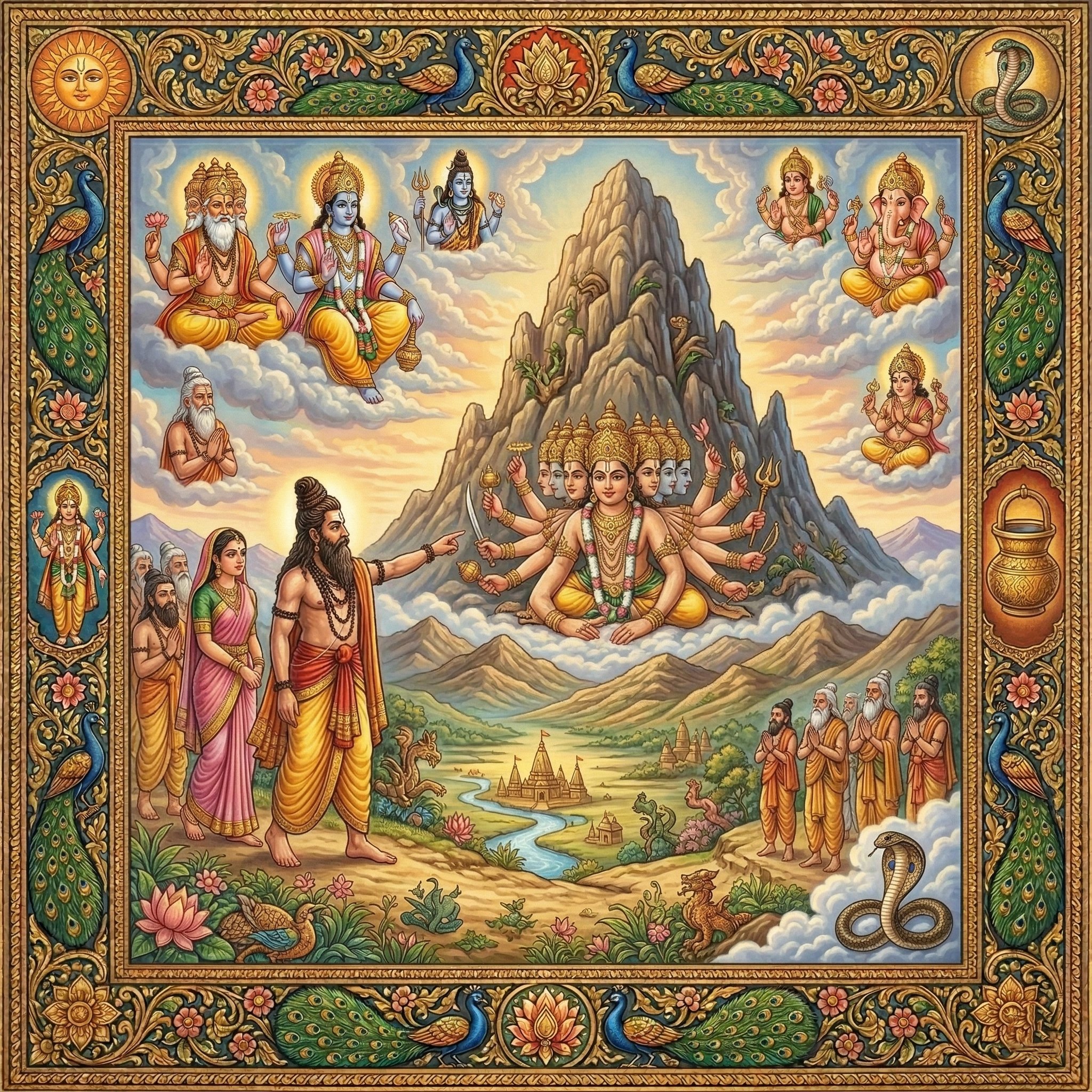
Pūrvārdha functions as the opening arc of the Kāśīkhaṇḍa’s Kāśī-centered sacred geography. It establishes the textual frame for interpreting the city as a tīrtha-system—where rivers, mountains, shrines, and routes become carriers of theological meaning and ethical guidelines. In Chapter 1, the narrative temporarily shifts from Kāśī to a broader Indic landscape (notably the Narmadā region and the Vindhya range), using that setting to introduce themes of sanctity, humility, and the limits of pride—preparatory motifs for understanding why certain places are revered and how seekers should approach them.
Adhyayas in Purva Ardha
50 chapters to explore.
Adhyaya 1
Kāśī-stuti, Nārada–Vindhya-saṃvāda, and the Ethics of Humility
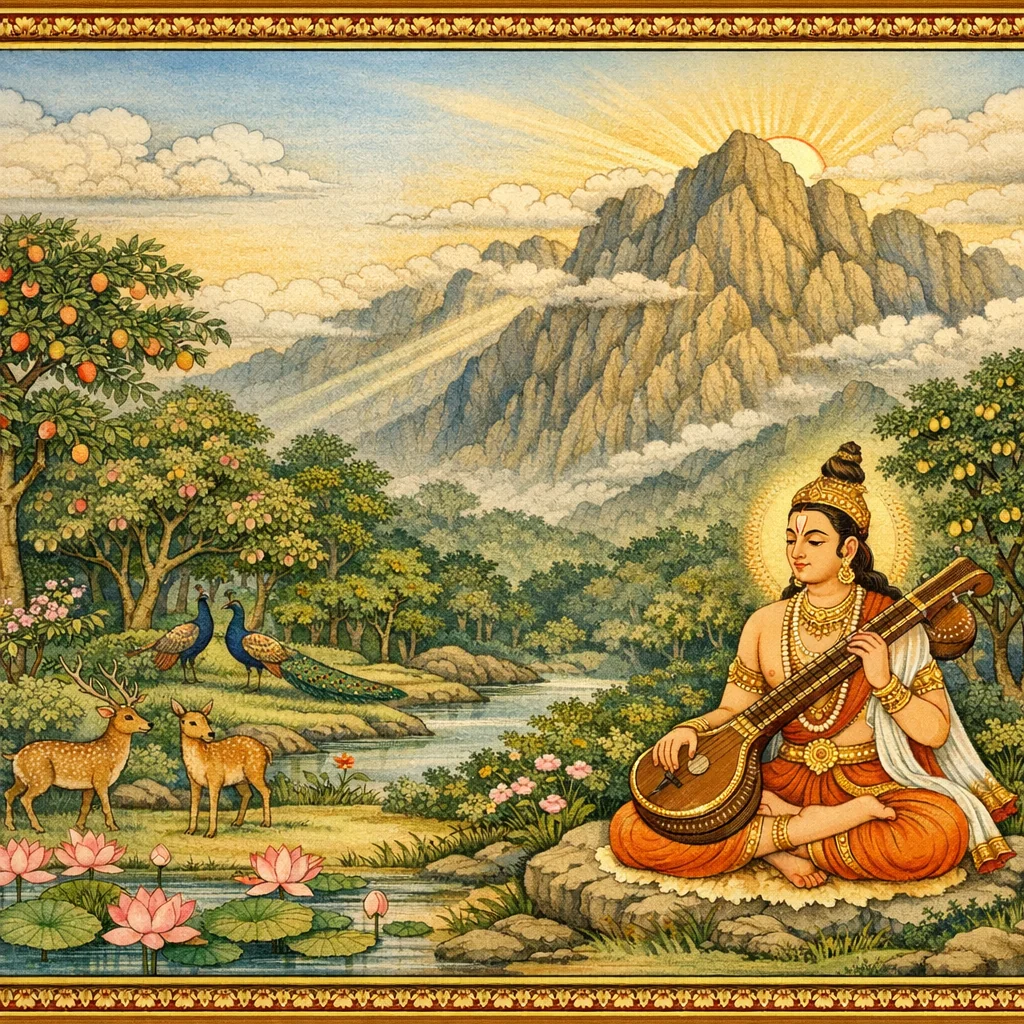
The chapter begins with invocatory verses—reverence to Gaṇeśa and exalted praise of Kāśī as a city that purifies sin and is linked with liberation—set within a purāṇic transmission frame (Vyāsa as speaker, Sūta as public narrator). Nārada then appears: after bathing in the Narmadā and worshipping Oṃkāra, he journeys on and beholds the Vindhya mountain, portrayed through an extended poetic catalogue of forests, fruits, flowers, and creatures, as a living sacred ecology. Vindhya welcomes him with arghya and attendant hospitality, rejoicing, yet reveals a pride-born anxiety about rank among mountains, especially Meru’s preeminence. Nārada reflects that true greatness is not gained through association with pride, but his reply only inflames Vindhya’s self-regard. After Nārada departs, Vindhya sinks into distress, condemning the torment of worry and describing “cintā-jvara” (the fever of anxiety) as corrosive to body and spirit. Seeking relief, he turns for refuge to Viśveśa, resolves not to delay, and—driven by rivalry—begins to grow until he obstructs the sun’s path, as the chapter closes with proverbial ethical counsel on conflict, restraint, and the social consequences of displaying power.
Adhyaya 2
सूर्यगति-स्तम्भनम्, देवस्तुति-प्रसङ्गः, काशी-माहात्म्य-उपदेशः (Solar Obstruction, Hymn of the Devas, and Instruction on Kāśī’s Merit)
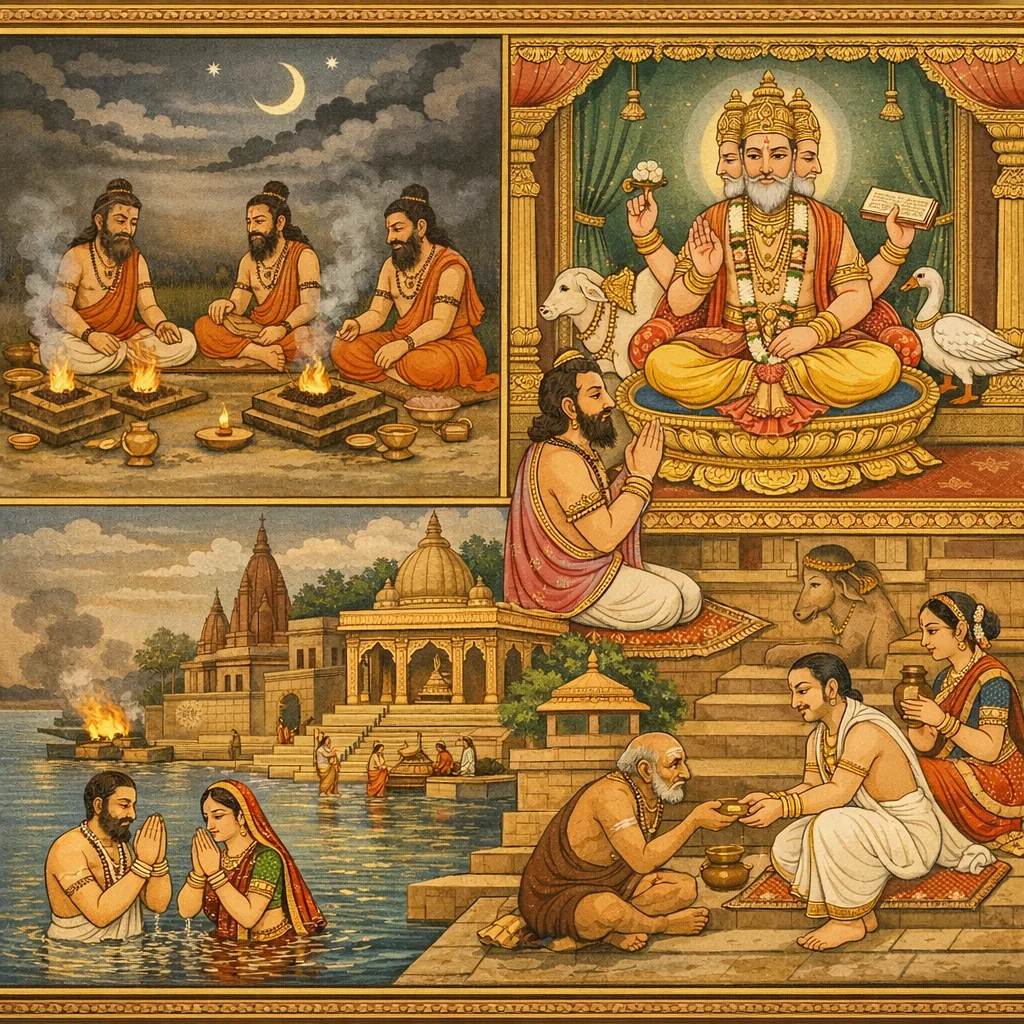
This adhyāya opens with a cosmic scene: the Sun rises as the regulator of dharma and ritual time, sustaining offerings and the daily cycles of yajña. An ensuing episode tells how the Sun’s course is obstructed when the Vindhya mountain, swollen with pride, rises up—triggering a systemic crisis in which ritual schedules collapse, sacrifices are interrupted, and the world loses its bearings between night and day. Alarmed at the fracture of cosmic order, the Devas approach Brahmā and present an extended hymn that praises the Supreme Principle in both cosmological and inward terms: the Vedas as breath, the Sun as the divine eye, and the universe as an embodied form. Brahmā replies by declaring the hymn efficacious for prosperity, protection, and success, emphasizing disciplined recitation as the means to obtain desired results. The teaching then turns to ethical and ritual guidance: Brahmā commends truthfulness, restraint, vrata observances, and charity—especially gifts to Brāhmaṇas and reverence for the sanctity of cows. The chapter culminates in a Kāśī-centered path of liberation: bathing and giving in Vārāṇasī (including Maṇikarṇikā and seasonal rites) lead to long residence in divine realms and, by the grace of Viśveśvara, assured mokṣa; even small acts in Avimukta are said to yield liberating fruits across births.
Adhyaya 3
Agastya’s Āśrama and the Moral Ecology of Kāśī (देवागस्त्याश्रमप्रभाव-वर्णनम्)
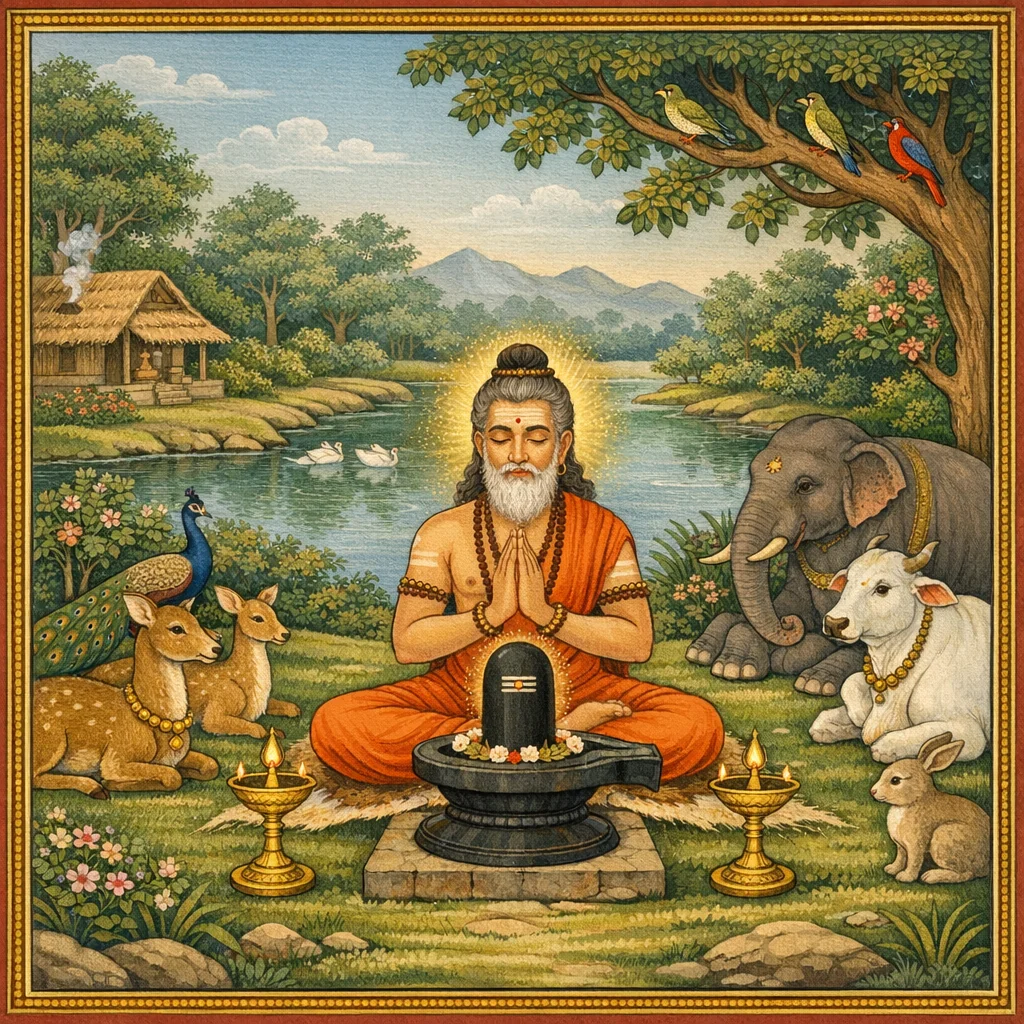
This chapter unfolds as a question-led theological dialogue. Sūta asks what the devas did upon reaching Kāśī and how they approached Agastya. Parāśara replies that the devas immediately began their ritual course in Vārāṇasī: they went first to Maṇikarṇikā for the prescribed bath, performed sandhyā and allied observances, and offered tarpaṇa to the ancestors. The narration then expands into a wide catalogue of dāna (pious gifting): food, grains, garments, metals, vessels, bedding, lamps, and household goods, along with temple-support expenditures such as repairs, offerings of music and dance, pūjā materials, and season-appropriate public welfare. After multi-day observances and repeated darśana of Viśvanātha, the devas travel to Agastya’s abode, where he is portrayed establishing a liṅga and engaging in intense ascetic recitation—especially the Śatarudrīya—radiant with tapas. A distinctive pivot follows: the āśrama is depicted as so pacified that natural enmity among animals and birds is suspended, revealing Kāśī’s kṣetra-prabhāva, the sanctifying power of the sacred field. Ethical instruction is then given, explicitly censuring attachment to meat and intoxicants as incompatible with Śiva-bhakti, and reaffirming liberation promises tied to Viśveśvara—above all, that beings in Kāśī may be released through divine instruction at the time of death. The chapter concludes with strong praise of Kāśī-residence and Viśveśvara-darśana as uniquely efficacious for all four aims of life: dharma, artha, kāma, and mokṣa.
Adhyaya 4
Pātivratya-śikṣā (Teaching on Pativratā-Dharma) | पतिव्रतधर्म-उपदेशः
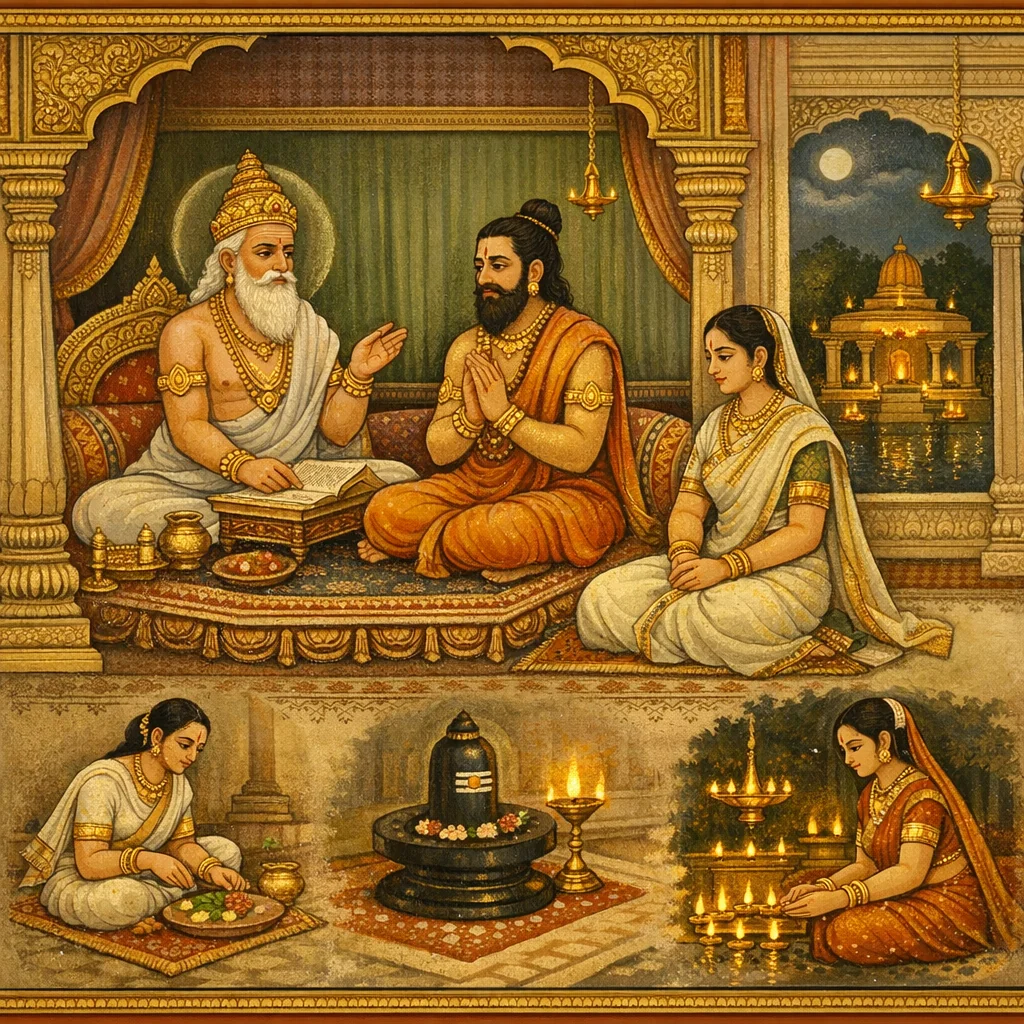
Chapter 4 is taught as a dialogue within the Sūta–Vyāsa narrative frame. Prompted by Agastya, the devas first honor him with reverent praise and then set forth an extensive ethical and ritual portrait of the ideal pativratā—an wife of disciplined fidelity and household virtue—holding up Lopāmudrā as the exemplary model. The teaching lists norms of conduct: careful attention to the husband’s needs, restraint in speech and social association, avoidance of certain public entertainments, austerities undertaken only with permission, and an overall ethic of service treated as religious practice. The discourse then turns strongly to results (phala), asserting the protective spiritual power of pativratā conduct—even fearlessness before the messengers of death—and describing merit that benefits multiple generations. In contrast, transgressions are presented as cautionary types linked with unfavorable rebirth. A later section prescribes disciplines for widowhood—dietary restraint, austerities, daily offerings, and Viṣṇu-pūjā with the husband as the focus of devotion—followed by seasonal observances (notably in Vaiśākha, Kārtika, and Māgha) involving bathing, gifts, lamps, and regulated abstentions. The chapter closes with a phalaśruti declaring that hearing this teaching removes sin and leads toward an auspicious afterlife in Śakra-loka.
Adhyaya 5
अविमुक्तमहिमा, विंध्यनिग्रहः, तथा महालक्ष्मीस्तुति-वरदानम् (Avimukta’s Supremacy, the Humbling of Vindhya, and Mahālakṣmī’s Boon)
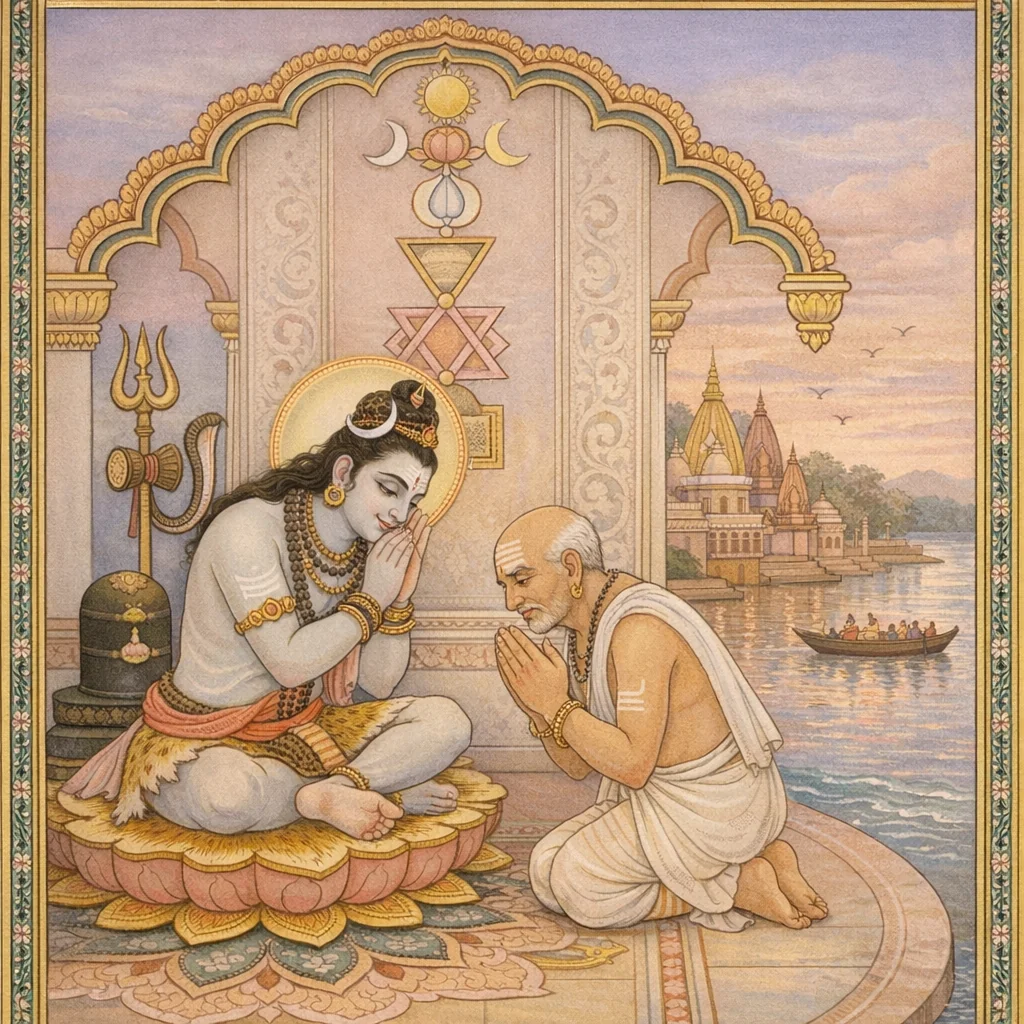
This chapter unfolds a layered theological teaching on Kāśī’s irreplaceable sanctity as Avimukta. Parāśara speaks to Lopāmudrā about an arising disturbance and the seeming paradox that cosmic regulators do not restrain it, then turns the explanation toward Kāśī’s exceptional destiny and the inevitability of obstacles for those who dwell there. A sustained praise follows: to abandon Kāśī is declared a grave error, and Avimukta is affirmed as unequalled in kṣetra, liṅga, and salvific “gati.” The text then employs boundary and nāḍī imagery (Varuṇā–Piṅgalā, Suṣumnā) and teaches the tāraka instruction at death, attributed to Śiva’s liberating agency in Avimukta. The narrative shifts to Agastya’s departure and his intense sorrow at separation from Kāśī, culminating in Vindhya being compelled to bow low and remain so until Agastya’s return, restoring cosmic balance. Thereafter Agastya meets Mahālakṣmī, offers an extended hymn, receives assurances and adornment for Lopāmudrā, and seeks a boon: renewed attainment of Vārāṇasī and welfare for the hymn’s reciters—freedom from affliction and deprivation, with enduring prosperity and lineage.
Adhyaya 6
Agastya–Lopāmudrā-saṃvāda: Mānasa-tīrtha-lakṣaṇa and the Hierarchy of Mokṣa-kṣetras (Śrīśaila–Prayāga–Avimukta)
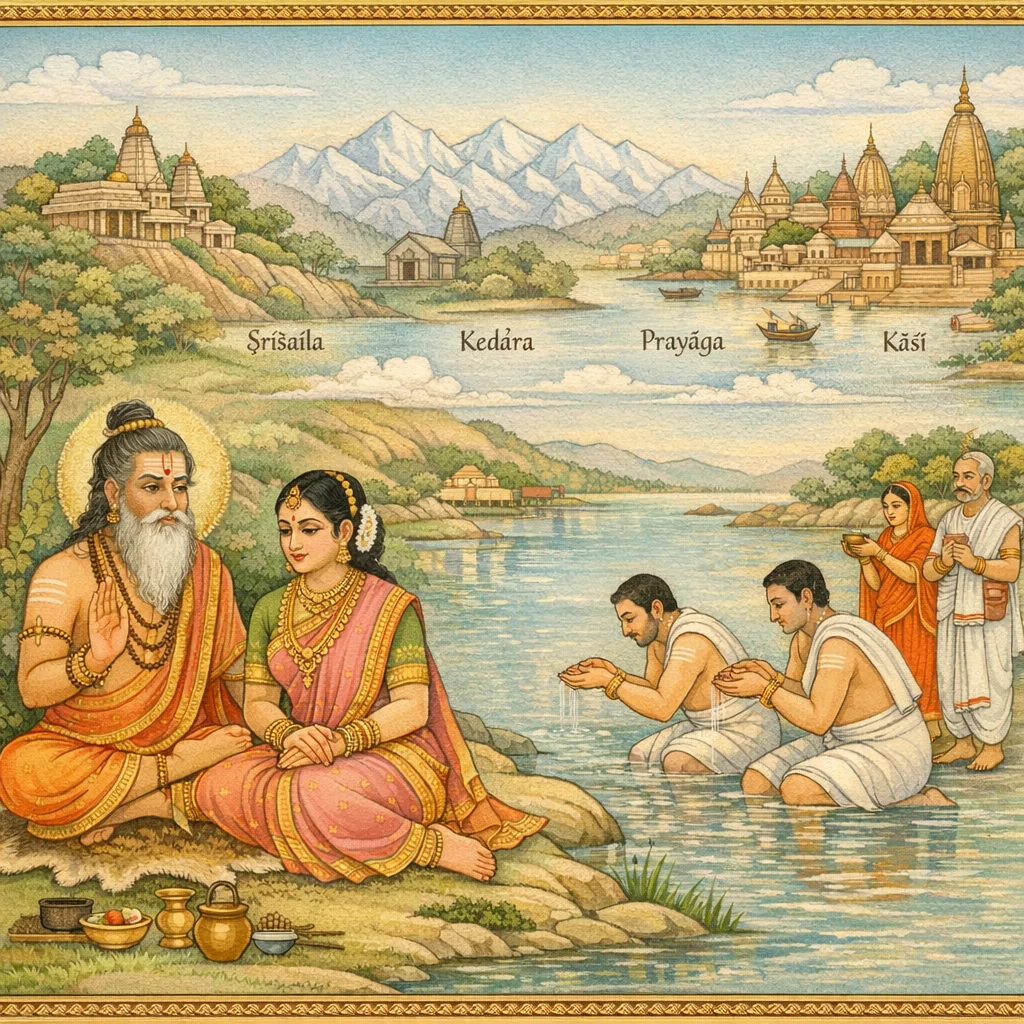
Chapter 6 begins with Parāśara addressing Sūta in a didactic setting, praising ethical uplift—especially paropakāra, “benefiting others”—as a higher dharma than mere external ritual merit. The narrative then turns to Agastya and Lopāmudrā: upon beholding Śrīśaila, the Śiva-linked peak of Tripurāntaka, it is claimed that the very sight of the mountain can negate rebirth. Lopāmudrā asks why, if this is so, Kāśī (Avimukta) is still sought. Agastya replies by classifying many mokṣa-granting kṣetras and tīrthas, naming famed pilgrimage centers across the land, and then teaching “mānasa tīrthas”—inner sacred fords of virtue: satya (truth), kṣamā (forbearance), indriya-nigraha (sense-restraint), dayā (compassion), ārjava (integrity), dāna (charity), dama (self-control), santoṣa (contentment), brahmacarya, priya-vāditā (gentle speech), jñāna, dhṛti, and tapas. He insists that water-bathing alone cannot cleanse a mind stained by greed, cruelty, slander, hypocrisy, or obsessive attachment; true tīrtha is mental purification and dispassion. The chapter also lays out pilgrimage etiquette and observances: preparatory fasting, honoring Gaṇeśa, ancestors, Brahmins, and sādhus; rules for feeding at tīrthas; modes of śrāddha/tarpaṇa; and proportional “shares” of tīrtha merit according to intention and manner of travel. It culminates in a soteriological ranking: though Śrīśaila and Kedāra are praised as mokṣa-giving, Prayāga is declared superior, and Avimukta (Kāśī) surpasses even Prayāga, affirming Kāśī’s unrivaled place in the geography of liberation. A closing, phalaśruti-like note links faithful hearing or recitation with moral purification and freedom from inauspicious rebirth.
Adhyaya 7
Śivaśarmā’s Ethical Self-Audit, Tīrtha-Itinerary, and the Turn to Kāśī (Agastya Narration)
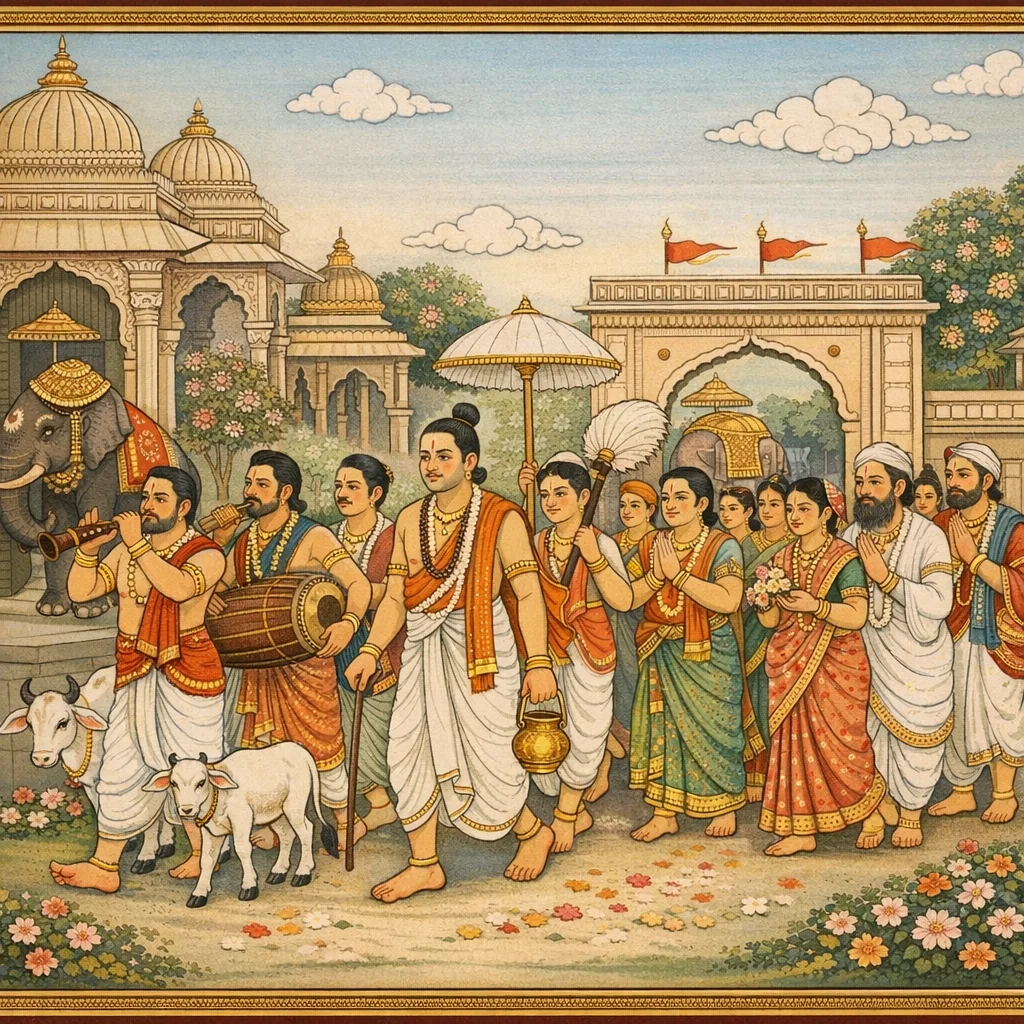
Agastya introduces a learned brāhmaṇa of Mathurā and his son Śivaśarmā, who masters a wide range of sacred and practical disciplines—Vedas and auxiliaries, Dharmaśāstras, Purāṇas, logic, Mīmāṃsā, medicine, arts, statecraft, and languages. Though prosperous and socially accomplished, Śivaśarmā is seized by inner anxiety when he recognizes aging and the limits of accumulated learning. He undertakes a severe ethical self-audit, confessing neglected duties of devotion and service: inadequate worship of Śiva, Viṣṇu, Gaṇeśa, Sūrya, and the Devī; neglect of yajñas, hospitality, feeding brāhmaṇas, planting trees, aiding women with clothing and ornaments, and giving gifts of land, gold, and cows. He also laments not building water-reservoirs, helping travelers, supporting marriages, performing purificatory vows, or establishing temples and liṅgas. Concluding that only pilgrimage to tīrthas can turn his life toward the highest good, he departs on an auspicious day after preliminary rites. He visits major tīrthas such as Ayodhyā and especially Prayāga, whose confluence is praised as a multi-dimensional tīrtha granting dharma/artha/kāma/mokṣa and powerful purification. After staying there he reaches Vārāṇasī, worships Dehalivināyaka at the threshold, bathes at Maṇikarṇikā, offers to gods and ancestors, and venerates Viśveśvara, marveling at Kāśī’s incomparable greatness. Yet, even while acknowledging Kāśī’s glory, he continues on to Mahākālapurī (Ujjayinī), described as repelling pollution and Yama’s power, filled with many liṅgas, and saving those who merely remember Mahākāla. The closing lines hint at intense distress followed by a divine, aerial resolution.
Adhyaya 8
शिवशर्मा–लोकदर्शनम्: धर्मराजदर्शनं च (Śivaśarmā’s Vision of Worlds and the Encounter with Dharmarāja)
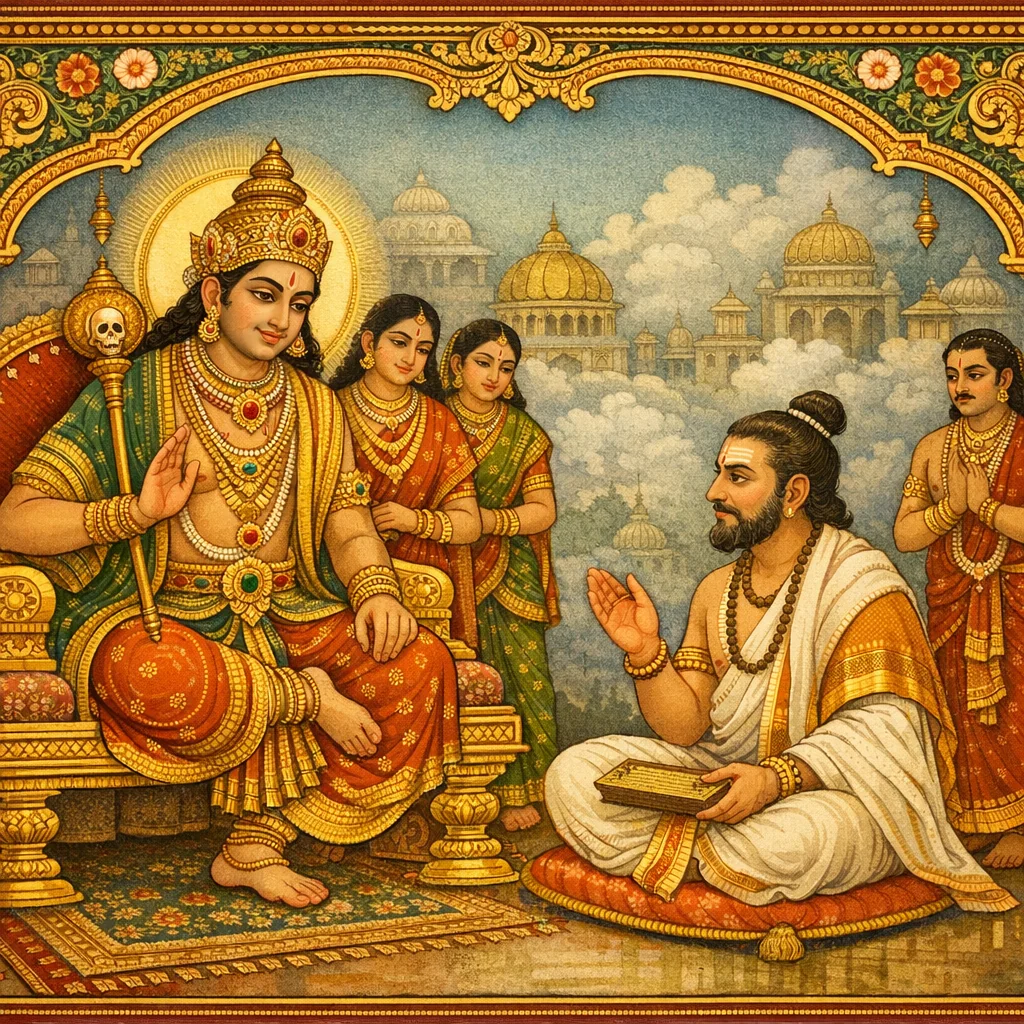
Chapter 8 is framed as a dialogue: Lopāmudrā’s sustained curiosity about a “holy narrative” tied to sacred cities leads Agastya to recount an instructive itihāsa, warning that liberation does not arise automatically merely by association with famed “cities of liberation.” The story centers on the Brahmin Śivaśarmā, who meets two divine attendants introducing themselves as Puṇyaśīla and Suśīla. They guide Śivaśarmā through graded lokas that mirror ethical patterns: a piśāca-loka for scant merit and charity given with regret; a guhyaka-loka for honest wealth, social sharing, and a non-malicious nature; a gandharva-loka where musical skill and patronage become meritorious when wealth is redirected to Brahmins and devotional praise; and a vidyādhara-loka marked by teaching, support for healing, and humility in learning. Dharmarāja (Yama) then appears in an unexpectedly gentle form for the righteous, praising Śivaśarmā’s learning, reverence for the guru, and dharma-guided use of embodied life. The chapter also contrasts this with terrifying punitive commands for specific transgressions—sexual misconduct, slander, theft, betrayal, sacrilege, and social harm—offering a catalog-like mapping of faults to consequences. It concludes by stating who sees Yama as fearsome versus auspicious, noting exemplary kings in Dharmarāja’s assembly, and ending as Śivaśarmā beholds an apsaras-city, signaling the narrative’s continued ascent.
Adhyaya 9
Apsaroloka–Sūryaloka Varṇana and Gayatrī–Sūryopāsanā Vidhi (अप्सरोलोक–सूर्यलोकवर्णनं तथा गायत्री–सूर्योपासनाविधिः)
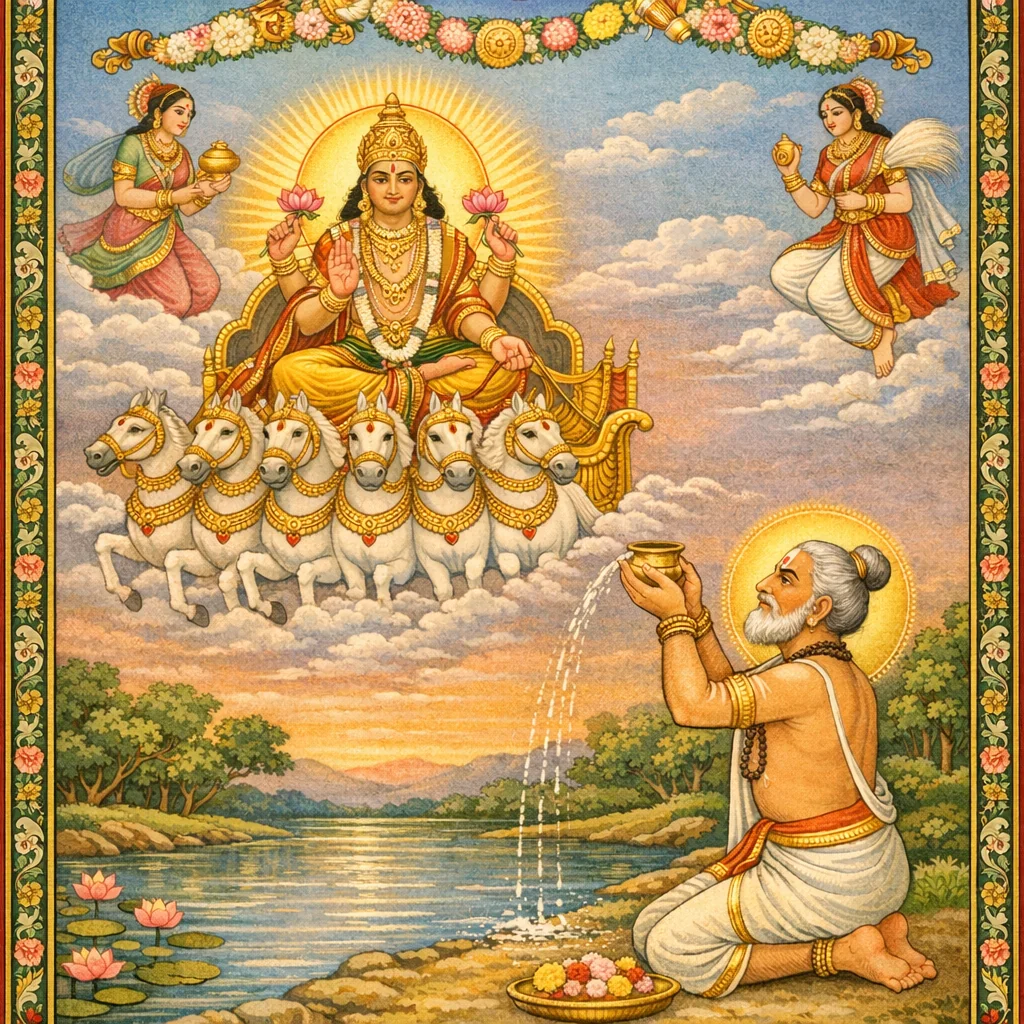
Adhyāya 9 opens as a didactic dialogue: Śivaśarmā asks about extraordinarily beautiful, richly adorned celestial women. The Gaṇa explain that they are apsaras-like beings, skilled in music, dance, refined speech, and the arts, and they describe the causes for dwelling in Apsaroloka—ritual observances, occasional lapses in continence under the force of fate, and desire-oriented vows that ripen into divine enjoyments. The chapter then names various apsaras, depicts their heavenly ornaments, and points to merit-making acts connected with solar transitions (saṅkramaṇa), bhogadāna (gifts of enjoyments), and mantra-framed offerings. In its second movement the text exalts Sūrya, and especially the Gayatrī mantra, asserting a hierarchy of knowledge that culminates in Gayatrī as the supreme mantra. Tri-kāla discipline and exact sandhyā timing are stressed as obligatory according to kāla-śāstra. Practical rites are given: offering arghya with a clean copper vessel, water, flowers, kuśa/dūrvā, and akṣata, with mantra-salutations at sunrise and sunset. Many epithets of the Sun (nāma-stuti) are recited, promising health and prosperity and, after death, ascent to Sūryaloka; the chapter closes with the merit of listening (śravaṇa-phala) and Agastya’s approval of its ethical and purificatory power.
Adhyaya 10
Amarāvatī–Agni-loka Praśaṃsā and the Narrative of Viśvānara’s Attainment (Jyotiṣmatī Purī)
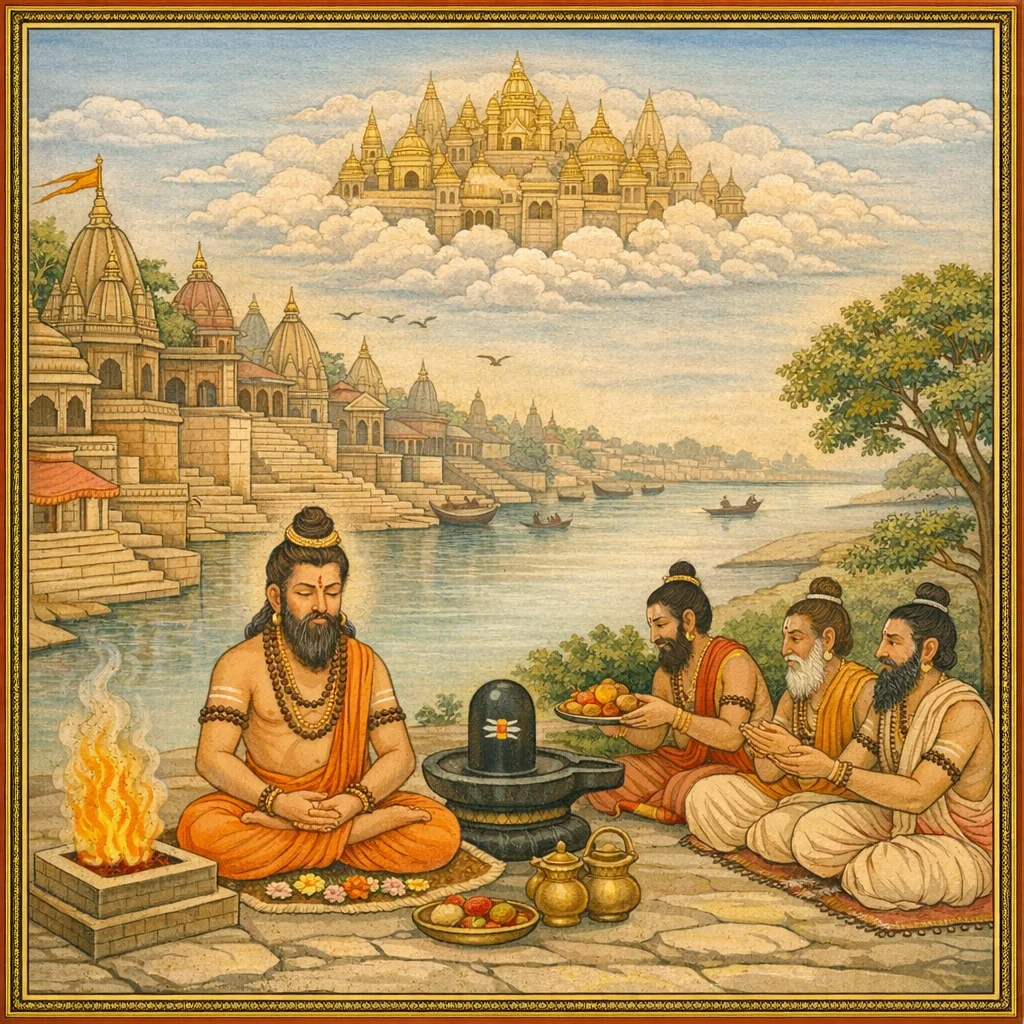
The chapter begins with Śivaśarman’s amazement at a radiant, joy-bestowing city. The gaṇas explain it as a heavenly polity linked with Mahendra (Indra), whose luminous palaces, wish-fulfilling abundance, and emblematic treasures (such as celestial horse and elephant motifs) teach the doctrine of karmic recompense and cosmic governance. The text then turns to an Agni-centered path of uplift: Agni/Jātavedas is praised as purifier, inner witness, and the axis of sacrifice. It lists deeds that lead to Agni-loka—supporting agnihotra, aiding the needy through fire-rites, gifting fuel or ritual implements, and maintaining disciplined conduct. Within the narrative frame, the gaṇas recount the sage Viśvānara of the Śāṇḍilya lineage, his reflection on the four āśramas with special esteem for gṛhastha-dharma, and his dialogue with his wife Śuciṣmatī, who asks for a son comparable to Maheśa. Viśvānara journeys to Vārāṇasī, performs extensive tīrtha-circulation—liṅga-darśana, bathing, offerings, honoring ascetics—chooses among Kāśī’s many liṅgas for swift siddhi, and undertakes rigorous worship at a siddhi-giving seat. The chapter concludes with a phala-claim: a specified hymn/practice, observed for a set period, grants desired results, including progeny.
Adhyaya 11
गृहपति-नामकरणम् तथा पुत्रलक्षण-परिक्षा (Naming of Gṛhapati and the Examination of the Child’s Marks)
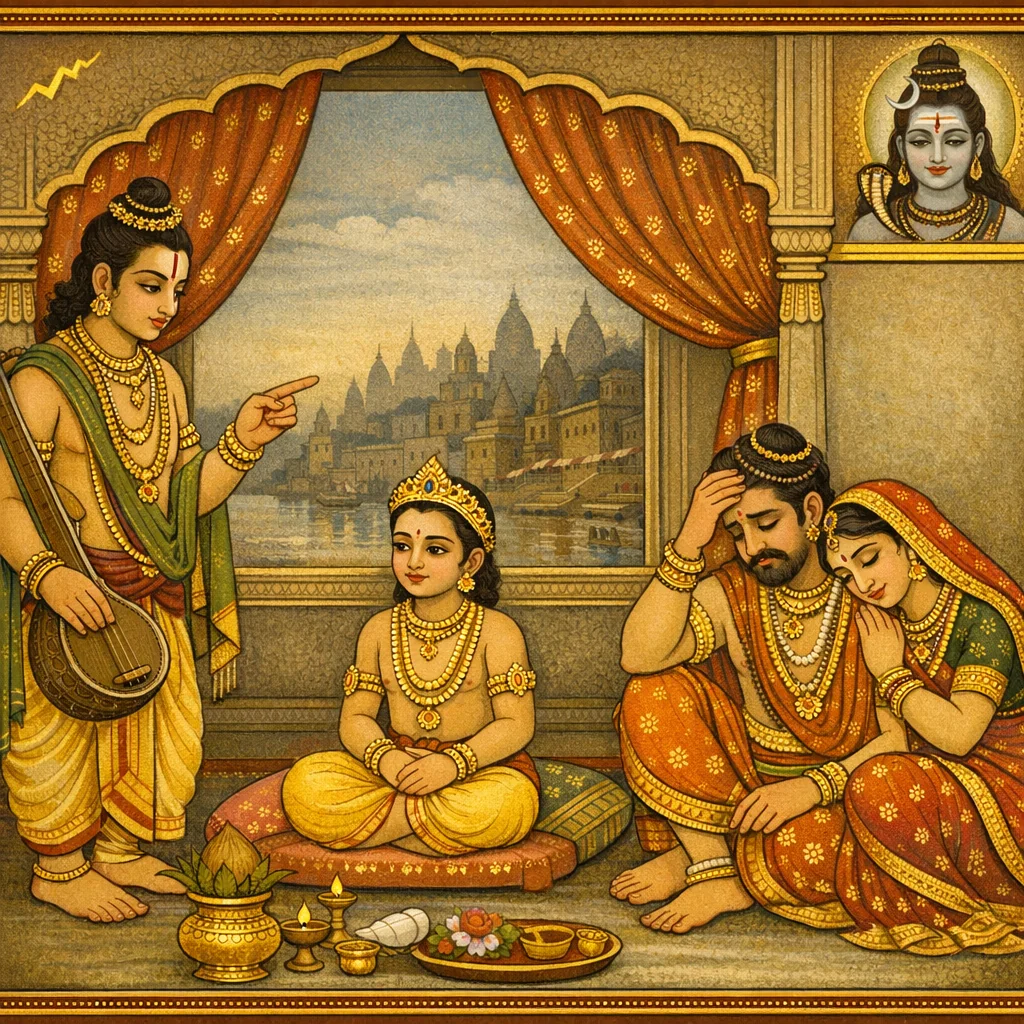
Agastya relates a Kāśī-centered theological discourse, beginning with the household life of Viśvānara and Śuciṣmatī. The chapter sets forth the classical saṃskāras in order—garbhādhāna, puṃsavana, sīmanta, the birth festivities, and the formal naming rite—culminating in the child being named “Gṛhapati,” supported by a Vedic-style mantra citation. A grand gathering of sages and divine beings is portrayed as attending the birth festival, affirming the child’s auspicious standing within a sacral public order. The teaching then turns to household dharma: it extols progeny as vital to the gṛhastha-āśrama, offers a typology of sons, and frames lineage continuity as a dharmic concern. Nārada arrives, instructs filial obedience as an ethical rule, and conducts a detailed examination of bodily and palm-marks (lakṣaṇa-parīkṣā), reading signs of sovereignty and fortune while warning that fate may invert qualities. A prophecy of danger around the twelfth year—linked with lightning/fire—brings parental grief; the child consoles them and vows to propitiate Mṛtyuñjaya (Śiva) to overcome the threat, re-centering the narrative on devotion, protection, and Kāśī’s Śaiva horizon of salvation.
Adhyaya 12
नैरृत-वरुण-लोकवर्णनम् तथा वरुणेश-लिङ्ग-प्रतिष्ठा (Description of the Nairṛta and Varuṇa realms; establishment of Varuṇeśa Liṅga)
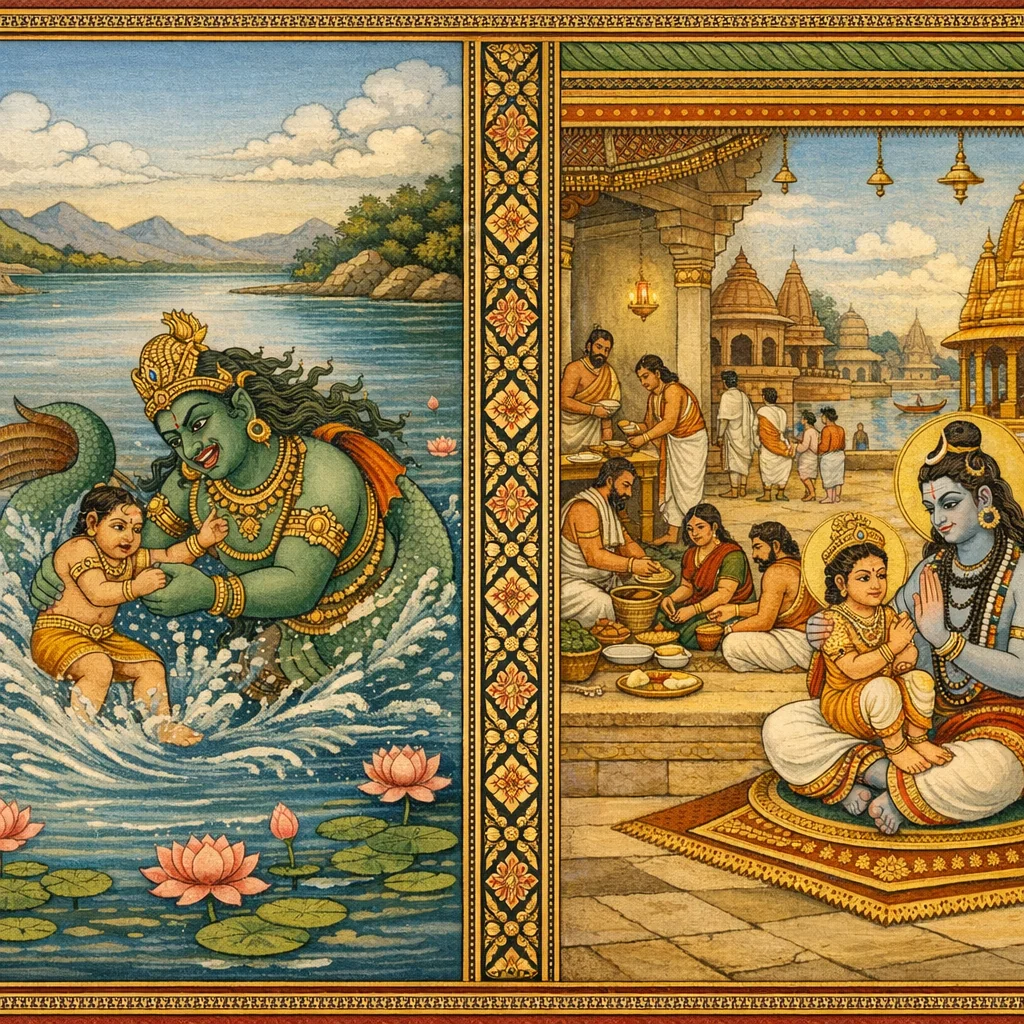
This chapter first describes the Nairṛta quarter and its beings, teaching that even those of socially marginalized birth are deemed “followers of merit” when they live in accord with śruti-smṛti, uphold non-violence, truthfulness, self-restraint, and reverence toward dvijas. It also explicitly warns against self-harm, declaring it spiritually ruinous. A narrative exemplar follows: Piṅgākṣa, a forest chief (pallīpati), is portrayed as a protective hunter who practices a regulated “mṛgayā-dharma” and provides safety and aid to travelers. The greed-driven violence of a relative and Piṅgākṣa’s final intention are used to explain karmic fruition, culminating in his attainment of lordship in the Nairṛta realm. The discourse then turns to Varuṇa’s realm, praising public-benefit charities—digging wells, making ponds, distributing water, building shade-halls, ferrying travelers, and removing fear—as sources of merit and security. Finally, Varuṇa’s origin is narrated: the sage’s son Śuciṣmān is taken by a water-being, but through Śiva’s intervention and devotion he is restored; later, by tapas in Vārāṇasī, Śiva grants him sovereignty over the waters and the स्थापना of the Varuṇeśa liṅga in Kāśī, which protects devotees from water-related fears and afflictions.
Adhyaya 13
Pavaneśvara/Pavamāneśvara Liṅga Māhātmya and the Devotee Narrative (पवनेश्वर/पवमानेश्वर-लिङ्गमाहात्म्य)
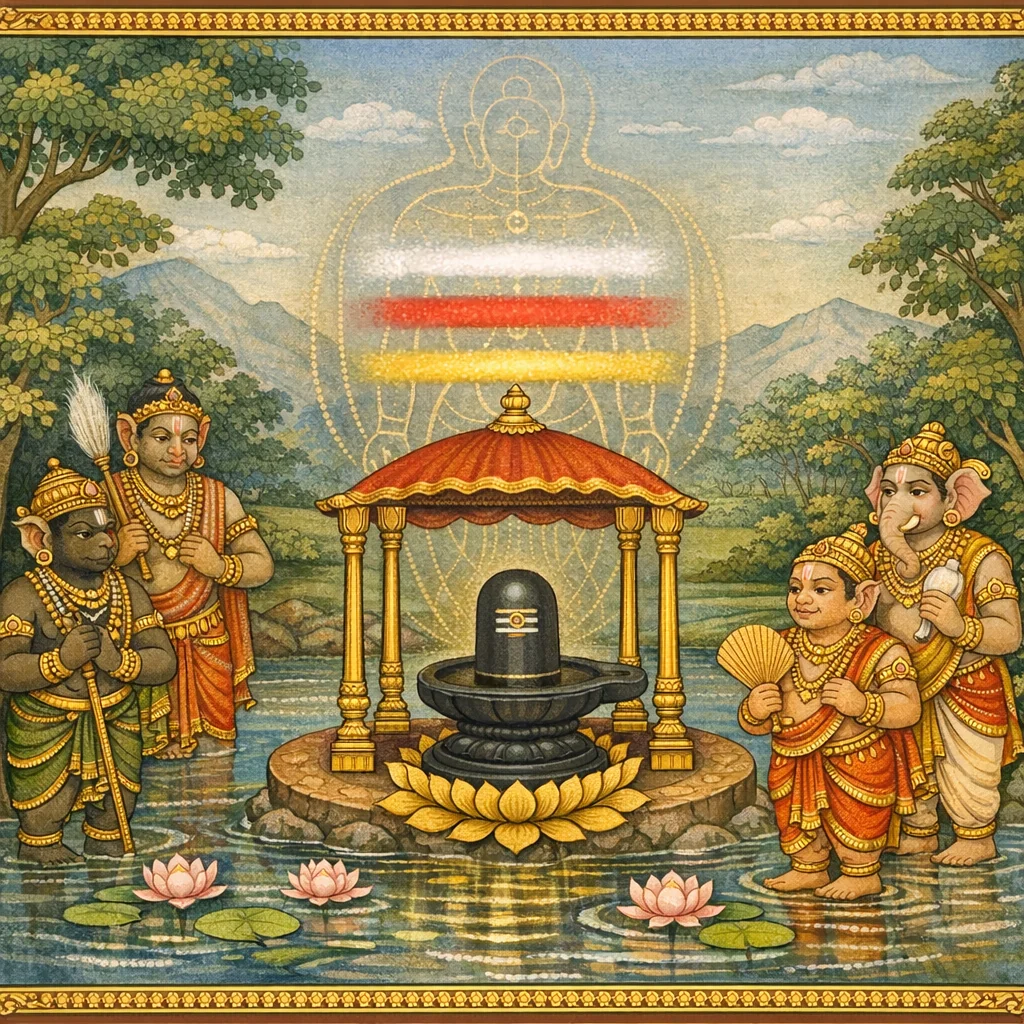
Adhyāya 13 weaves together sacred geography of Kāśī, doctrinal praise, and an edifying devotee tale. The Gaṇas describe a fragrant holy precinct and point out a liṅga connected with Vāyu (Prabhañjana), declaring that by worshipping Śrī Mahādeva, Vāyu attains the rank of a dikpāla, guardian of a direction. It then recounts Pūtatmā’s long tapas in Vārāṇasī and the स्थापना of the purifying liṅga Pavaneśvara/Pavamāneśvara, asserting that mere darśana can cast off sin as an ethical-ritual transformation. A sustained stotra praises Śiva as both transcendent and immanent, explains Śiva–Śakti in terms of jñāna, icchā, and kriyā śaktis, and maps a “cosmic body” that integrates social orders and cosmic elements into a theological cosmogram. The chapter also gives practical location and observance: the liṅga is near Vāyu-kuṇḍa and west of Jyeṣṭheśa, with fragrant bathing and aromatic offerings prescribed. The narration shifts to another legend of Alakā-like splendor and a devotee’s rise (with later kingship motifs), and closes with a phalaśruti assurance that hearing this account removes sins.
Adhyaya 14
चंद्रेश्वर-माहात्म्य तथा चंद्रोदक-तीर्थश्राद्ध-विधि (Candreśvara Māhātmya and the Candrodaka Tīrtha Śrāddha Protocol)
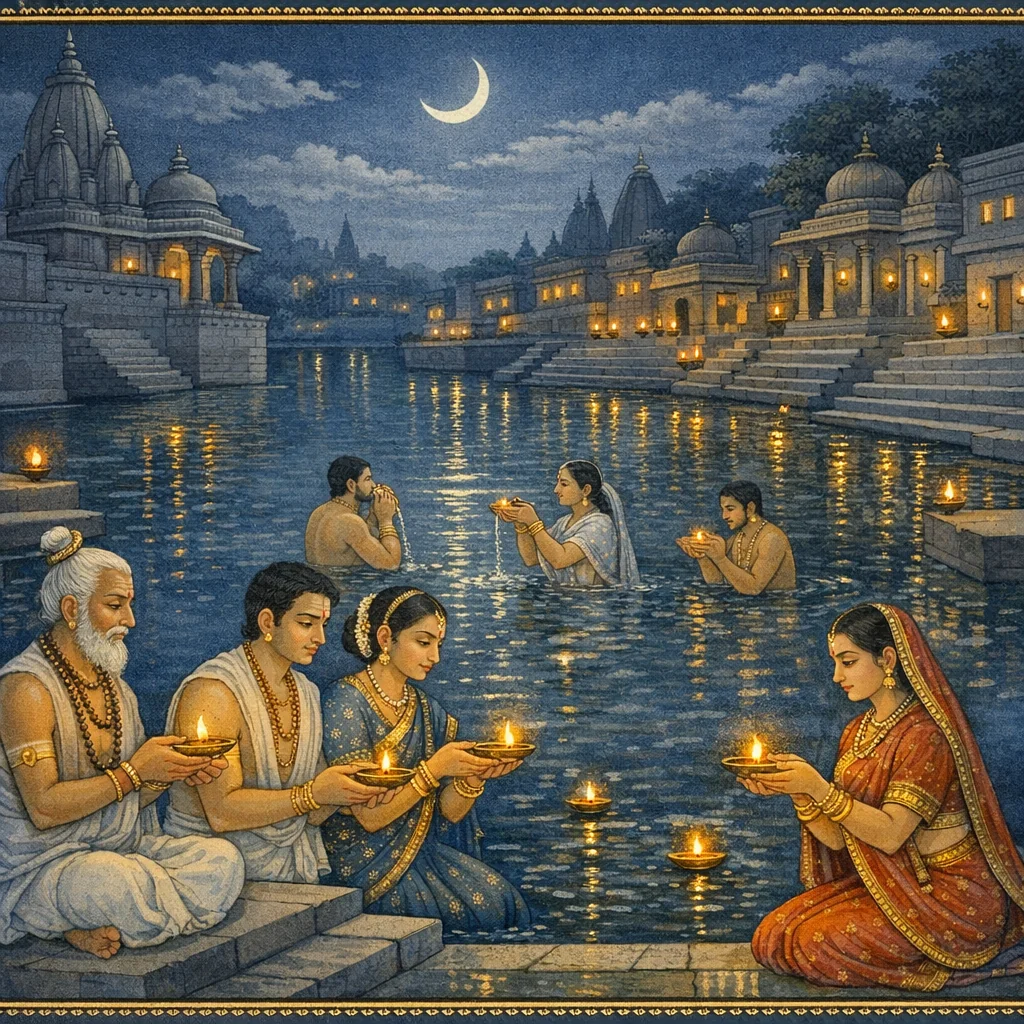
This chapter is framed as dialogic instruction: Śiva’s gaṇas describe a sacred quarter evoked near Alakā’s “front region,” then turn to the sanctity of Kāśī in the īśānya (northeast) direction. Rudra-bhaktas and the eleven forms of Rudra are named as guardians and benefactors, establishing a protective theology of place, followed by an account of installing Īśāneśa and the merit it bestows. The discourse then unfolds a lunar myth: Atri’s tapas brings forth Soma; Soma’s fall and Brahmā’s ritual handling give rise to world-sustaining herbs. Soma finally arrives at Avimukta, where the Candreśvara liṅga is established. Mahādeva grants calendrical observances—worship on aṣṭamī/caturdaśī, full-moon (pūrṇimā) rites, and a special amāvāsyā–Monday vow involving fasting, night-vigil (jāgaraṇa), bathing with “candrodaka” water, and performing śrāddha at Candrodaka-kuṇḍa with named invocations of ancestors. The phalaśruti proclaims the fruits: ancestral satisfaction equal to the Gayā rites, release from the three debts (ṛṇa-traya), mitigation of accumulated sins, and access to Soma-loka. It concludes with an esoteric note on the Siddhayogīśvarī Pīṭha near Candreśvara, where disciplined practitioners may gain visionary confirmation and siddhi, while maintaining an ethical gatekeeping—unsuitable for nāstikas or detractors of śruti.
Adhyaya 15
बुधेश्वर-नक्षत्रेश्वर-माहात्म्य (Budheśvara and Nakṣatreśvara: Shrine-Etiology and Merit)
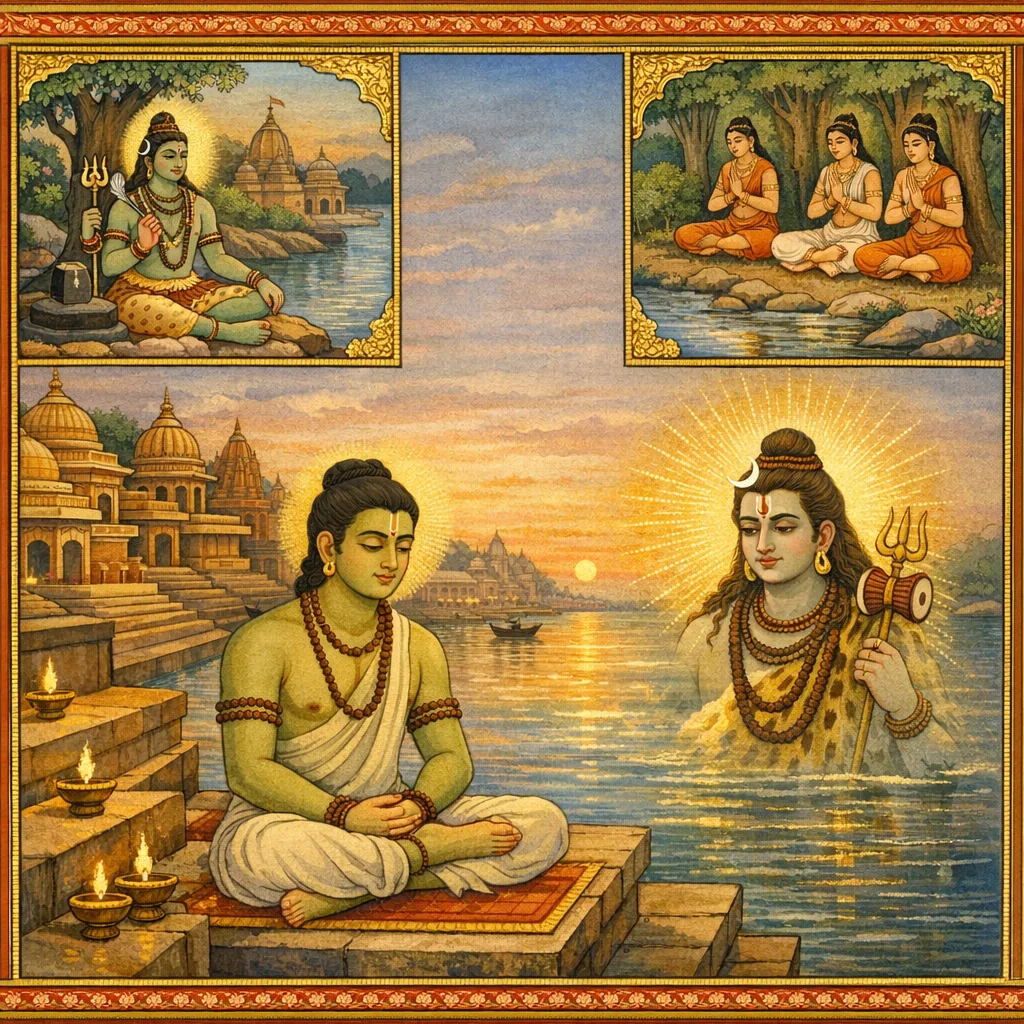
Adhyāya 15 unfolds through layered dialogue. Agastya speaks to Lopāmudrā, recalling a tale conveyed to Śivaśarman by Śiva’s gaṇas. The gaṇas first narrate the origin of the nakṣatra-linked daughters of Dakṣa: after fierce tapas in Kāśī, they install a liṅga named Nakṣatreśvara on the Vārāṇasī riverbank near Saṅgameśvara. Śiva grants boons—eminence within the jyotiṣ-cakra, connection with the rāśis, a distinct “nakṣatra-loka,” and protection for those who worship and keep nakṣatra-related vows in Kāśī. The discourse then turns to a second shrine-etiology focused on Budha (Mercury), born from the Tārā–Soma–Bṛhaspati episode. Budha performs intense austerities in Kāśī, establishes the Budheśvara-liṅga, and receives Śiva’s epiphany and grace: a superior loka above the nakṣatra realm, exceptional honor among the grahas, and the promise that Budheśvara worship bestows buddhi (intellect) and removes durbuddhi (confusion). The chapter closes with a brief phala: darśana of Budheśvara (east of Candreśvara) prevents the decline of intelligence, and the narrative proceeds toward an account of Śukra-loka.
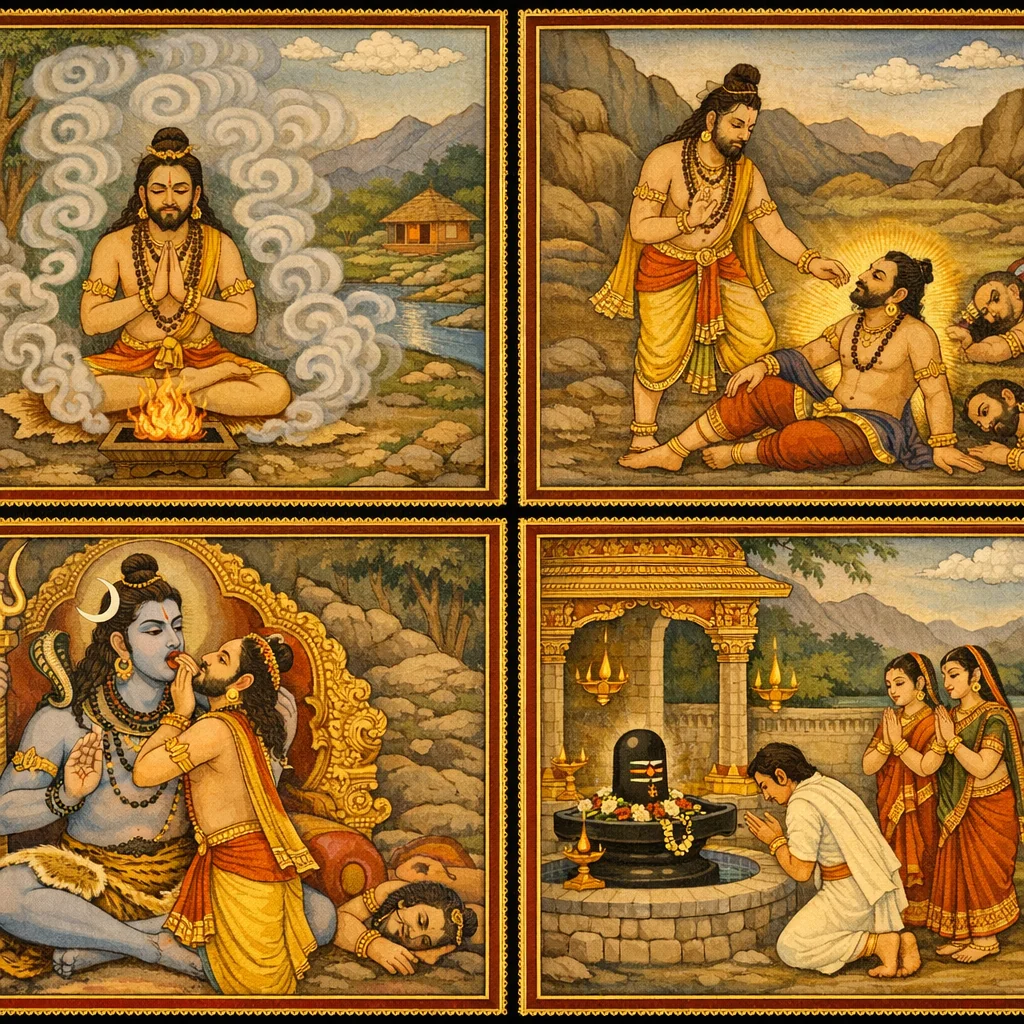
Adhyaya 16
Śukra and the Mṛtasañjīvinī Vidyā: Austerity in Kāśī, Boon from Śiva, and the War-Episode with Andhaka
Chapter 16 unfolds a closely connected sequence. The gaṇas recount how Śukra (Kavi, Bhārgava), after fearsome austerity in Kāśī—marked by the motif of living on “kaṇadhūma” for a thousand years—received from Śiva the Mṛtasañjīvinī vidyā, the life-restoring knowledge. Within the Andhaka–Śiva conflict, Andhaka seeks strategic advantage by approaching Śukra, praising him as the daitya-guru and requesting that the vidyā be used to revive fallen daityas. Śukra affirms that this was the very purpose of his attainment and begins restoring the slain one by one, shifting the morale of the battlefield. The gaṇas report to Maheśa; Nandin is sent to seize Śukra, and Śiva then swallows Śukra, nullifying the revival tactic. From within Śiva’s body Śukra searches for an exit, beholds cosmic realms, and is released through Śāmbhava-yoga; Śiva names him “Śukra” in connection with this emergence. A retrospective account then details Śukra’s Kāśī pilgrimage—installing a Śiva-liṅga, digging a well, long worship with abundant flowers and pañcāmṛta offerings—culminating in Śiva’s direct appearance and boon. The chapter teaches the ambivalent potency of knowledge and gifts: vidyā grants power, yet divine sovereignty governs its ethical and cosmic consequences.
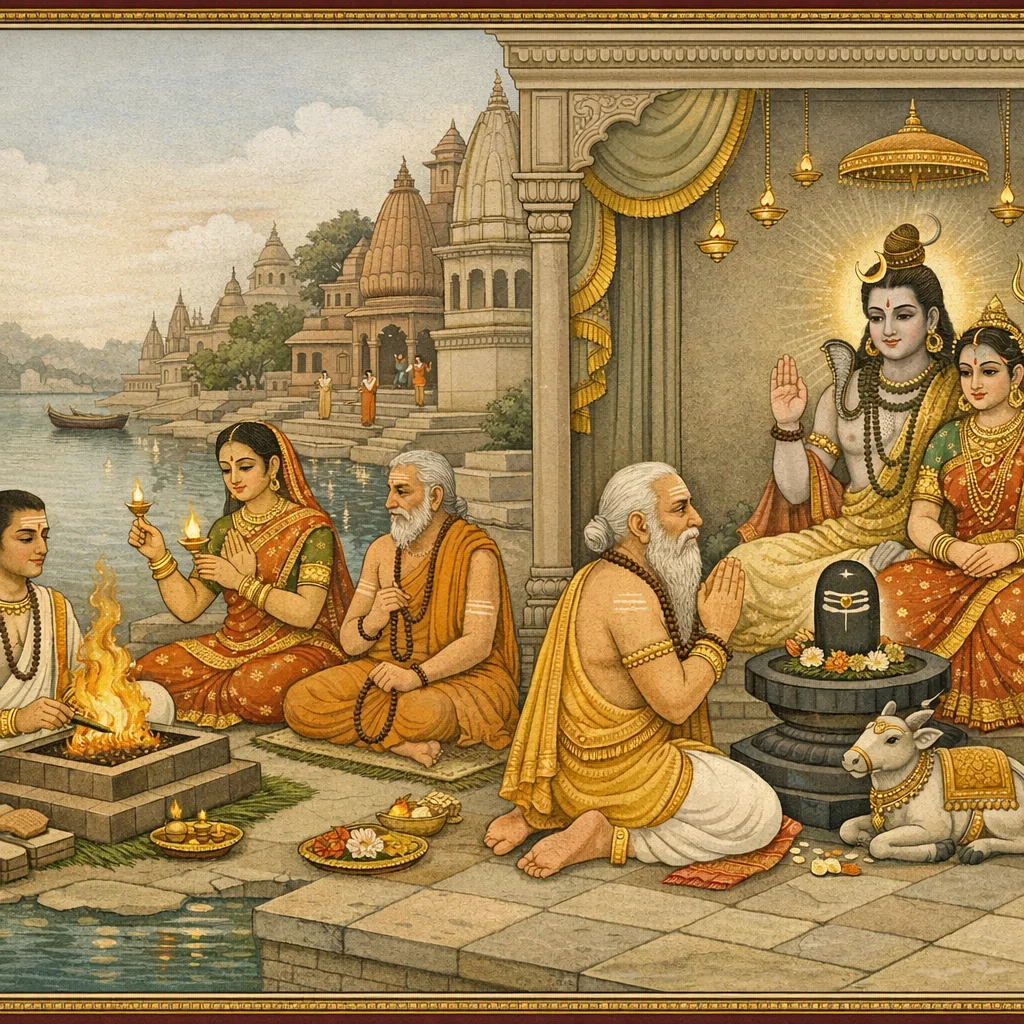
Adhyaya 17
Aṅgārakeśvara and Bṛhaspatīśvara: Kāśī Shrines, Graha-Protection, and Vācaspati’s Consecration
Chapter 17 unfolds in two main movements within a sacred dialogue. First, Śivaśarmā asks the gaṇas about a pure realm that removes sorrow; they recount the origin of Lohitāṅga (Māheya), born from a drop of Śambhu’s sweat during His separation from Dakṣāyaṇī. After fierce tapas at Ugrapurī, he establishes the liṅga called Aṅgārakeśvara, becomes famed as Aṅgāraka, and by Śiva’s grace attains the exalted status of a graha. The chapter then lays down observances for Aṅgāraka-caturthī—ritual bathing (especially in north-flowing waters), worship, and the teaching that offerings, japa, and homa become imperishable. Śrāddha performed under Aṅgāraka’s conjunction is said to satisfy the ancestors; Gaṇeśa’s birth is also linked to this vow, and devout residence in Vārāṇasī is connected with elevated post-mortem states. In the second movement, another Kāśī account is told: Aṅgiras’s son rises as Bṛhaspati/Vācaspati through liṅga worship and the subtle vāyavya-stotra hymn. Śiva bestows the titles Bṛhaspati, Jīva, and Vācaspati, promises refined speech and protection from graha-born afflictions through recitation, and directs Brahmā to consecrate him as the devas’ teacher. The chapter closes by locating Bṛhaspatīśvara among Kāśī’s shrines, noting a motif of guarded transmission in Kali-yuga, and declaring in its phalaśruti that hearing this adhyāya wards off graha-pīḍā and disturbances, especially for Kāśī’s residents.
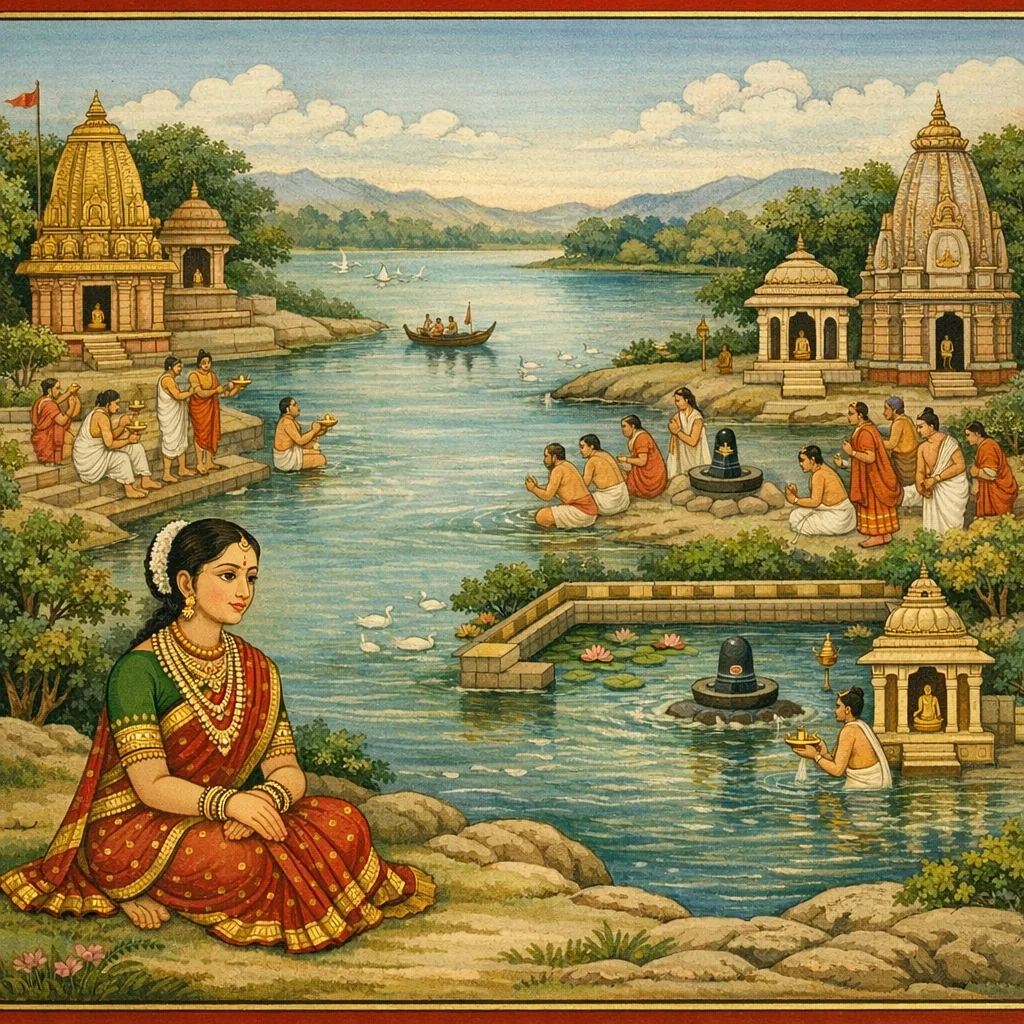
Adhyaya 18
Saptarṣi-Liṅga-Pratiṣṭhā in Avimukta and the Arundhatī Pativratā Discourse (Chapter 18)
The chapter recounts the post-mortem ascent of Śivaśarmā, a brāhmaṇa of Mathurā, who after bathing in the liberation-city (muktipurī) proceeds toward a Vaiṣṇava realm. Seeing a radiant, auspicious loka, he inquires about it, and two gaṇa attendants explain that the Saptarṣis—Marīci, Atri, Pulaha, Pulastya, Kratu, Aṅgiras, and Vasiṣṭha—dwell in Kāśī by the Creator’s commission to generate beings, with their wives named as mothers of the world. Resolving to perform tapas, the sages approach Avimukta, described as a kṣetra inhabited by the “knower of the field,” seeking universal liberation. They install liṅgas bearing their own names and, through ascetic power, uphold the three worlds. The text then indexes the sites: Atriśvara near Gokarṇeśa’s waters; Marīci’s kuṇḍa and Marīcīśvara; Pulaha and Pulastya near Svargadvāra; Aṅgiraseśvara in Harikeśava-vana; and Vāsisṭhameśvara with Kratvīśvara on the Varuṇā bank—each linked to fruits such as tejas and attainment of higher lokas. The chapter concludes by extolling Arundhatī as the unsurpassed pativratā, declaring that even remembering her yields merit equal to bathing in the Gaṅgā, and presenting her as a normative exemplar within the sacred landscape discourse.
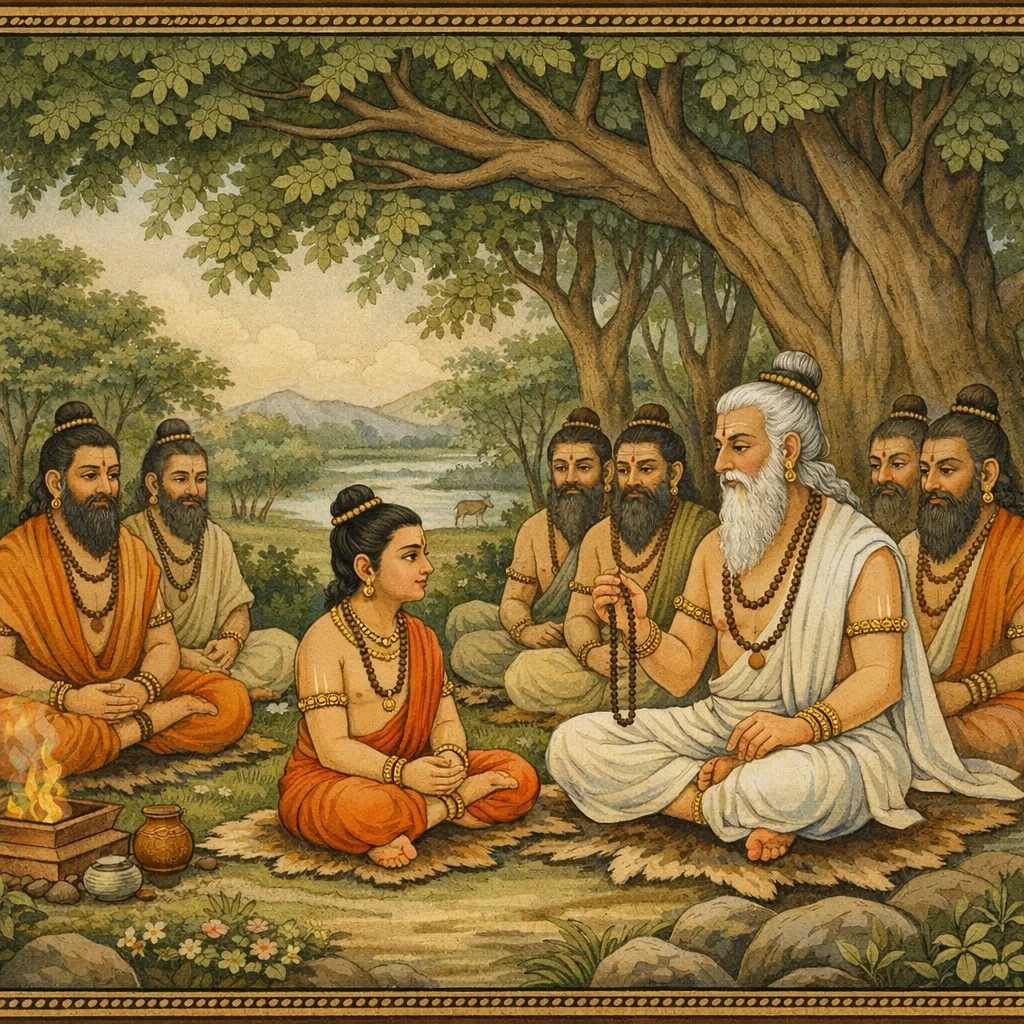
Adhyaya 19
ध्रुवोपाख्यानम् — Dhruva’s Resolve, Instruction, and Turn toward Vāsudeva
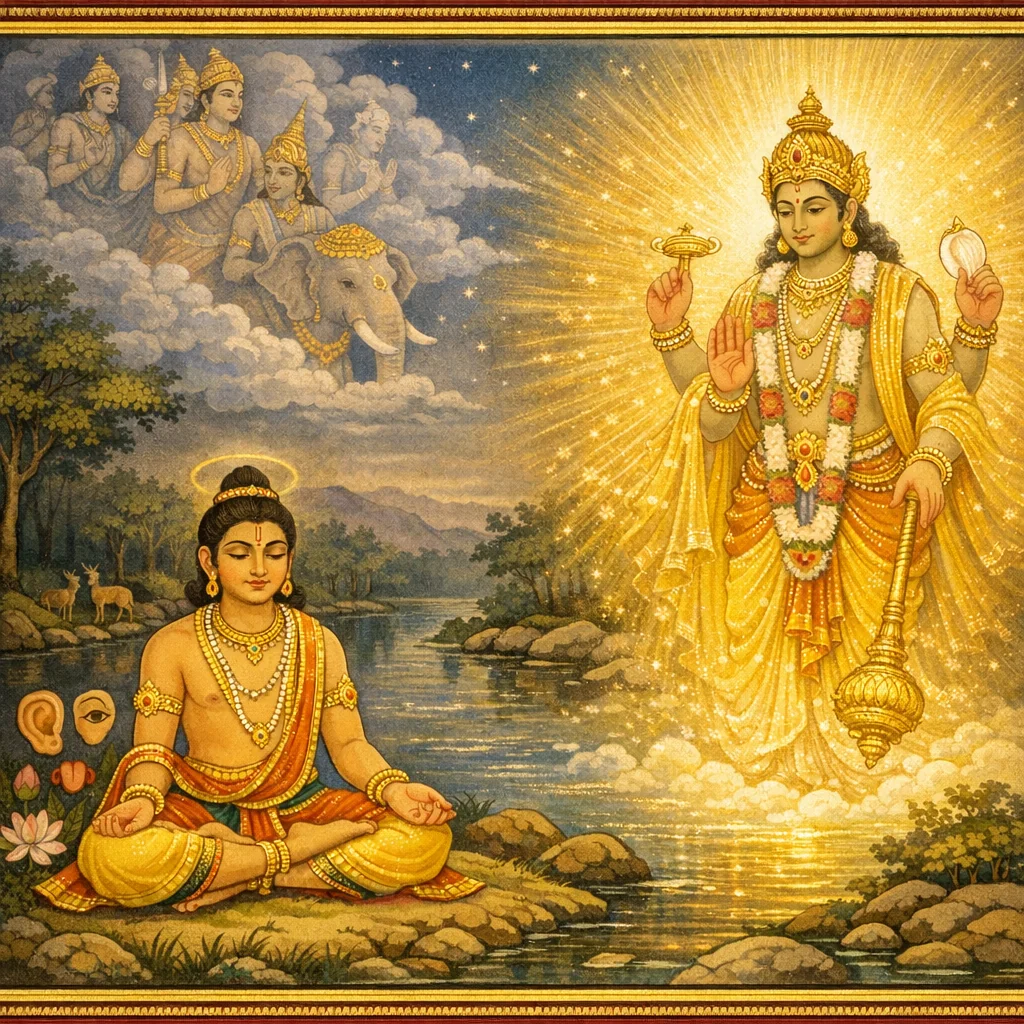
This adhyāya unfolds as a structured dialogue and exemplary tale centered on Dhruva. It opens with a question about a radiant, steadfast figure—evoking the support and measure of the cosmos—after which the gaṇas recount Dhruva’s origins: his birth in the line of Svāyambhuva Manu and King Uttānapāda, the household hierarchy between the queens Sunīti and Suruci, and the court incident where Dhruva is publicly denied the royal lap/seat. Sunīti then offers ethical and psychological counsel, explaining honor and dishonor through karmic causality and accumulated merit, urging restraint and acceptance of outcomes as fruits of prior deeds. Dhruva replies with tapas-filled resolve, seeking only permission and blessing to pursue a higher attainment. He departs for the forest and meets the Saptarṣi. Hearing his account, Atri redirects Dhruva’s aspiration toward devotion, declaring the supremacy of Govinda/Vāsudeva’s feet and teaching japa as the means by which both worldly aims and transcendent fulfillment are gained. The sages depart, and Dhruva continues his austerities with Vāsudeva as his sole center, moving from social injury to disciplined spiritual determination.
Adhyaya 20
Dhruva’s Tapas, Viṣṇu-Nāma Contemplation, and the Testing of Steadfast Devotion
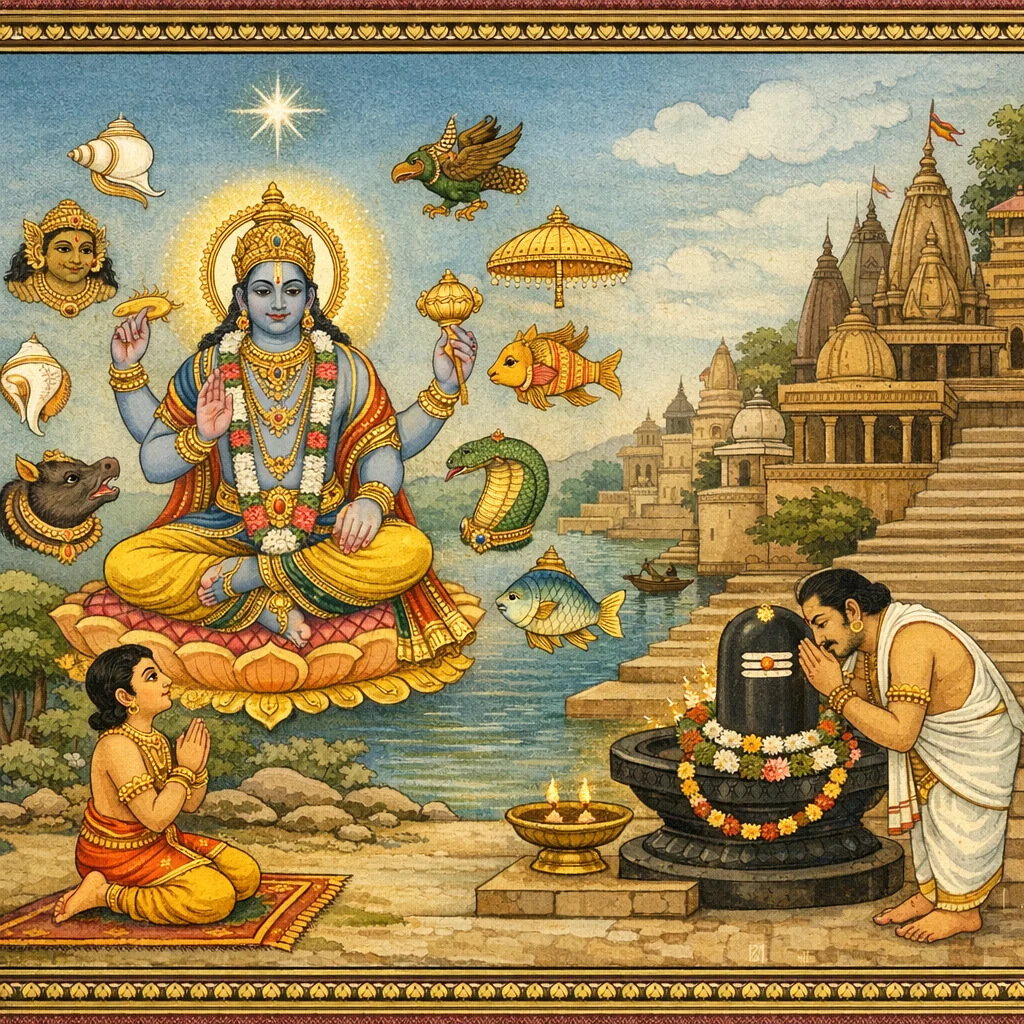
This chapter narrates Dhruva’s focused path of devotion and austerity. Reaching a sacred grove by a riverbank, he recognizes it as a supremely purifying divine place and begins japa and meditation on Vāsudeva, contemplating Hari/Viṣṇu as immanent in all directions, in rays of light, in animals and aquatic forms—the One with many forms who pervades all worlds. The senses are then reoriented in disciplined withdrawal: speech, sight, hearing, smell, touch, and mind become fixed solely on Viṣṇu’s names, feet, and qualities. Dhruva’s tapas radiates through the cosmos, unsettling the gods who fear for their stations; they seek Brahmā’s counsel, and he assures them that a true bhakta is non-hostile and that Viṣṇu will uphold every rightful order. Indra attempts to disrupt Dhruva with terrifying beings and deceptive apparitions, even a figure resembling Dhruva’s mother pleading for him to stop, but Dhruva remains unwavering and is protected by Sudarśana. At last Nārāyaṇa appears, invites him to choose a boon and to cease excessive austerity; Dhruva beholds the Lord’s luminous form and offers praise, completing the trial of steadfast bhakti.
Adhyaya 21
ध्रुवस्तुतिḥ (Dhruva’s Hymn) and Viṣṇu’s Instruction on Dhruva-pada and Kāśī
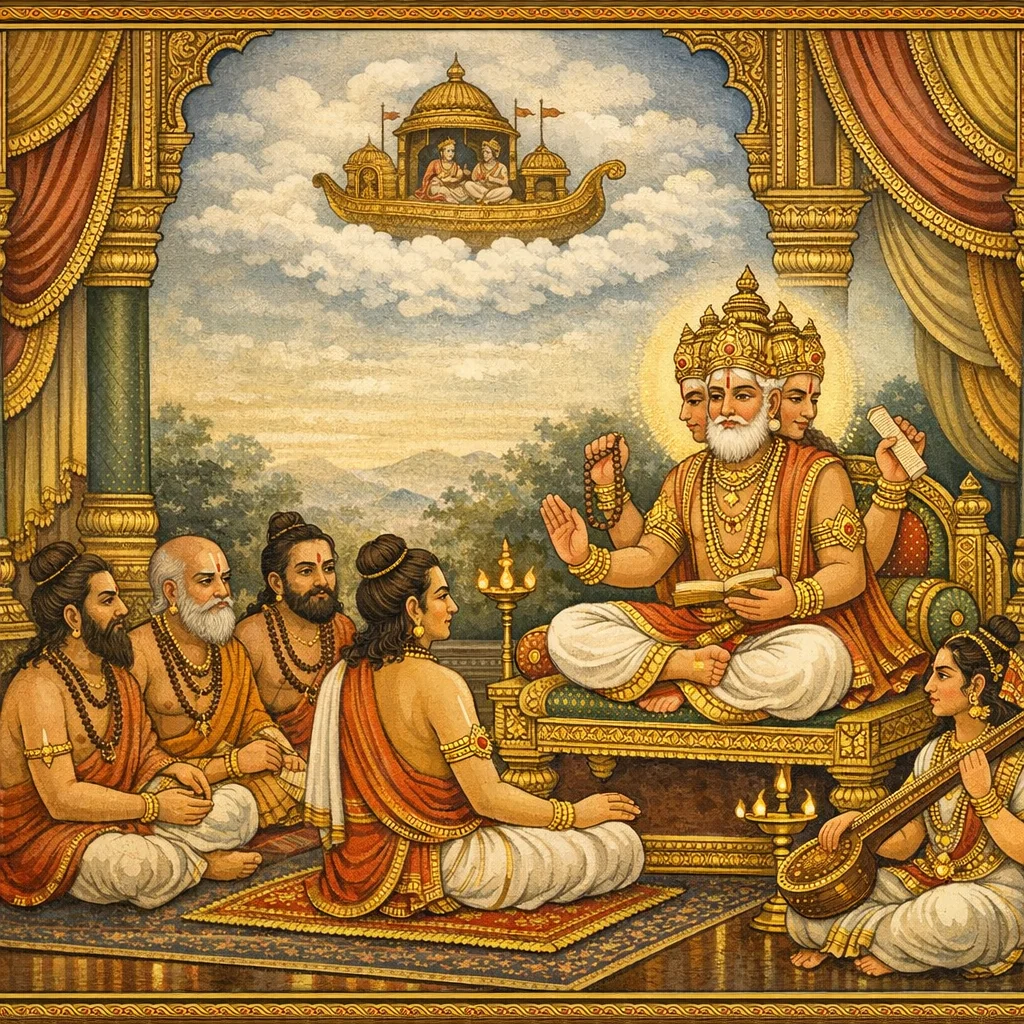
This adhyāya opens with Dhruva’s long stotra to Bhagavān Viṣṇu, offering repeated salutations through many names, epithets, and avatāra allusions. The praise moves from Viṣṇu’s cosmic roles—creation, preservation, and dissolution—to His iconic emblems (śaṅkha, cakra, gadā), and then to a catalog-like identification of the Lord with sacred exemplars: the Vedas, rivers and mountains, tulasī, the śālagrāma stone, and tīrthas such as Kāśī and Prayāga. The discourse then turns to devotional ethics: nāma-kīrtana and remembrance are said to pacify disease, dissolve accumulated wrongdoing, and steady the mind. Ritual signs of bhakti are also noted—worship of tulasī and śālagrāma, gopīcandana markings, and conch-associated bathing—presented as protective expressions of devotion. Viṣṇu responds, acknowledging Dhruva’s inner intent and granting him a cosmic office: Dhruva becomes the fixed support (ādhāra) for the revolving celestial order and rules the Dhruva-pada for a full kalpa. A phalaśruti adds that thrice-daily recitation of the hymn reduces sin, stabilizes prosperity and social harmony, and yields benefits such as progeny, wealth, and devotion. Finally, the chapter pivots to Kāśī: Viṣṇu declares His intention to go to auspicious Vārāṇasī, where Viśveśvara abides as a cause of mokṣa, and describes the saving mantra whispered into the ear of the distressed. Kāśī is proclaimed a singular remedy for worldly suffering, with added merits tied to lunar dates, darśana, and gifting in Brahmapurī/Kāśī, concluding with the merit of remembering Dhruva’s narrative.
Adhyaya 22
लोक-क्रमवर्णनम्, तीर्थराज-प्रयागमाहात्म्यम्, अविमुक्त-काशी-परमोत्कर्षः (Cosmic Realms, Prayāga as Tīrtharāja, and the Supremacy of Avimukta-Kāśī)
Adhyāya 22 unfolds as a swift, guided journey: the brāhmaṇa Śivaśarmā is borne in a rapid vimāna by Śiva’s gaṇas through ever higher realms. They point out Maharloka as the abode of long-lived ascetics purified by tapas and sustained by remembrance of Viṣṇu; then Janaloka, linked with Brahmā’s mind-born sons (such as Sanandana) and steadfast brahmacārins. Tapoloka is portrayed through an extensive catalogue of austerities—enduring heat and cold, fasting, breath-restraint, and immobility—presenting tapas as a disciplined means of purification and inner steadiness. When Satyaloka comes into view, Brahmā receives the visitors and delivers a normative teaching: Bhārata is affirmed as karma-bhūmi, where one can conquer the senses and vices (lobha, kāma, krodha, ahaṃkāra, moha, pramāda) through dharma grounded in śruti–smṛti–purāṇa and exemplified by the virtuous. The chapter then turns to comparative sacred geography: heavens and even pātālas are praised for pleasures, yet Bhārata—and within it certain regions and tīrthas—are ranked higher for salvific power. Prayāga is exalted as tīrtharāja with strong purificatory merit, even through mere name-remembrance; but the climax declares that liberation is gained most directly at death in Kāśī/Avimukta under the sovereignty of Viśveśvara. Ethical gatekeeping is explicit: harmful conduct, exploitation, and disloyalty to Viśveśvara disqualify one for Kāśī-residence; Kāśī is depicted as beyond Yama’s jurisdiction, while Kālabhairava disciplines transgressors.
Adhyaya 23
लोकपरिस्थिति-वर्णनम् तथा हर-हरि-ऐक्योपदेशः (Cosmic Levels and the Instruction on the Non-difference of Śiva and Viṣṇu)
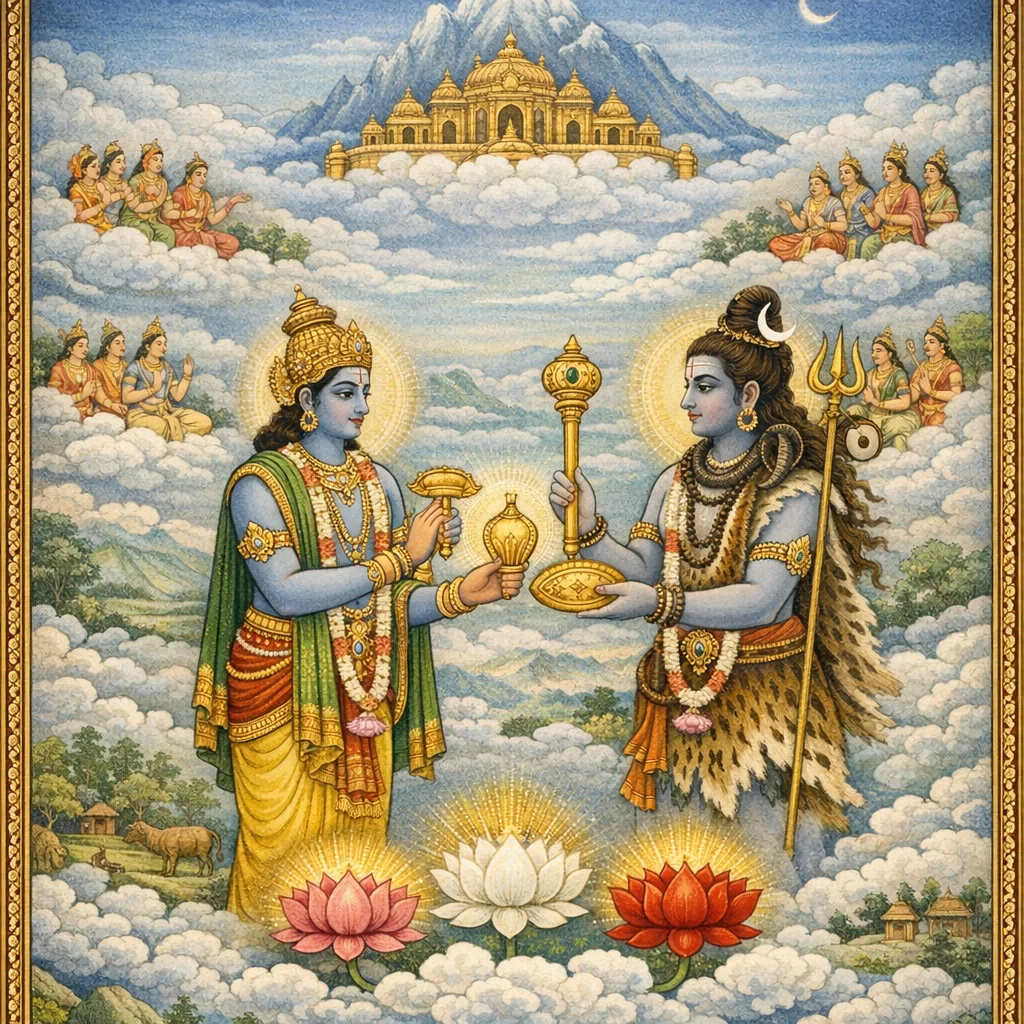
Adhyāya 23 opens with the brāhmaṇa Śivaśarman questioning Brahmā in Satyaloka. Brahmā accepts the inquiry and refers it to Viṣṇu’s attendants (gaṇas), praising their all-round knowledge. As they set out for Vaikuṇṭha, Śivaśarman questions them further; they list the seven mokṣa-bestowing cities (saptapurī)—Ayodhyā, Mathurā, Māyāpurī (Haridvāra), Kāśī, Kāñcī, Avantī, and Dvāravatī—and explain why liberation is established in a special way in Kāśī. The attendants then give a graded cosmography of the lokas, from Bhūrloka upward through Bhuvar, Svar, Mahas, Jana, Tapas, and Satya, placing Vaikuṇṭha above Satya and Kailāsa beyond that, thus situating Kāśī’s salvific claim within a tiered universe. The chapter turns to theology: Śiva is proclaimed the supreme self-willed ruler, the ineffable Brahman beyond speech and mind, yet also manifest in worshipful form. The central doctrine is affirmed—har-hari-aikya: Śiva and Viṣṇu are truly non-different. It culminates in a royal consecration scene where Śiva ritually empowers Viṣṇu with sovereignty and the three powers (icchā, kriyā, jñāna), assigns governance functions, and grants māyā, portraying cosmic rule as divinely delegated. A phalaśruti-style passage recommends recitation in auspicious rites (festivals, weddings, consecrations, house-entry, grants of authority), promising welfare—progeny, wealth, freedom from illness and bondage—and the pacification of inauspiciousness.
Adhyaya 24
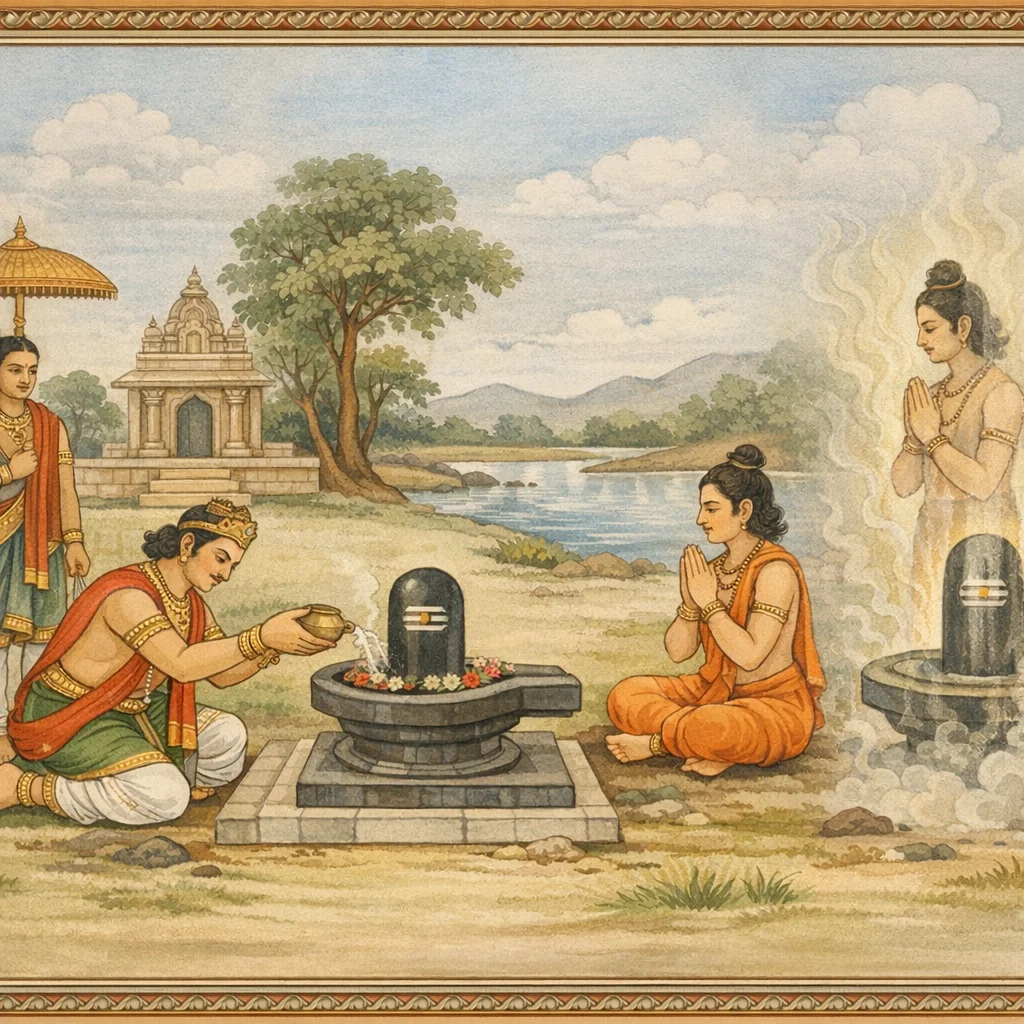
अध्याय २४ — वृद्धकालेश्वरलिङ्ग-माहात्म्य एवं कालोदककूप-प्रभाव (Vṛddhakāleśvara Liṅga and the Power of the Kālōdaka Well)
Chapter 24 weaves a layered theological teaching through karmic biography, ideal kingship, and Kāśī-centered liberation. It opens with a devotee’s ascent after death to the Vaiṣṇava realm, enjoyment of heavenly rewards, and return—through residual merit—as a righteous king in Nandivardhana amid an ideal socio-ethical order. The narrative then turns to Kāśī: King Vṛddhakāla journeys with his queen, performs abundant dāna, and establishes a liṅga with an associated well. At midday an aged ascetic (tapodhana) questions who built the shrine and what the liṅga is called, teaching that one should not publicize one’s own good deeds, for self-attribution diminishes merit. The king draws water from the well to serve him; upon drinking, the ascetic becomes youthful, revealing the well’s power. The ascetic names the liṅga “Vṛddhakāleśvara” and the well “Kālōdaka,” and lists the fruits of darśana, touch, pūjā, hearing, and using the water—especially relief from aging and disease—while reaffirming Kāśī as the culminating place of liberation even for those who died elsewhere. The chapter ends with the ascetic dissolving into the liṅga, praise of the potency of chanting (notably “Mahākāla”), and a phalaśruti promising purification and higher knowledge to those who hear the account of Śivaśarman’s course and worship in Kāśī.
Adhyaya 25
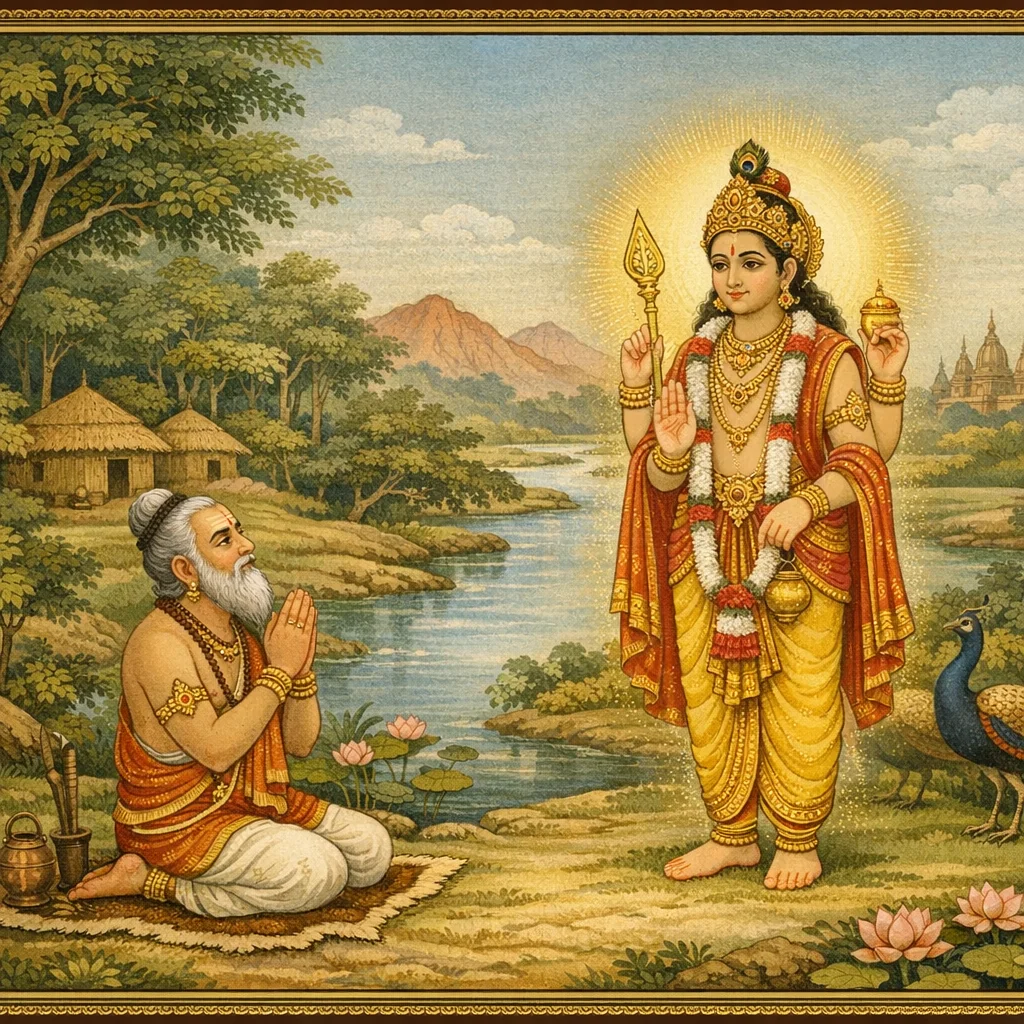
अविमुक्तमाहात्म्यप्रकरणम् — Avimukta Māhātmya and the Dialogue of Skanda with Agastya
Chapter 25 begins with Vyāsa’s pledge to Sūta to relate a purifying account of the pot-born sage Agastya. Agastya, accompanied by his wife, arrives after circumambulating a mountain and beholds the luxuriant Skanda-forest—rivers, lakes, hermitages of ascetics—and the wondrous Lohita-giri, likened to a Kailāsa-like fragment fit for tapas. He then meets Skanda (Ṣaḍānana/Kārttikeya), prostrates, and offers a Veda-toned hymn praising Skanda’s cosmic majesty and victories, including the Tāraka episode. Skanda replies by extolling Avimukta within the great kṣetra, guarded by Śiva (Triyambaka/Virūpākṣa), declaring it unequalled in all worlds and attainable chiefly through divine grace rather than mere ritual accumulation. The chapter sets forth ethical counsel: remember mortality, relinquish excessive anxiety over artha, and place dharma first, with Kāśī as the supreme support. Though many sādhanas are surveyed—yoga, tīrthas, vows, ascetic disciplines, and modes of worship—Avimukta is elevated as an effortless locus of liberation. Skanda describes graded fruits of dwelling in Avimukta, from momentary devotion to lifelong residence, affirming the cleansing of grave sins and the end of rebirth. A central doctrine states that at death in Kāśī, Śiva himself imparts the tāraka-brahma, granting liberation when ordinary memory fails. The chapter closes by reaffirming Avimukta’s ineffable greatness and the blessed desirability of even a touch of Kāśī’s sanctity.
Adhyaya 26
अविमुक्तक्षेत्रप्रादुर्भावः तथा मणिकर्णिकामाहात्म्यम् (Origin of Avimukta and the Glory of Maṇikarṇikā)
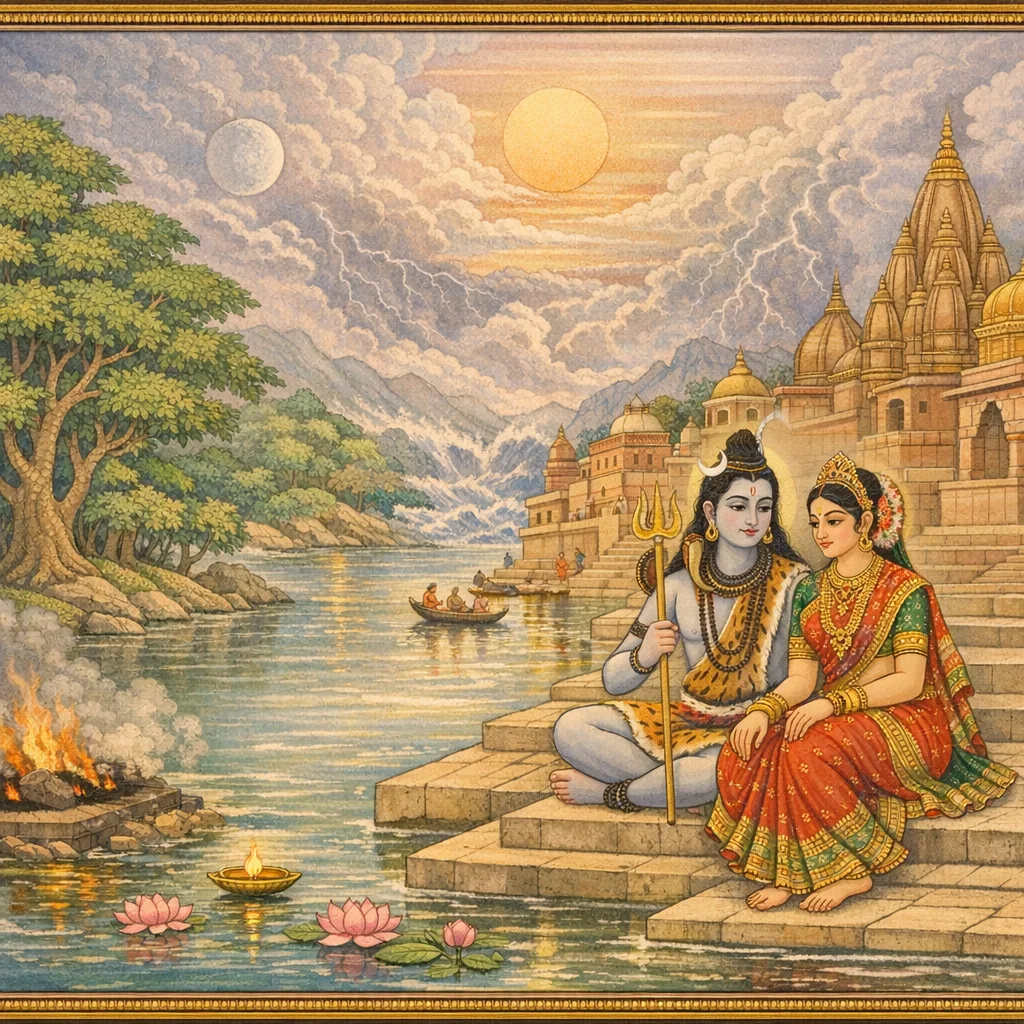
Agastya asks Skanda about the first appearance of Avimukta on earth, its rise in fame as a mokṣa‑bestowing kṣetra, the origin of Maṇikarṇikā, and the derivations of the names Kāśī/Vārāṇasī/Rudrāvāsa/Ānandakānana/Mahāśmaśāna. Skanda replies by recounting an earlier divine disclosure: at the time of mahāpralaya there is an undifferentiated state, and then creative agency arises through Śiva‑Śakti categories, expressed in terms such as prakṛti, māyā, and buddhi‑tattva. Avimukta is described as a five‑krośa expanse that Śiva and Śakti never abandon, even at dissolution; hence it is called “Avimukta,” the un-abandoned. The narrative then turns to Ānandavana, where Viṣṇu appears, performs intense tapas, excavates the sacred pond Cakrapuṣkariṇī, and receives Śiva’s favor. Maṇikarṇikā is explained through a mythic incident: Śiva’s jeweled ear‑ornament (maṇi‑kuṇḍala) falls due to a movement, making that tīrtha renowned by this name. The chapter also lists ritual and ethical acts in Kāśī and proclaims their fruits exceptionally potent—so much so that even minimal contact, and even merely uttering the city’s name, extends merit—affirming Kāśī’s supremacy through comparative statements of phala.
Adhyaya 27
Gaṅgā-Māhātmya in Kāśī: Theological Discourse on Snāna, Smaraṇa, and Liṅga-Pūjā (Chapter 27)
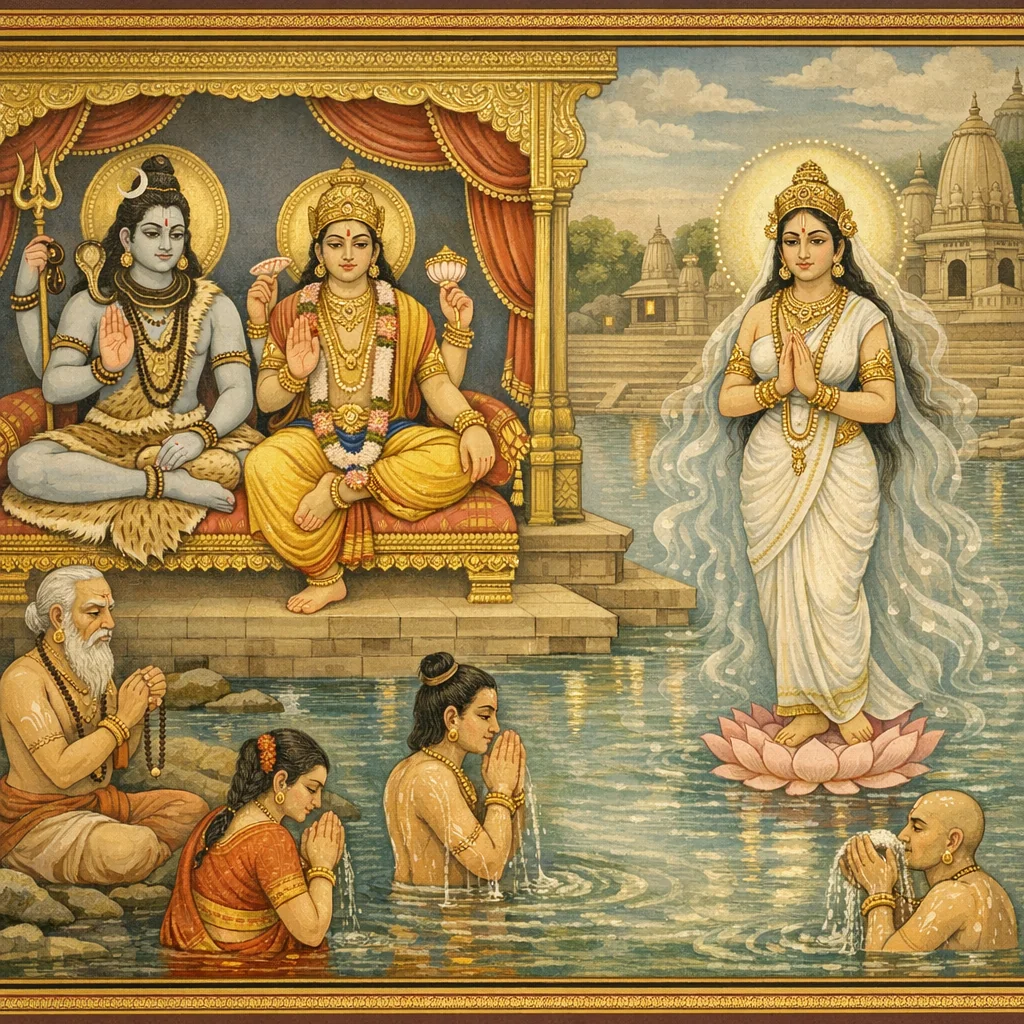
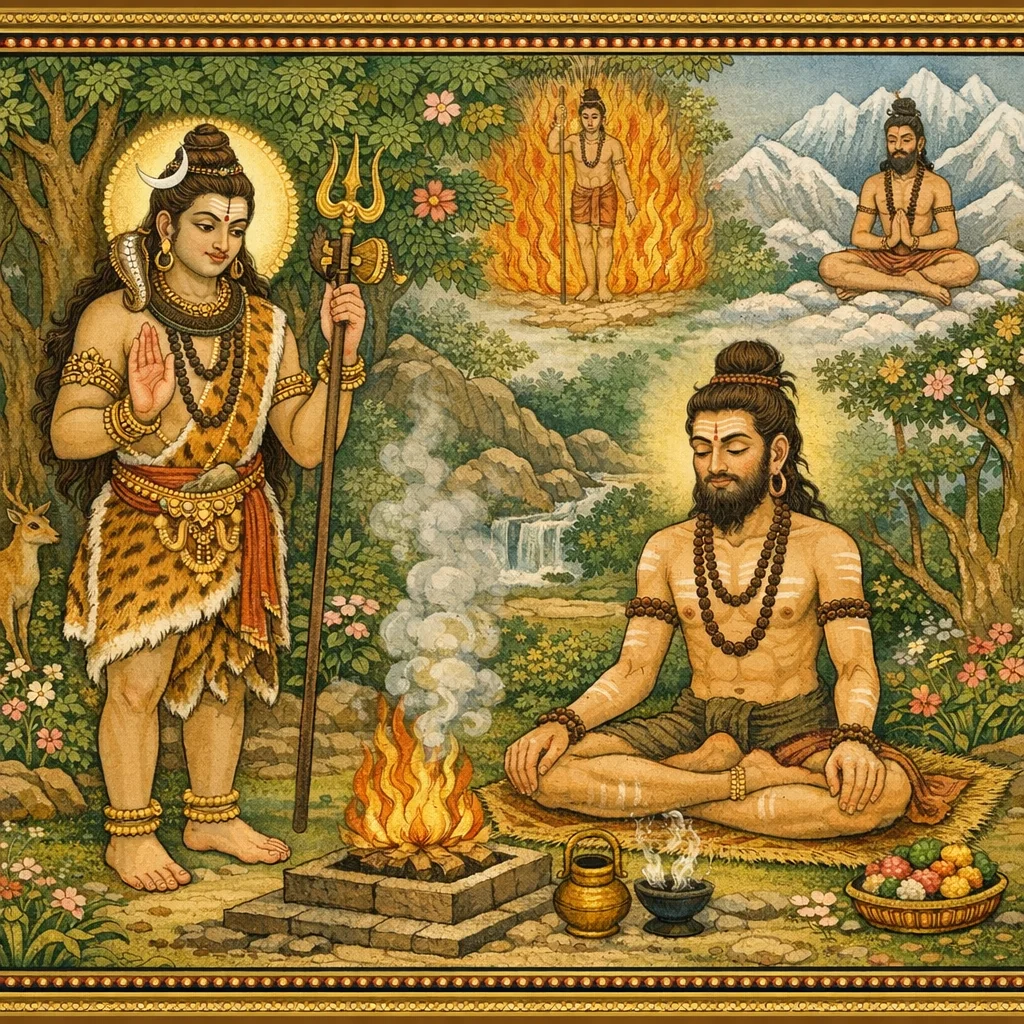
Chapter 27 opens with Skanda declaring that he will explain why Kāśī/Vārāṇasī is renowned and how its nature as an “ānanda-kānana” (forest of bliss) is to be understood through teachings ascribed to Devadeva. Īśvara then speaks to Viṣṇu and recounts the Bhāgīratha frame: the ancestral calamity in which Sagara’s sons were burned by the wrath-fire of Kapila, and the king’s resolve to undertake tapas to propitiate and bring down the holy Gaṅgā. The discourse turns from narrative to metaphysics: Gaṅgā is praised as the supreme watery form, identified with Śiva, upholding multiple cosmic orders and serving as the subtle repository of tīrthas, dharmas, and sacrificial powers. In the Kali age she is proclaimed the foremost salvific refuge, surpassing other rites; darśana, sparśa, snāna, japa of the name “Gaṅgā,” and dwelling on her bank are repeatedly taught as purifying. The chapter elaborates phalaśruti (merit and its fruits): equivalences to great sacrifices, liberation promised for liṅga-worship by Gaṅgā’s side, benefits to ancestors through offerings in Gaṅgā waters, and assurances even for those who die while journeying to her. It also warns against irreverence, skepticism, and obstructing pilgrims, and concludes with extended enumerations of merit, mantric and ritual notes, and hymnic salutations to Gaṅgā’s protective and remedial powers.
Adhyaya 28
Gaṅgā-Māhātmya and Pitṛ-Tarpaṇa in Kāśī (Pūrvārdha, Adhyāya 28)
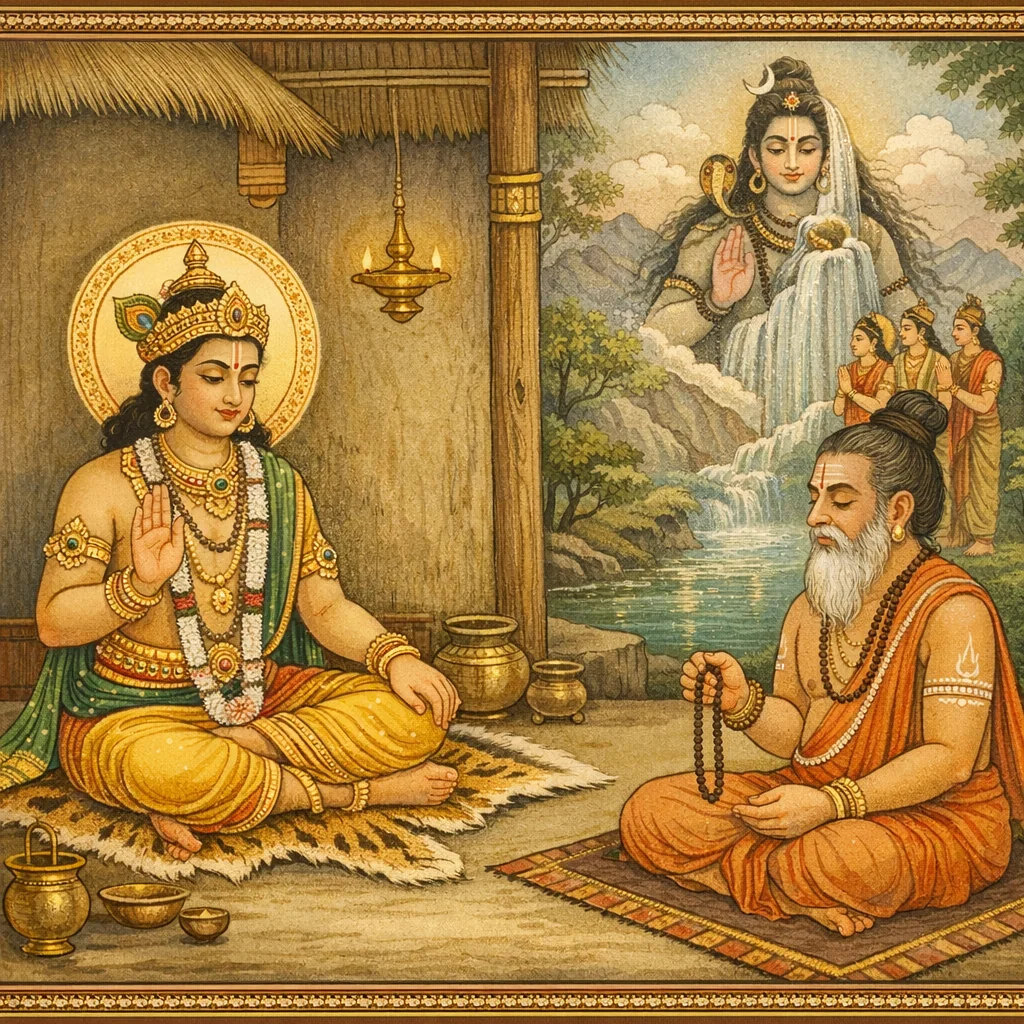
Adhyāya 28 of the Kāśī Khaṇḍa unfolds a layered theological teaching on the sanctifying power of the Gaṅgā (Tri-pathagā/Jāhnavī/Bhāgīrathī) within the sacred sphere of Kāśī. It opens in dialogue by clarifying the categories of time—past, future, and present—and then turns to the Gaṅgā-māhātmya. The text declares that even a single, properly performed ancestral offering at the river—piṇḍa-dāna and tarpaṇa—can benefit the pitṛs across family lines, including those who died in difficult circumstances. A didactic exemplum follows: Viṣṇu asks Śiva about the fate of a morally fallen person when a bodily remnant drops into the pure river; Śiva recounts the story of the brāhmaṇa Vāhīka, who neglected saṃskāras and acted unethically, suffered punishment, yet was ultimately uplifted when a fragment of his body, by chance, fell into the Gaṅgā. The chapter concludes by ranking purificatory acts, repeatedly exalting Gaṅgā-contact—seeing, touching, drinking, and bathing—and Kāśī’s riverine sanctity as decisive for ethical purification and orientation toward liberation, especially in the Kali age.
Adhyaya 29
गङ्गानामसहस्रस्तोत्रम् (Ganga-nāma-sahasra Stotra) and the doctrine of snāna-phala by japa
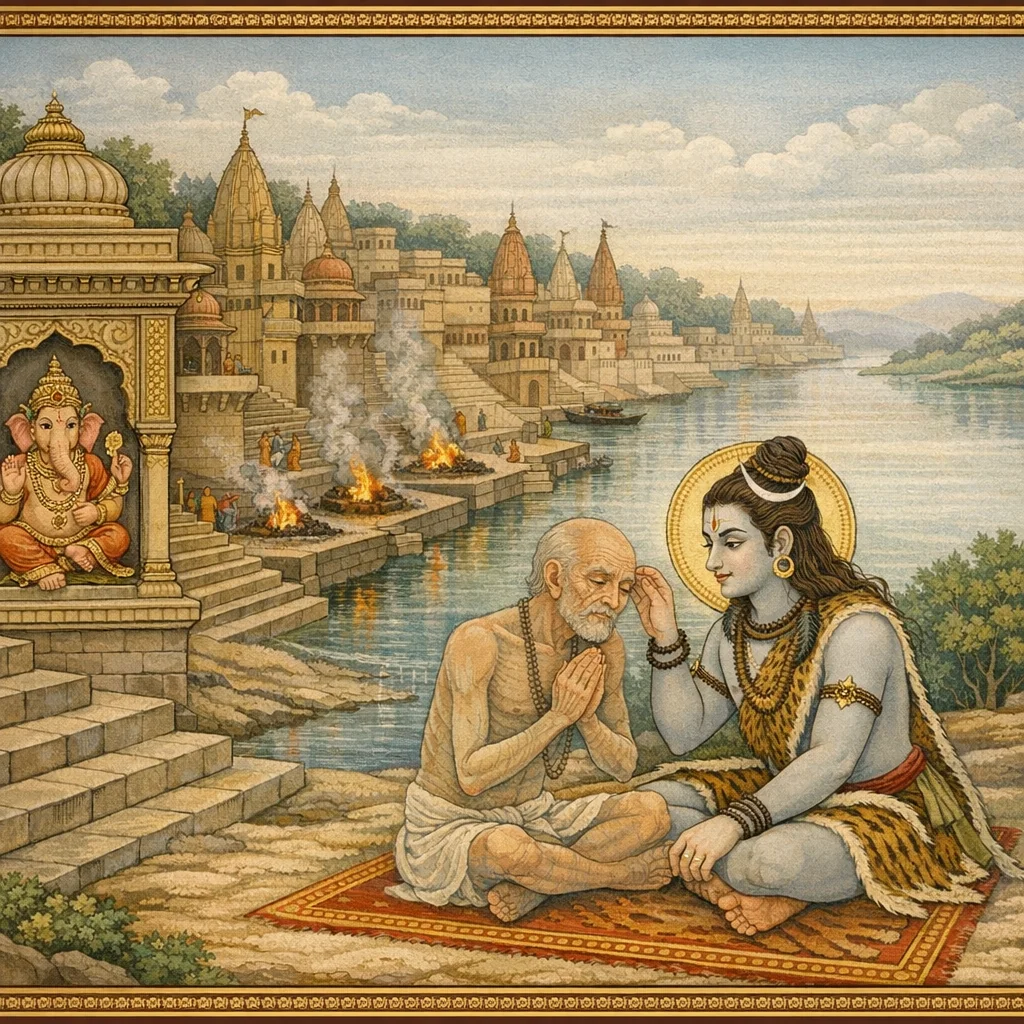
Agastya raises a practical and ethical-ritual question: if bathing in the Gaṅgā (Gaṅgā-snāna) is praised as uniquely fruitful, what alternative is available for the weak, the immobile, the indolent, or those living far away to gain comparable merit? Skanda replies by distinguishing ordinary tīrthas and waters from the Gaṅgā’s singular status. He grounds her supremacy in theology—Śiva bears the Gaṅgā and she has the power to remove sin—and, with the analogy that “the taste of grapes is found only in grapes,” affirms that the full fruit of Gaṅgā-snāna is properly obtained in the Gaṅgā herself. He then reveals a “most secret” substitute discipline: reciting the Gaṅgā-nāma-sahasra as a stotra-japa, to be transmitted only to qualified devotees (Śiva-bhakta, oriented to Viṣṇu-bhakti, peaceful, faithful, āstika), with instructions on purity, clear syllables, and silent or strenuous repetition. The chapter proceeds with an extensive litany of Gaṅgā’s epithets and ends with a phalaśruti: even one recitation yields great ritual merit; sustained japa diminishes sins from many births, supports service to the guru, and promises auspicious post-mortem enjoyments; the stotra is explicitly framed as a “Gaṅgā-snāna representative” for aspirants who long to bathe.
Adhyaya 30
मणिकर्णिकागङ्गावतरण-प्रवेशानुज्ञा-काशीमाहात्म्य (Maṇikarṇikā, Gaṅgā’s Arrival, Authorized Entry, and the Māhātmya of Kāśī)
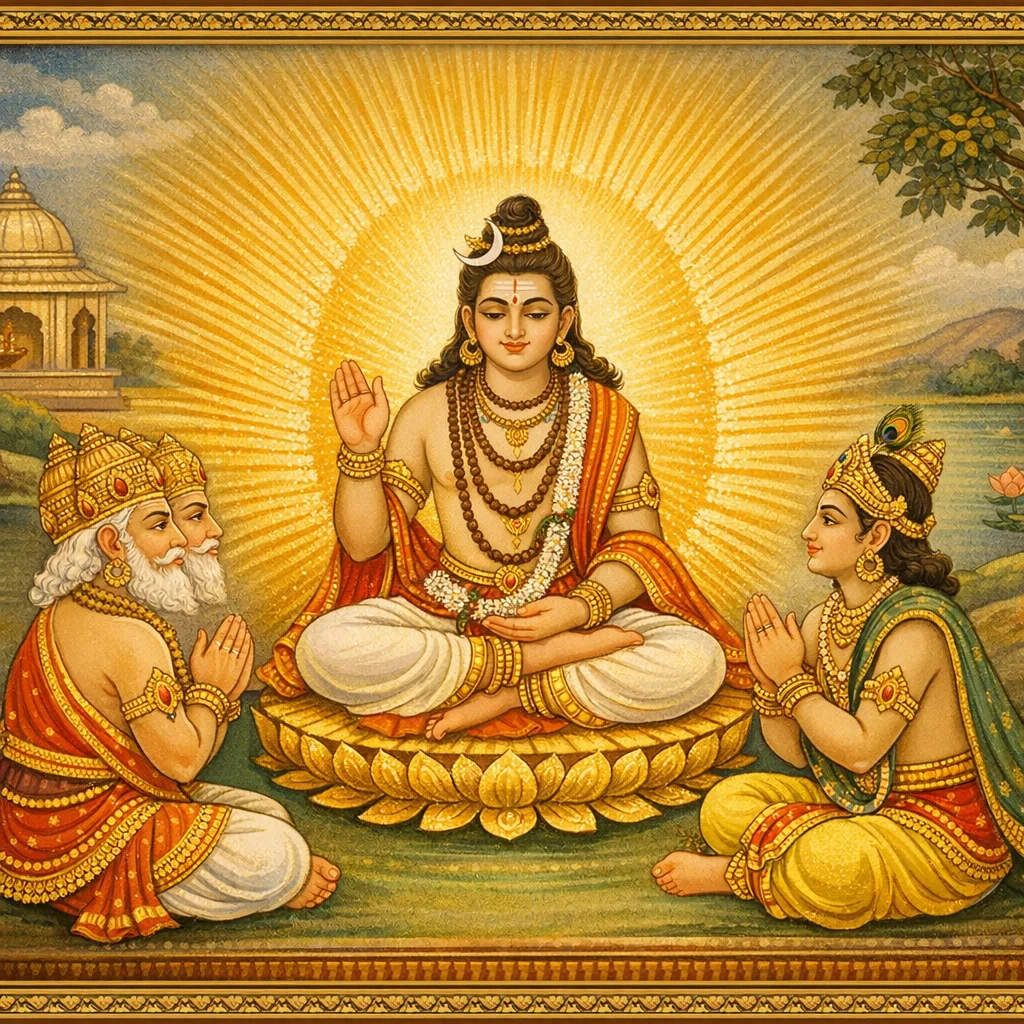
Skanda speaks to Agastya, highlighting Bhagiratha’s sacred task of bringing Gaṅgā down for the welfare of the three worlds, and culminating in her association with Maṇikarṇikā in Kāśī. The chapter deepens the theology of Avimukta: Kāśī is never abandoned by Śiva and stands as a supreme field of salvation, where liberation is attainable even without the usual disciplines of philosophical practice, through Śiva’s grace and the “tāraka” instruction bestowed at the moment of death. It then explains the kṣetra’s protective geography and regulated access. The gods establish protective agencies and the boundary rivers Asi and Varaṇā, giving rise to the name Vārāṇasī. Śiva appoints guardians (including a Vināyaka) to control entry; those lacking Viśveśa’s authorization are said to be unable to remain or gain the holy fruit of the place. An embedded exemplum tells of the merchant Dhanañjaya, devoted to his mother, carrying her remains; through events involving a carrier’s theft and the theme of unauthorized movement, the text teaches that kṣetra-fruit depends on sanctioned entry and right orientation. The closing portion offers an extended eulogy of Vārāṇasī’s incomparable salvific status, affirming that beings of many kinds who die there attain an exalted end under Śiva’s oversight.
Adhyaya 31
कालभैरवप्रादुर्भावः — Origin and Jurisdiction of Kālabhairava in Kāśī
This chapter unfolds as a dialogue: Agastya asks Skanda for a focused theological account of Bhairava in Kāśī—his true identity, form, functions, names, and the conditions under which he grants swift success to practitioners. Skanda promises a full narration and presents it as a purifying teaching that secures the spiritual fruits of dwelling in Kāśī. The discourse then turns to a doctrinal episode on divine māyā and the limits of self-asserted authority. Brahmā and a figure linked with sacrificial agency (Kratu, an aṃśa of Nārāyaṇa) dispute supremacy and appeal to the four Vedas as pramāṇa; the Vedas proclaim Rudra/Śiva as the single supreme principle. Yet the disputants remain deluded, questioning Śiva’s ascetic, cremation-ground iconography, until the personified Pranava (Oṃ) teaches that Śiva’s līlā is inseparable from his inherent Śakti. A great radiance appears; a fierce Śiva-form arises, and from it Kālabhairava is produced and commissioned as Kāśī’s perpetual ruler and moral enforcer. He receives names that mirror his functions—Bhairava in connection with bearing and sustaining (bharaṇa), Kāla- as one who terrifies even Time and punishes wrongdoing; he severs Brahmā’s fifth head and is directed to undertake the Kāpālika vow of carrying the skull as a public model of expiation. Brahmahatyā, personified, follows him until he reaches Vārāṇasī, where her access is curtailed. The chapter also recounts Bhairava’s visit to Viṣṇu’s abode and Viṣṇu’s questioning of Śiva’s conduct, answered by an explanation of the vow’s didactic purpose. It concludes by extolling the power of Śiva’s Name and devotion to dissolve sin, affirming Kāśī’s exceptional purificatory potency, and alluding to rites such as bathing at Kāla-water and offerings that uplift the ancestors.
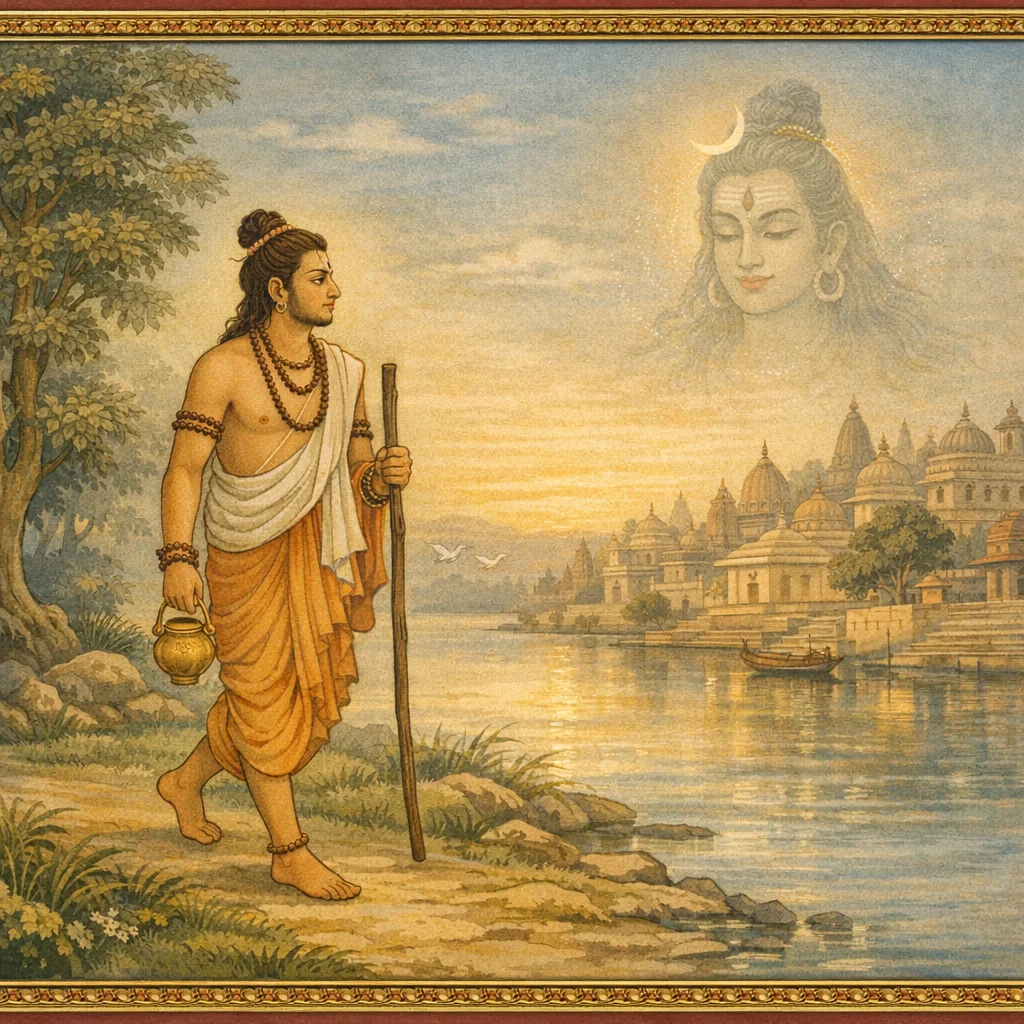
Adhyaya 32
हरिकेशोपाख्यानम् (Harikeśa Upākhyāna) — The Account of Harikeśa and the Call of Vārāṇasī
Agastya asks Skanda to identify Harikeśa—his lineage, austerity, and how he becomes dear to the Lord while also coming to be linked with civic authority (daṇḍanāyaka/daṇḍapāṇi motifs). Skanda recounts a yakṣa genealogy from Gandhamādana: Ratnabhadra and his son Pūrṇabhadra. Though prosperous, Pūrṇabhadra grieves for lack of offspring, lamenting that wealth and palace-splendor are hollow without a “garbha-rūpa,” an heir. His wife Kanakakuṇḍalā offers a practical theological counsel: human effort and prior karma converge, yet the decisive remedy is refuge in Śaṅkara; devotion to Śiva grants both worldly aims and the highest attainment. Examples such as Mṛtyuñjaya, Śvetaketu, and Upamanyu are cited to affirm the power of Śiva-sevā. Pūrṇabhadra worships Nādeśvara/Mahādeva and is blessed with a son named Harikeśa. Harikeśa is marked by exclusive Śiva-bhakti: he fashions dust-liṅgas, recites Śiva’s names, and sees no reality apart from the Three-eyed Lord. When his father urges household training and wealth-management, Harikeśa, distressed, leaves home. Remembering the saying that the refuge-less find Vārāṇasī as their refuge, he goes to Kāśī—praised as Ānandavana/Ānandakānana—where death brings liberation. Śiva’s discourse to Pārvatī extols Kāśī’s liberative power, even liberation in one birth and protection for kṣetra-renouncers, setting the stage for Harikeśa’s later elevation.
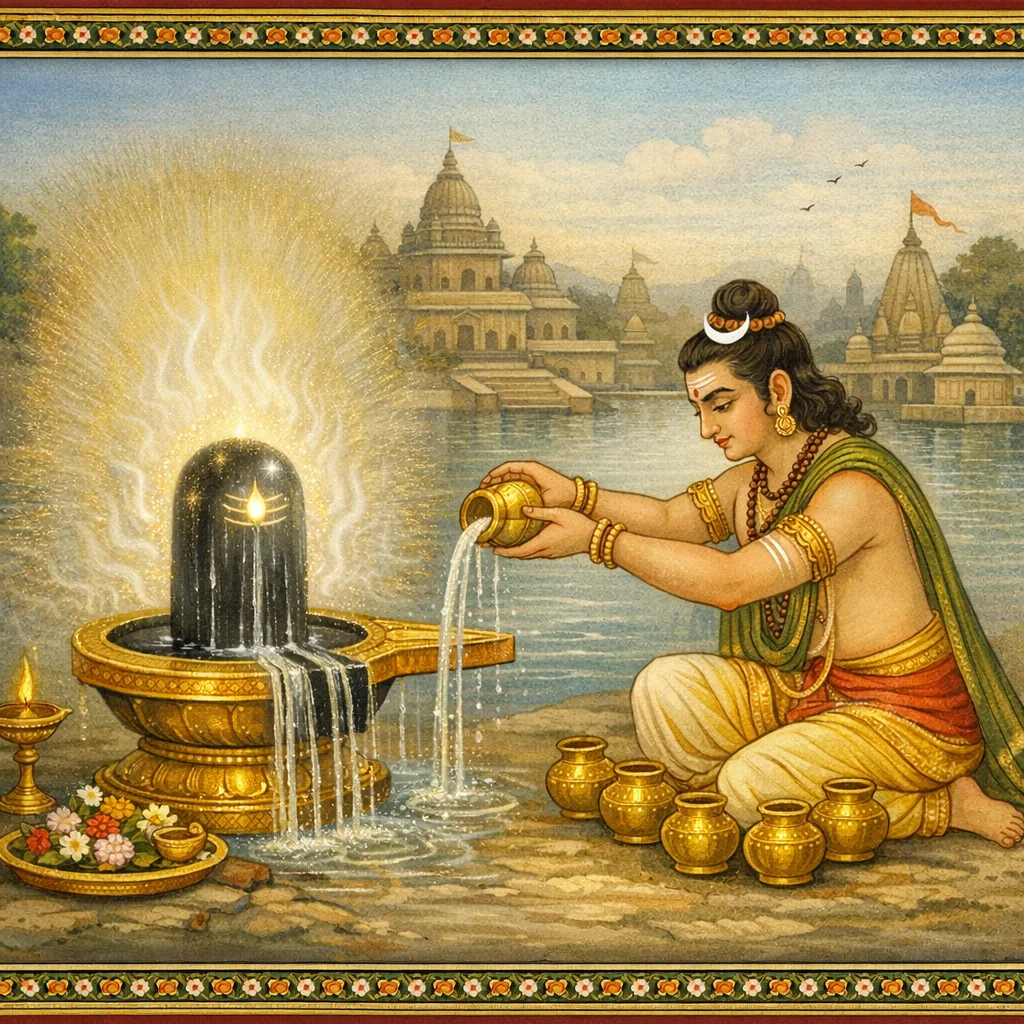
Adhyaya 33
ज्ञानवापी-ज्ञानोदतीर्थमाहात्म्य (Jñānavāpī and Jñānoda Tīrtha Māhātmya)
The chapter begins with Agastya asking Skanda to explain the greatness of Skandajñānoda-tīrtha and why Jñānavāpī is praised even among celestial beings. Skanda recounts its origin: in an ancient age, Īśāna (a Rudra-form) enters the sacred field of Kāśī and beholds a radiant mahāliṅga worshipped by siddhas, yogins, gandharvas, and divine attendants. Wishing to bathe it with cool water, he digs a kuṇḍa with his trident, draws forth vast subterranean waters, and performs repeated abhiṣeka with thousands of streams and vessels. Pleased, Śiva grants a boon; Īśāna asks that the incomparable tīrtha bear Śiva’s name. Śiva proclaims it the supreme Śiva-tīrtha, explains “Śivajñāna” as knowledge liquefied by divine majesty, establishes the name Jñānoda, and promises purification by mere sight, with great sacrificial equivalences through touch and sipping. The chapter then details ritual and ethical fruits: śrāddha and piṇḍadāna performed here yield multiplied ancestral merit, compared with Gayā, Puṣkara, and Kurukṣetra. Fasting on aṣṭamī/caturdaśī, and upavāsa on ekādaśī with measured sips, leads to inner liṅga-realization. It also affirms apotropaic power—afflictive beings and diseases are pacified by viewing Śiva’s tīrtha-water—and declares that bathing the liṅga with Jñānoda water equals bathing it with the waters of all tīrthas. Skanda next introduces an ancient itihāsa connected with Jñānavāpī: a Brahmin family and an exceptionally virtuous daughter devoted to repeated bathing and temple service. An abduction attempt by a vidyādhara, a violent encounter with a rākṣasa, deaths and karmic continuities, and later-life episodes re-center devotion—liṅga-arcana, vibhūti, and rudrākṣa—over worldly ornaments. The latter portion proceeds in a catalog-like sacred-topography sequence of tīrthas and shrines with their merits, reinforcing the chapter’s mapping of Kāśī’s ritual landscape.
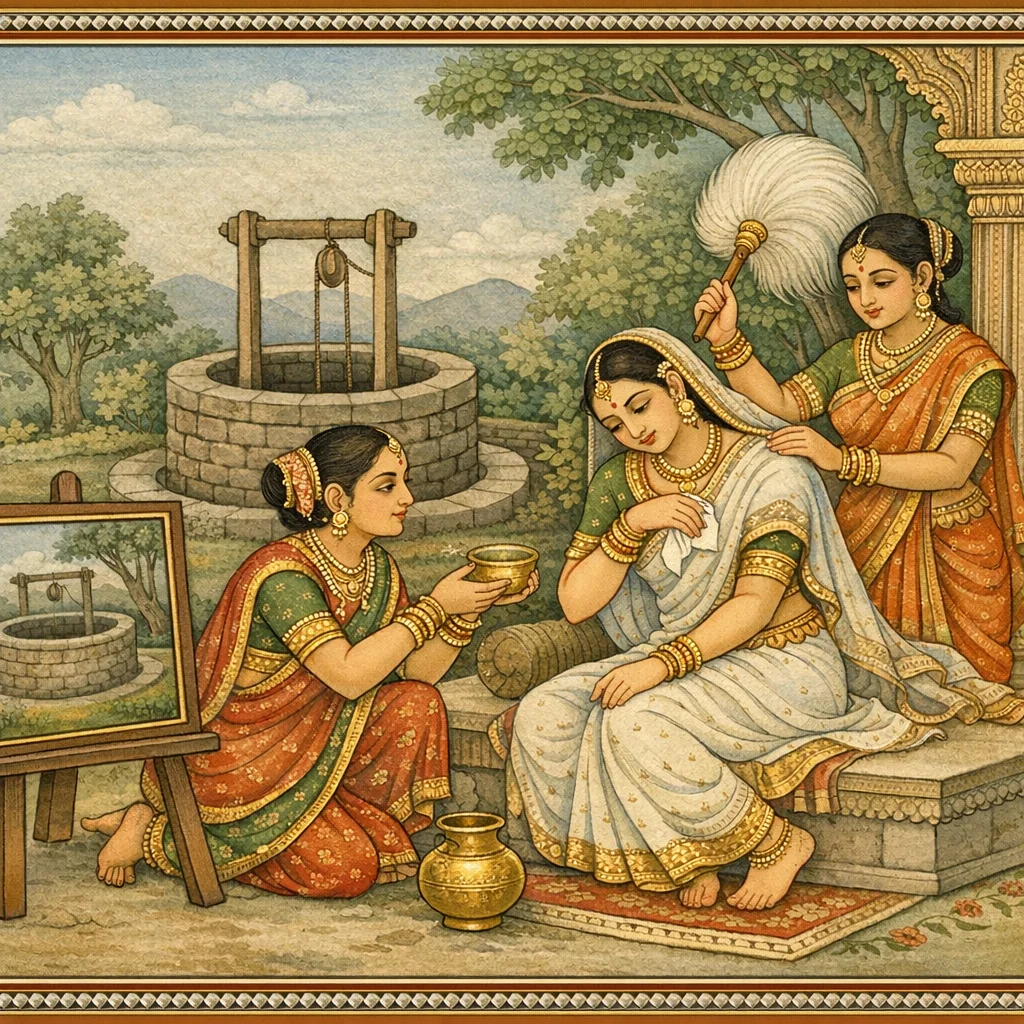
Adhyaya 34
Maṇikarṇikā as Mokṣabhū and Jñānavāpī as Jñānadā (Liberation-Field and Knowledge-Well)
This chapter offers a twofold theological map of Kāśī’s saving sacred terrain. First, Skanda places Maṇikarṇikā near the symbolic svargadvāra and proclaims Śaṅkara’s liberative presence there: Śiva bestows upon beings afflicted by saṃsāra a śruti that “touches Brahman” (brahmaspṛś). Maṇikarṇikā is declared the supreme mokṣabhū, where liberation is attainable beyond the efficacy of other routes—yoga, sāṃkhya, or vrata-based disciplines—and the site is praised as both “svargabhū” and “mokṣabhū.” A broad social theology follows: devotees of every varṇa and āśrama—brāhmaṇas devoted to Vedic study and yajña, kings performing sacrifices, pativratā women, merchants with righteous wealth, śūdras on ethical paths, brahmacārins, gṛhasthas, vānaprasthas, and renunciants (ekadaṇḍin/tridaṇḍin)—are all depicted as approaching Maṇikarṇikā for niḥśreyasa, the highest good. Second, the narrative turns to Kalāvatī’s encounter with Jñānavāpī near Śrī Viśveśvara. On seeing and then touching the sacred well (even when beholding it in a painted depiction), she undergoes powerful emotional and bodily upheaval—fainting, tears, trembling—then recovers as past-life knowledge (bhavāntara-jñāna) arises. Though attendants try to soothe her, the text reads the episode as an awakening generated by the place’s power. Kalāvatī recounts a former birth as a brāhmaṇa girl in Kāśī and later turns of fate—abduction, conflict, release from a curse, and rebirth as a royal daughter—thereby showing Jñānavāpī as a locus that confers knowledge. A phalaśruti adds that reading, reciting, or hearing this auspicious account brings honor in Śivaloka, Śiva’s realm.
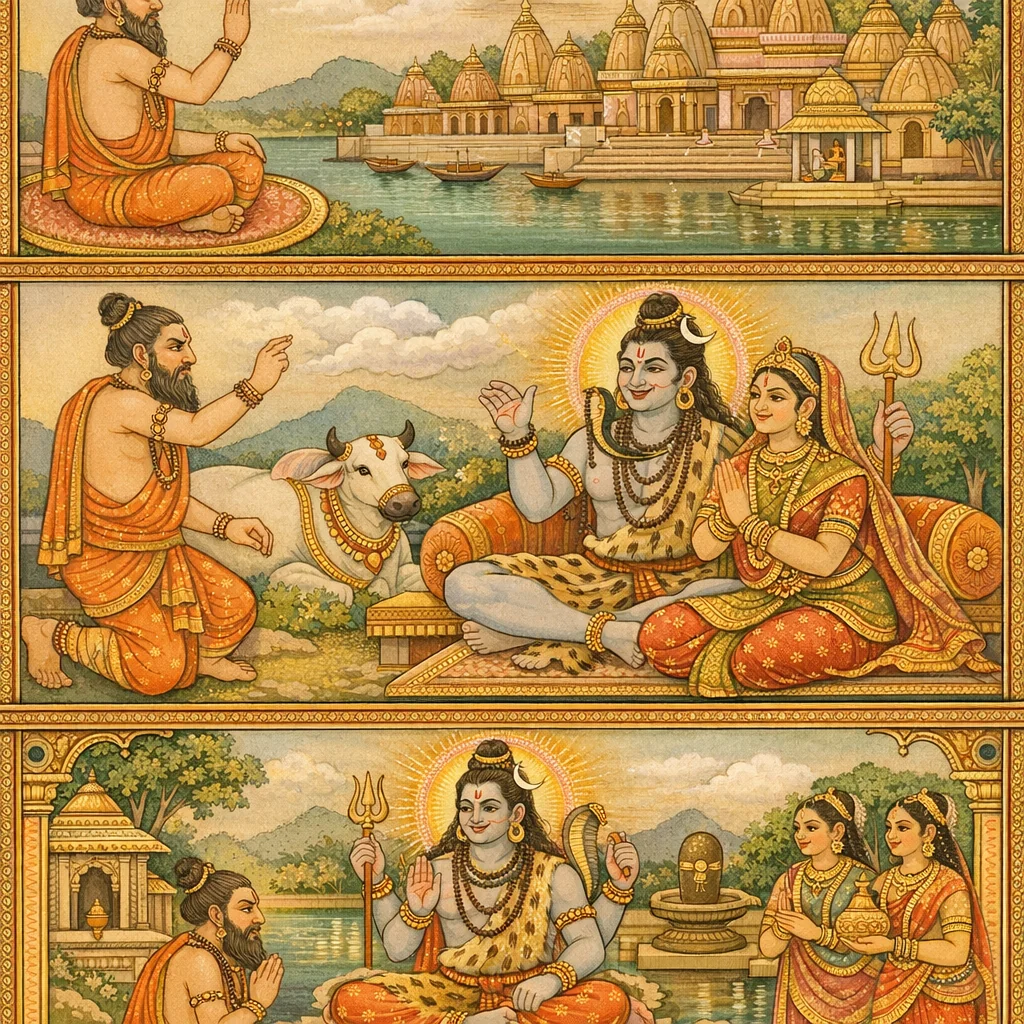
Adhyaya 35
अविमुक्तमहात्म्य–सदाचारविधि (Avimukta’s Supremacy and the Discipline of Sadācāra)
Adhyāya 35 opens with Kumbhayoni (Agastya) praising Avimukta-Kāśī as the supreme kṣetra, surpassing all other tīrthas and mokṣa-fields, and highlighting the distinctive salvific triad of Gaṅgā, Viśveśvara, and Kāśī. He then raises a practical concern: in the Kali/Tiṣya age, when the senses are unstable and the power for tapas, yoga, vrata, and dāna has declined, how can liberation be realistically attained? Skanda answers by shifting the focus from extraordinary ascetic feats to sadācāra—ethical discipline and right conduct—as the foundational means of dharma. The chapter ranks beings and knowers, extols disciplined Brahmin conduct as a social-theological axis, and defines sadācāra as the root of dharma. It lists yamas (truth, forbearance, non-violence, etc.) and niyamas (purity, bathing, charity, sacred study, fasting), teaches conquest of inner enemies (desire, anger, and the like), and insists that only dharma accompanies one beyond death. A long procedural section then details daily purity and the morning regimen: directions and privacy for elimination, counts for earth-and-water purification, the mechanics and restrictions of ācamana, rules for dantadhāvana (including prohibited lunar days), mantric framing, praise of morning bathing, and a structured morning sandhyā with related rites (tarpana, homa, and feeding protocols). The chapter closes by presenting this as the nityatama—most regular—method for stabilizing religious life.
Adhyaya 36
Sadācāra and Brahmacarya Regulations (सदाचार–ब्रह्मचर्यविधान)
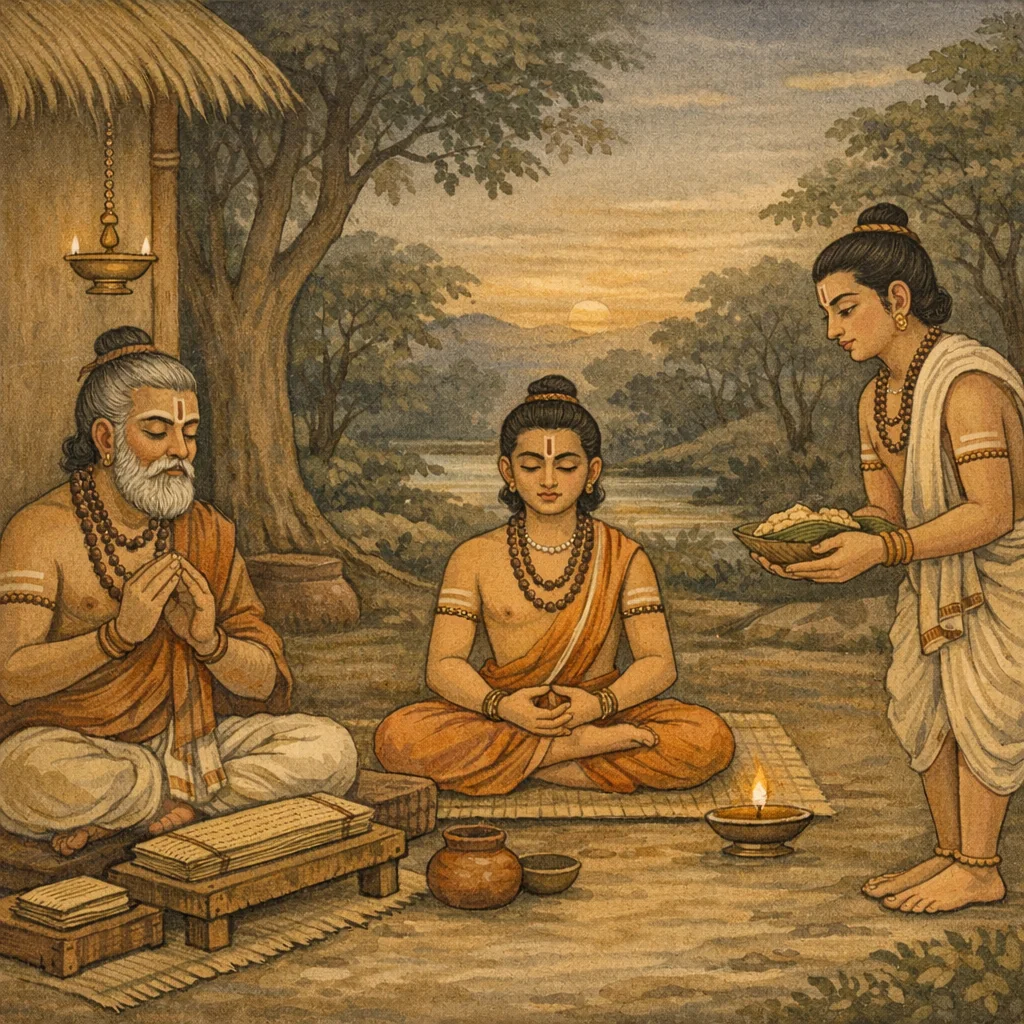
Skanda speaks to Kumbhaja (Agastya) and promises a further, clarifying teaching on sadācāra, so that the discerning practitioner does not sink into the darkness of ignorance. He sets out the dvija ideal—birth from the mother and the “second birth” through upanayana—and surveys the Vedic saṃskāras from conception-related rites and childhood ceremonies up to upanayana, with timings prescribed according to varṇa. The chapter then lays down the brahmacārin student’s discipline: purity observances (śauca, ācamanam), dental cleansing, mantra-bathing, sandhyā worship, agnikārya, respectful salutations, and service to elders and the teacher. It gives norms for bhikṣā, restrained speech, regulated eating, and strict avoidances of excess, harm, slander, and certain sensual or impure contacts. It specifies the materials and measures for mekhalā, yajñopavīta, daṇḍa, and ajina by varṇa, and distinguishes brahmacārin types (upakurvāṇa and naiṣṭhika). Skanda stresses that one must be grounded in an āśrama; practices undertaken without proper āśrama belonging are declared fruitless. A substantial portion praises Vedic study, the use of praṇava and vyāhṛtis with Gāyatrī, and the graded power of japa (spoken, upāṃśu, mental). It ranks teacherly roles (ācārya, upādhyāya, ṛtvij) and extols mother, father, and guru as a sacred triad whose satisfaction is the highest tapas; through disciplined brahmacarya and the grace of Viśveśa one attains Kāśī, knowledge, and nirvāṇa. The chapter closes by turning from brahmacārin conduct to the forthcoming discussion of women’s characteristics and criteria for marriage suitability.
Adhyaya 37
Strī-lakṣaṇa-vicāra (Examination of Women’s Physical Marks) | Chapter 37
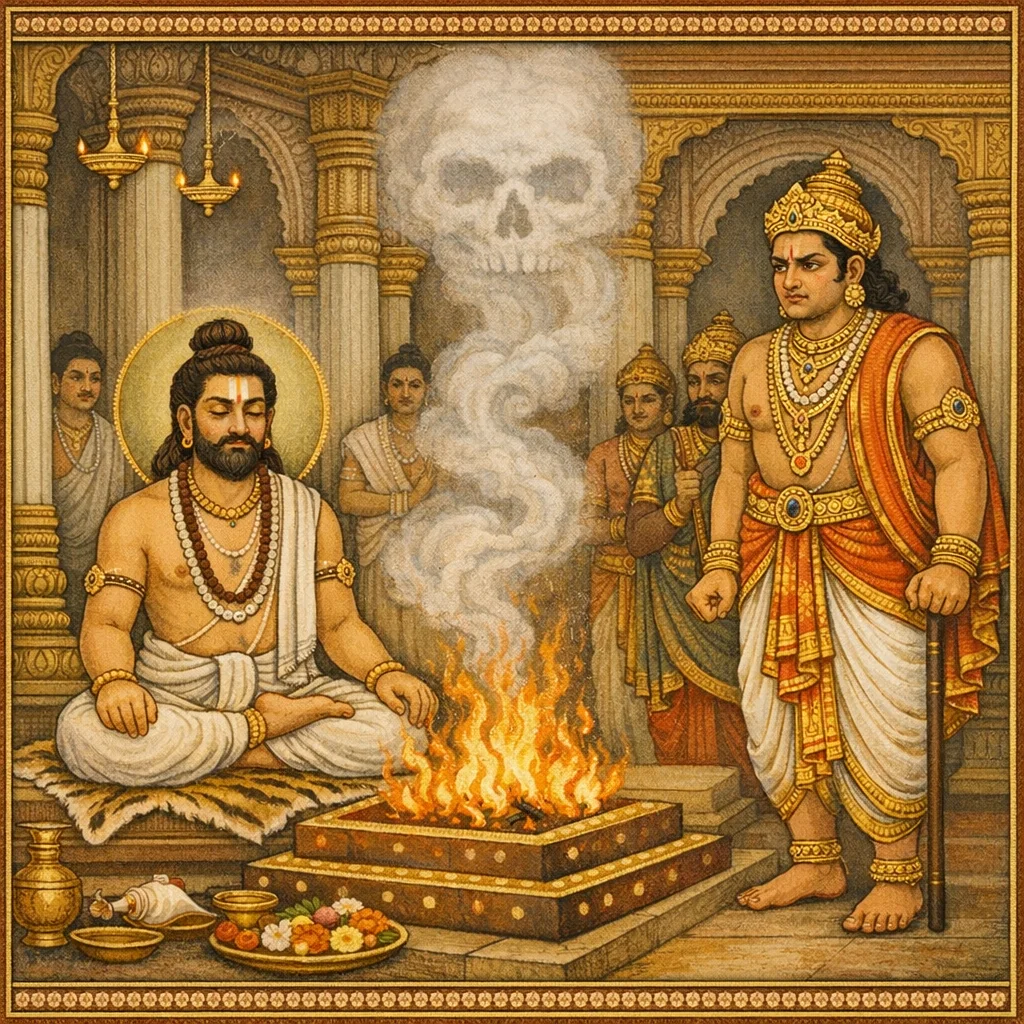
Chapter 37 presents a didactic theological discourse attributed to Skanda on examining auspicious and inauspicious bodily marks (lakṣaṇa) traditionally applied to women in the context of household life. It opens by stating that domestic happiness is linked with a wife who is “endowed with good marks,” and therefore such signs should be assessed for prosperity and well-being. The chapter then sets out an eightfold basis of evaluation—body form, bodily whorls/turnings, scent, shadow, vitality/temperament, voice, gait, and complexion—and proceeds in a head-to-foot survey. It catalogues features of the feet, toes, nails, ankles, calves, knees, thighs, waist, hips, genital region, abdomen, navel, flanks, chest, breasts, shoulders, arms, hands and palm-lines, neck, face, lips, teeth, eyes, hair, and other signs, often attaching predicted outcomes such as wealth, status, offspring, or misfortune in an omenological style. It also interprets symbols on palms and soles (lotus, conch, discus, svastika) and the “fruits” (phalāni) associated with line-patterns. The chapter concludes by urging the discerning to examine marks and avoid “bad signs” (durlakṣaṇa) in choosing a spouse, while indicating a transition to the forthcoming discussion of forms of marriage.
Adhyaya 38
Adhyāya 38 — Vivāha-bheda, Gṛhastha-ācāra, Atithi-sevā, and Nitya-karma (Marriage Types, Householder Ethics, Hospitality, Daily Duties)
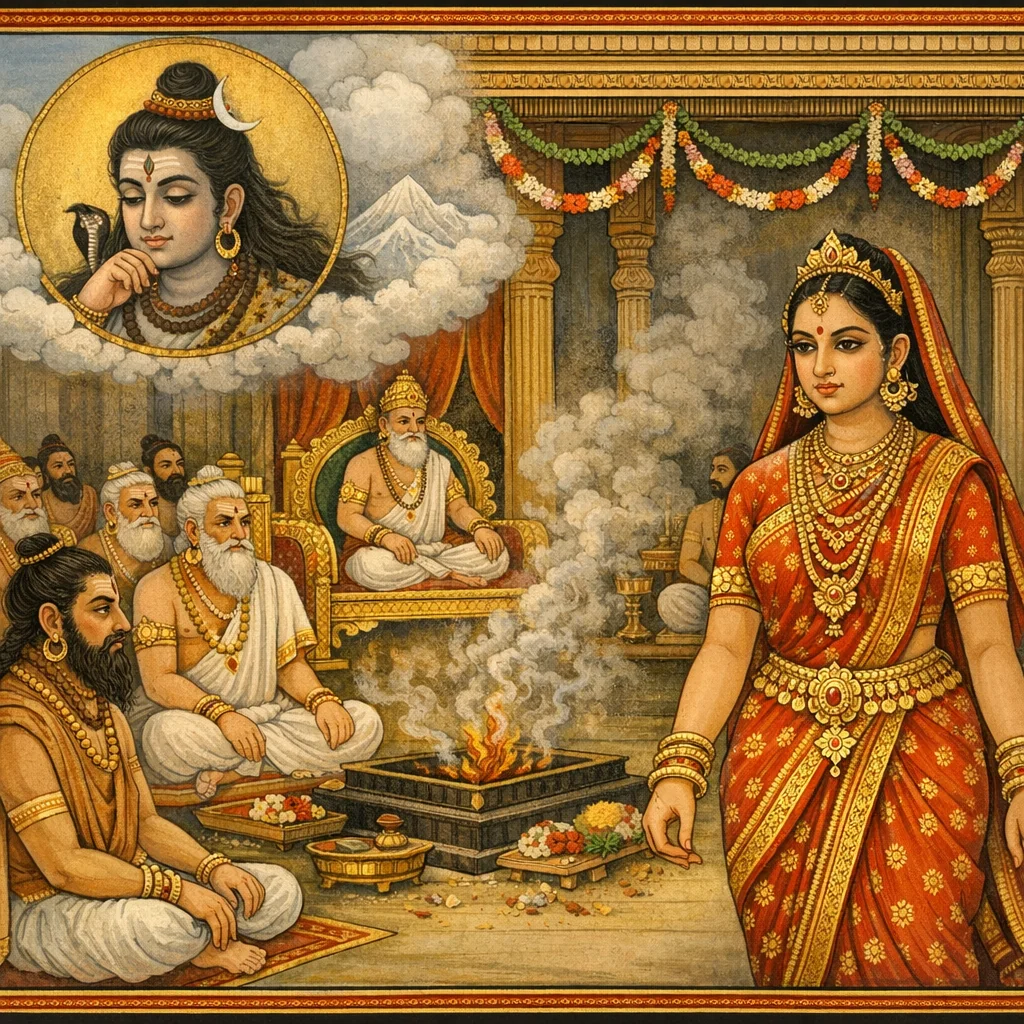
This chapter presents a compact theological and ethical teaching attributed to Skanda on the norms and consequences of household life. It begins with an eightfold classification of marriage (vivāha), distinguishing dharmic forms—brāhma, daiva, ārṣa, prājāpatya—from censured or inferior forms—āsura, gāndharva, rākṣasa, paiśāca—and links each to differing purifying or harmful results. The discourse then expands to the discipline of the householder: conjugal approach regulated by the proper season (ṛtu-kāla), cautions against improper times and settings, and a sustained set of ācāra rules concerning purity, speech, restraint, and social conduct. A major section explains pañca-yajña and the ethics of hospitality, stressing the moral weight of honoring guests (atithi), daily offerings (vaiśvadeva), and the consequences of neglect. It also offers guidance on charity (dāna) and its fruits, warns of anadhyāya conditions when teaching or study is inappropriate, and gives general maxims—speak truth that is beneficial and avoid harmful associations. The closing returns to the Kāśī-centered frame, preparing for the subsequent praise of Avimukta’s significance.
Adhyaya 39
Avimukta-Kāśī: Accelerated Merit, Avimukteśvara Liṅga, and a Royal-Mythic Etiology
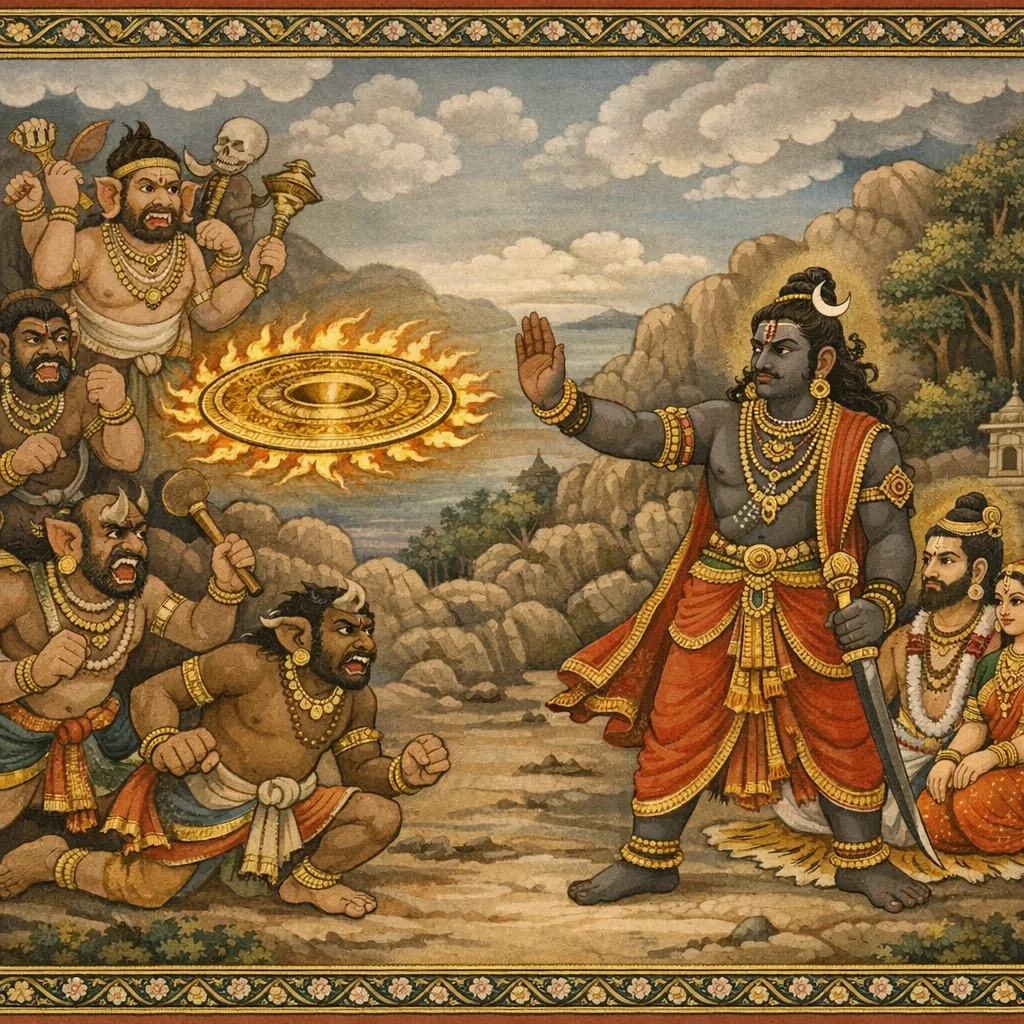
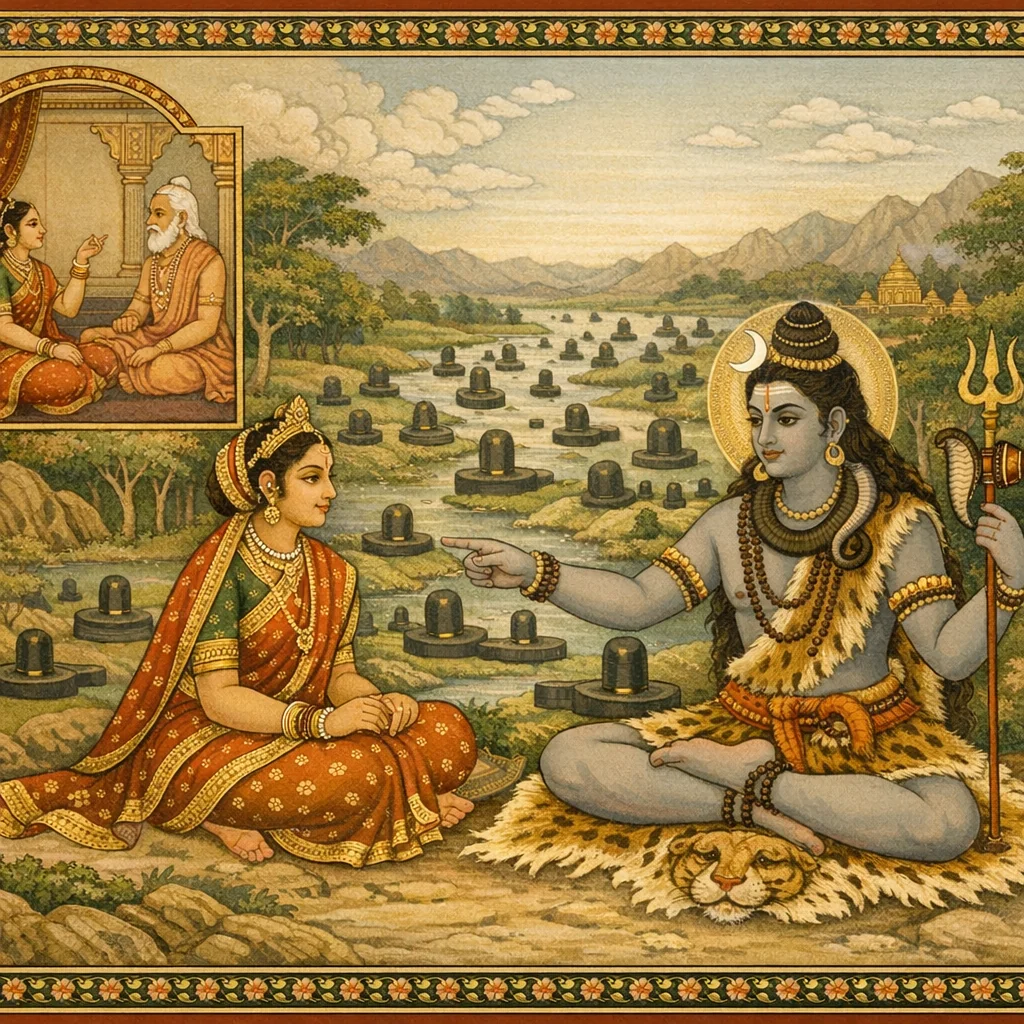
Chapter 39 begins with Skanda teaching Agastya a “sin-destroying” account rooted in Avimukta-Kāśī. Kāśī is first portrayed through metaphysical language of the supreme Brahman—beyond conceptual construction, formless, unmanifest—yet said to pervade this sacred field in a uniquely liberative way. Skanda then offers a comparative path of salvation: disciplines that elsewhere demand severe yoga, great gifts, or long austerities are, in Kāśī, attainable through modest offerings (flower, leaf, fruit, water), brief meditative stillness, bathing in the Gaṅgā, and giving alms—each counted as “great” because of the kṣetra’s sanctity. A further section provides an etiological legend: in an ancient age of prolonged drought and social collapse, Brahmā installs King Ripuñjaya (also called Divodāsa) to restore order. The story leads through divine relocations and negotiations involving Rudra/Śiva and Mount Mandara, and culminates in Śiva’s continuing presence in Kāśī in liṅga-form. The chapter concludes by exalting Avimukteśvara as the “ādi-liṅga”: seeing, remembering, touching, worshiping it, and even hearing its name are said to swiftly dissolve accumulated sin and loosen karmic bonds. It also notes periodic convergence of other liṅgas and praises disciplined japa and devotion within the kṣetra.
Adhyaya 40
Avimukteśvara–Kṣetra-prāpti, Gṛhastha-dharma, and Ethical Regulations (अविमुक्तेश्वर-क्षेत्रप्राप्ति तथा गृहस्थधर्म-नियमाः)
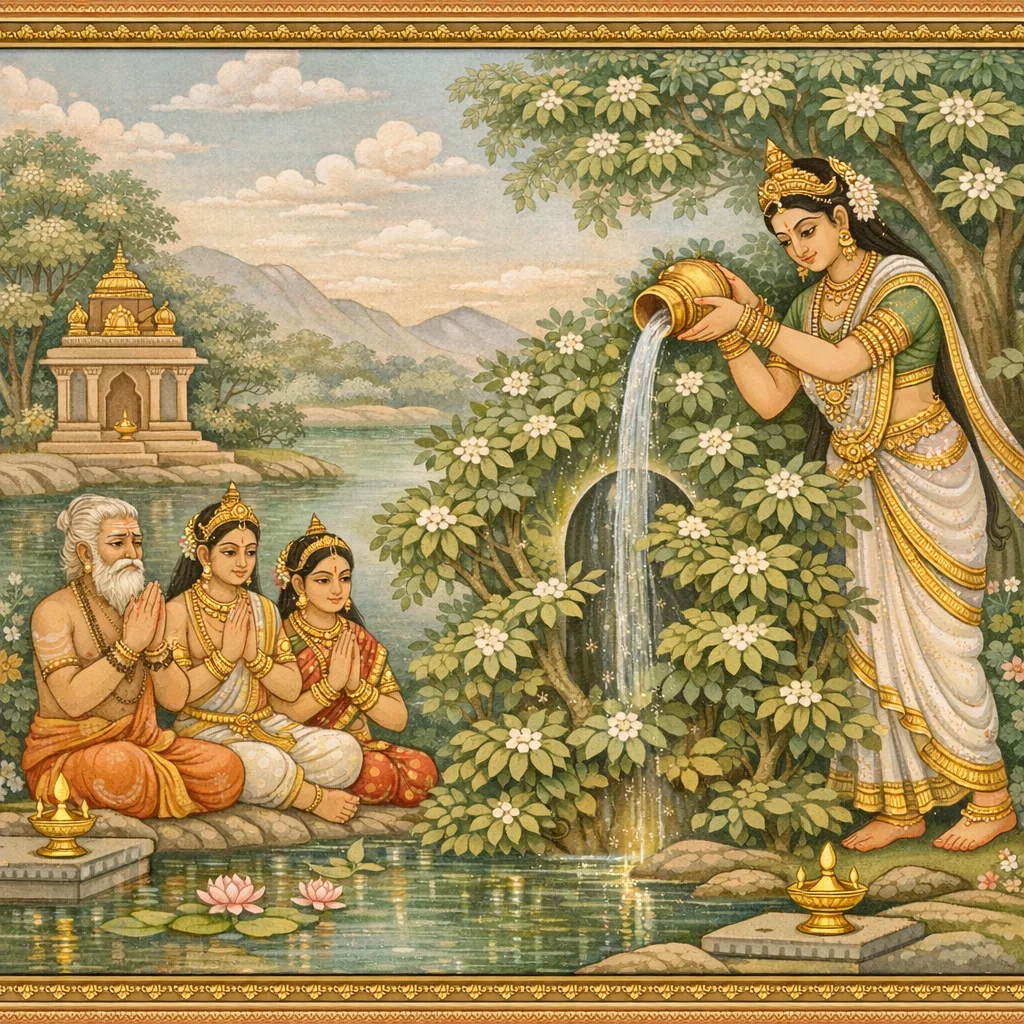
Adhyāya 40 unfolds as a question-led theological dialogue. Agastya asks Skanda to explain more fully the māhātmya of Avimukteśa and how one should properly “attain” or approach the Avimukteśvara-liṅga and the sacred Avimukta-kṣetra. Skanda answers by moving from praise to prescription, laying down a normative ethic for seekers of spiritual benefit within the kṣetra. The chapter lists prohibited foods and improper modes of eating, and weighs the moral gravity of hiṃsā (violence), especially regarding meat-eating and the limited exceptions allowed in constrained ritual settings. Dharma is framed as the source of sukha and of higher human ends. It then expands into household order: rules for dāna (right giving), duties toward dependents and guests, the pañca-yajña pattern, and daily obligations. Themes of social and ritual purity are also addressed—marital propriety, the status of women within purity discourse, and restraints on harmful speech or exploitative economic conduct. The chapter closes by reaffirming that disciplined life in Kāśī is a complete religious path, with Kāśī-sevā presented as the crowning merit.
Adhyaya 41
वनाश्रम–परिव्राजकधर्मः तथा षडङ्गयोग–प्राणायामविधिः (Forest-Dweller and Renunciant Ethics; Six-Limbed Yoga and Prāṇāyāma Method)
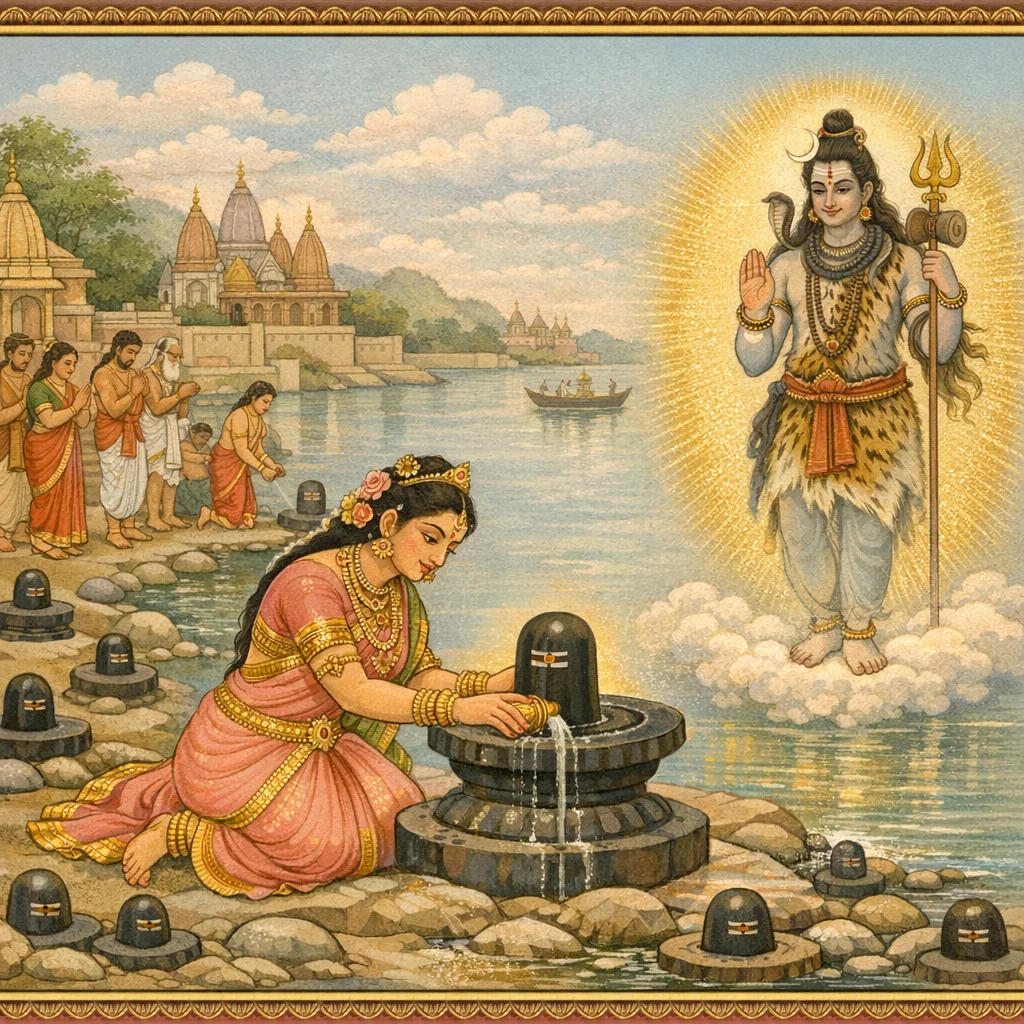
This chapter, spoken by Skanda, lays down late-life discipline for the third and fourth āśramas. It first describes the move from gṛhastha to vānaprastha: giving up village fare, reducing possessions, maintaining the pañca-yajña duties, and living austerely on greens, roots, and fruits (śāka–mūla–phala), with practical guidance on preparation, storage, and forbidden items. It then portrays the parivrājaka/yati ideal: solitary wandering, non-attachment, equanimity, measured speech, careful non-violence (including seasonal cautions), and minimal belongings—non-metal vessels, a simple staff and clothing—while warning against entanglement in sense-objects. Turning to liberation, the text declares ātmajñāna decisive, yoga the enabling discipline, and abhyāsa (repeated practice) the means of success. After reviewing views of yoga, it culminates in restraining mind and senses and fixing awareness in the kṣetrajña/paramātman. A full ṣaḍaṅga-yoga sequence is taught—āsana, prāṇāyāma, pratyāhāra, dhāraṇā, dhyāna, samādhi—with notes on postures, suitable settings, graded measures, dangers of force, signs of nāḍī-śuddhi, and promised effects. The conclusion links yogic steadiness to the ending of ritual compulsion and to mokṣa, and honors Kāśī as a place where kaivalya is especially accessible when joined with yogic method.
Adhyaya 42
कालचिह्नवर्णनम् (Signs of Approaching Death and the Turn to Kāśī)
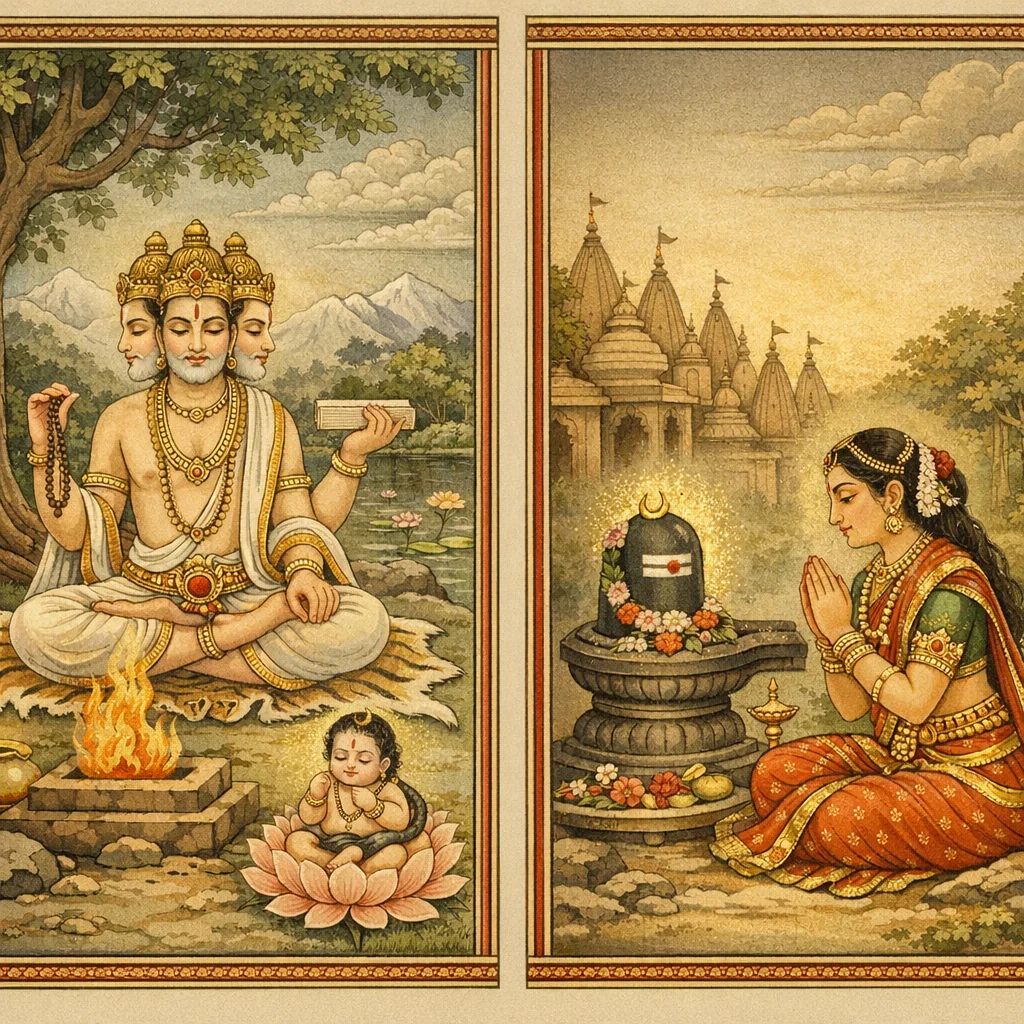
This adhyāya unfolds as a teaching dialogue: Agastya asks Kumāra (Skanda) how one may recognize the nearness of death (kāla) and what signs (cihnāni) appear in embodied beings. Kumāra lists bodily and perceptual indicators—especially patterns of breath-flow through the nostrils, strange sensory experiences, dryness and discoloration of the body, disturbances in shadow or reflection, and ominous dream motifs—often linking each sign to an approximate remaining lifespan, from days to months. The discourse then turns from diagnosis to dharmic counsel: time cannot be “outwitted,” so one should practice disciplined yoga or take refuge in Kāśī, honoring Viśveśvara as the decisive sanctuary. The latter portion intensifies the Kāśī-māhātmya, declaring that dwelling in Vārāṇasī, worshiping and coming into contact with Viśveśvara, and the city’s salvific power override ordinary fears of Kali, time, aging, and demerit. It concludes by reflecting on the inevitability of aging (jarā) as the chief mark of decline and urging seekers to reach Kāśī before infirmity restricts religious action.
Adhyaya 43
दिवोदास-राज्यवर्णनम् तथा वैश्वानरमूर्त्यपसारणम् (Divodāsa’s Rule in Kāśī and the Withdrawal of the Vaiśvānara Form)
Agastya asks Skanda why Trilocana (Śiva) abandoned Kāśī for Mandara, and how King Divodāsa came to rule. Skanda relates that, honoring Brahmā’s word, Śiva departs to Mandara; other deities likewise leave their sacred stations and follow. With the divine assemblies gone, Divodāsa establishes an unopposed reign, makes Vārāṇasī his firm capital, and governs according to prajā-dharma. The chapter paints an ideal civic-ethical order: each social class performs its duties, learning and hospitality flourish, crime and exploitation are absent, and public life is filled with Vedic recitation and music. Unable to find any weakness in the king’s policy and administration (ṣāḍguṇya, caturupāya, and the like), the devas consult their preceptor and choose an indirect intervention. Indra commands Agni (Vaiśvānara) to withdraw his installed form from the realm; as fire departs, cooking and offerings are disrupted, the royal kitchen reports the disappearance of flame, and Divodāsa perceives a divine stratagem. Thus the chapter sets exemplary governance beside the vulnerability of social and ritual systems to supra-human pressure.
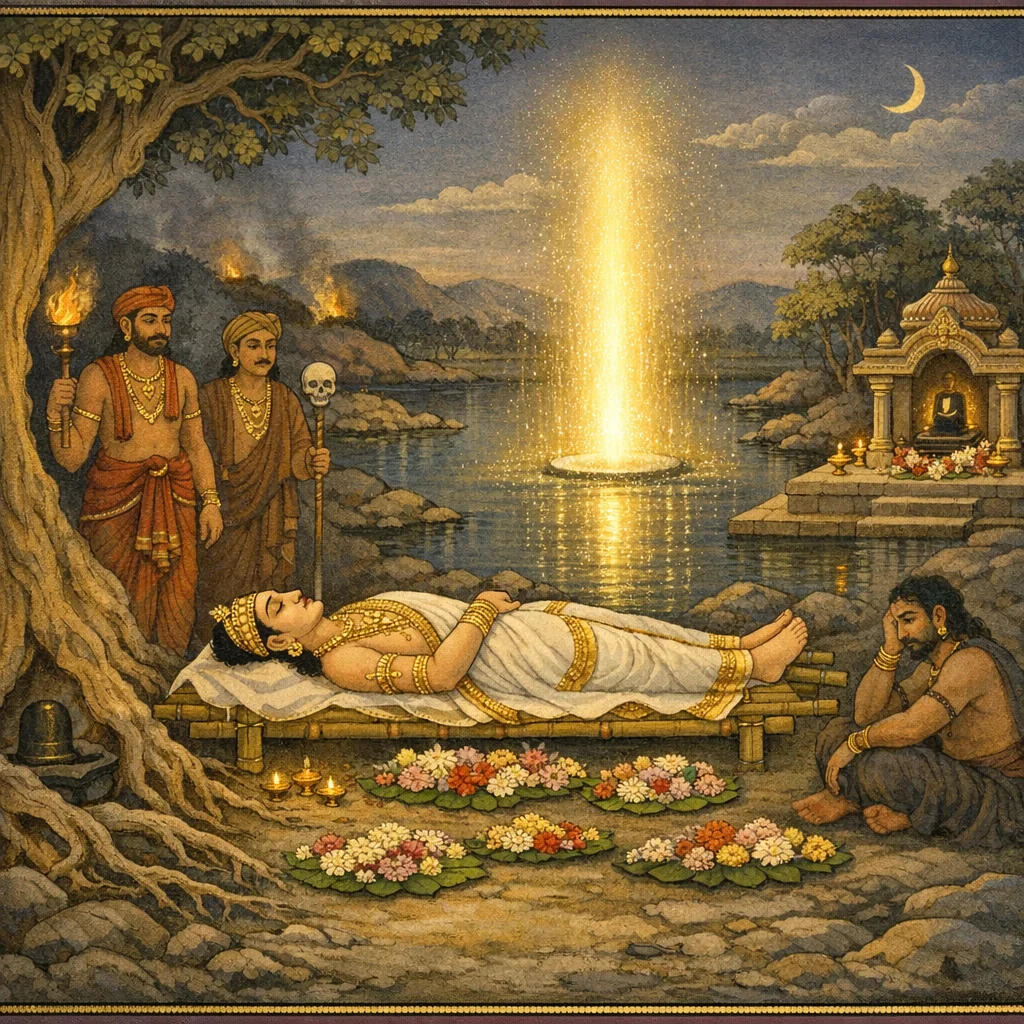
Adhyaya 44
काशीवियोगज्वरः, मणिकर्णिकामाहात्म्यस्तुति, दिवोदासवियोजनार्थं योगिन्यादेशः (Kāśī-Viyoga Fever; Praise of Maṇikarṇikā; Commissioning the Yoginīs regarding Divodāsa)
Adhyāya 44 unfolds in three movements. (1) Skanda depicts Śiva in a radiant, jewel-like abode, yet seized by an intense “Kāśī-separation fever” (Kāśī-viyoga-ja jvara). The paradox is stressed: Śiva, the Nīlakaṇṭha untouched by poison, is said to be “heated” by moonbeams—signaling a narrative device meant to magnify Kāśī’s salvific centrality rather than a bodily ailment. (2) Pārvatī offers doctrinal reassurance and then a sustained praise of Kāśī, especially Maṇikarṇikā: no realm equals it; fear and rebirth are negated there; and liberation is uniquely accessible through death/renunciation in Kāśī, not by austerity, ritual, or learning alone. (3) Śiva accepts the call to return but honors an ethical-political constraint: King Divodāsa rules Kāśī righteously by Brahmā’s mandate, and Śiva refuses to remove a just king by force. He therefore commissions the Yoginīs to employ yogamāyā so that Divodāsa becomes disinclined to remain, allowing Śiva to “renew” Vārāṇasī without violating dharma.
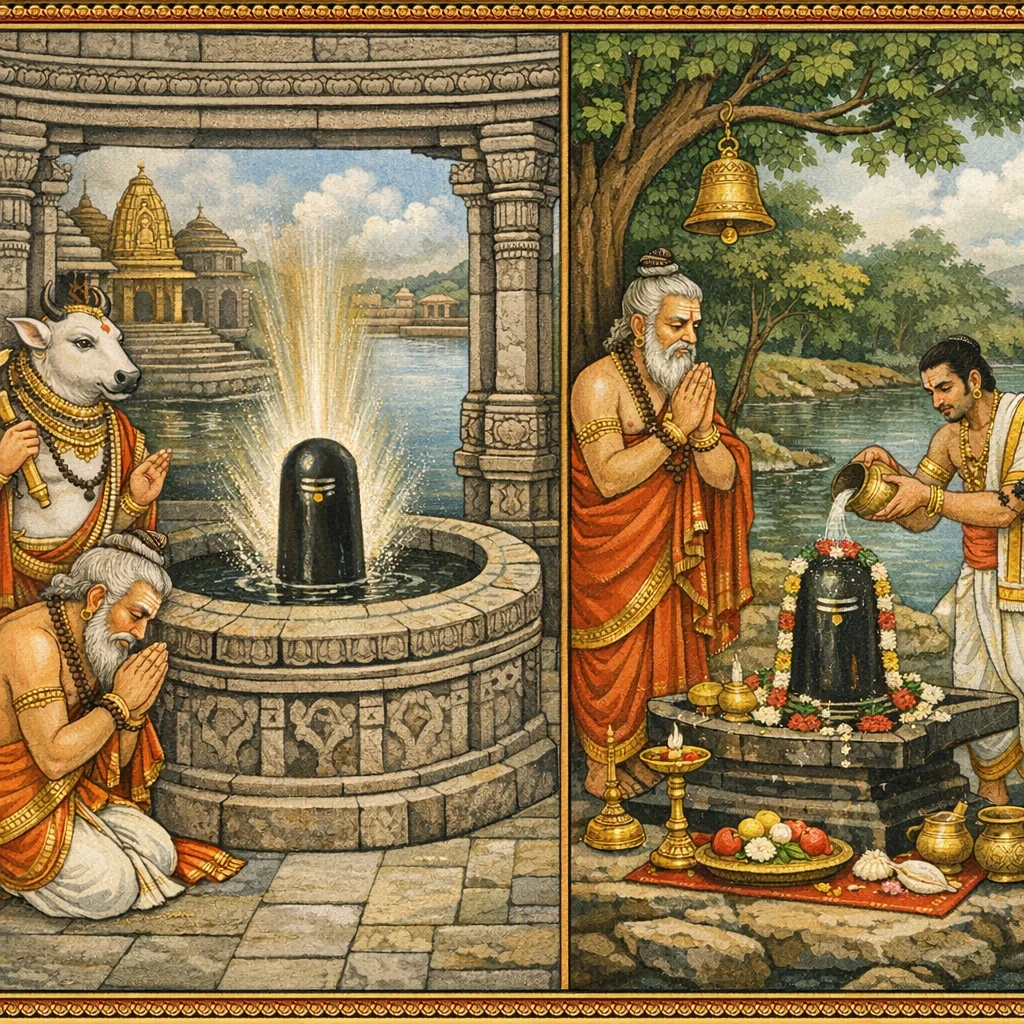
Adhyaya 45
योगिनीवृन्दप्रवेशः, नामजपफलम्, पूजाकालविधानम् (Yoginī Host’s Entry, Fruits of Name-Recitation, and Worship Timing)
Chapter 45 tells of a collective of yoginīs entering Kāśī under concealment by māyā. Taking on varied social roles and specialized skills, they move through households and public places without detection, highlighting the need for vigilance amid the city’s subtle power-currents. They conclude that even if their lord is displeased, they cannot abandon Kāśī, for it is indispensable to the four human aims and is Śambhu’s unique śakti-field. The narrative then becomes a catechetical dialogue: Vyāsa asks for the yoginīs’ names, the fruits of their bhajana in Kāśī, proper festival times, and correct modes of worship. Skanda replies with a protective litany of yoginī names and a phalaśruti-like assurance that thrice-daily recitation pacifies harmful disturbances and removes afflictions attributed to hostile beings. The chapter ends by laying out ritual details—offerings, incense and lamps, the great autumn worship, a Navamī-centered sequence from Āśvina śukla pratipad, nocturnal rites in kṛṣṇa-pakṣa, specified homa counts and substances, and an annual Citra-kṛṣṇa pratipad yātrā to quell kṣetra-obstacles—culminating in the claim that homage at Maṇikarṇikā protects from impediments.
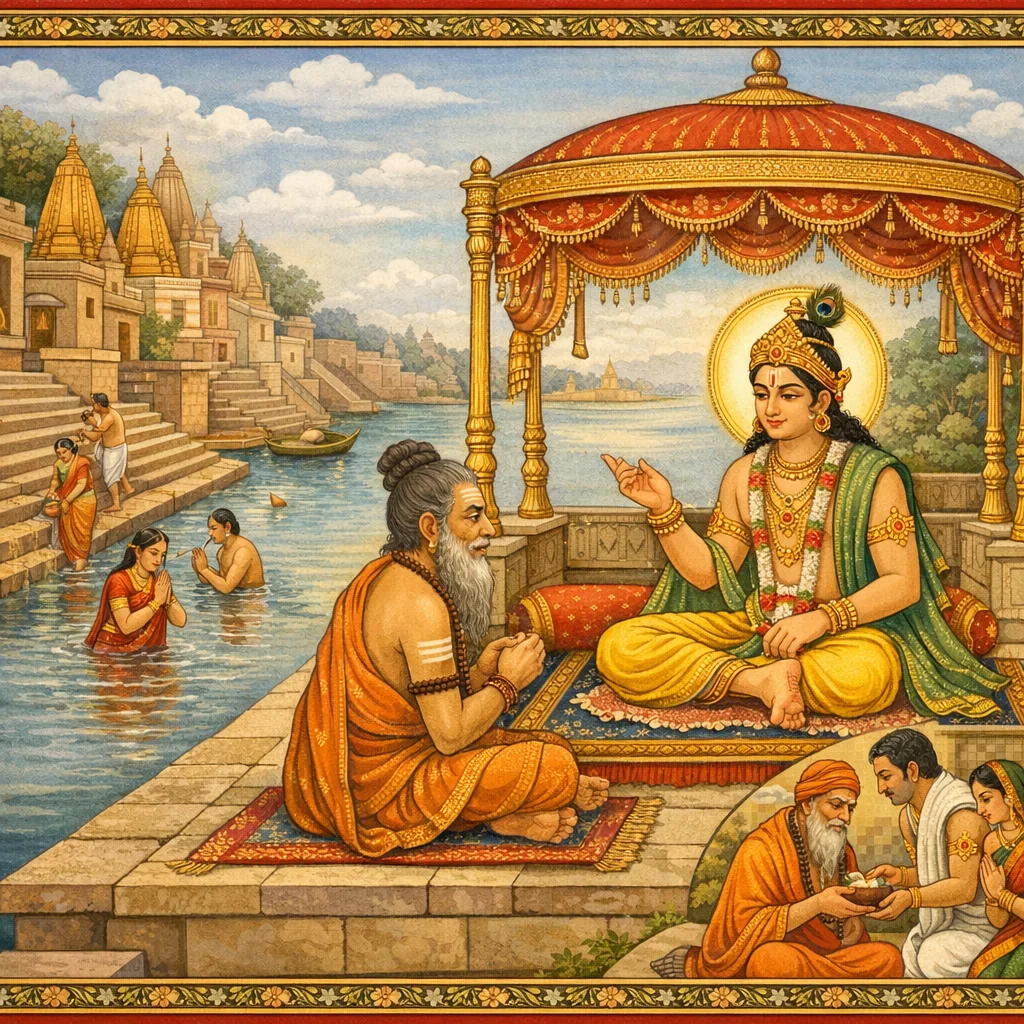
Adhyaya 46
लोळार्क-आदित्यप्रादुर्भावः (Manifestation and Glory of Lolārka Āditya at Asisaṃbheda)
Chapter 46 unfolds a theological and ethical narrative: after a yoginī episode, the Lord commissions the Sun (Aṃśumālī/Ravi) to hasten to auspicious Kāśī–Vārāṇasī and see whether King Divodāsa—praised as an embodiment of dharma—can be unsettled through opposition to dharma. The charge warns that disparaging a dharma-established ruler incurs grave fault, and that kāma, krodha, lobha, moha, matsara, and ahaṃkāra must not prevail where steadfast resolve in dharma endures. Eager to behold Kāśī, Ravi spends a year in many disguises—ascetic, mendicant, ritual innovator, magician, scholar, householder, renunciant—yet finds no moral breach in the king’s realm. Fearing to return without fulfilling the task, Ravi contemplates remaining in Kāśī, extolling its incomparable worth and its power to neutralize the faults of those who enter. He then establishes in Kāśī a twelvefold solar presence (the twelve Ādityas), with special emphasis on Lolārka, so named from the Sun’s intense longing (lola) to see Kāśī. The chapter places Lolārka at Asisaṃbheda in the southern quarter and prescribes pilgrimage observances: an annual yātrā around Mārgaśīrṣa (notably on the 6th/7th tithi and on Sunday), snāna at the Gaṅgā–Asi confluence, śrāddha procedures, and the heightened fruits of gifts and rites—especially during a solar eclipse—declared superior even to famed tīrthas. It concludes by affirming these claims as truthful rather than mere eulogy, rejecting skeptical disparagement and withholding the account from those portrayed as hostile to Vedic norms.
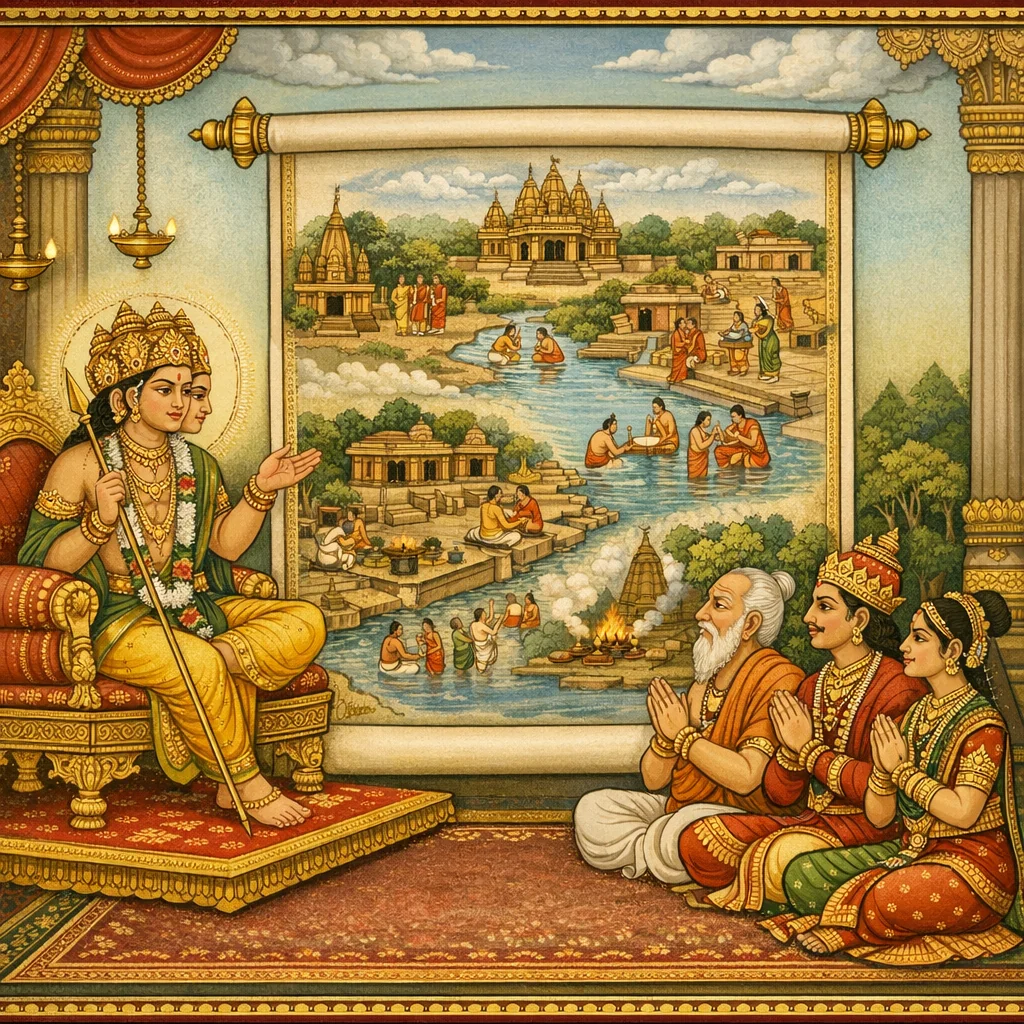
Adhyaya 47
Uttarārka–Barkarīkuṇḍa Māhātmya (The Glory of Uttarārka and the Origin of Barkarī Kuṇḍa)
This chapter marks a solar tīrtha in Kāśī: to the north lies the eminent pond Arkakuṇḍa, presided over by the radiant deity “Uttarārka,” revered as Kāśī’s protector and dispeller of afflictions. Skanda relates an origin-legend. The Brahmin Priyavrata of the Ātreya lineage—upright and hospitable—burns with anxiety to find a worthy husband for his virtuous, accomplished daughter. That worry becomes an incurable cintā-jvara (“fever of concern”) and causes his death; his wife, upholding the pativratā ideal, follows him in death, leaving the daughter orphaned. The girl embraces firm brahmacarya and performs severe tapas near Uttarārka. A she-goat (ajā-śāvī) appears daily as a silent witness. Śiva, with Pārvatī, beholds her steadiness and offers a boon; she asks first for grace for the goat, embodying paropakāra (altruistic intent). The deities praise her ethical insight: material hoards do not endure, but deeds that benefit others do. Pārvatī grants that the girl will become her beloved companion, endowed with divine qualities, and also declares her a royal daughter of Kāśī who will enjoy worldly prosperity and attain unsurpassed liberation. The chapter prescribes an annual observance at Arkakuṇḍa/Uttarārka in the month of Puṣya on a Sunday, with early bathing in a calm, cool-minded state. Arkakuṇḍa is also named Barkarīkuṇḍa, and the girl’s image is to be worshipped there. The concluding phalaśruti says that hearing this account (including the Lolārka–Uttarārka cycle) brings freedom from disease and poverty.
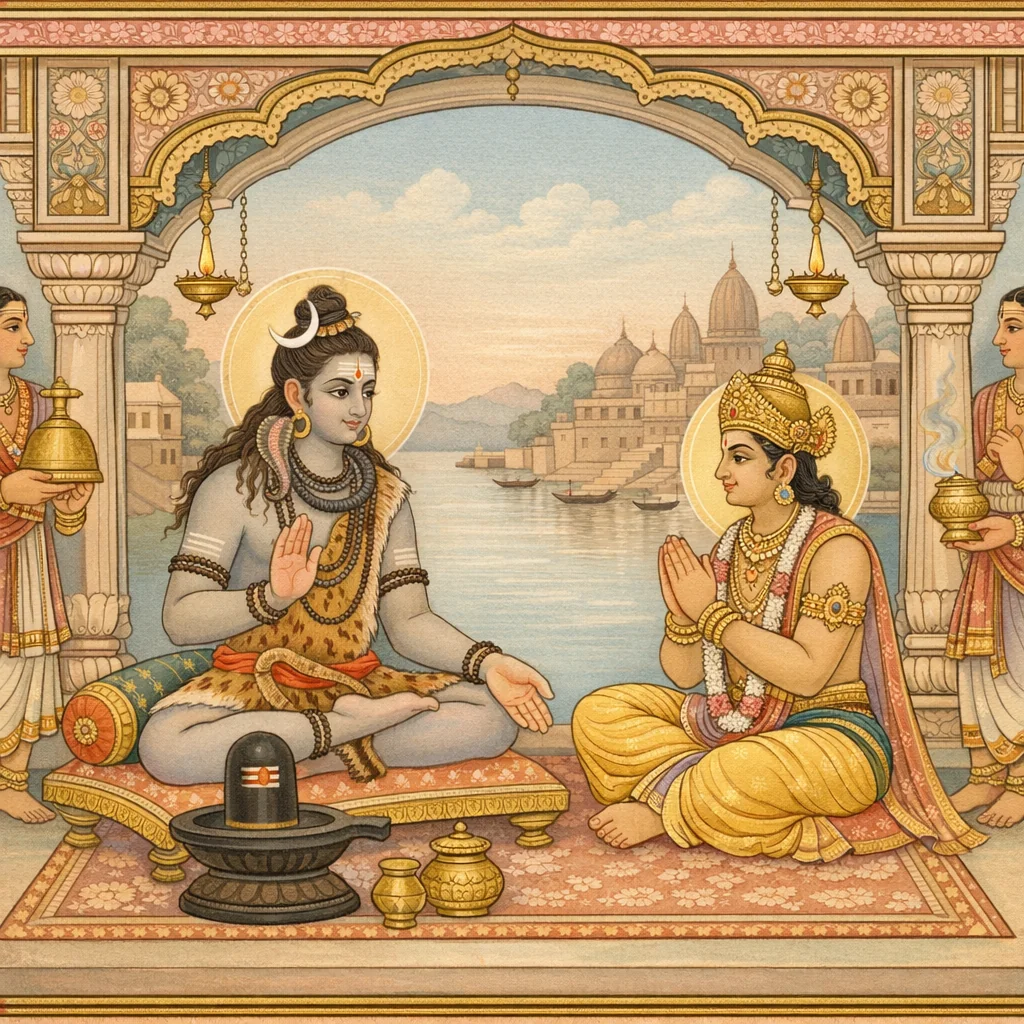
Adhyaya 48
Adhyāya 48: Sāmbasya Śāpaḥ, Vārāṇasī-yātrā, and the Māhātmya of Sāmbāditya and Sāmbakuṇḍa (Samba’s Curse and Solar Worship in Kāśī)
This chapter, framed as a theological narrative, has Skanda recount events at Dvārakā involving Kṛṣṇa, Nārada, and Kṛṣṇa’s son Sāmba. Nārada arrives in the splendid city and is duly honored by Kṛṣṇa, but Sāmba—proud of his beauty—fails to show proper reverence. Nārada privately reports this conduct and its ethical-social effects, noting how youthful charm can unsettle women’s attention and disturb order. When Sāmba is summoned into Kṛṣṇa’s private quarters amid the women’s assembly, the episode culminates in Kṛṣṇa’s curse: Sāmba is afflicted with kuṣṭha (leprosy/severe skin disease), presented as moral correction and discipline. The narrative then turns to the remedy, as Kṛṣṇa directs Sāmba to Vārāṇasī (Kāśī), praising Kāśī’s unique power to grant expiation and purification under Viśveśvara and through its sacred waters. In Kāśī, Sāmba worships the Sun (Aṃśumālī/Āditya), establishes or becomes associated with Sāmbakuṇḍa, and regains his natural condition. The latter portion gives tīrtha-ritual guidance and phalaśruti: bathing at dawn on Sunday at Sāmbakuṇḍa, worshiping Sāmbāditya, and observing rites around Māgha-śukla-saptamī (Ravi-saptamī) are said to relieve disease, remove sorrow, and bestow well-being; the chapter closes by moving on to Draupadāditya.
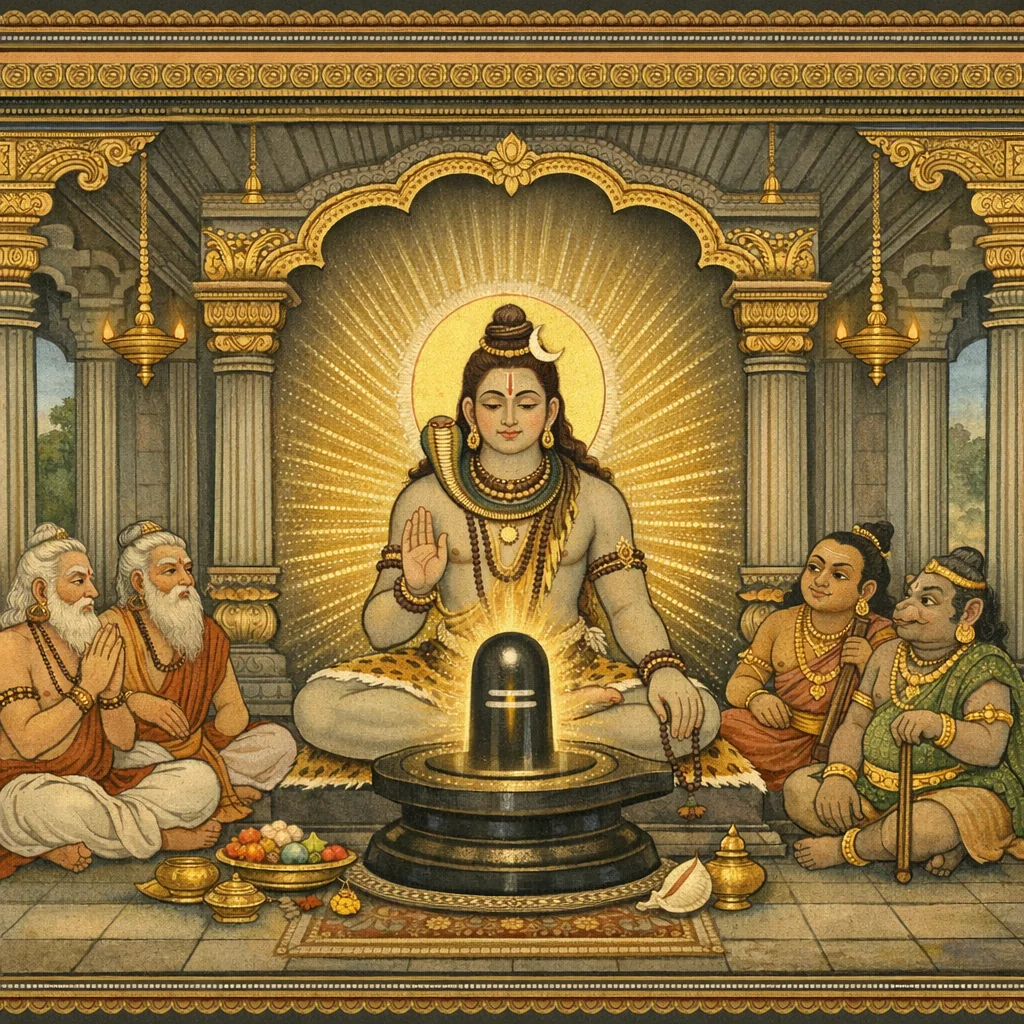
Adhyaya 49
द्रौपदी-आदित्य-माहात्म्य तथा मयूखादित्य-गभस्तीश्वर-प्रतिष्ठा (Draupadī’s Āditya Māhātmya and the Mayūkhāditya–Gabhastīśvara Foundation Narrative)
The chapter begins within a layered narration (Sūta–Vyāsa–Skanda) and offers a theological reading of epic history: the Pāṇḍavas are portrayed as Rudra-embodied agents who restore order, while Nārāyaṇa assumes Kṛṣṇa-form as the stabilizer of dharma. In a time of hardship, Draupadī performs intense devotion to Sūrya (Bradhna/Savitr) and receives the akṣaya-sthālikā, an inexhaustible vessel, as a practical grace for scarcity and the demands of hospitality. The blessing is then anchored in Kāśī’s sacred landscape, where Sūrya promises that worship and darśana south of Viśveśvara bring relief from hunger and affliction, dispel the darkness of sorrow, and protect from fear, disease, and separation. A second movement recounts Sūrya’s severe tapas at Pañcanada tīrtha, the स्थापना of the Gabhastīśvara liṅga, and devotion to the Goddess as Maṅgalā/Gaurī. Śiva appears, praises the austerity, receives Śiva-stotras and the Maṅgalā-Gaurī stuti, and grants programmatic instruction: reciting the “sixty-four-name” aṣṭaka and the Maṅgalā-Gaurī aṣṭaka is taught as a purificatory regimen that washes daily sin and leads to the rare privilege of access to Kāśī. The chapter also details the Maṅgalā-vrata (notably on Caitra śukla tṛtīyā)—fasting, night vigil, offerings, feeding maidens, homa, and gifting—promising well-being and protection from misfortune. It concludes with the naming of Mayūkhāditya (rays seen while the body is unseen), the fruits of worship—freedom from disease and poverty, especially on Sundays—and a phalaśruti that hearing these accounts prevents descent into hell.
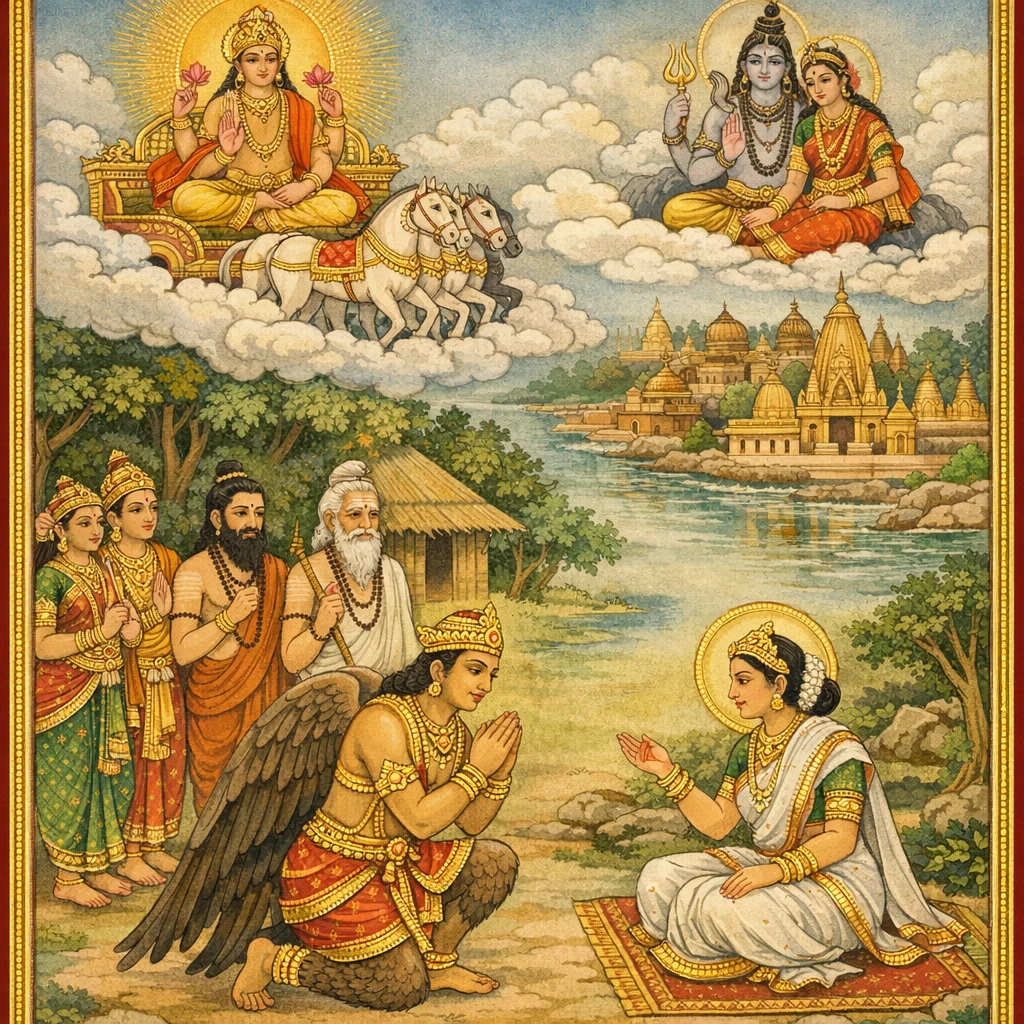
Adhyaya 50
खखोल्कादित्य-प्रादुर्भावः (The Manifestation and Merit of Khakholka Āditya)
This adhyāya opens with Skanda listing the solar forms (Ādityas) worshiped in Vārāṇasī and introducing a particular manifestation, Khakholka Āditya, extolled as a remover of affliction and disease. The account then situates this local sun-shrine within an older myth of Kadrū and Vinatā: a wager over the appearance of Uccaiḥśravas leads to deceit by Kadrū’s serpent sons and to Vinatā’s enslavement. Grieved for his mother, Garuḍa asks the terms of her release and is told to procure amṛta (sudhā). Vinatā instructs Garuḍa in dharmic discernment—especially how to avoid harming a brāhmaṇa who may be found among the niṣādas—giving practical marks of identity and warning of the moral peril of wrongful violence. Garuḍa’s obtaining of amṛta is portrayed as duty undertaken for his mother’s liberation, not for personal gain. The chapter concludes by re-rooting the myth in Kāśī, where Śaṅkara and Bhāskara are shown as gracious presences. The phalāśruti declares that merely beholding Khakholka at the named tīrtha brings swift relief from illness, fulfillment of aims, and purification through hearing this sacred account.
FAQs about Purva Ardha
It establishes a method for reading place as doctrine: sacred sites are presented as pedagogical terrains where devotion, ritual order, and liberation-claims are narrated through exemplary episodes and praises.
Merit is framed as arising from reverent approach—listening to the discourse, honoring sacred rivers and deities, and cultivating disciplined humility—rather than from mere physical travel alone.
Chapter 1 highlights an instructive episode involving Nārada and the Vindhya mountain, using dialogue and moral reflection to critique pride and to motivate refuge in the supreme deity (Viśveśa/Śiva).