Adhyaya 16
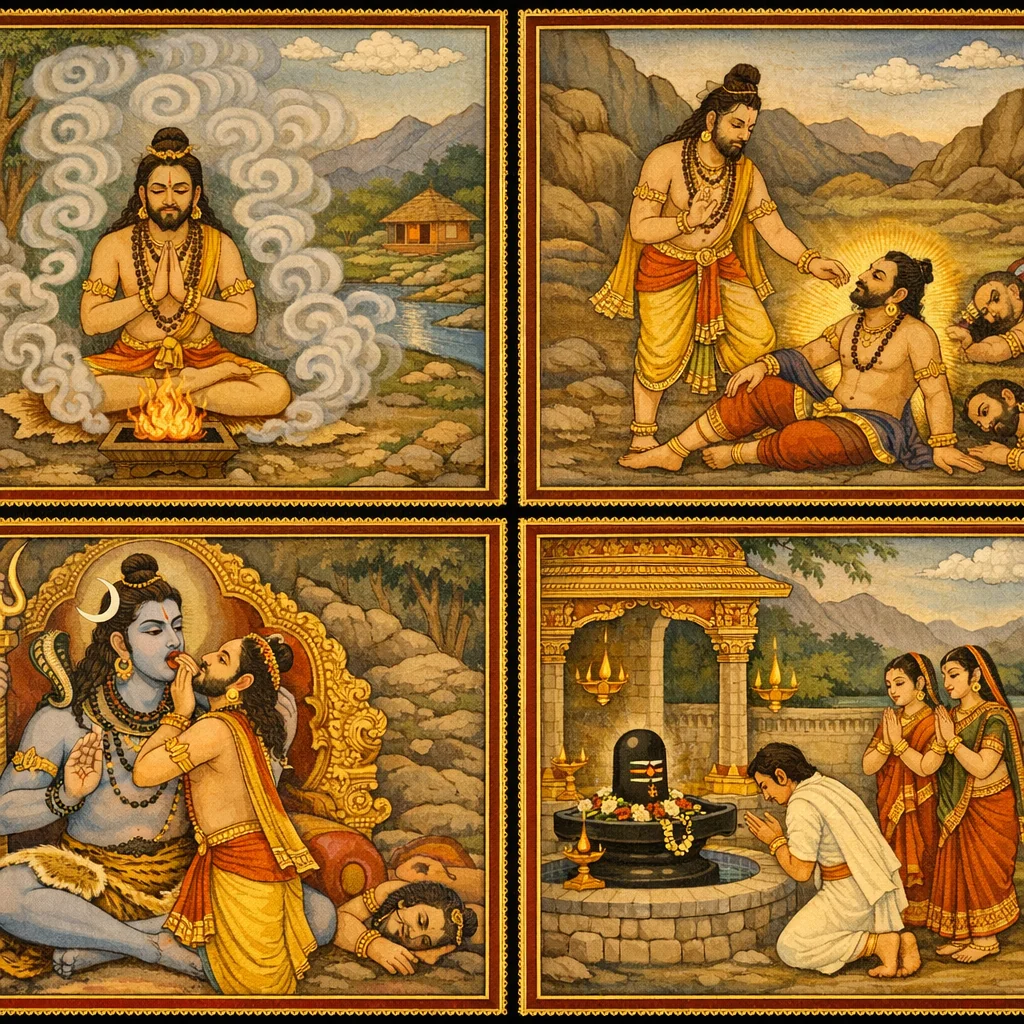
Chapter 16 unfolds a closely connected sequence. The gaṇas recount how Śukra (Kavi, Bhārgava), after fearsome austerity in Kāśī—marked by the motif of living on “kaṇadhūma” for a thousand years—received from Śiva the Mṛtasañjīvinī vidyā, the life-restoring knowledge. Within the Andhaka–Śiva conflict, Andhaka seeks strategic advantage by approaching Śukra, praising him as the daitya-guru and requesting that the vidyā be used to revive fallen daityas. Śukra affirms that this was the very purpose of his attainment and begins restoring the slain one by one, shifting the morale of the battlefield. The gaṇas report to Maheśa; Nandin is sent to seize Śukra, and Śiva then swallows Śukra, nullifying the revival tactic. From within Śiva’s body Śukra searches for an exit, beholds cosmic realms, and is released through Śāmbhava-yoga; Śiva names him “Śukra” in connection with this emergence. A retrospective account then details Śukra’s Kāśī pilgrimage—installing a Śiva-liṅga, digging a well, long worship with abundant flowers and pañcāmṛta offerings—culminating in Śiva’s direct appearance and boon. The chapter teaches the ambivalent potency of knowledge and gifts: vidyā grants power, yet divine sovereignty governs its ethical and cosmic consequences.
Shlokas
Verse 1
गणावूचतुः । शिवशर्मन्महाबुद्धे शुक्रलोकोयमद्भुतः । दानवानां च दैत्यानां गुरुरत्र वसेत्कविः
The Gaṇas said: “O Śivaśarman, great in understanding, this realm of Śukra is wondrous. Here dwells Kavi (Śukra), the preceptor of the Dānavas and Daityas.”
Verse 2
पीत्वा वर्षसहस्रं वै कणधूमं सुदुःसहम् । यः प्राप्तवान्महाविद्यां मृत्युसंजीविनीं हरात्
Having indeed drunk for a thousand years the terribly unbearable smoke of particles, he obtained from Hara the great mantra-knowledge called Mṛtyu-saṃjīvinī, the reviver from death.
Verse 3
इमां विद्यां न जानाति देवाचार्योति दुप्कराम् । ऋते मृत्युंजयात्स्कंदात्पार्वत्या गजवक्त्रतः
This exceedingly difficult vidyā is not known even to the preceptor of the gods—except to Mṛtyuṃjaya (Śiva), Skanda, Pārvatī, and the elephant-faced one (Gaṇeśa).
Verse 4
शिवशर्मोवाच । कोसौ शुक्र इति ख्यातो यस्यायं लोक उत्तमः । कथं तेन च विद्याप्ता मृत्युसंजीवनी हरात्
Śivaśarman said: “Who is that one famed as Śukra, whose excellent realm this is? And how did he obtain from Hara the Mṛtyu-saṃjīvinī vidyā?”
Verse 5
आचक्षाथामिदं देवौ यदि प्रीतिर्मयि प्रभू । ततस्तौ स्माहतुर्देवौ शुक्रस्य परमां कथाम्
“Tell me this, O divine ones, if you bear affection for me, O lords.” Then those two deities began to recount the supreme tale of Śukra.
Verse 6
यां श्रुत्वा चापमृत्युभ्यो हीयंते श्रद्धयायुताः । भूतप्रेतपिशाचेभ्यो न भयं चापि जायते
On hearing it with faith, untimely deaths are driven away, and no fear arises from spirits, ghosts, or piśācas.
Verse 7
आजौ प्रवर्तमानायामंधकांधकवैरिणोः । अनिर्भेद्य गिरिव्यूह वज्रव्यूहाधिनाथयोः
As the battle raged between Andhaka and his foe, the commanders of the unbreakable “mountain-formation” and “vajra (thunderbolt)-formation” stood opposed.
Verse 8
अपसृत्य ततो युद्धादंधकः शुक्रसंनिधिम् । अधिगम्य बभाषेदमवरुह्य रथात्ततः
Then Andhaka withdrew from the fight, approached Śukra’s presence, and—descending from his chariot—spoke these words.
Verse 9
भगवंस्त्वामुपाश्रित्य वयं देवांश्च सानुगान् । मन्यामहे तृणैस्तुल्यान्रुद्रोपेंद्रादिकानपि
O Blessed One, relying upon you, we deem the gods with their retinues—even Rudra, Indra, and the rest—to be no more than blades of grass.
Verse 10
कुंजरा इव सिंहेभ्यो गरुडेभ्य इवोरगाः । अस्मत्तो बिभ्यति सुरा गुरो युष्मदनुग्रहात्
As elephants fear lions, and serpents fear Garuḍa, so the gods fear us, O Guru, by your favor.
Verse 11
वज्रव्यूहमनिर्भेद्यं विविशुर्देत्यदानवाः । विधूय प्रमथानीकं ह्रदं तापार्दिता इव
The Daityas and Dānavas entered the unbreakable thunderbolt-formation, brushing aside the hosts of Pramathas, like heat-tormented beings rushing into a lake.
Verse 12
वयं त्वच्छरणं भूत्वा पर्वता इव निश्चलाः । स्थित्वा चराम निःशंका ब्राह्मणेंद्र महाहवे
Having taken refuge in you, we are steady like mountains; standing firm, we move about without fear, O best of Brahmins, in this great battle.
Verse 13
आप्तभावेन च वयं पादौ तव सुखप्रदौ । सदाराः ससुताश्चैव शुश्रूषामो दिवानिशम्
And with loyal devotion we serve your feet, which bestow happiness—together with our wives and sons—day and night.
Verse 14
अभिरक्षाभितो विप्र प्रसन्नः शरणागतान् । पश्य हुंडं तुहुंडं च कुजंभं जंभमेव च
Protect us on every side, O Brahmin, being gracious to those who have sought refuge. Behold Huṇḍa and Tuhuṇḍa, and Kujaṃbha and Jaṃbha as well.
Verse 15
पाकं कार्तस्वनं चैव विपाकं पाकहारिणम् । तं चन्द्रदमनं शूरं शूरामरविदारणम्
Pāka, and also Kārtasvana; Vipāka and Pākahārin; and that hero Candradamana, the crusher of the Devas’ champions.
Verse 16
प्रमथैर्भीमविक्रांतैः क्रांतं मृत्युप्रमाथिभिः । सूदितान्पतितांश्चैव द्राविडैरिव चंदनान्
The battlefield was overrun by Pramathas of dreadful prowess—those who crush even Death—while the Daityas lay slain and fallen, like sandalwood trees felled by the Dravidas.
Verse 17
या पीत्वा कणधूमं वै सहस्रं शरदां पुरा । वरा विद्या त्वया प्राप्ता तस्याः कालोयमागतः
That excellent lore which you once obtained by enduring the smoke of particles for a thousand autumns—now the time has come for its fruition.
Verse 18
अथ विद्याफलं तत्ते दैत्यान्संजीवयिष्यतः । पश्यंतु प्रमथाः सर्वे त्वया संजीवितानिमान्
Now let the fruit of your knowledge appear—revive these Daityas! Let all the Pramathas behold them, restored to life by you.
Verse 19
इत्यंधकवचः श्रुत्वा स्थिरधीर्भार्गवोमुनिः । किंचित्स्मितं तदा कृत्वा दानवाधिपमब्रवीत्
Hearing these words of Andhaka, the Bhārgava sage—steadfast in mind—smiled slightly and then addressed the lord of the Dānavas.
Verse 20
दानवाधिपते सर्वं तथ्यं यद्भाषितं त्वया । विद्योपार्जनमेतद्धि दानवार्थं मया कृतम्
O lord of the Dānavas, all that you have spoken is true. Indeed, I acquired this knowledge for the sake of the Dānavas.
Verse 21
पीत्वा वर्षसहस्रं वै कणधूमं सुदुःसहम् । एषा प्राप्तेश्वराद्विद्या बांधवानां सुखावहा
Enduring for a thousand years that minute, smoke-like ordeal—most difficult to bear—I received this knowledge from the Lord; it brings welfare and joy to one’s kin.
Verse 22
एतया विद्यया सोहं प्रमयैर्मथितान्रणे । उत्थापयिष्ये ग्लानानि धान्यन्यंबुधरो यथा
By this very knowledge I shall raise up those who were crushed in battle by the Pramathas—lifting the weakened ones, as a rain-cloud revives the crops.
Verse 23
निर्व्रणान्नीरुजः स्वस्थान्सुप्त्वेव पुनरुत्थितान् । अस्मिन्मुहूर्ते द्रष्टासि दानवानुत्थितान्नृप
You will see, O king, within this very moment the Dānavas rising again—woundless, painless, sound in body—like men who awaken after sleep.
Verse 24
इत्युक्त्वा दानवपतिं विद्यामावर्तयत्कविः । एकैकं दैत्यमुद्दिश्य त उत्तस्थुर्धृतायुधाः
Having spoken thus to the lord of the Dānavas, the Kavi (Śukra) set the sacred knowledge in motion. Naming each Daitya one by one, they rose up again, weapons in hand.
Verse 25
वेदा इव सदभ्यस्ताः समये वा यथांबुदाः । ब्राह्मणेभ्यो यथा दत्ताः श्रद्धयार्था महापदि
They rose up as readily as the Vedas arise through constant study; as clouds gather in their proper season; and as wealth, given with faith to Brāhmaṇas in a great crisis, bears its saving fruit.
Verse 26
उज्जीवितांस्तु तान्दृष्ट्वा तुहुंडाद्यान्महासुरान् । विनेदुः पूर्वदेवास्ते जलपूर्णा इवांबुदाः
Seeing those great demons—Tuhuṃḍa and the rest—revived again, the former gods roared aloud, like clouds swollen with water.
Verse 27
शुक्रेणोजीवितान्दृष्ट्वा दानवांस्तान्गणेश्वराः । विज्ञाप्यमेव देवेशे ह्येवं तेऽन्योन्यमब्रुवन्
Seeing those Dānavas revived by Śukra, the leaders of Śiva’s hosts said to one another: “This must be reported at once to the Lord of the gods.”
Verse 28
आश्चर्यरूपे प्रमथेश्वराणां तस्मिंस्तथा वर्तति युद्धयज्ञे । अमर्षितो भार्गवकर्मदृष्ट्वा शिलादपुत्रोभ्यगमन्महेशम्
While that battle-sacrifice was unfolding in a wondrous manner for the lords of the pramathas, Śilāda’s son Nandī, angered on seeing the Bhārgava’s deed, approached Maheśa.
Verse 29
जयेति चोक्त्वा जय योनिमुग्रमुवाच नंदी कनकावदातम् । गणेश्वराणां रणकर्म देव देवैश्च सेंद्रैरपि दुष्करं यत्
Having cried “Victory!”, Nandī spoke to that radiant, golden-hued Lord: “O Deva, the battle-duty of the gaṇa-lords is hard to accomplish—even for the gods together with Indra.”
Verse 30
तद्भार्गवेणाद्य कृतं वृथा नः संजीव्य तानाजिमृतान्विपक्षान् । आवर्त्य विद्यां मृतजीवदात्रीमेकैकमुद्दिश्य सहेलमीश
“O Lord, what the Bhārgava has done today makes our efforts futile—reviving those foes slain in battle, repeatedly invoking the life-restoring knowledge, targeting them one by one, as though with ease.”
Verse 31
तुहुंडहुंडादिकजंभजंभविपाकपाकादि महासुरेंद्राः । यमालयादद्य पुनर्निवृत्ता विद्रावयंतः प्रमथाश्चरंति
“The great demon-kings—Tuhuṃḍa, Huṃḍa, Jambha, Vipāka, Pāka, and others—have returned today from Yama’s abode and now roam about, scattering the pramathas in flight.”
Verse 32
यदि ह्यसौ दैत्यवरान्निरस्तान्संजीवयेदत्र पुनःपुनस्तान् । जयः कुतो नो भविता महेश गणेश्वराणां कुत एव शांतिः
“For if he keeps reviving here, again and again, those foremost Daityas whom we have struck down, how can victory ever be ours, O Maheśa? And how could there be peace for the gaṇa-lords?”
Verse 33
इत्येवमुक्तः प्रमथेश्वरेण स नंदिना वै प्रमथेश्वरेशः । उवाच देवः प्रहसंस्तदानीं तं नंदिनं सर्वगणेशराजम्
Thus addressed by Nandī, the Lord of the pramathas then spoke, smiling, to that Nandī—king among all the gaṇas.
Verse 34
नंदिन्प्रयाहि त्वरितोतिमात्रं द्विजेंद्रवर्यं दितिनंदनानाम् । मध्यात्समुद्धृत्य तथानयाशु श्येनो यथा लावकमंडजातम्
“Nandī, go at once—without delay. From the midst of Diti’s sons, swiftly seize and bring here their foremost ‘lord among the twice-born’—as a hawk snatches a young quail from its nest.”
Verse 35
स एव मुक्तो वृषभध्वजेन ननाद नंदी वृषसिंहनादः । जगाम तूर्णं च विगाह्य सेनां यत्राभवद्भार्गववंशदीपः
Thus dispatched by the Bull-bannered Lord, Nandī roared with a cry like bull and lion, and swiftly plunged through the host to where stood the glory-lamp of the Bhārgava line—Śukra.
Verse 36
तं रक्ष्यमाणं दितिजैः समस्तैः पाशासिवृक्षोपलशैलहस्तैः । विक्षोभ्य दैत्यान्बलवाञ्जहार काव्यं स नंदी शरभो यथेभम्
Though guarded by all the Diti-born demons—bearing nooses, swords, trees, rocks, and mountain-stones in their hands—mighty Nandī scattered the Daityas and carried off Kāvya (Śukra), like a śarabha overpowering an elephant.
Verse 37
स्रस्तांबरं विच्युतभूषणं च विमुक्तकेशं बलिना गृहीतम् । विमोचयिष्यंत इवानुजग्मुः सुरारयः सिंहरवान्सृजंतः
Seeing him seized by the mighty one—his garments loosened, ornaments displaced, and hair dishevelled—the enemies of the gods followed after, as if to rescue him, roaring like lions.
Verse 38
दंभोलि शूलासिपरश्वधानामुद्दंडचक्रोपल कंपनानाम् । नंदीश्वरस्योपरि दानवेद्रा वर्षं ववर्षुर्जलदा इवोग्रम्
Upon Nandīśvara, the lords of the demons rained a fierce shower—thunderbolts, tridents, swords, axes, huge discs, rocks, and shaking boulders—like storm-clouds pouring down a terrible downpour.
Verse 39
तं भार्गवं प्राप्य गणाधिराजो मुखाग्निना शस्त्रशतानि दग्ध्वा । आयात्प्रवृद्धेऽसुरदेवयुद्धे भवस्य पार्श्वे व्यथितारिसैन्यः
Reaching that Bhārgava (Śukra), the lord of Śiva’s gaṇas burned hundreds of weapons with the fire from his mouth; then, as the asura–deva war intensified, he came to Bhava’s side, having distressed the enemy host.
Verse 40
अयं स शुक्रो भगवन्नितीदं निवेदयामास भवाय शीघ्रम् । जग्राह शुक्रं स च देवदेवो यथोपहारं शुचिना प्रदत्तम्
“This is Śukra, O Lord”—thus he swiftly reported to Bhava (Śiva). And the God of gods accepted Śukra, as one accepts a pure offering presented with reverence.
Verse 41
न किंचिदुक्त्वा स हि भूतगोप्ता चिक्षेप वक्त्रे फलवत्कवींद्रम् । हाहारवस्तैरसुरैः समस्तैरुच्चैर्विमुक्तो हहहेति भूरि
Without saying anything, the protector of beings (Śiva) tossed the lordly poet (Kāvya/Śukra) into his mouth as one would a fruit. Then all the asuras let out loud cries of “Hā! Hā!”, again and again.
Verse 42
काव्ये निगीर्णे गिरिजेश्वरेण दैत्या जयाशा रहिता बभूवुः । हस्तैर्विमुक्ता इव वारणेंद्राः शृंगैर्विहीना इव गोवृषाश्च
When Girijeśvara (Śiva) swallowed Kāvya, the Daityas became bereft of hope for victory—like lordly elephants deprived of their trunks, or bulls and oxen deprived of their horns.
Verse 43
शरीर हीना इव जीवसंघा द्विजा यथा चाध्ययनेन हीनाः । निरुद्यमाः सत्त्वगुणा यथा वै यथोद्यमा भाग्यविवर्जिताश्च
They were like a multitude of beings without bodies; like twice-born men lacking sacred study; like virtues of sattva without initiative; and like those who strive, yet are devoid of fortune.
Verse 44
पत्या विहीनाश्च यथैव योषा यथा विपक्षा इव मार्गणौघाः । आयूंषि हीनानि यथैव पुण्यैर्वृत्तेन हीनानि यथा श्रुतानि
Like women bereft of a husband; like volleys of arrows without feathers; like lifespans diminished for lack of merit; and like learning that is devoid of right conduct—so they became powerless.
Verse 45
विना यथा वैभवशक्तिमेकां भवंति हीनाः स्वफलैः क्रियौघाः । तथा विना तं द्विजवर्यमेकं दैत्या जयाशा विमुखा बभूवुः
Just as a multitude of deeds, lacking the single power that makes them bear fruit, is bereft of its proper results—so too, without that one foremost brāhmaṇa, Śukra, the Daityas turned away from hope of victory.
Verse 46
नंदिनापहृते शुक्रे गिलिते च विषादिना । विषादमगमन्दैत्या हीयमानरणोत्सवाः
When Śukra was seized by Nandin and swallowed by Viṣāda, the Daityas sank into dejection, their joy for battle ebbing away.
Verse 47
तान्वीक्ष्य विगतोत्साहानंधकः प्रत्यभाषत । कविं विक्रम्य नयता नंदिना वंचिता वयम्
Seeing them dispirited, Andhaka said: “Nandin has outwitted us—overpowering and carrying off Kavi (Śukra), our sage.”
Verse 48
तनूर्विना हृताः प्राणाः सर्वेषामद्य तेन नः । धैर्यं वीर्यं गतिः कीर्तिः सत्त्वं तेजः पराक्रमः
“Today, by that act, the very life-breath has been taken from all of us—though our bodies remain. From us have departed courage, strength, momentum, fame, resolve, radiance, and valor.”
Verse 49
युगपन्नो हृतं सर्वमेकस्मिन्भार्गवे हृते । धिगस्मान्कुलपूज्यो यैरेकोपि कुलसत्तमः । गुरुः सर्वसमर्थश्च त्राता त्रातो न चापदि
“In an instant, everything of ours was lost when that single Bhārgava was taken. Shame on us: in the hour of peril we did not protect even one—the best of our clan, our revered guru, able in every way, our protector—yet we failed to protect him.”
Verse 50
तद्धैर्यमवलंब्येह युध्यध्वमरिभिः सह । सूदयिष्याम्यहं सर्वान्प्रमथान्सह नंदिना
Therefore, take hold of courage here and fight with the foes. I shall slay all the Pramathas, together with Nandin.
Verse 51
अद्यैतान्विवशान्हत्वा सह देवैः सवासवैः । भार्गवं मोचयिष्यामि जीवं योगीव कर्मतः
Today, after killing these helpless ones—even the Devas with Indra—I shall free the Bhārgava alive by my deed, like a yogin accomplishing the impossible.
Verse 52
स चापि योगी योगेन यदि नाम स्वयं प्रभुः । शरीरात्तस्य निर्गच्छेदस्माकं रोषपालिता
And even if that yogin, master of himself, could by yoga depart from his body—still, sustained by our wrath, we shall not yield.
Verse 53
इत्यंधकवचः श्रुत्वा दानवा मेघनिःस्वनाः । प्रमथा नर्दयामासुर्मर्तव्ये कृत निश्चयाः
Hearing Andhaka’s words, the Dānavas, roaring like thunderclouds, made the Pramathas resound with their cries, resolved to die if need be in battle.
Verse 54
सत्यायुपि न नो जातु शक्ताः स्युः प्रमथाबलात् । असत्यायुषि किं गत्वा त्यक्त्वा स्वामिनमाहवे
Even if our life were assured, we could never withstand the might of the Pramathas. If life is not assured, what is the point of fleeing, abandoning our lord in battle?
Verse 55
ये स्वामिनं विहायाजौ बहुमानधना जनाः । यांति ते यांति नियतमंधतामिस्रमालयम्
Those people—though honored and wealthy—who forsake their lord upon the battlefield surely go to the abode of Andhatāmisra, the blinding darkness.
Verse 56
अयशस्तमसा ख्यातिं मलिनीकृत्यभूरिशः । इहामुत्रापि सुखिनो न स्युर्भग्ना रणाजिरात्
Great Lord, those who are routed from the battlefield, having darkened their fame with the gloom of disgrace, find happiness neither in this world nor in the next.
Verse 57
किं दानैः किं तपोभिश्च किं तीर्थपरिमज्जनैः । धरातीर्थे यदि स्नातं पुनर्भव मलापहे
What need is there of gifts, what need of austerities, what need even of repeated immersions at other sacred fords—if one has bathed at Dharā-tīrtha, the remover of the impurity of rebirth?
Verse 58
संप्रधार्येति तेऽन्योन्यं दैत्यास्ते दनुजास्तथा । ममंथुः प्रमथानाजौ रणभेरीर्निनाद्य च
Thus, having consulted with one another, those Daityas and Dānava warriors churned up the battle against the Pramathas, sounding the war-drums.
Verse 59
तत्र वाणासिवज्रौघैः कटंकटशिलामयैः । भुशुंडीभिंदिपालैश्च शक्तिभल्ल परश्वधैः
There, with torrents of arrows, swords, and thunderbolt-like weapons—along with clattering stone missiles—and with bhuśuṇḍīs, bhiṇḍipālas, spears, darts, and axes, they fought on.
Verse 60
खट्वांगैः पट्टिशैः शूलैर्लकुटैर्मुसलैरलम् । परस्परमभिघ्नंतः प्रचक्रुः कदनं महत्
With khaṭvāṅgas, battle-axes, tridents, clubs, and maces in abundance, striking one another, they wrought a great slaughter.
Verse 61
कार्मुकाणां विकृष्टानां पततां च पतत्रिणाम् । भिंदिपालभुशुंडीनां क्ष्वेडितानां रवोऽभवत्
There arose the sound of bows being drawn, of arrows flying, and of the whirring rush of bhiṇḍipālas and bhuśuṇḍīs as they were hurled.
Verse 62
रणतूर्यनिनादैश्च गजानां बहुबृंहितैः । हेषारवैर्हयानां च महान्कोलाहलोऽभवत्
With the blare of war-instruments, the repeated trumpeting of elephants, and the neighing cries of horses, a mighty uproar arose.
Verse 63
प्रतिस्वनैरवापूरि द्यावाभूम्योर्यदंतरम् । अभीरूणां च भीरूणां महारोमोद्गमोऽभवत्
By the echoing reverberations, all the space between heaven and earth was filled; and both the fearless and the fearful experienced a great bristling of hair.
Verse 64
गजवाजिमहाराव स्फुटच्छब्दग्रहाणि च । भग्नध्वजपताकानि क्षीणप्रहरणानि च
There were the mighty roars of elephants and horses, sharp-cracking sounds; shattered standards and banners, and weapons worn down and spent.
Verse 65
रुधिरोद्गार चित्राणि व्यश्वहस्तिरथानि च । पिपासितानि सैन्यानि मुमूर्छुरुभयत्र वै
On both sides, the armies—parched with thirst—fainted amid dreadful scenes of blood spurting forth, and amid the turmoil of horses, elephants, and chariots thrown into confusion.
Verse 66
दृष्ट्वा सैन्यं च प्रमथैर्भज्यमानमितस्ततः । दुद्राव रथमास्थाय स्वयमेवांधको गणान्
Seeing his army being shattered on every side by the Pramathas, Andhaka himself mounted his chariot and rushed straight at the Gaṇas.
Verse 67
शरवज्रप्रहारैस्तैर्वज्राघातैर्नगा इव । प्रमथानेशिरे वातैर्निस्तोया इव तोयदाः
Struck by their arrows and thunderbolt-like blows, the Pramathas reeled like mountains battered by lightning; driven by the assault, they were scattered like rain-clouds emptied of water and dispersed by winds.
Verse 68
यांतमायांतमालोक्य दूरस्थं निकटस्थितम् । प्रत्येकं रोमसंख्याभिर्व्यधाद्बाणैस्तदांधकः
Seeing each one—whether moving away or advancing, whether far off or close at hand—Andhaka then pierced every foe with arrows as numerous as hairs.
Verse 69
विनायकेन स्कंदेन नंदिना सोमनंदिना । नैगमेयेन शाखेन विशाखेन बलीयसा
By Vināyaka, by Skanda, by Nandin and Somanandin, by Naigameya, by Śākha, and by the mighty Viśākha—
Verse 70
इत्याद्यैस्तु गणैरुग्रैरंधकोप्यंधकीकृतः । त्रिशूल शक्तिबाणौघ धारासंपातपातिभिः
Thus, by these and other fierce Gaṇas, even Andhaka was “made Andhaka”—overwhelmed—by torrents of tridents, spears, and floods of arrows falling like an unbroken downpour.
Verse 71
ततः कोलाहलो जातः प्रमथासुरसैन्ययोः । तेन शब्देन महता शुक्रः शंभूदरे स्थितः
Then a great tumult arose between the Pramatha host and the army of the Asuras. By that mighty roar, Śukra—stationed within Śambhu’s belly—was stirred.
Verse 72
छिद्रान्वेषी भ्रमन्सोथ विनिःकेतो यथानिलः । सप्तलोकान् सपालान्स रुद्रदेहे व्यलोकयत्
Seeking an opening, he wandered restlessly like the wind without a banner; and within Rudra’s body he beheld the seven worlds together with their guardian rulers.
Verse 73
ब्रह्मनारायणेंद्राणामादित्याप्यरसां तथा । भुवनानि विचित्राणि युद्धं च प्रमथासुरम्
He saw the wondrous realms of Brahmā, Nārāyaṇa, and Indra, and likewise those of the Ādityas and the Apsarases—along with the battle between the Pramathas and the Asuras.
Verse 74
सवर्षाणां शतं कुक्षौ भवस्य परितो भ्रमन् । न तस्य ददृशे रंध्रं शुचे रंध्रं खलो यथा
For a hundred divine years he roamed about within Bhava’s belly, yet he found no opening there—just as a wicked man looks for a flaw in a pure person.
Verse 75
शांभवेनाथयोगेन शुक्ररूपेण भार्गवः । चस्कंदाथ ननामापि ततो देवेन भाषितः
Then Bhārgava (Śukra), through Śāmbhava yoga, assumed the form of Śukra and sprang forth; he too bowed down, whereupon the God spoke to him.
Verse 76
शुक्रवन्निःसृतोयस्मात्तस्मात्त्वं भृगुनंदन । कर्मणानेन शुक्रस्त्वं मम पुत्रोसि गम्यताम्
“Because you have come forth like śukra, therefore, O joy of Bhṛgu’s line, you shall be known as Śukra. By this very occurrence you are to me as a son—now go forth.”
Verse 77
जठरान्निर्गते शुक्रे देवोपि मुमुदेतराम् । भ्रमञ्छ्रेयोभवद्यन्मे न मृतो जठरे द्विजः
When Śukra had come out from the belly, the Lord too rejoiced exceedingly, thinking, “Good indeed has come to pass for me—this twice-born one did not die within my womb.”
Verse 78
इत्येवमुक्तो देवेन शुक्रोर्कसदृश द्युतिः । विवेश दानवानीकं मेघमालां यथा शशी
Thus addressed by the Lord, Śukra—radiant like the sun—entered the host of the Dānavas, as the moon enters a garland of clouds.
Verse 79
शुक्रोदयान्मुदं लेभे स दानव महार्णवः । यथा चंद्रोदये हर्षमूर्मिमाली महोदधिः
At the appearance of Śukra, that vast ocean of Dānavas gained delight—just as the great sea, garlanded with waves, rejoices at the moonrise.
Verse 80
अंधकांधकहंत्रोर्वै वर्तमाने महाहवे । इत्थं नाम्नाभवच्छुक्रः स वै भार्गवनंदनः
In the great battle of Andhaka and his slayer, thus did the Bhārgava’s son come to bear the name “Śukra.”
Verse 81
यथा च विद्यां तां प्राप मृतसंजीवनीं पराम् । शंभोरनुग्रहात्काव्यस्तन्निशामय सुव्रत
Now hear, O man of noble vow, how Kāvya (Śukra) attained, through Śambhu’s grace, that supreme knowledge called Mṛtasaṃjīvanī—the reviving science.
Verse 82
गणावूचतुः । पुराऽसौ भृगुदायादो गत्वा वाराणसीं पुरीम् । अंडजस्वेदजोद्भिज्जजरायुज गतिप्रदाम्
The Gaṇas said: “Formerly, that heir of Bhṛgu went to the city of Vārāṇasī, bestower of the highest course for all beings—egg-born, sweat-born, sprout-born, and womb-born.”
Verse 83
संस्थाप्य लिंगं श्रीशंभोः कूपं कृत्वा तदग्रतः । बहुकालं तपस्तेपे ध्यायन्विश्वेश्वरं प्रभुम्
Having installed a liṅga of glorious Śambhu and made a well before it, he practiced austerities for a long time, meditating upon the Lord Viśveśvara.
Verse 84
राजचंपकधत्तूर करवीरकुशेशयैः । मालती कर्णिकारैश्च कदंबैर्बकुलोत्पलैः
With royal campaka, dhattūra, karavīra, and kuśeśaya (lotus-like blooms), as well as mālatī, karṇikāra, kadamba, bakula, and utpala—
Verse 85
मल्लिकाशतपत्रीभिः सिंदुवारैः सकिंशुकैः । अशोकैः करुणैः पुष्पैः पुन्नागैर्नागकेसरैः
—with mallikā and śatapatrī, with sinduvāra and kiṃśuka; with aśoka blossoms, with tender (karuṇa) flowers, and with punnāga and nāgakesara—
Verse 86
क्षुद्राभिर्माधवीभिश्च पाटला बिल्वचंपकैः । नवमल्लीविचिकिलैः कुंदैः समुचुकुंदकैः
He worshipped Śaṅkara with many kinds of blossoms—small flowers and mādhavī creepers, pāṭalā blooms, bilva and campaka flowers, fresh jasmine varieties, and fragrant kunda and cukuṃda.
Verse 87
मंदारैर्बिल्वपत्रैश्च द्रोणैर्मरुबकैर्बकैः । ग्रंथिपर्णैर्दमनकैः सुरभूचूतपल्लवैः
He also honored the Lord with mandāra blossoms and bilva leaves, with droṇa and marubaka flowers, with baka blooms, with knot-leaved sprigs, with damanaka, and with the fragrant tender shoots of the mango tree.
Verse 88
तुलसी देवगंधारी बृहत्पत्री कुशांकुरैः । नद्यावर्तैरगस्त्यैश्च सशालैर्देवदारुभिः
He worshipped with tulasī, devagandhārī, broad-leaved plants, and tender kuśa shoots; with nadyāvarta flowers and agastya blossoms; and also with śāla leaves and devadāru sprigs.
Verse 89
कांचनारैः कुरबकैर्दूर्वांकुर कुरंटकैः । प्रत्येकमेभिः कुसुमैः पल्लवैरपरैरपि
With kāñcanāra and kurabaka flowers, with dūrvā sprouts and kuraṇṭaka blossoms—indeed, with each of these, and with many other flowers and tender leaves besides—he performed worship.
Verse 90
पत्रैः शतसहस्रैश्च स समानर्च शंकरम् । पंचामृतैर्द्रोणमितैर्लक्षकृत्वः प्रयत्नतः
With hundreds of thousands of leaves he duly worshipped Śaṅkara; and with pañcāmṛta measured by droṇas he bathed and honored Him—performing it a hundred thousand times with great effort.
Verse 91
स्नपयामास देवेशं सुगंधस्नपनैर्बहु । सहस्रकृत्वो देवेशं चंदनैर्यक्षकर्दमैः
He bathed the Lord of gods again and again with many fragrant ablutions; and a thousand times he anointed the Lord of gods with sandal and with yakṣa-kardama, a richly scented paste.
Verse 92
समालिलिंप देवेशं सुगंधोद्वर्तनान्यनु । गीतनृत्योपहारैश्च श्रुत्युक्तस्तुतिभिर्बहुः
Then he carefully smeared the Lord of gods with fragrant unguents and powders; he also offered songs and dances, and praised Him greatly with hymns taught by the Vedas.
Verse 93
नाम्नां सहस्रैरन्यैश्च स्तोत्रैस्तुष्टाव शंकरम् । सहस्रं पंचशरदामित्थं शुक्रः समर्चयन्
With thousands of divine names and with other hymns he praised Śaṅkara; thus Śukra continued worshipping in this manner for a thousand and five autumns (years).
Verse 94
यदा देवं नालुलोके मनागपि वरोन्मुखम् । तदान्यं नियमं घोरं जग्राहातीवदुःसहम्
But when he did not perceive the Lord to be even slightly inclined to grant a boon, then he undertook another, fearsome discipline—extremely difficult to endure.
Verse 95
प्रक्षाल्य चेतसो त्यंतं चांचल्याख्यं महामलम् । भावनावार्भि रसकृदिंद्रियैः सहितस्य च
Having completely washed from his mind the great impurity called restlessness, and having subdued the senses that breed relish for objects, he went on, sustained by the waters of contemplation.
Verse 96
निर्मलीकृत्य तच्चेतो रत्नं दत्त्वा पिनाकिने । प्रपपौ कणधूमौघं सहस्रं शरदां कविः
Having purified his mind, the sage offered a precious jewel to Pinākin (Śiva). Then that inspired seer endured a torrent of smoke and dust for a thousand autumns—an immense penance for the Lord’s grace.
Verse 97
प्रससाद तदा देवो भार्गवाय महात्मने । तस्माल्लिंगाद्विनिर्गत्य सहस्रार्काधिकद्युतिः
Then the God was pleased with the great-souled Bhārgava. From that liṅga He emerged, blazing with a radiance surpassing a thousand suns.
Verse 98
उवाच च विरूपाक्षः साक्षाद्दाक्षायणीपतिः । तपोनिधे प्रसन्नोस्मि वरं वरय भार्गव
Virūpākṣa—none other than the Lord of Dākṣāyaṇī (Pārvatī)—spoke: “O treasury of austerity, I am pleased. Choose a boon, O Bhārgava.”
Verse 99
निशम्येति वचः शंभोरंभोजनयनो द्विजः । उद्यदानंदसंदोह रोमांचांचित विग्रहः
Hearing those words of Śambhu, the lotus-eyed brāhmaṇa was flooded with rising joy; his body thrilled with horripilation.
Verse 100
तुष्टावाष्टतनुं तुष्टः प्रफु ल्ल नयनांचलः । मौलावंजलिमाधाय वदञ्जयजयेति च
Delighted, he praised the Eight-Formed Lord (Aṣṭatanu Śiva). With eyes brimming with joy, he lifted his joined palms to his crown and cried, “Victory, victory!”
Verse 101
भार्गव उवाच । त्वं भाभिराभिरभिभूय तमः समस्तमस्तं नयस्यभिमतानि निशाचराणाम् । देदीप्यसे मणेगगनेहिताय लोकत्रयस्य जगदीश्वर तन्नमस्ते
Bhārgava said: “With Your many splendors You overpower all darkness and bring to ruin the cherished designs of the night-roamers. You shine in the sky as a beneficent jewel for the welfare of the three worlds—O Lord of the universe, obeisance to You.”
Verse 110
अष्टमूर्त्यष्टकेनेष्टं परिष्टूयेति भार्गवः । भर्गभूमिमिलन्मौलिः प्रणनाम पुनःपुनः
Thus Bhārgava, having lovingly praised Śiva through the octad-hymn to the Eight-Formed Lord, bowed again and again—his head touching the radiant ground in reverence.
Verse 120
अत्यर्कमत्यग्निं च ते तेजो व्योम्न्यतितारकम् । देदीप्यमानं भविता ग्रहाणां प्रवरो भव
May your splendor become greater than the sun and even than fire, outshining the stars in the sky; blazing forth, may you become the foremost among the planets.
Verse 130
अगस्त्य उवाच । इत्थं सधर्मिणि कथां शुक्रलोकस्य सुव्रते । शृण्वन्नांगारकं लोकमालुलोकेऽथ स द्विजः
Agastya said: “Thus, O virtuous one, while listening to the account of Śukra’s realm, that brāhmaṇa then beheld the world of Aṅgāraka (Maṅgala/Mars).”