Adhyaya 12
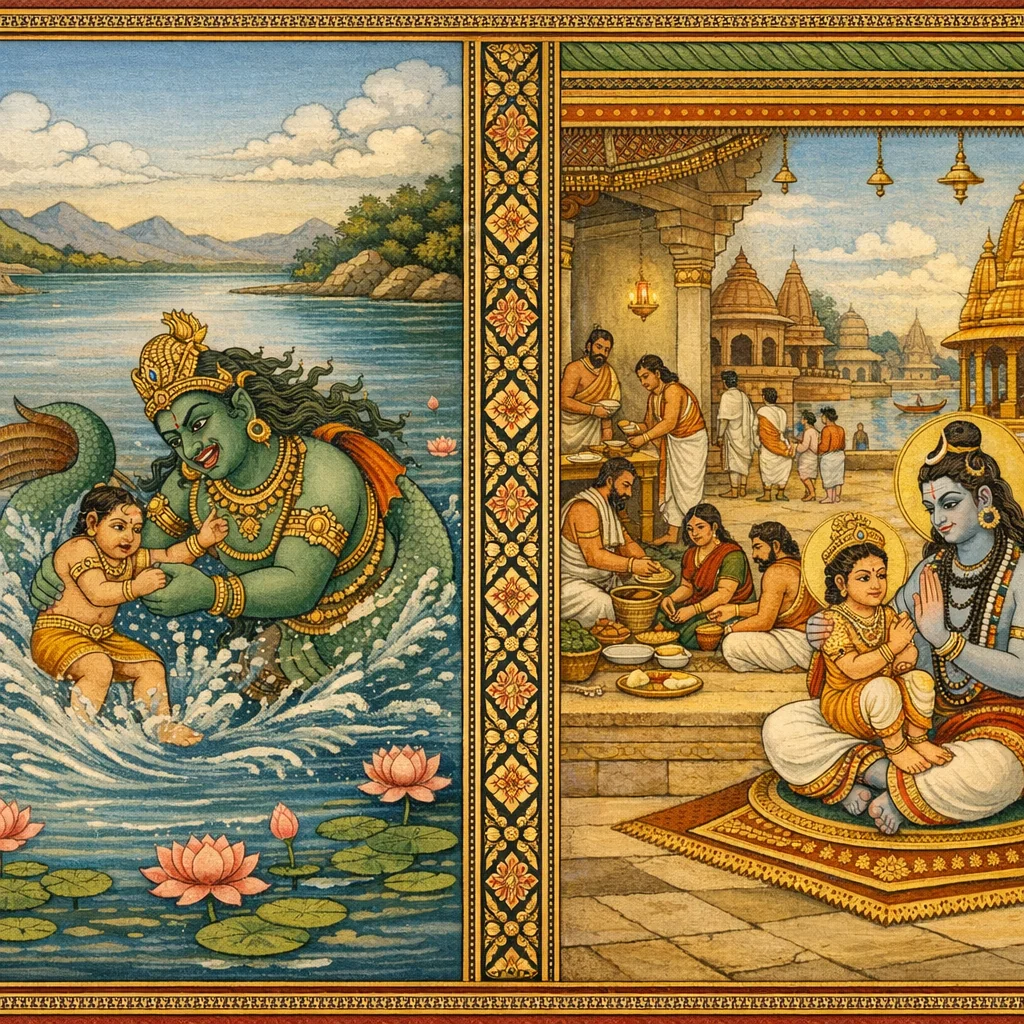
This chapter first describes the Nairṛta quarter and its beings, teaching that even those of socially marginalized birth are deemed “followers of merit” when they live in accord with śruti-smṛti, uphold non-violence, truthfulness, self-restraint, and reverence toward dvijas. It also explicitly warns against self-harm, declaring it spiritually ruinous. A narrative exemplar follows: Piṅgākṣa, a forest chief (pallīpati), is portrayed as a protective hunter who practices a regulated “mṛgayā-dharma” and provides safety and aid to travelers. The greed-driven violence of a relative and Piṅgākṣa’s final intention are used to explain karmic fruition, culminating in his attainment of lordship in the Nairṛta realm. The discourse then turns to Varuṇa’s realm, praising public-benefit charities—digging wells, making ponds, distributing water, building shade-halls, ferrying travelers, and removing fear—as sources of merit and security. Finally, Varuṇa’s origin is narrated: the sage’s son Śuciṣmān is taken by a water-being, but through Śiva’s intervention and devotion he is restored; later, by tapas in Vārāṇasī, Śiva grants him sovereignty over the waters and the स्थापना of the Varuṇeśa liṅga in Kāśī, which protects devotees from water-related fears and afflictions.
Shlokas
Verse 1
शिवशर्मोवाच । नैरृतादीन् क्रमाल्लोकानाख्यातं पुरुषोत्तमौ । पुरुषोत्तमपादाब्जपरागोद्धूसरालकौ
Śivaśarman said: “O best of beings, you have described in due order the worlds beginning with the realm of Nairṛta; your hair seems, as it were, dusted with the pollen of the lotus-feet of Purushottama, the Supreme Person.”
Verse 2
गणावूचतुः । आकर्णय महाभाग संयमिन्याः पुरीं पराम् । दिक्पतेर्निरृतस्यासौ पुण्यापुण्यजनोषिता
The Gaṇas said: “Listen, O greatly fortunate one, to the supreme city of Saṃyaminī, belonging to Nirṛta, lord of a direction; it is inhabited by both the righteous and the unrighteous.”
Verse 3
राक्षसानिवसंत्यस्यामपरद्रोहिणः सदा । जातिमात्रेण रक्षांसि वृत्तैः पुण्यजना इमे
In that city dwell Rākṣasas who are ever free from harming others. Though Rākṣasas by birth alone, by their conduct they are truly righteous folk.
Verse 4
स्मृत्युक्तश्रुतिवर्त्मानो जातवर्णावरेष्वपि । नाद्रियंतेऽन्नपानानामस्मृत्युक्तं कदाचन
They follow the paths taught by Smṛti and Śruti, even though born in lower social orders; and they never accept food or drink not sanctioned by the codes of tradition.
Verse 5
परदार परद्रव्य परद्रोहपराङ्मुखाः । जाताजातौ निकृष्टायामपिपुण्यानुसारिणः
They turn away from another’s spouse, another’s wealth, and from harming others; even when born in the most degraded conditions, they still follow the path of merit.
Verse 6
द्विजातिभक्त्युत्पन्नार्थैरात्मानं पोषयंति ये । सदा संकुचितांगाश्च द्विजसंभाषणादिषु
Those who sustain themselves by means gained through devotion to the twice-born remain ever modest and restrained in their bearing—especially in conversing and interacting with the Brāhmaṇas.
Verse 7
आहूता वस्त्रवदना वदंति द्विजसंनिधौ । जयजीवभगोनाथ स्वामिन्निति हि वादिनः
When summoned, they speak with modest, veiled faces in the presence of Brāhmaṇas, uttering words such as, “Victory! O Lord of life and fortune, O Master,”—thus are they known to address with reverence.
Verse 8
तीर्थस्नानपरानित्यं नित्यं देवपरायणाः । द्विजेषु नित्यं प्रणताः स्वनामाख्यानपूर्वकम्
They are ever devoted to bathing at holy fords, ever intent upon the gods; and they continually bow to Brāhmaṇas, first announcing their own names in a proper manner.
Verse 9
दम दान दया क्षांति शौचेंद्रिय विनिग्रहाः । अस्तेय सत्याहिंसाश्च सर्वेषां धर्महेतवः
Self-restraint, charity, compassion, forbearance, purity, and control of the senses—together with non-stealing, truthfulness, and non-violence—these are the causes that uphold dharma for all.
Verse 10
आवश्येषु सदोद्युक्ता ये जाता यत्रकुत्रचित् । सर्वभोगसमृद्धास्ते वसंत्यत्र पुरोत्तमे
Those who are ever diligent in necessary duties—wherever they may have been born—become endowed with every enjoyment, and they dwell here in this supremely excellent city.
Verse 11
म्लेच्छा अपि सुतीर्थेषु ये मृतानात्मघातकाः । विहाय काशीं निर्वाण विश्राणांतेऽत्र भोगिनः
Even the mlecchas, if they die at the most excellent tīrthas—provided they are not self-slayers—having left Kāśī behind, receive here the gift of liberation, after enjoying the fruits of their merits.
Verse 12
अंधं तमो विशेयुस्ते ये चैवात्महनो जनाः । भुक्त्वा निरयसाहस्रं ते च स्युर्ग्रामसूकराः
But those who kill themselves enter blinding darkness; after undergoing thousands of hellish states, they are reborn as village swine.
Verse 13
आत्मघातो न कर्तव्यस्तस्मात्क्वापि विपश्चिता । इहापि च परत्रापि न शुभान्यात्मघातिनाम्
Therefore the wise should never commit self-destruction anywhere; for self-slayers find no auspiciousness—neither in this world nor in the next.
Verse 14
यथेष्टमरणं केचिदाहुस्तत्त्वावबोधकाः । प्रयागे सर्वतीर्थानां राज्ञिसर्वाभिलाषदे
Some, claiming insight into the truth, speak of “dying at will,” and they point to Prayāga—the king of all tīrthas, the giver of every desired attainment.
Verse 15
अंत्यजा अपि ये केचिद्दयाधर्मानुसारिणः । परोपकृतिनिष्ठास्ते वसंत्यत्र तु सत्तमाः
Even those born in the lowest stations, if they follow the dharma of compassion and remain steadfast in helping others, dwell here as the best among the good.
Verse 17
पल्लीपतिरभूदुग्रः पिंगाक्ष इति विश्रुतः । निर्विंध्यायास्तटे शूरः क्रूरकर्मपराङ्मुखः
There was a fierce chief of a forest settlement, famed by the name Piṅgākṣa; on the bank of the Nirvindhyā he stood a hero, turned away from cruel deeds.
Verse 18
घातयेद्दूरसंस्थोपि यः पांथपरिपंथिनः । व्याघ्रादीन् दुष्टसत्त्वांश्च स हिनस्ति प्रयत्नतः
Even from afar, he strives to slay those who waylay travelers—tigers and other wicked creatures—acting with deliberate effort to safeguard the road.
Verse 19
जीवेन्मृगयु धर्मेण तत्रापि करुणापरः । न विश्वस्तान्पक्षिमृगान्न सुप्तान्न व्यवायिनः
Let the hunter live by his calling in accord with dharma, yet remain devoted to compassion: he should not kill trusting birds and beasts, nor those asleep, nor those engaged in mating.
Verse 20
न तोयगृध्नून्न शिशून्नांतर्वर्त्नित्वलक्षणान् । स घातयति धर्मज्ञो जातिधर्मपराङ्मुखः
Knowing dharma, he does not kill those desperate for water, nor the young, nor those marked by pregnancy; he turns away from such base, species-bound cruelty.
Verse 21
श्रमातुरेभ्यः पांथेभ्यः स विश्रामं प्रयच्छति । हरेत्क्षुधा क्षुधार्तानामुपानद्दोऽनुपानहे
To travelers worn out by fatigue he grants rest; he takes away the hunger of the hungry—giving sandals to the barefooted.
Verse 22
मृगत्त्वचोतिमृदुला विवस्त्रेभ्यातिसर्जति । अनुव्रजति कांतारे प्रांतरे पथिकान्पथि
He gives very soft deerskins to those without clothing, and he accompanies travelers along the path—through deep forests and lonely borderlands.
Verse 23
न जिघृक्षति तेभ्योर्थमभयं चेति यच्छति । आविंध्याटवि मे नाम ग्राह्यं दुष्टभयापहम्
He does not seek to take wealth from them; instead he grants them fearlessness, saying: ‘My name is Āviṃdhyāṭavī—remember it; it removes fear of the wicked.’
Verse 24
नित्यं कार्पटिकान्सर्वान् स पुत्रेण प्रपश्यति । तेपि च प्रतितीर्थं हि तमाशीर्वादयं ति वै
Daily, along with his son, he looks after all the poor and wretched; and they, at every sacred ford, indeed bless him.
Verse 25
इति तिष्ठति पिंगाक्षे साटवी नगरायिता । अध्वनीने ऽध्वगान्कोपि न रुणद्धि ससाध्वसः
Thus, O Piṅgākṣa, that forest became as a city. On that highway no one hindered the travelers, nor did anyone remain in fear.
Verse 27
लुब्धकस्तद्धने लुब्धः क्षुद्रस्तन्निधनोद्यतः । स रुरोध तमध्वानमग्रे गत्वाऽतिगूढवत्
A petty hunter, greedy for that wealth and bent on his destruction, went ahead and blocked that road, lying in wait like one well concealed.
Verse 28
तदा युप्यस्यशेषेण पिंगाक्षो मृगयां गतः । तस्मिन्नरण्ये तन्मार्गं निकषाध्युषितो निशि
Then Piṅgākṣa went forth to hunt, carrying only a small remainder of his provisions and gear. In that forest, that path was occupied by night, closely watched by one lying in wait.
Verse 29
परप्राणद्रुहां पुंसां न सिद्ध्येयुर्मनोरथाः । विश्वं कुशलितेनैतद्विश्वेशपरिरक्षितम्
For men who harm the lives of others, their desires do not attain fulfillment. This entire world is kept in well-being and is protected by Viśveśa, the Lord of Kāśī.
Verse 30
न चिंतयेदनिष्टानि तस्मात्कृष्टिः कदाचन । विधिदृष्टं यतो भावि कलुषंभावि केवलम्
Therefore one should not brood over misfortunes, for such fretting is never fruitful. Whatever destiny has foreseen is bound to occur—tainted or pure, it surely comes to pass.
Verse 31
तस्मादात्मसुखंप्रेप्सु रिष्टानिष्टं न चिंतयेत् । चिंतयेच्चेत्तदाचिंत्यो मोक्षोपायो न चेतरः
Therefore, one who seeks the bliss of the Self should not dwell on good fortune or misfortune. If one must think, let the mind contemplate the Unthinkable, the Supreme; this alone is the means to liberation (mokṣa), and no other.
Verse 32
व्युष्टायामथयामिन्यामभूत्कोलाहलो महान् । घातयध्वं पातयध्वं नग्नयध्वं द्रुतं भटाः
Then, as the night gave way to dawn, a great uproar arose: “Strike them down! Throw them down! Strip them—quickly, soldiers!”
Verse 33
मा मारयध्वं त्रायध्वं भटाः कार्पटिका वयम् । अनायासं लुंठयध्वं नयध्वं च यदस्ति नः
Do not kill us—protect us, O soldiers! We are poor mendicants. Plunder without effort whatever we have, and carry it away.
Verse 34
वयं पांथा अनाथाः स्मो विश्वनाथपरायणाः । सनाथास्ते न दूरं सनाथतां पथिकोऽपरः
We are travelers without protectors, yet devoted to Viśvanātha. Those who have a protector are never far from safety; another traveler gains protection as well.
Verse 35
वयं पिंगाक्षविश्वासादस्मिन्मार्गेऽकुतोभयाः । यातायातं सदा कुर्मः स च दूर इतो वनात्
Because we trust Piṅgākṣa, we are fearless on this road. We travel back and forth constantly, and he is not far from this forest.
Verse 36
इति श्रुत्वाऽथ पिंगाक्षो भटः कार्पटिकेरितम । दूरान्मा भैष्ट माभैष्ट ब्रुवन्निति समागतः
Hearing this speech of the mendicants, the soldier Piṅgākṣa came from afar, saying, “Do not fear, do not fear.”
Verse 37
तत्कर्मसूत्रैराकृष्टो भिल्लःकार्पटिकप्रियः । तूर्णं तदायुष्यमिव तत्रोपस्थितवान् क्षणात्
Drawn in by the threads of his own karma, the Bhilla—fond of preying upon mendicants—swiftly appeared there in an instant, as if summoned by his very lifespan.
Verse 38
कोयंकोयं दुराचारः पिंगाक्षे मयि जीवति । उल्लुलुंठयिषुः पांथान्प्राणलिंगसमान्मम
“Who is this vile miscreant—who, while I yet live, seeks to utterly plunder the travelers, who are to me as dear as my very life and liṅga?”
Verse 39
इति तद्वाक्यमाकर्ण्य ताराक्षस्तत्पितृव्यकः । धनलोभेन पिंगाक्षे पापं पापो व्यचिंतयत्
Hearing those words, Tārākṣa—his paternal uncle—overcome by greed for wealth, O Piṅgākṣa, that sinful man began to scheme a sinful deed.
Verse 40
कुलधर्मं व्यपास्यैष वर्तते कुलपांसनः । चिरं चिंतितमद्यामुं घातयिष्याम्यसंशयम्
‘Casting aside the dharma of his lineage, this disgrace to the family behaves as he pleases. Today, without doubt, I shall kill him—something I have long been pondering.’
Verse 41
विचार्येति स दुष्टात्मा भृत्यानाज्ञापयत्क्रुधा । आदावेनं घातयंतु ततः कार्पटिकानिमान्
Having decided so, that wicked-souled man angrily commanded his servants: ‘First kill this one; then kill these mendicants as well.’
Verse 42
ततो ऽयुध्यन्दुराचारास्तेनैकेन च तेऽखिलाः । यथाकथंचित्ताननयत्स च स्वावसथांतिकम्
Then those ill-conducted men fought with that lone man; yet, somehow, he brought them all near his own dwelling-place.
Verse 43
आच्छिन्नं हि धनुर्वाणं छिन्नं सन्नहनं शरैः । असूदयिष्यमेतांस्तदभविष्यं यदीश्वरः
“My bow and arrows have been torn away; my armor has been cut to pieces by their shafts. I would have slain them—if only the Lord had willed it otherwise.”
Verse 44
अभिलप्यन्निति प्राणानत्याक्षीत्स परार्थतः । तेपि कार्पटिकाः प्राप्तास्तत्पल्लीं गतसाध्वसाः
Speaking thus, he gave up his life for the sake of another. Those mendicants too reached that hamlet, their fear dispelled.
Verse 45
या मतिस्त्वंतकाले स्याद्गतिस्तदनुरूपतः । दिगीशत्वमतः प्राप्तो निरृत्यां नैरृतेश्वरः
As one’s thought is at the time of death, so one’s course becomes accordingly. Therefore he attained the lordship of a direction—becoming the ruler of the Nairṛta quarter, in Nirṛti’s realm.
Verse 46
इत्थमस्य स्वरूपं ते आवाभ्यां समुदीरितम् । एतस्योत्तरतो लोको वरुणस्यायमद्भुतः
Thus his true condition has been explained to you by us. To the north of this lies the wondrous world of Varuṇa.
Verse 47
कूपवापीतडागानां कर्तारो निर्मलैर्धनैः । इह लोके महीयंते वारुणे वरुणप्रभाः
Those who, with pure and righteous wealth, build wells, ponds, and tanks are honored in this very world and shine with Varuṇa’s splendor in Varuṇa’s realm.
Verse 48
निर्जले जलदातारः परसंतापहारिणः । अर्थिभ्यो ये प्रयच्छंति चित्रच्छत्रकमंडलून्
Those who give water where there is no water, removing the suffering of others, and who bestow upon supplicants fine umbrellas and water-pots (kamandalu) for travelers—
Verse 49
पानीयशालिकाः कुर्युर्नानोपस्करसंयुताः । दद्युर्धर्मघटांश्चापि सुगंधोदकपूरितान्
They should establish drinking-water rest-stations, furnished with various necessities; and they should also donate “dharma-pots”—pots filled with fragrant water—for the sake of righteousness.
Verse 50
अश्वत्थसेकं ये कुर्युः पथि पादपरोपकाः । विश्रामशालाकर्तारः श्रांतसंतापनोदकाः
Those who water the aśvattha tree along the road for the benefit of wayfarers, who build resting-halls, and who provide water that relieves the fatigue and heat of the weary—such people perform true beneficence.
Verse 51
ग्रीष्मोष्प्रहंति मायूरपिच्छादि रचितान्यपि । चित्राणि तालवृंतानि वितरंति तपागमे
When the season of heat arrives, they distribute colorful palm-leaf fans—some even fashioned with peacock-feathers and the like—that ward off the summer’s burning.
Verse 52
रसवंति सुगंधीनि हिमवंति तपर्तुषु । विश्राणयंति वा तृप्ति पानकानि प्रयत्नतः
In the seasons of heat, they diligently offer satisfying drinks—flavorful, fragrant, and cooled—bringing contentment and refreshment.
Verse 53
इक्षुक्षेत्राणि संकल्प्य ब्राह्मणेभ्यो ददत्यपि । तथा नानाप्रकारांश्च विकारानैक्षवान्बहून्
Having duly resolved the gift as a sacred donation, they even bestow sugarcane fields upon brāhmaṇas; likewise they offer many kinds of preparations made from sugarcane.
Verse 54
गोरसानां प्रदातारस्तथा गोमहिषीप्रदाः । धारामंडपकर्तारश्छायामंडपकारिणः
Givers of milk and its offerings, donors of cows and buffaloes, builders of water-pavilions, and makers of shade-pavilions—such benefactors are praised for their righteous deeds of dharma.
Verse 55
देवालयेषु ये दद्युर्बहुधारागलंतिकाः । तीर्थे वा करहर्तारस्तीर्थमार्गावनेजका
Those who, in temples, provide vessels that pour water in many streams, and those at tīrthas who remove refuse and cleanse the pilgrimage paths—these too are honored as servants of dharma.
Verse 56
अभयं ये प्रयच्छंति भयार्तोद्यत पाणयः । निर्भया वारुणे लोके ते वसंति लसंति च
Those who grant fearlessness—stretching out their hands to the frightened and distressed—dwell without fear in Varuṇa’s world, shining there in honor.
Verse 57
विपाशयंति ये पुण्या दुर्वृतैः कंठपाशितान् । ते पाशपाणे लोकेस्मिन्निवसंत्यकुतोभयाः
The virtuous who loosen the noose from those whose throats are bound by the wicked are freed from fear on every side; they dwell without dread in this realm of the Noose-bearer (Pāśapāṇi).
Verse 58
नौकाद्युपायैर्न द्यादौ पांथान्ये तारयंत्यपि । तारयंत्यपि दुःखाब्धेस्तत्र नागरिका द्विज
O brāhmaṇa, those townsmen who ferry travelers across rivers and the like by boats and other means—indeed, they too help beings cross the ocean of suffering.
Verse 59
घट्टान्पुण्यतटिन्यादेर्बंधयंति शिलादिभिः । तोयार्थिसुखसिद्ध्यर्थं ये नरास्तेत्र भोगिनः
Those men who, with stones and the like, construct bathing-steps (ghāṭas) on sacred rivers and other holy waters, for the comfort and successful fulfillment of those who seek water—such people become enjoyers of prosperity there.
Verse 60
वितर्पयंति ये पुण्यास्तृषिताञ्शीतलैर्जलैः । तेऽत्र वै वारुणे लोके सुखसंततिभागिनः
The virtuous who satisfy the thirsty with cool water—those indeed become sharers of unbroken happiness in Varuṇa’s world.
Verse 61
जलाशयानां सर्वेषामयमेकतमः पतिः । प्रचेता यादसांनाथः साक्षी सर्वेषुकर्मसु
Among all reservoirs of water, he is the foremost lord—Pracetā (Varuṇa), the master of aquatic beings, the witness to all actions.
Verse 62
अस्योत्पत्तिं शृणु पतेर्वरुणस्यमहात्मनः । आसीन्मुनिरमेयात्मा कर्दमस्य प्रजापतेः
Hear the origin of that great-souled lord Varuṇa. There was a sage of immeasurable spirit, born of Kardama Prajāpati.
Verse 63
शुचिष्मानिति विख्यातस्तनयो विनयोचितः । स्थैर्य माधुर्य धैर्याद्यैर्गुणैरुपचितोहितः
A son was born, renowned as Śuciṣmān—fit for humility and right conduct—nourished by virtues such as steadiness, gentleness, and courage, ever inclined toward what is beneficial.
Verse 64
अच्छोदे सरसि स्नातुं स गतो बालकैः सह । जलक्रीडनसंसक्तं शिशुमारो हरच्च तम्
He went with the boys to bathe in the lake Acchoda. While he was absorbed in playing in the water, a śiśumāra—a crocodile-like water-creature—seized him and carried him away.
Verse 65
ततस्तस्मिन्मुनिसुते हृतेऽत्याहितशंसिभिः । तैः समागत्य शिशुभिः कथितं तत्पितुः पुरः
Then, when that sage’s son had been taken away—an alarming calamity—those boys gathered together and reported it before his father.
Verse 66
हरार्चनोपविष्टस्य समाधौ निश्चलात्मनः । श्रुतबालविपत्तेश्च चचाल न मनोहरात्
Seated in the worship of Hara (Śiva), steadfast in samādhi with an unmoving mind, though he heard of the child’s calamity, his mind did not waver from the captivating Lord.
Verse 67
अधिकं शीलयामास स सर्वज्ञं त्रिलोचनम् । पश्यञ्शंभोः समीपे स भुवनानि चतुर्दश
He devoted himself all the more to the omniscient Three-Eyed Lord; and near Śambhu, he beheld the fourteen worlds.
Verse 68
नाना भूतानि भूतानि ब्रह्मांडांतर्गतानि च । चंद्रसूर्यर्क्षताराश्च पर्वतान्सरितो द्रुमान्
He beheld many kinds of beings—indeed all creatures within the cosmic egg—along with the moon, the sun, constellations and stars, mountains, rivers, and trees.
Verse 69
समुद्रानंतरीयाणि ह्यरण्यानीस्सरांसि च । नाना देवनिकायांश्च बह्वीर्दिविषदां पुरीः
He beheld forests and lakes lying between the stretches of the sea, and also many assemblies of divine beings, along with numerous celestial cities of the gods.
Verse 70
वापीकूपतडागानि कुल्याः पुष्करिणीर्बहु । एकस्मिन्क्वापि सरसि जलक्रीडापरायणान्
He saw wells, stepwells, ponds, canals, and many lotus-tanks; and in one particular lake he noticed beings wholly absorbed in playful sport in the water.
Verse 71
बहून्मुनिकुमारांश्च मज्जनोन्मज्जनादिभिः । करयंत्रविनिर्मुक्ततोयधाराभिषेचनैः
He saw many young sages, diving and surfacing again and again, and being sprinkled by streams of water released from hand-operated devices.
Verse 72
करताडितपानीयशब्ददिङ्मुखनादिभिः । जलखेलनकैरित्थं संसक्तान्बहुबालकान्
With the splashing sounds of water struck by their hands echoing in all directions, he saw many children thus engrossed in games in the water.
Verse 73
तेषां मध्ये ददर्शाथ समाधिस्थः स कर्दमः । स्वं शिशुं शिशुमारेण नीयमानं सुविह्वलम्
Then Kardama—though established in samādhi—saw among them his own child being dragged away by a crocodile, utterly distressed.
Verse 74
कयाचिज्जलदेव्याथ तस्माच्चक्रूरयादसः । प्रसह्य नीत्वोदधये दृष्टवांस्तं समर्पितम्
And he saw that the child, forcibly carried off by that cruel aquatic creature, had been handed over to the ocean by a certain water-goddess.
Verse 75
निर्भर्त्स्य सरितांनाथं केनचिद्रुद्ररूपिणा । त्रिशूलपाणिनेत्युक्तं क्रोधताम्राननेनच
Then, by one who assumed a Rudra-like form, the lord of rivers was sternly rebuked; with a face reddened by anger he was addressed: “O trident-bearing one!”
Verse 76
कुतो जलानामधिप शिवभक्तस्य बालकः । प्रजापतेः कर्दमस्य महाभागस्य धीमतः
“How could the child of that great and wise Prajāpati Kardama—who is a devotee of Śiva—come to harm, O lord of the waters?”
Verse 77
अज्ञात्वा शिवसामर्थ्यं भवताचिरमासितः । भयत्रस्तेन तद्वाक्यश्रवणात्तमुदन्वता
“Not knowing Śiva’s might, you have acted thus for a long time.” Hearing those words, the ocean—struck with fear—became shaken.
Verse 78
बालं रत्नैरलंकृत्य बद्ध्वा तं शिशुमारकम् । समर्पितं समानीय शंभुपादाब्जसंनिधौ
Adorning the child with jewels and binding that crocodile, they brought him back and presented him near the lotus-feet of Śambhu (Śiva).
Verse 79
नत्वा विज्ञापयत्तं च नापराध्याम्यहं विभो । अनाथनाथविश्वेश भक्तापत्तिविनाशन
Having bowed down, he submitted his plea: “O Lord, I have committed no offense. O Viśveśa, refuge of the refuge-less, destroyer of your devotees’ calamities!”
Verse 80
भक्तकल्पतरो शंभोऽनेनायं दुष्टयादसा । अनायिन मया नाथ भवद्भक्तजनार्भकः
“O Śambhu, wish-fulfilling tree for devotees! By this wicked sea-creature, this child—an innocent little one of your devotee—has been carried off, O Lord.”
Verse 81
गणेन तेन विज्ञाय शंभोरथ मनोगतम् । पाशेन बद्ध्वा तद्यादः शिशुहस्ते समर्पितम्
Then that gaṇa, understanding Śambhu’s intention, bound the water-creature with a noose and placed it into the child’s hands.
Verse 82
गृहाणेमं स्वतनयं पार्षदे शंकराज्ञया । याहि स्वभवनं वत्स ब्रुवतीति स कर्दमः
“O attendant, by Śaṅkara’s command, take back this your own son. Go to your home, dear child”—so spoke Kardama.
Verse 83
समाधिसमये सर्वमिति शृण्वन्नुदारधीः । उन्मील्य नयने यावत्प्रणिधानं विसृज्य च
While in samādhi, hearing those words, the noble-minded one opened his eyes and for a moment released his fixed concentration.
Verse 84
संपश्यते शिशुं तावत्पुरतः समवैक्षत । गृहीतशिशुमारं च पार्श्वेऽलंकृतकर्णिकम्
He then beheld the child before him, and beside him the captured crocodile-like creature, its ear-ornaments finely adorned.
Verse 85
तोयार्द्रकाकपक्षाग्रं कषायनयनांचलम् । किंचिद्विरूक्षं त्वक्क्षोभं संभ्रमापन्नमानसम्
The tips of his hair were wet like a crow’s wing, the corners of his eyes darkened; he looked somewhat disheveled, his skin trembling, his mind shaken with fear.
Verse 86
कृतप्रणाममालिंग्य जिघ्रंस्तन्मुखपंकजम् । पुनर्जातमिवामंस्त पश्यंश्चापि मुहुर्मुहुः
After the child had bowed, he embraced him and breathed in the fragrance of his lotus-like face, thinking him as if born anew, and gazed at him again and again.
Verse 87
शतानिपंचवर्षाणि प्रणिधानस्थितस्य हि । कर्दमस्य व्यतीतानि शंभुमर्चयतस्तदा
For Kardama, abiding in unwavering contemplation, five hundred years passed as he worshiped Śambhu.
Verse 88
कर्दमोपि च तत्कालमज्ञासीत्क्षणसंगतम् । यतो न प्रभवेत्कालो महाकालस्य संनिधौ
And Kardama did not even perceive that span of time—it seemed but a single moment—for Time itself has no power in the presence of Mahākāla.
Verse 89
ततस्तं तनयः पृष्ट्वा पितरं प्रणिपत्य च । जगाम तूर्णं तपसे श्रीमद्वाराणसीं पुरीम्
Then the son, having questioned his father and bowed down to him, swiftly set out to undertake austerities in the illustrious city of Vārāṇasī.
Verse 90
तत्र तप्त्वा तपो घोरं लिंगं संस्थाप्य शांभवम् । पंचवर्षसहस्राणि स्थितः पाषाणनिश्चलः
There he performed fierce austerities; and, having established a Śaiva liṅga of Śambhu, he remained for five thousand years—motionless like a rock.
Verse 91
आविरासीन्महादेवस्तुष्टस्तत्तपसा ततः । उवाच कार्दमे ब्रूहि कं ददामि वरोत्तमम्
Then Mahādeva manifested, pleased by that austerity, and said to Kārdama: “Speak—what highest boon shall I grant you?”
Verse 92
कार्दमिरुवाच । यदि नाथ प्रसन्नोसि भक्तानामनुकंपक । सर्वासामाधिपत्यं मे देह्यपां यादसामपि
Kārdama said: “If you are pleased, O Lord, compassionate to your devotees, grant me sovereignty over all waters, and over the aquatic beings as well.”
Verse 93
इति श्रुत्वा महेशानः सर्वचिंतितदः प्रभुः । अभ्यषिंचत तं तत्र वारुणे परमे पदे
Hearing this, Maheśāna—the Lord who grants all that is desired—there anointed him and installed him in the supreme status of Varuṇa.
Verse 94
रत्नानामब्धिजातानामब्धीनां सरितामपि । सरसां पल्वलानां च वाप्यंबु स्रोतसा पुनः
Over gems born of the ocean, over the seas and the rivers as well; over lakes, ponds, tanks, and again over flowing waters—
Verse 95
जलाशयानां सर्वेषां प्रतीच्याश्चापि वैदिशः । अधीश्वरः पाशपाणिर्भव सर्वामरप्रियः
“Become the overlord of all water-reservoirs; and be the guardian of the western quarter as well—bearing the noose in hand, beloved of all the gods.”
Verse 96
ददामि वरमन्यं च सर्वेषां हितकारकम् । त्वयैतत्स्थापितं लिंगं तव नाम्ना भविष्यति
“I grant another boon as well, beneficial to all: this liṅga established by you shall become known by your name.”
Verse 97
वरुणेशमिति ख्यातं वाराणस्यां सुसिद्धिदम् । मणिकर्णेश लिंगस्य नैरृत्यां दिशि संस्थितम्
In Vārāṇasī it will be renowned as “Varuṇeśa,” bestowing excellent attainment. It is situated to the south-west of the Maṇikarṇeśa liṅga.
Verse 98
आराधितं सदा पुंसां सर्वजाड्यविनाशकृत् । वरुणेशस्य ये भक्ता न तेषामब्भयं क्वचित्
Ever worshipped by people, it destroys all dullness and inertia. Those who are devotees of Varuṇeśa never have fear from water at any time.
Verse 99
न संतापभयं तेषां नापायमरणं क्वचित् । जलोदरभयं नैव न भयं वै तृषः क्वचित्
For them there is no fear of burning affliction, nor any untimely death at any time. There is no fear of dropsy, and never any fear of thirst.
Verse 100
नीरसान्यन्नपानानि वरुणेश्वर संस्मृतेः । सरसानि भविष्यंति नात्र कार्या विचारणा
By the remembrance of Varuṇeśvara, even tasteless food and drink become full of flavor; of this there is no need for doubt or further deliberation.
Verse 102
इदं वरुणलोकस्य स्वरूपं ते निरूपितम् । यच्छ्रुत्वा न नरः क्वापि दुरपायैः प्रबाध्यते
Thus the nature of Varuṇa’s world has been explained to you. Hearing it, a person is not afflicted anywhere by grievous misfortunes.
Verse 205
कदाचित्तत्पितृव्येण समीप ग्रामवासिना । श्रुतः कार्पटिकानां हि सार्थः सार्थो महास्वनः
Once, his paternal uncle who lived in a nearby village heard the great clamorous caravan—indeed a full traveling company of kārpaṭikas, mendicant wanderers.