Adhyaya 39
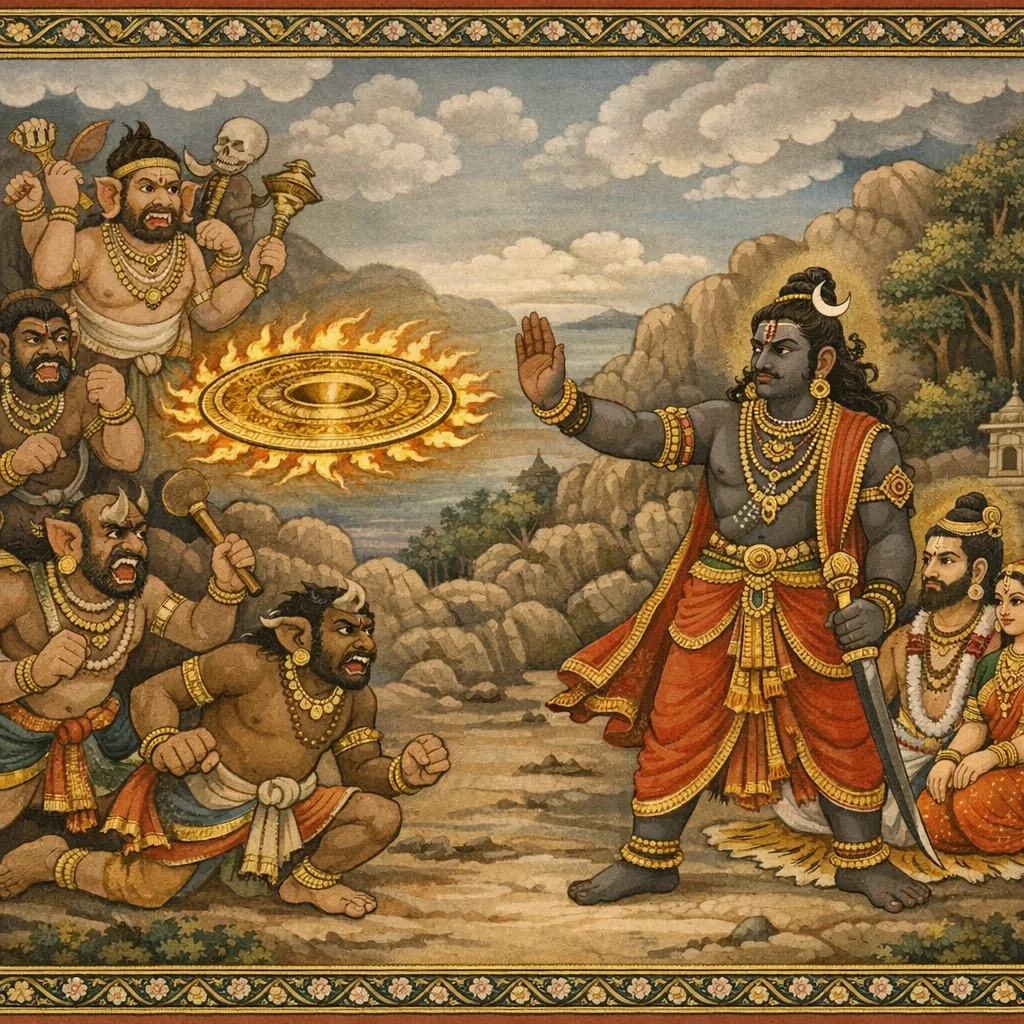
Chapter 39 begins with Skanda teaching Agastya a “sin-destroying” account rooted in Avimukta-Kāśī. Kāśī is first portrayed through metaphysical language of the supreme Brahman—beyond conceptual construction, formless, unmanifest—yet said to pervade this sacred field in a uniquely liberative way. Skanda then offers a comparative path of salvation: disciplines that elsewhere demand severe yoga, great gifts, or long austerities are, in Kāśī, attainable through modest offerings (flower, leaf, fruit, water), brief meditative stillness, bathing in the Gaṅgā, and giving alms—each counted as “great” because of the kṣetra’s sanctity. A further section provides an etiological legend: in an ancient age of prolonged drought and social collapse, Brahmā installs King Ripuñjaya (also called Divodāsa) to restore order. The story leads through divine relocations and negotiations involving Rudra/Śiva and Mount Mandara, and culminates in Śiva’s continuing presence in Kāśī in liṅga-form. The chapter concludes by exalting Avimukteśvara as the “ādi-liṅga”: seeing, remembering, touching, worshiping it, and even hearing its name are said to swiftly dissolve accumulated sin and loosen karmic bonds. It also notes periodic convergence of other liṅgas and praises disciplined japa and devotion within the kṣetra.
Shlokas
Verse 1
स्कंद उवाच । शृण्वगस्त्य महाभाग कथां पापप्रणाशिनीम् । नैःश्रेयस्याः श्रियोहेतुमविमुक्त समाश्रयाम्
Skanda said: O fortunate Agastya, listen to this sin-destroying account—Avimukta, the refuge that is the very cause of the splendor of final beatitude (niḥśreyasa).
Verse 2
परं ब्रह्म यदाम्नातं निष्प्रपंचं निरात्मकम् । निर्विकल्पं निराकारमव्यक्तं स्थूलसूक्ष्मवत्
That Supreme Brahman, as declared in sacred tradition, is beyond all manifestation, without limiting selfhood, free from conceptual division, formless and unmanifest—yet pervading as though it were both the gross and the subtle.
Verse 3
तदेतत्क्षेत्रमापूर्य स्थितं सर्वगमप्यहो । किमन्यत्र न शक्तोसौ जंतून्मोचयितुं भवात्
That Supreme One abides here, filling this sacred field, though all-pervading. Then why, one might ask, is He not able elsewhere to liberate beings from worldly existence?
Verse 4
भवो ध्रुवं यदत्रैव मोचयेत्तं निशामय । महत्या योगयुक्त्या वा महादानैरकामिकैः
Hear this: Bhava (Śiva) surely grants liberation right here. Elsewhere, liberation is attained only through great yogic discipline or through vast, desireless acts of charity.
Verse 5
सुमहद्भिस्तपोभिर्वा शिवोन्यत्र विमोचयेत् । योगयुक्तिं न महतीं न दानानि महांति च
Elsewhere, Śiva may grant release only through exceedingly great austerities; but in Kāśī, neither elaborate yogic disciplines nor vast charities are required.
Verse 6
न तपांस्यतिदीर्घाणि काश्यां मुक्त्यै शिवोर्थयेत् । वियुनक्ति न यत्काश्या उपसर्गे महत्यपि
For liberation in Kāśī, Śiva does not demand excessively long austerities; for Kāśī never abandons one, even amid great calamities.
Verse 7
अयमेव महायोग उपयोगस्त्विहा परः । नियमेन तु विश्वेशे पुष्पं पत्रं फलं जलम्
This alone is the supreme ‘great yoga’ in this place: with disciplined devotion, to offer to Viśveśa a flower, a leaf, a fruit, or water.
Verse 8
यद्दत्तं सुमनोवृत्त्या महादानं तदत्र वै । मुक्तिमंडपिकायां च क्षणं यत्स्थिरमास्यते
Whatever is given here with a pure and gracious mind becomes, indeed, a ‘great gift’; and even sitting steadily for a moment in the Mukti-maṇḍapikā is of consequence.
Verse 9
स्नात्वा गंगामृते शुद्धे तप एतदिहोत्तमम् । सत्कृत्य भिक्षवे भिक्षा यत्काश्यां परिदीयते । तुला पुरुष एतस्याः कलां नार्हति षोडशीम्
Having bathed in the pure, nectar-like Gaṅgā, this is the highest austerity here: to honor a mendicant and give alms in Kāśī. The famed Tulā-puruṣa rite does not equal even a sixteenth part of this merit.
Verse 10
हृदि संचिंत्य विश्वेशं क्षणं यद्विनिमील्यते । देवस्य दक्षिणे भागे महायोगोयमुत्तमः
To contemplate Viśveśa within the heart and close the eyes for a moment—this, in the Lord’s southern region (the sacred quarter of Kāśī), is the highest great-yoga.
Verse 11
इदमेव तपोत्युग्रं यदिंद्रिय विलोलताम् । निषिध्य स्थीयते काश्यां क्षुत्तापाद्यवमन्य च
This alone is the fiercest austerity: to restrain the wavering of the senses and remain in Kāśī, even while disregarding hunger, heat, and the like.
Verse 12
मासि मासि यदाप्येत व्रताच्चांद्रायणात्फलम् । अन्यत्र तदिहाप्येत भूतायां नक्तभोजनात्
Whatever fruit is obtained month after month elsewhere by the Cāndrāyaṇa vow—here, in the month of Bhūtā (Bhādrapada), that same fruit is gained merely by eating at night.
Verse 13
मासोपवासादन्यत्र यत्फलं समुपार्ज्यते । श्रद्धयैकोपवासेन तत्काश्यां स्यादसंशयम्
The fruit earned elsewhere by fasting for an entire month is attained in Kāśī, without doubt, by a single fast performed with faith.
Verse 14
चातुर्मास्य व्रतात्प्रोक्तं यदन्यत्र महाफलम् । एकादश्युपवासेन तत्काश्यां स्यादसंशयम्
The great fruit spoken of elsewhere from the Cāturmāsya vow is attained in Kāśī, without doubt, by fasting on Ekādaśī.
Verse 15
षण्मासान्न परित्यागाद्यदन्यत्र फलं लभेत् । शिवरात्र्युपवासेन तत्काश्यां जायते ध्रुवम्
Whatever fruit one might obtain elsewhere by maintaining a discipline of non-abandonment for six months—that very merit arises unfailingly in Kāśī through fasting on Śivarātri.
Verse 16
वर्षं कृत्वोपवासानि लभेदन्यत्र यद्व्रती । तत्फलं स्यात्त्रिरात्रेण काश्यामविकलं मुने
O sage, whatever fruit a vowed practitioner gains elsewhere by performing fasts for a whole year—that complete merit is obtained in Kāśī by a fast of just three nights.
Verse 17
मासिमासि कुशाग्रांबु पानादन्यत्र यत्फलम् । काश्यामुत्तरवाहिन्यामेकेन चुलुकेन तत्
Whatever merit is gained elsewhere by sipping water touched with the tip of kuśa grass month after month—that same merit is gained in Kāśī, on the north-flowing river, by a single palmful sip.
Verse 18
अनंतो महिमा काश्याः कस्तं वर्णयितुं प्रभुः । विपत्तिमिच्छतो जंतोर्यत्रकर्णे जपः शिवः
Infinite is the greatness of Kāśī—who has the power to describe it? For there, even for a being at the moment of peril, Śiva is whispered into the ear as a saving mantra-japa.
Verse 19
शंभुस्तत्किंचिदाचष्टे म्रियमाणस्य जन्मिनः । कर्णेऽक्षरं यदाकर्ण्य मृतोप्यमृततां व्रजेत्
Śambhu utters a sacred syllable into the ear of the dying mortal; hearing that imperishable sound, even one who has died attains deathlessness.
Verse 20
स्मारं स्मारं स्मररिपोः पुरीं त्वमिव शंकरः । अदुनोन्मंदरं यातो बहुशस्तदवाप्तये
Remembering again and again the city of the foe of Smara (Śiva), you too—like Śaṅkara—have repeatedly gone to that most excellent place in order to attain it.
Verse 21
अगस्त्य उवाच । स्वकार्यनिपुणैः स्वामिन्गीर्वाणैरतिदारुणैः । त्याजितोहं पुरीं काशीं हरो त्याक्षीत्कुतः प्रभुः
Agastya said: O Lord, I was forced to abandon the city of Kāśī by the gods—harsh though they were, yet skilled in achieving their aims. How, then, could Hara, the Supreme, ever abandon it?
Verse 22
पराधीनोहमिव किं देवदेवः पिनाकवान् । काशिकां सोऽत्यजत्कस्मान्निर्वाणमणिराशिकाम्
Is the God of gods, the bearer of the Pināka bow, somehow dependent like me? Why would he abandon Kāśikā, that very heap of jewels called Nirvāṇa—liberation?
Verse 23
स्कंद उवाच । मित्रावरुणसंभूत कथयामि कथामिमाम् । तत्याज च यथा स्थाणुः काशीं विध्युपरोधतः
Skanda said: O son born of Mitra and Varuṇa, I shall tell you this account—how Sthāṇu (Śiva) ‘left’ Kāśī because of the obstruction caused by the Vindhya (mountain).
Verse 24
प्रार्थितस्त्वं यथा लेखैः परोपकृतये मुने । द्रुहिणेन तथा रुद्रः स्वरक्षण विचक्षणः
O sage, just as you were petitioned through written messages for the welfare of others, so too Rudra—skilled in safeguarding his own domain—was petitioned by Druhiṇa (Brahmā).
Verse 25
अगस्त्य उवाच । कथं स भगवान्रुद्रो द्रुहिणेन कृपांबुधिः । प्रार्थितोभूत्किमर्थं च तन्मे ब्रूहि षडानन
Agastya said: “How was that blessed Lord Rudra—an ocean of compassion—entreated by Druhiṇa (Brahmā), and for what purpose? Tell me that, O Six-faced One (Skanda).”
Verse 26
स्कंद उवाच । पाद्मेकल्पे पुरावृत्ते मनोः स्वायंभुवेंतरे । अनावृष्टिरभूद्विप्र सर्वभूतप्रकंपिनी
Skanda said: “O brāhmaṇa, in ancient times—during the Padma Kalpa, in the Manvantara of Svāyambhuva Manu—there arose a drought that shook all living beings.”
Verse 27
तया तु षष्टिहायिन्या पीडिताः प्राणिनोऽखिलाः । केचिदंबुधितीरेषु गिरिद्रोणीषु केचन
By that drought lasting sixty years, all creatures were afflicted. Some stayed by the seashores, and others in the valleys among mountains.
Verse 28
महानिम्नेषु कच्छेषु मुनिवृत्त्या जनाः स्थिताः । अरण्यान्यवनिर्जाता ग्रामखर्वट वर्जिता
People dwelt in deep lowlands and marshy tracts, living like ascetics. The earth became wilderness; villages and market-towns were abandoned.
Verse 29
क्रव्यादा एव सर्वेषु नगरेषु पुरेषु च । आसन्नभ्रंलिहो वृक्षाः सर्वत्र क्षोणिमंडले
In every city and town there were only flesh-eaters; and everywhere upon the circle of the earth the trees stood tall and gaunt, as though licking the clouds.
Verse 30
चौरा एव महाचौरैरुल्लुठ्यंत इतस्ततः । मांसवृत्त्योपजीवंति प्राणिनः प्राणरक्षिणः
Thieves were plundered by greater thieves from place to place. Living beings, intent only on preserving life, survived by a livelihood of meat.
Verse 31
अराजके समुत्पन्ने लोकेऽत्याहितशंसिनि । प्रयत्नो विफलस्त्वासीत्सृष्टेः सृष्टिकृतस्तदा
When a kingless, ungoverned condition arose in the world, bringing extreme harm, then the Creator’s efforts to sustain creation became fruitless.
Verse 32
चिंतामवाप महती जगद्योनिः प्रजाक्षयात् । प्रजासु क्षीयमाणासु क्षीणा यज्ञादिकाः क्रियाः
Because the creatures were perishing, the Womb of the world (Brahmā) fell into great anxiety. As beings dwindled, rites beginning with yajña also waned.
Verse 33
तासु क्षीणासु संक्षीणाः सर्वे यज्ञभुजोऽभवन् । ततश्चिंतयता स्रष्ट्रा दृष्टो राजर्षिसत्तमः
When those rites had diminished, all the ‘eaters of sacrifice’—the gods who receive offerings—also became weakened. Then, as the Creator pondered, he beheld the foremost of royal sages.
Verse 34
अविमुक्ते महाक्षेत्रे तपस्यन्निश्चलेंद्रियः । मनोरन्वयजो वीरः क्षात्रो धर्म इवोदितः
In Avimukta, the great sacred kṣetra of Kāśī, there was a hero of the kṣatriya order—born in Manu’s lineage—performing tapas with unwavering senses, as though Dharma himself had arisen.
Verse 35
रिपुंजय इति ख्यातो राजा परपुरंजयः । अथ ब्रह्मा तमासाद्य बहुगौरवपूर्वकम्
There was a king renowned as Ripuṃjaya, a conqueror of enemy cities. Then Brahmā approached him, showing great honor and reverence.
Verse 36
उवाच वचनं राजन्रिपुंजय महामते । इलां पालय भूपाल ससमुद्राद्रिकाननाम्
He spoke these words: “O King Ripuṃjaya, great-minded one—O protector of the earth—rule and safeguard this world, with its oceans, mountains, and forests.”
Verse 37
नागकन्यां नागराजः पत्न्यर्थं ते प्रदास्यति । अनंगमोहिनीं नाम्ना वासुकिः शीलभूषणाम्
“The king of the Nāgas will give you a Nāga-maiden as your wife. Vāsuki will bestow upon you one named Anaṅgamohinī, adorned with noble conduct as her ornament.”
Verse 38
दिवोपि देवा दास्यंति रत्नानि कुसुमानि च । प्रजापालनसंतुष्टा महाराज प्रतिक्षणम्
“Even the devas in heaven will continually give you jewels and flowers, O great king, being pleased at every moment by your protection of the people.”
Verse 39
दिवोदास इति ख्यातमतो नाम त्वमाप्स्यसि । मत्प्रभावाच्च नृपते दिव्यं सामर्थ्यमस्तु ते
Therefore you shall obtain the celebrated name “Divodāsa”; and by my power, O king, may divine capability and strength be yours.
Verse 40
परमेष्ठिवचः श्रुत्वा ततोसौ राजसत्तमः । वेधसं बहुशः स्तुत्वा वाक्यं चेदमुवाच ह
Having heard the words of Parameṣṭhin (Brahmā), that best of kings repeatedly praised Vedhas, the Creator, and then spoke these words.
Verse 41
राजोवाच । पितामह महाप्राज्ञ जनाकीर्णे महीतले । कथं नान्ये च राजानो मां कथं कथ्यते त्वया
The King said: “O Grandfather, O greatly wise one—when the earth is crowded with people and other kings, how is it that I am singled out and spoken of by you?”
Verse 42
ब्रह्मोवाच । त्वयि राज्यं प्रकुर्वाणे देवो वृष्टिं विधास्यति । पापनिष्ठे च वै राज्ञि न देवो वर्षते पुनः
Brahmā said: “When you undertake the work of kingship, the god of rain will grant rainfall. But when a king is devoted to sin, the god will not rain again.”
Verse 43
राजोवाच । पितामह महामान्य त्रिलोकी करणक्षम । महाप्रसाद इत्याज्ञां त्वदीयां मूर्ध्न्युपाददे
The King said: “O Grandfather, greatly venerable, able to order the three worlds—your command is a great grace.” Thus he spoke, and with utmost reverence he received your instruction upon his head.
Verse 44
किंचिद्विज्ञप्तुकामोहं तन्मदर्थं करोषि चेत् । ततः करोम्यहं राज्यं पृथिव्यामसपत्नवत्
“I wish to make a small request. If you do that for my sake, then I shall establish my rule upon the earth, as one without any rival.”
Verse 45
ब्रह्मोवाच । अविलंबेन तद्ब्रूहि कृतं मन्यस्व पार्थिव । यत्ते हृदि महाबाहो तवादेयं न किंचन
Brahmā said: “Speak it without delay, O king; deem it already accomplished. Whatever is in your heart, O mighty-armed one—there is nothing of yours that shall not be granted.”
Verse 46
राजोवाच । यद्यहं पृथिवीनाथः सर्वलोकपितामह । तदादिविष दो देवा दिवि तिष्ठंतु मा भुवि
The king said: “If I am the lord of the earth, O Grandfather of all the worlds, then let the Devas—those who have dwelt from the beginning—remain in heaven, and not upon the earth.”
Verse 47
देवेषु दिवितिष्ठत्सु मयि तिष्ठति भूतले । असपत्नेन राज्येन प्रजासौख्यमवाप्स्यति
“When the Devas remain in heaven and I remain upon the earth, my people will attain happiness through a kingship free from rivals.”
Verse 48
तथेति विश्वसृक्प्रोक्तो दिवोदासो नरेश्वरः । पटहं घोषयांचक्रे दिवं देवा व्रजंत्विति
Thus instructed by the Creator, King Divodāsa had a drum sounded in proclamation: “Let the Devas depart to heaven!”
Verse 49
मा गच्छंत्विह वै नागा नराः स्वस्था भवंत्वितः । मयि प्रशासति क्षोणीं सुराः स्वस्था भवंत्विति
“Let the Nāgas not depart from here; let the people remain secure here. While I rule the earth, let the Devas too remain secure within their own sphere.”
Verse 50
एतस्मिन्नंतरे ब्रह्मा विश्वेशं प्रणिपत्य ह । यावद्विज्ञप्तुकामोभूत्तावदीशोब्रवीद्विधिम्
Meanwhile, Brahmā bowed down before Viśveśa, the Lord of Kāśī. Just as he was about to submit his request, the Lord spoke first to the Ordainer, Brahmā.
Verse 51
लोकेश्वर समायाहि मंदरो नाम भूधरः । कुशद्वीपादिहागत्य तपस्तप्येत दुष्करम्
“O Lord of the worlds, come: a mountain named Mandara has arrived here from Kuśadvīpa and is performing arduous tapas, difficult austerities.”
Verse 52
यावस्तस्मै वरं दातुं बहुकालं तपस्यते । इत्युक्त्वा पार्वतीनाथो नंदिभृंगिपुरोगमः
“For a long time he has been performing tapas, seeking a boon to be granted.” Having said this, the Lord of Pārvatī, preceded by Nandin and Bhṛṅgi, set forth.
Verse 53
जगाम वृषमारुह्य मंदरो यत्र तिष्ठति । उवाच च प्रसन्नात्मा देवदेवो वृषध्वज
Mounting the Bull, he went to where Mandara stood. Then the God of gods, the Bull-bannered Lord, serene in heart, spoke.
Verse 54
उत्तिष्ठोत्तिष्ठ भद्रं ते वरं ब्रूहि धरोत्तम । सोथ श्रुत्वा महेशानं देवदेवं त्रिलोचनम्
“Rise, rise—may auspicious good be yours. Speak the boon you seek, O best of mountains.” Thus addressed by Maheśāna—the God of gods, the Three-eyed Lord—(Mandara replied in due course).
Verse 55
प्रणम्य बहुशो भूमावद्रिरेतद्व्यजिज्ञपत् । लीलाविग्रहभृच्छंभो प्रणतैक कृपानिधे
After bowing again and again to the ground, the Mountain humbly petitioned: “O Śambhu, who assumes a form in divine play—O sole treasury of compassion for those who bow to You—(hear my request).”
Verse 56
सर्वज्ञोपि कथं नाम न वेत्थ मम वांछितम् । शरणागतसंत्राण सर्ववृत्तांतकोविद
“Though You are omniscient, how could You not know what I long for? O protector of those who seek refuge, O knower of every circumstance and event!”
Verse 57
सर्वेषां हृदयानंद शर्वसर्वगसर्वकृत् । यदि देयो वरो मह्यं स्वभावादृषदात्मने
“O joy of all hearts—O Śarva, all-pervading, the doer of all—if a boon is to be granted to me, whose nature is inert as stone…”
Verse 58
याचकायातिशोच्याय प्रणतार्तिप्रभंजक । ततोऽविमुक्तक्षेत्रस्य साम्यं ह्यभिलषाम्यहम्
“To me, a petitioner and greatly pitiable—O dispeller of the distress of those who bow—therefore I yearn for equality with the holy field called Avimukta.”
Verse 59
कुशद्वीप उमा सार्धं नाथाद्य सपरिच्छदः । मन्मौलौ विहितावासः प्रयात्वेष वरो मम
“Let the Lord, together with Umā and all His retinue, depart today to Kuśadvīpa, having made His dwelling upon my peak—this is the boon I seek.”
Verse 60
सर्वेषां सर्वदः शंभुः क्षणं यावद्विचिंतयेत् । विज्ञातावसरो ब्रह्मा तावच्छंभुं व्यजिज्ञपत् । प्रणम्याग्रेसरो भूत्वा मौलौ बद्धकरद्वयः
Śambhu, the bestower of all upon all, reflected for a moment. Then Brahmā, discerning the proper moment, addressed Śambhu—bowing, stepping forward, and raising his joined palms to his crown.
Verse 61
ब्रह्मोवाच । विश्वेश जगतांनाथ पत्या व्यापारितोस्म्यहम् । कृतप्रसादेन विभो सृष्टिं कर्तुं चतुर्विधाम्
Brahmā said: “O Viśveśa, Lord of the universe, O Master of the worlds—by the command of the Lord (Śiva) I have been set to my task. By Your gracious favor, O Mighty One, I am to accomplish creation in its fourfold forms.”
Verse 62
प्रयत्नेन मया सृष्टा सा सृष्टिस्त्वदनुज्ञया । अवृष्ट्या षष्टिहायिन्या तत्र नष्टाऽप्रजा भुवि
“With effort I brought forth that creation, and it was accomplished with Your permission. Yet, because no rain fell for sixty years, the beings upon the earth perished, and the world was left without subjects.”
Verse 63
अराजकं महच्चासीद्दुरवस्थमभूज्जगत् । ततो रिपुंजयो नाम राजर्षिर्मनुवंशजः
“A great lawlessness arose; the world fell into grievous distress. Then there appeared a royal sage named Ripuṃjaya, born in the lineage of Manu.”}]}
Verse 64
मयाभिषिक्तो राजर्षिः प्रजाः पातुं नरेश्वरः । चकार समयं सोपि महावीर्यो महातपाः
I anointed that royal sage as king, that he might protect the subjects. He too—of great valor and great austerity—established proper ordinances and discipline.
Verse 65
तवाज्ञया चेत्स्थास्यंति सर्वे दिविषदो दिवि । नागलोके तथा नागास्ततो राज्यं करोम्यहम्
If, by your command, all the gods remain in heaven, and likewise the Nāgas remain in the Nāga-world, then I shall undertake the rule of the realms accordingly.
Verse 66
तथेति च मया प्रोक्तं प्रमाणीक्रियतां तु तत् । मंदराय वरो दत्तो भवेदेवं कृपानिधे
“So be it,” I said; “let that be confirmed as true. Thus has a boon been granted to Mandara—so may it indeed be, O treasure-house of compassion.”
Verse 67
तस्य राज्ञः प्रजास्त्रातुं भूयाच्चैष मनोरथः । मम नाडीद्वयं राज्यं तस्यापि च शतक्रतोः
May this also be his further wish: to protect that king’s subjects. My own “two nāḍīs,” a twofold domain, shall be the kingdom—belonging to him as well as to Śatakratu.
Verse 68
मर्त्यानां गणना क्वेह निमेषार्ध निमेषिणाम् । देवोपि निर्मलं मत्वा मंदरं चारुकंदरम्
How could mortals be counted here, when even those who blink but half a moment—the gods—are beyond measure? Even the Deva, deeming Mandara of lovely caves utterly pure, honored it.
Verse 69
विधेश्च गौरवं रक्षंस्तथोरी कृतवान्हरः । जंबूद्वीपे यथा काशी निर्वाणपददा सदा
Protecting the honor of Vidhi (Brahmā), Hara (Śiva) accepted it as was fitting. Even so does Kāśī in Jambūdvīpa forever bestow the station of liberation (nirvāṇa).
Verse 70
तथा बहुतिथं कालं द्वीपोभूत्सोपि मंदरः । यियासुना च देवेन मंदरं चित्रकंदरम्
Thus, for a very long time, that Mandara too became as it were an island. And the Deva, wishing to depart, went toward Mandara, adorned with wondrous caverns.
Verse 71
निजमूर्तिमयं लिंगमविज्ञातं विधेरपि । स्थापितं सर्वसिद्धीनां स्थापकेभ्यः समर्पितुम्
A liṅga formed of His own very essence—unknown even to Vidhi (Brahmā)—was established, to be entrusted to the consecrating priests as the foundation of all siddhis (spiritual attainments).
Verse 72
विपन्नानां च जंतूनां दातुं नैःश्रेयसीं श्रियम् । सर्वेषामिह संस्थानां क्षेत्रं चैवाभिरक्षितुम्
To grant distressed beings the supreme, liberating splendor of fortune (naiḥśreyasī śrī), and to safeguard this sacred kṣetra for all who abide here.
Verse 73
मंदराद्रिगतेनापि क्षेत्रं नैतत्पिनाकिना । विमुक्तं लिंगरूपेण अविमुक्तमतः स्मृतम्
Even when He went to Mount Mandara, Pinākin (Śiva) did not abandon this sacred kṣetra. Since, in the form of the liṅga, it was not forsaken, it is therefore remembered as Avimukta—“Never Abandoned”.
Verse 74
पुरा नंदवनं नाम क्षेत्रमेतत्प्रकीर्तितम् । अविमुक्तं तदारभ्य नामास्य प्रथितं भुवि
In former times this sacred field was renowned as Nandavana. From that time onward, the name “Avimukta” has become famous upon the earth.
Verse 75
नामाविमुक्तमभवदुभयोः क्षेत्रलिंगयोः । एतद्द्वयं समासाद्य न भूयो गर्भभाग्भवेत्
Both the sacred region and the Liṅga came to bear the name “Avimukta.” Having attained this pair, one does not again partake of the womb—one is not reborn.
Verse 76
अविमुक्तेश्वरं लिंगं दृष्ट्वा क्षेत्रेऽविमुक्तके । विमुक्त एव भवति सर्वस्मात्कर्मबंधनात्
Having beheld the Avimukteśvara Liṅga in the Avimukta sacred field, one becomes truly liberated from every bondage of karma.
Verse 77
अर्चंति विश्वे विश्वेशं विश्वेशोर्चति विश्वकृत् । अविमुक्तेश्वरं लिंगं भुविमुक्तिप्रदायकम्
The Viśvedevas worship Viśveśa, Lord of the Universe, and Viśveśa—the Maker of the universe—(in turn) worships. The Avimukteśvara Liṅga bestows liberation even while one is on earth.
Verse 78
पुरा न स्थापितं लिंगं कस्यचित्केनचित्क्वचित् । किमाकृति भवेल्लिंगं नैतद्वेत्त्यपि कश्चन
In ancient times this Liṅga was not installed by anyone, anywhere. What its form truly is—no one at all knows.
Verse 79
आकारमविमुक्तस्य दृष्ट्वा ब्रह्माच्युतादयः । लिंगं संस्थापयामासुर्वसिष्ठाद्यास्तथषर्यः
Having beheld the sacred manifestation of Avimukta, Brahmā, Acyuta (Viṣṇu), and others established a Liṅga; likewise did the sages beginning with Vasiṣṭha.
Verse 80
आदिलिंगमिदं प्रोक्तमविमुक्तेश्वरं महत् । ततो लिंगांतराण्यत्र जातानि क्षितिमंडले
This great Avimukteśvara is declared to be the primal Liṅga. From it, other Liṅgas arose here upon the circle of the earth.
Verse 81
अविमुक्तेश नामापि श्रुत्वा जन्मार्जितादघात् । क्षणान्मुक्तो भवेन्मर्त्यो नात्र कार्या विचारणा
Even upon merely hearing the name “Avimukteśa,” a mortal becomes liberated in an instant from sin accumulated through births—about this there is no need for doubt or debate.
Verse 82
अविमुक्तेश्वरं लिंगं स्मृत्वा दूरगतोपि च । जन्मद्वयकृतात्पापात्क्षणादेव विमुच्यते
Even if one is far away, by remembering the Avimukteśvara Liṅga one is freed in an instant from the sins committed across two lifetimes.
Verse 83
अविमुक्ते महाक्षेत्रेऽविमुक्तमवलोक्य च । त्रिजन्मजनितं पापं हित्वा पुण्यमयो भवेत्
In the great sacred field of Avimukta, by beholding Avimukta, one casts off sins born of three lifetimes and becomes filled with merit (puṇya).
Verse 84
यत्कृतं ज्ञानविभ्रंशादेनः पंचसु जन्मसु । अविमुक्तेश संस्पर्शात्तत्क्षयेदेव नान्यथा
Whatever sin was committed, through delusion of understanding across five births—by the touch of Avimukteśa it is destroyed; it cannot be otherwise.
Verse 85
अर्चयित्वा महालिंगमविमुक्तेश्वरं नरः । कृतकृत्यो भवेदत्र न च स्याज्जन्मभाक्कुतः
Having worshipped the great Liṅga—Avimukteśvara—a person becomes one who has fulfilled life’s purpose here; and how could he ever again be subject to rebirth?
Verse 86
स्तुत्वा नत्वार्चयित्वा च यथाशक्ति यथामति । अविमुक्ते विमुक्तेशं स्तूयते नम्यतेऽर्च्यते
Praising, bowing, and worshipping—according to one’s capacity and understanding—one should praise, bow to, and adore Vimukteśa in Avimukta.
Verse 87
अनादिमदिदं लिंगं स्वयं विश्वेश्वरार्चितम् । काश्यां प्रयत्नतः सेव्यमविमुक्तं विमुक्तये
This Liṅga is beginningless; it is worshipped by Viśveśvara Himself. In Kāśī, Avimukta should be diligently served—for the sake of liberation.
Verse 88
संति लिंगान्यनेकानि पुण्येष्वायतनेषु च । आयांति तानि लिंगानि माघीं प्राप्य चतुदर्शीम्
There are many Liṅgas in various holy abodes; and those Liṅgas come (here) when the fourteenth lunar day of the month of Māgha arrives.
Verse 89
कृष्णायां माघभूतायामविमुक्तेश जागरात् । सदा विगतनिद्रस्य योगिनो गतिभाग्भवेत्
On Māgha’s dark fortnight, on the fourteenth day, by keeping vigil for Avimukteśa, the yogin who is ever wakeful becomes a sharer in the supreme spiritual state.
Verse 90
नानायतनलिंगानि चतुर्वर्गप्रदान्यपि । माघकृष्णचतुर्दश्यामविमुक्तमुपासते
Liṅgas from many sanctuaries—even those that bestow the four aims of life—worship and attend upon Avimukta on Māgha’s dark-fortnight fourteenth day.
Verse 91
किं बिभेति नरो धीरः कृतादघशिलोच्चयात् । अविमुक्तेश लिंगस्य भक्ति वज्रधरो यदि
Why should a steadfast person fear the mountain-like heap of sins he has committed, if he bears adamantine devotion to the Liṅga of Avimukteśa?
Verse 92
क्वाविमुक्तं महालिंगं चतुर्वर्गफलोदयम् । क्व पापि पापशैलोऽल्पो यःक्षयेन्नामसंभृतः
What comparison can there be between Avimukta’s great Liṅga—the rising source of the fruits of the four aims of life—and the petty ‘mountain’ of a sinner’s sins, worn away merely by being named?
Verse 93
अविमुक्ते महाक्षेत्रे विश्वेशसमधिष्ठिते । यैर्न दृष्टं विमूढास्तेऽविमुक्तं लिंगमुत्तमम्
In the great sacred kṣetra of Avimukta, presided over by Viśveśa, those who have not beheld the supreme Avimukta Liṅga are truly deluded.
Verse 94
द्रष्टारमविमुक्तस्य दृष्ट्वा दंडधरो यमः । दूरादेव प्रणमति प्रबद्धकरसंपुटः
Seeing one who has beheld Avimukta, Yama himself—the bearer of the staff—bows from afar, with hands joined in reverence.
Verse 95
धन्यं तन्नेत्रनिर्माणं कृतकृत्यौ तु तौ करौ । अविमुक्तेश्वरं येन याभ्यामैक्षिष्ट यः स्पृशेत्
Blessed indeed is the making of those eyes, and truly fulfilled are those two hands—by which one beholds Avimukteśvara, and by which one touches Him.
Verse 96
त्रिसंध्यमविमुक्तेशं यो जपेन्नियतः शुचिः । दूरदेशविपन्नोपि काशीमृतफलं लभेत्
Whoever, disciplined and pure, recites (the name of) Avimukteśa at the three daily junctures—even if stranded in a far-off land—obtains the fruit promised for one who dies in Kāśī.
Verse 97
अविमुक्तं महालिंगं दृष्ट्वा ग्रामांतरं व्रजेत् । लब्धाशुकार्यसंसिद्धिं क्षेमेण प्रविशेद्गृहम्
Having beheld the great Liṅga of Avimukta, one may proceed onward to another village; swiftly gaining success in the task at hand, one returns home in safety and well-being.