Adhyaya 34
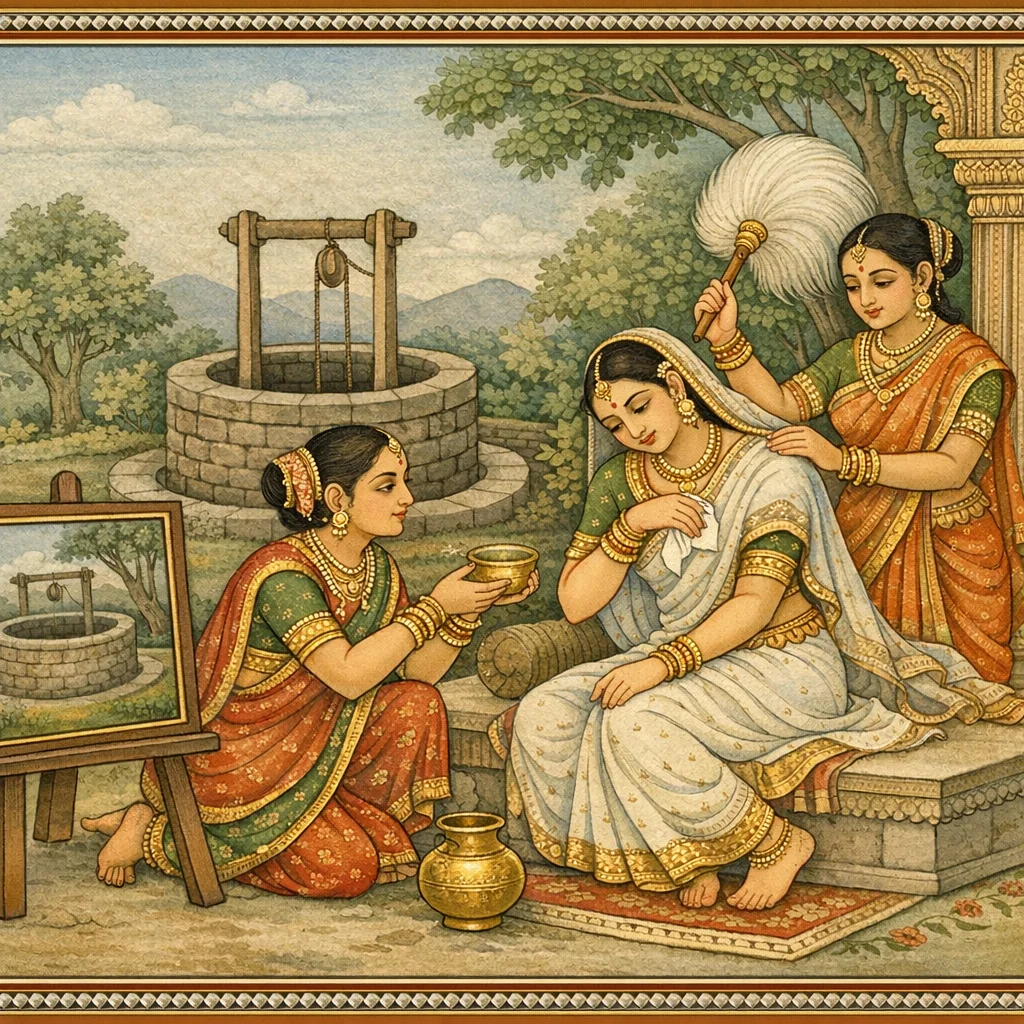
This chapter offers a twofold theological map of Kāśī’s saving sacred terrain. First, Skanda places Maṇikarṇikā near the symbolic svargadvāra and proclaims Śaṅkara’s liberative presence there: Śiva bestows upon beings afflicted by saṃsāra a śruti that “touches Brahman” (brahmaspṛś). Maṇikarṇikā is declared the supreme mokṣabhū, where liberation is attainable beyond the efficacy of other routes—yoga, sāṃkhya, or vrata-based disciplines—and the site is praised as both “svargabhū” and “mokṣabhū.” A broad social theology follows: devotees of every varṇa and āśrama—brāhmaṇas devoted to Vedic study and yajña, kings performing sacrifices, pativratā women, merchants with righteous wealth, śūdras on ethical paths, brahmacārins, gṛhasthas, vānaprasthas, and renunciants (ekadaṇḍin/tridaṇḍin)—are all depicted as approaching Maṇikarṇikā for niḥśreyasa, the highest good. Second, the narrative turns to Kalāvatī’s encounter with Jñānavāpī near Śrī Viśveśvara. On seeing and then touching the sacred well (even when beholding it in a painted depiction), she undergoes powerful emotional and bodily upheaval—fainting, tears, trembling—then recovers as past-life knowledge (bhavāntara-jñāna) arises. Though attendants try to soothe her, the text reads the episode as an awakening generated by the place’s power. Kalāvatī recounts a former birth as a brāhmaṇa girl in Kāśī and later turns of fate—abduction, conflict, release from a curse, and rebirth as a royal daughter—thereby showing Jñānavāpī as a locus that confers knowledge. A phalaśruti adds that reading, reciting, or hearing this auspicious account brings honor in Śivaloka, Śiva’s realm.
Shlokas
Verse 1
स्कंद उवाच । पुनर्ददर्श तन्वंगी चित्रपट्यां घटोद्भव । स्वर्गद्वारात्पुरोभागे श्रीमतीं मणिकर्णिकाम्
Skanda said: Then the slender-limbed holy realm again beheld Agastya, the pot-born, at Citrāpaṭī; and before Svargadvāra he saw the glorious Maṇikarṇikā.
Verse 2
संसारसर्पदष्टानां जंतूनां यत्र शंकरः । अपसव्येन हस्तेन ब्रूते ब्रह्मस्पृशञ्छ्रुतिम्
There, for beings bitten by the serpent of saṃsāra, Śaṅkara—touching Brahman with his leftward-turned hand—utters the liberating śruti.
Verse 3
न कापिलेन योगेन न सांख्येन न च व्रतैः । या गतिः प्राप्यते पुंभिस्तां दद्यान्मोक्षभूरियम्
Not by Kapila’s yoga, not by Sāṅkhya, nor even by vows—this very ground of mokṣa bestows upon people that supreme destination otherwise attained only with great difficulty.
Verse 4
वैकुंठे विष्णुभवने विष्णुभक्तिपरायणाः । जपेयुः सततं मुक्त्यै श्रीमतीं मणिकर्णिकाम्
In Vaikuṇṭha, in the very abode of Viṣṇu, those wholly devoted to Viṣṇu-bhakti continually chant, for the sake of liberation, the name of the glorious Maṇikarṇikā.
Verse 5
हुत्वाग्निहोत्रमपि च यावज्जीवं द्विजोत्तमाः । अंते श्रयंते मुक्त्यै यां सेयं श्रीमणिकर्णिका
Even the foremost of the twice-born, having performed the Agnihotra throughout life, at the end take refuge in her for liberation—she is this very Śrī Maṇikarṇikā.
Verse 6
वेदान्पठित्वा विधिवद्ब्रह्मयज्ञरता भुवि । यां श्रयंति द्विजा मुक्त्यै सेयं श्रीमणिकर्णिका
Having duly studied the Vedas and devoted themselves on earth to the Brahma-yajña (sacred study and recitation), the twice-born take refuge in her for liberation—this indeed is the glorious Maṇikarṇikā.
Verse 7
इष्ट्वा क्रतूनपि नृपा बहून्पर्याप्तदक्षिणान् । श्रयंते श्रेयसे धन्याः प्रांतेऽधिमणिकर्णिकम्
Even kings—having performed many sacrifices, complete with ample priestly gifts—at the end of life, the blessed still resort to Maṇikarṇikā for their highest good.
Verse 8
सीमंतिन्योपि सततं पतिव्रतपरायणाः । मुक्त्यै पतिमनुव्रज्य श्रयंति मणिकर्णिकाम्
Even faithful wives, ever devoted to the vow of pativratā, follow after their husbands and take refuge in Maṇikarṇikā for liberation.
Verse 9
वैश्या अपि च सेवंते न्यायोपार्जितसंपदः । धनानि साधुसात्कृत्वा प्रांते श्रीमणिकर्णिकाम्
Vaiśyas too—whose wealth is earned by righteous means—after placing their riches into the hands of the good through charity, at life’s end resort to the glorious Śrī Maṇikarṇikā.
Verse 10
त्यक्त्वा पुत्रकलत्रादि सच्छूद्रा न्यायमार्गगाः । निर्वाणप्राप्तये चैनां भजेयुर्मणिकर्णिकाम्
Good Śūdras too—walking the path of righteousness—having renounced attachment to sons, wife, and the rest, should worship and seek Maṇikarṇikā for the attainment of nirvāṇa.
Verse 11
यावज्जीवं चरंतोपि ब्रह्मचर्य जितेंद्रियाः । निःश्रेयसे श्रयंत्येनां श्रीमतीं मणिकार्णकाम्
Even those who practice brahmacarya for life and have conquered the senses take refuge in this splendid Maṇikarṇikā for the highest liberation.
Verse 12
अतिथीनपि संतर्प्य पंचयज्ञरता अपि । गृहस्थाश्रमिणो नेमां त्यजेयुर्मणिकर्णिकाम्
Even householders—who satisfy guests and remain devoted to the five daily sacrifices—should not abandon Maṇikarṇikā.
Verse 13
वानप्रस्थाश्रमयुजो ज्ञात्वा निर्वाणसाधनम् । सन्नियम्येंद्रियग्रामं मणिकर्णीमुपासते
Those in the vānaprastha stage, knowing her to be a means to nirvāṇa, firmly restrain the host of senses and worship Maṇikarṇī.
Verse 14
अनन्यसाधनां मुक्तिं ज्ञात्वा शास्त्रैरनेकधा । मुमुक्षुभिस्त्वेकदंडैः सेव्यते मणिकर्णिका
Knowing from the scriptures in many ways that liberation is attained through her as an unrivaled means, seekers of release—bearing the single staff—serve Maṇikarṇikā.
Verse 15
दंडयित्वा मनोवाचं कायं नित्यं त्रिदंडिनः । नैःश्रेयसीं श्रियं प्राप्तुं श्रयंते मणिकर्णिकाम्
The tridaṇḍin renunciants, ever disciplining mind, speech, and body, take refuge in Maṇikarṇikā to attain the blessed prosperity of supreme liberation.
Verse 16
चांद्रायणव्रतैः कृच्छ्रैर्भर्तुः शुश्रूषणैरपि । निनाय क्षणवत्कालमायुःशेषस्य सानघा
Even by undertaking arduous Cāndrāyaṇa vows and severe austerities, and by devoted service to her husband, the sinless woman made the remaining span of life pass as though it were but a moment.
Verse 17
शिखी मुंडी जटी वापि कौपीनी वा दिगंबरः । मुमुक्षुः को न सेवेत मुक्तिदां मणिकर्णिकाम्
Whether with a tuft of hair, shaven-headed, wearing matted locks, clad only in a loincloth, or going unclad—what seeker of mokṣa would not resort to Maṇikarṇikā, the giver of liberation?
Verse 18
उवाच च प्रसन्नास्य आशीर्भिरभिनद्य च । उत्तिष्ठतं प्रकुरुतं महानेपथ्यमद्य वै
And with a serene face, greeting them with blessings, he said: “Rise, and make ready the grand preparations today indeed.”
Verse 19
संत्युपायाः सहस्रं तु मुक्तये न तथा मुने । हेलयैषा यथा दद्यान्निर्वाणं मणिकर्णिका
Though there are indeed a thousand means to liberation, O sage, none is like this: Maṇikarṇikā grants nirvāṇa even with effortless ease.
Verse 20
अनशनव्रतभृते त्रिकालाभ्यवहारिणे । प्रांते दद्यात्समां मुक्तिमुभाभ्यां मणिकर्णिका
To one who bears the vow of fasting, and to one who eats at the three appointed times, Maṇikarṇikā bestows, at life’s end, an equal liberation upon both.
Verse 21
यथोक्तमाचरेदेको निष्ठा पाशुपतंव्रतम् । निरंतरं स्मरेदेको हृद्येनां मणिकर्णिकाम्
One may duly practice, with steadfast resolve, the Pāśupata vow as enjoined; another may simply remember Maṇikarṇikā unceasingly within the heart.
Verse 22
दृष्टात्र वपुषः पाते द्वयोश्च सदृशी गतिः । तस्मात्सर्वविहायाशु सेव्यैषा मणिकर्णिका
Here it is seen that, when the body falls away, the destiny of both is the same. Therefore, casting aside all else, Maṇikarṇikā should be sought and served at once.
Verse 23
स्वर्गद्वारे विशेयुर्ये विगाह्य मणिकर्णिकाम् । तेषां विधूतपापानां कापि स्वर्गो न दूरतः
Those who enter the gate of heaven after bathing in Maṇikarṇikā—their sins washed away—for them some heavenly realm is not far off.
Verse 24
स्वर्गद्वाः स्वर्गभूरेषा मोक्षभूर्मणिकर्णिका । स्वर्गापवर्गावत्रैव नोपरिष्टान्न चाप्यधः
Maṇikarṇikā is the gate of heaven, the very ground of heaven, and the ground of liberation. Heaven and final release are right here—neither above nor below elsewhere.
Verse 25
दत्त्वा दानान्यनेकानि विगाह्य मणिकर्णिकाम् । स्वर्गद्वारं प्रविष्टा ये न ते निरयगामिनः
Those who, having given many gifts in charity and bathed in Maṇikarṇikā, enter the gate of heaven—such people do not go to hell.
Verse 26
स्वर्गापवर्गयोरर्थः कोविदैश्च निरूपितः । स्वर्गः सुखं समुद्दिष्टमपवर्गो महासुखम्
The wise have clearly defined the meaning of heaven and liberation: heaven is declared to be mere pleasure, while liberation (apavarga) is the supreme bliss.
Verse 27
मणिकर्ण्युपविष्टस्य यत्सुखं जायते सतः । सिंहासनोपविष्टस्य तत्सुखं क्व शतक्रतोः
The joy that arises for a virtuous person seated at Maṇikarṇikā—where is that joy for Śatakratu (Indra) seated upon his throne?
Verse 28
महासुखं यदुद्दिष्टं समाधौ विस्मृतात्मनाम् । श्रीमत्यां मणिकर्ण्यां तत्सहजेनैव जायते
That “supreme bliss” spoken of as belonging to those who, in samādhi, have forgotten the self—at the auspicious Maṇikarṇikā it arises naturally, of its own accord.
Verse 29
स्वर्गद्वारात्पुरोभागे देवनद्याश्च पश्चिमे । सौभाग्यभाग्यैकनिधिः काचिदेका महास्थली
In front of Svargadvāra and to the west of the divine river, there lies a single great sacred ground—an incomparable treasury of auspiciousness and good fortune.
Verse 30
यावंतो भास्वतः स्पर्शाद्भासंते सैकताः कणाः । तावंतो द्रुहिणा जग्मुर्नैत्येषा मणिकर्णिका
As many grains of sand shine by the touch of the radiant sun, so many times did Druhiṇa (Brahmā) come here—yet Maṇikarṇikā never becomes ordinary, nor is her sanctity ever exhausted.
Verse 31
संति तीर्थानि तावंति परितो मणिकर्णिकाम् । यावद्भिस्तिलमात्रापि न भूमिर्विरलीकृता
So many are the tīrthas surrounding Maṇikarṇikā that not even a sesame-seed’s measure of ground is left sparse—without a sacred ford.
Verse 32
यदन्वये कोपि मुक्तः संप्राप्य मणिकर्णिकाम् । तद्वंश्यास्तत्प्रभावेण मान्याः स्वर्गौकसामपि
If in any lineage even one person attains liberation (mokṣa) upon reaching Maṇikarṇikā, then by that very power his descendants become worthy of honor—even among the dwellers of heaven.
Verse 33
तर्पिताः पितरो येन संप्राप्य मणिकर्णिकाम् । सप्तसप्त तथा सप्त पूर्वजास्तेन तारिताः
By one who reaches Maṇikarṇikā and offers tarpaṇa, satisfying the ancestors, his forefathers are delivered—seven and seven, and again seven generations.
Verse 34
आमध्याद्देवसरित आ हरिश्चंद्रमडपात् । आ गंगा केशवादा च स्वर्द्वारान्मणिकर्णिका
Maṇikarṇikā extends from the midpoint of the divine river up to Hariścandra-maṇḍapa, and from Gaṅgā-Keśava up to Svargadvāra, the Gate of Heaven.
Verse 35
एतद्रजःकणतुलां त्रिलोक्यपि न गच्छति । एतत्प्राप्त्यै प्रयतते त्रिलोकस्थोऽखिलो भवी
Even the three worlds cannot equal the worth of a single dust-mote from this holy place; therefore every being throughout the three worlds strives to attain it.
Verse 36
कलावती चित्रपटीं पश्यंतीत्थं मुहुर्मुहुः । ज्ञानवापीं ददर्शाथ श्रीविश्वेश्वरदक्षिणे
As Kalāvatī kept gazing again and again at the wondrous painted cloth, she then beheld Jñānavāpī—there, to the south of Śrī Viśveśvara—revealed as a sacred landmark of Kāśī.
Verse 37
यदंबुसततं रक्षेद्दुर्वृत्ताद्दंडनायकः । संभ्रमो विभ्रमश्चासौ दत्त्वा भ्रातिं गरीयसीम्
That water is ever protected from the wicked by the chief of guardians; and he—Saṃbhrama, together with Vibhrama—bestowed upon it a most exalted radiance and dignity.
Verse 38
योष्टमूर्तिर्महादेवः पुराणे परिपठ्यते । तस्यैषांबुमयी मूर्तिर्ज्ञानदा ज्ञानवापिका
In the Purāṇa, Mahādeva is celebrated as having the form of a woman; and this Jñānavāpikā is his very form made of water—bestowing knowledge.
Verse 39
नेत्रयोरतिथीकृत्य ज्ञानवापी कलावती । कदंबकुसुमाकारां बभार क्षणतस्तनुम्
As though receiving her eyes as honored guests, Jñānavāpī caused Kalāvatī in an instant to assume a body like a kadamba blossom—radiant, delicate, and transformed by the tīrtha’s power.
Verse 40
अंगानि वेपथुं प्रापुः स्विन्ना भालस्थली भृशम् । हर्षवाष्पांबुकलिले जाते तस्या विलोचने
Her limbs began to tremble; her brow was drenched with sweat; and her eyes grew clouded with tears of joy mingled with flowing drops—signs of devotion overflowing.
Verse 41
तस्तंभ गात्रलतिका मुखवैवर्ण्यमाप च । स्वरोथ गद्गदो जातो व्यभ्रंशत्तत्करात्पटी
Her supple limbs grew rigid; her face lost its color; her voice became choked—and the cloth slipped and fell from her hand.
Verse 42
साक्षणं स्वं विसस्मार काहं क्वाहं न वेत्ति च । सौषुप्तायां दशायां च परमात्मेव निश्चला
In that very moment she forgot herself; she did not know, “Who am I? Where am I?” In a state like deep sleep, she stood motionless—like a soul absorbed in the Supreme Self.
Verse 43
अथ तत्परिचारिण्यस्त्वरमाणा इतस्ततः । किं किं किमेतदेतत्किं पृच्छंति स्म परस्परम्
Then her attendants, hurrying to and fro, kept asking one another again and again, “What is this—what has happened—what is it?”
Verse 44
तदवस्थां समालोक्य तां ताश्चतुरचेतसः । विज्ञाय सात्त्विकैर्भावैरिदमूचूः परस्परम्
Seeing her condition, those wise-minded women recognized it as arising from sāttvika emotions, and they said this to one another.
Verse 45
भवांतरे प्रेमपात्रमेतयैक्षितु किंचन । चिरात्तेन च संगत्य सुखमूर्च्छामवाप ह
In another life, this holy presence had been for her a vessel of love to behold; and now, after a long time, upon meeting it again, she fell into a swoon of bliss.
Verse 46
अथनेत्थं कथमियमकांडात्पर्यमूमुहत् । प्रेक्षमाणा रहश्चित्रपटीमति पटीयसीम्
Then they wondered, “How has she suddenly fallen into this bewildered swoon?”—as they closely observed, in private, that most discerning lady, subtle in mind like a finely painted cloth.
Verse 47
तन्मोहस्य निदानं ताःसम्यगेव विचार्य च । उपचेरुर्महाशांतैरुपचारैरनाकुलम्
Having rightly reflected on the cause of her bewilderment, they attended upon her—calmly and without confusion—using soothing, peace-bestowing remedies and services.
Verse 48
काचित्तां वीजयांचक्रे कदलीतालवृंतकैः । बिसिनीवलयैरन्या धन्यां तां पर्यभूषयत्
One fanned her with stalks of banana and palm; another adorned that blessed lady with bracelets made of lotus-fibres.
Verse 49
अमंदैश्चंदनरसैरभ्यषिंचदमुं परा । अशोकपल्लवैरस्याः काचिच्छोकमनीनशत्
Another sprinkled her with copious sandal-sap; and someone else, with sprays of aśoka leaves, sought to drive away her sorrow.
Verse 50
धारामंडपधारांबुसीकरैस्तत्तनूलताम् । इष्टार्थविरहग्लानां सिंचयामास काचन
Another gently sprinkled her delicate, vine-like body with the fine spray of water flowing in the dhārā-maṇḍapa, soothing her who was worn down by separation from what she dearly desired.
Verse 51
जलार्द्रवाससा काचिदेतस्यास्तनुमावृणोत् । कर्पूरक्षोदजालेपैरन्यास्तामन्वलेपयन्
One covered her body with garments moistened in water; others then anointed her with pastes prepared from powdered camphor.
Verse 52
पद्मिनीदलशय्या च काचित्यरचयन्मृदुम् । काचित्कुलिशनेपथ्यं दूरीकृत्य तदंगतः
One prepared a soft bed of lotus-leaves; another removed from her body the harsh, rigid adornments, setting them aside.
Verse 53
मुक्ताकलापं रचयांचक्रे वक्षोजमंडले । काचिच्छशिमुखी तां तु चंद्रकांतशिलातले
One arranged a cluster of pearls upon her bosom; and another—moon-faced—placed her upon a slab of candrakānta stone.
Verse 54
स्वापयामास तन्वंगीं स्रवच्छीतांबुशीतले । दृष्ट्वोपचार्यमाणां तामित्थं बुद्धिशरीरिणी
She made the slender-limbed lady sleep upon that cool surface, chilled by trickling cold water. Seeing her thus being attended, the wise one, endowed with discernment, spoke accordingly.
Verse 55
अतितापपरीतांगी ताः सखीः प्रत्यभाषत । एतस्यास्तापशांत्यर्थं जानेहं परमौषधम्
Overcome by fierce heat, she spoke to her friends: “To soothe this burning anguish, I know here the supreme remedy.”
Verse 56
उपचारानिमान्सवार्न्दूरी कुरुत मा चिरम् । अपतापां करोम्येनां सद्यः पश्यत कौतुकम्
“Remove at once all these attendants and ritual ministrations—do not delay. I shall free her from this burning distress immediately; behold this wondrous marvel.”
Verse 57
दृष्ट्वा चित्रपटीमेषा सद्यो विह्वलतामगात् । अत्रैव काचिदेतस्याः प्रेमभूरस्ति निश्चितम्
Seeing the painted cloth, she at once became overwhelmed. Surely, in this very place there is for her a ground of love—a destined bond.
Verse 58
अतश्चित्रपटीस्पर्शात्परितापं विहास्यति । वाक्याद्बुद्धिशरीरिण्यास्ततस्तत्परिचारिकाः
Therefore, by touching that painted cloth, she will cast off her burning affliction. Then, at the word of the wise-bodied lady, her attendants acted accordingly.
Verse 59
निधाय तत्पुरः प्रोचुः पटीं पश्य कलावति । तवानंदकरी यत्र काचिदस्तीष्टदेवता
Placing it before her, they said: “Kalāvatī, behold this painted cloth. Here is your beloved iṣṭa-devatā, your chosen Deity, the very source of your joy.”
Verse 60
सापीष्टदेवतानाम्ना तत्पटीदर्शनेन च । सुधासेकमिव प्राप्य मूर्छां हित्वोत्थिता द्रुतम्
And she—at the very utterance of her chosen deity’s name and at the sight of that painted cloth—seemed as if sprinkled with amṛta; casting off her swoon, she quickly rose.
Verse 61
अवग्रहपरिम्लाना वर्षासारैरिवौषधीः । पुनरालोकयांचक्रे ज्ञानदां ज्ञानवापिकाम्
Like medicinal herbs revived by the first showers after drought, she looked again toward Jñānavāpī—the well that grants spiritual knowledge.
Verse 62
स्पृष्ट्वा कलावती तां तु वापीं चित्रगतामपि । लेभे भवांतरज्ञानं यथासीत्पूर्वर्जन्मनि
When Kalāvatī touched that well—though it was only present within the painted depiction—she gained knowledge of another existence, just as it had been in her former birth.
Verse 63
पुनर्विचारयांचक्रे वापी माहात्म्यमुत्तमम् । अहो चित्रगतापीयं संस्पृष्टा ज्ञानवापिका
Again she reflected upon the supreme greatness of that well: “Ah! Even when present only within a picture, this Jñānavāpī—once touched—still bestows its power.”
Verse 64
ज्ञानं मे जनयामास भवांतर समुद्भवम् । अथ तासां पुरो हृष्टा कथयामास सुंदरी
“It has awakened in me knowledge arising from another life.” Then, delighted, the beautiful woman began to recount it in the presence of those attendants.
Verse 65
निजं प्राग्भव वृत्तांतं ज्ञानवापीप्रभावजम् । कलावत्युवाच । एतस्माज्जन्मनः पूर्वमहं ब्राह्मणकन्यका
Kalāvatī spoke of her own account from a former existence, born of the power of sacred Jñānavāpī: “Before this birth, I was a Brahmin maiden.”
Verse 66
उपविश्वेश्वरं काश्यां ज्ञानवाप्यां रमे मुदा । जनको मे हरिस्वामी जनयित्री प्रियंवदा
In Kāśī, at Upaviśveśvara and at the sacred Jñānavāpī, I rejoiced with delight. My father was Harisvāmin, and my mother was Priyaṃvadā.
Verse 67
आख्या मम सुशीलेति मां च विद्याधरोऽहरत् । मध्येमार्गं निशीथेथ तदोप मलयाचलम्
‘Suśīlā’ was my name; and a Vidyādhara carried me away. Then, in the middle of the journey, at midnight, he reached the Malaya mountain.
Verse 68
रक्षसा सहतो वीरो राक्षसं स जघानह । रक्षोपि मुक्तं शापात्तु दिव्यवपुरवाप ह
A hero, assailed by a rākṣasa, struck down that rākṣasa. And that very demon, released from a curse, attained a divine form.
Verse 69
अवाप जन्मगंधर्वस्त्वसौ मलयकेतुतः । कर्णाटनृपतेः कन्या बभूवाहं कलावती
He was reborn as a Gandharva named Malayaketu. And I became Kalāvatī, the daughter of the king of Karṇāṭa.
Verse 70
इति ज्ञानं ममोद्भूतं ज्ञानवापीक्षणात्क्षणात् । इति तस्या वचः श्रुत्वा सापि बुद्धिशरीरिणी
“Thus did knowledge arise in me—instantly—by merely beholding Jñānavāpī.” Hearing her words, she too—embodied as pure understanding—was moved.
Verse 71
ताश्च तत्परिचारिण्यः प्रहृष्टास्यास्तदाऽभवन् । प्रोचुस्तां प्रणिपत्याथ पुण्यशीलां कलावतीम्
Then her attendant women became joyful. Bowing down, they addressed the virtuous Kalāvatī, whose conduct was full of merit.
Verse 72
अहो कथं हि सा लभ्या यत्प्रभावोयमीदृशः । धिग्जन्म तेषां मर्त्येऽस्मिन्यैर्नैक्षि ज्ञानवापिका
Alas—how can that (holy well) be attained, whose power is so extraordinary? Fie upon the birth of those mortals in this world who have not even seen Jñānavāpī.
Verse 73
कलावति नमस्तुभ्यं कुरुनोपि समीहितम् । जनिं सफलयास्माकं नय नः प्रार्थ्य भूपतिम्
O Kalāvatī, salutations to you—grant even our desire. Make our birth fruitful: lead us there, after beseeching the king.
Verse 74
अयं च नियमोस्माकमद्यारभ्य कलावति । निर्वेक्ष्यामो महाभोगान्दृष्ट्वा तां ज्ञानवापिकाम्
And this shall be our vow from today, O Kalāvatī: after seeing that Jñānavāpī, we will renounce all great enjoyments as worthless.
Verse 75
अवश्यं ज्ञानवापी सा नाम्ना भवितुमर्हति । चित्रं चित्रगतापीह या तव ज्ञानदायिनी
Surely she deserves to be known by the name “Jñānavāpī.” Wondrous indeed—though only a well here, she bestows knowledge upon you.
Verse 76
ओंकृत्य तासां वाक्यं सा स्वाकारं परिगोप्य च । प्रियाणि कृत्वा भूभर्तुः प्रस्तावज्ञा व्यजिज्ञपत्
Assenting to their words with the auspicious “Oṃ,” and concealing her own intention, she—skilled in choosing the right moment—first did what pleased the king and then submitted her request to the lord of the earth.
Verse 77
कलावत्युवाच । जीवितेश न मे त्वत्तः किंचित्प्रियतरं क्वचित् । त्वामासाद्य पतिं राजन्प्राप्ताः सर्वे मनोरथाः
Kalāvatī said: “O lord of my life, nowhere is anything dearer to me than you. O king, having attained you as my husband, all my cherished wishes have been fulfilled.”
Verse 78
एको मनोरथः प्रार्थ्यो ममास्त्यत्रार्यपुत्रक । विचारपथमापन्नस्तवापि स महाहितः
“Yet one wish remains to be asked here, O noble prince. It has already entered your own field of reflection as well, and it is greatly beneficial.”
Verse 79
मम तु त्वदधीनायाः सुदुष्प्रापतरो महान् । तव स्वाधीनवृत्तेस्तु सिद्धप्रायो मनोरथः
“For me—being dependent upon you—this great aim is very hard to obtain; but for you, whose actions are self-directed and free, that wish is almost already accomplished.”
Verse 80
प्राणेश किं बहूक्तेन यदि प्राणैः प्रयोजनम् । तदाभिलषितं देहि प्राणा यास्यंत्यथान्यथा
O lord of my very breath, what need is there for many words? If my life truly matters to you, grant what I desire—otherwise my life-breaths will depart.
Verse 81
प्राणेभ्योपि गरीयस्यास्तस्या वाक्यं निशम्य सः । उवाच वचनं राजा तस्याः स्वस्यापि च प्रियम्
Hearing her words—she who was dearer to him even than his own life—the king spoke a reply that was pleasing both to her and to himself.
Verse 82
राजोवाच । नाहं प्रिये तवादेयमिह पश्यामि भामिनि । प्राणा अपि मम क्रीतास्त्वया शीलकलागुणैः
The king said: “Beloved, fair lady, I see nothing here that I should withhold from you. Even my very life has been purchased by you—by your character, your arts, and your virtues.”
Verse 83
अविलंबितमाचक्ष्व कृतं विद्धि कलावति । भवद्विधानां साध्वीनामन्येऽप्राप्यं न किंचन
“Speak without delay, Kalāvatī; know it as already done. For virtuous women like you, by merit and goodness, there is nothing that others would find unattainable.”
Verse 84
कः प्रार्थ्यः प्रार्थनीयं किं को वा प्रार्थयिता प्रिये । न पृथग्जनवत्किंचिद्वर्तनं नौ कलावति
“Beloved, who is to be entreated, what is there to be asked for, and who indeed is the petitioner? Kalāvatī, between us there is no dealing like that of ordinary, separate people.”
Verse 85
देशः कोशो बलं दुर्गं यदन्यदपि भामिनि । तत्त्वदीयं न मे किंचित्स्वाम्यमात्रमिहास्ति मे
“The land, the treasury, the army, the forts—whatever else there is, O radiant one—belongs to you. Nothing here is truly mine; only the bare title of ‘lordship’ remains with me.”
Verse 86
तच्च स्वाम्यं ममान्यत्र त्वदृते जीवितेश्वरि । राज्यं त्यजेयं त्वद्वाक्यात्तृणीकृत्यापि मानिनि
“Apart from you, O mistress of my very life, I have no claim or lordship anywhere. At your word, O proud one, I would renounce even the kingdom—counting it as mere straw.”
Verse 87
माल्पकेतोर्महीजानेरिति वाक्यं निशम्य सा । प्राह गंभीरया वाचा वचश्चारु कलावती
Hearing these words of Mālpaketu, the king of the land, Kalāvatī—graceful in speech—replied in a deep and steady voice.
Verse 88
कलावत्युवाच । नाथ प्रजासृजापूर्वं सृष्टा नानाविधाः प्रजाः । प्रजाहिताय संसृष्टं पुरुषार्थचतुष्टयम्
Kalāvatī said: “O lord, when beings were first created for the sake of generating subjects, diverse kinds of creatures were brought forth; and for the welfare of beings, the four human aims were also established—dharma, artha, kāma, and mokṣa.”
Verse 89
तद्विहीनाजनिरपि जल बुद्बुदवन्मुधा । तस्मादेकोपि संसाध्यः परत्रेह च शर्मणे
“Even birth without that is futile—like a bubble upon water. Therefore, even one true aim should be earnestly accomplished, for peace both here and hereafter.”
Verse 90
यत्रानुकूल्यं दंपत्योस्त्रिवर्गस्तत्र वर्धते । यदुच्यते पुराविद्भिरिति तत्तथ्यमीक्षितम्
Where there is mutual harmony between husband and wife, there the three aims of worldly life—dharma, artha, and kāma—flourish. What the wise of old declared has been seen to be true.
Verse 91
मद्विधाना तु दासीनां शतं तेऽस्तीह मंदिरे । तथापि नितरां प्रेम स्वामिनो मयि दृश्यते
In your palace there are a hundred maidservants like me; and yet, the master’s especially deep love is seen toward me.
Verse 92
तव दास्यपि भोगाढ्या किमुतांकस्थलीचरी । तत्राप्यनन्यसंपत्तिस्तत्र स्वाधीनभर्तृता
Even your maidservants live amid enjoyments—how much more one who rests upon your lap. Yet even there, the unique treasure is this: a husband who remains devoted, abiding under the gentle sway of love.
Verse 93
विपश्चित्संचयेदर्थानिष्टापूर्ताय कर्मणे । तपोर्थमायुर्निर्विघ्नं दारांश्चापत्यलब्धये
A wise person should gather wealth for the rites of yajña and for public charity, should seek an unobstructed lifespan for the sake of tapas, and should take a wife for the gaining of offspring.
Verse 94
तवैतत्सर्वमस्तीह विश्वेशानुग्रहात्प्रिय । पूरणीयोऽभिलाषो मे यदि तद्वचम्यहं शृणु
Beloved, all this is already yours here—by the grace of Viśveśa, the Lord of the Universe. Yet one desire of mine remains to be fulfilled; if you consent, listen as I speak.
Verse 95
तूर्णं प्रहिणु मां नाथ विश्वनाथपुरीं प्रति । प्राणाः प्रयाता प्रागेव वपुः शेषास्मि केवलम्
Send me quickly, O Lord, to the city of Viśvanātha (Kāśī). My life-breaths have already departed, as it were; only my body remains.
Verse 96
माल्यकेतुः कलावत्या इत्याकर्ण्य वचः स्फुटम् । क्षणं विचार्य स्वहृदि राजा प्रोवाच तां प्रियाम्
Hearing Kalāvatī’s clear words, King Mālyaketu reflected for a moment within his heart and then spoke to his beloved.
Verse 97
प्रिये कलावति यदि तव गंतव्यमेव हि । राज्यलक्ष्म्यानया किं मे चलया त्वद्विहीनया
Beloved Kalāvatī—if you must indeed depart, what use is this fickle royal fortune to me, when it is bereft of you?
Verse 98
न राज्यं राज्यमित्याहू राज्यश्रीः प्रेयसी ध्रुवम् । सप्तांगमपि तद्राज्यं तया हीनं तृणायते
They say a kingdom is not truly a ‘kingdom’; the real splendor of sovereignty is one’s beloved. Even a state endowed with all seven limbs becomes as worthless as grass when deprived of her.
Verse 99
निःसपत्नं कृतं राज्यं भुक्त्वा भोगान्निरंतरम् । हृषीकार्थाः कृतार्थाश्च विधृता आधृतिः प्रिये
Beloved, I have made the kingdom free of rivals and have enjoyed pleasures without interruption; the senses have had their fill, and contentment has been sustained.
Verse 100
अपत्यान्यपि जातानि किं कर्तव्यमिहास्ति मे । अवश्यमेव गंतव्याऽवाभ्यां वाराणसी पुरी
“Children too have been born; what duty remains for me here? Surely, we both must go to the city of Vārāṇasī.”
Verse 110
अथ प्रातः समुत्थाय कृत्वा शौचाचमक्रियाम् । राज्ञ्या विनिर्दिष्टपथा ज्ञानवापीं नृपो ययौ
Then, rising early in the morning and performing purification and ācamana (ritual sipping of water), the king—following the route indicated by the queen—went to Jñānavāpī.
Verse 120
तावद्विमानमापन्नं सक्वणत्किंकिणीगणम् । पश्यतां सर्वलोकानां चन्द्रमौलिरथोरथात्
Just then, before the eyes of all people, a celestial vimāna arrived, its clusters of little bells resounding; and Candramauli—Śiva, the moon-crested One—appeared, coming forth from the chariot.
Verse 127
पठित्वा पाठयित्वा वा श्रुत्वा वा श्रद्धयान्वितः । ज्ञानवाप्याः शुभाख्यानं शिवलोके महीयते
One who, endowed with faith, reads, causes others to read, or even hears this auspicious account of Jñānavāpī is honored in Śiva’s world.