Adhyaya 36
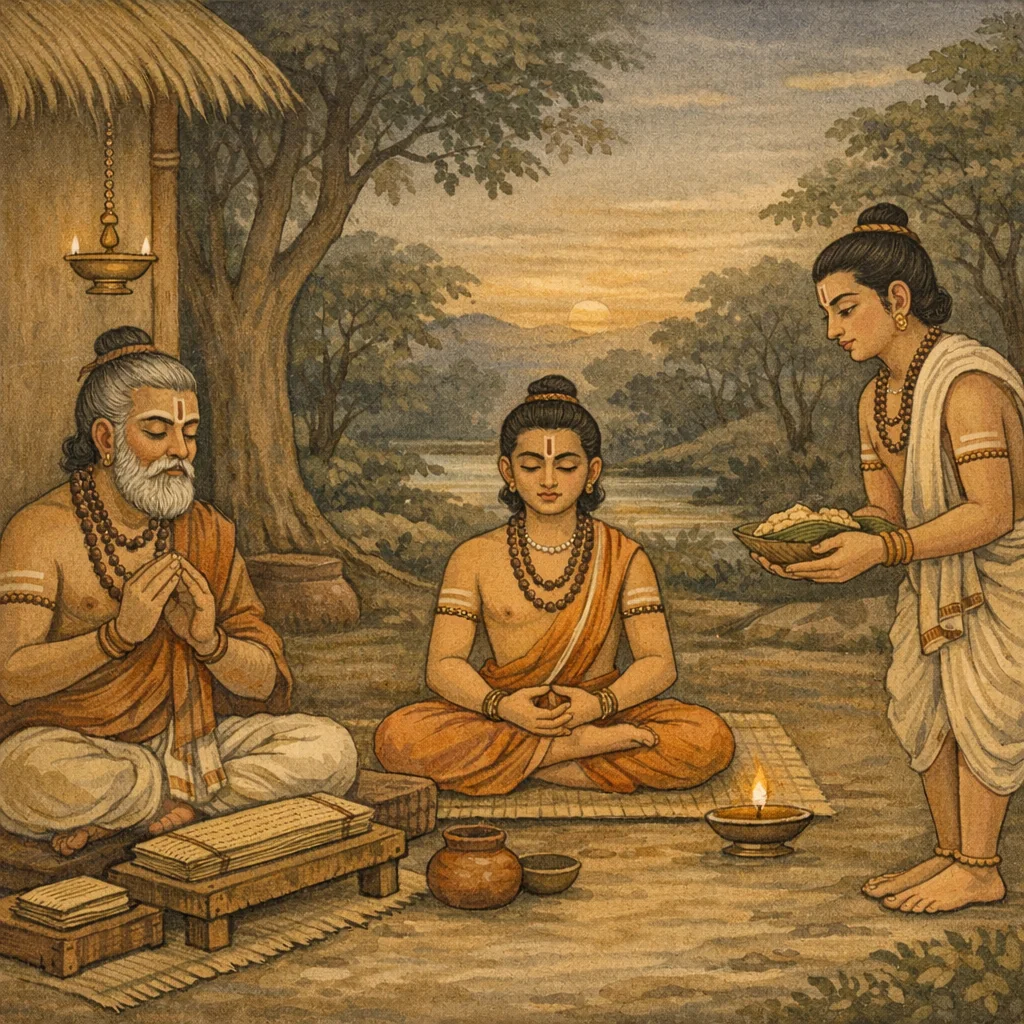
Skanda speaks to Kumbhaja (Agastya) and promises a further, clarifying teaching on sadācāra, so that the discerning practitioner does not sink into the darkness of ignorance. He sets out the dvija ideal—birth from the mother and the “second birth” through upanayana—and surveys the Vedic saṃskāras from conception-related rites and childhood ceremonies up to upanayana, with timings prescribed according to varṇa. The chapter then lays down the brahmacārin student’s discipline: purity observances (śauca, ācamanam), dental cleansing, mantra-bathing, sandhyā worship, agnikārya, respectful salutations, and service to elders and the teacher. It gives norms for bhikṣā, restrained speech, regulated eating, and strict avoidances of excess, harm, slander, and certain sensual or impure contacts. It specifies the materials and measures for mekhalā, yajñopavīta, daṇḍa, and ajina by varṇa, and distinguishes brahmacārin types (upakurvāṇa and naiṣṭhika). Skanda stresses that one must be grounded in an āśrama; practices undertaken without proper āśrama belonging are declared fruitless. A substantial portion praises Vedic study, the use of praṇava and vyāhṛtis with Gāyatrī, and the graded power of japa (spoken, upāṃśu, mental). It ranks teacherly roles (ācārya, upādhyāya, ṛtvij) and extols mother, father, and guru as a sacred triad whose satisfaction is the highest tapas; through disciplined brahmacarya and the grace of Viśveśa one attains Kāśī, knowledge, and nirvāṇa. The chapter closes by turning from brahmacārin conduct to the forthcoming discussion of women’s characteristics and criteria for marriage suitability.
Shlokas
Verse 1
स्कंद उवाच । पुनर्विशेषं वक्ष्यामि सदाचारस्य कुंभज । यं श्रुत्वापि नरो धीमान्नाज्ञानतिमिरं विशेत्
Skanda said: O Kumbhaja (Agastya), I shall again explain the special details of sadācāra, right conduct; hearing them, a wise person will not enter the darkness of ignorance.
Verse 2
ब्राह्मणाः क्षत्रिया वैश्यास्त्रयो वर्णा द्विजाः स्मृताः । प्रथमं मातृतो जाता द्वितीयं चोपनायनात्
Brāhmaṇas, Kṣatriyas, and Vaiśyas—these three varṇas are remembered as “twice-born”: first born from the mother, and born a second time through upanayana (sacred initiation).
Verse 3
एषां क्रियानिषेकादि श्मशानांता च वैदिकी । आदधीत सुधीर्गर्भमृतौमूलं मघां त्यजेत्
For these dvijas, the Vedic rites begin with the rites of conception and extend up to the funeral ground (the final rites). The wise should undertake them properly, and should avoid Maghā—an inauspicious asterism—at the root of seasonal or conceptional timing.
Verse 4
स्पंदनात्प्राक्पुंसवनं सीमंतोन्नयनं ततः । मासि षष्ठेऽष्टमे वापि जातेथो जातकर्म च
Before fetal movement, the puṃsavana rite is performed, and thereafter the sīmantonnayana rite. In the sixth or eighth month, and then upon birth, the jātakarma rite is performed.
Verse 5
नामाह्न्येकादशे गेहाच्चतुर्थेमासि निष्क्रमः । मासेन्नप्राशनं षष्ठे चूडाब्दे वा यथाकुलम्
On the eleventh day is the naming ceremony; in the fourth month is the child’s first going out from the house. In the sixth month is the first feeding of solid food; and the tonsure (cūḍā) is done in the first or third year, according to family custom.
Verse 6
शममेनो व्रजेदेवं बैजं गर्भजमवे च । स्त्रीणामेताः क्रियास्तूष्णीं पाणिग्राहस्तु मंत्रवान्
Thus the inherited and womb-born impurities are pacified and depart. For women these rites are performed in silence, but the rite of taking the hand in marriage (pāṇigraha) is performed with mantras.
Verse 7
सप्तमेथाष्टमेवाब्दे सावित्रीं ब्राह्मणोर्हति । नृपस्त्वेकादशे वैश्यो द्वादशे वा यथाकुलम्
In the seventh year—or in the eighth—a brāhmaṇa is fit to receive the Sāvitrī (upanayana). A kṣatriya ruler is (initiated) in the eleventh, and a vaiśya in the twelfth year, or according to family custom.
Verse 8
ब्रह्मतेजोभिवृद्ध्यर्थं विप्रोब्देपंचमेर्हति । षष्ठे बलार्थी नृपतिर्मौजीं वैश्योष्टमे ध्रियेत्
For the increase of brahmanical radiance (tejas), a brāhmaṇa is fit to receive the sacred girdle in the fifth year; a kṣatriya king, seeking strength, in the sixth; and a vaiśya should wear the muñja-girdle in the eighth.
Verse 9
महाव्याहृतिपूर्वं च वेदमध्यापयेद्गुरुः । उपनीय च तं शिष्यं शौचाचारे च योजयेत्
The teacher should instruct the Veda beginning with the great utterances (mahāvyāhṛtis); and having initiated that disciple, he should also establish him in purity and proper conduct.
Verse 10
पूर्वोक्तविधिना शौचं कुर्यादाचमनं तथा । दंताञ्जिह्वां विशोध्याथ कृत्वा मलविशोधनम्
According to the method stated earlier, one should perform purification and likewise do ācamana; then, having cleaned the teeth and tongue, one should complete the cleansing of impurities.
Verse 11
स्नात्वांबुदैवतैर्मंत्रैः प्राणानायम्य यत्नतः । उपस्थानं रवेः कृत्वा संध्ययोरुभयोरपि
Having bathed with the mantras of the water-deities, and carefully regulated the breath, one should perform worshipful attendance to the Sun at both twilights (morning and evening).
Verse 12
अग्निकार्यं ततः कृत्वा ब्राह्मणानभिवादयेत् । ब्रुवन्नमुक गोत्रोहमभिवादय इत्यपि
Then, having performed the duty of the sacred fire, one should salute the brāhmaṇas, saying, “I, of such-and-such a gotra, offer my reverent salutations.”
Verse 13
अभिवादनशीलस्य वृद्धसेवारतस्य च । आयुर्यशोबलं बुद्धिर्वर्धतेऽहरहोधिकम्
For one devoted to respectful salutations and intent on serving elders, lifespan, good repute, strength, and understanding increase more and more each day.
Verse 14
अधीते गुरुणा हूतः प्राप्तं तस्मै निवेदयेत् । कर्मणा मनसा वाचा हितं तस्याचरेत्सदा
When called by the teacher during study, he should present to him whatever has been obtained; and by deed, by mind, and by speech, he should always act for the teacher’s welfare.
Verse 15
अध्याप्याधर्मतोनार्थात्साध्वाप्तज्ञानवित्तदाः । शक्ताः कृतज्ञाः शुचयोऽद्रोहकाश्चानसूयकाः
Having studied, they should not seek wealth by unrighteous means; being virtuous, they should rightly acquire and bestow knowledge and resources—capable, grateful, pure, non-malicious, and free from envy.
Verse 16
धारयेन्मेखलादंडोपवीताजिनमेव च । अनिंद्येषु चरेद्भैक्ष्यं ब्राह्मणेष्वात्मवृत्तये
He should wear the girdle, staff, sacred thread, and deerskin; and for his livelihood he should go for alms among blameless brāhmaṇas.
Verse 17
ब्राह्मणक्षत्रियविशामादिमध्यावसानतः । भैक्ष्यचर्या क्रमेण स्याद्भवच्छब्दोपलक्षिता
For brāhmaṇas, kṣatriyas, and vaiśyas, the discipline of seeking alms should proceed in proper order, marked by respectful forms of address such as “bhavat” (“sir”).
Verse 18
वाग्यतो गुर्वनुज्ञातो भुंजीतान्नमकुत्सयन् । एकान्नं न समश्नीयाच्छ्राद्धेऽश्नीयात्तथापदि
With speech restrained and only after the teacher’s permission, one should eat without disparaging the food. One should not take a meal of a single dish; yet at a Śrāddha rite and in times of necessity, one may eat accordingly.
Verse 19
अनारोग्यमनायुष्यमस्वर्ग्यंचातिभोजनम् । अपुण्यं लोकविद्विष्टं तस्मात्तत्परिवर्जयेत्
Overeating brings ill-health, shortens life, and obstructs heavenly well-being; it is without merit and condemned by society—therefore one should avoid it.
Verse 20
न द्विर्भुंजीत चैकस्मिन्दिवा क्वापि द्विजोत्तमः । सायंप्रातर्द्विजोऽश्नीयादग्निहोत्रविधानवित्
A foremost twice-born should not eat twice within a single day. The twice-born who knows the rite of Agnihotra should eat in the evening and in the morning.
Verse 21
मधुमांसं प्राणिहिंसां भास्करालोकनांजने । स्त्रियं पर्युषितोच्छिष्टंपरिवादं विवजर्येत्
One should avoid honey and meat, harming living beings, gazing at the sun, and applying collyrium; likewise avoid illicit association with women, stale and leftover food, and slander.
Verse 22
औपनायनिकः कालो ब्रह्मक्षत्र विशां परः । आ षोडशादाद्वाविंशादा चतुर्विंशदब्दतः
The proper period for Upanayana is: for Brāhmaṇas up to sixteen years; for Kṣatriyas up to twenty-two; and for Vaiśyas up to twenty-four years.
Verse 23
इतोप्यूर्ध्वं न संस्कार्याः पतिता धर्मवर्जिताः । व्रात्यस्तोमेन यज्ञेन तत्पातित्यं परिव्रजेत्
Beyond those limits, they are not to be initiated by saṃskāra; they become fallen (patita), excluded from dharma. By the sacrifice called Vrātyastoma, that fallen state may be removed.
Verse 24
सावित्रीपतितैः सार्धं संबंधं न समाचरेत् । ऐणं च रौरवं वास्तं क्रमाच्चर्म द्विजन्मनाम्
One should not form associations with those fallen from the Sāvitrī, that is, those who have lapsed from Vedic initiation. For the twice-born, the prescribed skins are, in order: deer-skin, ruru-skin, and goat-skin.
Verse 25
वसीरन्नानुपूर्व्येण शाण क्षौमाविकानि च । द्विजस्य मेखला मौंजी मौर्वी च भुजजन्मनः । भवेत्त्रिवृत्समाश्लक्ष्णा विशस्तु शणतांतवी
He should wear, in due order, garments of linen, flax, and wool. For the twice-born, the girdle (mekhalā) is to be of muñja-grass; for one born of the arms (the Kṣatriya), it is of maurvī. It should be smooth and threefold-twisted; for the Vaiśya, it is prescribed to be of hempen fibre.
Verse 26
मुंजाभावे विधातव्या कुशाश्मंतकबल्वजैः । ग्रंथिनैकेन संयुक्ता त्रिभिः पंचभिरेव वा
If muñja is unavailable, the girdle should be made from kuśa, aśmantaka, or balvaja fibres—joined with one knot, or with three, or with five.
Verse 27
उपवीतक्रमेण स्यात्कार्पासं शाणमाविकम् । त्रिवृदूर्ध्ववृतं तच्च भवेदायुर्विवृद्धये
In the proper order, the upavīta (sacred thread) should be of cotton, then of flax, then of wool. It should be threefold and twisted upward; this is said to increase longevity.
Verse 28
बिल्वपालाशयोर्दंडो ब्राह्मणस्य नृपस्य तु । न्यग्रोधबालदलयोः पीलूदुंबरयोर्विशः
The staff (daṇḍa) for a brāhmaṇa is to be made of bilva or palāśa; for a king (kṣatriya), of nyagrodha or bāladala; and for a vaiśya, of pīlū or udumbara.
Verse 29
आमौलिं वाऽललाटंवाऽनासमूर्ध्वप्रमाणतः । ब्रह्मक्षत्रविशां दंडस्त्वगाढ्योनाग्निदूषितः
Its measure should extend to the crown of the head, or to the forehead, or at least to the height from the nose upward. The staff for brāhmaṇa, kṣatriya, and vaiśya should be firm and stout, and not defiled by fire—neither scorched nor damaged.
Verse 30
प्रदक्षिणं परीत्याग्निमुपस्थाय दिवाकरम् । दंडाजिनोपवीताढ्यश्चरेद्भैक्ष्यं यथोदितम्
Having circumambulated the sacred fire in the auspicious direction and having paid reverence to the Sun, the brahmacārī—equipped with staff, skin-garment, and upavīta—should go forth to beg alms, as enjoined.
Verse 31
मातृमातृष्वसृस्वसृपितृस्वसृपुरःसराः । प्रथमं भिक्षणीयाः स्युरेतायाचन नो वदेत्
One should first request alms from one’s mother, the mother’s sister, one’s own sister, the father’s sister, and other elder women who stand in front as guardians. To these, one should not utter words of refusal while begging.
Verse 32
यावद्वेदमधीते च चरन्वेदव्रतानि च । ब्रह्मचारी भवेत्तावदूर्ध्वं स्नातो गृही भवेत्
So long as he studies the Veda and observes the Vedic disciplines, he should remain a brahmacārī; thereafter, having completed the student-life and performed the concluding bath (snāna), he should become a householder (gṛhastha).
Verse 33
प्रोक्तोसावुपकुर्वाणो द्वितीयस्तत्र नैष्ठिकः । तिष्ठेत्तावद्गुरुकुले यावत्स्यादायुषः क्षयः
Thus is described the upakurvāṇa—the student who completes his study and then returns. The second type is the naiṣṭhika: he should remain in the teacher’s household as long as life endures, until his lifespan is spent.
Verse 34
गृहाश्रमं समाश्रित्य यः पुनर्ब्रह्मचर्यभाक् । नासौ यतिर्वनस्थो वा स्यात्सर्वाश्रमवर्जितः
But one who, having entered the householder āśrama (gṛhastha), again takes up brahmacarya is neither a renunciant (yati) nor a forest-dweller (vānaprastha); he becomes one excluded from all āśramas, outside the ordained stages.
Verse 35
अनाश्रमी न तिष्ठेत दिनमेकमपि द्विजः । आश्रमं तु विना तिष्ठन्प्रायश्चित्ती यतो हि सः
A twice-born (dvija) should not remain even for a single day without belonging to an āśrama. For one who stays without an āśrama becomes liable to prāyaścitta—expiatory atonement.
Verse 36
जपं होमं व्रतं दानं स्वाध्यायं पितृतर्पणम् । कुर्वाणोथाश्रमभ्रष्टो नासौ तत्फलमाप्नुयात्
Even if one performs japa, homa, vows (vrata), dāna (charity), svādhyāya (sacred self-study), and offerings to the ancestors (pitṛ-tarpaṇa), if he has fallen away from his āśrama he does not obtain the proper fruit of those acts.
Verse 37
मेखलाजिनदंडाश्च लिंगं स्याद्ब्रह्मचारिणः । गृहिणो वेदयज्ञादि नखलोमवनस्थितेः
The marks (liṅga) of a brahmacārī are the girdle (mekhalā), the skin-garment (ajina), and the staff (daṇḍa). For the householder, the sign is Vedic sacrifice and allied rites; and for the forest-dweller, the sign is austerity shown by nails and hair left uncut.
Verse 38
त्रिदंडादि यतेरुक्तमुपलक्षणमत्र वै । एतल्लक्षणहीनस्तु प्रायश्चित्ती दिने दिने
Here the recognized identifying marks of a renunciant (yati)—such as the triple staff (tridaṇḍa) and the like—have been stated. But one who lacks these defining characteristics must perform prāyaścitta, day after day.
Verse 39
जीर्णं कमंडलुं दंडमुपवीताजिने अपि । अप्स्वेव तानि निक्षिप्य गृह्णीतान्यच्च मंत्रवत्
Even if his water-pot (kamaṇḍalu), staff (daṇḍa), sacred thread (upavīta), and deer-skin (ajina) become worn, he should place them in water and then take up replacements, doing so with the proper mantras.
Verse 40
विदध्यात्षोडशे वर्षे केशांतकर्म च क्रमात् । द्वाविंशे च चतुर्विंशे गार्हस्थ्य प्रतिपत्तये
He should duly perform the keśānta rite in the sixteenth year, in proper sequence; and in the twenty-second to twenty-fourth year, he should enter the gṛhastha āśrama, the householder stage of life.
Verse 41
तपो यज्ञ व्रतेभ्यश्च सर्वस्माच्छुभकर्मणः । द्विजातीनां श्रुतिर्ह्येका हेतुर्निश्रेयस श्रियः
More than austerity, sacrifice, vows, and every other auspicious act, for the twice-born (dvijāti) the one true cause of the splendor of the highest good is Śruti—the Vedic revelation.
Verse 42
वेदारंभे विसर्गे च विदध्यात्प्रणवं सदा । अफलोऽनोंकृतो यस्मात्पठितोपि न सिद्धये
At the beginning of Vedic recitation and at its conclusion, one should always utter the Praṇava (Oṃ). For without the utterance of Oṃ, the recitation becomes fruitless and does not lead to accomplishment, even if it is read.
Verse 43
वेदस्य वदनं प्रोक्तं गायत्री त्रिपदा परा । तिसृभिः प्रणवाद्याभिर्महाव्याहृतिभिः सह
The “mouth” of the Veda is said to be the supreme three-footed Gāyatrī, together with the three great utterances (mahāvyāhṛtis) beginning with the Praṇava (Oṃ).
Verse 44
सहस्रं साधिकं किंचित्त्रिकमैतज्जपन्यमी । मासं बहिः प्रतिदिनं महाघादपि मुच्यते
This triad is to be repeated in japa slightly more than a thousand times. If one performs it daily for a month—outdoors—one is freed even from great sin.
Verse 45
अत्यब्दमिति योभ्यस्येत्प्रतिघस्रमनन्यधीः । स व्योममूर्तिः शुद्धात्मा परं ब्रह्माधिगच्छति
One who practices “atyabdam” in this way—daily, with an undistracted mind—becomes as it were sky-formed; purified in soul, he attains the Supreme Brahman.
Verse 46
त्रिवर्णमयमोंकारं भूर्भुवःस्वरिति त्रयम् । पादत्रयं च सावित्र्यास्त्रयोवेदा अदूदुहन्
The three Vedas “milked out” the three-syllabled Oṃkāra, the triad “bhūr, bhuvaḥ, svaḥ”, and the three pādas of the Sāvitrī (Gāyatrī).
Verse 47
एतदक्षरमेनां च जपेद्व्याहृतिपूर्विकाम् । संध्ययोर्वेदविद्विप्रो वेदपुण्येन युज्यते
A brāhmaṇa learned in the Veda should recite this sacred syllable and this (Gāyatrī), preceded by the vyāhṛtis; performing it at both sandhyās, he becomes endowed with the merit born of the Veda.
Verse 48
विधिक्रतोर्दशगुणं जपस्यफलमश्नुते । विधिक्रतोर्दशगुणो जपक्रतुरुदीरितः
The fruit of japa, sacred repetition, is said to be tenfold that of a kratu performed according to rule; indeed, japa itself is proclaimed a “sacrifice of repetition,” ten times superior to the prescribed kratu.
Verse 49
उपांशुस्तच्छतगुणः सहस्रो मानसस्ततः
Whispered japa yields a hundredfold merit, and thereafter mental japa yields a thousandfold.
Verse 50
अधीत्यवेदान्वेदौ वा वेदं वा शक्तितो द्विजः । सुवर्णपूर्ण धरणी दानस्य फलमश्नुते
A twice-born who, according to his capacity, studies the Vedas—whether all, or two, or even one—attains the fruit of gifting the entire earth filled with gold.
Verse 51
श्रुतिमेव सदाभ्यस्येत्तपस्तप्तुं द्विजोत्तमः । श्रुत्यभ्यासो हि विप्रस्य परमं तप उच्यते
Let the best of the twice-born always practice the Śruti if he seeks to perform tapas; for constant rehearsal of the Śruti is declared the supreme tapas for a brāhmaṇa.
Verse 52
हित्वा श्रुतेरध्ययनं योन्यत्पठितुमिच्छति । स दोग्ध्रीं धेनुमुत्सृज्य ग्रामक्रोडीं दुधुक्षति
One who forsakes the study of the Śruti and longs to read other things is like a man who releases a milch-cow and tries to milk a village sow.
Verse 53
उपनीय च वै शिष्यं वेदमध्यापयेद्द्विजः । सकल्पं सरहस्यं च तमाचार्यं विदु्र्बुधाः
A twice-born who, after initiating a student, teaches him the Veda—together with its ritual procedures (kalpa) and its inner purport—is known by the wise as an ācārya.
Verse 54
योध्यापयेदेकदेशं श्रुतेरंगान्यथापि वा । वृत्त्यर्थं स उपाध्यायो विद्वद्भिः परिगीयते
One who teaches only a portion of the Śruti, or else the auxiliary limbs of the Veda, for the sake of livelihood, is praised by the learned as an upādhyāya.
Verse 56
अग्न्याधेयं पाकयज्ञानग्निष्टोमादिकान्मखान् । यः करोति वृतो यस्य स तस्यर्त्त्विगिहोच्यते
He who, being chosen, performs for another the establishing of sacred fires, the domestic offerings, and sacrifices such as the Agniṣṭoma—he is here called that person’s ṛtvik (officiating priest).
Verse 57
उपाध्यायाद्दशाचार्य आचार्यात्तु शतं पिता । सहस्रं तु पितुर्माता गौरवेणातिरिच्यते
In reverence, the ācārya is ten times greater than the upādhyāya; the father is a hundred times greater than the ācārya; and the mother surpasses the father by a thousandfold in honor.
Verse 58
विप्राणां ज्ञानतो ज्यैष्ठ्यं बाहुजानां तु वीर्यतः । वैश्यानां धान्यधनतः पज्जातानां तु जन्मतः
Among brāhmaṇas, seniority is by knowledge; among kṣatriyas, by valor; among vaiśyas, by grain and wealth; and among those of lower birth, by mere birth.
Verse 59
यथाविधि निषेकादि यः कर्म कुरुते द्विजः । संभावयेत्तथान्नेन गुरुः स इह कीर्त्यते
That twice-born who duly performs the rites beginning with conception and the rest, and who likewise honors his preceptor with food-offerings—he is here proclaimed to be a true guru.
Verse 60
स्वप्ने सिक्त्वा ब्रह्मचारी द्विजः शुक्रमकामतः । स्नात्वार्कमर्चयित्वा त्रिः पुनर्मामित्यृचं जपेत्
If a twice-born brahmacārin has an involuntary emission of semen in a dream, then after bathing and worshipping the Sun, he should recite three times the ṛc beginning with the words “punar mām…” (“again, me…”).
Verse 61
स्वधर्मनिरतानां च वेदयज्ञक्रियावताम् । ब्रह्मचारी चरेद्भैक्ष्यं वेश्मसुप्रयतोऽन्वहम्
A brahmacārin should go for alms each day, with due restraint, at the homes of those devoted to their own dharma and engaged in Vedic study and sacrificial rites (yajña).
Verse 62
अकृत्वा भैक्ष्यचरणमसमिध्य हुताशनम् । अनातुरः सप्तरात्रमवकीर्णि व्रतं चरेत्
If, while not ill, he fails to go on the alms-round and does not duly kindle the sacred fire, then he should observe the avakīrṇi-vrata for seven nights.
Verse 63
यथेष्टचेष्टो नभवेद्गुरोर्नयनगोचरे । न नामपरिगृह्णीयात्परोक्षेप्यविशेषणम्
Within the range of the guru’s sight, he should not act as he pleases; nor should he utter the guru’s name without an honorific, even when the guru is not present.
Verse 64
गुरुनिंदाभवेद्यत्र परिवादस्तु यत्र च । श्रुती पिधाय वास्थेयं यातव्यं वा ततोन्यतः
Wherever there is disparagement of the guru and wherever there is slander, one should stay only after covering one’s ears, or else depart from there to another place.
Verse 65
खरो गुरोः परीवादाच्छ्वा भवेद्गुरुनिंदकः । मत्सरी क्षुद्रकीटःस्यात्परिभोक्ता भवेत्कृमिः
By slandering the guru one becomes a donkey; by reviling the guru one becomes a dog. The envious becomes a petty insect, and the one who consumes what is not his becomes a worm.
Verse 66
नाभिवाद्या गुरोः पत्नी स्पृष्ट्वांघ्री युवती सती । क्वापि विंशतिवर्षेण ज्ञातृणा गुणदोषयोः
The guru’s wife—though virtuous and youthful—should not be addressed with familiarity; having touched her feet in respectful salutation, one should remain guarded, for only over time—even in twenty years—do relatives truly come to know a person’s merits and faults.
Verse 67
स्वभावश्चंचलः स्त्रीणां दोषः पुंसामतः स्मृतः । प्रमदासु प्रमाद्यंति क्वचिन्नैव विपश्चितः
The fickleness of women is remembered as a fault that becomes a cause of downfall for men; for in matters involving women, even the wise may sometimes slip—though in some cases they do not.
Verse 68
विद्वांसमप्यविद्वांसं यतस्ताधर्षयंत्यलम् । स्ववशं वापि कुर्वंति सूत्रबद्धशकुंतवत्
For they can greatly overpower both the learned and the unlearned, and can even bring them under their control—like a bird bound by a string.
Verse 69
न मात्रा न दुहित्रा वा न स्वस्रैकांतशीलता । बलवंतीद्रियाण्यत्र मोहयंत्यपि कोविदान्
Neither a mother, nor a daughter, nor even a sister living in strict seclusion is the real cause here; rather, the senses are powerful—and they can bewilder even the wise.
Verse 70
प्रयत्नेन खनन्यद्वद्भूमेर्वार्यधिगच्छति । शुश्रूषया गुरोस्तद्वद्विद्या शिष्योधिगच्छति
Just as by diligent digging one reaches water hidden within the earth, so by devoted service to the guru a disciple attains true knowledge.
Verse 71
शयानमभ्युदयते ब्रध्नश्चेद्ब्रह्मचारिणम् । प्रमादादथ निम्लोचेज्जपन्नपवसेद्दिनम्
If a brahmacārin remains lying down when the sun has risen, and through negligence lets the sun set again, then he should spend that day in japa and fasting as expiation.
Verse 72
सुतस्य संभवे क्लेशं सहेते पितरौ च यत् । शक्या वर्षशतेनापि नो कर्तुं तस्य निष्कृतिः
The hardship that both parents endure for the very birth of a son—its repayment cannot be fully made even in a hundred years.
Verse 73
अतस्तयोः प्रियं कुर्याद्गुरोरपि च सर्वदा । त्रिषु तेषु सुतुष्टेषु तपः सर्वं समाप्यते
Therefore one should always do what pleases those two—mother and father—and also the guru. When these three are deeply satisfied, one’s entire tapas is deemed fulfilled.
Verse 74
तेषां त्रयाणां शुश्रूषा परमं तप उच्यते । तानतिक्रम्य यः कुर्यात्तन्नसिद्ध्येत्कदाचन
Attentive service to those three—mother, father, and guru—is called the highest tapas. Whatever one undertakes while neglecting or transgressing them will never truly succeed.
Verse 75
त्रीनेवामून्समाराध्य त्रींल्लोकान्स जयेत्सुधीः । देववद्दिवि दीव्येत तेषां तोषं विवर्धयन्
By worshipfully serving just these three, the wise conquer the three worlds. Increasing their satisfaction, one sports in heaven like a god.
Verse 76
भूर्लोकं जननी भक्त्या भुवर्लोकं तथा पितुः । गुरोः शुश्रूषणात्तद्वत्स्वर्लोकं च जयेत्कृती
By devotion to one’s mother, a capable person wins the Bhūrloka; by devotion to one’s father, the Bhuvarloka; and likewise, by serving the guru, one wins the Svargaloka.
Verse 77
एतदेव नृणां प्रोक्तं पुरुषार्थचतुष्टयम् । यदेतेषां हि संतोष उपधर्मोन्य उच्यते
This indeed is declared for human beings as the fourfold aim of life: that the satisfaction of these—mother, father, and guru—is called the highest supporting dharma.
Verse 78
अधीत्य वेदान्वेदौ वा वेदं वापि क्रमाद्द्विजः । अप्रस्खलद्ब्रह्मचर्यो गृहाश्रममथाश्रयेत्
Having duly studied the Vedas—four, or two, or even one in proper sequence—a twice-born man whose brahmacarya has not faltered should then enter the gṛhastha-āśrama, the householder stage.
Verse 79
अविप्लुत ब्रह्मचर्यो विश्वेशानुग्रहाद्भवेत् । अनुग्रहश्च वैश्वेशः काशीप्राप्तिकरः परः
Unbroken brahmacarya arises by the grace of Viśveśa, Lord of the Universe; and that supreme grace of Vaiśveśa is itself the highest cause that grants the attainment of Kāśī.
Verse 80
काशीप्राप्त्या भवेज्ज्ञानं ज्ञानान्निर्वाणमृच्छति । निर्वाणार्थं प्रयत्नो हि सदाचारस्य धीमताम्
By attaining Kāśī, true knowledge arises; through knowledge one reaches nirvāṇa. Therefore the wise strive for sadācāra—right conduct—for the sake of liberation.
Verse 81
सदाचारो गृहे यद्वन्न तथास्त्याश्रमांतरे । विद्याजातं पठित्वांते गृहस्थाश्रममाश्रयेत्
Right conduct is found in the home in a way not found in the other āśramas. Therefore, after completing one’s studies, one should in the end take refuge in the gṛhastha-āśrama, the householder stage.
Verse 82
गृहाश्रमात्परं नास्ति यदि पत्नीवशंवदा । आनुकूल्यं हि दंपत्योस्त्रिवर्गोदय हेतवे
There is nothing higher than the gṛhastha-āśrama, so long as one is not under the domination of one’s wife. For harmony between husband and wife is indeed the cause for the flourishing of the three aims—dharma, artha, and kāma.
Verse 83
आनुकूल्यं कलत्रं चेत्त्रिदिवेनापि किं ततः । प्रातिकूल्यं कलत्रं चेन्नरकेणापि किं ततः
If one’s spouse is favorable and in harmony, what need is there even of heaven? But if one’s spouse is hostile, what difference does it make even if one is in heaven—what then?
Verse 84
गृहाश्रमः सुखार्थाय भार्यामूलं च तत्सुखम् । सा च भार्या विनीताया त्रिवर्गो विनयो धुवम्
The householder-āśrama is for the sake of happiness, and that happiness is rooted in the wife. And when the wife is trained in humility and good conduct, the three aims of life flourish; for good discipline is surely steadfast.
Verse 85
जलौकयोपमीयंते प्रमदा मंदबुद्धिभिः । मृगीदृशां जलौकानां विचारान्महदतंरम्
Women are likened to leeches by the dull-witted; yet upon reflection there is a great difference between doe-eyed women and leeches.
Verse 86
जलौका केवलं रक्तमाददाना तपस्विनी । प्रमदा सर्वदा दत्ते चित्तं वित्तं बलं सुखम्
A leech, taking only blood, is (as it were) an ascetic. But a woman continually gives—her mind, her wealth, her strength, and her happiness.
Verse 87
दक्षा प्रजावती साध्वी प्रियवाक्च वशंवदा । गुणैरमीभिः संयुक्ता सा श्रीः स्त्रीरूपधारिणी
She who is capable, blessed with children, virtuous, sweet-spoken, and cooperative—endowed with these qualities—she is Śrī herself, fortune and auspiciousness, taking the form of a woman.
Verse 88
गुरोरनुज्ञया स्नात्वा व्रतं वेदं समाप्य च । उद्वहेत ततो भार्यां सवर्णां साधुलक्षणाम्
With the guru’s permission, having taken the concluding bath and completed one’s vows and Vedic study, one should then marry a wife of the same varṇa, endowed with virtuous marks.
Verse 89
जने तु रसगोत्राया मातुर्याप्यसपिंडका । दारकर्मणि योग्या सा द्विजानां धर्मवृद्धये
Even if a girl belongs by birth to the same gotra-line, if she is not a sapinda relative through the mother, she is deemed fit for marriage, so that the dharma of the twice-born may flourish through proper household rites.
Verse 90
स्त्रीसंबंधेप्यपस्मारि क्षयि श्वित्रि कुलं त्यजेत् । अभिशस्तिसमायुक्तं तथा कन्याप्रसूं त्यजेत्
Even through connections by women, one should shun a family marked by epilepsy, consumption, or leucoderma; likewise one should avoid a family under grave reproach, and also one known for producing only daughters.
Verse 91
रोगहीनां भ्रातृमतीं स्वस्मात्किंचिल्लघीयसीम् । उद्वहेत द्विजो भार्यां सौम्यास्यां मृदुभाषिणीम्
A twice-born man should marry a wife who is free from illness, has brothers, is slightly younger than himself, gentle in countenance, and soft-spoken.
Verse 92
न पर्वतर्क्षवृक्षाह्वां न नदीसर्पनामिकाम् । न पक्ष्यहिप्रेष्यनाम्नीं सौम्याख्यामुद्वहेत्सुधीः
A wise man should not marry a girl whose name is that of a mountain, a bear, or a tree; nor one named after a river or a serpent; nor one bearing the names of birds, snakes, or servants—nor even one whose name is merely “Saumyā”.
Verse 93
न चातिरिक्तहीनांगीं नातिदीर्घां न वा कृशाम् । नालोमिकां नातिलोमां नास्निग्धस्थूलमौलिजाम्
One should not choose as a bride a woman whose limbs are excessively deficient or excessive, nor one overly tall, nor very thin; nor one with too little hair or too much hair, nor one whose head-hair is coarse, greasy, or thick in an unrefined way.
Verse 94
मोहात्समुपयच्छेत कुलहीनां न कन्यकाम् । हीनोपयमनाद्याति संतानमपि हीनताम्
Out of delusion, one should not marry a maiden from a degraded family; for a marriage made into inferiority leads even one’s offspring toward inferiority.
Verse 95
लक्षणानि परीक्ष्यादौ ततः कन्यां समुद्वहेत् । सुलक्षणा सदाचारा पत्युरायुर्विवर्धयेत्
After first examining the auspicious marks, one should then marry the maiden. A woman of good marks and virtuous conduct is said to increase her husband’s longevity.
Verse 96
ब्रह्मचारि समाचार इति ते समुदी रितः । घटोद्भव प्रसंगेन स्त्रीलक्षणमथ ब्रुवे
Thus the conduct of a brahmacārin has been explained to you. Now, O Ghaṭodbhava (Agastya), in that same context, I shall speak of the characteristics of women.