Adhyaya 35
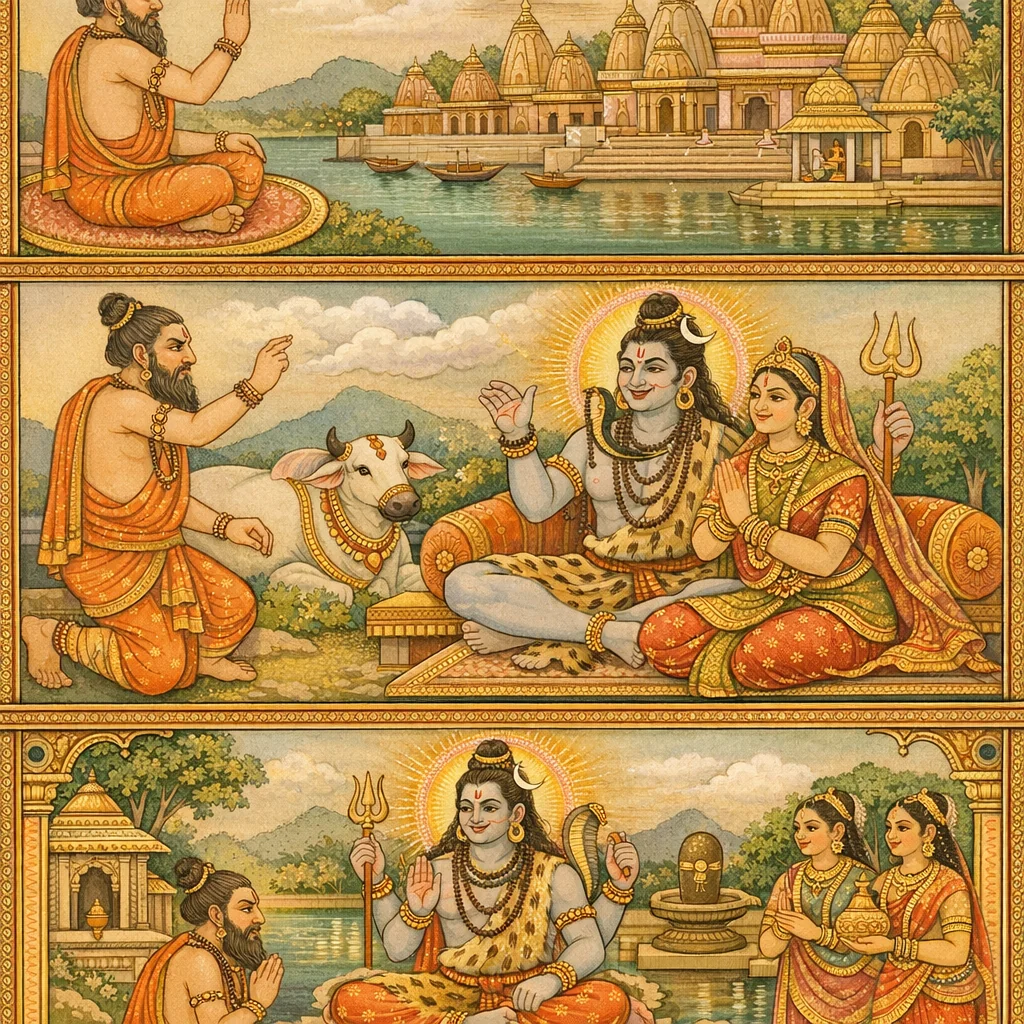
Adhyāya 35 opens with Kumbhayoni (Agastya) praising Avimukta-Kāśī as the supreme kṣetra, surpassing all other tīrthas and mokṣa-fields, and highlighting the distinctive salvific triad of Gaṅgā, Viśveśvara, and Kāśī. He then raises a practical concern: in the Kali/Tiṣya age, when the senses are unstable and the power for tapas, yoga, vrata, and dāna has declined, how can liberation be realistically attained? Skanda answers by shifting the focus from extraordinary ascetic feats to sadācāra—ethical discipline and right conduct—as the foundational means of dharma. The chapter ranks beings and knowers, extols disciplined Brahmin conduct as a social-theological axis, and defines sadācāra as the root of dharma. It lists yamas (truth, forbearance, non-violence, etc.) and niyamas (purity, bathing, charity, sacred study, fasting), teaches conquest of inner enemies (desire, anger, and the like), and insists that only dharma accompanies one beyond death. A long procedural section then details daily purity and the morning regimen: directions and privacy for elimination, counts for earth-and-water purification, the mechanics and restrictions of ācamana, rules for dantadhāvana (including prohibited lunar days), mantric framing, praise of morning bathing, and a structured morning sandhyā with related rites (tarpana, homa, and feeding protocols). The chapter closes by presenting this as the nityatama—most regular—method for stabilizing religious life.
Shlokas
Verse 1
कुंभयोनिरुवाच । अविमुक्तं महाक्षेत्रं परनिर्वाणकारणम् । क्षेत्राणां परमं क्षेत्रं मंगलानां च मंगलम्
Kumbhayoni (Agastya) said: “Avimukta is the great sacred kṣetra, the cause of supreme liberation—highest among all holy places, and the most auspicious among all that is auspicious.”
Verse 2
श्मशानानां च सर्वेषां श्मशानं परमं महत् । पीठानां परमं पीठमूषराणां महोषरम्
Among all cremation grounds, this is the supreme and mighty śmaśāna; among all sacred seats (pīṭhas), this is the highest seat; and among all barren tracts, this is the great “barren” land that transcends them all.
Verse 3
धर्माभिलाषिबुद्धीनां धर्मराशिकरं परम् । अर्थार्थिनां शिखिरथ परमार्थ प्रकाशकम्
For minds that long for dharma, it becomes the supreme gatherer of a heap of merits; and for those who seek wealth, O Śikhiratha, it illumines the highest truth (paramārtha).
Verse 4
कामिनां कामजननं मुमुक्षूणां च मोक्षदम् । श्रूयते यत्र यत्रैतत्तत्र तत्र परामृतम्
For lovers of pleasure it generates the desired enjoyments, and for seekers of liberation it bestows mokṣa. Wherever this is heard, there indeed is the supreme nectar.
Verse 5
क्षेत्रैकदेशवर्तिन्या ज्ञानवाप्याः कथां पराम् । श्रुत्वेमामिति मन्येहं गौरीहृदयनंदन
Having heard this supreme account of the “Well of Knowledge” situated in a particular part of the sacred kṣetra, I now think thus, O Delighter of Gaurī’s heart.
Verse 6
अणुप्रमाणमपि या मध्ये काशिविकासिनी । मही महीयसी ज्ञेया सा सिद्ध्यै न मुधा क्वचित्
Even if it is but atom-sized, that spot shining in the midst of Kāśī should be known as greater than the earth itself; it leads to attainment and is never in vain.
Verse 7
कियंति संति तीर्थानि नेह क्षोणीतलेऽखिले । परं काशीरजोमात्र तुलासाम्यं क्व तेष्वपि
How many tīrthas are there upon the whole face of the earth! Yet where among them is there—upon the scale—even an equal measure to a single speck of Kāśī’s dust?
Verse 8
कियंत्यो न स्रवंत्योत्र रत्नाकर मुदावहाः । परं स्वर्गतरंगिण्याः काश्यां का साम्यमुद्वहेत्
How many joy-bestowing rivers flow here, swelling the ocean! Yet what river in Kāśī could bear equality with the heaven-waved one—the Gaṅgā?
Verse 9
कियंति संति नो भूम्यां मोक्षक्षेत्राणि षण्मुख । परं मन्येऽविमुक्तस्य कोट्यंशोपि न तेष्वहो
How many fields of liberation are there upon the earth, O Ṣaṇmukha! Yet I deem that none of them holds even a millionth part of Avimukta—alas.
Verse 10
गंगा विश्वेश्वरः काशी जागर्ति त्रितयं यतः । तत्र नैःश्रेयसी लक्ष्मीर्लभ्यते चित्रमत्र किम्
Because there the triad—Gaṅgā, Viśveśvara, and Kāśī—ever stands awake, there the blessed fortune of supreme beatitude (naiḥśreyasa) is obtained; what wonder is there in this?
Verse 11
कथमेषा त्रयी स्कंद प्राप्यते नियतं नरैः । तिष्ये युगे विशेषेण नितरां चंचलेंद्रियैः
How, O Skanda, is this triad to be surely attained by men—especially in the Tiṣya age, when the senses are exceedingly restless?
Verse 12
तपस्तादृक्क्व वा तिष्ये तिष्ये योगः क्व तादृशः । क्व वा व्रतं क्व वा दानं तिष्ये मोक्षस्त्वतः कुतः
Where, in the Tiṣya age, is such austerity (tapas) to be found? Where, in Tiṣya, is such yoga? Where are such vows, and where such gifts? In Tiṣya, then, how could mokṣa arise from those means?
Verse 13
विनापि तपसा स्कंद विनायोगेन षण्मुख । विना व्रतैर्विना दानैः काश्यां मोक्षस्त्वयेरितः
O Skanda, O Ṣaṇmukha—without austerities, without yoga, without vows, and without gifts (dāna), you have proclaimed that liberation, mokṣa, is attained in Kāśī.
Verse 14
किं किमाचरता स्कंद काशी प्राप्येत तद्वद । मन्ये विना सदाचारं न सिद्ध्येयुर्मनोरथाः
O Skanda, tell me: by practicing what conduct, and which disciplines, does one truly attain Kāśī? I consider that without good conduct (sadācāra), one’s aims will not be fulfilled.
Verse 15
आचारः परमो धर्म आचारः परमं तपः । आचाराद्वर्धते ह्यायुराचारात्पापसंक्षयः
Right conduct is the highest dharma; right conduct is the highest austerity (tapas). From right conduct, life-span indeed increases, and from right conduct, sins are diminished.
Verse 16
आचारमेव प्रथमं तस्मादाचक्ष्व षण्मुख । देवदेवो यथा प्राह तवाग्रे त्वं तथा वद
Therefore, first of all, explain right conduct, O Ṣaṇmukha. Speak to me exactly as the God of gods once spoke in your presence.
Verse 17
स्कंद उवाच । मित्रावरुणजाख्यामि सदाचारं सतां हितम् । यदाचरन्नरो नित्यं सर्वान्कामानवाप्नुयात्
Skanda said: O son of Mitra and Varuṇa, I shall expound righteous conduct, beneficial to the virtuous; by practicing it always, a person attains all worthy aims.
Verse 18
स्थावराः कृमयोऽब्जाश्च पक्षिणः पशवो नराः । क्रमेण धार्मिकास्त्वेते ह्येतेभ्यो धार्मिकाः सुराः
Immovables, worms, those born in water, birds, beasts, and humans—thus, in ascending order, they become progressively more capable of dharma; and higher than these in dharmic capacity are the gods.
Verse 19
सहस्रभागः प्रथमा द्वितीयोनुक्रमात्तथा । सर्व एते महाभागा यावन्मुक्ति समाश्रयाः
The first has a thousandfold share; the second likewise, in due order. All these fortunate grades continue, step by step, up to the shelter of liberation (mokṣa).
Verse 20
चतुर्णामपि भूतानां प्राणिनोऽतीव चोत्तमाः । प्राणिभ्यामपि मुने श्रेष्ठाः सर्वे बुद्ध्युपजीविनः
Among all four classes of beings, the living are indeed superior. And among the living, O sage, those who live by intellect are the best of all.
Verse 21
मतिमद्भ्यो नराः श्रेष्ठास्तेभ्यः श्रेष्ठास्तु वाडवाः । विप्रेभ्योपि च विद्वांसो विद्वद्भ्यः कृतबुद्धयः
Among the intelligent, humans are superior; superior to them are those of disciplined character. Even among brāhmaṇas, the learned are higher; and higher than the learned are those whose understanding is perfected and steady.
Verse 22
कृतधीभ्योपि कर्तारः कर्तृभ्यो ब्रह्मतत्पराः । न तेषामर्चनीयोऽन्यस्त्रिषु लोकेषु कुंभज
Higher even than those of perfected intellect are the doers who enact dharma; higher than the doers are those wholly devoted to Brahman. For such persons, O Kumbhaja, none other is worthy of worship in the three worlds.
Verse 23
अन्योन्यमर्चकास्ते वै तपोविद्याऽविशेषतः । ब्राह्मणो ब्रह्मणा सृष्टः सर्वभूतेश्वरो यतः
They are indeed mutual worshippers, being alike in austerity and sacred knowledge. For the brāhmaṇa was created by Brahmā, and therefore is regarded as a lord among all beings.
Verse 24
अतो जगत्स्थितं सर्वं ब्राह्मणोऽर्हति नापरः । सदाचारो हि सर्वार्हो नाचाराद्विच्युतः पुनः । तस्माद्विप्रेण सततं भाव्यमाचारशीलिना
Therefore, the brāhmaṇa alone is worthy of honor—not another—for the whole world stands supported by that order. Right conduct is truly worthy of every honor; one fallen from conduct is not worthy again. Hence a brāhmaṇa should always be established in proper conduct.
Verse 25
विद्वेष रागरहिता अनुतिष्ठंति यं मुने । विद्वांसस्तं सदाचारं धर्ममूलं विदुर्बुधाः
O sage, that practice which the wise undertake free from hatred and attachment—learned people know that very right conduct to be the root of dharma.
Verse 26
लक्षणैः परिहीनोपि सम्यगाचारतत्परः । श्रद्धालुरनसूयुश्च नरो जीवेत्समाः शतम
Even if a person lacks outward marks of distinction, if devoted to proper conduct—faithful and free from fault-finding—he may live a hundred years.
Verse 27
श्रुतिस्मृतिभ्यामुदितं स्वेषु स्वेषु च कर्मसु । सदाचारं निषेवेत धर्ममूलमतंद्रितः
One should diligently cultivate right conduct—the root of dharma—as declared by Śruti and Smṛti, each in relation to one’s own duties and actions.
Verse 28
दुराचाररतो लोके गर्हणीयः पुमान्भवेत् । व्याधिभिश्चाभिभूयेत सदाल्पायुः सुदुःखभाक्
A man devoted to bad conduct becomes blameworthy in the world; he is overcome by diseases, ever short-lived, and a sharer of great suffering.
Verse 29
त्याज्यं कर्म पराधीनं कायमात्मवशं सदा । दुःखी यतः पराधीनः सदैवात्मवशः सुखी
Work that makes one dependent on others should be abandoned; one should keep one’s life always under one’s own mastery. For the dependent person is unhappy, while one who is self-governed is always happy.
Verse 30
यस्मिन्कर्मण्यंतरात्मा क्रियमाणे प्रसीदति । तदेव कर्म कर्तव्यं विपरीतं न च क्वचित्
That action, in the doing of which the inner self becomes serene—only that action should be performed; never its opposite.
Verse 31
प्रथमं धर्मसर्वस्वं प्रोक्ता यन्नियमा यमाः । अतस्तेष्वेव वै यत्नः कर्तव्यो धर्ममिच्छता
First and foremost—the very essence of dharma—are said to be the yamas and niyamas. Therefore, one who seeks dharma must strive precisely for these.
Verse 32
सत्यं क्षमार्जवं ध्यानमानृशंस्यमहिंसनम् । दमः प्रसादो माधुर्यं मृदुतेति यमा दश
Truthfulness, forgiveness, straightforwardness, meditation, compassion, non-violence, self-restraint, serenity, sweetness in speech and manner, and gentleness—these are the ten yamas.
Verse 33
शौचं स्नानं तपो दानं मौनेज्याध्ययनं व्रतम् । उपोषणोपस्थ दंडौ दशैते नियमाः स्मृताः
Purity, sacred bathing, austerity, charity, silence, worship, study of scripture, vowed observances, fasting, and restraint of the generative impulse—these ten are remembered as the niyamas.
Verse 34
कामं क्रोधं मदं मोहं मात्सर्यं लोभमेव च । अमून्षड्वै रिणो जित्वा सर्वत्र विजयी भवेत्
Having conquered these six enemies—desire, anger, intoxicated pride, delusion, envy, and greed—a person becomes victorious everywhere.
Verse 35
शनैः शनैः स चिनुयाद्धर्मं वल्मीक शृंगवत् । परपीडामकुर्वाणः परलोकसहायिनम्
Little by little one should accumulate dharma, as an anthill rises grain by grain; and without harming others, one should build that dharma which becomes a helper in the world beyond.
Verse 36
धर्म एव सहायी स्यादमुत्र न परिच्छदः । पितृ मातृ सुत भ्रातृ योषिद्बंधुजनादिकः
In the world beyond, dharma alone is one’s companion—not one’s possessions; not father, mother, son, brother, wife, nor relatives and the rest accompany the soul there.
Verse 37
जायते चैकलः प्राणी प्रम्रियेत तथैकलः । एकलः सुकृतं भुंक्ते भुंक्ते दुष्कृतमेकलः
A being is born alone and likewise dies alone; alone one enjoys the fruit of good deeds, and alone one must taste the fruit of wrongdoing.
Verse 38
देहं पंचत्वमापन्नं त्यक्त्वा कौ काष्ठलोष्ठवत् । बांधवा विमुखा यांति धर्मो यांतमनुव्रजेत्
When the body falls into the state of the five elements, it is cast aside like a piece of wood or a clod of earth; relatives turn away and depart, but dharma follows the one who is departing.
Verse 39
कृती संचिनुयाद्धर्मं ततोऽमुत्र सहायिनम् । धर्मं सहायिनं लब्द्ध्वा संतरेद्दुस्तरं तमः
Therefore the wise should store up dharma as a helper for the next world; having obtained dharma as one’s companion, one crosses beyond the hard-to-cross darkness.
Verse 40
संबंधानाचरेन्नित्यमुत्तमैरुत्तमैः सुधीः । अधमानधमांस्त्यक्त्वा कुलमुत्कर्षतां नयेत्
A discerning person should always cultivate associations with the best among the noble; abandoning the base and the basest, one should lead one’s family-line toward excellence.
Verse 41
उत्तमानुत्तमानेव गच्छन्हीनांश्च वर्जयन् । ब्राह्मणः श्रेष्ठतामेति प्रत्यवाये न शूद्रताम्
Keeping company only with the excellent and the most excellent, and avoiding the low, a brāhmaṇa attains eminence; but by falling into contrary conduct, he does not rise—he declines into a degraded state.
Verse 42
अनध्ययनशीलं च सदाचारविलंघिनम् । सालसं च दुरन्नादं ब्राह्मणं बाधतेंऽतकः
Death lays hold of that brāhmaṇa who neglects sacred study, transgresses right conduct, is slothful, and lives on impure or unwholesome food; thus, in Kāśī, the holy life is safeguarded by discipline.
Verse 43
ततोऽभ्यसेत्प्रयत्नेन सदाचारं सदा द्विजः । तीर्थान्यप्यभिलष्यंति सदाचारिसमागमम्
Therefore, the twice-born should always and earnestly cultivate right conduct. Even the sacred tīrthas—pilgrimage places—long for the company and presence of those who live by good conduct.
Verse 44
रजनीप्रांतयामार्धं बाह्मः समय उच्यते । स्वहितं चिंतयेत्प्राज्ञस्तस्मिंश्चोत्थाय सवर्दा
The latter half of the final watch of the night is called the Brāhma time (brahma-muhūrta). At that hour the wise should reflect upon their highest welfare, and rising then, remain ever intent on it.
Verse 45
गजास्यं संस्मरेदादौ तत ईशं सहांबया । श्रीरंगं श्रीसमेतं तु ब्रह्माण्या कमलोद्भवम्
First one should remember Gajāsya (Gaṇeśa); then Īśa (Śiva) together with the Mother, Ambā. Thereafter one should remember Śrīraṅga (Viṣṇu) accompanied by Śrī (Lakṣmī), and then the Lotus-born Brahmā together with Brahmāṇī.
Verse 46
इंद्रादीन्सकलान्देवान्वसिष्ठादीन्मुनीनपि । गंगाद्याः सरितः सर्वाः श्रीशैलाद्यखिलान्गिरीन्
One should remember Indra and all the devas, Vasiṣṭha and the sages as well; all rivers beginning with the Gaṅgā, and all mountains beginning with Śrīśaila.
Verse 47
क्षीरोदादीन्समुद्रांश्च मानसादि सरांसि च । वनानि नंदनादीनि धेनूः कामदुघादिकाः
One should remember the oceans beginning with the Milk Ocean, the lakes beginning with Mānasa, the forests beginning with Nandana, and the wish-fulfilling cows beginning with Kāmadhenu.
Verse 48
कल्पवृक्षादि वृक्षांश्च धातून्कांचनमुख्यतः । दिव्यस्त्रीरुर्वशीमुख्या गरुडादीन्पतत्त्रिणः
One should remember the trees beginning with the Kalpavṛkṣa, the metals beginning with gold, the celestial women beginning with Urvaśī, and the great birds beginning with Garuḍa.
Verse 49
नागाश्च शेषप्रमुखान्गजानैरावतादिकान् । अश्वानुच्चैःश्रवो मुख्यान्कौस्तुभादीन्मणीञ्छुभान्
One should remember the nāgas beginning with Śeṣa, the elephants beginning with Airāvata, the horses beginning with Uccaiḥśravas, and the auspicious jewels beginning with Kaustubha.
Verse 50
स्मरेदरुंधतीमुख्याः पतिव्रतवतीर्वधूः । नैमिषादीन्यरण्यानि पुरीः काशीपुरीमुखाः
One should remember the devoted wives, the pativratās, headed by Arundhatī; the sacred forests beginning with Naimiṣa; and the holy cities headed by the city of Kāśī.
Verse 51
विश्वेशादीनि लिंगानि वेदानृक्प्रमुखानपि । गायत्रीप्रमुखान्मंत्रान्योगिनः सनकादिकान्
One should remember the liṅgas beginning with Viśveśa, the Vedas beginning with the Ṛgveda, the mantras beginning with Gāyatrī, and the yogins beginning with Sanaka and the other sages.
Verse 52
प्रणवादिमहाबीजं नारदादींश्च वैष्णवान् । शिवभक्तांश्च बाणादीन्प्रह्लादादीन्दृढव्रतान्
One should remember the great seed-syllable beginning with Praṇava (Oṃ), the Vaiṣṇavas beginning with Nārada, the devotees of Śiva beginning with Bāṇa, and the steadfast keepers of vows beginning with Prahlāda.
Verse 53
वदान्यांश्च दधीच्यादीन्हरिश्चंद्रादि भूपतीन् । जननी चरणौ स्मृत्वा सर्वतीर्थोत्तमोत्तमौ
Holding in one’s heart the supremely holy feet of one’s mother—honored as the best of all tīrthas, beyond compare—one should also remember great benefactors such as Dadhīci and the royal exemplars beginning with Hariścandra.
Verse 54
पितरं च गुरूंश्चापि हृदि ध्यात्वा प्रसन्नधीः । ततश्चावश्यकं कर्तुं नैरृतीं दिशमाश्रयेत्
With a tranquil mind, meditating within the heart upon one’s father and one’s teachers, one should then, to perform the necessary act, resort to the south-western direction.
Verse 55
ग्रामाद्धनुःशतं गच्छेन्नगराच्च चतुर्गुणम् । तृणैराच्छाद्य वसुधां शिरः प्रावृत्य वाससा
One should go a hundred bow-lengths away from a village, and four times that distance from a city. Having covered the ground with grass and veiled the head with a cloth, one should proceed as is proper.
Verse 56
कर्णोपवीत्युदग्वक्त्रो दिवसे संध्ययोरपि । विण्मूत्रे विसृजेन्मौनी निशायां दक्षिणामुखः
In the daytime—and even at the two twilight junctions (sandhyās)—one should wear the sacred thread in the ‘over-the-ear’ manner and face north; observing silence, one should discharge feces and urine. At night, one should face south.
Verse 57
न तिष्ठन्नाप्सु नो विप्र गो वह्न्यनिल संमुखः । न फालकृष्टे भूभागे न रथ्यासेव्यभूतले
O brāhmaṇa, one should not do so while standing in water, nor facing a cow, fire, or the wind; nor upon ground freshly ploughed by a ploughshare, nor upon a road or a place frequented by people.
Verse 58
नालोकयेद्दिशोभागाञ्ज्योतिश्चक्रं नभोमलम् । वामेन पाणिना शिश्नं धृत्वोत्तिष्ठेत्प्रयत्नवान्
One should not look around at the quarters, nor gaze at the circle of lights or the sky. Holding the organ with the left hand, one should rise carefully with due attention.
Verse 59
अथो मृदं समादाय जंतुकर्करवर्जिताम् । विहाय मूषकोत्खातां शौचोच्छिष्टां च नाकुलाम्
Then one should take earth (for cleansing) that is free from insects and gravel, avoiding soil dug up by mice, soil already used for purification, and soil from a mongoose’s burrow.
Verse 60
गुह्ये दद्यान्मृदं चैकां पायौ पंचांबुसां तराः । दश वामकरे चापि सप्त पाणिद्वये मृदः
One should apply one portion of earth to the private part, and five (with water) to the anus; and then ten portions to the left hand, and seven portions to both hands.
Verse 61
एकैकां पादयोर्दद्यात्तिस्रः पाण्योर्मृदस्तथा । इत्थं शौचं गृही कुर्याद्गंधलेपक्षयावधि
One should apply one portion (of earth) to each foot, and likewise three portions to the hands. Thus should a householder perform purification until odor and smear are completely removed.
Verse 62
क्रमाद्द्वैगुण्यमेतस्माद्ब्रह्मचर्यादिषु त्रिषु । दिवाविहित शौचस्य रात्रावर्धं समाचरेत्
In due order, this measure of cleansing is to be doubled in the three stages beginning with brahmacarya. And at night one should perform half of the purification prescribed for the daytime.
Verse 63
रुज्यर्धं च तदर्धं च पथि चौरादि बाधिते । तदर्धं योषितां चापि सुस्थे न्यूनं न कारयेत्
When one is ill, or when even half of one’s capacity is lost, or when one is on the road troubled by thieves and the like, one may perform only half of the usual observance. For women too, half is permitted; but when one is healthy, one should not do less than what is prescribed.
Verse 64
अपि सर्वनदीतोयैर्मृत्कूटैश्चापि गोमयैः । आपादमाचरच्छौचं भावदुष्टो न शुद्धिभाक्
Even if one performs purification up to the feet with the waters of all rivers, with clods of earth, and even with cow-dung, a person whose inner disposition is corrupt does not attain true purity.
Verse 65
अर्चितः सविता सूते सुतान्पशु वसूनि च । व्याधीन्हरेद्ददात्यायुः पूरयेद्वांछितान्यपि
When worshipped, Savitṛ (the Sun) bestows sons, cattle, and wealth; he removes diseases, grants long life, and fulfils even desired aims.
Verse 66
आर्द्रधात्रीफलोन्माना मृदः शौचे प्रकीर्तिताः । सर्वाश्चाहुतयोप्येवं ग्रासाश्चांद्रायणेपि च । प्रागास्य उदगास्योवा सूपविष्टः शुचौ भुवि । उपस्पृशेद्विहीनायां तुषांगारास्थिभस्मभिः
For purification, the measure of earth to be used is declared to be equal to a fresh āmalakī (dhātrī) fruit. Likewise, the same measure applies to all oblations and also to the morsels taken in the Cāndrāyaṇa vow. Facing east or north, seated properly on clean ground, one should perform the rite of touching/sipping; if proper earth or water is unavailable, one may use chaff, charcoal, bone-ashes, or ashes as substitutes.
Verse 67
अनुष्णाभिरफेनाभिरद्भिर्हृद्गाभिरत्वरः । ब्राह्मणो ब्राह्मतीर्थेन दृष्टिपूताभिराचमेत्
A brāhmaṇa should perform ācamana unhurriedly, with cool (not hot), foamless water reaching up to the chest, using the brāhma-tīrtha (the prescribed hand-position), with water purified by one’s attentive gaze.
Verse 68
कंठगाभिर्नृपः शुद्ध्येत्तालुगाभिस्तथोरुजः । स्त्रीशूद्रावास्य संस्पर्शमात्रेणापि विशुद्ध्यतः
A king is purified by taking water up to the throat; one afflicted in the thigh or groin is purified with water reaching up to the palate. A woman and a śūdra are purified even by mere contact with the mouth—the minimal form of ācamana.
Verse 69
शिरः प्रावृत्य कंठं वा जले मुक्तशिखोऽपि च । अक्षालितपदद्वंद्व आचांतोप्यशुचिर्मतः
Even if one immerses the head or the throat in water, and even if the hair is loosened, one is still deemed impure if both feet have not been washed—even though ācamana has been performed.
Verse 70
त्रिः पीत्वांबु विशुद्ध्यर्थं ततः खानि विशोधयेत् । अंगुष्ठमूलदेशेन द्विर्द्विरोष्ठाधरौ स्पृशेत्
For purification one should sip water three times; then one should cleanse the bodily apertures. With the base of the thumb, one should touch the upper and lower lips twice each.
Verse 71
अंगुलीभिस्त्रिभिः पश्चात्पुनरास्यं स्पृशेत्सुधीः । तर्जन्यंगुष्ठकोट्या च घ्राणरंध्रे पुनः पुनः
After that, the wise person should again touch the mouth with three fingers; and with the tips of the index finger and thumb, one should repeatedly touch the nostrils.
Verse 72
अंगुष्ठानामिकाग्राभ्यां चक्षुः श्रोत्रे पुनः पुनः । कनिष्ठांगुष्ठयोगेन नाभिरंध्रमुपस्पृशेत्
With the tips of the thumb and ring finger, one should touch the eyes and ears again and again; and with the little finger joined to the thumb, one should touch the navel-opening, as part of the purificatory rite.
Verse 73
स्पृष्ट्वा तलेन हृदयं समस्ताभिः शिरः स्पृशेत् । अंगुल्यग्रैस्तथा स्कंधौ सांबु सर्वत्र संस्पृशेत्
Touching the heart with the palm, one should then touch the head with all the fingers. With the fingertips one should also touch the shoulders; and with water one should perform the prescribed touchings everywhere, for purification.
Verse 74
आचांतः पुनराचामेत्कृते रथ्योपसर्पणे । स्नात्वा भुक्त्वा पयः पीत्वा प्रारंभे शुभकर्मणाम्
Having performed ācamana once, one should perform ācamana again after approaching the public road. One should also do so after bathing, after eating, after drinking milk, and at the commencement of auspicious rites.
Verse 75
सुप्त्वा वासः परीधाय तथा दृष्ट्वाप्यमंगलम् । प्रमादादशुचिं स्पृष्ट्वा द्विराचांतः शुचिर्भवेत्
After sleeping, after putting on clothing, and even after seeing something inauspicious; or if through inadvertence one touches impurity—having performed ācamana twice, one becomes pure.
Verse 76
अथो मुखविशुद्ध्यर्थं गृह्णीयाद्दंतधावनम् । आचांतोप्यशुचिर्यस्मादकृत्वा दंतधावनम्
Then, for the sake of cleansing the mouth, one should take up tooth-cleaning. For even after performing ācamana, one remains impure if tooth-cleaning has not been done.
Verse 77
प्रतिपद्दर्शषष्ठीषु नवम्यां रविवासरे । दंतानां काष्ठसंयोगो दहेदासप्तमं कुलम्
On the first tithi, on the day of amāvasyā (new moon), on the sixth, on the ninth, and on Sundays, the use of a wooden twig for cleaning the teeth is said to burn and ruin the family line up to the seventh generation.
Verse 78
अलाभे दंतकाष्ठानां निषिद्धे वाथ वासरे । गंडूषा द्वादश ग्राह्या मुखस्य परिशुद्धये
When tooth-cleaning twigs are unavailable, or when the day is one on which they are forbidden, one should perform twelve mouth-rinses (gaṇḍūṣa) for the thorough purification of the mouth.
Verse 79
कनिष्ठाग्र परीमाणं सत्वचं निर्व्रणं ऋजुम् । द्वादशांगुलमानं च सार्धं स्याद्दंतधावनम्
The tooth-cleaning twig should be as thick as the tip of the little finger, with bark intact, uninjured and straight; and its length should be twelve and a half aṅgulas.
Verse 80
एकैकांगुलह्रासेन वर्णेष्वन्येषु कीर्तितम् । आम्राम्रातक धात्रीणां कंकोल खदिरोद्भवम्
For the other classes (of people), it is taught that the length should be reduced by one aṅgula each. Suitable twigs are from mango, amrātaka (hog-plum), and dhātrī (āmalakī), and also from kankola and khadira trees.
Verse 81
शम्यपामार्गखर्जूरीशेलुश्रीपर्णिपीलुजम् । राजादनं च नारंगं कषायकटुकंटकम्
Also suitable are twigs from śamī, apāmārga, date-palm, śelu, śrīparṇī, and pīlu; as well as rājādana and nāraṅga—woods that are astringent and pungent, and thorny.
Verse 82
क्षीरवृक्षोद्भवं वापि प्रशस्तं दंतधावनम् । जिह्वोल्लेखनिकां चापि कुर्याच्चापाकृतिं शुभाम्
A tooth-cleaning twig taken from a milky-sapped tree is likewise praised as excellent. One should also make a tongue-scraper and fashion it in an auspicious form.
Verse 83
अन्नाद्याय व्यूहध्वं सोमोराजाय मा गमत् । समे मुखं प्रमार्क्ष्यते यशसा च भगेन च
“Arrange (this rite) for the sake of food and nourishment; do not stray from Soma, the royal deity. When the face is evenly cleansed, it becomes endowed with renown and good fortune.”
Verse 84
आयुर्बलं यशो वर्चः प्रजाः पशु वसूनि च । ब्रह्म प्रज्ञां च मेधां च त्वन्नो देहि वनस्पते
“Grant us longevity, strength, fame, and radiance; offspring, cattle, and wealth as well. O Lord of the plants, bestow on us brahma—spiritual insight—together with wisdom, discernment, and intelligence.”
Verse 85
मंत्रावेतौ समुच्चार्य यः कुर्याद्दंतधावनम् । वनस्पतिगतः सोमस्तस्य नित्यं प्रसीदति
“Whoever performs tooth-cleaning after duly reciting these two mantras—Soma, abiding in the plants, is ever pleased with him.”
Verse 86
मुखे पर्युषिते यस्माद्भवेदशुचिभाग्नरः । ततः कुर्यात्प्रयत्नेन शुद्ध्यर्थं दंतधावनम्
“Because when the mouth has become stale overnight a person becomes a sharer in impurity, therefore one should diligently perform tooth-cleaning for the sake of purification.”
Verse 87
उपवासेपि नो दुष्येद्दंतधावनमंजनम् । गंधालंकारसद्वस्त्रपुष्पमालानुलेपनम्
Even while fasting, cleansing the teeth and applying collyrium are not deemed a fault; nor are fragrance, ornaments, clean garments, flower garlands, and unguents.
Verse 88
प्रातःसंध्यां ततः कुर्याद्दंतधावनपूर्विकाम् । प्रातःस्नानं चरित्वा च शुद्धे तीर्थे विशेषतः
Then one should perform the morning Sandhyā, preceded by cleansing the teeth; and one should undertake the morning bath—especially at a pure tīrtha, a sacred ford.
Verse 89
प्रातःस्नानाद्यतःशुद्ध्येत्कायोयं मलिनः सदा । छिद्रितो नवभिश्छिद्रैः स्रवत्येव दिवानिशम्
By the morning bath and related purifications this body becomes clean; for it is ever impure, pierced with nine openings, and constantly oozing day and night.
Verse 90
उत्साह मेधा सौभाग्य रूप संपत्प्रवर्तकम् । मनः प्रसन्नताहेतुः प्रातःस्नानं प्रशस्यते
Morning bathing is praised as that which promotes enthusiasm, intelligence, good fortune, beauty, and prosperity; it is a cause of clarity and gladness of mind.
Verse 91
प्रस्वेद लालाद्याक्लिन्नो निद्राधीनो यतो नरः । प्रातःस्नानात्ततोर्हः स्यान्मंत्रस्तोत्रजपादिषु
Since a person is dampened by sweat and saliva and remains under the influence of sleep, therefore after the morning bath he becomes fit for mantra-recitation, hymns (stotra), japa, and related rites.
Verse 92
प्रातःप्रातस्तु यत्स्नानं संजाते चारुणोदये । प्राजापत्यसमं प्राहुस्तन्महाघविघातकृत्
But the bath taken at dawn, when the lovely sunrise has arisen, is declared equal to the Prājāpatya purificatory rite; it destroys great sins.
Verse 93
प्रातःस्नानं हरेत्पापमलक्ष्मीं ग्लानिमेव च । अशुचित्वं च दुःस्वप्नं तुष्टिं पुष्टिं प्रयच्छति
Morning bathing removes sin, misfortune, and weariness; it also dispels impurity and bad dreams, and bestows contentment and nourishment (well-being).
Verse 94
नोपसर्पंति वै दुष्टाः प्रातःस्नायिजन क्वचित् । दृष्टादृष्टफलं यस्मात्प्रातःस्नानं समाचरेत्
The wicked do not approach one who bathes in the morning, at any time; since morning bathing yields both seen and unseen results, one should practice it.
Verse 95
प्रसंगतः स्नानविधिं वक्ष्यामि कलशोद्भव । विधिस्नानं यतः प्राहुः स्नानाच्छतगुणोत्तरम्
Now, in due course, O Kalaśodbhava, I shall describe the proper procedure of bathing; for they declare that a bath performed according to rule yields a hundredfold greater result than bathing done otherwise.
Verse 96
विशुद्धां मृदमादाय बर्हींषि तिल गोमयम् । शुचौ देशे परिस्थाप्य त्वाचम्य स्नानमाचरेत्
Taking pure earth (cleansing clay), sacred grass, sesame, and cow-dung, and arranging them in a clean place, one should sip water for purification (ācāmana) and then perform the bath.
Verse 97
उपग्रही बद्धशिखो जलमध्ये समाविशेत् । उरुं हीति मंत्रेण तोयमावर्त्य सृष्टितः
With the upper garment properly arranged and the hair tied, one should enter the midstream; reciting the mantra “uruṃ hīti,” one should stir and turn the water in the prescribed manner.
Verse 98
ये ते शतं ततो जप्त्वा तोयस्यामंत्रणाय च । सुमित्रिया नो मंत्रेण पूर्वं कृत्वा जलांजलिम् । क्षिपेद्द्वेष्यं समुद्दिश्य जपन्दुर्मित्रिया इति
After chanting “ye te śatam” a hundred times to invoke and consecrate the water, and first taking a handful of water with the mantra “sumitriyā no,” one should cast it away toward the hostile one, reciting “durmitriyā.”
Verse 99
इदं विष्णुरिमं जप्त्वा लिंपेदंगानि मृत्स्नया । मृदैकया शिरः क्षाल्य द्वाभ्यां नाभेस्तथोपरि
Reciting the mantra “idaṃ viṣṇuḥ,” one should anoint the limbs with purifying earth; with one portion of earth one cleanses the head, and with two portions the region of the navel and above.
Verse 100
नाभेरधस्तु तिसृभिः पादौ षड्भिर्विशोधयेत् । मज्जेत्प्रवाहाभिमुख आपो अस्मानिमं जपन्
Below the navel one should cleanse with three portions (of earth), and the feet with six; then, facing the current, one should immerse while reciting the mantra “āpo asmān.”
Verse 110
प्रणवं त्रिर्जपेद्वापि विष्णुं वा संस्मरेत्सुधीः । स्नात्वेत्थं वस्त्रमापीड्य गृह्णीयाद्धौतवाससी । आचम्य च ततः कुर्यात्प्रातःसंध्यां कुशान्विताम् । यो न संध्यामुपासीत ब्राह्मणो हि विशेषतः
The wise should recite the Praṇava three times, or else remember Viṣṇu. Having thus bathed, one should wring the cloth and don washed garments. Then, after performing ācāmana, one should carry out the morning sandhyā with kuśa grass. Especially for a brāhmaṇa, one who does not worship the sandhyā neglects a vital duty.
Verse 120
एकं संभोज्य विधिवद्ब्राह्मणं यत्फलं लभेत् । प्राणायामैर्द्वादशभिस्तत्फलं श्रद्धयाप्यते
Whatever merit one gains by duly feeding a single brāhmaṇa, that very fruit is obtained—when done with faith—through twelve prāṇāyāmas.
Verse 130
गृहाद्बहुगुणा यस्मात्संध्या बहिरुपासिता । गायत्र्यभ्यासमात्रोपि वरं विप्रो जितेंद्रियः
Since Sandhyā worship performed outside the house yields merit many times greater than that done at home, even mere practice of the Gāyatrī is superior—when done by a self-controlled brāhmaṇa.
Verse 140
नक्तं दिनं निमज्ज्याप्सु कैवर्ताः किमु पावनाः । शतशोपि तथा स्नाता न शुद्धा भावदूषिता
If fishermen, plunging into water night and day, are not thereby purified, then what of others? Even if one bathes a hundred times, one is not pure when the inner disposition is tainted.
Verse 150
इमं मंत्रं ततश्चोक्त्वा कुर्यादाचमनं द्विजः । आचार्याः केचिदिच्छंति शाखाभेदेन चापरे
After reciting this mantra, the twice-born should perform ācamana, the ritual sipping of water. Some teachers prescribe it in one manner, while others differ according to the distinctions of Vedic schools.
Verse 160
सहस्रकृत्वो गायत्र्याः शतकृत्वोथवा पुनः । दशकृत्वोथ देव्यैव कुर्यात्सौरीमुपस्थितिम्
Having repeated the Gāyatrī a thousand times—or a hundred times, or again ten times—one should then perform the upasthiti, reverent attendance upon Sūrya, with the Goddess (Gāyatrī) herself as the means.
Verse 170
अन्वारब्धेन सव्येन तर्पयेत्षड्विनायकान् । ब्रह्मादीनखिलान्देवान्मरीच्यादींस्तथा मुनीन्
With the sacred thread properly worn over the left side (savyopavīta), one should offer tarpana—water-libations—to the six Vināyakas, to all the gods beginning with Brahmā, and likewise to the sages beginning with Marīci.
Verse 180
उदीरतामगिंरस आयंतुन इतीष्यते । ऊर्जं वहंती पितृभ्यः स्वधायिभ्यस्ततः पठेत्
Then one should recite, as enjoined, the Vedic formula beginning “udīratām …”; thereafter one should recite “ūrjaṃ vahantī …” for the Pitṛs, those who partake of svadhā.
Verse 190
अध्यापयेच्छुचीञ्शिष्यान्हितान्मेधासमन्वितान् । उपेयादीश्वरं चैव योगक्षेमादि सिद्धये
One should teach pure disciples—well-disposed and endowed with intelligence—and one should approach the Lord as well, for the attainment of yoga, protection and well-being (yoga-kṣema), and other fulfillments.
Verse 200
ओंभूर्भुवःस्वःस्वाहेति विप्रो दद्यात्तथाहुतिम् । तथा देवकृतस्याद्या जुहुयाच्च षडाहुतीः
Uttering “Oṃ bhūr bhuvaḥ svaḥ svāhā,” the brāhmaṇa should offer the āhuti, the fire-oblation. Likewise, beginning with the first offering prescribed in the devakṛta rite, he should make six oblations.
Verse 210
प्रतिगृह्णंत्विमं पिंडं काका भूमौ मयार्पितम् । द्वौ श्वानौ श्यामशबलौ वैवस्वतकुलोद्भवौ
Let the crows accept this piṇḍa-offering that I have placed upon the ground. And may the two dogs—dark and spotted—born of the lineage of Vaivasvata (Yama), be satisfied.
Verse 220
विधायान्नमनग्नं तदुपरिष्टादधस्तथा । आपोशनविधानेन कृत्वाश्नीयात्सुधीर्द्विजः
Having arranged undefiled food, above and below as prescribed, the wise twice-born should eat only after performing āpośana in accordance with rule.
Verse 230
अंगुष्ठमात्रः पुरुषस्त्वंगुष्ठं च समाश्रितः । ईशः सर्वस्य जगतः प्रभुः प्रीणाति विश्वभुक्
The Lord—the Puruṣa, said to be of the measure of a thumb and abiding within the thumb—Ruler of the entire universe, Master and Sustainer of all, is pleased by such remembrance and practice.
Verse 240
अग्निश्चेति च मंत्रेण विधायाचमने सुधीः । पश्चिमास्यो जपेत्तावद्यावन्नक्षत्रदर्शनम्
Having performed ācamana with the mantra beginning “Agniś ca…”, the wise person should face west and continue japa until the stars become visible.
Verse 243
उद्देशतः समाख्यातो ह्येष नित्यतमो विधिः । इत्थं समाचरन्विप्रो नावसीदति कर्हिचित्
This most constant daily rule has been explained in outline. A brāhmaṇa who practices in this manner never falls into misfortune at any time.