Adhyaya 24
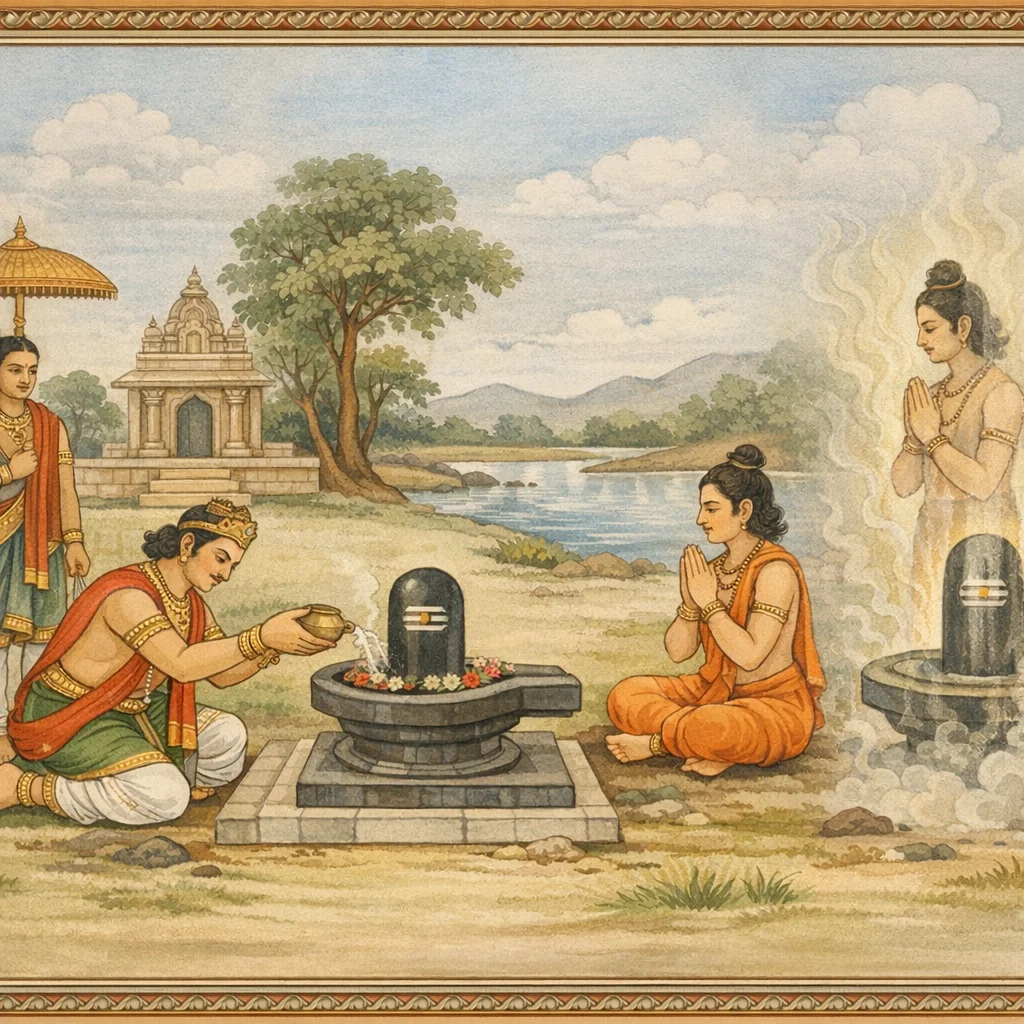
Chapter 24 weaves a layered theological teaching through karmic biography, ideal kingship, and Kāśī-centered liberation. It opens with a devotee’s ascent after death to the Vaiṣṇava realm, enjoyment of heavenly rewards, and return—through residual merit—as a righteous king in Nandivardhana amid an ideal socio-ethical order. The narrative then turns to Kāśī: King Vṛddhakāla journeys with his queen, performs abundant dāna, and establishes a liṅga with an associated well. At midday an aged ascetic (tapodhana) questions who built the shrine and what the liṅga is called, teaching that one should not publicize one’s own good deeds, for self-attribution diminishes merit. The king draws water from the well to serve him; upon drinking, the ascetic becomes youthful, revealing the well’s power. The ascetic names the liṅga “Vṛddhakāleśvara” and the well “Kālōdaka,” and lists the fruits of darśana, touch, pūjā, hearing, and using the water—especially relief from aging and disease—while reaffirming Kāśī as the culminating place of liberation even for those who died elsewhere. The chapter ends with the ascetic dissolving into the liṅga, praise of the potency of chanting (notably “Mahākāla”), and a phalaśruti promising purification and higher knowledge to those who hear the account of Śivaśarman’s course and worship in Kāśī.
Shlokas
Verse 1
गणावूचतुः । शिवशर्मन्नुदर्कं ते कथयावो निशामय । त्वमत्र वैष्णवे लोके भुक्त्वा भोगान्सुपुष्कलान्
The attendants said: “O Śivaśarman, listen—let us tell you your future course. Here, in the world of Viṣṇu, you will enjoy abundant delights.”
Verse 2
ब्रह्मणो वत्सरं पूर्णं रममाणोऽप्सरोगणैः । सुतीर्थमरणोपात्त पुण्यशेषेण वै पुनः
For a full year of Brahmā, sporting with hosts of apsarās, then again—by the remaining merit gained through dying at a holy tīrtha—(you will return).
Verse 3
भविष्यसि महीपालो नगरे नंदिवर्धने । राज्यं प्राप्यासपत्नं च समृद्धबलवाहनम्
You shall become a king, guardian of the earth, in the city called Nandivardhana; attaining sovereignty, you will possess a realm without rivals, abundant in forces and conveyances.
Verse 4
कृष्टिभिर्हृष्टपुष्टैश्च रम्यहाटकभूषणैः । संजुष्टमिष्टापूर्तानां धर्माणां नित्यकर्तृभिः
Your realm will be inhabited by joyful, well-nourished people, adorned with lovely ornaments of gold, and filled with those who ever perform the dharmas of iṣṭa and pūrta—sacrificial worship and public benefactions.
Verse 5
सदासंपन्नसस्यं च सूर्वरक्षेत्रसंकुलम् । सुदेशं सुप्रजं सुस्थं सुतृणं बहुगोधनम्
It will ever be rich in harvests, crowded with excellent fields; a fair land with good people, healthy and secure—abundant in fodder and in cattle-wealth.
Verse 6
देवतायतनानां च राजिभिः परिराजितम् । सुयूपा यत्र वै ग्रामाः सुवित्तर्द्धि विराजिताः
It will be splendid with rows of temples of the gods; and there the villages, marked by fine sacrificial posts, will shine with excellent wealth and prosperity.
Verse 7
सुपुष्प कृत्रिमोद्यानाः ससदाफलपादपाः । सपद्मिनीककासारा यत्र राजंति भूमयः
There the lands will shine with well-flowered, artfully fashioned gardens, with trees bearing fruit in every season, and with lotus-ponds and reservoirs.
Verse 8
सदंभा निम्नगाराजिर्न यत्र जनता क्वचित् । कुलान्येव कुलीनानि न चान्यायधनानि च
There, nowhere will the people be arrogant; the courses of the rivers will be fair and orderly. Families will indeed be noble, and there will be no wealth gained through injustice.
Verse 9
विभ्रमो यत्र नारीषु नविद्वत्सु च कर्हिचित् । नद्यः कुटिलगामिन्यो न यत्र विषये प्रजाः
That land is to be known as tainted—where delusion prevails among women and the learned are never honored; where rivers run in crooked, wayward courses, and where the people do not remain steadily within their rightful domain.
Verse 10
तमोयुक्ताः क्षपा यत्र बहुलेषु न मानवाः । रजोयुजः स्त्रियो यत्र न धर्मबहुला नराः
Where nights are steeped in darkness and, among the many, true humanity is scarce; where women are bound to restless passion and men are not rich in dharma—such a region is understood to be fallen.
Verse 11
धनैरनंधो यत्रास्ति मनो नैव च भोजनम् । अनयः स्यंदनं यत्र न च वै राजपूरुषः
Where wealth makes one ‘not blind’—so that all is judged by money—and the mind finds no true contentment even in food; where injustice becomes the chariot that carries life forward, and there is no righteous royal authority—such a country is recognized as unrighteous.
Verse 12
दंडः परशुकुद्दाल वालव्य जनराजिषु । आतपत्रेषु नान्यत्र क्वचित्क्रोधापराधजः
Where ‘punishment’ among the crowds is nothing but axes, spades, and crude tools; and where, apart from parasols of rank, nothing is seen anywhere except penalties born of anger and offense—there dharma has withered.
Verse 13
अन्यत्राक्षिकवृंदेभ्यः क्वचिन्न परिदेवनम् । आक्षिका एव दृश्यंते यत्र पाशकपाणयः
Where, except among bands of gamblers, no lamentation is heard anywhere; and where only gamblers are seen, with dice in their hands—know that place to be stripped of auspiciousness.
Verse 14
जाड्यवार्ता जलेष्वेव स्त्रीमध्या एव दुर्बलाः । कठोरहृदया यत्र सीमंतिन्यो न मानवाः
Where dull, senseless talk is found only in the waters (as if all were steeped in stupidity), where weakness is seen chiefly in the midst of women, and where married women are hard-hearted rather than humane—such a land is counted among the degraded.
Verse 15
औषधेष्वेव यत्रास्ति कुष्ठयोगो न मानवे । वेधोप्यंतःसुरत्नेषु शूलं मूर्तिकरेषु वै
Where leprosy is found only in medicines, not in human beings; where even precious inner gems are ‘pierced,’ and pain like a spear afflicts the makers of sacred images—such inversion of order signals an inauspicious realm.
Verse 16
कंपःसात्त्विकभावोत्थो न भयात्क्वापि कस्यचित् । संज्वरः कामजो यत्र दारिद्र्यं कलुषस्य च
Where trembling arises from sāttvic emotion, not from fear, in anyone anywhere; where fever is born of lust, and poverty springs from impurity—these are the strange marks by which a realm’s inner condition is known.
Verse 17
दुर्लभत्वं सदा कस्य सुकृतेन च वस्तुनः । इभा एव प्रमत्ता वै युद्धं वीच्योर्जलाशये
For whom is anything truly ‘rare’ if it is upheld by sukṛta, the merit of good deeds? Yet in that land only intoxicated elephants are seen, fighting amid the waves in a reservoir—another sign of disordered life.
Verse 18
दानहानिर्गजेष्वेव द्रुमेष्वेव हि कंटकाः । जनेष्वेव विहारा हि न कस्यचिदुरःस्थली
In that land, the loss of dāna is seen as though only among elephants, and thorns as though only upon trees; pleasure-seeking is found only among people, and no one’s breast is a dwelling of courage or compassion—such a country is bereft of the fragrance of dharma.
Verse 19
बाणेषु गुणविश्लेषो बंधोक्तिः पुस्तके दृढा । स्नेहत्यागः सदैवास्ति यत्र पाशुपते जने
In that land, even arrows are tested for their qualities; agreements are firmly set down in books; and among the Pāśupata devotees there is ever a steadfast renunciation of attachment.
Verse 20
दंडवार्ता सदा यत्र कृतसंन्यासकर्मणाम् । मार्गणाश्चापकेष्वेव भिक्षुका ब्रह्मचारिणः
There, discourse on the ascetic staff (daṇḍa) is ever present among those who have undertaken the works of saṃnyāsa; and brahmacārins who live by alms are found only as disciplined seekers, intent upon the proper path.
Verse 21
यत्र क्षपणका एव दृश्यंते मलधारिणः । प्रायो मधुव्रता एव यत्र चंचलवृत्तयः
There, only the true kṣapaṇakas are seen—those who bear the marks of austerity; and those fickle in conduct are, for the most part, merely “madhuvratas”, buzzing like bees, unsteady by nature.
Verse 22
इत्यादि गुणवद्देशे त्वयिराज्यं प्रशासति । धर्मेण राजधर्मज्ञ शौंडीर्यगुणशालिनि
Thus, in a land abundant in virtues, you govern the kingdom by dharma—O knower of royal duty, O one endowed with valor and noble qualities.
Verse 23
सौभाग्यभाजि रूपाढ्ये शौर्यौदार्यगुणान्विते । सीमंतिनीनां रम्याणां लावण्यवर्जित सुश्रियाम्
Auspicious and beautiful, endowed with valor and generosity—here even charming, well-adorned noblewomen are free from vanity over mere loveliness, shining instead with dignified grace.
Verse 24
राज्ञीनामयुतंभावि कुमाराणां शतत्रयम् । वृद्धकाल इति ख्यात उग्रः परपुरंजयः
There were to be ten thousand queens and three hundred princes; and he—fierce, a conqueror of enemy cities—was renowned by the name Vṛddhakāla.
Verse 25
विजितानेकसमरः श्रीसंतर्पितमार्गणः । अनेकगुणसंपूर्णः पूर्णचंद्रनिभद्युतिः
Victorious in many battles, he delighted and rewarded his archers; complete with many virtues, he shone with a radiance like the full moon.
Verse 26
संततावभृथक्लिन्न मूर्धजः क्षितिषर्षभः । प्रजापालनसंपन्नः कोशप्रीणितभूसुरः
That bull among kings, whose hair was continually damp from ceremonial ablutions, was accomplished in protecting his people, and he kept the brāhmaṇas satisfied through the royal treasury.
Verse 27
पदारविंदं गौविंदं हृदि ध्यायन्नतंद्रितः । वासुदेवकथालापपरिक्षिप्त दिनक्षपः
Untiringly meditating in his heart on Govinda’s lotus-feet, he passed his days and nights absorbed in conversations and narrations about Vāsudeva.
Verse 28
कदाचिदुपविष्टःसन्मध्ये राजसभं द्विज । दूरात्कार्पटिकैर्दृष्टो वाराणस्याः समागतैः
Once, O brāhmaṇa, as he sat in the midst of the royal assembly, he was seen from afar by wandering mendicants who had come from Vārāṇasī.
Verse 29
तत्कर्मभाविसदृशैस्तदात्वमभिनंदितः । तैः सर्वै राजशार्दूलस्याशीर्वादैरनेकशः
Then, in a manner befitting those deeds and what was to follow from them, he was praised at that time; and all of them repeatedly bestowed many blessings upon that tiger among kings.
Verse 30
श्रीमद्विश्वेश्वरो देवो विश्वेषां जगतां गुरुः । काशीनाथस्तुते कुर्यात्कुमतेरपवर्जनम्
May the glorious Lord Viśveśvara—teacher of all worlds, the Lord of Kāśī—when praised, bring about the removal of perverse understanding.
Verse 31
नैःश्रेयसीं च संपत्तिं यो देयात्स्मरणादपि । काशीनाथः स ते दिश्याज्ज्ञानं मलविवर्जितम्
He who grants the supreme good and true prosperity even from mere remembrance—may that Lord of Kāśī bestow upon you knowledge free from all impurity.
Verse 32
येन पुण्येन ते प्राप्तं राज्यं प्राज्यमकंटकम् । तत्पुण्यशेषतोभूयाद्विश्वनाथे मतिस्तव
By whatever merit you attained a vast kingdom free of thorns (obstacles), by the remaining residue of that very merit may your devotion and resolve ever increase toward Viśvanātha.
Verse 33
यस्य प्रसादात्सुलभमायुः पुत्रांबरागनाः । समृद्धयः स्वर्गमोक्षौ स विश्वेशः प्रसीदतु
By whose grace long life, sons, garments, and spouse are easily obtained—and likewise prosperity, heaven, and liberation—may that Lord Viśveśa be gracious.
Verse 34
नामश्रवणमात्रेण यस्य विश्वेशितुर्विभोः । महापातकविच्छेदः स विश्वेशोऽस्तु ते हृदि
Of that almighty Lord Viśveśitṛ, by mere hearing of whose Name the great sins are cut off—may that Viśveśa dwell in your heart.
Verse 35
त्वं वृद्धकालो भूपालः श्रुत्वेत्याशीः परंपराम् । स्मरिष्यसीदं वृत्तांतं पुलकांकवपुस्तदा
O king, when you are advanced in years, having heard this succession of blessings, you will remember this account then—your body marked with horripilation from devotion.
Verse 36
आकारगोपनं कृत्वा तेभ्यो दत्त्वा धनं बहु । सुमुहूर्तमनुप्राप्य सुते राज्यं विधाय च
Concealing your intention, and giving them abundant wealth, and then obtaining an auspicious moment, you shall also establish the kingdom in your son.
Verse 37
अनंगलेखया राज्ञ्या ततः काशीं गमिष्यसि । दत्त्वा दानानि भूरीणि प्रीणयित्वाऽर्थिनो जनान्
Then, together with Queen Anaṅgalekhā, you will go to Kāśī—after giving abundant gifts and satisfying the needy petitioners.
Verse 38
स्वनाम्ना तत्र संस्थाप्य लिंगं निर्वाणकारणम् । प्रासादं तत्र कृत्वोच्चैस्तदग्रे कूपमुत्तमम्
There, establishing a Liṅga in your own name—the cause of mokṣa—you will build a lofty temple, and before it an excellent well.
Verse 39
विधाय विधिवत्तत्र कलशारोपणादिकम् । मणिमाणिक्य चांपेय दुकूलेभाश्वगोधनम्
Having duly performed there the prescribed rites—beginning with the placing of the consecration kalaśas—he offered gifts: jewels and rubies, fine wines, costly garments, elephants and horses, and herds of cows.
Verse 40
महाध्वजपताकाश्च च्छत्रचामरदर्पणम् । देवोपकरणं भूरि विश्राण्य श्रमवर्जितः
He further distributed in abundance great banners and flags, parasols, yak-tail fans, and mirrors—many ritual requisites for the deity—giving without fatigue or reluctance.
Verse 41
व्रतोपवासनियमैः परिक्षीणकलेवरः । मध्याह्ने निर्जने तत्र द्रक्ष्यस्येकं तपोधनम्
Worn down in body by vows, fasting, and strict observances, at midday in that solitary place you will behold a single ascetic—one whose true wealth is tapas, austerity.
Verse 42
अतीवजीर्णवपुषं परिपिंगजटान्वितम् । मूर्तिमंतंमिव प्रांशुं धर्मं जनमनोहरम्
His body was exceedingly aged, his tawny matted locks encircling his head—tall and captivating to people’s minds, as though Dharma himself had taken on a visible form.
Verse 43
भारं शरीरयष्टेश्च दृढयष्ट्यां समर्प्य च । गर्भागाराद्विनिष्क्रम्याभ्यायांतंरंगमंडपे
Leaning the burden of his frail body upon a firm staff, he came out from the garbhagṛha (sanctum) and approached the pavilion in the courtyard.
Verse 44
उपविश्य समीपे ते प्रक्ष्यत्येवमनुक्रमात् । कोसि त्वं किमिहासि त्वं द्वितीय इव कस्त्वयम्
Sitting down near you, he will question you in due order: “Who are you? Why have you come here? And who is this other person beside you, as if a second self?”
Verse 45
प्रासादः कारितः केन जानास्येष ततो वद । अस्य लिंगस्य किं नाम प्रायो जाने न वार्धकात्
“By whom was this temple built? If you know, then tell me. And what is the name of this liṅga? In truth I scarcely remember—old age has taken my memory.”
Verse 46
पृष्टस्त्वमिति ते नाथ तदा वृद्ध तपस्विना । कथयिष्यस्यहं राजा वृद्धकाल इति श्रुतः
O Lord, thus questioned by that aged ascetic, you will reply: “I am a king, renowned by the name Vṛddhakāla.”
Verse 47
दाक्षिणात्य इह प्राप्तस्त्वेतया सह कांतया । ध्यायामि लिंगमेतच्च प्रार्थयामि न किंचन
“I have come here from the southern country, together with this beloved wife. I meditate upon this liṅga, and I ask for nothing at all.”
Verse 48
प्रासादस्यास्य जटिल स्वयंकारयिता शिवः । विशेषतोऽस्यलिंगस्य नाम नो वेद्मि निश्चितम्
“O matted-haired one, Śiva himself is the self-causing maker of this temple. Yet, in particular, I do not know with certainty the specific Name of this Liṅga.”
Verse 49
इति श्रुत्वा नरपतेर्वाक्यंप्राह जटाधरः । सत्यमुक्तं त्वयैकं हि लिंगनाम न वेत्सि यत्
Hearing the king’s words, the matted-haired ascetic replied: “One thing you have indeed spoken truly—but you do not know the Name of the Liṅga.”
Verse 50
पश्येयं त्वामहं नित्यमुपविष्टं सुनिश्चलम् । श्रुतो भविष्यति तव प्रासादो येन कारितः
“May I behold you always, seated in perfect stillness. And the palace you have caused to be built will become renowned.”
Verse 51
ममाग्रे तत्समाचक्ष्व यदि जानासि तत्त्वतः । आकर्ण्येति वचस्तस्य पुनः प्राह भवानिति
“Tell it to me plainly, if you truly know it in its essence.” Hearing his words, the other replied again, “Very well—listen.”
Verse 52
कर्ता कारयिता शंभुः किमतथ्यं ब्रवीम्यहम् । अथवा चिंतया किं मे तपस्विन्ननया विभो
“Śambhu is the doer and the one who causes all to be done—how could I speak anything untrue? Yet what use is such worry to me, O lordly ascetic?”
Verse 53
इति त्वयि स्थिते जोषं स पुनर्वृद्धतापसः । पिपासुरस्मि पानीयमानीयाशु प्रयच्छ मे
While you stood there in silence, the aged ascetic spoke again: “I am thirsty—quickly bring water and give it to me.”
Verse 54
इति तेन च नुन्नस्त्वं वार्यानीय च कूपतः । पाययिष्यसि तं वृद्धं तापसं तत्क्षणाच्च सः
Thus urged by him, you will draw water from the well and make that aged ascetic drink; and at that very moment, he will…
Verse 55
तदंबुपानतो भूयात्सुपार्वण शशिप्रभः । तरुणो रूपसंपन्नः कोशोन्मुक्तोरगो यथा
By drinking that water, he became radiant like the full moon, youthful and handsome—like a serpent newly freed from its slough.
Verse 56
जाताश्चर्येण भवता पुनरेवाभ्यभाषि सः । कः प्रभावो हि भगवन्नेष येन भवान्पुनः
Amazed, he addressed him again: “O revered one, what is this power by which you have once more…?”
Verse 57
परित्यज्यात्र जरसं न वो भ्राजसि सांप्रतम् । अस्ति चेदवकाशस्ते ततो ब्रूहि तपोधन
“Having cast off old age here, you now shine. If you have the leisure, then tell me, O treasure of austerity.”
Verse 58
तपोधन उवाच । वृद्धकालक्षितिपते जाने त्वां सुमहामते । इमामपि च जानेऽहं तव पत्नीं पतिव्रताम्
Tapodhana said: “O king who has long borne the burden of age, O most wise one—I know you. And I also know this devoted wife of yours, a pativratā, steadfast in fidelity.”
Verse 59
जन्मनोऽस्मादियं राजन्नासीद्विप्रस्य कन्यका । तुर्वसोर्वेदवपुषः शुभाचारा शुभानना
O King, in her former birth she was the daughter of a brāhmaṇa named Turvasu, radiant with Vedic character, of auspicious conduct, and fair of countenance.
Verse 60
तेन दत्ता विवाहार्थं नैध्रुवाय महात्मने । स च कालवशं प्राप्तो नैध्रुवोऽप्राप्तयौवनः
He gave her in marriage to the great-souled Naidhruva; but Naidhruva, not yet having reached youth, came under the sway of Time and passed away.
Verse 61
वैधव्यं पालयंत्येषा मृताऽवंत्यां शुभव्रता । तेन पुण्येन संजाता पांड्यस्य नृपतेः सुता
Observing widowhood with unwavering fidelity, this woman of pure vows died in Avantī; by that merit (puṇya) she was reborn as the daughter of King Pāṇḍya.
Verse 62
परिणीता त्वया राजन्पतिव्रतरता सदा । त्वया सहेह संप्राप्ता मुक्तिं प्राप्स्यत्यनुत्तमाम्
O King, wedded by you and ever devoted to the path of the pativratā, having arrived here together with you, she will attain unsurpassed liberation (mokṣa).
Verse 63
अयोध्यायामथावंत्यां मथुरायामथापि वा । द्वारवत्यां च कांच्यां वा मायापुर्यामथो नृप
Whether in Ayodhyā, or in Avantī, or in Mathurā; or in Dvāravatī, or in Kāñcī, or in Māyāpurī—O King—
Verse 64
अपि पातकिनो ये च कालेन निधनं गताः । ते हि स्वर्गादिहागत्य काश्यां मोक्षमवाप्नुयुः
Even those who are sinful and who meet death in due course—returning from heaven and coming here—may attain liberation in Kāśī.
Verse 65
अवैमि त्वामपि नृपद्विजोऽभूः पूर्वजन्मनि । माथुरः शिवशर्माख्यो मायापुर्यां भवान्मृतः
I know you as well, O King: in a former birth you were a brāhmaṇa from Mathurā, named Śivaśarman, and you died in Māyāpurī.
Verse 66
तत्पुण्यात्प्राप्य वैकुंठं भुक्त्वा भोगान्मनोरमान् । तत्पुण्यशेषात्क्षितिपो जातस्त्वं नंदिवर्धने
By that merit you attained Vaikuṇṭha and enjoyed delightful pleasures; and from the remaining residue of that merit you were born as a king in Nandivardhana.
Verse 67
वृद्धकालावनीपाल तेनैव सुकृतेन च । मोक्षक्षेत्रमिदं प्राप्तो मुक्तिं प्राप्स्यस्यनुत्तमाम्
O aged ruler of the earth, by that very good deed you have reached this field of liberation; you will attain unsurpassed freedom.
Verse 68
अन्यच्च शृणु राजेंद्र त्वया यत्समुदीरितम् । कर्ता कारयिता शंभुः प्रासादस्येति तत्स्फुटम्
Hear further, O best of kings: what you have declared is indeed plain—Śambhu (Śiva) is both the doer and the one who causes this temple‑palace to be built.
Verse 69
सुकृतं नैव सततमाख्यातव्यं कदाचन । कृतं मयेति कथनात्पुण्यं क्षयति तत्क्षणात्
One should never keep proclaiming one’s good deed; for by saying, “I did it,” the merit (puṇya) is diminished that very moment.
Verse 70
तस्मात्सर्वप्रयत्नेन गोपनीयं निधानवत् । सुकृतं कीर्तनाद्व्यर्थं भवेद्भस्महुतं तथा
Therefore, with every effort, one should conceal one’s merit as if it were a treasure; by boasting of it, the good deed becomes fruitless—like an offering made into ashes.
Verse 71
निश्चितं विश्वनाथेन प्रेरितेन त्वयाऽनघ । कृतं हि कृतकृत्येन प्रासादादिह वेद्म्यहम्
It is certain, O sinless one: urged by Viśvanātha, you—who have fulfilled your purpose—have indeed accomplished this. I know it here from the signs, beginning with this very temple.
Verse 72
वृद्धकालेश्वरं नाम लिंगमेतन्महीपते । जानीह्यनादिसंसिद्धं निमित्तं किंतु वै भवान्
This liṅga is named Vṛddhakāleśvara, O king. Know it to be beginningless and eternally established; you are only the occasion, the instrument for its manifestation here.
Verse 73
दर्शनात्स्पर्शनात्तस्य पूजनाच्छ्रवणान्नतेः । वृद्धकालेशलिंगस्य सर्वं प्राप्नोति वांछितम्
By beholding it, touching it, worshiping it, hearing of it, and bowing to it—through the Liṅga of Vṛddhakāleśa one attains every desired goal.
Verse 74
कूपः कालोदको नाम जराव्याधिविघातकृत् । यदीय जलपानेन मातुःस्तन्यमपानवान्
There is a well named Kālodaka that destroys old age and disease. By drinking its water, one becomes as though he has drunk his mother’s milk again, restored to primal vitality.
Verse 75
कृतकूपोदकस्नानः कृतैतल्लिंगपूजनः । वर्षेण सिद्धिमाप्नोति मनोभिलषितां नरः
A man who bathes in the well-water and worships this Liṅga attains, within a year, the accomplishment (siddhi) he longs for in his heart.
Verse 76
न कुष्ठं न च विस्फोटा नरंघा न विचर्चिका । पीतात्स्पृष्टात्प्रतिष्ठंति कफः कालतमोदकात्
Neither leprosy, nor eruptive sores, nor scabies, nor eczema remain: by drinking it or even touching it, such ailments subside—through the dark Kāla-water (Kālatamodaka).
Verse 77
नाग्निमांद्यं नैव शूलं न मेहो न प्रवाहिका । न मूत्रकृच्छ्रं ना पामा पानायस्यास्य सेवनात्
From the use of this water for drinking, there is no indigestion, no colic pain, no urinary disorder, no dysentery; no painful urination and no skin-itching disease.
Verse 78
भूतज्वराश्च ये केचिद्ये केचिद्विषमज्वराः । ते क्षिप्रमुपशाम्यंति ह्येतत्कूपोदसेवनात्
Whatever fevers arise from bhūtas, and whatever irregular (intermittent) fevers there may be—by drinking the water of this well, they quickly subside.
Verse 79
तवाग्रतो मम जरा पलितं च यथाविधि । एतत्कूपोदपानेन क्षणान्नष्टं नवोऽभवम्
Before your very eyes, my old age and grey hair—just as they had appeared—were destroyed in an instant by drinking from this well; I became youthful again.
Verse 80
वृद्धकालेश्वरे लिंगे सेवितेन दरिद्रता । नोपसर्गा न वा रोगा न पापं नाघजं फलम्
By worshipping the liṅga of Vṛddhakāleśvara, poverty is driven away; there are no calamities, no diseases, no sin, and no fruit born of wrongdoing.
Verse 81
उत्तरे कृत्तिवासस्य वाराणस्यां प्रयत्नतः । वृद्धकालेश्वरं लिंगं द्रष्टव्यं सिद्धिकामुकैः
In Vārāṇasī, to the north of Kṛttivāsa, the liṅga of Vṛddhakāleśvara should be sought and beheld with effort by those who desire spiritual attainments.
Verse 82
इत्युक्त्वा तं महीपालं हस्ते धृत्वा तपोधनः । सानंगलेखा राज्ञीकं तस्मिंल्लिंगे लयं ययौ
Having spoken thus, the ascetic—rich in austerity—took that king by the hand, along with Queen Anaṅgalekhā, and they merged into that very liṅga.
Verse 83
महाकाल महाकाल महाकालेति कीर्तनात् । शतधा मुच्यते पापैर्नात्र कार्या विचारणा
By chanting “Mahākāla, Mahākāla, Mahākāla,” one is freed from sins a hundredfold—here there is no need for doubt or debate.
Verse 84
इत्थं भवित्री ते मुक्तिः कैटभारातिदर्शनात् । भोगान्भुक्त्वा बहुविधान्वैकुंठ नगरे शुभे
Thus shall your liberation arise through the blessed vision of Kaiṭabhāra; after enjoying many kinds of delights in the auspicious city of Vaikuṇṭha, your onward good destiny will unfold.
Verse 85
इति संहृष्टतनूरुहः स विप्रो भगवत्तद्गणवक्त्रतो निशम्य । स्वमुदर्कमथार्ककोटिरम्यं हरिलोकं परिलोकयांचकार
Hearing this from the mouth of the Lord’s attendant, that brāhmaṇa—his hairs standing on end in joy—then beheld his own future destiny: the realm of Hari, radiant like ten million suns.
Verse 86
मैत्रावरुणिरुवाच । लोपामुद्रे स विप्रेंद्रो भोगान्भुक्त्वा मनोरमान् । मायापुर्यां कृतप्राणत्याग पुण्यबलेन च
Maitrāvaruṇi said: O Lopāmudrā, that foremost brāhmaṇa—having enjoyed delightful pleasures—by the power of the merit gained from relinquishing his life in Māyāpurī also attained further blessed states.
Verse 87
वैकुंठलोकादागत्य पत्तने नंदिवर्धने । भौमानि भुक्त्वा सौख्यानि पुत्रानुत्पाद्य सुंदरान्
Returning from the world of Vaikuṇṭha, he was born in the city of Nandivardhana; enjoying earthly happiness, he fathered handsome sons.
Verse 88
तेषु राज्यं विनिक्षिप्य प्राप्य वाराणसीं पुरीम् । विश्वेश्वरं समाराध्य निर्वाणपदमीयिवान्
Entrusting the kingdom to them (his sons), he came to the city of Vārāṇasī; worshipping Viśveśvara, he attained the state of Nirvāṇa.
Verse 89
एतत्पुण्यतमाख्यानं विप्रस्य शिवशर्मणः । श्रुत्वा पापविनिर्मुक्तो ज्ञानं परममृच्छति
Hearing this most holy narrative of the brāhmaṇa Śivaśarman, one is freed from sin and attains the highest spiritual knowledge.