Adhyaya 18
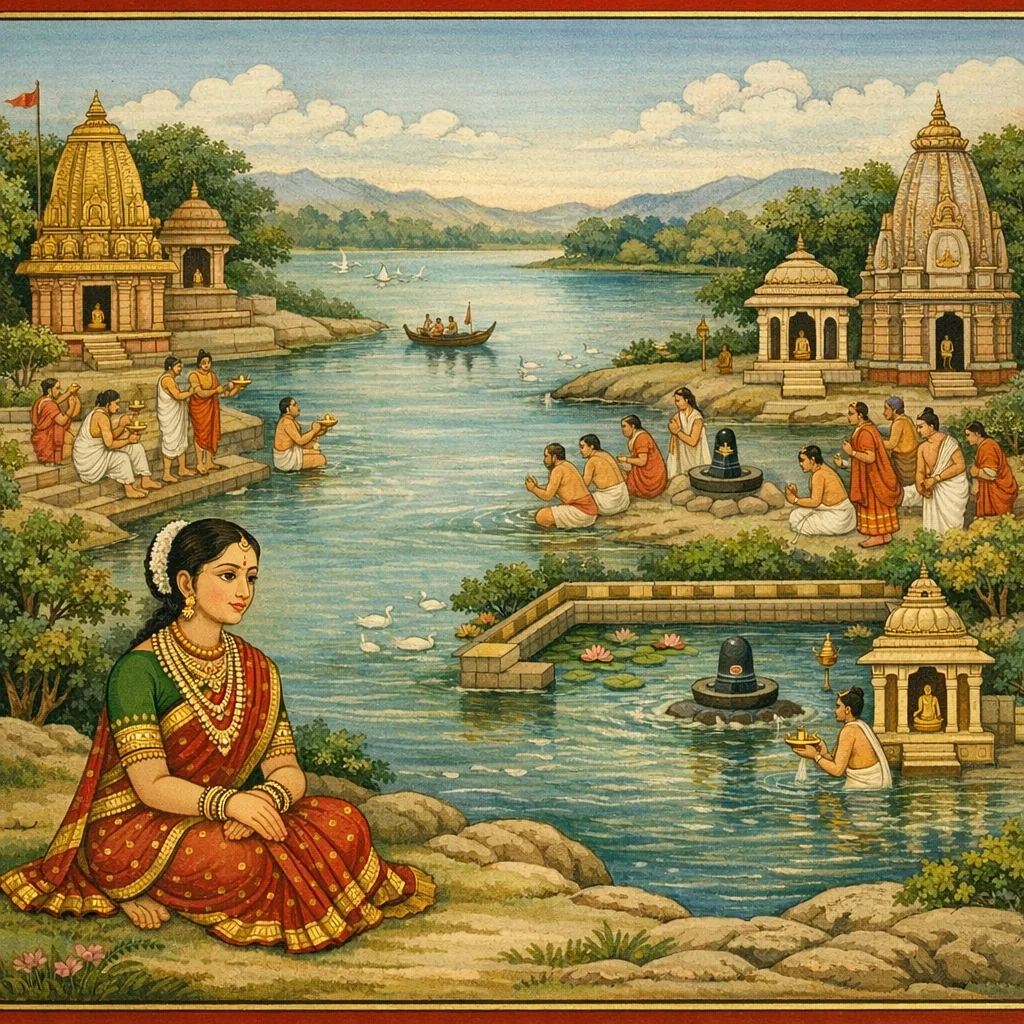
The chapter recounts the post-mortem ascent of Śivaśarmā, a brāhmaṇa of Mathurā, who after bathing in the liberation-city (muktipurī) proceeds toward a Vaiṣṇava realm. Seeing a radiant, auspicious loka, he inquires about it, and two gaṇa attendants explain that the Saptarṣis—Marīci, Atri, Pulaha, Pulastya, Kratu, Aṅgiras, and Vasiṣṭha—dwell in Kāśī by the Creator’s commission to generate beings, with their wives named as mothers of the world. Resolving to perform tapas, the sages approach Avimukta, described as a kṣetra inhabited by the “knower of the field,” seeking universal liberation. They install liṅgas bearing their own names and, through ascetic power, uphold the three worlds. The text then indexes the sites: Atriśvara near Gokarṇeśa’s waters; Marīci’s kuṇḍa and Marīcīśvara; Pulaha and Pulastya near Svargadvāra; Aṅgiraseśvara in Harikeśava-vana; and Vāsisṭhameśvara with Kratvīśvara on the Varuṇā bank—each linked to fruits such as tejas and attainment of higher lokas. The chapter concludes by extolling Arundhatī as the unsurpassed pativratā, declaring that even remembering her yields merit equal to bathing in the Gaṅgā, and presenting her as a normative exemplar within the sacred landscape discourse.
Shlokas
Verse 1
अगस्तिरुवाच । इति शृण्वन्कथां रम्यां शिवशर्माऽथ माथुरः । मुक्तिपुर्यां सुसंस्नातो मायापुर्यां गतासुकः
Agastya said: Thus, listening to this delightful account, Śivaśarmā of Mathurā—having bathed well in the City of Liberation—departed joyfully for the City of Māyā.
Verse 2
नेत्रयोः प्राघुणी चक्रे ततः सप्तर्षिमंडलम् । व्रजन्स वैष्णवं लोकमंते विष्णुपुरीक्षणात्
Before his very eyes he beheld the sphere of the Seven Sages; and then, proceeding onward, he went at last to the Vaiṣṇava world—through the vision of Viṣṇu’s city.
Verse 3
उवाच च प्रसन्नात्मा स्तुतश्चारणमागधैः । प्रार्थितो देवकन्याभिस्तिष्ठ तिष्ठेति चक्षणम्
And, serene at heart, he spoke—praised by the Cāraṇas and Māgadhas; and the celestial maidens begged him again and again, “Stay, stay,” for a moment.
Verse 4
स्थिता सुतासु निःश्वसस्य मंदभाग्या वयं त्विति । गतः पुण्यतमांल्लोकानसौ यत्पुण्यवत्तमः
Standing among their companions, they sighed, “We are indeed unfortunate”; for he—so supremely meritorious—has gone on to the most holy worlds.
Verse 5
इति शृणवन्मुखात्तासां वचनानि विमानगः । देवौ कस्यायमतुलो लोकस्तेजोमयः शुभः
Hearing those words from their own mouths, the traveler in the aerial car asked: “O gods, whose is this incomparable, auspicious world, made wholly of radiance?”
Verse 6
इति द्विजवचः श्रुत्वा प्रोचतुर्गणसत्तमौ । शिवशर्मञ्छिवमते सदा सप्तर्षयोमलाः
Hearing the brāhmaṇa’s words, the two excellent divine attendants replied: “O Śivaśarmā—according to Śiva’s teaching—the stainless Seven Sages ever abide here.”
Verse 7
वसंतीह प्रजाः स्रष्टुं विनियुक्ताः प्रजासृजा । मरीचिरत्रिः पुलहः पुलस्त्यः क्रतुरङ्गिराः
Dwelling here, appointed by the Lord of creatures to bring forth beings, are: Marīci, Atri, Pulaha, Pulastya, Kratu, and Aṅgiras.
Verse 8
वसिष्ठश्च महाभागो ब्रह्मणो मानसाः सुताः । सप्त ब्रह्माण इत्येते पुराणे निश्चयं गताः
And the greatly fortunate Vasiṣṭha—these are the mind-born sons of Brahmā. In the Purāṇas they are firmly known as the “Seven Brahmās”.
Verse 9
संभूतिरनसूया च क्षमा प्रीतिश्च सन्नतिः । स्मृतिरूर्जा क्रमादेषां पत्न्यो लोकस्य मातरः
Saṃbhūti, Anasūyā, Kṣamā, Prīti, Sannati, Smṛti, and Ūrjā—these, in due order, are their wives, revered as the Mothers of the world.
Verse 10
एतेषां तपसा चैतद्धार्यते भुवनत्रयम् । उत्पाद्य ब्रह्मणा पूर्वमेते प्रोक्ता महर्षयः
By the austerity (tapas) of these great ones, this entire triple world is sustained. In former times, after creating them, Brahmā declared them to be great seers (mahāṛṣis).
Verse 11
प्रजाः सृजत रे पुत्रा नानारूपाः प्रयत्नतः । ततः प्रणम्य ब्रह्माणं तपसे कृतनिश्चयाः
“Create beings, O sons—of many forms, with earnest effort.” Then, having bowed to Brahmā, they resolved firmly to undertake austerity (tapas).
Verse 12
अविमुक्तं समासाद्य क्षेत्रंक्षेत्रज्ञधिष्ठितम् । मुक्तये सर्वजंतूनामविमुक्तं शिवेन यत्
Reaching Avimukta—the sacred kṣetra presided over by the Knower of the Field (Kṣetrajña)—they came to that Avimukta which Śiva has appointed for the liberation of all beings.
Verse 13
प्रतिष्ठाप्य च लिंगानि ते स्वनाम्नांकितानि च । शिवेति परया भक्त्या तेपुरुग्रं तपो भृशम
They established liṅgas, inscribed with their own names; and, with supreme devotion—crying “Śiva!”—they performed exceedingly fierce austerity.
Verse 15
प्राजापत्येऽत्र ते लोके वसंत्युज्ज्वलतेजसः । गोकर्णेशस्य सरसः प्रत्यक्तीरे प्रतिष्ठितम्
Here, in this Prājāpatya realm, those radiant ones dwell. This sacred spot is established on the western bank of the lake of Gokarṇeśa.
Verse 16
लिंगमत्रीश्वरं दृष्ट्वा ब्रह्मतेजोभिवर्धते । कर्कोट वाप्या ईशाने मरीचेः कुंडमुत्तमम्
On seeing the liṅga called Atrīśvara, the splendor of Brahman increases. To the northeast is the Karkoṭa step-well, and the excellent pond of Marīci.
Verse 17
तत्र स्नात्वा नरो भक्त्त्या भ्राजते भास्करो यथा । मरीचीश्वर संज्ञं तु तत्र लिंगं प्रतिष्ठितम्
Bathing there with devotion, a man shines like the sun. There, a liṅga known by the name Marīcīśvara is established.
Verse 18
तल्लिंगदर्शनाद्विप्र मारीचं लोकमाप्नुयात् । कांत्या मरीचिमालीव शोभते पुरुषर्षभः
O brāhmaṇa, by the darśana of that liṅga one attains the Marīca world. The best of men shines with radiance, as though garlanded with rays.
Verse 19
पुलहेश पुलस्त्येशौ स्वर्गद्वारस्य पश्चिमे । तौ दृष्ट्वा मनुजो लोके प्राजापत्ये महीयते
Pulaheśa and Pulastyeśa stand to the west of Svargadvāra. Having beheld those two, a man is honored in the Prājāpatya world.
Verse 20
हरिकेशवने रम्ये दृष्ट्वैवांगिरसेश्वरम् । इह लोके वसेद्विप्र तेजसापरिबृंहितः
In the delightful Harikeśava forest, merely by beholding Aṅgiraseśvara, a brāhmaṇa dwells in this very world, endowed and strengthened with spiritual radiance (tejas).
Verse 21
वरणायास्तटे रम्ये दृष्ट्वा वासिष्ठमीश्वम् । क्रत्वीश्वरं च तत्रैव लभते वसतिं त्विह
On the lovely bank of the Varaṇā, having beheld Vāsiṣṭheśvara—and also Kratvīśvara right there—one obtains residence and settled well-being here itself.
Verse 22
काश्यामेतानि लिंगानि सेवितानि शुभैषिभिः । मनोभिवांछितं दद्युरिह लोके परत्र च
In Kāśī, these liṅgas—served and worshiped by seekers of auspiciousness—grant the heart’s desired aims, both in this world and in the world beyond.
Verse 23
गणावूचतुः । शिवशर्मन्महाभाग तिष्ठते सात्र सुंदरी । अरुंधती महापुण्या पतिव्रतपरायणा
The gaṇas said: “O blessed Śivaśarman, that beautiful lady Arundhatī—highly meritorious and wholly devoted to the vow of fidelity to her husband—resides here.”
Verse 24
यस्याः स्मरणमात्रेण गंगास्नान फलं लभेत् । अंतःपुरचरैर्द्वित्रैः पवित्रैः सहितो विभुः
By mere remembrance of her, one gains the merit of bathing in the Gaṅgā. The mighty Lord is accompanied by a few pure attendants from the inner quarters.
Verse 25
सदा नारायणो देवो यस्याश्चक्रे कथां मुदा । कमलायाः पुरोभागे पातिव्रत्य सुतोषितः
Nārāyaṇa Himself, ever pleased, joyfully spoke of her—before Kamalā (Lakṣmī) in the foremost place—delighted by her pātivratya.
Verse 26
पतिव्रतास्वरुंधत्याः कमले विमलाशयः । यथास्ति न तथाऽन्यस्याः कस्याश्चित्कापि भामिनि
O fair lady, in Arundhatī—steadfast in pātivratya—there is a stainless purity of heart, such as is found in no other woman anywhere.
Verse 27
न तद्रूपं न तच्छीलं न तत्कौलीन्यमेव च । न तत्कलासुकौशल्यं पत्युः शुश्रूषणं न तत्
Such beauty is not found, nor such character, nor such noble lineage; nor such refined skill in the arts—nor such devoted service to one’s husband.
Verse 28
न माधुर्यं न गांभीर्यं न चार्यपरितोषणम् । अरुंधत्या यथा देवि तथाऽन्यासां क्वचित्प्रिये
Neither such sweetness, nor such gravity, nor such power to please the noble—O goddess, O beloved—is found in other women anywhere, as it is in Arundhatī.
Verse 29
धन्यास्ता योषितो लोके सभाग्याः शुद्धबुद्धयः । अरुंधत्याः प्रसंगे या नामापि परिगृह्णते
Blessed in this world are those women—fortunate and pure in mind—who, when Arundhatī is spoken of, even take up and cherish her very sacred name.
Verse 30
यदा पतिव्रतानां तु कथास्मद्भवने भवेत् । तदा प्राथमिकीं रेखामेषाऽलंकुरुते सती
Whenever, in our home, the sacred account of the pativratās is recited, at that very moment this virtuous lady adorns the first auspicious mark, as befits a chaste wife.
Verse 31
ब्रुवतोरिति संकथां तथा गणयोर्वैष्णवयोर्मुदावहाम् । ध्रुवलोकौपागतस्ततो नयनातिथ्यमतथ्यवर्जितः
As those two Vaiṣṇava attendants continued speaking that delightful account, he then beheld one who had attained Dhruva’s world—an appearance welcome as a guest to the eyes, free from falsehood and flaw.