Adhyaya 29
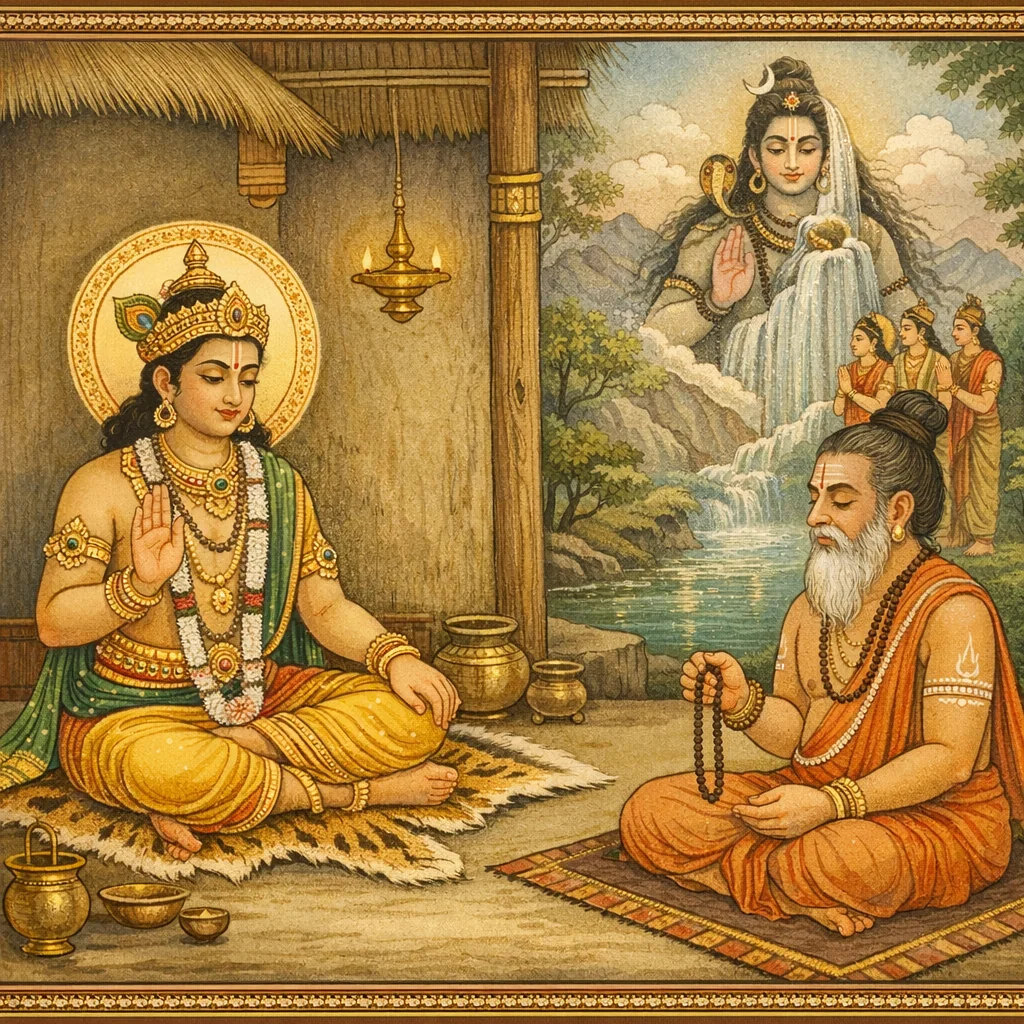
Agastya raises a practical and ethical-ritual question: if bathing in the Gaṅgā (Gaṅgā-snāna) is praised as uniquely fruitful, what alternative is available for the weak, the immobile, the indolent, or those living far away to gain comparable merit? Skanda replies by distinguishing ordinary tīrthas and waters from the Gaṅgā’s singular status. He grounds her supremacy in theology—Śiva bears the Gaṅgā and she has the power to remove sin—and, with the analogy that “the taste of grapes is found only in grapes,” affirms that the full fruit of Gaṅgā-snāna is properly obtained in the Gaṅgā herself. He then reveals a “most secret” substitute discipline: reciting the Gaṅgā-nāma-sahasra as a stotra-japa, to be transmitted only to qualified devotees (Śiva-bhakta, oriented to Viṣṇu-bhakti, peaceful, faithful, āstika), with instructions on purity, clear syllables, and silent or strenuous repetition. The chapter proceeds with an extensive litany of Gaṅgā’s epithets and ends with a phalaśruti: even one recitation yields great ritual merit; sustained japa diminishes sins from many births, supports service to the guru, and promises auspicious post-mortem enjoyments; the stotra is explicitly framed as a “Gaṅgā-snāna representative” for aspirants who long to bathe.
Shlokas
Verse 1
।अगस्त्य उवाच । विना स्नानेन गंगाया नृणां जन्मनिरथर्कम् । उपायांतरमस्त्यन्यद्येन स्नानफलं लभेत्
Agastya said: Without bathing in the sacred Gaṅgā, human birth seems fruitless. Is there some other means by which one may obtain the fruit of that bath?
Verse 2
अशक्तानां च पंगूनामालस्योपहतात्मनाम् । दूरदेशांतरस्थानां गंगास्नानं कथं भवेत्
For the powerless, for the lame, for those whose resolve is weakened by lethargy, and for those living far away in other lands—how can bathing in the Gaṅgā be possible?
Verse 3
दानं वाऽथ व्रतंवाऽथ मंत्रःस्तोत्रजपोऽथवा । तीर्थांतराभिषेको वा देवतोपासनं तु वा
Is it charity (dāna), or a vow (vrata), or the repetition of mantras and hymns; or consecratory bathing at another holy ford (tīrtha); or the worship of a deity—some practice like these?
Verse 4
यद्यस्तिकिंचित्षड्वक्त्र गंगास्नानफलप्रदम् । विधानांतरमात्रेण तद्वद प्रणताय मे
O Ṣaḍvaktra, if there is any practice that, by an alternative method alone, grants the fruit of bathing in the Gaṅgā, tell it to me, who bow before you.
Verse 5
त्वत्तो न वेदस्कंदान्यो गंगागर्भ समुद्भव । परं स्वर्गतरंगिण्या महिमानं महामते
None other than you, O Skanda—born from the womb of the Gaṅgā—knows fully the supreme greatness of the heavenly river, O great-minded one.
Verse 6
स्कंद उवाच । संति पुण्यजलानीह सरांसि सरितो मुने । स्थाने स्थाने च तीर्थानि जितात्माध्युषितानि च
Skanda said: O sage, here are many holy waters—lakes and rivers; and in place after place there are tīrthas too, dwelt in and sanctified by self-controlled holy beings.
Verse 7
दृष्टप्रत्ययकारीणि महामहिम भांज्यपि । परं स्वर्गतरंगिण्याः कोट्यंशोपि न तत्र वै
Even those sacred waters that give immediate, visible proof of their power and share in great glory—yet in those other places there is truly not even a ten‑millionth part of the supreme greatness of the heavenly river, Gaṅgā.
Verse 8
अनेनैवानुमानेन बुद्ध्यस्व कलशोद्भव । दध्रे गंगोत्तमांगेन देवदेवेन शंभुना
By this very inference, O Pot-born one (Agastya), understand: Gaṅgā was borne upon the highest limb—the head—by Śambhu, Śiva, the God of gods.
Verse 9
स्नानकालेऽन्य तीर्थेषु जप्यते जाह्नवी जनैः । विना विष्णुपदीं क्वान्यत्समर्थमघमोचने
At the time of bathing in other tīrthas, people chant the name “Jāhnavī” (Gaṅgā). For apart from Viṣṇupadī (Gaṅgā), what else is truly able to release one from sin?
Verse 10
गंगास्नानफलं ब्रह्मन्गंगायामेव लभ्यते । यथा द्राक्षाफलस्वादो द्राक्षायामेव नान्यतः
O Brahman, the fruit of bathing in Gaṅgā is obtained only in Gaṅgā herself—just as the taste of a grape is found only in the grape, and not elsewhere.
Verse 11
अस्त्युपाय इह त्वेकः स्याद्येनाविकलं फलम् । स्नानस्य देवसरितो महागुह्यतमो मुने
Yet here there is one means by which the fruit becomes whole: a most secret teaching, O sage, concerning the merit of bathing in the divine river.
Verse 12
शिवभक्ताय शांताय विष्णुभक्तिपराय च । श्रद्धालवे त्वास्तिकाय गर्भवासमुपुक्षवे
It is for a devotee of Śiva, serene in nature, and also for one devoted to bhakti toward Viṣṇu; for the faithful, the believer (āstika), and for one who longs to be freed from the bondage of womb-dwelling—rebirth.
Verse 13
कथनीयं न चान्यस्य कस्यचित्केनचित्क्वचित् । इदं रहस्यं परमं महापातकनाशनम्
This should not be told to just anyone—by anyone, anywhere. This supreme secret is a destroyer of great sins.
Verse 14
महाश्रेयस्करं पुण्यं मनोरथकरं परम् । द्युनदीप्रीतिजनकं शिवसंतोषसंतति
It is supremely meritorious, a bestower of great welfare; it fulfills noble desires. It delights the heavenly river (Gaṅgā) and yields an unbroken stream of Śiva’s satisfaction.
Verse 15
नाम्नां सहस्रगंगायाः स्तवराजेषुशो भनम् । जप्यानां परमं जप्यं वेदोपनिषदासमम्
The ‘Thousand Names of Gaṅgā’ is splendid among the kings of hymns; among all recitations it is the highest to be chanted, equal in stature to the Vedas and the Upaniṣads.
Verse 16
जपनीयं प्रयन्नेन मौनिना वाचकं विना । शुचिस्थानेषु शुचिना सुस्पष्टाक्षरमेव च
It should be chanted with earnest effort—silently, without a hired reciter—by one who is pure, in a clean place, with each syllable pronounced clearly.
Verse 17
स्कंद उवाच । ओंनमो गंगादेव्यै । ओंकाररूपिण्यजराऽतुलाऽनमताऽमृतस्रवा । अत्युदाराऽभयाऽशोकाऽलकनंदाऽमृताऽमला
Skanda said: Salutations to Goddess Gaṅgā—whose very form is Oṁ; the ageless, incomparable one; the nectar-flowing stream for those who bow in reverence. Most generous, bestowing fearlessness and freedom from sorrow—Alakanandā, immortal and stainless.
Verse 18
अनाथवत्सलाऽमोघाऽपांयोनिरमृतप्रदा । अव्यक्तलक्षणाऽक्षोभ्या ऽनवच्छिन्नाऽपराजिता
She is tender to the helpless, unfailing in grace—the very womb and source of waters, the giver of immortality. Her marks are subtle and beyond full grasp; unshakable, uninterrupted, and unconquered.
Verse 19
अनाथनाथाऽभीष्टार्थसिद्धिदाऽनंगवर्धिनी । अणिमादिगुणाऽधाराग्रगण्याऽलीकहारिणी
She is the protector of the unprotected, granting accomplishment of desired aims, and increasing sacred love. She is the support of the yogic excellences beginning with aṇimā; foremost among the revered, and the remover of falsehood.
Verse 20
अचिंत्यशक्तिरनघाऽद्भुतरूपाऽघहारिणी । अद्रिराजसुताऽष्टांगयोगसिद्धिप्रदाऽच्युता
Her power is inconceivable; she is faultless, wondrous in form, and the remover of sin. Daughter of the king of mountains, she grants the attainments of aṣṭāṅga-yoga and is unerring, never fallen from her nature.
Verse 21
अक्षुण्णशक्तिरसुदाऽनंततीर्थाऽमृतोदका । अनंतमहिमाऽपाराऽनंतसौख्यप्रदाऽन्नदा
Her power is undiminished; she bestows life, holds endless tīrthas, and her waters are amṛta, nectar. Her glory is infinite and boundless; she grants limitless joy and provides nourishment.
Verse 22
अशेषदेवतामूर्तिरघोराऽमृतरूपिणी । अविद्याजालशमनी ह्यप्रतर्क्यगतिप्रदा
She embodies all the deities; gentle and non-terrifying, she is formed of amṛta, immortality. She pacifies the net of ignorance and bestows a destiny beyond the reach of mere argument.
Verse 23
अशेषविघ्नसंहर्त्री त्वशेषगुणगुंफिता । अज्ञानतिमिरज्योतिरनुग्रहपरायणा
You are the destroyer of all obstacles, woven of every noble quality. You are the light for the darkness of ignorance, wholly devoted to compassion and grace.
Verse 24
अभिरामाऽनवद्यांग्यनंतसाराऽकलंकिनी । आरोग्यदाऽनंदवल्ली त्वापन्नार्तिविनाशिनी
She is delightful, of flawless limbs, of endless essence, and without blemish. She grants health, is the creeper of bliss, and destroys the suffering of those who seek refuge.
Verse 25
आश्चर्यमूर्तिरायुष्या ह्याढ्याऽद्याऽप्राऽर्यसेविता । आप्यायिन्याप्तविद्याऽख्यात्वानंदाऽश्वासदायिनी
She is a wondrous embodiment, bestowing longevity; truly prosperous, primordial and first, served by the noble. She nourishes and fulfills; famed as the attainment of right knowledge, she gives bliss and consolation.
Verse 26
आलस्यघ्न्यापदां हंत्री ह्यानंदामृतवर्षिणी । इरावतीष्टदात्रीष्टा त्विष्टापूर्तफलप्रदा
She destroys sloth and strikes down calamities; indeed she rains the nectar of bliss. Irāvatī, the giver of desired boons, beloved and radiant—she grants the fruits of iṣṭa and pūrta (sacrificial worship and public pious works).
Verse 27
इतिहासश्रुतीड्यार्था त्विहामुत्रशुभप्रदा । इज्याशीलसमिज्येष्ठा त्विंद्रादिपरिवंदिता
You are the meaning praised in the Itihāsas and the Śruti; you bestow auspiciousness here and hereafter. You are foremost among those devoted to worship and sacrificial service, and you are venerated by Indra and the other gods.
Verse 28
इलालंकारमालेद्धा त्विंदिरारम्यमंदिरा । इदिंदिरादिसंसेव्या त्वीश्वरीश्वरवल्लभा
You are adorned with garlands that ornament the earth; you are the delightful abode of Lakṣmī. You are attended by Lakṣmī and the other divine powers, and you are the beloved of the Lord of Lords.
Verse 29
ईतिभीतिहरेड्या च त्वीडनीय चरित्रभृत् । उत्कृष्टशक्तिरुत्कृष्टोडुपमंडलचारिणी
You are worthy of praise and you remove calamity and fear; you bear a character fit to be extolled. Your power is supreme, and you move in the exalted sphere of the stars and constellations.
Verse 30
उदितांबरमार्गोस्रोरगलोकविहारिणी । उक्षोर्वरोत्पलोत्कुंभा उपेंद्रचरणद्रवा
You roam in the radiant path of the sky and move through the worlds. You are abundant like a fertile field and lotus-filled waters, like an overflowing pot; you melt with devotion at the feet of Upendra (Viṣṇu).
Verse 31
उदन्वत्पूर्तिहेतुश्चोदारोत्साहप्रवर्धिनी । उद्वेगघ्न्युष्णशमनी उष्णरश्मिसुता प्रिया
You are the cause of fullness like the ocean, and you increase noble enthusiasm. You destroy anxiety, you soothe burning heat, and you are dear to the daughter of the Sun’s rays.
Verse 32
उत्पत्ति स्थिति संहारकारिण्युपरिचारिणी । ऊर्जं वहंत्यूर्जधरोर्जावती चोर्मिमालिनी
You bring about creation, preservation, and dissolution, and you also move about in attendance as the sustaining power. You carry vital strength; you are the bearer of energy, full of vigor, and garlanded with waves.
Verse 33
ऊर्ध्वरेतःप्रियोर्ध्वाध्वा ह्यूर्मिलोर्ध्वगतिप्रदा । ऋषिवृंदस्तुतर्द्धिश्च ऋणत्रयविनाशिनी
You are dear to the ascetic of upward energy, and you are the upward path itself; you are the wave of sacred power granting higher movement. You are the prosperity praised by hosts of sages, and you destroy the threefold debt.
Verse 34
ऋतंभरर्द्धिदात्री च ऋक्स्वरूपा ऋजुप्रिया । ऋक्षमार्गवहर्क्षार्चिरृजुमार्गप्रदर्शिनी
You are truth-bearing and the giver of spiritual prosperity; you are the very form of the Ṛk, the Vedic hymn, and you love the straight path. You carry the path of the constellations; you are their radiance, and you reveal the direct way.
Verse 35
एधिताऽखिलधर्मार्थात्वेकैकामृतदायिनी । एधनीयस्वभावैज्या त्वेजिता शेषपातका
You are increased through all forms of dharma and artha, and you bestow amṛta, nectar, even upon each single devotee. Your nature is to be kindled and honored through worship; you are stirred into manifestation, and you remove even residual sins.
Verse 36
ऐश्वर्यदैश्वर्यरूपा ह्यैतिह्यं ह्यैंदवी द्युतिः । ओजस्विन्योषधीक्षेत्रमोजोदौदनदायिनी
You grant sovereignty and are the very form of lordly power; hallowed by sacred tradition, your splendor is moon-like. Radiant with vigor, you are a field of healing herbs, bestowing nourishment and strength-giving gifts.
Verse 37
ओष्ठामृतौन्नत्यदात्री त्वौषधं भवरोगिणाम् । औदार्यचंचुरौपेंद्री त्वौग्रीह्यौमेयरूपिणी
O Devī, you grant the nectar-like upliftment of the lips—sweet speech and blessed praise; you are the medicine for those afflicted by the disease of worldly becoming. Swift in generosity, you are Aupendrī, power allied with the Lord’s might, manifesting a form both awe-inspiring and beyond ordinary measure.
Verse 38
अंबराध्ववहांऽवष्ठां वरमालांबुजेक्षणा । अंबिकांबुमहायोनिरंधोदांधकहारिणी
O Devī, bearer of the path of the sky, firmly established; lotus-eyed and adorned with the supreme garland. O Ambikā, vast-wombed like the cosmic waters, you remove blinding darkness and are the slayer of Andhaka.
Verse 39
अंशुमालाह्यंशुमती त्वंगीकृतषडानना । अंधतामिस्रहंत्र्यंधुरं जनाह्यंजनावती
O radiant Devī, garlanded with rays, you are brilliance itself; you have embraced the six-faced Lord, Ṣaḍānana (Skanda), as your own. You destroy blind darkness, and for people you are the divine collyrium, granting true sight and discernment.
Verse 40
कल्याणकारिणी काम्या कमलोत्पलगंधिनी । कुमुद्वती कमलिनी कांतिः कल्पितदायिनी
O auspicious Devī, you bring welfare and are worthy to be desired; you are fragrant like lotus and blue-lotus. Adorned with water-lilies and lotuses, you are radiant splendor itself, bestowing blessings as envisioned by the devotee.
Verse 41
कांचनाक्षी कामधेनुः कीर्तिकृत्क्लेशनाशिनी । क्रतुश्रेष्ठा क्रतुफला कर्मबंधविभेदिनी
O golden-eyed Devī, you are Kāmadhenu, the wish-fulfilling cow; you bestow true renown and destroy afflictions. You are supreme among sacrifices (yajñas) and their fruits; you sever the bondage woven by karma.
Verse 42
कमलाक्षी क्लमहरा कृशानुतपनद्युतिः । करुणार्द्रा च कल्याणी कलिकल्मषनाशिनी
O lotus-eyed Devī, remover of weariness and fatigue, radiant like fire and the sun; tender with compassion, ever-auspicious—destroyer of the sins and stains of the Kali age.
Verse 43
कामरूपाक्रियाशक्तिः कमलोत्पलमालिनी । कूटस्था करुणाकांता कर्मयाना कलावती
O Devī, assuming forms at will, you are the very power of sacred action; garlanded with lotus and blue lotus. Steadfast and unshaken, lovely with compassion, you set beings upon the path shaped by their karma, and you are rich in divine arts and skills.
Verse 44
कमलाकल्पलतिका कालीकलुषवैरिणी । कमनीयजलाकम्रा कपर्दिसुकपर्दगा
O Devī, Lakṣmī-like, you are the wish-fulfilling creeper of blessings; you are Kālī, enemy of all impurity. You are charming as lovely waters, and you move adorned with beautiful braided hair and auspicious tresses.
Verse 45
कालकृटप्रशमनी कदंबकुसुमप्रिया । कालिंदी केलिललिता कलकल्लोलमालिका
O Devī, you pacify the poison of time and death; you delight in kadamba blossoms. You are Kāliṅdī, the Yamunā, playful and graceful, adorned with garlands like sweet, rippling waves of melody.
Verse 46
क्रांतलोकत्रयाकंडूः कंडूतनयवत्सला । खड्गिनी खड्गधाराभा खगा खंडेंदुधारिणी
O Devī, who has overstepped the three worlds and set them trembling; tenderly maternal toward Kaṇḍū’s son. Sword-bearing, radiant as a blade’s keen edge; swift as a bird, you wear the crescent moon.
Verse 47
खेखेलगामिनी खस्था खंडेंदुतिलकप्रिया । खेचरीखेचरीवंद्या ख्यातिः ख्यातिप्रदायिनी
She who moves playfully through the sky, who abides in the heavens, who delights in the crescent-moon ornament; the Sky-roaming One, revered even by celestial wanderers—she is Fame itself, and the Giver of holy renown.
Verse 48
खंडितप्रणताघौघा खलबुद्धिविनाशिनी । खातैनः कंदसंदोहा खड्गखट्वांग खेटिनी
She who shatters the floods of sins of those who bow to her; who destroys wicked-mindedness; who digs out and uproots accumulated demerit at the very root—she who bears the sword, the skull-topped staff, and the shield.
Verse 49
खरसंतापशमनी खनिः पीयूषपाथसाम् । गंगा गंधवती गौरी गंधर्वनगरप्रिया
She who pacifies fierce torment; the mine and source of nectar-like streams; she is Gaṅgā herself—fragrant, radiant Gaurī—beloved of the celestial city of the Gandharvas.
Verse 50
गंभीरांगी गुणमयी गतातंका गतिप्रिया । गणनाथांबिका गीता गद्यपद्यपरिष्टुता
Profound is her form; she is made of virtues; fear has departed from her, and she delights in the soul’s right course. Mother of Gaṇanātha, she is the sacred Song, praised in both prose and poetry.
Verse 51
गांधारी गर्भशमनी गतिभ्रष्टगतिप्रदा । गोमती गुह्यविद्यागौर्गोप्त्री गगनगामिनी
Gāndhārī—she who soothes the suffering bound to the womb; she who grants the true path to those who have fallen from their course. Gomatī—the radiant one of secret wisdom; the Protectress who moves through the sky.
Verse 52
गोत्रप्रवर्धिनी गुण्या गुणातीता गुणाग्रणीः । गुहांबिका गिरिसुता गोविंदांघ्रिसमुद्भवा
She who increases noble lineages; the virtuous one—beyond the guṇas, yet foremost among all excellences. Mother of Guha, daughter of the Mountain; born from and sanctified by the feet of Govinda.
Verse 53
गुणनीयचरित्रा च गायत्री गिरिशप्रिया । गूढरूपा गुणवती गुर्वी गौरववर्धिनी
Her deeds are worthy of being extolled; she is Gāyatrī, beloved of Girīśa (Śiva). Her form is hidden and subtle; she is full of virtues—majestic, and the increaser of dignity and honor.
Verse 54
ग्रहपीडाहरा गुंद्रा गरघ्नी गानवत्सला । घर्महंत्री घृतवती घृततुष्टिप्रदायिनी
She who removes the afflictions caused by planets; the nurturing one; the slayer of poison and harm; affectionate toward sacred song. She who destroys burning heat; rich in ghee-like radiance and nourishment, and who grants the satisfaction that comes from offerings of ghee.
Verse 55
घंटारवप्रिया घोराऽघौघविध्वंसकारिणी । घ्राणतुष्टिकरी घोषा घनानंदा घनप्रिया
She who loves the sound of bells; the awe-inspiring one who destroys torrents of sin. She who delights the sense of smell with holy fragrance; the resounding one—dense with bliss, and dear as a rain-cloud of grace.
Verse 56
घातुका घृर्णितजला घृष्टपातकसंततिः । घटकोटिप्रपीतापा घटिताशेषमंगला
She strikes down evil; her waters, stirred, are made holy; she crushes the unbroken chain of sins. She drinks up oceans of suffering and brings every auspiciousness to completion.
Verse 57
घृणावती घृणनिधिर्घस्मरा घूकनादिनी । घुसृणा पिंजरतनुर्घर्घरा घर्घरस्वना
She is filled with compassion, a treasury of mercy; yet she devours evil and her cry is fierce. She removes grime and sin, golden-hued in form; she roars mightily, her sound resounding like thunder—thus is the Devī praised in Kāśī.
Verse 58
चंद्रिका चंद्रकांतांबुश्चंचदापा चलद्युतिः । चिन्मयी चितिरूपा च चंद्रायुतशनानना
She is moonlight itself; she is the watery radiance of the moonstone; her splendor shimmers and moves. She is pure Consciousness, the very form of awareness; her face is as beautiful as ten million moons.
Verse 59
चांपेयलोचना चारुश्चार्वंगी चारुगामिनी । चार्या चारित्रनिलया चित्रकृच्चित्ररूपिणी
Her eyes are like the cāṃpeya blossom; she is lovely, with graceful limbs and an enchanting gait. She is worthy of right conduct, the abode of noble character. She fashions wondrous works, and her very form is wondrous.
Verse 60
चंपश्चंदनशुच्यंबुश्चर्चनीया चिरस्थिरा । चारुचंपकमालाढ्या चमिताशेष दुष्कुता
She is fragrant like campaka; she is pure water scented with sandal. She is worthy of worship and ever steadfast. Adorned with a lovely garland of campaka blossoms, she has subdued and set in measure all wicked deeds.
Verse 61
चिदाकाशवहाचिंत्या चंचच्चामरवीजिता । चोरिताशेषवृजिना चरिताशेषमंडला
She moves in the sky of Consciousness, beyond all thought; she is fanned by waving yak-tail whisks. She steals away every sin, and she traverses and pervades all spheres of the cosmos.
Verse 62
छेदिताखिलपापौघा छद्मघ्नी छलहारिणी । छन्नत्रिविष्टप तला छोटिताशेषबंधना
She cuts down the flood of all sins; she destroys hypocrisy and removes deceit. She covers and protects the celestial realms, and she shatters every bondage without remainder.
Verse 63
छुरितामृतधारौघा छिन्नैनाश्छंदगामिनी । छत्रीकृतमरालौघा छटीकृतनिजामृता
She is sprinkled with torrents of nectar; she cuts away sins and moves according to sacred rhythm and measure. She makes a canopy of swan-like hosts, and she pours forth her own nectar in shining streams.
Verse 64
जाह्नवी ज्या जगन्माता जप्या जंघालवीचिका । जया जनार्दनप्रीता जुषणीया जगद्धिता
She is Jāhnavī (Gaṅgā); she is the bowstring of strength; she is the Mother of the world and the one to be invoked in japa. She is the victorious one, beloved of Janārdana; she is to be cherished and served, the benefactress of the entire world.
Verse 65
जीवनं जीवनप्राणा जगज्ज्येष्ठा जगन्मयी । जीवजीवातुलतिका जन्मिजन्मनिबर्हिणी
She is life itself, the very breath of living beings; she is the eldest and foremost of the world, the world pervading in her own being. She is the vital essence of all that lives, and she uproots the repeated rounds of birth after birth.
Verse 66
जाड्यविध्वंसनकरी जगद्योनिर्जलाविला । जगदानंदजननी जलजा जलजेक्षणा
She shatters dullness and inertia; she is the womb and wellspring of the universe, flowing as water itself. She is the Mother who begets the world’s bliss—lotus-born, lotus-eyed—praised as Kāśī’s auspicious power.
Verse 67
जनलोचनपीयूषा जटातटविहारिणी । जयंती जंजपूकघ्नी जनितज्ञानविग्रहा
She is nectar to the eyes of all beings; she sports along the banks of Śiva’s matted locks. Ever-victorious, she destroys malignant afflictions and manifests embodied wisdom in those who take refuge in her.
Verse 68
झल्लरी वाद्यकुशला झलज्झालजलावृता । झिंटीशवंद्या झांकारकारिणी झर्झरावती
She is like the jhallarī cymbal, skilled in sacred music, veiled in shimmering, splashing waters. Revered by the hosts of beings, she resounds with a vibrant hum and flows with cascading, rippling force.
Verse 69
टीकिताशेषपाताला टंकिकैनोद्रिपाटने । टंकारनृत्यत्कल्लोला टीकनीयमहातटा
She makes even the nether realms resound and strikes down mountains with the force of her torrent. With waves that dance to a ringing clang, she is the great riverbank worthy of contemplation and reverent gaze.
Verse 70
डंबरप्रवहाडीन राजहंसकुलाकुला । डमड्डमरुहस्ता च डामरोक्त महांडका
She flows with a splendid, roaring current, thronged by flocks of royal swans. Holding the ḍamaru drum, she is the Great and Mighty One proclaimed in the ḍāmara traditions—Gaṅgā, whose play is ever auspicious.
Verse 71
ढौकिताशेषनिर्वाणा ढक्कानादचलज्जला । ढुंढिविघ्नेशजननी ढणड्ढुणितपातका
She draws all beings toward liberation; her waters tremble to the sound of the ḍhakkā drum. She is the Mother of Ḍhuṃḍhi‑Vighneśa, and by her reverberation she shakes away sins.
Verse 72
तर्पणीतीर्थतीर्था च त्रिपथा त्रिदशेश्वरी । त्रिलोकगोप्त्री तोयेशी त्रैलोक्यपरिवंदिता
She is the Tīrtha of offerings and satisfaction, the very essence of all tīrthas. She is Tripathā—flowing in three realms—sovereign of the gods, protectress of the three worlds, queen of waters, and revered throughout the three worlds.
Verse 73
तापत्रितयसंहर्त्री तेजोबलविवर्धिनी । त्रिलक्ष्या तारणी तारा तारापतिकरार्चिता
She destroys the threefold suffering and increases splendor and strength. She is the goal of all auspicious aims; she ferries beings across, she is the guiding Star, and she is worshipped by the Lord of stars (the Moon).
Verse 74
त्रैलोक्यपावनी पुण्या तुष्टिदा तुष्टिरूपिणी । तृष्णाछेत्त्री तीर्थमाता त्त्रिविक्रमपदोद्भवा
She purifies the three worlds and is herself pure merit. She grants contentment and is the very form of contentment; she cuts off craving, is the Mother of tīrthas, and she arises from the footstep of Trivikrama (Viṣṇu).
Verse 75
तपोमयी तपोरूपा तपःस्तोम फलप्रदा । त्रैलोक्यव्यापिनी तृप्तिस्तृप्तिकृत्तत्त्वरूपिणी
She is made of tapas, the very form of austerity, and the giver of the fruits of accumulated penance. Pervading the three worlds, she is fulfillment itself—bestowing satisfaction—and she is the embodiment of ultimate reality.
Verse 76
त्रैलोक्यसुंदरी तुर्या तुर्यातीतपदप्रदा । त्रैलोक्यलक्ष्मीस्त्रिपदी तथ्यातिमिरचंद्रिका
She is the beauty of the three worlds; she is the Fourth (turyā) and bestows the station beyond the Fourth. She is the Lakṣmī of the three worlds, the Three-Stepped One, and the moonlight of truth that dispels darkness.
Verse 77
तेजोगर्भा तपःसारा त्रिपुरारि शिरोगृहा । त्रयीस्वरूपिणी तन्वी तपनांगजभीतिनुत्
She bears radiance within, and her very essence is tapas, holy austerity; she abides upon the head of the Slayer of Tripura (Śiva); she is the embodied form of the three Vedas. Slender and subtle in presence—she is praised as the One before whom even the Sun’s progeny tremble in fear.
Verse 78
तरिस्तरणिजामित्रं तर्पिताशेषपूर्वजा । तुलाविरहिता तीव्रपापतूलतनूनपात्
She ferries beings across; she is the friend of the Sun’s lineage; she satisfies and nourishes all the ancestors. Beyond all comparison, she makes the dense ‘cotton’ of fierce sins fall away, thinning it to nothing.
Verse 79
दारिद्र्यदमनी दक्षा दुष्प्रेक्षा दिव्यमंडना । दीक्षावतीदुरावाप्या द्राक्षामधुरवारिभृत्
She subdues poverty, the capable and skillful One; hard to behold for the impure, yet the adornment of the divine. Endowed with dīkṣā, sacred initiation, and difficult to attain—she bears waters sweet as grapes, bestowing delight and grace.
Verse 80
दर्शितानेककुतुका दुष्टदुर्जयदुःखहृत् । दैन्यहृद्दुरितघ्नी च दानवारि पदाब्जजा
She reveals countless wondrous marvels; she removes the sorrows brought by the wicked and the hard-to-conquer. She cuts away misery and destroys wrongdoing—born from the lotus-feet that are the foes of the Dānavas.
Verse 81
दंदशूकविषघ्री च दारिताघौघसंततिः । द्रुतादेव द्रुमच्छन्ना दुर्वाराघविघातिनी
She who destroys the poison of serpents; who shatters the unbroken torrents of sin; swift indeed, as though veiled by trees—she strikes down sins that seem impossible to ward off.
Verse 82
दमग्राह्या देवमाता देवलोकप्रदर्शिनी । देवदेवप्रियादेवी दिक्पालपददायिनी
She who is grasped only through self-control; the Mother of the gods; the revealer of the divine worlds; the Goddess beloved of the God of gods—she bestows the very stations of the guardians of the directions.
Verse 83
दीर्घायुःकारिणी दीर्घा दोग्ध्री दूषणवर्जिता । दुग्धांबुवाहिनी दोह्या दिव्या दिव्यगतिप्रदा
She who grants long life, herself vast and enduring; the milker who yields nourishment, free from all defect; who bears milk-like, life-giving waters—she is to be ‘milked’ through devotion, divine, and the giver of divine destiny.
Verse 84
द्युनदी दीनशरणं देहिदेहनिवारिणी । द्राघीयसी दाघहंत्री दितपातकसंततिः
She is the celestial river; the refuge of the helpless; the one who restrains the ‘body-giving’ cycle of embodiment; vast and far-reaching—she destroys burning affliction and cuts off the succession of sins.
Verse 85
दूरदेशांतरचरी दुर्गमा देववल्लभा । दुर्वृत्तघ्नी दुर्विगाह्या दयाधारा दयावती
She who moves across far countries and distant regions; difficult to approach, yet dearly loved by the gods; destroyer of evil conduct, unfathomable—she is a stream of compassion, truly filled with mercy.
Verse 86
दुरासदा दानशीला द्राविणी द्रुहिणस्तुता । दैत्यदानवसंशुद्धिकर्त्री दुर्बुद्धिहारिणी
Hard to assail, devoted to generosity; bestower of wealth and abundance; praised by Druhiṇa (Brahmā); purifier even of Daityas and Dānavas—she removes evil-mindedness.
Verse 87
दानसारा दयासारा द्यावाभूमिविगाहिनी । दृष्टादृष्टफलप्राप्तिर्देवतावृंदवंदिता
She is the very essence of charity and compassion, pervading heaven and earth. From her arise both visible rewards and unseen fruits of merit; she is praised and adored by hosts of deities.
Verse 88
दीर्घव्रता दीर्घदृष्टिर्दीप्ततोया दुरालभा । दंडयित्री दंडनीतिर्दुष्टदंडधरार्चिता
Steadfast in long vows and far-seeing in wisdom; her waters shine with sanctity, and she is difficult to attain. She is the chastiser and the very principle of righteous punishment, revered even by those who wield the rod against the wicked.
Verse 89
दुरोदरघ्नी दावार्चिर्द्रवद्रव्यैकशेवधिः । दीनसंतापशमनी दात्री दवथुवैरिणी
She destroys misfortune and ruin; she blazes like a forest-fire against evil. She is the singular treasure-house of flowing wealth and resources; she calms the suffering of the poor and afflicted, she is the generous giver, and she is the foe of burning fever and torment.
Verse 90
दरीविदारणपरा दांता दांतजनप्रिया । दारिताद्रितटा दुर्गा दुर्गारण्यप्रचारिणी
She is intent on cleaving ravines and obstacles; she is self-controlled, and dear to the disciplined. She splits the mountain-sides and makes a passage; she is Durgā, moving fearlessly through difficult forests and perilous wilderness.
Verse 91
धर्मद्रवा धर्मधुरा धेनुर्धीरा धृतिर्ध्रुवा । धेनुदानफलस्पर्शा धर्मकामार्थमोक्षदा
She flows as Dharma itself and bears the yoke of righteousness. She is the sacred cow—steadfast and courageous—firm as unshakable endurance. She grants the fruit of gifting a cow, and bestows dharma, rightful desire, prosperity, and liberation (moksha).
Verse 92
धर्मोर्मिवाहिनी धुर्या धात्री धात्रीविभूषणम् । धर्मिणी धर्मशीला च धन्विकोटिकृतावना
She bears the waves of Dharma and is fit to carry every sacred burden. She is Dhātrī, the Sustainer—the ornament and glory of sustaining power. Righteous and dharmic in conduct, she protects even the farthest frontiers and barren tracts.
Verse 93
ध्यातृपापहरा ध्येया धावनी धूतकल्मषा । धर्मधारा धर्मसारा धनदा धनवर्धिनी
She removes the sins of those who meditate upon her; she is the very goal of meditation. She rushes forth, washing away impurity and casting off all taint. She is the stream and essence of Dharma; she grants wealth and increases prosperity.
Verse 94
धर्माधर्मगुणच्छेत्त्री धत्तूरकुसुमप्रिया । धर्मेशी धर्मशास्त्रज्ञा धनधान्यसमृद्धिकृत्
She cuts through the qualities and entanglements of both dharma and adharma, transcending their bonds. She delights in dhattūra blossoms. She is the sovereign of Dharma, knower of dharma-śāstra, and the maker of abundance in wealth and grain.
Verse 95
धर्मलभ्या धर्मजला धर्मप्रसवधर्मिणी । ध्यानगम्यस्वरूपा च धरणी धातृपूजिता
She is attained through Dharma; her waters are Dharma itself, and she gives birth to righteousness while remaining ever-righteous. Her true nature is reached through meditation; she is the Earth who upholds all, and she is revered by the Sustainer (Dhātrī).
Verse 96
धूर्धूर्जटिजटासंस्था धन्या धीर्धारणावती । नंदा निर्वाणजननी नंदिनी नुन्नपातका
She abides amid the matted locks of the mighty ascetic (Śiva); blessed and wise, she is endowed with the power of inner concentration. She is Nandā, the Mother who gives birth to nirvāṇa; she is Nandinī, who drives away and destroys sins.
Verse 97
निषिद्धविघ्ननिचया निजानंदप्रकाशिनी । नभोंगणचरी नूतिर्नम्या नारायणीनुता
She removes forbidden and obstructing forces and reveals innate bliss. Moving through the expanse of the sky, she is worthy of praise and reverent bowing—she whom even Nārāyaṇī (Lakṣmī) lauds.
Verse 98
निर्मला निर्मलाख्याना नाशिनीतापसंपदाम् । नियता नित्यसुखदा नानाश्चर्यमहानिधिः
She is stainless and of spotless renown, the destroyer of beings’ accumulated sufferings. Disciplined and unwavering, she grants abiding happiness and is a great treasury of countless wonders.
Verse 99
नदीनदसरोमाता नायिका नाकदीर्घिका । नष्टोद्धरणधीरा च नंदनानंददायिनी
She is the mother of rivers, streams, and lakes; the foremost heroine and guide. She is the celestial reservoir, courageous in restoring what is lost, and the giver of the joy of Nandana, heavenly delight.
Verse 100
निर्णिक्ताशेषभुवना निःसंगा निरुपद्रवा । निरालंबा निष्प्रपंचा निर्णाशितमहामला
She purifies all the worlds; unattached and free from disturbance. Depending on nothing, beyond the net of worldly proliferation, she has utterly destroyed the great stains of impurity.
Verse 110
परमैश्वर्यजननी प्रज्ञा प्राज्ञा परापरा । प्रत्यक्षलक्ष्मीः पद्माक्षी परव्योमामृतस्रवा
She is the mother of supreme sovereignty; Wisdom itself—insight and discernment—transcendent and yet immanent. She is Lakṣmī made manifest, lotus-eyed, pouring forth nectar from the highest heavenly expanse.
Verse 120
विद्याधरी विशोका च वयोवृंदनिषेविता । बहूदका बलवती व्योमस्था विबुधप्रिया
She bears sacred knowledge and removes sorrow. Served by multitudes of ages and generations, rich in life-giving waters, mighty in power, dwelling in the heavens, and beloved of the gods.
Verse 130
भवप्रिया भवद्वेष्टी भूतिदा भूतिभूषणा । भाललोचनभावज्ञा भूतभव्यभवत्प्रभुः
She is dear to Bhava (Śiva) and opposes worldly becoming; she bestows prosperity and is adorned with prosperity. She knows the intention of the Forehead-Eyed One (Śiva), and she is sovereign over the past, the future, and the present.
Verse 140
मालाधरी महोपाया महोरगविभूषणा । महामोहप्रशमनी महामंगलमंगलम्
She wears garlands; she is the great means (to liberation); she is adorned with mighty serpents. She pacifies the great delusion, and she is the auspiciousness of all that is supremely auspicious.
Verse 150
रागिणीरंजितशिवा रूपलावण्यशेवधिः । लोकप्रसूर्लोकवंद्या लोलत्कल्लोलमालिनी
She is radiant with divine passion, delighting Śiva; a treasure-house of beauty and grace. She is the mother of the worlds, worshiped by the worlds, and garlanded with rolling, dancing waves.
Verse 160
श्मशानशोधनी शांता शश्वच्छतधृतिष्टुता । शालिनी शालिशोभाढ्या शिखिवाहनगर्भभृत्
She purifies the cremation-ground and abides in serenity. She is praised for unwavering steadfastness through countless ages; gracious and richly endowed with radiant beauty, she bears within her the One whose mount is the peacock—Skanda.
Verse 170
श्रद्धयाभीष्टफलदं चतुर्वर्गसमृद्धिकृत् । सकृज्जपादवाप्नोति ह्येकक्रतुफलंमुने
O sage, this japa, performed with faith, grants the desired fruits and brings prosperity in the four aims of life; even by chanting it once, one attains merit equal to that of a single sacrificial rite (kratu).
Verse 180
जन्मांतर सहस्रेषु यत्पापं सम्यगर्जितम् । गंगानामसहस्रस्य जपनात्तत्क्षयं व्रजेत्
Whatever sin has truly been accumulated across thousands of births—by chanting the thousand names of Gaṅgā, it is brought to destruction.
Verse 190
गुरुशुश्रूषणं कुर्वन्यावज्जीवं नरोत्तमः । यत्पुण्यमर्जयेत्तद्भाग्वर्षं त्रिषवणं जपन्
The best of men, by serving the guru throughout life, gains whatever merit arises thereby; that same merit is obtained by one who chants this for a Bhāga-year, three times daily.
Verse 200
दिव्याभरणसंपन्नो दिव्यभोगसमन्वितः । नंदनादिवने स्वैरं देववत्स प्रमोदते
Adorned with heavenly ornaments and endowed with celestial enjoyments, one rejoices freely in Nandana and other divine groves, like a god indeed.
Verse 210
गंगास्नानप्रतिनिधिः स्तोत्रमेतन्मयेरितम् । सिस्नासुर्जाह्नवीं तस्मादेतत्स्तोत्रं जपेत्सुधीः
This hymn, proclaimed by me, stands in place of bathing in the sacred Gaṅgā. Therefore, whoever longs to bathe in Jāhnavī should recite this hymn, O wise one.