Adhyaya 33
अध्याय ३३ — कर्म, दैव, हठ, स्वभाव और पुरुषार्थ पर द्रौपदी का उपदेश (Draupadī on Action, Fate, and Human Effort)
Upa-parva: Draupadī–Yudhiṣṭhira Saṃvāda (Karma–Daiva–Puruṣakāra Discourse)
Draupadī, speaking to Yudhiṣṭhira, begins by disclaiming contempt for dharma and for the cosmic governor (Prajāpati/Īśvara), framing her speech as the lament of one in distress. She advances a sustained thesis that embodied beings must act: only immobile entities ‘live’ without action, whereas humans seek livelihood and posthumous good through karma. She critiques two extremes—exclusive reliance on fate (diṣṭa/daiva) and rigid haṭha—praising instead karmabuddhi, a reasoned commitment to effort. The chapter classifies perceived sources of results: daiva (divine ordinance), haṭha (force/contingency), svabhāva (disposition), and intentional karma, while also integrating the doctrine of prior action (pūrvakarma) and the distributing role of Dhātā. Practical illustrations (the farmer who ploughs and sows yet depends on rain) show that effort is necessary though not always sufficient; therefore one should avoid self-reproach when outcomes fail despite proper action. The discourse concludes with counsel against lassitude, advocating vigilance, contextual planning (deśa-kāla-upāya), and sustained utthāna as the only viable path to stability and dignity in exile.
Chapter Arc: वन के तपोवन-जीवन में भीमसेन का धधकता प्रश्न उठता है—राज्य छिन गया, अपमान सहा गया; क्या अब भी क्षत्रिय-धर्म का मौन ही उचित है? → भीम युधिष्ठिर को स्मरण कराता है कि दुर्योधन ने धर्म, सरलता या बल से नहीं, बल्कि अक्षकूट (कपट-युक्त जुए) से राज्य छीना; और यह भी कि उसी समय धृतराष्ट्र-पुत्रों का वध न कर पाने का पश्चात्ताप अब भीतर-ही-भीतर जलाता है। वह युधिष्ठिर की दया-प्रधान नीति को ‘पुरुषार्थ-दुर्बल’ बताकर तीखे शब्दों में चुनौती देता है—राजा होकर भी तुम हमारे पराक्रम को देखकर अनर्थ नहीं समझते। → भीम का निर्णायक आह्वान—‘धर्म्या पदवीं’ अर्थात् सत्पुरुषोचित राजपथ पर लौटो; तपोवन में धर्म-काम-अर्थ से हीन होकर रहने का क्या प्रयोजन? वह चेतावनी देता है कि स्वधर्म से विचलन लोक-हास्य का कारण बनेगा, और फिर रणनीतिक आश्वासन जोड़ता है—सृञ्जय, कैकेय, वृष्णियों के वृषभ (कृष्ण) आदि सहयोगियों के साथ बलपूर्वक शत्रु-हस्तगत भूमि को वापस लाया जा सकता है। → अध्याय का अंत भीम के तर्क-प्रहार और युद्ध-प्रेरणा पर टिकता है—युधिष्ठिर के सामने धर्म की एक कठोर व्याख्या रख दी जाती है: क्षत्रिय के लिए राज्य-रक्षा और अन्याय-प्रतिरोध भी धर्म है; केवल सहनशीलता नहीं। → युधिष्ठिर इस उग्र प्रेरणा को कैसे ग्रहण करेंगे—क्या वे प्रतिज्ञा-धर्म और क्षत्रिय-धर्म के बीच संतुलन साधेंगे, या भीम की राह पर तत्काल प्रतिकार का संकल्प लेंगे?
Shlokas
Verse 1
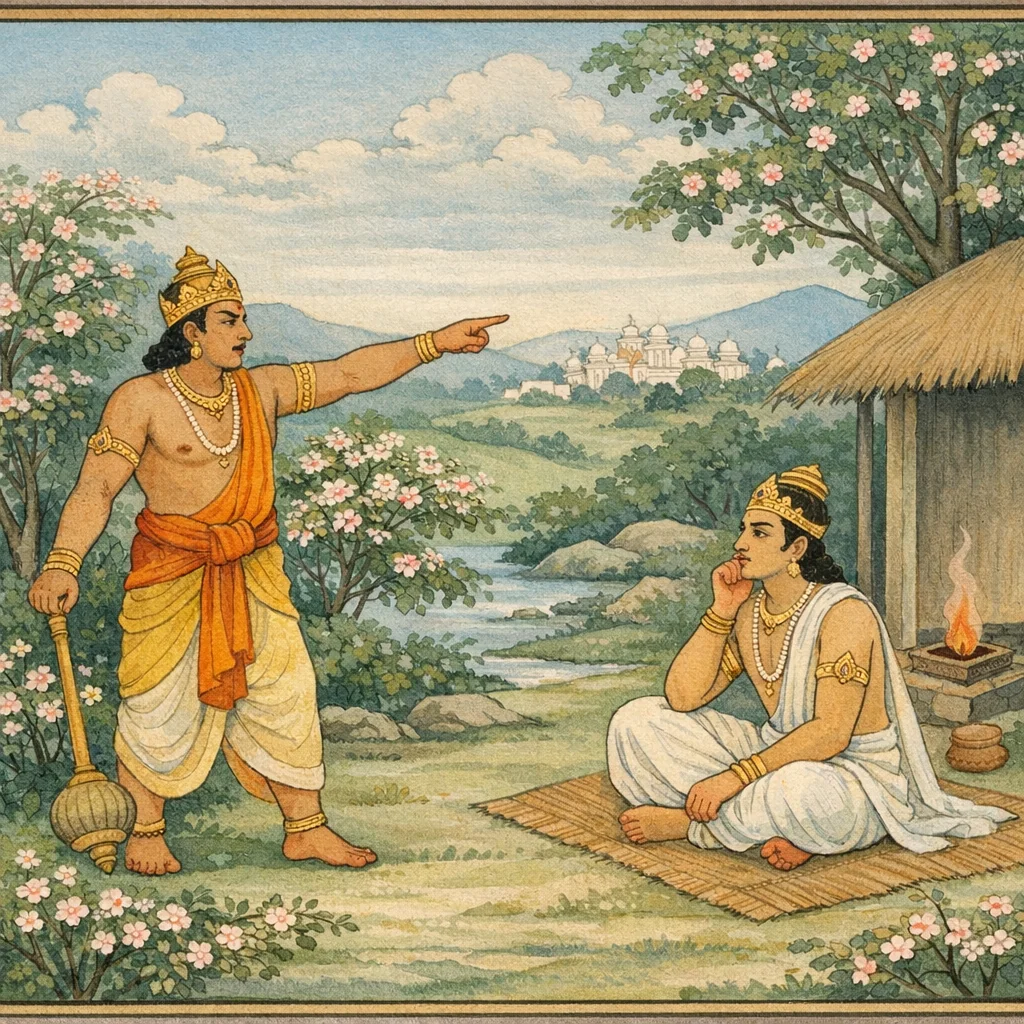
#:73:.7 #::3-...7 (0) हि २ 7 त्रयस्त्रिंशो5 ध्याय: भीमसेनका पुरुषार्थकी प्रशंसा करना और युधिष्ठिरको उत्तेजित करते हुए क्षत्रिय-धर्मके अनुसार युद्ध छेड़नेका अनुरोध वैशम्पायन उवाच याज्ञसेन्या वच: श्रुत्वा भीमसेनो हामर्षण: । निःश्वसन्नुपसंगम्य क्रुद्धो राजानमब्रवीत्,वैशम्पायनजी कहते हैं--जनमेजय! ट्रपदकुमारीका वचन सुनकर अमर्षमें भरे हुए भीमसेन क्रोधपूर्वक उच्छवास लेते हुए राजाके पास आये और इस प्रकार कहने लगे --
Vaiśampāyana said: Hearing the words of Yājñasenī (Draupadī), Bhīmasena—burning with indignation—came up to the king, breathing hard in anger, and spoke to him.
Verse 2
राज्यस्य पदवीं धर्म्या ब्रज सत्पुरुषोचिताम् | धर्मकामार्थहीनानां कि नो वस्तुं तपोवने,“महाराज! श्रेष्ठ पुरुषोंके लिये उचित और धर्मके अनुकूल जो राज्य-प्राप्तिका मार्ग (उपाय) हो, उसका आश्रय लीजिये। धर्म, अर्थ और काम--इन तीनोंसे वंचित होकर इस तपोवनमें निवास करनेपर हमारा कौन-सा प्रयोजन सिद्ध होगा
“O King, take up that righteous course by which sovereignty may be regained—a path befitting the noble. For if we remain in this forest of austerities while deprived of dharma, artha, and kāma, what purpose will our dwelling here accomplish?”
Verse 3
नैव धर्मेण तद् राज्यं नार्जवेन न चौजसा | अक्षकूटमधिष्ठाय हतं दुर्योधनेन वै,“दुर्योधनने धर्मसे, सरलतासे और बलसे भी हमारे राज्यको नहीं लिया है; उसने तो कपटपूर्ण जूएका आश्रय लेकर उसका हरण कर लिया है
“That kingdom was not taken from us by dharma, nor by straightforwardness, nor by strength. Duryodhana seized it only by resorting to a deceitful game of dice—by that crooked contrivance he robbed us of it.”
Verse 4
गोमायुनेव सिंहानां दुर्बलेन बलीयसाम् । आमिषं विघसाशेन तद्वद् राज्यं हि नो हृतम्,“बचे हुए अन्नको खानेवाले दुर्बल गीदड़ जैसे अत्यन्त बलिष्ठ सिंहोंका भोजन हर लें, उसी प्रकार शत्रुओंने हमारे राज्यका अपहरण किया है
“Just as a weak jackal, living on scraps, might snatch away the meat meant for mighty lions, so too have our enemies seized our kingdom.”
Verse 5
धर्मलेशप्रतिच्छन्न: प्रभवं धर्मकामयो: । अर्थमुत्सृज्य कि राजन् दुःखेषु परितप्यसे,“महाराज! धर्म और कामके उत्पादक राज्य और धनको खोकर लेशमात्र धर्मसे आवृत हुए अब आप क्यों दुःखसे संतप्त हो रहे हैं?
Vaiśampāyana said: “O King, having cast away wealth and sovereignty—the very sources that sustain dharma and desire—you are now covered only by a mere trace of dharma. Why, then, do you burn in sorrow amid these sufferings?”
Verse 6
भवतो5नवधानेन राज्यं न: पश्यतां हृतम् | अहार्यमपि शक्रेण गुप्तं गाण्डीवधन्चना,“गाण्डीवधारी अर्जुनके द्वारा सुरक्षित हमारे राज्यको इन्द्र भी नहीं छीन सकते थे, परंतु आपकी असावधानीसे वह हमारे देखते-देखते छिन गया
Vaiśaṃpāyana said: “Through your lack of vigilance, our kingdom was taken away while we looked on. Even Indra could not have seized it, for it was guarded by Arjuna, the wielder of the Gāṇḍīva; yet by your negligence it slipped from our hands.”
Verse 7
कुणीनामिव बिल्वानि पड्गूनामिव धेनव: । ह्ृतमैश्वर्यमस्माकं जीवतां भवत:ः कृते,'जैसे लूलोंके पाससे उनके बेलफल और पंगुओंके निकटसे उनकी गायें छिन जाती हैं और वे जीवित रहकर भी कुछ कर नहीं पाते, उसी प्रकार आपके कारण जीते-जी हमारे राज्यका अपहरण कर लिया गया
“As bilva fruits are snatched from the helpless, as cows are taken from the lame—who, though alive, can do nothing—so, because of you, our sovereignty was stolen away while we yet lived.”
Verse 8
भवत: प्रियमित्येवं महद् व्यसनमीदृशम् । धर्मकामे प्रतीतस्य प्रतिपन्ना: सम भारत,भारत! आप धर्मकी इच्छा रखनेवाले हैं; इस रूपमें आपकी प्रसिद्धि है। अतः आपकी प्रिय अभिलाषा सिद्ध हो, इसीलिये हमलोग ऐसे महान् संकटमें पड़ गये हैं
Vaiśampāyana said: “Because we sought only what would be pleasing to you, we have fallen into a calamity so great as this. For you are known as one who desires dharma; therefore, in order that your cherished wish might be fulfilled, we have come to this grievous distress, O Bhārata.”
Verse 9
कर्शयाम: स्वमित्राणि नन्दयामश्न शात्रवान् । आत्मानं भवतां शास्त्रैर्नियम्य भरतर्षभ,“भरतकुलभूषण! आपके शासनसे अपने-आपको नियन्त्रणमें रखकर आज हमलोग अपने मित्रोंको दुःखी और शत्रुओंको सुखी बना रहे हैं
Vaiśampāyana said: “O bull among the Bharatas, by restraining ourselves in accordance with your injunctions and the rule of śāstra, we are today causing distress to our own friends and giving joy to our enemies.”
Verse 10
यद् वयं न तदैवैतान् धार्तराष्ट्रानू निहन्महि । भवत: शास्त्रमादाय तन्नस्तपति दुष्कृतम्,“आपके शासनको मानकर जो हमलोगोंने उसी समय इन धृतराष्ट्रपुत्रोंकी मार नहीं डाला, वह दुष्कर्म हमें आज भी संताप दे रहा है
Vaiśampāyana said: “That we did not, at that very time, slay those sons of Dhṛtarāṣṭra—because we accepted and followed your injunction—this wrongful act now burns us with remorse even today.”
Verse 11
अथैनामन्ववेक्षस्व मृगचर्यामिवात्मन: । दुर्बलाचरितां राजन् न बलस्थैनिषिविताम्,“राजन! मृगोंके समान अपनी इस वनचर्यापर ही दृष्टिपात कीजिये। दुर्बल मनुष्य ही इस प्रकार वनमें रहकर समय बिताते हैं। बलवान् मनुष्य वनवासका सेवन नहीं करते
Vaiśampāyana said: “O King, look closely at this way of life of yours in the forest—like the roaming of wild deer. Such a mode of passing one’s days in the woods is the practice of the weak; it is not a course embraced by those who possess strength.”
Verse 12
यां न कृष्णो न बीभत्सुर्नाभिमन्युर्न सूंजया: । न चाहमभिनन्दामि न च माद्रीसुतावुभौ,“श्रीकृष्ण, अर्जुन, अभिमन्यु, सूंजयवंशी वीर, मैं और ये नकुल-सहदेव--कोई भी इस वनचर्याको पसंद नहीं करते
Vaiśampāyana said: “This life of roaming in the forest is not approved by Kṛṣṇa, nor by Arjuna (Bībhatsu), nor by Abhimanyu, nor by the Sūṃjaya heroes; nor do I approve of it, and neither do the two sons of Mādrī (Nakula and Sahadeva).”
Verse 13
भवान् धर्मो धर्म इति सततं व्रतकर्शित: । कच्चिद् राजन न निर्वेदादापन्न: क्लीबजीविकाम्,“राजन! आप “यह धर्म है, यह धर्म है', ऐसा कहकर सदा व्रतोंका पालन करके कष्ट उठाते रहते हैं। कहीं ऐसा तो नहीं है कि आप वैराग्यके कारण साहसशून्य हो नपुंसकोंका- सा जीवन व्यतीत करने लगे हों?
Vaiśampāyana said: “O King, you ever say, ‘This is dharma, this is dharma,’ and, worn by vows, you continue to endure hardship. Tell me, O King—have you, out of disheartenment and detachment, fallen into a life bereft of courage, like that of the impotent?”
Verse 14
दुर्मनुष्या हि निर्वेदमफलं स्वार्थधातकम् | अशक्ता: श्रियमाहर्तुमात्मन: कुर्वते प्रियम्,“अपनी खोयी हुई राज्यलक्ष्मीका उद्धार करनेमें असमर्थ दुर्बल मनुष्य ही निष्फल और स्वार्थनाशक वैराग्यका आश्रय लेते हैं और उसीको प्रिय मानते हैं
Vaiśampāyana said: “Truly, it is weak and mean-spirited people—unable to recover their lost royal fortune—who take refuge in a barren ‘detachment’ that actually destroys their own interests, and then come to cherish that very attitude as if it were a virtue.”
Verse 15
स भवान् दृष्टिमाछछक्त: पश्यन्नस्मासु पौरुषम् | आनृशंस्यपरो राजन् नानर्थमवबुध्यसे,“राजन! आप समझदार, दूरदर्शी और शक्तिशाली हैं, हमारे पुरुषार्थको देख चुके हैं; तो भी इस प्रकार दयाको अपनाकर इससे होनेवाले अनर्थको नहीं समझ रहे हैं
Vaiśampāyana said: “O King, you are discerning and capable; you have already witnessed our manly effort and resolve. Yet, by clinging to misplaced compassion, you fail to recognize the harm and disorder that will arise from it.”
Verse 16
अस्मानमी धार्तराष्ट्रा: क्षममाणानलं सतः । अशक्तानिव मन्यन्ते तद् दुःखं नाहवे वध:,“हम शत्रुओंके अपराधको क्षमा करते जा रहे हैं, इसलिये समर्थ होते हुए भी हमें ये धृतराष्ट्रके पुत्र निर्बल-से मानने लगे हैं, यही हमारे लिये महान् दुःख है; युद्धमें मारा जाना कोई दुःख नहीं है
Vaiśampāyana said: “Because we keep forgiving the offenses of these sons of Dhṛtarāṣṭra, they now take us—though fully capable—as if we were powerless. That is our real sorrow; to be slain in battle is no sorrow at all.”
Verse 17
तत्र चेद् युध्यमानानामजिह्यमनिवर्तिनाम् | सर्वशो हि वध: श्रेयान् प्रेत्मय लोकान् लभेमहि,“ऐसी दशामें यदि हम पीठ न दिखाकर युद्धमें निष्कपटभावसे लड़ते रहें और उसमें हमारा वध भी हो जाय तो वह कल्याणकारक है; क्योंकि युद्धमें मरनेसे हमें उत्तम लोकोंकी प्राप्ति होगी
Vaiśampāyana said: “If, in such a situation, we keep fighting without turning our backs—straightforward and unflinching—then even if we are slain, that is the better course; for by dying in battle we would attain the higher worlds after death.”
Verse 18
अथवा वयमेवैतान् निहत्य भरतर्षभ । आददीमटहि गां सर्वा तथापि श्रेय एव न:,“अथवा भरतश्रेष्ठ! यदि हम ही इन शत्रुओंको मारकर सारी पृथ्वी ले लें तो वही हमारे लिये कल्याणकर है
Vaiśampāyana said: “Or else, O bull among the Bharatas, let us ourselves strike down these foes and seize the whole earth; even so, that alone would be for our true welfare.”
Verse 19
सर्वथा कार्यमेतन्न: स्वधर्ममनुतिष्ठताम् । काडुक्षतां विपुलां कीर्ति वैरं प्रतिचिकीर्षताम्,“हम अपने क्षत्रिय-धर्मके अनुष्ठानमें संलग्न हो वैरका बदला लेना चाहते हैं और संसारमें महान् यशका विस्तार करनेकी अभिलाषा रखते हैं, अतः हमारे लिये सब प्रकारसे युद्ध करना ही उचित है
Vaiśampāyana said: “For us, in every way, this is the proper course—while steadfastly performing our own duty. Wishing to win vast renown and to exact requital for enmity, it is fitting for us to engage in battle.”
Verse 20
आत्मार्थ युध्यमानानां विदिते कृत्यलक्षणे | अन्यैरपि हूते राज्ये प्रशंसैव न गर्हणा,'शत्रुओंने हमारे राज्यको छीन लिया है, ऐसे अवसरपर यदि हम अपने कर्तव्यको समझकर अपने लाभके लिये ही युद्ध करें तो भी इसके लिये जगत्में हमारी प्रशंसा ही होगी, निन््दा नहीं होगी
When the foes have seized our kingdom, then, if we understand the marks of our duty and fight even for our own advantage, the world will praise us—there will be no blame.
Verse 21
कर्शनार्थोीं हि यो धर्मो मित्राणामात्मनस्तथा । व्यसनं नाम तद् राजन् न धर्म: स कुधर्म तत्,“महाराज! जो धर्म अपने तथा मित्रोंके लिये क्लेश उत्पन्न करनेवाला हो, वह तो संकट ही है। वह धर्म नहीं, कुधर्म है
Vaiśampāyana said: “O King, any so‑called ‘dharma’ that brings affliction upon oneself and upon one’s friends is in truth nothing but calamity. It is not dharma at all; it is misdirected, wrongful conduct (kudharma).”
Verse 22
सर्वथा धर्मनित्यं तु पुरुष धर्मदुर्बलम् त्यजतस्तात धर्मार्थो प्रेत दुःखसुखे यथा,“तात! जैसे मुर्दोकी दुःख और सुख दोनों नहीं होते, उसी प्रकार जो सर्वथा और सर्वदा धर्ममें ही तत्पर रहकर उसके अनुष्ठानसे दुर्बल हो गया है, उसे धर्म और अर्थ दोनों त्याग देते हैं
My child, just as the dead have neither sorrow nor joy, so too the one who clings to dharma alone at all times and is weakened by its observance is abandoned by both dharma and artha (worldly welfare).
Verse 23
यस्य धर्मो हि धर्मार्थ क्लेशभाड़ू न स पण्डित: । न स धर्मस्य वेदार्थ सूर्यस्यान्ध: प्रभामिव,जिसका धर्म केवल धर्मके लिये ही होता है, वह धर्मके नामपर केवल क्लेश उठानेवाला मानव बुद्धिमान नहीं है। जैसे अन्धा सूर्यकी प्रभाको नहीं जानता, उसी प्रकार वह धर्मके अर्थको नहीं समझता है
Vaiśampāyana said: “A man whose ‘dharma’ is pursued only for the sake of dharma as a mere label—so that it becomes nothing but a burden of hardship—is not truly wise. He does not grasp the meaning and purpose of dharma, just as a blind man cannot perceive the radiance of the sun.”
Verse 24
यस्य चार्थार्थमेवार्थ: स च नार्थस्य कोविद: । रक्षेत भूतको5रण्ये यथा गास्तादूगेव सः,“जिसका धन केवल धनके ही लिये है, दान आदिके लिये नहीं है, वह धनके तत्त्वको नहीं जानता। जैसे सेवक (ग्वालिया) वनमें गौओंकी रक्षा करता है, उसी प्रकार वह भी उस धनका दूसरेके लिये रक्षकमात्र है
He whose wealth is valued only for the sake of wealth itself—and not for higher purposes such as giving and righteous use—does not truly understand the nature of wealth. Like a hired cowherd who guards cattle in a forest for another’s benefit, such a man merely serves as a keeper of riches that will ultimately belong to someone else.
Verse 25
अतिवेलं हि योर्दशर्थार्थी नेतरावनुतिष्ठति । स वध्य: सर्वभूतानां ब्रह्म॒हेव जुगुप्सित:,'जो केवल अर्थके ही संग्रहकी अत्यन्त इच्छा रखनेवाला है और धर्म एवं कामका अनुष्ठान नहीं करता है, वह ब्रह्महत्यारेके समान घृणाका पात्र है और सभी प्राणियोंके लिये वध्य है
He who, in excessive greed, seeks only artha and does not observe dharma and kāma is loathed like a slayer of a brahmin, and is fit to be slain by all beings.
Verse 26
सतत यश्च कामार्थी नेतरावनुतिष्ठति । मित्राणि तस्य नश्यन्ति धर्मार्थभ्यां च हीयते,“इसी प्रकार जो निरन्तर कामकी ही अभिलाषा रखकर धर्म और अर्थका सम्पादन नहीं करता, उसके मित्र नष्ट हो जाते हैं (उसको त्यागकर चल देते हैं) और वह धर्म एवं अर्थ दोनोंसे वंचित ही रह जाता है
Likewise, he who constantly longs only for kāma and does not accomplish dharma and artha—his friends perish (forsake him), and he is left bereft of both dharma and artha.
Verse 27
तस्य धर्मार्थहीनस्य कामान्ते निधन ध्रुवम् । कामतो रममाणस्य मीनस्येवाम्भस: क्षये,“जैसे पानी सूख जानेपर उसमें रहनेवाली मछलीकी मृत्यु निश्चित है, उसी प्रकार जो धर्म-अर्थसे हीन होकर केवल काममें ही रमण करता है, उस काम (भोगसामग्री)-की समाप्ति होनेपर उसकी भी अवश्य मृत्यु हो जाती है
For one who is bereft of dharma and artha, death is certain at the end of kāma. He who revels only in pleasure perishes when his enjoyments are exhausted, like a fish that surely dies when the water dries up.
Verse 28
तस्माद् धर्मार्थयोर्नित्यं न प्रमाद्यन्ति पण्डिता: । प्रकृति: सा हि कामस्य पावकस्यारणिरयथा,“इसलिये विद्वान् पुरुष कभी धर्म और अर्थके सम्पादनमें प्रमाद नहीं करते हैं। धर्म और अर्थ कामकी उत्पक्तिके स्थान हैं (अर्थात् धर्म और अर्थसे ही कामकी सिद्धि होती है) जैसे अरणि अग्निका उत्पत्तिस्थान है
Therefore the wise never grow negligent in the constant pursuit and safeguarding of dharma and artha. For dharma and artha are the very source from which kāma arises, just as the araṇi (fire-drill) is the source from which fire is produced.
Verse 29
सर्वथा धर्ममूलो<र्थों धर्मश्चार्थपरिग्रह: । इतरेतरयोर्नीतौ विद्धि मेघोदधी यथा,“अर्थका कारण है धर्म और धर्म सिद्ध होता है अर्थसंग्रहसे। जैसे मेघसे समुद्रकी पुष्टि होती है और समुद्रसे मेघकी पूर्ति। इस प्रकार धर्म और अर्थको एक-दूसरेके आश्रित समझना चाहिये
In every way, artha is rooted in dharma, and dharma is sustained by the acquisition of artha. Know that the two depend upon each other, like the clouds and the ocean.
Verse 30
द्रव्यार्थस्पर्शसंयोगे या प्रीतिरुपजायते । स कामश्रित्तसंकल्प: शरीरं नास्य दृश्यते,स्त्री, माला, चन्दन आदि द्रव्योंके स्पर्श और सुवर्ण आदि धनके लाभसे जो प्रसन्नता होती है, उसके लिये जो चित्तमें संकल्प उठता है, उसीका नाम काम है। उस कामका शरीर नहीं देखा जाता (इसीलिये वह “अनंग” कहलाता है)
Vaiśampāyana said: “When contact and association with desirable objects and pleasures gives rise to delight, the mental resolve that leans toward such enjoyment is called kāma (desire). That desire has no visible body; it is not seen as a physical form.”
Verse 31
अर्थार्थी पुरुषो राजन् बृहन्तं धर्ममिच्छति । अर्थमिच्छति कामार्थी न कामादन्यमिच्छति,“राजन! धनकी इच्छा रखनेवाला पुरुष महान् धर्मकी अभिलाषा रखता है और कामार्थी मनुष्य धन चाहता है। जैसे धर्मसे धनकी और धनसे कामकी इच्छा करता है, उस प्रकार वह कामसे किसी दूसरी वस्तुकी इच्छा नहीं करता है
Vaiśaṃpāyana said: “O King, a man who seeks wealth also desires a lofty form of dharma, while one who seeks pleasure desires wealth. Thus, just as dharma is pursued for the sake of wealth and wealth for the sake of pleasure, so the pleasure-seeker, once fixed on enjoyment, seeks nothing beyond pleasure itself.”
Verse 32
न हि कामेन कामोअनन््य: साध्यते फलमेव तत् । उपयोगात् फलस्यैव काष्ठाद् भस्मेव पण्डितै:,“जैसे फल उपभोगमें आकर कृतार्थ हो जाता है, उससे दूसरा फल नहीं प्राप्त हो सकता तथा जिस प्रकार काष्ठसे भस्म बन सकता है, परंतु उस भस्मसे दूसरा कोई पदार्थ नहीं बन सकता; इसी तरह बुद्धिमान् पुरुष एक कामसे किसी दूसरे कामकी सिद्धि नहीं मानते, क्योंकि वह साधन नहीं, फल ही है
Vaiśampāyana said: Desire cannot be used to accomplish some other, separate desire; it is itself only a result to be consumed. The wise explain that once a fruit has been enjoyed, no further fruit is obtained from it; and just as wood can be reduced to ash, yet from that ash no new substance is produced—so too they do not regard one desire as a means to fulfill another, for desire is an end-product, not a true instrument of attainment.
Verse 33
इमाञ्छकुनकान् राजन् हन्ति वैतंसिको यथा । एतद् रूपमधर्मस्य भूतेषु हि विहिंसता,'राजन्! जैसे पक्षियोंको मारनेवाला व्याध इन पक्षियोंकों मारता है, यह विशेष प्रकारकी हिंसा ही अधर्मका स्वरूप है (अत: वह हिंसक सबके लिये वध्य है)। वैसे ही जो खोटी बुद्धिवाला मनुष्य काम और लोभके वशीभूत होकर धर्मके स्वरूपको नहीं जानता, वह इहलोक और परलोकमें भी सब प्राणियोंका वध्य होता है इति श्रीमहाभारते वनपर्वणि अर्जुनाभिगमनपर्वणि भीमवाक्ये त्रयस्त्रिंशो 5ध्याय: ।। ३३ ।। इस प्रकार श्रीमह्याभारत वनपर्वके अन्तर्गत अर्जुनाभिगमनपर्वमें भीमवाक्यविषयक तैतीसवाँ अध्याय पूरा हुआ
Vaiśampāyana said: “O King, just as a bird-catcher kills these birds, so does one who harms living beings display the very form of adharma. Such violence toward creatures is itself the mark of unrighteousness.”
Verse 34
कामाल्लोभाच्च धर्मस्य प्रकृतिं यो न पश्यति । स वध्य: सर्वभूतानां प्रेत्य चेह च दुर्मति:,'राजन्! जैसे पक्षियोंको मारनेवाला व्याध इन पक्षियोंकों मारता है, यह विशेष प्रकारकी हिंसा ही अधर्मका स्वरूप है (अत: वह हिंसक सबके लिये वध्य है)। वैसे ही जो खोटी बुद्धिवाला मनुष्य काम और लोभके वशीभूत होकर धर्मके स्वरूपको नहीं जानता, वह इहलोक और परलोकमें भी सब प्राणियोंका वध्य होता है
Vaiśampāyana said: The man who, driven by desire and greed, fails to perceive the true nature of dharma is regarded as punishable by all beings; and that evil-minded person meets condemnation and retribution both here in this world and after death. Such cruelty—like that of a hunter who kills birds—is a distinctive form of violence that stands as the very mark of adharma.
Verse 35
व्यक्त ते विदितो राजन्नर्थों द्रव्यपरिग्रह: । प्रकृतिं चापि वेत्थास्य विकृतिं चापि भूयसीम्,“राजन! आपको यह अच्छी तरह ज्ञात है कि धनसे ही भोग्य-सामग्रीका संग्रह होता है। धनका जो कारण है, उससे भी आप परिचित हैं और धनके द्वारा जो बहुत-से कार्य सिद्ध होते हैं, उसे भी आप जानते हैं
Vaiśampāyana said: “O King, it is plainly known to you that wealth enables the gathering of goods and resources for use and enjoyment. You also understand its source—what gives rise to wealth—and you know well the many further outcomes and far-reaching effects that wealth can bring about.”
Verse 36
तस्य नाशे विनाशे वा जरया मरणेन वा । अनर्थ इति मन्यन्ते सो5यमस्मासु वर्तते,“उस धनका अभाव होनेपर अथवा प्राप्त हुए धनका नाश होनेपर अथवा स्त्री आदि धनके जरा-जीर्ण एवं मृत्युग्रस्त होनेपर मनुष्यकी जो दशा होती है, उसीको सब लोग अनर्थ मानते हैं। वही इस समय हमलोगोंको भी प्राप्त हुआ है
Vaiśampāyana said: “Whether through the loss of wealth, the ruin of what has been gained, or through the wasting of one’s ‘wealth’—such as wife and kin—by old age and death, people call that condition ‘misfortune’. That very misfortune has now come upon us as well.”
Verse 37
इन्द्रियाणां च पठचानां मनसो हृदयस्य च । विषये वर्तमानानां या प्रीतिरुपजायते
Vaiśampāyana said: When the five senses—together with the mind and the heart—move among their objects, the pleasure born of such engagement arises.
Verse 38
एवमेव पृथग दृष्टवा धर्मार्थोी काममेव च
Thus, having examined them separately—dharma and artha, and also kāma—one understands their distinct aims and limits, rather than confusing them as a single pursuit.
Verse 39
न धर्मपर एव स्यान्न चार्थपरमो नर: । न कामपरमो वा स्यात् सर्वान् सेवेत सर्वदा
Vaiśampāyana said: A person should not be devoted exclusively to dharma alone, nor pursue only artha (wealth), nor live only for kāma (desire). Rather, at all times he should cultivate all the aims together, balancing duty, prosperity, and pleasure in proper measure.
Verse 40
धर्म पूर्वे धनं मध्ये जघन्ये काममाचरेत् । अहन्यनुचरेदेवमेष शास्त्रकृतो विधि:
Vaiśampāyana said: “One should practice dharma first, pursue wealth (artha) in the middle stage, and attend to desire (kāma) in the later stage. One should conduct oneself in this way day by day—this is the rule laid down by the śāstras.”
Verse 41
“इस प्रकार धर्म, अर्थ और काम तीनोंको पृथक्ू-पृथक् समझकर मनुष्य केवल धर्म, केवल अर्थ अथवा केवल कामके ही सेवनमें तत्पर न रहे। उन सबका सदा इस प्रकार सेवन करे, जिससे इनमें विरोध न हो। इस विषयमें शास्त्रोंका यह विधान है कि दिनके पूर्वभागमें धर्मका, दूसरे भागमें अर्थका और अन्तिम भागमें कामका सेवन करे ।। ३८-- ४० || काम पूर्वे धनं मध्ये जघन्ये धर्ममाचरेत् । वयस्यनुचरेदेवमेष शास्त्रकृतो विधि:,“इसी प्रकार अवस्था-क्रममें शास्त्रका विधान यह है कि आयुके पूर्वभागमें (युवावस्थामें) कामका, मध्यभाग (प्रौढ़ावस्था)-में धनका तथा अन्तिम भाग (वृद्धावस्था)-में धर्मका पालन करे
Vaiśampāyana said: Understanding dharma, artha, and kāma as distinct aims, a person should not cling exclusively to only one—only dharma, only wealth, or only pleasure. Rather, one should pursue all three in such a way that they do not conflict. The śāstras lay down this rule: in the earlier part of the day one should attend to dharma, in the middle to artha, and in the last to kāma. Likewise, by the order of life-stages, the śāstric ordinance is: in the first part of life (youth) one may follow kāma, in the middle (maturity) one should pursue wealth, and in the final part (old age) one should practice dharma.
Verse 42
धर्म चार्थ च काम॑ च यथावद् वदतां वर । विभज्य काले कालज्ञ: सर्वान् सेवेत पण्डित:,“वक्ताओंमें श्रेष्ठ! उचित कालका ज्ञान रखनेवाला विद्दान् पुरुष धर्म, अर्थ और काम तीनोंका यथावत् विभाग करके उपयुक्त समयपर उन सबका सेवन करे
Vaiśampāyana said: “O best among speakers, a wise man—one who understands the right time—should properly distinguish dharma, artha, and kāma, and pursue each of them at the appropriate time.”
Verse 43
मोक्षो वा परमं श्रेय एष राजन् सुखार्थिनाम् | प्राप्तिवा बुद्धिमास्थाय सोपायां कुरुनन्दन,“कुरुनन्दन! निरतिशय सुखकी इच्छा रखनेवाले मुमुक्षुओंके लिये यह मोक्ष ही परम कल्याणप्रद है। राजन! इसी प्रकार लौकिक सुखकी इच्छावालोंके लिये धर्म, अर्थ, कामरूप त्रिवर्गकी प्राप्ति ही परम श्रेय है। अतः महाराज! भक्ति और योगसहित ज्ञानका आश्रय लेकर आप शीघ्र ही या तो मोक्षकी प्राप्ति कर लीजिये अथवा धर्म, अर्थ, कामरूप त्रिवर्गकी प्राप्तिके उपायका अवलम्बन कीजिये। जो इन दोनोंके बीचमें रहता है, उसका जीवन तो आर्त मनुष्यके समान दुःखमय ही है
Vaiśampāyana said: “O King, for those who seek the highest, unsurpassed happiness, liberation (mokṣa) is the supreme good. Or else, O joy of the Kurus, by taking up right understanding together with its practical means, one should pursue the attainable goals. For a person who remains suspended between these two—neither firmly seeking liberation nor steadily pursuing worldly aims—life becomes sorrowful, like that of one afflicted and distressed.”
Verse 44
तद् वा*<शु क्रियतां राजन प्राप्तिवाप्पधिगम्यताम् । जीवितं ह्ातुरस्येव दुःखमन्तरवर्तिन:,“कुरुनन्दन! निरतिशय सुखकी इच्छा रखनेवाले मुमुक्षुओंके लिये यह मोक्ष ही परम कल्याणप्रद है। राजन! इसी प्रकार लौकिक सुखकी इच्छावालोंके लिये धर्म, अर्थ, कामरूप त्रिवर्गकी प्राप्ति ही परम श्रेय है। अतः महाराज! भक्ति और योगसहित ज्ञानका आश्रय लेकर आप शीघ्र ही या तो मोक्षकी प्राप्ति कर लीजिये अथवा धर्म, अर्थ, कामरूप त्रिवर्गकी प्राप्तिके उपायका अवलम्बन कीजिये। जो इन दोनोंके बीचमें रहता है, उसका जीवन तो आर्त मनुष्यके समान दुःखमय ही है
Vaiśampāyana said: “Therefore, O king, act swiftly—either secure the attainment (you seek) or reach the higher goal. For the life of one who remains suspended in between is painful, like that of a sick man.”
Verse 45
विदितश्रैव मे धर्म: सततं चरितकश्न ते । जानन्तस्त्वयि शंसन्ति सुहृद: कर्मचोदनाम्,“मुझे मालूम है कि आपने सदा धर्मका ही आचरण किया है, इस बातको जानते हुए भी आपके हितैषी, सगे-सम्बन्धी आपको (धर्मयुक्त) कर्म एवं पुरुषार्थके लिये ही प्रेरित करते हैं
Vaiśampāyana said: “I know well that you have always lived by dharma, O King. Yet, even while fully aware of your steadfast righteousness, your well-wishers and close kin still urge you on toward action—toward the exertion and initiatives that accord with dharma.”
Verse 46
दान॑ यज्ञा: सतां पूजा वेदधारणमार्जवम् | एष धर्म: परो राजन् बलवान प्रेत्य चेह च,“महाराज! इहलोक और परलोकमें भी दान, यज्ञ, संतोंका आदर, वेदोंका स्वाध्याय और सरलता आदि ही उत्तम एवं प्रबल धर्म माने गये हैं
Vaiśampāyana said: “O King, giving in charity, the performance of sacrifices, honoring the virtuous, the preservation and study of the Vedas, and straightforwardness—these are held to be the highest form of dharma. This dharma is powerful both here in this world and after death in the next.”
Verse 47
एष नार्थविहीनेन शक््यो राजन् निषेवितुम् । अखिलाः: पुरुषव्याप्र गुणा: स्युर्यद्यपीतरे,'पुरुषसिंह राजन! यद्यपि मनुष्यमें दूसरे सभी गुण मौजूद हों तो भी यह यज्ञ आदि रूप धर्म धनहीन पुरुषके द्वारा नहीं सम्पादित किया जा सकता
Vaiśampāyana said: “O King, this (religious duty—such as sacrifice and allied rites) cannot be properly undertaken by one who is without wealth. Even if, O tiger among men, all other virtues are present in a person, still dharma in the form of yajña and similar observances cannot be carried out by a man who lacks resources.”
Verse 48
धर्ममूलं जगद् राजन् नान्यद् धर्माद् विशिष्यते । धर्मश्चार्थेन महता शक्यो राजन् निषेवितुम्,“महाराज! इस जगत्का मूल कारण धर्म ही है। इस जगतमें धर्मसे बढ़कर दूसरी कोई वस्तु नहीं है। उस धर्मका अनुष्ठान भी महान् धनसे ही हो सकता है
Vaiśaṃpāyana said: “O King, the world is rooted in dharma; nothing surpasses dharma in this world. And that dharma—its practice and sustained observance—can be properly pursued, O King, only with substantial wealth.”
Verse 49
नचार्थों भैक्ष्यचर्येण नापि क्लैब्येन कह्िचित् । वेत्तुं शक्य: सदा राजन् केवल धर्मबुद्धिना,“राजन्! भीख माँगनेसे, कायरता दिखानेसे अथवा केवल धर्ममें ही मन लगाये रहनेसे धनकी प्राप्ति कदापि नहीं हो सकती
Vaiśampāyana said: “O King, wealth is not to be obtained by living on alms, nor by displaying cowardice; nor can it be secured merely by keeping one’s mind fixed on righteousness alone. Material prosperity requires appropriate effort and means, not helplessness or a one-sided posture of piety.”
Verse 50
प्रतिषिद्धा हि ते याच्ञा यया सिद्धयति वै द्विज: । तेजसैवार्थलिप्सायां यतस्व पुरुषर्षभ,“नरश्रेष्ठ! ब्राह्मण जिस याचनाके द्वारा कार्यसिद्धि कर लेता है वह तो आप कर नहीं सकते, क्योंकि क्षत्रियके लिये उसका निषेध है। अत: आप अपने तेजके द्वारा ही धन पानेका प्रयत्न कीजिये
Vaiśaṃpāyana said: “O best of men, the kind of begging by which a brāhmaṇa may accomplish his purpose is forbidden to you, for it is prohibited for a kṣatriya. Therefore, strive to obtain wealth by your own valor and splendor (tejas) alone.”
Verse 51
भैक्ष्यचर्या न विहिता न च विट्शूद्रजीविका । क्षत्रियस्य विशेषेण धर्मस्तु बलमौरसम्,'क्षत्रियके लिये न तो भीख माँगनेका विधान है और न वैश्य और शूद्रकी जीविका करनेका ही। उसके लिये तो बल और उत्साह ही विशेष धर्म हैं
Vaiśampāyana said: “For a kṣatriya, the way of living by begging is not prescribed, nor is earning one’s livelihood by the occupations proper to vaiśyas or śūdras. For him, in particular, his distinctive dharma is native strength and spirited vigor.”
Verse 52
स्वथधर्म प्रतिपद्यस्व जहि शत्रून् समागतान् । धार्तराष्ट्रमवनं पार्थ मया पार्थेन नाशय,'पार्थ! अपने धर्मका आश्रय लीजिये, प्राप्त हुए शत्रुओंका वध कीजिये। मेरे तथा अर्जुनके द्वारा धृतराष्ट्रपुत्ररूपी जंगलको कटवा डालिये
Vaiśaṃpāyana said: “Take your stand upon your own dharma. Slay the enemies who have come before you. O Pārtha, with my aid and with Arjuna, cut down and destroy the forest of the Dhṛtarāṣṭras (the sons of Dhṛtarāṣṭra).”
Verse 53
उदारमेव विद्वांसो धर्म प्राहुर्मनीषिण: । उदारं प्रतिपद्यस्व नावरे स्थातुमहसि,“मनीषी विद्वान् दानशीलताको ही धर्म कहते हैं, अतः आप उस दानशीलताको ही प्राप्त कीजिये। आपको इस दयनीय अवस्थामें नहीं रहना चाहिये
Vaiśampāyana said: “The wise and discerning declare that true dharma lies in generosity. Therefore, take up that noble generosity; you ought not to remain in this wretched, diminished condition.”
Verse 54
अनुबुध्यस्व राजेन्द्र वेत्थ धर्मान् सनातनात् | क्रूरकर्माभिजातो$सि यस्मादुद्धिजते जन:,“महाराज! आप सनातनधर्मोंको जानते हैं, आप कठोर कर्म करनेवाले क्षत्रियकुलमें उत्पन्न हुए हैं, जिससे सब लोग भयभीत रहते हैं; अतः अपने स्वरूप और कर्तव्यकी ओर ध्यान दीजिये
Vaiśaṃpāyana said: “O lord of kings, you know the eternal dharmas. You were born in a kṣatriya line of stern deeds, before which people stand in fear; therefore, turn your mind to your own nature and to your duty.”
Verse 55
प्रजापालनसम्भूतं फलं तव न गर्हितम् । एष ते विहितो राजन् धात्रा धर्म: सनातन:,“जब आप राज्य प्राप्त कर लेंगे, उस समय प्रजापालनरूप धर्मसे आपको जिस पुण्यफलकी प्राप्ति होगी, वह आपके लिये गर्हित नहीं होगा। महाराज! विधाताने आप- जैसे क्षत्रियका यही सनातनधर्म नियत किया है
When you regain the kingdom, the meritorious fruit that arises from the dharma of protecting and governing the people will not be blameworthy for you. O King, this is the eternal dharma that the Ordainer has appointed for a kṣatriya such as you.
Verse 56
तस्मादपचित: पार्थ लोके हास्यं गमिष्यसि । स्वथर्माद्धि मनुष्याणां चलन न प्रशस्यते,'पार्थ! उस धर्मसे हीन होनेपर तो संसारमें आप उपहासके पात्र हो जायँगे। मनुष्योंका अपने धर्मसे भ्रष्ट होना कुछ प्रशंसाकी बात नहीं है
Therefore, O Pārtha, if you fall away from your proper duty, you will become an object of ridicule in the world. Indeed, for human beings, wavering and straying from one’s own dharma is not considered praiseworthy.
Verse 57
सक्षात्रं हृदयं कृत्वा त्यक्त्वेद शिथिलं मन: । वीर्यमास्थाय कौरव्य धुरमुद्वह धुर्यवत्,“कुरुनन्दन! अपने हृदयको क्षत्रियोचित उत्साहसे भरकर मनकी इस शिथिलताको दूर करके पराक्रमका आश्रय ले आप एक धुरन्धर वीर पुरुषकी भाँति युद्धका भार वहन कीजिये
Vaiśampāyana said: “O Kauravya, make your heart truly kṣatriya in spirit; cast away this slackness of mind. Taking refuge in valor, bear the burden of battle like a foremost champion.”
Verse 58
न हि केवलधर्मात्मा पृथिवीं जातु कश्नन | पार्थिवो व्यजयद् राजन् न भूतिं न पुन: श्रियम्,“महाराज! केवल धर्ममें ही लगे रहनेवाले किसी भी नरेशने आजतक न तो कभी पृथ्वीपर विजय पायी है और न ऐश्वर्य तथा लक्ष्मीको ही प्राप्त किया है
Vaiśampāyana said: “O King, no earthly ruler who is devoted solely to dharma has ever, at any time, conquered the earth—nor has he thereby attained worldly prosperity or royal splendor.”
Verse 59
जिद्नां दत्त्वा बहूनां हि क्षुद्राणां लुब्धचेतसाम् । निकृत्या लभते राज्यमाहारमिव शल्यक:,'जैसे बहेलिया लुब्ध हृदयवाले छोटे-छोटे मृगोंको कुछ खानेकी वस्तुओंका लोभ देकर छलसे उन्हें पकड़ लेता है, उसी प्रकार नीतिज्ञ राजा शत्रुओंके प्रति कूटनीतिका प्रयोग करके उनसे राज्यको प्राप्त कर लेता है
Vaiśampāyana said: “By offering bait to many petty creatures whose minds are ruled by greed, a hunter secures his catch through deception; in the same way, a politically astute king, employing stratagems against his enemies, can obtain a kingdom.”
Verse 60
भ्रातर: पूर्वजाताश्न सुसमद्धा श्व सर्वश: । निकृत्या निर्जिता देवैरसुरा: पार्थिवर्षभ,“नृपश्रेष्ठ आप जानते हैं कि असुरगण देवताओंके बड़े भाई हैं, उनसे पहले उत्पन्न हुए हैं और सब प्रकारसे समृद्धिशाली हैं तो भी देवताओंने छलसे उन्हें जीत लिया
Vaiśampāyana said: “O bull among kings, the Asuras are indeed the elder brothers—born before the Devas and prosperous in every way. Yet the Devas overcame them by nikṛti, by stratagem and deceit.”
Verse 61
एवं बलवत: सर्वमिति बुद्ध्वा महीपते । जहि शत्रून् महाबाहो परां निकृतिमास्थित:,“महाराज! महाबाहो! इस प्रकार बलवान्का ही सबपर अधिकार होता है, यह समझकर आप भी कूटनीतिका आश्रय ले अपने शत्रुओंको मार डालिये
Vaiśampāyana said: “O king, understanding that in this world everything comes under the sway of the strong, you too—O mighty-armed one—should resort to the utmost stratagem and strike down your enemies.”
Verse 62
न हार्जुनसम: कश्रिद् युधि योद्धा धनुर्धर: । भविता वा पुमान् कश्चिन्मत्समो वा गदाधर:,'युद्धमें अर्जुनके समान कोई धनुर्धर अथवा मेरे समान गदाधारी योद्धा न तो है और न आगे होनेकी ही सम्भावना है
Vaiśampāyana said: “In battle there is no archer equal to Arjuna; nor is there, now or in times to come, any man who can match me as a mace-bearing warrior.”
Verse 63
सत्त्वेन कुरुते युद्ध राजन् सुबलवानपि । अप्रमादी महोत्साही सत्त्वस्थो भव पाण्डव,'पाण्डुनन्दन! अत्यन्त बलवान् पुरुष भी आत्मबलसे ही युद्ध करता है, इसलिये आप सावधानीपूर्वक महान् उत्साह और आत्मबलका आश्रय लीजिये
Vaiśampāyana said: “O King, even a man of great physical strength wages war by the strength of his inner resolve. Therefore, O Pāṇḍava, be vigilant; stand firm in courage and great enthusiasm, grounded in steadfastness of spirit.”
Verse 64
सत्त्वं हि मूलमर्थस्य वितथं यदतो5न्यथा । नतु प्रसक्त भवति वृक्षच्छायेव हैमनी,“आत्मबल ही धनका मूल है, इसके विपरीत जो कुछ है, वह मिथ्या है; क्योंकि हेमन्त- ऋतुमें वृक्षोंकी छायाके समान वह आत्माकी दुर्बलता किसी भी कामकी नहीं है
Vaiśampāyana said: “Inner strength (sattva) is truly the root of prosperity and success. Whatever is claimed to be otherwise is false. For without that strength, one’s resources do not truly ‘stick’ or prove effective—like the shade of a tree in the winter season, which offers little practical benefit.”
Verse 65
अर्थत्यागोडपि कार्य: स्वादर्थ श्रेयांसमिच्छता । बीजौपम्येन कौन्तेय मा ते भूदत्र संशय:,“कुन्तीकुमार! जैसे किसान अधिक अन्नराशि उपजानेकी लालसासे धान्य आदिके अल्प बीजोंका भूमिमें परित्याग कर देता है, उसी प्रकार श्रेष्ठ अर्थ पानेकी इच्छासे अल्प अर्थका त्याग किया जा सकता है। आपको इस विषयमें संशय नहीं करना चाहिये
Vaiśampāyana said: “O son of Kuntī, one who seeks a higher good for oneself should be prepared even to relinquish present, lesser gain. Just as a farmer, desiring a larger harvest, casts away a small quantity of seed into the earth, so may a small ‘artha’ be sacrificed to obtain a superior ‘artha’. Let there be no doubt in you on this point.”
Verse 66
अर्थेन तु समो नार्थो यत्र लभ्येत नोदय: । न तत्र विपण: कार्य: खरकण्डूयनं हि तत्,“जहाँ अर्थका उपयोग करनेपर उससे अधिक या समान अर्थकी प्राप्ति न हो वहाँ उस अर्थको नहीं लगाना चाहिये, क्योंकि वह (परस्पर) गधोंके शरीरको खुजलानेके समान व्यर्थ है
Vaiśampāyana said: One should not invest wealth where its use yields no gain—indeed, not even an equal return. Engaging in such a bargain is pointless, like donkeys scratching one another: effort spent without any real benefit.
Verse 67
एवमेव मनुष्येन्द्र धर्म त्यक्त्वाल्पकं नर: । बृहन्तं धर्ममाप्रोति स बुद्ध इति निश्चितम्,“नरेश्वर! इसी प्रकार जो मनुष्य अल्प धर्मका परित्याग करके महान धर्मकी प्राप्ति करता है, वह निश्चय ही बुद्धिमान है
Vaiśampāyana said: “O lord of men, in the same way, when a person abandons a small, lesser duty and thereby attains a greater and more substantial dharma, he is certainly to be regarded as wise.”
Verse 68
अमित्रं मित्रसम्पन्नं मित्रैर्भिन्दन्ति पण्डिता: । भिन्नैमित्रै: परित्यक्तं दुर्बल॑ कुर्वते वशम्,“मित्रोंसे सम्पन्न शत्रुको विद्वान् पुरुष अपने मित्रोंद्वारा भेदनीतिसे उसमें और उसके मित्रोंमें फ़ूट डाल देते हैं, फिर भेदभाव होनेपर मित्र जब उसको त्याग देते हैं, तब वे उस दुर्बल शत्रुको अपने वशमें कर लेते हैं
Vaiśampāyana said: Wise men break up an enemy who is well-supported by allies by using their own friends to sow dissension among him and his supporters. When division arises and those allies abandon him, they bring that now-weakened enemy under their control.
Verse 69
सत्त्वेन कुरुते युद्ध राजन् सुबलवानपि । नोद्यमेन न होत्राभि: सर्वाः स्वीकुरुते प्रजा:,“राजन! अत्यन्त बलवान् पुरुष भी आत्मबलसे ही युद्ध करता है, वह किसी अन्य प्रयत्नसे या प्रशंसाद्वारा सब प्रजाको अपने वशमें नहीं करता
Vaiśampāyana said: “O king, even a man of extraordinary strength wages war by the force of his own inner resolve. Yet he does not win over all his subjects merely through exertion, nor by ritual invocations and praises. Power may compel a battle, but it does not by itself secure the willing allegiance of the people.”
Verse 70
सर्वथा संहतैरेव दुर्बलैर्बलवानपि । अमित्र: शक््यते हन्तुं मधुहा भ्रमरैरिव,'जैसे मधुमक्खियाँ संगठित होकर मधु निकालने-वालेको मार डालती हैं, उसी प्रकार सर्वथा संगठित रहनेवाले दुर्बल मनुष्योंद्वारा बलवान् शत्रु भी मारा जा सकता है
Vaiśampāyana said: Even a powerful enemy can be slain by the weak, if only they remain united in every way—just as swarms of bees, acting together, can kill the honey-gatherer.
Verse 71
यथा राजन् प्रजा: सर्वा: सूर्य: पाति गभस्तिभि: । अत्ति चैव तथैव त्वं सदृश: सवितुर्भव,राजन! जैसे भगवान् सूर्य पृथ्वीके रसको ग्रहण करते और अपनी किरणोंद्वारा वर्षा करके उन सबकी रक्षा करते हैं, उसी प्रकार आप भी प्रजाओंसे कर लेकर उनकी रक्षा करते हुए सूर्यके ही समान हो जाइये
Vaiśampāyana said: “O King, just as the Sun sustains and protects all creatures—drawing up the earth’s moisture and then, by his rays, sending forth rain—so too should you: collect revenue from the people and, in return, safeguard them. In doing so, become like the Sun himself.”
Verse 72
एतच्चापि तपो राजन् पुराणमिति न: श्रुतम् । विधिना पालन भूमेर्यत् कृतं न: पितामहै:,'राजेन्द्र! हमारे बाप-दादोंने जो किया है, वह धर्मपूर्वक पृथ्वीका पालन भी प्राचीनकालसे चला आनेवाला तप ही है; ऐसा हमने सुना है
Vaiśampāyana said: “O King, we have also heard this as an ancient tradition: that the righteous governance of the earth—its protection and maintenance according to proper rule—is itself a form of austerity, as practiced by our forefathers.”
Verse 73
न तथा तपसा राजॉल्लोकान प्राप्रोति क्षत्रिय: । यथा सृष्टेन युद्धेन विजयेनेतरेण वा,“धर्मराज! क्षत्रिय तपस्याके द्वारा वैसे पुण्य-लोकोंको नहीं प्राप्त होता, जिन्हें वह अपने लिये विहित युद्धके द्वारा विजय अथवा मृत्युको अंगीकार करनेसे प्राप्त करता है
Vaiśampāyana said: “O Dharmarāja, a kṣatriya king does not attain such meritorious worlds through austerities as he attains through the battle that is prescribed for him—either by winning victory or, failing that, by accepting death.”
Verse 74
अपेयात् किल भा: सूर्याल्लक्ष्मीश्वन्द्रमसस्तथा । इति लोको व्यवसितो दृष्टवेमां भवतो व्यथाम्,“आपपर जो यह संकट आया है, इस असम्भव-सी घटनाको देखकर लोग यह निश्चयपूर्वक मानने लगे हैं कि सूर्यसे उसकी प्रभा और चन्द्रमासे उसकी चाँदनी भी दूर हो सकती है
Vaiśampāyana said: “It is as though the sun’s radiance could depart, and likewise the moon’s beauty and light could be taken away. Seeing this distress of yours, people have come to a firm conclusion that even what seems impossible can occur.”
Verse 75
भवतत्ष प्रशंसाभिनििन्दाभिरितरस्य च । कथायुक्ता: परिषद: पृथग् राजन् समागता:,“राजन्! साधारण लोग भिन्न-भिन्न सभाओंमें सम्मिलित होकर अथवा अलग-अलग समूह-के-समूह इकट्ठे होकर आपकी प्रशंसा और दुर्योधनकी निन्दासे ही सम्बन्ध रखनेवाली बातें करते हैं
Vaiśampāyana said: “O King, separate assemblies have gathered in different places, and their talk is filled with praise of you and blame of the other (your rival).”
Verse 76
इदमभ्यधिकं राजन ब्राह्मणा: कुरवश्च ते । समेता: कथयन्तीह मुदिता: सत्यसंधताम्,“महाराज! इसके सिवा, यह भी सुननेमें आया है कि ब्राह्मण और कुरुवंशी एकत्र होकर बड़ी प्रसन्नताके साथ आपकी सत्यप्रतिज्ञताका वर्णन करते हैं
Vaiśampāyana said: “Moreover, O King, it is also heard here that the Brahmins and those of the Kuru line, gathering together, joyfully speak of your steadfast fidelity to truth and to your pledged word.”
Verse 77
यन्न मोहान्न कार्पण्यान्न लोभान्न भयादपि । अनृतं किंचिदुक्त ते न कामान्नार्थकारणात्,“उनका कहना है कि आपने कभी न तो मोहसे, न दीनतासे, न लोभसे, न भयसे, न कामनासे और न धनके ही कारणसे किंचिन्मात्र भी असत्य भाषण किया है
Vaiśampāyana said: “They declare that you have never spoken even the slightest untruth—neither out of delusion, nor out of faint-heartedness, nor from greed, nor even from fear; neither for the sake of desire nor for any material advantage.”
Verse 78
यदेन: कुरुते किंचिद् राजा भूमिमवाप्रुवन् । सर्व तन्नुदते पश्चाद् यज्जैरविपुलदक्षिणै:,“राजा पृथ्वीको अपने अधिकारमें करते समय युद्धजनित हिंसा आदिके द्वारा जो कुछ पाप करता है, वह सब राज्यप्राप्तिके पश्चात् भारी दक्षिणावाले यज्ञोंद्वारा नष्ट कर देता है
Vaiśampāyana said: “A king, in winning dominion over the earth, may incur some sin through the violence born of war and the like; but after attaining the kingdom, he destroys it all by great sacrifices (yajñas) accompanied by lavish ritual gifts (dakṣiṇā).”
Verse 79
ब्राह्मणेभ्यो ददद् ग्रामान् गाश्न॒ राजन् सहस्रश: । मुच्यते सर्वपापेभ्यस्तमोभ्य इव चन्द्रमा:,'जनेश्वर! ब्राह्मणोंको बहुत-से गाँव और सहस्रों गौएँ दानमें देकर राजा अपने समस्त पापोंसे उसी प्रकार मुक्त हो जाता है, जैसे चन्द्रमा अन्धकारसे
Vaiśampāyana said: “O king, when a ruler gives villages to the Brahmins and donates cows by the thousand, he is released from all sins—just as the moon is freed from darkness.”
Verse 80
पौरजानपदा: सर्वे प्रायश: कुरुनन्दन । सवृद्धबालसहिता: शंसन्ति त्वां युधिष्ठिर,“कुरुनन्दन युधिष्ठिर! प्रायः नगर और जनपदमें निवास करनेवाले आबालवृद्ध सब लोग आपकी प्रशंसा करते हैं
Vaiśampāyana said: “O Yudhiṣṭhira, delight of the Kurus—almost all the townsmen and countryfolk, together with the elderly and the young, speak in praise of you.”
Verse 81
श्वदृती क्षीरमासक्तं ब्रह्म वा वृषले यथा । सत्यं स्तेने बल॑ नार्या राज्यं दुर्योधने तथा,'कुत्तेके चमड़ेकी कुप्पीमें रखा हुआ दूध, शूद्रमें स्थित वेद, चोरमें सत्य और नारीमें स्थित बल जैसे अनुचित है, उसी प्रकार दुर्योधनमें स्थित राजत्व भी संगत नहीं है
Vaiśampāyana said: “Just as milk kept in a dog-skin bag is unfit, or sacred Vedic knowledge lodged in a śūdra is deemed improper; just as truth in a thief and strength entrusted to a fickle woman are considered misplaced—so too is kingship, when seated in Duryodhana, not fitting.”
Verse 82
इति लोके निर्वचनं पुरश्चरति भारत । अपि चैता: स्त्रियो बाला: स्वाध्यायमधिकुर्वते,“भारत! लोकमें यह उपर्युक्त सत्य प्रवाद पहलेसे चला आ रहा है । स्त्रियाँ और बच्चेतक इसे नित्य किये जानेवाले पाठकी तरह दुहराते रहते हैं
Vaiśaṃpāyana said: “O Bhārata, this saying—accepted as true—has long been current in the world. Indeed, even women and children keep repeating it, as one repeats a daily lesson.”
Verse 83
इमामवस्थां च गते सहास्माभिररिंदम । हन्त नष्टा: सम सर्वे वै भवतोपद्रवे सति,'शत्रुदमन! बड़े दुःखकी बात है कि हमारे साथ ही आज आप इस दुरवस्थामें पहुँच गये हैं और आपहीके कारण ऐसा उपद्रव आया कि हम सब लोग नष्ट हो गये
Vaiśaṃpāyana said: “O subduer of foes, you have fallen into this same wretched condition along with us. Alas—because a calamity has arisen on your account, we all have been ruined.”
Verse 84
स भवान् रथमास्थाय सर्वोपकरणान्वितम् | त्वरमाणो$भिनिर्यातु विप्रेभ्यो5र्थविभावक:,“महाराज! आप विजयमें प्राप्त हुए धनका ब्राह्मणोंको दान करनेके लिये अस्त्र-शस्त्र आदि सभी आवश्यक सामग्रियोंसे सुसज्जित रथपर बैठकर शीघ्र यहाँसे युद्धके लिये निकलिये
Vaiśampāyana said: “O king, mount your chariot, fully furnished with every requisite—arms and all equipment—and depart at once in haste. Having gained wealth through victory, go forth with the intent of distributing that wealth to the Brahmins.”
Verse 85
वाचयित्वा द्विजश्रेष्ठानद्यव गजसाह्दयम् । अस्त्रविद्धि: परिवृतो भ्रातृभिर्दृढ्धन्विभि:,“जैसे सर्पोके समान भयंकर शूरवीर देवताओंसे घिरे हुए वृत्रनाशक इन्द्र असुरोंपर आक्रमण करते हैं, उसी प्रकार अस्त्र-विद्याके ज्ञाता और सुदृढ़ धनुष धारण करनेवाले हम सब भाइयोंसे घिरे हुए आप श्रेष्ठ ब्राह्मणोंसे स्वस्तिवाचन कराकर आज ही हस्तिनापुरपर चढ़ाई कीजिये। महाबली कुन्तीकुमार! जैसे इन्द्र अपने तेजसे दैत्योंको मिट्टीमें मिला देते हैं, उसी प्रकार आप अपने प्रभावसे शत्रुओंको मिट्टीमें मिलाकर धृतराष्ट्रपुत्र दुर्योधनसे अपनी राजलक्ष्मीको ले लीजिये
Vaiśampāyana said: “Having the foremost Brahmins recite auspicious benedictions, march today itself against Hastināpura. Surrounded by us brothers—masters of weapons and bearers of firm bows—advance like Indra, the slayer of Vṛtra, who, encircled by the gods, strikes terror into the hosts of the Asuras. O mighty son of Kuntī, as Indra grinds the Daityas into dust by his splendor, so should you, by your own power, crush your enemies and reclaim your royal fortune from Duryodhana, the son of Dhṛtarāṣṭra.”
Verse 86
आशीविषसमैरवरिर्मरुद्धिरिव वृत्रहा । अमित्रांस्तेजसा मृद्नन्नसुरानिव वृत्रहा । श्रियमादत्स्व कौन्तेय धार्तराष्ट्रानू महाबल,“जैसे सर्पोके समान भयंकर शूरवीर देवताओंसे घिरे हुए वृत्रनाशक इन्द्र असुरोंपर आक्रमण करते हैं, उसी प्रकार अस्त्र-विद्याके ज्ञाता और सुदृढ़ धनुष धारण करनेवाले हम सब भाइयोंसे घिरे हुए आप श्रेष्ठ ब्राह्मणोंसे स्वस्तिवाचन कराकर आज ही हस्तिनापुरपर चढ़ाई कीजिये। महाबली कुन्तीकुमार! जैसे इन्द्र अपने तेजसे दैत्योंको मिट्टीमें मिला देते हैं, उसी प्रकार आप अपने प्रभावसे शत्रुओंको मिट्टीमें मिलाकर धृतराष्ट्रपुत्र दुर्योधनसे अपनी राजलक्ष्मीको ले लीजिये
Vaiśaṃpāyana said: “O mighty son of Kuntī, seize back your royal fortune from the sons of Dhṛtarāṣṭra. Just as Indra, the slayer of Vṛtra, surrounded by the Maruts, crushes the Asuras—so you too, terrible as a venomous serpent, should grind down your enemies by your splendor and strength.”
Verse 87
न हि गाण्डीवमुक्तानां शराणां गार्ध्रवाससाम् । स्पर्शमाशीविषाभानां मर्त्य: कश्नन संसहेत्,“मनुष्योंमें कोई ऐसा नहीं है, जो गाण्डीव धनुषसे छूटे हुए विषैले सर्पोके समान भयंकर गृध्रपंखयुक्त बाणोंका स्पर्श सह सके
Vaiśampāyana said: “No mortal can endure the touch of those arrows released from the Gāṇḍīva—feathered with vulture plumes and dreadful like venomous serpents.”
Verse 88
नस वीरो न मातड़ोी न च सो5श्वो5स्ति भारत । य:ः सहेत गदावेगं मम क्रुद्धस्य संयुगे,“भारत! इसी प्रकार जगतमें ऐसा कोई अश्व या गजराज या कोई वीर पुरुष भी नहीं है, जो रणभूमिमें क्रोधपूर्वक विचरनेवाले मुझ भीमसेनकी गदाका वेग सह सके
Vaiśampāyana said: “O Bhārata, there exists neither a warrior, nor an elephant, nor even a horse in this world who could endure the rush of my mace when I move in battle in wrath.”
Verse 89
सृञ्जयै: सह कैकेयैर्वष्णीनां वृषभेण च । कथंस्विद् युधि कौन्तेय न राज्यं प्राप्तुयामहे,“कुन्तीनन्दन! सूंजय और कैकयवंशी वीरों तथा वृष्णिवंशावतंस भगवान् श्रीकृष्णके साथ होकर हम संग्राममें अपना राज्य कैसे नहीं प्राप्त कर लेंगे?
Vaiśampāyana said: “O son of Kuntī, with the Sṛñjayas and the Kaikeyas, and with the bull among the Vṛṣṇis as our ally, how could we fail to regain our kingdom in battle?”
Verse 90
शत्रुहस्तगतां राजन् कथंस्विन्नाहरेरमहीम् । इह यत्नमुपाहृत्य बलेन महतान्वित:,“राजन! आप विशाल सेनासे सम्पन्न हो यहाँ प्रयत्नपूर्वक युद्ध ठानकर शत्रुओंके हाथमें गयी हुई पृथ्वीको उनसे छीन क्यों नहीं लेते?”
Vaiśampāyana said: “O King, why do you not, here and now, make the necessary effort and, relying on your great strength, win back the earth that has fallen into the enemy’s hands?”
Verse 373
स काम इति मे बुद्धि: कर्मणां फलमुत्तमम् | 'पाँचों ज्ञानेन्द्रियों, मन और बुद्धिकी अपने विषयोंमें प्रवृत्त होनेके समय जो प्रीति होती है, वही मेरी समझमें काम है। वह कर्मोका उत्तम फल है
Vaiśampāyana said: “In my understanding, that delight which arises when the five senses of knowledge, together with the mind and the intellect, turn toward their respective objects—this is called kāma (desire). It is regarded as the most prized ‘fruit’ that actions yield.”
Frequently Asked Questions
Whether misfortune justifies passivity: Draupadī argues that even when outcomes are uncertain or shaped by prior causes, abandoning effort collapses livelihood, duty, and self-respect.
Adopt karmabuddhi—act with discernment and persistence, avoid the extremes of fatalistic inertia and unreasoned force, and accept that results arise from multiple conditions while effort remains necessary.
No explicit phalaśruti is stated in the provided passage; the chapter’s ‘meta’ function is instructional, embedding a pragmatic doctrine of agency and accountability within the exile narrative rather than offering a formal recitational reward.