Adhyaya 61
Duryodhana-śibira-praveśaḥ — The Pāṇḍavas Enter the Kaurava Camp; The Burning of Arjuna’s Chariot
Upa-parva: Vijaya-anuśaṅga (Aftermath of Victory and Camp-Entry Episode)
Sañjaya reports that the Pāṇḍavas and allied warriors return from the field toward encampment, accompanied by leading archers such as Yuyutsu and Sātyaki, with Dhṛṣṭadyumna, Śikhaṇḍin, and the Draupadeyas proceeding to their respective quarters. The victors enter Duryodhana’s camp, now emptied of its former splendor and described through similes of a city without festival and a lake bereft of its great beings—an image of depleted sovereignty. Survivors and attendants, marked by austerity and mourning, approach with folded hands. Upon arrival, Kṛṣṇa addresses Arjuna: he instructs him to set down the Gāṇḍīva and inexhaustible quivers and to dismount first. After Arjuna complies, Kṛṣṇa dismounts; immediately thereafter the divine banner’s emblem (the celestial monkey) withdraws, and Arjuna’s chariot—previously burned by numerous celestial weapons, including Brahmāstra-energy deployed by Droṇa and Karṇa—finally ignites and collapses into ash. Arjuna, astonished, asks Kṛṣṇa for an explanation. Kṛṣṇa states that the chariot had already been destroyed by weapon-fire but was held together in battle by Kṛṣṇa’s sustaining presence; once released, it disintegrates. Kṛṣṇa embraces and congratulates Yudhiṣṭhira, affirming the achieved victory and urging prompt attention to post-conflict duties. Yudhiṣṭhira acknowledges Kṛṣṇa’s unique capacity to bear the Brahmāstra’s force and recalls Vyāsa’s maxim linking dharma, Kṛṣṇa, and victory. The Pāṇḍavas recover wealth and royal implements from the camp, then, for auspicious reasons and safety, encamp outside by the sacred river Amoghavatī. Finally, Kṛṣṇa departs swiftly toward Nāgasāhvaya (Hāstinapura) with Dāruka as charioteer, tasked to console Gāndhārī, bereaved of her sons.
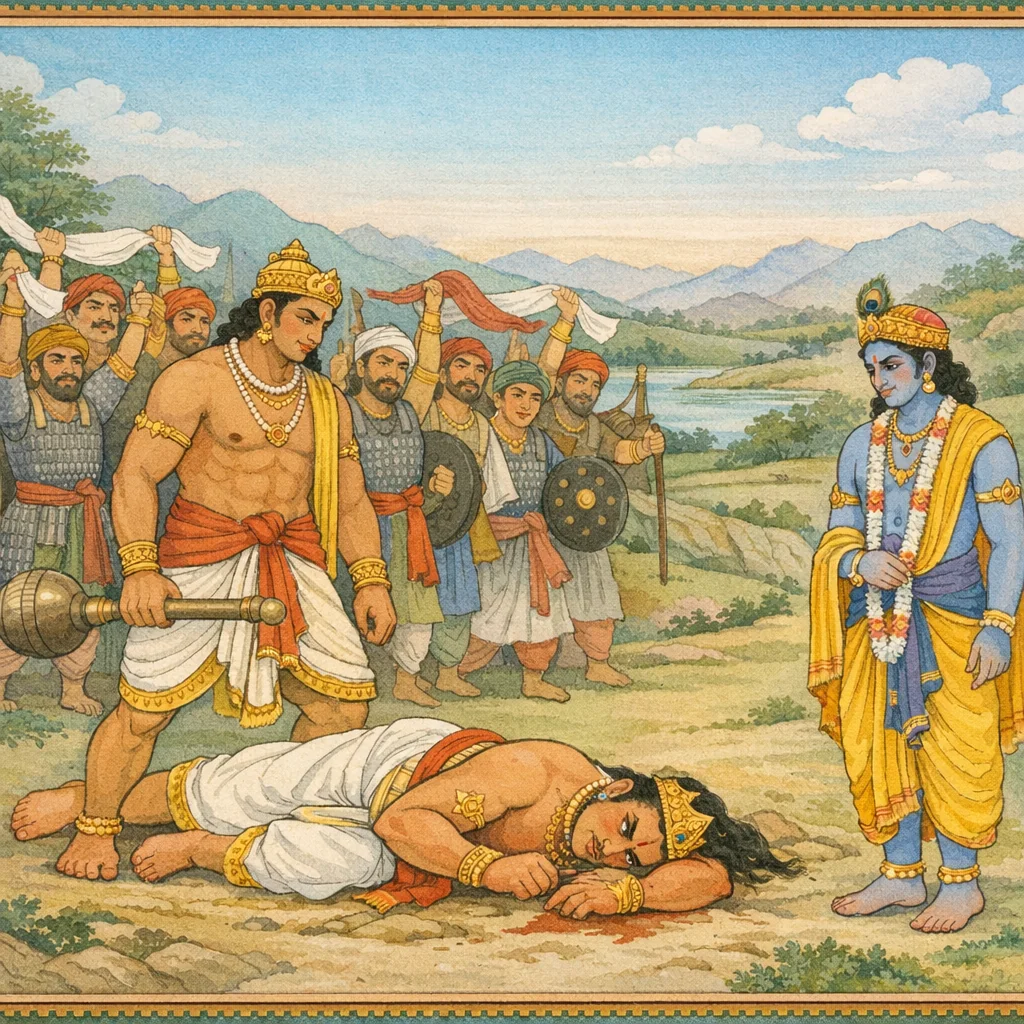
Chapter Arc: संजय धृतराष्ट्र को बताता है—भीमसेन ने गदा-युद्ध में दुर्योधन को वैसे ही गिरा दिया जैसे सिंह मदोन्मत्त वनगज को धराशायी कर दे। रणभूमि में एक क्षण को सन्नाटा और अगले ही क्षण उफनता हर्ष फैल जाता है। → पाण्डव-पक्ष (विशेषतः पांचाल और सृंजय) उल्लास में सिंहनाद करता है, पर उसी उल्लास के बीच दुर्योधन की चेतना-सी लौटती है। वह पीड़ा में तड़पते हुए भी कृष्ण की ओर तीखी दृष्टि करता है और वाणी के बाण चलाने लगता है—पुराने अपराधों की स्मृति (विष-प्रयोग, लाक्षागृह, द्यूतसभा में द्रौपदी का अपमान) युद्ध-समाप्ति के क्षण को भी नैतिक मुकदमे में बदल देती है। → अर्ध-उठे शरीर और कटे सर्प-पूँछ जैसी छटपटाहट के साथ दुर्योधन कृष्ण पर उग्र वचन-वर्षा करता है; वहीं भीम की विजय-ध्वनि के पीछे छिपा कठोर सत्य उभरता है—यह केवल शत्रु का पतन नहीं, वर्षों के अधर्म का प्रतिफल है। → दुर्योधन अपने पक्ष, अपने ‘अनुचित’ कर्मों और दूसरों के दोषों पर तर्क करता हुआ भी अंततः पराजय की वास्तविकता स्वीकारने की ओर बढ़ता है। उसके कथन पूर्ण होते ही दिव्य पुष्प-वर्षा होती है—रणभूमि में एक अलौकिक संकेत कि निर्णायक घड़ी आ चुकी है। → दुर्योधन की कटु वाणी और कृष्ण की ओर उठी चुनौती के बाद प्रश्न हवा में लटकता है—अब अंतिम निर्णय किसके ‘धर्म’ को मान्यता देगा: नियमों की शुष्कता या न्याय की अनिवार्यता?
Shlokas
Verse 1
(दाक्षिणात्य अधिक पाठके ८६३ “लोक मिलाकर कुल ५६३ श्लोक हैं।) फल रत () आज अत+- एकषेष्टितमो< ध्याय: पाण्डव-सैनिकोंद्वारा भीमकी स्तुति, श्रीकृष्णका दुर्योधनपर आशक्षेप, दुर्योधनका उत्तर तथा श्रीकृष्णके द्वारा पाण्डवोंका समाधान एवं शंखध्वनि धृतराष्ट्र रवाच हतं दुर्योधन दृष्टवा भीमसेनेन संयुगे । पाण्डवा: सृज्जयाश्वैव किमकुर्वत संजय,धृतराष्ट्रने पूछा--संजय! रणभूमिमें भीमसेनके द्वारा दुर्योधनको मारा गया देख पाण्डवों तथा सूंजयोंने क्या किया?
Dhṛtarāṣṭra said: “Sañjaya, when Duryodhana had been slain by Bhīmasena in the battle, what did the Pāṇḍavas and the Sṛñjayas do?”
Verse 2
संजय उवाच हतं दुर्योधन दृष्टवा भीमसेनेन संयुगे । सिंहेनेव महाराज मत्तं वनगजं यथा
Sañjaya said: “O great king, seeing Duryodhana slain by Bhīmasena in the thick of battle—like a lion bringing down a rut-maddened wild elephant—I report it thus.”
Verse 3
पज्चाला सृज्जयाश्वैव निहते कुरुनन्दने,कुरुनन्दन दुर्योधनके मारे जानेपर पांचाल और सूंजय तो अपने दुपट्टे उछालने और सिंहनाद करने लगे। हर्षमें भरे हुए इन पाण्डववीरोंका भार यह पृथ्वी सहन नहीं कर पाती थी
Sañjaya said: When the Kuru prince was slain, and it became known that Duryodhana—the Kuru scion—had been killed, the Panchalas and the Sṛñjayas burst into exultation, flinging their upper garments and roaring like lions. So great was the surge of joy among the Pandava champions that the earth itself seemed unable to bear their weight.
Verse 4
आविद्धयन्ुत्तरीयाणि सिंहनादांश्व नेदिरे नैतान् हर्षसमाविष्टानियं सेहे वसुन्धरा,कुरुनन्दन दुर्योधनके मारे जानेपर पांचाल और सूंजय तो अपने दुपट्टे उछालने और सिंहनाद करने लगे। हर्षमें भरे हुए इन पाण्डववीरोंका भार यह पृथ्वी सहन नहीं कर पाती थी
Sañjaya said: “They flung their upper garments aloft and roared like lions. So filled were these warriors with exultation that the Earth herself could scarcely bear their weight.”
Verse 5
ध्नुंष्यन्ये व्याक्षिपन्त ज्याश्वाप्यन्ये तथाक्षिपन् दध्मुरन्ये महाशड्खानन्ये जषघ्नुश्न दुन्दुभीन् ५ ।। किसीने धनुष टंकारा, किसीने प्रत्यंचा खींची, कुछ लोग बड़े-बड़े शंख बजाने लगे और दूसरे बहुत-से सैनिक डंके पीटने लगे
Sañjaya said: Some warriors twanged their bows; others drew and released their bowstrings. Some blew great conches, while many others beat war-drums, raising the martial uproar.
Verse 6
चिक्रीडुश्व तथैवान्ये जहसुश्न॒ तवाहिता: । अन्र॒ुवंश्षासकृद् वीरा भीमसेनमिदं वच:,आपके बहुत-से शत्रु भाँति-भाँतिके खेल खेलने और हास-परिहास करने लगे। कितने ही वीर भीमसेनके पास जाकर इस प्रकार कहने लगे--
Sañjaya said: “So too did others—your adversaries—begin to sport in various ways and to laugh in derision. Again and again, certain warriors approached Bhīmasena and spoke these words to him.”
Verse 7
दुष्करं भवता कर्म रणेडद्य सुमहत् कृतम् कौरवेन्द्र रणे हत्वा गदयातिकृतश्रमम्,“कौरवराज दुर्योधनने गदायुद्धमें बड़ा भारी परिश्रम किया था। आज रणभूमिमें उसका वध करके आपने महान् एवं दुष्कर पराक्रम कर दिखाया है
Sañjaya said: “O lord of the Kurus, you have accomplished today on the battlefield a deed both exceedingly great and difficult. For, having slain in combat Duryodhana—who had exerted himself to the utmost in the mace-fight—you have displayed a formidable and hard-to-achieve prowess.”
Verse 8
इन्द्रेणेव हि वृत्रस्य वध॑ परमसंयुगे । त्वया कृतममन्यन्त शत्रोर्वधमिमं जना:,“जैसे महासमरमें इन्द्रने वृत्रासुरका वध किया था, आपके द्वारा किया हुआ यह शत्रुका संहार भी उसी कोटिका है--ऐसा सब लोग समझने लगे हैं
Sañjaya said: In that supreme clash of arms, people came to regard the slaying you accomplished as comparable to Indra’s killing of Vṛtra—seeing in this enemy’s destruction not merely victory, but a deed of extraordinary, almost cosmic, magnitude.
Verse 9
चरन्तं विविधान् मार्गान् मण्डलानि च सर्वशः । दुर्योधनमिमं शूरं को5न्यो हन्याद् वृकोदरात्,“भला, नाना प्रकारके पैंतरे बदलते और सब तरहकी मण्डलाकार गतियोंसे चलते हुए इस शूरवीर दुर्योधनको भीमसेनके सिवा दूसरा कौन मार सकता था?
Sañjaya said: “As he moved through many kinds of fighting paths—circling in every manner with ring-like maneuvers—who other than Bhīma (Vṛkodara) could have slain this heroic Duryodhana?”
Verse 10
वैरस्य च गतः पार त्वमिहान्यै: सुदुर्गमम् । अशक्यमेतदन्येन सम्पादयितुमीदूशम्
Sañjaya said: “You have indeed crossed beyond enmity and reached the far shore; here you have accomplished what is exceedingly difficult for others. Such a feat as this could not have been brought to completion by anyone else.”
Verse 11
“आप वैरके समुद्रसे पार हो गये, जहाँ पहुँचना दूसरे लोगोंके लिये अत्यन्त कठिन है। दूसरे किसीके लिये ऐसा पराक्रम कर दिखाना सर्वथा असम्भव है ।। कुण्जरेणेव मत्तेन वीर संग्राममूर्थनि । दुर्योधनशिरो दिष्ट्या पादेन मृदितं त्वया,“वीर! मतवाले गजराजकी भाँति आपने युद्धके मुहानेपर अपने पैरसे दुर्योधनके मस्तकको कुचल दिया है, यह बड़े सौभाग्यकी बात है
Sañjaya said: “You have crossed the sea of enmity and reached a shore that is exceedingly hard for others to attain. For anyone else, to display such prowess is altogether impossible. O hero—like an intoxicated lord of elephants—at the very forefront of battle you have, by good fortune, crushed Duryodhana’s head beneath your foot.”
Verse 12
सिंहेन महिषस्येव कृत्वा सड्भरमुत्तमम् | दुःशासनस्य रुधिरं दिष्ट्या पीतं त्वयानघ
Sañjaya said: “Having made a splendid, forceful onslaught—like a lion upon a buffalo—by good fortune you have drunk the blood of Duḥśāsana, O blameless one.”
Verse 13
“अनघ! जैसे सिंहने भैंसेका खून पी लिया हो, उसी प्रकार आपने महान् युद्ध ठानकर दुःशासनके रक्तका पान किया है, यह भी सौभाग्यकी ही बात है ।। ये विप्रकुर्वन् राजानं धर्मात्मानं युधिष्ठिरम् । मूर्थ्नि तेषां कृत: पादो दिष्ट्या ते स्वेन कर्मणा,“जिन लोगोंने धर्मात्मा राजा युधिष्ठिरका अपराध किया था, उन सबके मस्तकपर आपने अपने पराक्रमद्वारा पैर रख दिया, यह कितने हर्षका विषय है
Sañjaya said: “O blameless one! Just as a lion might drink the blood of a buffalo, so you—having resolved upon a great battle—have drunk the blood of Duḥśāsana; even this is a matter of fortune. Those who had wronged the righteous king Yudhiṣṭhira—upon the heads of all of them you have set your foot by your own valor; by destiny and by your own deed, this is indeed a cause for joy.”
Verse 14
अमित्राणामधिष्ठानाद् वधाद् दुर्योधनस्य च । भीम दिष्टया पृथिव्यां ते प्रथितं सुमहद् यश:,“भीम! शत्रुओंपर अपना प्रभुत्व स्थापित करने और दुर्योधनको मार डालनेसे भाग्यवश इस भूमण्डलमें आपका महान् यश फैल गया है
Sañjaya said: “O Bhīma, by establishing your supremacy over your foes and by slaying Duryodhana, your exceedingly great fame has—by good fortune—spread across the earth.”
Verse 15
एवं नूनं हते वृत्रे शक्रं नन्दन्ति वन्दिन: । तथा त्वां निहतामित्रं वयं नन्दाम भारत,'भारत! निश्चय ही वृत्रासुरके मारे जानेपर वन्दीजनोंने जिस प्रकार इन्द्रका अभिनन्दन किया था, उसी प्रकार हम शत्रुओंका वध करनेवाले आपका अभिनन्दन करते हैं
Sañjaya said: “Surely, when Vṛtra was slain, the bards rejoiced and acclaimed Śakra (Indra). In the same way, O Bhārata, we rejoice and acclaim you—who have brought down your enemies.”
Verse 16
दुर्योधनवधे यानि रोमाणि हृषितानि न: । अद्यापि न विकृष्यन्ते तानि तद् विद्धि भारत,“भरतनन्दन! दुर्योधनके वधके समय हमारे शरीरमें जो रोंगटे खड़े हुए थे, वे अब भी ज्यों-के-त्यों हैं, गिर नहीं रहे हैं। इन्हें आप देख लें”
Sañjaya said: “O Bhārata, the hairs on our bodies that stood on end at the slaying of Duryodhana have not yet subsided even now. Know this to be so.”
Verse 17
इत्यब्रुवन् भीमसेनं वातिकास्तत्र सड़ता: । तान् हृष्टान् पुरुषव्याप्रान् पज्चालान् पाण्डवै: सह
Sañjaya said: Thus spoke those messengers who had assembled there to Bhīmasena. They described the Pāñcālas—those exultant tiger-like heroes—standing together with the Pāṇḍavas.
Verse 18
ब्रुवतो5सदृशं तत्र प्रोवाच मधुसूदन: । प्रशंसा करनेवाले वीरगण वहाँ एकत्र होकर भीमसेनसे उपर्युक्त बातें कह रहे थे। भगवान् श्रीकृष्णने जब देखा कि पुरुषसिंह पांचाल और पाण्डव अयोग्य बातें कह रहे हैं, तब वे वहाँ उन सबसे बोले-- ।। नन््याय्यं निहतं शत्रुं भूयो हन्तुं नराधिपा:
Sañjaya said: As those praising warriors spoke there, Madhusūdana (Śrī Kṛṣṇa) replied. Seeing the Pāñcālas and the Pāṇḍavas—lions among men—uttering what was unseemly, he addressed them all: “It is not righteous, O kings, to strike again an enemy already slain…”
Verse 19
तदैवैष हत: पापो यदैव निरपत्रप:
Sañjaya said: “That sinful man was struck down at that very moment—precisely when he became utterly shameless.”
Verse 20
बहुशो विदुरद्रोणकृपगाज्रेयसृज्जयै:
Sañjaya said: “Again and again, by Vidura, Droṇa, Kṛpa, and the Sṛñjayas—those well-known to all—…”
Verse 21
नैष योग्योउ्द्य मित्र वा शत्रुर्वा पुरुषाधम:
Sañjaya said: “This basest of men is not fit—whether as a friend or as an enemy—for any worthy engagement.”
Verse 22
किमनेनाति भुग्नेन वाग्भि: काष्ठसधर्मणा । रथेष्वारोहत क्षिप्रं गच्छामो वसुधाधिपा:
Sañjaya said: “What is the use of these excessively broken, wooden-like words? Mount your chariots quickly, O lords of the earth; let us go.”
Verse 23
दिष्टया हतो<यं पापात्मा सामात्यज्ञातिबान्धव: । “यह नराधम अब किसी योग्य नहीं है। न यह किसीका मित्र है और न शत्रु। राजाओ! यह तो सूखे काठके समान कठोर है। इसे कटुवचनोंद्वारा अधिक झुकानेकी चेष्टा करनेसे क्या लाभ? अब शीघ्र अपने रथोंपर बैठो। हम सब लोग छावनीकी ओर चलें। सौभाग्यसे यह पापात्मा अपने मन्त्री, कुटुम्ब और भाई-बन्धुओंसहित मार डाला गया” || २१-२२ ह || इति श्रुत्वा त्वधिक्षेपं कृष्णाद् दुर्योधनो नूप:
Sañjaya said: “By good fortune this sinful man has been slain—together with his ministers, kinsmen, and allies.” Hearing this taunting reproach from Kṛṣṇa, King Duryodhana…
Verse 24
अमर्षवशमापतन्न उदतिष्ठद् विशाम्पते । स्फिग्देशेनोपविष्ट: स दोर्भ्या विष्टभ्य मेदिनीम्
Sañjaya said: Overpowered by a surge of intolerant anger, the lord of the people did not rise. Instead, he sat down heavily upon his hips, bracing himself with both arms against the earth.
Verse 25
प्रजानाथ! श्रीकृष्णके मुखसे यह आक्षेपयुक्त वचन सुन राजा दुर्योधन अमर्षके वशीभूत होकर उठा और दोनों हाथ पृथ्वीपर टेककर चूतड़के सहारे बैठ गया ।। दृष्टिं भ्रूसडुकटां कृत्वा वासुदेवे न्न्यपातयत् | अर्धोन्नतशरीरस्य रूपमासीन्नूपस्य तु
O lord of men! Hearing from Śrī Kṛṣṇa’s mouth those reproachful, accusatory words, King Duryodhana—overpowered by intolerant anger—rose up. Bracing both hands on the ground, he sat down again, supported on his hips. With his brows drawn tight in a frown, he fixed his gaze upon Vāsudeva; the king’s body remained half-raised, poised between restraint and eruption—an outward sign of pride wounded by moral censure.
Verse 26
प्रहृष्मनसस्तत्र कृष्णेन सह पाण्डवा: । संजयने कहा--महाराज! जैसे कोई मतवाला जंगली हाथी सिंहके द्वारा मारा गया हो, उसी प्रकार दुर्योधनको भीमसेनके हाथसे रणभूमिमें मारा गया देख श्रीकृष्णसहित पाण्डव मन-ही-मन बड़े प्रसन्न हुए,प्राणान्तकरिणीं घोरां वेदनामप्यचिन्तयन्
Sanjaya said: There the Pāṇḍavas, together with Kṛṣṇa, rejoiced within on seeing Duryodhana slain on the battlefield by Bhīmasena’s hand—like a maddened wild elephant brought down by a lion—and they gave no thought even to the dreadful, life-ending agony.
Verse 27
कंसदासस्य दायाद न ते लज्जास्त्यनेन वै
Sanjaya said: “O heir of Kaṃsadāsa, do you truly feel no shame because of this?”
Verse 28
ऊरू भिन्धीति भीमस्य स्मृतिं मिथ्या प्रयच्छता
Sanjaya said: By one who was deceitfully supplying Bhīma with a (false) recollection—urging him, “Strike the thighs!”—the course of the combat was being steered through misdirection.
Verse 29
घातयित्वा महीपालानूजुयुद्धानू सहस्रश:
Sanjaya said: Having caused the death of thousands of kings—men who fought in straightforward, face-to-face combat—(he/they continued on).
Verse 30
जिह्नौरुपायैर्बहुभिर्न ते लज्जा न ते घृणा । “सरलतासे धर्मानुकूल युद्ध करनेवाले सहस्रों भूमिपालोंको बहुत-से कुटिल उपायोंद्वारा मरवाकर न तुम्हें लज्जा आती है और न इस बुरे कर्मसे घृणा ही होती है ।। अहन्यहनि शूराणां कुर्वाण: कदनं महत्
Sanjaya said: “Do you feel neither shame nor revulsion? By many crooked stratagems you have caused thousands of kings—men who fought straightforwardly in accordance with dharma—to be slain; yet you are not ashamed, nor do you recoil from this evil deed. Day after day you continue to inflict great slaughter upon the heroes.”
Verse 31
अश्वत्थाम्न: सनामान हत्वा नागं सुदुर्मते
Sañjaya said: Having slain the elephant named Aśvatthāman, O evil-minded one, they proclaimed it, exploiting the shared name to deceive—an act that clouded the moment’s moral clarity even amid the pressures of war.
Verse 32
स चानेन नृशंसेन धृष्टद्युम्नेन वीर्यवान्
Sañjaya said: And that mighty warrior was assailed by the ruthless Dhṛṣṭadyumna—showing how, in the fury of war, harsh resolve can eclipse gentler restraints of conduct.
Verse 33
वधार्थ पाण्डुपुत्रस्य याचितां शक्तिमेव च
Sañjaya said: “For the purpose of slaying the son of Pāṇḍu, he also asked for that very śakti (the divine missile).”
Verse 34
छिन्नहस्त: प्रायगतस्तथा भूरिश्रवा बली
Sañjaya said: “So too the mighty Bhūriśravā, his hand severed, went to his end—falling into death after being maimed in battle.”
Verse 35
त्वयाभिसृष्टेन हतः शैनेयेन महात्मना । “बलवान भूरिश्रवाका हाथ कट गया था और वे आमरण अनशनका व्रत लेकर बैठे हुए थे। उस दशामें तुमसे ही प्रेरित होकर महामना सात्यकिने उनका वध किया ।। कुर्वाणश्रोत्तमं कर्म कर्ण: पार्थजिगीषया,पातित: समरे कर्णश्षृक्रव्यग्रो$ग्रणी्नणाम् । “मनुष्योंमें अग्रगण्य कर्ण अर्जुनको जीतनेकी इच्छासे उत्तम पराक्रम कर रहा था। उस समय नागराज अश्वसेनको जो कर्णके बाणके साथ अर्जुनके वधके लिये जा रहा था, तुमने अपने प्रयत्नसे विफल कर दिया। फिर जब कर्णके रथका पहिया गड्ढेमें गिर गया और वह उसे उठानेमें व्यग्रतापूर्वक संलग्न हुआ, उस समय उसे संकटसे पीड़ित एवं पराजित जानकर तुमलोगोंने मार गिराया
Sañjaya said: At your instigation, the great-souled Śaineya (Sātyaki) slew him. The statement underscores how counsel and provocation can make one morally complicit in another’s killing, especially when the victim is already vulnerable and bound by a vow.
Verse 36
व्यंसनेनाश्वसेनस्य पन्नगेन्द्रस्थ वै पुन: । पुनश्न पतिते चक्रे व्यसनार्त: पराजित:
Sañjaya said: Again, when Aśvasena—mounted upon the lord of serpents—was struck down, and when the discus too fell away once more, he was overcome by calamity and stood defeated.
Verse 37
यदि मां चापि कर्ण च भीष्मद्रोणौ च संयुतौ
Sañjaya said: “Even if they were to face me as well—along with Karṇa—and Bhīṣma and Droṇa united together…”
Verse 38
त्वया पुनरनार्येण जिद्ममार्गेण पार्थिवा:
Sañjaya said: “But by you—acting in an unworthy, ignoble manner, following a crooked course—the kings have been thus wronged and led astray.”
Verse 39
वायुदेव उवाच हतस्त्वमसि गान्धारे सभ्रातृसुतबान्धव:
Vāyudeva said: “O Gāndhārī’s lord, you are slain—together with your brothers, sons, and kinsmen.”
Verse 40
सगण: ससुद्दच्चैव पाप॑ मार्गमनुष्ित: । तवैव दुष्कृतैर्वीरी भीष्मद्रोणी निपातितौ
“Along with your followers, and with grim resolve, you have pursued a sinful course. Because of your own evil deeds, O hero, Bhīṣma and Droṇa have been brought down.”
Verse 41
कर्णश्र निहतः संख्ये तव शीलानुवर्तक: । भगवान् श्रीकृष्ण बोले--गान्धारीनन्दन! तुमने पापके रास्तेपर पैर रखा था; इसीलिये तुम भाई, पुत्र, बान्धव, सेवक और सुहृद्गणोंसहित मारे गये हो। वीर भीष्म और द्रोणाचार्य तुम्हारे दुष्कर्मोंस ही मारे गये हैं। कर्ण भी तुम्हारे स्वभावका ही अनुसरण करनेवाला था; इसलिये युद्धमें मारा गया || ३९-४० $ || याच्यमानं मया मूढ पित्र्यमंशं न दित्ससि
Vāyu said: “Karna too has been slain in the battle, for he followed your very disposition. And you—deluded as you are—though entreated by me, you would not grant the paternal share that was due.”
Verse 42
विषं ते भीमसेनाय दत्तं सर्वे च पाण्डवा:
Vāyu said: “Poison was administered to Bhīmasena—and all the Pāṇḍavas were thereby imperiled.”
Verse 43
प्रदीपिता जतुगृहे मात्रा सह सुदुर्मते । सभायां याज्ञसेनी च कृष्टा द्यूते रजस्वला
Vāyu said: “O utterly misguided one, your mother was burned in the house of lac; and in the royal assembly Yājñasenī too was dragged during the gambling match, even while she was in her menstrual period.”
Verse 44
तदैव तावद् दुष्टात्मन् वध्यस्त्वं निरपत्रप । सुदुर्मते! तुमने जब भीमसेनको विष दिया, समस्त पाण्डवोंको उनकी माताके साथ लाक्षागृहमें जला डालनेका प्रयत्न किया और निर्लज्ज! दुष्टात्मन्! द्यूतक्रीड़ाके समय भरी सभामें रजस्वला द्रौपदीको जब तुमलोग घसीट लाये, तभी तुम वधके योग्य हो गये थे ।। अनक्षज्ञं च धर्मज्ञं सौबलेनाक्षवेदिना
Vāyu said: “O wicked-souled, shameless one! From the moment you poisoned Bhīmasena, sought to burn the Pāṇḍavas with their mother in the house of lac, and dragged Draupadī—while she was in her menstrual period—into the full assembly during the dice-game, from that very time you became fit to be slain.”
Verse 45
निकृत्या यत् पराजैषीस्तस्मादसि हतो रणे | तुमने द्यूतक्रीड़ाके जानकार सुबलपुत्र शकुनिके द्वारा उस कलाको न जाननेवाले धर्मज्ञ युधिष्ठिरको, जो छलसे पराजित किया था, उसी पापसे तुम रणभूमिमें मारे गये हो ।। ४४ $ई || जयद्रथेन पापेन यत् कृष्णा क्लेशिता वने,त्वद्योषै्निहत: पाप तस्मादसि हतो रणे । जब पाण्डव शिकारके लिये तृणबिन्दुके आश्रमपर चले गये थे, उस समय पापी जयद्रथने वनके भीतर द्रौपदीको जो क्लेश पहुँचाया और पापात्मन! तुम्हारे ही अपराधसे बहुत-से योद्धाओंने मिलकर युद्धस्थलमें जो अकेले बालक अभिमन्युका वध किया था, इन्हीं सब कारणोंसे आज तुम भी रणभूमिमें मारे गये हो
Vāyu said: “Because you defeated others by deceit, therefore you have been slain in battle. And because the sinful Jayadratha tormented Kṛṣṇā (Draupadī) in the forest—and because, through your own fault, the sinful killing of Abhimanyu was carried out—therefore you too have been struck down on the battlefield.”
Verse 46
यातेषु मृगयां चैव तृणबिन्दोरथाश्रमम् | अभिमन्युश्व यद् बाल एको बहुभिराहवे
Vāyu said: “When they had gone on the hunt and then to the hermitage of Tṛṇabindu, remember also how the young Abhimanyu, still a mere boy, stood alone in battle against many.”
Verse 47
(कुर्वाणं कर्म समरे पाण्डवानर्थकाड्क्षिणम् । यच्छिखण्ड्यवधीद् भीष्म मित्रार्थे न व्यतिक्रम: ।। भीष्म पाण्डवोंके अनर्थकी इच्छा रखकर समरभूमिमें पराक्रम प्रकट कर रहे थे। उस समय अपने मित्रोंके हितके लिये शिखण्डीने जो उनका वध किया है, वह कोई दोष या अपराधकी बात नहीं है। स्वधर्म पृष्ठत: कृत्वा आचार्यस्त्वत्प्रियेप्सया । पार्षतेन हत: संख्ये वर्तमानो5सतां पथि ।। आचार्य द्रोण तुम्हारा प्रिय करनेकी इच्छासे अपने धर्मको पीछे करके असाधु पुरुषोंके मार्गपर चल रहे थे; अतः युद्धस्थलमें धृष्टद्युम्नने उनका वध किया है। प्रतिज्ञामात्मन: सत्यां चिकीर्षन् समरे रिपुम् । हतवान् सात्वतो विद्वान् सौमदत्तिं महारथम् ।। विद्वान् सात्वतवंशी सात्यकिने अपनी सच्ची प्रतिज्ञाका पालन करनेकी इच्छासे समरांगणमें अपने शत्रु महारथी भूरिश्रवाका वध किया था। अर्जुन: समरे राजन् युध्यमान: कदाचन । निन्दितं पुरुषव्यात्र: करोति न कथंचन ।। राजन्! समरभूमिमें युद्ध करते हुए पुरुषसिंह अर्जुन कभी किसी प्रकार भी कोई निन्दित कार्य नहीं करते हैं! लब्ध्वापि बहुशश्शछ्िद्रं वीरवृत्तमनुस्मरन् न जघान रणे कर्ण मैवं वोच: सुदुर्मते ।। दुर्मते! अर्जुनने वीरोचित सदाचारका विचार करके बहुत-से छिद्र (प्रहार करनेके अवसर) पाकर भी युद्धमें कर्णका वध नहीं किया है; अतः तुम उनके विषयमें ऐसी बात न कहो। देवानां मतमाज्ञाय तेषां प्रियहितेप्सया । नार्जुनस्य महानागं मया व्यंसितमस्त्रजम् ।। देवताओंका मत जानकर उनका प्रिय और हित करनेकी इच्छासे मैंने अर्जुनपर महानागास्त्रका प्रहार नहीं होने दिया। उसे विफल कर दिया। त्वं च भीष्मश्न कर्णश्न द्रोणो द्रौणिस्तथा कृप: । विराटनगरे तस्य आनृशंस्याच्च जीविता: ।। तुम, भीष्म, कर्ण, द्रोण, अश्वत्थामा तथा कृपाचार्य विराटनगरमें अर्जुनकी दयालुतासे ही जीवित बच गये। समर पार्थस्य विक्रान्तं गन्धर्वेषु कृतं तदा । अधर्म: कोअत्र गान्धारे पाण्डवैर्यत् कृतं त्वयि ।। याद करो, अर्जुनके उस पराक्रमको; जो उन्होंने तुम्हारे लिये उन दिनों गन्धर्वोंपर प्रकट किया था। गान्धारीनन्दन! पाण्डवोंने यहाँ तुम्हारे साथ जो बर्ताव किया है, उसमें कौन-सा अधर्म है। स्वबाहुबलमास्थाय स्वधर्मेण परंतपा: । जितवन्तो रणे वीरा पापोडसि निधन गत: ।।) शत्रुओंको संताप देनेवाले वीर पाण्डवोंने अपने बाहुबलका आश्रय लेकर क्षत्रियधर्मके अनुसार विजय पायी है। तुम पापी हो, इसीलिये मारे गये हो। यान्यकार्याणि चास्माकं कृतानीति प्रभाषसे
You keep declaring, ‘These wrongful deeds were done by us.’
Verse 48
बृहस्पतेरुशनसो नोपदेश: श्रुतस्त्वया
Vāyu said: “You have not heeded the counsel taught by Bṛhaspati and by Uśanas (Śukra).”
Verse 49
वृद्धा नोपासिताश्वैव हित॑ वाक््यं न ते श्रुतम् तुमने बृहस्पति और शुक्राचार्यके नीतिसम्बन्धी उपदेशको नहीं सुना है, बड़े-बूढ़ोंकी उपासना नहीं की है और उनके हितकर वचन भी नहीं सुने हैं ।। लोभेनातिबलेन त्वं तृष्णया च वशीकृत:
Vāyu said: “You have not served the elders, nor have you listened to their wholesome counsel. You have not heeded the teachings on statecraft and right conduct taught by Bṛhaspati and Śukrācārya. Overpowered by excessive greed and driven by craving, you have come under their control.”
Verse 50
दुर्योधन उवाच अधीतं विधिवद् दत्तं भू: प्रशास्ता ससागरा
Duryodhana said: “I have studied as prescribed; I have given gifts in due form; and the earth—together with the seas—has been ruled by me.”
Verse 51
यदि क्षत्रबन्धूनां स्वधर्ममनुपश्यताम्
Duryodhana said: “If those who are but kinsmen of kṣatriyas—though they claim the warrior’s station—do not truly keep their eyes upon their own duty (svadharma)…”
Verse 52
देवाह्ा मानुषा भोगा: प्राप्ता असुलभा नृपै:
Duryodhana declares that he has attained pleasures fit for gods and humans—enjoyments rarely obtained even by kings—revealing his pride in worldly success and his fixation on transient rewards amid the moral collapse of war.
Verse 53
ससुहत् सानुगश्नैव स्वर्ग गन्ताहमच्युत
Duryodhana declares, with defiant certainty, that he will attain heaven together with his friends and followers. Addressing Acyuta (Kṛṣṇa), he frames his impending death in battle not as defeat but as a chosen warrior’s end, seeking moral vindication through the ideal of kṣatriya glory and the promised heavenly reward for those who fall fighting.
Verse 54
यूयं निहतसंकल्पा: शोचन्तो वर्तयिष्यथ । अच्युत! मैं सुहदों और सेवकोंसहित स्वर्गलोकमें जाऊँगा और तुमलोग भग्नमनोरथ होकर शोचनीय जीवन बिताते रहोगे || ५३ ह ।। (न मे विषादो भीमेन पादेन शिर आहतम् | काका वा कड्कगृध्रा वा निधास्यन्ति पद क्षणात् ।।) भीमसेनने अपने पैरसे जो मेरे सिरपर आघात किया है, इसके लिये मुझे कोई खेद नहीं है; क्योंकि अभी क्षणभरके बाद कौए, कंक अथवा गृध्र भी तो इस शरीरपर अपना पैर रखेंगे। संजय उवाच अस्य वाक्यस्य निधने कुरुराजस्यथ धीमत:
Sañjaya said: “You will live on, your resolve broken, passing your days in grief. O Acyuta, I shall go to the world of heaven together with my friends and attendants, while you, your hopes shattered, will continue a pitiable life.” (He adds:) “I feel no sorrow that Bhīma struck my head with his foot; for in a moment crows, kites, and vultures will set their feet upon this body as well.” Sañjaya continues: When these words of the wise king of the Kurus came to an end…
Verse 55
अवादयन्त गन्धर्वा वादित्र॑ं सुमनोहरम्
Sañjaya said: The Gandharvas played a most enchanting musical instrument, filling the scene with captivating sound—an auspicious, otherworldly accompaniment amid the grave events of the war narrative.
Verse 56
जगुश्नाप्सरसो राज्ञो यश:सम्बद्धमेव च | गन्धर्वगण अत्यन्त मनोहर बाजे बजाने लगे और अप्सराएँ राजा दुर्योधनके सुयशसम्बधी गीत गाने लगीं ।। सिद्धाश्न मुमुचुर्वाच: साधु साध्विति पार्थिव,राजन! उस समय सिद्धगण बोल उठे--“बहुत अच्छा, बहुत अच्छा'। फिर पवित्र गन्धवाली मनोहर, मृदुल एवं सुखदायक हवा चलने लगी। सारी दिशाओंमें प्रकाश छा गया और आकाश नीलमके समान चमक उठा
Sañjaya said: The apsarases began to sing songs bound to the king’s renown, and the hosts of gandharvas struck up music of surpassing sweetness. At that moment the siddhas cried, “Excellent! Excellent, O king!” Then a gentle, pleasing breeze—fragrant, purifying—began to blow. Light spread through all the quarters, and the sky shone like a sapphire.
Verse 57
ववौ च सुरभिर्वायु: पुण्यगन्धो मृदुः सुख: । व्यराजंश्व दिश: सर्वा नभो वैदूर्यसंनिभम्,राजन! उस समय सिद्धगण बोल उठे--“बहुत अच्छा, बहुत अच्छा'। फिर पवित्र गन्धवाली मनोहर, मृदुल एवं सुखदायक हवा चलने लगी। सारी दिशाओंमें प्रकाश छा गया और आकाश नीलमके समान चमक उठा
Sañjaya said: A fragrant breeze began to blow—holy in scent, gentle, and soothing. All the directions shone with radiance, and the sky gleamed like vaidūrya (lapis-lazuli). The scene signaled an auspicious, otherworldly approval, as if the moral order itself briefly manifested serenity amid the violence of war.
Verse 58
अत्यद्भुतानि ते दृष्टवा वासुदेवपुरोगमा: । दुर्योधनस्य पूजां तु दृष्टवा ब्रीडामुपागमन्,श्रीकृष्ण आदि सब लोग ये अद्भुत बातें और दुर्योधनकी यह पूजा देखकर बहुत लज्जित हुए
Sañjaya said: Having witnessed those exceedingly wondrous events, all who were led by Vāsudeva (Kṛṣṇa) were overcome with shame when they saw the honor and worship being offered to Duryodhana—an outward reverence that stood in stark contrast to his inner unrighteousness amid the war’s moral crisis.
Verse 59
हतांश्चाधर्मतः श्रुत्वा शोकार्ता: शुशुचुर्हि ते । भीष्म द्रोणं तथा कर्ण भूरिश्रवसमेव च,भीष्म, द्रोण, कर्ण और भूरिश्रवाको अधर्मपूर्वक मारा गया सुनकर सब लोग शोकसे व्याकुल हो खेद प्रकट करने लगे
Sañjaya said: Hearing that Bhīṣma, Droṇa, Karṇa, and Bhūriśravas had been slain in ways judged contrary to dharma, the people were overwhelmed with grief and openly lamented. The report does not merely announce deaths; it frames them as ethically troubling, intensifying sorrow into moral anguish.
Verse 60
इस प्रकार श्रीमहाभारत शल्यपर्वके अन्तर्गत गदापर्वनें श्रीकृष्णका बलदेवजीको सान्त्वना देनाविषयक साठवाँ अध्याय पूरा हुआ,तांस्तु चिन्तापरान् दृष्टवा पाण्डवान् दीनचेतस: । प्रोवाचेदं वच: कृष्णो मेघदुन्दुभिनि:स्वन: पाण्डवोंको दीनचित्त एवं चिन्तामग्न देख मेघ और दुन्दुभिके समान गम्भीर घोष करनेवाले श्रीकृष्णने इस प्रकार कहा--
Seeing the Pāṇḍavas—downcast at heart and wholly absorbed in anxious thought—Kṛṣṇa, whose voice was deep like thunderclouds and the beat of a war-drum, addressed them with these words.
Verse 61
नैष शक्यो5तिशीघ्रास्त्रस्ते च सर्वे महारथा: । ऋजुयुद्धेन विक्रान्ता हन्तुं युष्माभिराहवे,पुरुषप्रवर! तदनन्तर भगवान् श्रीकृष्ण तथा अन्य लोग दुर्योधनको मारा गया देख हर्षमें भरकर अपने-अपने शंख बजाने लगे। श्रीकृष्णने पांचजन्य शंख बजाया ।। (देवदत्तं प्रह्ष्टात्मा शड्खप्रवरमर्जुन: । अनन्तविजयं राजा कुन्तीपुत्रो युधिष्िर: ।। पौण्डं दध्मौ महाशडंख भीमकर्मा वृकोदर: । प्रसन्नचित्त अर्जुनने देवदत्त नामक श्रेष्ठ शंखकी ध्वनि की। कुन्तीपुत्र राजा युधिष्ठिरने अनन्तविजय तथा भयंकर कर्म करनेवाले भीमसेनने पौण्ड्र नामक महान् शंख बजाया। नकुल: सहदेवश्न सुघोषमणिपुष्पकौ ।। धृष्टद्युम्नस्तथा जैत्र॑ सात्यकिर्नन्दिवर्धनम् । तेषां नादेन महता शड्खानां भरतर्षभ ।। आपुपूरे नभ: सर्व पृथिवी च चचाल ह ।। नकुल और सहदेवने क्रमश: सुधोष और मणिपुष्पक नामक शंख बजाये। धृष्टद्युम्नने जैत्र और सात्यकिने नन्दिवर्धन नामक शंखकी ध्वनि फैलायी। भरतश्रेष्ठ) उन महान् शंखोंके शब्दसे सारा आकाश भर गया और धरती डोलने लगी। ततः शड्खाश्न भेर्यश्व॒ पणवानकगोमुखा: । पाण्डुसैन्येष्ववाद्यन्त स शब्दस्तुमुलो5 भवत् ।। अस्तुवन् पाण्डवानन्ये गीर्भिश्न स्तुतिमड्लै: ।) तत्पश्चात् पाण्डवसेनाओंमें शंख, भेरी, पणव, आनक और गोमुख आदि बाजे बजाये जाने लगे। उन सबकी मिली-जुली आवाज बड़ी भयानक जान पड़ती थी। उस समय अन्य बहुत-से मनुष्य स्तुति एवं मंगलमय वचनोंद्वारा पाण्डवोंका स्तवन करने लगे। इति श्रीमहाभारते शल्यपर्वणि गदापर्वणि कृष्णपाण्डवदुर्यो धनसंवादे एकषष्टितमो5ध्याय:
Sañjaya said: “O best of men, these warriors—masters of swift-flying weapons and all great chariot-fighters—cannot be slain by you in battle through straightforward combat, for they are valiant and seasoned in direct fighting.” Thereafter, when Bhagavān Śrī Kṛṣṇa and the others saw Duryodhana fallen, they were filled with joy and sounded their respective conches. Śrī Kṛṣṇa blew the Pāñcajanya. Arjuna, exultant, blew the excellent conch Devadatta; King Yudhiṣṭhira, son of Kuntī, blew Anantavijaya; and Bhīma of terrible deeds, Vṛkodara, blew the great conch Pauṇḍra. Nakula and Sahadeva blew Sughoṣa and Maṇipuṣpaka. Dhṛṣṭadyumna blew Jaitra, and Sātyaki blew Nandivardhana. O bull among the Bhāratas, the mighty roar of those conches filled the entire sky, and the earth seemed to tremble. Then in the Pāṇḍava host, conches, kettledrums, tabors, war-drums, and gomukha horns were sounded, and the combined uproar became thunderous. Many others praised the Pāṇḍavas with hymns and auspicious benedictions.
Verse 62
“यह दुर्योधन अत्यन्त शीघ्रतापूर्वक अस्त्र चलानेवाला था, अतः इसे कोई जीत नहीं सकता था और वे भीष्म, द्रोण आदि महारथी भी बड़े पराक्रमी थे। उन्हें धर्मानुकूल सरलतापूर्वक युद्धके द्वारा आपलोग नहीं मार सकते थे ।। नैष शक््य: कदाचित् तु हन्तुं धर्मेण पार्थिव: । ते वा भीष्ममुखा: सर्वे महेष्वासा महारथा:,“यह राजा दुर्योधन अथवा वे भीष्म आदि सभी महाधनुर्धर महारथी कभी धर्मयुद्धके द्वारा नहीं मारे जा सकते थे
Sañjaya said: “This king (Duryodhana) cannot, at any time, be slain by means that conform to dharma. Likewise, all those great chariot-warriors beginning with Bhīṣma—mighty archers and foremost fighters—could not be brought down by you through straightforward, dharma-bound combat.”
Verse 63
मयानेकैरुपायैस्तु मायायोगेन चासकृत् | हतास्ते सर्व एवाजी भवतां हितमिच्छता,“आपलोगोंका हित चाहते हुए मैंने ही बारंबार मायाका प्रयोग करके अनेक उपायोंसे युद्धस्थलमें उन सबका वध किया
Sañjaya said: “Seeking your welfare, I repeatedly employed the power of illusion and many stratagems; thus, on the battlefield, all of them were slain.”
Verse 64
यदि नैवंविध॑ जातु कुर्या जिह्ममहं रणे । कुतो वो विजयो भूय: कुतो राज्यं कुतो धनम्,“यदि कदाचित् युद्धमें मैं इस प्रकार कपटपूर्ण कार्य नहीं करता तो फिर तुम्हें विजय कैसे प्राप्त होती, राज्य कैसे हाथमें आता और धन कैसे मिल सकता था?
Sañjaya said: “If I had never, even once, resorted to such crooked stratagems in battle, how could victory have come to you? How could you have gained a kingdom, and how could you have obtained wealth?”
Verse 65
ते हि सर्वे महात्मानश्वत्वारोडतिरथा भुवि | न शकक््या धर्मतो हन्तुं लोकपालैरपि स्वयम्,'भीष्म, द्रोण, कर्ण और भूरिश्रवा--ये चारों महामना इस भूतलपर अतिरथीके रूपमें विख्यात थे। साक्षात् लोकपाल भी धर्मयुद्ध करके उन सबको नहीं मार सकते थे
Sañjaya said: “Indeed, all those four great-souled warriors—renowned on this earth as atirathas—could not be slain in a righteous manner, not even by the very guardians of the worlds themselves, if bound by the rules of dharma in battle.”
Verse 66
तथैवायं गदापाणिर्धातिराष्ट्री गतक्लम: । न शकक््यो धर्मतो हन्तुं कालेनापीह दण्डिना,“यह गदाधारी धृतराष्ट्रपुत्र दुर्योधन भी युद्धसे थकता नहीं था, इसे दण्डधारी काल भी धर्मानुकूल युद्धके द्वारा नहीं मार सकता था
Sañjaya said: “Even so, this mace-wielding son of Dhṛtarāṣṭra, unwearied by battle, could not be slain here by any righteous means—even by Time itself, the wielder of punishment.”
Verse 67
न च वो हृदि कर्तव्यं यदयं घातितो रिपु: । मिथ्यावध्यास्तथोपायैर्बहव: शत्रवोदधिका:,“इस प्रकार जो यह शत्रु मारा गया है इसके लिये तुम्हें अपने मनमें विचार नहीं करना चाहिये? बहुतेरे अधिक शक्तिशाली शत्रु नाना प्रकारके उपायों और कूटनीतिके प्रयोगोंद्वारा मारनेके योग्य होते हैं
“And you should not brood in your hearts over the thought, ‘This enemy has been slain.’ Many foes far mightier than he have been brought down by various stratagems and means.”
Verse 68
पूर्वरनुगतो मार्गों देवैरसुरघातिभि: । सद्धिश्वानुगतः पन्था: स सर्वैरनुगम्यते,“असुरोंका विनाश करनेवाले पूर्ववर्ती देवताओंने इस मार्गका आश्रय लिया है। श्रेष्ठ पुरुष जिस मार्गसे चले हैं, उसका सभी लोग अनुसरण करते हैं
Sañjaya said: “The path once followed by the gods—the slayers of the Asuras—has been taken up again. Whatever road the noble and the truly good have walked, that very path is followed by all.”
Verse 69
कृतकृत्याश्च सायाह्वे निवासं रोचयामहे । साथ्चनागरथा: सर्वे विश्रमामो नराधिपा:,“अब हमलोगोंका कार्य पूरा हो गया, अतः सायंकालके समय विश्राम करनेकी इच्छा हो रही है। राजाओ! हम सब लोग घोड़े, हाथी एवं रथसहित विश्राम करें”
Sañjaya said: “Our task for the day is accomplished; therefore, as evening approaches, we wish to settle into camp. O kings, let all of us—together with our horses, elephants, and chariots—take rest.”
Verse 70
वासुदेववच: श्रुत्वा तदानीं पाण्डवै: सह । पज्चाला भृशसंदह्ृष्टा विनेदु: सिंहसंघवत्,भगवान् श्रीकृष्णफका यह वचन सुनकर उस समय पाण्डवोंसहित समस्त पांचाल अत्यन्त प्रसन्न हुए और सिंहसमुदायके समान दहाड़ने लगे
Sañjaya said: Hearing the words spoken by Vāsudeva at that moment, the Pāṇḍavas together with all the Pāñcālas were filled with intense joy and, like a pride of lions, they raised a resounding roar.
Verse 71
ततः प्राध्मापयन् शड्खान् पाउ्चजन्यं च माधव: । ह्ृष्टा दुर्योधन दृष्टवा निहतं पुरुषर्षभ
Sañjaya said: Then Mādhava (Kṛṣṇa) caused the conches to be blown—above all the Pāñcajanya. Seeing Duryodhana, the bull among men, slain, the warriors were filled with exultation; for the fall of the unrighteous leader signaled the nearing end of the war’s burden and the restoration of rightful order.
Verse 183
असकृद् वाम्भिरुग्राभिनिहतो होष मन्दधी: । “नरेश्वरो! मरे हुए शत्रुको पुनः मारना उचित नहीं है। तुमलोगोंने इस मन्दबुद्धि दुर्योधनको बारंबार कठोर वचनोंद्वारा घायल किया है
Sañjaya said: “Though struck again and again by fierce words, that dull-witted one still cries out. O king, it is not proper to strike a foe who is already as good as dead. You have repeatedly wounded this dull-minded Duryodhana with harsh speech.”
Verse 196
लुब्ध: पापसहायश्च सुहदां शासनातिग: । “यह निर्लज्ज पापी तो उसी समय मर चुका था जब लोभमें फँसा और पापियोंको अपना सहायक बनाकर सुहृदोंके शासनसे दूर रहने लगा
Sañjaya said: “Greedy, aided by sinners, and one who transgresses the guidance of his well-wishers—such a shameless wrongdoer is, in truth, already dead from the very moment he becomes ensnared by greed, chooses the company of the wicked, and turns away from the counsel of friends.”
Verse 203
पाण्डुभ्य: प्रार्थ्मानो5पि पित्र्यमंशं न दत्तवान् | “विदुर, द्रोणाचार्य, कृपाचार्य, भीष्म तथा सूंजयोंके बारंबार प्रार्थना करनेपर भी इसने पाण्डवोंको उनका पैतृक भाग नहीं दिया
Sañjaya said: Even though he was repeatedly entreated on the Pāṇḍavas’ behalf, he still did not grant them their rightful ancestral share. The line underscores the ethical failure of withholding a legitimate inheritance despite counsel and appeals—an injustice that helped drive the conflict toward war.
Verse 273
अधर्मेण गदायुद्धे यदहं विनिपातित: । '“ओ कंसके दासके बेटे! मैं जो गदायुद्धमें अधर्मसे मारा गया हूँ, इस कुकृत्यके कारण क्या तुम्हें लज्जा नहीं आती है?
Sañjaya said: “I was struck down in the mace-duel by unrighteous means. Does no shame arise in you for this wrongful deed?”
Verse 286
कि न विज्ञातमेतन्मे यदर्जुनमवोच था: । 'भीमसेनको मेरी जाँघें तोड़ डालनेका मिथ्या स्मरण दिलाते हुए तुमने अर्जुनसे जो कुछ कहा था, क्या वह मुझे ज्ञात नहीं है?
Sanjaya said: “Is there anything here that I do not know? You reminded Arjuna—falsely—of Bhimasena’s vow to break my thighs, and on that pretext whatever you said to Arjuna—do you think it is unknown to me?”
Verse 303
शिखण्डिनं पुरस्कृत्य घातितस्ते पितामह: । “जो प्रतिदिन शूरवीरोंका भारी संहार मचा रहे थे, उन पितामह भीष्मका तुमने शिखण्डीको आगे रखकर वध कराया
Sañjaya said: “Placing Śikhaṇḍin in the forefront, you caused your grandsire to be slain. That very Bhīṣma—who day after day was bringing about a massive slaughter of heroic warriors—was brought down through this stratagem.”
Verse 316
आचार्यो न्यासित: शस्त्र कि तन्न विदितं मया । “दुर्मते! अश्वत्थामाके सदृश नामवाले एक हाथीको मारकर तुमलोगोंने द्रोणाचार्यके हाथसे शस्त्र नीचे डलवा दिया था, क्या वह मुझे ज्ञात नहीं है?
Sañjaya said: “The Teacher laid down his weapon—do you think I do not know how that happened? O evil-minded ones, by killing an elephant that bore the same name ‘Aśvatthāmā,’ you made Droṇācārya let his weapon fall from his hand. Is that not known to me?”
Verse 326
पात्यमानस्त्वया दृष्टो न चैनं त्वमवारय: । “इस नृशंस धृष्टद्युम्नने पराक्रमी आचार्यको उस अवस्थामें मार गिराया, जिसे तुमने अपनी आँखों देखा; किंतु मना नहीं किया
Sañjaya said: “You saw him being struck down, yet you did not restrain him.”
Verse 336
घटोत्कचे व्यंसयत: कस्त्वत्त: पापकृत्तम: । 'पाण्डुपुत्र अर्जुनके वधके लिये माँगी हुई इन्द्रकी शक्तिको तुमने घटोत्कचपर छुड़वा दिया। तुमसे बढ़कर महापापी कौन हो सकता है?
Sanjaya said: “When Ghaṭotkaca was being destroyed, who could be more sinful than you? The divine weapon—the Śakti of Indra—had been obtained for the purpose of killing Arjuna, the son of Pāṇḍu; yet you made it be discharged upon Ghaṭotkaca. Who could be a greater perpetrator of grave wrongdoing than you?”
Verse 363
पातित: समरे कर्णश्षृक्रव्यग्रो$ग्रणी्नणाम् । “मनुष्योंमें अग्रगण्य कर्ण अर्जुनको जीतनेकी इच्छासे उत्तम पराक्रम कर रहा था। उस समय नागराज अश्वसेनको जो कर्णके बाणके साथ अर्जुनके वधके लिये जा रहा था, तुमने अपने प्रयत्नसे विफल कर दिया। फिर जब कर्णके रथका पहिया गड्ढेमें गिर गया और वह उसे उठानेमें व्यग्रतापूर्वक संलग्न हुआ, उस समय उसे संकटसे पीड़ित एवं पराजित जानकर तुमलोगोंने मार गिराया
Sañjaya said: In the battle, Karṇa—foremost among the captains, a tiger among warriors—was struck down. With the intent to defeat Arjuna he was exerting his finest valor; yet when the serpent-king Aśvasena, riding upon Karṇa’s arrow to slay Arjuna, was thwarted by your effort, and later when Karṇa’s chariot-wheel sank into a rut and he struggled anxiously to lift it out, you, judging him distressed and pressed by peril, brought him down.
Verse 376
ऋजुना प्रतियुध्येथा न ते स्थाद् विजयो ध्रुवम् | “यदि मेरे, कर्णके तथा भीष्म और द्रोणाचार्यके साथ मायारहित सरलभावसे तुम युद्ध करते तो निश्चय ही तुम्हारे पक्षकी विजय नहीं होती
Sañjaya said: “Had you fought straightforwardly, without resorting to stratagems, your victory would certainly not have been assured.”
Verse 386
स्वधर्ममनुतिष्ठन्तो वयं चान्ये च घातिता: । 'परंतु तुम-जैसे अनार्यने कुटिल मार्गका आश्रय लेकर स्वधर्म-पालनमें लगे हुए हमलोगोंका तथा दूसरे राजाओंका भी वध करवाया है”
Sañjaya said: “While we—and others—were steadfastly performing our own righteous duty, we were nonetheless slain.”
Verse 416
पाण्डवेभ्य: स्वराज्यं च लोभाच्छकुनिनिश्चयात् । ओ मूर्ख! तुम शकुनिकी सलाह मानकर मेरे माँगनेपर भी पाण्डवोंको उनकी पैतृक सम्पत्ति, उनका अपना राज्य लोभवश नहीं देना चाहते थे
Vāyu-deva said: “Out of greed, and because you were determined to follow Śakuni’s counsel, you refused to give the Pāṇḍavas their rightful inheritance—their own ancestral kingdom—even when I myself demanded it. O fool, by choosing covetousness over justice, you denied them what was due and thus helped set the course toward ruin.”
Verse 466
त्वद्योषै्निहत: पाप तस्मादसि हतो रणे । जब पाण्डव शिकारके लिये तृणबिन्दुके आश्रमपर चले गये थे, उस समय पापी जयद्रथने वनके भीतर द्रौपदीको जो क्लेश पहुँचाया और पापात्मन! तुम्हारे ही अपराधसे बहुत-से योद्धाओंने मिलकर युद्धस्थलमें जो अकेले बालक अभिमन्युका वध किया था, इन्हीं सब कारणोंसे आज तुम भी रणभूमिमें मारे गये हो
Vāyu said: “O sinner, you have been brought down by your own wrongdoing; therefore you have been slain in battle. When the Pāṇḍavas went hunting to the hermitage of Tṛṇabindu, the wicked Jayadratha caused Draupadī suffering in the forest. And, O evil-minded one, through your very fault many warriors together killed the lone young Abhimanyu on the battlefield. For all these reasons, today you too have fallen on the field of war.”
Verse 473
वैगुण्येन तवात्यर्थ सर्व हि तदनुछितम् । तुम जिन्हें हमारे किये हुए अनुचित कार्य बता रहे हो, वे सब तुम्हारे महान् दोषसे ही किये गये हैं
Vāyu said: “Because of your own grave deficiency, all that you call ‘improper’ is, in truth, wholly attributable to you. The wrong deeds you point to as ‘done by us’ have arisen from your great fault alone.”
Verse 493
कृतवानस्यकार्याणि विपाकस्तस्य भुज्यताम् | तुमने अत्यन्त प्रबल लोभ और तृष्णाके वशीभूत होकर न करनेयोग्य कार्य किये हैं; अतः उनका परिणाम अब तुम्हीं भोगो
Vāyu said: “You have committed deeds that ought not to be done; therefore, let the ripened consequence of those actions be borne by you yourself. Overpowered by greed and craving, you acted wrongly—now you must endure the result.”
Verse 503
मूर्थ्नि स्थितममित्राणां को नु स्वन्ततरो मया । दुर्योधनने कहा--मैंने विधिपूर्वक अध्ययन किया, दान दिये, समुद्रोंसहित पृथ्वीका शासन किया और शत्रुओंके मस्तकपर पैर रखकर मैं खड़ा रहा। मेरे समान उत्तम अन्त (परिणाम) किसका हुआ है?
Duryodhana said: “I have stood with my foot upon the heads of my enemies. Who, indeed, has met an end more fortunate than mine?”
Verse 513
तदिदं निधन प्राप्त को नु स्वन्ततरो मया । अपने धर्मपर दृष्टि रखनेवाले क्षत्रिय-बन्धुओंको जो अभीष्ट है, वही यह मृत्यु मुझे प्राप्त हुई है; अतः मुझसे अच्छा अन्त और किसका हुआ है?
Duryodhana said: “Now that this death has come to me, who indeed has met a better end than I? For I have attained the very death desired by kinsmen of the Kṣatriya line who keep their gaze fixed on their own dharma; therefore, whose final end could be superior to mine?”
Verse 526
ऐश्वर्य चोत्तमं प्राप्त को नु स्वन्ततरो मया । जो दूसरे राजाओंके लिये दुर्लभ हैं, वे देवताओंको ही सुलभ होनेवाले मानवभोग मुझे प्राप्त हुए हैं। मैंने उत्तम ऐश्वर्य पा लिया है; अतः मुझसे उत्कृष्ट अन्त और किसका हुआ है?
Duryodhana said: “I have attained the highest sovereignty—who could have a more fortunate end than I? Those human enjoyments that are hard to obtain even for other kings have come to me as easily as they come to the gods. I have gained supreme power and prosperity; therefore, whose end could be greater than mine?”
Verse 543
अपतत् सुमहद् वर्ष पुष्पाणां पुण्यगन्धिनाम् । संजय कहते हैं--राजन! बुद्धिमान् कुरुराज दुर्योधनकी यह बात पूरी होते ही उसके ऊपर पवित्र सुगंधवाले पुष्पोंकी बड़ी भारी वर्षा होने लगी
Sañjaya said: O King, the moment the wise Kuru ruler Duryodhana finished those words, a great shower of flowers—fragrant with sacred perfume—fell upon him, like an omen and a tribute, setting his resolve within the war’s moral tension.
Verse 2536
क्ुद्धस्याशीविषस्येव च्छिन्नपुच्छस्य भारत । तत्पश्चात् उसने श्रीकृष्णकी ओर भौंहें टेढ़ी करके देखा, उसका आधा शरीर उठा हुआ था। उस समय राजा दुर्योधनका रूप उस कुपित विषधरके समान जान पड़ता था, जो पूँछ कट जानेके कारण अपने आधे शरीरको ही उठाकर देख रहा हो
Sañjaya said: “O Bhārata, like an enraged venomous serpent whose tail has been cut off, he then fixed his gaze on Śrī Kṛṣṇa with crooked, knitted brows, his body half raised. At that moment King Duryodhana looked like that furious snake—unable to lift his whole length because the tail was severed, yet still rearing up with half his body to glare.”
Verse 2636
दुर्योधनो वासुदेवं वाग्भिरुग्राभिरार्दयत् उसे प्राणोंका अन्त कर देनेवाली भयंकर वेदना हो रही थी, तो भी उसकी चिन्ता न करते हुए दुर्योधनने अपने कठोर वचनोंद्वारा वसुदेवनन्दन श्रीकृष्णको पीड़ा देना प्रारम्भ किया
Sañjaya said: Duryodhana assailed Vasudeva (Krishna) with harsh, violent words. Though he himself was seized by dreadful pain that could end his life, he ignored his condition and began to wound Vasudeva’s son, Śrī Kṛṣṇa, through cruel speech—showing a mind driven by hostility rather than self-restraint or dharma.
Frequently Asked Questions
The chapter frames a transition dilemma: how victors should move from battlefield success to ethical stewardship—securing people and resources while acknowledging grief and the moral weight of destruction.
It illustrates deferred consequence and sustaining agency: destructive forces may be held in abeyance by higher protection or disciplined order, but once the sustaining condition ends, underlying causality manifests—prompting humility and responsibility after success.
Yes. Yudhiṣṭhira recalls Vyāsa’s maxim: 'yato dharmas tato kṛṣṇo yataḥ kṛṣṇas tato jayaḥ'—a thematic statement that frames victory as aligned with dharma and Kṛṣṇa’s guidance rather than mere force.