Adhyaya 124
युधिष्ठिरस्य कृष्णार्जुनादि-समाश्वासनम् (Yudhiṣṭhira’s reassurance and praise of Kṛṣṇa, Arjuna, Bhīma, and Sātyaki)
Upa-parva: Jayadratha-vadha-anantara-saṃvāda (Aftermath discourse following Jayadratha’s fall)
Saṃjaya reports that Yudhiṣṭhira descends from his chariot and embraces Kṛṣṇa with visible relief and tears. He then addresses Vāsudeva and Dhanaṃjaya, expressing gratitude at seeing the two ‘burden-bearing’ mahārathas safe and affirming the downfall of Jayadratha. Yudhiṣṭhira frames success as arising from Kṛṣṇa’s favor, extending the claim to cosmic order: when Kṛṣṇa is pleased, victory and stability follow, and even the gods attain outcomes through his grace. Kṛṣṇa and Arjuna respond by crediting Yudhiṣṭhira’s righteous anger as a destructive force against the Kaurava side, citing prior outcomes (e.g., Bhīṣma’s fall) as precedent for the consequences of provoking a principled ruler-warrior. Bhīma and Sātyaki arrive wounded by arrows, salute the senior leader, and are welcomed; Yudhiṣṭhira praises their escape from severe tactical pressure (metaphorically described as an ocean and predatory grasp), embraces them, and the Pāṇḍava host regains collective confidence and readiness for continued engagement.
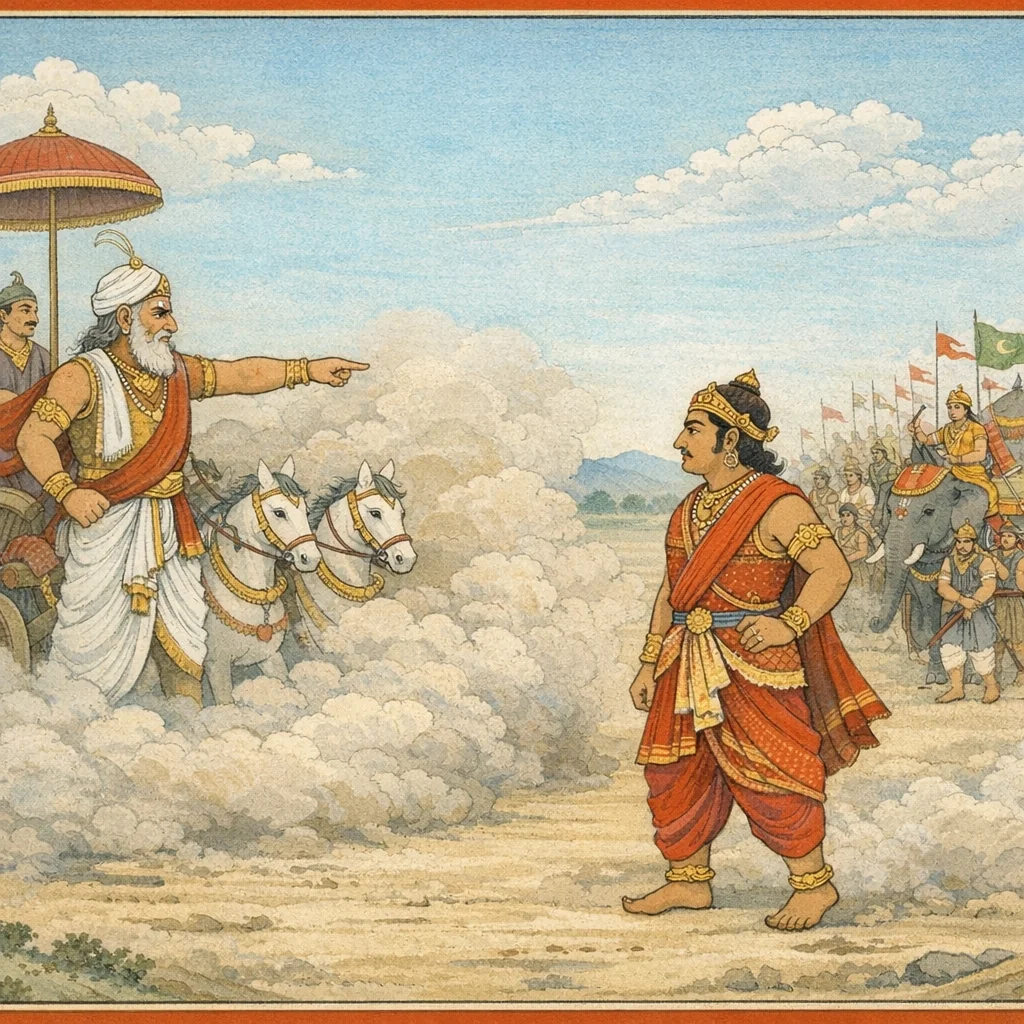
Chapter Arc: रणभूमि में रथों की भगदड़ देख द्रोणाचार्य का क्रोध भड़क उठता है; वे दुःशासन से तीखे स्वर में पूछते हैं—ये महारथी क्यों भाग रहे हैं, क्या जयद्रथ जीवित है, क्या दुर्योधन कुशल है? → द्रोण दुःशासन को धिक्कारते हैं—राजपुत्र और युवराज-पद का अधिकारी होकर युद्ध में पलायन कैसा? वे कौरवों की पंक्तियों के टूटने का कारण पूछते हुए अनुशासन और लज्जा दोनों का बाण चलाते हैं। इसी बीच युयुधान (सात्यकि) म्लेच्छ-सेना सहित आगे बढ़कर कौरवों पर प्रहार करता है, और द्रोण स्वयं धृष्टद्युम्न की ओर मुड़कर निकट-युद्ध का संकल्प लेते हैं। → द्रोण और धृष्टद्युम्न का अद्भुत संग्राम—इंद्र-प्रह्लाद-सदृश, त्रैलोक्य की दृष्टि खींच लेने वाला—जहाँ बार-बार घायल होने पर भी द्रोण क्रोध को धार देकर प्रतिघात करते हैं और दोनों सेनाओं की धड़कनें उसी द्वंद्व पर टिक जाती हैं। → द्रोण की फटकार से कौरव-पक्ष में क्षणिक संकोच और पुनर्संगठन का प्रयास होता है; दूसरी ओर पाण्डव-पक्ष में सात्यकि का आक्रमण और धृष्टद्युम्न का सामना युद्ध को और तीखा कर देता है—पर निर्णायक परिणाम अभी नहीं निकलता। → द्रोण का उग्र संकल्प और धृष्टद्युम्न का प्रतिरोध अगले क्षणों में किसका पलड़ा भारी करेगा—और कौरवों की डगमगाती पंक्तियाँ क्या टिक पाएँगी?
Shlokas
Verse 1
(दाक्षिणात्य अधिक पाठके ५ श्लोक मिलाकर कुल ६३ श्लोक हैं।) ऑपन-माज बछ। अकाल द्वाविशर्त्याधेकशततमो< ध्याय: द्रोणाचार्यका दःशासनको फटकारना और द्रोणाचार्यके द्वारा वीरकेतु आदि पांचालोंका वध एवं उनका धृष्टद्युम्नके साथ घोर युद्ध, द्रोणाचार्यका मूरच्छित होना, धृष्टद्युम्नका पलायन, आचार्यकी विजय संजय उवाच दुःशासनरथं दृष्टवा समीपे पर्यवस्थितम् | भारद्वाजस्ततो वाक्यं दुःशासनमथाब्रवीत्,संजय कहते हैं--राजन्! दुःशासनके रथको अपने समीप खड़ा हुआ देख द्रोणाचार्य उससे इस प्रकार बोले--
Sañjaya said: O King, seeing Duhshasana’s chariot stationed close by, Drona, the son of Bharadvaja, addressed Duhshasana with words—setting the stage for a stern admonition amid the moral strain of war.
Verse 2
दुःशासन रथा: सर्वे कस्माच्चैते प्रविद्रुता: । कच्चित् क्षेम॑ तु नृपतेः: कच्चिज्जीवति सैन्धव:,“दुःशासन! ये सारे रथी कहाँसे भागे आ रहे हैं? राजा दुर्योधन सकुशल तो हैं न? क्या सिंधुराज जयद्रथ अभी जीवित है?
Sañjaya said: “Duḥśāsana, why are all these chariot-warriors fleeing back in such disorder? Is King Duryodhana safe and unharmed? And is the Sindhu king, Jayadratha, still alive?”
Verse 3
राजपुत्रो भवानत्र राजभ्राता महारथ: । किमर्थ द्रवते युद्धे यौवराज्यमवाप्य हि,“तुम तो राजाके बेटे, राजाके भाई और महारथी वीर हो। युवराजका पद प्राप्त करके तुम इस युद्धस्थलमें किसलिये भागे फिरते हो?
Sañjaya said: “Here you are a prince—the king’s son, the king’s brother, and a great chariot-warrior. Having attained the rank of heir-apparent, why do you run about in the midst of battle?”
Verse 4
दासी जितासि दूते त्वं यथाकामचरी भव । वाससां वाहिका राज्ञो क्रातुर्ज्येष्ठस्य मे भव,“दुःशासन! तुमने द्रौपदीसे कहा था--“अरी! तू जूएमें जीती हुई दासी है। अतः हमारी इच्छाके अनुसार आचरण करनेवाली हो जा। मेरे बड़े भाई राजा दुर्योधनकी वस्त्रवाहिका बन जा
Sañjaya said: “O Duḥśāsana, you once said to Draupadī: ‘You were won in the dice-game, a slave-woman; therefore act according to our pleasure. Become the bearer of garments for the king—my elder brother—Duryodhana.’”
Verse 5
न सन्ति पतय: सर्वे तेडद्य षण्ढतिलै: समा | दुःशासनैवं कस्मात् त्वं पूर्वमुकत्वा पलायसे,“अब तेरे सम्पूर्ण पति थोथे तिलोंके समान नहींके बराबर हो गये हैं।” पहले ऐसी बातें कहकर अब तुम युद्धसे भाग क्यों रहे हो?
Sañjaya said: “You once taunted: ‘All those husbands of yours are no more today—reduced to nothing, like hollow sesame seeds.’ O Duḥśāsana, after speaking such words earlier, why do you now flee from the battle?”
Verse 6
स्वयं वैरं महत् कृत्वा पञज्चालै: पाण्डवै: सह । एकं सात्यकिमासाद्य कथं भीतो5सि संयुगे,'पांचालों और पाण्डवोंके साथ स्वयं ही बड़ा भारी वैर ठानकर युद्धस्थलमें अकेले सात्यकिका सामना करके कैसे भयभीत हो उठे हो?
Sañjaya said: “Having yourself provoked a great enmity with the Pañcālas together with the Pāṇḍavas, how is it that, on the battlefield, after confronting Sātyaki alone, you have become afraid?”
Verse 7
न जानीषे पुरा त्वं तु गृह्नन्नक्षान् दुरोदरे । शरा होते भविष्यन्ति दारुणाशीविषोपमा:,“क्या पहले तुम जूएमें पासे उठाते समय नहीं जानते थे कि ये एक दिन भयंकर विषधर सर्पोके समान विनाशकारी बाण बन जायाँगे
Sañjaya said: “When you once took up the dice in that ruinous game, did you not foresee that they would one day turn into arrows—cruel and deadly, like venomous serpents? The very act of gambling that violated righteousness has now ripened into the violence and suffering of war.”
Verse 8
अप्रियाणां हि वचसां पाण्डवस्य विशेषत: । द्रौपद्याश्न॒ परिक्लेशस्त्वन्मूलो हुभवत् पुरा,'पूर्वकालमें विशेषतः पाण्डुपुत्र युधिष्ठिको जो अप्रिय वचन सुनाये गये और द्रौपदीदेवीको जो कष्ट पहुँचाया गया, इन सबकी जड़ तुम्हीं रहे हो
Sañjaya said: “Indeed, the harsh and unwelcome words spoken—especially against the Pāṇḍava (Yudhiṣṭhira)—and the suffering inflicted upon Draupadī in earlier times, all had you as their root cause. The moral burden of those insults and that cruelty traces back to your agency.”
Verse 9
क्व ते मानश्न दर्पश्न क्य ते वीर्य क्व गर्जितम् । आशीविषसमान् पार्थान् कोपयित्वा क्व यास्यसि,“कहाँ गया तुम्हारा वह दर्प और अभिमान? कहाँ है तुम्हारा पराक्रम? और कहाँ गयी तुम्हारी गर्जना? विषैले सर्पोंके समान कुन्तीकुमारोंको कुपित करके कहाँ भागे जा रहे हो?
Sañjaya said: “Where now are your pride and arrogance? Where is your valor, and where has your roaring boast gone? Having provoked the Pāṇḍavas—dangerous like venomous serpents—where are you fleeing now?”
Verse 10
शोच्येयं भारती सेना राज्यं चैव सुयोधन: । यस्य त्वं कर्कशो भ्राता पलायनपरायण:,“यह कौरवी सेना, यह राज्य और इसका राजा दुर्योधन--ये सभी शोचनीय हो गये हैं; क्योंकि तुम राजाके क्रूरकर्मी भाई होकर आज युद्धमें पीठ दिखाकर भाग रहे हो
Sañjaya said: “This Bharata host, this kingdom, and even Suyodhana himself have become objects of pity—since you, his harsh and hard-dealing brother, are now bent on flight, turning away from the battle.”
Verse 11
“वीर! तुम्हें तो अपने बाहुबलका आश्रय लेकर इस भागती हुई भयभीत सेनाकी रक्षा करनी चाहिये
Sañjaya said: “O hero, you must rely on the strength of your own arms and protect this army, which is fleeing in panic and seized by fear.”
Verse 12
स त्वमद्य रणं हित्वा भीतो हर्षयसे परान् । विद्रुते त्वयि सैन्यस्य नायके शरत्रुसूदन
Sañjaya said: “But today, abandoning the battlefield in fear, you are giving joy to the enemy. When you—the leader of the army, O slayer of foes—have fled, the host is thrown into rout.”
Verse 13
एकेन सात्वतेनाद्य युध्यमानस्य तेन वै
Sañjaya said: “Today, by that single Sātvata hero alone, as he fights on, indeed…”
Verse 14
पलायने तव मति: संग्रामाद्धि प्रवर्तते | यदा गाण्डीवधन्वानं भीमसेनं च कौरव
Sañjaya said: “O Kaurava, your mind is turning toward flight—indeed, away from the battle—when you behold the wielder of the Gāṇḍīva and Bhīmasena.”
Verse 15
यमौ वा युधि द्रष्टासि तदा त्वं कि करिष्यसि । “कौरव! अकेले सात्यकिके साथ युद्ध करते समय, जब आज तुम्हारी बुद्धि संग्रामसे पलायन करमेमें प्रवृत्त हो गयी, तुमने भागनेका विचार कर लिया, तब जिस समय तुम गाण्डीवधारी अर्जुन, भीमसेन अथवा नकुल-सहदेवको युद्धस्थलमें देखोगे, उस समय तुम क्या करोगे? ।। १३-१४ $ ।। युधि फाल्गुनबाणानां सूर्याग्निसमवर्चसाम्
Sañjaya said: “When you behold the twin brothers (Nakula and Sahadeva) on the battlefield, what will you do then?”
Verse 16
त्वरितो वीर गच्छ त्वं गान्धार्युदरमाविश
Sañjaya said: “Hurry, O hero—go at once and enter the chamber of Gandhārī.”
Verse 17
यदि तावत् कृता बुद्धि: पलायनपरायणा
Sañjaya said: “If, indeed, your resolve has already been fixed—inclined wholly toward flight—then your mind is set on abandoning the field rather than facing the duty that confronts you.”
Verse 18
यावत् फाल्गुननाराचा निर्मुक्तोरगसंनिभा:
Sañjaya said: “So long as Arjuna’s arrows—released in swift succession and resembling freed serpents—continued to fly forth…”
Verse 19
यावत् ते पृथिवीं पार्था हत्वा भ्रातृशतं रणे
Sañjaya said: “So long as you, O Pārthas, have slain a hundred brothers in battle and brought the earth under your sway…”
Verse 20
यावन्न क्रुद्धयते राजा धर्मपुत्रो युधिष्ठिर:
Sañjaya said: “So long as King Yudhiṣṭhira—the son of Dharma—does not become angered…”
Verse 21
यावद् भीमो महाबाहुर्विगाह्य महतीं चमूम्
Sañjaya said: “So long as mighty-armed Bhīma, plunging into the vast battle-array…”
Verse 22
पूर्वमुक्तश्न ते भ्राता भीष्मेणासौ सुयोधन:,'पूर्वकालमें भीष्मजीने तुम्हारे भाई दुर्योधनसे यह कहा था कि 'सौम्य! पाण्डव युद्धमें अजेय हैं। तुम उनके साथ संधि कर लो।” परंतु तुम्हारे मूर्ख भ्राता दुर्योधनने वह कार्य नहीं किया
Sañjaya said: Earlier, your brother Suyodhana (Duryodhana) had been counseled by Bhishma. In former days Bhishma told him, “Gentle one, the Pandavas are unconquerable in war; make peace with them.” Yet your deluded brother Duryodhana did not act upon that counsel.
Verse 23
अजेया: पाण्डवा: संख्ये सौम्य संशाम्य तैः सह । न च तत् कृतवान् मन्दस्तव भ्राता सुयोधन:,'पूर्वकालमें भीष्मजीने तुम्हारे भाई दुर्योधनसे यह कहा था कि 'सौम्य! पाण्डव युद्धमें अजेय हैं। तुम उनके साथ संधि कर लो।” परंतु तुम्हारे मूर्ख भ्राता दुर्योधनने वह कार्य नहीं किया
“Gentle one, the Pandavas are unconquerable in battle; calm yourself and make peace with them.” But your brother Suyodhana, in his folly, did not do so.
Verse 24
स युद्धे धृतिमास्थाय यत्तो युध्यस्व पाण्डवै: । तवापि शोणितं भीम: पास्यतीति मया श्रुतम्
Sañjaya said: “Steady your resolve in this battle and fight with focused effort against the Pāṇḍavas. I have heard it foretold that Bhīma will drink even your blood.”
Verse 25
कि भीमस्य न जानासि विक्रमं त्वं सुबालिश
Sañjaya said: “Do you not know Bhīma’s prowess, you utterly foolish one?”
Verse 26
गच्छ तूर्ण रथेनैव यत्र तिष्तति सात्यकि:,“भरतनन्दन! अब तुम शीघ्र ही इसी रथके द्वारा जहाँ सात्यकि खड़े हैं, वहाँ जाओ। तुम्हारे न रहनेसे यह सारी सेना भाग जायगी। तुम अपने लाभके लिये रफणक्षेत्रमें सत्यपराक्रमी सात्यकिके साथ युद्ध करो”
Sañjaya said: “Go at once in this very chariot to the place where Sātyaki stands. If you are absent, this entire host will break and flee. For your own advantage, engage in battle on the field with Sātyaki, whose valor is true and proven.”
Verse 27
त्वया हीन॑ बल॑ होतदू विद्रविष्यति भारत । आत्मार्थ योधय रणे सात्यकिं सत्यविक्रमम्,“भरतनन्दन! अब तुम शीघ्र ही इसी रथके द्वारा जहाँ सात्यकि खड़े हैं, वहाँ जाओ। तुम्हारे न रहनेसे यह सारी सेना भाग जायगी। तुम अपने लाभके लिये रफणक्षेत्रमें सत्यपराक्रमी सात्यकिके साथ युद्ध करो”
Sañjaya said: “O Bhārata, if you are absent, this host will quickly break and flee. Therefore, for your own advantage, engage in battle on the field with Sātyaki, whose prowess is true and proven.”
Verse 28
एवमुक्तस्तव सुतो नाब्रवीत् किंचिदप्यसौ । श्रुतं चाश्रुतवत् कृत्वा प्रायाद् येन स सात्यकि:,द्रोणाचार्यके ऐसा कहनेपर आपका पुत्र दुःशासन कुछ भी नहीं बोला। वह उनकी सुनी हुई बातोंको भी अनसुनी-सी करके उसी मार्गपर चल दिया, जिससे सात्यकि गये थे
Sañjaya said: Thus addressed, your son did not utter a single word. Treating what he had heard as though unheard, he set off along the very path by which Sātyaki had gone.
Verse 29
सैन्येन महता युक्तो म्लेच्छानामनिवर्तिनाम् । आसाद्य च रणे यत्तो युयुधानमयोधयत्,उसने युद्धसे पीछे न हटनेवाले म्लेच्छोंकी विशाल सेनाके साथ समरांगणमें सात्यकिके पास पहुँचकर उनके साथ प्रयत्नपूर्वक युद्ध आरम्भ किया
Sañjaya said: Armed with a vast host of Mleccha warriors who would not turn back, he advanced with determination into the battlefield, reached Yuyudhāna (Sātyaki), and engaged him in strenuous combat.
Verse 30
द्रोणो5पि रथिनां श्रेष्ठ; पज्चालान् पाण्डवांस्तथा । अभ्यद्रवत संक्रुद्धो जवमास्थाय मध्यमम्,इधर रथियोंमें श्रेष्ठ द्रोणाचार्य भी क्रोधमें भरकर मध्यम वेगका आश्रय ले पांचालों और पाण्डवोंपर टूट पड़े
Sañjaya said: Droṇa too—foremost among chariot-warriors—rushed upon the Pāñcālas and the Pāṇḍavas. Inflamed with anger, he advanced at a measured, middle pace, pressing the attack with controlled force.
Verse 31
प्रविश्य च रणे द्रोण: पाण्डवानां वरूथिनीम् । द्रावयामास योधान् वै शतशोडथ सहस्रश:,टद्रोणाचार्य रणक्षेत्रमें पाण्डवोंकी विशाल सेनामें प्रवेश करके उनके सैकड़ों और हजारों सैनिकोंको भगाने लगे
Sañjaya said: Entering the battlefield and penetrating the Pandavas’ battle-array, Droṇa began to drive their warriors into flight—by the hundreds and even by the thousands.
Verse 32
ततो द्रोणो महाराज नाम विश्नाव्य संयुगे । पाण्डुपाज्चालमत्स्यानां प्रचक्रे कदनं महत्,महाराज! उस समय आचार्य द्रोण युद्धस्थलमें अपना नाम सुना-सुनाकर पाण्डव, पांचाल तथा मत्स्यदेशीय सैनिकोंका महान् संहार करने लगे
Sañjaya said: Then, O King, Droṇa, proclaiming his own name upon the battlefield, began a great slaughter of the Pāṇḍavas, the Pāñcālas, and the Matsya warriors.
Verse 33
त॑ जयन्तमनीकानि भारद्वाजं ततस्तत: । पाज्चालपुत्रो द्युतिमान् वीरकेतु: समभ्ययात्,इधर-उधर घूम-घूमकर समस्त सेनाओंको पराजित करते हुए द्रोणाचार्यका सामना करनेके लिये उस समय तेजस्वी पांचालराजकुमार वीरकेतु आया
Sañjaya said: As Bharadvāja (Droṇa) kept routing the battle-formations again and again, the radiant prince of the Pāñcālas, Vīraketu, moved forward to confront Droṇa—having roamed to and fro, defeating the troops on every side.
Verse 34
स द्रोणं पञ्चभिर्विद्ध्वा शरै: संनतपर्वभि: । ध्वजमेकेन विव्याध सारथिं चास्य सप्तभि:,उसने झुकी हुई गाँठवाले पाँच बाणोंद्वारा द्रोणाचार्यको घायल करके एकसे उनके ध्वजको और सात बाणोंसे उनके सारथिको भी बेध दिया
Sañjaya said: Having pierced Droṇa with five arrows whose joints were bent, he then struck Droṇa’s banner with a single shaft and wounded his charioteer with seven.
Verse 35
तत्राद्भुतं महाराज दृष्टवानस्मि संयुगे । यद द्रोणो रभसं युद्धे पाञ्चाल्यं नाभ्यवर्तत,महाराज! उस युद्धमें मैंने यह अद्भुत बात देखी कि द्रोणाचार्य उस वेगशाली पांचालराजकुमार वीरकेतुकी ओर बढ़ न सके
Sañjaya said: There, O King, in the thick of battle I witnessed something astonishing: though fierce and impetuous in war, Droṇa could not press forward against the Pāñcāla warrior.
Verse 36
संनिरुद्ध रणे द्रोणं पडचाला बीक्ष्य मारिष । आवत्र॒ुः सर्वतो राजन् धर्मपुत्रजयैषिण:,माननीय नरेश! द्रोणाचार्यको रणक्षेत्रमें अवरुद्ध हुआ देख धर्मपुत्रकी विजय चाहनेवाले पाञ्चालोंने सब ओरसे उन्हें घेर लिया
Sañjaya said: O revered one, seeing Droṇa hemmed in on the battlefield, the Pāñcālas—intent on securing victory for Dharmaputra—closed in upon him from every side, surrounding him completely.
Verse 37
ते शरैरग्निसंकाशैस्तोमरैश्व महाधनै: । शस्त्रैश्न विविध राजन् द्रोणममेकमवाकिरन्,राजन! उन्होंने अग्निके समान तेजस्वी बाणों, बहुमूल्य तोमरों तथा नाना प्रकारके शस्त्रोंकी वर्षा करके अकेले द्रोणाचार्यको ढक दिया
Sañjaya said: O King, they showered Droṇa—standing alone—with arrows blazing like fire, with costly javelins, and with many kinds of weapons, as though to smother him beneath a storm of steel.
Verse 38
निहत्य तान् बाणगणैद्रोणो राजन् समन्ततः । महाजलधरान् व्योम्नि मातरिश्वेव चाबभौ,नरेश्वर! द्रोणाचार्यने अपने बाणसमूहोंद्वारा चारों ओरसे उन समस्त अस्त्र-शस्त्रोंके टुकड़े-टुकड़े करके आकाशभमें महान् मेघोंकी घटाको छिन्न-भिन्न करनेके पश्चात् प्रवाहित होनेवाले वायुदेवके समान सुशोभित हो रहे थे
Sañjaya said: O King, having struck down those weapons on every side with volleys of arrows, Droṇa shone forth like the Wind-god moving through the sky after scattering great masses of rain-clouds.
Verse 39
ततः शरं महाघोरं सूर्यपावकसंनिभम् । संदधे परवीरघ्नो वीरकेतो रथ॑ं प्रति,तत्पश्चात् शत्रुवीरोंका संहार करनेवाले आचार्यने सूर्य और अग्निके समान अत्यन्त भयंकर बाणको धनुषपर रखा और उसे वीरकेतुके रथपर चला दिया
Sañjaya said: Then the slayer of enemy-heroes fitted a most dreadful arrow, blazing like the sun and fire, and discharged it toward Vīraketu’s chariot.
Verse 40
स भित्त्वा तु शरो राजन् पाज्चालकुलनन्दनम् | अभ्यागाद् धरणी तूर्ण लोहिताद्रों ज्वलन्निव,राजन! वह प्रज्वलित होता हुआ-सा बाण पांचाल-कुलनन्दन वीरकेतुको विदीर्ण करके खूनसे लथपथ हो तुरंत ही धरतीमें समा गया
Sañjaya said: O King, that arrow, as if blazing, pierced Vīraketu, the pride of the Pāñcāla line, and swiftly sank into the earth, drenched in blood.
Verse 41
ततो5पतद्ू रथात् तूर्ण पाउ्चालकुलनन्दन: । पर्वताग्रादिव महांश्वम्पको वायुपीडित:,फिर तो पांचालकुलको आनन्दित करनेवाला वह राजकुमार वायुसे टूटकर पर्वतके शिखरसे नीचे गिरनेवाले चम्पाके विशाल वृक्षके समान तुरंत रथसे नीचे गिर पड़ा
Sañjaya said: Then the delight of the Pāñcāla line suddenly fell down from his chariot—like a great campaka tree, wind-battered, crashing from a mountain peak.
Verse 42
तस्मिन् हते महेष्वासे राजपुत्रे महाबले । पजञ्चालास्त्वरिता द्रोणं समन्तात् पर्यवारयन्,उस महान् धनुर्धर महाबली राजकुमारके मारे जानेपर पांचालसैनिकोंने शीघ्र ही आकर द्रोणाचार्यको चारों ओरसे घेर लिया
Sañjaya said: When that great archer—the mighty prince—had been slain, the Pañcālas swiftly closed in and surrounded Droṇa on every side.
Verse 43
चित्रकेतु: सुधन्वा च चित्रवर्मा च भारत । तथा चित्ररथश्चैव भ्रातृव्यसनकर्शिता:,भारत! चित्रकेतु, सुधन्वा, चित्रवर्मा और चित्ररथ--ये चारों वीर अपने भाईकी मृत्युसे दुःखित हो युद्धकी इच्छा रखकर एक साथ ही द्रोणपर टूट पड़े और जिस प्रकार वर्षाकालमें मेघ पानी बरसाते हैं, उसी प्रकार वे बाणोंकी वर्षा करने लगे
Sañjaya said: O Bharata, Chitraketu, Sudhanvan, Chitravarman, and also Chitraratha—stricken with grief over their brother’s death—rushed together upon Droṇa, intent on battle, and showered him with arrows like monsoon clouds pouring down rain.
Verse 44
अभ्यद्रवन्त सहिता भारद्वाजं युयुत्सव:ः । मुज्चन्त: शरवर्षाणि तपान्ते जलदा इव,भारत! चित्रकेतु, सुधन्वा, चित्रवर्मा और चित्ररथ--ये चारों वीर अपने भाईकी मृत्युसे दुःखित हो युद्धकी इच्छा रखकर एक साथ ही द्रोणपर टूट पड़े और जिस प्रकार वर्षाकालमें मेघ पानी बरसाते हैं, उसी प्रकार वे बाणोंकी वर्षा करने लगे
Sañjaya said: United and eager for battle, they rushed together at Bhāradvāja (Droṇa). Releasing a rain of arrows, they scorched him like monsoon clouds pouring down their showers—O Bhārata.
Verse 45
स वध्यमानो बहुधा राजपुत्रैर्महारथै: । क्रोधमाहारयत् तेषामभावाय द्विजर्षभ:,उन महारथी राजकुमारोंद्वारा बारंबार घायल किये जानेपर द्विजश्रेष्ठ द्रोणने उनके विनाशके लिये महान् क्रोध प्रकट किया
Sañjaya said: Though struck again and again by the royal princes—mighty chariot-warriors—Droṇa, the bull among Brahmins, summoned up a fierce wrath, intent on bringing about their destruction.
Verse 46
ततः शरमयं जाल द्रोणस्तेषामवासृजत् । ते हन्यमाना द्रोणस्थ शरैराकर्णचोदितै:
Sañjaya said: Then Droṇa released against them a net-like shower of arrows. Struck by the arrows shot from Droṇa’s bow—drawn back to the ear—they were cut down and overwhelmed in the press of battle.
Verse 47
तान् विमूढान् रणे द्रोण: प्रहसन्निव भारत
Sañjaya said: O Bhārata (Dhṛtarāṣṭra), on the battlefield Droṇa, as if smiling, confronted those deluded men—showing how, in war, seasoned mastery can meet reckless confusion with calm, even contemptuous composure.
Verse 48
अथापरै: सुनिशितैर्भल्लैस्तेषां महायशा:
Sañjaya said: Then, with other razor-sharp bhalla arrows, the greatly renowned warrior again struck at them—driving the battle onward with relentless precision amid the moral darkness of war.
Verse 49
ते रथेभ्यो हता: पेतु: क्षितो राजन् सुवर्चस:
Sañjaya said: O King, those radiant warriors, struck down in battle, fell from their chariots onto the earth—showing how splendor and prowess, when yoked to war, can be abruptly ended by the force of fate and violence.
Verse 50
तान् निहत्य रणे राजन् भारद्वाज: प्रतापवान्
Sañjaya said: O King, having slain them in the thick of battle, the mighty Bhāradvāja—renowned for his valor—stood as the instrument of ruthless wartime necessity, where prowess eclipses pity and the moral cost of victory is silently borne.
Verse 51
कार्मुकं भ्रामयामास हेमपृष्ठं दुरासदम् । (तदस्य भ्राजते राजन् मेघमध्ये तडिद् यथा ।।) महाराज! प्रतापी द्रोणने युद्धस्थलमें उन राजकुमारोंका वध करके सुवर्णमय पृष्ठभागवाले दुर्जय धनुषको घुमाना आरम्भ किया। राजन! उस समय वह धनुष मेघोंकी घटामें बिजलीके समान प्रकाशित हो रहा था ।। ५० $ ।। पज्चालान् निहतान् दृष्टवा देवकल्पान् महारथान्,देवताओंके समान तेजस्वी पांचाल महारथियोंको मारा गया देख धृष्टद्युम्न अत्यन्त उद्विग्न हो नेत्रोंसे आँसू बहाते हुए कुपित हो उठे और संग्रामभूमिमें द्रोणाचार्यके रथकी ओर बढ़े
Sañjaya said: After slaying those princely warriors on the battlefield, the mighty Droṇa began to whirl his bow—hard to withstand, with a back plated in gold. O King, at that moment that bow shone amid the clouds like a flash of lightning. The image reveals the terrifying splendor of martial prowess: victory dazzles, yet it is born from the grim work of killing in war.
Verse 52
धृष्टय्युम्नो भुशोद्विग्नो नेत्राभ्यां पातयन् जलम् । अभ्यवर्तत संग्रामे क्रुद्धो द्रोणरथं प्रति,देवताओंके समान तेजस्वी पांचाल महारथियोंको मारा गया देख धृष्टद्युम्न अत्यन्त उद्विग्न हो नेत्रोंसे आँसू बहाते हुए कुपित हो उठे और संग्रामभूमिमें द्रोणाचार्यके रथकी ओर बढ़े
Sañjaya said: Dhrishtadyumna, deeply shaken, with tears falling from his eyes, turned back into the battle. Burning with anger, he advanced straight toward Droṇa’s chariot—unable to endure the sight of the mighty Pāñcāla warriors, radiant like the gods, being cut down.
Verse 53
ततो हाहेति सहसा नाद: समभवन्नूप । पाज्चाल्येन रणे दृष्टवा द्रोणमावारितं शरै:,राजन! रणक्षेत्रमें धृष्टद्युम्नके बाणोंसे द्रोणाचार्यकी गति अवरुद्ध हुई देख (कौरव- सेनामें) सहसा हाहाकार मच गया
Sañjaya said: “Then, O king, a sudden cry of ‘Alas! Alas!’ arose. For when the Pāñcāla prince was seen in the battle checking Droṇa’s advance with a shower of arrows, the Kaurava host broke into an immediate wail.”
Verse 54
स च्छाद्यमानो बहुधा पार्षतेन महात्मना । न विव्यथे ततो द्रोण: स्मयन्नेवान्वयुध्यत,महामना धृष्टद्युम्नके द्वारा बाणोंसे आच्छादित किये जानेपर भी द्रोणाचार्यको तनिक भी व्यथा नहीं हुई। वे मुसकराते हुए ही युद्धमें संलग्न रहे
Sañjaya said: Though repeatedly covered on all sides by the arrows of the great-souled son of Pṛṣata (Dhṛṣṭadyumna), Droṇa felt no distress at all. Smiling, he continued to engage in battle.
Verse 55
ततो द्रोणं महाराज पाज्चाल्य: क्रोधमूर्च्छित: । आजपघानोरसि क्ुद्धो नवत्या नतपर्वणाम्,महाराज! तत्पश्चात् धृष्टद्युम्नने क्रोधसे अचेत होकर झुकी हुई गाँठवाले नब्बे बाणोंद्वारा द्रोणाचार्यकी छातीमें प्रहार किया
Sañjaya said: Then, O King, the son of Pāñcāla (Dhṛṣṭadyumna), overcome by a swoon of wrath, angrily struck Droṇa upon the chest with ninety arrows whose joints were bent.
Verse 56
स गाढविद्धों बलिना भारद्वाजोी महायशा: । निषसाद रथोपस्थे कश्मलं च जगाम ह,बलवान वीर धृष्टद्युम्नके द्वारा गहरी चोट पहुँचायी जानेपर महायशस्वी द्रोणाचार्य रथके पिछले भागमें बैठ गये और मूर्च्छित हो गये
Sañjaya said: Struck deeply by the mighty one, the illustrious Bhāradvāja (Droṇa) sank down upon the rear part of his chariot and fell into a swoon.
Verse 57
त॑ वै तथागतं दृष्ट्वा धृष्टद्युम्न: पराक्रमी । चापमुत्यृज्य शीघ्र तु असिं जग्राह वीर्यवान्,उनको उस अवस्थामें देखकर बल और पराक्रमसे सम्पन्न धृष्टद्युम्नने धनुष रख दिया और तुरंत ही तलवार हाथमें ले ली
Sañjaya said: Seeing him in that condition, the mighty and valiant Dhṛṣṭadyumna swiftly cast aside his bow and at once seized his sword—choosing close combat in the heat of battle, where resolve and responsibility for one’s action become immediate and personal.
Verse 58
अवल्लुत्य रथाच्चापि त्वरित: स महारथ: । आरुरोह रथं तूर्ण भारद्वाजस्य मारिष,माननीय नरेश! महारथी धृष्टद्युम्न शीघ्र ही अपने रथसे कूदकर द्रोणाचार्यके रथपर जा चढ़े
Sañjaya said: Leaping down swiftly from his own chariot, that great warrior at once mounted the chariot of Bhāradvāja (Droṇa). In the charged ethics of battle, the act signals an urgent, close-quarters resolve—pressing the fight directly against the revered teacher, where personal duty and the harsh necessities of war collide.
Verse 59
हर्तुमिच्छन् शिर: कायात् क्रोधसंरक्तलोचन: । प्रत्याश्वस्तस्ततो द्रोणो धनुर्गृ.द्दा महारवम्,राजन! वे क्रोधसे लाल आँखें करके द्रोणाचार्यके सिरको धड़से अलग कर देना चाहते थे। इसी समय द्रोणाचार्य होशमें आ गये और उन्होंने अपनेको मार डालनेकी इच्छासे धृष्टद्यम्मको निकट आया देख महान् टंकार करनेवाले अपने धनुषको हाथमें लेकर निकटसे वेधनेवाले बित्ते बराबर बाणोंद्वारा उन्हें घायल कर दिया
Sañjaya said: Burning with anger, his eyes reddened, he wished to sever Droṇa’s head from his body. Just then Droṇa regained composure; and, O King, taking up his loud-twanging bow, he struck down the assailant who had come near with the intent to kill him—wounding him at close range with arrows shot from a short distance. The episode underscores how, amid the fury of battle, intent to kill and the recovery of self-control collide, and how mastery of arms can abruptly reverse the advantage even when one seems on the verge of being slain.
Verse 60
आसजन्नमागतं दृष्टवा धृष्टद्युम्न॑ जिघांसया । शरैर्वैतस्तिकै राजन् विव्याधासन्नवेधिभि:,राजन! वे क्रोधसे लाल आँखें करके द्रोणाचार्यके सिरको धड़से अलग कर देना चाहते थे। इसी समय द्रोणाचार्य होशमें आ गये और उन्होंने अपनेको मार डालनेकी इच्छासे धृष्टद्यम्मको निकट आया देख महान् टंकार करनेवाले अपने धनुषको हाथमें लेकर निकटसे वेधनेवाले बित्ते बराबर बाणोंद्वारा उन्हें घायल कर दिया
Sañjaya said: Seeing Dhṛṣṭadyumna come close, intent on killing him, Droṇa—having regained composure—took up his great-resounding bow and struck him with vaitastika arrows, short shafts meant for close-range piercing. The scene underscores the grim ethic of battlefield duty: even in a moment of vulnerability, a warrior-teacher reasserts martial discipline, while the attacker’s resolve is driven by the perceived necessity of ending a formidable foe.
Verse 61
योधयामास समरे धृष्टद्युम्नं महारथम् । ते हि वैतस्तिका नाम शरा आसन्नयोधिन:
Sañjaya said: In that battle he engaged Dhṛṣṭadyumna, the great chariot-warrior, in combat. For those arrows—known as ‘Vaitastikā’—were indeed unfailing in fight, pressing the foe with relentless force. The scene underscores how, amid the chaos of war, mastery of weapons and resolve can drive the encounter forward, even as the larger struggle raises grave questions of righteous conduct and the cost of violence.
Verse 62
स वध्यमानो बहुभि: सायकैस्तैर्महाबल:,महाबली और पराक्रमी धृष्टद्युम्न उन बहुसंख्यक बाणोंद्वारा घायल होकर अपना वेग भंग हो जानेके कारण उस रथसे कूद पड़े और पुनः: अपने रथपर आरूढ़ हो वे वीर महारथी धष्टद्यम्न महान् धनुष हाथमें लेकर समरांगणमें द्रोणाचार्यको वेधने लगे। महाराज! द्रोणाचार्यने भी अपने बाणोंद्वारा ट्रुपदपुत्रको घायल कर दिया
Sañjaya said: Though struck by many arrows, the mighty and valiant Dhṛṣṭadyumna—his momentum checked by the dense shower—leapt down from his chariot and then mounted it again. Taking up his great bow, that heroic mahāratha pressed into the battlefield intent on piercing Droṇācārya. O King, Droṇa too, with his own arrows, wounded the son of Drupada.
Verse 63
अवल्लुत्य रथात् तूर्ण भग्नवेग: पराक्रमी । आरुह्दु स्वरथं वीर: प्रगृह्द च महद् धनु:,महाबली और पराक्रमी धृष्टद्युम्न उन बहुसंख्यक बाणोंद्वारा घायल होकर अपना वेग भंग हो जानेके कारण उस रथसे कूद पड़े और पुनः: अपने रथपर आरूढ़ हो वे वीर महारथी धष्टद्यम्न महान् धनुष हाथमें लेकर समरांगणमें द्रोणाचार्यको वेधने लगे। महाराज! द्रोणाचार्यने भी अपने बाणोंद्वारा ट्रुपदपुत्रको घायल कर दिया
Sañjaya said: The valiant and mighty warrior, his charge checked and momentum broken, swiftly leapt down from his chariot. Then, mounting his own chariot again and taking up his great bow, the hero resumed the fight, pressing on in the battlefield to strike at Droṇācārya. Droṇa too, with his arrows, wounded the son of Drupada.
Verse 64
विव्याध समरे द्रोणं धृष्टद्युम्नो महारथ: । द्रोणश्वापि महाराज शरैरविव्याध पार्षतम्,महाबली और पराक्रमी धृष्टद्युम्न उन बहुसंख्यक बाणोंद्वारा घायल होकर अपना वेग भंग हो जानेके कारण उस रथसे कूद पड़े और पुनः: अपने रथपर आरूढ़ हो वे वीर महारथी धष्टद्यम्न महान् धनुष हाथमें लेकर समरांगणमें द्रोणाचार्यको वेधने लगे। महाराज! द्रोणाचार्यने भी अपने बाणोंद्वारा ट्रुपदपुत्रको घायल कर दिया
Sañjaya said: In the thick of battle, the great chariot-warrior Dhṛṣṭadyumna pierced Droṇa with his arrows. Droṇa too, O great king, struck Pārṣata (Dhṛṣṭadyumna, the son of Pṛṣat/Drupada) with volleys of shafts.
Verse 65
तदद्भुतम भूद् युद्ध द्रोणपाउचालयोस्तदा । त्रैलोक्यकाड्क्षिणोरासीच्छक्रप्रह्लादयोरिव
Sañjaya said: Then that battle between Droṇa and the Pāñcālas became truly wondrous. It was like the clash of Śakra (Indra) and Prahlāda—two mighty rivals whose ambition seemed to reach for dominion over the three worlds.
Verse 66
जैसे त्रिलोकीके राज्यकी इच्छा रखनेवाले इन्द्र और प्रह्नादमें परस्पर युद्ध हुआ था, उसी प्रकार उस समय द्रोणाचार्य और धृष्टद्युम्नमें अत्यन्त अद्भुत युद्ध होने लगा ।। मण्डलानि विचित्राणि यमकानीतराणि च । चरन्तौ युद्धमार्गज्ञौ ततक्षतुरथेषुभि:,वे दोनों ही युद्धकी प्रणालीके ज्ञाता थे। अतः विचित्र मण्डल, यमक तथा अन्य प्रकारके मार्गोंका प्रदर्शन करते हुए एक-दूसरेको बाणोंसे क्षत-विक्षत करने लगे
Just as Indra and Prahlāda once fought one another, each driven by the desire for sovereignty over the three worlds, so too at that time an exceedingly wondrous battle arose between Droṇācārya and Dhṛṣṭadyumna. Both were masters of the pathways and patterns of combat; moving through intricate circles, paired maneuvers, and other tactical courses, they struck and tore at each other with volleys of arrows shot from their chariots.
Verse 67
मोहयन्तौ मनांस्याजौ योधानां द्रोणपार्षतौ । सृजन्तौ शरवर्षाणि वर्षास्विव बलाहकौ,वर्षाकालके दो मेघोंके समान बाण-वर्षा करते हुए द्रोणाचार्य और धृष्टट्युम्न युद्धस्थलमें सम्पूर्ण योद्धाओंके मन मोहने लगे
Sañjaya said: On the battlefield, Droṇa and Pārṣata (Dhṛṣṭadyumna) bewildered the minds of the warriors as they poured forth showers of arrows—like two rain-clouds in the monsoon.
Verse 68
छादयन्तौ महात्मानौ शरैव्योम दिशो महीम् । तदद्धुतं तयोर्युद्धं भूतसड्घा हापूजयन्
Sañjaya said: Those two great-souled warriors, covering the sky, the directions, and the earth with showers of arrows, fought a battle that was truly wondrous; seeing it, hosts of beings looked on in awe and paid homage.
Verse 69
वे दोनों महामनस्वी वीर अपने बाणोंद्वारा आकाश, दिशाओं तथा पृथ्वीको आच्छादित करने लगे। उन दोनोंके उस अद्भुत युद्धकी सभी प्राणियोंने भूरि-भूरि प्रशंसा की ।। क्षत्रियाश्ष महाराज ये चान्ये तव सैनिका: । अवश्यं समरे द्रोणो धृष्टद्युम्नेन सड़तः,वशमेष्यति नो राजन् पज्चाला इति चुक्रुशु: । महाराज! सभी क्षत्रियों तथा आपके अन्य सैनिकोंने भी उन दोनोंके युद्धकी प्रशंसा की। राजन! पांचालयोद्धा यों कहकर कोलाहल करने लगे कि द्रोणाचार्य समरांगणमें धृष्टद्युम्मके साथ उलझे हुए हैं। वे अवश्य ही हमारे अधीन हो जायँगे
Sañjaya said: “O great king, the kṣatriyas and the rest of your troops, too, praised that combat. And the warriors of Pāñcāla raised a loud cry: ‘O King, Droṇa, engaged in battle with Dhṛṣṭadyumna, will surely be brought under our control.’”
Verse 70
।। द्रोणस्तु त्वरितो युद्धे धृष्टय्युम्नस्य सारथे:
Sañjaya said: In the thick of battle, Droṇa—acting with swift resolve—turned his attention toward the charioteer of Dhṛṣṭadyumna.
Verse 71
शिर: प्रच्यावयामास फलं पक्व॑ तरोरिव । इसी समय द्रोणने युद्धमें बड़ी उतावलीके साथ धृष्टद्युम्मके सारथिका सिर वृक्षके पके हुए फलके समान धड़से नीचे गिरा दिया || ७० ई ।। ततस्तु प्रद्गुता वाहा राज॑स्तस्य महात्मन:
Sañjaya said: With swift force he struck off the charioteer’s head, and it fell down like a ripe fruit dropping from a tree.
Verse 72
तेषु प्रद्रवमाणेषु पडचालान् सृञ्जयांस्तथा । अयोधयदू रणे द्रोणस्तत्र तत्र पराक्रमी
Sañjaya said: As those foot-soldiers and the Sṛñjayas fled in disorder, the mighty Droṇa engaged them in battle again and again at various points on the field—pressing the rout and asserting his prowess amid the chaos of war.
Verse 73
राजन! फिर तो महामना धृष्टद्युम्नके घोड़े भाग चले। उनके भाग जानेपर पराक्रमी द्रोणाचार्य रणभूमिमें सब ओर घूम-घूमकर पांचालों और सूंजयोंके साथ युद्ध करने लगे ।। विजित्य पाण्डुपञ्चालान् भारद्वाज: प्रतापवान् । स्वं व्यूहं पुनरास्थाय स्थितो5भवदरिंदम: । न चैनं पाण्डवा युद्धे जेतुमुत्सेहिरे प्रभो,इस प्रकार शत्रुओंका दमन करनेवाले प्रतापी द्रोणाचार्य पाण्डवों और पांचालोंको पराजित करके पुनः अपने व्यूहमें आकर खड़े हो गये। प्रभो! उस समय पाण्डव-सैनिक युद्धमें उन्हें जीतनेका साहस न कर सके
Sañjaya said: “O King, then the horses of the high-souled Dhṛṣṭadyumna bolted and fled. When they had run off, the valiant Droṇācārya ranged about the battlefield on every side, engaging the Pāñcālas together with the Sṛñjayas. Having defeated the Pāṇḍavas and the Pāñcālas, the mighty Bhāradvāja (Droṇa), a crusher of foes, returned to his own battle-formation and stood firm. O Lord, at that time the Pāṇḍava forces did not dare to overcome him in combat.”
Verse 122
इति श्रीमहाभारते द्रोणपर्वणि जयद्रथवधपर्वणि सात्यकिकप्रवेशे द्रोणपराक्रमे द्वाविंशत्यधिकशततमो<ध्याय:
Thus, in the Śrī Mahābhārata, within the Droṇa Parva—under the section concerning the slaying of Jayadratha—at the episode of Sātyaki’s entry and the account of Droṇa’s prowess, ends the one-hundred-and-twenty-second chapter. This closing colophon frames the narrative as a record of martial action and its moral weight, marking how individual heroism and strategic violence unfold within the larger, fate-driven war.
Verse 126
कोडन्य: स्थास्यति संग्रामे भीतो भीते व्यपाश्रये । 'परंतु तुम आज युद्ध छोड़कर भयभीत हो उठे और शत्रुओंका हर्ष बढ़ा रहे हो। शत्रुसूदन! तुम तो सेनापति हो। तुम्हारे भागनेपर दूसरा कौन युद्धभूमिमें ठहर सकेगा? जब आश्रयदाता या रक्षक ही डर जाय, तब दूसरा क्यों न भयभीत होगा?
“Who will stand fast in battle, afraid, seeking refuge in one who is himself afraid? Yet today you have abandoned the fight in terror and have swelled the enemies’ joy. O slayer of foes, you are the commander—if you flee, who else can hold the field? When the very protector and shelter is seized by fear, how should others not be afraid?”
Verse 131
ननु नाम त्वया वीर दीर्यमाणा भयार्दिता । स्वबाहुबलमास्थाय रक्षितव्या हनीकिनी
Sañjaya said: “Surely, O hero, when your army was being torn apart and struck with fear, it ought to have been protected by you, relying on the strength of your own arms.”
Verse 153
न तुल्या: सात्यकिशरा येषां भीत: पलायसे । 'रणक्षेत्रमें अर्जुनके बाण सूर्य और अग्निके समान तेजस्वी हैं। उनके समान सात्यकिके बाण नहीं हैं, जिनसे भयभीत होकर तुम भागे जा रहे हो
Sañjaya said: “On the battlefield, Arjuna’s arrows blaze with a radiance like the sun and fire. Sātyaki’s shafts are not equal to those; it is from fear of Arjuna’s arrows that you are fleeing.”
Verse 173
पृथिवी धर्मराजाय शमेनैव प्रदीयताम् । “यदि तुमने भागनेका ही विचार कर लिया है, तब यह पृथ्वीका राज्य शान्तिपूर्वक ही धर्मराज युधिष्ठिरको सौंप दो
Sañjaya said: “Let the earth (the kingdom) be handed over to Dharmarāja by peaceful means alone. If you have truly resolved only to flee, then surrender this sovereignty calmly to Yudhiṣṭhira.”
Verse 186
नाविशन्ति शरीरं ते तावत् संशाम्य पाण्डवै: | 'केंचुल छोड़कर निकले हुए सर्पोंके समान अर्जुनके बाण जबतक तुम्हारे शरीरमें नहीं घुस रहे हैं, तबतक ही तुम पाण्डवोंके साथ संधि कर लो
Sañjaya said: “Make peace with the Pāṇḍavas while there is still time. For only until Arjuna’s arrows—like serpents that have cast off their slough—do not yet pierce your body, do you still have the chance to restrain the ruin and choose reconciliation.”
Verse 206
कृष्णश्व॒ समरश्लाघी तावत् संशाम्य पाण्डवै: । “जबतक धर्मपुत्र राजा युधिष्छिर तथा युद्धकी प्रशंसा करनेवाले भगवान् श्रीकृष्ण क्रोध नहीं करते हैं, तभीतक तुम पाण्डवोंके साथ संधि कर लो
Sañjaya said: “Make peace with the Pāṇḍavas while there is still time—before King Yudhiṣṭhira, the son of Dharma, and Śrī Kṛṣṇa, who extols valor in battle, are provoked to anger. Once their righteous restraint gives way to wrath, reconciliation will be far harder and the ruin of war more certain.”
Verse 213
सोदरांस्ते न गृह्नाति तावत् संशाम्य पाण्डवै: । “जबतक महाबाहु भीमसेन विशाल कौरव-सेनामें घुसकर तुम्हारे सारे भाइयोंको दबोच नहीं लेते हैं, तभीतक तुम पाण्डवोंके साथ संधि कर लो
Sañjaya said: “Before Bhīmasena, the mighty-armed, breaks into your vast Kaurava host and seizes your brothers one by one, make peace with the Pāṇḍavas. Do not let pride and delay turn a negotiable conflict into irreversible ruin.”
Verse 243
तच्चाप्यवितथं तस्य तत् तथैव भविष्यति | “अत: अब तुम रणक्षेत्रमें धैर्य धारण करके प्रयत्नपूर्वक पाण्डवोंके साथ युद्ध करो। मैंने सुना है भीमसेन तुम्हारा भी खून पीयेंगे। भीमसेनकी वह प्रतिज्ञा झूठी नहीं है। वह उसी रूपमें सत्य होगी
Sañjaya said: “That too will not prove false for him; it will happen exactly so. Therefore, today, steady your courage on the battlefield and fight the Pāṇḍavas with full effort. I have heard that Bhīmasena will drink your blood as well. Bhīmasena’s vow is not a lie; it will become true in that very form.”
Verse 463
कर्तव्यं नाभ्यजानन् वै कुमारा राजसत्तम | तब द्रोणाचार्यने उनके ऊपर बाणोंका जाल-सा बिछा दिया। नृपश्रेष्ठ! द्रोणाचार्यके कानतक खींचकर छोड़े हुए उन बाणोंद्वारा घायल होकर वे राजकुमार यह भी न जान सके कि हमें क्या करना चाहिये?
Sañjaya said: O best of kings, those young princes, not discerning what duty required of them, were struck and bewildered. Then Drona, drawing his bow to the ear and releasing his arrows, spread over them what seemed like a net of shafts. Wounded by those keen flights, the princes could not even decide what they ought to do—so overpowering was the force of the teacher’s assault and the confusion it produced in battle.
Verse 473
व्यश्वसूतरथांश्ष॒क्रे कुमारान् कुपितो रणे । भरतनन्दन! रणक्षेत्रमें कुपित हुए द्रोणाचार्यने हँसते हुए-से अपने बाणोंद्वारा उन किंकर्तव्यविमूढ़ राजकुमारोंको घोड़े, सारथि तथा रथसे हीन कर दिया
Sañjaya said: In the fury of battle, Droṇācārya stripped those young princes of their horses, charioteers, and chariots. O joy of the Bharatas, on the battlefield the enraged Droṇa—almost as if smiling—by his arrows reduced those bewildered royal youths to helplessness, depriving them of the very supports by which they could fight.
Verse 483
पुष्पाणीव विचिन्वन् हि सोत्तमाड्ान्यपातयत् | तत्पश्चात् दूसरे तेज धारवाले भल्ल्लोंसे महायशस्वी द्रोणने उन राजकुमारोंके मस्तक उसी प्रकार काट गिराये, मानो वृक्षोंसे फूल चुन लिये हों
Sañjaya said: Like one gathering flowers, he struck down those foremost warriors. Thereafter, the greatly renowned Droṇa, with sharp, blazing bhalla-arrows, cut off and felled the heads of those royal youths—just as if he were plucking blossoms from trees.
Verse 496
देवासुरे पुरा युद्धे यथा दैतेयदानवा: । राजन! जैसे पूर्वकालके देवासुर-संग्राममें दैत्य और दानव धराशायी हुए थे, उसी प्रकार वे सुन्दर कान्तिवाले राजकुमार मारे जाकर उस समय रथोंसे पृथ्वीपर गिर पड़े
Sañjaya said: O King, just as in the ancient war between the gods and the asuras the Daityas and Danavas were struck down and lay fallen, so too those princes of radiant beauty, slain in battle, toppled from their chariots and fell upon the earth.
Verse 613
द्रोणस्य विहिता राजन यैर्धुष्टद्युम्नमाक्षिणोत् । राजन! आचार्य समरांगणमें महारथी धृष्टद्युम्नके साथ युद्ध करने लगे। निकटसे युद्ध करनेवाले द्रोणाचार्यके पास उन्हींके बनाये हुए वैतस्तिक नामक बाण थे, जिनके द्वारा उन्होंने धृष्टद्युम्नको क्षत-विक्षत कर दिया
O King, Droṇa employed the measures he had devised to strike Dhṛṣṭadyumna. O King! Upon the field of battle the Ācārya began to fight with the mahāratha Dhṛṣṭadyumna. In that close combat, Droṇācārya had at hand the very arrows he himself had fashioned, called Vaitastika; with them he tore Dhṛṣṭadyumna, leaving him mangled and grievously wounded.
Verse 1291
इस प्रकार श्रीमहाभारत द्रोणपर्वके अन्तर्गत जयद्रथवधपर्वमें यात्यकिप्रवेशविषयक एक सौ इक्कीसवाँ अध्याय पूरा हुआ
Sañjaya said: “Thus, in the Śrī Mahābhārata, within the Droṇa Parva—specifically in the section on the slaying of Jayadratha—the one hundred and twenty-first chapter, concerning Yātyaki’s entry (into the battle formation), is concluded.”
Verse 1636
पृथिव्यां धावमानस्य नान्यत् पश्यामि जीवनम् | “वीर! जल्दी जाओ। अपनी माता गान्धारीदेवीके पेटमें घुस जाओ; अन्यथा इस भूतलपर दूसरा कोई ऐसा स्थान नहीं है, जहाँ भाग जानेसे मुझे तुम्हारे जीवनकी रक्षा दिखायी देती हो
Sañjaya said: “As you run upon the earth, I see no other means of survival. O hero, go quickly—enter the womb of your mother, Queen Gāndhārī; otherwise, on this whole ground there is no other place where, by fleeing, I can foresee your life being saved.”
Verse 1936
नाक्षिपन्ति महात्मानस्तावत् संशाम्य पाण्डवै: । “महामनस्वी कुन्तीकुमार जबतक तुम्हारे सौ भाइयोंको रणक्षेत्रमें मारकर यह सारी पृथ्वी तुमसे छीन नहीं लेते हैं, तभीतक तुम पाण्डवोंके साथ संधि कर लो
Sañjaya said: “Great-souled men do not strike rashly; first they restrain themselves and seek calm with the Pāṇḍavas. O high-minded son of Kuntī, make peace with the Pāṇḍavas while there is still time—before they slay your hundred brothers on the battlefield and wrench this entire earth away from you.”
Verse 2536
यत्त्वया वैरमारब्धं संयुगे प्रपलायिना । 'ओ मूर्ख! क्या तुम भीमसेनके पराक्रमको नहीं जानते, जो तुमने उनके साथ वैर ठाना और अब युद्धसे भागे जा रहे हो?
Sañjaya said: “You—who are now fleeing from the battlefield—once initiated this enmity. O fool, do you not know the might of Bhīmasena, against whom you chose to set your hostility, and from whom you now run in war?”
Frequently Asked Questions
The tension between human agency (vows, strategy, anger) and attributed divine causality (Kṛṣṇa’s favor) is managed publicly so that responsibility, legitimacy, and discipline remain coherent for the polity and the army.
A leader sustains collective resilience by transparent gratitude, honoring contributors, and interpreting outcomes within a shared ethical-cosmological framework that reinforces unity without erasing accountability.
No formal phalaśruti is stated; the chapter’s meta-level function is narrative: it re-centers legitimacy and morale after a pivotal event and signals continued momentum within the war sequence.