मयस्य शिवस्तुतिः — Maya’s Hymn to Śiva (and Śiva’s Gracious Response)
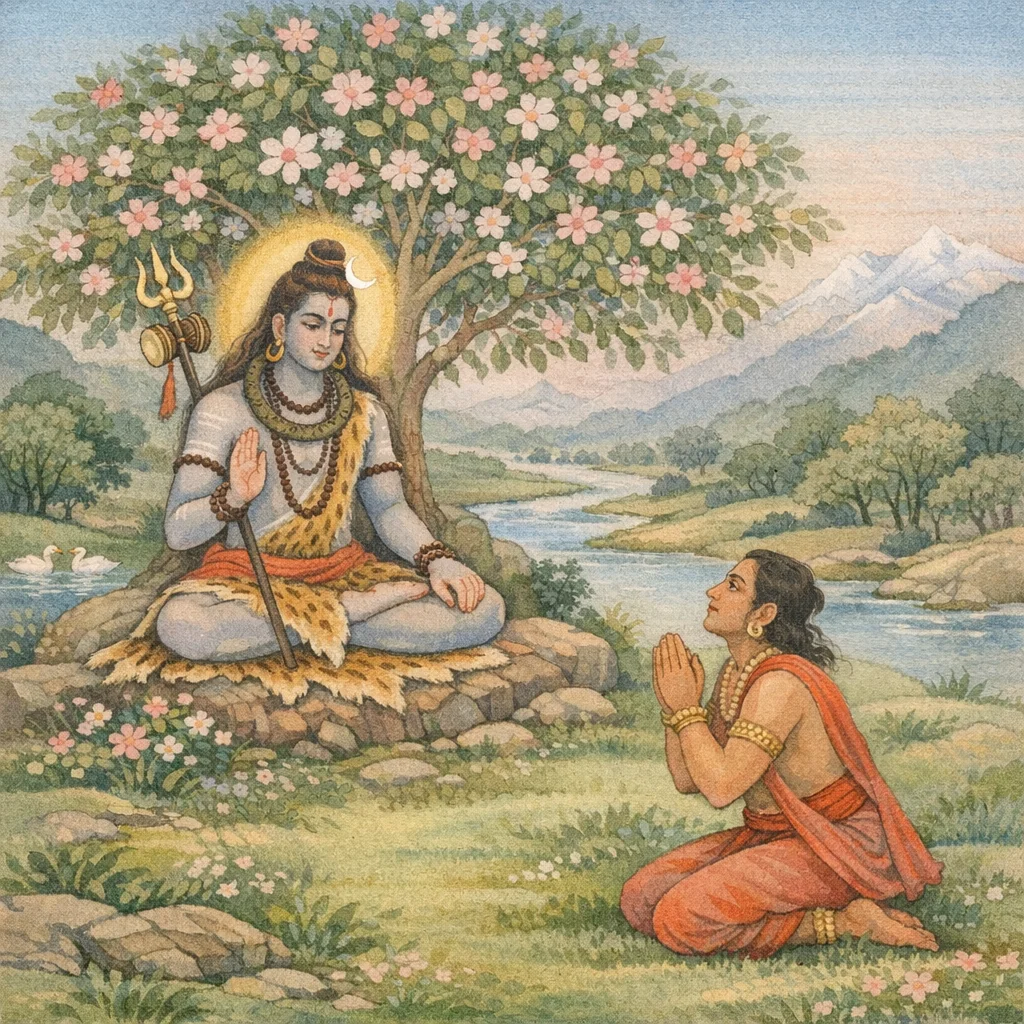
Adhyāya 12 begins with Sanatkumāra describing how Maya Dānava approaches Śiva after seeing Him in a pleased, gracious mood (prasanna). Maya—spared from being “burnt” (adagdha) by Śiva’s compassion—comes joyfully and repeatedly prostrates, showing deep reverence and submission. Rising, he offers a long hymn (stuti) that serves as a compact theological catalogue: Śiva is praised as Devadeva/Mahādeva, loving to devotees (bhaktavatsala), beneficent like the wish-fulfilling kalpavṛkṣa, impartial (sarvapakṣavivarjita), of the nature of light (jyotīrūpa), cosmic in form (viśvarūpa), pure and purifying (pūtātman/pāvana), possessing manifold forms yet beyond form (citrarūpa, rūpātīta), and the Lord who creates, sustains, and dissolves (kartṛ-bhartṛ-saṃhartṛ). Maya admits his praise is inadequate and ends with full surrender (śaraṇāgata) and a plea for protection. Sanatkumāra concludes that Śiva hears the hymn, is pleased, and addresses Maya respectfully, setting the stage for the ensuing instruction or boon.
Shlokas
Verse 1
सनत्कुमार उवाच । एतस्मिन्नंतरे शंभुं प्रसन्नं वीक्ष्य दानवः । तत्राजगाम सुप्रीतो मयोऽदग्धः कृपाबलात्
Sanatkumāra said: In the meantime, seeing Śambhu (Lord Śiva) gracious and serene, the Dānava Māyā—who had not been burned because of the power of Śiva’s compassion—came there, filled with joy.
Verse 2
प्रणनाम हरं प्रीत्या सुरानन्यानपि ध्रुवम् । कृतांजलिर्नतस्कंधः प्रणनाम पुन श्शिवम्
With loving devotion he bowed to Hara (Śiva), and surely he also bowed to the other gods. With palms joined in añjali and shoulders bent in humility, he again prostrated before Lord Śiva.
Verse 3
अथोत्थाय शिवं दृष्ट्वा प्रेम्णा गद्गदसुस्वरः । तुष्टाव भक्तिपूर्णात्मा स दानववरो मयः
Then, rising and beholding Lord Śiva, Maya—the foremost among the Dānavas—his voice choking with love, praised Him, his heart completely filled with devotion.
Verse 4
मय उवाच देवदेव महादेव भक्तवत्सल शंकरः । कल्पवृक्षस्वरूपोसि सर्वपक्षविवर्जितः
Mayā said: “O God of gods, O Mahādeva, O Śaṅkara, tender to devotees! You are truly of the nature of the wish-fulfilling Kalpavṛkṣa, and You are free from all partiality—untainted by taking any side.”
Verse 5
ज्योतीरूपो नमस्तेस्तु विश्वरूप नमोऽस्तु ते । नमः पूतात्मने तुभ्यं पावनाय नमोनमः
Salutations to You whose very form is Light; salutations to You, O Universal-Form. Salutations to You, the Pure Self; again and again, salutations to You, the Purifier of all.
Verse 6
चित्ररूपाय नित्याय रूपातीताय ते नमः । दिव्यरूपाय दिव्याय सुदिव्याकृतये नमः
Salutations to You—of wondrous and manifold forms, the Eternal, and yet transcending all form. Salutations to You—of divine form, the truly Divine, whose very embodiment is supremely divine.
Verse 7
नमः प्रणतसर्वार्तिनाशकाय शिवात्मने । कर्त्रे भर्त्रे च संहर्त्रे त्रिलोकानां नमोनमः
Salutations to Śiva, the very Self and inner Reality, who destroys all the afflictions of those who bow in surrender. Salutations again and again to Him who, for the three worlds, is the Creator, the Sustainer, and the Dissolver.
Verse 8
भक्तिगम्याय भक्तानां नमस्तुभ्यं कृपा लवे । तपस्सत्फलदात्रे ते शिवाकांत शिवेश्वर
Salutations to You, O Lord who is reached through devotion, the very grace of Your devotees. O Śiveśvara—beloved of Śivā—You bestow the true fruit of austerities; even a mere drop of Your compassion is enough.
Verse 9
न जानामि स्तुतिं कर्तुं स्तुतिप्रिय परेश्वर । प्रसन्नो भव सर्वेश पाहि मां शरणाग तम्
O Supreme Lord, delighting in hymns of praise, I do not know how to offer a fitting eulogy. O Lord of all, be gracious; protect me, for I have come to You as one who has surrendered and seeks refuge.
Verse 10
सनत्कुमार उवाच । इत्याकर्ण्य मयोक्ता हि संस्तुतिं परमेश्वरः । प्रसन्नोऽभूद्द्विजश्रेष्ठ मयं प्रोवाच चादरात्
Sanatkumāra said: “Having thus heard the hymn of praise spoken by me, the Supreme Lord, Parameśvara, became pleased. O best of the twice-born, He then addressed me with respect.”
Verse 11
शिव उवाच । वरं ब्रूहि प्रसन्नोऽहं मय दानवसत्तम । मनोऽभिलषितं यत्ते तद्दास्यामि न संशयः
Śiva said: “Speak your boon; I am pleased with you, O best among the Dānavas. Whatever your heart desires, that I shall grant—of this there is no doubt.”
Verse 12
इति श्रीशिवमहापुराणे द्वितीयायां रुद्रसंहितायां पञ्चमे युद्धखंडे सनत्कुमारपाराशर्य्यसंवादे त्रिपुरवधानंतरदेवस्तुतिमयस्तुतिमुंडिनिवेशनदेवस्वस्थानगमनवर्णनं नाम द्वादशोऽध्यायः
Thus, in the Śrī Śiva Mahāpurāṇa—within the Second Rudra Saṃhitā, in the Fifth Yuddha Khaṇḍa—this is the twelfth chapter, in the dialogue between Sanatkumāra and Pārāśarya (Vyāsa), entitled: “The description of the gods’ hymn of praise after the slaying of Tripura—a stuti filled with devotion—Muṇḍinī’s installation, and the gods’ return to their own abodes.”
Verse 13
मय उवाच । देवदेव महादेव प्रसन्नो यदि मे भवान् । वरयोग्योऽस्म्यहं चेद्धि स्वभक्तिं देहि शाश्वतीम्
Mayā said: “O God of gods, O Mahādeva—if You are pleased with me, and if I am truly fit to receive a boon, then grant me Your own eternal devotion—unbroken bhakti to You.”
Verse 14
स्वभक्तेषु सदा सख्यं दीनेषु च दयां सदा । उपेक्षामन्यजीवेषु खलेषु परमेश्वर
O Parameśvara, ever maintain friendship with Your own devotees; ever show compassion to the humble and afflicted; remain detached toward other living beings, and toward the wicked keep a stance of holy disregard.
Verse 15
कदापि नासुरो भावो भवेन्मम महेश्वर । निर्भयः स्यां सदा नाथ मग्नस्त्वद्भजने शुभे
O Maheśvara, may no demonic disposition ever arise in me. O Lord, may I remain ever fearless, immersed in Your auspicious worship.
Verse 16
सनत्कुमार उवाच । इति संप्रार्थ्यमानस्तु शंकरः परमेश्वरः । प्रत्युवाच मये नाथ प्रसन्नो भक्तवत्सलः
Sanatkumāra said: Thus earnestly entreated, Śaṅkara—the Supreme Lord—being gracious and ever affectionate to His devotees, replied to Mayā, pleased: “O Nātha (my Lord) …”
Verse 17
महेश्वर उवाच । दानवर्षभ धन्यस्त्वं मद्भक्तो निर्विकारवान् । प्रदत्तास्ते वरास्सर्वेऽभीप्सिता ये तवाधुना
Maheshvara said: “O bull among the Dānavas, blessed are you—steadfast and unchanging, for you are My devotee. All the boons you desire at this moment have been granted to you.”
Verse 18
गच्छ त्वं वितलं लोकं रमणीयं दिवोऽपि हि । समेतः परिवारेण निजेन मम शासनात्
“Go to the realm of Vitala—delightful indeed, even like heaven—together with your own retinue, in accordance with My command.”
Verse 19
निर्भयस्तत्र संतिष्ठ संहृष्टो भक्तिमान्सदा । कदापि नासुरो भावो भविष्यति मदाज्ञया
“Remain there without fear—ever joyful and steadfast in devotion. By My command, no demonic (asuric) disposition shall ever arise in you.”
Verse 20
सनत्कुमार उवाच । इत्याज्ञां शिरसाधाय शंकरस्य महात्मनः । तं प्रणम्य सुरांश्चापि वितलं प्रजगाम सः
Sanatkumāra said: “Thus, having received and reverently borne upon his head the command of the great-souled Śaṅkara, and having bowed to Him and also to the gods, he departed for Vitala.”
Verse 21
एतस्मिन्नंतरे ते वै मुण्डिनश्च समागताः । प्रणम्योचुश्च तान्सर्वान्विष्णुब्रह्मादिकान् सुरान्
Meanwhile, those shaven-headed attendants arrived. Bowing down, they addressed all those devas present—Viṣṇu, Brahmā, and the others—standing there.
Verse 22
कुत्र याम वयं देवाः कर्म किं करवामहे । आज्ञापयत नश्शीघ्रं भव दादेशकारकान्
“Where shall we go, we gods, and what action should we undertake? Command us quickly, O Bhava (Śiva), for we are ready to carry out your instruction.”
Verse 23
कृतं दुष्कर्म चास्माभिर्हे हरे हे विधे सुराः । दैत्यानां शिवभक्तानां शिवभक्तिर्विनाशिता
“O Hari, O Ordainer (Brahmā)—O gods! We have committed a grievous wrong: we have destroyed the devotion to Śiva that existed among the Daityas who were devotees of Śiva.”
Verse 24
कोटिकल्पानि नरके नो वासस्तु भविष्यति । नोद्धारो भविता नूनं शिवभक्तविरोधिनाम्
Surely, those who oppose the devotees of Śiva will dwell in hell for crores of aeons; indeed, for them there will be no rescue or deliverance.
Verse 25
परन्तु भवदिच्छात इदं दुष्कर्म नः कृतम् । तच्छांतिं कृपया ब्रूत वयं वश्शरणागताः
Yet this wrongful act was done by us only under the pressure of your will. Out of compassion, please tell us how it may be pacified, for we have come under your control and have taken refuge in you.
Verse 26
सनत्कुमार उवाच । तेषां तद्वचनं श्रुत्वा विष्णुब्रह्मादयस्सुराः । अब्रु वन्मुंडिनस्तांस्ते स्थितानग्रे कृतांजलीन्
Sanatkumāra said: Hearing those words, the gods—Viṣṇu, Brahmā, and the others—addressed those shaven-headed ascetics, who stood before them with folded hands.
Verse 27
विष्ण्वादय ऊचुः । न भेतव्यं भवद्भिस्तु मुंडिनो वै कदाचन । शिवाज्ञयेदं सकलं जातं चरितमुत्तमम्
Viṣṇu and the others said: “You, O shaven-headed ones, should never be afraid. All of this has come to pass solely by Śiva’s command—this noble course of events.”
Verse 28
युष्माकं भविता नैव कुगतिर्दुःखदायिनी । शिववासा यतो यूयं देवर्षिहितकारकाः
For you there shall never arise any miserable downfall that brings suffering, because you are dwellers in Śiva’s abode—benefactors who work for the welfare of the gods and the seer-sages.
Verse 29
सुरर्षिहितकृच्छंभुस्सुरर्षिहितकृत्प्रियः । सुरर्षिहितकृन्नॄणां कदापि कुगतिर्नहि
Śambhu, who ever acts for the welfare of the gods and the seers, is dear to all who labor for their good. For those devoted to such beneficent service, there is never—at any time—an evil destiny or downfall.
Verse 30
अद्यतो मतमेतं हि प्रविष्टानां नृणां कलौ । कुगतिर्भविता ब्रूमः सत्यं नैवात्र संशयः
From this day onward, for those who have entered into (adopted) this outlook in the Kali age, there will indeed be a ruinous course and a fallen destiny—this we declare as truth; of this there is no doubt at all.
Verse 31
भवद्भिर्मुंडिनो धीरा गुप्तभावान्ममाज्ञया । तावन्मरुस्थली सेव्या कलिर्यावात्समाव्रजेत्
“You steadfast Muṇḍin ascetics—by My command, keeping your inner intent concealed—should dwell and practice in the desert region, until Kali fully arrives.”
Verse 32
आगते च कलौ यूयं स्वमतं स्थापयिष्यथ । कलौ तु मोहिता मूढास्संग्रहीष्यंति वो मतम्
When the age of Kali arrives, you will establish your own doctrine; and in Kali-yuga, people—deluded and bewildered—will accept and adopt your view.
Verse 33
इत्याज्ञप्ताः सुरेशैश्च मुंडिनस्ते मुनीश्वर । नमस्कृत्य गतास्तत्र यथोद्दिष्टं स्वमाश्रमम्
Thus instructed by the lords of the gods, those shaven-headed ascetics, O best of sages, bowed in reverent namaskāra and then departed—each to his own āśrama, exactly as he had been directed.
Verse 34
ततस्स भगवान्रुद्रो दग्ध्वा त्रिपुरवासिनः । कृतकृत्यो महायोगी ब्रह्माद्यैरभिपूजितः
Then the Blessed Lord Rudra, having burned the dwellers of Tripura, became one whose purpose was fulfilled. That great Yogin was duly worshipped by Brahmā and the other gods.
Verse 35
स्वगणैर्निखिलैर्देव्या शिवया सहितः प्रभुः । कृत्वामरमहत्कार्यं ससुतोंतरधादथ
Then the Lord, accompanied by the Goddess Śivā and by all His own gaṇas, having accomplished a mighty deed for the welfare of the immortals (the devas), disappeared from sight—together with His son.
Verse 36
ततश्चांतर्हिते देवे परिवारान्विते शिवे । धनुश्शरस्थाद्यश्च प्राकारोंतर्द्धिमागमत्
Then, when the Divine Lord Śiva—together with His attendant hosts—became invisible, the bowmen and archers and the encircling rampart as well vanished from sight.
Verse 37
ततो ब्रह्मा हरिर्देवा मुनिगंधर्वकिन्नराः । नागास्सर्पाश्चाप्सरसस्संहृष्टाश्चाथ मानुषाः
Then Brahmā, Hari (Viṣṇu), the gods, the sages, the Gandharvas and Kinnaras, the Nāgas and serpents, the Apsarases, and even human beings—all became delighted, their spirits uplifted in joy.
Verse 38
स्वंस्वं स्थानं मुदा जग्मुश्शंसंतः शांकरं यशः । स्वंस्वं स्थानमनुप्राप्य निवृतिं परमां ययुः
Praising the glory of Śaṅkara, they joyfully departed to their respective abodes. Having reached their own places, through the grace of Śiva they attained the supreme repose—the complete cessation of distress.
Verse 39
एतत्ते कथितं सर्वं चरितं शशिमौलिनः । त्रिपुरक्षयसंसूचि परलीलान्वितं महत्
Thus I have narrated to you the entire sacred account of the Moon-crested Lord (Śiva)—a great tale that foretells the destruction of Tripura and is filled with His supreme divine play (līlā).
Verse 40
धन्यं यशस्यमायुष्यं धनधान्यप्रवर्द्धकम् । स्वर्गदं मोक्षदं चापि किं भूयः श्रोतुमिच्छसि
“It is auspicious, bestows fame, and enhances life; it increases wealth and grain. It grants heaven and also liberation (moksha). What more do you wish to hear?”
Verse 41
इदं हि परमाख्यानं यः पठेच्छ्रणुयात्सदा । इह भुक्त्वाखिलान्कामानंते मुक्तिमवाप्नुयात्
Whoever regularly recites or listens to this supreme sacred narrative—having enjoyed in this world all worthy desires—attains liberation (moksha) in the end.
Frequently Asked Questions
Maya Dānava approaches the pleased Śiva, repeatedly prostrates, and delivers a formal stuti culminating in śaraṇāgati; Śiva, pleased by the hymn, responds to Maya.
It signals that Śiva’s grace can suspend or transform punitive destiny; even an asura can be preserved and redirected through kṛpā, illustrating grace as superior to mere retribution.
Śiva is praised as jyotīrūpa (luminous), viśvarūpa (universal form), rūpātīta (beyond form), bhaktavatsala (devotee-loving), kalpavṛkṣa-like benefactor, and as kartṛ-bhartṛ-saṃhartṛ of the triloka.