Adhyaya 64
नलस्य बाहुकत्वेन ऋतुपर्णनगरप्रवेशः (Nala as Bāhuka enters Ṛtuparṇa’s city)
Upa-parva: Nalopākhyāna (Tale of Nala and Damayantī)
Bṛhadaśva narrates that after the serpent vanishes, Nala (of Niṣadha) reaches Ṛtuparṇa’s city on the tenth day. Presenting himself as “Bāhuka,” he offers specialized competencies: unmatched skill in driving horses, counsel in difficult practical matters, and superior knowledge of culinary preparation. He pledges to undertake any difficult work, requesting acceptance into Ṛtuparṇa’s service. Ṛtuparṇa grants him residence, notes his own distinctive expertise in rapid travel, and appoints Nala as superintendent of horses with substantial wages, assigning Vārṣṇeya and Jīvala as regular attendants. Living there honored yet concealed, Nala continually reflects on Damayantī and recites verses at evening about her hardship—hunger, thirst, exhaustion, danger in the forest, and abandonment—while Jīvala inquires about the cause of his grief. Nala responds indirectly by describing a ‘foolish’ man separated from a devoted woman, thereby encoding his personal suffering within a generalized moral narrative.
Chapter Arc: घने, हिंस्र पशुओं और म्लेच्छ-तस्करों से भरे वन का भयावह विस्तार—और उसी में अकेली दमयन्ती का नल-नाम का पुकारा हुआ विलाप। → दमयन्ती पर्वतों, नदियों और वृक्षों से मानो जीवित साक्षी की तरह प्रश्न करती है—‘क्या तुमने निषधाधिपति नल को देखा?’ उसकी स्मृतियाँ नल की गंभीर, मेघ-गर्जन-सी वाणी और गजराज-सी चाल को बार-बार उभारती हैं; पर उत्तर केवल सन्नाटा है। वन का आतंक (सिंह, चीता, व्याघ्र, महिष, ऋक्ष) और लुटेरों का भय उसके अकेलेपन को और तीखा करता है। → तपस्वियों के आश्रम में दमयन्ती का टूटता हुआ प्रलाप चरम पर पहुँचता है—वह नल से सीधे संबोधन करती है: ‘यदि इसी वन में हो, धर्मज्ञ, सत्यप्रतिज्ञ वीर! स्वयं प्रकट हो जाओ।’ यह पुकार उसके धैर्य और विवशता—दोनों का शिखर बनती है। → तपस्वी यथोचित पूजन-सत्कार कर उसे आश्वासन देते हैं, उसके लिए उपाय पूछते हैं और उसे सहारा देते हैं। आगे चलकर वह एक रम्य, शीतल, विस्तीर्ण नदी/हृदिनी के तट तक पहुँचती है—जहाँ प्रकृति का सौम्य रूप क्षणिक शांति देता है। → व्यापारियों के एक दल से उसकी भेंट होती है; सार्थवाह बताता है कि वे चेदिराज सुबाहु के जनपद की ओर लाभ के लिए शीघ्र जा रहे हैं—दमयन्ती के लिए यह प्रश्न खुला रह जाता है कि क्या इसी मार्ग से नल का कोई संकेत मिलेगा या वह नए संकटों में फँसेगी।
Shlokas
Verse 1
#::73:.8 #::3:..7 () हि २ 7 चतु:षष्टितमो<5 ध्याय: दमयन्तीका विलाप और प्रलाप, तपस्वियोंद्वारा दमयन्तीको आश्वासन तथा उसकी व्यापारियोंके दलसे भेंट बृहृदश्च उवाच सा निहत्य मृगव्याधं प्रतस्थे कमलेक्षणा । वन॑ प्रतिभयं शून्यं झेल्लिकागणनादितम्,बृहदश्वच मुनि कहते हैं--राजन्! व्याधका विनाश करके वह कमलनयनी राजकुमारी झिल्लियोंकी झंकारसे गूँजते हुए निर्जन एवं भयंकर वनमें आगे बढ़ी
Bṛhadaśva said: Having slain the hunter, the lotus-eyed princess set forth. She moved onward into a deserted and terrifying forest, resounding with the chirring of crickets—undaunted, yet surrounded by stark loneliness and danger.
Verse 2
सिंहद्वीपिरुरुव्याप्रमहिषर्क्षगणैर्युतम् । नानापक्षिगणाकीर्ण म्लेच्छतस्करसेवितम्,वह वन सिंह, चीतों, रुरुमृग, व्याप्र, भैंसों तथा रीछ आदि पशुओंसे युक्त एवं भाँति- भाँतिके पक्षि-समुदायसे व्याप्त था। वहाँ म्लेच्छ और तस्करोंका निवास था
Bṛhadaśva said: “That forest was inhabited by lions, leopards, ruru-deer, tigers, buffaloes, and troops of bears; it was filled with flocks of many kinds of birds. It was also frequented by mlecchas and bandits.”
Verse 3
शालवेणुधवाश्वत्थतिन्दुकेड्गुदकिंशुकै: । अर्जुनारिष्टसंछन्नं स्यन्दनैश्व सशाल्मलै:
Bṛhadaśva said: “It was overgrown with śāla, bamboo, dhava, aśvattha, tinduka, iṅguda, and kiṃśuka trees, and with śālmalī as well—so that the chariot-path lay hidden, hard to make out.”
Verse 4
जम्ब्वाग्नलो ध्रखदिरसालवेत्रसमाकुलम् । पद्मकामलकप्लक्षकदम्बोदुम्बरावृतम्
Bṛhadaśva said: “That region was crowded with jambu trees and blazing fires, with dhava, khadira, śāla, and vetra thickets; it was covered with lotus and water-lily growths, with kaplakṣa, kadamba, and udumbara trees.”
Verse 5
बदरीबिल्वसंछन्न॑ न्यग्रोधैश्व समाकुलम् | प्रियालतालखर्जूरहरीतकबिभीतकै:
Bṛhadaśva said: “It was covered with badarī (jujube) and bilva trees, thickly crowded with nyagrodha (banyans) as well, and filled with priyāla, palmyra, date-palms, harītaka, and bibhītaka trees.”
Verse 6
शाल, वेणु, धव, पीपल, तिन्दुक, इंगुद, पलाश, अर्जुन, अरिष्ट, स्यन्दन (तिनिश), सेमल, जामुन, आम, लोध, खैर, साखू, बेंत, पद्मक, आँवला, पाकर, कदम्ब, गूलर, बेर, बेल, बरगद, प्रियाल, ताल, खजूर, हर्रे तथा बहेड़े आदि वृक्षोंसे वह विशाल वन परिपूर्ण हो रहा था ।। नानाधातुशतैर्नद्धान् विविधानपि चाचलान् । निकुण्जान् परिसंघुष्टान् दरीश्वाद्भुतदर्शना:,दमयन्तीने वहाँ सैकड़ों धातुओंसे संयुक्त नाना प्रकारके पर्वत, पक्षियोंके कलरवोंसे गुंजायमान कितने ही निकुंज और अद्भुत कन्दराएँ देखीं
Bṛhadaśva said: “That vast forest was filled with many kinds of trees—śāla, bamboo, dhava, pīpala, tinduka, iṅguda, palāśa, arjuna, ariṣṭa, syandana (tiniśa), śemala, jambu, mango, lodhra, khadira, śākhū, cane, padmaka, āmalaka, pākara, kadamba, gūlara, badarī (jujube), bilva, banyan, priyāla, palmyra, date-palm, harītakī and vibhitaka, and others. There Damayantī beheld mountains in many forms, bound with hundreds of minerals, groves resonant with the calls of birds, and wondrous caves and ravines—marvels of the wilderness that frame her arduous journey and test steadfastness amid exile.”
Verse 7
नदी: सरांसि वापीश्व विविधांश्व मृगद्धिजान् । सा बहून् भीमरूपांश्न॒ पिशाचोरगराक्षसान्,कितनी ही नदियों, सरोवरों, बावलियों तथा नाना प्रकारके मृगों और पक्षियोंको देखा। उसने बहुत-से भयानक रूपवाले पिशाच, नाग तथा राक्षस देखे। कितने ही गड्ढों, पोखरों और पर्वतशिखरोंका अवलोकन किया। सरिताओं और अद्भुत झरनोंको देखा
Bṛhadaśva said: “She beheld rivers, lakes, and wells, and many kinds of beasts and birds. She also saw numerous fearsome beings—piśācas, serpents, and rākṣasas.”
Verse 8
पल्वलानि तडागानि गिरिकूटानि सर्वश: । सरितो निर्झराश्चैव ददर्शाद्भुतदर्शनान्,कितनी ही नदियों, सरोवरों, बावलियों तथा नाना प्रकारके मृगों और पक्षियोंको देखा। उसने बहुत-से भयानक रूपवाले पिशाच, नाग तथा राक्षस देखे। कितने ही गड्ढों, पोखरों और पर्वतशिखरोंका अवलोकन किया। सरिताओं और अद्भुत झरनोंको देखा
Bṛhadaśva said: “He beheld, in every direction, marshy pools and lakes, mountain-peaks, and also rivers and wondrous waterfalls—marvels of the wilderness that met his gaze at every step.”
Verse 9
यूथशो ददृशे चात्र विदर्भाधिपनन्दिनी । महिषांश्व वराहांश्व ऋक्षांश्व॒ वनपन्नगान्,विदर्भराजनन्दिनीने उस वनमें झुंड-के-झुंड भैंसे, सूअर, रीछ और जंगली साँप देखे। तेज, यश, शोभा और परम धैर्यसे युक्त विदर्भक़्रमारी उस समय अकेली विचरती और नलको ढूँढ़ती थी
There, the princess of Vidarbha, Vaidebhī, beheld herds upon herds of buffaloes and horses, wild boars, bears, and the forest-serpents.
Verse 10
तेजसा यशसा लक्ष्म्या स्थित्या च परया युता । वैदर्भी विचरत्येका नलमन्वेषती तदा,विदर्भराजनन्दिनीने उस वनमें झुंड-के-झुंड भैंसे, सूअर, रीछ और जंगली साँप देखे। तेज, यश, शोभा और परम धैर्यसे युक्त विदर्भक़्रमारी उस समय अकेली विचरती और नलको ढूँढ़ती थी
Bṛhadaśva said: Endowed with radiance, good repute, auspicious fortune, and unwavering steadfastness, the princess of Vidarbha wandered alone at that time, searching for Nala.
Verse 11
नाबिभ्यत् सा नृपसुता भैमी तत्राथ कस्यचित् | दारुणामटवीं प्राप्प भर्तृव्यसनपीडिता,वह पतिके विरहरूपी संकटसे संतप्त थी। अतः राजकुमारी दमयन्ती उस भयंकर वनमें प्रवेश करके भी किसी जीव-जन्तुसे भयभीत नहीं हुई
Bṛhadaśva said: Though she was a king’s daughter, Bhīmī (Damayantī) did not fear anyone there. Afflicted by the calamity of separation from her husband, she entered that dreadful forest without being frightened of any creature.
Verse 12
विदर्भतनया राजन विललाप सुदुः:खिता । भर्तुशोकपरीताज़ी शिलातलमथाश्रिता,राजन! विदर्भकुमारी दमयन्तीके अंग-अंगमें पतिके वियोगका शोक व्याप्त हो गया था, इसलिये वह अत्यन्त दु:खित हो एक शिलाके नीचे भागमें बैठकर बहुत विलाप करने लगी--
Bṛhadaśva said: “O King, the princess of Vidarbha, overwhelmed by intense sorrow, began to lament. With every limb seized by grief for her husband, she took refuge upon the surface of a rock and wept aloud.”
Verse 13
दमयन्त्युवाच व्यूढोरस्क महाबाहो नैषधानां जनाधिप । क्व नु राजन् गतोअस्यद्य विसृज्य विजने वने,दमयन्ती बोली--चौड़ी छातीवाले महाबाहु निषधनरेश महाराज! आज इस निर्जन वनमें (मुझ अकेलीको) छोड़कर आप कहाँ चले गये? नरश्रेष्ठ! वीरशिरोमणे! प्रचुर दक्षिणावाले अश्वमेध आदि यज्ञोंका अनुष्ठान करके भी आप मेरे साथ मिथ्या बर्ताव क्यों कर रहे हैं?
Damayantī said: “O broad-chested, mighty-armed lord of the Niṣadhas! O king, where have you gone today, abandoning me in this lonely forest?”
Verse 14
अश्वमेधादिभिर्वीर क्रतुभिर्भूरिदक्षिणै: । कथमिष्ट्वा नरव्यात्र मयि मिथ्या प्रवर्तसे,दमयन्ती बोली--चौड़ी छातीवाले महाबाहु निषधनरेश महाराज! आज इस निर्जन वनमें (मुझ अकेलीको) छोड़कर आप कहाँ चले गये? नरश्रेष्ठ! वीरशिरोमणे! प्रचुर दक्षिणावाले अश्वमेध आदि यज्ञोंका अनुष्ठान करके भी आप मेरे साथ मिथ्या बर्ताव क्यों कर रहे हैं?
Damayantī said: “O hero, O tiger among men—after performing great sacrifices such as the Aśvamedha, rich in lavish gifts, how is it that you now deal falsely with me?”
Verse 15
यत् त्वयोक्तं नरश्रेष्ठ तत् समक्ष महाद्ुते । स्मर्तुमहसि कल्याण वचन पार्थिवर्षभ,महातेजस्वी कल्याणमय राजाओंमें उत्तम नरश्रेष्ठ। आपने मेरे सामने जो बात कही थी, अपनी उस बातका स्मरण करना उचित है
Bṛhadaśva said: “O best of men, O great in splendor—what you spoke in my presence, O noble one, bull among kings, it is fitting that you now remember those words.”
Verse 16
यच्चोक्त विहगैहसै: समीपे तव भूमिप । मत्समक्ष॑ यदुक्तं च तदवेक्षितुमहसि,भूमिपाल! आकाशचारी हंसोंने आपके समीप तथा मेरे सामने जो बातें कही थीं, उनपर विचार कीजिये
Bṛhadaśva said: “O king, you should reflect carefully on what was spoken by the birds—the swans—near you, and also on what they said in my very presence. Consider their words well, O protector of the earth.”
Verse 17
चत्वार एकतो वेदा: साड्रोपाड़्ा: सविस्तरा: । स्वधीता मनुजव्याप्र सत्यमेक॑ किलैकत:,नरसिंह! एक ओर अंग और उपांगोंसहित विस्तारपूर्वक चारों वेदोंका स्वाध्याय हो और दूसरी ओर केवल सत्यभाषण हो तो वह निश्चय ही उससे बढ़कर है
Bṛhadaśva said: “O tiger among men, O lion among men—if on one side there were the four Vedas, studied in full with all their limbs and subsidiary disciplines, and on the other side there were only truthfulness, then truthfulness alone is indeed the greater.”
Verse 18
तस्मादर्हसि शत्रुघ्न सत्यं कर्तु नरेश्वर । उक्तवानसि यद् वीर मत्सकाशे पुरा वच:,अतः शत्रुहन्ता नरेश्वर! वीर! आपने पहले मेरे समीप जो बातें कही हैं, उन्हें सत्य करना चाहिये
Bṛhadaśva said: “Therefore, O Śatrughna, lord of men, you ought to make your word true. O hero, the words you once spoke in my presence—fulfil them in truth.”
Verse 19
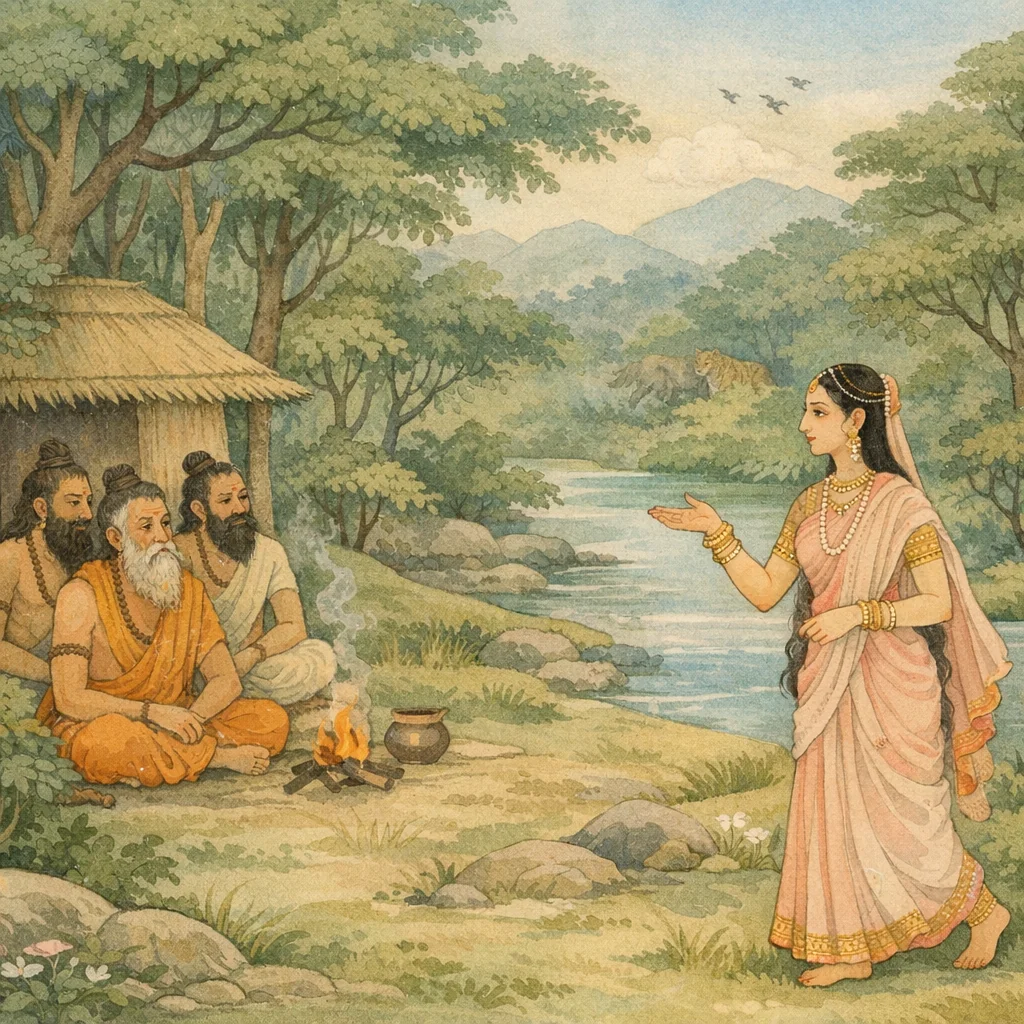
हा वीर नल नामाहं नष्टा किल तवानघ । अस्यामटण्यां घोरायां कि मां न प्रतिभाषसे,हा निष्पाप वीर नल! आपकी मैं दमयन्ती इस भयंकर वनमें नष्ट हो रही हूँ, आप मेरी बातका उत्तर क्यों नहीं देते?
“Alas, O hero Nala! I am Damayantī, your blameless one. I am indeed perishing in this dreadful forest—why do you not reply to me?”
Verse 20
कर्षयत्येष मां रौद्रो व्यात्तास्यों दारुणाकृति: । अरुण्यराट् क्षुधाविष्ट: कि मां न त्रातुमहसि,यह भयानक आकृतिवाला क्रूर सिंह भूखसे पीड़ित हो मुँह बाये खड़ा है और मुझपर आक्रमण करना चाहता है, क्या आप मेरी रक्षा नहीं कर सकते?
Bṛhadaśva said: “This fierce one is dragging me—his jaws gaping, his form terrifying. The king of the forest, driven by hunger, stands ready to strike. Will you not protect me?”
Verse 21
न मे त्वदन्या काचिद्ि प्रियास्तीत्यब्रवी: सदा । तामृतां कुरु कल्याण पुरोक्तां भारतीं नूप,कल्याणमय नरेश! आप पहले जो सदा यह कहते थे कि तुम्हारे सिवा दूसरी कोई भी स्त्री मुझे प्रिय नहीं है, अपनी उस बातको सत्य कीजिये
Bṛhadaśva said: “You used always to declare, ‘No woman other than you is dear to me.’ O noble one, O king—make that earlier spoken word of yours true; let your promise stand as truth.”
Verse 22
उन्मत्तां विलपन्तीं मां भार्यामिष्टां नराधिप । ईप्सितामीप्सितो$सि त्वं कि मां न प्रतिभाषसे,महाराज! मैं आपकी प्रिय पत्नी हूँ और आप मेरे प्रियतम पति हैं, ऐसी दशामें भी मैं यहाँ उन्मत्त विलाप कर रही हूँ तो भी आप मेरी बातका उत्तर क्यों नहीं देते?
Bṛhadaśva said: “O lord of men, I am your beloved wife, distraught and lamenting like one maddened. You are the husband I have long desired, and I am the wife you desired—why then, O great king, do you not reply to me?”
Verse 23
कृशां दीनां विवर्णा च मलिनां वसुधाधिप । वस्त्रार्थप्रावतामेकां विलपन्तीमनाथवत्,पृथ्वीनाथ! मैं दीन, दुर्बल, कान्तिहीन और मलिन होकर आधे वस्त्रसे अपने अंगोंको ढककर अकेली अनाथ-सी विलाप कर रही हूँ। विशाल नेत्रोंवाले शत्रुसूदन आर्य! मेरी दशा अपने झुंडसे बिछुड़ी हुई हरिणीकी-सी हो रही है। मैं यहाँ अकेली रो रही हूँ। परंतु आप मेरा मान नहीं रखते हैं
Bṛhadaśva said: “O lord of the earth, she is emaciated, wretched, pale, and soiled—half-covered by her garment—alone, lamenting like one without protection. In such a state she weeps in solitude, like a doe separated from her herd, and reproaches the noble hero for not honoring her and not extending due regard.”
Verse 24
यूथभ्रष्टामिवैकां मां हरिणीं पृुथुलोचन । न मानयसि मामार्य रुदन्तीमरिकर्शन,पृथ्वीनाथ! मैं दीन, दुर्बल, कान्तिहीन और मलिन होकर आधे वस्त्रसे अपने अंगोंको ढककर अकेली अनाथ-सी विलाप कर रही हूँ। विशाल नेत्रोंवाले शत्रुसूदन आर्य! मेरी दशा अपने झुंडसे बिछुड़ी हुई हरिणीकी-सी हो रही है। मैं यहाँ अकेली रो रही हूँ। परंतु आप मेरा मान नहीं रखते हैं
Bṛhadaśva said: “O wide-eyed one, I am like a lone doe separated from her herd. Yet you do not honor or heed me, O noble one, O subduer of foes, even as I weep.”
Verse 25
महाराज महारण्ये अहमेकाकिनी सती । दमयन्त्यभिभाषे त्वां कि मां न प्रतिभाषसे,महाराज! इस महान् वनमें मैं सती दमयन्ती अकेली आपको पुकार रही हूँ, आप मुझे उत्तर क्यों नहीं देते?
“O king, here in this vast wilderness I—Damayantī, a chaste and faithful wife—stand alone and call out to you. Why do you not answer me, O king?”
Verse 26
कुलशीलोपसम्पन्न चारुसर्वाड़्रशोभन । नाद्य त्वां प्रतिपश्यामि गिरावस्मिन् नरोत्तम,नरश्रेष्ठ आप उत्तम कुल और श्रेष्ठ शीलस्वभावसे सम्पन्न हैं। आप अपने सम्पूर्ण मनोहर अंगोंसे सुशोभित होते हैं। आज इस पर्वतशिखरपर मैं आपको नहीं देख पाती हूँ
“O best of men, endowed with noble lineage and excellent conduct, adorned with all charming limbs—today I do not see you upon this mountain.”
Verse 27
वने चास्मिन् महाघोरे सिंहव्याप्रनिषेविते | शयानमुपविष्टं वा स्थितं वा निषधाधिप,निषधनरेश! इस महाभयंकर वनमें, जहाँ सिंह-व्याप्र रहते हैं, आप कहीं सोये हैं, बैठे हैं अथवा खड़े हैं?
Bṛhadaśva said: “O lord of Niṣadha, in this exceedingly dreadful forest—haunted by lions and tigers—are you lying down somewhere, or seated, or standing?”
Verse 28
प्रस्थितं वा नरश्रेष्ठ मम शोकविवर्धन । क॑ नु पृच्छामि दुः:खार्ता त्वदर्थे शोककर्शिता,मेरे शोकको बढ़ानेवाले नरश्रेष्ठ। आप यहीं हैं या कहीं अन्यत्र चल दिये, यह मैं किससे पूछँ? आपके लिये शोकसे दुर्बल होकर मैं अत्यन्त दुःखसे आतुर हो रही हूँ
Bṛhadaśva said: “O best of men, you who only increase my sorrow—have you departed, or are you still here? In my anguish, whom can I even ask? Worn down by grief on your account, I am overwhelmed with pain.”
Verse 29
कच्चिद् दृष्टस्त्वयारण्ये संगत्येह नलो नृप: । को नु मे वाथ प्रष्टव्यो वनेडस्मिन् प्रस्थितं नलम्,“क्या तुमने इस वनमें राजा नलसे मिलकर उन्हें देखा है?” ऐसा प्रश्न अब मैं इस वनमें प्रस्थान करनेवाले नलके विषयमें किससे करूँ?
Bṛhadaśva said: “Did you happen to see King Nala here in this forest—having met with him? Or else, whom can I now ask in this wilderness about Nala, who has set out and gone on his way?”
Verse 30
अभिरूपं महात्मानं परव्यूहविनाशनम् | यमन्वेषसि राजानं नल॑ पद्मनिभेक्षणम्
Bṛhadaśva said: “The king you are seeking—Nala, lotus-eyed—is handsome and great-souled, and he is a destroyer of the enemy’s battle-formations.”
Verse 31
अयं स इति कस्याद्य श्रोष्यामि मधुरां गिरम्। 'शत्रुओंके व्यूहका नाश करनेवाले जिन परम सुन्दर कमलनयन महात्मा राजा नलको तू खोज रही है, वे यही तो हैं, ऐसी मधुर वाणी आज मैं किसके मुखसे सुनूँगी?” || ३० $ई || अरण्यराडयं श्रीमां क्षतुर्दष्टोी महाहनु:,वह वनका राजा कान्तिमान् सिंह मेरे सामने चला आ रहा है, इसके चार दाढ़ें और विशाल ठोड़ी है। मैं निःशंक होकर इसके सामने जा रही हूँ और कहती हूँ, “आप मृगोंके राजा और इस वनके स्वामी हैं
“From whose lips shall I hear today that sweet utterance—‘This is he’—pointing out the very Nala, the lotus-eyed, noble king who destroys the battle-formations of his foes, whom you have been seeking?”
Verse 32
शार्टूलोडभिमुखो< भ्येति व्रजाम्येनमशड्किता । भवान् मृगाणामधिपस्त्वमस्मिन् कानने प्रभु:,वह वनका राजा कान्तिमान् सिंह मेरे सामने चला आ रहा है, इसके चार दाढ़ें और विशाल ठोड़ी है। मैं निःशंक होकर इसके सामने जा रही हूँ और कहती हूँ, “आप मृगोंके राजा और इस वनके स्वामी हैं
Bṛhadaśva said: “A tiger is coming straight toward me. I will go up to him without fear and address him: ‘You are the lord of the beasts, the master of this forest.’”
Verse 33
विदर्भराजतनयां दमयन्तीति विद्धि माम् निषधाधिपतेर्भार्या नलस्यामित्रघातिन:,“मैं विदर्भराजकुमारी दमयन्ती हूँ। मुझे शत्रुधाती निषधनरेश नलकी पत्नी समझिये
Know me as Damayantī, daughter of the king of Vidarbha. I am the wife of Nala, slayer of foes, sovereign of Niṣadha—recognize me as such.
Verse 34
पतिमन्वेषतीमेकां कृपणां शोककर्षिताम् । आश्वासय मृगेन्द्रेह यदि दृष्टस्त्वया नल:,“मृगेन्द्र! मैं इस वनमें अकेली पतिकी खोजमें भटक रही हूँ तथा शोकसे पीड़ित एवं दीन हो रही हूँ। यदि आपने नलको यहाँ कहीं देखा हो तो उनका कुशल-समाचार बताकर मुझे आश्वासन दीजिये
O lord of beasts! Alone I wander this forest in search of my husband, wretched and worn down by grief. If you have seen Nala anywhere, tell me of his welfare and give me comfort.
Verse 35
अथवा त्वं वनपते नल॑ यदि न शंससि । मां खादय मृगश्रेष्ठ दु:खादस्माद् विमोचय,“अथवा वनराज मृगश्रेष्ठी यदि आप नलके विषयमें कुछ नहीं बताते हैं तो मुझे खा जायेँ और इस दुःखसे छुटकारा दे दें”
Or else, O lord of the forest—if you will not speak to me of Nala—then devour me, O best of beasts, and release me from this sorrow.
Verse 36
श्रुत्वारण्ये विलपितं न मामाश्वासयत्ययम् । यात्येतां स्वादुसलिलामापगां सागरंगमाम्
Bṛhadaśva said: “Having heard this lament in the forest, it brings me no comfort. On it goes—this river of sweet waters—flowing toward the ocean.”
Verse 37
अहो! इस घोर वनमें मेरा विलाप सुनकर भी यह सिंह मुझे सान्त्वना नहीं देता। यह तो स्वादिष्ट जलसे भरी हुई इस समुद्रगामिनी नदीकी ओर जा रहा है ।। इमं शिलोच्चयं पुण्यं शज्जैर्बहुभिरुच्छितै: । विराजद्धिरिवानेकै्नैंकवर्णर्मनोरमै:,अच्छा, इस पवित्र पर्वतसे ही पूछती हूँ। यह बहुत-से ऊँचे-ऊँचे शोभाशाली बहुरंगे एवं मनोरम शिखरोंद्वारा सुशोभित है
Bṛhadaśva said: “Alas! Even after hearing my lament in this dreadful forest, this lion offers me no comfort. Instead it moves toward that river, sea-bound and filled with sweet water. So I will question this holy mountain-peak itself—adorned with many lofty summits, shining as though with countless delightful, multi-colored crests.”
Verse 38
नानाधातुसमाकीर्ण विविधोपलभूषितम् । अस्यारण्यस्य महतः केतु भूतमिवोत्थितम्,अनेक प्रकारके धातुओंसे व्याप्त और भाँति-भाँतिके शिला-खण्डोंसे विभूषित है। यह पर्वत इस महान् वनकी ऊपर उठी हुई पताकाके समान जान पड़ता है
It is strewn with many kinds of minerals and adorned with rocks of varied hues. Rising up, it appears like a banner set aloft for this vast forest.
Verse 39
सिंहशार्दूलमातड्भवराहर्क्षमृगायुतम् । पतत्र्त्रिभिबहुविधै: समन््तादनुनादितम्,यह सिंह, व्याप्र, हाथी, सूअर, रीछ और मृगोंसे परिपूर्ण है। इसके चारों ओर अनेक प्रकारके पक्षी कलरव कर रहे हैं
It is filled with lions and tigers, elephants, boars, bears, and herds of deer; and on every side it resounds with the varied calls of many kinds of birds.
Verse 40
किंशुकाशोकबकुलपुन्नागैरुपशोभितम् । कर्णिकारधवप्लक्षै: सुपुष्पैरपशोभितम्,पलाश, अशोक, बकुल, पुन्नाग, कनेर, धव तथा प्लक्ष आदि सुन्दर फूलोंवाले वृक्षोंसे वह पर्वत सुशोभित हो रहा है
That mountain was adorned with kiṃśuka and aśoka trees, with bakula and punnāga as well; it was further beautified by karṇikāra, dhava, and plakṣa trees, all bearing splendid blossoms.
Verse 41
सरिद्धि: सविहड्भजाभि: शिखरैश्न॒ समाकुलम् । गिरिराजमिमं तावत् पृच्छामि नृपतिं प्रति,यह पर्वत अनेक सरिताओं, सुन्दर पक्षियों और शिखरोंसे परिपूर्ण है। अब मैं इसी गिरिराजसे महाराज नलका समाचार पूछती हूँ
This lord of mountains is crowded with many rivers, lovely birds, and lofty peaks. Now, turning to this very mountain-king, I shall inquire about the king—Nala.
Verse 42
भगवन्नचलश्रेष्ठ दिव्यदर्शन विश्ुत । शरण्य बहुकल्याण नमस्ते<स्तु महीधर,'भगवन्! अचलप्रवर! दिव्य दृष्टिवाले! विख्यात! सबको शरण देनेवाले परम कल्याणमय महीधर! आपको नमस्कार है
O Blessed One, best among mountains, endowed with divine vision and renowned everywhere—O refuge of all, source of abundant auspiciousness, O bearer of the earth—may my reverence be to you.
Verse 43
प्रणमाम्यभिगम्याहं राजपुत्रीं निबोध माम् । राज्ञ: स्नुषां राजभार्या दमयन्तीति विश्रुताम्,“मैं निकट आकर आपके चरणोंमें प्रणाम करती हूँ। आप मेरा परिचय इस प्रकार जानें, मैं राजाकी पुत्री, राजाकी पुत्रवधू तथा राजाकी ही पत्नी हूँ। मेरी “दमयन्ती” नामसे प्रसिद्धि है
Approaching with reverence, I bow at your feet. Know who I am: I am a king’s daughter, a king’s daughter-in-law, and also a king’s wife—renowned by the name Damayantī.
Verse 44
राजा विदर्भाधिपति: पिता मम महारथ: । भीमो नाम क्षितिपतिक्षातुर्वर्ण्यस्य रक्षिता,“विदर्भदेशके स्वामी महारथी भीम नामक राजा मेरे पिता हैं। वे पृथ्वीके पालक तथा चारों वर्णोके रक्षक हैं
My father is Bhīma by name, the king and lord of Vidarbha, a great chariot-warrior. As ruler of the earth, he is the protector of the four social orders.
Verse 45
राजसूयाश्चदमेधानां क्रतूनां दक्षिणावताम् | आहर्ता पार्थिवश्रेष्ठ: पृथुचार्वज्चितेक्षण:,उन्होंने (प्रचुर) दक्षिणावाले राजसूय तथा अश्वमेध नामक यज्ञोंका अनुष्ठान किया है। वे भूमिपालोंमें श्रेष्ठ हैं। उनके नेत्र बड़े, चंचल और सुन्दर हैं
He has performed the Rājasūya and the Aśvamedha—great sacrifices rich in priestly gifts. He is the foremost among kings, and his eyes are large, restless, and beautiful.
Verse 46
ब्रह्मण्य: साधुवृत्तश्न सत्यवागनसूयक: । शीलवान् वीर्यसम्पन्न: पृथुश्रीर्धर्मविच्छुचि:,'वे ब्राह्मणभक्त, सदाचारी, सत्यवादी, किसीके दोषको न देखनेवाले, शीलवान्, पराक्रमी, प्रचुर सम्पत्तिके स्वामी, धर्मज्ञ तथा पवित्र हैं
He is devoted to Brahmins and to sacred duty, of upright conduct, truthful in speech, and free from fault-finding. He is well-mannered and self-controlled, endowed with valor, possessed of broad prosperity, discerning in matters of dharma, and inwardly pure.
Verse 47
सम्यग गोप्ता विदर्भाणां निर्जितारिगण: प्रभु: । तस्य मां विद्धि तनयां भगवंस्त्वामुपस्थिताम्,“वे विदर्भवेशकी जनताका अच्छी तरह पालन करनेवाले हैं। उन्होंने समस्त शत्रुओंको जीत लिया है, वे बड़े शक्तिशाली हैं। भगवन्! मुझे उन्हींकी पुत्री जानिये। मैं आपकी सेवामें (एक जिज्ञासा लेकर) उपस्थित हुई हूँ
He is a capable and rightful protector of the people of Vidarbha, a powerful lord who has conquered all bands of enemies. O venerable one, know me to be his daughter. I have come into your presence to serve you and to seek your guidance.
Verse 48
निषधेषु महाराज: श्वशुरो मे नरोत्तम: । गृहीतनामा विख्यातो वीरसेन इति सम ह,“निषधदेशके महाराज मेरे श्वशुर थे, वे प्रात:-स्मरणीय नरश्रेष्ठ वीरसेनके नामसे विख्यात थे
Bṛhadaśva said: “In the land of Niṣadha, my father-in-law was a great king—an excellent man, worthy of reverent remembrance. He was renowned by the name Vīrasena.”
Verse 49
तस्य राज्ञ: सुतो वीर: श्रीमान् सत्यपराक्रम: । क्रमप्राप्तं पितु: स्वं यो राज्यं समनुशास्ति ह,उन्हीं महाराज वीरसेनके एक वीर पुत्र हैं, जो बड़े ही सुन्दर और सत्यपराक्रमी हैं। वे वंशपरम्परासे प्राप्त अपने पिताके राज्यका पालन करते हैं
Bṛhadaśva said: “That king has a heroic son—prosperous, handsome, and whose valor is grounded in truth. Having inherited his father’s own kingdom in due succession, he duly governs it.”
Verse 50
नलो नामारिहा श्याम: पुण्यश्लोक इति श्रुतः । ब्रह्मण्यो वेदविद् वाग्मी पुण्यकृत् सोमपो5ग्निमान्,“उनका नाम नल है। शत्रुदमन, श्यामसुन्दर राजा नल पुण्यश्लोक कहे जाते हैं। वे बड़े ब्राह्मणभक्त, वेदवेत्ता, वक्ता, पुण्यात्मा, सोमपान करनेवाले और अग्निहोत्री हैं
Bṛhadaśva said: “His name is Nala—subduer of foes, dark-hued and renowned as ‘Puṇyaśloka’, a king of celebrated virtue. He is devoted to Brahmins, learned in the Vedas, eloquent in speech, a doer of merit, a drinker of Soma in sacrifice, and one who maintains the sacred fire through Agnihotra.”
Verse 51
यष्टा दाता च योद्धा च सम्यक् चैव प्रशासिता । तस्य मामबलां श्रेष्ठां विद्धि भायामिहागताम्,“वे एक अच्छे यज्ञकर्ता, उत्तम दाता, शूरवीर योद्धा और श्रेष्ठ शासक हैं, आप मुझे उन्हींकी श्रेष्ठ पत्नी समझ लीजिये। मैं अबला नारी आपके निकट यहाँ उन्हींकी कुशल पूछनेके लिये आयी हूँ। गिरिराज! (मेरे स्वामी मुझे छोड़कर कहीं चले गये हैं।) मैं धन- सम्पत्तिसे वंचित, पतिदेवसे रहित, अनाथ और संकटोंकी मारी हुई हूँ। इस वनमें अपने पतिकी ही खोज कर रही हूँ
Bṛhadaśva said: “He is a true performer of sacrifices, a generous giver, a valiant warrior, and a righteous ruler. Know me to be his noble wife, a helpless woman who has come here. I have arrived to inquire after his welfare.”
Verse 52
त्यक्तश्रियं भर्तहीनामनाथां व्यसनान्विताम् । अन्वेषमाणां भर्तरं त्वं मां पर्वतसत्तम,“वे एक अच्छे यज्ञकर्ता, उत्तम दाता, शूरवीर योद्धा और श्रेष्ठ शासक हैं, आप मुझे उन्हींकी श्रेष्ठ पत्नी समझ लीजिये। मैं अबला नारी आपके निकट यहाँ उन्हींकी कुशल पूछनेके लिये आयी हूँ। गिरिराज! (मेरे स्वामी मुझे छोड़कर कहीं चले गये हैं।) मैं धन- सम्पत्तिसे वंचित, पतिदेवसे रहित, अनाथ और संकटोंकी मारी हुई हूँ। इस वनमें अपने पतिकी ही खोज कर रही हूँ
Bṛhadaśva said: “I am a woman bereft of prosperity, without my husband, without protection, and afflicted by calamities. I am searching for my husband; O best of mountains, you see me here in that quest.”
Verse 53
समुल्लिखद्धिरेतैर्हि त्वया शूज्भशतैर्न॒प: । कच्चिद् दृष्टोडचलश्रेष्ठ वने5स्मिन् दारुणे नलः,'पर्वतश्रेष्ठ] क्या आपने इन सैकड़ों गगनचुम्बी शिखरोंद्वारा इस भयानक वनमें कहीं राजा नलको देखा है?
Bṛhadaśva said: “O best of mountains, by these hundreds of peaks you have, as it were, scratched and scored the very sky. Tell me—have you seen King Nala anywhere in this dreadful forest?”
Verse 54
गजेन्द्रविक्रमो धीमान् दीर्घबाहुरमर्षण: । विक्रान्त: सत्त्ववान् वीरो भर्ता मम महायशा:,गिरा नाश्वासयस्यद्य स्वां सुतामिव दु:ःखिताम् । “मेरे महायशस्वी स्वामी निषधराज नल गजराजकी-सी चालसे चलते हैं। वे बड़े बुद्धिमान, महाबाहु, अमर्षशील (दुःखको न सह सकनेवाले), पराक्रमी, धैर्यवान् तथा वीर हैं। क्या आपने कहीं उन्हें देखा है? गिरिश्रेष्ठ! मैं आपकी पुत्रीके समान हूँ और (पतिके वियोगसे बहुत ही) दुःखी हूँ। क्या आप व्याकुल होकर अकेली विलाप करती हुई मुझ अबलाको आज अपनी वाणीद्वारा आश्वासन न देंगे?”
Bṛhadaśva said: “My illustrious husband—Nala, king of Niṣadha—moves with the might of a lordly elephant. He is wise, long-armed, unable to endure dishonour, bold in action, steadfast in courage, and truly heroic. Have you seen him anywhere? O best of mountains, I am like your own daughter, afflicted with grief. Will you not today comfort me with your voice, as I lament alone in my distress?”
Verse 55
निषधानामधिपति: कच्चिद् दृष्टस्त्वया नलः । विलपती किमेकां मां पर्वतश्रेष्ठ विद्दलाम्
Bṛhadaśva said: “Have you perhaps seen Nala, the lord of the Niṣadhas? Why do you leave me—alone and lamenting—O best of mountains, as you are being split apart?”
Verse 56
वीर विक्रान्त धर्मज्ञ सत्यसंध महीपते
O heroic king, mighty in valor, wise in dharma, and steadfast in truth—O ruler of the earth.
Verse 57
कदा सुस्निग्धगम्भीरां जीमूतस्वनसंनिभाम्
Bṛhadaśva said: “When will I behold that voice—smooth and tender, yet deep and steady—resounding like the rumble of rain-clouds?”
Verse 58
श्रोष्यामि नैषधस्याहं वाचं ताममृतोपमाम् । वैदर्भीत्येव विस्पष्टां शुभां राज्ञो महात्मन:
Bṛhadaśva said: “I shall now recount that nectar-like speech of the king of Niṣadha—clear and auspicious—spoken with reference to the princess of Vidarbha.”
Verse 59
आम्नायसारिणीमृद्धां मम शोकविनाशिनीम् । मैं कब निषधराज नलकी मेघ-गर्जनाके समान स्निग्ध, गम्भीर, अमृतोपम वह मधुर वाणी सुनूँगी। उन महामना राजाके मुखसे “वैदर्भि!” इस सम्बोधनसे युक्त शुभ, स्पष्ट, वेदके अनुकूल, सुन्दर पद और अर्थसे युक्त तथा मेरे शोकका विनाश करनेवाली वाणी मुझे कब सुनायी देगी || ५७-५८ ह |। भीतामाश्वासयत मां नृपते धर्मवत्सल,धर्मवत्सल नरेश्वर! मुझ भयभीत अबलाको आश्वासन दीजिये
Bṛhadaśva said: “O king, devoted to dharma—O lord of men who cherishes righteousness—give reassurance to me, a helpless woman trembling with fear. Comfort me and restore my courage.”
Verse 60
इति सा तं॑ गिरिश्रेष्ठमुक्त्वा पार्थिवनन्दिनी । दमयन्ती ततो भूयो जगाम दिशमुन्तराम्,इस प्रकार उस श्रेष्ठ पर्वतसे कहकर वह राजकुमारी दमयन्ती फिर वहाँसे उत्तर दिशाकी ओर चल दी
Having thus addressed that foremost of mountains, the king’s beloved daughter Damayantī set out once more, leaving that place and proceeding toward the northern direction.
Verse 61
सा गत्वा त्रीनहोरात्रान् ददर्श परमाड़ना । तापसारण्यमतुलं दिव्यकाननशोभितम्,लगातार तीन दिन और तीन रात चलनेके पश्चात् उस श्रेष्ठ नारीने तपस्वियोंसे युक्त एक वन देखा, जो अनुपम तथा दिव्य वनसे सुशोभित था
After journeying for three days and three nights, that noble lady beheld an incomparable forest-hermitage inhabited by ascetics, beautified by a celestial woodland.
Verse 62
वसिष्ठ भग्वत्रिसमैस्तापसैरुपशोभितम् । नियतै: संयताहारैर्दमशैचसमन्वितै:,तथा वसिष्ठ, भूगु और अत्रिके समान नियम-परायण, मिताहारी तथा (शम,) दम, शौच आदिसे सम्पन्न तपस्वियोंसे वह शोभायमान हो रहा था
Bṛhadaśva said: “That place was made splendid by ascetics comparable to Vasiṣṭha, Bhṛgu, and Atri—men of strict observances, restrained in diet, and endowed with self-control and purity.”
Verse 63
अब्भक्षेवायुभक्षैश्ष पत्राहारैस्तथैव च | जितेन्द्रियैर्महा भागै: स्वर्गमार्गदिदृक्षुभि:,वहाँ कुछ तपस्वीलोग केवल जल पीकर रहते थे और कुछ लोग वायु पीकर। कितने ही केवल पत्ते चबाकर रहते थे। वे जितेन्द्रिय महाभाग स्वर्गलोकके मार्गका दर्शन करना चाहते थे
Bṛhadaśva said: There were ascetics there who lived only on water, and others who sustained themselves on air; some likewise lived by chewing and subsisting on leaves alone. Self-controlled and greatly blessed, they sought to behold the path that leads to heaven.
Verse 64
वल्कलाजिनसंवीतैर्मुनिभि: संयतेन्द्रियै: । तापसाध्युषितं रम्यं दरदर्शाश्रममण्डलम्,वल्कल और मृगचर्म धारण करनेवाले उन जितेन्द्रिय मुनियोंसे सेवित एक रमणीय आश्रममण्डल दिखायी दिया, जिसमें प्रायः तपस्वीलोग ही निवास करते थे इति श्रीमहाभारते वनपर्वणि नलोपाख्यानपर्वणि दमयन्तीसार्थवाहसंगमे चतु:षष्टितमो5 ध्याय: इस प्रकार श्रीमहाभारत वनपर्वके अन्तर्गत नलोपाख्यानपर्वमें दमयन्तीकी यार्थवाहसे भेंटविषयक चौंसठवाँ अध्याय पूरा हुआ
Bṛhadaśva said: He then beheld a lovely hermitage-enclosure, inhabited chiefly by ascetics and attended by sages who, clad in bark-garments and deer-skins, lived with their senses restrained.
Verse 65
नानामृगगणैर्जुष्टं शाखामृगगणायुतम् । तापसै: समुपेतं च सा दृष्टवैव समाश्चसत्,उस आश्रममें नाना प्रकारके मृगों और वानरोंके समुदाय भी विचरते रहते थे। तपस्वी महात्माओंसे भरे हुए उस आश्रमको देखते ही दमयन्तीको बड़ी सान्त्वना मिली
Bṛhadaśva said: “That hermitage was frequented by herds of many kinds of wild animals and thronged with troops of monkeys; it was also inhabited by ascetic sages. The moment Damayantī beheld that āśrama, she felt a deep reassurance and relief.”
Verse 66
सुभ्रू: सुकेशी सुश्रोणी सुकुचा सुद्विजानना । वर्चस्विनी सुप्रतिष्ठा स्वसितायतलोचना,उसकी भौंहें बड़ी सुन्दर थीं। केश मनोहर जान पड़ते थे। नितम्बभाग, स्तन, दन्तपंक्ति और मुख सभी सुन्दर थे। उसके मनोहर कजरारे नेत्र विशाल थे। वह तेजस्विनी और प्रतिष्ठित थी
Bṛhadaśva said: “She had beautiful eyebrows, lovely hair, well-shaped hips, and a graceful bosom. Her teeth and face were charming, and her large, dark, elongated eyes were captivating. She was radiant in presence and held in high esteem.”
Verse 67
सा विवेशाश्रमपदं वीरसेनसुतप्रिया । योषिद्रत्नं महाभागा दमयन्ती तपस्विनी,महाराज वीरसेनकी पुत्रवधू रमणीशिरोमणि महाभागा तपस्विनी उस दमयन्तीने आश्रमके भीतर प्रवेश किया
Bṛhadaśva said: Damayantī—virtuous and austere, the jewel among women, and dearly loved by the son of King Vīrasena—entered the precincts of the hermitage.
Verse 68
साभिवाद्य तपोवृद्धान् विनयावनता स्थिता । स्वागतं त इति प्रोक्ता तै: सर्वैस्तापसोत्तमै:,वहाँ तपोवृद्ध महात्माओंको प्रणाम करके वह उनके समीप विनीतभावसे खड़ी हो गयी। तब वहाँके सभी श्रेष्ठ तपस्वीजनोंने उससे कहा--'देवि! तुम्हारा स्वागत है”
Having bowed in reverence to the elder ascetics, she stood near them with humble, disciplined demeanor. Then all those foremost sages addressed her, saying, “Welcome to you, O lady.”
Verse 69
पूजां चास्या यथान्यायं कृत्वा तत्र तपोधना: । आस्यतामित्यथोचुस्ते ब्रूहि कि करवामहे,तदनन्तर वहाँ दमयन्तीका यथोचित आदर-सत्कार करके उन तपोधनोंने कहा--'शुभे! बैठो, बताओ, हम तुम्हारा कौन-सा कार्य सिद्ध करें"
Having offered her due honor in accordance with proper custom, the ascetics rich in austerity said to her there: “Auspicious lady, be seated. Tell us—what can we do to accomplish your purpose?”
Verse 70
तानुवाच वरारोहा कच्चिद् भगवतामिह । तपःस्वग्निषु धर्मेषु मृगपक्षिषु चानघा:,उस समय सुन्दर अंगोंवाली दमयन्तीने उनसे कहा--“भगवन्! निष्पाप महाभागगण! यहाँ तप, अन्निहोत्र, धर्म, मृग और पक्षियोंके पालन तथा अपने धर्मके आचरण आदि विषयोंमें आपलोग सकुशल हैं न?' तब उन महात्माओंने कहा--“भद्रे! यशस्विनि! सर्वत्र कुशल है
Then the fair-limbed Damayantī addressed them: “Revered ones, blameless and fortunate sages—are you all well here? Are your austerities, sacred fires, and observances of dharma proceeding without hindrance, and are the deer and birds (under your care) thriving?”
Verse 71
कुशलं वो महाभागा: स्वधर्माचरणेषु च | तैरुक्ता कुशलं भद्रे सर्वत्रेति यशस्विनि,उस समय सुन्दर अंगोंवाली दमयन्तीने उनसे कहा--“भगवन्! निष्पाप महाभागगण! यहाँ तप, अन्निहोत्र, धर्म, मृग और पक्षियोंके पालन तथा अपने धर्मके आचरण आदि विषयोंमें आपलोग सकुशल हैं न?' तब उन महात्माओंने कहा--“भद्रे! यशस्विनि! सर्वत्र कुशल है
Bṛhadaśva said: “O fortunate ones, are you well—especially in the practice of your own dharma?” Addressed thus, those great-souled ascetics replied to the illustrious lady: “O gentle one, we are well in every respect.”
Verse 72
ब्रृहि सर्वानवद्याड्धि का त्वं कि च चिकीर्षसि । दृष्टवैव ते परं रूप॑ं द्युतिं च परमामिह,'सर्वांगसुन्दरी! बताओ, तुम कौन हो और क्या करना चाहती हो? तुम्हारे उत्तम रूप और परम सुन्दर कान्तिको यहाँ देखकर हमें बड़ा विस्मय हो रहा है। धैर्य धारण करो, शोक न करो। तुम इस वनकी देवी हो या इस पर्वतकी अधिदेवता
Bṛhadaśva said: “Tell me, O flawless one—who are you, and what do you intend to do? Seeing here your supreme beauty and your most radiant splendor, we are filled with wonder. Be steady; do not grieve. Are you a goddess of this forest, or the presiding deity of this mountain?”
Verse 73
विस्मयो न: समुत्पन्न: समाश्वसिहि मा शुच: । अस्यारण्यस्य देवी त्वमुताहो5स्य महीभूत:,'सर्वांगसुन्दरी! बताओ, तुम कौन हो और क्या करना चाहती हो? तुम्हारे उत्तम रूप और परम सुन्दर कान्तिको यहाँ देखकर हमें बड़ा विस्मय हो रहा है। धैर्य धारण करो, शोक न करो। तुम इस वनकी देवी हो या इस पर्वतकी अधिदेवता
Bṛhadaśva said: “We are filled with wonder. Take heart; do not grieve. O you of flawless beauty in every limb—are you the goddess of this forest, or the presiding divinity of this mountain? Tell us: who are you, and what do you seek to do?”
Verse 74
अस्याश्षु नद्या: कल्याणि वद सत्यमनिन्दिते । साब्रवीत् तानृषीन् नाहमरण्यस्यास्य देवता,“अनिन्दिते! कल्याणि! अथवा तुम इस नदीकी अधिष्ठात्री देवी हो, सच-सच बताओ।' दमयन्तीने उन ऋषियोंसे कहा--“तपस्याके धनी ब्राह्मणो! न तो मैं इस वनकी देवी हूँ, न पर्ववकी अधिदेवता और न इस नदीकी ही देवी हूँ। आप सब लोग मुझे मानवी समझें
Bṛhadaśva said: “O auspicious one, O blameless lady—tell the truth at once. Are you the presiding goddess of this river?” Damayantī replied to those sages: “O ascetics rich in austerity, I am not the deity of this forest, nor the presiding deity of the mountain, nor the goddess of this river. Consider me a human being.”
Verse 75
न चाप्यस्य गिरेविंप्रा नैव नद्याश्न देवता । मानुषीं मां विजानीत यूयं सर्वे तपोधना:,“अनिन्दिते! कल्याणि! अथवा तुम इस नदीकी अधिष्ठात्री देवी हो, सच-सच बताओ।' दमयन्तीने उन ऋषियोंसे कहा--“तपस्याके धनी ब्राह्मणो! न तो मैं इस वनकी देवी हूँ, न पर्ववकी अधिदेवता और न इस नदीकी ही देवी हूँ। आप सब लोग मुझे मानवी समझें
“O brahmins, I am not the presiding deity of this mountain, nor the goddess of this river. Know me to be a human woman, all of you who are rich in austerity.”
Verse 76
विस्तरेणाभिधास्यामि तन्मे शृणुत सर्वश: । विदर्भेषु महीपालो भीमो नाम महीपति:,“मैं विस्तारपूर्वक अपना परिचय दे रही हूँ, आपलोग सुनें। विदर्भदेशमें भीम नामसे प्रसिद्ध एक भूमिपाल हैं
Bṛhadaśva said: “I shall relate it in full; listen to me in every detail. In the land of Vidarbha there is a ruler of the earth, a king renowned by the name Bhīma.”
Verse 77
तस्य मां तनयां सर्वे जानीत द्विजसत्तमा: । निषधाधिपतिर्धीमान् नलो नाम महायशा:,'द्विजवरो! आप सब महात्मा जान लें, मैं उन्हीं महाराजकी पुत्री हूँ। निषधदेशके स्वामी, संग्रामविजयी, वीर, विद्वान, बुद्धिमान, प्रजापालक महायशस्वी राजा नल मेरे पति हैं। वे देवताओंके पूजनमें संलग्न रहते हैं और ब्राह्मणोंके प्रति उनके हृदयमें बड़ा स्नेह है
Bṛhadaśva said: “O best of twice-born ones, know all of you that I am his daughter. My husband is the famed King Nala—wise and illustrious—lord of Niṣadha, victorious in battle, heroic, learned, discerning, and a protector of his people. He is devoted to the worship of the gods, and his heart is filled with deep affection for the brāhmaṇas.”
Verse 78
वीर: संग्रामजिद् विद्वान् मम भर्ता विशाम्पति: । देवताभ्यर्चनपरो द्विजातिजनवत्सल:,'द्विजवरो! आप सब महात्मा जान लें, मैं उन्हीं महाराजकी पुत्री हूँ। निषधदेशके स्वामी, संग्रामविजयी, वीर, विद्वान, बुद्धिमान, प्रजापालक महायशस्वी राजा नल मेरे पति हैं। वे देवताओंके पूजनमें संलग्न रहते हैं और ब्राह्मणोंके प्रति उनके हृदयमें बड़ा स्नेह है
Bṛhadaśva said: “My husband is a hero, a conqueror in battle, and a learned man—the lord of the people. He is devoted to the worship of the gods, and he bears deep affection for the twice-born (Brahmins).”
Verse 79
गोप्ता निषधवंशस्य महातेजा महाबल: । सत्यवान् धर्मवित् प्राज्ञ: सत्यसंधोडरिमर्दन:,“वे निषधकुलके रक्षक, महातेजस्वी, महाबली, सत्यवादी, धर्मज्ञ, विद्वान, सत्यप्रतिज्ञ, शत्रुमर्दन, ब्राह्मणभक्त, देवोपासक, शोभा और सम्पत्तिसे युक्त तथा शत्रुओंकी राजधानीपर विजय पानेवाले हैं। मेरे स्वामी नृपश्रेष्ठ नल देवराज इन्द्रके समान तेजस्वी हैं। उनके नेत्र विशाल हैं, उनका मुख पूर्ण चन्द्रमाके समान सुन्दर है, वे शत्रुओंका संहार करनेवाले, बड़े- बड़े यज्ञोंके आयोजक और वेद-वेदांगोंके पारंगत विद्वान् हैं
Bṛhadaśva said: “He is the protector of the Niṣadha line—radiant with great splendor and endowed with great strength; truthful, a knower of dharma, wise, firm in his vows, and a crusher of foes.”
Verse 80
ब्रह्मण्यो दैवतपर: श्रीमान् परपुरंजय: । नलो नाम नृपश्रेष्ठो देवराजसमद्युति:,“वे निषधकुलके रक्षक, महातेजस्वी, महाबली, सत्यवादी, धर्मज्ञ, विद्वान, सत्यप्रतिज्ञ, शत्रुमर्दन, ब्राह्मणभक्त, देवोपासक, शोभा और सम्पत्तिसे युक्त तथा शत्रुओंकी राजधानीपर विजय पानेवाले हैं। मेरे स्वामी नृपश्रेष्ठ नल देवराज इन्द्रके समान तेजस्वी हैं। उनके नेत्र विशाल हैं, उनका मुख पूर्ण चन्द्रमाके समान सुन्दर है, वे शत्रुओंका संहार करनेवाले, बड़े- बड़े यज्ञोंके आयोजक और वेद-वेदांगोंके पारंगत विद्वान् हैं
Bṛhadaśva said: “There is a king named Nala, the best among rulers—devoted to Brahmins and devoted to the gods, endowed with prosperity, and a conqueror of enemy strongholds. His splendor is equal to that of Indra, the king of the gods.”
Verse 81
मम भर्ता विशालाक्ष: पूर्णेन्दुवदनो5$रिहा । आहर्ता क्रतुमुख्यानां वेदवेदाड़पारग:,“वे निषधकुलके रक्षक, महातेजस्वी, महाबली, सत्यवादी, धर्मज्ञ, विद्वान, सत्यप्रतिज्ञ, शत्रुमर्दन, ब्राह्मणभक्त, देवोपासक, शोभा और सम्पत्तिसे युक्त तथा शत्रुओंकी राजधानीपर विजय पानेवाले हैं। मेरे स्वामी नृपश्रेष्ठ नल देवराज इन्द्रके समान तेजस्वी हैं। उनके नेत्र विशाल हैं, उनका मुख पूर्ण चन्द्रमाके समान सुन्दर है, वे शत्रुओंका संहार करनेवाले, बड़े- बड़े यज्ञोंके आयोजक और वेद-वेदांगोंके पारंगत विद्वान् हैं
Bṛhadaśva said: “My husband is large-eyed, with a face as lovely as the full moon, and a destroyer of foes. He is a patron and performer of the foremost sacrifices, and a master who has crossed to the far shore of the Vedas and their auxiliary disciplines.”
Verse 82
सपत्नानां मृथे हन्ता रविसोमसमप्रभ: । सर्वैश्षिन्निकृतिप्रज्ैरनायैरकृतात्मभि:
Bṛhadaśva said: “In battle he is a slayer of rivals, radiant with a splendor like the Sun and the Moon. Yet he is surrounded by men of crooked counsel and perverted judgment—ignoble in conduct and undisciplined in spirit.”
Verse 83
आहूय पृथिवीपाल: सत्यधर्मपरायण: । देवने कुशलैर्जिह्नौ्वतं राज्यं वसूनि च
Bṛhadaśva said: The king, devoted to truth and dharma, summoned them. Yet in gambling he was outwitted by clever, deceitful players, and thus his kingdom and his wealth were taken away. The passage shows that even a righteous ruler may be ruined when he enters a vice where skill is joined with fraud, and that dharma demands vigilance as well as virtue.
Verse 84
'युद्धमें उन्होंने कितने ही शत्रुओंका संहार किया है। वे सूर्य और चन्द्रमाके समान तेजस्वी और कान्तिमान् हैं। एक दिन कुछ कपटकुशल, अजितेन्द्रिय, अनार्य, कुटिल तथा द्यूतनिपुण जुआरिओंने उन सत्य-धर्मपरायण महाराज नलको जूएके लिये आवाहन करके उनके सारे राज्य और धनका अपहरण कर लिया ।। तस्य मामवगच्छध्वं भार्या राजर्षभस्य वै । दमयन्तीति विख्यातां भर्तुर्दर्शनलालसाम्,“आप दमयन्ती नामसे विख्यात मुझे उन्हीं नृपश्रेष्ठ नलकी पत्नी जानें। मैं अपने स्वामीके दर्शनके लिये उत्सुक हो रही हूँ
In war he has slain many enemies; he shines with splendor and beauty like the sun and the moon. Yet one day certain gamblers—skilled in deceit, lacking self-control, ignoble, crooked, and expert at dice—challenged the truth- and dharma-devoted King Nala to play, and by that game carried off all his kingdom and wealth. Know me to be the wife of that bull among kings: I am famed as Damayantī, longing to behold my husband.
Verse 85
सा वनानि गिरींक्षैव सरांसि सरितस्तथा । पल्वलानि च सर्वाणि तथारण्यानि सर्वश:,“मेरे पति महामना नल युद्धकलामें कुशल और सम्पूर्ण अस्त्र-शस्त्रोंके विद्वान् हैं। मैं उन्हींकी खोज करती हुई वन, पर्वत, सरोवर, नदी, गड्ढे और सभी जंगलोंमें दुःखी होकर घूमती हूँ
She traversed forests and mountains, lakes and rivers, marshes and every wilderness, in all directions.
Verse 86
अन्वेषमाणा भर्तारें नलं रणविशारदम् । महात्मानं कृतास्त्रं च विचरामीह दु:खिता,“मेरे पति महामना नल युद्धकलामें कुशल और सम्पूर्ण अस्त्र-शस्त्रोंके विद्वान् हैं। मैं उन्हींकी खोज करती हुई वन, पर्वत, सरोवर, नदी, गड्ढे और सभी जंगलोंमें दुःखी होकर घूमती हूँ
“Seeking my husband Nala—skilled in battle, great-souled, and fully trained in the use of weapons—I wander here in sorrow.”
Verse 87
कच्चिद् भगवतां रम्यं तपोवनमिदं नृप: । भवेत् प्राप्तो नलो नाम निषधानां जनाधिप:,“भगवन्! क्या आपके इस रमणीय तपोवनमें निषधनरेश नल आये थे? ब्रह्मन! जिनके लिये मैं व्याप्र, सिंह आदि पशुओंसे सेवित अत्यन्त दारुण, भयंकर, घोर वनमें आयी हूँ
Bṛhadaśva said: “O king, is this lovely hermitage-grove of the holy sages the place to which Nala, the famed lord of the Niṣadhas, has come? Revered sir—seeking him I have entered this exceedingly harsh and terrifying forest, frequented by tigers, lions, and other beasts.”
Verse 88
यत्कृते5हमिदं ब्रह्मन् प्रपन्ना भूशदारुणम् । वन॑ प्रतिभयं घोरं शार्टूलमृूगसेवितम्,“भगवन्! क्या आपके इस रमणीय तपोवनमें निषधनरेश नल आये थे? ब्रह्मन! जिनके लिये मैं व्याप्र, सिंह आदि पशुओंसे सेवित अत्यन्त दारुण, भयंकर, घोर वनमें आयी हूँ
Bṛhadaśva said: “O Brahmin, for whose sake have I come into this wilderness so exceedingly harsh and dreadful—grim with terror, dark and forbidding, haunted by tigers and wild beasts?”
Verse 89
यदि कैश्िवहोरात्रैर्न द्रक्ष्यामि नल॑ नूपम् । आत्मानं श्रेयसा योक्ष्ये देहस्यास्य विमोचनात्,“यदि कुछ ही दिन-रातमें मैं राजा नलको नहीं देखूँगी तो इस शरीरका परित्याग करके आत्माका कल्याण करूँगी
Bṛhadaśva said: “If within a few days and nights I do not see King Nala, then, casting off this body, I shall seek the highest good for my own self.”
Verse 90
को नु मे जीवितेनार्थस्तमृते पुरुषर्षभम् । कथं भविष्याम्यद्याहं भर्तुशोकाभिपीडिता,“उन पुरुषरत्न नलके बिना जीवन धारण करनेसे मेरा क्या प्रयोजन है? अब मैं पतिशोकसे पीड़ित होकर न जाने कैसी हो जाऊँगी?”
“What purpose can my life serve without Nala, that bull among men? How shall I live today, crushed beneath grief for my husband?”
Verse 91
तथा विलपतीमेकामरण्ये भीमनन्दिनीम् । दमयन्तीमथोचुस्ते तापसा: सत्यदर्शिन:,इस प्रकार वनमें अकेली विलाप करती हुई भीमनन्दिनी दमयन्तीसे सत्यका दर्शन करनेवाले उन तपस्वियोंने कहा--
Thus, as Damayantī—Bhīma’s beloved daughter—lamented alone in the wilderness, those ascetics, seers devoted to truth, addressed her and spoke.
Verse 92
उदर्कस्तव कल्याणि कल्याणो भविता शुभे । वयं पश्याम तपसा क्षिप्रं द्रक्ष्म्सि नैषधम्,“कल्याणि! शुभे! हम अपने तपोबलसे देख रहे हैं, तुम्हारा भविष्य परम कल्याणमय होगा। तुम शीघ्र ही निषधनरेश नलका दर्शन प्राप्त करोगी
Bṛhadaśva said: “O auspicious lady, your future will be wholly благотворный and fortunate. By the power of our austerities we foresee it: soon you will behold Nala, king of Niṣadha, once again.”
Verse 93
निषधानामधिपतिं नल रिपुनिपातिनम् । भैमि धर्मभृतां श्रेष्ठ द्रक्ष्म्से विगतज्वरम्,'भीमकुमारी! तुम शत्रुओंका संहार करनेवाले निषधदेशके अधिपति और धर्मात्माओंमें श्रेष्ठ राजा नलको सब प्रकारकी चिन्ताओंसे रहित देखोगी
Bṛhadaśva said: “O Bhīmī, you will behold King Nala—the sovereign of the Niṣadhas, the vanquisher of foes, and foremost among the righteous—now free from all feverish anxiety and distress.”
Verse 94
विमुक्तं सर्वपापेभ्य: सर्वरत्नसमन्वितम् । तदेव नगर श्रेष्ठ प्रशासतमरिंदमम्,“तुम्हारे पति सब प्रकारके पापजनित दुखोंसे मुक्त और सम्पूर्ण रत्नोंसे सम्पन्न होंगे। शत्रुदमन राजा नल फिर उसी श्रेष्ठ नगरका शासन करेंगे। वे शत्रुओंके लिये भयदायक और सुहृदोंके लिये शोकका नाश करनेवाले होंगे। कल्याणि! इस प्रकार सत्कुलमें उत्पन्न अपने पतिको तुम (नरेशके पदपर प्रतिष्ठित) देखोगी”
Bṛhadaśva said: “Your husband will be freed from every sin-born affliction and will be endowed with all treasures. That foe-subduing king Nala will again rule that very best of cities. He will be a terror to enemies and a remover of sorrow for his well-wishers. O auspicious one, thus will you see your husband—born in a noble lineage—restored to royal station.”
Verse 95
द्विषतां भयकर्तारें सुहदां शोकनाशनम् | पति द्रक्ष्यसि कल्याणि कल्याणाभिजनं नृपम्,“तुम्हारे पति सब प्रकारके पापजनित दुखोंसे मुक्त और सम्पूर्ण रत्नोंसे सम्पन्न होंगे। शत्रुदमन राजा नल फिर उसी श्रेष्ठ नगरका शासन करेंगे। वे शत्रुओंके लिये भयदायक और सुहृदोंके लिये शोकका नाश करनेवाले होंगे। कल्याणि! इस प्रकार सत्कुलमें उत्पन्न अपने पतिको तुम (नरेशके पदपर प्रतिष्ठित) देखोगी”
Bṛhadaśva said: “O auspicious lady, you shall see your husband again as a king of noble lineage—one who will be a source of fear to his enemies and a remover of sorrow for his friends.”
Verse 96
एवमुक्क्त्वा नलस्येष्टां महिषीं पार्थिवात्मजाम् । अन्तर्हितास्तापसास्ते साग्निहोत्राश्रमास्तथा,नलकी प्रियतमा महारानी राजकुमारी दमयन्तीसे ऐसा कहकर वे सभी तपस्वी अग्निहोत्र और आश्रमसहित अदृश्य हो गये
Having spoken thus to Damayantī—the beloved queen of Nala, the king’s daughter—those ascetics, together with their sacred fires (agnihotra) and hermitages, vanished from sight.
Verse 97
सा दृष्टवा महदाश्चर्य विस्मिता हृभवत् तदा । दमयन्त्यनवद्याज्ी वीरसेननृपस्नुषा,उस समय राजा वीरसेनकी पुत्रवधू सर्वांगसुन्दरी दमयन्ती वह महान् आश्वर्यकी बात देखकर बड़े विस्मयमें पड़ गयी
Seeing that great marvel, Damayantī—faultless in form and the daughter-in-law of King Vīrasena—was at that moment struck with astonishment.
Verse 98
कि नु स्वप्नो मया दृष्ट: को5यं विधिरिहाभवत् | क्व नु ते तापसा: सर्वे क्व तदाश्रममण्डलम्,(उसने सोचा--) “क्या मैंने कोई स्वप्न देखा है? यहाँ यह कैसी अद्भुत घटना हो गयी? वे सब तपस्वी कहाँ चले गये और वह आश्रममण्डल कहाँ है?”
Bṛhadaśva said: “Have I seen some dream? What strange turn of events has occurred here? Where have all those ascetics gone, and where is that whole circle of the hermitage?”
Verse 99
क्व सा पुण्यजला रम्या नदी द्विजनिषेविता । क्व नु ते ह नगा हृद्या: फलपुष्पोपशोभिता:,“वह पुण्यसलिला रमणीय नदी, जिसपर पक्षी निवास कर रहे थे, कहाँ चली गयी? फल और फूलोंसे सुशोभित वे मनोरम वृक्ष कहाँ विलीन हो गये!”
Bṛhadaśva said: “Where has that lovely river, with its holy waters—frequented by the twice-born—gone now? And where, indeed, have those delightful trees vanished, adorned with fruits and blossoms?”
Verse 100
ध्यात्वा चिरं भीमसुता दमयन्ती शुचिस्मिता । भर्तुशोकपरा दीना विवर्णवदनाभवत्,पवित्र मुसकानवाली भीमपुत्री दमयन्ती बहुत देरतक इन सब बातोंपर विचार करती रही। तत्पश्चात् वह पतिशोकपरायण और दीन हो गयी तथा उसके मुखपर उदासी छा गयी
After reflecting for a long time, Damayantī—the daughter of Bhīma, known for her pure, gentle smile—became overwhelmed by grief for her husband. Sinking into dejection, her face lost its color and grew shadowed with sorrow.
Verse 101
सा गत्वाथापरां भूमिं बाष्पसंदिग्धया गिरा । विललापाश्रुपूर्णाक्षी दृष्टगाशोकतरुं तत:,तदनन्तर वह दूसरे स्थानपर जाकर अश्रुगह्द वाणीसे विलाप करने लगी। उसने आँसू भरे नेत्रोंसे देखा, वहाँसे कुछ ही दूरपर एक अशोकका वृक्ष था। दमयन्ती उसके पास गयी। वह तरुवर अशोक-फूलोंसे भरा था। उस वनमें पल्लवोंसे लदा हुआ और पक्षियोंके कलरवोंसे गुंजायमान वह वृक्ष बड़ा ही मनोरम जान पड़ता था
Bṛhadaśva said: Then she went on to another spot, and with a voice choked and blurred by tears she began to lament. Her eyes brimming with weeping, she looked about and saw, not far from there, an aśoka tree—laden with blossoms and fresh shoots, resonant with the calls of birds. Drawn to it, Damayantī approached that lovely tree, as if seeking relief from sorrow in a place whose very name signifies the banishing of grief.
Verse 102
उपगम्य तरुश्रेष्ठमशोकं पुष्पितं वने । पलल्लवापीडितं ह्ृद्यं विहज्जैरनुनादितम्,तदनन्तर वह दूसरे स्थानपर जाकर अश्रुगह्द वाणीसे विलाप करने लगी। उसने आँसू भरे नेत्रोंसे देखा, वहाँसे कुछ ही दूरपर एक अशोकका वृक्ष था। दमयन्ती उसके पास गयी। वह तरुवर अशोक-फूलोंसे भरा था। उस वनमें पल्लवोंसे लदा हुआ और पक्षियोंके कलरवोंसे गुंजायमान वह वृक्ष बड़ा ही मनोरम जान पड़ता था
Bṛhadaśva said: Drawing near in the forest, she came to a finest of trees—an aśoka in full bloom. Laden with fresh shoots, pleasing to the heart, and resonant with the calls of birds, it appeared exquisitely delightful.
Verse 103
अहो बतायमगम: श्रीमानस्मिन् वनान्तरे | आपीडैर्बहुभिभर्भाति श्रीमान् पर्वतराडिव,(उसे देखकर वह मन-ही-मन कहने लगी--) “अहो! इस वनके भीतर यह अशोक बड़ा ही सुन्दर है। यह अनेक प्रकारके फल, फूल आदि अलंकारोंसे अलंकृत सुन्दर गिरिराजकी भाँति सुशोभित हो रहा है”
Bṛhadaśva said: “Ah! Within this forest, this aśoka tree is truly splendid. Adorned with many ornaments—its clusters of blossoms and fruits—it shines like a magnificent king among mountains.”
Verse 104
विशोकां कुरु मां क्षिप्रमशोक प्रियदर्शन । वीतशोकभयाबाध॑ कच्चित् त्वं दृष्टवान् नृपम्,(अब उसने अशोकसे कहा--) 'प्रियदर्शन अशोक! तुम शीघ्र ही मेरा शोक दूर कर दो। क्या तुमने शोक, भय और बाधासे रहित शत्रुदमन राजा नलको देखा है? क्या मेरे प्रियतम, दमयन्तीके प्राणवल्लभ, निषधनरेश नलपर तुम्हारी दृष्टि पड़ी है?
Bṛhadaśva said: “O Aśoka, pleasing to behold, quickly free me from sorrow. Have you by any chance seen the king—one who is beyond grief, fear, and affliction—Nala, the subduer of foes?”
Verse 105
नल॑ नामारिदमनं दमयन्त्या: प्रियं पतिम् । निषधानामधिपेतिं दृष्टवानसि मे प्रियम्,(अब उसने अशोकसे कहा--) 'प्रियदर्शन अशोक! तुम शीघ्र ही मेरा शोक दूर कर दो। क्या तुमने शोक, भय और बाधासे रहित शत्रुदमन राजा नलको देखा है? क्या मेरे प्रियतम, दमयन्तीके प्राणवल्लभ, निषधनरेश नलपर तुम्हारी दृष्टि पड़ी है?
Bṛhadaśva said: “Have you seen my beloved—Nala, the subduer of foes, the dear husband of Damayantī, the sovereign lord of the Niṣadhas? Have you set eyes upon that cherished king, free from fear and affliction?”
Verse 106
एकवत्त्रार्थसंवीतं सुकुमारतनुत्वचम् । व्यसनेनार्दितं वीरमरण्यमिदमागतम्,उन्होंने एक साड़ीके आधे टुकड़ेसे अपने शरीरको ढँक रखा है, उनके अंगोंकी त्वचा बड़ी सुकुमार है। वे वीरवर नल भारी संकटसे पीड़ित होकर इस वनमें आये हैं
Bṛhadaśva said: “He has covered himself with only a half-piece of cloth; his limbs are delicate and his skin tender. That heroic Nala, crushed by calamity, has come into this forest.”
Verse 107
यथा विशोका गच्छेयमशोकनग तत् कुरु । सत्यनामा भवाशोक अशोक: शोकनाशन:,“अशोकवृक्ष! तुम ऐसा करो, जिससे मैं यहाँसे शोकरहित होकर जाऊँ। अशोक उसे कहते हैं, जो शोकका नाश करनेवाला हो, अत: अशोक! तुम अपने नामको सत्य एवं सार्थक करो'
Bṛhadaśva said: “O Aśoka tree, do this so that I may depart from here free of sorrow. One is called ‘aśoka’ because he destroys grief; therefore, O Aśoka, make your name true and meaningful by dispelling my sorrow.”
Verse 108
एवं साशोकवृक्ष॑ तमार्ता वै परिगम्य ह । जगाम दारुणतरं देशं भैमी वराड़ना,इस प्रकार शोकार्त हुई सुन्दरी दमयन्ती उस अशोकवृक्षकी परिक्रमा करके वहाँसे अत्यन्त भयंकर स्थानकी ओर गयी
Thus the noble lady Bhīmī (Damayantī), overwhelmed with grief, circumambulated that aśoka tree and then moved on toward an even more dreadful region.
Verse 109
सा ददर्श नगान् नैकान् नैकाश्न सरितस्तथा । नैकांश्व पर्वतान् रम्यान् नैकांश्व मृगपक्षिण:,उसने अनेक प्रकारके वृक्ष, अनेकानेक सरिताओं, बहुसंख्यक रमणीय पर्वतों, अनेक मृग-पक्षियों, पर्वतकी कन्दराओं तथा उनके मध्यभागों और हम देखा। पतिका अन्वेषण करनेवाली दमयन्तीने उस समय पूर्वोक्त सभी वस्तुओंको देखा। इस तरह बहुत दूरतकका मार्ग तय कर लेनेके बाद पवित्र मुसकानवाली दमयन्तीने एक बहुत बड़े सार्थ (व्यापारियोंके दल)-को देखा, जो हाथी, घोड़े तथा रथसे व्याप्त था। वह व्यापारियोंका समूह स्वच्छ जलसे सुशोभित एक सुन्दर रमणीय नदीको पार कर रहा था। नदीका जल बहुत ठंडा था। उसका पाट चौड़ा था। उसमें कई कुण्ड थे और वह किनारेपर उगे हुए बेंतके वृक्षोंसे आच्छादित हो रही थी
Bṛhadaśva said: As Damayantī continued her search for her husband, she beheld many mountains and rivers, many delightful peaks, and countless beasts and birds; yet her resolve remained fixed on finding Nala.
Verse 110
कन्दरांश्व नितम्बांश्न नदीश्वाद्भुतदर्शना: । ददर्श तान् भीमसुता पतिमन्वेषती तदा,उसने अनेक प्रकारके वृक्ष, अनेकानेक सरिताओं, बहुसंख्यक रमणीय पर्वतों, अनेक मृग-पक्षियों, पर्वतकी कन्दराओं तथा उनके मध्यभागों और हम देखा। पतिका अन्वेषण करनेवाली दमयन्तीने उस समय पूर्वोक्त सभी वस्तुओंको देखा। इस तरह बहुत दूरतकका मार्ग तय कर लेनेके बाद पवित्र मुसकानवाली दमयन्तीने एक बहुत बड़े सार्थ (व्यापारियोंके दल)-को देखा, जो हाथी, घोड़े तथा रथसे व्याप्त था। वह व्यापारियोंका समूह स्वच्छ जलसे सुशोभित एक सुन्दर रमणीय नदीको पार कर रहा था। नदीका जल बहुत ठंडा था। उसका पाट चौड़ा था। उसमें कई कुण्ड थे और वह किनारेपर उगे हुए बेंतके वृक्षोंसे आच्छादित हो रही थी
Bṛhadaśva said: As Damayantī, the daughter of Bhīma, searched for her husband, she beheld wondrous rivers, mountain caves, and the slopes and ridges of the hills; and amid hardship she pressed on through the wild, steadfast in a wife’s dharma.
Verse 111
गत्वा प्रकृष्टमध्वानं दमयन्ती शुचिस्मिता । ददर्शाथ महासार्थ हस्त्यश्वरथसंकुलम्,उसने अनेक प्रकारके वृक्ष, अनेकानेक सरिताओं, बहुसंख्यक रमणीय पर्वतों, अनेक मृग-पक्षियों, पर्वतकी कन्दराओं तथा उनके मध्यभागों और हम देखा। पतिका अन्वेषण करनेवाली दमयन्तीने उस समय पूर्वोक्त सभी वस्तुओंको देखा। इस तरह बहुत दूरतकका मार्ग तय कर लेनेके बाद पवित्र मुसकानवाली दमयन्तीने एक बहुत बड़े सार्थ (व्यापारियोंके दल)-को देखा, जो हाथी, घोड़े तथा रथसे व्याप्त था। वह व्यापारियोंका समूह स्वच्छ जलसे सुशोभित एक सुन्दर रमणीय नदीको पार कर रहा था। नदीका जल बहुत ठंडा था। उसका पाट चौड़ा था। उसमें कई कुण्ड थे और वह किनारेपर उगे हुए बेंतके वृक्षोंसे आच्छादित हो रही थी
Having traversed a long and arduous stretch of road, Damayantī—her smile still pure despite distress—beheld a vast caravan, crowded with elephants, horses, and chariots.
Verse 112
उत्तरन्तं नदीं रम्यां प्रसन्नसलिलां शुभाम् | सुशीततोयां विस्तीर्णा हृदिनीं वेतसैर्व॒ताम्,उसने अनेक प्रकारके वृक्ष, अनेकानेक सरिताओं, बहुसंख्यक रमणीय पर्वतों, अनेक मृग-पक्षियों, पर्वतकी कन्दराओं तथा उनके मध्यभागों और हम देखा। पतिका अन्वेषण करनेवाली दमयन्तीने उस समय पूर्वोक्त सभी वस्तुओंको देखा। इस तरह बहुत दूरतकका मार्ग तय कर लेनेके बाद पवित्र मुसकानवाली दमयन्तीने एक बहुत बड़े सार्थ (व्यापारियोंके दल)-को देखा, जो हाथी, घोड़े तथा रथसे व्याप्त था। वह व्यापारियोंका समूह स्वच्छ जलसे सुशोभित एक सुन्दर रमणीय नदीको पार कर रहा था। नदीका जल बहुत ठंडा था। उसका पाट चौड़ा था। उसमें कई कुण्ड थे और वह किनारेपर उगे हुए बेंतके वृक्षोंसे आच्छादित हो रही थी
Bṛhadaśva said: “She crossed a delightful river, auspicious and clear-watered, with refreshingly cool streams—broad in expanse, full of pools, and bordered by thickets of reeds.”
Verse 113
प्रोद्घुष्टां क्रो्चकुररैश्वक्रवाकोपकूजिताम् । कूर्मग्राहझषाकीर्णा विपुलद्वीपशोभिताम्,उसके तटपर क्रौंच, कुरर और चक्रवाक आदि पक्षी कूज रहे थे। कछुए, मगर और मछलियोंसे भरी हुई वह नदी विस्तृत टापूसे सुशोभित हो रही थी
Bṛhadaśva said: “That river resounded with the cries of krauñca-birds and kuraras, and was filled with the cooing of cakravākas. Teeming with turtles, crocodiles, and fish, it was beautified by broad islands.”
Verse 114
सा दृष्टवैव महासार्थ नलपत्नी यशस्विनी । उपसर्प्य वरारोहा जनमध्यं विवेश ह,उस बहुत बड़े समूहको देखते ही यशस्विनी नलपत्नी सुन्दरी दमयन्ती उसके पास पहुँच कर लोगोंकी भीड़में घुस गयी
As soon as she saw that great caravan, Damayantī—the illustrious wife of Nala—approached it and, the noble lady, entered into the midst of the crowd.
Verse 115
उन्मत्तरूपा शोकार्ता तथा बत्त्रार्थसंवृता । कृशा विवर्णा मलिना पांसुध्वस्तशिरोरुहा,उसका रूप उन्मत्त स्त्रीका-सा जान पड़ता था, वह शोकसे पीड़ित, दुर्बल, उदास और मलिन हो रही थी। उसने आधे वस्त्रसे अपने शरीरको ढक रखा था और उसके केशोंपर धूल जम गयी थी
Bṛhadaśva said: She appeared like a woman driven to madness—overwhelmed by grief. Thin and weakened, her complexion had faded and she had grown soiled and neglected. With only a half-garment she covered her body, and dust had settled upon her hair.
Verse 116
तां दृष्टवा तत्र मनुजा: केचिद् भीताः: प्रदुद्रुवुः । केचिच्चिन्तापरा जग्मु: केचित् तत्र विचुक्रुशु:,वहाँ दमयन्तीको सहसा देखकर कितने ही मनुष्य भयसे भाग खड़े हुए। कोई-कोई भारी चिन्तामें पड़ गये और कुछ लोग तो चीखने-चिल्लाने लगे
Seeing her there all at once, some of the people were seized with fear and ran away. Others, overwhelmed with anxious concern, went off in troubled thought, while some cried out loudly on the spot—so startling was the sight before them.
Verse 117
प्रहसन्ति सम तां केचिदभ्यसूयन्ति चापरे । अकुर्वत दयां केचित् पप्रच्छुश्नापि भारत,कुछ लोग उसकी हँसी उड़ाते थे और कुछ उसमें दोष देख रहे थे। भारत! उन्हींमें कुछ लोग ऐसे भी थे, जिन्हें उसपर दया आ गयी और उन्होंने उसका समाचार पूछा -
Some mocked her with laughter, while others found fault and spoke with envy. Yet, O Bhārata, there were also a few who felt compassion for her and asked about her condition and story.
Verse 118
कासि कस्यासि कल्याणि कि वा मृगयसे वने । त्वां दृष्टवा व्यथिता: स्मेह कच्चित् त्वमसि मानुषी,“कल्याणि! तुम कौन हो? किसकी स्त्री हो और इस वनमें क्या खोज रही हो? तुम्हें देखकर हम बहुत दु:खी हैं। क्या तुम मानवी हो?
Bṛhadaśva said: “Auspicious lady, who are you? Whose wife are you, and what are you seeking in this forest? Seeing you, we are deeply distressed. Tell us—are you human?”
Verse 119
वद सत्यं वनस्यास्य पर्वतस्याथवा दिश: । देवता त्वं हि कल्याणि त्वां वयं शरणं गता:,“कल्याणि! सच बताओ, तुम इस वन, पर्वत अथवा दिशाकी अधिष्ठात्री देवी तो नहीं हो? हम सब लोग तुम्हारी शरणमें आये हैं
Bṛhadaśva said: “Speak the truth, auspicious lady—are you the presiding deity of this forest, or of this mountain, or of these directions? For you seem divine indeed. We have come to you for refuge.”
Verse 120
यक्षी वा राक्षसी वा त्वमुताहो$सि वराड़ना । सर्वथा कुरु नः स्वस्ति रक्ष वास्माननिन्दिते,“तुम यक्षी हो या राक्षसी अथवा कोई श्रेष्ठ देवांगना हो? अनिन्दिते! सर्वथा हमारा कल्याण एवं संरक्षण करो। कल्याणि! यह हमारा समूह शीघ्र कुशलपूर्वक यहाँसे चला जाय और हमलोगोंका सब प्रकारसे भला हो, ऐसी कृपा करो”
Bṛhadaśva said: “Are you a Yakṣī, or a Rākṣasī, or perhaps some noble celestial maiden? O blameless one, in every way secure our welfare—protect us. Grant that our company may depart from here swiftly in safety, and that good may come to us on all sides.”
Verse 121
यथायं सर्वथा सार्थ: क्षेमी शीघ्रमितो व्रजेत् । तथा विधत्स्व कल्याणि यथा श्रेयो हि नो भवेत्,“तुम यक्षी हो या राक्षसी अथवा कोई श्रेष्ठ देवांगना हो? अनिन्दिते! सर्वथा हमारा कल्याण एवं संरक्षण करो। कल्याणि! यह हमारा समूह शीघ्र कुशलपूर्वक यहाँसे चला जाय और हमलोगोंका सब प्रकारसे भला हो, ऐसी कृपा करो”
Bṛhadaśva said: “O auspicious lady, arrange matters so that this company may, in every way, depart from here quickly in safety and well-being. Do so that what is truly beneficial for us may come to pass.”
Verse 122
तथोक्ता तेन सार्थेन दमयन्ती नृपात्मजा । प्रत्युवाच ततः साध्वी भर्तृव्यसनपीडिता,उस यात्रीदलके द्वारा जब ऐसी बात कही गयी, तब पतिके वियोगजनित दुःखसे पीड़ित साध्वी राजकुमारी दमयन्तीने उन सबको इस प्रकार उत्तर दिया--
When the caravan leader spoke to her in this manner, Damayantī, the king’s daughter—virtuous yet tormented by the calamity of separation from her husband—then replied to them all accordingly.
Verse 123
सार्थवाहं च सार्थ च जना ये चात्र केचन । युवस्थविरबालाश्न सार्थस्य च पुरोगमा:,“इस जनसमुदायके जो सरदार हों, उनसे, इस जनसमूहसे तथा इसके (भीतर रहनेवाले और) आगे चलनेवाले जो बाल-वृद्ध और युवक मनुष्य हों, उन सबसे मेरा यह कहना है कि आप सब लोग मुझे मानवी समझें। मैं एक नरेशपुत्री, महाराजकी पुत्रवधू तथा राजपत्नी हूँ। अपने स्वामीके दर्शनकी इच्छासे इस वनमें भटक रही हूँ
Bṛhadaśva said: “To the caravan-leader, to the caravan itself, and to whatever people are here—whether youths, elders, or children, and also those who go in front of the caravan—this is what I declare: regard me as a human woman. I am a king’s daughter, a great king’s daughter-in-law, and a queen. Longing to behold my husband, I have been wandering in this forest.”
Verse 124
मानुषीं मां विजानीत मनुजाधिपते: सुताम् । नृपस््नुषां राजभार्या भर्तृदर्शनलालसाम्,“इस जनसमुदायके जो सरदार हों, उनसे, इस जनसमूहसे तथा इसके (भीतर रहनेवाले और) आगे चलनेवाले जो बाल-वृद्ध और युवक मनुष्य हों, उन सबसे मेरा यह कहना है कि आप सब लोग मुझे मानवी समझें। मैं एक नरेशपुत्री, महाराजकी पुत्रवधू तथा राजपत्नी हूँ। अपने स्वामीके दर्शनकी इच्छासे इस वनमें भटक रही हूँ
Bṛhadaśva said: “Know me to be a human woman—the daughter of a lord among men. I am a king’s daughter-in-law and a royal wife, wandering in this forest out of longing to behold my husband.”
Verse 125
विदर्भराण्मम पिता भर्ता राजा च नैषध: । नलो नाम महाभागस्तं मृग्याम्यपराजितम्,“विदर्भराज भीम मेरे पिता हैं, निषधनरेश महाभाग राजा नल मेरे पति हैं। मैं उन्हीं अपराजित वीर नलकी खोज कर रही हूँ
Bṛhadaśva said: “The king of Vidarbha, Bhīma, is my father; and the king of Niṣadha is my husband. He is the illustrious Nala. It is that unconquered hero Nala whom I am seeking.”
Verse 126
यदि जानीत नृपतिं क्षिप्रं शंसत मे प्रियम् । नलं॑ पुरुषशार्दूलममित्रगणसूदनम्,“यदि आपलोग शत्रुसमूहका संहार करनेवाले मेरे प्रियतम पुरुषसिंह महाराज नलके विषयमें कुछ जानते हों तो शीघ्र बतावें'
Bṛhadaśva said: “If you know anything about that king, tell me at once what would be dear to hear—about Nala, the tiger among men, the destroyer of hostile bands.”
Verse 127
तामुवाचानवद्याज़ीं सार्थस्य महतः प्रभु: । सार्थवाह: शुचिर्नाम शृणु कल्याणि मद्गच:,उस महान् समूहका मालिक और समस्त यात्रीदलका संचालक (वणिक्) शुचिनामसे प्रसिद्ध था। उसने उस सुन्दरीसे कहा--“कल्याणि! मेरी बात सुनो'--
Then the leader of that great caravan, a merchant named Śuci—pure in conduct—addressed the blameless-limbed maiden: “O auspicious one, listen to my words.”
Verse 128
अहं सार्थस्य नेता वै सार्थवाह: शुचिस्मिते । मनुष्यं नलनामानं न पश्यामि यशस्विनि,'शुचिस्मिते! मैं इस दलका नेता और संचालक हूँ। यशस्विनि! मैंने नल नामधारी किसी मनुष्यको इस वनमें नहीं देखा है
Bṛhadaśva said: “O fair-smiling lady, I am indeed the leader of this caravan—its guide and chief of merchants. O renowned one, I have not seen any man in this forest who bears the name Nala.”
Verse 129
कुञ्जरद्वीपिमहिषशार्दूलर्क्षमृगानपि । पश्याम्यस्मिन् वने कृत्स्ने हामनुष्यनिषेविते,“यह सम्पूर्ण वन मनुष्येतर प्राणियोंसे भरा है। इसके भीतर हाथियों, चीतों, भैंसों सिंहों, रीछों और मृगोंको ही मैं देखता आ रहा हूँ
Bṛhadaśva said: “In this entire forest, which is not frequented by human beings, I keep seeing only wild creatures—elephants, leopards, buffaloes, tigers, bears, and deer.”
Verse 130
ऋते त्वां मानुषीं मर्त्य न पश्यामि महावने । तथा नो यक्षराडद्य मणिभद्र: प्रसीदतु,“तुम-जैसी मानव-कन्याके सिवा और किसी मनुष्यको मैं इस विशाल वनमें नहीं देख रहा हूँ। इसलिये यक्षराज मणिभद्र आज हमपर प्रसन्न हों!
Bṛhadaśva said: “Apart from you, O mortal maiden, I see no other human being in this vast forest. Therefore, may Maṇibhadra, the king of the Yakṣas, be gracious to us today.”
Verse 131
साब्रवीद् वणिज: सर्वान् सार्थवाहं च तं ततः । क्व नु यास्यति सार्थोडयमेतदाख्यातुमहसि,तब दमयन्तीने उन सब व्यापारियों तथा दलके संचालकसे कहा--“आपका यह दल कहाँ जायगा? यह मुझे बताइये”
Then she addressed all the merchants and their caravan-leader: “Where is this caravan going? You ought to tell me this.”
Verse 132
सार्थवाह उवाच सार्थोडयं चेदिराजस्य सुबाहो: सत्यदर्शिन: । क्षिप्रं जनपदं गन्ता लाभाय मनुजात्मजे,सार्थवाहने कहा--राजकुमारी! हमारा यह दल शीघ्र ही सत्यदर्शी चेदिराज सुबाहुके जनपद (नगर)-में विशेष लाभके उद्देश्यसे जायगा
The caravan-leader said: “O princess, this caravan will quickly go to the territory of Subāhu, the king of Cedi, a man of truthful vision, in order to gain profit.”
Verse 553
गिरा नाश्वासयस्यद्य स्वां सुतामिव दु:ःखिताम् । “मेरे महायशस्वी स्वामी निषधराज नल गजराजकी-सी चालसे चलते हैं। वे बड़े बुद्धिमान, महाबाहु, अमर्षशील (दुःखको न सह सकनेवाले), पराक्रमी, धैर्यवान् तथा वीर हैं। क्या आपने कहीं उन्हें देखा है? गिरिश्रेष्ठ! मैं आपकी पुत्रीके समान हूँ और (पतिके वियोगसे बहुत ही) दुःखी हूँ। क्या आप व्याकुल होकर अकेली विलाप करती हुई मुझ अबलाको आज अपनी वाणीद्वारा आश्वासन न देंगे?”
Bṛhadaśva said: “Will you not today comfort, with your words, this sorrowing woman as though she were your own daughter? ‘My glorious lord, Nala, king of Niṣadha, moves with the gait of a lordly elephant. He is wise, mighty-armed, intolerant of dishonor and suffering, valiant, steadfast, and heroic. Have you seen him anywhere? O best of mountains! I am like your daughter, and I am deeply afflicted by separation from my husband. Will you not, by your speech, give reassurance to me—this helpless woman—who, distressed and alone, laments?’”
Verse 5636
यद्यस्यस्मिन् वने राजन् दर्शयात्मानमात्मना । वीर! धर्मज्ञ! सत्यप्रतिज्ञ और पराक्रमी महीपाल! यदि आप इसी वनमें हैं तो राजन! अपने-आपको प्रकट करके मुझे दर्शन दीजिये
Bṛhadaśva said: “O King, if you are here in this forest, then reveal yourself by your own will and grant me your sight. O hero—knower of dharma, true to your vows, and mighty protector of the earth—if you are indeed in this woodland, come forth and let me see you.”
Frequently Asked Questions
Nala must balance truthful identity with survival and future restoration: he chooses concealment and service under an alias while sustaining fidelity and responsibility through disciplined conduct and remembrance.
Adversity is navigated through restraint and skill: competence can secure protection and livelihood, while inner fidelity and ethical memory preserve purpose when public status collapses.
No explicit phalaśruti appears here; the chapter functions as exemplum, indicating that attentive understanding of concealment, service-ethics, and steadfast remembrance supports the broader epic logic of recovery and moral continuity.