Adhyaya 293
Adhiratha-Rādhā Discover the Casket; Vasuṣeṇa (Karṇa) is Adopted and Formed
Upa-parva: Karna-upākhyāna (Account of Karṇa’s origins and early formation)
Vaiśaṃpāyana reports that Adhiratha, a sūta and associate of Dhṛtarāṣṭra, travels with his wife Rādhā to the Jāhnavī (Gaṅgā). Childless, Rādhā earnestly seeks offspring. By chance she notices a decorated casket borne by the river’s waves and brings it to Adhiratha. He retrieves and opens it, finding a radiant boy adorned with golden armor and earrings. Interpreting the event as extraordinary and providential, Adhiratha gives the child to Rādhā, who accepts him ritually and raises him; thereafter she also bears biological sons. Observing the child’s armor and ornaments, the twice-born confer the name Vasuṣeṇa; he becomes known as Vṛṣa and enters the identity of a sūta’s son. As he matures, he is sent to Vāraṇasāhva (Hastināpura region) for instruction, studies missile-arts under Droṇa and Kṛpa (and receives advanced weapon-lore associated with Rāma/Paraśurāma traditions), gains fame among archers, allies with Duryodhana against the Pāṇḍavas, and sustains a marked rivalry with Arjuna. Yudhiṣṭhira is described as troubled by Karṇa’s perceived invulnerability due to armor and earrings. The chapter closes by introducing a scene where Indra approaches in brāhmaṇa guise seeking alms from Rādheya while Karṇa performs a midday solar rite in water.
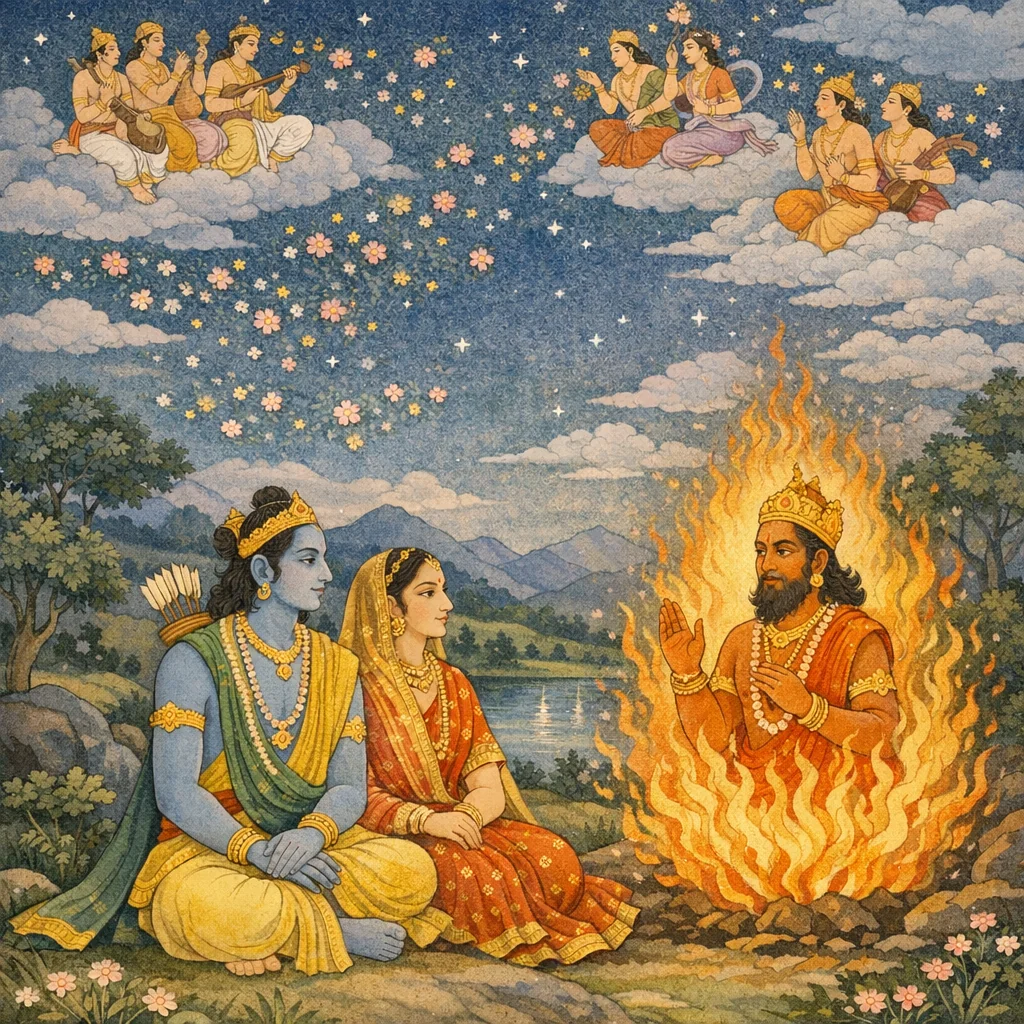
Chapter Arc: दशग्रीव के वध के पश्चात् आकाश देव-गन्धर्वों से भर उठता है; पुष्पवृष्टि और जय-आशीर्वादों के बीच विजयी राम के सामने एक नया, अधिक सूक्ष्म संकट खड़ा होता है—लोक-निन्दा का भय और सीता की शुद्धि पर संदेह। → देवताओं का स्तवन, गन्धर्वों की पुष्पवृष्टि और शरद्-नभ के समान उज्ज्वल अन्तरिक्ष के बीच भी राम का मन स्थिर नहीं होता; सीता अपने पतिव्रत और निष्कलुषता का निवेदन करती है, पर ‘लोक क्या कहेगा’ की छाया निर्णय को कठोर बनाती जाती है। → अग्निदेव स्वयं साक्षी बनकर उद्घोष करते हैं कि मैथिली निर्दोष है—‘अहमन्तःशरीरस्थो… मैथिली नापराध्यति’; देव-समाज द्वारा सीता की शुद्धि का समर्थन राम के संदेह-ताप को निर्णायक रूप से तोड़ देता है। → राम देवताओं को नमस्कार कर, सुहृदों से अभिनन्दित होकर सीता से पुनर्मिलन करते हैं; तत्पश्चात् दल-बल सहित लंका से प्रस्थान, समुद्र-तट पर विश्राम, हनुमान द्वारा नन्दिग्राम में भरत को शुभ-संदेश, और अयोध्या-गमन की दिशा स्पष्ट होती है। → अयोध्या में भरत की प्रतीक्षा और ‘भूमि के रहने तक’ राम-कीर्ति के लोक-प्रसार का संकेत—विजय के बाद राज्य-धर्म और लोक-मत की अगली परीक्षा निकट है।
Shlokas
Verse 1
ऑरड2 छाए. | हि २ 7 एकनवत्यथिकद्विशततमो< ध्याय: श्रीरामका सीताके प्रति संदेह, देवताओंद्वारा सीताकी शुद्धिका समर्थन, श्रीरामका दल-बलसहित लंकासे प्रस्थान एवं किष्किन्धा होते हुए अयोध्यामें पहुँचकर भरतसे मिलना तथा राज्यपर अभिषिक्त होना मार्कण्डेय उवाच स हत्वा रावणं क्षुद्रं राक्षसेन्द्रं सुरद्धिषम् बभूव हृष्ट: ससुहृद् राम: सौमित्रिणा सह,मार्कण्डेयजी कहते हैं--युधिष्ठिर! इस प्रकार नीच स्वभाववाले देवद्रोही राक्षसराज रावणका वध करके भगवान् श्रीराम अपने मित्रों तथा लक्ष्मणके साथ बड़े प्रसन्न हुए
Mārkaṇḍeya said: Having slain the petty-minded Rāvaṇa—the lord of the Rākṣasas and an enemy of the gods—Rāma, together with his friends and with Saumitrī (Lakṣmaṇa), became filled with joy. The verse frames Rāma’s victory not merely as military success but as the ethical removal of a god-hating tyrant, restoring rightful order.
Verse 2
ततो हते दशग्रीवे देवा: सर्षिपुरोगमा: । आशीर्भिर्जययुक्ताभिरानर्चुस्तं महाभुजम्,दशाननके मारे जानेपर देवता तथा महर्षिगण जययुक्त आशीर्वाद देते हुए उन महाबाहुकी पूजा एवं प्रशंसा करने लगे
When Daśagrīva (Rāvaṇa) had been slain, the gods—preceded by the ṛṣis—honoured that mighty-armed hero with blessings charged with victory. In this moment the epic underscores a moral order: the defeat of oppressive power is not merely a military event but a restoration of dharma, acknowledged by divine and sage-like authorities through praise and benediction.
Verse 3
रामं कमलपत्राक्षं तुष्ठवुः सर्वदेवता: । गन्धर्वा: पुष्पवर्षैश्न वाम्भिश्न त्रिदशालया:,स्वर्गवासी सम्पूर्ण देवताओं तथा गन्धर्वोने फूलोंकी वर्षा करते हुए उत्तम वाणीद्वारा कमलनयन भगवान् श्रीरामका स्तवन किया
Mārkaṇḍeya said: All the gods praised Rāma, the lotus-eyed one. The Gandharvas too, dwelling in the celestial realms, extolled him with excellent hymns and showered him with flowers—signaling divine approval of his righteous conduct and the power of devotion to uphold dharma.
Verse 4
पूजयित्वा यथा राम॑ प्रतिजग्मुर्यथागतम् । तन्महोत्सवसंकाशमासीदाकाशमच्युत,श्रीरामकी भलीभाँति पूजा करके वे सब जैसे आये थे, उसी प्रकार लौट गये। युधिष्छिर! उस समय आकाश महान् उत्सवसमारोहसे भरा-सा जान पड़ता था
Having duly worshipped Rama, they all departed and returned the way they had come. O Yudhiṣṭhira, at that time the sky itself seemed like a great festival—filled with the splendor and commotion of a grand celebration.
Verse 5
ततो हत्वा दशग्रीवं लड़कां रामो महायशा: । विभीषणाय प्रददौ प्रभु: परपुरज्जय:,तत्पश्चात् शत्रुओंकी राजधानीपर विजय पानेवाले महायशस्वी भगवान् श्रीरामने दशानन रावणका वध करनेके अनन्तर लंकाका राज्य विभीषणको दे दिया
Then the illustrious Rāma, the mighty lord and conqueror of hostile cities, having slain Daśagrīva (Rāvaṇa), bestowed Laṅkā and its sovereignty upon Vibhīṣaṇa. The act underscores a dharmic conclusion to war: victory is not for plunder, but for restoring rightful order and honoring the righteous ally.
Verse 6
ततः सीतां पुरस्कृत्य विभीषणपुरस्कृताम् । अविन्न्ध्यो नाम सुप्रज्ञो वृद्धामात्यो विनिर्यया,इसके बाद उत्तम बुद्धिसे युक्त बूढ़े मनन््त्री अविन्ध्य विभीषणसहित भगवती सीताको आगे करके लंकापुरीसे बाहर निकले
Then, placing Sītā in front—she being escorted by Vibhīṣaṇa—the wise elder minister named Avindhya went out from Laṅkā. The scene underscores the ethical necessity of honoring and safeguarding a virtuous woman after conflict, with responsible elders and righteous allies ensuring her dignified passage.
Verse 7
उवाच च महात्मानं काकुत्स्थं दैन्यमास्थित: । प्रतीच्छ देवीं सद्वृत्तां महात्मज्जानकीमिति,का. ! 7 ॥/..:: गन्य् रब 407 ) 2:>ननन्ककन हः रे 497, 7 कर्॥/त 8) 8 [47 | ता ए पर ।(] वे ककुत्स्थकुलभूषण महात्मा श्रीरामचन्द्रजीसे दीनतापूर्वक बोले--“महात्मन्! सदाचारसे सुशोभित जनककिशोरी महारानी सीताको ग्रहण कीजिये”
Markandeya said: Having fallen into distress, he addressed the noble scion of Kakutstha (Rama): “O great-souled one, accept Janaki—this queenly lady of impeccable conduct.” The line underscores the ethical ideal that a virtuous, devoted spouse is to be honored and received with due regard, even amid hardship.
Verse 8
एतच्छुत्वा वचस्तस्मादवतीर्य रथोत्तमात् । बाष्पेणापिहितां सीतां ददर्शेक्ष्वाकुनन्दन:,यह सुनकर इक्ष्वाकुनन्दन भगवान् श्रीरामने उस उत्तम रथसे उतरकर सीताको देखा। उनके मुखपर आँसुओंकी धारा बह रही थी
Hearing those words, the delight of the Ikṣvāku line descended from that excellent chariot and beheld Sītā, her face veiled by tears.
Verse 9
तां दृष्टवा चारुसर्वाज्ञीं यानस्थां शोककर्शिताम् | मलोपचितसर्वाज्ञीं जटिलां कृष्णवाससम्,शिबिकामें बैठी हुई सर्वांगसुन्दरी सीता शोकसे दुबली हो गयी थीं। उनके समस्त अंगोंमें मैल जम गयी थी, सिरके बाल आपसमें चिपककर जटाके रूपमें परिणत हो गये थे और उनका वस्त्र काला पड़ा गया था
Markandeya said: “Seeing her—Sītā, lovely in every limb—seated in a conveyance yet wasted by grief, with dirt clinging to her whole body, her hair matted into tangled locks, and her garments darkened—(I understood the depth of her suffering).”
Verse 10
उवाच रामो वैदेहीं परामर्शविशड्कित: । गच्छ वैदेहि मुक्ता त्वं यत् कार्य तन्मया कृतम्,श्रीरामचन्द्रजीके मनमें यह संदेह हुआ कि सम्भव है, सीता पर पुरुषके स्पर्शसे अपवित्र हो गयी हों; अतः उन्होंने विदेहनन्दिनी सीतासे स्पष्ट वचनोंद्वारा कहा --विदेहकुमारी! मैंने तुम्हें रावणकी कैदसे छुड़ा दिया। अब तुम जाओ। मेरा जो कर्तव्य था, उसे मैंने पूरा कर दिया
Mārkaṇḍeya said: Rāma, troubled by doubt after reflecting, spoke to Vaidehī (Sītā): “Go, Vaidehī; you are free. I have rescued you from captivity. What duty was mine to perform, that I have done.”
Verse 11
मामासाद्य पतिं भद्दे न त्वं राक्षसवेश्मनि । जरां व्रजेथा इति मे निहतो5सौ निशाचर:,“भद्रे! मुझ-जैसे पतिको पाकर तुम्हें वृद्धावस्थातक किसी राक्षसके घरमें न रहना पड़े, यही सोचकर मैंने उस निशाचरका वध किया है
Markandeya said: “O noble lady, having obtained a husband like me, you should not have to remain in a rākṣasa’s house until old age. With that very thought, I have slain that night-roaming demon.”
Verse 12
कथं हास्मद्विधो जातु जानन् धर्मविनिश्चयम् । परहस्तगतां नारीं मुहूर्तमपि धारयेत्,“धर्मके सिद्धान्तको जाननेवाला मेरे-जैसा कोई भी पुरुष दूसरेके हाथमें पड़ी हुई नारीको मुहूर्तभरके लिये भी कैसे ग्रहण कर सकता है?
Mārkaṇḍeya said: “How could a man like me—one who understands the settled conclusion of dharma—ever hold, even for a single moment, a woman who has come under another’s protection and control?”
Verse 13
सुवृत्तामसुवृत्तां वाप्यहं त्वामद्य मैथिलि | नोत्सहे परिभोगाय श्वावलीढं हविर्यथा,“मिथिलेशनन्दिनी! तुम्हारा आचार-विचार शुद्ध रह गया हो अथवा अशुद्ध, अब मैं तुम्हें अपने उपयोगमें नहीं ला सकता--ठीक उसी तरह, जैसे कुत्तेके चाटे हुए हविष्यको कोई भी ग्रहण नहीं करता'
Mārkaṇḍeya said: “O Maithilī, whether your conduct has remained virtuous or has become otherwise, today I cannot bring myself to accept you for my own enjoyment—just as no one would take up an oblation that has been licked by a dog.”
Verse 14
ततः सा सहसा बाला तच्छुत्वा दारुणं वच: । पपात देवी व्यथिता निकृत्ता कदली यथा,सहसा यह कठोर वचन सुनकर देवी सीता व्यथित हो कटे हुए केलेके वृक्षकी भाँति सहसा पृथ्वीपर गिर पड़ी
Then the young maiden, on suddenly hearing those cruel words, was shaken with anguish; the noble lady fell at once to the ground, like a banana plant cut down.
Verse 15
यो>प्यस्या हर्षसम्भूतो मुखरागस्तदाभवत् | क्षणेन स पुनर्नष्टो नि:श्वास इव दर्पणे,जैसे श्वास लेनेसे दर्पणमें पड़ा हुआ मुखका प्रतिबिम्ब मलिन हो जाता है, उसी प्रकार सीताके मुखपर उस समय जो हर्षजनित कान्ति छा रही थी, वह एक ही क्षणमें फिर विलीन हो गयी
Even the flush of joy that had then arisen upon her face vanished again in a single moment—like the breath that briefly clouds a mirror and is gone at once.
Verse 16
ततस्ते हरय: सर्वे नच्छुत्वा रामभाषितम् । गतासुकल्पा निश्चेष्ठा बभूवु: सहलक्ष्मणा:,श्रीरामचन्द्रजीका यह कथन सुनकर समस्त वानर तथा लक्ष्मण सबके सब मरे हुएके समान निश्चैष्ट हो गये
Then all those monkeys, on hearing Rāma’s words, became as if bereft of life—motionless and stunned; and Lakṣmaṇa too stood with them in the same stricken stillness.
Verse 17
ततो देवो विशुद्धात्मा विमानेन चतुर्मुख: । पद्मयोनिर्जगत्स्रष्टा दर्शयामास राघवम्,इसी समय विशुद्ध अन्तःकरणवाले कमलयोनि जगत्स्रष्टा चतुर्मुख ब्रह्माजीने विमानद्वारा वहाँ आकर श्रीरामचन्द्रजीको दर्शन दिया
Then the god Brahmā—pure in essence, four-faced, lotus-born, and the creator of the worlds—arrived there in his celestial chariot and granted his appearance to Rāghava (Śrī Rāma).
Verse 18
शक्रश्नाग्निश्व वायुश्न यमो वरुण एव च । यक्षाधिपश्च भगवांस्तथा सप्तर्षयोडमला:,साथ ही इन्द्र, अग्नि, वायु, यम, वरुण, यक्षराज भगवान् कुबेर तथा निर्मल चित्तवाले सप्तर्षिगण भी वहाँ आ गये
Mārkaṇḍeya said: Indra, Agni, Vāyu, Yama, and Varuṇa also arrived there; and likewise Kubera, the divine lord of the Yakṣas, together with the stainless-minded Seven Sages.
Verse 19
राजा दशरथश्चैव दिव्यभास्वरमूर्तिमान् | विमानेन महाहेंण हंसयुक्तेन भास्वता,इनके सिवा हंसोंसे युता एक बहुमूल्य तेजस्वी विमानद्वारा दिव्य प्रकाशमय स्वरूप धारण किये स्वयं राजा दशरथ भी वहाँ पधारे
Mārkaṇḍeya said: King Daśaratha too arrived there, assuming a radiant, divine form, borne upon a splendid and exceedingly precious aerial chariot, shining brightly and drawn by swans.
Verse 20
ततोडन््तरिक्षं तत् सर्व देवगन्धर्वसंकुलम् । शुशुभे तारकाचित्रं शरदीव नभस्तलम्,उस समय देवताओं और गन्धर्वोंसे भरा हुआ वह सम्पूर्ण अन्तरिक्ष इस प्रकार शोभा पाने लगा, मानो असंख्य तारागणोंसे चित्रित शरदऋतुका आकाश हो
Then the whole expanse of the sky—thronged with gods and Gandharvas—shone brilliantly, like the autumn heavens painted with countless stars.
Verse 21
तत उत्थाय वैदेही तेषां मध्ये यशस्विनी । उवाच वाक््यं कल्याणी राम॑ पृथुलवक्षसम्,तब उन सबके बीचमें खड़ी होकर कल्याणमयी यशस्विनी सीताने चौड़ी छातीवाले भगवान् श्रीरामसे इस प्रकार कहा--
Then Vaidehī (Sītā), the illustrious and auspicious lady, rose and, standing in the midst of them all, addressed broad-chested Rāma with these words—
Verse 22
राजपुत्र न ते दोषं करोमि विदिता हि ते । गति: स्त्रीणां नराणां च शृणु चेदं वचो मम,*राजपुत्र! मैं आपको दोष नहीं देती, क्योंकि आप स्त्रियों और पुरुषोंकी कैसी गति है, यह अच्छी तरह जानते हैं। केवल मेरी यह बात सुन लीजिये
Mārkaṇḍeya said: “O prince, I do not impute any fault to you, for you already understand well the course and destiny that befall both women and men. Still, listen to these words of mine.”
Verse 23
अन्तश्नरति भूतानां मातरिश्वा सदागति: । स मे विमुज्चतु प्राणान् यदि पापं चराम्यहम्,“निरन्तर संचरण करनेवाले वायुदेव समस्त प्राणियोंके भीतर विचरते हैं। यदि मैंने कोई पापाचार किया हो तो वे वायुदेवता मेरे प्राणोंका परित्याग कर दें
Mātariśvan—the ever-moving Wind who continually courses within all beings—moves unseen in their very interior. If I have committed any sinful act, then let that Wind-god release my life-breaths and abandon me.
Verse 24
अग्निरापस्तथा55काशं पृथिवी वायुरेव च । विमुज्चन्तु मम प्राणान् यदि पापं चराम्यहम्,“यदि मैं पापका आचरण करती होऊँ तो अग्नि, जल, आकाश, पृथ्वी और वायु--ये सब मिलकर मुझसे मेरे प्राणोंका वियोग करा दें
Mārkaṇḍeya said: “If I am guilty of sinful conduct, then let fire, water, space, earth, and wind—these great elements—together sever my life-breath from me.”
Verse 25
यथाहं त्वदृते वीर नान्यं स्वप्रेडप्पचिन्तयम् । तथा मे देवनिर्दिष्टस्त्वमेव हि पतिर्भव,“वीर! यदि मैंने आपके सिवा दूसरे किसी पुरुषका स्वप्रमें भी चिन्तन न किया हो तो देवताओंके दिये हुए एकमात्र आप ही मेरे पति हों?
Mārkaṇḍeya said: “O hero, if it is true that—apart from you—I have not even in a dream turned my thoughts toward any other man, then you alone, appointed for me by the gods, should be my husband.”
Verse 26
ततोड<न््तरिक्षे वागासीत् सुभगा लोकसाक्षिणी । पुण्या संहर्षणी तेषां वानराणां महात्मनाम्,तदनन्तर आकाशमें सब लोगोंको साक्षी देती हुई एक सुन्दर वाणी उच्चरित हुई, जो परम पवित्र होनेके साथ ही उन महामना वानरोंको भी हर्ष प्रदान करनेवाली थी
Then, in the mid-air, a beautiful voice was heard—bearing witness before all the worlds. Holy and auspicious, it brought a surge of joy to those great-souled Vānara heroes, affirming their righteousness and strengthening their resolve.
Verse 27
वायुरुवाच भो भो राघव सत्य वै वायुरस्मि सदागति: । अपापा मैथिली राजन् संगच्छ सह भार्यया,(उस आकाशवाणीके रूपमें) वायुदेवता बोले--रघुनन्दन! मैं सदा विचरण करनेवाला वायुदेवता हूँ। सीताने जो कुछ कहा है, वह सत्य है। राजन्! मिथिलेशकुमारी सर्वथा पापशून्य हैं। आप अपनी इस पत्नीसे नि:संकोच होकर मिलिये
Vāyu said: “O Rāghava, know this to be true—I am Vāyu, the ever-moving one. O king, the princess of Mithilā is wholly free from sin. Therefore, reunite with your wife without hesitation.”
Verse 28
अग्निर॒वाच अहमन्त:शरीरस्थो भूतानां रघुनन्दन । सुसूक्ष्ममपि काकुत्स्थ मैथिली नापराध्यति,अग्निदेवने कहा--रघुनन्दन! मैं समस्त प्राणियोंके शरीरमें रहनेवाला अग्नि हूँ। मुझे मालूम है कि मिथिलेशकुमारीके द्वारा कभी सूक्ष्मसे भी सूक्ष्म अपराध नहीं हुआ है
Agni said: “O Raghunandana, I am the fire that dwells within the bodies of all beings. O Kakutstha, I know that Maithilī, the princess of Mithilā, has not committed even the slightest fault.”
Verse 29
वरुण उवाच रसा वै मत्प्रसूता हि भूतदेहेषु राघव । अहं वै त्वां प्रत्रवीमि मैथिली प्रतिगृह्यताम्,वरुणदेवने कहा--श्रीराम! समस्त प्राणियोंके शरीरमें जो जलतत्त्व है, वह मुझसे ही उत्पन्न हुआ है। अतः मैं तुमसे कहता हूँ, मिथिलेशकुमारी निष्पाप है, इसे ग्रहण करो
Varuṇa said: “O Rāghava, the bodily ‘juices’—the watery element present in the bodies of all beings—indeed arise from me. Therefore I declare to you: accept the Maithilī back.”
Verse 30
ब्रह्मोवाच पुत्र नैतदिहाश्चर्य त्वयि राजर्षिधर्मणि । साधो सद्वृत्त काकुत्स्थ शृणु चेदं वचो मम,तत्पश्चात् ब्रह्माजी बोले--वत्स! तुम राजर्षियोंके धर्मपर चलनेवाले हो; अतः तुममें ऐसा सद्विचार होना आश्चवर्यकी बात नहीं है। साधु सदाचारी श्रीराम! तुम मेरी यह बात सुनो
Then Brahmā said: “My son, this is no wonder in you, who walk in the dharma of the royal seers. O Kakutstha, noble and of righteous conduct—hear my words.”
Verse 31
शत्रुरेष त्वया वीर देवगन्धर्वभोगिनाम् | यक्षाणां दानवानां च महर्षीणां च पातित:,वीरवर! यह रावण देवता, गन्धर्व, नाग, यक्ष, दानव तथा महर्षियोंका भी शत्रु था। इसे तुमने मार गिराया है
“O hero, this Rāvaṇa was an enemy of the gods, the Gandharvas, the Nāgas, the Yakṣas, the Dānavas, and even the great seers. You have now struck him down.”
Verse 32
अवध्य: सर्वभूतानां मत्प्रसादात् पुराभवत् । कस्माच्चित् कारणात् पाप: कज्चित् कालमुपेक्षित:,पूर्वकालमें मेरे ही प्रसादसे यह समस्त प्राणियोंके लिये अवध्य हो गया था। किसी कारणवश ही कुछ कालतक इस पापीकी उपेक्षा की गयी थी
“Formerly, by my favor, he became invulnerable to all beings. Yet, for some particular reason, this sinner was tolerated—left unpunished—for a certain time.”
Verse 33
वधार्थमात्मनस्तेन हृता सीता दुरात्मना । नलकूबरशापेन रक्षा चास्या: कृता मया,दुरात्मा रावणने अपने वधके लिये ही सीताका अपहरण किया था। नलकूबरके शापद्दारा मैंने सीताकी रक्षाका प्रबन्ध कर दिया था
Varuṇa said: “That wicked one abducted Sītā only to bring about his own destruction. And by the curse of Nalakūbara, I had already arranged for her protection.”
Verse 34
यदि ह्ुकामां सेवेत स्त्रियमन्यामपि ध्रुवम् । शतधास्य फलेन्मूर्था इत्युक्त: सो5भवत् पुरा,पूर्वकालमें रावणको यह शाप दिया गया था कि यदि यह उसे न चाहनेवाली किसी परायी स्त्रीका बलपूर्वक सेवन करेगा तो इसके मस्तकके सैकड़ों टुकड़े हो जायँगे
Varuṇa said: “If he should ever force himself upon a woman who does not desire him—indeed, upon any other woman—then his head would certainly split into a hundred pieces.” Thus, in former times, this curse had been pronounced upon him (Rāvaṇa).
Verse 35
नात्र शड्का त्वया कार्या प्रतीच्छेमां महाद्युते । कृत॑ त्वया महत् कार्य देवानाममरप्रभ,अतः महातेजस्वी श्रीराम! तुम्हें सीताके विषयमें कोई शंका नहीं करनी चाहिये। इसे ग्रहण करो। देवताओंके समान तेजस्वी वीर! तुमने रावणको मारकर देवताओंका महान् कार्य सिद्ध किया है
Varuṇa said: “Do not entertain any doubt here. Accept this, O mighty one. O radiant hero, equal to the immortals in splendor—by slaying Rāvaṇa you have accomplished a great deed on behalf of the gods.”
Verse 36
दशरथ उवाच प्रीतो5स्मि वत्स भद्गं ते पिता दशरथो<स्मि ते । अनुजानामि राज्यं च प्रशाधि पुरुषोत्तम,दशरथजी बोले--वत्स! मैं तुम्हारा पिता दशरथ हूँ, तुमपर बहुत प्रसन्न हूँ, तुम्हारा कल्याण हो। पुरुषोत्तम! मैं तुम्हें आज्ञा देता हूँ कि अब तुम अयोध्याका राज्य करो
Daśaratha said: “My child, I am pleased with you. May good befall you. I am your father, Daśaratha. I grant you leave to assume the kingship—govern the realm, O best of men.”
Verse 37
राम उवाच अभिवादये त्वां राजेन्द्र यदि त्वं जनको मम । गमिष्यामि पुरी रम्यामयोध्यां शासनात् तव,श्रीरामचन्द्रजीने कहा--राजेन्द्र! यदि आप मेरे पिता हैं तो मैं आपको प्रणाम करता हूँ। आपकी आज्ञासे अब मैं रमणीय अयोध्यापुरीको लौट जाऊँगा
Rama said: “O best of kings, if you are indeed my father, I bow to you. By your command, I shall now depart for the lovely city of Ayodhya.”
Verse 38
मार्कण्डेय उवाच तमुवाच पिता भूय: प्रहृष्टो भरतर्षभ । गच्छायो ध्यां प्रशाधीति राम॑ रक्तान्तलोचनम्
Mārkaṇḍeya said: Then his father, again filled with joy, said to him, “O bull among the Bharatas, go to Ayodhyā and take up the rule.” Thus he addressed Rāma, whose eyes were reddened at the corners—showing deep emotion even as duty was laid upon him.
Verse 39
ततो देवान् नमस्कृत्य सुहृद्धिरभिनन्दित:
Then, having bowed in reverence to the gods, he was warmly greeted and applauded by his well-wishers—an act that frames the moment in humility and piety, and shows how righteous conduct is affirmed by the good.
Verse 40
ततो वरं ददौ तस्मै हविन्ध्याय परंतप:
Then the mighty subduer of foes granted him a boon—bestowing a fitting reward upon Havindhya, in keeping with the moral order that honors worthy recipients and timely generosity.
Verse 41
तमुवाच ततो ब्रह्मा देवैः शक्रपुरोगमै:
Then Brahmā addressed him, with the gods—led by Śakra (Indra)—standing before him, marking a decisive moment where divine counsel and collective responsibility were brought to bear upon the situation.
Verse 42
कौसल्यामातरिष्टांस्ते वरानद्य ददानि कान् | यह सब हो जानेपर इन्द्र आदि देवताओंसहित ब्रह्माने भगवान् रामसे कहा --'कौसल्यानन्दन! कहो, आज मैं तुम्हें कौन-कौनसे अभीष्ट वर प्रदान करूँ? ।। वत्रे राम: स्थितिं धर्मे शत्रुभिश्वापराजयम्
Mārkaṇḍeya said: “O son of Kausalyā, I shall grant you the boons you desire today.” When all this had come to pass, Brahmā—accompanied by Indra and the other gods—addressed Lord Rāma: “Delight of Kausalyā, speak: what cherished boons shall I bestow upon you today?” Thereupon Rāma asked for steadfastness in dharma and for invincibility against his enemies—seeking not self-indulgence, but the strength to uphold righteousness and complete his duty.
Verse 43
ततत्ते ब्रह्मणा प्रोक्ते तथेति वचने तदा
Then, when Brahmā had spoken those words to you, you replied at that moment, “So be it,” accepting his instruction and assenting to the divine ordinance.
Verse 44
सीता चापि महाभागा वरं हनुमते ददौ
Markandeya said: The noble Sītā, too, granted a boon to Hanumān—an act that honors devoted service and affirms that steadfast loyalty and righteous effort deserve recognition and blessing.
Verse 45
रामकीर्त्या सम॑ पुत्र जीवितं ते भविष्यति । महासौभाग्यवती सीताने भी हनुमानूजीको यह वर दिया--(पुत्र! जबतक इस धरातलपर भगवान् श्रीरामकी कीर्ति बनी रहेगी, तबतक तुम्हारा जीवन स्थिर रहेगा ।। ४४ *॥ दिव्यास्त्वामुपभोगाश्च मत्प्रसादकृता: सदा
Mārkaṇḍeya said: “O son, your life will endure in proportion to the fame of Rāma. As long as the glory of Lord Śrī Rāma remains upon this earth, so long will your life remain secure and steady.” Thus Sītā—renowned for her great auspicious fortune—bestowed this boon upon Hanumān. (And further:) “May divine enjoyments and blessings, granted by my favor, ever attend you.”
Verse 46
उपस्थास्यन्ति हनुमन्निति सम हरिलोचन । “पिंगलनयन हनुमान्! मेरी कृपासे तुम्हें सदा ही दिव्य भोग प्राप्त होते रहेंगे” || ४५३ ततस्ते प्रेक्षमाणानां तेषामक्लिष्टकर्मणाम्
Mārkaṇḍeya said: “They will attend upon you, O Hanumān,” so spoke the even-minded, tawny-eyed one. “O Hanumān of tawny gaze! By my grace, divine enjoyments shall ever be yours.” Then, as those blameless in action looked on, the scene moved forward toward its next unfolding.
Verse 47
अन्तर्धान ययुर्देवा: सर्वे शक्रपुरोगमा: । तदनन्तर अनायास ही महान् पराक्रम करनेवाले वानरोंके देखते-देखते वहाँ इन्द्र आदि सब देवता अन्तर्धान हो गये ।। ४६ $ ।। दृष्टवा रामं॑ तु जानक्या संगतं शक्रसारथि:,अपनीतं त्वया दुःखमिदं सत्यपराक्रम | श्रीरामचन्द्रजीको जनकनन्दिनी सीताके साथ विराजमान देख इन्द्रसारथि मातलिको बड़ी प्रसन्नता हुई। उसने सब सुहृदोंके बीचमें इस प्रकार कहा--'सत्यपराक्रमी श्रीराम! आपने देवता, गन्धर्व, यक्ष, मनुष्य, असुर और नाग--इन सबका दु:ख दूर कर दिया है
Markandeya said: Seeing Rama seated together with Janaki (Sita), Indra’s charioteer (Matali) rejoiced. In the midst of the well-wishers he spoke: “O Rama, whose valor is ever true to righteousness—by you this suffering has been removed.” The moment underscores the ethical ideal that steadfast, truthful heroism relieves the distress of many orders of beings and restores cosmic balance.
Verse 48
उवाच परमप्रीत: सुहृन्मध्य इदं वच: । देवगन्धर्वयक्षाणां मानुषासुरभोगिनाम्
Markandeya said: In the midst of his friends, filled with deep joy, he spoke these words—words concerning the enjoyments and spheres of experience of gods, Gandharvas, Yakṣas, humans, and Asuras.
Verse 49
सदेवासुरगन्धर्वा यक्षराक्षसपन्नगा:
Markandeya said: “Together with the gods and the asuras, the gandharvas, the yakshas, the rakshasas, and the serpent-beings…”
Verse 50
इत्येवमुक्त्वानुज्ञाप्य रामं शस्त्रभृतां बरम्
Having spoken thus, he took leave of Rāma—foremost among those who bear weapons—asking due permission before departing.
Verse 51
सम्पूज्यापाक्रमत् तेन रथेनादित्यवर्चसा । ऐसा कहकर श्त्रधारियोंमें श्रेष्ठ श्रीरामचन्द्रजीकी आज्ञा ले उनकी पूजा करके सूर्यके समान तेजस्वी उसी रथके द्वारा मातलि स्वर्गलोकको चला गया || ५० $ ।। ततः सीतां पुरस्कृत्य राम: सौमित्रिणा सह
Having received Rāma’s permission and duly honored him, Mātali departed at once in that chariot, radiant like the sun, and proceeded to Svarga.
Verse 52
सुग्रीवप्रमुखैश्नेव सहित: सर्ववानरै: । विधाय रक्षां लड़कायां विभीषणपुरस्कृत:
Then Rāma, placing Sītā before him and accompanied by Saumitrī (Lakṣmaṇa), together with all the monkeys led by Sugrīva and with Vibhīṣaṇa guiding the way, arranged protective measures and security in Laṅkā.
Verse 53
संततार पुनस्तेन सेतुना मकरालयम् | पुष्पकेण विमानेन खेचरेण विराजता
Mārkaṇḍeya said: Then, by that very causeway, he crossed once more to the ocean—the abode of makaras—shining in the sky in the Puṣpaka aerial car. The verse underscores a purposeful return and steadfast resolve: what had to be done being done, he went onward without pride, upheld by skill, means, and disciplined intent.
Verse 54
कामगेन यथामुख्यैरमात्यै: संवृतो वशी । तदनन्तर जितेन्द्रिय भगवान् श्रीरामने लंकापुरीकी सुरक्षाका प्रबन्ध करके लक्ष्मण, सुग्रीव आदि सभी श्रेष्ठ वानरों, विभीषण तथा प्रधान-प्रधान सचिवोंके साथ सीताको आगे करके इच्छानुसार चलनेवाले, आकाशचारी, शोभाशाली पुष्पकविमानपर आरूढ़ हो उसीके द्वारा पूर्वोक्त सेतुमार्गसे ऊपर-ही-ऊपर पुनः मकरालय समुद्रको पार किया || ५१--५३ ई || ततस्तीरे समुद्रस्य यत्र शिश्ये स पार्थिव:
Markandeya said: After arranging the security and administration of the city of Lanka, the blessed Śrī Rāma—self-controlled and steadfast—set out surrounded by his foremost ministers. With Sītā placed in front, and accompanied by Lakṣmaṇa, Sugrīva and the other eminent Vānara leaders, along with Vibhīṣaṇa and the chief counsellors, he mounted the splendid Puṣpaka aerial chariot that moved at will. By that very chariot he again crossed the ocean, the abode of makaras, flying above the previously built causeway. Then he reached the seashore, at the place where that king had once rested.
Verse 55
अथैनान् राघव: काले समानीयाभिपूज्य च
Then, at the proper time, Rāghava had them brought together and, having duly honored them, proceeded in accordance with right conduct—showing that timely action joined with respectful reception is itself a mark of dharma.
Verse 56
गतेषु वानरेन्द्रेषु गोपुच्छक्षेषु तेषु च
Markandeya said: “When those lordly monkeys had departed—and those bearing the emblem of the cow’s tail as their sign had also gone—…”
Verse 57
विभीषणेनानुगतः सुग्रीवसहितस्तदा
Markandeya said: At that time, accompanied by Vibhīṣaṇa and together with Sugrīva, he proceeded onward—signaling the strength that comes from righteous alliance and loyal companionship in the face of impending duty.
Verse 58
पुष्पकेण विमानेन वैदेह्या दर्शयन् वनम् । किष्किन्धां तु समासाद्य राम: प्रहरतां वर:
Mārkaṇḍeya said: “Using the Puṣpaka aerial chariot, Rāma showed Vaidehī the forests along the way. Then, having reached Kiṣkindhā, Rāma—foremost among warriors—set about his decisive action.”
Verse 59
अड्ढदं कृतकर्माणं यौवराज्ये5 भ्यषेचयत् । विभीषण और सुग्रीवके साथ पुष्पक-विमानद्वारा विदेहकुमारी सीताको वनकी शोभा दिखाते हुए योद्धाओंमें श्रेष्ठ श्रीरामचन्द्रजीने किष्किन्धामें पहुँचकर अंगदको, जिन्होंने लंकाके युद्धमें महान् पराक्रम दिखाया था, युवराजके पदपर अभिषिक्त किया || ५७-५८ ई || ततस्तैरेव सहितो राम: सौमित्रिणा सह
Mārkaṇḍeya said: Having duly acknowledged the deeds accomplished, he installed him as crown prince. Then Śrī Rāmacandra—foremost among warriors—reached Kiṣkindhā and, accompanied by Vibhīṣaṇa and Sugrīva, showed Videha’s princess Sītā the beauty of the forest while traveling in the Puṣpaka aerial car. There he consecrated Aṅgada—who had displayed great valor in the war at Laṅkā—to the office of heir-apparent. Thereafter Rāma proceeded further in the company of those very allies, together with Saumitrī (Lakṣmaṇa).
Verse 60
अयोध्यां स समासाद्य पुरी राष्ट्रपतिस्तत:
Having reached Ayodhyā, he then became the ruler of the realm in that city—establishing sovereign authority in the capital and restoring the ordered kingship.
Verse 61
भरताय हनूमन्तं दूतं प्रास्थापयत् तदा । तत्पश्चात् अयोध्यापुरीके निकट पहुँचकर राष्ट्रपति श्रीरामने हनुमानजीको दूत बनाकर भरतके पास भेजा ।। लक्षयित्वेज्ञितं सर्व प्रियं तस्मै निवेद्य वै
Mārkaṇḍeya said: Then Rāma dispatched Hanūmān as a messenger to Bharata. Having come near the city of Ayodhyā, Rāma sent Hanūmān to Bharata as his envoy, so that—after discerning everything that was unknown—he might convey to Bharata what was dear and beneficial to him.
Verse 62
स तत्र मलदिग्धाड़ंं भरतं चीरवाससम्
Mārkaṇḍeya said: There he saw Bharata, his body smeared with grime and dirt, clothed in bark-garments.
Verse 63
अग्रतः पादुके कृत्वा ददर्शासीनमासने । वहाँ आकर श्रीरामने देखा, भरत चीरवस्त्र पहने हुए हैं, उनका शरीर मैलसे भरा हुआ है और वे मेरी चरणपादुकाएँ आगे रखकर कुशासनपर बैठे हैं |। ६२ ई ।। संगतो भरतेनाथ शत्रुघ्नेन च वीर्यवान्
Mārkaṇḍeya said: “Placing the sandals in front, he then saw Bharata seated upon a seat.” The scene underscores Bharata’s humility and steadfast devotion: by keeping Rāma’s sandals before him, Bharata symbolically enthrones Rāma’s rightful authority and governs only as a trustee, not as a claimant.
Verse 64
राघव: सहसौमित्रिर्मुमुदे भरतर्षभ । युधिष्ठिर! लक्ष्मणसहित पराक्रमी श्रीरामचन्द्रजी भरत और शत्रुघ्नसे मिलकर बहुत प्रसन्न हुए | ६३ $ |। ततो भरतशत्रुघ्नी समेती गुरुणा तदा
Mārkaṇḍeya said: “O bull among the Bharatas, O Yudhiṣṭhira—Rāma, together with Saumitri (Lakṣmaṇa), rejoiced greatly. The valiant Śrī Rāmacandra, accompanied by Lakṣmaṇa, became exceedingly glad upon meeting Bharata and Śatrughna. Then, at that time, Bharata and Śatrughna, having come together with their elder (guru)… (the narrative continues).”
Verse 65
वैदेह्या दर्शनेनो भौ प्रहर्ष समवापतु: । भरत और शशत्रुघ्नको भी उस समय बड़े भाईसे मिलकर तथा विदेहकुमारी सीताका दर्शन करके महान् हर्ष प्राप्त हुआ ।। ६४ ई ।। तस्मै तद् भरतो राज्यमागतायातिसत्कृतम् । न्यासं निर्यातयामास युक्त: परमया मुदा,फिर भरतजीने बड़ी प्रसन्नताके साथ अयोध्या पधारे हुए भगवान् श्रीरामको अपने पास धरोहरके रूपमें रखा हुआ (अयोध्याका) राज्य अत्यन्त सत्कारपूर्वक लौटा दिया
Mārkaṇḍeya said: “On seeing Vaidehī (Sītā), both of them were filled with joy. Then Bharata, with supreme gladness and in a spirit of faithful stewardship, returned to Rāma—who had arrived—the kingdom that had been carefully kept as a trust, offering it back with the highest honor.”
Verse 66
ततस्तं वैष्णवे शूंर नक्षत्रेडभिमते5हनि । वसिष्ठो वामदेवश्व॒ सहितावभ्यषिज्चताम्,तत्पश्चात् विष्णुदेवतासम्बन्धी श्रवण नक्षत्रका पुण्य दिवस आनेपर वसिष्ठ और वामदेव दोनों ऋषियोंने मिलकर शूरशिरोमणि भगवान् रामका राज्याभिषेक किया
Then, on an auspicious day dear to them, when the Vaiṣṇava constellation (Śravaṇa) was in ascendance, the two sages Vasiṣṭha and Vāmadeva together performed the royal consecration of the heroic Lord Rāma. The episode underscores that rightful sovereignty is to be established through sacred timing, Vedic sanction, and the guidance of realized teachers, so that kingship becomes a dharmic trust rather than mere power.
Verse 67
सो$भिषिक्त: कपिश्रेष्ठ सुग्रीव॑ं ससुह्ृज्जनम् । विभीषणं च पौलस्त्यमन्वजानाद् गृहान् प्रति,राज्याभिषेकका कार्य सम्पन्न हो जानेपर श्रीरामचन्द्रजीने सुहृदोंसहित सुग्रीवको तथा पुलस्त्यकुलनन्दन विभीषणको अपने-अपने घर लौटनेकी आज्ञा दी
Markandeya said: After the royal consecration had been completed, Śrī Rāma—addressing the foremost of monkeys—granted leave to Sugrīva along with his circle of well-wishers, and also to Vibhīṣaṇa, the scion of Pulastya’s line, instructing them to return to their respective homes. Ethically, the moment underscores Rāma’s orderly governance: gratitude is honored, allies are respectfully released from obligation, and each is restored to rightful duty in his own realm.
Verse 68
अभ्यर्च्य विविधैभ;गै: प्रीतियुक्तौ मुदा युतौ । समाधायेतिकर्ताव्यं दु:खेन विससर्ज ह,श्रीरामने भाँति-भाँतिके भोग अर्पित करके उन दोनोंका सत्कार किया। इससे वे बड़े प्रसन्न और आनन्दमग्न हो गये। तदनन्तर उन दोनोंको कर्तव्यकी शिक्षा देकर रघुनाथजीने उन्हें बड़े दु:खसे विदा किया
Mārkaṇḍeya said: Having honored them with many kinds of enjoyments and offerings, he filled the two with affection and joy. Then, after instructing them in what ought to be done, he dismissed them—yet with sorrow.
Verse 69
पुष्पकं च विमानं तत् पूजयित्वा स राघव: । प्रादाद् वैश्रवणायैव प्रीत्या स रघुनन्दन:,इसके बाद उस पुष्पकविमानकी पूजा करके रघुनन्दन श्रीरामने उसे कुबेरको ही प्रेमपूर्वक लौटा दिया
Markandeya said: After reverently honoring that aerial chariot Puṣpaka, Rāghava—Raghu’s delight—gladly returned it to Vaiśravaṇa (Kubera). The episode highlights Rama’s restraint and righteousness: even after rightful use, he does not cling to a wondrous possession, but restores it to its proper owner with goodwill.
Verse 70
ततो देवर्षिसहित: सरितं गोमतीमनु । दशाश्वमेधानाजद्ठे जारूथ्यान् स निरर्गलान्,तदनन्तर देवर्षियोंसहित गोमती नदीके तटपर जाकर श्रीरघुनाथजीने दस अश्वमेध यज्ञ किये, जो स्तुतिके योग्य थे और जिनमें अन्न आदिकी इच्छासे आनेवाले याचकोंके लिये कभी द्वार बंद नहीं होता था
Then, accompanied by the divine seers, he went along the river Gomati and performed ten Aśvamedha sacrifices—rites worthy of praise—so open-handed that no supplicant seeking food and gifts ever found the doors closed. The passage highlights royal dharma expressed through public sacrifice, generosity, and unfailing hospitality.
Verse 291
इति श्रीमहा भारते वनपर्वणि रामोपाख्यानपर्वणि श्रीरामाभिषेके एकनवत्यधिकद्विशततमो< ध्याय:,इस प्रकार श्रीमह्या भारत वनपर्वके अन्तर्गत रामोपाख्यानपर्वमें श्रीयरमाभिषेकविषयक दो सौ इक्यानबेवाँ अध्याय पूरा हुआ
Thus, in the Mahābhārata, within the Vana Parva, in the section known as the Rāmopākhyāna, the chapter concerning Śrī Rāma’s consecration (abhiṣeka)—the two-hundred-and-ninety-first chapter—is concluded. The colophon signals the completion of a narrative unit, framing Rāma’s coronation theme as an ethical exemplar of rightful kingship and dharma-oriented governance.
Verse 386
सम्पूर्णानीह वर्षाणि चतुर्दश महाद्युते । मार्कण्डेयजी कहते हैं--भरतश्रेष्ठ युधिष्ठि! तदनन्तर पिता दशरथने अत्यन्त प्रसन्न होकर कुछ-कुछ लाल नेत्रोंवाले श्रीरामचन्द्रजीसे पुन: कहा--“महाद्युते! तुम्हारे वनवासके चौदह वर्ष पूरे हो गये हैं। अब तुम अयोध्या जाओ और वहाँका शासन अपने हाथमें लो'
Mārkaṇḍeya said: “O great-splendoured one, the fourteen years of exile here have now been fully completed.” In the narrative frame, this signals the ethical turning-point where a vow-bound period ends and rightful kingship may be resumed without violating dharma.
Verse 403
त्रिजटां चार्थमानाभ्यां योजयामास राक्षसीम् । इसके बाद परंतप श्रीरामने अविन्ध्यको अभीष्ट वरदान दिया तथा त्रिजटा राक्षसीको धन और सम्मानसे संतुष्ट किया
Mārkaṇḍeya said: He then honored the rākṣasī Trijaṭā with both wealth and esteem—granting her the boon she desired and satisfying her with gifts and respectful regard. The episode proclaims a king’s duty to reward loyalty and virtue even in those of different race or station, and to uphold gratitude as dharma.
Verse 426
राक्षसै्निहतानां च वानराणां समुद्भवम् | तब श्रीरामचन्द्रजीने उनसे ये वर माँगे--“मेरी धर्ममें सदा स्थिति रहे, शत्रुओंसे कभी पराजय न हो तथा राक्षसोंके द्वारा मारे गये वानर पुनः जीवित हो जाये
Mārkaṇḍeya said: He then sought a boon for the restoration of the monkeys slain by the rākṣasas. Thereupon Śrī Rāmacandra asked for these blessings: “May I remain ever steadfast in dharma; may I never be defeated by my enemies; and may the monkeys killed by the rākṣasas return to life.” The request declares that victory must be grounded in righteousness, and that compassion for one’s allies is integral to a dharmic campaign.
Verse 436
समुत्तस्थुर्महाराज वानरा लब्धचेतस: । यह सुनकर ब्रह्माजीने कहा--'ऐसा ही हो।' महाराज! उनके इतना कहते ही सभी वानर चेतना प्राप्त करके जी उठे
Mārkaṇḍeya said: “O great king, the vānaras rose up again, their consciousness restored.” When Brahmā assented, saying, “So be it,” the moment those words were spoken, all the vānaras regained awareness and returned to life.
Verse 483
अपनीतं त्वया दुःखमिदं सत्यपराक्रम | श्रीरामचन्द्रजीको जनकनन्दिनी सीताके साथ विराजमान देख इन्द्रसारथि मातलिको बड़ी प्रसन्नता हुई। उसने सब सुहृदोंके बीचमें इस प्रकार कहा--'सत्यपराक्रमी श्रीराम! आपने देवता, गन्धर्व, यक्ष, मनुष्य, असुर और नाग--इन सबका दु:ख दूर कर दिया है
Mārkaṇḍeya said: “O Rāma of unfailing valor, this suffering has been removed by you.” When Indra’s charioteer Mātali saw Śrī Rāmacandra seated in splendor with Sītā, Janaka’s daughter, he was filled with great joy. In the midst of all the well-wishers he spoke thus: “O Rāma, steadfast in truth and mighty in prowess! By you the distress of all—gods, Gandharvas, Yakṣas, humans, Asuras, and Nāgas—has been driven away.”
Verse 543
तत्रैवोवास धर्मात्मा सहित: सर्ववानरै: । समुद्रके इस पार आकर धर्मात्मा श्रीरामने पहले जहाँ शयन किया था, उसी स्थानपर सम्पूर्ण वानरोंके साथ विश्राम किया
Mārkaṇḍeya said: There itself the righteous-souled one stayed, accompanied by all the monkeys. Having come to this shore of the ocean, the virtuous Śrī Rāma rested with the entire host of vānaras in that very place where he had earlier lain down to sleep.
Verse 556
विसर्जयामास तदा रल्नै: संतोष्य सर्वशः । फिर श्रीरघुनाथजीने यथासमय सबको अपने पास बुलाकर सबका यथायोग्य आदर- सत्कार किया तथा रत्नोंकी भेंटसे संतुष्ट करके सभी वानरों और रीछोंको बिदा किया
Then he dismissed them, having fully satisfied everyone with gifts of jewels. Śrī Rāma, lord of the Raghu line, summoned them at the proper time, honored and received each as was fitting, and by offering precious gems sent all the vānaras and bears away content.
Verse 563
सुग्रीवसहितो राम: किष्किन्धां पुनरागमत् । जब वे रीछ, श्रेष्ठ वानर और लंगूर चले गये, तब सुग्रीवसहित श्रीरामने पुनः किष्किन्धापुरीको प्रस्थान किया
Mārkaṇḍeya said: Accompanied by Sugrīva, Rāma returned once more to Kiṣkindhā. When the bears, the foremost vānaras, and the langurs had departed, he proceeded with his rightful companion, maintaining order and steadfast resolve in the unfolding mission.
Verse 593
यथागतेन मार्गेण प्रययौ स्वपुरं प्रति । इसके बाद लक्ष्मण तथा सुग्रीव आदिके साथ श्रीरामचन्द्रजी जिस मार्गसे आये थे, उसीके द्वारा अपनी राजधानी अयोध्याकी ओर प्रस्थित हुए
Mārkaṇḍeya said: “He set out toward his own city by the very route on which he had come.” Thereafter Rāma, with Lakṣmaṇa and allies such as Sugrīva, proceeded toward Ayodhyā along the familiar path, showing steadfastness, gratitude to companions, and the dharmic completion of his vowed journey.
Verse 613
वायुपुत्रे पुनः प्राप्ते नन्दिग्राममुपागमत् । जब वायुपुत्र हनुमानजी भरतजीकी सारी चेष्टाओंको लक्ष्य करके उन्हें श्रीरामचन्द्रजीके पुनरागमनका प्रिय समाचार सुनाकर लौट आये, तब श्रीरामचन्द्रजी नन्दिग्राममें आये
Mārkaṇḍeya said: When the son of Vāyu (Hanumān) returned again, Rāma proceeded to Nandigrāma. Having observed Bharata’s conduct and conveyed to him the beloved news of Rāma’s impending return, Hanumān came back; then Rāma arrived at Nandigrāma—an episode that highlights steadfast dharma, loyal service, and the moral power of truthful, heartening speech.
Verse 3936
महेन्द्र इव पौलोम्या भार्यया स समेयिवान् । तत्पश्चात् श्रीरामचन्द्रजीने देवताओंको नमस्कार किया और सुहृदोंसे अभिनन्दित हो अपनी पत्नी सीतासे मिले, मानो इन्द्रका शचीसे मिलन हुआ हो
Mārkaṇḍeya said: He was reunited with his wife Paulomī, as though Mahendra (Indra) had rejoined his consort. Thereafter Śrī Rāmacandra bowed to the gods and, welcomed by his friends, met his wife Sītā—like Indra reunited with Śacī—an auspicious union framed by dharma, gratitude, and social harmony.
Verse 4936
कथयिष्यन्ति लोकास्त्वां यावद् भूमिर्धरिष्यति । “जबतक यह पृथ्वी रहेगी, तबतक देवता, असुर, गन्धर्व, यक्ष, राक्षस तथा नागोंसहित सम्पूर्ण जगत्के लोग आपकी कीर्तिकथाका गान करेंगे”
Mārkaṇḍeya said: “So long as the earth endures, people will keep recounting your story and singing your fame.”
Frequently Asked Questions
It foreshadows a conflict between unconditional generosity to a brāhmaṇa petitioner and the preservation of protective advantages (armor/earrings) that affect personal safety and strategic balance.
The narrative elevates gṛhastha-dharma: care, ritual acceptance, and responsible upbringing can constitute legitimate kinship, while merit and formation may proceed independent of birth-status debates.
No explicit phalaśruti is presented in the cited passage; the chapter functions primarily as etiological backstory and moral-psychological framing for later choices.