Adhyaya 349
Nāgendra–Brāhmaṇa Saṃvāda: Praśna-vidhi and Dharmic Approach on the Gomatī Riverbank
Upa-parva: Mokṣa-dharma (Liberation Teachings) — Nāga–Brāhmaṇa Dialogue Episode
Bhīṣma narrates how the pannaga-pati (nāga leader) approaches a brāhmaṇa while reflecting on the practical purpose (kāryavattā) of the meeting. The nāga advances with a composed demeanor and speaks sweetly, requesting that the brāhmaṇa not react with anger and asking the reason for his arrival and his aim on the solitary Gomatī bank. The brāhmaṇa replies that he is devoted to dharma and has come to see the nāga Padmanābha, for whom he has a designated purpose; he has heard Padmanābha is absent and therefore waits for him like a farmer awaiting rain. He continues a practice described as beneficial and auspicious (svastikāra-samāhita), maintaining yogic composure and freedom from affliction. The nāga praises the brāhmaṇa’s virtuous conduct and learning, offers assistance, and explains he came personally upon hearing of the brāhmaṇa’s arrival. The brāhmaṇa then states his intent: he seeks the nāga’s presence out of eagerness to see him and wishes to ask a question concerning self-benefit (ātma-hita); he requests that the nāga resolve the question first, promising to state his subsequent business afterward. The chapter establishes the ethical preconditions for instruction—courtesy, consent, clarity of purpose, and disciplined attention—before the deeper philosophical query is disclosed.
Chapter Arc: शौनक ऋषि जिज्ञासा करते हैं—जिस नारायण की महिमा वेदों में गायी जाती है, वही कैसे वेदों के लोप के समय उन्हें पुनः प्रकट करते हैं? कथा का द्वार हयग्रीव-अवतार के रहस्य से खुलता है। → सृष्टि-प्रक्रिया (प्रवृत्ति-निवृत्ति), प्राचीन पिण्डोत्पत्ति और यज्ञ-व्यवस्था का संकेत देकर कथा उस संकट की ओर बढ़ती है जहाँ मधु-कैटभ वेदों को कालपाश से बाँधकर रसातल में फेंक देते हैं; वेद-ध्वनि का लोप और धर्म-ज्ञान का अंधकार फैलता है। → समुद्र के उत्तर-पूर्व भाग में हव्य-कव्य-भोजी विष्णु महाहयग्रीव रूप धारण करते हैं; रसातल में उतरकर वेदों को पुनः प्राप्त करते हैं और मधु-कैटभ का संहार कर वेद-धर्म की रक्षा करते हैं। → भगवान् वेदों को ब्रह्मा को लौटा देते हैं; उपदेश-रूप में प्रतिपादित होता है कि वेदों का पर्यवसान नारायण में है, यज्ञ नारायण-स्वरूप हैं, सत्य-ऋत-धर्म सब नारायण-पर हैं—अर्थात् ज्ञान, कर्म और तप का अंतिम आश्रय एक ही है।
Shlokas
Verse 1
अपन क्राता छा आर: सप्तचत्वारिशर्दाधिकत्रिशततमो< ध्याय: हयग्रीव-अवतारकी कथा, वेदोंका उद्धार, मधुकैटभका वध तथा नारायणकी महिमाका वर्णन शौनक उवाच श्रुतं भगवतस्तस्य माहात्म्यं परमात्मन: । जन्म धर्मगृहे चैव नरनारायणात्मकम्,शौनकने कहा--सूतनन्दन! हमलोगोंने षड्विधि ऐश्वर्यसे सम्पन्न उन परमात्मा श्रीहरिका माहात्म्य सुना और धर्मके घरमें उन्होंने ही नर-नारायणरूपसे जन्म ग्रहण किया था, इस बातको भी जान लिया इस प्रकार श्रीमह्ाभारत शान्तिपर्वके अन्तर्गत मोक्षधर्मपर्वमें नारायणकी महिमाविषयक तीन सौ सैतालीसवाँ अध्याय पूरा हुआ ॥/ ३४७ ॥। पका बछ। अंक - वैशम्पायनजीने जनमेजयको महाभारतकी कथा वेदव्यासजीकी आज्ञासे सुनायी थी इस कारण यहाँ ऐसा लिखा है। अष्टचत्वारिंशदधिकत्रिशततमो< ध्याय: सात्वत-धर्मकी उपदेश-परम्परा तथा भगवान्के प्रति ऐकान्तिक भावकी महिमा जनमेजय उवाच अहो होकान्तिन: सर्वान् प्रीणाति भगवान् हरि: । विधिप्रयुक्तां पूजां च गृह्लाति भगवान् स्वयम्
Śaunaka said: “We have heard of the supreme greatness of that Blessed Lord, the Highest Self; and we have also understood that He took birth in the house of Dharma, manifesting in the form of Nara and Nārāyaṇa.”
Verse 2
महावराहसृष्टा च पिण्डोत्पत्ति: पुरातनी । प्रवृत्ती च निवृत्ती च यो यथा परिकल्पित:
Śaunaka said: The ancient origin of embodied beings is said to have been brought forth by the Great Boar; and the two paths—engagement in action and withdrawal from action—have been ordained for each according to his proper constitution and station.
Verse 3
हव्यकव्यभुजो विष्णुरुदक्पूर्वे महोदधौ,समुद्रके उत्तर-पूर्वभागमें हव्य और कव्यका भोग ग्रहण करनेवाले भगवान् विष्णुने महान् हयग्रीवावतार धारण किया था, यह बात आपने पहले मुझसे कही थी। साथ ही यह भी बतायी थी कि भगवान् परमेष्ठी ब्रह्माने उस रूपका प्रत्यक्ष दर्शन किया था
Śaunaka said: “You previously told me that Lord Viṣṇu—who receives the offerings made to the gods (havya) and to the ancestors (kavya)—assumed the great incarnation of Hayagrīva in the north‑eastern region of the vast ocean. You also explained that the Supreme Creator, Brahmā (Parameṣṭhī), beheld that very form directly.”
Verse 4
यच्च तत् कथित पूर्व त्वया हयशिरो महत् । तच्च दृष्टं भगवता ब्रह्मणा परमेछ्ठिना,समुद्रके उत्तर-पूर्वभागमें हव्य और कव्यका भोग ग्रहण करनेवाले भगवान् विष्णुने महान् हयग्रीवावतार धारण किया था, यह बात आपने पहले मुझसे कही थी। साथ ही यह भी बतायी थी कि भगवान् परमेष्ठी ब्रह्माने उस रूपका प्रत्यक्ष दर्शन किया था
Śaunaka said: “You previously told me about that great Horse-headed (Hayagrīva) manifestation. You also said that the Blessed Lord Parameṣṭhin Brahmā beheld that form directly.”
Verse 5
कि तदुत्पादितं पूर्व हरिणा लोकधारिणा । रूप॑ प्रभावं महतामपूर्व धीमतां वर,महान बुद्धिमानोंमें श्रेष्ठ सूतपुत्र! सम्पूर्ण जगत्को धारण करनेवाले श्रीहरिने पूर्वकालमें वह अदभुत प्रभावशाली रूप क्यों प्रकट किया? उनका वैसा रूप तो पहले कभी देखनेमें नहीं आया था
Śaunaka asked: “O son of the Sūta, best among the wise! Why did Śrī Hari, the Upholder of the whole world, in former times reveal that wondrous form of mighty splendor? Such a form had never been seen before.”
Verse 6
दृष्टवा हि विबुधश्रेष्ठमपूर्वममितौजसम् । तदश्वशिरसं पुण्यं ब्रह्मा किमकरोन्मुने,मुने! अमित बलशाली एवं अपूर्वरूपधारी उन पुण्यात्मा सुरश्रेष्ठ हयग्रीवका दर्शन करके ब्रह्माजीने क्या किया?
Śaunaka asked: “O sage, after beholding that supremely divine being—unprecedented in form and of immeasurable splendor—namely the holy one with a horse’s head (Hayagrīva), what did Brahmā do?”
Verse 7
एतन्न: संशयं ब्रह्मन् पुराणं ज्ञानसम्भवम् | कथयस्वोत्तममते महापुरुषनिर्मितम्
Śaunaka said: “O Brahmin, resolve this doubt of ours. Tell us that ancient account born of true knowledge—composed by a great-souled sage—O you of excellent understanding.”
Verse 8
सौतिरुवाच कथयिष्यामि ते सर्व पुराणं वेदसम्मितम्
Sauti said: “I shall recount to you the entire Purāṇa—an account consonant with the Veda.”
Verse 9
श्र॒त्वाश्चशिरसो मूर्ति देवस्प हरिमेधस:
Śaunaka said: “Having heard of the manifestation (mūrti) that arose from the head—of that divinely inspired, keen-witted one—…”
Verse 10
जनमेजय उवाच यत्तद् दर्शितवान् ब्रह्मा देवं हयशिरोधरम्
Janamejaya said: “That divine being with a horse’s head—whom Brahmā had pointed out (or revealed)—…”
Verse 11
किमर्थ तत् समभवत् तन्ममाचक्ष्व सत्तम । जनमेजय बोले--सत्पुरुषोंमें श्रेष्ठ मुने! ब्रह्माजीने भगवान्के जिस हयग्रीवावतारका दर्शन किया था, उसका प्रादुर्भाव किसलिये हुआ था? यह मुझे बताइये ।। वैशग्पायन उवाच यत् किंचिदिह लोके वै देहसत्त्वं विशाम्पते
Janamejaya asks the sage: “O best among the virtuous, tell me—why did that manifestation occur, the Hayagrīva incarnation of the Lord which Brahmā beheld?” Vaiśaṃpāyana begins his reply, turning to a universal principle about embodied beings in the world, setting the ethical frame that divine descents arise to address disorder and restore right order.
Verse 12
ईश्वरो हि जगत्स्रष्टा प्रभुनोातियणो विराट्
Vaiśaṃpāyana said: For the Lord—Nārāyaṇa, the all-pervading Virāṭ—is indeed the creator of the universe and the supreme master.
Verse 13
भूतप्रलयमत्यन्तं शृणुष्व नृपसत्तम,नृपश्रेष्ठ अब तुम पञ्चभूतोंके आत्यन्तिक प्रलयकी बात सुनो। पूर्वकालमें जब इस पृथ्वीका एकार्णवके जलमें लय हो गया। जलका तेजमें, तेजका वायुमें, वायुका आकाशगमें, आकाशका मनमें, मनका व्यक्त (महत्तत्त्व) में, व्यक्तका अव्यक्त प्रकृतिमें, अव्यक्तका पुरुषमें अर्थात् मायाविशिष्ट ईश्वरमें और पुरुषका सर्वव्यापी परमात्मामें लय हो गया, उस समय सब ओर केवल अन्धकार-ही-अन्धकार छा गया। उसके सिवा और कुछ भी जान नहीं पड़ता था
Vaiśaṃpāyana said: “O best of kings, listen to the account of the final dissolution of the elements. In that ancient time, when the earth was absorbed into the waters of the single cosmic ocean; water into fire; fire into wind; wind into space; space into mind; mind into the manifest principle (mahat); the manifest into the unmanifest Prakṛti; the unmanifest into the Puruṣa—Īśvara associated with māyā—and that Puruṣa into the all-pervading Supreme Self, then everywhere there was only darkness. Apart from that, nothing else could be discerned.”
Verse 14
धरण्यामथ लीनायामप्सु चैकार्णवे पुरा । ज्योतिर्भूते जले चापि लीने ज्योतिषि चानिले,नृपश्रेष्ठ अब तुम पञ्चभूतोंके आत्यन्तिक प्रलयकी बात सुनो। पूर्वकालमें जब इस पृथ्वीका एकार्णवके जलमें लय हो गया। जलका तेजमें, तेजका वायुमें, वायुका आकाशगमें, आकाशका मनमें, मनका व्यक्त (महत्तत्त्व) में, व्यक्तका अव्यक्त प्रकृतिमें, अव्यक्तका पुरुषमें अर्थात् मायाविशिष्ट ईश्वरमें और पुरुषका सर्वव्यापी परमात्मामें लय हो गया, उस समय सब ओर केवल अन्धकार-ही-अन्धकार छा गया। उसके सिवा और कुछ भी जान नहीं पड़ता था
Vaiśampāyana said: “O best of kings, now hear of the final dissolution of the five great elements. In ancient times, when the earth was absorbed into the waters of the single cosmic ocean, and the waters—having become light—were absorbed into light, and light into wind, the entire expanse was swallowed up stage by stage. Then, with all forms withdrawn into their subtler causes, nothing could be discerned anywhere—only darkness, and nothing besides.”
Verse 15
वायौ चाकाशसंलीने आकाशे च मनो<नुगे । व्यक्ते मनसि संलीने व्यक्ते चाव्यक्ततां गते,नृपश्रेष्ठ अब तुम पञ्चभूतोंके आत्यन्तिक प्रलयकी बात सुनो। पूर्वकालमें जब इस पृथ्वीका एकार्णवके जलमें लय हो गया। जलका तेजमें, तेजका वायुमें, वायुका आकाशगमें, आकाशका मनमें, मनका व्यक्त (महत्तत्त्व) में, व्यक्तका अव्यक्त प्रकृतिमें, अव्यक्तका पुरुषमें अर्थात् मायाविशिष्ट ईश्वरमें और पुरुषका सर्वव्यापी परमात्मामें लय हो गया, उस समय सब ओर केवल अन्धकार-ही-अन्धकार छा गया। उसके सिवा और कुछ भी जान नहीं पड़ता था
Vaiśaṃpāyana said: “When wind is dissolved into space, and space follows the mind; when the mind is dissolved into the manifest principle (mahat), and the manifest returns to the unmanifest—then, O best of kings, listen to the account of the final dissolution of the five great elements. In former times, when this earth merged into the waters of the single cosmic ocean, water dissolved into fire, fire into wind, wind into space, space into mind, mind into the manifest (mahat-tattva), the manifest into unmanifest Prakṛti, the unmanifest into Puruṣa (the Lord associated with māyā), and Puruṣa into the all-pervading Supreme Self—at that time, everywhere there was only darkness; nothing else could be discerned.”
Verse 16
अव्यक्ते पुरुष याते पुंसि सर्वगतेडपि च । तम एवाभवत् सर्व न प्राज्ायत किंचन,नृपश्रेष्ठ अब तुम पञ्चभूतोंके आत्यन्तिक प्रलयकी बात सुनो। पूर्वकालमें जब इस पृथ्वीका एकार्णवके जलमें लय हो गया। जलका तेजमें, तेजका वायुमें, वायुका आकाशगमें, आकाशका मनमें, मनका व्यक्त (महत्तत्त्व) में, व्यक्तका अव्यक्त प्रकृतिमें, अव्यक्तका पुरुषमें अर्थात् मायाविशिष्ट ईश्वरमें और पुरुषका सर्वव्यापी परमात्मामें लय हो गया, उस समय सब ओर केवल अन्धकार-ही-अन्धकार छा गया। उसके सिवा और कुछ भी जान नहीं पड़ता था
Vaiśaṃpāyana said: “When the manifest had merged into the Unmanifest, and the person (puruṣa) had merged into the all-pervading Reality as well, then everything became only That; nothing whatsoever was born. O best of kings, now hear of the final dissolution of the five great elements: when, in ancient time, this earth was dissolved into the waters of the single ocean, water into fire, fire into wind, wind into space, space into mind, mind into the manifest principle (mahat), the manifest into the unmanifest Prakṛti, the unmanifest into the Lord associated with māyā, and that into the all-pervading Supreme Self—then everywhere there was only darkness, and nothing else could be discerned.”
Verse 17
तमसो ब्रह्म सम्भूतं तमोमूलामृतात्मकम् । तद्विश्चभावसंज्ञान्तं पौरुषी तनुमाश्रितम्,तमसे जगत्का कारणभूत ब्रह्म (परम व्योम) प्रकट हुआ है। तमका मूल है अधिष्ठानभूत अमृततत्त्व। वह मूलभूत अमृत ही तमसे युक्त हो सभी नाम-रूपमें प्रपठचको प्रकट करता है और विराट् शरीरका आश्रय लेकर रहता है
Vaiśampāyana said: From darkness (tamas) Brahman is said to have manifested—rooted in the principle of darkness and of the nature of the deathless essence (amṛta). That very Reality, known as the ground of all states of the universe, abides by taking refuge in the body of the cosmic Person (the universal form).
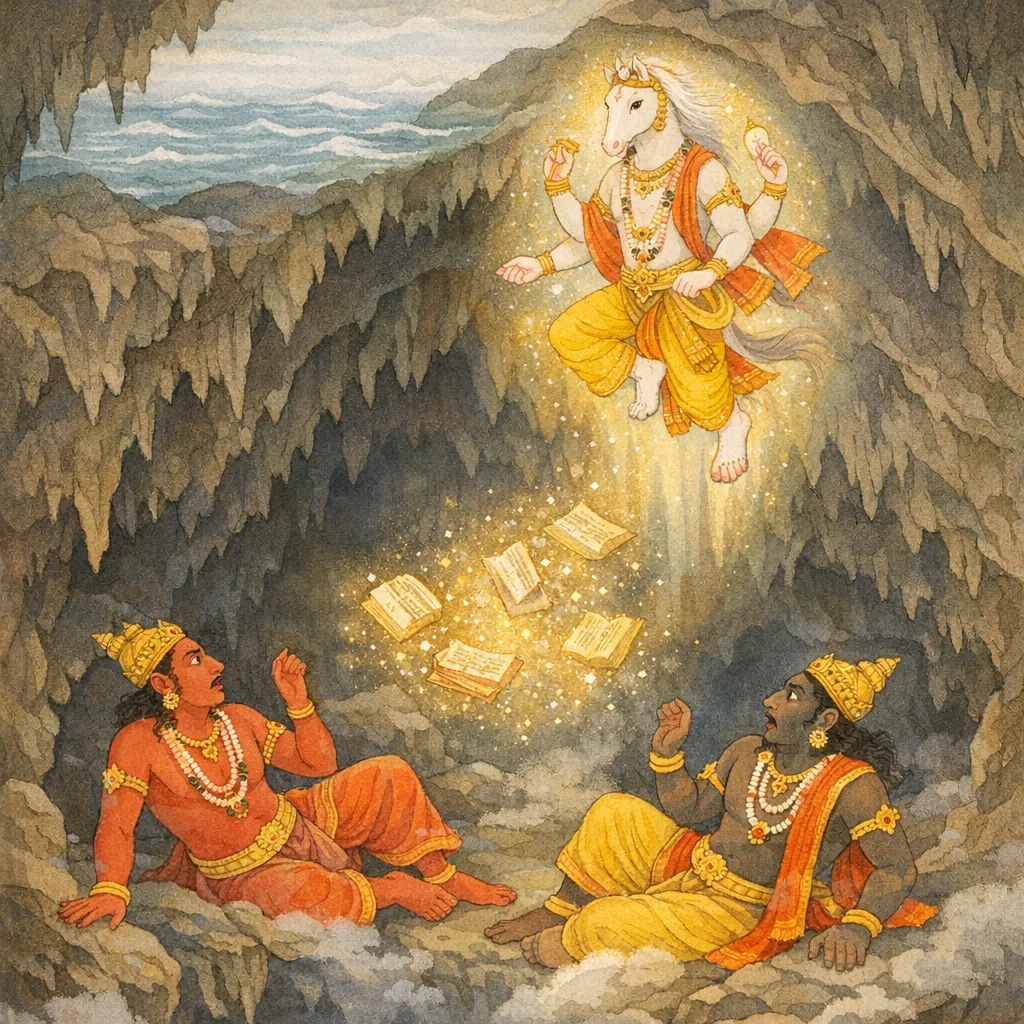
Verse 18
सो<निरुद्ध इति प्रोक्तस्तत् प्रधान प्रचक्षते | तदव्यक्तमिति ज्ञेयं त्रिगुणं नृपसत्तम,नृपश्रेष्ठ! उसीको अनिरुद्ध कहा गया है। उसीको प्रधान भी कहते हैं तथा उसीको त्रिगुणमय अव्यक्त जानना चाहिये
Vaiśampāyana said: “That very principle is spoken of as ‘Aniruddha’; it is also designated as the Pradhāna. Know it too as the Unmanifest, constituted of the three guṇas, O best among kings.”
Verse 19
विद्यासहायवान् देवो विष्वक्सेनो हरि:प्रभु: । अप्स्वेव शयनं चक्रे निद्रायोगमुपागतः,उस अवस्थामें विद्याशक्तिसे सम्पन्न सर्वव्यापी भगवान् श्रीहरिने योगनिद्राका आश्रय लेकर जलमें शयन किया
Vaiśampāyana said: Endowed with the supporting power of sacred knowledge, the all-pervading Lord Hari—master and leader of all hosts—entered the state of yogic sleep and made the waters His couch.
Verse 20
जगतत्रिन्तयन् सृष्टिं चित्रां बहुगुणोद्धवाम् । तस्य चिन्तयत: सृष्टि महानात्मगुण: स्मृत:,उस समय वे नाना गुणोंसे उत्पन्न होनेवाली जगत्की अद्भुत सृष्टिके विषयमें विचार करने लगे। सृष्टिके विषयमें विचार करते हुए उन्हें अपने गुण महान् (महत्तत्त्व) का स्मरण हो आया। उससे अहंकार प्रकट हुआ। वह अहंकार ही चार मुखोंवाले ब्रह्माजी हैं, जो सम्पूर्ण लोकोंके पितामह और भगवान् हिरण्यगर्भके नामसे प्रसिद्ध हैं
Vaiśampāyana said: Reflecting on the wondrous creation of the universe—variegated and arising from many qualities—he contemplated the process of manifestation. As he pondered creation, the principle called Mahat (the Great, the cosmic intellect) came to his remembrance, setting the stage for further emanation.
Verse 21
अहंकारस्ततो जातो ब्रह्मा स तु चतुर्मुख: । हिरण्यगर्भो भगवान् सर्वलोकपितामह:,उस समय वे नाना गुणोंसे उत्पन्न होनेवाली जगत्की अद्भुत सृष्टिके विषयमें विचार करने लगे। सृष्टिके विषयमें विचार करते हुए उन्हें अपने गुण महान् (महत्तत्त्व) का स्मरण हो आया। उससे अहंकार प्रकट हुआ। वह अहंकार ही चार मुखोंवाले ब्रह्माजी हैं, जो सम्पूर्ण लोकोंके पितामह और भगवान् हिरण्यगर्भके नामसे प्रसिद्ध हैं
From that (cosmic principle) arose ahaṅkāra, the sense of ‘I’-making. That very ahaṅkāra is Brahmā, the four-faced creator—revered as the blessed Hiraṇyagarbha, the grandsire of all the worlds.
Verse 22
पद्मेडनिरुद्धात् सम्भूतस्तदा पद्मनिभेक्षण: । सहस्रपत्रे द्युतिमानुपविष्ट: सनातन:,ब्रह्माण्डमें कमलमें अनिरुद्ध (अहंकार) से कमलनयन ब्रह्माका उस समय प्रादुर्भाव हुआ था। वे अद्भुत रूपधारी एवं तेजस्वी सनातन भगवान् ब्रह्मा सहख़दल कमलपर विराजमान हो जब इधर-उधर दृष्टि डालने लगे, तब उन्हें समस्त जगत् जलमय दिखायी दिया। तब ब्रह्माजी सत्त्वगुणमें स्थित होकर प्राणियोंकी सृष्टिमें प्रवृत्त हुए
Vaiśaṃpāyana said: Then, from Aniruddha, upon the lotus, the lotus-eyed Brahmā came into manifestation. Radiant and eternal, he sat upon the thousand-petalled lotus. When he looked about in all directions, he beheld the entire world as water alone; then, established in sattva, Brahmā set himself to the work of creating living beings.
Verse 23
ददृशे5द्भुतसंकाशो लोकानापोमयानू प्रभु: । सत्त्वस्थ: परमेष्ठी स ततो भूतगणान् सृजन्,ब्रह्माण्डमें कमलमें अनिरुद्ध (अहंकार) से कमलनयन ब्रह्माका उस समय प्रादुर्भाव हुआ था। वे अद्भुत रूपधारी एवं तेजस्वी सनातन भगवान् ब्रह्मा सहख़दल कमलपर विराजमान हो जब इधर-उधर दृष्टि डालने लगे, तब उन्हें समस्त जगत् जलमय दिखायी दिया। तब ब्रह्माजी सत्त्वगुणमें स्थित होकर प्राणियोंकी सृष्टिमें प्रवृत्त हुए
Vaiśaṃpāyana said: The Lord, radiant with a wondrous splendor, looked about and saw the worlds as wholly made of water. Then that Supreme Ordainer (Brahmā), established in the quality of sattva—clarity and balance—set himself to the work of creation, bringing forth the hosts of beings.
Verse 24
पूर्वमेव च पद्मस्य पत्रे सूर्याशुसप्र भे । नारायणकृतौ बिन्दू अपामास्तां गुणोत्तरो,वे जिस कमलपर बैठे थे, उसका पत्ता सूर्यके समान देदीप्यमान होता था। उसपर पहलेसे ही भगवान् नारायणकी प्रेरणासे जलकी बूँदें पड़ी थीं, जो रजोगुण और तमोगुणकी प्रतीक थीं
Vaiśaṃpāyana said: On the lotus leaf—already radiant like the sun’s rays—there were, from the very beginning, drops of water placed by Nārāyaṇa’s agency. Those drops stood as signs of the guṇas emerging within creation, and of the divine ordering behind their appearance.
Verse 25
तावपश्यत् स भगवाननादिनिधनो&च्युत: । एकस्तत्रा भवद् बिन्दुर्मध्वाभो रुचिरप्रभ:
Then that Blessed One—Acyuta, without beginning or end—beheld it. In that place there appeared a single drop, honey-hued and radiant with a pleasing brilliance.
Verse 26
तथा च न: श्रुतो ब्रह्मन् कथ्यमानस्त्वयानघ । निष्पाप सूतपुत्र! भगवान् महावराहने जो प्राचीन कालमें पिण्डोंकी उत्पत्ति करके पिण्डदानकी मर्यादा चलायी तथा प्रवृत्ति और निवृत्तिके विषयमें जिस विधिकी जैसी कल्पना की, वह सब आपके मुखसे हमलोंगोंने सुना,स तामसो मधुर्जातस्तदा नारायणाज्ञया | कठिनस्त्वपरो बिन्दु: कैटभो राजसस्तु सः
Śaunaka said: “O Brahmin, O sinless one! We have indeed heard from you—O blameless son of a sūta—everything: how the Blessed Lord, the Great Boar, in ancient times brought forth the origin of the piṇḍas and established the proper ordinance of piṇḍa-offerings, and how he set forth the rule as it should be regarding the paths of worldly engagement (pravṛtti) and renunciation (nivṛtti). By Nārāyaṇa’s command, Madhu was then born of the tamasic principle; and another, a hard drop, became Kaiṭabha, born of the rajasic principle.”
Verse 27
आदि-अन्तसे रहित भगवान् अच्युतने उन दोनों बूँदोंकी ओर देखा। उनमेंसे एक बूँद भगवानकी दृष्टि पड़ते ही उनकी प्रेरणासे तमोमय मधुनामक दैत्यके आकारमें परिणत हो गयी। उस दैत्यका रंग मधुके समान था और उसकी कान्ति बड़ी सुन्दर थी। जलकी दूसरी बूँद, जो कुछ कड़ी थी, नारायणकी आज्ञासे रजोगुणसे उत्पन्न कैटभ नामक दैत्यके रूपमें प्रकट हुई ।। तावभ्यधावतां श्रेष्ठी तमसा रजसान्वितौ । बलवन्तौ गदाहस्तौ पद्मनालानुसारिणौ,तमोगुण और रजोगुणसे युक्त वे दोनों श्रेष्ठ दैत्य मधु और कैटभ बड़े बलवान थे। वे अपने हाथोंमें गदा लिये कमलनालका अनुसरण करते हुए आगे बढ़ने लगे
Vaiśaṃpāyana said: Endowed with tamas and rajas, those two foremost demons—Madhu and Kaiṭabha—rushed forward. Mighty in strength, with clubs in their hands, they advanced along the lotus-stalk, driven by the dark and passionate forces that had given them form. The episode frames how ungoverned guṇas, when stirred, can manifest as violent obstruction to cosmic order, requiring divine restraint and restoration of balance.
Verse 28
ददृशाते5रविन्दस्थ॑ ब्रह्माणममितप्रभम् । सृजन्तं प्रथम वेदां श्वतुरश्चारुविग्रहान्,ऊपर जाकर उन्होंने कमल-पुष्पके आसनपर बैठकर सृष्टि-रचनामें प्रवृत्त हुए अमित तेजस्वी ब्रह्माजीको देखा एवं उनके पास ही मनोहर रूप धारण किये हुए चारों वेदोंको देखा
Then they beheld the immeasurably radiant Brahmā, seated upon a lotus-seat and engaged in the work of creation; and close by him they also saw the four Vedas, assuming beautiful embodied forms. The scene underscores the Mahābhārata’s ethical vision that cosmic order and dharma are grounded in sacred knowledge (Veda) and in the creator’s purposeful activity, not in randomness.
Verse 29
ततो विग्रहवन्तौ तौ वेदान् दृष्ट्वासुरोत्तमौ । सहसा जगृहतुर्वेदान् ब्रह्मण: पश्यतस्तदा,उन विशालकाय श्रेष्ठ असुरोंने उस समय वेदोंपर दृष्टि पड़ते ही उन्हें ब्रह्माजीके देखते- देखते सहसा हर लिया
Then those two mighty, embodied lords among the Asuras, the moment their eyes fell upon the Vedas, suddenly seized them—snatching the sacred knowledge away even as Brahmā looked on. The episode underscores how the theft or misuse of revealed wisdom becomes an ethical rupture, demanding its recovery and rightful guardianship for the order of dharma.
Verse 30
अथ तौ दानवश्रेष्टी वेदान् गृह सनातनान् | रसां विविशतुस्तुर्णमुदक्पूर्वे महोदधौ,सनातन वेदोंका अपहरण करके वे दोनों श्रेष्ठ दानव उत्तर-पूर्ववर्ती महासागरमें घुस गये और तुरंत रसातलमें जा पहुँचे
Then those two foremost among the Dānavas, having seized the eternal Vedas, swiftly entered the great ocean lying to the north-east and at once descended into Rasā (the nether region). The episode underscores how the theft or misuse of sacred knowledge is treated as a grave transgression, prompting a cosmic pursuit to restore dharma and rightful custodianship of revelation.
Verse 31
ततो हतेषु वेदेषु ब्रह्मा कश्मलमाविशत् | ततो वचनमीशानं प्राह वेदैर्विनाकृत:,वेदोंका अपहरण हो जानेपर ब्रह्माजीको बड़ा खेद हुआ। उनपर मोह छा गया। वे वेदोंसे वंचित होकर मन-ही-मन परमात्मासे इस प्रकार कहने लगे
Vaiśaṃpāyana said: When the Vedas had been destroyed (i.e., taken away), Brahmā was seized by deep distress and confusion. Deprived of the Vedas, he then addressed Īśāna (the Supreme Lord) with an earnest appeal, seeking restoration of sacred order and right knowledge.
Verse 32
ब्रह्मोवाच वेदा मे परम चक्षुवेदा मे परमं बलम् | वेदा मे परमं धाम वेदा मे ब्रह्म चोत्तरम्,ब्रह्मा बोले--भगवन! वेद ही मेरे उत्तम नेत्र हैं, वेद ही मेरे परम बल हैं। वेद ही मेरे परम आश्रय तथा वेद ही मेरे सर्वोत्तम उपास्य देव हैं
Brahmā said: “The Vedas are my highest eyes—the supreme means by which I see and know; the Vedas are my greatest strength. The Vedas are my final abode and refuge; and for me the Vedas are the supreme Brahman, higher than all else.”
Verse 33
मम वेदा हृता: सर्वे दानवाभ्यां बलादित: । अन्धकारा हि मे लोका जाता वेदैर्विनाकृता:,मेरे वे सभी वेद आज दो दानवोंने बलपूर्वक यहाँसे छीन लिये हैं। अब वेदोंके बिना मेरे लिये सम्पूर्ण लोक अन्धकारमय हो गये हैं
Vaiśaṃpāyana said: “All my Vedas have been forcibly taken away by two Dānavas. Deprived of the Vedas, my entire world has fallen into darkness.”
Verse 34
वेदानृते हि कि कुर्या लोकानां सृष्टिमुत्तमाम् अहो बत महद् दुःखं वेदनाशनजं मम
Vaiśaṃpāyana said: “If the Vedas did not exist, how could one accomplish the noble ordering and creation of the worlds? Alas—this is a great sorrow of mine, born from the loss and destruction of Vedic knowledge.”
Verse 35
प्राप्त दुनोति हृदयं तीव्र शोकपरायणम् । को हि शोकार्णवे मग्नं मामितो5द्य समुद्धरेत्
Overtaken by it, my heart is tormented, wholly given over to intense grief. For who, indeed, could rescue me today from this ocean of sorrow, in which I am drowning?
Verse 36
वेदांस्तांश्षानयेन्नष्टान् कस्य चाहं प्रियो भवे | मैं वेदोंके बिना संसारकी उत्तम सृष्टि कैसे कर सकता हूँ? अहो! आज वेदोंके नष्ट होनेसे मुझपर बड़ा भारी दुःख आ पड़ा है, जो मेरे शोकमग्न हृदयको दुःसह पीड़ा दे रहा है। आज शोकके समुद्रमें डूबे हुए मुझ असहायका यहाँसे कौन उद्धार करेगा? उन नष्ट हुए वेदोंको कौन लायेगा? मैं किसको इतना प्रिय हूँ, जो मेरी ऐसी सहायता करेगा? ।। ३४-३५ कल इत्येवं भाषमाणस्य ब्रह्मणो नृपसत्तम,नृपश्रेष्ठट ऐसी बातें कहते हुए ब्रह्माजीके मनमें भगवान् श्रीहरिकी स्तुति करनेका विचार उत्पन्न हुआ। बुद्धिमानोंमें अग्रगण्य नरेश! तब भगवान् ब्रह्माने हाथ जोड़कर उत्तम एवं जपने योग्य स्तोत्रका गान आरम्भ किया
Vaiśaṃpāyana said: “With the Vedas destroyed, how could I bring forth the world’s highest order of creation? Alas, the loss of the Vedas has cast upon me a grievous sorrow, tormenting my grief-stricken heart with unbearable pain. Who will rescue me, helpless as I am, drowning in an ocean of lament? Who will restore those lost Vedas? To whom am I so dear that he would come to my aid?” As Brahmā spoke thus, the thought arose in his mind to praise Lord Hari; and with folded hands he began to chant an excellent hymn, fit to be recited in japa.
Verse 37
हरे: स्तोत्रार्थमुद्धूता बुद्धिर्बुद्धिमतां वर । ततो जगीौ परं जप्यं साञ्जलिप्रग्रह: प्रभु:,नृपश्रेष्ठट ऐसी बातें कहते हुए ब्रह्माजीके मनमें भगवान् श्रीहरिकी स्तुति करनेका विचार उत्पन्न हुआ। बुद्धिमानोंमें अग्रगण्य नरेश! तब भगवान् ब्रह्माने हाथ जोड़कर उत्तम एवं जपने योग्य स्तोत्रका गान आरम्भ किया
Vaiśaṃpāyana said: O best among the wise, a resolve arose in Brahmā’s mind to offer praise to Hari. Then that mighty lord, with hands joined in reverence, began to chant a supreme hymn—fit to be recited as japa—thereby showing that devotion and humility are the proper response even for the highest beings when turning toward the Divine.
Verse 38
ब्रह्मोवाच ३“नमस्ते ब्रह्म॒हददय नमस्ते मम पूर्वज । लोकाद्य भुवनश्रेष्ठ सांख्ययोगनिधे प्रभो,ब्रह्माजी बोले-- प्रभो! वेद आपका हृदय है, आपको नमस्कार है। मेरे पूर्वज! आपको प्रणाम है। जगत्के आदि कारण! भुवनश्रेष्ठ! सांख्ययोगनिधे! प्रभो! आपको बारंबार नमस्कार है
Brahmā said: “Salutations to you—whose heart is the Veda; salutations to you, my forefather. O primal cause of the world, best of all realms, treasure-house of Sāṃkhya and Yoga, O Lord—again and again I bow to you.”
Verse 39
व्यक्ताव्यक्तकराचिन्त्य क्षेमं पन्थानमास्थित । विश्वभुक् सर्वभूतानामन्तरात्मन्नयोनिज । अहं प्रसादजस्तुभ्यं लोकधाम स्वयम्भुव:,व्यक्त जगत् और अव्यक्त प्रकृतिको उत्पन्न करनेवाले परमात्मन्! आपका स्वरूप अचिन्त्य है। आप कल्याणमय मार्ममें स्थित हैं। विश्वपालक! आप सम्पूर्ण प्राणियोंके अन्तरात्मा, किसी योनिसे उत्पन्न न होनेवाले, जगत्के आधार और स्वयम्भू हैं। मैं आपकी कृपासे उत्पन्न हुआ हूँ
“O incomprehensible Lord who brings forth both the manifest world and the unmanifest source, your nature is beyond thought. You abide on the auspicious path of peace and welfare. Sustainer of the universe, inner Self of all beings, unborn of any womb, foundation of the worlds, self-existent—by your grace I have come into being.”
Verse 40
त्वत्तो मे मानसं जन्म प्रथमं द्विजपूजितम् । चाक्षुषं वै द्वितीयं मे जन्म चासीत् पुरातनम्,आपसे मेरा प्रथम बार जो जन्म हुआ था, वह द्विजोंद्वारा सम्मानित मानस-जन्म कहा गया है अर्थात् प्रथम बार मैं आपके मनसे उत्पन्न हुआ। तदनन्तर पूर्वकालमें मैं आपके नेत्रसे उत्पन्न हुआ। वह मेरा दूसरा जन्म था
“From you I received my first birth—an intellectual, mind-born origin, honored by the twice-born. Thereafter, in ancient times, I had a second birth as well, arising from your eye.”
Verse 41
त्वत्प्रसादात् तु मे जन्म तृतीयं वाचिकं महत् । त्वत्त: श्रवणजं चापि चतुर्थ जन्म मे विभो,तत्पश्चात् आपके कृपाप्रसादसे मेरा जो तीसरा महत्त्वपूर्ण जन्म हुआ, वह वाचिक था अर्थात् आपके वचनमात्रसे सुलभ हो गया था। विभो! उसके बाद आपके कानोंसे मेरा चतुर्थ जन्म हुआ था
Vaiśaṃpāyana said: “By your gracious favor, my third, great ‘birth’ came through speech—made attainable by your very words. O Lord, thereafter my fourth ‘birth’ arose through your hearing as well.”
Verse 42
नासिक्यं चापि मे जन्म त्वत्त: परममुच्यते । अण्डजं चापि मे जन्म त्वत्त: षछं विनिर्मितम्,उसके बाद आपकी नासिकासे मेरा पाँचवाँ उत्तम जन्म बताया जाता है। तदनन्तर मैं आपके द्वारा ब्रह्माण्डसे उत्पन्न किया गया। वह मेरा छठा जन्म था
“My birth from your nostril is also spoken of as my fifth, most excellent birth. Thereafter, you brought me forth as one born from the cosmic egg; that was my sixth birth.”
Verse 43
इदं च सप्तमं जन्म पद्मजन्मेति वै प्रभो । सर्गे सर्गे हाहं पुत्रस्तव त्रिगुणवर्जित,प्रभो! यह मेरा सातवाँ जन्म है, जो कमलसे उत्पन्न हुआ है। त्रिगुणातीत परमेश्वर! मैं प्रत्येक कल्पमें आपका पुत्र होकर प्रकट होता हूँ
Vaiśaṃpāyana said: “O Lord, this is my seventh birth, known as the ‘lotus-born’ birth. O Supreme who is beyond the three guṇas, in every cycle of creation I manifest as your son.”
Verse 44
प्रथित: पुण्डरीकाक्ष प्रधानगुणकल्पित: । त्वमीश्वरः स्वभावश्च स्वयम्भू: पुरुषोत्तम,कमलनयन! आपका पुत्र मैं शुद्ध सत्त्वमय शरीरसे उत्पन्न हुआ हूँ। आप ईश्वर, स्वभाव, स्वयम्भू एवं पुरुषोत्तम हैं
Vaiśaṃpāyana said: “You are renowned as Puṇḍarīkākṣa (the lotus-eyed Lord), constituted through the primary principles and their qualities. You are the sovereign Lord, the very ground of nature, self-born, and the Supreme Person—O lotus-eyed one.”
Verse 45
त्वया विनिर्मितो<हं वै वेदचक्षुर्वयोतिग: । ते मे वेदा हताश्चक्षुरन्धो जातो5स्मि जागृहि
Vaiśaṃpāyana said: “It was you who fashioned me as one whose very ‘eyes’ were the Vedas, and who had passed beyond the frailty of age. Now those Vedas of mine are destroyed; my sight is struck down. I have become blind—awake, arise, and restore me.”
Verse 46
एवं स्तुत: स भगवान् पुरुष: सर्वतोमुख:
Thus praised, that Blessed Lord—the Supreme Person, facing in all directions—received the hymn of adoration offered to Him.
Verse 47
जहौ निद्रामथ तदा वेदकार्यार्थमुद्यत: । ब्रह्माजीके इस प्रकार स्तुति करनेपर सब ओर मुखवाले सबके अन्तर्यामी आत्मा भगवानने उसी क्षण निद्रा त्याग दी और वे वेदोंकी रक्षा करनेके लिये उद्यत हो गये || ४६३ || ऐश्वर्येण प्रयोगेण द्वितीयां तनुमास्थित:,उन्होंने अपने ऐश्वर्यके योगसे दूसरा शरीर धारण किया, जो चन्द्रमाके समान कान्तिमान् था। सुन्दर नासिकावाले शरीरसे युक्त हो वे प्रभु घोड़ेके समान गर्दन और मुखधारण करके स्थित हुए। उनका वह शुद्ध मुख सम्पूर्ण वेदोंका आलय था
Vaiśaṃpāyana said: At that very moment, the Lord cast off sleep and rose with resolve for the work of the Vedas. By the exercise of His sovereign power, He assumed a second form, radiant like the moon. Endowed with a beautiful-nosed body, He stood bearing a horse-like neck and face; and that pure mouth became the very abode of all the Vedas.
Verse 48
सुनासिकेन कायेन भूत्वा चन्द्रप्रभस्तदा । कृत्वा हयशिर: शुभ्र॑ वेदानामालयं प्रभु:,उन्होंने अपने ऐश्वर्यके योगसे दूसरा शरीर धारण किया, जो चन्द्रमाके समान कान्तिमान् था। सुन्दर नासिकावाले शरीरसे युक्त हो वे प्रभु घोड़ेके समान गर्दन और मुखधारण करके स्थित हुए। उनका वह शुद्ध मुख सम्पूर्ण वेदोंका आलय था
Vaiśaṃpāyana said: Then, by the power of His divine sovereignty, the Lord assumed another body, radiant like the moon. Endowed with a handsome-nosed form, He stood having fashioned a horse-like head and neck; and that pure mouth of His became the very abode of all the Vedas.
Verse 49
तस्य मूर्थधा समभवद् द्यौ: सनक्षत्रतारका | केशाश्वास्याभवन् दीर्घा रवेरंशुसमप्रभा:,नक्षत्रों और ताराओंसे युक्त स्वर्गलोक उनका सिर था। सूर्यकी किरणोंके समान चमकीले बड़े-बड़े बाल थे
Vaiśaṃpāyana said: The sky, adorned with constellations and stars, became his head; and his long hair shone with a brilliance equal to the rays of the sun.
Verse 50
कर्णावाकाशपाताले ललाटं भूतधारिणी । गड़ा सरस्वती श्रोण्यौ भ्रुवावास्तां महोदधी,आकाश और पाताल उनके कान थे एवं समस्त भूतोंको धारण करनेवाली पृथ्वी ललाट थी। गंगा और सरस्वती उनके नितम्ब तथा दो समुद्र उनकी दोनों भौंहें थे
Vaiśaṃpāyana said: “Sky and the netherworld (Pātāla) were her two ears; the Earth—bearer of all beings—was her forehead. The rivers Gaṅgā and Sarasvatī formed her hips, and the two great oceans stood as her eyebrows.”
Verse 51
चक्षुषी सोमसूर्यो ते नासा संध्या पुनः स्मृता । ३० कारस्त्वथ संस्कारो विद्युज्जिह्वा च निर्मिता,चन्द्रमा और सूर्य उनके दोनों नेत्र तथा नासिका संध्या थी। >>कार संस्कार (आभूषण) और विद्युत् जिह्ना बनी हुई थी। राजन! सोमपान करनेवाले पितर उनके दाँत सुने गये हैं तथा गोलोक और ब्रह्मलोक उन महात्माके ओषछ्ठ थे
Vaiśaṃpāyana said: “His two eyes were the Moon and the Sun; his nose was remembered as Twilight (Sandhyā). His very form was a sacred saṃskāra (refining consecration), and his tongue was fashioned as lightning. O King, the ancestors who drink Soma were said to be his teeth, and Goloka and Brahmaloka were the lips of that great-souled being.”
Verse 52
दन्ताश्न॒ पितरो राजन् सोमपा इति विश्रुता: । गोलोको ब्रह्मलोकश्न ओछ्ठावास्तां महात्मन:,चन्द्रमा और सूर्य उनके दोनों नेत्र तथा नासिका संध्या थी। >>कार संस्कार (आभूषण) और विद्युत् जिह्ना बनी हुई थी। राजन! सोमपान करनेवाले पितर उनके दाँत सुने गये हैं तथा गोलोक और ब्रह्मलोक उन महात्माके ओषछ्ठ थे
Vaiśaṃpāyana said: “O King, the Pitṛs—renowned as Soma-drinkers—were his teeth. And Goloka and Brahmaloka formed the lips of that great-souled being.”
Verse 53
ग्रीवा चास्याभवद् राजन् कालरात्रिर्गुणोत्तरा एतद्धयशिर: कृत्वा नानामूर्तिभिरावृतम्
Vaiśaṃpāyana said: “O King, his neck became Kālarātri, surpassing all in dreadful power. Having made this its head, it stood enveloped in many forms.”
Verse 54
रसां पुनः प्रविष्ट क्ष योगं परममास्थित:
Vaiśampāyana said: Having once again entered into the vital essence (the sustaining current of life), he became established in the supreme discipline of yoga—settled in the highest spiritual steadiness and restraint.
Verse 55
शैक्ष्यं स्वरं समास्थाय उदगीतं प्रासृजत् स्वरम् । रसातलमें प्रवेश करके परम योगका आश्रय ले शिक्षाके नियमानुसार उदात्त आदि स्वरोंसे युक्त उच्च स्वरसे सामवेदका गान करने लगे || ५४ $ ।। स स्वर: सानुनादी च सर्वश: स्निग्ध एव च
Vaiśaṃpāyana said: Having assumed the disciplined vocal mode prescribed by phonetic science, he released a lofty, well-sustained chant. Entering Rasātala and taking refuge in the highest Yoga, he began to sing the Sāma-veda in a high register, properly furnished with the accents such as udātta and the rest. That tone was resonant throughout and everywhere, and it was smooth and full-bodied.
Verse 56
ततस्तावसुरौ कृत्वा वेदान्ू समयबन्धनान्
Then those two Asuras, having established the Vedas as binding covenants, set them forth as the terms of agreement—treating sacred knowledge not merely as recitation, but as a moral contract that restrains conduct and obliges fidelity to pledged order.
Verse 57
एतस्मिन्नन्तरे राजन् देवो हयशिरोधर:,राजन! इसी बीचमें हयग्रीव रूपधारी भगवान् श्रीहरिने रसातलमें पड़े हुए उन सम्पूर्ण वेदोंको ले लिया तथा ब्रह्माजीको पुनः वापस दे दिया और फिर वे अपने आदि रूपमें आ गये
Vaiśampāyana said: “O King, in the meantime the divine Lord, bearing the head of a horse—Śrī Hari in the form of Hayagrīva—retrieved all the Vedas that had fallen into Rasātala, restored them again to Brahmā, and then returned to His primordial form.”
Verse 58
जग्राह वेदानखिलान् रसातल गतान् हरि: । प्रादाच्च ब्रह्मणे भूयस्ततः स्वां प्रकृतिं गत:,राजन! इसी बीचमें हयग्रीव रूपधारी भगवान् श्रीहरिने रसातलमें पड़े हुए उन सम्पूर्ण वेदोंको ले लिया तथा ब्रह्माजीको पुनः वापस दे दिया और फिर वे अपने आदि रूपमें आ गये
Vaiśaṃpāyana said: Hari recovered all the Vedas that had fallen into Rasātala. He then returned them once again to Brahmā, and thereafter resumed his own original nature.
Verse 59
स्थापयित्वा हयशिर उदक्पूर्वे महोदथौ । वेदानामालयं चापि बभूवाश्वशिरास्तत:,भगवानने महासागरके पूर्वोत्तरभागमें वेदोंके आश्रयभूत अपने हयग्रीव रूपकी स्थापना करके पुनः पूर्वरूप धारण कर लिया। तबसे भगवान् हयग्रीव वहीं रहने लगे
Vaiśaṃpāyana said: Having established his Horse-headed form in the great ocean to the east—making it also the abode and refuge of the Vedas—Bhagavān Aśvaśiras then resumed his former form. From that time onward, the Lord Hayagrīva is said to dwell there, as the guardian-seat of sacred knowledge.
Verse 60
अथ किंचिदपश्यन्तौ दानवौ मधुकैटभौ । पुनराजम्मतुस्तत्र वेगितौ पश्यतां च तो
Vaiśaṃpāyana said: Then, seeing nothing of consequence, the two Dānava demons Madhu and Kaiṭabha hurried back to that very place, even as they were being watched.
Verse 61
तत उत्तममास्थाय वेगं बलवतां वरी
Then, taking up the finest course and gathering herself, the foremost among the strong surged forward with powerful speed.
Verse 62
पुनरुत्तस्थतु: शीघ्रं रसानामालयात् तदा । ददृशाते च पुरुषं तमेवादिकरं प्रभुम्
Then the two rose again quickly from that abode of essences. At that moment they beheld the very same Person—the primordial Maker and sovereign Lord—standing before them. The passage underscores that true understanding is not merely tasting the world’s “essences,” but returning to behold the First Cause who grounds and governs all experience.
Verse 63
श्वेतं चन्द्रविशुद्धाभमनिरुद्धतनौ स्थितम् | भूयो5प्यमितविक्रान्तं निद्रायोगमुपागतम्
Vaiśaṃpāyana said: “He stood there—white and radiant, pure as the moon—manifest in the form of Aniruddha. And once again that immeasurably mighty one entered into the yogic state of sleep.”
Verse 64
तब वे बलवानोंमें श्रेष्ठ दोनों दानव पुनः उत्तम वेगका आश्रय ले रसातलसे शीघ्र ही ऊपर उठे और ऊपर आकर देखते हैं तो वे ही आदिकर्ता भगवान् पुरुषोत्तम दृष्टिगोचर हुए। जो चन्द्रमाके समान विशुद्ध, उज्ज्वल प्रभासे विभूषित, गौरवर्णके थे। वे उस समय अनिरुद्ध-विग्रहमें स्थित थे और वे अमित पराक्रमी भगवान् योगनिद्राका आश्रय लेकर सो रहे थे ।। आत्मप्रमाणरचिते अपामुपरि कल्पिते । शयने नागभोगाढ्ये ज्वालामालासमावृते,पानीके ऊपर शेषनागके शरीरकी शब्या निर्मित हुई थी, जिसकी लम्बाई भगवान्के श्रीविग्रहके अनुरूप ही थी। वह शय्या ज्वालामालाओंसे आवृत जान पड़ती थी। उसके ऊपर विशुद्ध सत्त्वगुणसे सम्पन्न मनोहर कान्तिवाले भगवान् नारायण सो रहे थे। उन्हें देखकर वे दोनों दानवराज ठहाका मारकर जोर-जोरसे हँसने लगे
Then those two foremost among the mighty Dānavas, gathering their greatest speed, swiftly rose up from Rasātala. When they came above and looked around, they beheld the primal Maker, the Blessed Puruṣottama, before their very eyes—pure as the moon, adorned with radiant brilliance, and fair in hue. At that time he was present in the form called Aniruddha; the Lord of immeasurable prowess lay asleep, having entered Yogic Sleep. Upon the waters there was a couch fashioned to his own measure, set above the coils of the serpent Śeṣa, rich with serpent-hoods and seeming to be encircled by garlands of flame. On that couch the Lord Nārāyaṇa, endowed with stainless sattva and a captivating splendor, was sleeping. Seeing him, the two demon-kings burst into loud, mocking laughter.
Verse 65
निष्कल्मषेण सत्त्वेन सम्पन्न रुचिरप्रभम् | त॑ दृष्टवा दानवेन्द्री तो महाहासममुख्चताम्,पानीके ऊपर शेषनागके शरीरकी शब्या निर्मित हुई थी, जिसकी लम्बाई भगवान्के श्रीविग्रहके अनुरूप ही थी। वह शय्या ज्वालामालाओंसे आवृत जान पड़ती थी। उसके ऊपर विशुद्ध सत्त्वगुणसे सम्पन्न मनोहर कान्तिवाले भगवान् नारायण सो रहे थे। उन्हें देखकर वे दोनों दानवराज ठहाका मारकर जोर-जोरसे हँसने लगे
Vaiśaṃpāyana said: Endowed with stainless purity of being, radiant with a beautiful splendor—on seeing Him, the two lords of the Dānavas burst into loud, mocking laughter. (In the surrounding narrative, Nārāyaṇa is described as reclining upon a couch fashioned from Śeṣa’s body, blazing as if wreathed in garlands of flame; the Dānava-kings respond with derision at the sight of the serene, sattvic Lord.)
Verse 66
ऊचतुश्च समाविष्टौ रजसा तमसा च तौ । अयं स पुरुष: श्वेत: शेते निद्रामुपागत:,रजोगुण और तमोगुणसे आविष्ट हुए वे दोनों असुर परस्पर कहने लगे, “यह जो श्वेतवर्णवाला पुरुष निद्रामें निमग्न होकर सो रहा है, निश्चय ही इसीने रसातलसे वेदोंका अपहरण किया है। यह किसका पुत्र है? कौन है? और क्यों यहाँ सर्पके शरीरकी शय्यापर सो रहा है?'
Vaiśaṃpāyana said: Overpowered by the forces of passion and darkness, those two asuras began speaking to one another: “This fair-hued Person lies here, sunk in sleep. Surely it is he who stole the Vedas from Rasātala. Whose son is he—who is he—and why does he sleep here upon a serpent-bodied couch?”
Verse 67
अनेन नून॑ वेदानां कृतमाहरणं रसात् । कस्यैष को नु खल्वेष कि च स्वपिति भोगवान्,रजोगुण और तमोगुणसे आविष्ट हुए वे दोनों असुर परस्पर कहने लगे, “यह जो श्वेतवर्णवाला पुरुष निद्रामें निमग्न होकर सो रहा है, निश्चय ही इसीने रसातलसे वेदोंका अपहरण किया है। यह किसका पुत्र है? कौन है? और क्यों यहाँ सर्पके शरीरकी शय्यापर सो रहा है?'
Vaiśaṃpāyana said: Overcome by the qualities of passion and darkness, the two Asuras spoke to one another: “Surely this white-complexioned man, sunk in sleep, is the very one who has carried off the Vedas from Rasātala. Whose son is he—who is he, and why does he lie here asleep upon a couch that is the body of a serpent?”
Verse 68
इत्युच्चारितवाक्यौ तौ बोधयामासतुर्हरिम् । युद्धार्थिनौ हि विज्ञाय विबुद्धः पुरुषोत्तम:
Thus, after they had spoken these words, the two addressed and apprised Hari. Recognizing that they were intent on war, the awakened Supreme Person understood their purpose and stance.
Verse 69
निरीक्ष्य चासुरेन्द्री तौ ततो युद्धे मनो दे । इस प्रकार बातचीत करके उन दोनोंने भगवान्को जगाया। उन्हें युद्धके लिये उत्सुक जान भगवान् पुरुषोत्तम जाग उठे। फिर उन दोनों असुरेन्द्रोंका अच्छी तरह निरीक्षण करके उन्होंने मन-ही-मन उनके साथ युद्ध करनेका निश्चय किया ।। ६८ ई || अथ युद्धे समभवत् तयोनारायणस्य वै
Vaiśaṃpāyana said: Having carefully observed those two lords of the Asuras, he then set his mind upon battle. Thereupon, a battle indeed arose between those two and Nārāyaṇa.
Verse 70
रजस्तमोविष्टतनू तावुभौ मधुकैटभौ । ब्रह्मणोपचितिं कुर्वन् जघान मधुसूदन:
Vaiśaṃpāyana said: Those two—Madhu and Kaiṭabha—whose bodies were pervaded by rajas and tamas, were slain by Madhusūdana, who did so to uphold and serve Brahmā’s purpose and welfare.
Verse 71
फिर तो उन दोनों असुरोंका और भगवान् नारायणका युद्ध आरम्भ हो गया। भगवान् मधुसूदनने ब्रह्माजीका मान रखनेके लिये तमोगुण और रजोगुणसे आविष्ट शरीरवाले उन दोनों दैत्यों--मधु और कैटभको मार डाला ।। ततस्तयोरवधेनाशु वेदापहरणेन च । शोकापनयनं चक्रे ब्रह्मण: पुरुषोत्तम:,इस प्रकार वेदोंको वापस लाकर और मधु-कैटभका वध करके भगवान् पुरुषोत्तमने ब्रह्माजीका शोक दूर कर दिया
Then, by swiftly slaying those two (demons) and by recovering the stolen Vedas, the Supreme Person (Nārāyaṇa) dispelled Brahmā’s grief.
Verse 72
ततः परिवृतो ब्रह्मा हरिणा वेदसत्कृत: । निर्ममे स तदा लोकान् कृत्स्नान् स्थावरजड्रमान्,तत्पश्चात् वेदसे सम्मानित और भगवानसे सुरक्षित होकर ब्रह्माजीने समस्त चराचर जगत्की सृष्टि की
Then Brahmā, surrounded and protected by Hari and duly honored by the Vedas, proceeded to create all the worlds in their entirety—both the immovable and the moving orders of beings.
Verse 73
पाविता: सम त्वया ब्रह्मन् पुण्यां कथयता कथाम् | सूतनन्दन! आपकी बुद्धि बड़ी उत्तम है। महापुरुष भगवान्के अवतारसम्बन्धी इस पुरातन ज्ञानके विषयमें हमलोगोंको संशय हो रहा है। आप इसका समाधान कीजिये। आपने यह पुण्यमयी कथा कहकर हमलोगोंको पवित्र कर दिया है,दत्त्वा पितामहायाग्रूयां मतिं लोकविसर्गिकीम् । तत्रैवान्तर्दधे देवों यत एवागतो हरि: ब्रह्माजीको लोक-रचनाकी श्रेष्ठ बुद्धि देकर भगवान् नारायणदेव वहीं अन्तर्धान हो गये। वे जहाँसे आये थे, वहीं चले गये
Śaunaka said: “O Brahmin, by you—while narrating this holy account—we have indeed been purified. Having bestowed upon Pitāmaha (Brahmā) the foremost intelligence for the projection and ordering of the worlds, the divine Lord Hari vanished right there, returning to the very source from which He had come.”
Verse 74
तौ दानवौ हरिर्हत्वा कृत्वा हयशिरस्तनुम् । पुनः प्रवृत्तिधर्मार्थ तामेव विदधे तनुम्,श्रीहरिने इस प्रकार हयग्रीवरूप धारण करके उन दोनों दानवोंका वध किया था। उन्होंने पुनः प्रवृत्तिधर्मका प्रचार करनेके लिये ही उस शरीरको प्रकट किया था
Vaiśaṃpāyana said: Having slain those two Dānava demons, Hari—having assumed a body with the head of a horse—again manifested that very form for the sake of restoring and promoting the dharma of rightful worldly activity (pravṛtti).
Verse 75
एवमेव महाभागो बभूवाश्वशिरा हरि: । पौराणमेतत् प्रख्यातं रूपं वरदमैश्वरम्,इस तरह महाभाग श्रीहरिने हयग्रीवरूप धारण किया था। भगवानका यह वरदायक रूप पुरातन एवं पुराण-प्रसिद्ध है
Vaiśaṃpāyana said: “Thus indeed did the greatly blessed Hari assume the form with a horse’s head. This is an ancient, Purāṇa-renowned manifestation—divine and sovereign—bestowing boons.”
Verse 76
यो होतद् ब्राह्मणो नित्यं शृणुयाद् धारयीत वा । न तस्याध्ययनं नाशमुपगच्छेत् कदाचन,जो ब्राह्मण प्रतेदिन इस अवतार-कथाको सुनता या स्मरण करता है, उसका अध्ययन कभी नष्ट (निष्फल) नहीं होता है
Vaiśaṃpāyana said: If a brāhmaṇa regularly listens to this sacred account, or even retains it in memory, his Vedic study and learning never fall into ruin or become fruitless at any time.
Verse 77
आराध्य तपसोग्रेण देवं हयशिरोधरम् । पज्चालेन क्रम: प्राप्तो देवेन पथि देशिते,महादेवजीके बताये हुए मार्गपर चलकर उग्र तपस्याद्वारा भगवान् हयग्रीवकी आराधना करके पांचालदेशीय गालवमुनिने वेदोंका क्रमविभाग प्राप्त किया था
Vaiśaṃpāyana said: By worshipping with fierce austerities the god who bears a horse’s head—Hayagrīva—the sage Galava of the Pañcāla country obtained the ordered arrangement of the Vedas, following the path that the deity himself had shown.
Verse 78
एतद्धयशिरो राजन्नाख्यानं तव कीर्तितम् । पुराणं वेदसमितं यन्मां त्वं परिपृच्छसि,राजन! तुमने जिसके लिये मुझसे पूछा था, यह हयग्रीवावतारकी वेदानुमोदित प्राचीन कथा मैंने तुम्हें सुना दी
Vaiśaṃpāyana said: “O King, I have now recounted to you that ancient narrative of Hayagrīva—affirmed in harmony with the Vedas—which you asked me about. Thus the venerable, Veda-consistent tradition you sought has been duly told.”
Verse 79
यां यामिच्छेत् तनुं देव: कर्तु कार्यविधौ क्वचित् । तां तां कुर्याद् विकुर्वाण: स्वयमात्मानमात्मना,परमात्मा कार्यसाधनके लिये जिस-जिस शरीरको धारण करना चाहते हैं, उसे कार्य करते समय स्वयं ही प्रकट कर लेते हैं
Vaiśaṃpāyana said: Whenever the Divine wishes to assume a particular body for the accomplishment of some task, at that very time He manifests that form—transforming Himself by His own power—so that the intended work may be fulfilled.
Verse 80
एष वेदनिधि: श्रीमानेष वै तपसो निधि: । एष योगश्न सांख्य॑ च ब्रह्म चाग्र्यं हविर्विभु:,ये श्रीमान् हरि वेद और तपस्याकी निधि हैं। ये ही योग, सांख्य, ब्रह्म, श्रेष्ठ हविष्प और विभु हैं
Vaiśaṃpāyana said: “He—the glorious Lord—is the very treasury of the Vedas and indeed the storehouse of austerity. He is Yoga and Sāṅkhya, and He is Brahman itself; He is the supreme oblation and the all-pervading Sovereign.”
Verse 81
नारायणपरा वेदा यज्ञा नारायणात्मका: | तपो नारायणपरं नारायणपरा गति:,वेदोंका पर्यवसान भगवान् नारायणमें ही है। यज्ञ नारायणके ही स्वरूप हैं। तपस्याके परम फल भगवान् नारायण ही हैं तथा नारायणकी प्राप्ति ही सर्वोत्तम गति है
Vaiśaṃpāyana said: The Vedas have Nārāyaṇa as their highest end; sacrifices are of the very nature of Nārāyaṇa. Austerity finds its supreme fruit in Nārāyaṇa, and the highest destination is attainment of Nārāyaṇa.
Verse 82
नारायणपरं सत्यमृतं नारायणात्मकम् । नारायणपरो धर्म: पुनरावृत्तिदुर्लभ:,सत्यके परम लक्ष्य नारायण ही हैं। ऋत नारायणका ही स्वरूप है। जिसके आचरणसे पुनर्जन्मकी प्राप्ति नहीं होती, उस निवृत्तिप्रधान धर्मके भी चरम लक्ष्य भगवान् नारायण ही हैं
Vaiśaṃpāyana said: Truth finds its highest ground in Nārāyaṇa; the cosmic order (ṛta) is of Nārāyaṇa’s very nature. Even the dharma of renunciation, which makes return to rebirth difficult, has Nārāyaṇa as its supreme end.
Verse 83
प्रवृत्तिलक्षणश्वैव धर्मो नारायणात्मक: । नारायणात्मको गन्धो भूमौ श्रेष्ठतम: स्मृत:,प्रवृत्तिकूप धर्म भी नारायणका ही स्वरूप है। भूमिका श्रेष्ठम गुण गन्ध भी नारायणमय ही है
Vaiśaṃpāyana said: The dharma characterized by worldly engagement (pravṛtti) is itself of the nature of Nārāyaṇa. Even the finest fragrance found in the earth is remembered to be Nārāyaṇa-formed—pervaded by Him.
Verse 84
अपां चापि गुणा राजन् रसा नारायणात्मका: । ज्योतिषां च परं रूप॑ स्मृतं नारायणात्मकम्,राजन्! जलका गुण रस भी नारायणका ही स्वरूप है। तेजका उत्तम गुण रूप भी नारायणमय ही है
Vaiśaṃpāyana said: “O King, the qualities and tastes of water are also of the very nature of Nārāyaṇa. And the supreme form of the luminous powers is likewise remembered to be Nārāyaṇa in essence.”
Verse 85
नारायणात्मकश्चापि स्पर्शो वायुगुण: स्मृत: । नारायणात्मकश्चैव शब्द आकाशसम्भव:,वायुका गुण स्पर्श भी नारायणस्वरूप ही है तथा आकाशका गुण शब्द भी नारायणमय ही है
Vaiśaṃpāyana said: The quality of touch, which belongs to wind, is also understood to be of the very nature of Nārāyaṇa. Likewise, sound—born of space (ākāśa)—is also of the nature of Nārāyaṇa.
Verse 86
जगौ यद् भगवान् व्यासो राज्ञ: पारिक्षितस्य वै । सूतपुत्रने कहा--शौनकजी! मैं तुमसे वेदतुल्य प्रमाणभूत सारा पुरातन वृत्तान्त कहूँगा, जिसे भगवान् व्यासने- राजा जनमेजयको सुनाया था,मनश्लवापि ततो भूतमव्यक्तगुणलक्षणम् | नारायणपर: कालो ज्योतिषामयनं च यत् अव्यक्त गुण एवं लक्षणवाला मन नामक भूत, काल और नक्षत्रमण्डल--ये सब नारायणके ही अश्रित हैं
Śaunaka said: “That ancient account—authoritative like the Veda—which the blessed Vyāsa once recited in the line of Parīkṣit and conveyed to the Sūta’s son, I shall now relate to you. Mind itself, the unmanifest principle marked by subtle qualities and signs, as well as Time and the course of the heavenly lights—all of these rest upon Nārāyaṇa and are dependent on Him.”
Verse 87
नारायणपरा कीर्ति: श्रीक्ष लक्ष्मीक्ष देवता: । नारायणपरं सांख्यं योगो नारायणात्मक:,कीर्ति, श्री और लक्ष्मी आदि देवियाँ नारायणको ही अपना परम आश्रय मानती हैं। सांख्यका परम तात्पर्य भी नारायण ही हैं और योग भी नारायणका ही स्वरूप है
Vaiśaṃpāyana said: Glory (Fame), Śrī, and Lakṣmī—the divine powers—take Nārāyaṇa alone as their highest refuge. The ultimate purport of Sāṅkhya, too, is Nārāyaṇa; and Yoga is of the very nature of Nārāyaṇa. Thus, the paths of knowledge and disciplined practice, as well as the auspicious forces that sustain the world, converge upon the same supreme foundation.
Verse 88
कारणं पुरुषो होषां प्रधानं चापि कारणम् | स्वभावश्चैव कर्माणि दैवं येषां च कारणम्,पुरुष, प्रधान, स्वभाव, कर्म तथा दैव-ये जिन वस्तुओंके कारण हैं, वे भी नारायणरूप ही हैं
Vaiśaṃpāyana said: For these (beings and events), the Person (Puruṣa) is a cause; and Pradhāna (primordial Nature) too is a cause. Their inherent disposition (svabhāva), their actions (karmāṇi), and even destiny (daiva) are also spoken of as causes. The teaching implied is that all these causal principles ultimately rest in, and are encompassed by, Nārāyaṇa—so one should not cling to a single factor as absolute, but recognize the Supreme as the final ground of causation and responsibility.
Verse 89
अधिष्ठानं तथा कर्ता करणं च पृथग्विधम् । विविधा च तथा चेष्टा दैवं चैवात्र पजचमम्
Vaiśaṃpāyana said: “In this matter, there are five factors: the basis (the embodied seat where action occurs), the agent (the doer), the various instruments (means of action), the many kinds of activity (effort and motion), and, as the fifth, destiny/providence. Thus action is to be understood as arising from a conjunction of these causes, not from a single source alone.”
Verse 90
तत्त्वं जिज्ञासमानानां हेतुभि: सर्वतोमुखै:
Vaiśaṃpāyana said: “For those who seek to know the true principle (tattva), there are reasons and modes of inquiry that approach it from every side.”
Verse 91
तत्त्वमेको महायोगी हरिनारायण: प्रभु: । जो लोग सर्वव्यापक हेतुओंद्वारा तत््वको जाननेकी इच्छा रखते हैं, उनके लिये महायोगी भगवान् नारायण हरि ही एकमात्र ज्ञातव्य तत्त्व हैं | ९० ई ।। ब्रह्मादीनां स लोकानामृषीणां च महात्मनाम्
Vaiśaṃpāyana said: The one supreme Reality to be known is the Lord—Hari Nārāyaṇa—master and great yogin. For those who seek to understand the all-pervading principle through the causes and reasons that pervade everything, the great yogin, Bhagavān Nārāyaṇa, Hari alone is the single knowable truth. (This teaching is affirmed as holding even for the worlds of Brahmā and the other divine orders, and for the great-souled seers.)
Verse 92
सांख्यानां योगिनां चापि यतीनामात्मवेदिनाम् | मनीषितं विजानाति केशवो न तु तस्य ते
Vaiśaṃpāyana said: Even the intended meaning held by the Sāṅkhyas, the Yogins, and the self-knowing ascetics is truly understood by Keśava; but they do not fully comprehend His intent.
Verse 93
भगवान् केशव ब्रह्मा आदि देवताओं, सम्पूर्ण लोकों, महात्मा-ऋषियों, सांख्यवेत्ताओं, योगियों और आत्मज्ञानी यतियोंके मनकी बातें भी जानते हैं; परंतु उनके मनमें क्या है? यह उनमेंसे किसीको पता नहीं है ।। ये केचित् सर्वलोकेषु दैवं पित्र्यं च कुर्वते । दानानि च प्रयच्छन्ति तप्यन्ते च तपो महत्,समस्त विश्वमें जो कोई देवताओंके लिये यज्ञ और पितरोंके लिये श्राद्ध करते हैं, दान देते हैं और बड़ी भारी तपस्या करते हैं, उन सबके आश्रय भगवान् विष्णु ही हैं। वे अपने ऐश्वर्ययोगमें स्थित रहते हैं। सम्पूर्ण प्राणियोंके आवासस्थान होनेके कारण वे “वासुदेव" कहे जाते हैं
Vaiśaṃpāyana said: The Blessed Keśava knows the thoughts of Brahmā and the primeval gods, of all worlds, of great-souled seers, of the knowers of Sāṅkhya, of yogins, and of self-knowing ascetics; yet what is in His own mind—this no one among them can know. Whoever in the whole world performs sacrifices for the gods and rites for the ancestors, gives gifts, and undertakes great austerities—all of them ultimately rest upon Lord Viṣṇu. Abiding in the yoga of sovereignty, and being the dwelling-place of all beings, He is therefore called “Vāsudeva.”
Verse 94
सर्वेषामाश्रयो विष्णुरैश्वरं विधिमास्थित: । सर्वभूतकृतावासो वासुदेवेति चोच्यते,समस्त विश्वमें जो कोई देवताओंके लिये यज्ञ और पितरोंके लिये श्राद्ध करते हैं, दान देते हैं और बड़ी भारी तपस्या करते हैं, उन सबके आश्रय भगवान् विष्णु ही हैं। वे अपने ऐश्वर्ययोगमें स्थित रहते हैं। सम्पूर्ण प्राणियोंके आवासस्थान होनेके कारण वे “वासुदेव" कहे जाते हैं
Vaiśaṃpāyana said: Viṣṇu is the refuge of all—of those who perform sacrifices for the gods, offer śrāddha for the ancestors, give gifts, and undertake severe austerities. Abiding in his sovereign divine order, and being the dwelling-place established for all beings, he is therefore called “Vāsudeva.”
Verse 95
अयं हि नित्य: परमो महर्षि- महाविभूतिर्गुणवर्जिताख्य: । गुणैश्व संयोगमुपैति शीघ्र कालो यथर्तावृतुसम्प्रयुक्त:,ये परम महर्षि नारायण नित्य, महान् ऐश्वर्यसे युक्त और गुणोंसे रहित हैं तथापि जैसे गुणहीन काल ऋतुके गुणोंसे युक्त होता है, उसी प्रकार वे भी समय-समयपर गुणोंको स्वीकार करके उनसे संयुक्त होते हैं
Vaiśaṃpāyana said: “He is eternal—the supreme great seer—of vast majesty, and is spoken of as beyond the guṇas. Yet, he swiftly enters into association with the guṇas, just as Time, though itself without qualities, becomes connected with the qualities of the seasons in due course. In the same way, Nārāyaṇa, though ever transcendent, assumes guṇic modes at appropriate times for the ordering of the world.”
Verse 96
उत्पन्नसंशयो राजा एतदेवमचोदयत् । भगवान् विष्णुके हयग्रीवावतारकी चर्चा सुनकर तुम्हारी ही तरह राजा जनमेजयको भी संदेह हो गया था। तब उन्होंने इस प्रकार प्रश्न किया--,नैवास्य विन्दन्ति गतिं महात्मनो न चागतिं कश्चिदिहानुपश्यति । ज्ञानात्मका: सन्ति हि ये महर्षय: पश्यन्ति नित्यं पुरुष गुणाधिकम्
Śaunaka said: When doubt arose in the king, he pressed this very point in this manner. Having heard the discussion about the Blessed Lord Viṣṇu’s Hayagrīva incarnation, King Janamejaya too—like you—became uncertain. Then he asked: “No one here can truly discern the course of that great-souled One, nor does anyone perceive His ‘non-course’ (any limit or cessation). Yet there are great seers whose very being is knowledge; they ever behold the Person who transcends the guṇas.”
Verse 113
सर्व पञ्चभिराविष्ट भूतैरी श्वरबुद्धिभि: । वैशम्पायनजीने कहा--प्रजानाथ! इस जगत्में जितने प्राणी हैं, वे सब ईश्वरके संकल्पसे उत्पन्न हुए पाँच महाभूतोंसे युक्त हैं
Vaiśampāyana said: “O lord of the people, all living beings in this world are pervaded and constituted by the five great elements, brought forth through the Lord’s purposeful will. Thus is embodied life set within a divinely ordered cosmos, calling one to humility and ethical restraint, for all creatures share the same elemental ground and arise under a higher governance.”
Verse 123
भूतान्तरात्मा वरद: सगुणो निर्गुणोडपि च | विराट्स्वरूप भगवान् नारायण इस जगत्के ईश्वर और स्रष्टा हैं, वे ही सब जीवोंके अन्तरात्मा, वरदाता, सगुण और निर्मुणरूप हैं
Vaiśaṃpāyana said: “The Blessed Lord Nārāyaṇa—whose form is the cosmic Virāṭ—is the sovereign and creator of the world. He alone abides as the inner Self in all beings; he is the giver of boons, and is to be understood both with attributes (saguṇa) and beyond attributes (nirguṇa). Thus does this teaching ground ultimate authority and moral order in the one divine reality that pervades all life.”
Verse 346
इस प्रकार श्रीमहाभारत शान्तिपर्वके अन्तर्गत गोक्षधर्मपर्वमें नारययणकी महिमाविषयक तीन सौ छियालीसवाँ अध्याय पूरा हुआ
Thus ends the three hundred and forty-sixth chapter, on the glory of Nārāyaṇa, in the Gokṣa-dharma section contained within the Śānti Parva of the sacred Mahābhārata.
Verse 347
उन महात्माकी गतिको कोई नहीं जानता। उनके आगमनका भी यहाँ किसीको कुछ पता नहीं चलता। जो ज्ञानस्वरूप महर्षि हैं, वे ही उन नित्य, अन्तर्यामी एवं अनन्तगुणविभूषित परमात्माका साक्षात्कार करते हैं ।। इति श्रीमहाभारते शान्तिपर्वणि मोक्षधर्मपर्वणि नारायणीये सप्तचत्वारिंशद्धिकत्रिशततमो<5 ध्याय:
No one can truly know the course and destiny of that great Self; nor can anyone here discern the manner of His coming. Only those great seers whose very being is knowledge directly realize that Supreme Self—ever-present, the inner ruler (antaryāmin) of all, and adorned with infinite qualities and majesty.
Verse 453
ददस्व चक्षूंषि मम प्रियो<हं ते प्रियोडसि मे । आपने मुझे वेदरूपी नेत्रोंसे युक्त बनाया है। आपकी ही कृपासे कालातीत हूँ---मुझपर कालका जोर नहीं चलता। मेरे नेत्ररूप वे वेद दानवोंद्वारा हर लिये गये हैं; अतः मैं अन्धा- सा हो गया हूँ। प्रभो! निद्रा त्यागकर जागिये। मुझे मेरे नेत्र वापस दीजिये; क्योंकि मैं आपका प्रिय भक्त हूँ और आप मेरे प्रियतम स्वामी हैं
Vaiśampāyana said: “Give me back my eyes. I am dear to you, and you are dear to me. It was you who endowed me with eyes in the form of the Vedas; by your grace I stand beyond the reach of Time—Time has no dominion over me. But those Vedic ‘eyes’ have been stolen by the Dānavas, and so I have become as one blind. O Lord, cast off sleep and awaken. Restore my eyes to me—for I am your beloved devotee, and you are my most beloved master.”
Verse 533
अन्तर्दधौ स विश्वेशो विवेश च रसां प्रभु: । नरेश्वर! तमोमयी कालरात्रि उनकी ग्रीवा थी। इस प्रकार अनेक मूर्तियोंसे आवृत हयग्रीव रूप धारण करके वे जगदीश्वर श्रीहरि वहाँसे अन्तर्धान हो गये और रसातलमें जा पहुँचे
Vaiśaṃpāyana said: The Lord of the universe then vanished from sight and, as the supreme master, entered the nether depths. O king, his neck was like Kālārātri—the dark, all-consuming Night of Time. Thus, assuming the form of Hayagrīva and appearing as though covered with many manifestations, the Lord of the worlds, Śrī Hari, disappeared from that place and reached Rasātala.
Verse 556
बभूवान्तर्महीभूत: सर्वभूतगुणोदित: । नाद और स्वरसे विशिष्ट सामगानकी वह सर्वथा स्निग्ध एवं मधुर ध्वनि रसातलमें सब ओर फैल गयी, जो समस्त प्राणियोंके लिये गुणकारक थी
Vaiśaṃpāyana said: A sound arose as though from within the very earth, endowed with qualities beneficial to all beings. Distinguished by tonal beauty and the savor of melody—like the chanting of the Sāman—it was wholly soft and sweet. That resonant music spread in every direction through Rasātala, bringing uplift and refinement to all living creatures.
Verse 563
रसातले विनिक्षिप्य यत: शब्दस्ततो ट्रुतौ उन दोनों असुरोंने वह शब्द सुनकर वेदोंको कालपाशसे आबद्ध करके रसातलमें फेंक दिया और स्वयं उसी ओर दौड़े जिधरसे वह ध्वनि आ रही थी
Vaiśaṃpāyana said: Having cast (the Vedas) down into Rasātala, the two asuras, on hearing that sound, bound the Vedas with the kāla-pāśa—the noose of Time—and flung them into the nether depths; then they themselves rushed toward the very direction from which the sound had arisen.
Verse 603
यत्र वेदा विनिक्षिप्तास्तत् स्थान शून्यमेव च । इधर वेदध्वनिके स्थानपर आकर मधु और कैटभ दोनों दानवोंने जब कुछ नहीं देखा, तब वे बड़े वेगसे फिर वहीं लौट आये, जहाँ उन वेदोंको नीचे डाल रखा था। वहाँ देखनेपर उन्हें वह स्थान सूना ही दिखायी दिया
Vaiśaṃpāyana said: The very spot where the Vedas had been cast down appeared completely empty. When the demons Madhu and Kaiṭabha searched around in the region where the sound of the Vedas was heard and found nothing, they swiftly returned to the place where the Vedas had been thrown; yet even there, on looking, they saw only a vacant space.
Verse 896
पञठ्चकारणसंख्यातो निष्ठा सर्वत्र वै हरि: | अधिष्ठान, कर्ता, भिन्न-भिन्न प्रकारके करण, नाना प्रकारकी अलग-अलग चेष्टाएँ तथा पाँचवाँ दैव--इन पाँच कारणोंके रूपमें सर्वत्र श्रीहरि ही विराजमान हैं
Vaiśaṃpāyana said: Hari is present everywhere as the very principle known through the five causes of action: as the ‘basis’ (the body-field), as the ‘agent’ (the doer), as the various instruments, as the many distinct efforts, and as the fifth factor—destiny or the divine. He alone abides in all these forms.
Frequently Asked Questions
The dilemma concerns how to initiate a potentially sensitive encounter: whether inquiry and request can be made without provoking hostility, and what procedural ethics (courtesy, forgiveness-seeking, and clarity of intent) legitimize the exchange.
Instruction begins before doctrine: the chapter models that right speech, consent-based questioning, and disciplined steadiness are prerequisites for receiving or transmitting higher knowledge about ātma-hita (self-benefit).
No explicit phalaśruti is stated in 12.349; its meta-function is structural—establishing the dialogic and ethical conditions that authorize the forthcoming question-and-answer sequence within Mokṣa-dharma.