Adhyaya 63
Duryodhana’s Post-Duel Lament and Instructions (भग्नसक्थस्य विलापः)
Upa-parva: Gadāyuddha-anantara Vilāpa (Post–Mace-Duel Lamentation Episode)
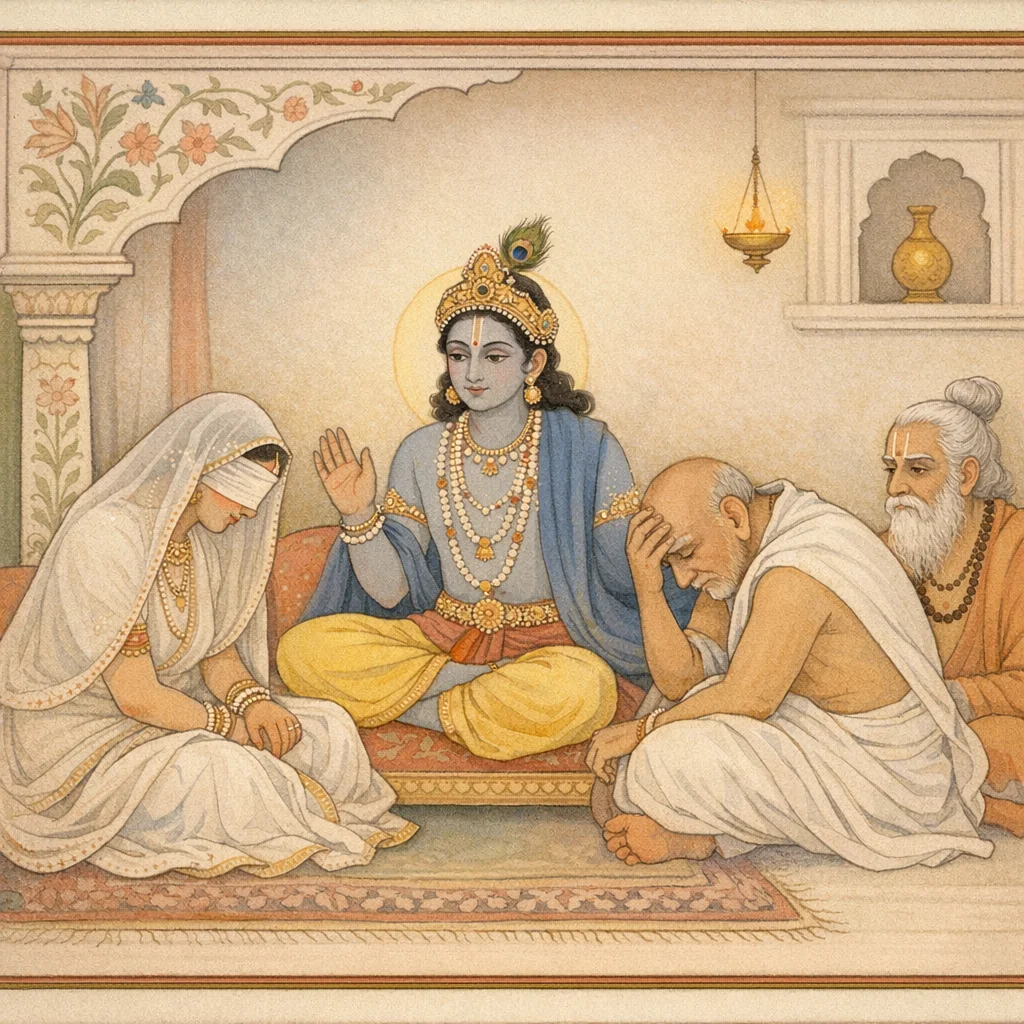
Dhṛtarāṣṭra questions Saṃjaya about what Duryodhana said after falling with shattered thighs. Saṃjaya describes the king’s physical condition—dust-covered, controlling his hair, breathing in agitation, striking the ground—then reports Duryodhana’s discourse. Duryodhana laments his reversal despite recalling his former sovereignty, patronage, honors received, and kṣatriya-style achievements, repeatedly framing himself as once “more fortunate” while now brought low. He attributes the outcome to kāla (inevitability) and simultaneously alleges a breach of samaya in the mace duel, characterizing his death as achieved through procedural deviation. He asks that surviving Kaurava allies be informed, specifically naming Aśvatthāman, Kṛtavarman, and Kṛpa, and warns them against trusting opponents portrayed as violators of convention. He anticipates the grief of Dhṛtarāṣṭra and Gāndhārī, the suffering of female kin (including Duḥśalā), and envisions joining fallen comrades. The chapter closes with collective distress and cosmic disturbance motifs, followed by messengers reporting the duel’s circumstances to Droṇa’s son.
Chapter Arc: जनमेजय के प्रश्न से अध्याय खुलता है—जब युद्ध समाप्त हो चुका, दुर्योधन गिर चुका और पृथ्वी पाण्डवों के लिए निष्कण्टक हो गयी, तब भी युधिष्ठिर की चिंता क्यों शान्त नहीं होती और वे श्रीकृष्ण को हस्तिनापुर क्यों भेजते हैं। → युधिष्ठिर की प्रेरणा से श्रीकृष्ण का उद्देश्य स्पष्ट होता है—धृतराष्ट्र और विशेषतः क्रोधदीप्त, शोककर्शिता गान्धारी को आश्वासन देना, ताकि शाप और प्रतिशोध की अग्नि शेष बचे धर्म को भी भस्म न कर दे। कृष्ण जानते हैं कि यह वही हस्तिनापुर है जहाँ पहले शान्ति-याचना निष्फल हुई थी; अब वे विजय के बाद भी विनय लेकर लौटते हैं। → कृष्ण धृतराष्ट्र से संवाद कर गान्धारी के सम्मुख आते हैं और उनके शोक व क्रोध को शान्त करने हेतु तीक्ष्ण किन्तु करुण वाणी से उन्हें धैर्य, मर्यादा और लोकधर्म की ओर मोड़ते हैं—यह क्षण युद्धोत्तर राजनीति नहीं, युद्धोत्तर आत्मा का निर्णायक संग्राम बन जाता है। → व्यास की उपस्थिति में आश्वासन का कार्य पूर्ण होता है; धृतराष्ट्र-गान्धारी का उग्र वेग शमन की ओर झुकता है। तत्पश्चात् श्रीकृष्ण दारुक के साथ शीघ्र प्रस्थान कर पाण्डव-शिबिर की ओर लौटते हैं—कृतकृत्य होकर, परन्तु भविष्य की छाया को जानते हुए। → गान्धारी का क्रोध पूरी तरह बुझा नहीं—शान्ति के भीतर भी शाप की सम्भावना शेष है; कृष्ण का लौटना एक अस्थायी विराम है, अन्त नहीं।
Shlokas
Verse 1
त्रेषष्टितमो<् ध्याय: युधिष्ठिरकी प्रेरणासे श्रीकृष्णका हस्तिनापुरमें जाकर धृतराष्ट्र और गान्धारीको आश्वासन दे पुनः पाण्डवोंके पास लौट आना जनमेजय उवाच किमर्थ द्विजशार्दूल धर्मराजो युधिष्ठिर: । गान्धार्या: प्रेषयामास वासुदेव॑ परंतपम्,जनमेजयने पूछा-<द्विजश्रेष्ठ! धर्मराज युधिष्ठिरने शत्रुसंतापी भगवान् श्रीकृष्णको गान्धारी देवीके पास किसलिये भेजा?
Janamejaya said: “For what purpose, O tiger among the twice-born, did Dharmarāja Yudhiṣṭhira send Vāsudeva—scorcher of foes—to Queen Gāndhārī?”
Verse 2
यदा पूर्व गत: कृष्ण: शमार्थ कौरवान् प्रति । न चतं लब्धवान् कामं॑ ततो युद्धमभूदिदम्,जब पूर्वकालमें श्रीकृष्ण संधि करानेके लिये कौरवोंके पास गये थे, उस समय तो उन्हें उनका अभीष्ट मनोरथ प्राप्त ही नहीं हुआ, जिससे यह युद्ध उपस्थित हुआ
Janamejaya said: “When earlier Kṛṣṇa went to the Kauravas seeking peace, he did not obtain the desired outcome; therefore this war came to pass.”
Verse 3
निहतेषु तु योधेषु हते दुर्योधने तदा । पृथिव्यां पाण्डवेयस्य नि:सपत्ने कृते युधि,ब्रह्मन! जब युद्धमें सारे योद्धा मारे गये, दुर्योधनका भी अन्त हो गया, भूमण्डलमें पाण्डुपुत्र युधिष्ठिरके शत्रुओंका सर्वथा अभाव हो गया, कौरवदलके लोग शिविरको सूना करके भाग गये और पाण्डवोंको उत्तम यशकी प्राप्ति हो गयी, तब कौन-सा ऐसा कारण आ गया, जिससे श्रीकृष्ण पुन: हस्तिनापुरमें गये?
Janamejaya said: “When the warriors had been slain, and Duryodhana too had fallen; when, in that war, the earth had become free of rivals for the son of Pāṇḍu (Yudhiṣṭhira)—what circumstance then arose that led Śrī Kṛṣṇa to go once more to Hastināpura?”
Verse 4
विद्रुते शिबिरे शून्ये प्राप्त यशसि चोत्तमे । कि नु तत् कारणं ब्रह्मन् येन कृष्णो गत: पुन:,ब्रह्मन! जब युद्धमें सारे योद्धा मारे गये, दुर्योधनका भी अन्त हो गया, भूमण्डलमें पाण्डुपुत्र युधिष्ठिरके शत्रुओंका सर्वथा अभाव हो गया, कौरवदलके लोग शिविरको सूना करके भाग गये और पाण्डवोंको उत्तम यशकी प्राप्ति हो गयी, तब कौन-सा ऐसा कारण आ गया, जिससे श्रीकृष्ण पुन: हस्तिनापुरमें गये?
Janamejaya said: “O Brahmin, when the Kaurava camp had been abandoned and left empty, when the Pāṇḍavas had attained the highest fame, and when Yudhiṣṭhira’s enemies had been utterly wiped out from the earth—what, then, was the reason that led Kṛṣṇa to go once again to Hastināpura?”
Verse 5
न चैतत् कारणं ब्रद्यन्नल्पं विप्रतिभाति मे । यत्रागमदमेयात्मा स्वयमेव जनार्दन:,विप्रवर! मुझे इसका कोई छोटा-मोटा कारण नहीं जान पड़ता, जिससे अप्रमेयस्वरूप साक्षात् भगवान् जनार्दनको ही जाना पड़ा
Janamejaya said: “O Brahmin, this does not appear to me to be a small or ordinary cause—something that would compel even Janārdana Himself, whose nature is immeasurable, to come in person.”
Verse 6
तत्त्वतो वै समाचक्ष्व सर्वमध्वर्युसत्तम । यच्चात्र कारणं ब्रद्मन् कार्यस्यास्य विनिश्चये,यजुर्वेदीय दिद्वानोंमें श्रेष्ठ ब्राह्मणदेव! इस कार्यका निश्चय करनेमें जो भी कारण हो, वह सब यथार्थरूपसे मुझे बताइये
Janamejaya said: “O best of officiating priests, tell me everything exactly as it truly is. And, O Brahman, explain also whatever reasons are involved here in arriving at a firm decision about this matter.”
Verse 7
वैशम्पायन उवाच त्वद्युक्तोडयमनुप्रश्नो यन्मां पृच्छसि पार्थिव । तत्ते5हं सम्प्रवक्ष्यामि यथावद् भरतर्षभ
Vaiśampāyana said: “This follow-up question of yours is fitting, O king, since you ask me about it. Therefore I shall explain it to you fully and correctly, O bull among the Bharatas.”
Verse 8
वैशम्पायनजीने कहा--भरतकुलभूषण नरेश! तुमने जो प्रश्न किया है, वह सर्वथा उचित है। तुम मुझसे जो कुछ पूछ रहे हो, वह सब मैं तुझे यथार्थरूपसे बताऊँगा ।। हतं दुर्योधन दृष्टवा भीमसेनेन संयुगे । व्युत्क्रम्य समयं राजन धार्तराष्ट्र महाबलम्,राजन्! भरतवंशी महाराज! धृतराष्ट्रपुत्र महाबली दुर्योधनको भीमसेनने युद्धमें उसके नियमका उल्लंघन करके मारा है। वह गदायुद्धके द्वारा मारा गया है। इन सब बातोंपर दृष्टिपात करके युधिष्ठिरके मनमें बड़ा भारी भय समा गया
Vaiśampāyana said: “O King, seeing the mighty son of Dhṛtarāṣṭra—Duryodhana—slain by Bhīmasena in battle, and that too by transgressing the agreed rule of combat, great fear arose in Yudhiṣṭhira’s mind.”
Verse 9
अन्यायेन हतं दृष्टवा गदायुद्धेन भारत । युधिष्ठिरे महाराज महद् भयमथाविशत्,राजन्! भरतवंशी महाराज! धृतराष्ट्रपुत्र महाबली दुर्योधनको भीमसेनने युद्धमें उसके नियमका उल्लंघन करके मारा है। वह गदायुद्धके द्वारा मारा गया है। इन सब बातोंपर दृष्टिपात करके युधिष्ठिरके मनमें बड़ा भारी भय समा गया
Vaiśampāyana said: Seeing that (Duryodhana) had been slain by an unrighteous act in a mace-fight, O descendant of Bharata, a great fear entered King Yudhiṣṭhira. The victory, tainted by a breach of the accepted rules of combat, turns at once into an ethical crisis: Yudhiṣṭhira foresees blame, sin, and the dangerous consequences that follow when dharma is violated even in war.
Verse 10
चिन्तयानो महाभागां गान्धारी तपसान्विताम् । घोरेण तपसा युक्तां त्रैलोक्यमपि सा दहेत्
As he reflected on the noble Gandhārī, endowed with austerity, he thought that, armed with such fierce tapas, she could burn even the three worlds.
Verse 11
वे घोर तपस्यासे युक्त महाभागा तपस्विनी गान्धारी देवीका चिन्तन करने लगे। उन्होंने सोचा “गान्धारी देवी कुपित होनेपर तीनों लोकोंको जलाकर भस्म कर सकती हैं' ।। तस्य चिन्तयमानस्य बुद्धि: समभवत् तदा | गान्धार्या: क्रोधदीप्ताया: पूर्व प्रशमनं भवेत्
Thinking of the great, ascetic Gandhārī, joined to dreadful tapas, he reflected: “If Queen Gandhārī becomes enraged, she can burn the three worlds to ashes.” As he pondered thus, it came to his mind that her blazing wrath must first be pacified.
Verse 12
इस प्रकार चिन्ता करते हुए राजा युधिष्ठिरके हृदयमें उस समय यह विचार हुआ कि पहले क्रोधसे जलती हुई गान्धारी देवीको शान्त कर देना चाहिये ।। सा हि पुत्रवधं श्रुत्वा कृतमस्माभिरीदृशम् । मानसेनाग्निना क्ुद्धा भस्मसान्न: करिष्यति,वे हमलोगोंके द्वारा इस तरह पुत्रका वध किया गया सुनकर कुपित हो अपने संकल्पजनित अग्निसे हमें भस्म कर डालेंगी
Vaiśampāyana said: As King Yudhiṣṭhira reflected in this way, a thought arose in his heart at that moment: it would be right first to pacify Queen Gāndhārī, who was burning with anger. For, on hearing that we have brought about such a slaughter of her sons, she—enraged and kindling a fire in her mind through sheer resolve—may reduce us to ashes.
Verse 13
कथं दुःखमिदं तीव्रं गान्धारी सा सहिष्यति । श्रुत्वा विनिहतं पुत्रं छलेनाजिह्ययोधिनम्,उनका पुत्र सरलतासे युद्ध कर रहा था; परंतु छलसे मारा गया। यह सुनकर गान्धारी देवी इस तीव्र दुःखको कैसे सह सकेंगी?
Vaiśampāyana said: “How will that Gāndhārī be able to endure this intense sorrow—on hearing that her son, who fought with straightforwardness and without deceit, has been slain by a stratagem?”
Verse 14
एवं विचिन्त्य बहुधा भयशोकसमन्वित: । वासुदेवमिदं वाक्य धर्मराजो5भ्यभाषत,इस तरह अनेक प्रकारसे विचार करके धर्मराज युधिष्ठिर भय और शोकमें डूब गये और वसुदेवनन्दन भगवान् श्रीकृष्णसे बोले--
Having reflected in many ways, overwhelmed by fear and grief, King Yudhiṣṭhira—the upholder of dharma—addressed these words to Vāsudeva (Śrī Kṛṣṇa).
Verse 15
तव प्रसादाद् गोविन्द राज्यं निहतकण्टकम् | अप्राप्यं मनसापीदं प्राप्तमस्माभिरच्युत,“गोविन्द! अच्युत! जिसे मनके द्वारा भी प्राप्त करना असम्भव था, वही यह अकण्टक राज्य हमें आपकी कृपासे प्राप्त हो गया
Vaiśampāyana said: “By your grace, O Govinda, we have obtained a kingdom free of thorns—secure and unopposed. O Acyuta, what was unattainable even in thought has now been gained by us.”
Verse 16
प्रत्यक्ष मे महाबाहो संग्रामे लोमहर्षणे । विमर्द: सुमहान् प्राप्तस्त्वया यादवनन्दन,“यादवनन्दन! महाबाहो! इस रोमांचकारी संग्राममें जो महान् विनाश प्राप्त हुआ था, वह सब आपने प्रत्यक्ष देखा था
Vaiśampāyana said: “O mighty-armed one, O delight of the Yādavas, in this hair-raising battle the immense slaughter and crushing turmoil that occurred was witnessed by you directly.”
Verse 17
त्वया देवासुरे युद्धे वधार्थममरद्विषाम् यथा साहां पुरा दत्त हताश्न विबुधद्विष:,'पूर्वकालमें देवासुर-संग्रामके अवसरपर जैसे आपने देवद्रोही दैत्योंक वधके लिये देवताओंकी सहायता की थी, जिससे वे सारे देवशत्रु मारे गये, महाबाहु अच्युत! उसी प्रकार इस युद्धमें आपने हमें सहायता प्रदान की है। वृष्णिनन्दन! आपने सारथिका कार्य करके हमलोगोंको बचा लिया
Vaiśampāyana said: “Just as in former times, in the war between gods and demons, you gave aid to the gods for the destruction of those who hated the immortals—so that all those enemies of the gods were slain—so too, mighty-armed Acyuta, in this war you have granted us your help. O descendant of the Vṛṣṇis, by taking up the charioteer’s task you have preserved us.”
Verse 18
साहां तथा महाबाहो दत्तमस्माकमच्युत । सारथ्येन च वार्ष्णेय भवता हि धृता वयम्,'पूर्वकालमें देवासुर-संग्रामके अवसरपर जैसे आपने देवद्रोही दैत्योंक वधके लिये देवताओंकी सहायता की थी, जिससे वे सारे देवशत्रु मारे गये, महाबाहु अच्युत! उसी प्रकार इस युद्धमें आपने हमें सहायता प्रदान की है। वृष्णिनन्दन! आपने सारथिका कार्य करके हमलोगोंको बचा लिया
Vaiśampāyana said: “So too, O mighty-armed Acyuta, you have been given to us. O Vārṣṇeya, by serving as our charioteer you have truly sustained and protected us. In former times, at the war between gods and asuras, just as you aided the gods in slaying the daityas hostile to the devas—so that all those enemies of the gods were destroyed—so in this war you have likewise granted us your help. O descendant of the Vṛṣṇis, by taking up the charioteer’s duty you have saved us.”
Verse 19
यदि न त्वं भवे्नाथ: फाल्गुनस्य महारणे । कथं शक््यो रणे जेतुं भवेदेष बलार्णव:,“यदि आप इस महासमरमें अर्जुनके स्वामी और सहायक न होते तो युद्धमें इस कौरव- सेनारूपी समुद्रपर विजय पाना कैसे सम्भव हो सकता था?
Vaiśampāyana said: “If you had not been the lord and protector of Phālguna (Arjuna) in that great battle, how could victory in war over this ocean of strength (the Kaurava host) have been possible at all?”
Verse 20
गदाप्रहारा विपुला: परिघैश्वापि ताडनम् | शक्तिभिभिंन्दिपालैश्लव तोमरै: सपरश्वथै:,'श्रीकृष्णण आपने हमलोगोंके लिये गदाओंके बहुत-से आघात सहे, परिघोंकी मार खायी; शक्ति, भिन्दिपाल, तोमर और फरसोंकी चोटें सहन कीं तथा बहुत-सी कठोर बातें सुनीं। आपके ऊपर रणभूमिमें ऐसे-ऐसे शस्त्रोंके प्रहार हुए, जिनका स्पर्श वज्रके तुल्य था
Vaiśampāyana said: “For our sake you endured many heavy blows of maces; you were struck with iron clubs as well. You bore the impacts of spears—śakti, bhindipālas, and tomaras—together with battle-axes; and you also endured many harsh words. Upon you, on the battlefield, fell the strokes of such weapons whose very touch was like a thunderbolt (vajra).”
Verse 21
अस्मत्कृते त्वया कृष्ण वाच: सुपरुषा: श्रुता: । शस्त्राणां च निपाता वै वज्रस्पर्शोपमा रणे,'श्रीकृष्णण आपने हमलोगोंके लिये गदाओंके बहुत-से आघात सहे, परिघोंकी मार खायी; शक्ति, भिन्दिपाल, तोमर और फरसोंकी चोटें सहन कीं तथा बहुत-सी कठोर बातें सुनीं। आपके ऊपर रणभूमिमें ऐसे-ऐसे शस्त्रोंके प्रहार हुए, जिनका स्पर्श वज्रके तुल्य था
Vaiśampāyana said: “For our sake, O Kṛṣṇa, you have endured many harsh and wounding words; and on the battlefield you have also borne the blows of weapons—strikes whose touch was like a thunderbolt (vajra). Thus you accepted suffering, both verbal and physical, to uphold the cause of your side.”
Verse 22
ते च ते सफला जाता हते दुर्योधने5च्युत । तत् सर्व न यथा नश्येत् पुनः कृष्ण तथा कुरु
“O Acyuta, those efforts of yours have indeed borne fruit, now that Duryodhana has been slain. Therefore, O Kṛṣṇa, act in such a way that all this may not be lost again.”
Verse 23
“अच्युत! दुर्योधनके मारे जानेपर वे सारे आघात सफल हो गये। श्रीकृष्ण! अब ऐसा कीजिये, जिससे वह सारा किया-कराया कार्य फिर नष्ट न हो जाय ।। संदेहदोलां प्राप्तं नश्लेत: कृष्ण जये सति । गान्धार्या हि महाबाहो क्रोधं बुद्धयसझ्व माधव,श्रीकृष्ण! आज विजय हो जानेपर भी हमारा मन संदेहके झूलापर झूल रहा है। महाबाहु माधव! आप गान्धारी देवीके क्रोधपर तो ध्यान दीजिये
Vaiśampāyana said: “Acyuta, now that Duryodhana has been slain, all those blows and efforts have borne fruit. O Śrī Kṛṣṇa, act in such a way that all the work accomplished does not come to ruin again. Even after victory, our minds still swing on the pendulum of doubt. O mighty-armed Mādhava, take heed of Queen Gāndhārī’s wrath.”
Verse 24
सा हि नित्यं महाभागा तपसोग्रेण कर्शिता । पुत्रपौत्रवध श्रुत्वा ध्रुवं न: सम्प्रधक्ष्यति,“महाभागा गान्धारी प्रतिदिन उग्र तपस्यासे अपने शरीरको दुर्बल करती जा रही हैं। वे पुत्रों और पौत्रोंका वध हुआ सुनकर निश्चय ही हमें जला डालेंगी
Vaiśaṃpāyana said: “That noble lady (Gāndhārī), worn down day after day by severe austerity, will surely blaze up against us when she hears of the slaughter of her sons and grandsons.”
Verse 25
तस्या: प्रसादनं वीर प्राप्तकालं मतं मम । कश्च तां कोधताम्राक्षीं पुत्रव्यसनकर्शिताम्
Vaiśampāyana said: “O hero, in my judgment this is the right moment to seek her appeasement and win her favor. For who could pacify that woman—her eyes reddened with anger, worn down by the calamity of her son?”
Verse 26
तत्र मे गमन॑ प्राप्त रोचते तव माधव
“There, O Mādhava, my going now seems fitting and agreeable to your purpose.”
Verse 27
गान्धार्या: क्रोधदीप्ताया: प्रशमार्थमरिंदम । “शत्रुओंका दमन करनेवाले माधव! इस समय क्रोधसे जलती हुई गान्धारी देवीको शान्त करनेके लिये आपका वहाँ जाना ही मुझे उचित जान पड़ता है ।। त्वं हि कर्ता विकर्ता च लोकानां प्रभवाप्यय:,“महाबाहो! आप सम्पूर्ण लोकोंके स्रष्टा और संहारक हैं। आप ही सबकी उत्पत्ति और प्रलयके स्थान हैं। आप युक्ति और कारणोंसे संयुक्त समयोचित वचनोंद्वारा गान्धारी देवीको शीघ्र ही शान्त कर देंगे
Vaiśampāyana said: “O subduer of foes! To pacify Gandhārī, who is blazing with anger, it seems to me right that you should go there now. O Mādhava, tamer of enemies! You are indeed the maker and unmaker of worlds—the source and the dissolution of all beings. Mighty-armed one, you are the very ground where all arise and into which all pass away. With timely words joined to sound reasoning, you will quickly calm Queen Gandhārī.”
Verse 28
हेतुकारणसंयुक्तैर्वाक्यै: कालसमीरितै: । क्षिप्रमेव महाबाहो गान्धारीं शमयिष्यसि,“महाबाहो! आप सम्पूर्ण लोकोंके स्रष्टा और संहारक हैं। आप ही सबकी उत्पत्ति और प्रलयके स्थान हैं। आप युक्ति और कारणोंसे संयुक्त समयोचित वचनोंद्वारा गान्धारी देवीको शीघ्र ही शान्त कर देंगे
Vaiśampāyana said: “O mighty-armed one, with words joined to sound reasoning and clear causes—spoken in a timely manner—you will quickly soothe Gāndhārī.”
Verse 29
पितामहश्न भगवान् कृष्णस्तत्र भविष्यति | सर्वथा ते महाबाहो गान्धार्या: क्रोधनाशनम्
Vaiśampāyana said: “There, the revered Lord Kṛṣṇa will also be present, along with the grandsire. In every way, O mighty-armed one, he will bring about the pacification of Gāndhārī’s anger.”
Verse 30
धर्मराजस्य वचन श्र॒ुत्वा यदुकुलोद्वह:
Vaiśaṃpāyana said: Hearing the words of Dharmarāja (Yudhiṣṭhira), the foremost scion of the Yadu line replied—marking a turn, as counsel grounded in dharma was received amid the pressures of war and duty.
Verse 31
केशवस्य वच: श्र॒ुत्वा त्वमाणो5थ दारुक:
Vaiśampāyana said: Hearing Keśava’s words, Dāruka hastened at once—carrying out the command with disciplined urgency, as befits a charioteer devoted to duty amid the pressures of war.
Verse 32
त॑ रथं यादवश्रेष्ठ;: समारुहु परंतप:
Vaiśampāyana said: Then the foremost of the Yādavas mounted that chariot, while the scorcher of foes made ready to press on—an image of resolute action amid the moral gravity of war, where duty is carried forward through disciplined readiness rather than hesitation.
Verse 33
तत:ः प्रायान्महाराज माधवो भगवान् रथी
Then, O great king, Mādhava—the revered Lord and a master charioteer—set forth, moving the action onward with purposeful resolve amid the pressures of war and duty.
Verse 34
प्रविश्य नगरं वीरो रथघोषेण नादयन्,नगरमें प्रविष्ट होकर वीर श्रीकृष्ण अपने रथके गम्भीर घोषसे सम्पूर्ण दिशाओंको प्रतिध्वनित करने लगे। धृतराष्ट्रको उनके आगमनकी सूचना दी गयी और वे अपने उत्तम रथसे उतरकर मनमें दीनता न लाते हुए धृतराष्ट्रके महलमें गये
Vaiśampāyana said: Entering the city, the heroic Kṛṣṇa made the quarters resound with the deep rumble of his chariot. Dhṛtarāṣṭra was informed of his arrival; and Kṛṣṇa, alighting from his excellent chariot, went to Dhṛtarāṣṭra’s palace without allowing any dejection to take hold in his mind—maintaining dignity and purpose even amid the ruin of war.
Verse 35
विदितो धृतराष्ट्रस्य सो5वतीर्य रथोत्तमात् अभ्यगच्छददीनात्मा धृतराष्ट्रनिवेशनम्,नगरमें प्रविष्ट होकर वीर श्रीकृष्ण अपने रथके गम्भीर घोषसे सम्पूर्ण दिशाओंको प्रतिध्वनित करने लगे। धृतराष्ट्रको उनके आगमनकी सूचना दी गयी और वे अपने उत्तम रथसे उतरकर मनमें दीनता न लाते हुए धृतराष्ट्रके महलमें गये
When Dhṛtarāṣṭra was informed of his arrival, Śrī Kṛṣṇa descended from his excellent chariot and, without letting his spirit sink into dejection, went to Dhṛtarāṣṭra’s royal residence. Entering the city, the heroic Kṛṣṇa made the quarters resound with the deep rumble of his chariot—an arrival that signals resolve and moral steadiness even amid the ruin of war.
Verse 36
पूर्व चाभिगतं तत्र सो5पश्यदृषिसत्तमम् | पादौ प्रपीड्य कृष्णस्य राज्ञश्नापि जनार्दन:
Vaiśampāyana said: There he saw the foremost of sages, whom he had met before. Then Janārdana—Kṛṣṇa—pressed the feet of that royal personage as an act of reverence, honoring him in accordance with righteous conduct.
Verse 37
ततस्तु यादवश्रेष्ठो धृतराष्ट्रमधोक्षज:
Then the foremost of the Yādavas—Adhokṣaja (Kṛṣṇa), the Lord beyond the reach of the senses—approached Dhṛtarāṣṭra, setting the stage for counsel and moral reckoning amid the aftermath of war.
Verse 38
पाणिमालम्ब्य राजेन्द्र सुस्वरं प्रसरोद ह । राजेन्द्र! तदनन्तर यादवश्रेष्ठ श्रीकृष्ण धृतराष्ट्रका हाथ अपने हाथमें लेकर उन्मुक्त स्वरसे फूट-फूटकर रोने लगे ।। स मुहूर्तादिवोत्सृज्य बाष्पं शोकसमुद्धवम्,उन्होंने दो घड़ीतक शोकके आँसू बहाकर शुद्ध जलसे नेत्र धोये और विधिपूर्वक आचमन किया। तत्पश्चात् शत्रुदमन श्रीकृष्णने राजा धृतराष्ट्रसे प्रस्तुत वचन कहा--“भारत! आप वृद्ध पुरुष हैं; अतः कालके द्वारा जो कुछ भी संघटित हुआ और हो रहा है, वह कुछ भी आपसे अज्ञात नहीं है। प्रभो! आपको सब कुछ अच्छी तरह विदित है
Vaiśampāyana said: Taking the king’s hand, Kṛṣṇa broke into loud, unrestrained weeping. After a while, having let the grief-born tears flow, he washed his eyes with pure water and performed ācamana according to rule. Then Kṛṣṇa, the subduer of foes, addressed King Dhṛtarāṣṭra: “O Bhārata, you are an aged man; therefore nothing that Time has brought about, or is bringing about, is unknown to you. Lord, you know all this well.”
Verse 39
प्रक्षाल्य वारिणा नेत्रे ह्ाचम्पय च यथाविधि । उवाच प्रस्तुतं वाक््यं धृतराष्ट्रमरिंदम:,उन्होंने दो घड़ीतक शोकके आँसू बहाकर शुद्ध जलसे नेत्र धोये और विधिपूर्वक आचमन किया। तत्पश्चात् शत्रुदमन श्रीकृष्णने राजा धृतराष्ट्रसे प्रस्तुत वचन कहा--“भारत! आप वृद्ध पुरुष हैं; अतः कालके द्वारा जो कुछ भी संघटित हुआ और हो रहा है, वह कुछ भी आपसे अज्ञात नहीं है। प्रभो! आपको सब कुछ अच्छी तरह विदित है
Having washed his eyes with water and then sipped water in the prescribed manner, the foe-subduing one addressed Dhṛtarāṣṭra with words suited to the moment. He reminded the aged king that what Time has brought about and continues to bring about is not unknown to him, for he understands all this clearly.
Verse 40
न ते>स्त्यविदितं किंचिद् वृद्धस्य तव भारत । कालस्य च यथावृत्तं तत् ते सुविदितं प्रभो,उन्होंने दो घड़ीतक शोकके आँसू बहाकर शुद्ध जलसे नेत्र धोये और विधिपूर्वक आचमन किया। तत्पश्चात् शत्रुदमन श्रीकृष्णने राजा धृतराष्ट्रसे प्रस्तुत वचन कहा--“भारत! आप वृद्ध पुरुष हैं; अतः कालके द्वारा जो कुछ भी संघटित हुआ और हो रहा है, वह कुछ भी आपसे अज्ञात नहीं है। प्रभो! आपको सब कुछ अच्छी तरह विदित है
Vaiśampāyana said: “O Bhārata, you are an aged man; there is nothing unknown to you. Whatever has unfolded according to the course of Time is well known to you, O lord.”
Verse 41
यतितं पाण्डवै: सर्वैस्तव चित्तानुरोधिभि: । कथं कुलक्षयो न स्यात्तथा क्षत्रस्थ भारत,“भारत! समस्त पाण्डव सदासे ही आपकी इच्छाके अनुसार बर्ताव करनेवाले हैं। उन्होंने बहुत प्रयत्न किया कि किसी तरह हमारे कुलका तथा क्षत्रियसमूहका विनाश न हो
Vaiśaṃpāyana said: “O Bhārata, all the Pāṇḍavas—ever acting in accordance with your wishes—strove earnestly to ensure that the destruction of the family line and the ruin of the kṣatriya order would not come to pass.”
Verse 42
भ्रातृभि: समयं कृत्वा क्षान्तवान् धर्मवत्सल: । द्यूतच्छलजितै: शुद्धैर्वनवासो हुपागतः,“धर्मवत्सल युधिष्ठिरने अपने भाइयोंके साथ नियत समयकी प्रतीक्षा करते हुए सारा कष्ट चुपचाप सहन किया था। पाण्डव शुद्धभावसे आपके पास आये थे तो भी उन्हें कपट॒पूर्वक जूएमें हराकर वनवास दिया गया
Vaiśampāyana said: “Having made an agreement with his brothers and waiting out the appointed term, the dharma-loving (Yudhiṣṭhira) endured the hardship with forbearance. Yet those pure-hearted ones were deceitfully defeated by gambling-trickery, and thus the sentence of exile to the forest came upon them.”
Verse 43
अज्ञातवासचर्या च नानावेषसमावृतै: । अन्ये च बहव: क्लेशात् त्वशक्तैरिव सर्वदा,उन्होंने नाना प्रकारके वेशोंमें अपनेको छिपाकर अज्ञातवासका कष्ट भोगा। इसके सिवा और भी बहुत-से क्लेश उन्हें असमर्थ पुरुषोंके समान सदा सहन करने पड़े हैं
Vaiśampāyana said: “Disguised in many different guises, they endured the hardship of living incognito. Beyond this, they were compelled to bear many other afflictions as well—continually, as though they were powerless men—patiently submitting to suffering in order to uphold their chosen course.”
Verse 44
मया च स्वयमागम्य युद्धकाल उपस्थिते । सर्वलोकस्य सांनिध्ये ग्रामांस्त्वं पडच याचित:,“जब युद्धका अवसर उपस्थित हुआ, उस समय मैंने स्वयं आकर शान्ति स्थापित करनेके लिये सब लोगोंके सामने आपसे केवल पाँच गाँव माँगे थे
Vaiśampāyana said: “When the time for war had arrived, I myself came before everyone and, seeking to establish peace, asked you for only five villages.”
Verse 45
त्वया कालोपसूष्टेन लोभतो नापवर्जिता: । तवापराधान्नूपते सर्व क्षत्रं क्षयं गतम्,'परंतु कालसे प्रेरित हो आपने लोभवश वे पाँच गाँव भी नहीं दिये। नरेश्वर! आपके अपराधसे समस्त क्षत्रियोंका विनाश हो गया
Vaiśampāyana said: Driven on by Time itself and swayed by greed, you did not relinquish even those (five villages). O king, because of your wrongdoing, the entire warrior order has been brought to destruction.
Verse 46
भीष्मेण सोमदत्तेन बाह्लीकेन कृपेण च | द्रोणेन च सपुत्रेण विदुरेण च धीमता
Vaiśampāyana said: Along with Bhīṣma, Somadatta, Bāhlīka, Kṛpa, Droṇa together with his son, and the wise Vidura—these eminent elders are invoked as part of the remembered lineage of counsel and command.
Verse 47
याचितस्त्वं शमं नित्यं न च तत् कृतवानसि । 'भीष्म, सोमदत्त, बाह्नीक, कृपाचार्य, द्रोणाचार्य, अश्वत्थामा और बुद्धिमान् विदुरजीने भी सदा आपसे शान्तिके लिये याचना की थी; परंतु आपने वह कार्य नहीं किया || ४६६ || कालोपहतचित्ता हि सर्वे मुहान्ति भारत,'भारत! जिनका चित्त कालके प्रभावसे दूषित हो जाता है, वे सब लोग मोहमें पड़ जाते हैं। जैसे कि पहले युद्धकी तैयारीके समय आपकी भी बुद्धि मोहित हो गयी थी। इसे कालयोगके सिवा और क्या कहा जा सकता है? भाग्य ही सबसे बड़ा आश्रय है
Vaiśampāyana said: “You were repeatedly urged to make peace, yet you did not do so. For, O Bhārata, when the mind is struck and clouded by the force of Time, all people fall into delusion. Thus your own understanding too became bewildered earlier, at the time preparations for war began—what else can this be called but the working of Time? Fate becomes the final refuge.”
Verse 48
यथा मूढो भवान् पूर्वमस्मिन्नर्थे समुद्यते । किमन्यत् कालयोगाद्धि दिष्टमेव परायणम्,'भारत! जिनका चित्त कालके प्रभावसे दूषित हो जाता है, वे सब लोग मोहमें पड़ जाते हैं। जैसे कि पहले युद्धकी तैयारीके समय आपकी भी बुद्धि मोहित हो गयी थी। इसे कालयोगके सिवा और क्या कहा जा सकता है? भाग्य ही सबसे बड़ा आश्रय है
Vaiśampāyana said: “Just as you were once deluded and stirred up in this very matter earlier—at the time of preparing for war—so too do all whose minds are tainted by the force of Time fall into bewilderment. What else can this be but the working of Time? Indeed, destiny alone becomes the final refuge.”
Verse 49
मा च दोषान् महाप्राज्ञ पाण्डवेषु निवेशय । अल्पो>प्यतिक्रमो नास्ति पाण्डवानां महात्मनाम्
Vaiśampāyana said: “O greatly wise one, do not impute faults to the Pāṇḍavas. In those high-souled Pāṇḍavas there is not even the slightest transgression.”
Verse 50
एतत् सर्व तु विज्ञाय ह्वात्मदोषकृतं फलम्
Having understood all this, he recognized that the outcome was indeed the fruit of one’s own faults—an effect brought about by personal wrongdoing rather than by fate alone.
Verse 51
असूयां पाण्डुपुत्रेषु न भवान् कर्तुमहति । 'यह सब अपने ही अपराधोंका फल है, ऐसा जानकर आपको पाण्डवोंके प्रति दोषदृष्टि नहीं करनी चाहिये ।। ५० ई ।। कुलं वंशश्व पिण्डाश्व यच्च पुत्रकृतं फलम्
Vaiśampāyana said: “You ought not to harbor envy or fault-finding toward the sons of Pāṇḍu. Recognizing that these events are the fruit of one’s own misdeeds, you should not cast a blaming gaze upon the Pāṇḍavas.”
Verse 52
त्वं चैव कुरुशार्टूल गान्धारी च यशस्विनी
Vaiśampāyana said: “And you too, O tiger among the Kurus, and the illustrious Gāndhārī as well …”
Verse 53
मा शुचो नरशार्दूल पाण्डवान् प्रति किल्बिषम् । “कुरुप्रवर! पुरुषसिंह! आप और यशस्वी गान्धारी-देवी कभी पाण्डवोंकी बुराई करनेकी बात न सोचें ।। एतत् सर्वमनुध्याय आत्मनश्न व्यतिक्रमम्
Vaiśampāyana said: “Do not grieve, O tiger among men, nor entertain any thought of wrongdoing toward the Pāṇḍavas. Reflecting on all that has happened—and on one’s own lapses—one should restrain blame and turn instead toward sober self-examination.”
Verse 54
जानासि च महाबाहो धर्मराजस्य या त्वयि
Vaiśampāyana said: “O mighty-armed one, you already know the regard and trust that Dharmarāja bears toward you.”
Verse 55
एतच्च कदन कृत्वा शत्रूणामपकारिणाम्
Having wrought this act of destruction against the hostile foes who had done harm, Vaiśampāyana continues the account, casting the deed as retaliation within the brutal logic of war—an action driven by enmity and injury, not by compassion.
Verse 56
त्वां चैव नरशार्दूल गान्धारीं च यशस्विनीम्
Vaiśampāyana said: “You as well, O tiger among men, and also the illustrious Gāndhārī.”
Verse 57
हिया च परया5<विष्टो भवन्तं नाधिगच्छति
And, overcome by intense modesty and shame, he does not approach you. The line shows how moral restraint and self-consciousness can keep a person from stepping forward, even when a grave moment calls for speech or action.
Verse 58
एवमुक््त्वा महाराज धृतराष्ट्रं यदूत्तम:,उवाच परम॑ वाक््यं गान्धारीं शोककर्शिताम् | महाराज! यदश्रेष्ट श्रीकृष्ण राजा धृतराष्ट्रसे ऐसा कहकर शोकसे दुर्बल हुई गान्धारी देवीसे यह उत्तम वचन बोले--
Vaiśampāyana said: “Having spoken thus, O King, the best of the Yadus (Śrī Kṛṣṇa) addressed King Dhṛtarāṣṭra, and then spoke a most weighty and fitting statement to Gāndhārī, who was worn down by grief.”
Verse 59
।। सौबलेयि निबोध त्वं यत् त्वां वक्ष्यामि तच्छुणु
Vaiśampāyana said: “O son of Subala, understand—listen carefully to what I am about to tell you.”
Verse 60
त्वत्समा नास्ति लोके5स्मिन्नद्य सीमन्तिनी शुभे । “सुबलनन्दिनि! मैं तुमसे जो कुछ कहता हूँ, उसे ध्यान देकर सुनो और समझो। शुभे! इस संसारमें तुम्हारी-जैसी तपोबल-सम्पन्न स्त्री दूसरी कोई नहीं है ।। ५९ ई |। जानासि च यथा राज्ञि सभायां मम संनिधौ,“रानी! तुम्हें याद होगा, उस दिन सभामें मेरे सामने ही तुमने दोनों पक्षोंका हित करनेवाला धर्म और अर्थयुक्त वचन कहा था, किन्तु कल्याणि! तुम्हारे पुत्रोंने उसे नहीं माना
Vaiśampāyana said: “Auspicious lady, O noble woman, there is none in this world today equal to you. And, O queen, you surely remember how, in the royal assembly in my very presence, you spoke words grounded in dharma and practical good—words meant for the welfare of both sides—yet your sons did not accept them.”
Verse 61
धर्मार्थसहितं वाक्यमुभयो: पक्षयोर्हितम् । उक्तवत्यसि कल्याणि न च ते तनयै: कृतम्,“रानी! तुम्हें याद होगा, उस दिन सभामें मेरे सामने ही तुमने दोनों पक्षोंका हित करनेवाला धर्म और अर्थयुक्त वचन कहा था, किन्तु कल्याणि! तुम्हारे पुत्रोंने उसे नहीं माना
“Auspicious lady, you spoke words joined with dharma and with practical good, for the welfare of both sides; yet your sons did not act upon them.”
Verse 62
दुर्योधनस्त्वया चोक्तो जयार्थी परुषं वच: । शृणु मूढ वचो महां यतो धर्मस्ततो जय:,“तुमने विजयकी अभिलाषा रखनेवाले दुर्योधनको सम्बोधित करके उससे बड़ी रुखाईके साथ कहा था--'ओ मूढ! मेरी बात सुन ले, जहाँ धर्म होता है, उसी पक्षकी जीत होती है”
“You addressed Duryodhana—eager for victory—with harsh words: ‘Listen, you deluded man, to my weighty counsel: where dharma stands, there alone is victory.’”
Verse 63
तदिदं समनुप्राप्तं तव वाक्य नृपात्मजे । एवं विदित्वा कल्याणि मा सम शोके मन: कृथा:,“कल्याणमयी राजकुमारी! तुम्हारी वही बात आज सत्य हुई है, ऐसा समझकर तुम मनमें शोक न करो इति श्रीमहा भारते शल्यपर्वणि गदापर्वणि धृतराष्ट्रगान्धारीसमा श्वासने त्रिषष्टितमो5 ध्याय: इस प्रकार श्रीमह्याभारत शल्यपर्वके अन्तर्गत गदापर्वमें धृतराड्र और गान्धारीका श्रीकृष्णको आश्वासन देनाविषयक तिरसठवाँ अध्याय पूरा हुआ
“That very outcome which you foretold, O princess, has now come to pass. Knowing this to be so, auspicious lady, do not let your mind sink into grief.”
Verse 64
पाण्डवानां विनाशाय मा ते बुद्धि: कदाचन । शक्ता चासि महाभागे पृथिवीं सचराचराम्
Vaiśampāyana said: “Let your resolve never be set on the destruction of the Pāṇḍavas. O noble lady, you have the power to sway the whole earth, with all that moves and all that is still.”
Verse 65
वासुदेववच: श्रुत्वा गान्धारी वाक्यमत्रवीत्,सा मे व्यवस्थिता श्रुत्वा तव वाक्यं जनार्दन । भगवान् श्रीकृष्णकी यह बात सुनकर गान्धारीने कहा--“महाबाहु केशव! तुम जैसा कहते हो, वह बिलकुल ठीक है। अबतक मेरे मनमें बड़ी व्यथाएँ थीं और उन व्यथाओंकी आगसे दग्ध होनेके कारण मेरी बुद्धि विचलित हो गयी थी (अतः मैं पाण्डवोंके अनिष्टकी बात सोचने लगी थी); परंतु जनार्दन! इस समय तुम्हारी बात सुनकर मेरी बुद्धि स्थिर हो गयी है--क्रोधका आवेश उतर गया है
Vaiśampāyana said: Hearing the words of Vāsudeva, Gāndhārī replied, “Janārdana, having heard your counsel, my mind has become settled. What you say, O mighty-armed Keśava, is wholly right. Until now I was tormented by intense anguish, and scorched by that fire my understanding had been shaken, so that I began to think of harm to the Pāṇḍavas. But now, hearing you, my intellect is steady again—the surge of anger has subsided.”
Verse 66
एवमेतन्महाबाहो यथा वदसि केशव । आधिकभिर्दहमानाया मति: संचलिता मम
“So it is indeed, O mighty-armed one, just as you say, O Keśava. My mind, scorched by excessive grief and pressure, has been shaken and thrown into confusion.”
Verse 67
राज्स्त्वन्धस्य वृद्धस्य हतपुत्रस्य केशव
Vaiśampāyana said: “O Keśava, consider the king—blind and aged, bereft of his sons.”
Verse 68
एतावदुक्त्वा वचन मुखं प्रच्छाद्य वाससा
Having said only this much, he covered his face with his garment.
Verse 69
तत एनां महाबाहु: केशव: शोककर्शिताम्
Then Keśava, the mighty-armed one, addressed her—worn down and emaciated by grief.
Verse 70
समाश्चास्य च गान्धारीं धृतराष्ट्र च माधव:
Vaiśampāyana said: Mādhava (Kṛṣṇa) too drew near and addressed Gāndhārī and Dhṛtarāṣṭra, speaking with them in the war’s aftermath—an act that sets royal grief and responsibility within the demands of dharma and restraint.
Verse 71
ततस्त्वरित उत्थाय पादौ मूर्ध्ना प्रणम्य च,राजेन्द्र! तदनन्तर वे सहसा उठकर खड़े हो गये और व्यासजीके चरणोंमें मस्तक झुकाकर प्रणाम करके कुरुवंशी धृतराष्ट्रसे बोले--“कुरुश्रेष्ठी अब मैं आपसे जानेकी आज्ञा चाहता हूँ। अब आप अपने मनको शोकमग्न न कीजिये। द्रोणपुत्र अश्वत्थामाके मनमें पापपूर्ण संकल्प उदित हुआ है। इसीलिये मैं सहसा उठ गया हूँ। उसने रातको सोते समय पाण्डवोंके वधका विचार किया है”
Then, rising quickly, he bowed with his head to the feet (of the revered elder) and offered obeisance. Addressing the king, he continued: “O best of kings, I now seek your permission to depart. Do not let your mind sink into grief. A sinful resolve has arisen in the heart of Aśvatthāmā, the son of Droṇa; that is why I have risen at once. In the night, while others sleep, he has conceived the thought of killing the Pāṇḍavas.”
Verse 72
द्वैपायनस्य राजेन्द्र ततः कौरवमब्रवीत् । आपूृच्छे त्वां कुरुश्रेष्ठ मा च शोके मन: कृथा:,राजेन्द्र! तदनन्तर वे सहसा उठकर खड़े हो गये और व्यासजीके चरणोंमें मस्तक झुकाकर प्रणाम करके कुरुवंशी धृतराष्ट्रसे बोले--“कुरुश्रेष्ठी अब मैं आपसे जानेकी आज्ञा चाहता हूँ। अब आप अपने मनको शोकमग्न न कीजिये। द्रोणपुत्र अश्वत्थामाके मनमें पापपूर्ण संकल्प उदित हुआ है। इसीलिये मैं सहसा उठ गया हूँ। उसने रातको सोते समय पाण्डवोंके वधका विचार किया है”
Vaiśaṃpāyana said: Then, O king, (Saṃjaya) spoke to the Kuru elder Dhṛtarāṣṭra after bowing to Dvaipāyana (Vyāsa). “O best of the Kurus, I take leave of you now; do not let your mind sink into grief.” The urgency behind his sudden departure was that Aśvatthāmā, the son of Droṇa, had conceived a sinful resolve—he meant to kill the Pāṇḍavas at night while they slept.
Verse 73
द्रौणे: पापो5स्त्यभिप्रायस्तेनास्मि सहसोत्थित: । पाण्डवानां वधे रात्रौ बुद्धिस्तेन प्रदर्शिता,राजेन्द्र! तदनन्तर वे सहसा उठकर खड़े हो गये और व्यासजीके चरणोंमें मस्तक झुकाकर प्रणाम करके कुरुवंशी धृतराष्ट्रसे बोले--“कुरुश्रेष्ठी अब मैं आपसे जानेकी आज्ञा चाहता हूँ। अब आप अपने मनको शोकमग्न न कीजिये। द्रोणपुत्र अश्वत्थामाके मनमें पापपूर्ण संकल्प उदित हुआ है। इसीलिये मैं सहसा उठ गया हूँ। उसने रातको सोते समय पाण्डवोंके वधका विचार किया है”
Vaiśampāyana said: “In the mind of Droṇa’s son a sinful intention has arisen; therefore I have risen at once. In the night he has fixed his resolve upon the slaughter of the Pāṇḍavas, O best of kings.”
Verse 74
एतच्छुत्वा तु वचन गान्धार्या सहितो<ब्रवीत् । धृतराष्ट्रो महाबाहुः केशवं केशिसूदनम्,यह सुनकर गान्धारीसहित महाबाहु धृतराष्ट्रने केशिहन्ता केशवसे कहा--“महाबाहु जनार्दन! आप शीघ्र जाइये और पाण्डवोंकी रक्षा कीजिये। मैं पुनः शीघ्र ही आपसे मिलूँगा'
Hearing these words, Dhṛtarāṣṭra—the mighty-armed king—together with Gāndhārī, addressed Keśava, the slayer of Keśin. He urged Kṛṣṇa to depart at once and protect the Pāṇḍavas, and declared that he would meet him again soon.
Verse 75
शीघ्रं गच्छ महाबाहो पाण्डवान् परिपालय । भूयस्त्वया समेष्यामि क्षिप्रमेव जनार्दन,यह सुनकर गान्धारीसहित महाबाहु धृतराष्ट्रने केशिहन्ता केशवसे कहा--“महाबाहु जनार्दन! आप शीघ्र जाइये और पाण्डवोंकी रक्षा कीजिये। मैं पुनः शीघ्र ही आपसे मिलूँगा'
Vaiśampāyana said: “Go quickly, O mighty-armed one, and protect the Pāṇḍavas. I shall meet with you again very soon, O Janārdana.”
Verse 76
प्रायात् ततस्तु त्वरितो दारुकण सहाच्युत: । वासुदेवे गते राजन धृतराष्ट्रं जनेश्वरम्
Then Dāruka quickly set out, accompanied by Acyuta (Kṛṣṇa). O king, when Vāsudeva had departed, he went to Dhṛtarāṣṭra, the lord of men.
Verse 77
वासुदेवो5पि धर्मात्मा कृतकृत्यो जगाम ह
Vaiśampāyana said: Even Vāsudeva, righteous at heart, having fulfilled what needed to be done, departed.
Verse 78
आगम्य शिबिरं रात्रौ सो5भ्यगच्छत पाण्डवान् । तच्च तेभ्य: समाख्याय सहितस्तै: समाहित:,शिबिरमें आकर रातमें वे पाण्डवोंसे मिले और उनसे सारा समाचार कहकर उन्हींके साथ सावधान होकर रहे
Arriving at the camp by night, he went to the Pāṇḍavas. Having reported the entire matter to them, he remained there together with them, composed and vigilant.
Verse 253
वीक्षितुं पुरुष: शक्तस्त्वामृते पुरुषोत्तम । “वीर! अब उन्हें प्रसन्न करनेका कार्य ही मुझे समयोचित जान पड़ता है। पुरुषोत्तम! आपके सिवा दूसरा कौन ऐसा पुरुष है, जो पुत्रोंके शोकसे दुर्बल हो क्रोधसे लाल आँखें करके बैठी हुई गान्धारी देवीकी ओर आँख उठाकर देख सके
None but you, O Puruṣottama, can raise his eyes to look upon her. “O hero! Now it seems to me that the timely task is to soothe and please them. O Puruṣottama! Apart from you, what man could lift his gaze toward the goddess Gāndhārī—enfeebled by grief for her sons, seated with eyes reddened by wrath?”
Verse 296
कर्तव्यं सात्वतां श्रेष्ठ पाण्डवानां हितार्थिना । “हमारे पितामह श्रीकृष्णद्वैपायन भगवान् व्यास भी वहीं होंगे। महाबाहो! सात्वतवंशके श्रेष्ठ पुरछुष। आप पाण्डवोंके हितैषी हैं। आपको सब प्रकारसे गान्धारी देवीके क्रोधको शान्त कर देना चाहिये'
Vaiśampāyana said: “O best of the Sātvatas, you who seek the welfare of the Pāṇḍavas must do what is to be done. Our grandsire, the blessed Kṛṣṇa-Dvaipāyana Vyāsa, will also be there. O mighty-armed one, foremost of the Sātvata line, supreme among men—since you are a well-wisher of the Pāṇḍavas, you should, by every means, pacify the anger of Lady Gāndhārī.”
Verse 303
आमन्त्र्य दारुक॑ प्राह रथ: सज्जो विधीयताम् । धर्मराजकी यह बात सुनकर यदुकुलतिलक श्रीकृष्णने दारुकको बुलाकर कहा--'रथ तैयार करो”
Vaiśampāyana said: Having summoned Dāruka, he spoke, “Let the chariot be made ready.” Hearing the resolve of Dharmarāja, Śrī Kṛṣṇa—the ornament of the Yadu line—called Dāruka and ordered that the chariot be prepared.
Verse 313
न्यवेदयद् रथं सज्जं केशवाय महात्मने । केशवका यह आदेश सुनकर दारुकने बड़ी उतावलीके साथ रथको सुसज्जित किया और उन महात्माको इसकी सूचना दी
Vaiśampāyana said: Dāruka, having heard Keśava’s instruction, promptly had the chariot made fully ready and then informed that great-souled Keśava that it was prepared.
Verse 326
जगाम हास्तिनपुरं त्वरित: केशवो विभु: । शत्रुओंको संताप देनेवाले यादवश्रेष्ठ भगवान् श्रीकृष्ण तुरंत ही उस रथपर आरूढ़ हो हस्तिनापुरकी ओर चल दिये
Vaiśampāyana said: The mighty Keśava—Śrī Kṛṣṇa, foremost of the Yādavas and a source of anguish to his enemies—set out at once for Hāstinapura, swiftly departing upon his chariot.
Verse 333
नागसाह्दयमासाद्य प्रविवेश च वीर्यवान् । महाराज! पराक्रमी भगवान् माधव उस रथपर बैठकर हस्तिनापुरमें जा पहुँचे। वहाँ पहुँचकर उन्होंने नगरमें प्रवेश किया
Vaiśampāyana said: Having reached Nāgasāhdaya, the mighty one entered. O King, the valiant Lord Mādhava, seated upon that chariot, arrived at Hastināpura. Reaching the city, he then entered it.
Verse 496
धर्मतो न््यायतश्चवैव स्नेहतश्न॒ परंतप । महाप्राज्ञ! आप पाण्डवोंपर दोषारोपण न कीजियेगा। परंतप! धर्म, न्याय और स्नेहकी दृष्टिसे महात्मा पाण्डवोंका इसमें थोड़ा-सा भी अपराध नहीं है
Vaiśampāyana said: “O scorcher of foes, whether judged by dharma, by justice, or by the bonds of affection, do not lay blame upon the Pāṇḍavas. O great-minded one, seen through the lenses of righteousness, fairness, and loyal regard, the noble Pāṇḍavas bear not even the slightest fault in this matter.”
Verse 516
गान्धार्यास्तव वै नाथ पाण्डवेषु प्रतिष्ठितम् अब तो आपका कुल और वंश पाण्डवोंसे ही चलनेवाला है। नाथ! आपको और गान्धारी देवीको पिण्डा-पानी तथा पुत्रसे प्राप्त होनेवाला सारा फल पाण्डवोंसे ही मिलनेवाला है। उन्हींपर यह सब कुछ अवलम्बित है
Vaiśampāyana said: “O lord, your standing is now founded upon the Pāṇḍavas. From this day onward, your family and lineage will continue only through them. O master, whatever merit you and Queen Gāndhārī are to receive—through the funeral offerings of rice-balls and water, and through the blessings that come from having sons—will now be obtained from the Pāṇḍavas alone. Upon them, indeed, all this depends.”
Verse 533
शिवेन पाण्डवान् पाहि नमस्ते भरतर्षभ । “भरतश्रेष्ठ) इन सब बातों तथा अपने अपराधोंका चिन्तन करके आप पाण्डवोंके प्रति कल्याण-भावना रखते हुए उनकी रक्षा करें। आपको नमस्कार है
Vaiśaṃpāyana said: “O bull among the Bharatas, protect the Pāṇḍavas with auspiciousness and benevolence. Having reflected on all these matters and on your own faults, turn your mind toward their welfare and safeguard them. Salutations to you.”
Verse 543
भक्तिर्भरतशार्दूल स्नेहश्वापि स्वभावत: । “महाबाहो! भरतवंशके सिंह! आप जानते हैं कि धर्मराज युधिष्ठिरके मनमें आपके प्रति कितनी भक्ति और कितना स्वाभाविक स्नेह है
Vaiśampāyana said: “O tiger among the Bharatas, affection and devotion arise also by one’s very nature. O mighty-armed lion of the Bharata line, you know well how much devotion and how much innate, spontaneous love Dharmarāja Yudhiṣṭhira bears toward you.”
Verse 556
दहाते स दिवा रात्रौ न च शर्माधिगच्छति । “अपने अपराधी शत्रुओंका ही यह संहार करके वे दिन-रात शोककी आगमें जलते हैं, कभी चैन नहीं पाते हैं
Vaiśampāyana said: He burns by day and by night, and finds no peace—those who, having brought about the destruction of their own offending enemies, are consumed by the fire of grief and cannot attain calm.
Verse 563
स शोचन् नरशार्दूल: शान्तिं नैवाधिगच्छति । 'पुरुषसिंह! आप और यशस्विनी गान्धारी देवीके लिये निरन्तर शोक करते हुए नरश्रेष्ठ युधिष्ठिरको शान्ति नहीं मिल रही है
Vaiśampāyana said: Though he grieved, that tiger among men could not attain peace. Yudhiṣṭhira, the best of men, remained unquiet—continually lamenting for the lion-like Dhṛtarāṣṭra and for the illustrious lady Gāndhārī—showing how even righteous hearts can be shaken by compassion and the weight of kin-sorrow after war.
Verse 573
पुत्रशोकाभिसंतप्त॑ बुद्धिव्याकुलितेन्द्रियम् । “आप पुत्रशोकसे सर्वथा संतप्त हैं। आपकी बुद्धि और इन्द्रियाँ शोकसे व्याकुल हैं। ऐसी दशामें वे अत्यन्त लज्जित होनेके कारण आपके सामने नहीं आ रहे हैं!
Vaiśampāyana said: “You are utterly consumed by grief for your son; your understanding and senses are thrown into turmoil by sorrow. In such a condition, they do not come before you, being overwhelmed by shame.”
Verse 643
चक्षुषा क्रोधदीप्तेन निर्दग्धुं तपसो बलात् | 'पाण्डवोंके विनाशका विचार तुम्हारे मनमें कभी नहीं आना चाहिये। महाभागे! तुम अपनी तपस्याके बलसे क्रोधभरी दृष्टिद्वारा चराचर प्राणियोंसहित समूची पृथ्वीको भस्म कर डालनेकी शक्ति रखती हो”
Vaiśampāyana said: “With eyes blazing in anger, you have the power—by the strength of your austerities—to burn everything to ashes. Therefore, O greatly fortunate lady, the thought of destroying the Pāṇḍavas should never arise in your mind. By the force of your penance, your wrathful glance could reduce the entire earth, together with all moving and unmoving beings, to ash.”
Verse 666
सा मे व्यवस्थिता श्रुत्वा तव वाक्यं जनार्दन । भगवान् श्रीकृष्णकी यह बात सुनकर गान्धारीने कहा--“महाबाहु केशव! तुम जैसा कहते हो, वह बिलकुल ठीक है। अबतक मेरे मनमें बड़ी व्यथाएँ थीं और उन व्यथाओंकी आगसे दग्ध होनेके कारण मेरी बुद्धि विचलित हो गयी थी (अतः मैं पाण्डवोंके अनिष्टकी बात सोचने लगी थी); परंतु जनार्दन! इस समय तुम्हारी बात सुनकर मेरी बुद्धि स्थिर हो गयी है--क्रोधका आवेश उतर गया है
Hearing your words, Janārdana, I have become composed. Mighty-armed Keśava, what you say is entirely right. Until now many griefs tormented my mind, and scorched by the fire of that anguish my judgment was shaken—so I began to think of harm to the Pāṇḍavas. But now, Janārdana, on hearing you, my understanding has steadied and the surge of anger has subsided.
Verse 673
त्वं गति: सहितैवीरिे: पाण्डवैदविपदां वर | “मनुष्योंमें श्रेष्ठ केशव! ये राजा अन्धे और बूढ़े हैं तथा इनके सभी पुत्र मारे गये हैं। अब समस्त वीर पाण्डवोंके साथ तुम्हीं इनके आश्रयदाता हो”
Vaiśampāyana said: “O best of men, Keśava! You are the refuge and final recourse for these kings—together with the valiant Pāṇḍavas. These rulers are blind and aged, and all their sons have been slain. Now, with all the heroic Pāṇḍavas beside you, you alone must become their protector and giver of shelter.”
Verse 686
पुत्रशोकाभिसंतप्ता गान्धारी प्ररुरोद ह | इतनी बात कहकर पुत्रशोकसे संतप्त हुई गान्धारी देवी अपने मुखको आँचलसे ढककर फूट-फूटकर रोने लगीं
Scorched by the grief of losing her sons, Gāndhārī broke down in tears. After those words were spoken, she covered her face with her veil and wept uncontrollably.
Verse 693
हेतुकारणसंयुक्तर्वाक्यैराश्वासयत् प्रभु: । तब महाबाहु भगवान् केशवने शोकसे दुर्बल हुई गान्धारीको कितने ही कारण बताकर युक्तियुक्त वचनोंद्वारा आश्वासन दिया--धीरज बँधाया
Vaiśampāyana said: Then the mighty-armed Lord Keśava, seeing Gāndhārī weakened by grief, consoled her with reasoned words—setting forth many causes and explanations—and steadied her mind with arguments grounded in propriety and truth.
Verse 706
द्रौणिसंकल्पितं भावमवबुद्धयत केशव: । गान्धारी और धुृतराष्ट्रको सान्त्वना दे माधव श्रीकृष्णने अश्वत्थामाके मनमें जो भीषण संकल्प हुआ था, उसका स्मरण किया
Vaiśampāyana said: Keśava (Śrī Kṛṣṇa) discerned the grim intention that had formed in Droṇa’s son, Aśvatthāmā. After consoling Gāndhārī and Dhṛtarāṣṭra, Mādhava kept that dreadful plan in mind, foreseeing its consequences for dharma and the war’s survivors.
Verse 763
आश्वासयदमेयात्मा व्यासो लोकनमस्कृत: । तत्पश्चात् भगवान् श्रीकृष्ण दारुकके साथ वहाँसे शीघ्र चल दिये। राजन! श्रीकृष्णके चले जानेपर अप्रमेयस्वरूप विश्ववन्दित भगवान् व्यासने राजा धूृतराष्ट्रको सान्त्वना दी
Vaiśaṃpāyana said: The revered Vyāsa—of immeasurable spirit and honored by the world—comforted the king. Thereafter Lord Śrī Kṛṣṇa, accompanied by Dāruka, departed swiftly; and when Kṛṣṇa had gone, the world-venerated Vyāsa again consoled King Dhṛtarāṣṭra.
Verse 773
शिबिरं हास्तिनपुराद् दिदृक्षु: पाण्डवान् नृप । नरेश्वर! इधर धर्मात्मा वसुदेवनन्दन श्रीकृष्ण कृतकृत्य हो हस्तिनापुरसे पाण्डवोंको देखनेके लिये शिबिरमें लौट आये
Vaiśampāyana said: O king, desiring to see the Pāṇḍavas, Śrī Kṛṣṇa—the righteous-souled son of Vasudeva—having accomplished what needed to be done at Hastināpura, returned again to the military camp to meet them.
Verse 3636
अभ्यवादयदव्यग्रो गान्धारीं चापि केशव: । वहाँ उन्होंने मुनिश्रेष्ठ व्यासजीको पहलेसे ही उपस्थित देखा। व्यास तथा राजा धूृतराष्ट्र दोनोंके चरण दबाकर जनार्दन श्रीकृष्णने बिना किसी व्यग्रताके गान्धारी देवीको प्रणाम किया
Vaiśampāyana said: Unperturbed and composed, Keśava (Kṛṣṇa) respectfully greeted Queen Gāndhārī. There he saw the foremost sage Vyāsa already present. Then Janārdana, Śrī Kṛṣṇa, honored both Vyāsa and King Dhṛtarāṣṭra by pressing their feet in reverence, and without the least agitation he bowed in homage to Lady Gāndhārī.
Frequently Asked Questions
The dilemma centers on whether a decisive victory remains ethically defensible when achieved by deviating from agreed rules of engagement (samaya) in a regulated duel, and how such deviation should be judged against wartime necessity and prior conduct.
The chapter juxtaposes personal agency with kāla: it presents inevitability as a force no one surpasses, while showing how human actors still seek moral accounting through claims of procedural legitimacy, reputation, and remembered duty.
No explicit phalaśruti is stated; the meta-commentary is implicit in the narrative framing—Saṃjaya’s report functions as ethical documentation, preserving competing evaluations of conduct and the instructive consequences of grief, pride, and contested legitimacy.