Adhyaya 80
अध्याय ८० — मध्यंदिन-रणवृत्तान्तः (Yudhiṣṭhira–Śrutāyu encounter; Cekitāna–Gautama clash; Abhimanyu pressure; Arjuna’s redeployment)
Upa-parva: Bhīṣma-parva — Kurukṣetra Saṃgrāma Vṛttānta (Midday engagements and command responses)
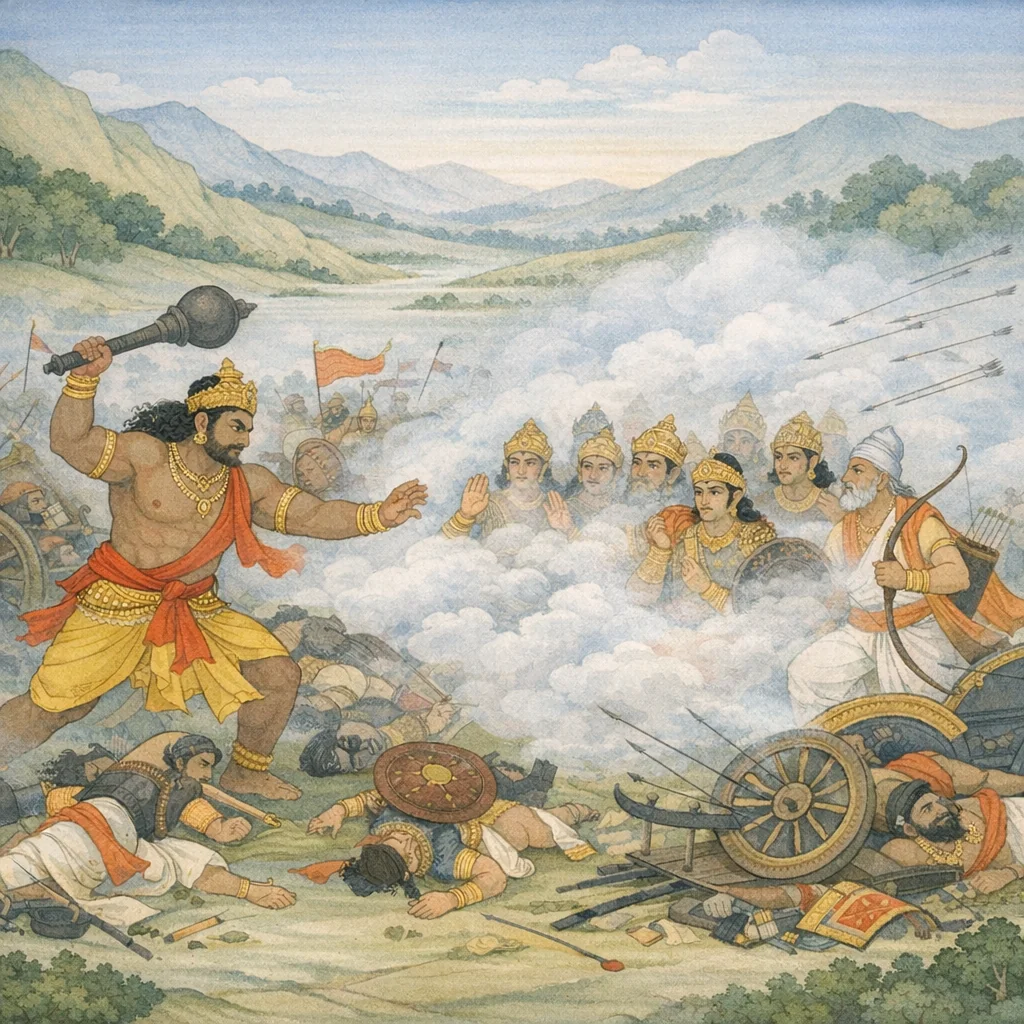
Saṃjaya reports that at midday Yudhiṣṭhira advances toward Śrutāyu, initiating a focused exchange of arrows. Śrutāyu counters effectively, but Yudhiṣṭhira’s strikes penetrate armor and culminate in a controlled escalation: he suppresses a surge of wrath, severs Śrutāyu’s bow, then disables him with a decisive shot, followed by the neutralization of his mobility and charioteer, forcing Śrutāyu’s withdrawal and causing a localized Kaurava recoil. In parallel, Cekitāna engages Gautama (identified with Kṛpa Śāradvata), exchanging missile volleys; both lose chariot support, shift to close-quarters sword combat, and collapse from exertion before being retrieved by allies (Karakarṣa for Cekitāna; Śakuni for Gautama). Additional engagements include Dhṛṣṭaketu’s assault on Saumadatti and Bhūriśravas’ counter, while Abhimanyu faces a coordinated rush by multiple Kaurava rathins yet refrains from lethal completion after disarming them, recalling Bhīma’s prior counsel. Seeing Bhīṣma heavily covered by many kings and Abhimanyu endangered, Arjuna instructs Kṛṣṇa to drive swiftly toward the dense ratha concentration to prevent further losses; the chapter closes with Suśarmā and allied kings surrounding Arjuna, intensifying the broader melee.
Chapter Arc: संजय धृतराष्ट्र के सामने कठोर सत्य रखता है—यह संकट किसी और का नहीं, स्वयं राजा के ‘आत्मदोष’ और धर्म-संकर को जन्म देने वाले पुराने कर्मों (विशेषतः द्यूत) का फल है। → उसी नैतिक कटाक्ष की पृष्ठभूमि में रणभूमि पर भीमसेन का उग्र पराक्रम भड़क उठता है; धृष्टद्युम्न दूर से उसे शत्रुसेना को ‘दग्ध’ करते देखता है और कौरव-सेना में हाहाकार फैलता है। → द्रुपदपुत्र धृष्टद्युम्न, सामने खड़े कौरव वीरों और धृतराष्ट्र-पुत्रों की घेराबंदी सुन-देख कर, ‘प्रमोहनास्त्र’ का प्रयोग करता है—क्षण भर के लिए युद्ध-यंत्रणा पर मोह का आवरण पड़ता है; साथ ही द्रोण के तीक्ष्ण बाणों से पीड़ित सेना विक्षुब्ध महासागर-सी चक्कर काटती है। → अध्याय का अंत ‘संकुलयुद्ध’ और ‘द्रोणपराक्रम’ की छाप के साथ होता है—पाण्डवों की ओर से भीम का संहारक वेग, और कौरवों की ओर से द्रोण की प्रत्युत्तर-धार, दोनों मिलकर युद्ध को और अधिक उलझा देते हैं। → मोहास्त्र से क्षणिक ठहराव के बाद अगला प्रश्न खुला रह जाता है—क्या द्रोण की प्रचण्ड बाण-वृष्टि पाण्डव-आक्रमण को रोक पाएगी, या भीम-धृष्टद्युम्न का वेग कौरव-व्यूह को तोड़ देगा?
Shlokas
Verse 1
ऑपनआ क्र बछ। अर: सप्तसप्ततितमो<्ध्याय: भीमसेन, धृष्टद्युम्न तथा द्रोणाचार्यका पराक्रम संजय उवाच आत्मदोषात् त्वया राजन प्राप्त व्यसनमीदृशम् । न हि दुर्योधनस्तानि पश्यते भरतर्षभ
Sanjaya said: “O King, through your own failing you have come to such a calamity. Duryodhana does not truly perceive these consequences, O bull among the Bharatas.”
Verse 2
यानि त्वं दृष्टवान् राजन् धर्मसंकरकारिते । तव दोषात् पुरा वृत्तं द्यूतमेव विशाम्पते
Sañjaya said: “O King, the very things you once witnessed—those deeds that brought about a confusion and corruption of dharma—arose earlier from your own fault: it was that gambling match, O lord of the people.”
Verse 3
संजय कहते हैं--राजन! आपने अपने ही दोषसे यह संकट प्राप्त किया है। भरतश्रेष्ठ) जिन धर्म और अधर्मके सम्मिश्रणसे उत्पन्न दोषोंको आप देखते थे, उन्हें दुर्योधन नहीं देख सका था। प्रजानाथ! आपके अपराधसे ही पहले द्यूतक्रीड़ाकी घटना घटी थी ।। तव दोषेण युद्ध च प्रवृत्तं सह पाण्डवै: । त्वमेवाद्य फलं भुड्क्षे कृत्वा किल्बिषमात्मना,तथा आपके ही दोषसे आज पाण्डवोंके साथ युद्ध आरम्भ हुआ। आपने स्वयं ही जो पाप किया है, उसका फल आज आप ही भोग रहे हैं
Sanjaya said: “O King, it is by your own fault that you have fallen into this calamity. O best of the Bharatas, the defects born from the mixing of dharma and adharma—those you can now perceive—Duryodhana could not see. O lord of the people, it was through your wrongdoing that the earlier episode of the gambling match occurred. And through your fault this war has now begun with the Pandavas. Having committed sin by your own agency, you yourself today are tasting its fruit.”
Verse 4
आत्मनैव कृतं कर्म आत्मनैवोपभुज्यते । इह च प्रेत्य वा राजंस्त्वया प्राप्त यथातथम्,राजन्! इहलोक अथवा परलोकमें अपने किये हुए कर्मका फल अपने-आपको ही भोगना पड़ता है; अत: आपको जैसेका तैसा प्राप्त हुआ है
Sañjaya said: “A deed performed by oneself is experienced by oneself alone in its result. Whether here in this world or after death, O King, what has come to you is exactly in accordance with what you have done.”
Verse 5
तस्माद् राजन् स्थिरो भूत्वा प्राप्येदं व्यसनं महत् | शृणु युद्ध यथावृत्तं शंसतो मे नराधिप
Therefore, O King, having steadied yourself—though you have met with this great calamity—listen, O lord of men, as I recount to you how the battle truly unfolded.
Verse 6
राजन! नरेश्वर! इस महान् संकटको पाकर भी स्थिरता-पूर्वक युद्धका यथावत् वृतान्त जैसा मैं बता रहा हूँ सुनिये ।। भीमसेन: सुनिशितैर्बाणर्भित््वा महाचमूम् । आससाद ततो वीर: सर्वान् दुर्योधनानुजान्,वीर भीमसेनने तीखे बाणोंसे आपकी विशाल सेनाको विदीर्ण करके दुर्योधनके सभी भाइयोंपर आक्रमण किया
Sañjaya said: O King, O lord of men—though this great crisis has arisen, listen as I relate, with steady clarity, the true course of the battle. Then the hero Bhīmasena, piercing your vast army with razor-sharp arrows, surged forward and assailed all the younger brothers of Duryodhana.
Verse 7
दुःशासन दुर्विषहं दुःसहं दुर्मद जयम् । जयत्सेनं विकर्ण च चित्रसेनं सुदर्शनम्,दुःशासन, दुर्विषह, दुःसह, दुर्मद, जय, जयत्सेन, विकर्ण, चित्रसेन, सुदर्शन, चारुचित्र, सुवर्मा, दुष्कर्ण तथा कर्ण--ये तथा और भी बहुत-से आपके जो महारथी पुत्र समीप खड़े थे, उन्हें कुपित देखकर महारथी भीमसेनने समरभूमिमें भीष्मके द्वारा सुरक्षित विशाल कौरवसेनामें प्रवेश किया
Sañjaya said: Seeing your sons—Duhśāsana, Durviṣaha, Duhsaha, Durmada, Jaya, Jayatsena, Vikarṇa, Citrasena, Sudarśana, Cārucitra, Suvarman, Duṣkarṇa, Karṇa—and many other great chariot-warriors standing close by, inflamed with anger, the mighty Bhīmasena entered the vast Kaurava host on the battlefield, though it was guarded by Bhīṣma.
Verse 8
चारुचित्रं सुवर्माणं दुष्कर्ण कर्णमेव च । एतांश्षान्यांश्व सुबहूनू समीपस्थान् महारथान्,दुःशासन, दुर्विषह, दुःसह, दुर्मद, जय, जयत्सेन, विकर्ण, चित्रसेन, सुदर्शन, चारुचित्र, सुवर्मा, दुष्कर्ण तथा कर्ण--ये तथा और भी बहुत-से आपके जो महारथी पुत्र समीप खड़े थे, उन्हें कुपित देखकर महारथी भीमसेनने समरभूमिमें भीष्मके द्वारा सुरक्षित विशाल कौरवसेनामें प्रवेश किया
Sañjaya said: “I saw Cārucitra, Suvarman, Duṣkarṇa, and Karṇa; and many other great chariot-warriors standing close by—Duhśāsana, Durviṣaha, Duhsaha, Durmada, Jaya, Jayatsena, Vikarṇa, Citrasena, and Sudarśana. Seeing these mighty fighters—your sons—arrayed nearby and inflamed with anger, the great warrior Bhīmasena forced his way into the vast Kaurava host, guarded by Bhīṣma, and entered the battlefield with fierce resolve.”
Verse 9
धार्रराष्ट्रान सुसंक्रुद्धान् दृष्टया भीमो महारथ: । भीष्मेण समरे गुप्तां प्रविवेश महाचमूम्,दुःशासन, दुर्विषह, दुःसह, दुर्मद, जय, जयत्सेन, विकर्ण, चित्रसेन, सुदर्शन, चारुचित्र, सुवर्मा, दुष्कर्ण तथा कर्ण--ये तथा और भी बहुत-से आपके जो महारथी पुत्र समीप खड़े थे, उन्हें कुपित देखकर महारथी भीमसेनने समरभूमिमें भीष्मके द्वारा सुरक्षित विशाल कौरवसेनामें प्रवेश किया
Sañjaya said: Seeing the sons of Dhṛtarāṣṭra fiercely enraged, the great chariot-warrior Bhīma entered the vast Kaurava host on the battlefield—an army guarded and covered by Bhīṣma. Nearby stood many of your mighty sons and champions—Duḥśāsana, Durviṣaha, Duḥsaha, Durmada, Jaya, Jayatsena, Vikarṇa, Citrasena, Sudarśana, Cārucitra, Suvarmā, Duṣkarṇa, and Karṇa—whose anger flared at Bhīma’s advance.
Verse 10
अथालोब्य प्रविष्ट॑ तमूचुस्ते सर्व एव तु । जीवग्राहं निगृह्लीमो वयमेनं नराधिपा:,भीमसेनको सेनाके भीतर प्रविष्ट हुआ देख उन सब नरेशोंने आपसमें कहा कि हमलोग इन्हें जीवित ही पकड़ कर बंदी बना लें
Sañjaya said: Seeing him enter their ranks without hesitation, all those kings spoke among themselves: “Let us seize this man alive and take him captive.”
Verse 11
स तै: परिवृतः पार्थो भ्रातृभि: कृतनिश्चयैः । प्रजासंहरणे सूर्य: क्रूरैरिव महाग्रहै:,ऐसा निश्चय करके उन सब भाइयोंने कुन्ती-कुमार भीमसेनको घेर लिया, मानो प्रजाके संहारकालमें सूर्यदेवको बड़े-बड़े क्रूर ग्रहोंने घेर रखा हो
Sañjaya said: Thus the son of Pṛthā was surrounded by his brothers, who had formed a firm resolve—like the Sun at the time of the world’s destruction, hemmed in by great and cruel planets.
Verse 12
सम्प्राप्य मध्यं सैन्यस्थ न भी: पाण्डवमाविशत् । यथा देवासूुरे युद्धे महेन्द्रं प्राप्प दानवान्,कौरवसेनाके भीतर पहुँच जानेपर भी पाण्डुनन्दन भीमसेनको तनिक भी भय नहीं हुआ, जैसे देवासुर-संग्राममें दानवोंकी सेनामें घुसनेपर देवराज इन्द्रको भयका स्पर्श नहीं होता है
Sañjaya said: Having reached the very midst of the army, fear did not enter the son of Pāṇḍu (Bhīmasena) at all. Just as, in the war between gods and asuras, when the Dānavas press into battle against Mahendra (Indra), no touch of fear comes upon the lord of the gods.
Verse 13
तत:ः शतसहस्राणि रथिनां सर्वश: प्रभो | उद्यतानि शरैस्तीव्रैस्तमेक॑ परिवव्रिरे,प्रभो! तदनन्तर एकमात्र भीमसेनको उनपर तीव्र बाणोंकी वर्षा करते हुए सैकड़ों- हजारों रथियोंने युद्धके लिये उद्यत होकर सब ओरसे घेर लिया
Sañjaya said: Then, O lord, hundreds and thousands of chariot-warriors, fully roused for battle, surrounded that lone Bhīmasena on every side, as he poured forth a fierce shower of arrows.
Verse 14
स तेषां प्रवरान् योधान् हस्त्यश्वरथसादिन: । जघान समरे शूरो धार्तराष्ट्रानाचेन्तयन्,शूरवीर भीमसेन आपके पुत्रोंकी तनिक भी परवा न करते हुए हाथी, घोड़े एवं रथपर बैठकर युद्ध करनेवाले कौरवोंके मुख्य-मुख्य योद्धाओंको समर-भूमिमें मारने लगे
Sañjaya said: That heroic Bhīmasena, giving no thought to the sons of Dhṛtarāṣṭra, began to strike down on the battlefield their foremost warriors—those fighting from elephants, horses, and chariots.
Verse 15
तेषां व्यवसितं ज्ञात्वा भीमसेनो जिघृक्षताम् । समस्तानां वधे राजन् मतिं चक्रे महामना:,राजन! उन्हें कैद करनेकी इच्छावाले क्षत्रियोंके उस निश्चयको जानकर महामना भीमसेनने उन सबके वधका विचार कर लिया
Sañjaya said: O King, understanding the firm resolve of those warriors who wished to seize them and take them captive, the great-souled Bhimasena set his mind upon killing them all.
Verse 16
ततो रथं समुत्सृज्य गदामादाय पाण्डव: । जघान धार्तराष्ट्राणां तं बलौघं महार्णवम्,तदनन्तर पाण्डुनन्दन भीमसेन हाथमें गदा ले रथको त्यागकर उस विशाल सेनामें घुसकर उस महासागरतुल्य सैन्यसमुदायका विनाश करने लगे
Sañjaya said: Then the Pāṇḍava (Bhīmasena), abandoning his chariot and taking up his mace, struck into that massed host of the Dhārtarāṣṭras—an army like a great ocean—beginning to shatter and destroy that sea-like formation with irresistible force.
Verse 17
(गदया भीमसेनेन ताडिता वारणोत्तमा: । भिन्नकुम्भा महाकाया भिन्नपृष्ठास्तथैव च ।। भिन्नगात्रा: सहारोहा: शेरते पर्वता इव । भीमसेनकी गदाके आघातसे बड़े-बड़े विशालकाय गजराजोंके कुम्भस्थल फट गये, पृष्ठभाग विदीर्ण हो गये तथा उनका एक-एक अंग छिन्न-भिन्न हो गया और उसी अवस्थामें वे सवारोंसहित धराशायी हो गये, मानो पर्वत ढह गये हों। रथाश्ष भग्नास्तिलश: सयोधा: शतशो रणे ।। अश्राक्ष सादिनश्वैव पदातै: सह भारत । भारत! उन्होंने उस रणक्षेत्रमें सैकड़ों रथोंको उनके सवारोंसहित तिल-तिल करके तोड़ डाला। घोड़ों, घुड़सवारों तथा पैदलोंकी भी धज्जियाँ उड़ा दीं। तत्राद्भुतमपश्याम भीमसेनस्य विक्रमम् ।। यदेक: समरे राजन् बहुभि: समयोधयत्् । अन्तकाले प्रजा: सर्वा दण्डपाणिरिवान्तक: ।।) राजन्! उस युद्धमें हमलोगोंने भीमसेनका अद्भुत पराक्रम देखा, जैसे प्रलयकालमें यमराज हाथमें दण्ड लिये समस्त प्रजाका संहार करते हैं, उसी प्रकार वे अकेले आपके बहुसंख्यक योद्धाओंके साथ युद्ध कर रहे थे। भीमसेने प्रविष्टे तु धृष्टद्युम्नोडपि पार्षत: । द्रोणमुत्सूज्य तरसा प्रययौ यत्र सौबल:,भीमसेनके कौरवसेनामें प्रवेश करनेपर ट्रुपदकुमार धृष्टद्युम्न भी द्रोणाचार्यको छोड़कर बड़े वेगसे उस स्थानपर गये, जहाँ शकुनि युद्ध कर रहा था
Sañjaya said: Struck by Bhīmasena’s mace, the finest of elephants—huge-bodied—had their temples split and their backs torn open. With their limbs shattered, they lay on the battlefield together with their riders, collapsing like mountains. He shattered hundreds of chariots with their warriors, and likewise crushed horses, horsemen, and foot soldiers. O King, we beheld Bhīmasena’s astonishing valor: alone he fought against many of your warriors, like Yama with staff in hand at the end of time. And when Bhīmasena broke into the Kaurava host, Dhṛṣṭadyumna, son of Drupada, leaving Droṇa, sped swiftly to where Saubala (Śakuni) was fighting.
Verse 18
निवार्य महतीं सेनां तावकानां नरर्षभ: । आससाद रथं शून्यं भीमसेनस्य संयुगे,वहाँ आपकी विशाल सेनाको आगे बढ़नेसे रोककर नरश्रेष्ठ धृष्टद्युम्न युद्धस्थलमें भीमसेनके सूने रथके पास जा पहुँचे
Sañjaya said: Having checked the advance of your vast army, the bull among men—Dhṛṣṭadyumna—came upon Bhīmasena’s chariot standing empty on the battlefield.
Verse 19
दृष्टवा विशोक॑ समरे भीमसेनस्य सारथिम् । धृष्टद्युम्नो महाराज दुर्मना गतचेतन:,महाराज! भीमसेनके सारथि विशोकको समर-भूमिमें अकेला खड़ा देख धृष्टद्युम्न मन- ही-मन बहुत दुःखी और अचेत हो गये
Sañjaya said: O King, seeing Viśoka—the charioteer of Bhīmasena—standing alone upon the battlefield, Dhṛṣṭadyumna was stricken with inward distress and, overwhelmed by grief, lost his composure.
Verse 20
अपृच्छद् वाष्पसंरुद्धों नि:श्वसन् वाचमीरयन् । मम प्राणै: प्रियतम: क्व भीम इति दु:खित:,वे लंबी साँस खींचते और आँसू बहाते हुए गद्गदकण्ठसे पूछने लगे--“विशोक! मेरे प्राणोंसे भी अधिक प्यारे भीमसेन कहाँ हैं? इतना कहते-कहते वे बहुत दुःखी हो गये
Sañjaya said: Choked by tears, breathing heavily, and struggling to speak, he asked in anguish, “Where is Bhīma—dearer to me than my very life?” Saying this, he was overwhelmed by grief.
Verse 21
विशोकस्तमुवाचेदं धृष्टद्युम्नं कृताउ्जलि: । संस्थाप्य मामिह बली पाण्डवेय: पराक्रमी
Sañjaya said: With palms joined in reverence, Viśoka addressed Dhṛṣṭadyumna: “The mighty and valiant son of the Pāṇḍus, having firmly stationed me here…”
Verse 22
प्रविष्टो धार्तराष्ट्राणामेतद् बलमहार्णवम् | तब विशोकने हाथ जोड़कर धूृष्टद्युम्नसे कहा--'प्रभो! पराक्रमी और बलवान् पाण्डुनन्दन मुझे यहीं खड़ा करके कौरवोंके इस सैन्यसागरमें घुस गये हैं ।। मामुक््त्वा पुरुषव्याप्र: प्रीतियुक्तमिदं वच:,“जाते समय पुरुषसिंह भीमसेनने मुझसे प्रेमपूर्वक यह बात कही कि सूत! तुम दो घड़ीतक इन घोड़ोंको रोककर यहीं मेरी प्रतीक्षा करो। जबतक कि ये जो लोग मेरा वध करनेके लिये उद्यत हैं, इन्हें अभी मार न डालूँ
Sañjaya said: “Having entered that vast, ocean-like host of the Dhārtarāṣṭras (the Kauravas), Bhīma—the tiger among men—left me behind and spoke to me with affection: ‘Charioteer, hold these horses here and wait for me for two muhūrtas, until I have struck down those who are now eager to kill me.’”
Verse 23
प्रतिपालय मां सूत नियम्याश्वान् मुहूर्तकम् । यावदेतान् निहन्म्यद्य य इमे मद्वधोद्यता:,“जाते समय पुरुषसिंह भीमसेनने मुझसे प्रेमपूर्वक यह बात कही कि सूत! तुम दो घड़ीतक इन घोड़ोंको रोककर यहीं मेरी प्रतीक्षा करो। जबतक कि ये जो लोग मेरा वध करनेके लिये उद्यत हैं, इन्हें अभी मार न डालूँ
Sañjaya said: “O charioteer, hold the horses in check and wait for me just a little while, until I strike down today these men who are intent on killing me.”
Verse 24
ततो दृष्टवा प्रधावन्तं गदाहस्तं महाबलम् । सर्वेषामेव सैन्यानां संहर्ष: समजायत
Sañjaya said: Then, seeing that mighty warrior—of great strength—charging forward with a mace in hand, a surge of exhilaration and martial excitement arose throughout all the armies.
Verse 25
“तदनन्तर गदा हाथमें लिये महाबली भीमसेनको धावा करते देख समस्त सैनिकोंके रोंगटे खड़े हो गये ।। तस्मिन् सुतुमुले युद्धे वर्तमाने भयानके । भित्त्वा राजन् महाव्यूहं प्रविवेश वृकोदर:
Sañjaya said: Thereafter, when the soldiers saw the mighty Bhīmasena rushing forward with his mace in hand, their hair stood on end. In that dreadful and fiercely tumultuous battle, O King, Vṛkodara broke through the great battle-formation and forced his way inside.
Verse 26
“राजन्! उस भयंकर एवं तुमुल युद्धमें भीमसेनने इस महाव्यूहका भेदन करके इसके भीतर प्रवेश किया था” ।। विशोकस्य वच: श्रुत्वा धृष्टद्युम्नो5थ पार्षत: । प्रत्युवाच तत: सूतं रणमध्ये महाबल:,विशोककी यह बात सुनकर महाबली ट्रुपदकुमार धृष्टद्युम्नने उस समरांगणमें उनके सारथिसे इस प्रकार कहा--
Sañjaya said: “O King! In that dreadful and tumultuous battle, Bhīmasena broke through the great battle-formation and entered within.” Hearing Viśoka’s words, the mighty Dhṛṣṭadyumna—son of Pṛṣata (Drupada)—replied to the charioteer there in the very midst of battle.
Verse 27
न हि मे जीवितेनापि विद्यतेडद्य प्रयोजनम् । भीमसेन रणे हित्वा स्नेहमुत्सूज्य पाण्डवैः,'सारथे! युद्धस्थलमें भीमसेनको छोड़कर और पाण्डवोंसे स्नेह तोड़कर अब मेरे जीवनसे कोई प्रयोजन नहीं है
Sañjaya said: “Charioteer! Indeed, even my life has no purpose for me today—if, on the battlefield, I were to abandon Bhīmasena and cast off my bond of affection with the Pāṇḍavas.”
Verse 28
यदि यामि विना भीम किं मां क्षत्र॑ वदिष्यति । एकायनगते भीमे मयि चावस्थिते युधि,“भीम एकमात्र युद्धके पथपर गये हैं और मैं भी युद्धस्थलमें उपस्थित हूँ। ऐसी दशामें यदि भीमसेनके बिना ही लौट जाऊँ तो क्षत्रियसमाज मुझे क्या कहेगा?
Sañjaya said: “If I return without Bhīma, what will the warrior community say of me? When Bhīma has gone alone along the path of battle and I too am stationed on the battlefield, how could I come back without him?”
Verse 29
अस्वस्ति तस्य कुर्वन्ति देवा: शक्रपुरोगमा: । यः सहायान् परित्यज्य स्वस्तिमानाव्रजेद् गृहम्,“जो अपने सहायकोंको छोड़कर स्वयं कुशल-पूर्वक घरको लौट आता है, उसका इन्द्र आदि देवता अनिष्ट करते हैं
Sañjaya said: The gods, led by Indra, bring misfortune upon that man who abandons his companions and, seeking only his own safety, returns home unharmed.
Verse 30
मम भीम: सखा चैव सम्बन्धी च महाबल: । भक्तोअस्मान् भक्तिमांश्वाहं तमप्यरिनिषूदनम्
Sañjaya said: “Bhīma is mine—my friend and also my kinsman, a man of great strength. He is devoted to us, and I too am devoted to him—Bhīma, the slayer of enemies.”
Verse 31
“महाबली भीम मेरे सखा और सम्बन्धी हैं। वे हम लोगोंके भक्त हैं और मैं भी उन शत्रुसूदन भीमका भक्त हूँ ।। सो<हं तत्र गमिष्यामि यत्र यातो वृकोदर: । निष्नन्तं मां रिपून् पश्य दानवानिव वासवम्,“अतः मैं भी वहीं जाऊँगा जहाँ भीमसेन गये हैं। देखो जैसे इन्द्र दानवोंका संहार करते हैं, उसी प्रकार मैं भी शत्रुसेनाका विनाश कर रहा हूँ”
Sañjaya said: “Mighty Bhīma is my friend and kinsman. He is devoted to us, and I too am devoted to that enemy-crushing Bhīma. Therefore I shall go wherever Vṛkodara has gone. Behold me cutting down foes, as Vāsava (Indra) once slew the Dānavas.”
Verse 32
एवमुक्त्वा ततो वीरो ययौ मध्येन भारत । भीमसेनस्यथ मार्गेषु गदाप्रमथितैर्गजै:,भारत! ऐसा कहकर वीरवर धृष्टद्युम्न भीमसेनके बनाये हुए मार्गोंसे कौरव-सेनाके भीतर गये। उन मार्गोंपर गदाके मारे हुए हाथी पड़े थे
Sañjaya said: Having spoken thus, the heroic Dhr̥ṣṭadyumna advanced straight through the midst of the Kaurava host, O Bhārata, along the paths that Bhīmasena had carved—strewn with elephants crushed down by his mace.
Verse 33
स ददर्श तदा भीम दहन्तं रिपुवाहिनीम् । वातो वृक्षानिव बलात् प्रभञ्जन्तं रणे रिपून्
Sañjaya said: Then he beheld Bhīma blazing through the enemy host, shattering foes in battle with sheer force—like a wind that violently uproots trees.
Verse 34
उस समय कुछ दूर जाकर धृष्टद्युम्नने शत्रुसेनाको दग्ध करते हुए भीमसेनको देखा। जैसे आँधी वृक्षोंको बलपूर्वक तोड़ देती या उखाड़ डालती है, उसी प्रकार भीमसेन भी रणभूमिमें शत्रुओंका संहार कर रहे थे ।। ते वध्यमाना: समरे रथिन: सादिनस्तथा । पादाता दन्तिनश्लैव चक्कुरार्तस्वरं महत्,समरांगणमें भीमसेनके मारे हुए रथी, घुड़सवार, पैदल और सवारोंसहित हाथी बड़े जोरसे आर्तनाद कर रहे थे
Sañjaya said: Then, having gone a little distance, Dhṛṣṭadyumna saw Bhīmasena scorching the enemy host. As a violent storm snaps trees by force or uproots them, so Bhīma was destroying the foes upon the battlefield. As they were being slain in the fight—chariot-warriors, horsemen, foot-soldiers, and even elephants with their riders—they raised a great, anguished cry.
Verse 35
हाहाकारकश्न संजज्ञे तव सैन्यस्य मारिष । वध्यतो भीमसेनेन कृतिना चित्रयोधिना,आर्य! विचित्र रीतिसे युद्ध करनेवाले विद्वान् भीमसेनके द्वारा मारी जाती हुई आपकी सेनामें हाहाकार मच गया
Sañjaya said: “O venerable one, a great cry of distress arose in your army as it was being cut down by Bhīmasena—skilled and formidable, fighting with striking and varied tactics.”
Verse 36
ततः कृतास्त्रास्ते सर्वे परिवार्य वृकोदरम् | अभीता: समवर्तन्त शस्त्रवृष्ट्या परंतप,शत्रुओंको संताप देनेवाले नरेश! तदनन्तर अस्त्रोंके ज्ञाता समस्त कौरव-सैनिक भीमसेनको सब ओरसे घेरकर अस्त्र-शस्त्रोंकी वर्षा करते हुए बिना किसी भयके उनपर चढ़ आये
Sañjaya said: Then all those warriors, skilled in the use of weapons, surrounded Vṛkodara (Bhīma). Fearless, they surged forward against him, showering him with a rain of missiles and weapons.
Verse 37
अभिवद्रुतं शस्त्रभृतां वरिष्ठ समनन््ततः: पाण्डवं लोकवीर: । सैन्येन घोरेण सुसंहितेन दृष्टवा बली पार्षतो भीमसेनम्
Sañjaya said: Seeing Bhīmasena—the mighty Pāṇḍava—standing foremost among weapon-bearers, the valiant son of Pārṣata (Dhṛṣṭadyumna), famed as a hero among men, rushed upon him from all sides with a fearsome, well-arrayed force.
Verse 38
अथोपगच्छच्छरविक्षताड़ूं पदातिनं क्रोधविषं वमन्तम् । आश्चवासयन् पार्षतो भीमसेनं गदाहस्तं कालमिवान्तकाले
Sañjaya said: Then Pārṣata (Dhṛṣṭadyumna) went up to Bhīmasena—the foot-soldier among heroes—whose body was thickly wounded by arrows, who seemed to spew the poison of wrath. He sought to hearten him, as Bhīma stood with mace in hand, resembling Time itself at the hour of destruction.
Verse 39
विश्वके विख्यात वीर बलवान ट्रुपदकुमार धृष्टद्युम्नने देखा--शस्त्रधारियोंमें श्रेष्ठ पाण्डुनन्दन भीमसेनपर सब ओरसे धावा हो रहा है। अत्यन्त संगठित हुई भयंकर सेनाने उनपर आक्रमण किया है। यह देखकर धृष्टद्युम्न भीमसेनको आश्वासन देते हुए उनके पास गये। उनका प्रत्येक अंग बाणोंसे क्षत-विक्षत हो रहा था। वे पैदल ही क्रोधरूपी विष उगल रहे थे और गदा हाथमें लिये प्रलयकालके यमराजके समान जान पड़ते थे ।। विशल्यमेनं च चकार तूर्ण- मारोपयच्चात्मरथे महात्मा । भृशं परिष्वज्य च भीमसेन- माश्वासयामास स शत्रुमध्ये,महामना धृष्टद्युम्नने तुरंत ही उन्हें अपने रथपर बिठा लिया और उनके शरीरमें धँसे हुए बाणोंको निकाल दिया। शत्रुओंके बीचमें ही भीमसेनको हृदयसे लगाकर उन्हें पूर्णतः सान्त्वना दी
Sañjaya said: In the very midst of the enemy host, the high-souled Dhṛṣṭadyumna swiftly relieved Bhīmasena of the arrows embedded in his body, lifted him onto his own chariot, and—embracing him firmly—restored his courage. The scene underscores a warrior’s duty not only to strike the foe but also to protect and steady an ally when the battle’s pressure threatens to overwhelm him.
Verse 40
भ्रातृनथोपेत्य तवापि पुत्र- स्तस्मिन् विमर्दे महति प्रवृत्ते । अयं दुरात्मा द्रुपदस्य पुत्र: समागतो भीमसेनेन सार्थम्
Sañjaya said: “And then, approaching your brothers, your son too entered that great melee as it broke out. At that moment, the wicked son of Drupada came there together with Bhīmasena.”
Verse 41
त॑ याम सर्वे महता बलेन मा वो रिपु: प्रार्थथतामनीकम् । वह महान् संघर्ष आरम्भ होनेपर आपका पुत्र दुर्योधन भाइयोंके पास आकर बोला --“यह दुरात्मा ट्रुपदपुत्र आकर भीमसेनसे मिल गया है। हम सब लोग बहुत बड़ी सेनाके साथ इसपर आक्रमण करें, जिससे हमारा और तुम्हारा यह शत्रु हमलोगोंकी इस सेनाको हानि पहुँचानेका विचार न कर सके' || ४० है || श्रुत्वा तु वाक््यं तममृष्यमाणा ज्येष्ठाज्ञया नोदिता धार्तराष्ट्रा:,दुर्योधनका यह कथन सुनकर आपके सभी वीर पुत्र, जो धृष्टद्यम्मका आगमन नहीं सह सके थे, बड़े भाईकी आज्ञासे प्रेरित हो प्रलयकालके भयंकर केतुओंकी भाँति हाथमें आयुध लिये धृष्टद्युम्नके वधके लिये उनपर टूट पड़े। उन्होंने अपने हाथोंमें धनुष-बाण ले रखे थे और वे रथके पहियोंकी घरघराहटके साथ-साथ धनुषकी प्रत्यंचाको भी कँपाते हुए उसकी टंकार फैला रहे थे
Sañjaya said: “Let us all advance against him with great force; let not your enemy find an opening to strike at our battle-array. Hearing Duryodhana’s words and unable to endure the arrival of Dhṛṣṭadyumna, the sons of Dhṛtarāṣṭra—urged on by their eldest brother’s command—rushed forward with weapons in hand to slay him, like dreadful banners at the time of cosmic dissolution. With bows and arrows ready, they made the chariot-wheels thunder and set their bowstrings quivering, spreading the sharp twang of their weapons.”
Verse 42
वधाय निष्पेतुरुदायुधास्ते युगक्षये केतवो यद्वदुग्रा: । प्रगृह्य चास्त्राणि धनूंषि वीरा ज्यां नेमिघोषै: प्रविकम्पयन्त:,दुर्योधनका यह कथन सुनकर आपके सभी वीर पुत्र, जो धृष्टद्यम्मका आगमन नहीं सह सके थे, बड़े भाईकी आज्ञासे प्रेरित हो प्रलयकालके भयंकर केतुओंकी भाँति हाथमें आयुध लिये धृष्टद्युम्नके वधके लिये उनपर टूट पड़े। उन्होंने अपने हाथोंमें धनुष-बाण ले रखे थे और वे रथके पहियोंकी घरघराहटके साथ-साथ धनुषकी प्रत्यंचाको भी कँपाते हुए उसकी टंकार फैला रहे थे
Sañjaya said: Urged on to kill, those warriors—armed with uplifted weapons—leapt forward like fierce portents at the end of an age. Grasping their missiles and bows, they advanced, making the bowstrings quiver and filling the field with the combined roar of bow-twang and the rumble of chariot-wheels—an image of war’s collective frenzy, where resolve hardens into lethal intent.
Verse 43
शरैरवर्षन् ट्रुपदस्य पुत्र यथाम्बुदा भूधरं वारिजालै: । निहत्य तांश्चापि शरै: सुतीक्षणै- न विव्यथे समरे चित्रयोधी,जैसे मेघ पर्वतपर जलकी बूँदें बरसाते हैं, उसी प्रकार वे द्रुपदपुत्रपर बाणोंकी वृष्टि करने लगे। परंतु विचित्र युद्ध करनेवाले धृष्टद्युम्न उस समरांगणमें अपने पैने बाणोंद्वारा उन सबको अत्यन्त घायल करके स्वयं तनिक भी व्यथित नहीं हुए
Sañjaya said: They showered Drupada’s son with arrows, as rain-clouds drench a mountain with torrents of water. Yet that master of varied combat, Dhr̥ṣṭadyumna, striking them in return with razor-sharp shafts and grievously wounding them, did not falter or feel distress in the battle—showing the hard, relentless poise demanded by the ethics of the warrior’s duty amid the violence of war.
Verse 44
समभ्युदीर्णाश्व॒ तवात्मजांस्तथा निशम्य वीरानभित: स्थितान् रणे । जिघांसुरुग्रं द्रपदात्मजो युवा प्रमोहनास्त्रं युयुजे महारथ:,युद्धमें सामने खड़े हुए आपके वीर पुत्रोंकोी आगे बढ़ते और प्रचण्ड होते देख नवयुवक महारथी द्रुपदकुमारने उनके वधके लिये भयंकर प्रमोहनास्त्रका प्रयोग किया
Sañjaya said: O King, hearing that your sons, their horses roused, were pressing forward, and seeing the warriors stationed all around upon the field of battle, the young son of Drupada—bent on their destruction—employed the dreadful Pramohana weapon, which casts the mind into stupefaction.
Verse 45
क्रुद्धों भृशं तव पुत्रेषु राजन् दैत्येषु यद्वत् समरे महेन्द्र: । ततो व्यमुहा॒न्त रणे नृवीरा: प्रमोहनास्त्राहतबुद्धिसत्त्वा:
Sañjaya said: O King, he blazed with fierce wrath against your sons, even as Mahendra (Indra) does against the Daityas in battle. Then, upon the field, the heroic warriors were thrown into bewilderment, their understanding and resolve struck down by the deluding weapon.
Verse 46
राजन! जैसे युद्धमें देवराज इन्द्र दैत्योंपर कुपित होते हैं, उसी प्रकार आपके पुत्रोंपर धृष्टद्युम्नका क्रोध बहुत बढ़ा हुआ था। उसके मोहनास्त्रके प्रयोगसे अपनी चेतना और धैर्य खोकर आपके नरवीर पुत्र रणभूमिमें मोहित हो गये ।। प्रदुद्रुवु: कुरवश्वैव सर्वे सवाजिनागा: सरथा: समन्तात् । परीतकालानिव नष्टसंज्ञान् मोहोपेतांस्तव पुत्रान् निशम्य,आपके पुत्रोंको मोहसे युक्त एवं मरे हुएके समान अचेत हुआ देख समस्त कौरव- सैनिक हाथी, घोड़े तथा रथसहित सब ओर भाग चले
Sañjaya said: O King, as Indra, lord of the gods, grows wrathful against the Daityas in battle, so did Dhrishtadyumna’s anger blaze against your sons. By casting his deluding weapon, your heroic sons lost awareness and steadiness and were bewildered on the field. Seeing your sons overcome by illusion—senseless, as though already seized by Death—all the Kuru troops, with chariots, horses, and elephants, fled in every direction.
Verse 47
एतस्मिन्नेव काले तु द्रोण: शस्त्रभृतां वर: । द्रुपदं त्रिभिरासाद्य शरैरविव्याध दारुणै:
Sañjaya said: At that very moment, Droṇa—foremost among weapon-bearers—closed in upon Drupada and pierced him with three fierce arrows.
Verse 48
इसी समय दूसरी ओर शणस्त्रधारियोंमें श्रेष्ठ द्रोणाचार्यने ट्रपदके पास जाकर उनको तीन भयंकर बाणोंद्वारा बींध डाला ।। सो5तिविद्धस्ततो राजन् रणे द्रोणेन पार्थिव: । अपायाद् ट्रुपदो राजन पूर्ववैरमनुस्मरन्,राजन्! तब रणभूमिमें द्रोणके द्वारा अत्यन्त घायल हो राजा द्रुपद पहलेके वैरका स्मरण करते हुए वहाँसे दूर हट गये
Sañjaya said: O King, then Drupada, the ruler, grievously wounded in battle by Droṇa, withdrew from the field, remembering the old enmity between them.
Verse 49
जित्वा तु द्रुपदं द्रोण: शड्खं दध्मौ प्रतापवान् । तस्य शड्खस्वनं श्रुत्वा वित्रेसु: सर्वमोमका:,द्रपदको जीतकर प्रतापी द्रोणाचार्यने अपना शंख बजाया। उस शंखनादको सुनकर समस्त सोमक क्षत्रिय अत्यन्त भयभीत हो गये
Sañjaya said: Having conquered Drupada, the mighty Droṇa blew his conch. Hearing the blast of that conch, all the Somaka warriors were seized with fear.
Verse 50
अथ शुश्राव तेजस्वी द्रोण: शस्त्रभृतां वर: । प्रमोहनास्त्रेण रणे मोहितानात्मजांस्तव,तदनन्तर शब्त्रधारियोंमें श्रेष्ठ तेजस्वी द्रोणाचार्यने सुना कि आपके पुत्र रणभूमिमें प्रमोहनास्त्रसे मोहित होकर पड़े हैं
Sañjaya said: Then the radiant Droṇa, foremost among those who bear arms, heard that your sons lay on the battlefield, bewildered and rendered helpless by the Pramohana weapon.
Verse 51
ततो द्रोणो महाराज त्वरितो5भ्याययौ रणात् । तत्रापश्यन्महेष्वासो भारद्वाज: प्रतापवान्,महाराज! यह सुनते ही महाथनुर्थर प्रतापी भरद्वाजनन्दन द्रोणाचार्य तुरंत उस युद्धस्थलसे चलकर वहाँ आ पहुँचे। आकर उन महारथीने देखा कि धृष्टद्युम्म और भीमसेन उस महायुद्धमें विचर रहे हैं और आपके पुत्र मोहाविष्ट होकर पड़े हुए हैं
Sañjaya said: Then Droṇa, O King, swiftly advanced from the battlefield. There the mighty archer, the valiant son of Bhāradvāja, beheld the scene—Dṛṣṭadyumna and Bhīmasena ranging through that great combat, while your sons lay fallen, overcome and bewildered.
Verse 52
धृष्टय्युम्नं च भीमं च विचरन्तौ महारणे । मोहाविष्टांंश्व ते पुत्रानपश्यत् स महारथ:,महाराज! यह सुनते ही महाथनुर्थर प्रतापी भरद्वाजनन्दन द्रोणाचार्य तुरंत उस युद्धस्थलसे चलकर वहाँ आ पहुँचे। आकर उन महारथीने देखा कि धृष्टद्युम्म और भीमसेन उस महायुद्धमें विचर रहे हैं और आपके पुत्र मोहाविष्ट होकर पड़े हुए हैं
Sañjaya said: In that great battle, he beheld Dhṛṣṭadyumna and Bhīma moving about freely; and he saw your sons lying there, overcome by delusion.
Verse 53
ततः प्रज्ञास्त्रमादाय मोहनास्त्रं व्यनाशयत् | अथ प्रत्यागतप्राणास्तव पुत्रा महारथा:,तब उन्होंने प्रज्ञास्त्र लेकर उसके द्वारा मोहनास्त्रका नाश कर दिया। इससे आपके महारथी पुत्रोंमें पुन: चेतनाशक्ति लौट आयी
Sañjaya said: Then, taking up the Prajñā-weapon, he destroyed the deluding Mohana-weapon. Thereupon your sons—those great chariot-warriors—regained their breath and consciousness.
Verse 54
पुनर्युद्धाय समरे प्रययुर्भीमपार्षतौ । ततो युधिष्ठटिर: प्राह समाहूय स्वसैनिकान्
Sañjaya said: Bhīma and Pārṣata once again advanced into the battlefield, intent on renewed combat. Then Yudhiṣṭhira, having summoned his own troops, addressed them—signaling a deliberate, duty-bound reordering of the fight rather than mere rage or impulse.
Verse 55
गच्छन्तु पदवीं शक््त्या भीमपार्षतयोर्युधि । सौभद्रप्रमुखा वीरा रथा द्वादश दंशिता:
Sañjaya said: “Let the twelve well-armed warriors in chariots—led by Saubhadra—advance with all their strength along the path in the battle between Bhīma and Pārṣata.”
Verse 56
प्रवृत्तिमधिगच्छन्तु न हि शुद्धयति मे मन: । वे समरभूमिमें पुनः युद्धके लिये भीमसेन और द्रुपदकुमार धृष्टद्युम्नकी ओर चले। तब राजा युधिष्ठिरने अपने सैनिकोंको बुलाकर कहा--“तुमलोग पूरी शक्ति लगाकर युद्धस्थलमें भीमसेन और धृष्टद्युम्नके पथका अनुसरण करो। अभिमन्यु आदि बारह वीर महारथी कवच आदिसे सुसज्जित हो भीमसेन और धृष्टद्युम्नका समाचार प्राप्त करें। मेरा मन उनके विषयमें निश्चिन्त नहीं हो रहा है” || ५४-५५ है ।। त एवं समनुज्ञाता: शूरा विक्रान्तयोधिन:,युधिष्ठिरकी ऐसी आज्ञा पाकर पराक्रमपूर्वक युद्ध करनेवाले वे पुरुषमानी समस्त शूरवीर “बहुत अच्छा' कहकर दोपहर होते-होते वहाँसे चल दिये
Sañjaya said: “Let them proceed; for my mind does not become calm.” Then they again moved across the battlefield, turning toward Bhīmasena and Dhṛṣṭadyumna to rejoin the fight. Thereupon King Yudhiṣṭhira summoned his troops and commanded: “With your full strength, follow the route taken by Bhīmasena and Dhṛṣṭadyumna on the field. Let twelve heroic great chariot-warriors—Abhimanyu and the others—fully armed with cuirasses and the like, obtain news of Bhīmasena and Dhṛṣṭadyumna. My mind is not at ease concerning them.” Thus authorized, those proud heroes, valiant in battle, replied “So be it,” and set out from there by midday.
Verse 57
बाढमित्येवमुक्त्वा तु सर्वे पुरुषमानिन: । मध्यन्दिनगते सूर्ये प्रययु: सर्व एव हि,युधिष्ठिरकी ऐसी आज्ञा पाकर पराक्रमपूर्वक युद्ध करनेवाले वे पुरुषमानी समस्त शूरवीर “बहुत अच्छा' कहकर दोपहर होते-होते वहाँसे चल दिये
Sañjaya said: Having thus spoken, all those proud, self-respecting warriors replied, “So be it.” When the sun had reached midday, they all set out—accepting Yudhiṣṭhira’s command and moving forward with the resolve to fight with valor, as duty in war demanded.
Verse 58
केकया द्रौपदेयाश्न धृष्टकेतुश्न वीर्यवान् | अभिमन्युं पुरस्कृत्य महत्या सेनयावृता:,अभिमन्युको आगे करके विशाल सेनासे घिरे हुए पाँच केकयराजकुमार, द्रौपदीके पाँचों पुत्र और पराक्रमी धृष्टकेतु--ये शत्रुओंका दमन करनेवाले शूरवीर सूचीमुख नामक समरव्यूह बनाकर आपके पुत्रोंकी उस सेनाको रणक्षेत्रमें विदीर्ण करने लगे
Sañjaya said: The princes of Kekaya, the five sons of Draupadī, and the mighty Dhṛṣṭaketu—placing Abhimanyu at their head and surrounded by a great host—formed the battle-array called Sūcīmukha (“needle-point”) and began to pierce and split apart your sons’ army on the field.
Verse 59
ते कृत्वा समरव्यूहं सूचीमुखमरिंदमा: । बिभिदुर्धार्तराष्ट्राणां तद् रथानीकमाहवे,अभिमन्युको आगे करके विशाल सेनासे घिरे हुए पाँच केकयराजकुमार, द्रौपदीके पाँचों पुत्र और पराक्रमी धृष्टकेतु--ये शत्रुओंका दमन करनेवाले शूरवीर सूचीमुख नामक समरव्यूह बनाकर आपके पुत्रोंकी उस सेनाको रणक्षेत्रमें विदीर्ण करने लगे
Sañjaya said: Having formed the needle-point battle-array (sūcīmukha), those heroic foe-subduers began to pierce and split apart, in the very midst of battle, that chariot-division of the Dhārtarāṣṭras. The scene shows disciplined strategy joined to valor: a focused formation is used to break a larger force, proving how resolve and order can cut through overwhelming opposition in war.
Verse 60
तान् प्रयातान् महेष्वासानभिमन्युपुरोगमान् | भीमसेन भयाविष्टा धृष्टद्युम्नविमोहिता,जनेश्वर! आपकी सेना भीमसेनके भयसे व्याकुल और धूृष्टद्युम्नके बाणोंसे मोहित हो रही थी। अतः आक्रमण करनेवाले अभिमन्यु आदि महाधनुर्धर वीरोंको वह रोकनेमें समर्थ न हो सकी। मद और मूच्छाके वशीभूत हुई मतवाली स्त्रीकी भाँति वह मार्गमें चुपचाप खड़ी रही
Sañjaya said: As those mighty archers advanced with Abhimanyu at their head, your army, O lord of men, was seized by fear of Bhīmasena and thrown into confusion by Dhṛṣṭadyumna’s shafts. Therefore it could not check the onrushing heroes led by Abhimanyu; like a woman intoxicated and overcome by stupor, it stood silently in the path, powerless to act.
Verse 61
न संवारयितुं शक्ता तव सेना जनाधिप । मदमूर्च्छान्वितात्मा वै प्रमदेवाध्वनि स्थिता,जनेश्वर! आपकी सेना भीमसेनके भयसे व्याकुल और धूृष्टद्युम्नके बाणोंसे मोहित हो रही थी। अतः आक्रमण करनेवाले अभिमन्यु आदि महाधनुर्धर वीरोंको वह रोकनेमें समर्थ न हो सकी। मद और मूच्छाके वशीभूत हुई मतवाली स्त्रीकी भाँति वह मार्गमें चुपचाप खड़ी रही
Sañjaya said: O ruler of men, your army was not able to hold them back. Overpowered by intoxication and stupor, it stood on the road like a heedless woman—unable to check the onrushing warriors. The verse underscores how loss of discipline and clarity in war turns even a great host into a passive obstacle rather than a protective force.
Verse 62
तेडभिजाता महेष्वासा: सुवर्णविकृतध्वजा: । परीप्सन्तो5 भ्यधावन्त धृष्टद्युम्नवृकोदरौ,सुवर्णनिर्मित ध्वजाओंसे सुशोभित होनेवाले वे महाधनुर्धर कुलीन योद्धा धृष्टद्युम्मन और भीमसेनकी रक्षाके लिये बड़े वेगसे दौड़े
Sañjaya said: Those high-born, mighty archers—adorned with banners fashioned in gold—rushed forward at great speed, intent on safeguarding Dhṛṣṭadyumna and Vṛkodara (Bhīma). The verse highlights the battlefield ethic of protective solidarity: elite warriors are measured not only by prowess but by their readiness to shield comrades in the crisis of war.
Verse 63
तौ च दृष्टवा महेष्वासावभिमन्युपुरोगमान् | बभूवतुर्मुदा युक्तौ निध्नन्तो तव वाहिनीम्,वे दोनों महाधनुर्धर धृष्टद्यम्म और भीमसेन भी अभिमन्यु आदि वीरोंको सहायताके लिये आते देख हर्ष और उत्साहमें भर गये और आपकी सेनाका विनाश करने लगे
Sañjaya said: Seeing those mighty archers—Abhimanyu and the heroes marching at his head—both of them were filled with joy and renewed ardor, and they began to strike down your army. In the moral texture of the epic, this moment shows how the sight of righteous comrades and timely support can kindle courage, turning resolve into decisive action amid the chaos of war.
Verse 64
(द्रोणमिष्वस्त्रकुशलं सर्वविद्यासु पारगम् ।) दृष्टवा तु सहसा5<यान्तं पाञज्चाल्यो गुरुमात्मन: । नाशंसत वध वीर: पुत्राणां तव भारत,भारत! पांचालराजकुमार धूृष्टद्युम्नने धनुर्वेदमें कुशल और समस्त विद्याओंके पारंगत विद्वान् अपने गुरु द्रोणाचार्यको सहसा वहाँ आये देख आपके पुत्रोंके वधकी इच्छा छोड़ दी
Sanjaya said: Seeing Drona—skilled in missile-weapons and accomplished in every branch of learning—arrive there suddenly, the Panchala prince (Dhrishtadyumna), beholding his own teacher, did not approve the killing of your sons, O Bharata.
Verse 65
ततो रथं समारोप्य कैकेयस्य वृकोदरम् । अभ्यधावत् सुसंक्रुद्धो द्रोणमिष्वस्त्रपारगम्,फिर भीमसेनको केकयके रथपर बिठाकर क्रोधमें भरे हुए धृष्टद्युम्नने अस्त्रविद्याके पारगामी विद्वान द्रोणाचार्यपर धावा किया
Sanjaya said: Then, having placed Bhima—Vṛkodara—upon the chariot of the Kaikeya prince, Dhrishtadyumna, filled with fierce anger, charged straight at Droṇa, the master who had crossed to the far shore of archery and weapon-lore.
Verse 66
तस्याभिपततस्तूर्ण भारद्वाज: प्रतापवान् । क्रुद्धश्चिच्छेद बाणेन धनु: शत्रुनिबर्हण:,तब शत्रुओंका नाश करनेवाले प्रतापी द्रोणाचार्यने कुृपित होकर अपनी ओर आनेवाले धष्टद्युम्नके धनुषको एक बाणसे तुरंत काट दिया
Sañjaya said: As he rushed forward, the mighty Bhāradvāja (Droṇa), angered, swiftly severed his opponent’s bow with a single arrow.
Verse 67
अन्यांश्व शतशो बाणान् प्रेषयामास पार्षते । दुर्योधनहितार्थाय भर्तृपिण्डमनुस्मरन्,उसके बाद दुर्योधनके हितके लिये स्वामीके अन्नका विचार करते हुए धृष्टद्युम्नपर और भी सैकड़ों बाण चलाये
Sañjaya said: Remembering the food he had received from his master—mindful of the obligation it created—he shot hundreds more arrows at Dhṛṣṭadyumna, acting for the sake of Duryodhana’s welfare.
Verse 68
अथान्यद् धनुरादाय पार्षतः परवीरहा । द्रोणं विव्याध विंशत्या रुक्मपुड्खै: शिलाशितै:,तत्पश्चात् शत्रुवीरोंका हनन करनेवाले धृष्टद्युम्नने दूसरा धनुष लेकर पत्थरपर रगड़कर तेज किये हुए सोनेकी पाँखवाले बीस बाणोंसे द्रोणाचार्यको घायल कर दिया
Sañjaya said: Then Dhṛṣṭadyumna, the son of Pṛṣata and a slayer of enemy-heroes, took up another bow and struck Droṇa with twenty arrows—gold-feathered and honed upon stone.
Verse 69
तस्य द्रोण: पुनश्नापं चिच्छेदामित्रकर्शन: । हयांश्न चतुरस्तूर्ण चतुर्भि: सायकोत्तमै:,तब शत्रुसूदन द्रोणने पुनः धृष्टद्युम्मका धनुष काट दिया और चार उत्तम सायकोंद्वारा उनके चारों घोड़ोंको तुरंत ही भयानक यमलोकको भेज दिया। भारत! फिर एक भल्ल्लके द्वारा उनके सारथिको भी मृत्युके हवाले कर दिया
Sañjaya said: Then Droṇa, the subduer of foes, once again cut down his bow; and with four excellent arrows he swiftly struck down his four horses, sending them to death. Thereafter, with a sharp bhalla-arrow, he also dispatched the charioteer to his end.
Verse 70
वैवस्वतक्षयं घोरं प्रेषयामास भारत । सारथिं चास्य भल््लेन प्रेषयामास मृत्यवे,तब शत्रुसूदन द्रोणने पुनः धृष्टद्युम्मका धनुष काट दिया और चार उत्तम सायकोंद्वारा उनके चारों घोड़ोंको तुरंत ही भयानक यमलोकको भेज दिया। भारत! फिर एक भल्ल्लके द्वारा उनके सारथिको भी मृत्युके हवाले कर दिया
Sañjaya said: O Bhārata, he dispatched the four horses to the dreadful realm of Yama, and with a sharp bhalla-arrow he also sent their charioteer into the hands of Death.
Verse 71
हताश्चात् स रथात् तूर्णमवप्लुत्य महारथ: । आरुरोह महाबाहुरभिमन्योर्महारथम्,घोड़ों और सारथिके मारे जानेपर महारथी महाबाहु धृष्टद्युम्न तुरंत उस रथसे कूद पड़े और अभिमन्युके विशाल रथपर आरूढ़ हो गये
Sañjaya said: When his horses and charioteer had been slain, the great chariot-warrior, mighty-armed Dhṛṣṭadyumna, swiftly leapt down from his own chariot and mounted the massive chariot of Abhimanyu.
Verse 72
तत: सरथनागाश्वा समकम्पत वाहिनी । पश्यतो भीमसेनस्य पार्षतस्य च पश्यत:,तदनन्तर भीमसेन और धृष्टद्युम्नके देखते-देखते रथ, हाथी और घुड़सवारोंसहित सारी पाण्डव-सेना काँपने लगी
Sañjaya said: Then, before the very eyes of Bhīmasena and of Pārṣata (Dhṛṣṭadyumna), the Pāṇḍava host began to tremble—its chariots, elephants, and cavalry shaken together.
Verse 73
तत्प्रभग्नं बल॑ दृष्टवा द्रोणेनामिततेजसा । नाशवनुवन् वारयितुं समस्तास्ते महारथा:,अमिततेजस्वी आचार्य द्रोणके द्वारा अपनी सेनाका व्यूह भंग हुआ देख वे सम्पूर्ण महारथी प्रयत्न करनेपर भी उसे रोकनेमें सफल न हो सके
Sañjaya said: Seeing their army’s formation shattered by Droṇa of immeasurable splendor, all those great chariot-warriors, though acting together, were unable to check him.
Verse 74
वध्यमानं तु तत् सैन्यं द्रोणेन निशितैः: शरै: । व्यभ्रमत् तत्र तत्रैव क्षोभ्यमाण इवार्णव:
Sañjaya said: As that army was being cut down by Droṇa with his keen arrows, it reeled and scattered here and there—like an ocean heaving when churned and violently stirred.
Verse 75
द्रोणाचार्यके पैने बाणोंसे पीड़ित हुई वह सेना विक्षुब्ध महासागरके समान वहीं चक्कर काटने लगी ।। तथा दृष्टवा च तत्सैन्यं जहषे तावकं बलम् । दृष्टवा5<चार्य सुसंक़रुद्धं पतन्तं रिपुवाहिनीम् । चुक्रुशु: सर्वतो योधा: साधु साध्विति भारत,द्रोणाचार्यको अत्यन्त कुपित होकर शत्रुसेनापर टूटते और पाण्डव-सेनाको भागते देख आपके सैनिकोंको बड़ा हर्ष हुआ। भारत! आपके सभी योद्धा सब ओरसे द्रोणाचार्यको साधुवाद देने लगे
Sañjaya said: Struck and tormented by Droṇa’s sharp arrows, that host began to whirl about on the spot like a violently agitated ocean. Seeing that army, your forces broke into joy. Beholding the preceptor Droṇa, fiercely enraged, crashing down upon the enemy ranks while the Pāṇḍava host fell back, all your warriors on every side cried out, “Well done! Well done!”, O Bharata.
Verse 76
इस प्रकार श्रीमह्याभारत भीष्मपर्वके अन्तर्गत भीष्मवधपर्वमें धृतराष््रकी चिन्ताविषयक छिह्त्तरवाँ अध्याय पूरा हुआ
Thus ends the seventy-sixth chapter of the Bhīṣma Parva of the Śrī Mahābhārata, within the section concerning the slaying of Bhīṣma, dealing with Dhṛtarāṣṭra’s anxious reflections.
Verse 77
इति श्रीमहा भारते भीष्मपर्वणि भीष्मवधपर्वणि संकुलयुद्धे द्रोणपराक्रमे सप्तसप्ततितमो<ध्याय:
Thus, in the Śrī Mahābhārata, within the Bhīṣma Parva—specifically in the section concerning the slaying of Bhīṣma—amid the tangled and confused battle, in the account of Droṇa’s prowess, ends the seventy-seventh chapter.
Frequently Asked Questions
The chapter dramatizes leadership under provocation: Yudhiṣṭhira’s anger is portrayed as potentially world-disturbing, yet he must convert that impulse into measured, rule-governed action rather than uncontrolled retaliation.
Effective dharma in crisis is shown as regulated agency: restraint (self-governance) enables decisive action that protects collective stability, while impulsive fury risks strategic and moral disintegration.
No explicit phalaśruti is stated; the meta-commentary is implicit in the cosmic reaction to Yudhiṣṭhira’s wrath and the repeated emphasis on public witness, marking the episode as an ethical exemplar within the war’s narrative ledger.