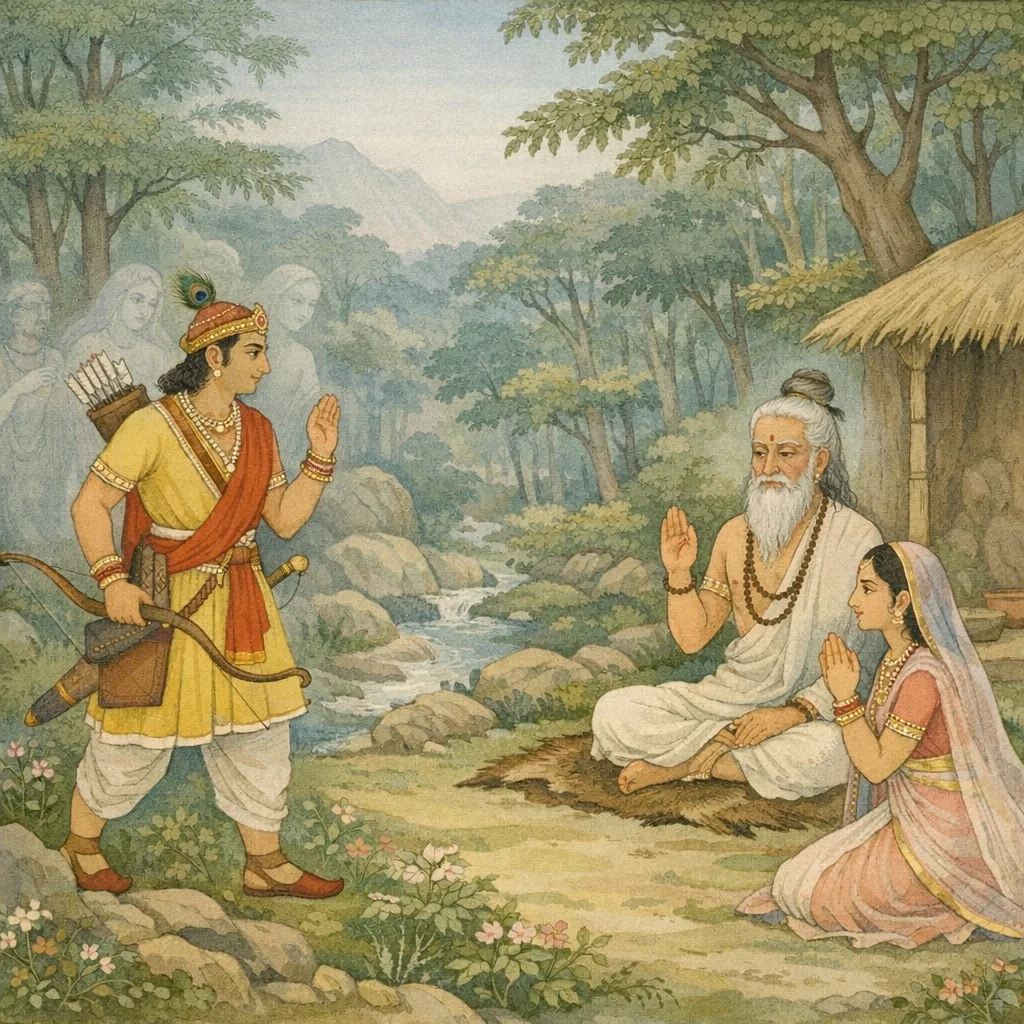
Adhyaya 193
Kuvalāśva’s Lineage and Uttaṅka’s Petition concerning Dhundhu (धुन्धु-प्रसङ्गः)
Upa-parva: Dhundhumāra-ākhyāna (Genealogy and the slaying of Dhundhu)
Mārkaṇḍeya recounts an Ikṣvāku genealogy: from Śaśāda to Kakutstha, Pṛthu, Viṣvagaśva, Ārdr(a), Yuvanāśva, Śrāvasta (founder of Śrāvastī), Bṛhadaśva, and finally Kuvalāśva, noted as surpassing his father in qualities and receiving consecration before Bṛhadaśva departs for austerities. The brahmin Uttaṅka learns of Bṛhadaśva’s forestward movement and intervenes, arguing that the highest dharma for a king is the safeguarding of subjects; the forest does not display this dharma as governance does. Uttaṅka describes a sandy ‘sea’ called Ujjānaka near his āśrama, where the subterranean asura Dhundhu—son of Madhu and Kaiṭabha—lies in severe austerity aimed at cosmic disruption. Dhundhu has obtained a boon of invulnerability against many classes of beings, and his annual exhalation generates immense dust, obscures the sun-path, and triggers week-long tremors and fiery, smoky turbulence. Uttaṅka requests Kuvalāśva to neutralize Dhundhu for the welfare of worlds, asserting the king’s adequacy for the task and noting a prior assurance that Viṣṇu’s tejas will empower the slayer. The chapter closes by stressing the extraordinary potency of Dhundhu, implying that only exceptional royal energy can accomplish the deed.
Chapter Arc: Markandeya, addressing the Kurus, invites the king to hear a wondrous account of Brahmanas—an episode where a ruler’s pride and a sage’s terrible vow collide in the deep forest. → In Ayodhya, the Ikshvaku king Parikshit rides out on the hunt and strays into a beautiful but ominous woodland. His retinue arrives; the forest seems inviting, yet the air thickens with unseen austerity. The narrative turns toward Mandraka’s royal house and the impending marriage of his daughter, while the shadow of the Brahmana Vamadeva’s power and the strange figures of Shala and Dala gather like storm-clouds around the king’s fate. → Vamadeva reveals the dread nature of a Brahmana’s vow: by his austerity he has unleashed fearsome, iron-hard, terrifying beings (yatudhanas/ghastly forces) to seize and bind the king. Parikshit, caught and unable to even release an arrow, confesses he cannot destroy what the sage has set in motion and begs that Vamadeva live long—acknowledging Brahmanical might over royal force. → The princess of Mandraka intervenes with a boon-request: let her intended husband be freed from sin and peril, and let auspiciousness protect him with sons and kin. The sage assents; Parikshit is released and restored, and in gratitude the king gives the princess (Vamya) in marriage with reverence—thus sealing reconciliation between kshatra power and brahmana tapas.
Shlokas
Verse 1
अपर अप हूँ... आपके आप: द्विनवर्त्याधेकशततमो< ध्याय: इक्ष्वाकुवंशी परीक्षित्का मण्ड्रकराजकी कन्यासे विवाह, शल और दलके चरित्र तथा वामदेव मुनिकी महत्ता वैशम्पायन उवाच भूय एव ब्राह्णमहाभाग्यं वत्कुमर्हसीत्यब्रवीत् पाण्डवेयो मार्कण्डेयम्,वैशम्पायनजी कहते हैं--जनमेजय! तदनन्तर पाण्डुनन्दन युधिष्ठिरने मुनिवर मार्कण्डेयसे कहा--'ब्रह्मन्! पुनः ब्राह्मणोंकी महिमाका वर्णन कीजिये”
Vaiśampāyana said: Then Pāṇḍu’s son (Yudhiṣṭhira) addressed the sage Mārkaṇḍeya, saying, “O Brahmin, you are worthy to speak again—describe once more the great blessedness and glory of the Brahmins.”
Verse 2
अथाचष्ट मार्कण्डेयो< पूर्वमिदं श्रूयतां ब्राह्मणानां चरितम्,तब मार्कण्डेयजीने कहा--'राजन्! ब्राह्मणोंक इस अद्भुत चरित्रका श्रवण करो
Vaiśampāyana said: Then Mārkaṇḍeya spoke, “First, O king, listen to this account of the Brahmins’ remarkable conduct.” The narration turns toward an exemplary story meant to instruct through the remembered deeds and discipline of Brahmins, highlighting reverence for sacred tradition and the ethical power of attentive listening.
Verse 3
“अयोध्यायामिक्ष्वाकुकुलोद्वह: पार्थिव: परिक्षिन्नाम मृगयामगमत्,'अयोध्यापुरीमें इक्ष्वाकुकुलके धुरंधर वीर राजा परीक्षित् रहते थे। वे एक दिन शिकार खेलनेके लिये गये
Vaiśampāyana said: In Ayodhyā there lived a king named Parikṣit, a foremost bearer of the Ikṣvāku lineage. One day he went out on a hunt—an episode that sets the stage for reflecting on how royal pastimes, when pursued without restraint, can lead to unintended moral and practical consequences.
Verse 4
तमेकाश्वेन मृगमनुसरन्तं मृगो दूरमपाहरत्,उन्होंने एकमात्र अश्वकी सहायतासे एक हिंसक पशुका पीछा किया। वह पशु उन्हें बहुत दूर हटा ले गया
Vaiśampāyana said: Pursuing the wild beast with only a single horse, he followed it; but the animal drew him far away, leading him deep into the distance. The episode underscores how uncontrolled pursuit—driven by impulse or duty misunderstood—can separate a person from support and safety.
Verse 5
अध्वनि जातश्रम: क्षुत्तृष्णाभिभूतश्वैकस्मिन् देशे नीलं गहनं वनखण्डमपश्यत् ।। ५॥।। 'मार्ममें उन्हें बड़ी थकावट हुई और वे भूख-प्याससे व्याकुल हो गये। उसी समय उन्हें एक ओर नीले रंगका एक दूसरा वन दिखायी दिया, जो और भी घना था
Vaiśaṃpāyana said: Worn out by the journey and overcome by hunger and thirst, he saw, in a certain region, a dark-blue, exceedingly dense tract of forest. The scene underscores how physical hardship tests resolve and becomes the immediate setting for the next turn of events.
Verse 6
तच्च विवेश ततस्तस्य वनखण्डस्य मध्येडतीव रमणीयं सरो दृष्टवा साश्व एव व्यगाहत,“तत्पश्चात् राजाने उसके भीतर प्रवेश किया। उस वनस्थलीके मध्यभागमें एक अत्यन्त रमणीय सरोवर था। उसे देखकर राजा घोड़ेसहित सरोवरके जलमें घुस गये
Vaiśampāyana said: Then he entered that tract of forest. In its very midst he saw a lake of extraordinary beauty; and at the sight of it, the king, still mounted on his horse, plunged straight into the water. The episode underscores how desire for immediate relief or delight can draw a ruler into an unknown situation, setting the stage for a moral test of restraint and discernment.
Verse 7
अथाश्वस्त: स बिसमृणालमश्चायाग्रतो निक्षिप्य पुष्करिणीतीरे संविवेश | ततः शयानो मधुरं गीतमशूणोत्,“जल पीकर जब वे कुछ आश्वस्त हुए, तब घोड़ेके आगे कुछ कमलकी नालें डालकर स्वयं उस सरोवरके तटपर लेट गये। लेटे-ही-लेटे उनके कानोंमें कहींसे मधुर गीतकी ध्वनि सुनायी पड़ी
Verse 8
स श्र॒ुत्वाचिन्तयन्नेह मनुष्यगतिं पश्यामि कस्य खल्वयं गीतशब्द इति,“उसे सुनकर राजा सोचने लगे कि “यहाँ मनुष्योंकी गति तो नहीं दिखायी देती। फिर यह किसके गीतका शब्द सुनायी देता है”
Hearing it, the king reflected: “Here I see no trace of any human presence. Then whose singing is this sound that is being heard?”
Verse 9
अथापश्यत् कनन््यां परमरूपदर्शनीयां पुष्पाण्यवचिन्वन्तीं गायन्तीं च । अथ सा राज्ञ: समीपे पर्यक्रामत्,“इतनेहीमें उनकी दृष्टि एक कन्यापर पड़ी, जो अपने परम सुन्दर रूपके कारण देखने ही योग्य थी। वह वनके फूल चुनती हुई गीत गा रही थी। धीरे-धीरे भ्रमण करती हुई वह राजाके समीप आ गयी
Then he saw a maiden of exceedingly beautiful, captivating appearance. She was gathering forest flowers and singing as she went. Wandering gently, she gradually came near the king—an encounter that sets the stage for desire and discernment to be tested against royal self-control and dharma.
Verse 10
तामब्रवीद् राजा कस्यासि भद्रे का वा त्वमिति । सा प्रत्युवाच कन्याउस्मीति तां राजोवाचार्थी त्वयाहमिति,“तब राजाने उससे पूछा--'कल्याणी! तुम कौन और किसकी हो?” उसने उत्तर दिया--'मैं कन्या हूँ---अभी मेरा विवाह नहीं हुआ है।” तब राजाने उससे कहा--'भद्रे! मैं तुझे चाहता हूँ”
The king said to her, “Auspicious lady, whose are you, and who are you?” She replied, “I am an unmarried maiden.” Then the king said to her, “Fair one, I desire you; I seek you as my wife.”
Verse 11
अथोवाच कन्या समयेनाहं शक्या त्वया लब्धुं नान्यथेति राजा तां समयमपृच्छत् । कन्योवाच नोदकं मे दर्शयितव्यमिति,“कन्या बोली” तुम मुझे एक शर्तके साथ पा सकते हो अन्यथा नहीं।” राजाने उससे वह शर्त पूछी। कनन््याने कहा--“मुझे कभी जलका दर्शन न कराना'
Then the maiden said, “You may obtain me only on a condition—otherwise not.” The king asked her what that condition was. The maiden replied, “You must never show me water.” The episode frames a marriage-like acquisition as bound by a freely stated vow, highlighting the ethical weight of consent and the duty to honor stipulated conditions.
Verse 12
स राजा तां बाढमित्युक्त्वा तामुपयेमे कृतोद्धाहश्न राजा परीक्षित् क्रीडमानो मुदा परमया युक्तस्तूष्णीं सड़म्य तया सहास्ते,“तब राजाने उससे “बहुत अच्छा” कहकर उससे (गान्धर्व) विवाह किया। विवाहके पश्चात् राजा परीक्षित् अत्यन्त आनन्दपूर्वक उसके साथ क्रीड़ा-विहार करने लगे और एकान्तमें मिलकर उसके साथ चुपचाप बैठे रहे
Vaiśampāyana said: The king, replying “Very well,” accepted her in marriage in the Gandharva manner. After the wedding rites were concluded, King Parīkṣit—filled with the highest joy—spent his time in playful companionship with her, and in private he sat silently with her, absorbed in intimate contentment. Ethically, the passage highlights the force of personal desire and privacy after a love-marriage, setting a tone where attachment and delight can momentarily eclipse public duty and vigilance.
Verse 13
ततस्तत्रैवासीने राजनि सेनान्वगच्छत्,“राजा अभी वहीं बैठे थे, इतनेहीमें उनकी सेना आ पहुँची
Then, while the king was still seated right there, his army arrived and came up to him. The moment underscores how swiftly royal power and responsibility gather around a ruler: even in stillness, the king is not truly alone, for the demands of protection, order, and duty follow close behind.
Verse 14
सा सेनोपविष्टं राजानं परिवार्यातिष्ठत् । पर्याश्वस्तश्न॒ राजा तयैव सह शिबिकया प्रायादव-घोटितया स स्वं नगरमनुप्राप्पय रहसि तया सहास्ते,“वह सेना अपने बैठे हुए राजाको चारों ओरसे घेरकर खड़ी हो गयी। अच्छी तरह सुस्ता लेनेके पश्चात् राजा एक साफ-सुथरी चिकनी पालकीमें उसीके साथ बैठकर अपने नगरको चल दिये और वहाँ पहुँचकर उस नवविवाहिता सुन्दरीके साथ एकान्तवास करने लगे
Vaiśampāyana said: The army stood around the king as he sat, forming a protective ring. After he had rested and regained composure, the king set out with that very woman in a clean, well-appointed palanquin. Reaching his own city, he remained with her in seclusion—signaling a turn from public duty to private pleasure and the ethically charged tension between royal responsibility and personal desire.
Verse 15
तत्राभ्याशस्थो5डपि वश्िन्नापश्यदथ प्रधानामा-त्यो5भ्याशचरास्तस्य स्त्रियो5पृच्छत्,“वहाँ निकट होते हुए भी कोई उनका दर्शन नहीं कर पाता था। तब एक दिन प्रधान मन्त्रीने राजाके पास रहनेवाली स्त्रियोंसे पूछा--
Though he remained close at hand, no one could behold that self-controlled person. Then one day the chief minister, who moved about near him, questioned the women residing in the king’s inner quarters—seeking to understand why the ruler, despite physical proximity, remained beyond ordinary access and sight.
Verse 16
किमत्र प्रयोजन वर्तते इत्यथाब्रुवंस्ता: स्त्रिय:,“यहाँ तुम्हारा क्या काम है?' उनके ऐसा पूछनेपर उन स्त्रियोंने कहा--
Vaiśaṃpāyana said: “What purpose do you have here?” When they were questioned in this way—‘What business have you here?’—those women replied.
Verse 17
अपूर्वमिव पश्याम उदकं नात्र नीयत इत्यथामात्यो5नुदकं वनं कारयित्वोदारवृक्ष॑ं बहुपुष्य-फलमूलं तस्य मध्ये मुक्ताजालमयीं पार्श्व वापी गूढां सुधासलिललिप्तां स रहस्युपगम्य राजान-मब्रवीत्,“हमें यहाँ एक अद्भुत-सी बात दिखायी देती है। महाराजके अन्तःपुरमें पानी नहीं जाने पाता है। (हमलोग इसीकी चौकसी करती हैं।)” उनकी यह बात सुनकर प्रधान मन्त्रीने एक बाग लगवाया, जिसमें प्रत्यक्षरूपसे कोई जलाशय नहीं था। उसमें बड़े सुन्दर और ऊँचे- ऊँचे वृक्ष लगवाये गये थे। वहाँ फल-फूल और कन्द-मूलकी भी बहुतायत थी। उस उपवनके मध्यभागमें एक किनारेकी ओर सुधाके समान स्वच्छ जलसे भरी हुई एक बावली भी बनवायी थी, जो मोतियोंके जालसे निर्मित थी। उस बावलीको (लताओंद्वारा) बाहरसे ढक दिया गया था। उस उद्यानके तैयार हो जानेपर मन्त्रीने किसी दिन राजासे मिलकर कहा--
Vaiśampāyana said: “We observe something quite unprecedented: water cannot be brought into the king’s inner apartments.” Hearing this report, the chief minister had a grove constructed that appeared to have no water-source at all. He planted tall, splendid trees, and ensured an abundance of flowers, fruits, and edible roots and tubers. Yet within that garden, to one side, he secretly made a stepwell filled with water as clear as nectar, adorned as though with a net of pearls and concealed from view. When the garden was ready, the minister approached the king in private and spoke—setting in motion a careful, discreet plan that balances royal security with practical governance.
Verse 18
वनमिदमुदारकं साध्वत्र रम्पतामिति,“महाराज! यह वन बहुत सुन्दर है, आप इसमें भलीभाँति विहार करें”
Vaiśampāyana said: “O great king, this forest is truly splendid. Stay here and take your recreation in it as is fitting.” The line sets a calm, hospitable tone, presenting the forest as a rightful place of rest and ordered enjoyment rather than indulgence.
Verse 19
स तस्य वचनात् तयैव सह देव्या तद् वन॑ प्राविशत् । स कदाचित् तस्मिन् कानने रम्ये तयैव सह व्यवाहरदथ क्षुत्तष्णार्दित: श्रान्तो5तिमुक्त-कागारमपश्यत्,“मन्त्रीके कहनेसे राजाने उसी नवविवाहिता रानीके साथ उस वनमें प्रवेश किया। एक दिन महाराज परीक्षित् उस रमणीय उद्यानमें अपनी उसी प्रियतमाके साथ विहार कर रहे थे। विहार करते-करते जब वे थक गये और भूख-प्याससे बहुत पीड़ित हो गये, तब उन्हें वासन्ती लताद्वारा निर्मित एक मनोहर मण्डप दिखायी दिया
At his command, the king entered that forest together with the queen. Once, while he was sporting with her in that delightful woodland, he became exhausted and was sorely afflicted by hunger and thirst. Then he noticed a charming pavilion, fashioned from flowering creepers. The episode underscores how even a ruler, when overtaken by bodily need and fatigue, may be led into situations that test restraint and judgment—an ethical prelude to later consequences.
Verse 20
तत् प्रविश्य राजा सह प्रियया सुधाकृतां विमलां सलिलपूर्णा वापीमपश्यत्,“उस मण्डपमें प्रियासहित प्रवेश करके राजाने सुधाके समान स्वच्छ जलसे परिपूर्ण वह बावली देखी
Entering that pavilion together with his beloved, the king beheld a stepwell whose water was crystal-clear and filled to the brim—pure as nectar. The scene underscores how alluring, seemingly flawless appearances can draw a person inward, setting the stage for a moral test of discernment and self-restraint.
Verse 21
दृष्टवैव च तां तस्याश्न तीरे सहैव तया देव्याडवातिष्ठत्,“उसे देखकर वे अपनी रानीके साथ उसीके तटपर खड़े हुए
Seeing her there, he at once halted on the bank of her (river’s) shore, standing together with his queen. The scene underscores royal restraint and propriety: the king does not rush forward impulsively, but pauses with due decorum, attentive to circumstance and the presence of his consort.
Verse 22
अथ तां देवीं स राजाब्रवीत्ू साध्ववतर वापीसलिलमिति । सा तद्धचः श्रुत्वावतीर्य वापी न््यमज्जन्न पुनरुदमज्जत्,“उस समय राजाने उस रानीसे कहा--'देवि! सावधानीके साथ इस बावलीके जलमें उतरो।” राजाकी यह बात सुनकर उसने बावलीमें घुसकर गोता लगाया और फिर बाहर नहीं निकली
Verse 23
तां स मृगयमाणो राजा नापश्यद् वापीमथ निःस्राव्य मण्डूकं श्वशभ्रमुखे दृष्टवा क्रुद्ध आज्ञापपामास स राजा,“राजाने उस वापीमें रानीकी बहुत खोज की, परंतु वह कहीं दिखायी न दी। तब उन्होंने बावलीका सारा जल निकलवा दिया। इसके बाद एक बिलके मुँहपर कोई मेढक दीख पड़ा। इससे राजाको बड़ा क्रोध हुआ और उन्होंने आज्ञा दे दी कि *सर्वत्र मेढकोंका वध किया जाय। जो मुझसे मिलना चाहे, वह मरे हुए मेढकका ही उपहार लेकर मेरे पास आवे'
Vaiśampāyana said: The king searched for the queen but could not see her in the well. He then had the water of the step-well drained. After that, seeing a frog at the mouth of a burrow, he was seized by anger and issued an order: “Let frogs everywhere be killed. Whoever wishes to meet me must come into my presence bringing, as an offering, a dead frog.” The episode highlights how unchecked royal wrath can turn into indiscriminate violence and a perversion of kingship, where the ruler’s personal grievance becomes a public policy of harm.
Verse 24
सर्वत्र मण्डूकवध: क्रियतामिति यो मयार्थी स॒ मां मृतमण्ड्रकोपायनमादायोपतिष्ठेदिति,“राजाने उस वापीमें रानीकी बहुत खोज की, परंतु वह कहीं दिखायी न दी। तब उन्होंने बावलीका सारा जल निकलवा दिया। इसके बाद एक बिलके मुँहपर कोई मेढक दीख पड़ा। इससे राजाको बड़ा क्रोध हुआ और उन्होंने आज्ञा दे दी कि *सर्वत्र मेढकोंका वध किया जाय। जो मुझसे मिलना चाहे, वह मरे हुए मेढकका ही उपहार लेकर मेरे पास आवे'
Vaiśaṃpāyana said: Enraged at what he had found, the king issued a sweeping order: “Let the killing of frogs be carried out everywhere. Whoever seeks an audience with me must come before me bearing, as an offering, a dead frog.” The command, born of anger and misdirected blame, turns a single grievance into indiscriminate violence—an ethical lapse that the narrative uses to highlight how wrath can distort royal duty and justice.
Verse 25
अथ मण्डूकवधे घोरे क्रियमाणे दिक्षु सर्वासु मण्ड्रकान् भयमाविवेश । ते भीता मण्डूकराज्ञे यथावृत्तं न्यवेदयन्,“इस आज्ञाके अनुसार चारों ओर मेढकोंका भयंकर संहार आरम्भ हो गया। इससे सब दिशाओंके मेढकोंके मनमें भय समा गया। वे डरकर मण्डूकराजके पास गये और उनसे सब वृत्तान्त ठीक-ठीक बता दिया
Vaiśampāyana said: When a dreadful slaughter of the frogs began to be carried out in every direction, fear seized the frogs everywhere. Terrified, they went to the king of the frogs and reported to him, exactly as it had happened, that—by this command—a terrible killing of frogs had commenced all around.
Verse 26
ततो मण्डूकराट् तापसवेषधारी राजानमभ्य-गच्छदुपेत्य चैनमुवाच,“तब मण्डूकराज तपस्वीका वेष धारण करके राजाके पास गया और निकट पहुँचकर उससे इस प्रकार बोला--
Then the Frog-king, disguised in the garb of an ascetic, approached the king; drawing near, he addressed him with words meant to test and guide the ruler’s discernment and conduct. The scene frames a moral encounter: a sovereign is confronted by a seemingly holy figure, inviting reflection on how power should respond to counsel, humility, and dharma.
Verse 27
मा राजन् क्रोधवशं गम: प्रसाद॑ कुरु नाहसि मण्डूकानामनपराधिनां वर्ध॑ कर्तुमिति । श्लोकौ चात्र भवत:--,“राजन! आप क्रोधके वशीभूत न हों। हमपर कृपा करें। निरपराध मेढकोंका वध न करावें।” इस विषयमें ये दो श्लोक भी प्रसिद्ध हैं--
Vaiśampāyana said: “O King, do not fall under the sway of anger. Show grace; it is not right for you to cause the slaughter of innocent frogs. On this matter, two well-known verses are also cited: ‘O King, do not be mastered by wrath. Have compassion on us. Do not order the killing of blameless frogs.’”
Verse 28
मा मण्डूकान् जिधघांस त्वं कोपं संधारयाच्युत । प्रक्षीयते धनोद्रेको जनानामविजानताम्,अच्युत! आप मेढकोंको मारनेकी इच्छा न करें। अपने क्रोधको रोकें; क्योंकि अविवेकसे काम लेनेवाले मनुष्योंके धनकी वृद्धि नष्ट हो जाती है
Vaiśampāyana said: “Do not wish to kill the frogs, O Acyuta. Restrain your anger; for the swelling of wealth and prosperity is diminished and wasted away in the case of people who act without discernment.”
Verse 29
प्रतिजानीहि नैतांस्त्व॑ प्राप्य क्रोधं विमोक्ष्यसि । अंल कृत्वा तवाधर्म मण्डूकै: कि हतैहि ते,"प्रतिज्ञा करें कि इन मेढकोंको पाकर आप क्रोध नहीं करेंगे; यह अधर्म करनेसे आपको कया लाभ है? मण्डूकोंकी हत्यासे आपको क्या मिलेगा?”
“Promise that, even after obtaining these frogs, you will not give way to anger. Enough of this unrighteous conduct—what benefit will it bring you? What will you gain by killing frogs?”
Verse 30
तमेवंवादिनमिष्टजनशोकपरीतात्मा राजा-थोवाच,राजाका हृदय अपनी प्यारी रानीके विनाशके शोकसे दग्ध हो रहा था। उन्होंने उपर्युक्त बातें कहनेवाले मण्डूकराजसे कहा--
Vaiśampāyana said: Then the king, his mind overwhelmed by grief for his beloved and dear ones, spoke. His heart was scorched by sorrow at the loss of his cherished queen. Addressing the frog-king who had just spoken those words, he replied—
Verse 31
न हि क्षम्यते तन््मया हनिष्याम्येतानेतैर्दुरात्मभि: प्रिया मे भक्षिता सर्वथैव मे वध्या मण्डूका नाहसि विद्वन् मामुपरोद्भधुमिति,“मैं क्षमा नहीं कर सकता। इन मेढकोंको अवश्य मारूँगा। इन दुरात्माओंने मेरी प्रियतमाको खा लिया है। अतः ये मेढक मेरे लिये सर्वथा वध्य ही हैं। विद्वन! आप मुझे उनके वधसे न रोकें”
Vaiśampāyana said: “I cannot forgive this. I will surely kill these frogs. Those wicked creatures have devoured my beloved; therefore, for me, these frogs are wholly deserving of death. O wise one, you should not restrain me from slaying them.”
Verse 32
स तद् वाक्यमुपलभ्य व्यथितेन्द्रियमना: प्रोवाच प्रसीद राजन्नहमायुर्नाम मण्डूकराजो मम सा दुहिता सुशोभना नाम । तस्या हि दौ:शील्यमेतद् बहवस्तया राजानो विप्रलब्धा: पूर्वा इति,“राजाकी बात सुनकर मण्डूकराजका मन और इन्द्रियाँ व्यथित हो उठीं। वह बोला --“महाराज! प्रसन्न होइये। मेरा नाम आयु है। मैं मेढकोंका राजा हूँ। जिसे आप अपनी प्रियतमा कहते हैं, वह मेरी ही पुत्री है। उसका नाम सुशोभना है। वह आपको छोड़कर चली गयी, यह उसकी दुष्टता है। उसने पहले भी बहुत-से राजाओंको धोखा दिया है”
Hearing the king’s words, the frog-king—his mind and senses shaken—replied: “Be calm, O King. My name is Āyu; I am the king of frogs. The woman you call your beloved is my own daughter, named Suśobhanā. That she has left you is due to her ill conduct; she has deceived many kings before you as well.”
Verse 33
तमब्रवीद् राजा तया समर्थी सा मे दीयतामिति,तब राजाने मण्डूकराजसे कहा--'मैं तुम्हारी उस पुत्रीको चाहता हूँ, उसे मुझे समर्पित कर दो”
Vaiśampāyana said: The king addressed him, saying, “I am fit to take her; therefore let that daughter be given to me.” In the narrative frame, this is a direct request for a maiden in marriage, raising the ethical question of rightful consent and proper procedure in giving a daughter, which in dharma-literature is ideally governed by guardianship, suitability, and sanctioned marital norms rather than mere desire or power.
Verse 34
अथीनां राजे पितादादब्रवीच्चैनामेनं राजानं शुश्रूषस्वेति,ै है ॥ है ५ । 9 /“३| पर ५ | कट शक बः #म ०. किन ७-८ »* *_ | पक” आर. जे क््बुटूप््> पप - २ ुत--+काज पा आल व रा ७” ५७ ८७,५२० ञ ययातिसे ब्राह्णकी याचना “तब पिता मण्डूकराजने अपनी पुत्री सुशोभना महाराज परीक्षितको समर्पित कर दी और उससे कहा--'बेटी! सदा राजाकी सेवा करती रहना।' ऐसा कहकर मण्डूकराजने जब अपनी पुत्रीके अपराधको याद किया, तब उसे क्रोध हो आया और उसने उसे शाप देते हुए कहा--“अरी! तूने बहुत-से राजाओंको धोखा दिया है, इसलिये तेरी संतानें ब्राह्मणविरोधी होंगी; क्योंकि तू बड़ी झूठी है”
Vaiśampāyana said: Then her father gave her to the king and instructed her, saying, “Serve this king with devoted attendance.” The passage frames a father’s injunction as a dharmic duty of loyal service within marriage and royal household order, setting up the later moral consequence when past wrongdoing is recalled and censured.
Verse 35
स एवमुक्त्वा दुहितरं क्रुदः शशाप यस्मात् त्वया राजानो विप्रलब्धा बहवस्तस्मादब्रह्माण्यानि तवापत्यानि भविष्यन्त्यानृतिकत्वात् तवेति,ै है ॥ है ५ । 9 /“३| पर ५ | कट शक बः #म ०. किन ७-८ »* *_ | पक” आर. जे क््बुटूप््> पप - २ ुत--+काज पा आल व रा ७” ५७ ८७,५२० ञ ययातिसे ब्राह्णकी याचना “तब पिता मण्डूकराजने अपनी पुत्री सुशोभना महाराज परीक्षितको समर्पित कर दी और उससे कहा--'बेटी! सदा राजाकी सेवा करती रहना।' ऐसा कहकर मण्डूकराजने जब अपनी पुत्रीके अपराधको याद किया, तब उसे क्रोध हो आया और उसने उसे शाप देते हुए कहा--“अरी! तूने बहुत-से राजाओंको धोखा दिया है, इसलिये तेरी संतानें ब्राह्मणविरोधी होंगी; क्योंकि तू बड़ी झूठी है”
Vaiśaṃpāyana said: Having spoken thus, the father, inflamed with anger, cursed his daughter: “Since you have deceived many kings, therefore your offspring shall be hostile to brāhmaṇas and contrary to brahminical conduct—because falsehood is in you.” The verse frames deceit as a moral fault whose consequences extend beyond the individual, turning private wrongdoing into a lasting social and ethical disorder.
Verse 36
स च राजा तामुपलभ्य तस्यां सुरतगुण-निबद्धह्दयो लोकत्रयैश्वर्यमिवोपलभ्य हर्षण. बाष्प-कलया वाचा प्रणिपत्याभिपूज्य मण्डूकराजमब्रवीद- नुगृहीतो5स्मीति
And that king, having obtained her, with his heart bound by the delights of love, felt as though he had gained the sovereignty of the three worlds. Overjoyed, speaking with a voice choked by a film of tears, he bowed down, honored the king of frogs, and said, “I have been shown favor.”
Verse 37
“सुशोभनाके रतिकलासम्बन्धी गुणोंने राजाके मनको बाँध लिया था। वे उसे पाकर ऐसे प्रसन्न हुए, मानो उन्हें तीनों लोकोंका राज्य मिल गया हो। उन्होंने आनन्दके आँसू बहाते हुए मण्डूकराजको प्रणाम किया और उसका यथोचित सत्कार करते हुए हर्षगद्गद वाणीमें कहा--“मण्डूकराज! तुमने मुझपर बड़ी कृपा की है' ।। सच मण्डूकराजो दुहितरमनुज्ञाप्प यथागतमगच्छत्,“तत्पश्चात् कन्यासे विदा लेकर मण्डूकराज जैसे आया था, वैसे ही अपने स्थानको चला गया
Vaiśampāyana said: The king’s mind was captivated by the maiden’s excellent qualities connected with the arts of love and delight. Having obtained her, he rejoiced as though he had gained sovereignty over the three worlds. With tears of joy he bowed to King Maṇḍūka, honored him fittingly, and in a voice choked with happiness said, “King Maṇḍūka, you have shown me great kindness.” Then, after taking leave of the girl, King Maṇḍūka departed, returning the way he had come.
Verse 38
अथ कस्यचित् कालस्य तस्यां कुमारास्त्रय-स्तस्य राज्ञ: सम्बभूवु: शलो दलो बलश्नेति । तत-स्तेषां ज्येष्ठ शलं समये पिता राज्येडभिषिच्य तपसि धृतात्मा वनं जगाम,“कुछ कालके पश्चात् सुशोभनाके गर्भसे राजा परीक्षितके तीन पुत्र हुए--शल, दल और बल। इनमें शल सबसे बड़ा था। समय आनेपर पिताने शलका राज्याभिषेक करके स्वयं तपस्यामें मन लगाये तपोवनको प्रस्थान किया
Vaiśampāyana said: After some time, three sons were born to that king through her—Śala, Dala, and Bala. Of them, Śala was the eldest. When the proper time came, the father installed Śala as king and, with his mind firmly set on austerity, departed for the forest to pursue ascetic practice.
Verse 39
अथ कदाचिच्छलो मृगयामनुचरन् मृगमासाद्य रथेनान्वधावत्,“तदनन्तर एक दिन महाराज शल शिकार खेलनेके लिये वनको गये। वहाँ उन्होंने एक हिंसक पशुको सामने पाकर रथके द्वारा ही उसका पीछा किया और सारथिसे कहा--“शीघ्र मुझे मृगके निकट पहुँचाओ'। उनके ऐसा कहनेपर सारथि बोला--“महाराज! आप इस पशुको पकड़नेका आग्रह न करें। यह आपकी पकड़में नहीं आ सकता। यदि आपके रथमें दोनों वाम्य घोड़े जुते होते, तब आप इसे पकड़ लेते।” यह सुनकर राजाने सूतसे पूछा --'सारथे! बताओ, वाम्य घोड़े कौन हैं, अन्यथा मैं तुम्हें अभी मार डालूँगा।” राजाके ऐसा कहनेपर सारथि भयसे काँप उठा। उधर घोड़ोंका परिचय देनेपर उसे वामदेव ऋषिके शापका भी डर था। अतः उसने राजासे कुछ नहीं कहा। तब राजाने पुनः तलवार उठाकर कहा--“अरे! शीघ्र बता, नहीं तो तुझे अभी मार डालूगा।' तब उसने राजाके भयसे त्रस्त होकर कहा--“महाराज! वामदेव मुनिके पास दो घोड़े हैं जिन्हें “वाम्य” कहते हैं। वे मनके समान वेगशाली हैं!
Vaiśampāyana said: Once, King Śala, while roaming about on a hunt, came upon a deer and pursued it in his chariot. The episode sets the stage for a moral tension: royal impatience and coercion press upon a subordinate, while the charioteer is caught between fear of the king’s violence and fear of a sage’s curse—showing how adharma arises when power demands speech or action against conscience and higher law.
Verse 40
सूतं चोवाच शीघ्र मां वहस्वेति स तथोक्त: सूतो राजानमब्रवीत्,“तदनन्तर एक दिन महाराज शल शिकार खेलनेके लिये वनको गये। वहाँ उन्होंने एक हिंसक पशुको सामने पाकर रथके द्वारा ही उसका पीछा किया और सारथिसे कहा--“शीघ्र मुझे मृगके निकट पहुँचाओ'। उनके ऐसा कहनेपर सारथि बोला--“महाराज! आप इस पशुको पकड़नेका आग्रह न करें। यह आपकी पकड़में नहीं आ सकता। यदि आपके रथमें दोनों वाम्य घोड़े जुते होते, तब आप इसे पकड़ लेते।” यह सुनकर राजाने सूतसे पूछा --'सारथे! बताओ, वाम्य घोड़े कौन हैं, अन्यथा मैं तुम्हें अभी मार डालूँगा।” राजाके ऐसा कहनेपर सारथि भयसे काँप उठा। उधर घोड़ोंका परिचय देनेपर उसे वामदेव ऋषिके शापका भी डर था। अतः उसने राजासे कुछ नहीं कहा। तब राजाने पुनः तलवार उठाकर कहा--“अरे! शीघ्र बता, नहीं तो तुझे अभी मार डालूगा।' तब उसने राजाके भयसे त्रस्त होकर कहा--“महाराज! वामदेव मुनिके पास दो घोड़े हैं जिन्हें “वाम्य” कहते हैं। वे मनके समान वेगशाली हैं!
Vaiśampāyana said: The king ordered his charioteer, “Drive me quickly!” When thus commanded, the charioteer addressed the king: “After this, one day King Śala went to the forest to hunt. There he saw a fierce beast and pursued it from his chariot, saying to the driver, ‘Quickly bring me near the deer!’ The charioteer replied, ‘O King, do not insist on capturing this creature; it cannot be caught by you. If your chariot were yoked with the two left-turning (vāmya) horses, then you would catch it.’ Hearing this, the king demanded, ‘Charioteer, tell me who the vāmya horses are—otherwise I will kill you at once!’ The charioteer trembled in fear; yet if he revealed the horses’ identity, he also feared the curse of the sage Vāmadeva. So he said nothing. Then the king again raised his sword and threatened, ‘Speak quickly, or I will kill you now!’ Terrified, the charioteer finally said, ‘O King, the sage Vāmadeva has two horses called “vāmya”; they are as swift as the mind.’ The episode highlights how royal anger and coercion can drive a person into a conflict of duties—fear of immediate violence versus fear of violating a sage’s sanctity—showing the ethical peril of impulsive power.
Verse 41
न क्रियतामनुबन्धो नैष शक््यस्त्वया मृगो<यं ग्रहीतुं यद्यपि ते रथे युक्तौ वाम्यौ स्यथातामिति । ततो<ब्रवीद् राजा सूतमाचक्ष्व मे वाम्यौ हन्मि च त्वामिति । स एवमुक्तो राजभयभीत: सूतो वामदेव-शापभीतश्च सन् नाचख्यौ राज्ञे | ततः पुनः स राजा खड्गमुद्यम्य शीघ्रं कथयस्वेति तमाह हनिष्ये त्वामिति । स तदा55ह राजभयभीत: सूतो वामदेवस्याश्वौ वाम्यौ मनोजवाविति,“तदनन्तर एक दिन महाराज शल शिकार खेलनेके लिये वनको गये। वहाँ उन्होंने एक हिंसक पशुको सामने पाकर रथके द्वारा ही उसका पीछा किया और सारथिसे कहा--“शीघ्र मुझे मृगके निकट पहुँचाओ'। उनके ऐसा कहनेपर सारथि बोला--“महाराज! आप इस पशुको पकड़नेका आग्रह न करें। यह आपकी पकड़में नहीं आ सकता। यदि आपके रथमें दोनों वाम्य घोड़े जुते होते, तब आप इसे पकड़ लेते।” यह सुनकर राजाने सूतसे पूछा --'सारथे! बताओ, वाम्य घोड़े कौन हैं, अन्यथा मैं तुम्हें अभी मार डालूँगा।” राजाके ऐसा कहनेपर सारथि भयसे काँप उठा। उधर घोड़ोंका परिचय देनेपर उसे वामदेव ऋषिके शापका भी डर था। अतः उसने राजासे कुछ नहीं कहा। तब राजाने पुनः तलवार उठाकर कहा--“अरे! शीघ्र बता, नहीं तो तुझे अभी मार डालूगा।' तब उसने राजाके भयसे त्रस्त होकर कहा--“महाराज! वामदेव मुनिके पास दो घोड़े हैं जिन्हें “वाम्य” कहते हैं। वे मनके समान वेगशाली हैं!
Vaiśampāyana said: “Do not persist in this chase; this beast cannot be caught by you. Only if your chariot were yoked with the two ‘Vāmya’ horses could you overtake it.” Then the king said to the charioteer, “Tell me about these Vāmya horses—otherwise I will kill you.” Terrified of the king, and also afraid of incurring the curse of the sage Vāmadeva if he revealed the secret, the charioteer did not answer. The king again raised his sword and said, “Speak quickly, or I will kill you.” Then the charioteer, shaken with fear of the king, said: “The Vāmya horses belong to Vāmadeva; they are as swift as the mind.”
Verse 42
अथैनमेवं ब्रुवाणमब्रवीद् राजा वामदेवाश्रमं प्रयाहीति स गत्वा वामदेवाश्रमं तमृषिमब्रवीत्,'सारथिके ऐसा कहनेपर राजाने उसे आज्ञा दी, “चलो वामदेवके आश्रमपर।' वामदेवके आश्रमपर पहुँचकर राजाने उन महर्षिसे कहा--
Vaiśaṃpāyana said: When the charioteer spoke in this manner, the king commanded him, “Proceed to the hermitage of Vāmadeva.” Having gone to Vāmadeva’s āśrama, the king addressed that sage—thus setting his course toward counsel grounded in dharma and restraint.
Verse 43
भगवन् मृगो मे विद्धः पलायते सम्भावयितुमरहसि वाम्यौ दातुमिति । तमब्रवीदृषिर्ददानि ते वाम्यौ कृतकार्येण भवता ममैव वाम्यौ निर्यात्यौ क्षिप्रमिति । स च तावश्वौ प्रतिगृह्मानुज्ञाप्प ऋषिं प्रायाद् वामीप्रयुक्तेन रथेन मृगं प्रतिगच्छंश्चाब्रवीत् सूतमश्चरत्नाविमावयोग्यौ ब्राह्मणानां नैतौ प्रतिदेयौ वामदेवायेत्युक्त्वा मृगमवाप्य स्वनगरमेत्याश्वावन्त:पुरेडस्थापयत्,“भगवन्! मेरे बाणोंसे घायल हुआ हिंसक पशु भागा जा रहा है। आप अपने वाम्य अश्व मुझे देनेकी कृपा करें।” तब महर्षिने कहा---"मैं तुम्हें वाम्य अश्व दिये देता हूँ। परंतु जब तुम्हारा कार्य सिद्ध हो जाय, तब तुम शीघ्र ही ये दोनों अश्व मुझे ही लौटा देना।” राजाने दोनों अश्व पाकर ऋषिकी आज्ञा ले वहाँसे प्रस्थान किया। वामी घोड़ोंसे जुते हुए रथके द्वारा हिंसक पशुका पीछा करते हुए वे सारथिसे बोले--'सूत! ये दोनों अश्वरत्न ब्राह्मणोंके पास रहने योग्य नहीं। अतः इन्हें वामदेवके पास लौटानेकी आवश्यकता नहीं है।” ऐसा कहकर राजा हिंसक पशुको साथ ले अपनी राजधानीको चल दिये। वहाँ पहुँचकर उन्होंने उन दोनों अश्वोंको अन्तःपुरमें बाँध दिया
Vaiśampāyana said: “Revered sir, the deer I have struck is fleeing; be pleased to grant me your pair of left-side horses.” The sage replied, “I will give you the pair; but when your purpose is accomplished, you must quickly return these very horses to me.” The king accepted the two horses, took leave of the sage, and set out. Pursuing the deer in a chariot yoked with those horses, he said to his charioteer, “These jewel-like horses are not fit to remain with Brahmins; they need not be returned to Vāmadeva.” Having thus spoken, he caught up with the deer, returned to his own city, and had the horses tethered within the inner palace. Ethically, the passage highlights a breach of trust: a gift given on condition is treated as a pretext for appropriation, setting up a conflict between royal desire and the obligation to keep one’s word to a sage.
Verse 44
अथर्षिश्चिन्त्यामास तरुणो राजपुत्र: कल्याणं पत्रमासाद्य रमते न प्रतिनिर्यातयत्यहो कष्टमिति,उधर वामदेव मुनि मन-ही-मन इस प्रकार चिन्ता करने लगे--'अहो! वह तरुण राजकुमार मेरे अच्छे घोड़ोंको लेकर मौज कर रहा है, उन्हें लौटानेका नाम ही नहीं लेता है। यह तो बड़े कष्टकी बात है!”
Vaiśampāyana said: Then the sage reflected to himself, “That young prince, having obtained my fine possession, is enjoying himself and does not return it at all. Alas, this is truly distressing.” The passage highlights the ethical tension between rightful ownership and another’s careless enjoyment, and the sage’s inward struggle before deciding how to respond in accordance with dharma.
Verse 45
स मनसा विचिन्त्य मासि पूर्णे शिष्यमब्रवीत्,“मन-ही-मन सोच-विचार करते हुए जब एक मास पूरा हो गया, तब वे अपने शिष्यसे बोले--'आत्रेय! जाकर राजासे कहो कि यदि काम पूरा हो गया हो तो गुरुजीके दोनों वाम्य अश्व लौटा दीजिये।” शिष्यने जाकर राजासे यही बात दुहरायी। तब राजाने उसे उत्तर देते हुए कहा--“यह सवारी राजाओंके योग्य है। ब्राह्मणोंको ऐसे रत्न रखनेका अधिकार नहीं है। भला, ब्राह्मणोंकों घोड़े लेकर क्या करना है? अब आप सकुशल पधारिये”
After pondering in his mind, when a full month had passed, the teacher said to his disciple: “Ātreya, go and tell the king: if the task has been completed, then let my two left-side horses be returned.” The disciple went and repeated the message to the king. The king replied: “Such a mount befits kings. Brahmins have no right to keep jewels of this kind. What use have Brahmins for horses? You may now return safely.” The episode frames a moral tension between rightful ownership and royal arrogance: the king attempts to redefine ‘fitness’ and ‘entitlement’ to justify withholding what is not his, while the brahmin’s request remains restrained and lawful.
Verse 46
गच्छात्रेय राजानं ब्रूहि यदि पर्याप्तं निर्यातयो-पाध्यायवाम्याविति । स गत्वैवं तं राजानमब्रवीत् तं राजा प्रत्युवाच राज्ञामेतद्वाहनमनर्हा ब्राह्मणा रत्नानामेवंविधानां कि ब्राह्मणानाम श्वै: कार्य साधु गम्यताम्,“मन-ही-मन सोच-विचार करते हुए जब एक मास पूरा हो गया, तब वे अपने शिष्यसे बोले--'आत्रेय! जाकर राजासे कहो कि यदि काम पूरा हो गया हो तो गुरुजीके दोनों वाम्य अश्व लौटा दीजिये।” शिष्यने जाकर राजासे यही बात दुहरायी। तब राजाने उसे उत्तर देते हुए कहा--“यह सवारी राजाओंके योग्य है। ब्राह्मणोंको ऐसे रत्न रखनेका अधिकार नहीं है। भला, ब्राह्मणोंकों घोड़े लेकर क्या करना है? अब आप सकुशल पधारिये”
Vaiśaṃpāyana said: When a full month had passed in inward thought and deliberation, the teacher said to his disciple, “Ātreya, go and tell the king: if the task is complete, let him return the two left-side horses belonging to the preceptor.” The disciple went and conveyed this message to the king. The king replied, “Such a mount is fit for kings; brahmins have no rightful claim to jewels of this kind. What use have brahmins for horses? Go back in peace.” The episode highlights a clash between royal entitlement and brahminical ownership, raising questions of dharma regarding property, status, and the ethics of refusal.
Verse 47
स॒गत्वैतदुपाध्यायायाचष्ट तच्छुत्वा वचनमप्रियं वामदेव: क्रोधपरीतात्मा स्वयमेव राजानभिगम्या-श्वार्थमचोदयन्न चाददद् राजा,'शिष्यने लौटकर ये सारी बातें उपाध्यायसे कहीं। वह अप्रिय वचन सुनकर वामदेव मन-ही-मन क्रोधसे जल उठे और स्वयं ही उस राजाके पास जाकर उन्हें घोड़े लौटा देनेके लिये कहा। परंतु राजाने वे घोड़े नहीं दिये”
Having gone back, the disciple reported all this to his preceptor. Hearing those unwelcome words, Vāmadeva—his mind seized by anger—went himself to the king and pressed him to return the horses. Yet the king did not give the horses back.
Verse 48
वामदेव उवाच प्रयच्छ वाम्यौ मम पार्थिव त्वं कृतं हि ते कार्यमाभ्यामशक्यम् | मा त्वा वधीद् वरुणो घोरपाशै- ब्रह्मक्षत्रस्यान्तरे वर्तमानम्,तब वामदेवने कहा--राजन! मेरे वाम्य अश्वोंको अब मुझे लौटा दो। निश्चय ही उन घोड़ोंद्वारा तुम्हारा असाध्य कार्य पूरा हो गया है। इस समय तुम ब्राह्मण और क्षत्रियके बीचमें विद्यमान हो। कहीं ऐसा न हो कि तुम्हारी असत्यवादिताके कारण राजा वरुण तुम्हें अपने भयंकर पाशोंसे बाँध लें
Vāmadeva said: “O king, return to me my Vāmya horses. Through them your otherwise impossible task has indeed been accomplished. Now you stand in the perilous space between Brahmin and Kshatriya; let not Varuṇa strike you down or bind you with his dreadful nooses because of falsehood.”
Verse 49
राजोवाच अनड्वाहौ सुव्रतौ साधु दान्ता- वेतद् विप्राणां वाहनं वामदेव । ताभ्यां याहि त्वं तत्र कामो महर्षे छन््दांसि वै त्वादृशं संवहन्ति,राजा बोले--वामदेवजी! ये दो अच्छे स्वभावके सीखे-सिखाये हृष्ट-पुष्ट बैल हैं, जो गाड़ी खींच सकते हैं; ये ही ब्राह्मणोंके लिये उचित वाहन हो सकते हैं। अतः महर्षे! इन्हींको गाड़ीमें जोतकर आप जहाँ चाहें जायँ। आप-जैसे महात्माका भार तो वेदमन्त्र ही वहन करते हैं
The king said: “Vāmadeva, here are two well-vowed, well-trained, and properly disciplined bulls—fit to draw a cart. Such a conveyance is suitable for brahmins. Therefore, O great sage, yoke these two and go wherever you wish. As for one like you, it is the Vedic hymns themselves that bear your true ‘weight’.”
Verse 50
वामदेव उवाच छन्दांसि वै मादृशं संवहन्ति लोकेअमुष्मिन् पार्थिव यानि सन्ति । अस्मिंस्तु लोके मम यानमेत- दस्मद्विधानामपरेषां च राजन्,वामदेवने कहा--राजन! इसमें संदेह नहीं कि हम-जैसे लोगोंके लिये वेदके मन्त्र ही वाहनका काम देते हैं। परंतु वे परलोकमें ही उपलब्ध होते हैं। इस लोकमें तो हम-जैसे लोगोंके तथा दूसरोंके लिये भी ये अश्व ही वाहन होते हैं
Vāmadeva said: “O king, in that other world the Vedic metres and mantras themselves serve as the conveyance for people like us, wherever they are found. But in this world, for me—and indeed for those like me as well as for others—these horses are the means of travel.”
Verse 51
राजोवाच चत्वारस्त्वां वा गर्दभा: संवहन्तु श्रेष्ठाश्न॒तर्यो हरयो वातरंहा: । तैस्त्वं याहि क्षत्रियस्यैष वाहो ममैव वाम्यौ न तवैतौ हि विद्धि,राजाने कहा--ब्रह्मन! तब चार गधे, अच्छी जातिकी खच्चरियाँ या वायुके समान वेगशाली दूसरे घोड़े आपकी सवारीके लिये प्रस्तुत हो सकते हैं। इन्हीं वाहनोंद्वारा आप यात्रा करें। यह वाहन, जिसे आप माँगने आये हैं, क्षत्रिय नरेशके ही योग्य हैं। इसलिये आप यह समझ लें कि ये वाम्य अश्व मेरे ही हैं, आपके नहीं
The king said: “Let four donkeys carry you, or excellent mules, or horses swift as the wind. Travel by those. This mount you have come to ask for is fit only for a kṣatriya ruler. Therefore understand clearly: these auspicious horses are mine, not yours.”
Verse 52
वामदेव उवाच घोरें व्रतं ब्राह्मणस्यैतदाहु- रेतद् राजन् यदिहाजीवमान: । अयस्मया घोररूपा महान्त- श्वत्वारो वा यातुधाना: सुरीद्रा: । मया प्रयुक्तास्त्वद्वधमीप्समाना वहन्तु त्वां शितशूलाश्षतुर्धा,वामदेव बोले--राजन! तुम ब्राह्मणोंके इस धनको हड़पकर जो अपने उपयोगमें लाना चाहते हो, यह बड़ा भयंकर कर्म कहा गया है। यदि मेरे घोड़े वापस न दोगे तो मेरी आज्ञा पाकर विकराल रूपधारी तथा लौह-शरीरवाले अत्यन्त भयंकर चार बड़े-बड़े राक्षस हाथोंमें तीखे त्रिशूल लिये तुम्हारे वधकी इच्छासे टूट पड़ेंगे और तुम्हारे शरीरके चार टुकड़े करके उठा ले जायाँगे
Vāmadeva said: “O King, the wise declare this to be a dreadful violation of a brāhmaṇa’s sacred order—when one, while living here, seizes a brāhmaṇa’s wealth and turns it to one’s own use. If you do not return my horses, then, at my command, four enormous, terrifying yātudhānas—iron-bodied and of dreadful form—bearing sharp tridents, will rush upon you desiring your death, tear you into four parts, and carry you away.”
Verse 53
राजोवाच ये त्वां विदुर्ब्राह्मणं वामदेव वाचा हन्तुं मनसा कर्मणा वा | ते त्वां सशिष्यमिह पातयन्तु मद्वाक्यनुन्ना:ःशितशूलासिहस्ता:,राजाने कहा--वामदेवजी! आप ब्राह्मण हैं तो भी मन, वाणी एवं क्रियाद्वारा मुझे मारनेको उद्यत हैं, इसका पता हमारे जिन सेवकोंको चल गया है, वे मेरी आज्ञा पाते ही हाथोंमें तीखे त्रिशूल तथा तलवार लेकर शिष्योंसहित आपको पहले ही यहाँ मार गिरावेंगे
The king said: “O Vāmadeva, those of my men who have learned that you—though a brāhmaṇa—are intent on killing me by speech, by thought, or by deed, will, the moment they are urged by my command, strike you down here together with your disciples, weapons in hand—sharp tridents and swords.”
Verse 54
वामदेव उवाच ममैतौ वाम्यौ प्रतिगृह्य राजन् पुनर्ददानीति प्रपद्य मे त्वम् | प्रयच्छ शीघ्र॑ मम वाम्यौ त्वमश्वौ यद्यात्मानं जीवितुं ते क्षमं स्थात्,वामदेव बोले--राजन्! तुमने जब ये मेरे दोनों घोड़े लिये थे, उस समय यह प्रतिज्ञा की थी मैं इन्हें पुन: लौटा दूँगा। ऐसी दशामें यदि अपने-आपको तुम जीवित रखना चाहते हो तो मेरे दोनों वाम्यसंज्ञक घोड़े वापस दे दो
Vāmadeva said: “O King, when you accepted these two horses of mine called Vāmya, you did so on the pledge, ‘I will give them back again.’ Therefore, if you wish to preserve your own life, return my two Vāmya horses at once.”
Verse 55
राजोवाच न ब्राह्मणेभ्यो मृगया प्रसूता न त्वानुशास्म्यद्यप्रभृति हृसत्यम् | तवैवाज्ञां सम्प्रणिधाय सर्वा तथा ब्रद्मन् पुण्यलोक॑ लभेयम्,राजा बोले--ब्रह्मन! (ये घोड़े शिकारके उपयोग में आने योग्य हैं और) ब्राह्मणोंके लिये शिकार खेलनेकी विधि नहीं है। यद्यपि आप मिथ्यावादी हैं, तो भी मैं आपको दण्ड नहीं दूँगा और आजसे आपके सारे आदेशोंका पालन करूँगा, जिससे मुझे पुण्यलोककी प्राप्ति हो (परन्तु ये घोड़े आपको नहीं मिल सकते)
The king said: “Brahman, hunting is not a practice meant for Brahmins. Even though you have spoken falsely, I will not punish you. From today onward I will place myself under your authority and carry out all your commands, so that I may attain the world of merit.”
Verse 56
वामदेव उवाच नानुयोगा ब्राह्मणानां भवन्ति वाचा राजन् मनसा कर्मणा वा । यस्त्वेवं ब्रह्म तपसान्वेति विद्वां- स्तेन श्रेष्ठो भवति हि जीवमान:,वामदेवने कहा--राजन्! मन, वाणी अथवा क्रियाद्वारा कोई भी अनुशासन या दण्ड ब्राह्मणोंपर लागू नहीं हो सकता। जो इस प्रकार जानकर कष्टसहनपूर्वक ब्राह्मणकी सेवा करता है; वह उस ब्राह्मणसेवारूप कर्मसे ही श्रेष्ठ होता और जीवित रहता है
Vāmadeva said: “O King, no coercive command, censure, or punishment can rightly be imposed upon brāhmaṇas—whether by speech, by thought, or by deed. But the wise person who understands this and, with disciplined endurance, follows the path of brahman through austerity and reverent service becomes truly superior; by that very conduct he thrives while living.”
Verse 57
मार्कण्डेय उवाच एवमुक्ते वामदेवेन राजन् समुन्तस्थू राक्षसा घोररूपा: । तैः शूलहस्तैर्वध्यमान: स राजा प्रोवाचेदं वाक्यमुच्चैस्तदानीम्,मार्कण्डेयजी कहते हैं--राजन्! वामदेवकी यह बात पूर्ण होते ही विकराल रूपधारी चार राक्षस वहाँ प्रकट हो गये। उनके हाथमें त्रिशूल थे। जब वे राजापर चोट करने लगे, तब राजाने उच्च स्वरसे यह बात कही--
Mārkaṇḍeya said: “O King, as soon as Vāmadeva had spoken thus, four fearsome, hideous Rākṣasas suddenly rose up there. With tridents in their hands they began to strike at that king; and as he was being assailed, the king at that very moment cried out loudly these words.”
Verse 58
इक्ष्वाकवो यदि वा मां त्यजेयु- विधिया मे यदि चेमे विशोडपि । नोत्ख्रक्ष्येडहं वामदेवस्य वाम्यौ नैवंविधा धर्मशीला भवन्ति,“यदि ये इक्ष्वाकुवंशके लोग तथा मेरे आज्ञापालक प्रजावर्गके मनुष्य भी मेरा त्याग कर दें, तो भी मैं वामदेवके इन वाम्य संज्ञक घोड़ोंको कदापि नहीं दूँगा; क्योंकि इनके-जैसे लोग धर्मात्मा नहीं होते हैं!
Mārkaṇḍeya said: “Even if the Ikṣvāku people were to abandon me, and even if those subjects who obey my commands were to forsake me as well, I would still not hand over these ‘Vāmya’ horses belonging to Vāmadeva. For people of that sort are not truly devoted to dharma.”
Verse 59
एवं ब्रुवन्नेव स यातुधानै- हतो जगामाशु महीं क्षितीश: । ततो विदित्वा नृपतिं निपातित- मिक्ष्वाकवो वै दलमभ्यषिज्चन्,ऐसा कहते ही राजा शल उन राक्षसोंसे मारे जाकर तुरंत धराशायी हो गये। इक्ष्वाकुवंशी क्षत्रियोंकोी जब यह मालूम हुआ कि राजा मार गिराये गये, तब उन्होंने उनके छोटे भाई दलका राज्याभिषेक कर दिया
As he was still speaking thus, the king—lord of the earth—was swiftly struck down by the rākṣasas and fell to the ground. Then, when the Ikṣvāku-descended kṣatriyas learned that their ruler had been slain, they performed the royal consecration and installed his younger brother, Dala, upon the throne. The episode underscores the fragility of worldly power and the duty of a polity to restore order through legitimate succession even amid calamity.
Verse 60
राज्ये तदा तत्र गत्वा स विद्र: प्रोवाचेदं वचनं वामदेव: । दलं राजान ब्राह्मणानां हि देय- मेवं राजन् सर्वधर्मेषु दृष्टम्,तब पुनः उस राज्यमें जाकर विप्रवर वामदेवने राजा दलसे यह बात कही--“महाराज! ब्राह्मणोंकी वस्तु उन्हें दे दी जाय, यह बात सभी धर्मोमें देखी गयी है
Verse 61
बिभेषि चेत् त्वमधर्मन्नरेन्द्र प्रयच्छ मे शीघ्रमेवाद्य वाम्यौ । एतच्छुत्वा वामदेवस्य वाक््यं स पार्थिव: सूतमुवाच रोषात्,“नरेन्द्र! यदि तुम अधर्मसे डरते हो तो मुझे अभी शीघ्रतापूर्वक मेरे वाम्य अश्वोंको लौटा दो।' वामदेवकी यह बात सुनकर राजाने रोषपूर्वक अपने सारथिसे कहा--
Mārkaṇḍeya said: “O king, if you truly fear unrighteousness, then return to me at once—today, without delay—my pair of left-side horses.” Hearing these words of Vāmadeva, the ruler, anger rising, spoke to his charioteer—signaling that the dispute over what is right has now turned into a test of royal restraint and moral accountability.
Verse 62
एकं हि मे सायकं चित्ररूप॑ दिग्ध॑ विषेणाहर संगृहीतम् । येन विद्धो वामदेव: शयीत संदश्यमान: श्वभिरार्तरूप:,'सूत! एक अद्भुत बाण ले आओ, जो विषमें बुझाकर रखा गया हो, जिससे घायल होकर यह वामदेव धरतीपर लोट जाय। इसे कुत्ते नोच-नोचकर खायेँ और यह पृथ्वीपर पड़ा-पड़ा पीड़ासे छटपटाता रहे”
Mārkaṇḍeya said: “Bring me that single, wondrous arrow of many forms, kept ready after being smeared with poison. Struck by it, let Vāmadeva fall and lie on the ground—torn by dogs, writhing in agony as he is bitten again and again.” The verse conveys a deliberate, cruel intent: the weapon is not sought merely to defeat an opponent but to prolong suffering and humiliation, highlighting an adharma-driven impulse within the narrative.
Verse 63
वामदेव उवाच जानामि पुत्र दशवर्ष तवाहं जात॑ माहिष्यां श्येनजितं नरेन्द्र । तं जहि त्वं मद्गचनात् प्रणुन्न- स्तूर्ण प्रियं सायकैघोररूपै:,वामदेवने कहा--नरेन्द्र! मैं जानता हूँ, तुम्हारी रानीके गर्भसे श्येनजितू नामक एक पुत्र पैदा हुआ है, जो तुम्हें बहुत प्रिय है और जिसकी अवस्था दस वर्षकी हो गयी है। तुम मेरी आज्ञासे प्रेरित होकर इन भयंकर बाणोंद्वारा अपने उसी पुत्रका शीघ्र वध करोगे
Vāmadeva said: “O king, I know that a son named Śyenajit has been born to you from your chief queen, and that he is now ten years old and very dear to you. Urged on by my command, you must swiftly slay that beloved son with these dreadful arrows.”
Verse 64
मार्कण्डेय उवाच एवमुक्तो वामदेवेन राज- न्नन्त:पुरे राजपुत्र॑ं जघान । स सायकस्तिग्मतेजा विसृष्ट: श्रुत्वा दलस्तत्र वाक्यं बभाषे,मार्कण्डेयजी कहते हैं--राजन्! वामदेवके ऐसा कहते ही उस प्रचण्ड तेजस्वी बाणने धनुषसे छूटकर रनवासके भीतर जा राजकुमारका वध कर डाला। यह समाचार सुनकर दलने वहाँ पुनः इस प्रकार कहा--
Markandeya said: “O King, when Vāmadeva had spoken thus, a fiercely radiant arrow, released from the bow, flew into the inner apartments and slew the prince. Hearing this report, Dala thereupon spoke again as follows.”
Verse 65
राजोवाच इक्ष्वाकवो हन्त चरामि व: प्रियं निहन्मीमं विप्रमद्य प्रमथ्य । आनीयतामपरस्तिग्मतेजा: पश्यध्वं मे वीर्यमद्य क्षितीशा:,राजाने कहा--इक्ष्वाकुवंशी क्षत्रियो! मैं अभी तुम्हारा प्रिय करता हूँ। आज इस ब्राह्मणको रौंदकर मार डालूँगा। एक-दूसरा तेजस्वी बाण ले आओ और आज मेरा पराक्रम देखो
The king said: “O descendants of Ikṣvāku, come—today I shall do what pleases you. I will crush and kill this brāhmaṇa here and now. Bring me another arrow, keen and blazing in power; behold my prowess today, O lords of the earth.” The utterance highlights a ruler’s lapse into arrogance and violence, framing an ethical warning: royal might, when driven by the desire to gratify others and by contempt for a brāhmaṇa, turns into adharma and invites ruin.
Verse 66
वामदेव उवाच यत् त्वमेनं सायकं घोररूपं विषेण दिग्ध॑ मम संदधासि | न त्वेतं त्वं शरवर्ष विमोक्तुं संधातुं वा शक््यसे मानवेन्द्र,वामदेवजीने कहा--नरेश्वर! तुम विषके बुझाये हुए इस विकराल बाणको मुझे मारनेके लिये धनुषपर चढ़ा रहे हो, परंतु मैं कहे देता हूँ “इस बाणको न तो तुम धनुषपर रख सकोगे और न छोड़ ही सकोगे'
Vāmadeva said: “O king among men, you are fitting to your bow this dreadful arrow, smeared with poison, intending it for me. But know this: you will not be able either to set this arrow in place or to release it in a shower of shafts.”
Verse 67
राजोवाच इक्ष्वाकव: पश्यत मां गृहीतं न वै शक््नोम्येष शरं विमोक्तुम् । न चास्य कर्तु नाशमभ्युत्सहामि आयुष्मान् वै जीवतु वामदेव:,राजा बोले--इक्ष्वाकुवंशी क्षत्रियो! देखो, मैं फँस गया। अब यह बाण नहीं छोड़ सकूँगा। इसलिये वामदेवको नष्ट करनेका उत्साह जाता रहा। अतः यह महर्षि दीर्घायु होकर जीवित रहे
The king said: “O descendant of Ikṣvāku, look— I am caught and restrained. I truly cannot release this arrow. Nor do I have the heart to bring about his destruction. Therefore let Vāmadeva, blessed with long life, remain alive.”
Verse 68
वामदेव उवाच संस्पृश्यैनां महिषी सायकेन ततस्तस्मादेनसो मोक्ष्यसे त्वम् । ततस्तथा कृतवान् पार्थिवस्तु ततो मुनि राजपुत्री बभाषे,वामदेवजीने कहा--राजन्! तुम इस बाणसे अपनी रानीका स्पर्श कर लेनेपर ब्रह्महत्याके पापसे छूट जाओगे। तब राजाने ऐसा ही किया। तदनन्तर राजपुत्रीने मुनिसे कहा
Vāmadeva said, “O king, if you touch your queen with this arrow, you will be released from that sin.” The king did exactly as instructed. Thereafter, the princess addressed the sage. The episode frames a ritual-ethical remedy: the king seeks expiation for grave wrongdoing, and the sage prescribes a symbolic act meant to sever the taint of sin and restore the king’s standing in dharma.
Verse 69
राजपुत्र्युवाच यथा युक्ता वामदेवाहमेनं दिने दिने संदिशन्ती नृशंसम् | ब्राह्मणेभ्यो मृगयती सूनृतानि तथा ब्रद्यान् पुण्यलोक॑ लभेयम्,राजपुत्री बोली--वामदेवजी! मैं इन कठोर स्वभाववाले अपने स्वामीको प्रतिदिन सावधान रहकर मीठे वचन बोलनेकी सलाह देती रहती हूँ और स्वयं ब्राह्मणोंकी सेवाका अवसर ढूँढ़ती हूँ। ब्रह्म! इन सत्कर्मोंके कारण मुझे पुण्यलोककी प्राप्ति हो
The princess said: “O Vāmadeva, as is proper, day after day I carefully admonish this harsh-natured husband of mine, advising him to speak gentle and truthful words. I also seek opportunities to serve the Brāhmaṇas. By these meritorious acts, may I attain the world of the righteous.”
Verse 70
वामदेव उवाच त्वया त्रातं राजकुलं शुभेक्षणे वरं वृणीष्वाप्रतिमं ददानि ते । प्रशाधीमं स्वजनं राजपुत्रि इक्ष्वाकुराज्यं सुमहच्चाप्यनिन्दे,वामदेवने कहा--शुभ दृष्टिवाली अनिन्द्य राजकुमारी! तुमने इस राजकुलको ब्राह्मणके कोपसे बचा लिया। इसके लिये कोई अनुपम वर माँगो। मैं तुम्हें अवश्य दूँगा। तुम इन स्वजनोंके हृदय और विशाल इक्ष्वाकु-राज्यपर शासन करो
Vāmadeva said: “O fair-eyed, blameless princess, you have saved this royal house from the wrath of a brāhmaṇa. Therefore choose an incomparable boon; I shall grant it to you without fail. Rule over your own people, O princess, and over the vast kingdom of the Ikṣvākus.”
Verse 71
राजपुत्र्युवाच वरं वृणे भगवंस्त्वेवमेष विमुच्यतां किल्बिषादद्य भर्ता । शिवेन चाध्याहि सपुत्रबान्धवं वरो वृतो होष मया द्विजाग्रय,राजकुमारी बोली--भगवन्! मैं यही चाहती हूँ कि मेरे ये पति आज सब पापोंसे छुटकारा पा जायँ। आप यह आशीर्वाद दें कि ये पुत्र और बन्धु-बान्धवोंसहित सुखसे रहें। विप्रवर! मैंने आपसे यही वर माँगा है
The princess said: “Revered sir, I choose this boon: let my husband be released today from his sin and defilement. And please bless him with well-being, so that he may live happily together with his sons and kinsmen. O foremost of Brahmins, this is the boon I have chosen from you.”
Verse 72
मार्कण्डेय उदाच श्रुत्वा वच: स मुनी राजपुत्र्या- स्तथास्त्विति प्राह कुरुप्रवीर । ततः स राजा मुदितो बभूव वाम्यौ चास्मै प्रददौ सम्प्रणम्य,मार्कण्डेयजी कहते हैं--कुरुकुलके प्रमुख वीर युधिष्ठिर! राजपुत्रीकी यह बात सुनकर वामदेव मुनिने कहा--'ऐसा ही होगा।” तब राजा दल बड़े प्रसन्न हुए और उन्होंने महर्षिको प्रणाम करके वे दोनों वाम्य अश्व उन्हें लौटा दिये
Mārkaṇḍeya said: Hearing the words of the princess, that sage said to the foremost hero of the Kurus, “So shall it be.” Then the king became greatly delighted, and, bowing respectfully to the great seer, returned to him the pair of vāmyā horses.
Verse 192
इति श्रीमहाभारते वनपर्वणि मार्कण्डेयसमास्यापर्वणि मण्ड्रकोपाख्याने द्विनवत्यधिकशततमो<ध्याय:
Thus, in the Śrī Mahābhārata, within the Vana Parva—under the section known as the Mārkaṇḍeya-samāsya Parvan—this concludes the narrative called the Maṇḍraka episode; here ends the one hundred and ninety-second chapter.
Frequently Asked Questions
Whether a king may pursue forest-austerity while an active threat endangers subjects; the chapter resolves the tension by prioritizing protective governance as the king’s immediate dharma.
That the king’s highest visible merit lies in stabilizing the realm—ensuring citizens can live without fear—before considering personal spiritual withdrawal.
No direct phalaśruti is stated in the provided passage; the meta-logic is implicit—understanding this episode clarifies normative rājadharma and the epic’s framing of power as responsibility oriented to loka-hita (public welfare).