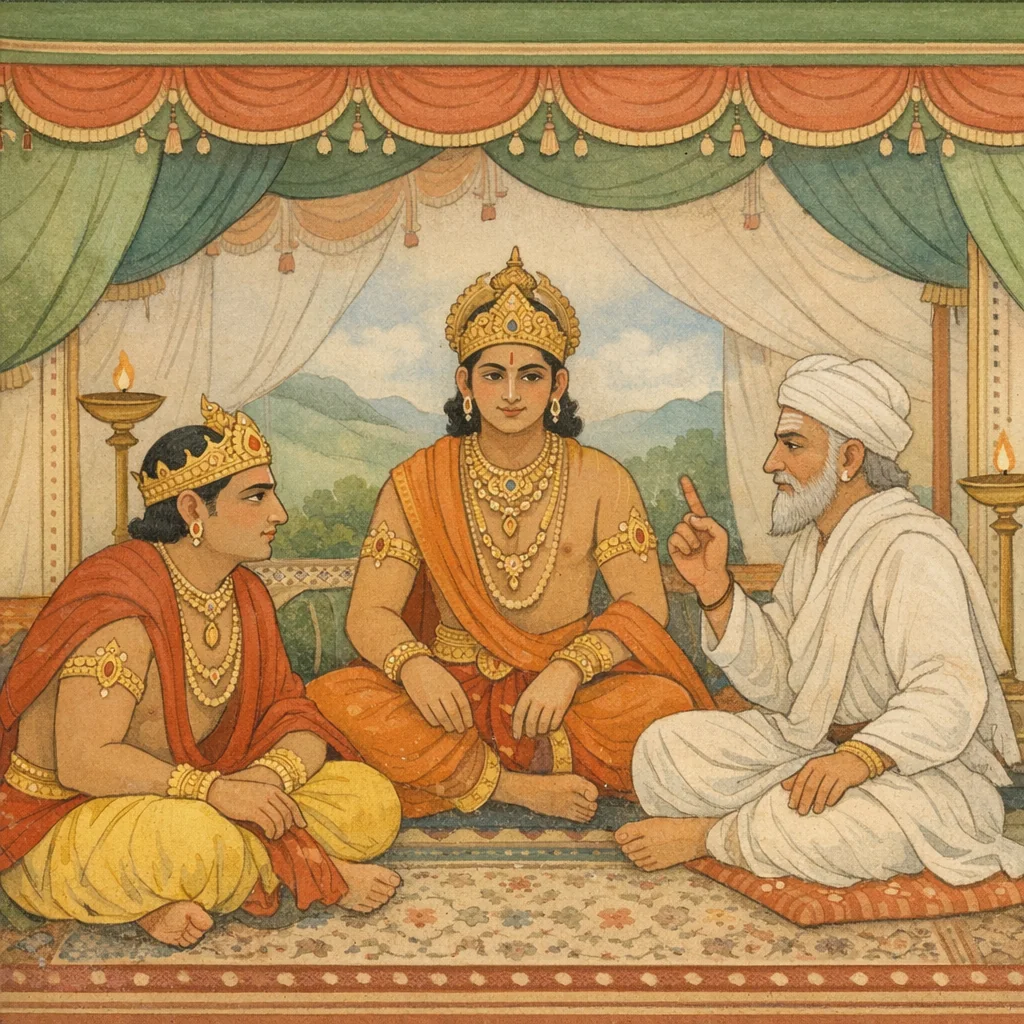
Adhyaya 160
दुर्योधन–द्रोणसंवादः (Arjuna-vīrya-prasaṃśā and renewed battle formation)
Upa-parva: Droṇa–Duryodhana Saṃvāda (Arjuna-vīrya-prasaṃśā and Kṣātra-pratijñā episode)
Saṃjaya reports that Duryodhana, provoked by impatience and rivalry, confronts Droṇa: he argues that it is strategically unacceptable to allow the fatigued Pāṇḍavas respite and implies that Droṇa’s protection enables their recovery. He flatters Droṇa’s supremacy in divine weaponry (including brahmāstra-class astras) and questions why such power is not used to secure a decisive advantage. Droṇa, stirred yet controlled, replies that despite age he will exert full strength and will act in accordance with Duryodhana’s instruction, even if the task appears ignoble to a victory-seeker; he further vows intensified action against the Pañcālas. However, Droṇa then redirects the discussion to a sober evaluation of Arjuna: he states that no ordinary beings can easily withstand the enraged Savyasācin and cites Arjuna’s earlier victories over formidable non-human and elite opponents, using these precedents to caution against simplistic plans to “finish” Arjuna. Duryodhana’s camp voices renewed intent—naming allies such as Karṇa, Duḥśāsana, and Śakuni—yet Droṇa dismisses overconfidence as delusion and urges direct encounter with Arjuna as the true test of kṣātra resolve. The chapter closes with Droṇa withdrawing to reposition forces; the army is divided and organized anew, and battle recommences in an intensified phase.
Chapter Arc: संजय धृतराष्ट्र को बताता है कि रणभूमि की घोर घड़ी में दुर्योधन कर्ण से आश्रय और आश्वासन माँगता है—‘अब वही समय आया है, मित्रों के मित्र! कर्ण, समर में हमारे महारथियों की रक्षा करो।’ → दुर्योधन पाण्डव-पक्ष की घेराबंदी और उनके क्रोध का चित्र खींचता है—पाञ्चाल, मत्स्य, कैकेय और पाण्डव महारथी चारों ओर से सर्पों-से फुफकारते हुए दबाव बना रहे हैं। वह कर्ण को उकसाता है कि यदि अर्जुन मारा गया तो उसके भाई वश में आ जाएँगे या वन को चले जाएँगे। कर्ण प्रतिज्ञा-भरे गर्व से कहता है कि उसके जीवित रहते दुर्योधन शोक न करे; वह समस्त पाण्डवों को जीत लेगा। इसी बीच कृपाचार्य कर्ण के दावे पर कठोर आपत्ति करते हैं—अर्जुन को अकेले भी न जीत पाने वाले का कृष्ण सहित सबको जीतने का उत्साह खोखला है—और पाण्डवों के गुण, उनके सहायक-सम्बन्धियों की वीरता तथा कृष्ण की उपस्थिति का भयावह सत्य सामने रखते हैं। → कृपाचार्य का तीखा उपदेश और कर्ण का प्रत्युत्तर टकराते हैं: कृप कर्ण की क्षमता पर प्रश्न उठाकर पाण्डवों की शक्ति का यथार्थ उद्घाटित करते हैं, जबकि कर्ण इसे अपमान मानकर कृप को ही ‘दुर्मति’ कहता है और आरोप लगाता है कि वे कौरव-सेना को भयभीत करने हेतु पाण्डवों के गुण गा रहे हैं। गुरु-शिष्य/वृद्ध-युवा की मर्यादा टूटती-सी दिखती है और सभा-सा वातावरण रण-नीति से अधिक अहं-संघर्ष बन जाता है। → विवाद का निष्कर्ष किसी स्पष्ट समझौते में नहीं, बल्कि दो ध्रुवों की स्थापना में होता है—कृप का यथार्थवादी, सावधान करने वाला दृष्टिकोण और कर्ण का प्रतिज्ञा-प्रधान, अपमान-संवेदनशील आत्मविश्वास। दुर्योधन को क्षणिक आश्वासन तो मिलता है, पर भीतर-भीतर कौरव-पक्ष की रणनीति पर दरार और नेतृत्व-संकट का संकेत गहरा हो जाता है। → कर्ण के अहं और कृप की चेतावनी के बीच प्रश्न लटकता है—क्या कर्ण सचमुच अर्जुन/पाण्डवों के विरुद्ध निर्णायक पराक्रम दिखाएगा, या यह वाक्-युद्ध कौरवों की आगामी पराजय का पूर्वलक्षण बनेगा?
Shlokas
Verse 1
ऑपन-माज बछ। अफि्-"ऋण अष्टपञ्चाशदाधिकशततमो& ध्याय: दुर्योधन और कर्णकी बातचीत, कृपाचार्यद्वारा कर्णको फटकारना तथा कर्णद्वारा कृपाचार्यका अपमान संजय उवाच उदीर्यमाणं तद् दृष्टवा पाण्डवानां महद् बलम् | अविषह्ां च मन्वान: कर्ण दुर्योधनो5ब्रवीत्,संजय कहते हैं--राजन्! पाण्डवोंकी उस विशाल सेनाका जोर बढ़ते देख उसे असहा मानकर दुर्योधनने कर्णसे कहा--
Sañjaya said: O King, seeing the great might of the Pāṇḍavas rising in force, Duryodhana—judging it to be unbearable to withstand—addressed Karṇa.
Verse 2
अयं स काल: सम्प्राप्तो मित्राणां मित्रवत्सल । त्रायस्व समरे कर्ण सर्वान् योधान् महारथान्
Sañjaya said: “That decisive moment has now arrived, O you who are tenderly devoted to your friends. In this battle, Karṇa, protect all our warriors—those great chariot-fighters.”
Verse 3
पज्चालैर्मत्स्यकैकेयै: पाण्डवैश्व महारथै: । वृतान् समन्तात् संक्ुद्धै्नि:श्वसद्धिरिवोरगै:
Sañjaya said: They were hemmed in on every side by the Pañcālas, the Matsyas, the Kaikeyas, and the Pāṇḍavas—mighty chariot-warriors—who, inflamed with wrath, seemed like serpents hissing as they closed in.
Verse 4
“मित्रवत्सल कर्ण! यही मित्रोंके कर्तव्यपालनका उपयुक्त अवसर आया है। क्रोधमें भरे हुए पांचाल, मत्स्य, केकय तथा पाण्डव महारथी फुफकारते हुए सर्पोके समान भयंकर हो उठे हैं। उनके द्वारा चारों ओरसे घिरे हुए मेरे समस्त महारथी योद्धाओंकी आज तुम समरांगणमें रक्षा करो ।। एते नदन्ति संहृष्टा: पाण्डवा जितकाशिन: । शक्रोपमाश्न बहव: पज्चालानां रथव्रजा:,“देखो, ये विजयसे सुशोभित होनेवाले पाण्डव तथा इन्द्रके समान पराक्रमी बहुसंख्यक पांचाल महारथी कैसे हर्षोत्फुल्ल होकर सिंहनाद कर रहे हैं!
Sañjaya said: “O Karna, devoted to your friends—this is the fitting moment to fulfill a friend’s duty. The Panchalas, Matsyas, Kekayas, and the Pandava great chariot-warriors, swollen with wrath, have become terrifying like hissing serpents. Today, in the battlefield, protect all my great chariot-fighters who are surrounded on every side by them. Look—these Pandavas, radiant with the promise of victory, and the many Panchala chariot-divisions, mighty like Indra, are roaring with exhilaration.”
Verse 5
कर्ण उवाच परित्रातुमिह प्राप्तो यदि पार्थ पुरंदर: । तमप्याशु पराजित्य ततो हन्तास्मि पाण्डवम्,कर्णने कहा--राजन्! यदि साक्षात् इन्द्र यहाँ कुन्तीकुमार अर्जुनकी रक्षा करनेके लिये आ गये हों तो उन्हें भी शीघ्र ही पराजित करके मैं पाण्डुपुत्र अर्जुनको अवश्य मार डालूँगा
Karna said: “O King, if Purandara (Indra) himself has come here to protect Partha (Arjuna), then I shall swiftly defeat even him; and thereafter I will surely slay the Pandava (Arjuna).”
Verse 6
सत्य॑ ते प्रतिजानामि समाश्चसिहि भारत । हन्तास्मि पाण्डुतनयान् पज्चालांश्व समागतान्,भरतनन्दन! तुम धैर्य धारण करो। मैं तुमसे सच्ची प्रतिज्ञा करके कहता हूँ कि युद्धस्थलमें आये हुए पाण्डवों तथा पांचालोंको निश्चय ही मारूँगा
Karna said: “I make you a true vow—be calm, O Bharata. I shall surely slay the sons of Pandu and the assembled Panchalas on the battlefield, O delight of the Bharatas.”
Verse 7
जयं ते प्रतिदास्थामि वासवस्थेव पावकि: । प्रियं तव मया कार्यमिति जीवामि पार्थिव,जैसे अग्निकुमार कार्तिकेयने तारकासुरका विनाश करके इन्द्रको विजय दिलायी थी, उसी प्रकार मैं आज तुम्हें विजय प्रदान करूँगा। भूपाल! मुझे तुम्हारा प्रिय करना है, इसीलिये जीवन धारण करता हूँ
Karna said: “As Agnikumāra Kārttikeya destroyed Tārakāsura and brought victory to Vāsava (Indra), so too shall I grant you victory today. O king, I sustain my life in order to do what is dear to you.”
Verse 8
सर्वेषामेव पार्थानां फाल्गुनो बलवत्तर: | तस्यामोघां विमोक्ष्यामि शक्ति शक्रविनिर्मिताम्,कुन्तीके सभी पुत्रोंमें अर्जुन ही अधिक शक्तिशाली हैं, अतः मैं इन्द्रकी दी हुई अमोघ शक्तिको अर्जुनपर ही छोड़ूँगा
Karna said: “Among all the sons of Pṛthā (Kuntī), Phālguna (Arjuna) is the most powerful. Therefore I shall release against him the unfailing spear, fashioned by Śakra (Indra).”
Verse 9
तस्मिन् हते महेष्वासे भ्रातरस्तस्य मानद । तव वश्या भविष्यन्ति वनं यास्यन्ति वा पुन:,मानद! महाधनुर्धर अर्जुनके मारे जानेपर उनके सभी भाई तुम्हारे वशमें हो जायाँगे अथवा पुनः वनमें चले जायँगे
Karna said: “When that great archer is slain, O giver of honor, his brothers will come under your control—or else they will once again depart to the forest.”
Verse 10
मयि जीवति कौरव्य विषादं मा कृथा: क्वचित् | अहं जेष्यामि समरे सहितान् सर्वपाण्डवान्,कुरुनन्दन! तुम मेरे जीते-जी कभी विषाद न करो। मैं समरभूमिमें संगठित होकर आये हुए समस्त पाण्डवोंको जीत लूँगा
Karna said: “So long as I live, O Kaurava, do not fall into despair at any time. On the battlefield I shall defeat all the Pāṇḍavas, even when they stand united—O joy of the Kurus.”
Verse 11
पंचालान् केकयांश्वैव वृष्णीश्वापि समागतान् | बाणौचै: शकलीकृत्य तव दास्यामि मेदिनीम्,मैं अपने बाणसमूहोंद्वारा रणभूमिमें पधारे हुए पांचालों, केकयों और वृष्णिवंशियोंके भी टुकड़े-टुकड़े करके यह सारी पृथ्वी तुम्हें दे ूँगा
Karna said: “I will shatter the assembled Pañcālas, Kekayas, and even the Vṛṣṇis into pieces with volleys of my arrows, and then I will hand this earth over to you.”
Verse 12
संजय उवाच एवं ब्रुवाणं कर्ण तु कृप: शारद्वतोड<ब्रवीत् स्मयन्निव महाबाहु: सूतपुत्रमिदं वच:,संजय कहते हैं--राजन्! इस तरहकी बातें करते हुए सूतपुत्र कर्णसे शरद्वानके पुत्र महाबाहु कृपाचार्यने मुसकराते हुए-से यह बात कही--
Sanjaya said: “O King, while Karna, the charioteer’s son, was speaking in this manner, the mighty-armed Kripa—son of Sharadvat—addressed him with words that seemed to be spoken with a faint smile.”
Verse 13
शोभनं शोभनं कर्ण सनाथ: कुरुपुड्गभव: । त्वया नाथेन राधेय वचसा यदि सिध्यति,“कर्ण! बहुत अच्छा, बहुत अच्छा! राधापुत्र! यदि बात बनानेसे ही कार्य सिद्ध हो जाय, तब तो तुम-जैसे सहायकको पाकर कुरुराज दुर्योधन सनाथ हो गये
Sañjaya said: “Excellent—excellent, O Karṇa! With you as his protector, the bull among the Kurus (Duryodhana) is indeed well-supported. If a task could be accomplished merely by words and clever talk, then having a helper like you would make him truly secure.”
Verse 14
बहुश: कत्थसे कर्ण कौरवस्य समीपतः । नतुते विक्रम: कश्चिद् दृश्यते फलमेव वा,“कर्ण! तुम कुरुनन्दन सुयोधनके समीप तो बहुत बढ़कर बातें किया करते हो; किंतु न तो कभी कोई तुम्हारा पराक्रम देखा जाता है और न उसका कोई फल ही सामने आता है
Sañjaya said: “Karna, in the presence of the Kuru prince (Duryodhana) you repeatedly boast at length; yet neither is any true feat of yours seen, nor is any tangible result of it brought forth.”
Verse 15
समागम: पाण्डुसुतैर्दृष्टस्ते बहुशो युधि । सर्वत्र निर्जितश्चासि पाण्डवै: सूतनन्दन,'सूतनन्दन! पाण्डुके पुत्रोंसे युद्धस्थलमें तुम्हारी अनेकों बार मुठभेड़ हुई है; पंरतु सर्वत्र पाण्डवोंसे तुम्हीं परास्त हुए हो
Sañjaya said: “O son of a charioteer, you have met the sons of Pāṇḍu many times on the battlefield; yet in every encounter you have been overcome by the Pāṇḍavas.”
Verse 16
ह्वियमाणे तदा कर्ण गन्धर्वर्धृतराष्ट्रजे । तदायुध्यन्त सैन्यानि त्वमेको5ग्रेडपलायिथा:,“कर्ण! याद है कि नहीं, जब गन्धर्व दुर्योधनको पकड़कर लिये जा रहे थे, उस समय सारी सेना तो युद्ध कर रही थी और अकेले तुम ही सबसे पहले पलायन कर गये थे
Sanjaya said: “Karna, do you remember that time when Duryodhana, the son of Dhritarashtra, was being carried off by the Gandharvas? While the rest of the army was engaged in fighting, you alone were the first to flee from the front.”
Verse 17
विराटनगरे चापि समेता: सर्वकौरवा: । पार्थेन निर्जिता युद्धे त्वं च कर्ण सहानुज:,“कर्ण! विराट नगरमें भी सम्पूर्ण कौरव एकत्र हुए थे; किंतु अर्जुनने अकेले ही वहाँ सबको हरा दिया था। कर्ण! तुम भी अपने भाइयोंके साथ परास्त हुए थे
Sañjaya said: “Even in the city of Virāṭa, all the Kauravas had assembled together; yet in battle Pārtha (Arjuna) defeated them. O Karṇa, you too were overcome there, along with your younger brothers.”
Verse 18
एकस्याप्यसमर्थस्त्वं फाल्गुनस्य रणाजिरे । कथमुत्सहसे जेतुं सकृष्णान् सर्वपाण्डवान्
Sañjaya said: “You are not capable of facing even Arjuna alone on the battlefield. How, then, do you dare to hope to conquer all the Pāṇḍavas—especially with Kṛṣṇa at their side?”
Verse 19
“समरांगणमें अकेले अर्जुनका सामना करनेकी भी तुममें शक्ति नहीं है; फिर श्रीकृष्णसहित सम्पूर्ण पाण्डवोंको जीत लेनेका उत्साह कैसे दिखाते हो? ।। अब्रुवन् कर्ण युध्यस्व कत्थसे बहु सूनज । अनुकक््त्वा विक्रमेद् यस्तु तद् वै सत्पुरुषब्रतम्,'सूतपुत्र कर्ण! चुपचाप युद्ध करो। तुम बातें बहुत बनाते हो। जो बिना कुछ कहे ही पराक्रम दिखाये, वही वीर है और वैसा करना ही सत्पुरुषोंका व्रत है
Sanjaya said: “On the battlefield you do not even have the strength to face Arjuna alone; how then do you display such confidence about conquering all the Pandavas together with Krishna? They said, ‘Karna, fight—son of a charioteer, you boast too much. The one who shows his valor without speaking is the true hero; such restraint is the vow of the noble.’”
Verse 20
गर्जित्वा सूतपुत्र त्वं शारदा भ्रमिवाफलम् | निष्फलो दृश्यसे कर्ण तच्च राजा न बुध्यते
Sañjaya said: “Though you roar loudly, O son of a charioteer, you appear like an autumnal cloud that wanders yet yields no rain. O Karṇa, you seem fruitless in action—and the king does not understand this.”
Verse 21
'सूतपुत्र कर्ण! तुम शरद्-ऋतुके निष्फल बादलोंके समान गर्जना करके भी निष्फल ही दिखायी देते हो; किंतु राजा दुर्योधन इस बातको नहीं समझ रहे हैं ।। तावद् गर्जस्व राधेय यावत् पार्थ न पश्यसि | आरात् परर्थ हि ते दृष्टवा दुर्लभं गर्जितं पुन:
Sanjaya said: “O Karna, son of a charioteer! Like barren clouds in the autumn season, you thunder loudly yet appear fruitless in deed; but King Duryodhana does not understand this. Roar on, O Radheya, so long as you do not behold Partha; for once you have seen him, your thunder will be hard to find again.”
Verse 22
'राधानन्दन! जबतक तुम अर्जुनको नहीं देखते हो, तभीतक गर्जना कर लो। कुन्तीकुमार अर्जुनको समीप देख लेनेपर फिर यह गर्जना तुम्हारे लिये दुर्लभ हो जायगी ।। त्वमनासाद्य तान् बाणान् फाल्गुनस्य विगर्जसि । पार्थसायकविद्धस्य दुर्लभं गर्जितं तव,“जबतक अर्जुनके वे बाण तुम्हारे पड़ रहे हैं, तभीतक तुम जोर-जोरसे गरज रहे हो। अर्जुनके बाणोंसे घायल होनेपर तुम्हारे लिये यह गर्जन-तर्जन दुर्लभ हो जायगा
Sañjaya said: “O son of Rādhā, you roar only because Arjuna’s arrows have not yet reached you. Once you are struck by Pārtha’s shafts, such roaring will become hard for you to muster.”
Verse 23
बाहुभि: क्षत्रिया: शूरा वाम्भि: शूरा द्विजातय: । धनुषा फाल्गुन: शूर: कर्ण: शूरो मनोरथै:
Sañjaya said: “Kṣatriyas show their heroism by the strength of their arms; the twice-born (dvija) display their prowess through speech. Phālguna (Arjuna) is heroic with the bow, while Karṇa is heroic through the force of his ambitions and designs.”
Verse 24
तोषितो येन रुद्रोडपि कः पार्थ प्रतिघातयेत् । क्षत्रिय अपनी भुजाओंसे शौर्यका परिचय देते हैं। ब्राह्मण वाणीद्वारा प्रवचन करनेमें वीर होते हैं। अर्जुन धनुष चलानेमें शूर हैं; किंतु कर्ण केवल मनसूबे बाँधनेमें वीर है। जिन्होंने अपने पराक्रमसे भगवान् शंकरको भी संतुष्ट किया है, उन अर्जुनको कौन मार सकता है?” ।। एवं संरुषितस्तेन तदा शारद्वतेन ह
Sañjaya said: “O Pārtha, who could possibly strike down the one by whom even Rudra (Śiva) has been pleased? In the warrior order, valor is shown through the strength of one’s arms; among brāhmaṇas, heroism lies in fearless speech and instruction. Arjuna is truly heroic in the use of the bow, whereas Karṇa is brave only in making grand intentions. Who can kill Arjuna, who has satisfied Lord Śaṅkara by his own prowess?”
Verse 25
शूरा गर्जन्ति सततं प्रावषीव बलाहका:
Sañjaya said: The heroes kept roaring again and again, like monsoon clouds in the rainy season.
Verse 26
दोषमत्र न पश्यामि शूराणां रणमूर्थनि
Sañjaya said: “Here I see no fault in the warriors, standing at the very forefront of battle.”
Verse 27
यं भारं पुरुषों वोढुं मनसा हि व्यवस्यति
Sañjaya said: “Whatever burden a man resolves in his mind to carry…”
Verse 28
दैवमस्य ध्रुवं तत्र साहाय्यायोपपद्यते | “पुरुष अपने मनसे जिस भारको ढोनेका निश्चय करता है, उसमें दैव अवश्य ही उसकी सहायता करता है ।। व्यवसायद्वितीयो5हं मनसा भारमुद्रहन्,“मैं मनसे जिस कार्यईभारका वहन कर रहा हूँ, उसकी सिद्धिमें दृढ़ निश्चय ही मेरा सहायक है। विप्रवर! मैं कृष्ण और सात्यकिसहित समस्त पाण्डवोंको युद्धमें मारनेका निश्चय करके यदि गरज रहा हूँ तो उसमें आपका क्या नष्ट हुआ जा रहा है?
Sañjaya said: In such an undertaking, destiny—the divine factor—surely and steadfastly comes forward as an aid. For when a man resolves in his mind to bear a grievous burden, providence upholds that firm resolve—an idea invoked here to justify unwavering determination amid the brutal ethics of war.
Verse 29
हत्वा पाण्ड्सुतानाजी सकृष्णान् सहसात्वतान् | गर्जामि यद्य॒हं विप्र तव कि तत्र नश्यति,“मैं मनसे जिस कार्यईभारका वहन कर रहा हूँ, उसकी सिद्धिमें दृढ़ निश्चय ही मेरा सहायक है। विप्रवर! मैं कृष्ण और सात्यकिसहित समस्त पाण्डवोंको युद्धमें मारनेका निश्चय करके यदि गरज रहा हूँ तो उसमें आपका क्या नष्ट हुआ जा रहा है?
Sañjaya said: “Having resolved to slay the sons of Pāṇḍu in battle—along with Kṛṣṇa and the Sātvatas—if I roar out this intent, O brāhmaṇa, what loss is there to you in that?”
Verse 30
वृथा शूरा न गर्जन्ति शारदा इव तोयदा: । सामर्थ्यमात्मनो ज्ञात्वा ततो गर्जन्ति पण्डिता:,'शरद-ऋतुके बादलोंके समान शूरवीर व्यर्थ नहीं गरजते हैं। विद्वान् पुरुष पहले अपनी सामर्थ्यको समझ लेते हैं, उसके बाद गर्जना करते हैं
Sañjaya said: “True heroes do not roar in vain, like rain-clouds in the autumn season. The wise first discern their own strength and capacity; only then do they raise their voice.”
Verse 31
सो5हमद्य रणे यत्तौ सहितौ कृष्णपाण्डवौ । उत्सहे मनसा जेतुं ततो गर्जामि गौतम,“गौतम! आज मैं रणभूमिमें विजयके लिये साथ-साथ प्रयत्न करनेवाले श्रीकृष्ण और अर्जुनको जीत लेनेके लिये मन-ही-मन उत्साह रखता हूँ। इसीलिये गर्जना करता हूँ
Sañjaya said: “Today, on the battlefield, seeing Kṛṣṇa and the Pāṇḍava (Arjuna) striving together for victory, I rouse within my mind the confidence to overcome them; therefore, O Gautama, I roar aloud.”
Verse 32
पश्य त्वं गर्जितस्यास्य फल मे विप्र सानुगान् । हत्वा पाण्ड्सुतानाजी सहकृष्णान् ससात्वतान्
Sañjaya said: “O brāhmaṇa, look now—together with your followers—upon the outcome of this man’s boastful roaring. Having slain the sons of Pāṇḍu in battle, along with Kṛṣṇa and the Sātvatas, he claims to display the ‘fruit’ of his threats.”
Verse 33
दुर्योधनाय दास्यामि पृथिवीं हतकण्टकाम् । “ब्रह्म! मेरी इस गर्जनाका फल देख लेना। मैं युद्धमें श्रीकृष्ण, सात्यकि तथा अनुगामियोंसहित पाण्डवोंको मारकर इस भूमण्डलका निष्कण्टक राज्य दुर्योधनको दे दूँगा' ।। कृप उवाच मनोरथप्रलापा मे न ग्राह्मास्तव सूतज,कृपाचार्य बोले--सूतपुत्र! तुम्हारे ये मनसूबे बाँधनेके निरर्थक प्रलाप मेरे लिये विश्वासके योग्य नहीं हैं। कर्ण! तुम सदा ही श्रीकृष्ण, अर्जुन तथा पाण्डुपुत्र युधिष्ठिरपर आक्षेप किया करते हो; परंतु विजय उसी पक्षकी होगी, जहाँ युद्धविशारद श्रीकृष्ण और अर्जुन विद्यमान हैं
Kripa said: “O son of a charioteer, your boastful outpourings and imagined schemes are not credible to me. Karna, you constantly cast aspersions on Krishna, on Arjuna, and on Yudhishthira; yet victory in battle will belong to that very side where the war-wise Krishna and Arjuna stand.”
Verse 34
सदा क्षिपसि वै कृष्णौ धर्मराजं च पाण्डवम् | ध्रुवस्तत्र जय: कर्ण यत्र युद्धविशारदौ,कृपाचार्य बोले--सूतपुत्र! तुम्हारे ये मनसूबे बाँधनेके निरर्थक प्रलाप मेरे लिये विश्वासके योग्य नहीं हैं। कर्ण! तुम सदा ही श्रीकृष्ण, अर्जुन तथा पाण्डुपुत्र युधिष्ठिरपर आक्षेप किया करते हो; परंतु विजय उसी पक्षकी होगी, जहाँ युद्धविशारद श्रीकृष्ण और अर्जुन विद्यमान हैं
Kṛpa said: “Karna, you continually cast reproaches at Kṛṣṇa and at the Pāṇḍava king of dharma, Yudhiṣṭhira. But victory is certain on that side where the two masters of war—Kṛṣṇa and Arjuna—are present.”
Verse 35
देवगन्धर्वयक्षाणां मनुष्योरगरक्षसाम् । दंशितानामपि रणे अजेयौ कृष्णपाण्डवौ,यदि देवता, गन्धर्व, यक्ष, मनुष्य, सर्प और राक्षस भी कवच बाँधकर युद्धके लिये आ जायाँ तो रणभूमिमें श्रीकृष्ण और अर्जुनको वे भी जीत नहीं सकते
Kṛpa said: “Even if the gods, Gandharvas, Yakṣas, human warriors, serpents, and Rākṣasas were to come to battle fully armed and armored, still on the battlefield Kṛṣṇa and the Pāṇḍava (Arjuna) would remain unconquerable.”
Verse 36
ब्रह्मण्य: सत्यवाग दान्तो गुरुदैवतपूजक: । नित्यं धर्मरतश्नैव कृतास्त्रश्न विशेषत:
Kripa said: “He is devoted to Brahmins and sacred duty, truthful in speech, self-controlled, and one who reveres his teachers as divine. Ever delighting in dharma, and—above all—fully accomplished in the use of weapons.”
Verse 37
भ्रातरश्नास्य बलिन: सर्वस्त्रिषु कृतश्रमा:
Kṛpa said: “His brothers too are mighty, and they are well-trained—seasoned through disciplined exertion in every weapon.”
Verse 38
सम्बन्धिननश्रेन्द्रवीर्या: स्वनुरक्ता: प्रहारिण:,उनके सम्बन्धी भी इन्द्रके समान पराक्रमी, उनमें अनुराग रखनेवाले और प्रहार करनेमें कुशल हैं, जिनके नाम इस प्रकार हैं--धृष्टद्युम्म, शिखण्डी, दुर्मुखपुत्र जनमेजय, चन्द्रसेन, रुद्रसेन, कीर्तिधर्मा, ध्रुव, धर, वसुचन्द्र, दामचन्द्र, सिंहचन्द्र, सुतेजन, द्रुपदके पुत्रगण तथा महान् अस्त्रवेत्ता द्रपद
Kṛpa said: “Their kinsmen too are warriors of Indra-like prowess—devoted to their own side and skilled in striking blows. Their names are as follows: Dhṛṣṭadyumna, Śikhaṇḍī, Janamejaya the son of Durmukha, Candrasena, Rudasena, Kīrtidharmā, Dhruva, Dhara, Vasucandra, Dāmacandra, Siṃhacandra, Sutejana, the sons of Drupada, and Drupada himself, a great knower of weapons. Thus, the enemy host is strengthened not only by numbers but by loyal, capable kinship-bonds that intensify resolve in war.”
Verse 39
धृष्टद्युम्म: शिखण्डी च दौर्मुखिर्जनमेजय: । चन्द्रसेनो रुद्रसेन: कीर्तिधर्मा ध्रुवो धर:,उनके सम्बन्धी भी इन्द्रके समान पराक्रमी, उनमें अनुराग रखनेवाले और प्रहार करनेमें कुशल हैं, जिनके नाम इस प्रकार हैं--धृष्टद्युम्म, शिखण्डी, दुर्मुखपुत्र जनमेजय, चन्द्रसेन, रुद्रसेन, कीर्तिधर्मा, ध्रुव, धर, वसुचन्द्र, दामचन्द्र, सिंहचन्द्र, सुतेजन, द्रुपदके पुत्रगण तथा महान् अस्त्रवेत्ता द्रपद
Kṛpa said: “Dhṛṣṭadyumna and Śikhaṇḍin, and Janamejaya the son of Durmukha; Candrasena and Rudrasena; Kīrtidharmā, Dhruva, and Dhara—these too are Indra-like in valor, devoted to their own side, and skilled in striking blows.”
Verse 40
वसुचन्द्रो दामचन्द्र: सिंहचन्द्र: सुतेजन: । द्रुपदस्य तथा पुत्रा द्रुपदश्च महास्त्रवित्,उनके सम्बन्धी भी इन्द्रके समान पराक्रमी, उनमें अनुराग रखनेवाले और प्रहार करनेमें कुशल हैं, जिनके नाम इस प्रकार हैं--धृष्टद्युम्म, शिखण्डी, दुर्मुखपुत्र जनमेजय, चन्द्रसेन, रुद्रसेन, कीर्तिधर्मा, ध्रुव, धर, वसुचन्द्र, दामचन्द्र, सिंहचन्द्र, सुतेजन, द्रुपदके पुत्रगण तथा महान् अस्त्रवेत्ता द्रपद
Kṛpa said: “Vasucandra, Dāmacandra, Siṃhacandra, and Sutejana—these too are among Drupada’s sons; and Drupada himself is a great master of weapons.”
Verse 41
येषामर्थाय संयत्तों मत्स्यराज: सहानुज: । शतानीक: सूर्यदत्त: श्रुतानीक: श्रुतध्वज:
Kripa said: “For whose sake the king of the Matsyas, together with his younger brothers, has taken up arms—namely Śatānīka, Sūryadatta, Śrutānīka, and Śrutadhvaja.”
Verse 42
बलानीको जयानीको जयाश्वो रथवाहन: । चन्द्रोदय: समरथो विराटभ्रातर: शुभा:
Kripa said: “Balānīka, Jayānīka, Jayāśva, Rathavāhana, Candrodaya, and Samaratha—these auspicious brothers of Virāṭa.”
Verse 43
यमौ च द्रौपदेयाश्न राक्षसश्र॒ घटोत्कच: । येषामर्थाय युध्यन्ते न तेषां विद्यते क्षय:
Kṛpa said: “The twin sons (Nakula and Sahadeva), the sons of Draupadī, and the rākṣasa Ghaṭotkaca—so long as warriors fight for the sake of such men, their cause does not perish. Their strength and the righteousness of their allies ensure that the struggle continues without being extinguished.”
Verse 44
जिनके लिये शतानीक, सूर्यदत्त, श्रुतानीक, श्रुतध्वज, बलानीक, जयानीक, जयाश्व, रथवाहन, चन्द्रोदय तथा समरथ--ये विराटके श्रेष्ठ भाई और इन भाइयोंसहित मत्स्यराज विराट युद्ध करनेको तैयार हैं, नकुल, सहदेव, द्रौपदीके पुत्र तथा राक्षस घटोत्कच--ये वीर जिनके लिये युद्ध कर रहे हैं, उन पाण्डवोंकी कभी कोई क्षति नहीं हो सकती है || ४१-- ४३ ।। एते चान्ये च बहवो गुणा: पाण्डुसुतस्य वै । कामं॑ खलु जगत्सर्व॑ सदेवासुरमानुषम्
Kṛpa said: “For their sake Śatānīka, Sūryadatta, Śrutānīka, Śrutadhvaja, Balānīka, Jayānīka, Jayāśva, Rathavāhana, Candrodhaya, and Samaratha—the foremost brothers of Virāṭa—and the Matsya king Virāṭa with those brothers stand ready to fight. For their sake Nakula, Sahadeva, the sons of Draupadī, and the rākṣasa Ghaṭotkaca are battling; therefore the Pāṇḍavas can never be brought to harm. These and many other excellences indeed belong to the son of Pāṇḍu. Truly, even if the entire world—together with gods, Asuras, and human beings—were to act according to its desire (against him), the Pāṇḍavas cannot be brought to ruin.”
Verse 45
सयक्षराक्षसगणं सभूतभुजगद्धिपम् । निःशेषमस्त्रवीर्येण कुर्वाते भीमफाल्गुनौ
Kṛpa said: “Along with the hosts of Yakṣas and Rākṣasas, together with spirits and the lord of serpents, Bhīma and Phālguna (Arjuna) are reducing them all to nothing by the sheer might of their weapons.”
Verse 46
पाणए्डुपुत्र युधिष्ठिरके ये तथा और भी बहुत-से गुण हैं। भीमसेन और अर्जुन यदि चाहें तो अपने अस्त्रबलसे देवता, असुर, मनुष्य, यक्ष, राक्षस, भूत, नाग और हाथियोंसहित इस सम्पूर्ण जगत्का सर्वथा विनाश कर सकते हैं ।। युधिष्ठिरश्न पृथिवीं निर्दहेद् घोरचक्षुषा । अप्रमेयबल: शौरियेंषामर्थे च दंशित:
Kripa said: “In the son of Pandu, Yudhiṣṭhira, there are these and many other virtues. And if Bhīmasena and Arjuna so desired, then by the sheer force of their weapons they could utterly destroy this entire world—gods, demons, humans, yakṣas, rākṣasas, spirits, nāgas, even elephants included. Yudhiṣṭhira himself could burn the earth with a dreadful gaze; his strength is immeasurable, and he is resolute in valor and in purpose.”
Verse 47
महानपनयस्त्वेष नित्यं हि तव सूतज
Kripa said: “O son of a charioteer, this is a grave disgrace—indeed, it is ever present in your conduct.”
Verse 48
संजय उवाच एवमुक्तस्तु राधेय: प्रहसन् भरतर्षभ
Sañjaya said: Thus addressed, Rādheya (Karna) laughed, O bull among the Bharatas—showing a scornful confidence as the war’s moral strain sharpened and words became weapons beside arms.
Verse 49
अब्रवीच्च तदा कर्णों गुरुं शारद्वतं कृपम् संजय कहते हैं--भरतश्रेष्ठ) उनके ऐसा कहनेपर राधापुत्र कर्ण ठठाकर हँस पड़ा और शरद्वानके पुत्र गुरु कृपाचार्यसे उस समय यों बोला-- || ४८ ई ।। सत्यमुक्त त्वया ब्रह्मन् पाण्डवान् प्रति यद् वच:
Sañjaya said: Then Karṇa addressed his teacher, Kṛpa Śāradvata: “O brāhmaṇa, what you have spoken concerning the Pāṇḍavas is indeed true.” Amid war-counsel he acknowledged the truth, yet remained bound to his chosen allegiance and the hard ethics of battlefield duty.
Verse 50
अजय्याश्षु रणे पार्था देवैरपि सवासवै:
Sañjaya said: “In battle, the sons of Pṛthā (the Pāṇḍavas) are swiftly unconquerable—even by the gods, Indra included.”
Verse 51
सदैत्ययक्षगन्धर्वै: पिशाचोरगराक्षसै: । “यह भी ठीक है कि कुन्तीके पुत्रोंको रणभूमिमें इन्द्र आदि देवता, दैत्य, यक्ष, गन्धर्व, पिशाच, नाग और राक्षस भी जीत नहीं सकते || ५० है |। तथापि पार्थउ्जेष्यामि शक््त्या वासवदत्तया,“तथापि मैं इन्द्रकी दी हुई शक्तिसे कुन्तीके पुत्रोंको जीत लूँगा। ब्रह्मन! मुझे इन्द्रने यह अमोघ शक्ति दे रखी है; इसके द्वारा मैं सव्यसाची अर्जुनको युद्धमें अवश्य मार डालूँगा
Sañjaya said: “Even the sons of Kuntī cannot be conquered on the battlefield by the gods led by Indra, nor by the Daityas, Yakṣas, Gandharvas, Piśācas, Nāgas, or Rākṣasas. Yet I shall overcome the sons of Pṛthā by the śakti weapon-power granted by Vāsava (Indra). O brāhmaṇa, Indra has given me this unfailing śakti; by it I will surely strike down Savyasācin (Arjuna), the ambidextrous archer, in battle.”
Verse 52
मम ह्वमोघा दत्तेयं शक्ति: शक्रेण वै द्विज । एतया निहनिष्यामि सव्यसाचिनमाहवे,“तथापि मैं इन्द्रकी दी हुई शक्तिसे कुन्तीके पुत्रोंको जीत लूँगा। ब्रह्मन! मुझे इन्द्रने यह अमोघ शक्ति दे रखी है; इसके द्वारा मैं सव्यसाची अर्जुनको युद्धमें अवश्य मार डालूँगा
Sañjaya said: “O brāhmaṇa, this unfailing śakti has indeed been granted to me by Śakra (Indra). With it, in battle, I shall strike down Savyasācin (Arjuna).”
Verse 53
हते तु पाण्डवे कृष्णे भ्रातरश्नास्यथ सोदरा: । अनर्जुना न शक्ष्यन्ति महीं भोक्तुं कथठचन,'पाण्डुपुत्र अर्जुनके मारे जानेपर उनके बिना उनके सहोदर भाई किसी तरह इस पृथ्वीका राज्य नहीं भोग सकेंगे
Sañjaya said: “But if Arjuna, the Pāṇḍava, is slain, then his own brothers—born of the same mother—will in no way be able to enjoy or govern the earth without him.” The statement underscores Arjuna’s pivotal role in sustaining the Pāṇḍavas’ political legitimacy and moral confidence amid the war’s crisis.
Verse 54
तेषु नष्टेषु सर्वेषु पृथिवीयं ससागरा । अयत्नात् कौरवेन्द्रस्य वशे स्थास्यति गौतम,“गौतम! उन सबके नष्ट हो जानेपर बिना किसी प्रयत्नके ही यह समुद्रसहित सारी पृथ्वी कौरवराज दुर्योधनके वशमें हो जायगी
Sañjaya said: “Gautama, when all those warriors have been destroyed, this entire earth—together with the encircling ocean—will, without any further effort, come under the control of the Kuru king (Duryodhana.” The line underscores the grim wartime logic that sovereignty is imagined as the automatic fruit of annihilating opposition, raising an implicit ethical tension between political victory and the catastrophic human cost that secures it.
Verse 55
सुनीतैरिह सर्वार्था: सिध्यन्ते नात्र संशय: । एतमर्थमहं ज्ञात्वा ततो ग्जामि गौतम,“गौतम! इस संसारमें सुनीतिपूर्ण प्रयत्नोंसे सारे कार्य सिद्ध होते हैं, इसमें संशय नहीं है। इस बातको समझकर ही मैं गर्जना करता हूँ
Sañjaya said: “Here in this world, all aims are accomplished through well-guided, prudent effort—of this there is no doubt. Understanding this truth, I therefore raise my cry, O Gautama.”
Verse 56
त्वंतुविप्रश्न वृद्धक्ष अशक्तश्नापि संयुगे कृतस्नेहश्न पार्थेषु मोहान्मामवमन्यसे,“तुम तो ब्राह्मण और उसमें भी बूढ़े हो। तुममें युद्ध करनेकी शक्ति है ही नहीं। इसके सिवा, तुम कुन्तीके पुत्रोंपर स्नेह रखते हो; इसलिये मोहवश मेरा अपमान कर रहे हो
Sañjaya said: “But you are a brāhmaṇa, and moreover an old man—indeed you have no strength for battle. And since you bear affection for the sons of Pṛthā, you are, out of delusion, showing contempt for me.”
Verse 57
यद्येवं वक्ष्यससे भूयो ममाप्रियमिह द्विज । ततस्ते खड्गमुद्यम्य जिद्लां छेत्स्यामि दुर्मते,“दुर्बुद्धि ब्राह्मण! यदि यहाँ पुनः इस प्रकार मुझे अप्रिय लगनेवाली बात बोलोगे तो मैं अपनी तलवार उठाकर तुम्हारी जीभ काट लूँगा
Sañjaya said: “If, O brāhmaṇa, you again speak here words that are displeasing to me, then I will raise my sword and cut off your tongue, you wicked-minded one.” The line conveys how anger and wounded pride can drive a person to threaten violence even against a brāhmaṇa, revealing a sharp ethical collapse amid the pressures of war and harsh speech.
Verse 58
यच्चापि पाण्डवान् विप्र स्तोतुमिच्छसि संयुगे । भीषयन् सर्वसैन्यानि कौरवेयाणि दुर्मते
Sañjaya said: “And if, O brāhmaṇa, you still wish to praise the Pāṇḍavas in the midst of battle—while terrifying all the Kaurava forces, O evil-minded one—(then hear what follows).”
Verse 59
दुर्योधनश्च द्रोणश्व॒ शकुनिर्दुर्मुखो जय:
Sañjaya said: “Duryodhana, Droṇa, Śakuni, Durmukha, and Jaya (were there).”
Verse 60
दुःशासनो वृषसेनो मद्रराजस्त्वमेव च | सोमदत्तश्न भूरिश्व॒ तथा द्रौणिविविंशति:
Sañjaya said: “Duḥśāsana, Vṛṣasena, the king of Madra—and you as well—together with Somadatta and Bhūriśravas, and also Drauṇi and Vīviṁśati.”
Verse 61
तिष्ठेयुर्देशिता यत्र सर्वे युद्धविशारदा: । जयेदेतान् नरः को नु शक्रतुल्यबलोडप्यरि:
Sañjaya said: “Where all those warriors, skilled in battle, stand arranged and directed in their positions—who indeed could defeat them, even an enemy whose strength is equal to Indra’s?”
Verse 62
“दुर्योधन, द्रोण, शकुनि, दुर्मुख, जय, दुःशासन, वृषसेन, मद्रराज शल्य, तुम स्वयं, सोमदत, भूरि, अश्वत्थामा और विविंशति--ये युद्धकुशल सम्पूर्ण वीर जहाँ कवच बाँधकर खड़े हो जायाँगे, वहाँ इन्हें कौन मनुष्य जीत सकता है? वह इन्द्रके तुल्य बलवान् शत्रु ही क्यों न हो (इनका कुछ नहीं बिगाड़ सकता) ।। शूराश्च हि कृतास्त्राश्न बलिन: स्वर्गलिप्सव: । धर्मज्ञा युद्धकुशला हन्युर्युद्धे सुरानपि,“जो शूरवीर, अस्त्रोंके ज्ञाता, बलवान्, स्वर्गप्राप्तिकी अभिलाषा रखनेवाले, धर्मज्ञ और युद्धकुशल हैं वे देवताओंको भी युद्धमें मार सकते हैं
Sañjaya said: “Duryodhana, Droṇa, Śakuni, Durmukha, Jaya, Duḥśāsana, Vṛṣasena, Śalya the king of Madra, you yourself, Somadatta, Bhūri, Aśvatthāmā, and Viviṁśati—when all these battle-skilled heroes stand with their armor fastened, what man could defeat them there? Even an enemy as strong as Indra would be unable to harm them. For those who are truly heroic, trained in weapons, powerful, longing for heaven, knowing what is right, and expert in war—such men could, in battle, strike down even the gods.”
Verse 63
एते स्थास्यन्ति संग्रामे पाण्डवानां वधार्थिन: । जयमाकाड्क्षमाणा हि कौरवेयस्य दंशिता:,“ये वीरगण कुरुराज दुर्योधनकी जय चाहते हुए पाण्डवोंके वधकी इच्छासे संग्राममें कवच बाँधकर डट जायाँगे
Sañjaya said: “These warriors will stand firm in battle, intent on the slaughter of the Pāṇḍavas. Longing for victory for the Kaurava prince, they will be fully armed and resolute.”
Verse 64
दैवायत्तमहं मनन््ये जयं सुबलिनामपि | यत्र भीष्मो महाबाहुः शेते शरशताचित:,“मैं तो बड़े-से-बड़े बलवानोंकी भी विजय दैवके ही अधीन मानता हूँ। दैवाधीन होनेके कारण महाबाहु भीष्म आज सैकड़ों बाणोंसे विद्ध होकर रणभूमिमें शयन करते हैं
Sañjaya said: “I regard victory—even for the mightiest—as dependent upon destiny. For behold: Bhīṣma, the great-armed hero, lies on the battlefield, pierced and heaped over with hundreds of arrows. Thus the course of war humbles even the greatest, reminding us that human prowess is bounded by forces beyond mere strength.”
Verse 65
विकर्णश्षित्रसेनश्व॒ बाह्नलीको5थ जयद्रथ: । भूरिश्रवा जयश्वैव जलसंध: सुदक्षिण:,“विकर्ण, चित्रसेन, बाह्नलीक, जयद्रथ, भूरिश्रवा, जय, जलसंध, सुदक्षिण, रथियोंमें श्रेष्ठ शल तथा पराक्रमी भगदत्त--ये और दूसरे भी बहुत-से राजा देवताओंके लिये भी अत्यन्त दुर्जय थे
Sañjaya said: “Vikarna and Chitrasena, and also Bahlika and Jayadratha; Bhurishravas and Jaya as well, Jalasaṃdha and Sudakṣiṇa—these and many other kings were warriors so formidable that even the gods would find them exceedingly hard to overcome.”
Verse 66
शलश्न रथिनां श्रेष्ठो भगदत्तश्न वीर्यवान् एते चान्ये च राजानो देवैरपि सुदुर्जया:,“विकर्ण, चित्रसेन, बाह्नलीक, जयद्रथ, भूरिश्रवा, जय, जलसंध, सुदक्षिण, रथियोंमें श्रेष्ठ शल तथा पराक्रमी भगदत्त--ये और दूसरे भी बहुत-से राजा देवताओंके लिये भी अत्यन्त दुर्जय थे
Sañjaya said: “Śala, the foremost among chariot-warriors, and the mighty Bhagadatta—these and many other kings were so formidable that even the gods would find them exceedingly hard to overcome.”
Verse 67
निहता: समरे शूरा: पाण्डवैर्बलवत्तरा: । किमन्यद् दैवसंयोगान्मन्यसे पुरुषाधम
Sañjaya said: “In battle, mighty heroes—stronger than the Pāṇḍavas—have been slain by the Pāṇḍavas. What else do you think this can be, O basest of men, except the working of fate and providential conjunction?”
Verse 68
'परंतु उन अत्यन्त प्रबल तथा शूरवीर नरेशोंको भी पाण्डवोंने युद्धमें मार डाला। पुरुषाधम! तुम इसमें दैवसंयोगके सिवा दूसरा कौन-सा कारण मानते हो? ।। यांश्व तान् स्तौषि सततं दुर्योधनरिपून् द्विज । तेषामपि हता: शूरा: शतशो5थ सहस्रश:,“ब्रह्मन! तुम दुर्योधनके जिन शत्रुओंकी सदा स्तुति करते रहते हो, उनके भी तो सैकड़ों और सहसौरों शूरवीर मारे गये हैं
Sañjaya said: Yet the Pāṇḍavas slew in battle even those kings who were exceedingly mighty and famed as heroes. O lowest of men, what cause other than the convergence of fate do you see in this? And, O brāhmaṇa, even among those enemies of Duryodhana whom you continually praise, hundreds—indeed thousands—of warriors have been killed as well.
Verse 69
क्षीयन्ते सर्वसैन्यानि कुरूणां पाण्डवैः सह । प्रभाव॑ नात्र पश्यामि पाण्डवानां कथंचन
Sañjaya said: “All the armies are being worn down—the Kurus’ along with the Pāṇḍavas’. Yet here I do not perceive any decisive superiority or special advantage on the part of the Pāṇḍavas in any way.”
Verse 70
“कौरव तथा पाण्डव दोनों दलोंकी सारी सेनाएँ प्रतिदिन नष्ट हो रही हैं। मुझे इसमें किसी प्रकार भी पाण्डवोंका कोई विशेष प्रभाव नहीं दिखायी देता है ।। यस्तान् बलवतो नित्यं मन्यसे त्वं द्विजाधम । यतिष्ये5हं यथाशक्ति योद्धुं तैः सह संयुगे । दुर्योधनहितार्थाय “जयो दैवे प्रतिष्ठित:,'द्विजाधम! तुम जिन्हें सदा बलवान् मानते रहते हो, उन्हींके साथ मैं संग्रामभूमिमें दुर्योधनके हितके लिये यथाशक्ति युद्ध करनेका प्रयत्न करूँगा। विजय तो दैवके अधीन है"
Sañjaya said: “Day after day, the entire armies of both the Kauravas and the Pāṇḍavas are being destroyed. In this, I do not perceive any special advantage belonging to the Pāṇḍavas by any means. O worst of Brahmins, those very warriors whom you constantly regard as mighty—against them I shall strive, to the best of my power, to fight on the battlefield for Duryodhana’s benefit. Victory, after all, rests with fate (the divine).”
Verse 157
इस प्रकार श्रीमह्याभारत द्रोणपर्वके अन्तर्गत घटोत्कचवधपर्वमें रात्रियुद्धके प्रसंगमें द्रोणाचार्य और युधिष्ठिरका युद्धविषयक एक सौ सत्तावनवाँ अध्याय पूरा हुआ
Sañjaya said: Thus, in the Śrī Mahābhārata, within the Droṇa Parva—specifically in the section on the slaying of Ghaṭotkaca, in the context of the night-battle—the one hundred and fifty-seventh chapter, dealing with the warfare between Droṇācārya and Yudhiṣṭhira, is concluded.
Verse 158
इति श्रीमहाभारते द्रोणपर्वणि घटोत्कचवधपर्वणि रात्रियुद्धे कृपकर्णवाक्ये$ष्टपजचाशदधिकशततमो< ध्याय:,इस प्रकार श्रीमह्याभारत द्रोणपर्वके अन्तर्गत घटोत्कचवधपर्वमें रात्रियुद्धके प्रसंगमें कृपाचार्य और कर्णका विवादविषयक एक सौ अट्ठावनवाँ अध्याय पूरा हुआ
Thus, in the Śrī Mahābhārata, in the Droṇa Parva, in the Ghaṭotkaca-vadha section, in the context of the night-battle, the one hundred and fifty-eighth chapter—concerning the words and dispute of Kṛpācārya and Karṇa—is concluded.
Verse 243
कर्ण: प्रहरतां श्रेष्ठ: कृपं वाक्यमथाब्रवीत् | उन कृपाचार्यके ऐसा कहनेपर योद्धाओंमें श्रेष्ठ कर्णने उस समय रुष्ट होकर कृपाचार्यसे इस प्रकार कहा--
Sañjaya said: Karṇa, foremost among those who strike in battle, then addressed Kṛpa with words. In the heat of the moment, angered by Kṛpa’s remark, Karṇa spoke back—signaling a sharp turn from disciplined counsel to wounded pride amid the moral strain of war.
Verse 253
फल चाशु प्रयच्छन्ति बीजमुप्तमृताविव । 'शूरवीर वर्षाकालके मेघोंकी तरह सदा गरजते हैं और ठीक ऋतुमें बोये हुए बीजके समान शीघ्र ही फल भी देते हैं
Sañjaya said: “They grant results swiftly—just as seed sown in the proper season quickly yields its fruit.” In the ethical frame of the war-narrative, the line praises the dependable efficacy of true valor: when effort is timely and rightly placed, its outcome is not delayed.
Verse 263
तत्तद् विकत्थमानानां भारं चोद्धहतां मृथे । 'युद्धस्थलमें महान् भार उठानेवाले शूरवीर यदि युद्धके मुहानेपर अपनी प्रशंसाकी ही बातें कहते हैं तो इसमें मुझे उनका कोई दोष नहीं दिखायी देता
Sañjaya said: “As for those heroes who, in the thick of battle, bear and lift great burdens, if at the very mouth of combat they speak words in praise of their own prowess, I see no fault in them.”
Verse 363
धृतिमांश्व कृतज्ञश्न धर्मपुत्रो युधिष्ठिर: । धर्मपुत्र युधिष्ठिर ब्राह्मणभक्त, सत्यवादी, जितेन्द्रिय, गुरु और देवताओंका सम्मान करनेवाले, सदा धर्मपरायण, अस्त्रविद्यामें विशेष कुशल, धैर्यवान् और कृतज्ञ हैं
Kṛpa said: “Yudhiṣṭhira, the son of Dharma, is steadfast and grateful. He is devoted to brāhmaṇas, a speaker of truth, self-controlled, and one who honors his teachers and the gods. Ever committed to dharma, he is especially skilled in the science of weapons, endowed with patience and courage, and marked by gratitude.”
Verse 373
गुरुवृत्तिरता: प्राज्ञा धर्मनित्या यशस्विन: । इनके बलवान् भाई भी सम्पूर्ण अस्त्र-शस्त्रोंकी कलामें परिश्रम किये हुए हैं। वे गुरुसेवापरायण, विद्वान, धर्मतत्पर और यशस्वी हैं
Kṛpa said: “They are devoted to the conduct befitting a teacher, wise in judgment, steadfast in dharma, and renowned. Even their powerful brother has been thoroughly trained through disciplined effort in the full range of weapons and martial arts. They are intent on serving their preceptor, learned, devoted to righteousness, and illustrious.”
Verse 466
कथं तान् संयुगे कर्ण जेतुमुत्सहसे परान् । युधिष्ठिर भी यदि रोषभरी दृष्टिसे देखें तो इस भूमण्डलको भस्म कर सकते हैं। कर्ण! जिनके लिये अनन्त बलशाली भगवान् श्रीकृष्ण भी कवच धारण करके लड़नेको तैयार हैं, उन शत्रुओंको युद्धमें जीतनेका साहस तुम कैसे कर रहे हो?
Kripa said: “How can you, Karna, dare to defeat those mighty foes in battle? If Yudhishthira were to cast even a wrath-filled glance, he could reduce this whole earth to ashes. And those enemies—for whose sake even the infinitely powerful Lord Krishna is ready to don armor and fight—how can you have the audacity to conquer them in war?”
Verse 473
यस्त्वमुत्सहसे योद्धुं समरे शौरिणा सह । सूतपुत्र! तुम जो सदा समरभूमिमें भगवान् श्रीकृष्णके साथ युद्ध करनेका उत्साह दिखाते हो, यह तुम्हारा महान् अन्याय (अक्षम्य अपराध) है
Kripa said: “You who dare to show eagerness to fight on the battlefield against Śauri (Kṛṣṇa)—O son of a charioteer—this is a grave injustice, an unforgivable offense.”
Verse 493
एते चान्ये च बहवो गुणा: पाण्डुसुतेषु वै “बाबाजी! पाण्डवोंके विषयमें तुमने जो बात कही है वह सब सत्य है। यही नहीं, पाण्डवोंमें और भी बहुत-से गुण हैं
Sanjaya said: “These, and many other virtues besides, are indeed found in the sons of Pāṇḍu.”
Verse 586
अत्रापि शृणु मे वाक््यं यथावद् ब्रुवतो द्विज । “ब्रह्मन! दुर्मते! तुम तो युद्धस्थलमें समस्त कौरव-सेनाओंको भयभीत करनेके लिये पाण्डवोंके गुण गाना चाहते हो, उसके विषयमें भी मैं जो यथार्थ बात कह रहा हूँ, उसे सुन लो
Sanjaya said: “Even here, O twice-born, listen to my words as I speak them properly. ‘O Brahmin, O misguided one! You wish to sing the virtues of the Pandavas on the battlefield in order to strike fear into all the Kaurava armies. On that very matter too, hear what I state as the truth.’”
Frequently Asked Questions
The dilemma concerns command ethics under royal pressure: whether a commander should prioritize the ruler’s demand for swift victory or adhere to disciplined strategy and principled conduct, especially when the opponent’s capability (Arjuna) makes reckless escalation counterproductive.
The chapter teaches that effective action requires truthful appraisal (satya-based assessment) and restraint against self-deception; public vows and confidence must be matched by capability, and leadership must balance obedience with expert judgment.
No explicit phalaśruti is stated; the meta-function is narrative and ethical—positioning Arjuna as a benchmark of martial excellence and illustrating how boastful counsel distorts decision-making within the larger karmic and strategic framework of the war.