Adhyaya 117
Bhūriśravas–Sātyaki Saṃvāda and Duel; Arjuna’s Intervention (भूरिश्रवाः–सात्यकि संवादः, युद्धम्, अर्जुन-हस्तक्षेपः)
Upa-parva: Sātyaki–Bhūriśravas Saṃgrāma (Episode: Duel and Intervention)
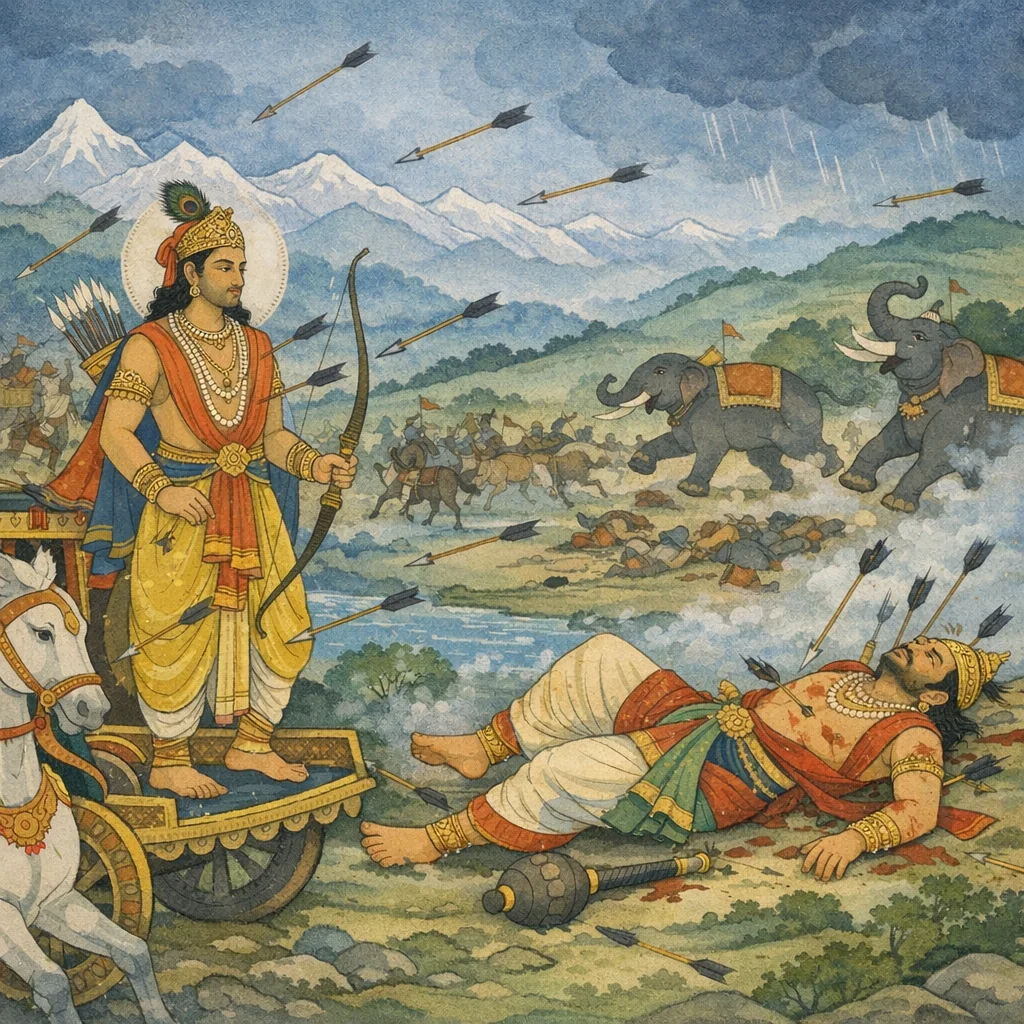
Saṃjaya reports to Dhṛtarāṣṭra that Bhūriśravas, seeing the battle-ardent Sātyaki approaching, rushes forward in anger and issues a prolonged challenge, forecasting Sātyaki’s defeat and the demoralization of the Pāṇḍava side. Sātyaki replies with controlled derision, dismissing empty boasting and inviting action. The duel escalates through multiple combat registers: intense arrow-exchanges likened to mutual storm-clouds, progressive damage to mounts and weapons, and a transition to dismounted sword-and-shield combat. The fighters circle in tactical patterns, grapple, and strike with trained holds, producing a loud clash compared to rock and thunderbolt. As Sātyaki’s weapons diminish and fatigue sets in, Bhūriśravas gains dominance and drags him, prompting Kṛṣṇa to call Arjuna’s attention to Sātyaki’s peril and to urge protection of Arjuna’s associate. Arjuna acknowledges competing focus on Jayadratha yet acts on Kṛṣṇa’s instruction: with an arrow, he severs Bhūriśravas’ arm holding the sword. The chapter thus crystallizes a battlefield dharma problem: intervention in a duel under conditions of exhaustion and asymmetry, framed by strategic necessity and alliance-duty.
Chapter Arc: संजय धृतराष्ट्र से कहता है—राजन्, एकाग्रचित्त होकर सुनो: जिस घड़ी कौरव-सेना का भयंकर निनाद उठा, उसी क्षण शैनेय सात्यकि बिजली की तरह कृतवर्मा पर टूट पड़ा, मानो पाण्डवों की डूबती आशा का दीपक स्वयं रण में उतर आया हो। → दुर्योधन के आदेश से त्रिगर्त और अन्य दल ‘मदर्थे त्यक्तजीविता’ होकर सात्यकि को घेरते हैं। सात्यकि के वज्र-स्पर्शी बाण हाथियों की गजसेना को उथला देते हैं—कोई चक्कर काटता है, कोई लड़खड़ाता है, कोई धराशायी होता है; कौरव योद्धा विमुख होकर इधर-उधर भागते दिखते हैं। पर इसी कोलाहल में जलसंध जैसे महाबली आगे बढ़ते हैं और सात्यकि को रोकने का संकल्प लेते हैं। → जलसंध क्रोध में भरकर शिनि-पौत्र सात्यकि की विशाल छाती पर भारी, भार-सह बाणों से गहरा आघात करता है; फिर भी ‘नाकम्पत महाबाहुः’—सात्यकि विचलित नहीं होता। उसी अडिग क्षण में सात्यकि प्रत्याघात कर जलसंध का वध कर देता है, और रणभूमि पर यह अद्भुत-सा दृश्य बन जाता है कि घायल होकर भी धर्म-रथ का सारथि-योद्धा डगमगाता नहीं। → जलसंध के गिरते ही त्रिगर्तों की गजसेना का संहार पूर्ण होता है; हाथी दल टूटकर भागता है और कौरव पंक्तियाँ बिखरती हैं। कृतवर्मा भी सात्यकि के वेग से दबता है—कौरव पक्ष की ‘आशा’ क्षीण और पाण्डव पक्ष की ‘प्राणवायु’ प्रबल होती है। → पर रण का शोर थमता नहीं—कृतवर्मा और शेष कौरव-वीर पुनः संगठित होने को हैं; सात्यकि आगे किस घेराबंदी में फँसेगा, यह अगले प्रसंग की धार पर छोड़ दिया जाता है।
Shlokas
Verse 1
ऑपन--माज बछ। अप ऋाल पञ्चदशाधिकशततमो< ध्याय: सात्यकिके द्वारा कृतवर्माकी पराजय, त्रिगर्तोंकी गजसेनाका संहार और जलसंधका वध संजय उवाच शृणुष्वैकमना राजन् यन्मां त्वं परिपृच्छसि । द्राव्यमाणे बले तस्मिन् हार्दिक्येन महात्मना,संजय कहते हैं--राजन्! आप मुझसे जो कुछ पूछ रहे हैं, उसे एकाग्रचित्त होकर सुनिये। महामना कृतवमकि द्वारा खदेड़ी जानेके कारण जब पाण्डव-सेना लज्जासे नतमस्तक हो गयी और आपके सैनिक हर्षसे उललसित हो उठे, उस समय अथाह सैन्य- समुद्रमें थाह पानेकी इच्छावाले पाण्डव-सैनिकोंके लिये जो द्वीप बनकर आश्रयदाता हुआ (उस सात्यकिका पराक्रम श्रवण कीजिये)
Sañjaya said: “O King, listen with a focused mind to what you ask of me. When that host was driven back by the great-souled Hārdikya (Kṛtavarman), so that the Pāṇḍava army bowed its head in shame and your warriors exulted, then Sātyaki became like an island of refuge for the Pāṇḍavas seeking a foothold in that boundless ocean of troops. Hear now of Sātyaki’s valor.”
Verse 2
लज्जयावनते चापि प्रहृष्टेश्नापि तावकै: । डीपो य आसीत् पाण्डूनामगाथे गाधमिच्छताम्,संजय कहते हैं--राजन्! आप मुझसे जो कुछ पूछ रहे हैं, उसे एकाग्रचित्त होकर सुनिये। महामना कृतवमकि द्वारा खदेड़ी जानेके कारण जब पाण्डव-सेना लज्जासे नतमस्तक हो गयी और आपके सैनिक हर्षसे उललसित हो उठे, उस समय अथाह सैन्य- समुद्रमें थाह पानेकी इच्छावाले पाण्डव-सैनिकोंके लिये जो द्वीप बनकर आश्रयदाता हुआ (उस सात्यकिका पराक्रम श्रवण कीजिये)
Sañjaya said: “O King, when the Pāṇḍava host, driven back by the high-souled Kṛtavarman, bowed down in shame and your warriors exulted in joy, then there arose for the Pāṇḍavas—who sought a foothold in that unfathomable ocean of troops—one who became like an island of refuge.”
Verse 3
श्रुत्वा स निनदं भीम॑ तावकानां महाहवे । शैनेयस्त्वरितो राजन् कृतवर्माणम भ्ययात्,राजन्! उस महासमरमें आपके सैनिकोंका भयंकर सिंहनाद सुनकर सात्यकिने तुरंत ही कृतवर्मापर आक्रमण किया
Sañjaya said: “Hearing the dreadful war-cry of your troops amid the great battle, O King, Śaineya (Sātyaki) swiftly rushed forward and charged at Kṛtavarmā.”
Verse 4
उवाच सारथिं तत्र क्रोधामर्षसमन्वित: । हार्दिक्याभिमुखं सूत कुरु मे रथमुत्तमम्,उन्होंने क्रोध और अमर्षमें भरकर वहाँ सारथिसे कहा--“सूत! तुम मेरे उत्तम रथको कृतवर्माके सामने ले चलो
Sañjaya said: Filled with anger and wounded pride, he spoke there to his charioteer: “Charioteer, drive my excellent chariot straight toward Hārdikya (Kṛtavarmā).”
Verse 5
कुरुते कदनं पश्य पाण्डुसैन्ये हामर्षित: । एनं जित्वा पुनः सूत यास्यामि विजयं प्रति,“देखो, वह अमर्षयुक्त होकर पाण्डव-सेनामें संहार मचा रहा है। सारथे! इसे जीतकर मैं पुनः अर्जुनके पास चलूँगा”
Sañjaya said: “Look—stung by resentment, he is wreaking slaughter in the Pāṇḍava host. O charioteer, after defeating this one, I shall go again toward victory—back to Arjuna.”
Verse 6
एवमुक्ते तु वचने सूतस्तस्य महामते । निमेषान्तरमात्रेण कृतवर्माणम भ्ययात्,महामते! सात्यकिके ऐसा कहनेपर सारथि पलक गिरते-गिरते रथ लेकर कृतवमकि पास जा पहुँचा
Sañjaya said: When those words were spoken, the charioteer drove the chariot to Kṛtavarmā with the speed of a mere blink.
Verse 7
कृतवर्मा तु हार्दिक्य: शैनेयं निशितै: शरै: । अवाकिरत् सुसंक्रुद्धस्ततो5क़्रुद्धयबत् स सात्यकि:,हृदिकपुत्र कृतवर्माने अत्यन्त कुपित हो सात्यकिपर पैने बाणोंकी वर्षा आरम्भ कर दी। इससे सात्यकिका क्रोध भी बहुत बढ़ गया
Sañjaya said: Hārdikya Kṛtavarmā, inflamed with rage, showered Śaineya (Sātyaki) with sharp arrows. Struck by that assault, Sātyaki’s anger too rose fiercely.
Verse 8
अथाशु निशितं भल्लं शैनेय: कृतवर्मण: । प्रेषयामास समरे शरांश्व चतुरो5परान्,उन्होंने तुरंत ही कृतवर्मापर समरभूमिमें एक तीखे भल्लका प्रहार किया। फिर चार बाण और मारे
Sañjaya said: Then Śaineya swiftly launched a keen, razor-edged bhalla at Kṛtavarman in the thick of battle, and immediately sent four more arrows after it.
Verse 9
ते तस्य जध्निरे वाहान् भल्लेनास्याच्छिनद् धनु: । पृष्ठरक्ष॑ं तथा सूतमविध्यन्निशितै: शरै:,उन चारों बाणोंने कृतवर्माके चारों घोड़ोंको मार डाला। सात्यकिने भलल से उसके धनुषको काट दिया। फिर पैने बाणोंद्वारा उसके पृष्ठरक्षक और सारथिको भी क्षत-विक्षत कर दिया
Sañjaya said: They slew his horses; and with a broad-headed arrow Sātyaki cut down his bow. Then, with keen shafts, they struck and mangled both his rear-guard protector and his charioteer—showing how, in the fury of battle, the contest turns not only on valor but on disabling an opponent’s means of fighting, even at the cost of grievous harm to those who serve him.
Verse 10
ततस्तं विरथं कृत्वा सात्यकि: सत्यविक्रम: । सेनामस्यार्दयामास शरै: संनतपर्वभि:,तदनन्तर सत्यपराक्रमी सात्यकिने कृतवर्माको रथहीन करके झुकी हुई गाँठवाले बाणोंद्वारा उसकी सेनाको पीड़ित करना आरम्भ किया
Sañjaya said: Then Sātyaki, whose prowess never failed, having made him chariotless, began to harass and crush his forces with arrows whose joints were bent—pressing the advantage without relenting amid the harsh ethics of battlefield necessity.
Verse 11
अभज्यताथ पृतना शैनेयशरपीडिता । ततः प्रायात् स त्वरित: सात्यकि: सत्यविक्रम:,सात्यकिके बाणोंसे पीड़ित हो कृतवर्माकी सेना भाग खड़ी हुई। तत्पश्चात् सत्यपराक्रमी सात्यकि तुरंत आगे बढ़ गये
Sañjaya said: Then the army, tormented by the arrows of Śaineya, broke and scattered. Thereupon Sātyaki—whose valor never failed—swiftly pressed forward. The verse highlights how steadfast courage and disciplined action can turn the tide in battle, while also underscoring the moral weight of warfare where victory is achieved through force that causes suffering.
Verse 12
शृणु राजन् यदकरोत् तव सैन्येषु वीर्यवान् । अतीत्य स महाराज द्रोणानीकमहार्णवम्,महाराज! पराक्रमी सात्यकिने द्रोणाचार्यके सैन्य-समुद्रको लाँधकर आपकी सेनाओंमें जो पराक्रम किया, उसका वर्णन सुनिये
Sañjaya said: O King, listen to what that mighty warrior accomplished among your forces. O great king, having crossed beyond the vast ocean-like battle-array of Droṇa, he displayed his prowess within your army.
Verse 13
पराजित्य तु संहृष्ट: कृतवर्माणमाहवे । यन्तारमब्रवीच्छूर: शनैर्याहीत्यसम्भ्रमम्,उस महासमरमें कृतवर्माको पराजित करके हर्षमें भरे हुए शूरवीर सात्यकि बिना किसी घबराहटके सारथिसे बोले--'सूत! धीरे-धीरे चलो'
Sañjaya said: Having overcome Kṛtavarmā in the thick of battle, the heroic Sātyaki—exultant yet unshaken—said to his charioteer, “Charioteer, drive on slowly, without haste or confusion.”
Verse 14
दृष्टवा तु तव तत् सैन्यं रथाश्वद्धिपसंकुलम् । पदातिजनसम्पूर्णमब्रवीत् सारथिं पुन:,रथ, घोड़े, हाथी और पैदलोंसे भरी हुई आपकी सेनाको देखकर सात्यकिने पुनः सारथिसे कहा--
Sañjaya said: Seeing your army—thronged with chariots, horses, and elephants, and filled with masses of foot-soldiers—Sātyaki once again spoke to his charioteer, as the battle’s pressure and duty to act decisively tightened around them.
Verse 15
यदेतन्मेघसंकाशं द्रोणानीकस्य सव्यतः । सुमहत् कुञ्जरानीकं यस्य रुक्मरथो मुखम्,'सूत! द्रोणाचार्यकी सेनाके बायें भागमें जो यह मेघोंकी घटाके समान विशाल गजसेना दिखायी देती है, इसके मुहानेपर रुक्मरथ खड़ा है। इसमें बहुत-से ऐसे शूरवीर हैं, जिन्हें युद्धमें रोकना अत्यन्त कठिन है। ये दुर्योधनकी आज्ञासे प्राणोंका मोह छोड़कर मेरे साथ युद्ध करनेके लिये खड़े हैं
Sañjaya said: “O charioteer, on the left flank of Droṇa’s battle-array there appears a vast elephant-corps, dark and massed like a rain-cloud; and at its very front stands Rukmaratha. Many hard-to-check heroes are stationed there—men who, at Duryodhana’s command, have cast off attachment to life and stand ready to fight.”
Verse 16
एते हि बहव: सूत दुर्निवाराश्च संयुगे । दुर्योधनसमादिष्टा मदर्थे त्यक्तजीविता:,'सूत! द्रोणाचार्यकी सेनाके बायें भागमें जो यह मेघोंकी घटाके समान विशाल गजसेना दिखायी देती है, इसके मुहानेपर रुक्मरथ खड़ा है। इसमें बहुत-से ऐसे शूरवीर हैं, जिन्हें युद्धमें रोकना अत्यन्त कठिन है। ये दुर्योधनकी आज्ञासे प्राणोंका मोह छोड़कर मेरे साथ युद्ध करनेके लिये खड़े हैं
Sañjaya said: “O charioteer, these are indeed many warriors, and in battle they are exceedingly hard to restrain. Commanded by Duryodhana, they have cast aside attachment to life and stand ready to fight for my sake.”
Verse 17
(न चाजित्वा रणे होतान् शक: प्राप्तुं जयद्रथ: । नापि पार्थों मया सूत शक््य: प्राप्तुं कथंचन ।। एते तिष्ठन्ति सहिता: सर्वविद्यासु निषछ्िता: ।।) 'सूत! इन्हें रणमें परास्त किये बिना न तो जयद्रथको प्राप्त किया जा सकता है और न किसी प्रकार अर्जुन ही मुझे मिल सकते हैं। ये समस्त विद्याओंमें प्रवीण योद्धा एक साथ संगठित होकर खड़े हैं। राजपुत्रा महेष्वासा: सर्वे विक्रान्तयोधिन: । त्रिगर्तानां रथोदारा: सुवर्णविकृतध्वजा:,'ये त्रिगर्तदेशके उदार महारथी राजकुमार महान धनुर्धर हैं और सभी पराक्रमपूर्वक युद्ध करनेवाले हैं। इन सबकी ध्वजा सुवर्णमयी है
Sañjaya said: “O charioteer, unless these warriors who have been summoned to battle are first defeated in the fight, Jayadratha cannot be reached; nor can Arjuna be attained by me in any way. Here they stand together, firmly grounded in every martial discipline—royal princes, great bowmen, all valiant fighters: the noble chariot-warriors of the Trigartas, bearing banners adorned with gold.”
Verse 18
मामेवाभिमुखावीरा योत्स्यमाना व्यवस्थिता: । अत्र मां प्रापय क्षिप्रमश्वांश्रोदय सारथे
Sañjaya said: “Those heroic warriors, intent on fighting, are drawn up facing me alone. Bring me there at once, charioteer—urge on the horses quickly.”
Verse 19
ततः प्रायाच्छनै: सूत: सात्वतस्य मते स्थित:
Sañjaya said: Then the charioteer moved forward slowly, abiding by the intention of the Sātvata (Kṛṣṇa). The line proclaims disciplined obedience amid battle—measured action guided by a trusted moral and strategic authority, not by haste or impulse.
Verse 20
तमूहु: सारथेरवश्या वल्गमाना हयोत्तमा:
Sañjaya said: “They reported that the finest horses, though normally obedient to the charioteer, were now restlessly plunging forward.” In the war narrative, this signals a moment when even well-trained forces strain against control—an image of how battle’s intensity can unsettle discipline and test the steadiness of those tasked with guiding power responsibly.
Verse 21
आपततन्तं रणे तं तु शड्खवर्णहयोत्तमै:,शंखके समान श्वैत रंगवाले उन उत्तम घोड़ोंद्वारा रणभूमिमें आते हुए सात्यकिको त्रिगर्तदेशीय शूरवीरोंने सब ओरसे गजसेनाद्वारा घेर लिया। शीघ्रतापूर्वक लक्ष्य वेधनेवाले वे समस्त सैनिक नाना प्रकारके तीखे बाणोंकी वर्षा कर रहे थे
Sañjaya said: As Sātyaki came onto the battlefield, drawn by the finest horses, white as a conch-shell (śaṅkha), the heroes of Trigarta surrounded him on every side with an elephant-corps. Those swift marksmen rained down many kinds of keen arrows without pause.
Verse 22
परिवद्रुस्तत: शूरा गजानीकेन सर्वतः । किरन्तो विविधांस्तीक्ष्णानू सायकॉल्लघुवेधिन:,शंखके समान श्वैत रंगवाले उन उत्तम घोड़ोंद्वारा रणभूमिमें आते हुए सात्यकिको त्रिगर्तदेशीय शूरवीरोंने सब ओरसे गजसेनाद्वारा घेर लिया। शीघ्रतापूर्वक लक्ष्य वेधनेवाले वे समस्त सैनिक नाना प्रकारके तीखे बाणोंकी वर्षा कर रहे थे
Sañjaya said: Then the valiant warriors closed in on all sides with an elephant-corps, hemming Sātyaki in. Those swift marksmen showered him with many kinds of sharp arrows, pressing the battle with relentless force and the intent to overwhelm by encirclement rather than fair single combat.
Verse 23
सात्वतो निशितैर्बाणैर्गजानीकमयोधयत् | पर्वतानिव वर्षेण तपान्ते जलदो महान्,सात्यकिने भी पैने बाणोंद्वारा गजसेनाके साथ युद्ध प्रारम्भ किया, मानो वर्षाकालमें महान् मेघ पर्वतोंपर जलकी धारा बरसा रहा हो
Sañjaya said: The Sātvata hero (Sātyaki), with his razor-sharp arrows, began to engage the elephant-corps in battle—like a great rain-cloud at the end of summer pouring down torrents upon the mountains. The image underscores the irresistible, impersonal force of martial prowess unleashed in the dharmic crisis of war.
Verse 24
वज्राशनिसमस्पर्शर्वध्यमाना: शरैर्गजा: । प्राद्रवन् रणमुत्सूज्य शिनिवीरसमीरितै:
Sañjaya said: Struck by arrows whose touch was like a thunderbolt, the elephants—grievously wounded—broke into flight, abandoning the battlefield, driven into panic by the assault of Śinivīra’s warrior.
Verse 25
शिनिवंशके वीर सात्यकिद्वारा चलाये हुए वज् और बिजलीके समान स्पर्शवाले उन बाणोंकी मार खाकर उस सेनाके हाथी युद्धका मैदान छोड़कर भागने लगे ।। 0०७ आ कं ० शीर्णदन्ता विरुधिरा भिन्नमस्तकपिण्डिका: । विशीर्णकर्णास्यकरा विनियन्तृपताकिन:,उन हाथियोंके दाँत टूट गये, सारे अंगोंसे खूनकी धाराएँ बहने लगीं, कुम्भस्थल और गण्डस्थल फट गये, कान, मुख और शुण्ड छिलन्न-भिन्न हो गये, महावत मारे गये और ध्वजा- पताकाएँ टूटकर गिर गयीं। उनके मर्मस्थल विदीर्ण हो गये, घंटे टूट गये और विशाल ध्वज कटकर गिर पड़े। सवार मारे गये तथा झूल खिसककर गिर गये थे। राजन्! ऐसी अवस्थामें उन हाथियोंने भागकर विभिन्न दिशाओंकी शरण ली थी
Sañjaya said: Struck by the arrows loosed by the hero Sātyaki of the Śini line—arrows whose touch was like thunderbolt and lightning—the elephants of that host abandoned the battlefield and fled. Their tusks were shattered; streams of blood ran from their limbs; their temples and frontal globes were split; ears, mouths, and trunks were torn and mangled. Their drivers were slain and their banners and pennants fell. Vital spots were pierced, bells were broken, great standards were cut down; riders were killed and the howdahs slipped and dropped. In that condition, O King, the elephants ran off and sought refuge in different directions.
Verse 26
सम्भिन्नमर्मघण्टाश्न विनिकृत्तमहाध्वजा: । हतारोहा दिशो राजन् भेजिरे भ्रष्टकम्बला:,उन हाथियोंके दाँत टूट गये, सारे अंगोंसे खूनकी धाराएँ बहने लगीं, कुम्भस्थल और गण्डस्थल फट गये, कान, मुख और शुण्ड छिलन्न-भिन्न हो गये, महावत मारे गये और ध्वजा- पताकाएँ टूटकर गिर गयीं। उनके मर्मस्थल विदीर्ण हो गये, घंटे टूट गये और विशाल ध्वज कटकर गिर पड़े। सवार मारे गये तथा झूल खिसककर गिर गये थे। राजन्! ऐसी अवस्थामें उन हाथियोंने भागकर विभिन्न दिशाओंकी शरण ली थी
Sanjaya said: O King, those elephants, their vital spots torn open and their bell-armor shattered, with their great standards hewn down, fled in different directions. Their riders had been slain, and their saddle-cloths had slipped away—so, broken and routed, they sought safety by scattering across the field.
Verse 27
रुवन्तो विविधान् नादान् जलदोपमनिः:स्वना: । नाराचैर्वत्सदन्तैश्व भल्लैरञण्जलिकैस्तथा,उनके चिग्घाड़नेकी ध्वनि मेघोंकी गर्जनाके समान जान पड़ती थी। वे सात्यकिके चलाये हुए नाराच, वत्सदन्त, भल्ल, अंजलिक, क्षुरप्र और अर्द्धचन्द्र नामक बाणोंसे विदीर्ण हो नाना प्रकारसे आर्तनाद करते, रक्त बहाते तथा मल-मूत्र छोड़ते हुए भाग रहे थे
Sañjaya said: “Crying out in many different ways, their sounds resembling the rumbling of thunderclouds, they were pierced by Sātyaki’s arrows—nārāca, vatsadanta, bhalla, and añjalika—and thus, wounded and terrified, they raised varied lamentations as they fled.”
Verse 28
क्षुप्रैरर्धचन्द्रैश्न सात्वतेन विदारिता: । क्षरन्तोडसृक् तथा मूत्रं पुरीषं च प्रदुद्रुवु:,उनके चिग्घाड़नेकी ध्वनि मेघोंकी गर्जनाके समान जान पड़ती थी। वे सात्यकिके चलाये हुए नाराच, वत्सदन्त, भल्ल, अंजलिक, क्षुरप्र और अर्द्धचन्द्र नामक बाणोंसे विदीर्ण हो नाना प्रकारसे आर्तनाद करते, रक्त बहाते तथा मल-मूत्र छोड़ते हुए भाग रहे थे
Sañjaya said: Torn open by the Sātvata warrior (Sātyaki) with razor-headed and half-moon arrows, they fled in panic—bleeding, and in terror even voiding urine and excrement.
Verse 29
बभ्रमुश्न स्खलुश्नान्ये पेतुर्मम्लुस्तथापरे । एवं तत् कुञ्जरानीकं युयुधानेन पीडितम्
Sañjaya said: Some elephants reeled in confusion and stumbled; others fell, and still others sank and collapsed. Thus that elephant-corps was grievously harried by Yuyudhāna (Sātyaki).
Verse 30
तस्मिन् हते गजानीके जलसंधो महाबल:
Sañjaya said: When that elephant-corps had been slain, the mighty Jalasaṃdha—seeing his force broken—was stirred to respond amid the turmoil of battle.
Verse 31
रुक्मवर्मधर: शूरस्तपनीयाड्रद: शुचि:,उरसा धारयन् निष्कं कण्ठसूत्रं च भास्वरम् | शूरवीर एवं पवित्र जलसंधने अपने शरीरमें सोनेका कवच धारण कर रखा था। उसकी दोनों भुजाओंमें सोनेके ही बाजूबंद शोभा पा रहे थे। दोनों कानोंमें कुण्डल और मस्तकपर किरीट चमक रहे थे। उसके हाथमें तलवार थी और सम्पूर्ण शरीरमें रक्त चन्दनका लेप लगा हुआ था। उसने अपने सिरपर सोनेकी बनी हुई चमकीली माला और वक्ष:स्थलपर प्रकाशमान पदक एवं कण्ठहार धारण कर रखे थे
Sañjaya said: The heroic warrior, pure in appearance, wore a golden cuirass and gleaming armlets of refined gold. Upon his chest he bore a shining medallion, and around his neck a radiant necklace-thread—adorned for battle with the splendor of wealth and rank.
Verse 32
कुण्डली मुकुटी खड्गी रक्तचन्दनरूषित: । शिरसा धारयन् दीप्तां तपनीयमयीं स्रजम्
Sañjaya said: “Adorned with earrings and a crown, bearing a sword, and smeared with red sandalwood paste, he carried upon his head a radiant garland made of pure gold.”
Verse 33
चापं च रुक्मविकृतं विधुन्वन् गजमूर्थनि
Sañjaya said: Shaking his bow—adorned and fashioned with gold—he stood upon the elephant’s head, displaying fearless resolve amid the turmoil of battle.
Verse 34
अशोभत महाराज सविद्युदिव तोयद: । महाराज! हाथीकी पीठपर बैठकर अपने सोनेके बने हुए धनुषको हिलाता हुआ जलसंध बिजलीसहित मेघके समान शोभा पा रहा था ।। ३३ $ || तमापतन्तं सहसा मागधस्य गजोत्तमम्
Sañjaya said: O King, he shone like a rain-cloud streaked with lightning. Suddenly, the foremost elephant of the Magadhan side came charging in.
Verse 35
नागं निवारितं दृष्टवा शैनेयस्य शरोत्तमै:
Sañjaya said: Seeing the mighty force (likened to a serpent) checked and held back by Śaineya’s finest arrows, the course of the combat shifted.
Verse 36
ततः क्रुद्धो महाराज मार्गणैर्भारसाधनै:
Sañjaya said: Then, O great king, he—angered—attacked with heavy, forceful arrows.
Verse 37
ततो5परेण भल््लेन पीतेन निशितेन च
Sañjaya said: Then, with yet another bhalla-arrow—yellow-hued and razor-sharp—he struck again.
Verse 38
सात्यकिं छिन्नथन्वानं प्रहसन्निव भारत
Sañjaya said: O Bhārata, Sātyaki—his bow cut—appeared as though he were laughing, meeting the crisis with fearless composure amid the violence of war.
Verse 39
अविध्यन्मागधो वीर: पज्चभिरनर्निशितै: शरै: | भारत! धनुष काटनेके पश्चात् सात्यकिको उस मागध वीरने हँसते हुए ही पाँच तीखे बाणोंद्वारा घायल कर दिया ।। ३८ $ ।। स विद्धो बहुभिर्बाणैर्जलसंधेन वीर्यवान्
Sañjaya said: The valiant Magadhan warrior struck with five exceedingly sharp arrows. O Bhārata, after cutting Sātyaki’s bow, that Magadhan hero—still smiling—wounded him with five keen shafts. Then the mighty Jalasaṃdha, pierced by many arrows, continued the combat.
Verse 40
अचिन्तयन् वै स शरान्नात्यर्थ सम्भ्रमाद् बली
Sañjaya said: That mighty warrior, without overthinking, released his arrows—not in excessive agitation, but with steady composure amid the press of battle.
Verse 41
धनुरन्यत् समादाय तिष्ठ तिछेत्युवाच ह । बलवान सात्यकिने उसके बाणोंको कुछ भी न गिनते हुए अधिक संभ्रममें न पड़कर दूसरा धनुष हाथमें ले लिया और कहा--'अरे! खड़ा रह, खड़ा रह” ।। ४० $ ।। एतावदुक्त्वा शैनेयो जलसंधं महोरसि
Sañjaya said: Taking up another bow, the mighty warrior—counting Sātyaki’s arrows as nothing and without falling into greater confusion—seized a second bow and cried, “Stand! Stand!” Having said this much, the son of Śini then struck Jalasandha in the broad chest.
Verse 42
क्षुरप्रेण सुतीक्ष्णेन मुष्टिदेशे महद् धनु:
Sañjaya said: With a razor-edged, exceedingly sharp arrow, he struck at the grip of the great bow—aiming to disable the weapon itself rather than merely wound the warrior.
Verse 43
जलसंधस्तु तत् त्यक्त्वा सशरं वै शरासनम्
Sañjaya said: Then Jalasaṃdha, abandoning that, cast aside his bow together with its arrows.
Verse 44
तोमरं व्यसृजत् तूर्ण सात्यकिं प्रति मारिष । माननीय नरेश! जलसंधने बाणसहित उस धनुषको त्यागकर सात्यकिपर तुरंत ही तोमरका प्रहार किया ।। ४३ $ ।। स निर्भिद्य भुजं सव्यं माधवस्य महारणे
Sañjaya said: “O venerable one, he swiftly hurled a javelin (tomara) at Sātyaki. In that great battle, it pierced the left arm of Mādhava (Kṛṣṇa).”
Verse 45
निर्भिन्ने तु भुजे सव्ये सात्यकि: सत्यविक्रम:
Sañjaya said: When his left arm was pierced through, Sātyaki—true to his proven valor—still stood firm, his courage unbroken amid the brutal press of war.
Verse 46
प्रगृह्मा तु ततः खड्गं जलसंधो महाबल:,तब महाबली जलसंधने सौ चन्द्राकार चमकीले चिह्लोंसे युक्त वृषभ-चर्मकी बनी हुई विशाल ढाल और तलवार हाथमें ले ली तथा उस तलवारको घुमाकर सात्यकिपर छोड़ दिया
Sañjaya said: Then the mighty Jalasaṃdha seized his sword. Taking up a large bull-hide shield marked with bright, moon-shaped emblems, he whirled the blade and hurled it at Sātyaki.
Verse 47
आर्षभं चर्म च महच्छतचन्द्रकसंकुलम् । आविध्य च तत: खड्गं सात्वतायोत्ससर्ज ह,तब महाबली जलसंधने सौ चन्द्राकार चमकीले चिह्लोंसे युक्त वृषभ-चर्मकी बनी हुई विशाल ढाल और तलवार हाथमें ले ली तथा उस तलवारको घुमाकर सात्यकिपर छोड़ दिया
Sañjaya said: He seized a great bull-hide shield, crowded with a hundred moon-like bosses, and then, whirling his sword, hurled it at Sātyaki.
Verse 48
शैनेयस्य धनुश्छित्त्वा स खड्गो न्न्यपतन्महीम् । अलातचक्रवच्चैव व्यरोचत महीं गत:,वह खड्ग सात्यकिके धनुषको काटकर पृथ्वीपर गिर पड़ा। धरतीपर पहुँचकर वह अलातचक्रके समान प्रकाशित हो रहा था
Sañjaya said: Having cut down Śaineya’s bow, that sword fell to the ground. Once it reached the earth, it shone brilliantly, like a whirling firebrand.
Verse 49
अथान्यद् धनुरादाय सर्वकायावदारणम् | शालस्कन्धप्रतीकाशमिन्द्राशनिसमस्वनम्
Sañjaya said: Then he took up another bow—one that could rend an enemy’s whole body—shining like the trunk of a śāla tree and sounding like Indra’s thunderbolt, and he made ready to fight on.
Verse 50
ततः साभरणोौ बाहू क्षुराभ्यां माधवोत्तम:
Sañjaya said: Then the foremost of the Mādhavas (Kṛṣṇa), taking up two keen razors, set upon the adorned arms with deliberate, unsparing resolve.
Verse 51
तौ बाहू परिघप्रख्यौ पेततुर्गजसत्तमात्
Sañjaya said: Those two arms, mighty as iron clubs, fell down from the best of elephants—signaling the violent undoing of a warrior’s power in the ruthless surge of battle.
Verse 52
वसुंधराधराद् भ्रष्टी पज्चशीर्षाविवोरगौ । उसकी वे परिघके समान मोटी भुजाएँ उस गजराजकी पीठसे नीचे गिर पड़ीं, मानो पर्वतसे पाँच-पाँच मस्तकोंवाले दो नाग पृथ्वीपर गिरे हों ।। ५१ $ ।। तत: सुदष्ट्रं सुमहच्चारुकुण्डलमण्डितम्
Sañjaya said: From that mighty bearer of the earth, two thick arms—heavy like iron clubs—slipped from the back of the lordly elephant and fell below, as though two five-headed serpents had dropped from a mountain onto the ground.
Verse 53
तत्पातितशिरोबाहुकबन्धं॑ भीमदर्शनम्
Sañjaya said: A fearsome sight was seen—his trunk, with head and arms struck down and fallen—an image of dreadful consequence amid the war.
Verse 54
द्विरदं जलसंधस्य रुधिरेणा भ्यषिज्चत । मस्तक और भुजाओंके गिर जानेसे अत्यन्त भयंकर दिखायी देनेवाले जलसंधके उस धड़ने अपने खूनसे उस हाथीको नहला दिया ।। ५३ $ ।। जलसंध॑ निहत्याजौ त्वरमाणस्तु सात्वत:
Sañjaya said: The elephant was drenched in Jalasandha’s blood. When Jalasandha’s head and arms were severed and fell away, his remaining trunk—now a dreadful sight—seemed to bathe that elephant in its own gore. Having slain Jalasandha in the battle, the Sātvata warrior hastened onward, driven by the war’s urgent press.
Verse 55
रुधिरेणावसिक्ताज़ो जलसंधस्य कुड्जर:
Sañjaya said: Jalasandha’s elephant, its body soaked in blood, looked as though it had been wholly smeared and darkened with gore—an image that lays bare the battle’s brutal momentum, where even mighty beasts become both instruments and victims of violence.
Verse 56
शरार्दित: सात्वतेन मर्दमान: स्ववाहिनीम्
Sañjaya said: Pierced by the Sātvata warrior’s arrows, he—though being crushed and overpowered—still pressed on amid his own host. It shows how, in battle’s fury, even the wounded may cling to resolve and dharma-bound duty, while the surrounding army is both shield and burden.
Verse 57
हाहाकारो महानासीत् तव सैन्यस्य मारिष
Sañjaya said: “O venerable one, a great cry of anguish arose within your army.”
Verse 58
विमुखाश्नवा भ्यधावन्न्त तव योधा: समन्तत:
Sañjaya said: Your warriors, turning their faces away in dismay, fled in all directions—an image of morale collapsing under the pressure of battle and the ethical weight of a war that tests resolve and dharma-bound duty.
Verse 59
एतस्मिन्नन्तरे राजन् द्रोण: शस्त्रभूतां वर:
Sañjaya said: “Just then, O King, Droṇa—foremost among those who had become as living weapons—advanced upon the battlefield.”
Verse 60
तमुदीर्ण तथा दृष्टवा शैनेयं नरपुड्रवा:
Sañjaya said: “Seeing Śaineya in that heightened, aroused state, the foremost of men marked him—an omen of the battle’s fierce momentum and the surge of resolve that drives warriors beyond hesitation.”
Verse 61
द्रोणेनैव सह क्रुद्धा: सात्यकिं समुपाद्रवन् । शिनिपौत्र सात्यकिको बढ़ते देख नरश्रेष्ठ कौरव महारथी द्रोणाचार्यके साथ ही कुपित हो उनपर टूट पड़े ।। ततः प्रववृते युद्ध कुरूणां सात्वतस्य च | द्रोणस्य च रणे राजन् घोरं देवासुरोपमम्,राजन्! फिर तो उस रफणक्षेत्रमें कौरवोंसहित द्रोणाचार्य तथा सात्यकिका देवासुर- संग्रामके समान भयंकर युद्ध होने लगा
Sañjaya said: “Enraged, the Kuru warriors, along with Drona himself, rushed upon Satyaki. Then, O King, there arose on that battlefield a dreadful combat between the Kurus and the Satvata hero Satyaki, with Drona in the fray—a battle fierce like the war of gods and demons.”
Verse 115
इति श्रीमहाभारते द्रोणपर्वणि जयद्रथवधपर्वणि सात्यकिप्रवेशे जलसंधवधो नाम पजञ्चदशाधिकशततमो< ध्याय:,इस प्रकार श्रीमहाभारत द्रोणपर्वके अन्तर्गत जयद्रथवधपर्वमें सात्यकिके कौरव-सेनामें प्रवेशके अवसरपर जलसंधका वध नामक एक सौ पंद्रहवाँ अध्याय पूरा हुआ
Sañjaya said: “Thus, in the Śrī Mahābhārata, within the Droṇa Parva, in the section concerning the slaying of Jayadratha, the one hundred and fifteenth chapter—titled ‘The Slaying of Jalasaṃdha,’ occurring at the moment of Sātyaki’s entry into the Kaurava army—comes to an end.”
Verse 186
त्रिगर्ती: सह योत्स्यामि भारद्वाजस्य पश्यत: । “ये समस्त वीर मेरी ही ओर मुँह करके युद्ध करनेके लिये खड़े हैं। सारथे! घोड़ोंको हॉको और मुझे शीघ्र ही इनके पास पहुँचा दो। मैं द्रोणाचार्यके देखते-देखते त्रिगर्तोंके साथ युद्ध करूँगा”
Sañjaya said: “I shall fight together with the Trigartas while Bharadvāja’s son looks on. All these warriors stand facing me, ready for battle. Charioteer, urge on the horses and bring me quickly to them. Before Droṇa’s very eyes, I will engage the Trigartas in combat.”
Verse 196
रथेनादित्यवर्णेन भास्वरेण पताकिना । तदनन्तर सात्यकिकी सम्मतिके अनुसार सारथि सूर्यके समान तेजस्वी तथा पताकाओंसे विभूषित रथके द्वारा धीरे-धीरे आगे बढ़ा
Sañjaya said: Then, following the agreed plan, Sātyaki advanced steadily, moving forward in a radiant chariot—sun-hued, blazing with splendor, and adorned with fluttering banners. The image underscores disciplined resolve amid the chaos of war: purposeful movement guided by counsel rather than impulsive fury.
Verse 206
वायुवेगसमा: संख्ये कुन्देन्दुरजतप्रभा: । उस रथके उत्तम घोड़े कुन्द, चन्द्रमा और चाँदीके समान श्वेत रंगके थे; वे सारथिके अधीन रहनेवाले और वायुके समान वेगशाली थे तथा युद्धमें उछलते हुए उस रथका भार वहन करते थे
Sañjaya said: In the thick of battle, the chariot’s superb horses—white in radiance like jasmine, the moon, and silver—were under the charioteer’s control. Swift as the wind, they leapt and surged, bearing the weight of the chariot as the war raged on.
Verse 303
यत्त: सम्प्रापयन्नागं रजताश्वरथं प्रति । उस गजसेनाके नष्ट होनेपर महाबली जलसंध युद्धके लिये उद्यत हो श्वेत घोड़ोंवाले सात्यकिके रथके समीप अपना हाथी ले आया
Sañjaya said: When his elephant-troop had been destroyed, the mighty Jalasandha, eager for battle, drove his elephant forward toward the chariot drawn by white horses—Sātyaki’s car—closing in to engage him directly. The scene underscores the relentless momentum of war: even after the loss of supporting forces, a warrior’s resolve propels him into single combat, where courage and duty are tested amid escalating violence.
Verse 326
उरसा धारयन् निष्कं कण्ठसूत्रं च भास्वरम् | शूरवीर एवं पवित्र जलसंधने अपने शरीरमें सोनेका कवच धारण कर रखा था। उसकी दोनों भुजाओंमें सोनेके ही बाजूबंद शोभा पा रहे थे। दोनों कानोंमें कुण्डल और मस्तकपर किरीट चमक रहे थे। उसके हाथमें तलवार थी और सम्पूर्ण शरीरमें रक्त चन्दनका लेप लगा हुआ था। उसने अपने सिरपर सोनेकी बनी हुई चमकीली माला और वक्ष:स्थलपर प्रकाशमान पदक एवं कण्ठहार धारण कर रखे थे
Sañjaya said: Bearing upon his chest a radiant gold pendant and a shining neck-thread, that heroic warrior stood at the sacred junction of waters, his body clad in a golden cuirass. Golden armlets adorned both his arms; earrings gleamed in his ears and a crown shone upon his head. A sword was in his hand, and his entire body was anointed with red sandal paste. Upon his head he wore a brilliant garland of gold, and on his chest he displayed a luminous medal and a necklace—an image of martial splendor joined to ritual purity on the eve of battle.
Verse 343
सात्यकिर्वारियामास वेलेव मकरालयम् | सहसा अपनी ओर आते हुए मगधराजके उस गजराजको सात्यकिने उसी प्रकार रोक दिया, जैसे तटकी भूमि समुद्रको रोक देती है
Sañjaya said: Satyaki checked him, as a shoreline checks the ocean. When the king of Magadha’s mighty elephant rushed suddenly toward him, Satyaki stopped that elephant-king at once—just as firm land at the coast holds back the sea. The image underscores disciplined valor: in the chaos of war, steadiness and timely restraint become a form of righteous protection.
Verse 353
अक्कुद्धबत रणे राजन् जलसंधो महाबल: । राजन! सात्यकिके उत्तम बाणोंसे उस हाथीको अवरुद्ध हुआ देख महाबली जलसंध रणक्षेत्रमें कुपित हो उठा
Sañjaya said: “O King, in the midst of battle the mighty Jalasaṃdha flared up in anger. Seeing that the elephant had been checked and hemmed in by Sātyaki’s excellent arrows, that powerful warrior became enraged on the battlefield.”
Verse 373
अस्यतो वृष्णिवीरस्य निचकर्त शरासनम् | तत्पश्चात् दूसरे तीखे, पैने और पानीदार भल्लसे उसने बाण फेंकते हुए वृष्णिवीर सात्यकिके धनुषको काट डाला
Sañjaya said: As the Vṛṣṇi hero was shooting, his bow was cut down. Then, with a second bhalla arrow—razor-sharp, keen, and pale-headed—the attacker, still releasing shafts, severed the bow of the Vṛṣṇi champion Sātyaki.
Verse 393
नाकम्पत महाबाहुस्तदद्भुतमिवाभवत् | जलसंधके बहुत-से बाणोंद्वारा क्षत-विक्षत होनेपर भी पराक्रमी महाबाहु सात्यकि कम्पित नहीं हुए। यह अद्भुत-सी बात थी
Sañjaya said: The mighty-armed Sātyaki did not tremble; it seemed almost wondrous. Though struck and torn by many arrows, the valiant hero remained unshaken—an extraordinary display of steadfast courage amid the violence of war.
Verse 416
विव्याध षष्ट्या सुभृशं शराणां प्रहसन्निव । ऐसा कहकर सात्यकिने हँसते हुए ही साठ बाणोंद्वारा जलसंधकी चौड़ी छातीपर गहरी चोट पहुँचायी
Sañjaya said: Smiling, as though in derision, he struck him fiercely with sixty arrows, driving them deep—an act that intensified the ruthless momentum of the battle and displayed the warrior’s deliberate, almost taunting resolve as restraint collapsed in war.
Verse 426
जलसंधस्य चिच्छेद विव्याध च त्रिभि: शरै: | फिर अत्यन्त तीखे क्षुरप्रसे जलसंधके विशाल धनुषको मुट्ठी पकड़नेकी जगहसे काट दिया और तीन बाण मारकर उसे घायल भी कर दिया
Sañjaya said: He severed Jalasandha’s bow at the grip, and then pierced him with three arrows, wounding him—first disabling the weapon, then striking, in the ruthless precision of Kurukṣetra’s escalating war.
Verse 446
अभ्यगाद् धरणीं घोर: श्वसन्निव महोरग: । फुफकारते हुए महान् सर्पके समान वह भयंकर तोमर उस महासमरमें सात्यकिकी बायीं भुजाको विदीर्ण करता हुआ धरतीमें समा गया
Sañjaya said: The dreadful tomara, hissing like a mighty serpent, tore through Sātyaki’s left arm amid that vast clash of arms and then sank into the earth.
Verse 453
त्रिंशद्धिर्विशिखैस्तीक्षैजलसंधमताडयत् । अपनी बायीं भुजाके घायल होनेपर सत्यपराक्रमी सात्यकिने तीस तीखे बाणोंद्वारा जलसंधको आहत कर दिया
Sañjaya said: Though his left arm had been wounded, the truth-valiant Sātyaki struck Jalasandha with thirty sharp arrows.
Verse 496
विस्फार्य विव्यधे क्रुद्धो जलसंधं शरेण ह | तब सात्यकिने साखूके तनेके समान विशाल, इन्द्रके वज्रकी भाँति घोर टंकार करनेवाले तथा सबके शरीरको विदीर्ण करनेमें समर्थ दूसरा धनुष हाथमें लेकर उसे कानतक खींचा और कुपित हो एक बाणसे जलसंधको बींध डाला
Sañjaya said: Enraged, he took up a second bow—huge as a tree-trunk, roaring like Indra’s vajra—drew it to the ear, and with a single arrow pierced Jalasaṃdha.
Verse 503
सात्यकिर्जलसंधस्य चिच्छेद प्रहसन्निव | फिर मधुवंशशिरोमणि सात्यकिने हँसते हुए-से दो छुरोंका प्रहार करके जलसंधकी आभूषणभूषित दोनों भुजाओंको काट दिया
Sañjaya said: Sātyaki, as though smiling, struck with two keen blows and severed both the ornament-adorned arms of Jalasaṃdha.
Verse 523
क्षुरेणास्य तृतीयेन शिरश्रिच्छेद सात्यकि: । तदनन्तर सात्यकिने तीसरे छुरेसे उसके सुन्दर दाँतोंवाले मनोहर कुण्डलमण्डित विशाल मस्तकको काट गिराया
Sañjaya said: With his third razor-edged arrow, Sātyaki severed his opponent’s head; that great head, fair-toothed and adorned with earrings, fell to the ground.
Verse 543
विमान पातयामास गजस्कन्धाद् विशाम्पते । प्रजानाथ! युद्धस्थलमें जलसंधको मारकर फुर्ती करनेवाले सात्यकिने हाथीकी पीठसे उसके हौदेको भी गिरा दिया
Sañjaya said: O lord of the people, Sātyaki—swift and resolute after slaying Jalasandhaka on the battlefield—struck down from the elephant’s back even the howdah, the fighting-platform. The scene shows how, in the crush of war, prowess and speed become decisive instruments, turning the very supports of an enemy’s position into targets.
Verse 553
विलम्बमानमवहत् संश्लिष्टं परमासनम् | खूनसे भीगे शरीरवाला जलसंधका वह हाथी अपनी पीठसे सटकर लटकते हुए उस हौदेको ढो रहा था
Sañjaya said: The elephant, its body drenched in blood, bore along that lofty, seat-like howdah, hanging down and clinging close against its back, swaying as it was carried through the turmoil of battle.
Verse 563
घोरमार्तस्वरं कृत्वा विदुद्राव महागज: । सात्यकिके बाणोंसे पीड़ित हो वह महान् गजराज घोर चीत्कार करके अपनी ही सेनाको कुचलता हुआ भाग निकला
Sañjaya said: Uttering a dreadful, anguished cry, the great elephant bolted away. Wounded by Sātyaki’s arrows, it fled in panic, trampling its own ranks—showing how uncontrolled fear in war turns strength into harm and brings suffering even upon one’s own side.
Verse 573
जलसंध॑ हतं दृष्टवा वृष्णीनामृषभेण तु । आर्य! वृष्णिप्रवर सात्यकिके द्वारा जलसंधको मारा गया देख आपकी सेनामें महान् हाहाकार मच गया
Sañjaya said: O noble one, when your troops saw Jalasaṃdha slain by Sātyaki—the foremost of the Vṛṣṇis, a bull-like champion—a great outcry and panic arose throughout your army. The scene shows how the fall of a renowned warrior can shake morale and alter the ethical and strategic tenor of battle.
Verse 583
पलायनकृतोत्साहा निरुत्साहा द्विषज्जये । आपके योद्धा शत्रुओंपर विजय पानेका उत्साह खो बैठे। अब वे भाग निकलनेमें ही उत्साह दिखाने लगे और युद्धसे मुँह मोड़कर चारों ओर भाग गये
Sañjaya said: Your warriors, having lost all zeal to defeat their foes, now found their only energy in flight. Turning away from the battle, they scattered and ran in every direction.
Verse 593
अभ्ययाज्जवनैरश्वैर्युयुधानं महारथम् । राजन! इसी समय शस्त्रधारियोंमें श्रेष्ठ द्रोणाचार्य अपने वेगशाली घोड़ोंद्वारा महारथी युयुधानका सामना करनेके लिये आ पहुँचे
Sañjaya said: O King, at that very moment Droṇācārya—foremost among weapon-bearers—came forward with his swift horses to confront the great chariot-warrior Yuyudhāna.
Verse 1194
इस प्रकार श्रीमह्ाभारत द्रोणपर्वके अन्तर्गत जयद्रथवधपर्वमें सात्यकिका कौरव-सेनामें प्रवेश तथा कृतवर्गाका पराक्रमविषयक एक सौ चौदहवाँ अध्याय पूरा हुआ
Sañjaya said: Thus, in the Śrī Mahābhārata, within the Droṇa Parva—specifically in the section concerning the slaying of Jayadratha—the one hundred and fourteenth chapter has concluded, describing Sātyaki’s entry into the Kaurava army and Kṛtavarmā’s feats of valor.
Verse 2936
शरैरग्न्यर्कसंकाशै: प्रदुद्राव समन्तत: । उनमेंसे कुछ हाथी चक्कर काटने लगे, कुछ लड़खड़ाने लगे, कुछ धराशायी हो गये और कुछ पीड़ाके मारे अत्यन्त शिथिल हो गये थे। इस प्रकार युयुधानके अग्नि और सूर्यके समान तेजस्वी बाणोंद्वारा पीड़ित हुई हाथियोंकी वह सेना सब ओर भाग गयी
Struck by arrows blazing like fire and the sun, the elephants fled in every direction. Some wheeled about in confusion, some staggered, some fell to the ground, and some, wracked with pain, grew utterly faint. Thus the elephant host, tormented by Yuyudhāna’s radiant shafts, scattered and ran on all sides.
Verse 3636
अविध्यत शिने: पौत्रं जलसंधो महोरसि । महाराज! क्रोधमें भरे हुए जलसंधने भार सहन करनेमें समर्थ बाणोंद्वारा शिनिपौत्र सात्यकिकी विशाल छातीपर गहरा आघात किया
Sañjaya said: O King, Jalasaṃdha, inflamed with anger, struck the grandson of Śini—Sātyaki—full in the broad chest with heavy, forceful arrows.
Frequently Asked Questions
Whether a third-party intervention against a combatant who has gained advantage in a duel is justified when the opponent is exhausted and an ally’s survival is at stake, even if strict duel-propriety appears compromised.
The chapter illustrates that dharma in crisis is often adjudicated through competing duties—fairness, protection, and strategic obligation—showing how ethical reasoning in itihāsa is contextual rather than purely rule-absolute.
No explicit phalaśruti is stated in the provided passage; the meta-significance is conveyed narratively by staging consequences and later evaluative debate around the intervention and its conformity to wartime norms.