Adhyaya 280
Sāvitrī’s Trirātra-Vrata and Departure with Satyavān (सावित्रीव्रतनिश्चयः सहगमनं च)
Upa-parva: Sāvitrī–Upākhyāna (Narrative of Sāvitrī and Satyavān)
Mārkaṇḍeya continues the Sāvitrī–Satyavān account by marking the approach of the foretold day of death. Sāvitrī counts the days while holding Nārada’s prediction in memory, then undertakes a rigorous three-night vow (trirātra-vrata), remaining steadfast through day and night. Dyumatsena, distressed at the severity of her discipline, attempts gentle discouragement, but Sāvitrī frames the vow as grounded in deliberate resolve (vyavasāya). On the critical morning she completes ritual acts, offers oblations, and receives auspicious blessings from ascetics for non-widowhood (avaidhavya). She maintains her decision to eat only after sunset, signaling time-bound intentionality. As Satyavān prepares to go to the forest with an axe for gathering (for household and sacred needs), Sāvitrī refuses separation and requests permission from her in-laws to accompany him. Dyumatsena consents, advising vigilance. The chapter ends with Sāvitrī walking with Satyavān through pleasing forests, inwardly divided between composure and the remembered prophecy, watching both her husband’s condition and the appointed time.
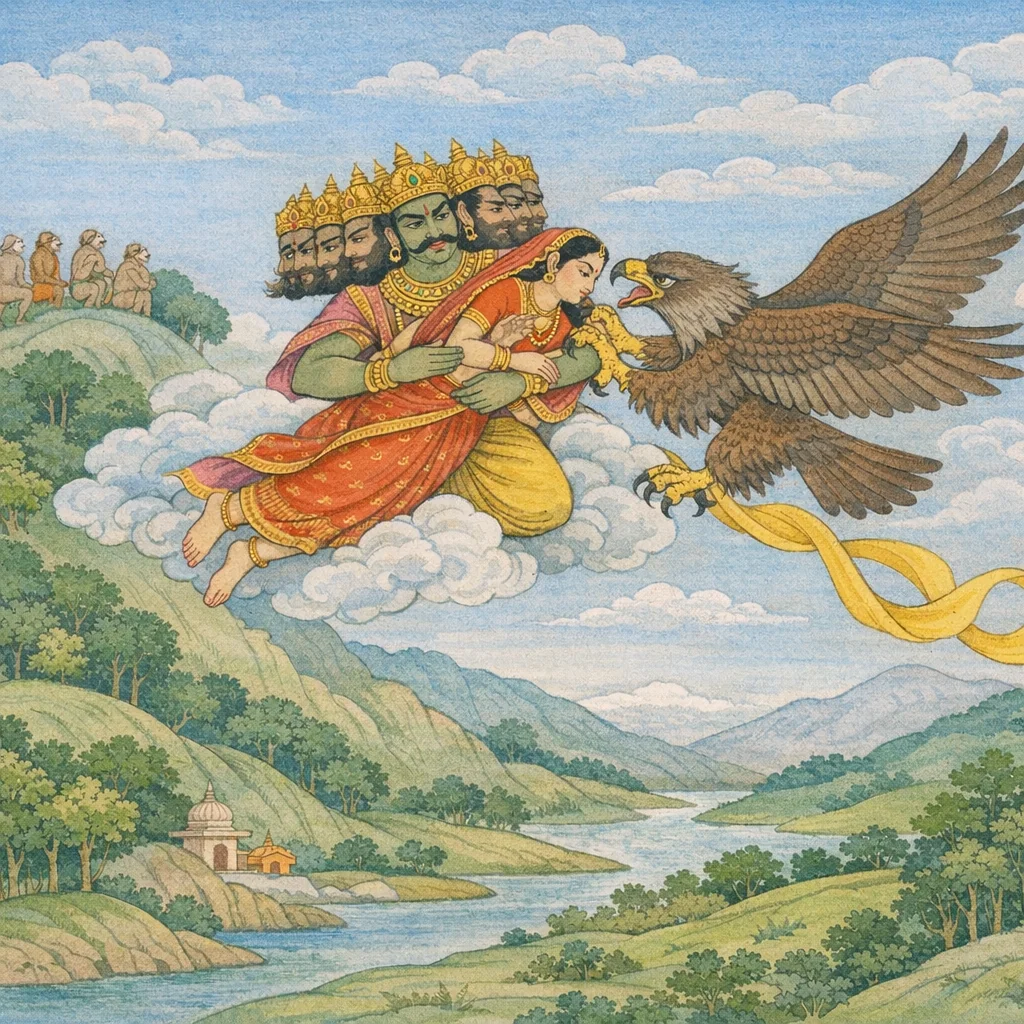
Chapter Arc: वन में सीता-हरण के बाद राम-लक्ष्मण की खोज-यात्रा पर अचानक रावण की गोद में बैठी सीता को देखकर जटायु का क्रोधोन्मत्त धावा—एक वृद्ध पक्षी का धर्म-युद्ध। → जटायु रावण को ललकारता है—“मैथिली को छोड़ दे”—और पंख-चोंच से रावण को सैकड़ों घाव देता है; पर रावण की मायावी-बलिष्ठता के आगे जटायु का शरीर क्षत-विक्षत होता जाता है। आगे चलकर राम-लक्ष्मण मार्ग में पर्वत-शिखर पर पाँच वानरों को देखते हैं; उसी दिशा में सीता अपना दिव्य वस्त्र-चिह्न गिराती है—संकेत और आशा का सूक्ष्म धागा। → कबन्ध (भयानक राक्षस-आकृति) का वध और उसके बंधन का टूटना—रूपांतरण का क्षण; साथ ही जटायु का रावण से प्राणांत संघर्ष, जिसमें वह सीता के लिए अंतिम प्रतिरोध बनता है। → राम जटायु के प्रति पुत्रवत् कृतज्ञ होकर उसका अन्त्येष्टि-संस्कार करता है; कबन्ध के दिव्य स्वरूप प्रकट होने पर वह राम को मार्गदर्शन देता है—पम्पा सरोवर, ऋष्यमूक पर्वत और सुग्रीव से मैत्री का उपदेश, जिससे सीता-खोज का मार्ग स्पष्ट होता है। → दिव्य पुरुष (कबन्ध-मुक्त आत्मा/गन्धर्व-स्वरूप) अंतर्हित हो जाता है; राम-लक्ष्मण विस्मित रह जाते हैं और सुग्रीव की ओर बढ़ते हैं—अगला चरण: वानर-राजनीति और मैत्री की परीक्षा।
Shlokas
Verse 1
-+ 3 ()) अप आस एकोनाशीरत्याधिकद्विशततमो< ध्याय: रावणद्वारा जटायुका वध, श्रीरामद्वारा उसका अन्त्येष्टि- संस्कार, कबन्धका वध तथा उसके दिव्य स्वरूपसे वार्तालाप मार्कण्डेय उवाच सखा दशरथस्यासीज्जटायुररुणात्मज: । गृध्रराजो महावीर: सम्पातिर्यस्य सोदर:,मार्कण्डेयजी कहते हैं--युधिष्ठिर! महावीर गृध्रराज जटायु (सूर्यके सारथि) अरुणके पुत्र थे। उनके बड़े भाईका नाम सम्पाति था। राजा दशरथके साथ उनकी बड़ी मित्रता थी इस प्रकार श्रीमहाभारत वनपर्वके अन्तर्गत रामोपाख्यानपर्वमें कबन्धवधविषयक दो सौ उन्यासीवाँ अध्याय पूरा हुआ ॥/ २७९ ॥। #:2:8 #23:.7 (0) हि २ 7 अशीत्यथिकद्विशततमो< ध्याय: राम और सुग्रीवकी मित्रता, वाली और सुग्रीवका युद्ध, श्रीरामके द्वारा वालीका वध तथा लंकाकी अशोकवाटिकामें राक्षसियोंद्वारा डरायी हुई सीताको त्रिजटाका आश्वासन मार्कण्डेय उवाच ततो<विदूरे नलिनीं प्रभूतकमलोत्पलाम् | सीताहरणदु:खार्त: पम्पां राम: समासदत्
Mārkaṇḍeya said: “Jaṭāyu, the heroic king of vultures, was a friend of King Daśaratha and a son of Aruṇa. His own brother was Sampāti.”
Verse 2
स ददर्श तदा सीतां रावणाड्कगतां स्नुषाम् | सक्रोधो<भ्यद्रवत् पक्षी रावण राक्षसेश्वरम्,इसी नाते सीताको वे अपनी पुत्रवधू मानते थे। जब जटायुने उन्हें रावणकी गोदमें पराधीन होकर पड़ी हुई देखा तब उनके क्रोधकी सीमा न रही। वे राक्षसराज रावणपर टूट पड़े
Then he saw Sītā—whom he regarded as a daughter-in-law—lying helpless upon Rāvaṇa’s lap. Inflamed with righteous anger, the great bird rushed straight at Rāvaṇa, lord of the rākṣasas. The scene frames an ethical impulse: the duty to protect the vulnerable and to resist adharma even at grave personal risk.
Verse 3
अथैनमब्रवीद् गृध्रो मुड्च मुज्चेति मैथिलीम् । प्रियमाणे मयि कथं हरिष्यसि निशाचर,इस प्रकार और वे बोले--“निशाचर! मिथिलेश-कुमारीको छोड़ दे, छोड़ दे। मेरे जीते- जी तू इन्हें कैसे हर ले जायगा?”
Then the vulture said to him: “Release her—release the princess of Mithilā! While I still live, how will you, O night-roaming rākṣasa, carry her away?” In this moment the poem foregrounds righteous resistance: even a weaker guardian confronts abduction as an adharma, placing protection of the vulnerable above fear for one’s own life.
Verse 4
न हि मे मोक्ष्यसे जीवन् यदि नोत्सृजसे वधूम् । उक्त्वैवं राक्षसेन्द्रं तं चकर्त नखरैर्भुशम्,“यदि मेरी पुत्रवधू सीताको तू नहीं छोड़ेगा तो मेरे हाथसे जीवित नहीं बच सकेगा।' ऐसा कहकर जटायुने अपने नखोंसे राक्षसराज रावणको बहुत घायल कर दिया
Mārkaṇḍeya said: “You will not escape alive from me if you do not release the bride.” Having spoken thus to that lord of the Rākṣasas, Jaṭāyu tore and grievously wounded him with his talons. The verse frames resistance to abduction as a dharmic duty: protection of a woman taken by force is upheld even at the cost of one’s own life, and righteous anger is directed toward restraining adharma rather than personal gain.
Verse 5
पक्षतुण्डप्रहारैश्ष शतशो जर्जरीकृतम् । चक्षार रुधिरं भूरि गिरि: प्रस्रवणैरिव,उन्होंने पंखों और चोंचसे मार-मारकर उसके सैकड़ों घाव कर दिये। रावणका सारा शरीर जर्जर हो गया तथा देहसे रक्तकी धाराएँ बह चलीं, मानो पर्वत अनेक झरनोंसे आर्द्र हो रहा हो
Mārkaṇḍeya said: “Struck again and again by their wings and beaks, he was torn with hundreds of wounds. Blood poured out in abundance, and his body became mangled—like a mountain made wet by many streaming springs.”
Verse 6
स वध्यमानो गृध्रेण रामप्रियहितैषिणा । खड्गमादाय चिच्छेद भुजौ तस्य पतत्त्रिण:,श्रीरामचन्द्रजीका प्रिय एवं हित चाहनेवाले जटायुको इस प्रकार चोट करते देख रावणने तलवार लेकर उन पक्षिराजके दोनों पंख काट डाले
As he was being struck by the vulture Jatāyu—who was devoted to Rāma and intent on Rāma’s welfare—Rāvaṇa drew his sword and cut off the wings of that bird. The episode highlights how steadfast loyalty to righteousness can invite severe retaliation, yet such self-sacrifice becomes a moral witness against adharma.
Verse 7
निहत्य गृध्रराजं स भिन्नाभ्रशिखरोपमम् | ऊर्ध्वमाचक्रमे सीतां गृहीत्वाड्केन राक्षस:,बादलोंको भेदनेवाले पर्वतशिखरके समान गृध्रराज जटायुको घायल करके रावण पुनः सीताको गोदमें लिये हुए आकाशमार्गसे चल दिया
Having struck down the king of vultures, Jaṭāyu—mighty like a mountain-peak that cleaves the clouds—the rākṣasa (Rāvaṇa) rose again into the sky, carrying Sītā upon his lap. The episode underscores the ethical contrast between predatory force and self-sacrificing protection: Jaṭāyu falls while upholding righteousness, and the abductor advances through adharma despite heroic resistance.
Verse 8
यत्र यत्र तु वैदेही पश्यत्याश्रममण्डलम् | सरो वा सरितो वापि तत्र मुज्चति भूषणम्,विदेहकुमारी सीता जहाँ-जहाँ कोई आश्रम, सरोवर या नदी देखतीं, वहाँ-वहाँ अपना कोई-न-कोई आभूषण गिरा देती थीं
Mārkaṇḍeya said: Wherever Vaidehī (Sītā) would catch sight of a hermitage precinct—whether a lake or a flowing river—there, at each such place, she would let fall some ornament. In the midst of abduction and peril, she leaves deliberate traces, turning personal adornment into a quiet instrument of truth and rescue, guided by presence of mind rather than despair.
Verse 9
सा ददर्श गिरिप्रस्थे पडच वानरपुज्भवान् । तत्र वासो महहद्दिव्यमुत्ससर्ज मनस्विनी
Mārkaṇḍeya said: She saw, on a mountain ledge, the foremost of monkeys falling. There, the high-minded lady cast off her splendid, divine garment—an act that signals both urgency and deliberate resolve in the unfolding events.
Verse 10
आगे जानेपर उन्होंने एक पर्वतके शिखरपर बैठे हुए पाँच श्रेष्ठ वानरोंको देखा। वहाँ उन बुद्धिमती देवीने अपना एक अत्यन्त दिव्य वस्त्र गिरा दिया || ९ तत् तेषां वानरेन्द्राणां पपात पवनोद्धुतम् । मध्ये सुपीतं पज्चानां विद्युन्मेघान्तरे यथा,वह सुन्दर पीले रंगका वस्त्र आकाशमें उड़ता हुआ उन पाँचों वानरोंके मध्यभागमें जा गिरा, मानो मेघोंके बीचमें विद्युत् प्रकट हो गयी हो
Mārkaṇḍeya said: Then, stirred and carried by the wind, a splendid yellow garment fell among those five lordly monkeys—like a flash of lightning appearing between clouds. The scene underscores how a seemingly chance event can become a test of restraint, conduct, and discernment for those who encounter it.
Verse 11
अचिरेणातिचक्राम खेचर: खे चरन्निव । ददर्शाथ पुरी रम्यां बहुद्वारां मनोरमाम्,आकाशचारी पक्षीकी भाँति आकाशगामी रावण थोड़े ही समयमें अपना मार्ग तय करके लंकाके निकट जा पहुँचा। उसने दूरसे ही अपनी रमणीय एवं मनोहर पुरीको देखा, जो अनेक दरवाजोंसे सुशोभित हो रही थी
Verse 12
प्राकारवप्रसम्बाधां निर्मितां विश्वकर्मणा । प्रविवेश पुरीं लड़कां ससीतो राक्षसेश्वर:,साक्षात् विश्वकर्माने उस पुरीका निर्माण किया था। वह सब ओरसे चहारदीवारी तथा खाइयोंद्वारा घिरी हुई थी। राक्षसराज रावणने सीताके साथ उसी लंकापुरीमें प्रवेश किया
Mārkaṇḍeya said: The city of Laṅkā, constructed by Viśvakarman, was made secure and hard to approach, enclosed by ramparts and defensive works. Into that fortified city the lord of the Rākṣasas, Rāvaṇa, entered—bringing Sītā with him. The verse underscores how adharma can shelter itself behind power and fortification, even as it carries away what is not rightfully its own.
Verse 13
एवं हतायां वैदेह्यां रामो हत्वा महामृगम् । निवृत्तों ददृशे धीमान् भ्रातरं लक्ष्मणं तथा,इस प्रकार सीताका अपहरण हो जानेपर बुद्धिमान् श्रीरामचन्द्रजी उस महामृगरूप मारीचको मारकर लौटे; उस समय मार्गमें उन्हें लक्ष्मण दिखायी दिये
Mārkaṇḍeya said: When Vaidehī (Sītā) had thus been carried off, Rāma—having slain the great deer—turned back. As the wise one returned, he then saw his brother Lakṣmaṇa as well. The verse underscores how deception and misplaced appearances can precipitate grave harm, and how duty-bound action must be guided by discernment rather than by alluring forms.
Verse 14
कथमुत्सृज्य वैदेहीं वने राक्षससेविते । इति त॑ भ्रातरं दृष्टवा प्राप्तोड्सीति व्यगर्हयत्,भाईको देखकर श्रीरामने उन्हें कोसते हुए कहा--'लक्ष्मण! राक्षसोंसे भरे हुए इस घोर जंगलमें जानकीको अकेली छोड़कर तुम यहाँ कैसे चले आये?”
Markandeya said: Seeing his brother arrive there, Rama reproached him: “How could you come here after abandoning Vaidehī (Sītā) alone in this forest frequented by rākṣasas?” The rebuke underscores Rama’s ethical insistence on unwavering protection of the vulnerable and the grave fault of leaving one’s charge unguarded in a place of danger.
Verse 15
मृगरूपधरेणाथ रक्षसा सो5पकर्षणम् | भ्रातुरागमनं चैव चिन्तयन् पर्यतप्यत,“मृगरूपधारी राक्षस मुझे आश्रमसे दूर खींच लाया और भाई भी आश्रमको अरक्षित छोड़कर मेरे पास आ गया”, यह सोचते हुए श्रीरामचन्द्रजी मन-ही-मन संतप्त हो उठे
Mārkaṇḍeya said: Then, reflecting, “A rākṣasa disguised in the form of a deer has dragged me far from the hermitage, and my brother too has come after me, leaving the āśrama unguarded,” Śrī Rāmacandra was inwardly tormented. The verse highlights the ethical anguish that arises when one’s actions—though prompted by urgency—may expose dependents and sacred duties to danger.
Verse 16
गर्हयन्नेव रामस्तु त्वरितस्तं समासदत् । अपि जीवति वैदेही नेति पश्यामि लक्ष्मण,उपर्युक्तरूपसे लक्ष्मणकी निन्दा करते हुए श्रीरामचन्द्रजी तुरंत उनके पास आ गये और कहने लगे--'लक्ष्मण! मैं देखता हूँ, सीता जीवित भी है या नहीं”
Markandeya said: Still reproaching Lakshmana, Rama hurried to him and came close, saying, “Lakshmana, I cannot tell—does Vaidehi yet live, or not? I must see.” The verse highlights Rama’s agitation: even while blaming his brother, his overriding ethical urgency is to ascertain Sita’s safety, revealing how grief can cloud judgment and strain righteous speech within family duty.
Verse 17
तस्य तत् सर्वमाचख्यौ सीताया लक्ष्मणो वच: । यदुक्तवत्यसदृशं वैदेही पश्चिमं वच:,तब लक्ष्मणने सीताकी वे सारी अनुचित एवं आक्षेपपूर्ण बातें, जिन्हें उन्होंने अन्तमें कहा था, कह सुनायीं
Lakṣmaṇa then reported to him (Rāma) everything that Sītā had said—especially the Vaidehī’s final words, which were unbecoming and accusatory. The passage highlights how grief and fear can drive even the virtuous to speak harshly, and how such speech becomes an ethical burden in moments of crisis.
Verse 18
दहामानेन तु हृदा रामो5भ्यपतदाश्रमम् | स ददर्श तदा गृध्र॑ं निहतं पर्वतोपमम्,श्रीरामचन्द्रजीका हृदय शोकाग्निसे दग्ध हो रहा था। वे शीघ्रतापूर्वक आश्रमकी ओर बढ़े। मार्गमें उन्हें पर्वताकार गृध्रराज जटायु दिखायी दिये, जो रावणके हाथसे घायल हुए पड़े थे
Markandeya said: With his heart burning in anguish, Rama hurried toward the hermitage. On the way he then saw the vulture-king, Jatāyu, lying struck down—huge as a mountain—wounded in the struggle against Rāvaṇa. The scene underscores how righteous beings may suffer while upholding dharma, and how compassion and gratitude toward such sacrifice become a moral imperative for the virtuous.
Verse 19
राक्षसं शड़कमानस्तं विकृष्य बलवद् धनु: । अभ्यधावत काकुत्स्थस्ततस्तं सहलक्ष्मण:,लक्ष्मणसहित श्रीरामने उन्हें राक्षस समझकर अपने प्रबल धनुषको खींचा और उनपर धावा कर दिया
Suspecting him to be a rākṣasa, Rāma of the Kakutstha line forcefully drew his mighty bow and rushed upon him; then Lakṣmaṇa too advanced together with him. The verse highlights vigilant protection of dharma—swift readiness against perceived adharma—while also implying the moral risk of acting on suspicion and the need for discernment.
Verse 20
स तावुवाच तेजस्वी सहितौ रामलक्ष्मणौ | गृध्रराजो5स्मि भद्र वां सखा दशरथस्य वै,तब तेजस्वी जटायुने साथ आये हुए श्रीराम और लक्ष्मण दोनों भाइयोंसे कहा--/आप दोनोंका भला हो। मैं राजा दशरथका मित्र गृध्रराज जटायु हूँ!
The radiant Jatāyu addressed Rāma and Lakṣmaṇa, who were together: “Blessings upon you both. I am Jatāyu, king of vultures, and truly a friend of King Daśaratha.” In this moment, he establishes a bond of righteous friendship and protection, grounding his forthcoming help in loyalty, gratitude, and dharma.
Verse 21
तस्य तद् वचन श्रुत्वा संगृहा धनुषी शुभे । को<यं पितरमस्माकं नाम्ना$5हेत्यूचतुश्न तो,उनकी ये बातें सुनकर उन्होंने अपने सुन्दर धनुष उतारकर हाथमें ले लिये और परस्पर पूछने लगे कि “यह कौन है जो हमारे पिताका नाम लेकर परिचय दे रहा है"
Hearing his words, the two of them took up their splendid bows. Then they said to one another, “Who is this person who is identifying our father by name?”
Verse 22
ततो ददृशतुस्तौ त॑ छिन्नपक्षद्धयं खगम् । तयो: शशंस गृध्रस्तु सीतार्थे रावणाद् वधम्,तदनन्तर उन्होंने पास आकर देखा--जटायुके दोनों पंख कटे हुए हैं। गृध्रने बताया कि 'सीताको छुड़ानेके लिये युद्ध करते समय मैं रावणके हाथसे अत्यन्त घायल कर दिया गया हूँ!
Verse 23
अपृच्छद् राघवो गृध्र॑ं रावण: कां दिशं गत: । तस्य गृध्र: शिर:कम्पैराचचक्षे ममार च,श्रीरामचन्द्रजीने जटायुसे पूछा--'रावण किस दिशाकी ओर गया है? गृध्रने सिर हिलाकर संकेतसे दक्षिण दिशा बतायी और अपने प्राण त्याग दिये
Rāghava (Śrī Rāma) asked the vulture, “In which direction has Rāvaṇa gone?” The vulture indicated it by shaking its head—signaling the southern quarter—and then gave up its life. The scene underscores steadfast loyalty and the ethical weight of bearing truthful witness even at the cost of one’s own life.
Verse 24
दक्षिणामिति काकुत्स्थो विदित्वास्य तदिल्,ितम् | संस्कारं लम्भयामास सखायं पूजयन् पितु:,उनके संकेतके अनुसार दक्षिण दिशा समझ लेनेके पश्चात् श्रीरामचन्द्रजीने पिताके मित्र होनेके नाते जटायुको आदर देते हुए उनका विधिपूर्वक अन्त्येष्टि-संस्कार किया
Verse 25
ततो दृष्टवा55श्रमपदं व्यपविद्धबृूसीमठम् । विध्वस्तकलशं शून्यं गोमायुशतसंकुलम्,॥॥५ ॥ ॥22८ ४५८८ ४7० |] झ॥ तदनन्तर आश्रमपर पहुँचकर उन्होंने देखा, कुशकी चटाई बाहर फेंकी हुई है, कुटी उजाड़ हो गयी है, घर सूना पड़ा है, कलश फूटे पड़े हैं और सारे आश्रममें सैकड़ों गीदड़ भरे हुए हैं
Then, on reaching the hermitage-site, he saw it in ruin: the mat of kuśa-grass had been flung aside, the hut lay desolate, the place stood empty, the water-pots were shattered, and the whole āśrama was overrun with hundreds of jackals. The scene signals a collapse of sacred order—where disciplined quiet and hospitality should prevail, there is abandonment, desecration, and the ominous presence of scavengers, prompting moral concern about what breach of dharma or calamity has driven the righteous away.
Verse 26
दुःखशोकसमाविष्टौ वैदेहीहरणार्दितौ । जम्मतुर्दण्डकारण्यं दक्षिणेन परंतपौ,सीताका अपहरण हो जानेसे दोनों भाइयोंको बड़ी वेदना हुई। वे दुःख और शोकमें डूब गये। फिर शत्रुओंको संताप देनेवाले श्रीराम और लक्ष्मण दण्डकारण्यसे दक्षिण दिशाकी ओर चल दिये
Mārkaṇḍeya said: Overwhelmed by grief and sorrow, and stricken by the abduction of Vaidehī (Sītā), the two tormentors of foes—Rāma and Lakṣmaṇa—set out from the Daṇḍaka forest, proceeding southward. The passage underscores steadfast action in the face of personal loss: sorrow is acknowledged, yet duty-driven resolve continues.
Verse 27
वने महति तस्मिंस्तु राम: सौमित्रिणा सह । ददर्श मृगयूथानि द्रवमाणानि सर्वश:,उस विशाल वनमें लक्ष्मणसहित श्रीरामने देखा कि मृगोंके झुंड सब ओर भाग रहे हैं
In that vast forest, Rāma, accompanied by Saumitri (Lakṣmaṇa), saw herds of deer fleeing in every direction—an ominous sign in the wilderness, suggesting sudden danger and calling for alertness and responsible action rather than heedless pursuit.
Verse 28
शब्दं च घोर सत्त्वानां दावाग्नेरिव वर्धत: । अपश्येतां मुहूर्ताच्च कबन्ध॑ घोरदर्शनम्,वन-जन्तुओंका भयंकर शब्द ऐसा जान पड़ता था मानो वहाँ सब ओर दावानल फैल रहा हो और उससे भयभीत हुए प्राणी आर्तनाद कर रहे हों। दो ही घड़ीमें उन दोनों भाइयोंने देखा, सामने एक “कबन्ध' (धड़) प्रकट हुआ है, जो देखनेमें अत्यन्त भयंकर है
Markandeya said: “And they heard the terrifying cries of fierce creatures, swelling like the roar of a spreading forest-fire. Then, within a short while, the two beheld before them a Kabandha—an awe-inspiring, dreadful apparition—whose very sight struck fear.”
Verse 29
मेघपर्वतसंकाशं शालस्कन्धं महाभुजम् । उरोगतविशालाक्षं महोदरमहामुखम्,वह मेघके समान काला और पर्वतके समान विशालकाय था। साखूकी शाखाके समान उसके कंधे और बड़ी-बड़ी भुजाएँ थीं। उसकी चौड़ी छातीमें दो बड़ी-बड़ी आँखें चमक रहीं थीं और लंबे-से पेटमें बहुत बड़ा मुख दिखायी दे रहा था
Mārkaṇḍeya said: “He appeared like a cloud-dark mountain—his shoulders like the trunk of a śāla tree and his arms immense. Upon his broad chest shone two large eyes, and on his long belly a huge mouth was visible.”
Verse 30
यदृच्छयाथ तद् रक्ष: करे जग्राह लक्ष्मणम् | विषादमगमत् सद्यः सौमित्रिरथ भारत,वह एक राक्षस था। उसने सहसा आकर लक्ष्मणका एक हाथ पकड़ लिया। भारत! यह देख सुमित्रानन्दन लक्ष्मण तत्काल बहुत दुःखी हो गये
Markandeya said: “Then, by chance, that rākṣasa seized Lakṣmaṇa by the hand. O Bhārata, seeing this, Saumitri (Lakṣmaṇa), the son of Sumitrā, was at once overcome with deep distress.”
Verse 31
स राममभिसस्प्रेक्ष्य कृष्पते येन तन्मुखम् । विषण्ण श्चाब्रवीद् रामं पश्यावस्थामिमां मम,जिस ओर उस राक्षसका मुख था, उसी ओर वे खिंचे चले जा रहे थे। तब श्रीरामकी ओर देखकर वे अत्यन्त विषादग्रस्त होकर बोले--'भैया! देखिये, मेरी यह क्या अवस्था हो रही है?
Looking toward Rāma, he found himself being dragged in the very direction where that rākṣasa’s face was turned. Overwhelmed with grief, he spoke to Rāma: “Brother, look—what a condition I have fallen into!”
Verse 32
हरणं चैव वैदेहाा मम चायमुपप्लव: । राज्यभ्रंशश्ष भवतसस््तातस्य मरणं तथा,“विदेहकुमारीका अपहरण, मेरा इस प्रकार असमयमें विपत्तिग्रस्त होना, आपका राज्यसे निर्वासन तथा पिताजीकी मृत्यु--(इस प्रकार संकटपर संकट आता जा रहा है)
Markandeya said: “The abduction of the princess of Videha, and this untimely calamity that has befallen me; your fall from kingship and exile; and likewise the death of my father—thus, misfortune upon misfortune keeps arriving in an unbroken chain.”
Verse 33
नाहं त्वां सह वैदेहा समेतं कोसलागतम् । द्रक्ष्यामि पृथिवीराज्ये पितृपैतामहे स्थितम्,“जान पड़ता है, जब आप सीताके साथ अयोध्यामें लौटकर पिता-पितामहोंकी परम्परासे प्राप्त हुए इस भूमण्डलके राज्यपर प्रतिष्ठित होंगे, उस समय मैं आपका दर्शन न कर सकूँगा
Verse 34
द्रक्ष्यन्त्यार्यस्थ धन््या ये कुशलाजशमीदलै: । अभिषिक्तस्य वदनं सोम॑ शान्तघनं यथा,“जो लोग कुश, लाजा और शमीपत्र आदिके द्वारा राज्यपर अभिषिक्त हुए आप आर्यके मेघोंके आवरणसे रहित शरत्कालीन चन्द्रमाके समान मनोहर मुखका दर्शन करेंगे, वे धन्य हैं!
Mārkaṇḍeya said: Blessed indeed are those who will behold your face at the time of your royal consecration—when you are anointed with sacred kuśa grass, parched grain (lājā), and śamī leaves—your countenance lovely like the autumnal moon, clear of cloud-cover and serene in its radiance. The verse praises the auspiciousness of righteous kingship and the merit of witnessing a dharmic coronation.
Verse 35
एवं बहुविधं धीमान् विललाप स लक्ष्मण: । तमुवाचाथ काकुत्स्थ: सम्भ्रमेष्वप्यसम्भ्रम:,बुद्धिमान् लक्ष्मण इस प्रकार भाँति-भाँतिसे विलाप करने लगे। भगवान् श्रीराम घबराहटके समय भी घबराते नहीं थे। उन्होंने लक्ष्मणसे कहा--
Thus, the wise Lakṣmaṇa lamented in many different ways. Then Kākutstha (Rāma)—steady even amid moments of panic and confusion—addressed him, speaking with composed discernment.
Verse 36
मा विषीद नरव्याप्र नैष कश्रिन्मयि स्थिते | छिन्ध्यस्य दक्षिणं बाहुं छिन्न: सव्यो मया भुज:,“नरश्रेष्ठी तुम खेद न करो। मेरे रहते यह राक्षस कोई चीज नहीं है; इससे तुम्हें कोई हानि नहीं पहुँच सकती। तुम इसकी दाहिनी बाँह काट डालो। मैं बायीं भुजा काट रहा हूँ!
Mārkaṇḍeya said: “Do not grieve, O tiger among men. While I stand here, this rākṣasa is nothing; he cannot harm you. Cut off his right arm—his left arm has already been severed by me.”
Verse 37
इत्येवं वदता तस्य भुजो रामेण पातित: । खड्गेन भृशतीक्ष्णेन निकृत्तस्तिलकाण्डवत्,इस प्रकार कहते हुए श्रीरामचन्द्रजीने अत्यन्त तीखी तलवारसे उस राक्षसकी एक बाँह तिलके पौधेकी तरह काट गिरायी
As he was speaking in this manner, Rāma struck down that being’s arm. With a fiercely sharp sword he severed it, and it fell like the cut stalk of a tilaka plant—an image underscoring how decisive, disciplined force is employed to restrain violent wrongdoing.
Verse 38
ततो<सस््य दक्षिणं बाहु खड्गेनाजध्निवान् बली । सौमित्रिरपि सम्प्रेक्ष्य भ्रातरं राघवं स्थितम्,तदनन्तर बलवान सुमित्रानन्दन लक्ष्मणने भी अपने खड्गसे उसकी दाहिनी बाँह काट डाली और अपने भाई श्रीरामको खड़ा देखकर उन्होंने उसकी पसलीपर भी बड़े जोरसे प्रहार किया। फिर तो वह महान् राक्षस कबन्ध प्राणशून्य होकर पृथ्वीपर गिर पड़ा
Then the mighty Saumitri struck off his right arm with his sword. Seeing his brother Rāghava standing firm, Lakṣmaṇa—Sumitrā’s valiant son—next dealt a powerful blow to his side. Thereupon the great rākṣasa Kabandha, bereft of life, fell down upon the earth. The episode underscores disciplined force used in protection: violence is not celebrated for its own sake, but employed as a necessary act against predatory harm, with steadiness of mind and loyalty to righteous duty.
Verse 39
पुनर्जघान पाश्चे वै तद् रक्षो लक्ष्मणो भृशम् | गतासुरपतद् भूमौ कबन्ध: सुमहांस्तत:,तदनन्तर बलवान सुमित्रानन्दन लक्ष्मणने भी अपने खड्गसे उसकी दाहिनी बाँह काट डाली और अपने भाई श्रीरामको खड़ा देखकर उन्होंने उसकी पसलीपर भी बड़े जोरसे प्रहार किया। फिर तो वह महान् राक्षस कबन्ध प्राणशून्य होकर पृथ्वीपर गिर पड़ा
Mārkaṇḍeya said: Then Lakṣmaṇa struck that rākṣasa again from behind with great force. Deprived of life-breath, the huge Kabandha fell down upon the earth. The episode underscores resolute courage in the face of violence and the ethical necessity of protecting one’s brother and oneself against a predatory aggressor.
Verse 40
0/.. ५ ५ ० ७७/:2 ५ ५ ४:८2. अप न्न्ध् | (हि 7] तस्य देहाद् विनि:सृत्य पुरुषो दिव्यदर्शन: । ददृशे दिवमास्थाय दिवि सूर्य इव ज्वलन्,उसकी देहसे एक दिव्यरूपधारी पुरुष निकलकर आकाशमें खड़ा दिखायी दिया। वह सूर्यके समान देदीप्यमान हो रहा था
Then, from that person’s body there emerged a man of wondrous, divine appearance. He was seen standing in the sky, blazing in the heavens like the sun—an image that signals the soul’s transcendence beyond the perishable body and the moral awe inspired by spiritual radiance.
Verse 41
पप्रच्छ रामस्तं वाग्मी कस्त्वं प्रब्रूहि पृच्छत: । कामया किमिदं चित्रमाश्चर्य प्रतिभाति मे,तब कुशल वक्ता भगवान् श्रीरामने उससे पूछा--'तुम कौन हो? अपना परिचय दो। मेरे पूछनेपर अपनी इच्छाके अनुसार बताओ, यह कैसी अद्भुत एवं आश्चवर्यमयी घटना प्रतीत हो रही है?”
Verse 42
तस्याचचक्षे गन्धर्वो विश्वावसुरहं नूप । प्राप्तो ब्राह्मणशापेन योनिं राक्षससेविताम्,उसने कहा--'राजन्! मैं विश्वावसु नामक गन्धर्व हूँ। एक ब्राह्मणके शापसे इस राक्षसयोनिमें आ गया था--लंकावासी राक्षसराज रावणने आपकी पत्नी सीताका अपहरण किया है। आप वानरराज सुग्रीवसे मिलिये। वे आपकी सहायता करेंगे”
Then the Gandharva revealed himself and said, “O king, I am Viśvāvasu. By the curse of a brāhmaṇa I have fallen into a birth frequented by rākṣasas. Know this: the rākṣasa-king Rāvaṇa of Laṅkā has abducted your wife Sītā. Seek alliance with Sugrīva, lord of the vānaras; he will aid you.” The passage underscores the moral force of a brāhmaṇa’s curse, the consequences of wrongdoing, and the dharmic necessity of righteous alliance in the face of adharma.
Verse 43
रावणेन हृता सीता राज्ञा लड़काधिवासिना । सुग्रीवमभिगच्छस्व स ते साहां करिष्यति,उसने कहा--'राजन्! मैं विश्वावसु नामक गन्धर्व हूँ। एक ब्राह्मणके शापसे इस राक्षसयोनिमें आ गया था--लंकावासी राक्षसराज रावणने आपकी पत्नी सीताका अपहरण किया है। आप वानरराज सुग्रीवसे मिलिये। वे आपकी सहायता करेंगे”
Markandeya said: “O King, Sītā has been abducted by Rāvaṇa, the king who dwells in Laṅkā. Go and seek out Sugrīva; he will become your ally and render you help.”
Verse 44
एषा पम्पा शिवजला हंसकारण्डवायुता । ऋष्यमूकस्य शैलस्य संनिकर्षे तटाकिनी,“यह थोड़ी ही दूरपर पवित्र जलसे भरा हुआ पम्पासरोवर है, जिसमें हंस और कारण्डव आदि पक्षी चहक रहे हैं। वह सरोवर ऋष्यमूक पर्वतसे सटा हुआ है
Mārkaṇḍeya said: “Here is the Pampā lake, filled with pure and auspicious waters, alive with the calls of swans and kāraṇḍava birds. This lake lies close beside the mountain Ṛṣyamūka.”
Verse 45
वसते तत्र सुग्रीवश्चतुर्भि: सचिवै: सह । भ्राता वानरराजस्य वालिनो हेममालिन:,“वहीं अपने चार मन्त्रियोंके साथ सुवर्णमालाधारी वानरराज वालीके भाई सुमग्रीव निवास करते हैं
Markandeya said: “There dwells Sugrīva, accompanied by his four ministers—he is the brother of Vāli, the golden-garlanded lord of the monkeys.” The verse situates Sugrīva within a royal-ethical frame: he is not a solitary exile but a claimant supported by counsel, and his identity is defined through kinship with the reigning king, hinting at the moral tensions of loyalty, legitimacy, and fraternal conflict.
Verse 46
तेन त्वं सह संगम्य दुःखमूलं निवेदय । समानशीलो भवत: साहाय्यं स करिष्यति,“उनसे मिलकर आप अपने दुःखका कारण बताइये। उनका शील-स्वभाव आपके ही समान है। वे निश्चय ही आपकी सहायता करेंगे
Markandeya said: “Go and meet with him, and lay before him the very root of your sorrow. His character and disposition are akin to yours; he will surely extend help to you.”
Verse 47
एतावच्छक्यमस्माभिर््वक्तुं द्रष्टासि जानकीम् । ध्रुवं वानरराजस्य विदितो रावणालय:,“मैं तो इतना ही कह सकता हूँ कि आपकी जनकनन्दिनी सीतासे अवश्य भेंट होगी। वानरराज सुग्रीवको रावणके घरका पता निश्चय ही ज्ञात है”
“This much alone can I say: you will surely meet Janaka’s daughter, Sītā. And it is certain that the king of the monkeys knows the location of Rāvaṇa’s dwelling.”
Verse 48
इत्युक्त्वान्तर्हितो दिव्य: पुरुष: स महाप्रभ: । विस्मयं जग्मतुश्नो भौ प्रवीरो रामलक्ष्मणौ,ऐसा कहकर वह महातेजस्वी दिव्य पुरुष वहीं अन्तर्हित हो गया। वीरवर श्रीराम और लक्ष्मण दोनोंको उसके दर्शन और वार्तालापसे बड़ा विस्मय हुआ
Having spoken thus, that radiant, divine Person vanished from sight then and there. The two heroic brothers, Rāma and Lakṣmaṇa, were filled with profound wonder at his appearance and the exchange they had with him—an encounter that underscores how the divine may reveal itself briefly to guide, then withdraw, leaving the righteous strengthened in awe and discernment.
Verse 278
इस प्रकार श्रीमहाभारत वनपर्वके अन्तर्गत रामोपाख्यानपर्वमें मारीचवध तथा सीताहरणविषयक दो सौ अठद्धत्तरवाँ अध्याय पूरा हुआ
Thus ends the 278th chapter of the Rāmopākhyāna section within the Vana Parva of the Śrī Mahābhārata, dealing with the slaying of Mārīca and the abduction of Sītā. The closing formula marks the completion of this narrative unit, underscoring how deception and desire can precipitate grave adharma, while the ensuing suffering becomes the moral consequence that frames later duties and responses.
Verse 279
इति श्रीमहाभारते वनपर्वणि रामोपाख्यानपर्वणि कबन्धहनने एकोनाशीत्यधिकद्धिशततमो<5 ध्याय:
Thus, in the Śrī Mahābhārata, within the Vana Parva, in the section known as the Rāmopākhyāna, the chapter concerning the slaying of Kabandha concludes—this being the two-hundred-and-seventy-ninth chapter. The colophon marks the formal close of the episode, emphasizing the narrative’s moral arc: obstacles and distortions of life are overcome through steadfast courage and right action, clearing the way for the next stage of the quest.
Frequently Asked Questions
The dilemma concerns balancing ascetic intensity and bodily limits against an urgent relational duty: whether Sāvitrī should moderate her severe vow and accept separation, or uphold her resolve and remain physically present with Satyavān as the foretold time nears.
The chapter emphasizes that ethical agency operates through disciplined intention (vyavasāya/saṅkalpa): a vow is sustained not by impulse but by conscious commitment, supported by orderly ritual practice and vigilant attention to time and responsibility.
No explicit phalaśruti is stated in this chapter; the meta-function is implicit—presenting Sāvitrī’s conduct as an instructive model of vrata, deference, and apramāda within a dharma-centered narrative frame.